
Choosing between Accelo vs. HubSpot often comes down to five questions most comparison articles skip:
Are you managing billable client work, or a sales and marketing pipeline?
Do you need a platform that tracks project profitability by the hour, or one that tracks leads from first touch to closed deal?
Is your priority getting paid accurately for services delivered, or generating and converting demand?
Does your team need AI that predicts project margin risk, or AI that identifies which prospects to contact next?
Are you looking for a tool to run your professional services firm, or a tool to run your sales and marketing engine?
In short, here's what we recommend:
Accelo is built for professional services firms that manage the full lifecycle of client work, from pipeline through project delivery to invoicing. It combines CRM, project management, resource scheduling, time tracking, and billing in a single platform, with AI that predicts project completion dates and flags margin risk before it hits the bottom line. Accelo fits consulting firms, agencies, and IT services companies whose revenue depends on billable utilization and project profitability. But Accelo is not a marketing or sales engagement platform. It won't help you generate demand, run campaigns, or build a content engine.
HubSpot is the sales and marketing platform for scaling companies that need to attract, engage, and convert buyers. With six integrated hubs sharing a single Smart CRM, HubSpot connects lead generation, pipeline management, customer service, and content creation in one system. Its Breeze AI layer automates prospecting, resolves customer inquiries, and personalizes outreach at scale. But HubSpot is not a project delivery or resource management tool. It won't track billable hours, manage retainer budgets, or tell you which projects are bleeding margin.
These two platforms solve different problems. Accelo manages what happens after you win the work. HubSpot manages how you find and win it. But what if the real gap isn't project delivery or marketing automation, but the data and intelligence that powers every decision across the revenue cycle?
ZoomInfo is a B2B intelligence platform built on one of the largest commercial data sets in the industry: 500M contacts, 100M companies, 135M+ verified phone numbers, and 200M+ verified business email addresses. Its GTM Context Graph fuses this data with your CRM records, conversation transcripts, and behavioral signals, processing 1.5B+ data points daily to show not just what's happening in your accounts, but why. Whether your team works inside ZoomInfo's own products (GTM Workspace for sellers, GTM Studio for marketers and RevOps) or connects through APIs and MCP, the same intelligence flows everywhere.
If making every go-to-market decision with full buyer context sounds like the missing piece in your stack, see how ZoomInfo works.
Accelo vs. HubSpot vs. ZoomInfo at a glance
Accelo | HubSpot | ZoomInfo | |
|---|---|---|---|
Core purpose | Professional services automation | CRM and go-to-market platform | B2B data and intelligence platform |
Primary user | Services firms (agencies, consultants, IT) | Marketing, sales, and service teams | Sales, marketing, and RevOps teams |
CRM | Built-in, services-focused | Smart CRM with full lifecycle | Integrates with existing CRM (Salesforce, HubSpot, Dynamics) |
Project management | Full (Gantt, dependencies, milestones) | Basic (Beta) | Not a project tool |
Resource planning | AI-powered capacity forecasting | Not available | Not a resource tool |
Time tracking & billing | Native, with automated timesheets | Not available | Not a billing tool |
B2B data | Not a data platform | Contact enrichment via Breeze AI | 500M contacts, 100M companies, 135M+ verified phone numbers |
Buyer intent signals | Not available | Limited | Intent data from 210M+ IP-to-org pairings |
Marketing automation | Not available | Full multi-channel automation | ABM and multi-channel orchestration via GTM Studio |
AI capabilities | Predictive project and margin AI | Breeze AI agents across all hubs | GTM Context Graph with AI-driven account intelligence |
Pricing model | Custom quote | Per-seat/per-hub with free tier | Consumption-based pricing with free tier (ZoomInfo Lite) |
These platforms solve different problems
The comparison between Accelo and HubSpot is less about which is better and more about which problem you're solving.
Accelo exists because professional services firms face a specific challenge: their revenue comes from delivering billable work profitably. Every untracked hour is lost revenue. Every project that drifts over budget erodes margin. Every scheduling gap means either burned-out staff or idle bench time. Accelo addresses all of this in one system, connecting the pipeline to the project plan to the timesheet to the invoice.
HubSpot exists because growing companies need to attract buyers, convert them into customers, and keep them happy. Its strength is the front half of the revenue cycle: generating leads through content and campaigns, nurturing them through automated sequences, closing deals with pipeline management, and supporting customers through ticketing and knowledge bases.
ZoomInfo exists because both of these activities depend on knowing who to target, when to engage, and what matters to the buyer. Whether you're a services firm trying to fill your pipeline with the right clients or a SaaS company running outbound campaigns, the quality of your data and buyer intelligence determine the outcome.

Accelo excels at project delivery and profitability
Accelo's strength is managing work after a deal closes. The platform is designed for professional services, and every feature connects back to one question: is this work profitable?
Source: Accelo
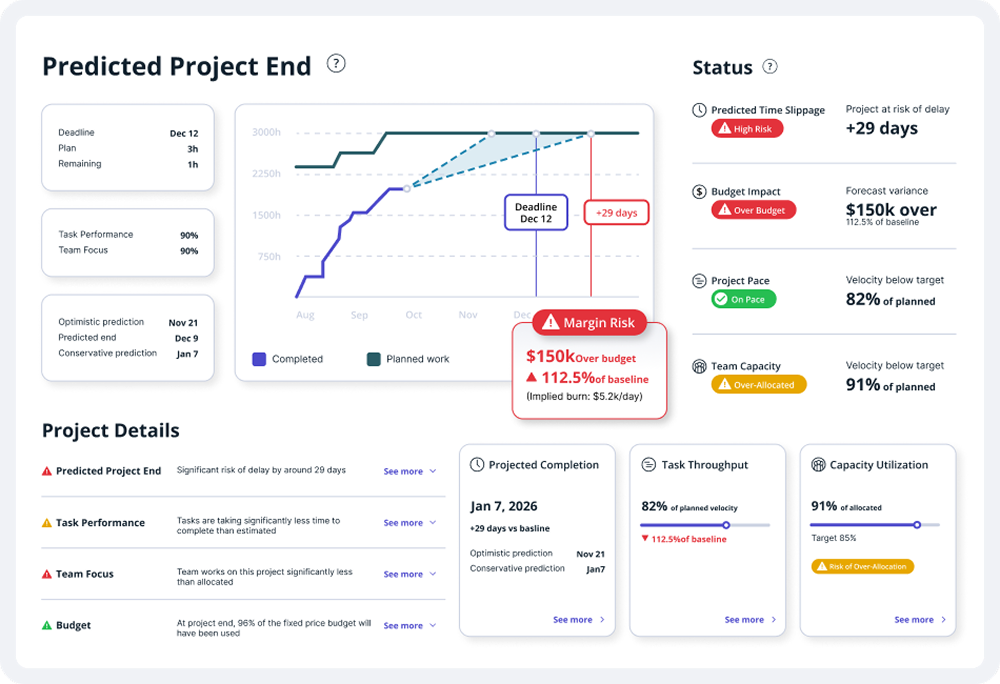
Projects in Accelo are structured around milestones and tasks with three scheduling modes including live Gantt charts and drag-and-drop dependencies (adaptive deadlines, fixed deadlines, and fixed schedule). When a quote is approved, it converts into an active project with scope, pricing, and budget data already populated. No rekeying, no handoff gap.
Source: Accelo
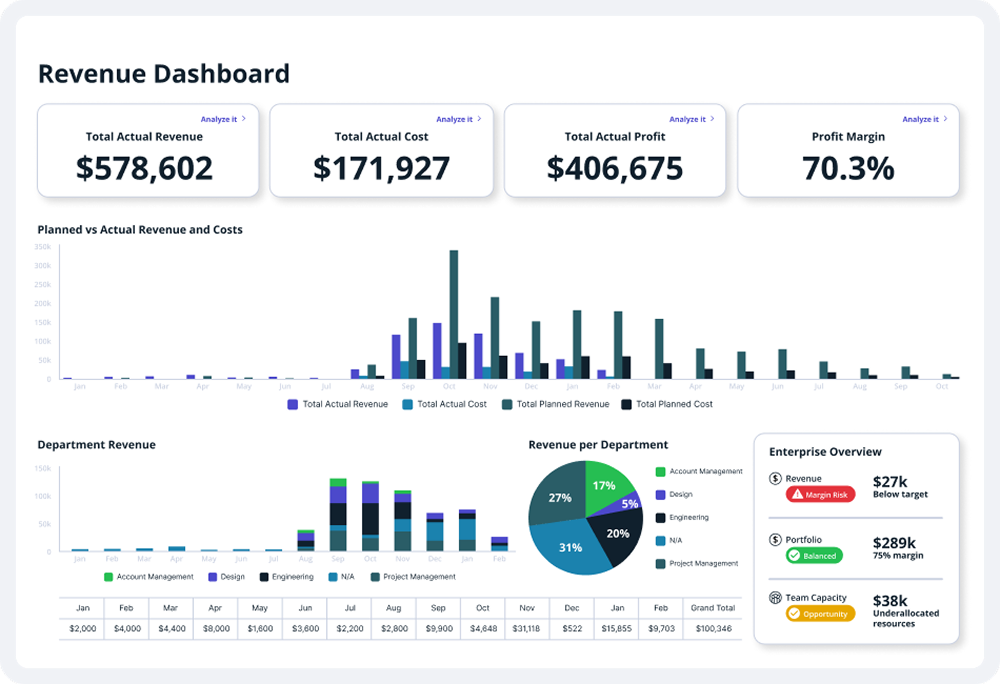
The financial layer is where Accelo separates from generic project tools. Budget tracking is configured within the project plan at the row level, not in a separate dashboard. Time logged against tasks updates budget consumption in real time.
AI monitors financial health continuously, flagging budget variances and scope creep as they emerge, not after the quarter closes.
Source: Accelo
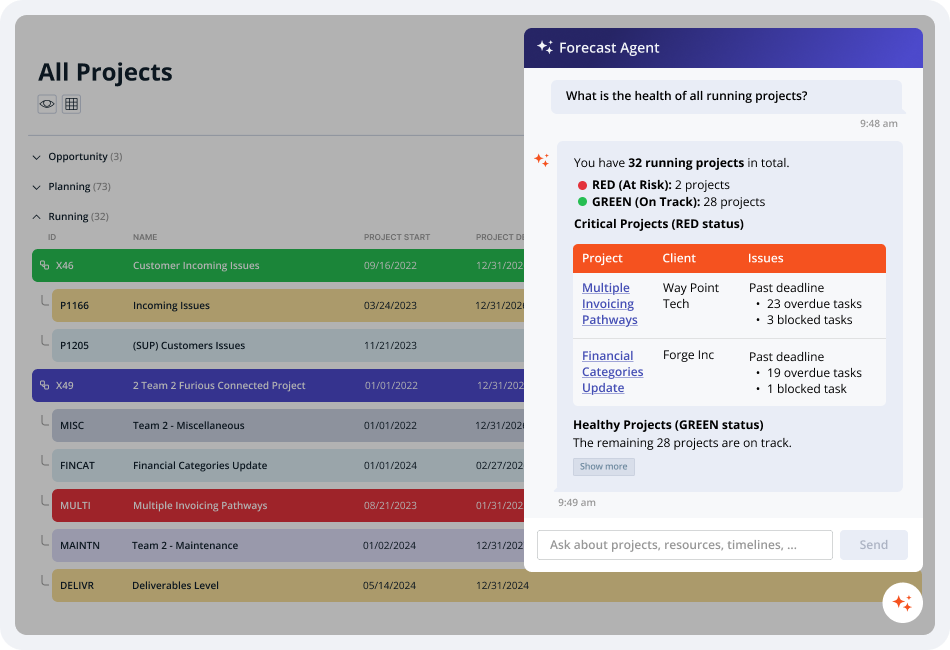
Resource management, deepened by Accelo's acquisition of Forecast in 2025, uses AI to recommend the best-fit team member based on skills, availability, workload, and past performance. The system extends visibility into the sales pipeline, modeling the resourcing impact of deals that haven't closed yet.
But Accelo is not a marketing tool. It won't generate leads, run email campaigns, or manage social media. Its CRM handles client relationships and sales pipeline for services firms, but it lacks the demand generation, content marketing, and multi-channel engagement that marketing teams need.
HubSpot dominates demand generation and sales engagement
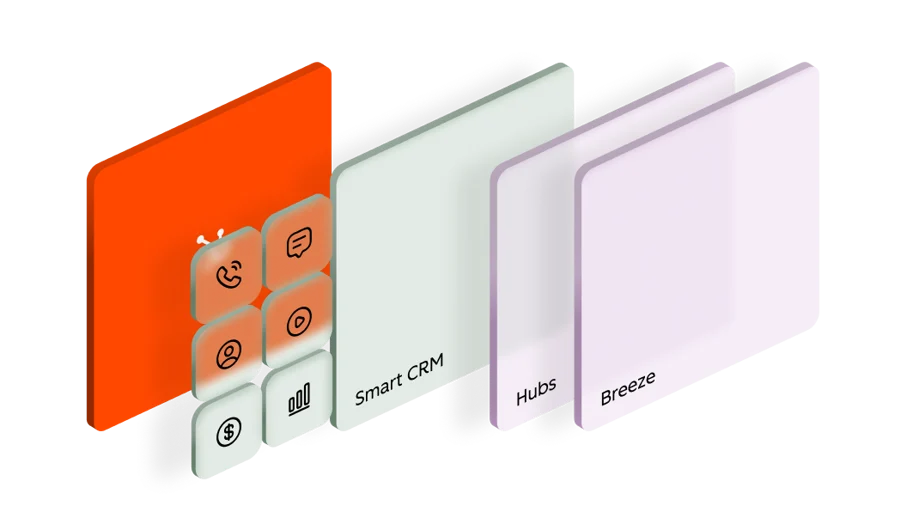
HubSpot's strength is the front half of the revenue cycle. The platform connects marketing automation, sales pipeline management, customer service, content creation, data management, and commerce through a shared Smart CRM, giving every team a single view of every contact.
Source: HubSpot
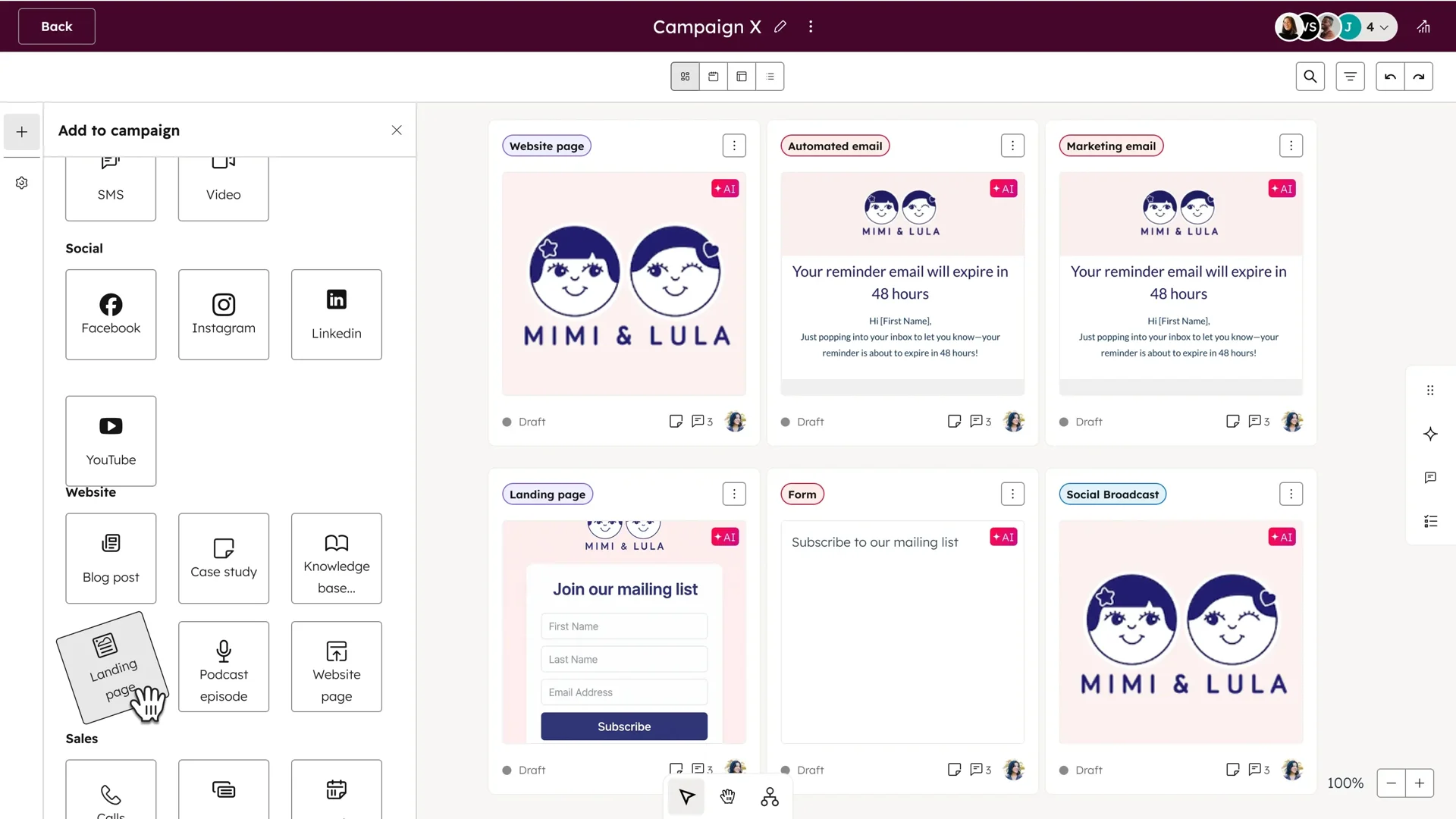
Marketing Hub brings together email marketing, landing pages, social media management, SEO tools, and multi-touch attribution in one system. Workflows automate multi-step nurture sequences triggered by contact behavior.
Source: HubSpot
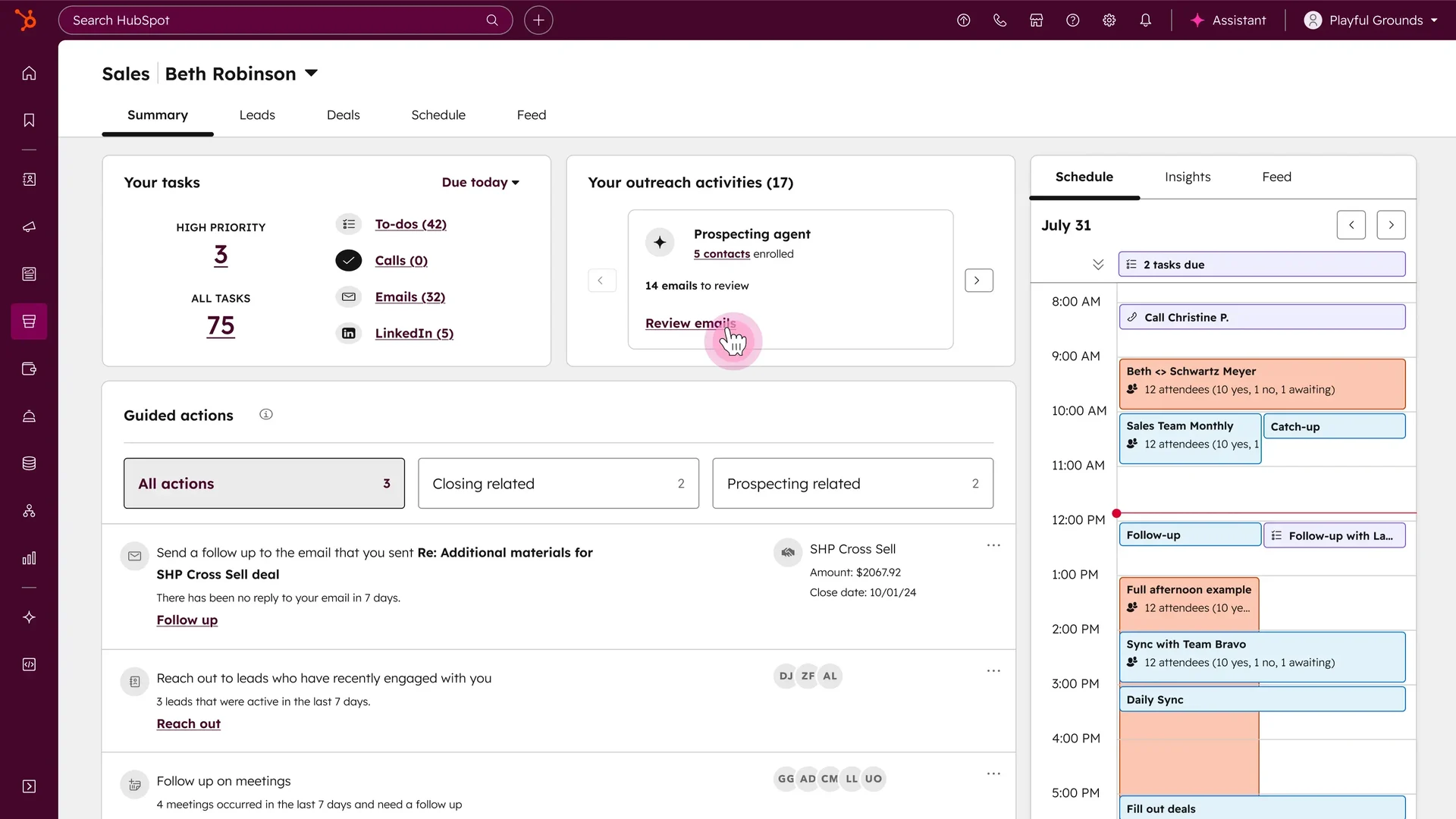
Sales Hub gives reps a workspace for managing deals, automating outreach, and forecasting revenue. The Breeze Prospecting Agent researches prospects automatically, monitors buying signals, and drafts personalized outreach using the full HubSpot customer history. Sequences support automated emails, call tasks, and LinkedIn Sales Navigator tasks with configurable delays.
Source: HubSpot
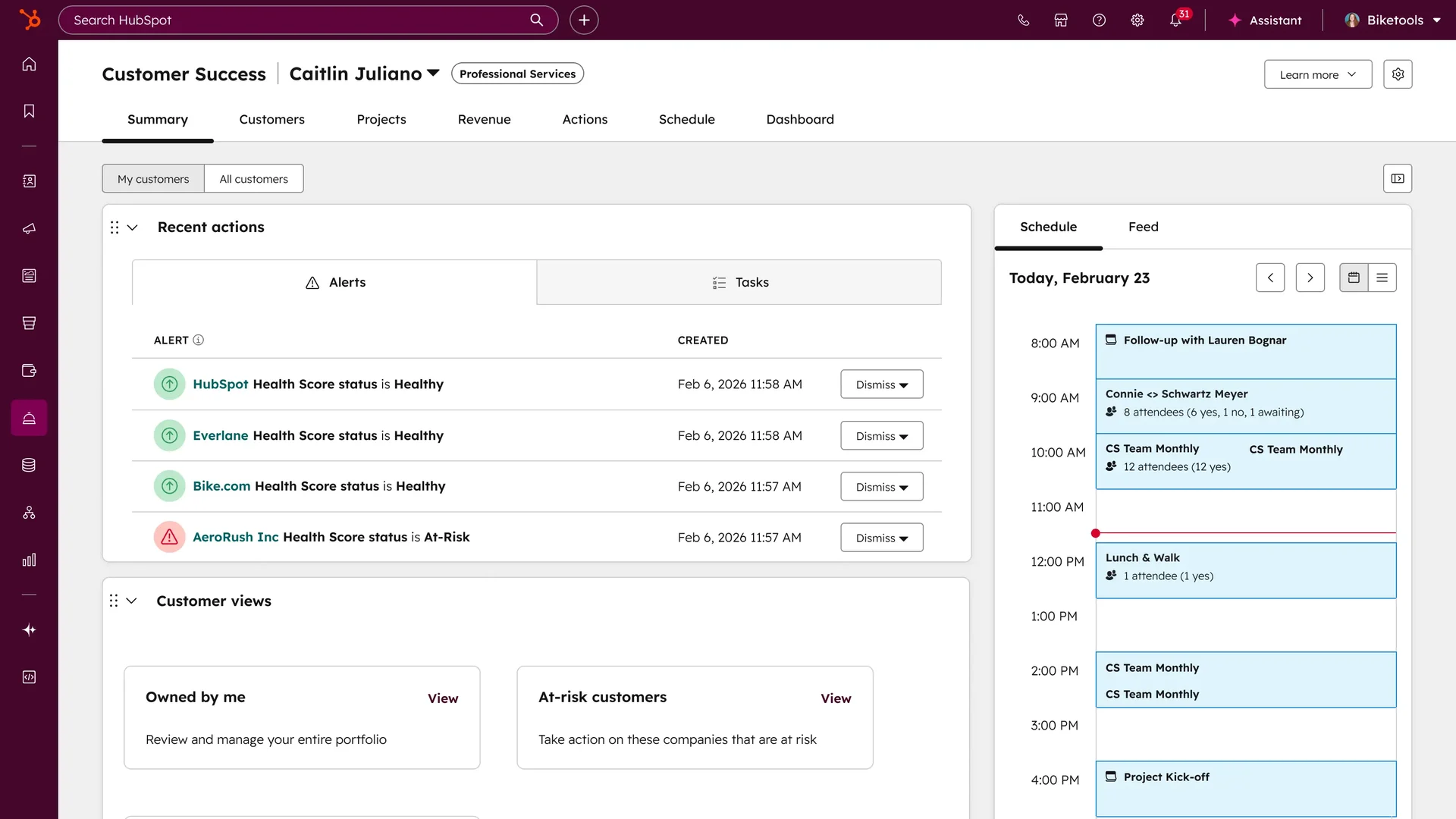
Service Hub handles omnichannel customer support with a help desk, knowledge base, SLA management, and the Breeze Customer Agent, which resolves over 50% of customer conversations on its own.
Source: HubSpot
But HubSpot is not a project delivery platform. Its project management feature is still in Beta. It doesn't track billable hours, manage retainer budgets, or calculate project margins. For a services firm that needs to know whether a client engagement is profitable, HubSpot can help win the client but can't help deliver the work.
ZoomInfo provides the intelligence layer both platforms need
Neither Accelo nor HubSpot was built to answer the question that sits upstream of both project delivery and sales engagement: who should you be targeting, and when are they ready to buy?
Accelo's built-in CRM tracks existing client relationships well, but it doesn't help services firms identify new prospects or detect when a target company is actively researching solutions. HubSpot enriches contact records and tracks engagement within its own ecosystem, but its data layer is limited to what enters the CRM through forms, imports, and Breeze AI enrichment.
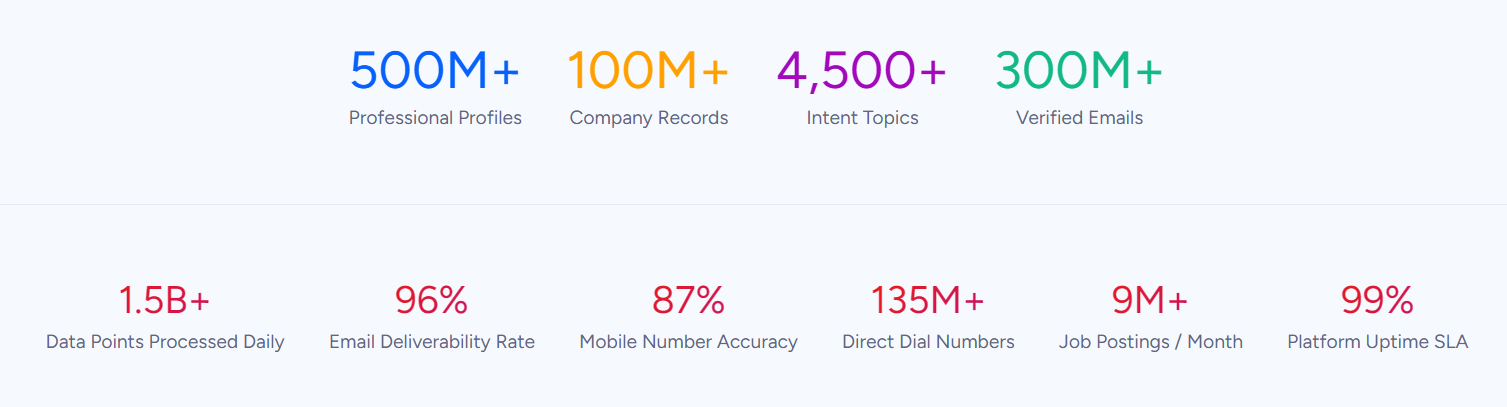
ZoomInfo operates at a different level. Its data covers 500M contacts, 100M companies, 135M+ verified phone numbers, 120M direct-dial phone numbers, and 200M+ verified business email addresses, maintained by automated ML scanning of 28 million site domains daily and 300+ human researchers. In a Fortune 500 competitive RFP analyzing 25 million contacts across vendors, the independent consultant concluded that "no other competitor came even close."
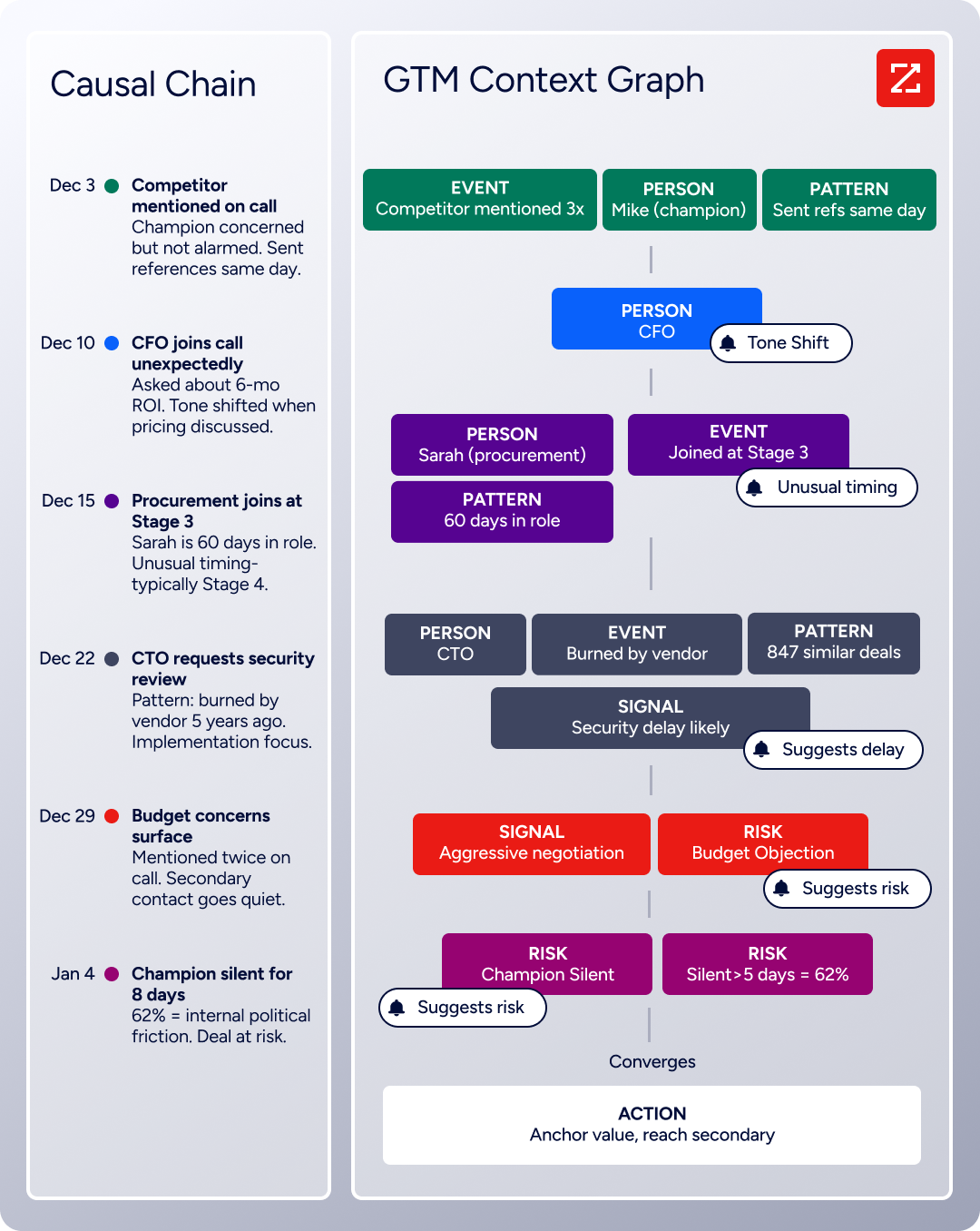
The GTM Context Graph makes this data actionable. It fuses ZoomInfo's third-party intelligence with a customer's CRM records, conversation transcripts, and behavioral signals, then extracts the connections between signals and outcomes.
A CRM records that a deal moved stages. Conversation intelligence captures what the VP of Finance said on the last call. Intent data logs a spike in research activity. The GTM Context Graph reasons across all three to understand why the deal moved and what should happen next.
Seismic's sales team attributed 39% of active pipeline to opportunities identified or influenced by ZoomInfo signals, while boosting productivity by 54% and saving 11.5 hours per week per seller. (Seismic case study)
For a closer look at how HubSpot and ZoomInfo compare as data and intelligence platforms, see our HubSpot vs. ZoomInfo comparison.
CRM and client management comparison
The three platforms approach customer data from different angles.
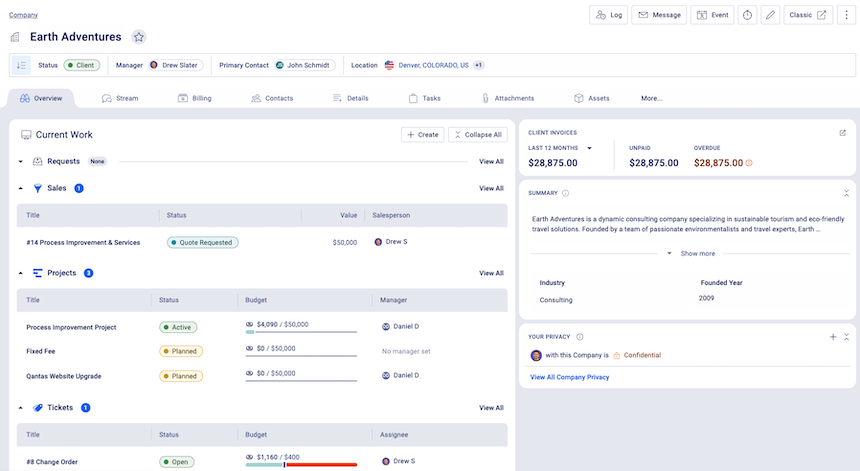
Accelo's CRM is built around the company record as the hub of all operational work. Every project, retainer, ticket, invoice, and activity connects back to a single company record.
Source: Accelo
Automatic email capture logs all correspondence with known contacts into the company stream without manual effort. The sales pipeline tracks opportunities from lead through signed quote, and approved quotes convert into project plans. This works well for services firms managing ongoing client relationships, but it's not designed for high-volume prospecting or demand generation.
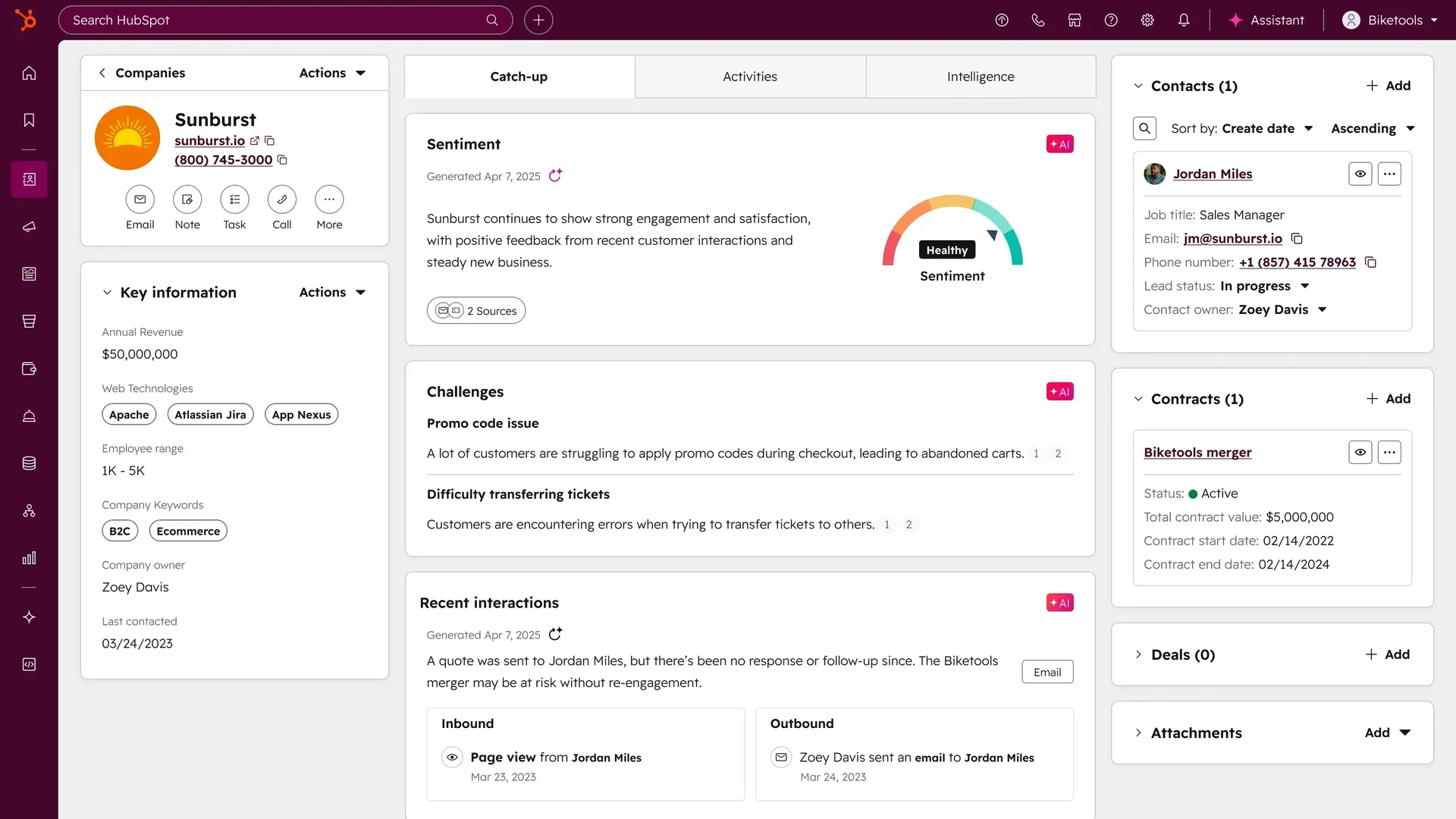
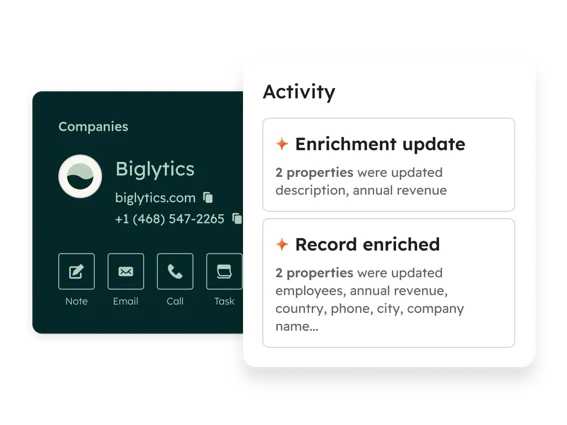
HubSpot's Smart CRM is broader. It stores contacts, companies, deals, tickets, and custom objects in a shared database across all six hubs. AI enrichment pulls data from email threads, recorded calls, and external sources to keep records current.
Source: HubSpot
The Data Agent answers natural-language questions across the entire CRM. HubSpot's free tier supports unlimited contacts (up to 1M records per standard object), making it an accessible starting point. But CRM data is only as good as what enters it, and HubSpot's data layer depends on contacts engaging with your content, filling out forms, or being manually imported.
Source: HubSpot
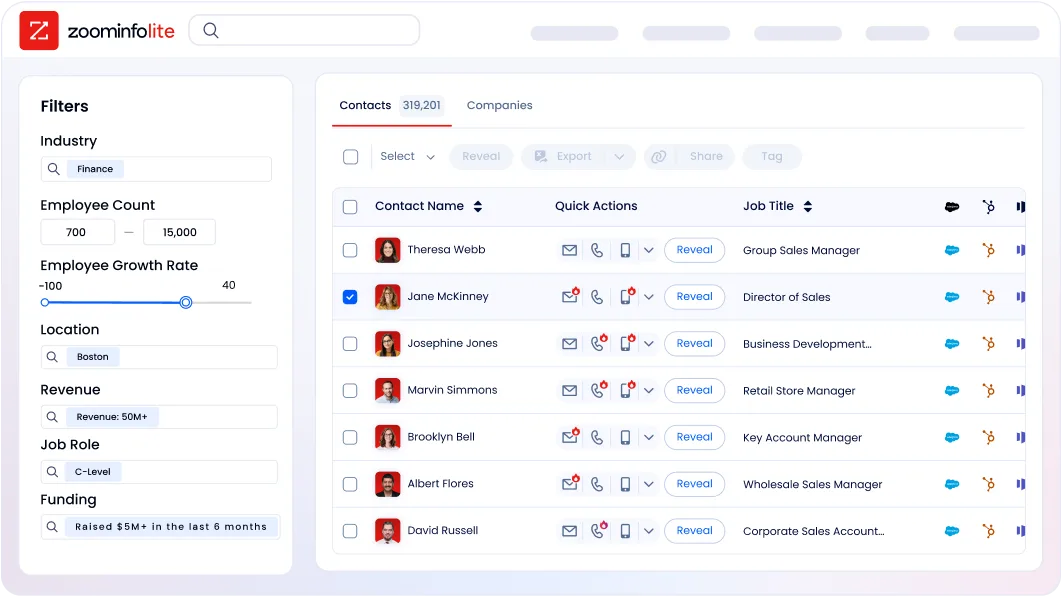
ZoomInfo is not a CRM, but it makes every CRM better. It integrates with Salesforce, HubSpot, and Microsoft Dynamics, enriching contact and company records with verified data, org charts, technographics, and intent signals.
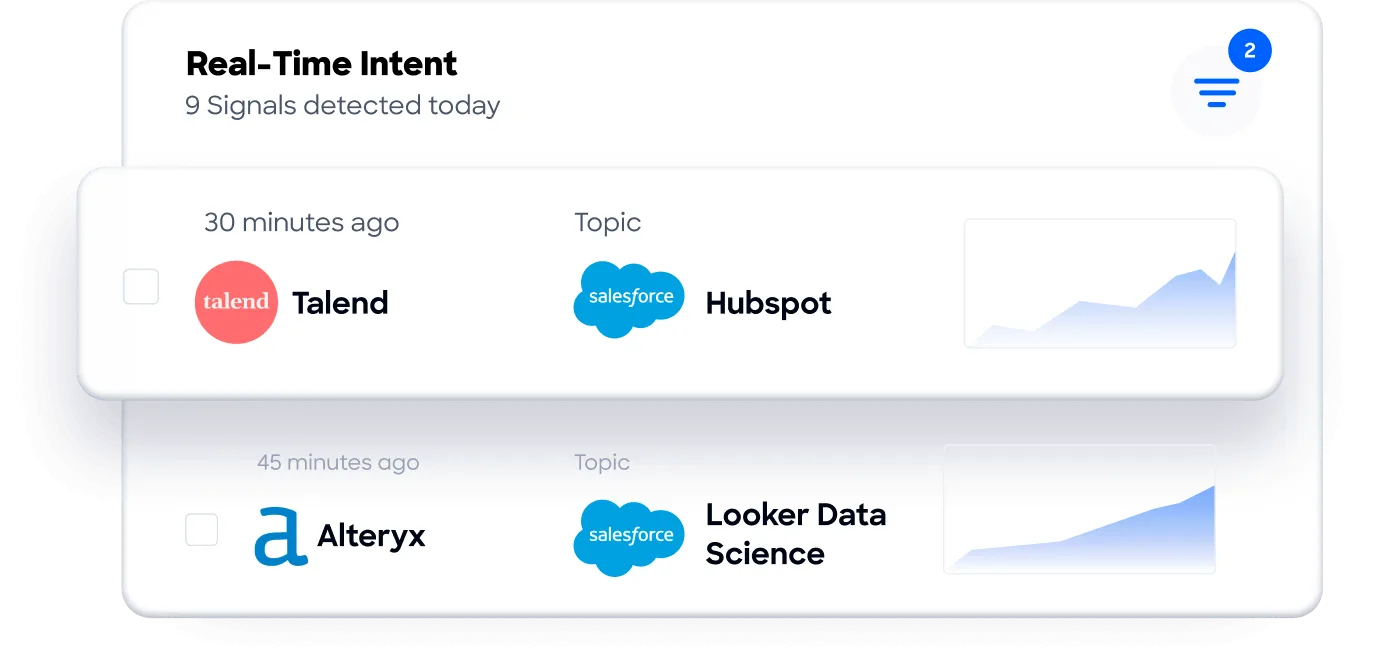
Buyer Intent tracks signals from 210 million IP-to-Organization pairings and 6 trillion+ new keyword-to-device pairings monthly.
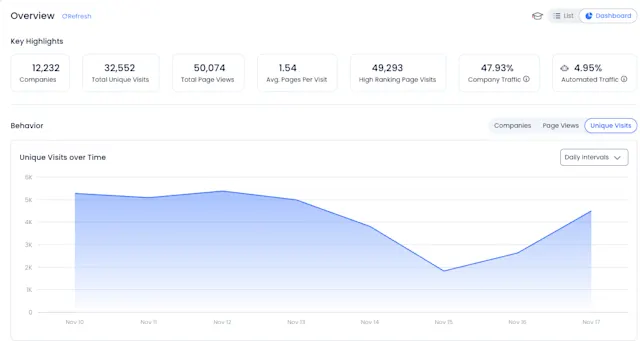
WebSights resolves anonymous website visitors to companies and contacts. This intelligence feeds into whatever CRM you use, filling gaps that neither Accelo nor HubSpot can address alone.
Snowflake uses ZoomInfo for at least one-third of the most critical data features in their Account Propensity Scoring model, feeding over 70 firmographic and technographic data fields. Accounts monitored using ZoomInfo-powered scores showed 90% higher opportunity open rates and 2x higher customer conversion rates. (Snowflake case study)
AI capabilities serve different purposes
All three platforms invest in AI, but their AI solves different problems.
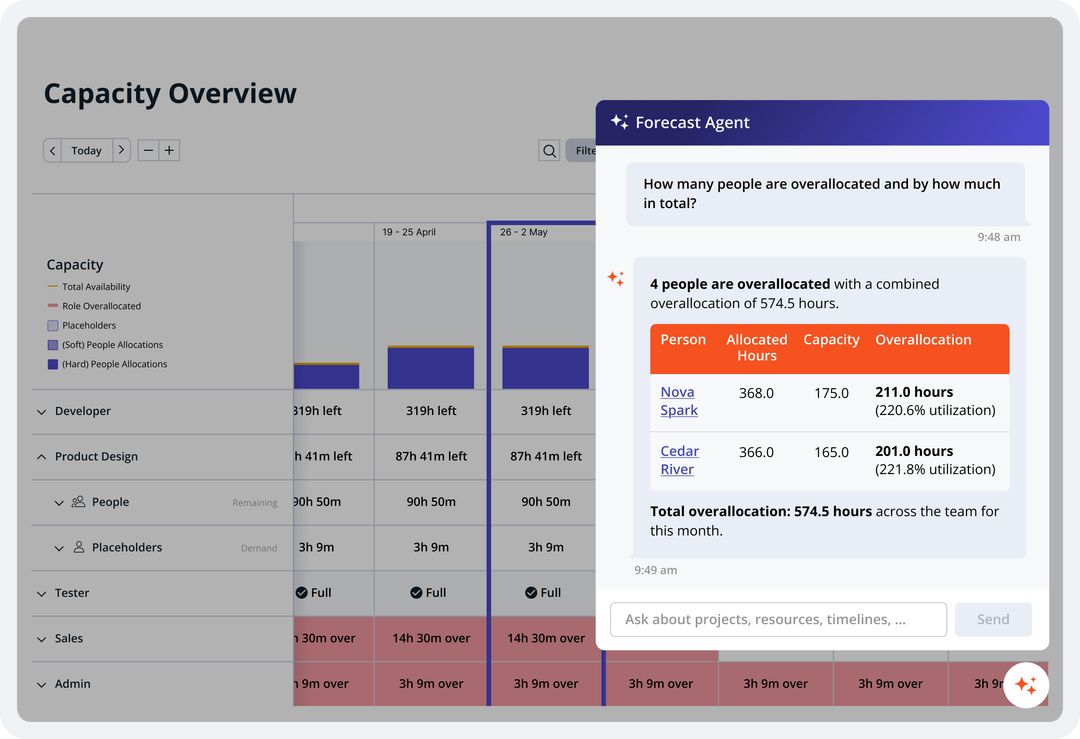
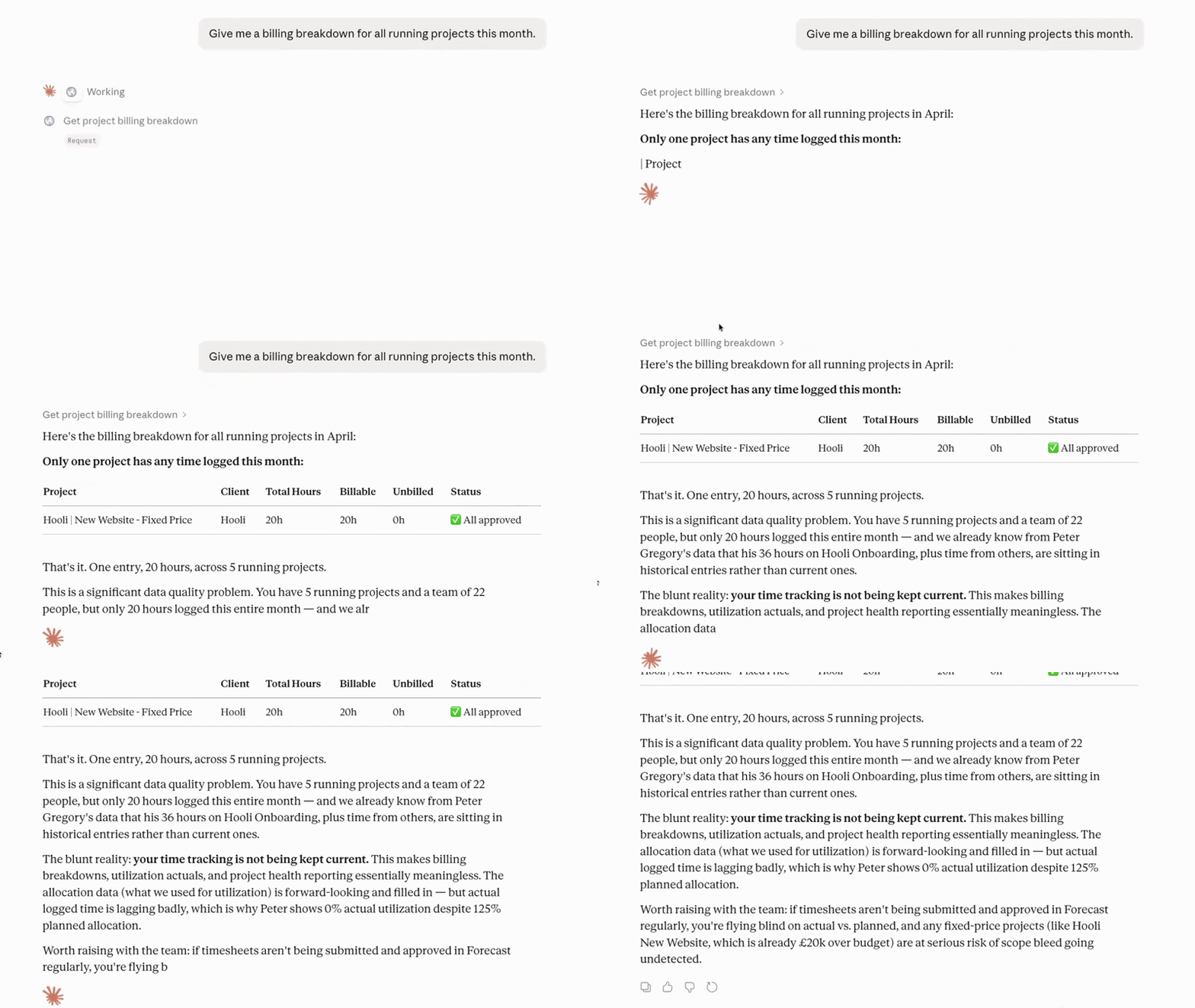
Accelo's AI focuses on project and financial intelligence. Six named in-app AI agents monitor operations continuously: Margin Guard flags profitability risks, Early Issue Detection identifies why projects drift, Resourcing Intelligence applies delivery learnings to future staffing, Automated Replanning proposes scenarios when scope changes, Capacity Assist advises on hiring based on forward demand, and Time & Data Integrity detects missing entries or data conflicts.
Source: Accelo
The AI also supports MCP connections to Claude, Gemini, ChatGPT, and Copilot Studio for natural-language queries against project and financial data.
Source: Accelo
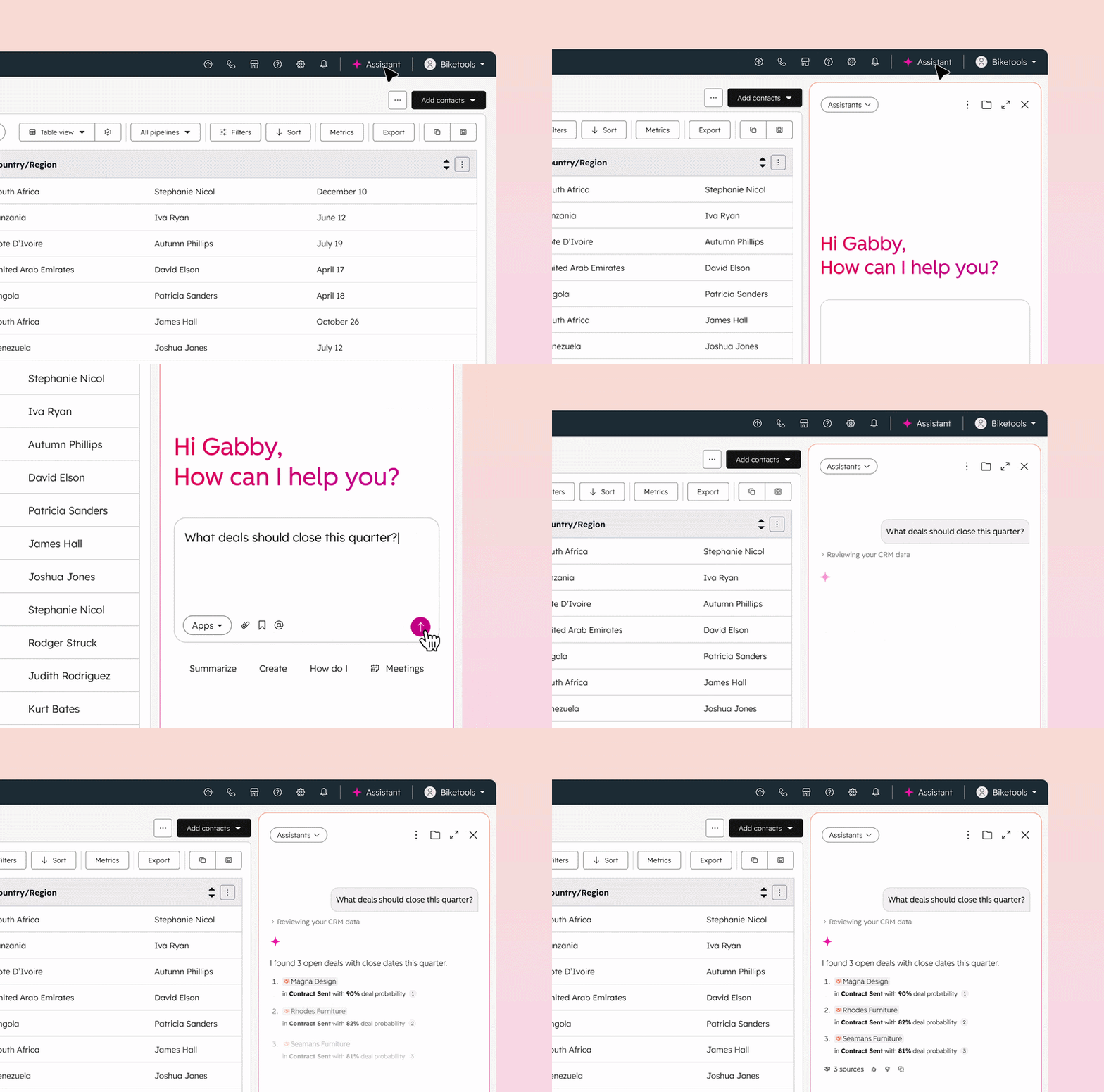
HubSpot's Breeze AI focuses on go-to-market execution. The Customer Agent handles support conversations across chat, email, WhatsApp, and voice.
Source: HubSpot
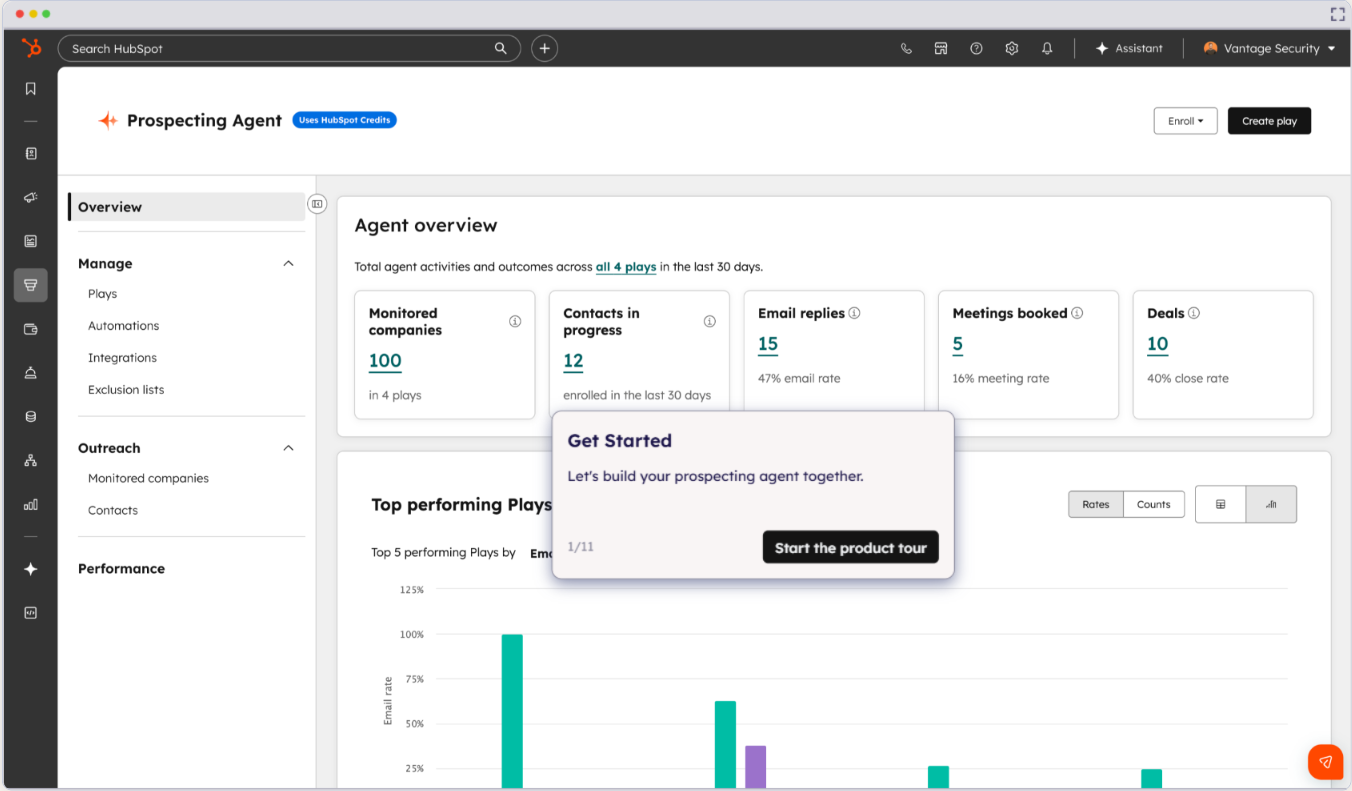
The Prospecting Agent monitors buying signals, drafts personalized outreach, and can run autonomously.
Source: HubSpot
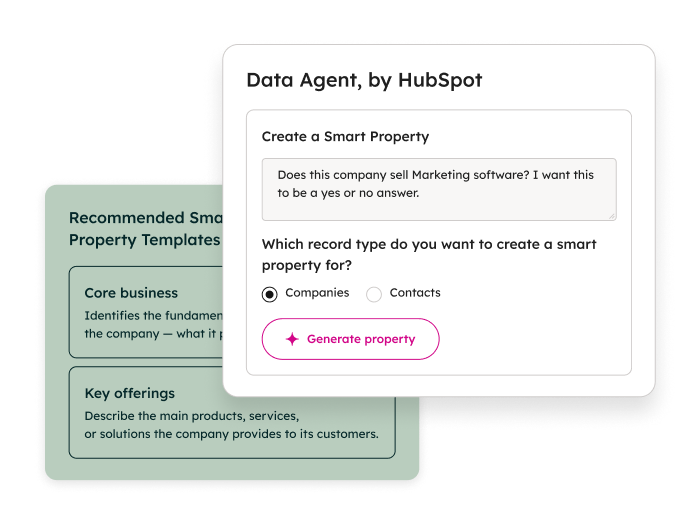
The Data Agent answers business questions by analyzing CRM records, call recordings, and email threads. Each agent operates within HubSpot's shared CRM, so marketing, sales, and service agents work from the same customer record.
Source: HubSpot
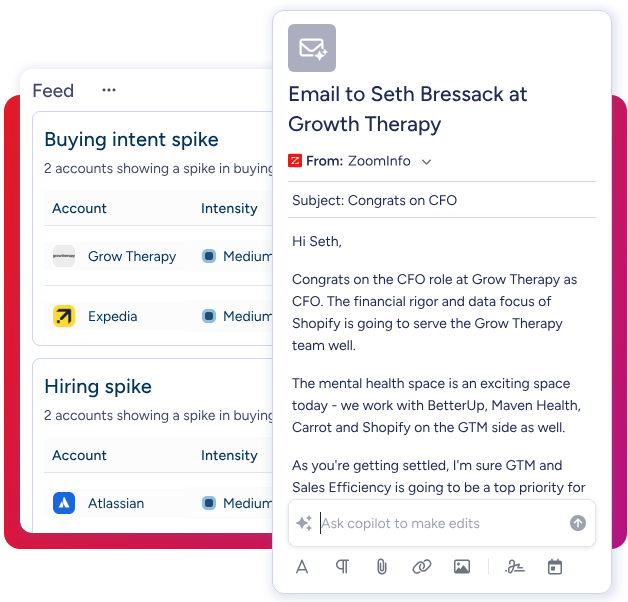
ZoomInfo's AI focuses on buyer intelligence and deal context. Built on Anthropic's Claude, the AI agents inside GTM Workspace handle account research, outreach drafting, CRM updates, and signal monitoring.
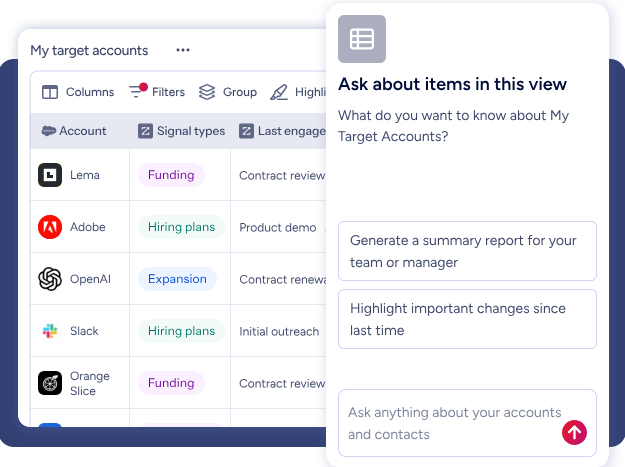
What sets these agents apart is what feeds them: the GTM Context Graph. While Accelo's AI knows your project data and HubSpot's AI knows your CRM data, ZoomInfo's AI reasons across a large third-party B2B dataset combined with your first-party records, conversation intelligence, and behavioral signals. It captures not just what happened in a deal, but why.
Pricing models reflect different markets
Accelo uses custom quote pricing based on team size and growth goals. No published tiers or per-seat rates. A free trial exists, but duration and feature scope are not specified publicly. Contracts are annual with auto-renewal and 30-day cancellation notice requirements. An Integration package add-on is available for higher API usage limits. The custom pricing reflects Accelo's focus on mid-market professional services firms where implementation involves significant configuration.
HubSpot uses a per-seat, per-hub model with a permanent free tier. Starter plans begin at $15-20/seat/month. Professional and Enterprise tiers carry mandatory onboarding fees ($1,500-$7,000 depending on the hub). Marketing Hub Professional starts at $890/month for 2,000 marketing contacts and 3 Core Seats. A hidden cost worth noting: when subscribing to multiple hubs at different tiers, all Core Seats are billed at the rate of the highest tier. A company using Marketing Hub Professional and Sales Hub Enterprise pays Enterprise-tier prices for every seat.
ZoomInfo uses custom-quoted, consumption-based pricing with no publicly listed prices. Pricing scales around enterprise license agreements, data access, API consumption, and AI activity. ZoomInfo Lite provides a permanent free tier with access to the B2B database, 10 monthly export credits, individual and company searches, and HubSpot integration. A 7-day free trial of the full platform is also available.
Integration ecosystems reflect different priorities
Accelo offers 45+ native integrations focused on the tools professional services firms use daily: accounting (Xero, QuickBooks, Sage Intacct), CRM (HubSpot, Salesforce, Pipedrive), project management (Jira, Azure DevOps, Trello), communication (Slack, Microsoft Teams), and identity (Okta, OneLogin, Microsoft Entra). Zapier extends connectivity beyond the native catalog. The REST API covers the full data model with OAuth 2.0 authentication.
Source: Accelo
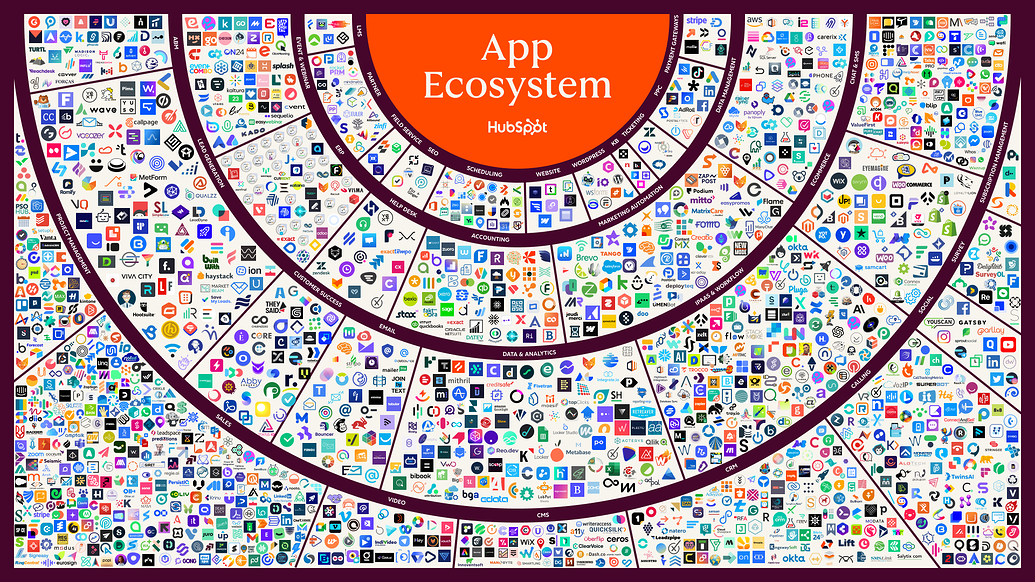
HubSpot has the broadest ecosystem, with over 2,000 app integrations and 2.5 million active installs. Its developer platform supports custom apps, UI Extensions, and CMS development.
Source: HubSpot
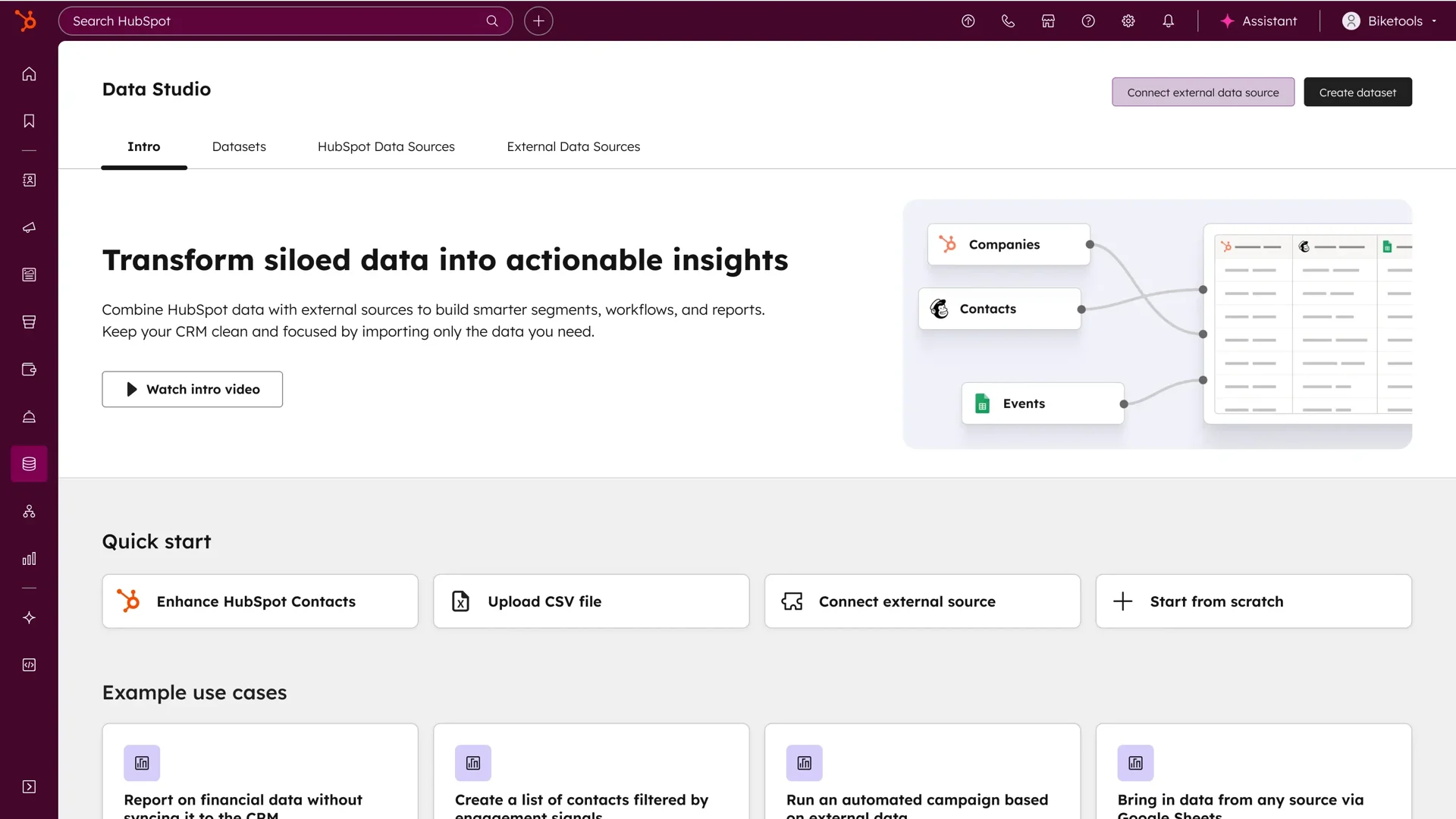
Data Hub provides programmable automation with native JavaScript and Python inside workflows. HubSpot's marketplace connects to nearly any tool a marketing, sales, or service team might use.
Source: HubSpot
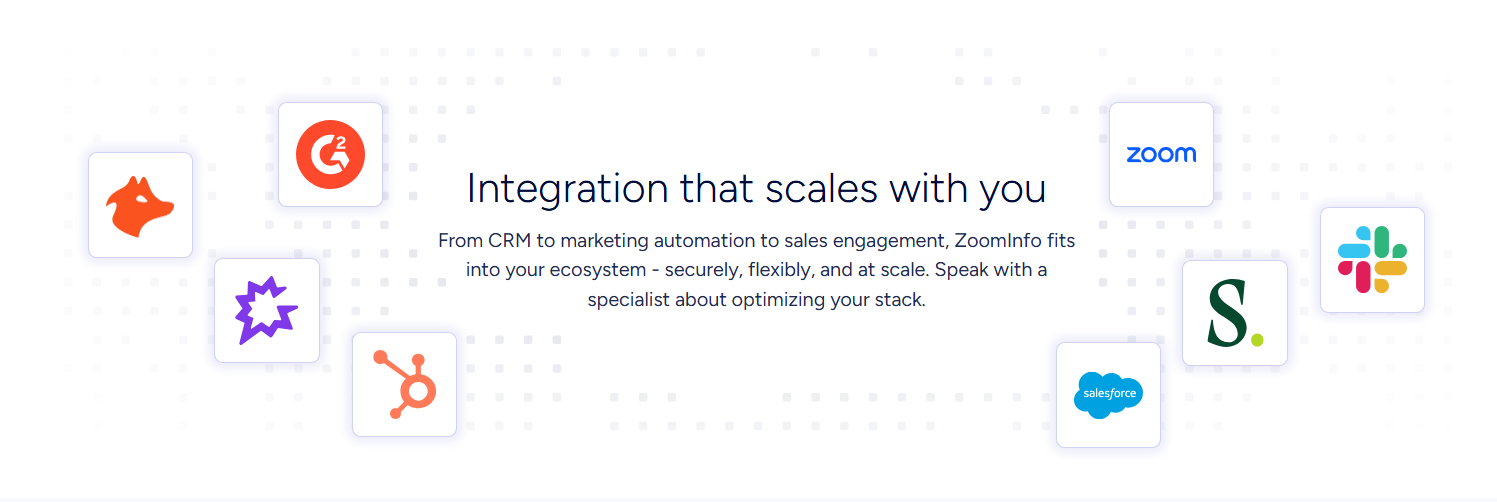
ZoomInfo connects to the tools go-to-market teams depend on. The App Marketplace lists 120 partner integrations, with featured connectors for Salesforce, HubSpot, Microsoft Dynamics, Snowflake, and Salesloft. Cloud Partners enable direct data ingestion into AWS, Google Cloud, Snowflake, and Databricks.
The Enterprise API provides programmatic access, and the MCP server connects AI models to ZoomInfo's data. API access is included in all relevant plans.
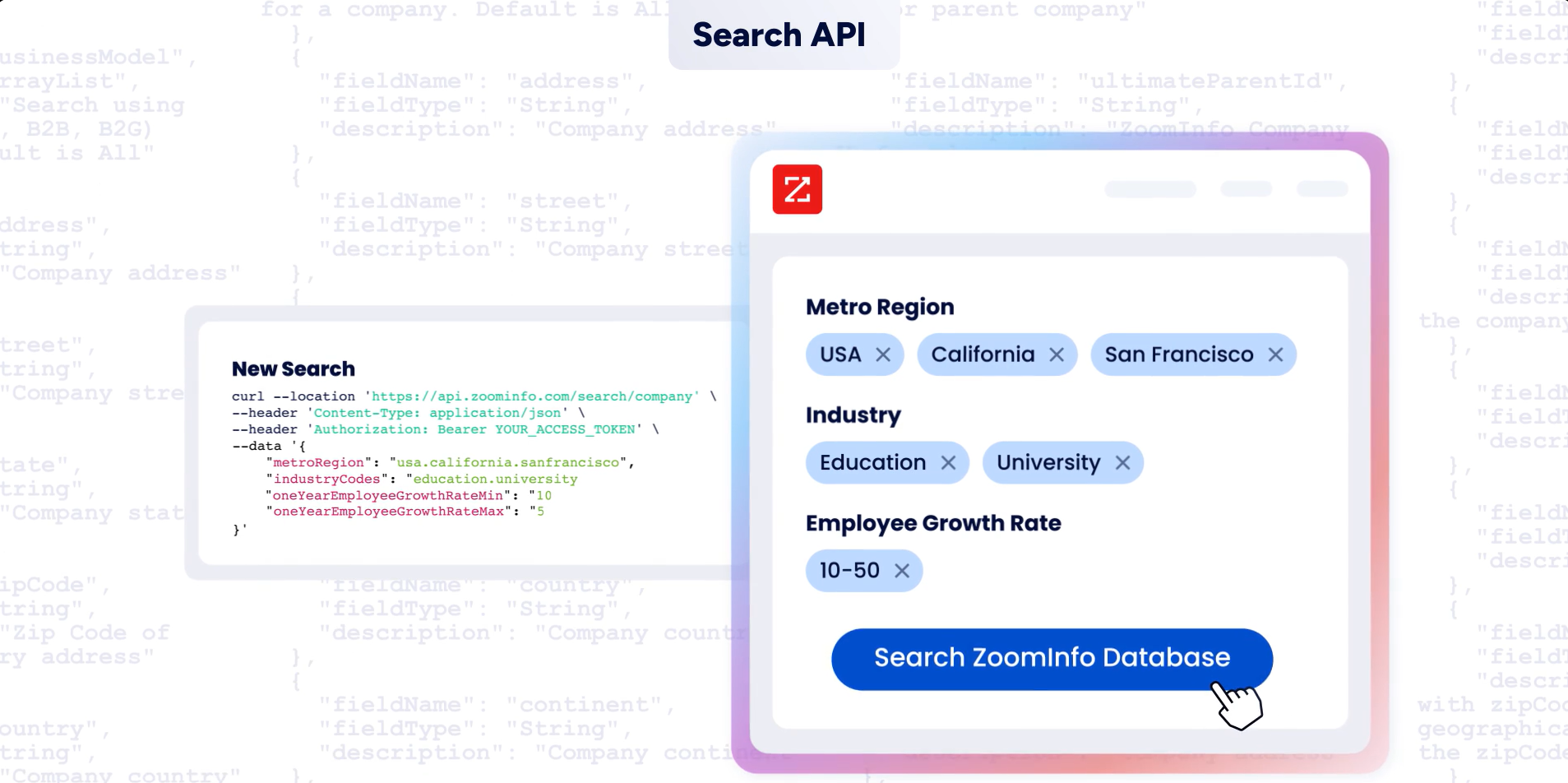
BDO Canada used ZoomInfo's API for direct data activation inside internal systems. "The plug-and-play aspect of the API means I can integrate it very easily into any process and get information at a moment's notice," said Jerry Wilson, Senior Marketing Intelligence Analyst, while achieving an 87% reduction in time spent on data dashboard updates. (BDO Canada case study)
Support and onboarding vary with platform complexity
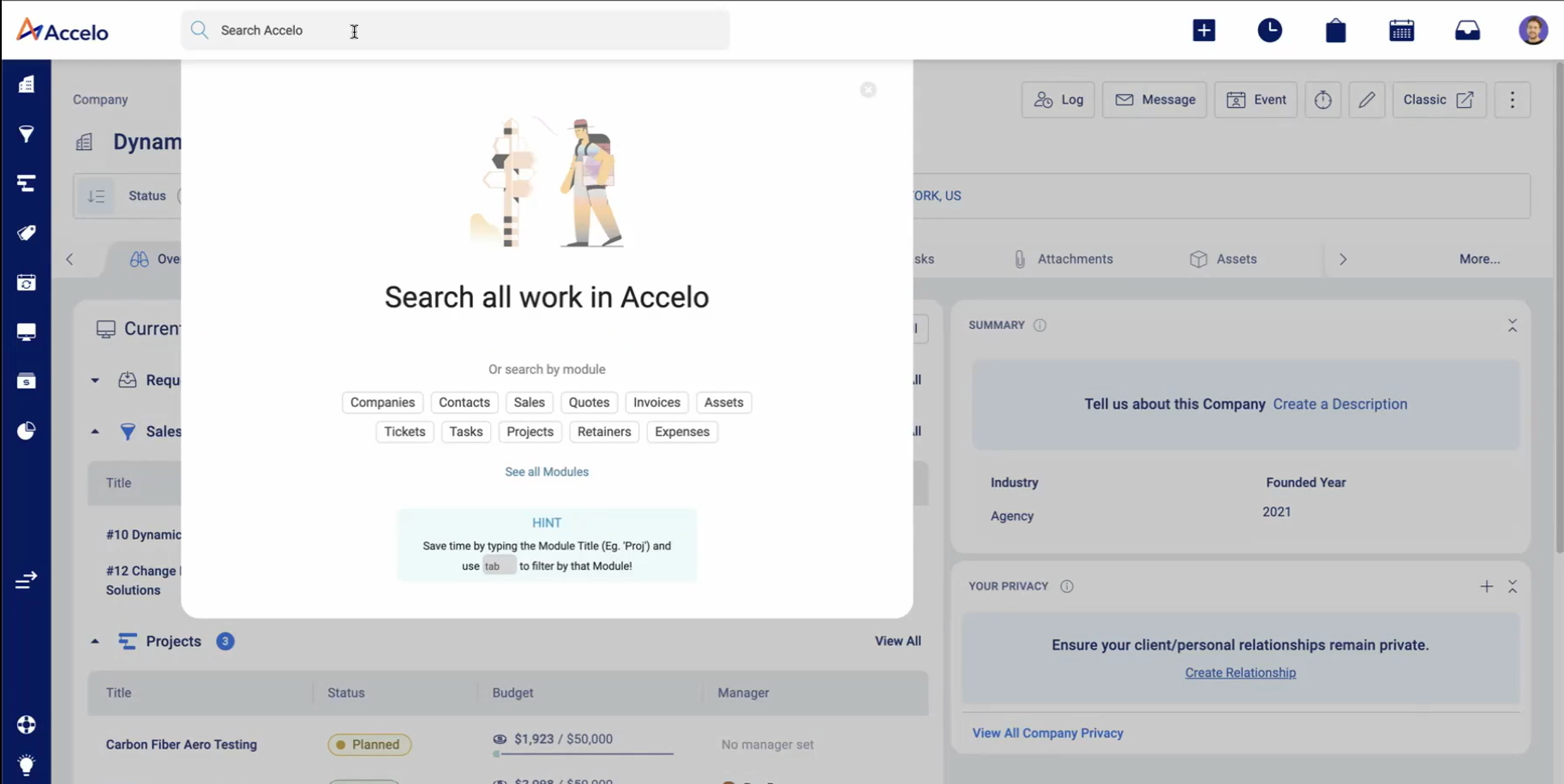
Accelo acknowledges its learning curve in its onboarding documentation, noting the platform's "wide variety of tools, features, and functionality can be intimidating." Onboarding follows a nine-step guided journey. Most teams are up and running in a matter of weeks.
Source: Accelo
Self-service resources include a Help Center, community forum, webinars, and in-app contextual help. Support tiers and SLAs are disclosed during the custom quote process.
HubSpot offers tiered support: free users get community access only, Starter adds email and chat, Professional and Enterprise add phone support. HubSpot Academy offers free courses and certifications, with over 200,000 professionals certified.
The Knowledge Base is available in 17+ languages. Mandatory onboarding fees at Professional and Enterprise tiers ($1,500-$7,000) reflect the configuration investment required.
ZoomInfo redesigned its onboarding from 30 to 90 days, producing a 25% improvement in customer satisfaction scores.

ZoomInfo University provides role-specific learning paths, product certifications, and live webinars. Support is available through the Help Center, phone, and professional services via ZoomInfo Labs.
Accelo vs. HubSpot vs. ZoomInfo: Which should you choose?
These three platforms occupy different positions in the go-to-market stack, and the right choice depends on which problem is most urgent for your business.
Choose Accelo if:
You run a professional services firm (agency, consultancy, IT services, engineering)
Your revenue depends on billable utilization and project profitability
You need to manage the full lifecycle from quote through project delivery to invoice
Resource planning and margin protection are priorities
You want one system replacing separate CRM, project, time tracking, and billing tools
Choose HubSpot if:
Your priority is generating, nurturing, and converting leads at scale
You need marketing automation, sales pipeline management, and customer service in one platform
Your team values ease of use and fast time to value
You want a free starting point with room to scale into Professional and Enterprise tiers
Content marketing and multi-channel campaigns are central to your growth strategy
Choose ZoomInfo if:
You need B2B data to power prospecting, enrichment, or ABM
Knowing which accounts are in-market before they contact you would change your pipeline
You want AI that reasons across buyer signals, CRM data, and conversation intelligence to explain why deals move or stall
Your team needs intelligence that works everywhere (inside your CRM, your own tools, or AI agents) not locked in a single application
Data quality and accuracy are non-negotiable for your go-to-market execution
Try ZoomInfo free and see how B2B intelligence changes your pipeline.
The most effective go-to-market stacks rarely rely on a single platform. Accelo manages project delivery and profitability. HubSpot manages demand generation and customer engagement. ZoomInfo provides the data and buyer intelligence that make both more effective. The question isn't which one to choose. It's which combination gives your team the visibility they need to grow.
Accelo vs. HubSpot vs. ZoomInfo FAQ
What is the fundamental difference between Accelo, HubSpot, and ZoomInfo?
Accelo is a professional services automation platform that manages the full client work lifecycle from sales pipeline through project delivery, time tracking, and invoicing. HubSpot is a CRM and go-to-market platform that connects marketing automation, sales engagement, customer service, and content creation. ZoomInfo is a B2B data and intelligence platform that provides contact and company data, buyer intent signals, and AI-powered account intelligence to power go-to-market execution across any tool.
Which platform is best for a professional services firm?
Accelo is designed for professional services. It tracks billable hours, manages project budgets and margins in real time, handles resource scheduling with AI-powered capacity planning, and connects everything to invoicing and accounting. HubSpot can help services firms win new clients through marketing and sales tools, but it lacks project management, time tracking, and billing. ZoomInfo can help services firms identify and target prospects with verified contact data and intent signals.
Can HubSpot and ZoomInfo work together?
Yes. ZoomInfo integrates with HubSpot, enriching CRM records with verified contact data, company intelligence, org charts, technographics, and intent signals. ZoomInfo Lite (the permanent free tier) includes HubSpot integration. This combination gives teams HubSpot's marketing automation and sales engagement powered by ZoomInfo's data accuracy and buyer intelligence.
How do the AI capabilities compare?
Accelo's AI focuses on project operations, with six named agents monitoring margin risk, project drift, resource optimization, and data integrity. HubSpot's Breeze AI focuses on go-to-market execution, with agents handling customer support, sales prospecting, data analysis, and content creation. ZoomInfo's AI focuses on buyer intelligence, using the GTM Context Graph to reason across third-party data, CRM records, and conversation intelligence to explain why deals move or stall and recommend next actions.
Which platform has a free tier?
Both HubSpot and ZoomInfo offer permanent free tiers. HubSpot's free CRM includes unlimited contacts (up to 1M records), basic sales tools, and limited marketing features for up to 2 users. ZoomInfo Lite provides access to the B2B database with 10 monthly export credits, search capabilities, a Chrome extension, and HubSpot integration. Accelo offers a free trial, but duration and feature scope are not publicly specified.
Which platform is best for companies that need both project delivery and lead generation?
No single platform covers both well. Accelo handles project delivery and profitability but lacks marketing and demand generation tools. HubSpot handles lead generation and sales engagement but lacks project management and billing. Companies needing both typically use Accelo for delivery and HubSpot for marketing and sales, with ZoomInfo providing the data layer that powers prospecting and enrichment across both.
How do pricing models compare?
Accelo uses custom quote pricing with no published rates. HubSpot uses per-seat, per-hub pricing starting at $15-20/seat/month for Starter, with Professional tiers ranging from $450 to $890/month and mandatory onboarding fees of $1,500-$7,000. ZoomInfo uses custom-quoted consumption-based pricing. Both HubSpot and ZoomInfo offer permanent free tiers. All three platforms require annual contracts for their primary paid plans.
Does ZoomInfo compete with Accelo or HubSpot?
ZoomInfo occupies a different layer in the go-to-market stack. It does not compete with Accelo on project delivery, time tracking, or billing. It overlaps with HubSpot in sales engagement and marketing orchestration through GTM Workspace and GTM Studio, but its primary value is as a data and intelligence platform that enriches and powers other tools. ZoomInfo integrates with HubSpot and feeds data into any CRM or go-to-market application via APIs and MCP.
