
Accord aims to make sales methodology stick. Most sales tools track deals after the fact. Accord takes a different approach: it embeds frameworks like MEDDPICC into the workspace where selling happens, turning process compliance from a training exercise into a default. Its shared buyer-seller environment, automated execution scoring, and AI-generated deal assets have earned it a 4.9/5 rating on G2 and customers including Stripe, Figma, and Samsara.
To create this Accord review, we analyzed the platform in depth. We believe it's the right choice if:
You've invested in a sales methodology (MEDDPICC, SPICED, or custom) but struggle with consistent adoption
You run complex, multi-stakeholder enterprise deals lasting two months or longer
You want a shared workspace where buyers and sellers collaborate on deal milestones
You need to turn top-performer behaviors into repeatable, enforced processes
You have dedicated RevOps or enablement staff to build and maintain playbooks
However, Accord doesn't provide account intelligence, verified contact data, or buying signals (the inputs that determine which deals to pursue and when to act).
This is where ZoomInfo enters the picture: a GTM platform whose B2B data, GTM Context Graph, and real-time buying signals provide the intelligence that powers more informed deal execution.
We've included a detailed look at ZoomInfo later in this Accord review as the intelligence layer that makes structured deal execution more effective. If you're ready to explore how account intelligence transforms your sales process, you can start with ZoomInfo's free trial here.
What is Accord?
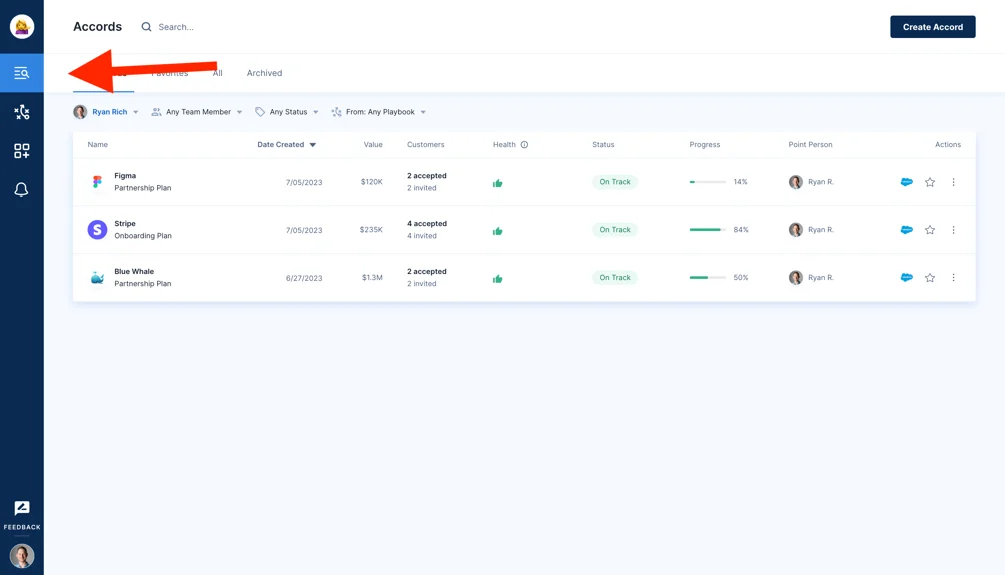
Accord is an AI-powered revenue execution platform founded in early 2020 by Ross Rich, Ryan Rich, and Wayne Pan. The company went through Y Combinator's Winter 2020 batch and has raised roughly $10 million across seed and Series A rounds, with the Series A led by Diana Berlin of Matrix Partners in January 2023.
Source: Accord
The founding insight came from an operational frustration: revenue organizations had figured out their ideal customer journey but had no system to enforce it. Top sellers naturally multi-threaded stakeholders, built business cases, and followed structured deal processes, but these habits couldn't be replicated across a team. Ross Rich, who joined Stripe in 2015 as one of its first salespeople and helped scale the organization from 3 to 300+ reps, experienced this gap firsthand.
Accord's answer is to make the playbook the workspace where selling happens. Instead of training reps on a methodology and hoping they apply it, the platform embeds frameworks into live deal environments where both sellers and buyers operate. The product suite spans five modules: Playbooks, Content Management, Stakeholder Mapping, Intelligence (AI), and Performance Management.
The platform targets mid-market to enterprise B2B SaaS companies with complex sales cycles and buying committees of five or more stakeholders.
Accord Pros & Cons
Pros | Cons |
|---|---|
- Methodology enforcement built into the deal workspace | - Platform fee added to per-seat pricing (amount undisclosed) |
- Buyer-seller collaboration via shared workspaces | - Content Management, SSO, and API locked to Enterprise tier |
- 4.9/5 rating on G2 with organic rep adoption | - Limited native integrations (Salesforce, HubSpot, Slack, Gmail, Gong) |
- Dual scoring system (automated execution + manual coaching) | - No built-in account intelligence or contact data |
- AI-powered account plans, business cases, and stakeholder recommendations | - Buyer-side adoption requires prospects to create accounts |
- Modular playbooks with conditional logic | - No self-serve pricing or public free trial |
- CRM stage gates enforce process compliance | - Early-stage company (~$17M raised) |
Accord Review: How it Works & Key Features
Playbooks & Methodology Enforcement: Accord turns sales process documentation into the workspace where deals actually happen.
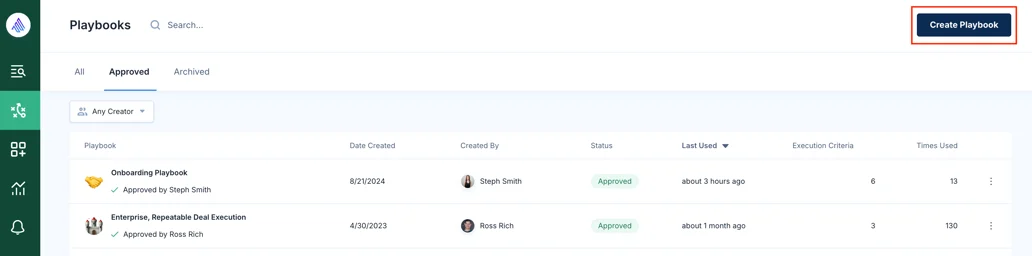
The Playbook system works in three phases: Set, Enforce, and Score. Admins build playbooks containing a structured summary page, staged next steps, a resource library, and placeholder stakeholder roles. When a rep opens a new deal, they create an Accord from the approved playbook, and all stages, steps, resources, and roles pre-populate automatically.
Source: Accord
What makes this different from a CRM checklist is that the playbook IS the deal workspace. Reps don't complete steps in one tool and log them in another. MEDDPICC qualification steps, SPICED discovery frameworks, or custom methodology checkpoints are built directly into the deal environment where reps manage next steps, share resources with buyers, and track milestones.
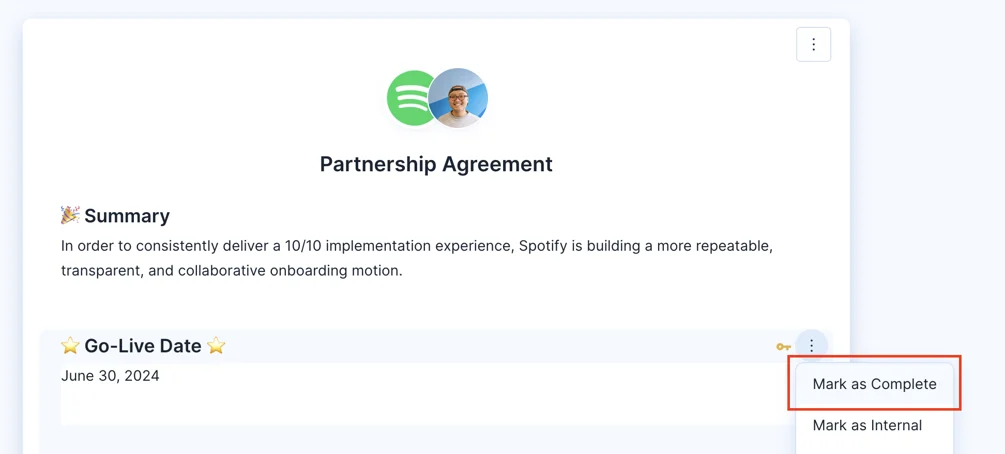
Admins define Execution Criteria tied to specific steps, and these criteria can be linked to CRM stages as exit criteria, blocking deal advancement until required elements are complete. Five types of criteria are available: Steps (completion tracking), Milestone Steps (due date tracking), Placeholder Roles (stakeholder identification), Picklists (structured qualification data), and Summary Text (free-text fields like business cases). All Execution Criteria data syncs to Salesforce or HubSpot in real time without manual rep entry.
Source: Accord
The modular playbook feature adds conditional logic based on vertical, product line, and geography, so one master playbook adapts to different deal contexts without maintaining a library of near-identical versions. Admins can preview each conditional variant before publishing.
Stakeholder Mapping & Buyer Collaboration: Accord creates a shared deal environment where both sellers and buyers work side by side.
Accord's Stakeholder Mapping addresses the multi-threading gap that kills enterprise deals. Admins define which buying committee roles must be present in every deal (economic buyer, technical evaluator, champion), and these appear as placeholder roles in the playbook's team section. Reps build org charts within each deal, capturing reporting structure, influence level, sentiment, and strategic notes.
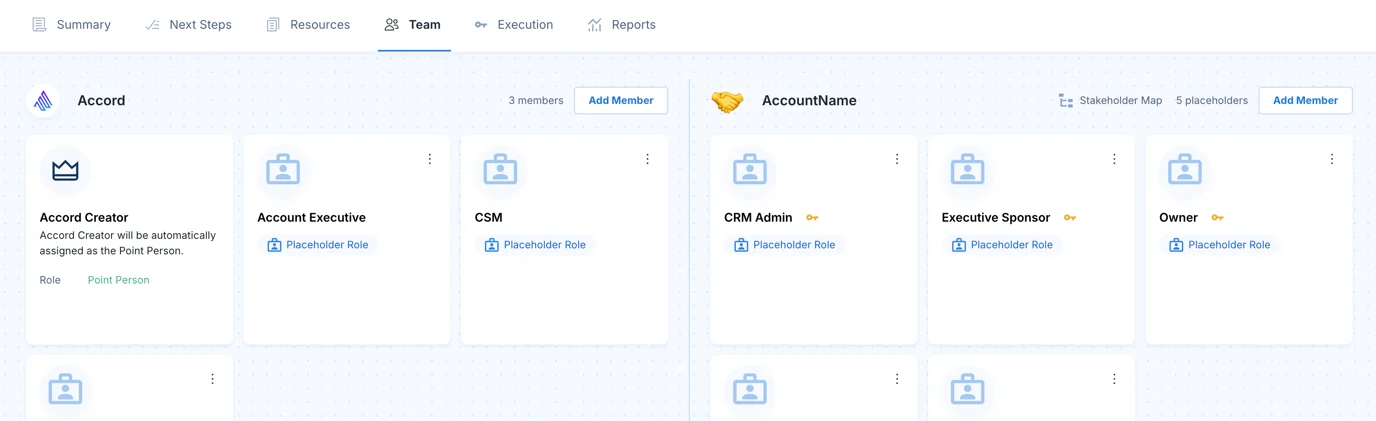
Source: Accord
On the Enterprise tier, Stakeholder Recommendations uses AI to suggest up to 10 individuals per role when a rep links a customer domain to an Accord. The AI analyzes the buyer's organizational structure and matches candidates against the placeholder roles defined in the playbook.
The buyer collaboration model sets Accord apart from most deal management tools. Buyers receive an email invitation, accept it, and complete a short profile before gaining workspace access. The buyer-facing view is nearly identical to the seller view, with internal-only sections, execution scores, and opportunity data hidden from customer accounts. Specific stages, steps, and resources can be marked internal-only, visible to the selling team but invisible to the buyer.
Intelligence & Performance Management: Accord scores deal execution automatically and gives managers coaching tools grounded in specific deal activity.
The Performance Management feature runs a dual-score system. The automated Execution Score (0-100) measures whether playbook steps were completed. The manual Coaching Score (1-3 scale) lets managers assess execution quality. Neither score overrides the other, separating "did the rep do the step?" from "did the rep do it well?"
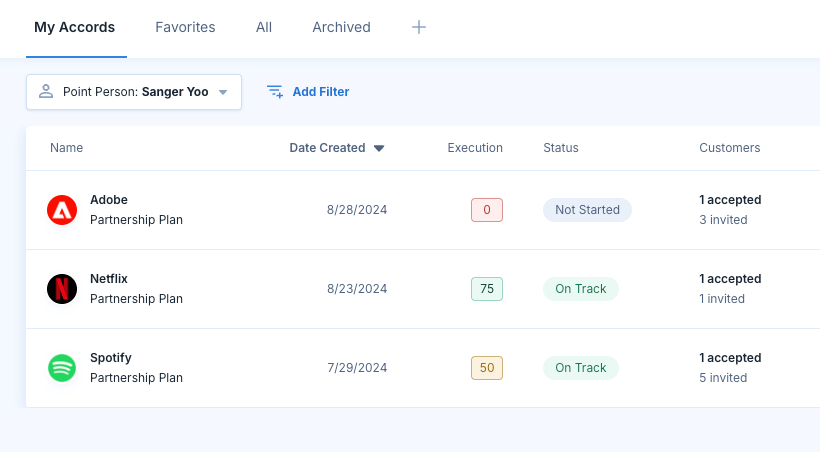
Source: Accord
The Deal Review tab sits inside each live deal as an internal-only workspace where managers conduct coaching conversations anchored to specific execution criteria. Workspace admins can configure Salesforce to block stage advancement until a deal review is complete, making review cadence a hard process gate rather than an optional suggestion.
Accord Intelligence generates account plans, executive summaries, and business cases in one click. It draws on three inputs: Playbook Positioning (admin-configured brand voice, value propositions, and messaging), uploaded sales methodology documentation (supporting MEDDIC, SPICED, Challenger, and Value Selling templates), and third-party research on the buyer's company. When company messaging changes, a single update to Playbook Positioning propagates to all active deals.
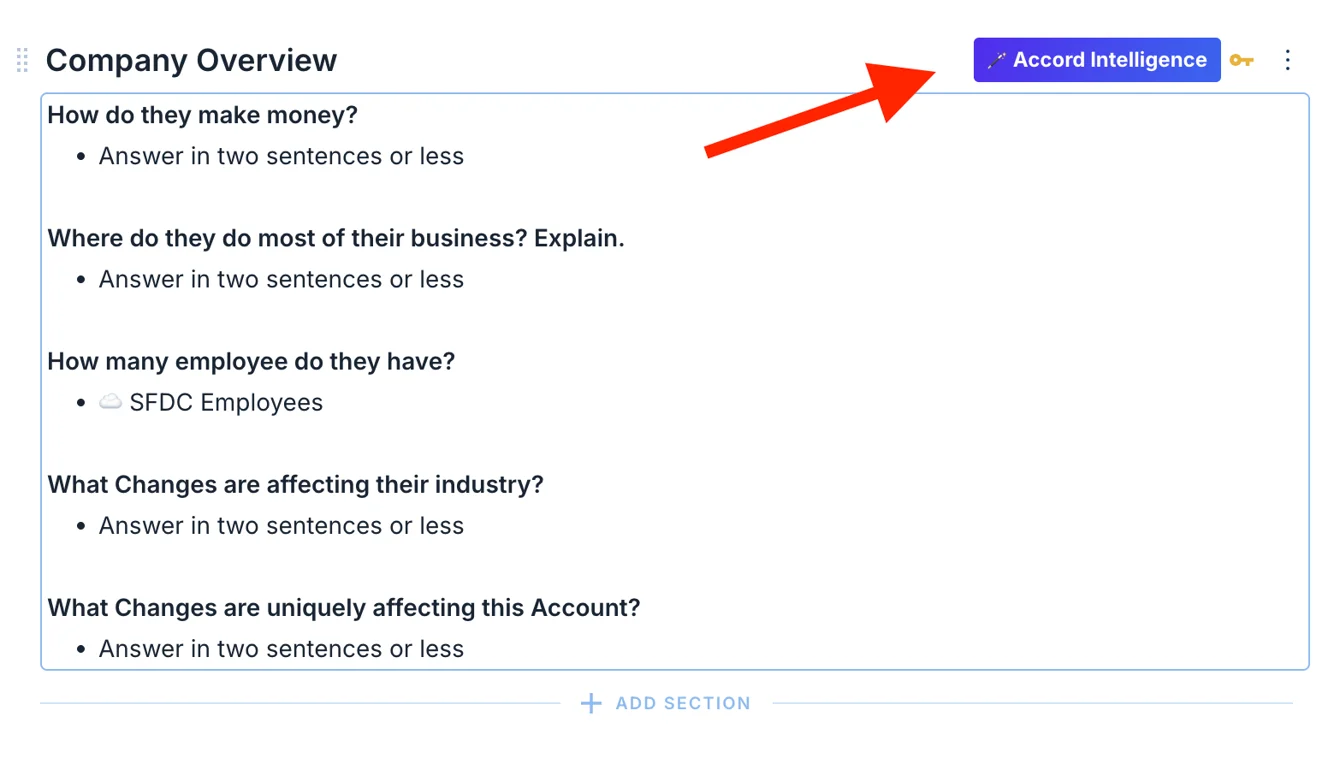
Source: Accord
Pricing & Plans: Accord uses per-seat pricing with an undisclosed platform fee across all tiers.
Accord offers three tiers, all requiring a sales conversation:
Starter | Growth | Enterprise | |
|---|---|---|---|
Starting price | $99/user/month + platform fee | $119/user/month + platform fee | Custom + platform fee |
Core features | Playbooks, Execution Scoring, Stakeholder Management, MAPs, Reporting, Deal Reviews, Accord Intelligence | Everything in Starter | Everything in Growth |
Integrations | Salesforce (Opportunities), HubSpot (Deals), Zapier | + Native CRM, Gong | + SSO, API, Salesforce Accounts |
Exclusive features | — | — | CMS, Sandbox, Positioning Enforcement, AI Stakeholder Recommendations |
Onboarding | 2 sessions | 10 hours + 1 playbook build | 1:1 training + 3 playbook builds |
Account Manager | No | Yes | Yes |
The platform fee appears alongside every tier on the pricing page, but its amount is not published. No free plan or self-serve free trial is publicly advertised. The Gong integration requires a Growth or Enterprise subscription, and SSO and API access are Enterprise-only.
Where Accord Falls Short
Accord structures and enforces deal execution well, but several limitations appear when you evaluate it as part of a complete revenue technology stack.
No Built-in Account Intelligence. Accord structures how reps execute deals but doesn't provide the data they need to execute them well. There is no built-in contact database, no company attributes, no intent signals, and no buying behavior data. Reps still need separate tools for account research, contact discovery, and identifying when prospects are in-market. Accord Intelligence generates account plans using third-party research, but the platform itself does not serve as a data layer for prospecting or account prioritization.
Narrow Integration Footprint. Native integrations are limited to Salesforce, HubSpot, Slack, Gmail, Gong, and Zapier. Microsoft Dynamics, Outreach, Salesloft, and LinkedIn Sales Navigator are not natively supported. API access is Enterprise-only and currently in beta. Teams using tools outside Accord's integration list must rely on Zapier or custom API work, which favors RevOps teams with technical resources.
Pricing Opacity. Every tier carries an undisclosed platform fee on top of per-seat charges, and all plans require a sales conversation. There is no self-serve checkout, no published platform fee amount, and no public free trial. Total cost of ownership is impossible to estimate without engaging Accord's sales team.
Enterprise Feature Gating. Content Management, API access, SSO, Sandbox, Positioning Enforcement, and AI-powered Stakeholder Recommendations are all exclusive to the Enterprise tier. Teams that need content management or API connectivity (common requirements even at mid-market) cannot start on a lower tier and grow into them.
Buyer Adoption Dependency. The collaborative workspace model requires external stakeholders to accept invitations and create accounts. In deals where prospects are reluctant to adopt another tool, or where IT security policies restrict external SaaS access, buyer-seller collaboration becomes less useful. Accord supports approved domain whitelisting, but there is no documented guest mode for buyers who want to view deal context without creating an account.
These limitations follow naturally from building a platform focused on deal execution rather than the broader intelligence layer. But they highlight a gap: executing deals well requires knowing the right accounts to pursue, the right stakeholders to engage, and the right moments to act, and that intelligence lives outside Accord.
The Intelligence Layer Behind Deal Execution: ZoomInfo
ZoomInfo addresses the intelligence gap in deal execution by providing the data, signals, and context that make each step of a structured sales process more effective. As a GTM platform built on one of the largest B2B datasets in the industry, ZoomInfo gives revenue teams answers to questions Accord was not designed to address: who to sell to, when to engage, and what context matters for each account.
Comprehensive B2B Data: ZoomInfo provides the verified contact data and company intelligence that feed informed deal execution.
Where Accord relies on reps (or AI recommendations on Enterprise) to identify stakeholders, ZoomInfo starts with a verified data foundation: 500M contacts, 100M companies, 135M+ verified phone numbers, and 200M+ verified business email addresses. This data flows through a multi-source verification pipeline backed by 300+ human researchers, reaching up to 95% accuracy on first-party data.
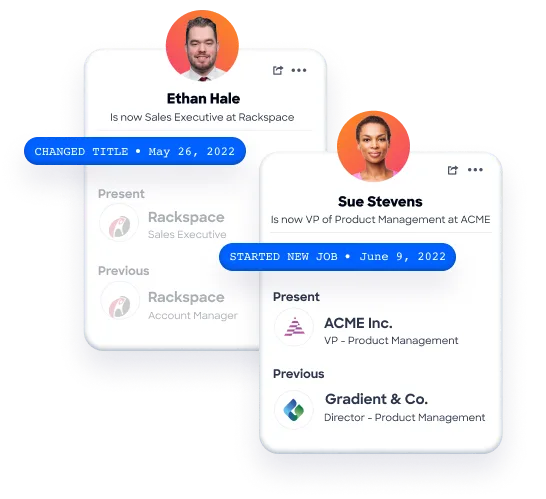
For teams using Accord's stakeholder mapping, this matters directly. Instead of manually researching buying committee members, reps can pull verified org charts, direct dials, and department structures from ZoomInfo and bring that intelligence into their deal process. Contact tracking with job-change alerts flags when champions leave or new decision-makers join (exactly the kind of movement that caused the near-miss Figma recovered from inside Accord).
Outside evaluations confirm ZoomInfo's data lead: in a Fortune 500 competitive RFP analyzing 25 million contacts across vendors, the independent consultant concluded that "no other competitor came even close." ZoomInfo is also a Leader in both the Gartner Magic Quadrant for ABM Platforms and the Forrester Wave for Intent Data Providers.
Vensure scaled prospecting with ZoomInfo's data. VP of Revenue Operations William Kenimer noted: "ZoomInfo gives us the information we need to execute. We don't have to go through and spend our time digging. It's already there, so we can be three steps ahead." (Vensure)
GTM Context Graph: ZoomInfo's intelligence layer captures not just what happened in a deal, but why.
Accord tracks whether playbook steps were completed and generates execution scores. ZoomInfo's GTM Context Graph goes deeper. By fusing a customer's CRM records, conversation transcripts, email threads, and product usage data with ZoomInfo's third-party intelligence, it captures the context behind deal movement. Processing 1.5B+ data points daily, the GTM Context Graph identifies patterns across thousands of deals: why certain stakeholder combinations predict closed-won outcomes, what competitive mentions signal about deal risk, and which signal combinations match proven win patterns.
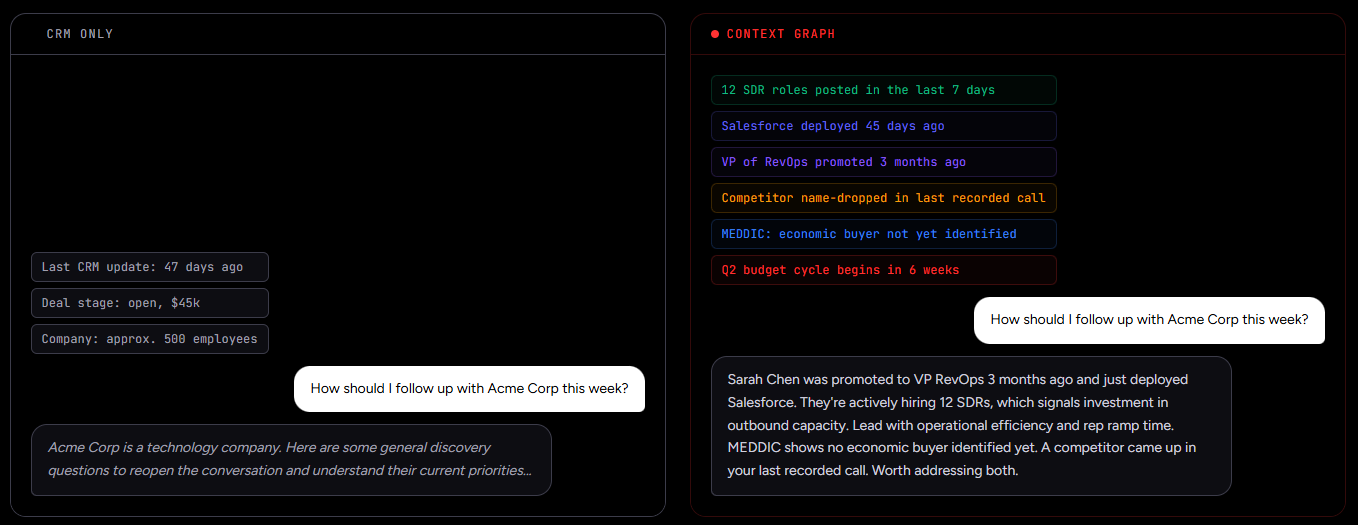
This intelligence directly enhances deal execution. A rep following an Accord playbook knows which steps to complete. With ZoomInfo's GTM Context Graph, that same rep also knows that executive sponsorship entering at this deal stage, combined with ROI-focused questions, matches the pattern behind successful deals in their segment. The methodology tells you what to do. The intelligence tells you why it matters now.
Buyer Intent data adds another dimension, tracking signals from 210 million IP-to-Organization pairings and 6 trillion+ keyword-to-device pairings sourced monthly. Guided Intent, exclusive to ZoomInfo, identifies topics historically correlated with deal success rather than requiring manual topic selection.
Seismic attributed 39% of active pipeline to opportunities identified or influenced by ZoomInfo signals. CBO Toby Carrington noted: "That combination of our internal CRM data, external signals, and AI that's given all that context has helped us craft very specific account- and persona-based messages." (Seismic)
GTM Workspace: ZoomInfo brings account intelligence directly into the seller's daily workflow.
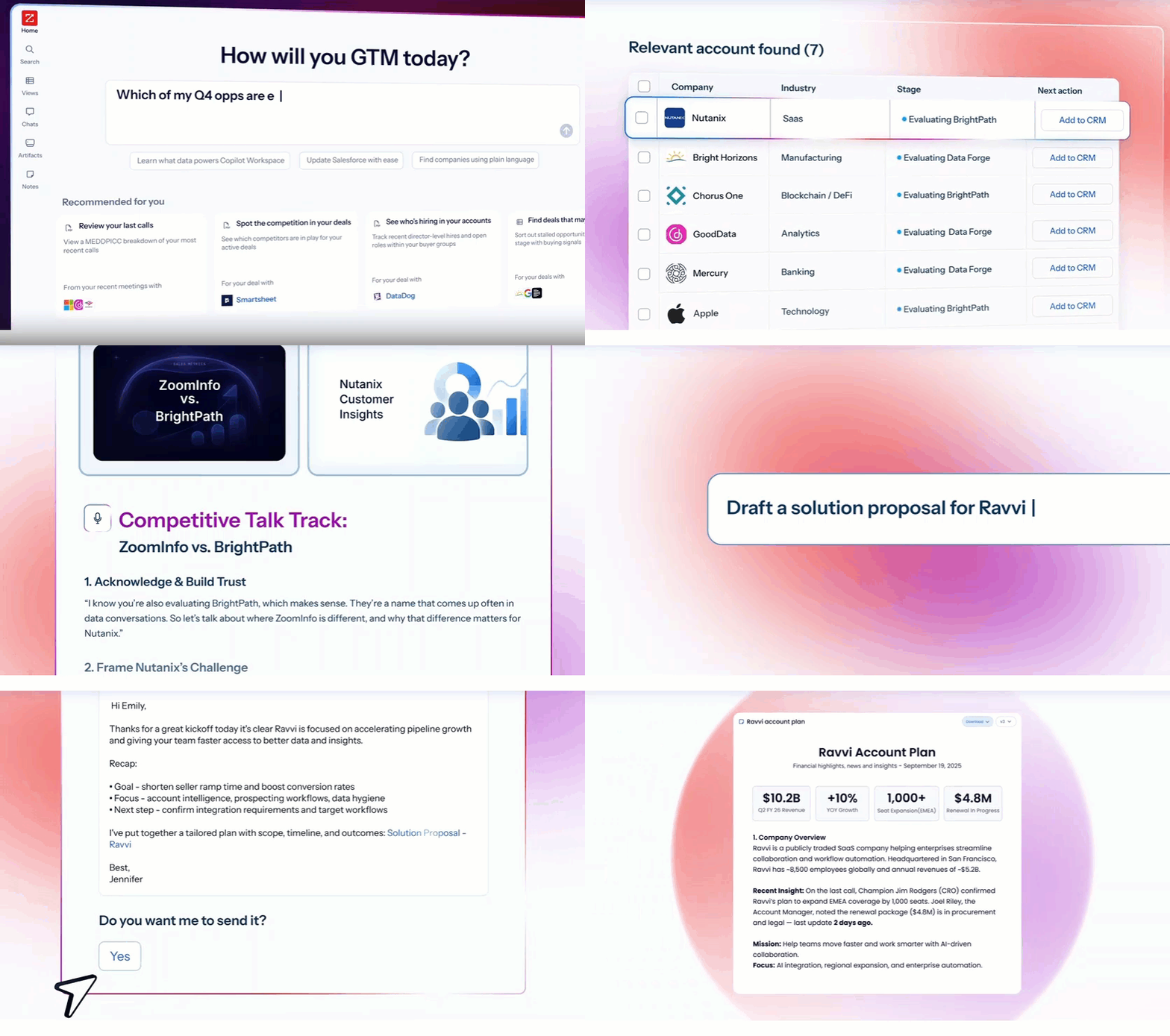
GTM Workspace is ZoomInfo's front-end for sellers. It provides a single workspace where prioritized accounts, AI-drafted outreach, and deal context converge. Where Accord structures the deal process, GTM Workspace ensures every interaction within that process draws on current intelligence.
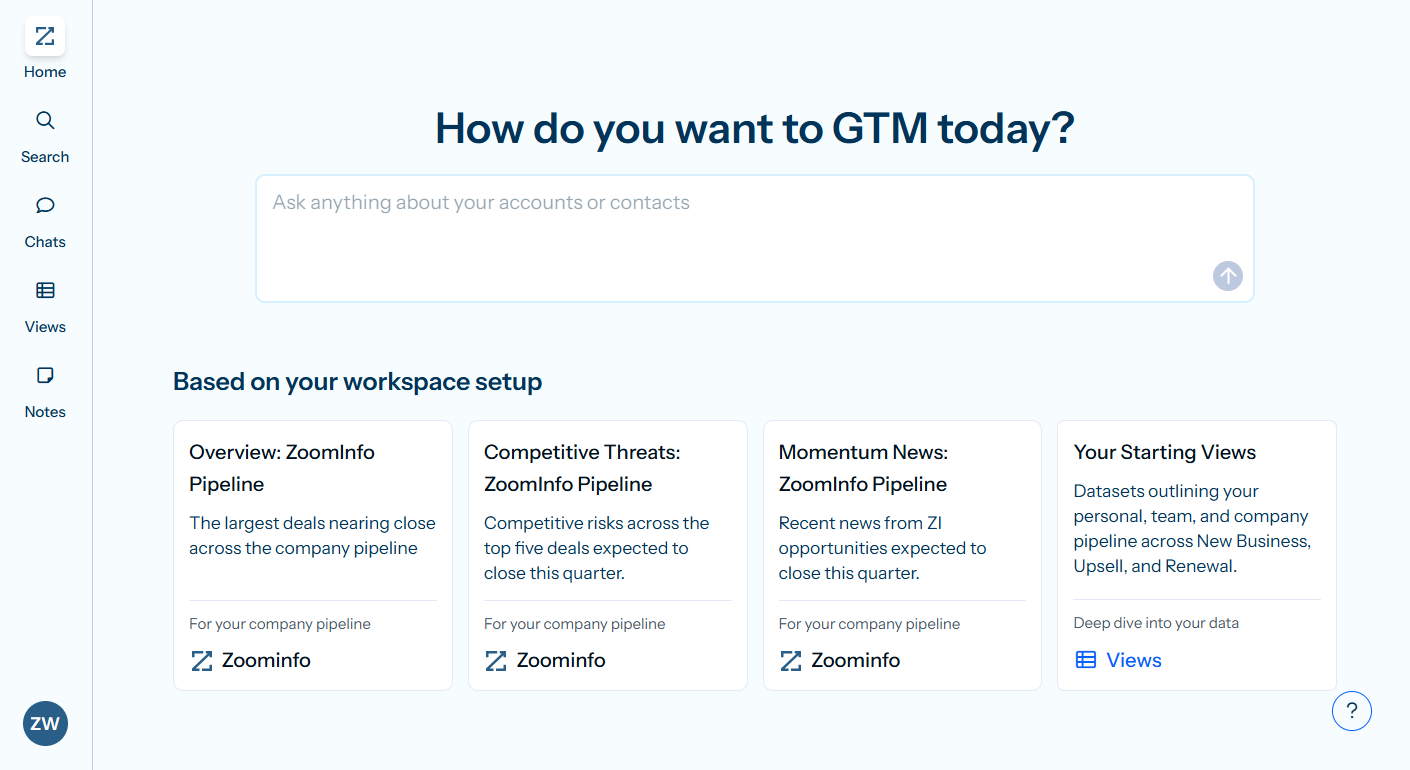
Key capabilities include an AI Assistant that generates account briefs in seconds (pulling CRM history, company news, ZoomInfo signals, and stakeholder context), an Action Feed streaming real-time buying signals with pre-drafted responses, and buying group intelligence that surfaces hidden stakeholders and whitespace. GTM Workspace integrates natively with Salesforce, HubSpot, and Microsoft Dynamics.
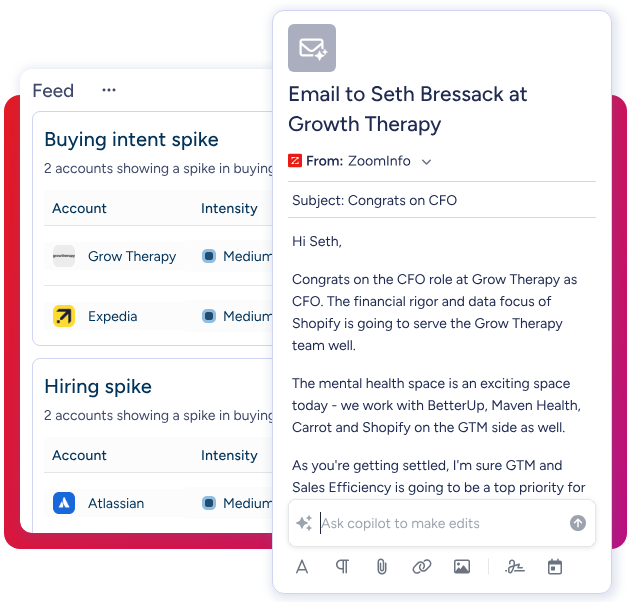
For teams using both platforms, the workflow is sequential: ZoomInfo identifies and prioritizes accounts, surfaces buying signals, and provides verified contact data through GTM Workspace. That intelligence flows through the CRM into Accord, where the structured deal process, methodology enforcement, and buyer collaboration take over. The combination covers the full pipeline, from account prioritization through deal close.
At Spekit, opportunities at higher-scoring accounts were 43% more likely to convert to qualified pipeline and moved 58% faster through qualification. RevOps Manager Ben Perceval noted: "ZoomInfo offers a unified view, eliminating the need to navigate between systems." (Spekit)
Universal Access: ZoomInfo's intelligence reaches any tool through APIs, MCP, and 120+ integrations.
Beyond GTM Workspace for sellers, ZoomInfo offers GTM Studio for marketers, RevOps, and GTM engineers to build and run GTM plays. The platform also delivers intelligence through APIs and a Model Context Protocol (MCP) server, letting any application or AI agent access the same data and GTM Context Graph. API access is included in all relevant plans, and the MCP server currently supports Claude and ChatGPT.
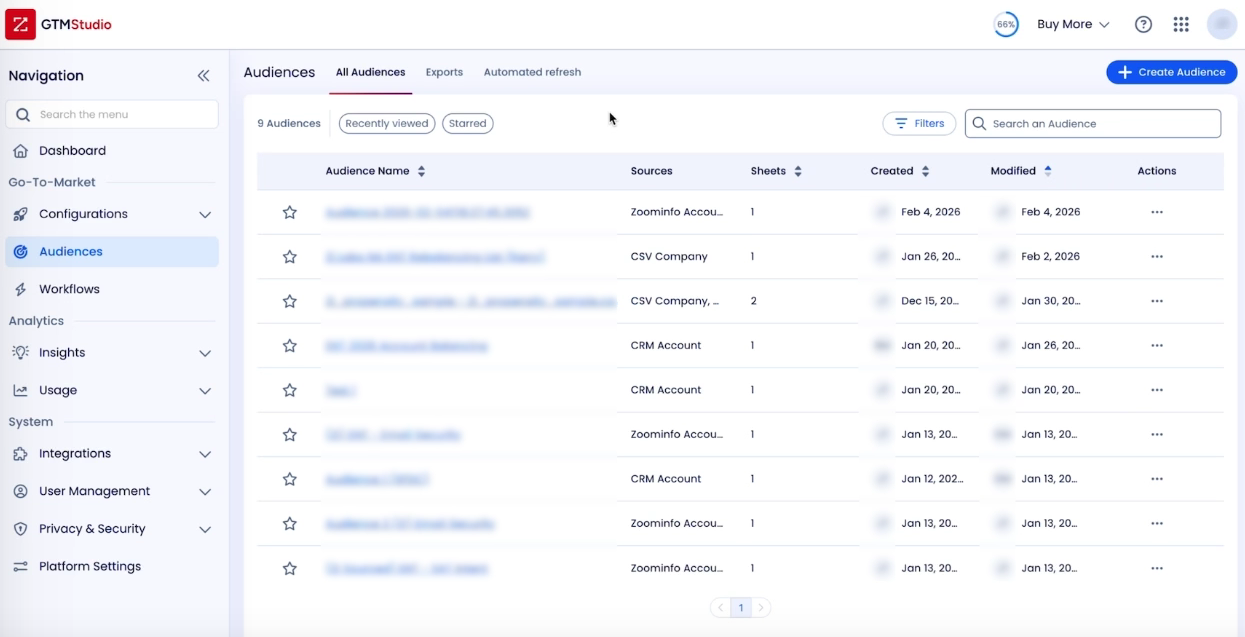
For RevOps teams already managing Accord's workflows through Salesforce or HubSpot, ZoomInfo's programmatic access means data enrichment happens automatically. Contact records get verified, firmographics get updated, and intent signals surface, all feeding into the CRM layer that Accord reads from. The ZoomInfo App Marketplace lists 120+ partner integrations across CRM, marketing automation, sales engagement, and data warehouse categories (a far broader ecosystem than Accord's six native connectors).
ZoomInfo also offers entry points for teams evaluating the platform: a permanent free tier (ZoomInfo Lite) with access to the B2B database, 10 monthly export credits, and basic website visitor identification, plus a 7-day free trial of the full platform with no credit card required.
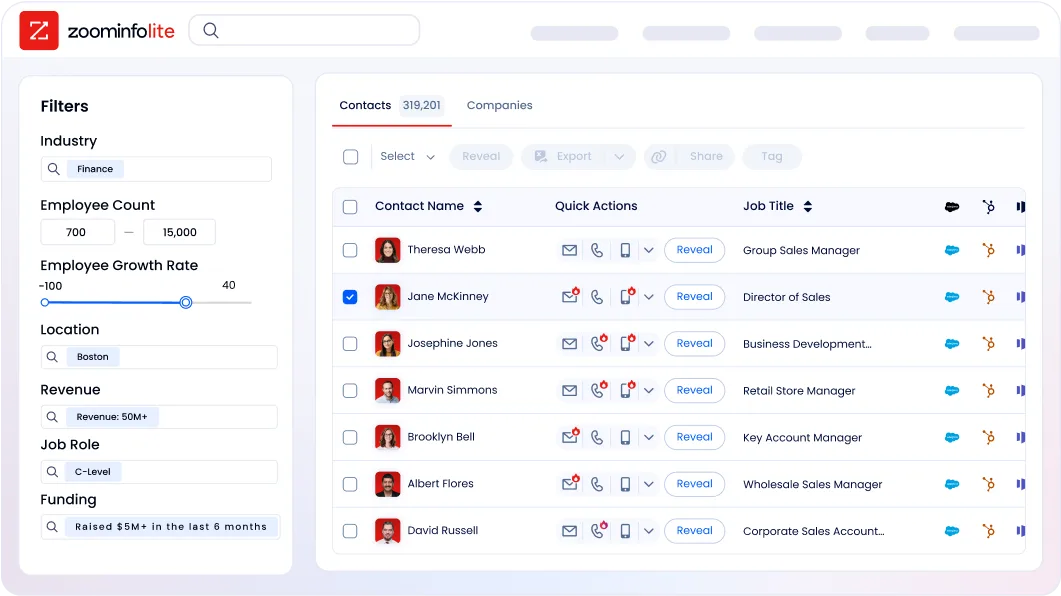
BDO Canada's Senior Marketing Intelligence Analyst Jerry Wilson noted: "The plug-and-play aspect of the API means I can integrate it very easily into any process and get information at a moment's notice," achieving an 87% reduction in time spent on data dashboard updates. (BDO Canada)
Accord and ZoomInfo: Comparison Summary
Aspect | Accord | ZoomInfo |
|---|---|---|
Primary focus | Deal execution and methodology enforcement | Account intelligence, B2B data, and GTM orchestration |
Core strength | Playbook-as-workspace with buyer collaboration | B2B data and GTM Context Graph |
Contact/company data | No built-in database | 500M contacts, 100M companies, 135M+ verified phones |
Buying signals | Buyer engagement within deal workspaces | Intent data, website visitors, technographics, job changes |
Stakeholder mapping | Playbook-enforced roles with AI recommendations (Enterprise) | Verified org charts, direct dials, AI-ranked buying groups |
AI capabilities | Account plans, business cases, methodology-grounded outputs | Account research, outreach drafting, deal intelligence, GTM plays |
CRM integrations | Salesforce, HubSpot | Salesforce, HubSpot, Microsoft Dynamics, 120+ total |
API access | Enterprise tier only (beta) | Included in all relevant plans |
Free tier | No public free plan or trial | ZoomInfo Lite (permanent free) + 7-day full trial |
Pricing | $99+/user/month + undisclosed platform fee | Custom consumption-based pricing |
Best for | Enforcing methodology in complex, multi-stakeholder deals | Identifying, prioritizing, and engaging the right accounts |
Workflow position | Active deal execution | Upstream intelligence and account prioritization |
Final Verdict
Accord and ZoomInfo address different parts of the revenue workflow. The choice depends on which gap is more pressing.
Choose Accord if your team has a defined sales methodology that reps aren't following consistently. Accord is built for organizations where the playbook exists on paper but not in practice, where deals stall because reps skip multi-threading or fail to build business cases, and where managers lack visibility into deal execution quality. Its shared buyer-seller workspace and CRM stage-gating create accountability without constant manager oversight. For mid-market to enterprise B2B SaaS companies with dedicated RevOps resources and complex sales cycles, Accord turns inconsistent execution into a repeatable system.
Choose ZoomInfo if your team's biggest gap is knowing which accounts to pursue, who to contact, and when to engage. ZoomInfo provides the intelligence foundation that makes any sales process more effective: verified contact data, buying signals, intent monitoring, and a GTM Context Graph that captures why deals move or stall. For revenue teams that need account intelligence, broad integration support, and the ability to act on real-time buying signals, ZoomInfo delivers the context to execute every deal with confidence.
Get started with ZoomInfo here.
For organizations that need both structured execution and intelligence, the two platforms work well together. ZoomInfo identifies and prioritizes accounts with verified data and buying signals. Accord structures how your team executes deals with those accounts. Together, they close the gap between knowing who to sell to and executing the sale consistently.
Accord FAQ
What is Accord used for?
Accord is a revenue execution platform designed to enforce sales methodologies like MEDDPICC and SPICED in live deals. It provides playbook templates that become the workspace where deals are managed, shared buyer-seller environments for mutual action plans, stakeholder mapping tools, and automated execution scoring. Teams use it primarily for deal execution, mutual action plans, account planning, implementation handoffs, and expansion motions.
How much does Accord cost?
Accord's Starter tier begins at $99 per user per month, Growth at $119 per user per month, and Enterprise requires custom pricing. Every tier includes an additional platform fee whose amount is not publicly disclosed. All plans require a sales conversation to purchase, and no self-serve free trial is publicly advertised. Teams evaluating Accord should request a breakdown that includes the platform fee when calculating total cost of ownership.
What CRM integrations does Accord support?
Accord natively integrates with Salesforce and HubSpot. Additional native integrations include Slack, Gmail, Google Drive, Google Calendar, SharePoint, Zoom, Gong (Growth tier and above), and Zapier. Microsoft Dynamics, Outreach, Salesloft, and LinkedIn Sales Navigator are not natively supported. API access is available only on the Enterprise tier and is currently in beta. ZoomInfo, by comparison, offers over 120 integrations including Salesforce, HubSpot, and Microsoft Dynamics, with API access included in all relevant plans.
What is Accord's Execution Score?
The Execution Score is an automated 0-to-100 score based on how many admin-defined criteria a rep has fulfilled in a given deal. It factors in step completion, deal stage progress, and customer acceptance rates. Managers can also assign a separate Coaching Score (1-to-3 scale) to assess execution quality. The two scores operate independently.
Does Accord include AI features?
Yes. Accord Intelligence generates account plans, executive summaries, business cases, and stakeholder recommendations using three inputs: the team's Playbook Positioning configuration, uploaded sales methodology documentation, and third-party research on the buyer's company. Reps click a single button to generate outputs without writing prompts. AI-powered Stakeholder Recommendations (up to 10 candidates per role) and Positioning Enforcement are exclusive to the Enterprise tier.
Does Accord provide contact or company data?
No. Accord does not include a built-in contact database, company attributes, intent signals, or buying behavior data. Reps must source account intelligence from external tools. ZoomInfo fills this gap with 500M contacts, 100M companies, 135M+ verified phone numbers, and 200M+ verified business email addresses, along with buyer intent signals and org chart data that support stakeholder mapping and account prioritization.
Who is Accord best suited for?
Accord is designed for mid-market to enterprise B2B SaaS companies with complex, multi-stakeholder sales cycles lasting two months or longer. The platform is most valuable to teams that have invested in a sales methodology but struggle with consistent adoption. It requires dedicated RevOps or enablement resources to build and maintain playbooks. Teams running high-velocity sales with short deal cycles, or those without RevOps support, will find the configuration overhead hard to justify.
Can buyers access Accord without creating an account?
Buyers receive an email invitation and must complete a brief profile (name, email, job title) to access the shared workspace. Accord supports approved domains, which allow any contact from a whitelisted email domain to access a workspace directly via URL without an individual invite. However, there is no documented guest mode for buyers who want to view deal context without any form of account creation.
Related breakdowns to help you choose:
