
Choosing between Act-On vs. Eloqua for your B2B marketing automation often comes down to these five critical questions:
Do you need a platform your team can run without dedicated marketing operations specialists, or can you staff for enterprise complexity?
Is your marketing database in the tens of thousands or the millions?
Are you primarily running email campaigns and lead nurturing, or orchestrating multi-step programs across channels, business units, and regions?
How important is it that your marketing automation connects natively to your CRM without middleware?
Do you have the contact data and buyer intelligence to actually fill your campaigns with the right audience?
In short, here's what we recommend:
Act-On is built for mid-market B2B teams that need marketing automation without the overhead of an enterprise deployment. Its Active Contact pricing charges only for the contacts you actually email, not your entire database, which can save up to 48% compared to competitors that bill by total contacts. The platform covers email, SMS, social, landing pages, and lead scoring, with AI predictive lead scoring and consistently praised customer support. However, its interface can feel outdated, reporting has limitations out of the box, and the $900/month starting price is still steep for teams that don't use every feature.
Oracle Eloqua is the enterprise standard for B2B marketing automation, backed by thirteen consecutive Gartner Leader designations. Its dual-canvas architecture separates campaign orchestration from data management, supports up to 30 scoring models, and processes billions of transactions daily with 100% uptime over 25 months. But this power comes at a price: list pricing starts at $2,000/month for 10,000 contacts on the Basic tier, implementation packages can run up to $78,338, and you'll need marketing operations specialists to use the platform effectively.
Both platforms excel at executing campaigns once you know who to target and when. But marketing automation is only as good as the data feeding it. Incomplete contact records, stale contact details, and blind spots in buyer intent mean your campaigns reach the wrong people at the wrong time, no matter how sophisticated your workflows are. That's where a different kind of platform becomes essential.
ZoomInfo is an all-in-one AI GTM platform built on the industry's most comprehensive B2B data foundation: 500M contacts, 100M companies, 135M+ verified phone numbers, and 200M+ verified business email addresses. Its GTM Context Graph, which processes 1.5B+ data points daily, fuses this data with your CRM records, conversation transcripts, and behavioral signals to reveal not just what's happening in your pipeline, but why. That intelligence reaches your team through the dedicated GTM Workspace for sellers, GTM Studio for marketers and RevOps, or the API and MCP in any other front-end. And because ZoomInfo integrates directly with both Act-On and Eloqua, you can use it as the intelligence layer powering either platform, or as your primary GTM orchestration engine.
If building campaigns on verified data and real-time buyer intelligence sounds like the missing piece of your marketing stack, see how ZoomInfo works.
Act-On vs. Eloqua vs. ZoomInfo at a glance
Act-On | Oracle Eloqua | ZoomInfo | |
|---|---|---|---|
Primary focus | Mid-market marketing automation | Enterprise campaign orchestration | AI-powered GTM intelligence + orchestration |
Starting price | Custom; free tier available | ||
Pricing model | Active contacts (pay only for contacts you email) | Total contacts stored in database | Consumption-based (seats + credits) |
Free trial/plan | 30-day analytics trial only | No free trial or plan | |
Lead scoring models | Multiple score sheets + AI predictive | Up to 30 concurrent models (Enterprise) | AI-powered account fit scoring (0-100) |
B2B contact database | Your own imported contacts only | Your own imported contacts only | 500M contacts, 200M+ verified emails, 135M+ verified phones |
Buyer intent data | Not native | Not native (via AppCloud) | |
CRM integrations | Salesforce, Dynamics, SugarCRM, NetSuite, Zendesk Sell | Salesforce, Dynamics, Oracle CX Sales, Oracle CRM On Demand | Salesforce, HubSpot, Dynamics + 120+ marketplace integrations |
Learning curve | Moderate | Steep | Moderate (GTM Studio); steep for full platform |
Analyst recognition | Gartner Niche Player (2024) | Gartner Leader (13 consecutive years) | |
Best for | B2B teams with 51-1,000 employees | Global enterprises with dedicated marketing ops | Teams that need data, signals, and execution in one platform |
Mid-market agility vs. enterprise orchestration
Act-On and Eloqua represent two different philosophies about how marketing automation should work.
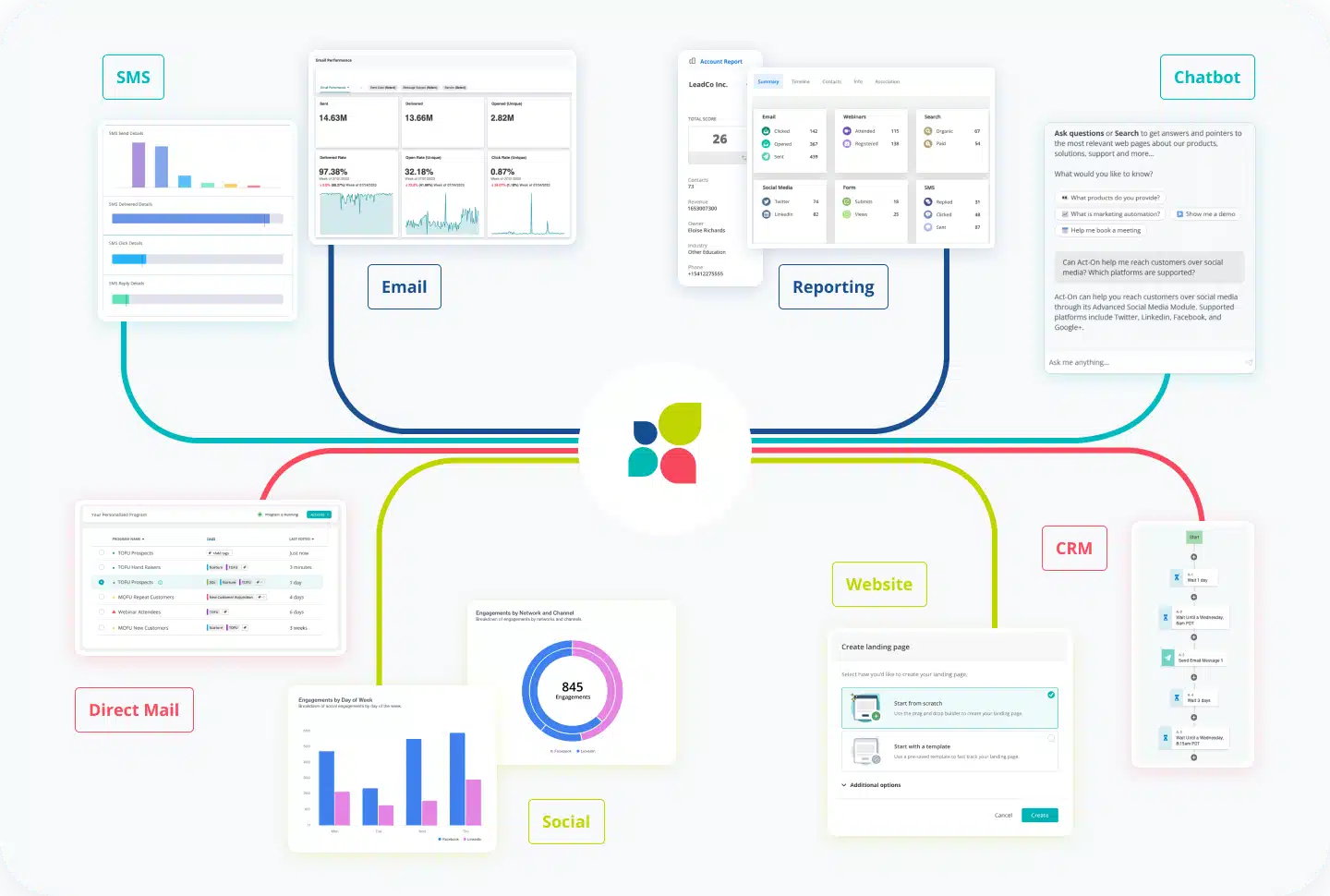
Act-On was founded in 2008 by Raghu Raghavan, who previously co-founded Responsys (later sold to Oracle for $1.5 billion). The founding vision: build "a sophisticated, but affordable SaaS marketing tool mid-market companies could easily use". That mission still defines the product. Act-On gives a marketing team of five or six people the tools to run automated email programs, score leads, and push qualified prospects to sales, without needing a dedicated admin or months of implementation.
Source: Act-On
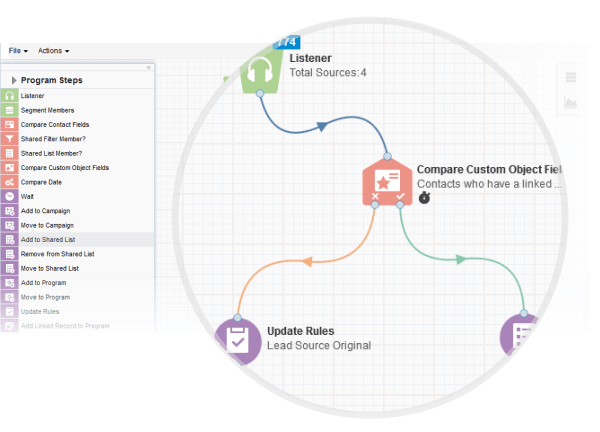
Eloqua, founded in 1999 and acquired by Oracle for $871 million in 2012, is built for a different scale entirely. Its architecture separates the Campaign Canvas (where marketers build audience-facing campaigns) from the Program Canvas (where marketing ops teams manage data workflows, CRM routing, and hygiene logic). This separation means a demand gen manager can build campaigns without accidentally disrupting data management rules, but it also means you need people who understand both canvases.
Source: Oracle
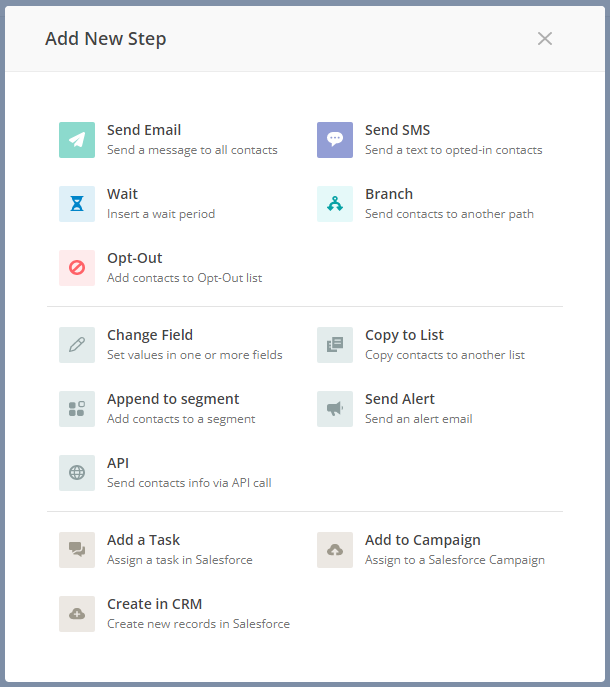
The practical difference shows up in daily use. An Act-On user can create a lead nurture program using the Automated Journey Builder, dragging in email sends, SMS steps, wait periods, and branch logic between a start and exit point. The whole thing is contained in one view.
An Eloqua user building the same nurture might configure the campaign on the Campaign Canvas, set up data management rules on the Program Canvas, create scoring models on a third screen, and define CRM sync behavior in a fourth. More powerful? Yes. More complex? Significantly. Oracle acknowledges this by offering Guided Campaigns as a simplified layer for non-technical users, which tells you everything about the core platform's complexity.
Campaign execution: depth vs. accessibility
Both platforms cover the essentials of B2B marketing automation: email, landing pages, forms, lead scoring, and CRM integration. The differences are in how deep each one goes.
Email and content creation.
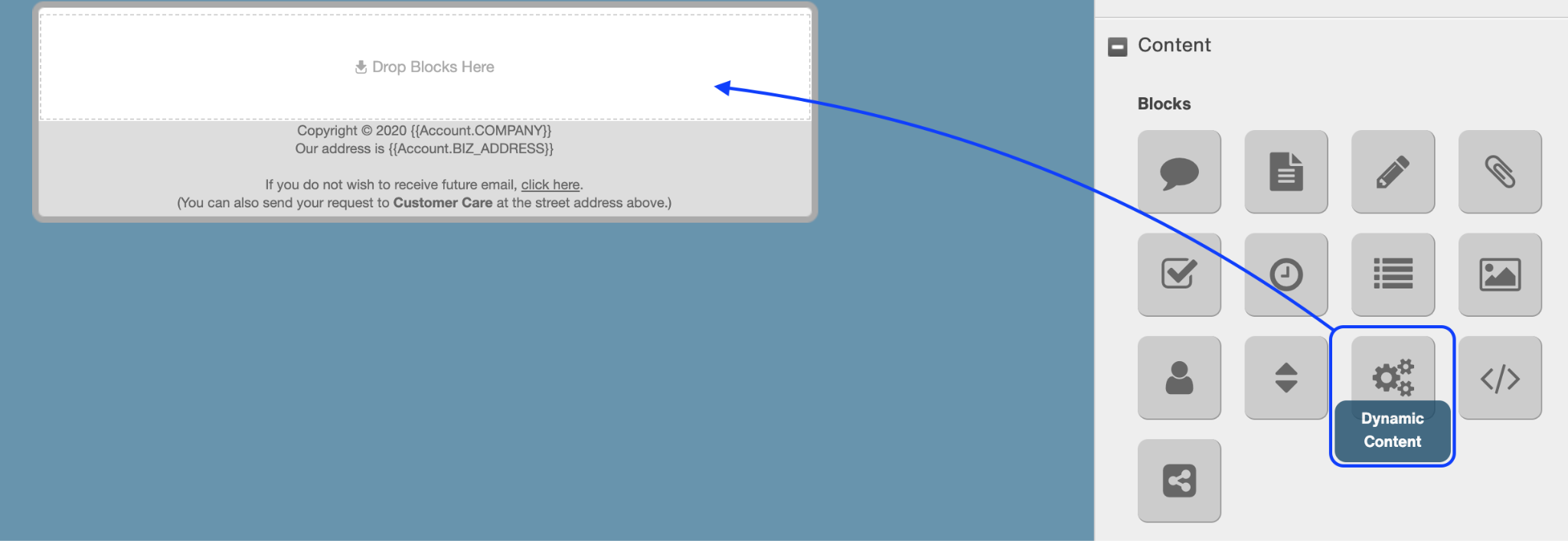
Act-On offers a drag-and-drop email editor with dynamic content blocks that show different content based on contact attributes. It supports A/B testing with five variants, and the Adaptive Send feature delivers each email at the time each contact is most likely to engage, using up to 25 months of behavioral data. Act-On also maintains its own SMTP servers, giving it direct control over deliverability.
Source: Act-On
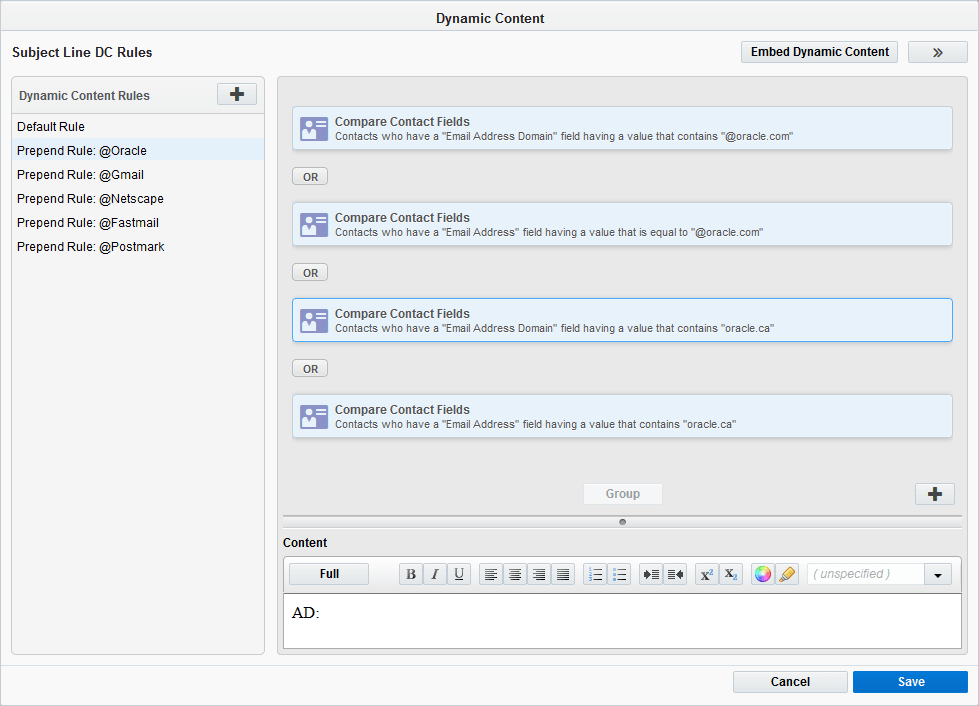
Eloqua takes content creation further with three email editors (Design, Source, and Classic), progressive profiling forms that gradually collect more data with each interaction, and dynamic content that adapts based on contact attributes. The platform's Contact Washing Machine automates data cleansing operations like trimming whitespace, standardizing case, and concatenating fields, which is the kind of feature only enterprise teams with large, messy databases tend to need.
Source: Oracle
Multi-channel reach.
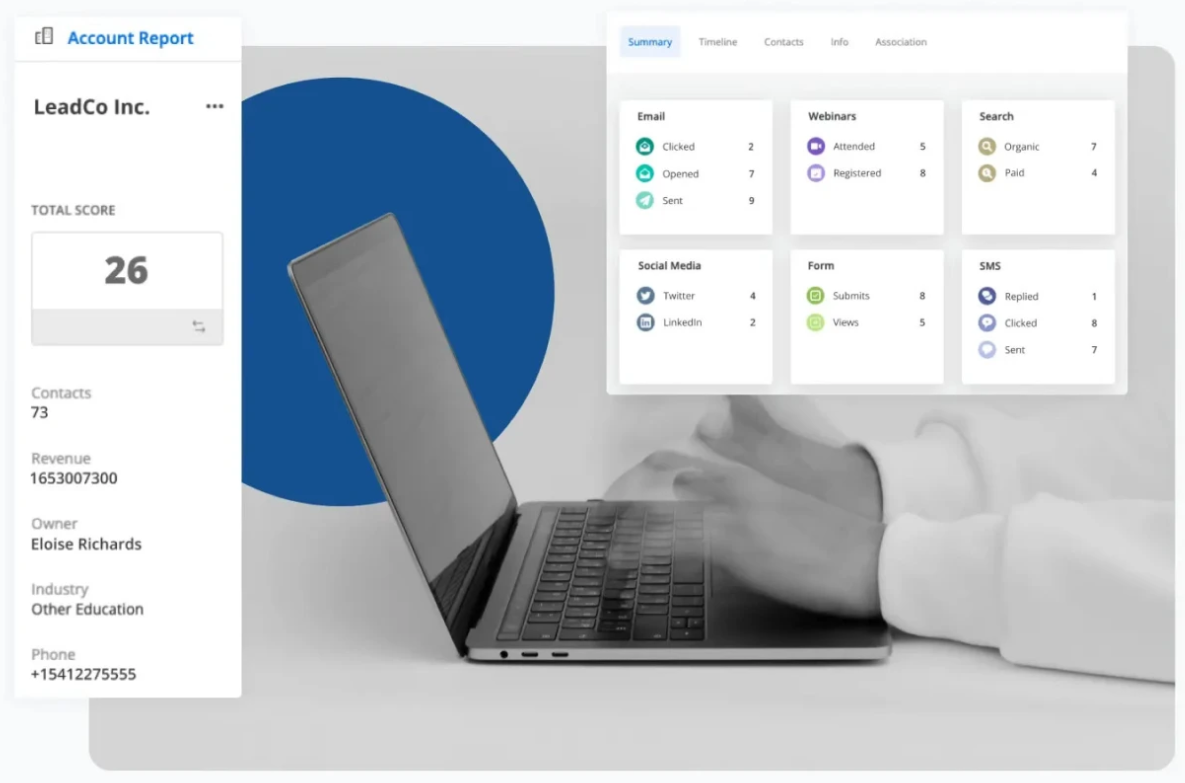
Act-On provides native SMS marketing on a credit-based system, social publishing to LinkedIn and X (Twitter), and an InSite web agent for personalized web experiences. Eloqua natively supports email, SMS (as a purchased add-on), forms, and landing pages on its canvas, with display, search, video, and social channels available through AppCloud integrations.
Source: Act-On
Automation sophistication.
Act-On's Automated Programs handle sequential nurture workflows with conditional branching, list management, and score updates. Eloqua's Campaign Canvas supports the same logic but adds listener architecture for real-time triggers that fire without campaign re-activation, which matters when you're running dozens of programs that need to react instantly to buyer behavior changes.
Lead scoring: where both platforms invest heavily
Lead scoring is the handoff point between marketing and sales, and both platforms treat it seriously.
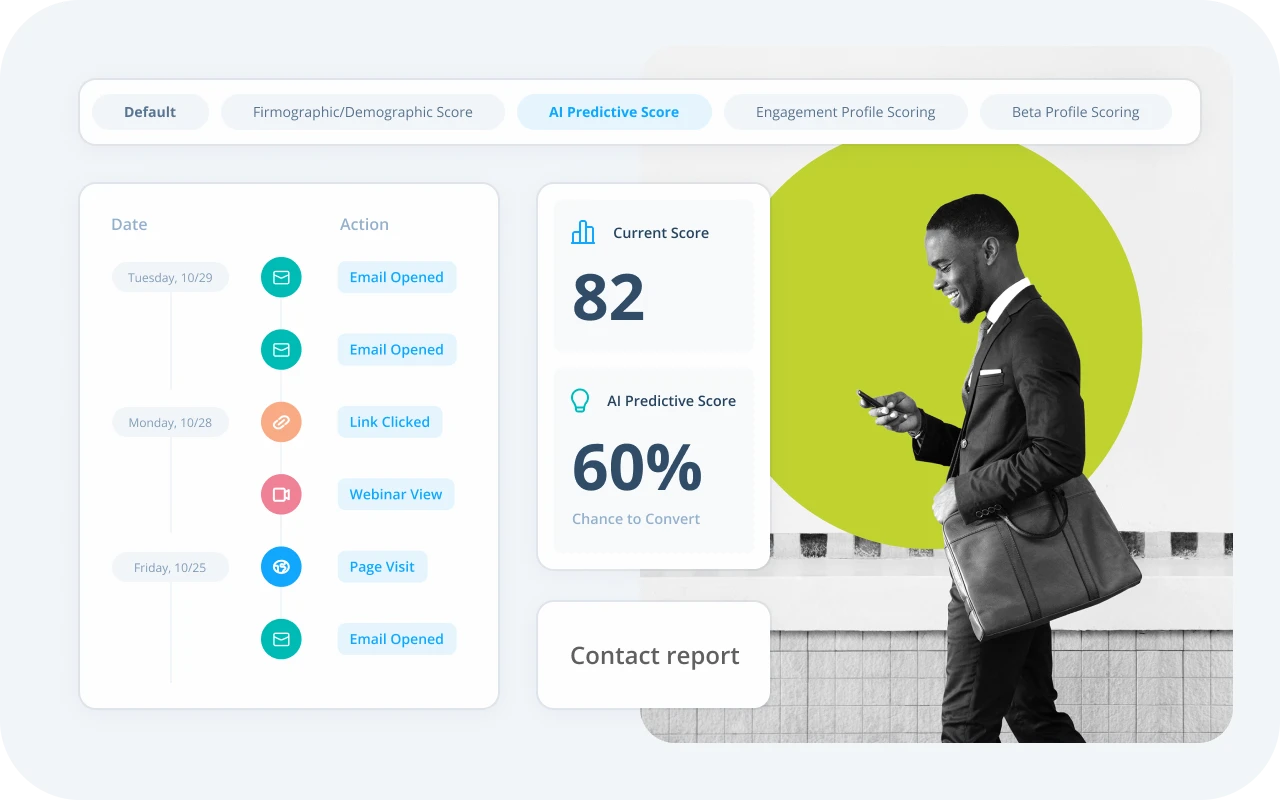
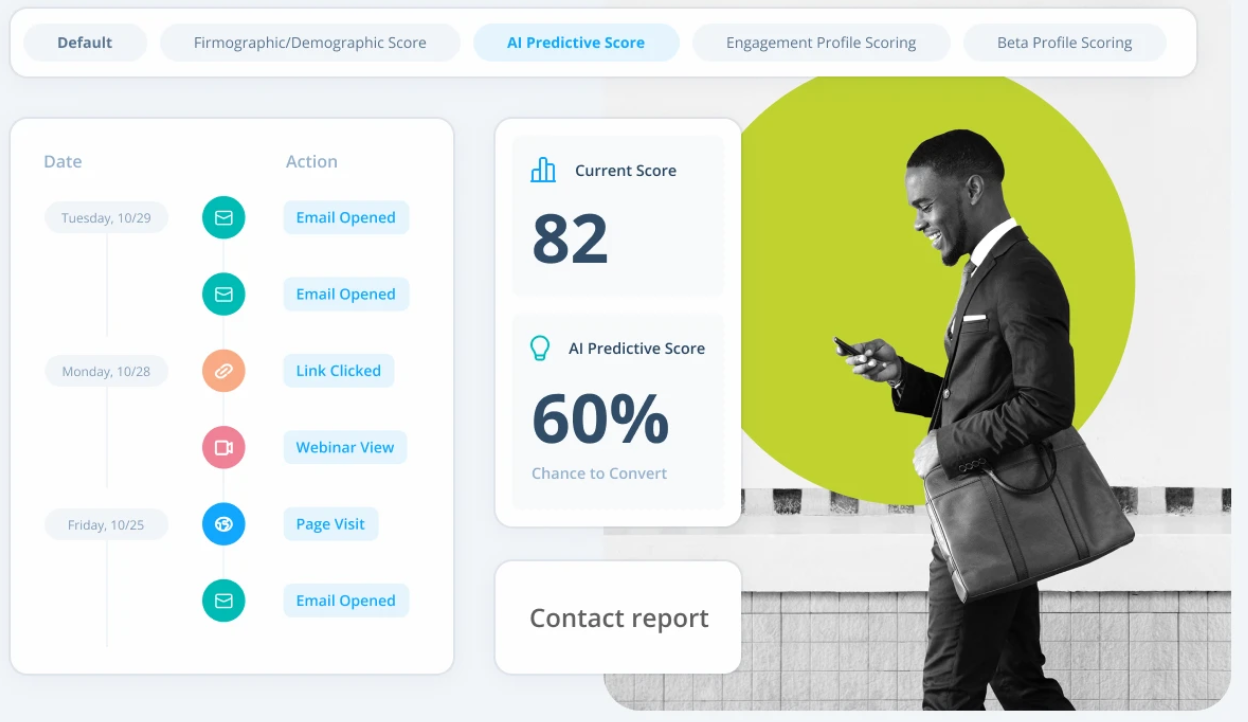
Act-On scores leads on two dimensions: profile attributes and activity-based behavior (website visits, email opens, form submissions). Teams can create up to four additional score sheets beyond the default for different products, regions, or segments. The AI Predictive Lead Score uses machine learning trained on tracked contact behaviors and CRM outcomes, updating scores daily.
Source: Act-On
Eloqua uses a distinctive two-dimensional scoring grid: profile criteria produce a letter score (A through D, where A = best fit), while engagement criteria produce a number score (1 through 4, where 1 = highest interest). The resulting grid (A1 = ideal, D4 = poor fit and no interest) maps each combination to a prescribed action. Enterprise customers can run up to 30 concurrent models simultaneously across products, business units, and regions.
Eloqua also adds Account Intelligence, which rolls up individual contact engagement into an Account Engagement Score (0-100) based on email opens, clickthroughs, and form submissions over the last 90 days. This is useful for ABM motions, but it only measures engagement with your own campaigns, not whether the account is actively researching solutions in the market.

Source: Oracle
That's the limitation both platforms share. Their scoring models are built entirely on first-party data: how contacts interact with your emails, your landing pages, your forms. Neither platform knows what your prospects are doing before they enter your database.
The data gap both platforms leave open
Act-On and Eloqua are campaign execution engines. They automate the process of reaching contacts, nurturing them, and handing qualified leads to sales. But they assume you already have the right contacts in your database and know when those contacts are ready to buy.
That assumption creates three problems.
Incomplete contact data. Both platforms rely on contacts you've already collected through forms, trade shows, or list imports. If a key decision-maker at a target account never filled out your form, they don't exist in your system. Your campaigns can't reach people you don't know about, and both Act-On and Eloqua have no mechanism to find them.
Stale records. People change jobs, companies restructure, and email addresses go dark. Neither platform includes built-in data verification that proactively updates contact information. Your nurture sequence might be targeting someone who left the company six months ago.
No visibility into buyer intent. Both platforms can tell you which contacts opened your emails or visited your landing pages. Neither can tell you which companies are actively researching your product category right now, comparing you to competitors, or evaluating solutions before they've ever engaged with your content.
ZoomInfo addresses all three gaps at once.
ZoomInfo adds the intelligence layer
Where Act-On and Eloqua start with campaigns and work backward to figure out who should receive them, ZoomInfo starts with intelligence and works forward to action.
The data foundation covers 500M contacts, 100M companies, 135M+ verified phone numbers, and 200M+ verified business email addresses, maintained through a verification pipeline backed by 300+ human researchers and achieving up to 95% accuracy on first-party data. In a Fortune 500 competitive RFP analyzing 25 million contacts across vendors, the independent consultant concluded that "no other competitor came even close."
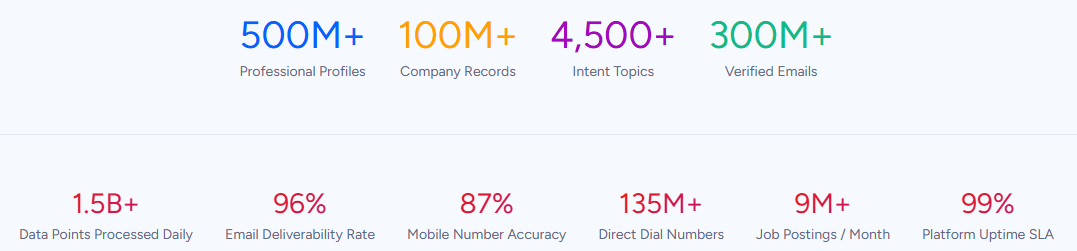
That data powers capabilities neither Act-On nor Eloqua can replicate:
Buyer Intent. ZoomInfo Intent tracks signals from 210 million IP-to-Organization pairings and 6 trillion+ new keyword-to-device pairings sourced monthly. Instead of guessing which accounts might be interested based on email opens, ZoomInfo shows which companies are actively researching your product category right now. Guided Intent, exclusive to ZoomInfo, identifies the specific topics that historically correlate with closed deals in your pipeline.
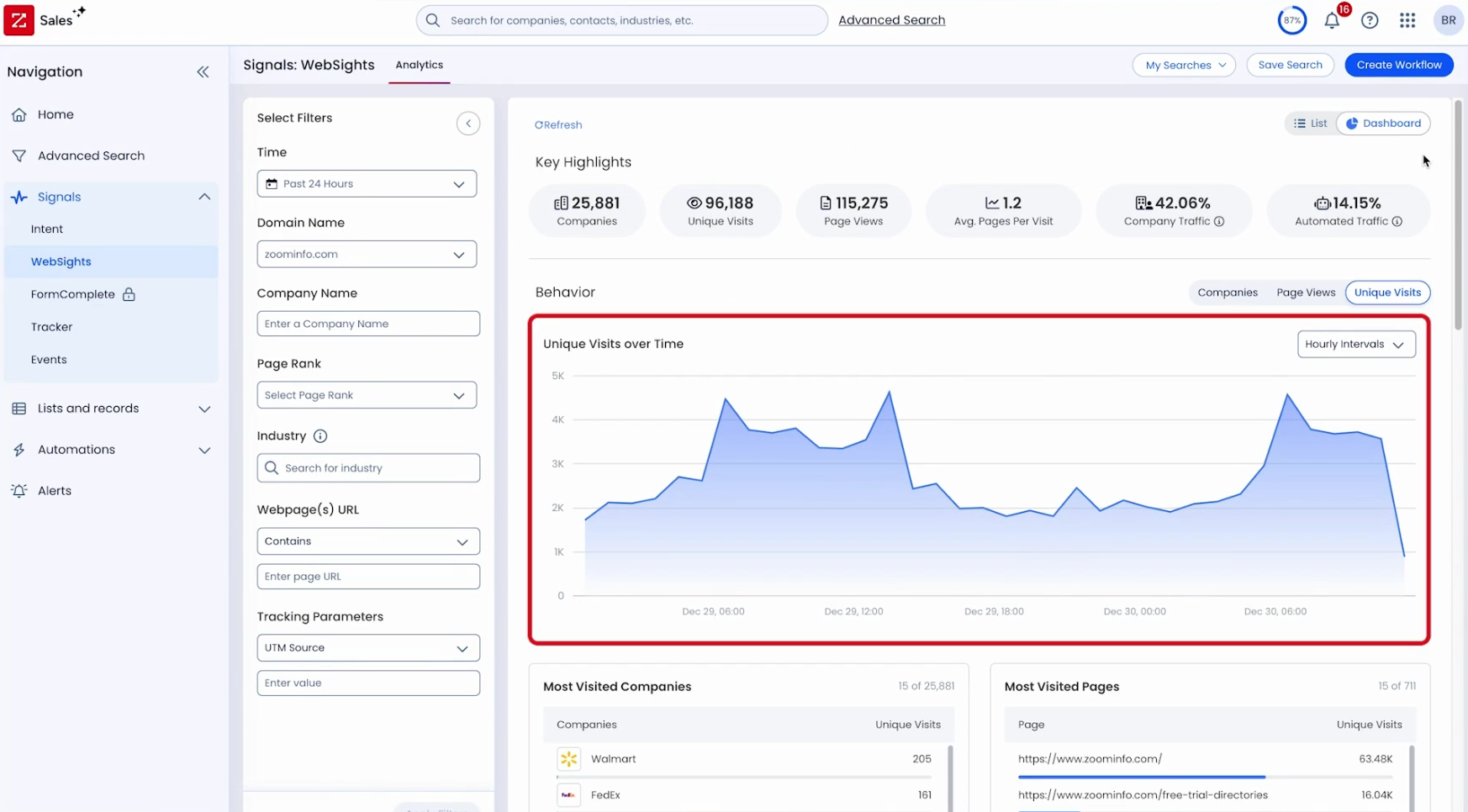
Website Visitor Identification. WebSights resolves anonymous website traffic to companies with buying team identification and direct contact information, including Automatic Traffic Filtering that distinguishes real visitors from bots. Act-On tracks anonymous visitors too, but it can't identify who they are until they fill out a form.
The GTM Context Graph. ZoomInfo's GTM Context Graph, processing 1.5B+ data points daily, unifies its third-party data with your CRM records, conversation intelligence from calls and meetings, email interactions, and behavioral signals. The result isn't just a bigger database; it's an intelligence layer that reveals why deals move or stall, which buying patterns predict conversion, and which accounts need attention right now.
For marketing teams, this changes the entire workflow. Instead of building campaigns and hoping the right contacts are in your database, you build audiences from verified, intent-qualified contacts and launch plays targeting accounts that match your actual win patterns.
Seismic attributed 39% of active pipeline to opportunities identified or influenced by ZoomInfo signals, with their sales team reporting 54% productivity gains. (Seismic Case Study)
Marketing orchestration compared
Each platform approaches campaign orchestration differently, reflecting its core strengths.
Act-On handles campaign orchestration through its Automated Journey Builder, where marketers design workflows with email sends, SMS steps, wait periods, and conditional branches. The system supports multichannel marketing across email, SMS, social, web, and direct mail, with the same segmentation and automation applied across channels. Setting up a new campaign typically takes hours, not weeks.
Source: Act-On
Eloqua provides more sophisticated orchestration through its Campaign Canvas, with multi-step adaptive campaigns that respond to a contact's real-time activities. The listener architecture triggers actions in real time based on lead score changes, new contact arrivals, or field updates. But building and maintaining these programs requires marketing operations expertise.
ZoomInfo’s GTM Studio approaches the problem from the intelligence side. Instead of building campaigns from a contact list, you describe audiences in natural language, enrich them with first- and third-party data, and launch pre-built GTM plays (inbound acceleration, champion tracking, competitive displacement, ICP targeting) across email, calls, ads, and direct mail. Plays run continuously and self-improve from engagement signals. What used to take three weeks to set up now launches in 30 minutes.
ZoomInfo also integrates directly with both Act-On and Eloqua. ZoomInfo Marketing lists Eloqua as a supported integration, and Act-On integrates with ABM platforms including ZoomInfo. So you don't have to choose between ZoomInfo's intelligence and your existing marketing automation: you can use ZoomInfo to feed verified, intent-qualified contacts and signals directly into either platform.
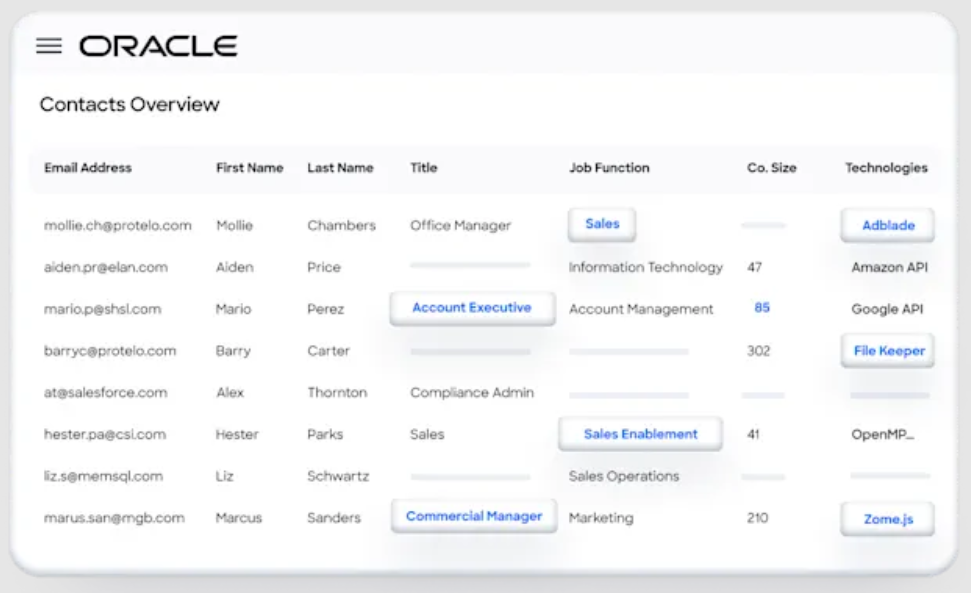
Redwood Logistics achieved a 99% reduction in cost-per-click and a 310% increase in clickthrough rate using ZoomInfo's data-driven audience insights. (Redwood Logistics Case Study)
Pricing reflects three different markets
The pricing models reveal who each platform is designed to serve.
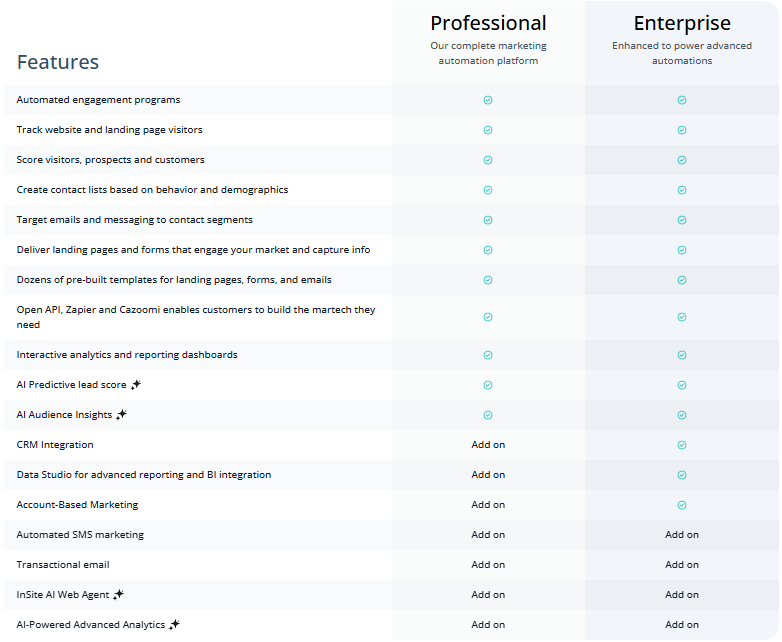
Act-On uses an Active Contact pricing model that charges based on the contacts you actually email each month, not your total database size. The Professional tier starts at $900/month for 2,500 active contacts and includes the core marketing automation platform, lead scoring, AI Predictive Lead Score, and standard email support. The Enterprise tier adds CRM integration, Data Studio, and account-based marketing at custom pricing. Act-On requires annual contracts with automatic renewal and a 5% annual price increase unless you opt out 30 days before renewal.
Source: Act-On
The Active Contact model works in your favor if your database is large but you only market to a fraction of it. A company with 50,000 contacts but only 5,000 active recipients pays for 5,000, not 50,000. But note that CRM integration, a feature most B2B teams consider essential, is only included in the Enterprise tier.
For a full breakdown of what's included at each tier, see our Act-On pricing breakdown.
Oracle Eloqua uses contact-based tiered pricing across three editions. The Basic tier starts at $2,000/month for 10,000 contacts with 10 marketing users and 2 million email sends per month. The Standard tier starts at $4,000/month for 10,000 contacts with 50 users, multi-model lead scoring, and Guided Campaigns. The Enterprise tier starts at $29,200/month for 500,000 contacts with up to 1,000 users and 30 lead-scoring models.
Beyond the subscription, Eloqua's real cost includes implementation. Oracle strongly recommends Smart Start packages for all new customers, ranging from $8,870 to $78,338 depending on region and tier. Add-ons like SMS Full Service ($3.00/1,000 interactions), HIPAA Data Privacy ($60,000/year), and Priority Support ($1,250/month plus 10% of subscription fee) can push total costs well above the list price.
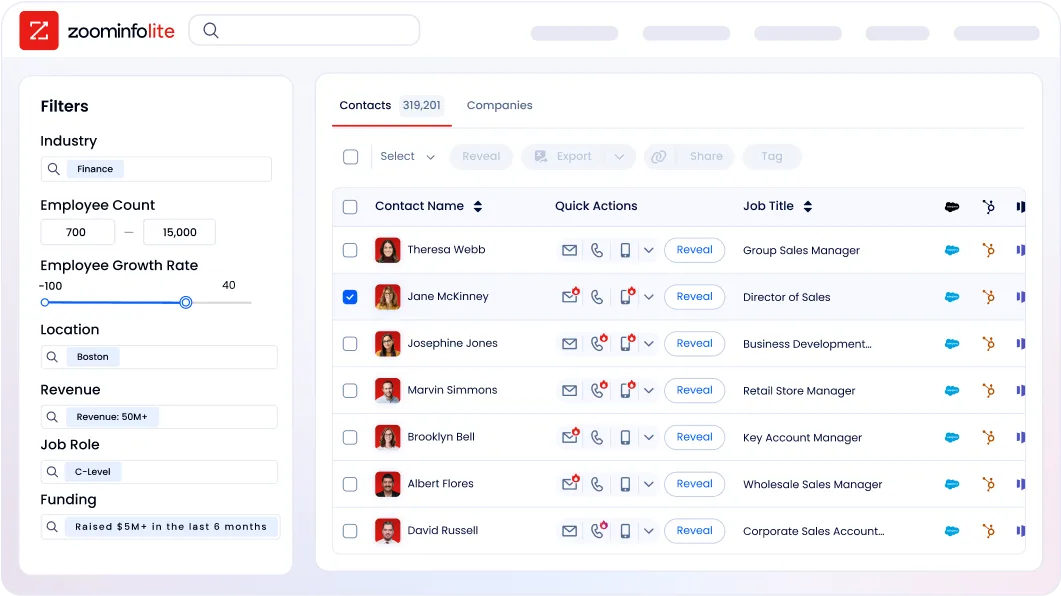
ZoomInfo uses consumption-based pricing with no publicly listed prices. What sets ZoomInfo apart commercially is its free entry points: ZoomInfo Lite provides permanent free access to the B2B database with 10 monthly export credits, and a 7-day free trial gives full platform access. Neither Act-On nor Eloqua offers a comparable self-serve evaluation path; Act-On has a limited analytics-only trial, and Eloqua requires a sales conversation just to see a demo.
AI capabilities across the three platforms
AI has become a differentiator in marketing automation, and all three platforms are investing here, though at different depths.
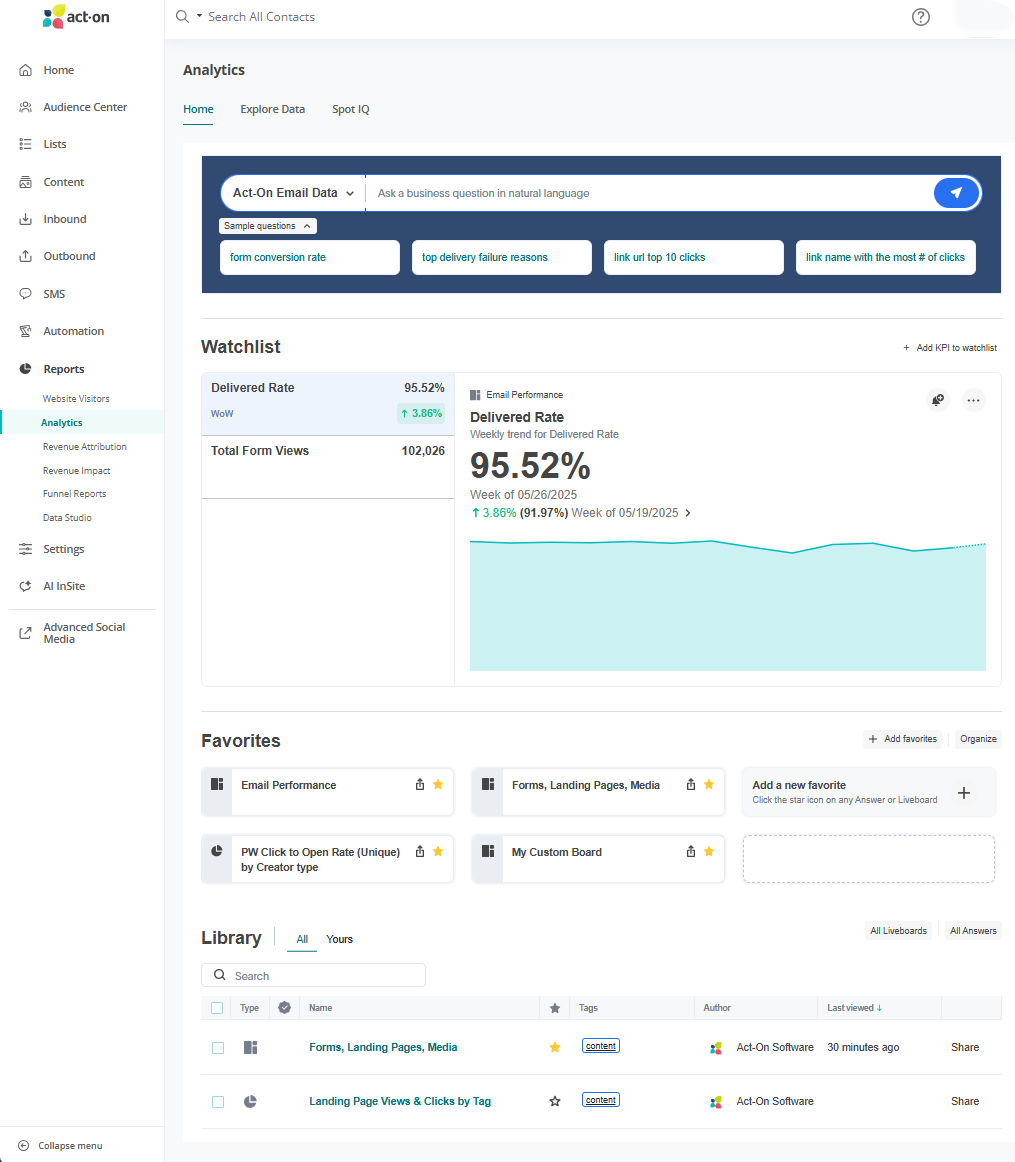
Act-On offers AI Create for generating email content and subject lines, AI Predictive Lead Score using machine learning on contact behaviors and CRM outcomes, AI Audience Insights developed in collaboration with Intel, and natural language analytics. These features help marketing teams work faster within the platform, but they operate on first-party data only.
Source: Act-On
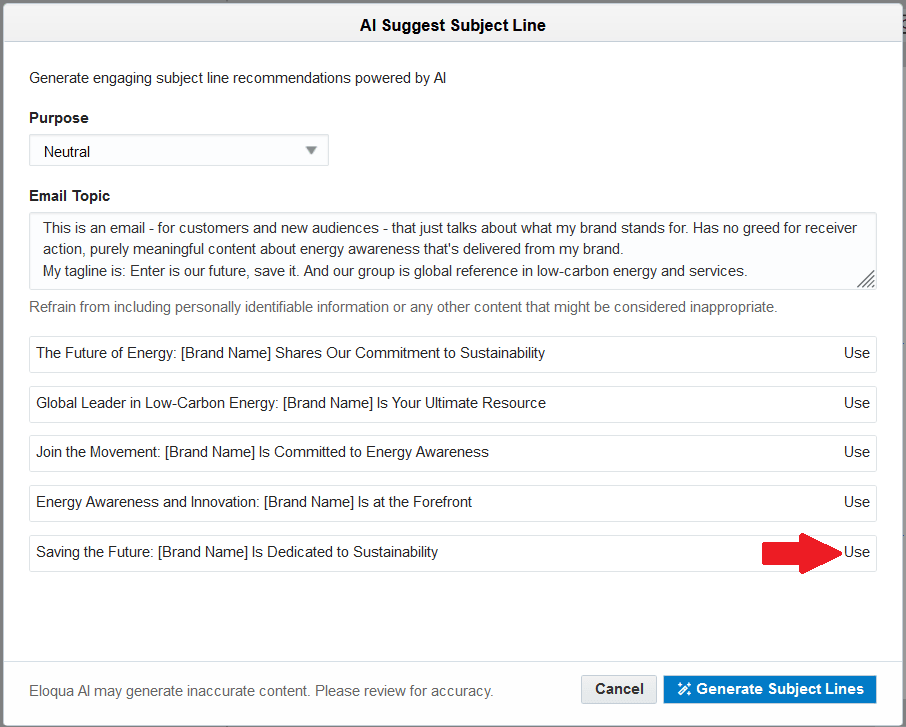
Eloqua provides Send Time Optimization (delivering emails at each contact's optimal time), Email Fatigue Analysis (classifying contacts into nine fatigue levels), generative subject line creation in seven languages, and AI-generated body copy for emails, landing pages, and SMS. As of June 2025, Advanced Intelligence features are available to all Eloqua customers at no extra cost, though activation still requires a Service Request with Oracle Support. Eloqua's AI runs on Oracle Cloud Infrastructure with no data sharing with third-party LLM providers, which matters for regulated industries.
Source: Oracle
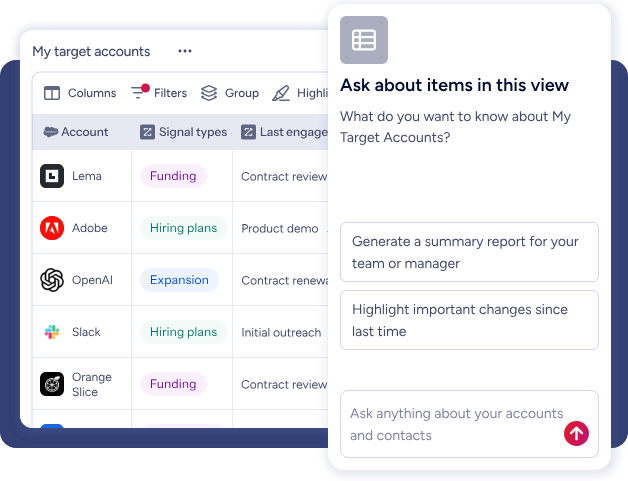
ZoomInfo applies AI across the full GTM Context Graph: CRM data, conversation intelligence, intent signals, and the comprehensive B2B database, fused together. Rather than optimizing when to send emails or generating subject lines, ZoomInfo's AI reasons across this unified context. Specialized AI agents handle account research, outreach drafting, CRM updates, and signal monitoring. In GTM Studio, AI-powered audience creation lets marketers describe target audiences in natural language and launch plays without engineering support. The Account Fit Score uses predictive AI trained on your actual win/loss data to score accounts 0-100, revealing which company attributes predict conversion, not just which contacts opened your last email.
Integration ecosystems and CRM connectivity
How each platform connects to your existing stack determines whether it simplifies or complicates your operations.
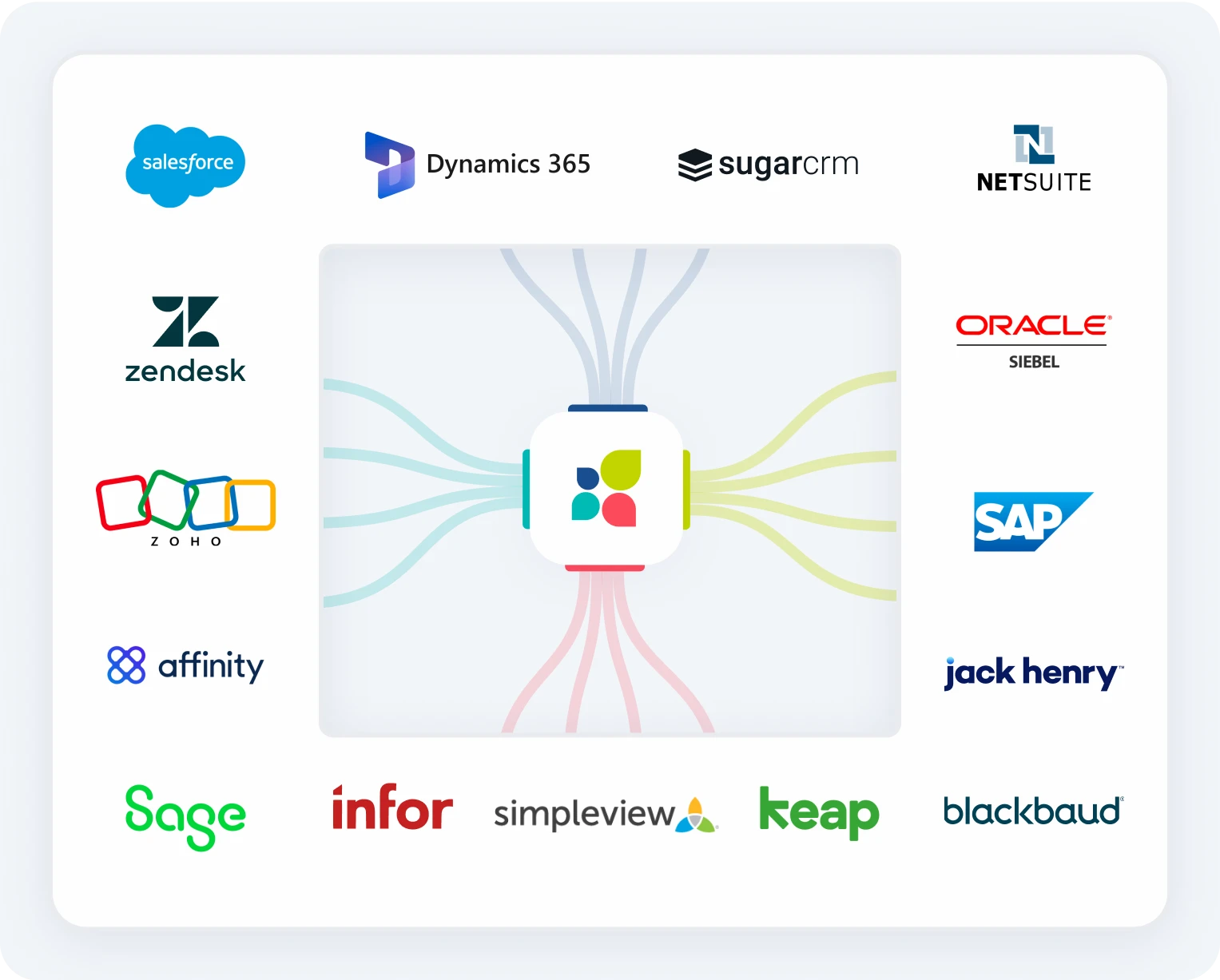
Act-On positions itself as a "best-of-breed" independent MAP with native CRM integrations for Salesforce, Dynamics 365, SugarCRM, NetSuite, and Zendesk Sell. The platform connects to webinar platforms (Zoom, GoToWebinar, Webex), ad platforms (Google Ads, LinkedIn Ads, Meta), and ABM tools (DemandBase, 6Sense, ZoomInfo). For everything else, Open API, Zapier, and Cazoomi fill the gaps.
Source: Act-On
Eloqua leans on its Marketing AppCloud with 500+ prebuilt integrations, providing plug-and-play connections to CRMs, ad platforms, ABM vendors, and data providers. Eloqua integrates natively with Salesforce, Dynamics, Oracle CX Sales, and Oracle CRM On Demand. The deepest integration is with the broader Oracle CX suite: Oracle Unity CDP supports three-directional data flow, and Guided Campaigns delivers conversation-ready opportunities directly to Oracle CX Sales. For organizations already running Oracle ERP or Oracle CX Sales, this native connectivity is a significant advantage.
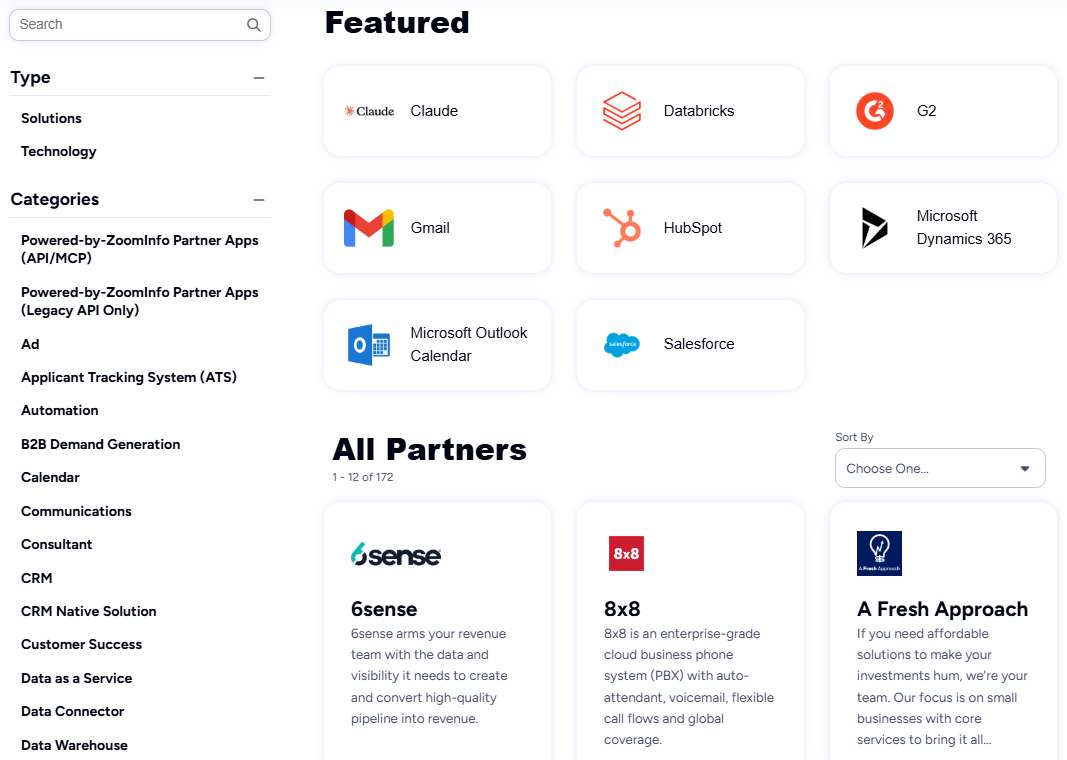
ZoomInfo connects across the entire GTM stack. The ZoomInfo App Marketplace lists 120+ integrations spanning CRM (Salesforce, HubSpot, Microsoft Dynamics 365), marketing automation (Marketo, Eloqua, Act-On), sales engagement (Salesloft, Outreach), data warehouses (Snowflake, Databricks), and more. Beyond standard integrations, ZoomInfo's Enterprise API and MCP server expose the same intelligence to any custom application or AI agent. API access is included in all relevant plans, meaning ZoomInfo works as a data layer inside whatever marketing automation platform you choose.
BDO Canada's Senior Marketing Intelligence Analyst reported an 87% reduction in time spent on internal data dashboard updates using the ZoomInfo API, noting that "the plug-and-play aspect of the API means I can integrate it very easily into any process and get information at a moment's notice." (BDO Canada Case Study)
Support and implementation
The support experience reflects each platform's target customer.
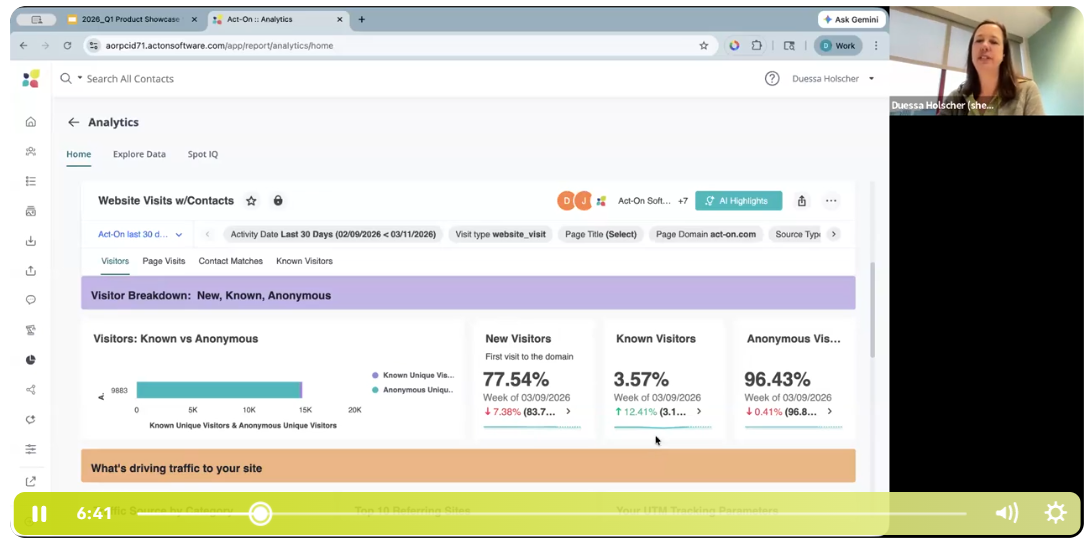
Act-On is consistently praised for the quality of its customer support. Reviewers describe it as "some of the best support" they've had for a SaaS offering, with "personalized attention" and emphasis on creating a true partnership. The Professional tier includes standard email-based support, with Premium and Premium+ programs offering phone, chat, Zoom, faster SLAs, and deliverability insights at additional cost. Training resources include self-serve courses, Power-Up webinars, Office Hours, and optional Fast-Track Onboarding with a dedicated coach.
Source: Act-On
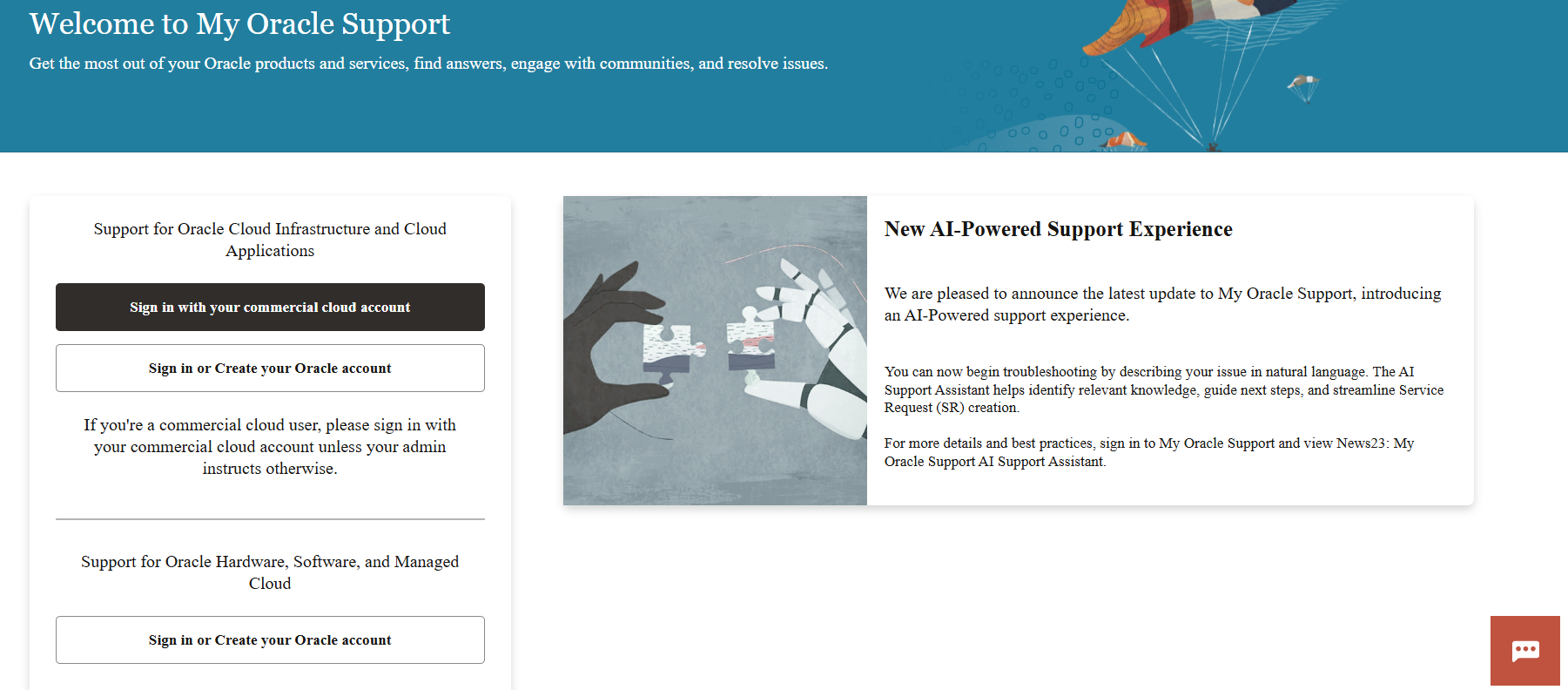
Eloqua support runs through My Oracle Support, backed by a global support organization of more than 18,000 specialists covering 430,000+ customers across 175 countries. Oracle also operates a Digital Experience Agency with average team tenure of 10+ years, reporting 94% Customer Satisfaction and a Net Promoter Score of 82. But this level of service comes at enterprise prices: Priority Support adds $1,250/month plus 10% of your subscription fee, and technical services run $272.25/hour.
Source: Oracle
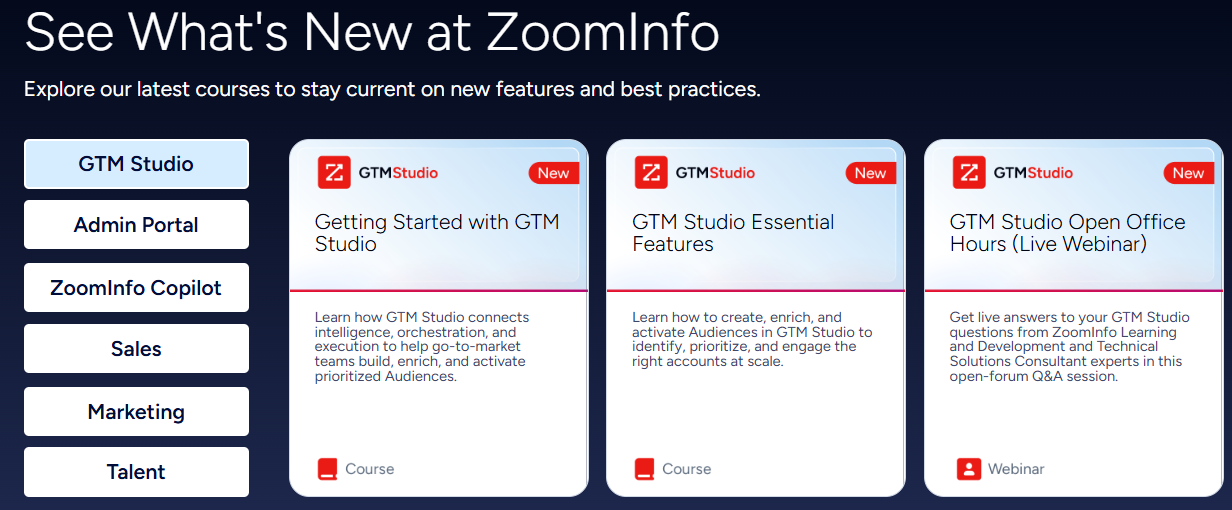
ZoomInfo provides support through its Help Center, direct phone support, and ZoomInfo University with role-specific learning paths, certifications, and on-demand courses. The company redesigned its onboarding program from 30 to 90 days, producing a 25% improvement in satisfaction scores and winning Rocketlane's Golden Comet award for Best Customer Onboarding Team of 2024. For complex deployments, ZoomInfo Labs and Data Services provide white-glove professional services.
Act-On vs. Eloqua vs. ZoomInfo: Which should you choose?
The right platform depends on where your biggest gap is: campaign execution, enterprise orchestration, or data and intelligence.
Choose Act-On if:
Your marketing team is small to mid-sized and needs automation without dedicated ops specialists
You're a B2B organization with 51-1,000 employees running email, SMS, and social campaigns
Active Contact pricing works in your favor because you market to a fraction of your database
Strong customer support and a shorter learning curve matter more than maximum feature depth
You work in a regulated industry that requires HIPAA compliance
Choose Oracle Eloqua if:
You're a global enterprise running complex, multi-segment campaigns across multiple business units and regions
You have dedicated marketing operations staff who can manage the Campaign Canvas and Program Canvas
You need up to 30 concurrent lead-scoring models and enterprise-scale throughput
You're already invested in the Oracle ecosystem (Oracle CX Sales, Oracle Unity CDP, Oracle ERP)
Data residency, platform reliability, and enterprise security certifications are procurement requirements
Choose ZoomInfo if:
Your campaigns are limited by the quality, completeness, and freshness of your contact data
You need to know which accounts are actively in-market before they engage with your content
You want AI-powered audience building and GTM orchestration in addition to (or instead of) traditional campaign automation
You need a data intelligence layer that integrates with your existing marketing automation platform
You want to try before you buy, with a free tier and self-serve trial
Start with ZoomInfo Lite for free, or explore the full platform with a 7-day trial
Marketing automation platforms excel at the "how" of B2B marketing: building campaigns, scoring leads, and routing prospects to sales. But the "who" and "when" are equally important, and that's where most marketing stacks break down. The strongest B2B marketing operation pairs execution with intelligence, either by adding ZoomInfo as the data layer powering Act-On or Eloqua, or by using ZoomInfo's GTM Studio as a unified platform for intelligence-driven marketing.
The companies that win in B2B marketing aren't the ones with the most sophisticated workflows. They're the ones reaching the right buyers at the right time with the right message. That starts with data.
Act-On vs. Eloqua vs. ZoomInfo FAQ
What is the core difference between Act-On, Eloqua, and ZoomInfo?
Act-On is a mid-market marketing automation platform focused on email, lead nurturing, and lead scoring with an emphasis on ease of use and customer support. Oracle Eloqua is an enterprise marketing automation platform with sophisticated campaign orchestration, multi-model lead scoring, and deep Oracle ecosystem integration. ZoomInfo is an all-in-one AI GTM platform that provides the B2B contact data, buyer intent signals, and AI-powered audience building that feed into marketing automation, either through direct integration with Act-On or Eloqua, or through its own GTM Studio orchestration engine.
Which platform is the most affordable?
Act-On starts at $900/month for 2,500 active contacts using its Active Contact pricing model, which charges only for contacts you actually email. Eloqua starts at $2,000/month for 10,000 contacts on the Basic tier, with Enterprise pricing beginning at $29,200/month for 500,000 contacts. ZoomInfo uses custom consumption-based pricing but is the only one offering a permanent free tier (ZoomInfo Lite with 10 monthly export credits) and a self-serve 7-day trial.
Can ZoomInfo replace Act-On or Eloqua?
ZoomInfo's GTM Studio provides marketing orchestration capabilities including audience building, multi-channel play execution, and campaign analytics. For teams whose primary need is intelligence-driven targeting and play execution, GTM Studio can serve as the orchestration layer. For teams that need deep email campaign management, complex drip programs, or enterprise-scale lead nurturing workflows, ZoomInfo works best as the intelligence layer feeding data and signals into Act-On or Eloqua.
How do the lead scoring approaches differ?
Act-On scores leads on profile attributes and activity with up to five score sheets and an AI Predictive Lead Score that updates daily. Eloqua uses a two-dimensional letter-number grid (A1 through D4) combining profile fit and engagement, supporting up to 30 concurrent models on Enterprise tier, plus account-level engagement scoring. ZoomInfo's Account Fit Score uses predictive AI trained on your actual CRM win/loss data to score accounts 0-100, and layers buyer intent signals on top to identify accounts that are both a good fit and actively in-market.
Which platform has the best CRM integrations?
All three integrate with major CRMs, but with different strengths. Act-On has native integrations with Salesforce, Microsoft Dynamics 365, SugarCRM, NetSuite, and Zendesk Sell. Eloqua integrates natively with Salesforce, Microsoft Dynamics, Oracle CX Sales, and Oracle CRM On Demand, with the deepest integration reserved for the Oracle ecosystem. ZoomInfo integrates with Salesforce, HubSpot, and Microsoft Dynamics and adds 120+ marketplace integrations, plus an Enterprise API and MCP server for custom integrations with any application.
Does either Act-On or Eloqua include B2B contact data?
Neither Act-On nor Eloqua includes a B2B contact database. Both platforms rely entirely on contacts you import through form submissions, list uploads, CRM syncs, or third-party data providers. ZoomInfo includes access to 500 million contacts, 200 million verified business emails, and 135 million verified phone numbers, which can be exported directly to Act-On or Eloqua through native integrations.
Which platform is easiest to learn and use?
Act-On has the most accessible learning curve for marketing teams without dedicated operations specialists, with most users productive within weeks. ZoomInfo's GTM Studio is designed for non-technical users with natural language audience building. Eloqua is the most complex, with Oracle acknowledging this by offering Guided Campaigns as a simplified interface layer over the core Campaign Canvas. Oracle recommends implementation packages and formal training for all new Eloqua customers.
How do the platforms handle data privacy and security?
All three maintain enterprise security certifications. Act-On holds ISO 27001 and HIPAA compliance with TX-RAMP certification. Eloqua runs on Oracle Cloud Infrastructure with SOC 1/2/3, ISO 27001/27017/27018/27701, and optional HIPAA compliance at $60,000/year. Its AI processes data on Oracle's private infrastructure with no third-party LLM data sharing. ZoomInfo maintains ISO 27001, ISO 27701, SOC 2 Type II, and TRUSTe GDPR and CCPA validations, all renewed annually, and is a registered data broker in California and Vermont.
Keep comparing your options: