

Choosing between Act-On and Pardot for B2B marketing automation comes down to five questions:
Are you already running Salesforce CRM, or do you need flexibility across CRM systems?
Does your team need a platform they can run without dedicated admins, or can you invest in a steeper learning curve for more functionality?
Is account-based marketing with buying committee tracking a priority, or is your focus on lead-level nurturing and scoring?
Do you prefer paying only for contacts you actually email, or are you comfortable with per-org pricing that scales with feature tiers?
Do you have reliable, verified contact data feeding your automation, or are you depending on whatever's already in your CRM?
In short, here's what we recommend:
Act-On is a marketing automation platform for mid-market teams who want strong capabilities without enterprise complexity. Its Active Contact pricing model charges only for contacts you email, not your full database, which can mean savings for teams with large but selectively targeted lists.
Act-On integrates natively with Salesforce, Microsoft Dynamics, SugarCRM, and NetSuite, giving teams CRM flexibility Pardot can't offer. But its interface is modernizing slowly, default reporting needs work, and pricing runs high enough that budget-conscious startups may struggle to justify it.
Pardot (now officially Marketing Cloud Account Engagement) is Salesforce's native B2B marketing automation, built on the same platform as Sales Cloud and Service Cloud. For organizations already on Salesforce, the integration is tight: marketing and sales share one data model, one set of records, and one view of every prospect.
Pardot has been named a Leader in the Gartner Magic Quadrant for B2B Marketing Automation Platforms for seven consecutive years. But that depth costs money: pricing starts at $1,250/org/month, requires a Salesforce CRM license, and the learning curve demands dedicated admin expertise.
Both platforms automate B2B marketing well: sending emails, scoring leads, nurturing prospects through long sales cycles. But neither provides the verified contact data, buyer intent signals, or account intelligence that determines whether those campaigns reach the right people. That's where the third piece of the stack comes in.
ZoomInfo is an AI go-to-market platform that provides the data layer both Act-On and Pardot depend on but don't include. Built on 500M contacts, 100M companies, 135M+ verified phone numbers, and 200M+ verified business email addresses, ZoomInfo gives marketing teams the data, intent signals, and account insights that make automation campaigns land.
Its GTM Context Graph (processing 1.5B+ data points daily) combines this data with your CRM records, conversation transcripts, and behavioral signals to show which accounts are in-market and why. ZoomInfo integrates with both Act-On and Salesforce (Pardot's parent platform). Teams access it through GTM Workspace for sellers, GTM Studio for marketers, or the API and MCP in any front-end.
If verified data and real-time buying signals sound like the missing piece, see how ZoomInfo works with your stack.
Act-On vs. Pardot vs. ZoomInfo at a glance
Act-On | Pardot (MCAE) | ZoomInfo | |
|---|---|---|---|
Primary function | Marketing automation for mid-market | Marketing automation for Salesforce orgs | AI go-to-market platform |
CRM requirement | Works with Salesforce, Dynamics, SugarCRM, NetSuite, and more | Requires Salesforce CRM | Integrates with Salesforce, HubSpot, Dynamics, and 120+ tools |
Pricing model | Active Contacts (pay only for contacts you email) | Per-org flat fee, billed annually | Custom, consumption-based |
Starting price | $900/month (2,500 active contacts) | $1,250/month (10,000 contacts) | Free tier available (ZoomInfo Lite) |
Contact data included | No (bring your own) | No (bring your own) | 500M contacts, 200M+ verified emails, 135M+ verified phones |
Buyer intent signals | No (third-party integration required) | No (third-party integration required) | Native intent data from 210M+ IP-to-Organization pairings |
Lead scoring | Manual + AI Predictive Lead Score | Scoring + Grading + Einstein AI | Account Fit Score + Guided Intent |
ABM capabilities | Via third-party integrations | Native ABM dashboards and account scoring | Native ABM with contact-level site visitor identification |
AI features | AI Create, AI Predictive Lead Score, AI Analytics | Agentforce Campaign Creation, Einstein Scoring, Einstein Attribution | GTM Context Graph, AI agents, natural language orchestration |
Best for | Mid-market B2B teams wanting CRM flexibility | Salesforce-native enterprises with complex sales cycles | Any B2B team needing verified data and buying signals |
Two approaches to B2B marketing automation
Act-On and Pardot share the same core mission (automate B2B marketing campaigns) but were built for different buyers with different constraints.
Act-On was founded in 2008 by Raghu Raghavan, who previously co-founded Responsys (later sold to Oracle for $1.5 billion). The founding vision: build "a sophisticated, but affordable SaaS marketing tool mid-market companies could easily use." That mid-market DNA still shows.
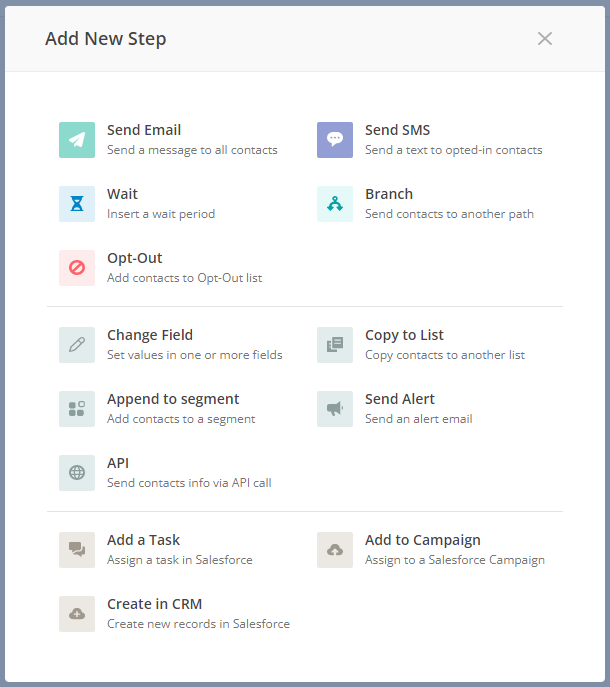
Act-On rates above the marketing automation average on TrustRadius for ease of use. Its drag-and-drop email editor, visual Automated Journey Builder, and AI content tools let small marketing teams run campaigns without dedicated admins or agency support.
Source: Act-On
The trade-off is depth. Act-On handles standard nurture workflows well, but teams running complex, multi-branch programs with dozens of conditional paths will feel its limits. Gartner's 2024 report flagged narrow lead workflow design as an area of concern.
For a deeper look at Act-On's capabilities, strengths, and limitations, see our Act-On review.
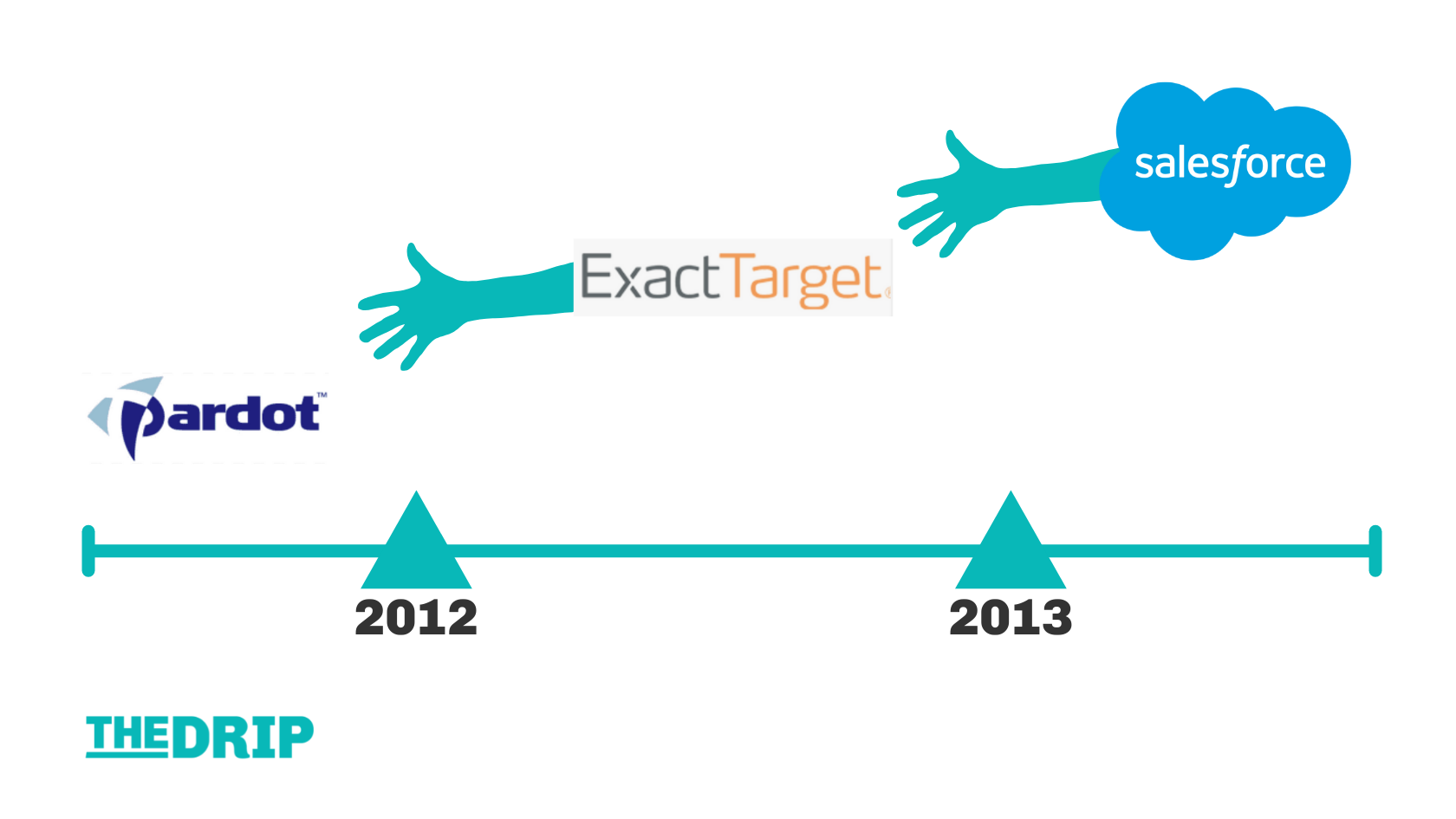
Pardot took a different path. Founded in 2007 in Atlanta, it was acquired by ExactTarget for $95.5 million in 2012, then absorbed into Salesforce when Salesforce acquired ExactTarget for $2.5 billion in 2013. Today Pardot is built on the Salesforce platform, sharing the same data model, objects, and UI as Sales Cloud and Service Cloud.
Source: Salesforce
For Salesforce shops, this native integration is the product's strongest selling point. TrustRadius reviewers describe the experience as "using these two tools is like using only one." Marketing and sales teams see the same prospect activity, the same engagement history, and the same pipeline data without syncing across separate systems.
The trade-off is the opposite of Act-On's. Pardot's email template builder is widely considered outdated and often requires HTML knowledge. TrustRadius reviewers note that "things that should be easy to edit on an email or landing page are sometimes very difficult for no rhyme or reason." The platform demands admin expertise that typically requires Pardot Specialist certification.
CRM integration defines who each platform serves
This is the decision that narrows the field fastest.
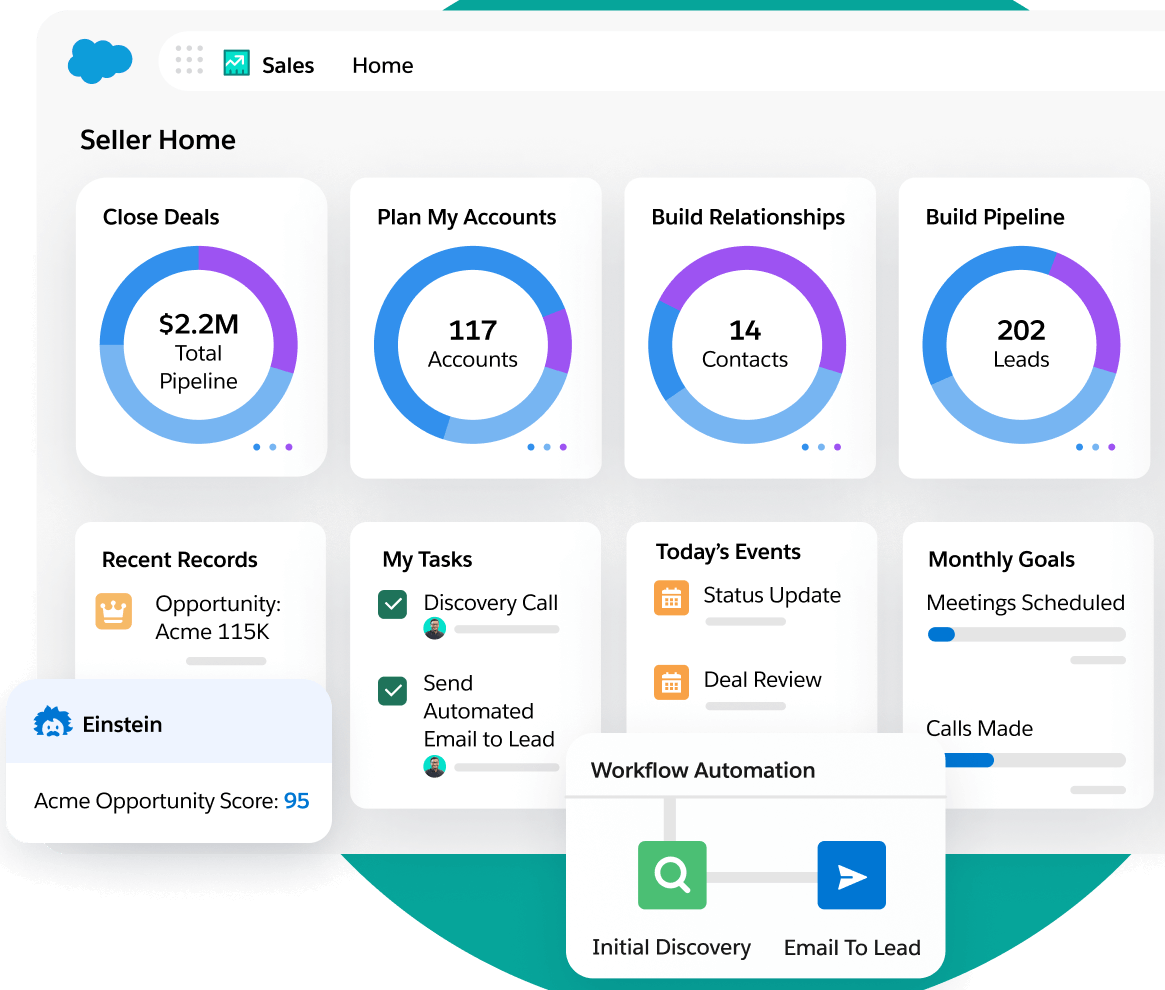
Pardot requires Salesforce CRM. There is no workaround. Its value depends on sharing the Salesforce data model. Accessing the newest AI and multichannel features requires Sales Cloud or Service Cloud Enterprise Edition or higher. Organizations on Salesforce Professional Edition must upgrade, adding cost before the automation itself.
Source: Salesforce
For companies already in the Salesforce ecosystem, this is a strength. Prospect engagement data, lead scores, and grades flow in real time to CRM records. Engagement History Dashboards embed on Account, Lead, Contact, and Opportunity records, refreshing every ten minutes. Sales reps never leave Salesforce to see what marketing is doing.
For companies not on Salesforce, or those using multiple CRMs across divisions, Pardot is a nonstarter.
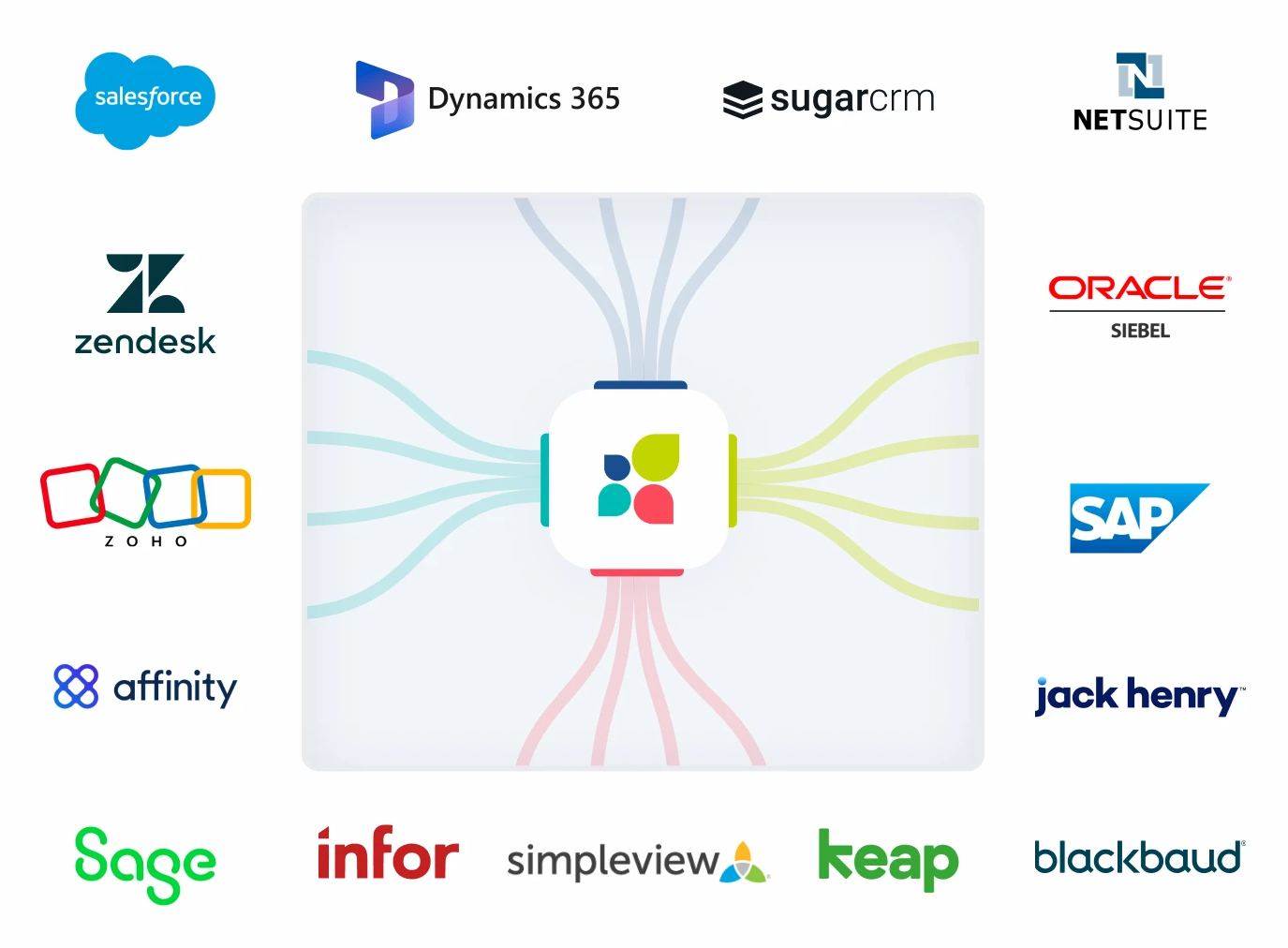
Act-On offers CRM flexibility. Act-On provides native integrations with Salesforce, Microsoft Dynamics 365, SugarCRM, Oracle NetSuite, and Zendesk Sell, plus connections to Zoho, Pipedrive, SAP, and others. For organizations running Dynamics in one region and Salesforce in another, or those considering a CRM migration, Act-On doesn't force a platform commitment.
Source: Act-On
Act-On's Salesforce integration is solid. Users report that it "fits perfectly with SalesForce (CRM), seamlessly aligning with inbound campaigns and automating lead management activities." But the integration is a connector, not a native data share. There's a sync layer that Pardot avoids by living inside Salesforce.
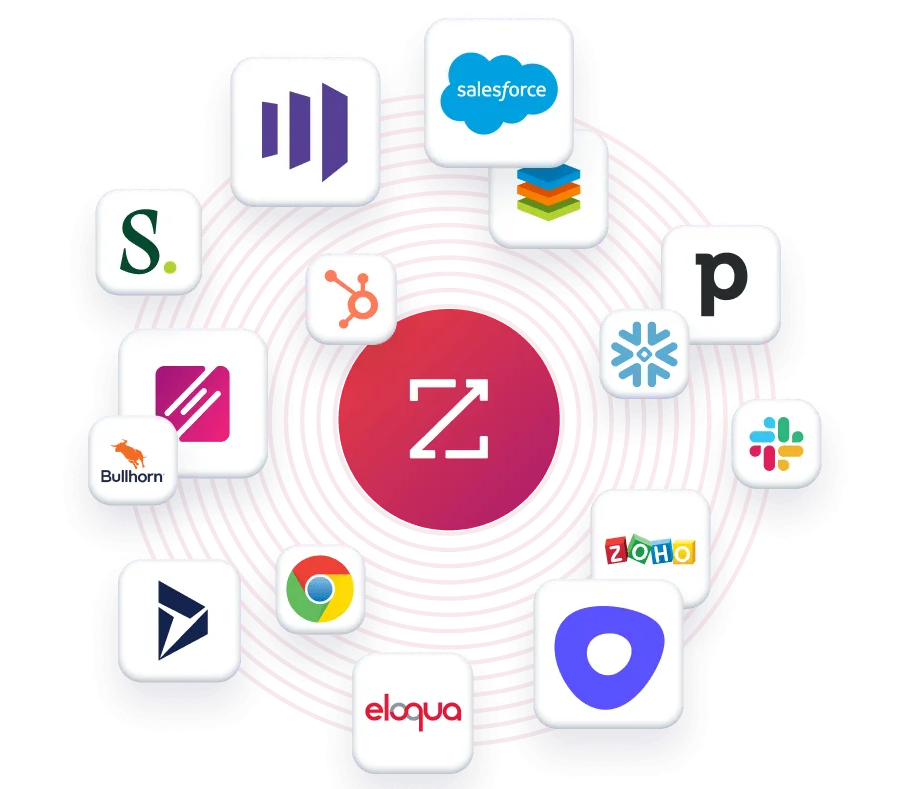
ZoomInfo works with everything. The ZoomInfo App Marketplace lists 120+ integrations across CRM, marketing automation, sales engagement, and data warehouses. Featured integrations include Salesforce, HubSpot, and Microsoft Dynamics 365. ZoomInfo is an ABM integration partner for Act-On, and its Salesforce integration complements Pardot.
Source: ZoomInfo
For teams building custom workflows, API access is included in all relevant plans, and the MCP server lets AI agents access ZoomInfo data directly.
Lead scoring reveals different levels of depth
Both Act-On and Pardot offer lead scoring that goes beyond point accumulation. But the approaches differ.
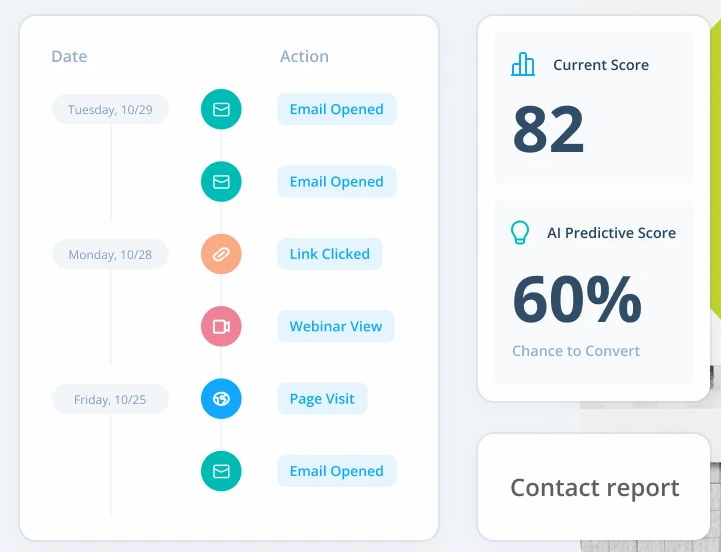
Act-On uses a dual system: manual rule-based scoring and AI Predictive Lead Score. Manual scoring assigns numeric values to activities like email opens, form submissions, and page visits. Teams can create up to four additional scoring sheets beyond the default, useful for organizations with multiple products or regional teams.
The AI Predictive Lead Score uses machine learning trained on contact behaviors and CRM outcomes to flag leads likely to close, with scores updated daily.
Source: Act-On
Pardot adds a dimension Act-On doesn't: lead grading. Scoring measures implicit interest (what a prospect does). Grading measures explicit fit (who the prospect is), evaluating job title, company size, industry, and location against an ideal customer profile. The grading system runs from F to A+, giving sales a quick visual signal of profile fit.
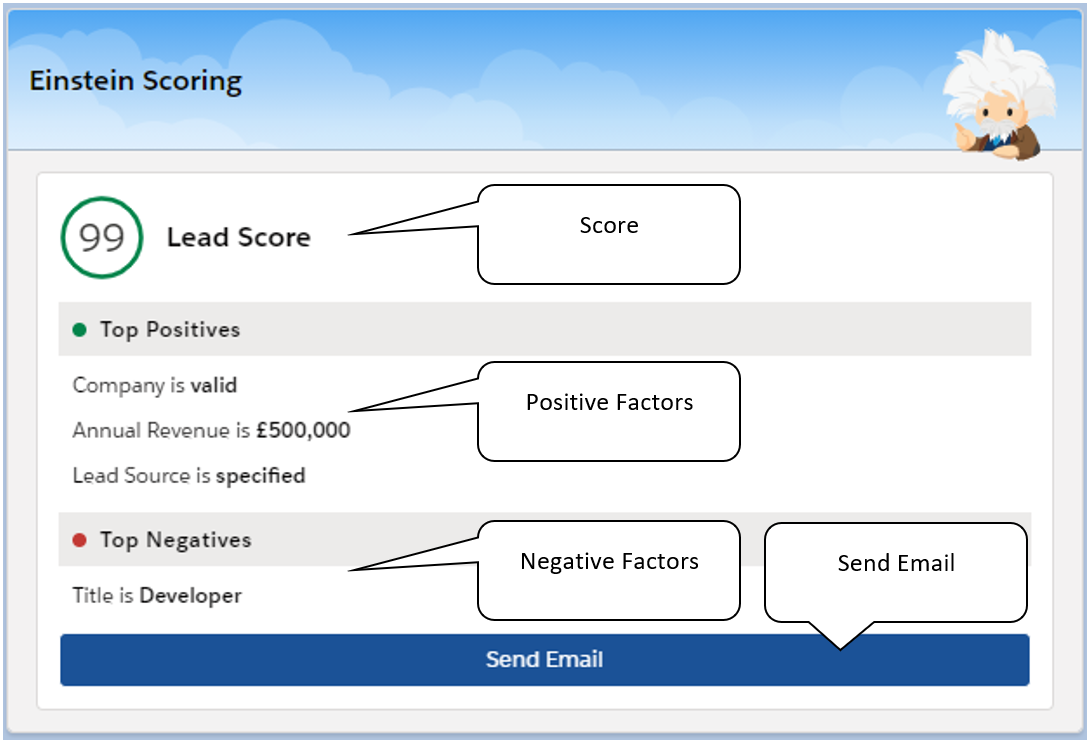
Pardot also layers three AI models: Einstein Behavior Scoring (0-100 engagement score updated every four hours), Einstein Lead Scoring (pattern-matching against historical conversion data), and Einstein Key Account Identification (tier-ranking accounts by purchase likelihood).
Source: Salesforce
Pardot's scoring is more layered on paper. But layers only matter if the underlying data is accurate. Both platforms score based on the contacts already in your database. Neither tells you which contacts should be in your database in the first place, which accounts are researching solutions like yours right now, or which decision-makers you're missing from a buying committee.
ZoomInfo fills that gap. ZoomInfo's buyer intent data tracks signals from 210 million IP-to-Organization pairings and 6 trillion+ new keyword-to-device pairings monthly, surfacing companies in-market before they fill out a form or click an email.

Source: ZoomInfo
Guided Intent (exclusive to ZoomInfo) identifies topics correlated with past deal success rather than requiring manual topic selection. Combined with 300+ company attributes for segmentation and Account Fit Scores, ZoomInfo gives Act-On's or Pardot's scoring engines the right contacts to score in the first place.
Seismic's sales team attributed 39% of active pipeline to opportunities identified or influenced by ZoomInfo signals and boosted productivity by 54%. As CBO Toby Carrington described it: "That combination of our internal CRM data, external signals, and AI that's given all that context has helped us craft very specific account- and persona-based messages. And people have responded to them right away." (Seismic case study)
Both platforms automate campaigns. Neither provides the contacts.
This is the structural limitation that most Act-On vs. Pardot comparisons overlook.
Both platforms are execution engines. They send emails, nurture leads, score engagement, and report on campaign performance. They do this well. But they assume you already have the right contacts in your database, that those contacts' information is current, and that you know which accounts to prioritize.
In practice, CRM data decays constantly. People change jobs, companies restructure, email addresses go stale. Neither Act-On nor Pardot includes a B2B contact database, intent signal monitoring, or account intelligence. You bring your own data, or you integrate with a provider that supplies it.
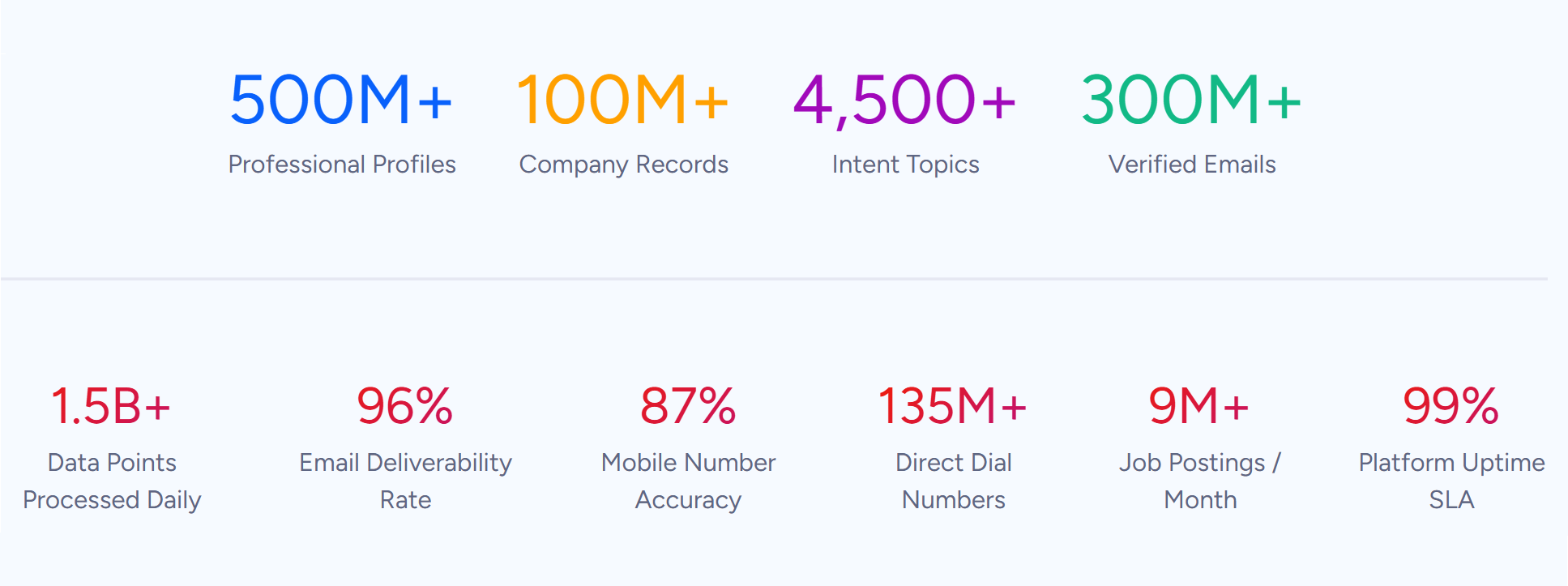
ZoomInfo was built to solve this problem. ZoomInfo maintains 500M contacts across 100M companies, verified through a multi-source pipeline backed by 300+ human researchers and achieving up to 95% accuracy on first-party data.
Source: ZoomInfo
For marketing teams, this means email addresses that land, phone numbers that ring, and company attributes (industry, revenue, headcount, technographics) that enable precise segmentation.
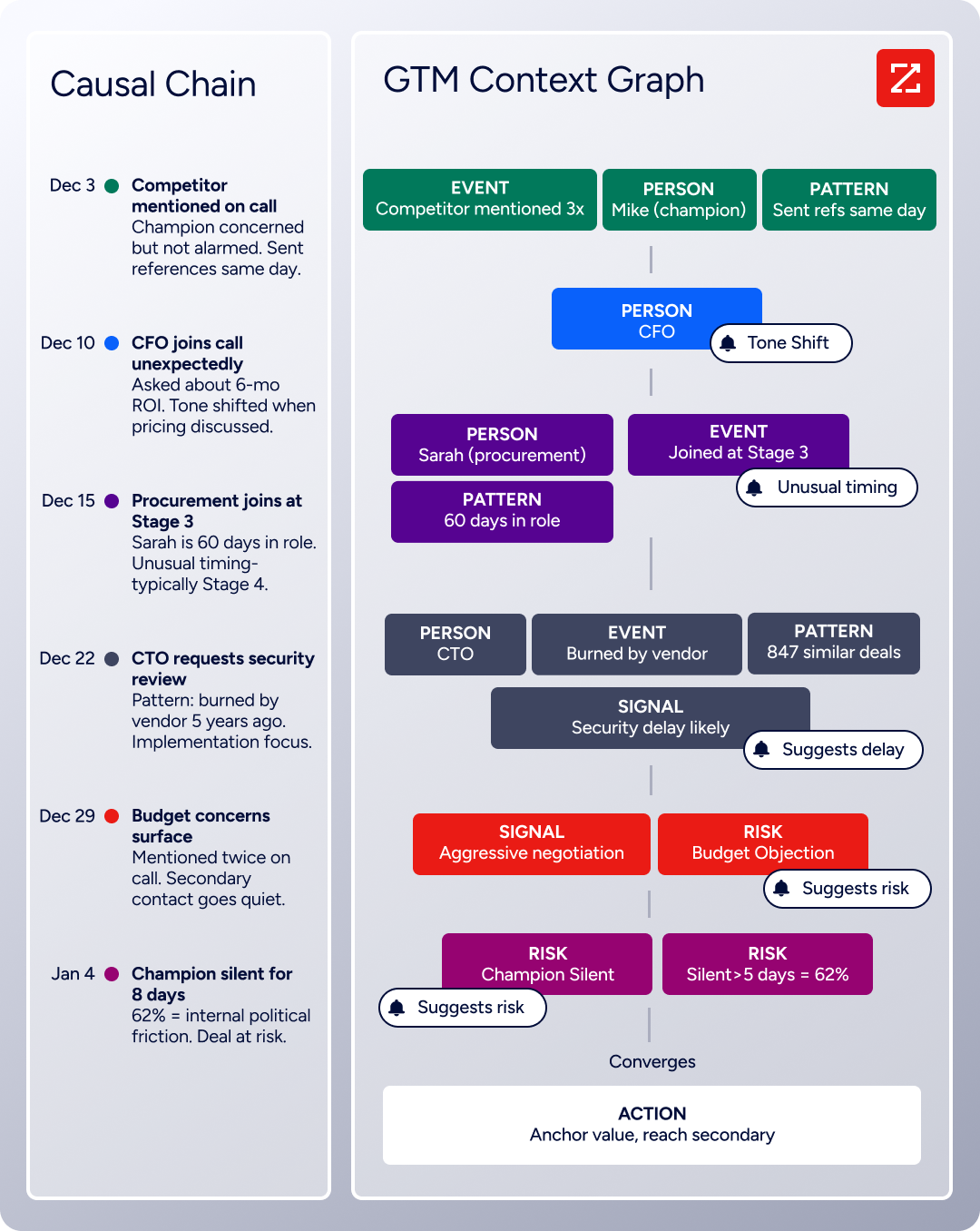
But the data alone isn't what sets ZoomInfo apart. The GTM Context Graph (built on ZoomInfo's dataset) combines third-party data with your CRM records, conversation transcripts, and behavioral signals to capture not just what happened in a deal, but why. Your CRM records that a deal moved stages.
Source: ZoomInfo
The Context Graph connects that movement to the intent signals, the executive hire, and the competitive research behind it, so marketing teams can target accounts based on buying patterns rather than demographic guesses.
For teams running Act-On or Pardot, ZoomInfo plugs into the workflow. ZoomInfo is an ABM integration partner for Act-On, and its Salesforce integration feeds enriched data into Pardot. FormComplete reduces landing page forms to a single field while auto-filling the rest, cutting the conversion friction that both platforms' form builders create.
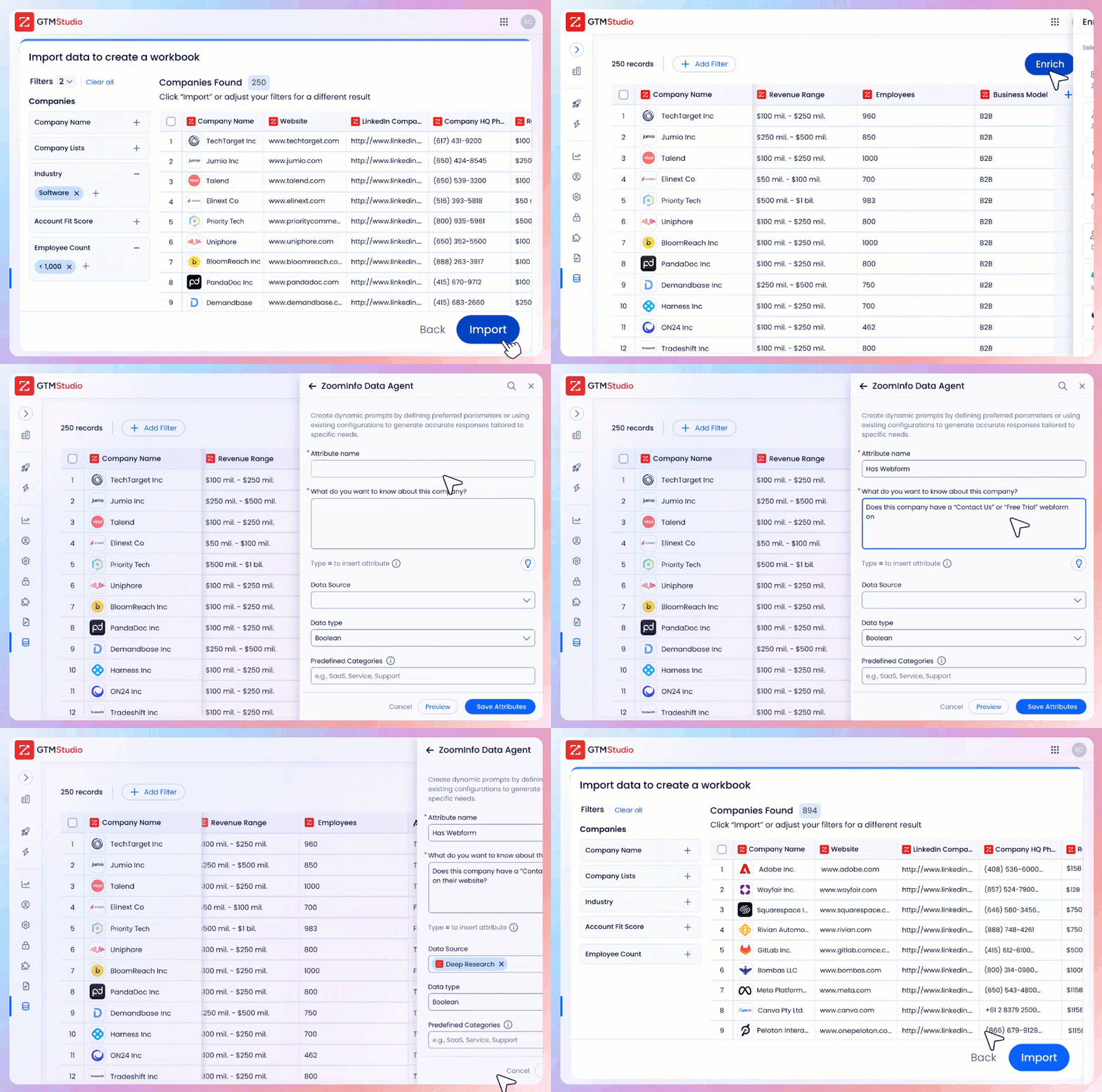
GTM Studio extends this with AI marketing orchestration. Marketers describe audiences in natural language, launch multi-channel campaigns targeting accounts that match proven win patterns, and activate across email, display ads, LinkedIn, and direct mail, all without engineering support. Campaigns that used to take three weeks now launch in 30 minutes.
Source: ZoomInfo
SpringDB used ZoomIn$15,000/org/monthfo's enriched data to achieve 2x-3x increases in campaign conversions and a 300% increase in database usability across their clients. Founder and CEO John Kotsuros noted: "You'll get 10x the value if you think of ZoomInfo as a full platform and not just a tool for one team." (SpringDB case study)
Pricing models reflect different business philosophies
The three platforms price themselves in ways that reveal who they're built for.
Act-On uses an Active Contact pricing model that charges for contacts you email each month, not your total database. The Professional tier starts at $900/month for 2,500 active contacts. The Enterprise tier is custom-priced. Act-On claims savings of up to 48% compared to competitors like Marketo that charge on total database size.
The catch: Act-On requires annual contracts, with automatic renewal and a 5% annual price increase unless you opt out 30 days before renewal. CRM integration, Data Studio, ABM, and SMS are paid add-ons on the Professional tier. Several reviewers note that Act-On is "one of the most expensive tools on the market," despite the Active Contact model.
For a full breakdown of what's included in each tier and what costs extra, see our Act-On pricing breakdown.
Pardot uses flat per-org pricing, billed annually:
Edition | Price |
|---|---|
Growth+ | |
Plus+ | |
Advanced+ | |
Premium+ |
All editions include 10,000 contacts except Premium+ (75,000). Additional contacts cost $100 per 10,000 contacts/month. But the published price is the starting point, not the total. Pardot requires consumption-based credits for AI features, SMS, and Data Cloud capabilities, and the Premier Success Plan (24/7 support, expert coaching) costs 30% of net license fees on top.
Add the Salesforce CRM subscription required to run Pardot at all, and total cost of ownership climbs well above the listed automation price.
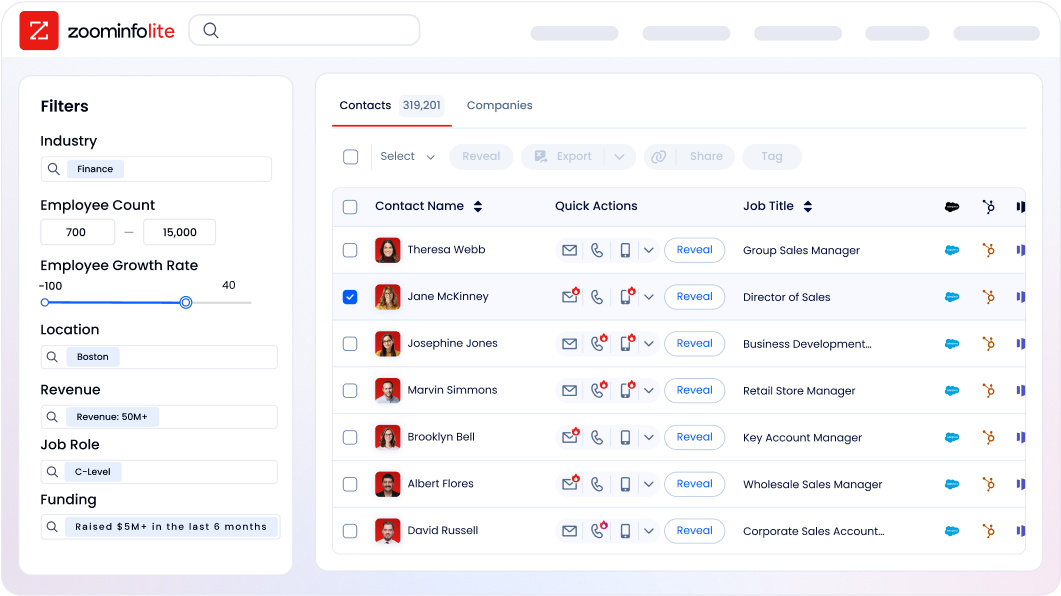
ZoomInfo uses consumption-based pricing with no publicly listed prices. Costs scale with seats, credit volume, features, and contract length. But ZoomInfo offers two entry points neither Act-On nor Pardot match: a permanent free tier (ZoomInfo Lite) with access to the B2B database and 10 monthly export credits, and a 7-day free trial of the full platform. Act-On offers only a limited analytics trial, and Pardot has no free trial or free plan at all.
Source: ZoomInfo
AI capabilities are evolving fast across all three
All three platforms have invested in AI, but with different priorities.
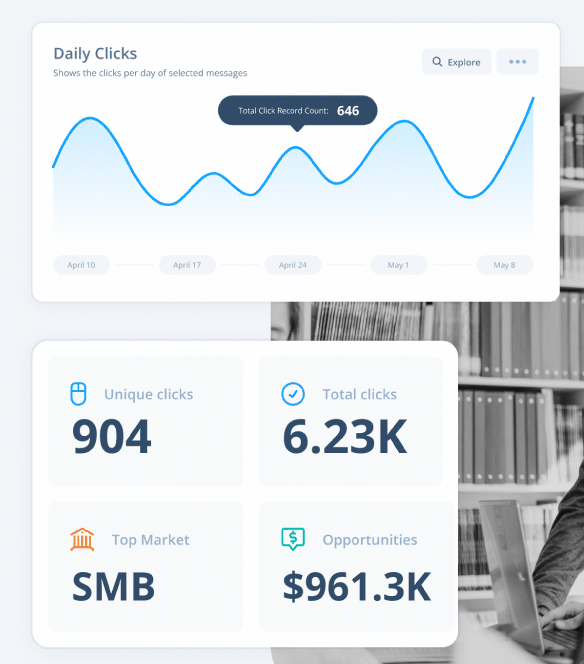
Act-On's AI focuses on practical marketing execution. Act-On AI Create generates email content and subject lines. AI Predictive Lead Score identifies likely-to-close leads using machine learning. Advanced Analytics with AI lets marketers ask questions in plain language and receive generated reports.
Source: Act-On
InSite web agents deliver personalized content to website visitors. These features keep the platform accessible without overwhelming users.
Pardot's AI is broader, reflecting Salesforce's platform investment. Agentforce Campaign Creation lets marketers describe campaigns in natural language and receive complete briefs, audience segments, email copy, and journey flows.
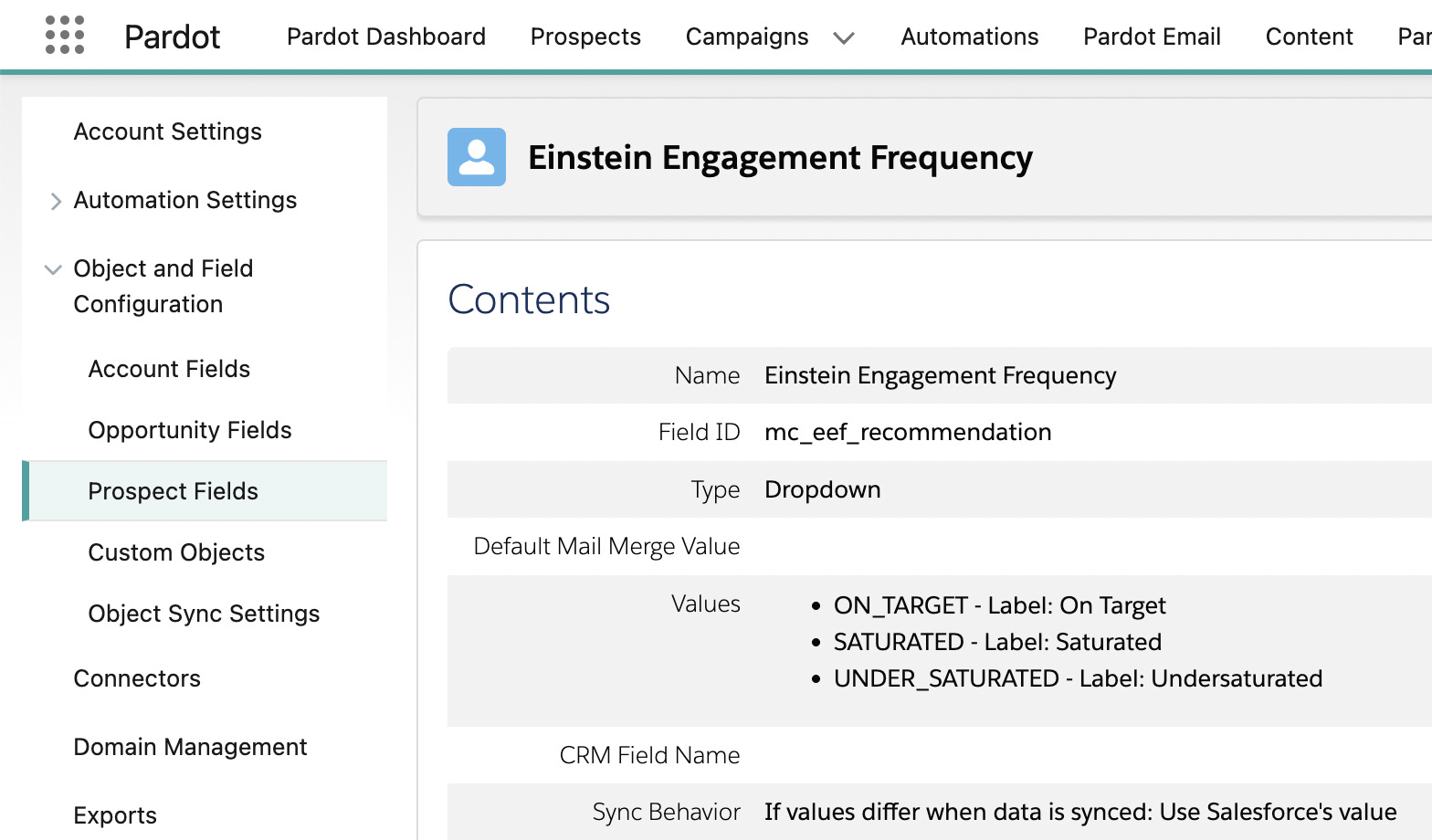
Einstein Attribution uses machine learning to build multi-touch attribution models trained on your historical data rather than static rules. Einstein Engagement Frequency predicts optimal email cadence per prospect. These features are real, but accessing them requires credit purchases and Enterprise Edition CRM, adding cost and complexity.
Source: Salesforce
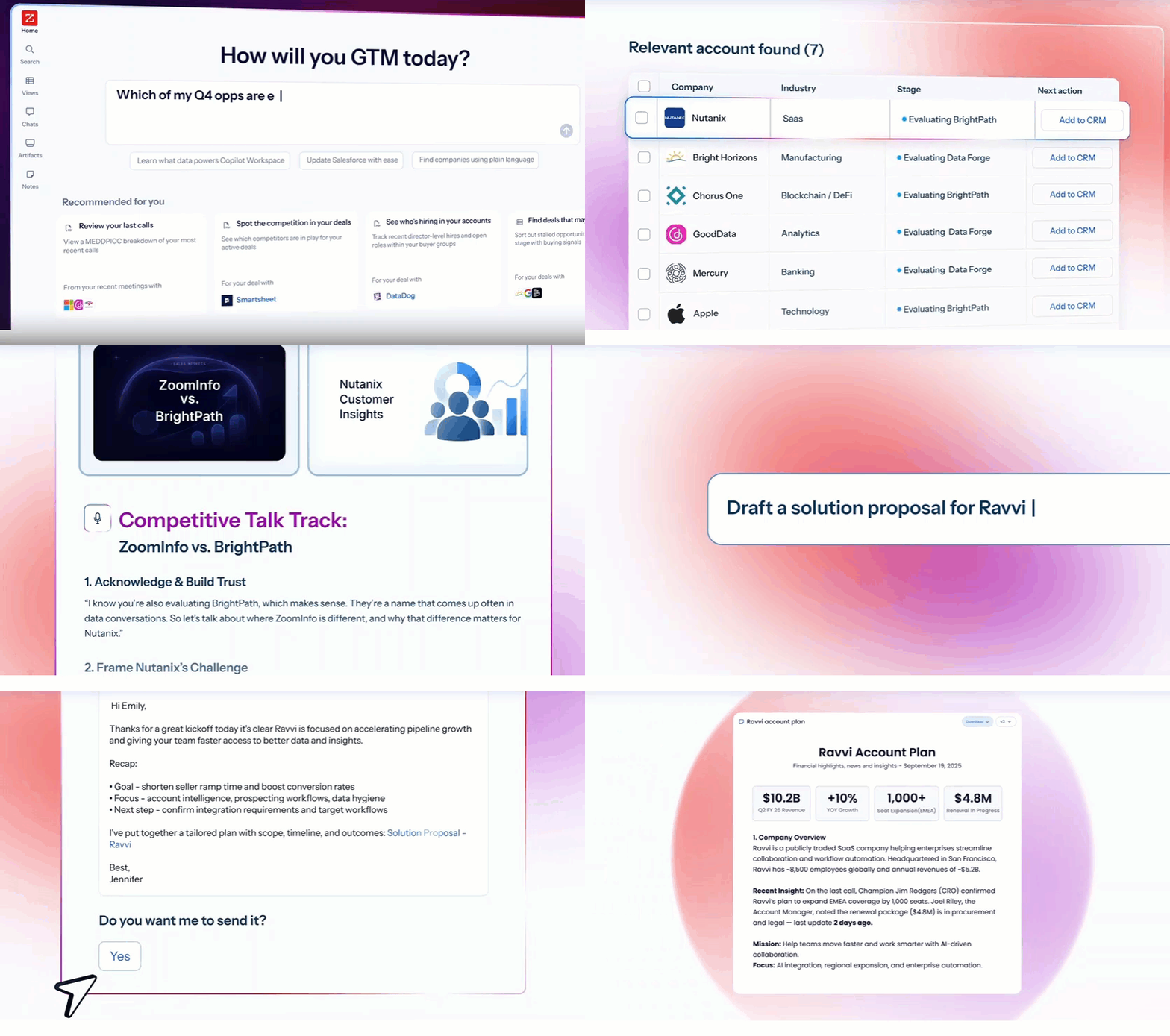
ZoomInfo's AI operates at a different layer. Rather than generating marketing content, ZoomInfo's AI identifies buying behavior. The GTM Context Graph processes 1.5B + data points daily, identifying patterns across thousands of deals to predict which accounts will buy and why.
GTM Workspace uses AI agents (built on Anthropic's Claude) to automate account research, generate personalized outreach, and surface next actions for sellers. GTM Studio lets marketers build audiences and launch campaigns using natural language, with campaigns that improve from engagement signals over time.
Source: ZoomInfo
The distinction matters. Act-On and Pardot use AI to make campaign creation and scoring faster. ZoomInfo uses AI to answer the question that comes before campaign creation: which accounts should you target, and why?
Redwood Logistics used ZoomInfo's audience data to achieve a 99% reduction in cost-per-click and a 310% increase in click-through rate, saving 20-25 hours per week. Senior Director of Digital Strategy Chelsea Kenyon noted: "It's not just the data itself. It's more about the right data at the right time to help us reach out with the right message across that full buyer journey." (Redwood Logistics case study)
Support and documentation comparison
How each platform handles support reflects their target customer.
Act-On is consistently praised for support quality. Reviewers call it "some of the best support they've had for a SaaS offering" and praise the "personalized attention and partnership approach." Act-On offers live support via chat, phone, Zoom, and email. Weekly Office Hours, monthly Power-Up webinars, and Fast-Track Onboarding are available.
Premium tiers add faster SLAs and deliverability insights.
Pardot ties support quality to how much you pay. The Standard Success Plan (included with all licenses) is self-serve only: Knowledge Articles, Trailhead modules, and community forums. The Premier Success Plan adds 24/7 support with a one-hour response time for critical issues, expert coaching, and 25% discounts on training, but costs 30% of net license fees on top.
The Signature plan adds a designated Customer Success Manager at custom pricing. For organizations that can invest, Salesforce's documentation ecosystem (Trailhead, Help Portal, developer docs, Trailblazer Community) is among the most extensive in enterprise software.
ZoomInfo redesigned its onboarding program from 30 to 90 days, structured across planning, implementation, education, and adoption. The redesign produced a 25% improvement in customer satisfaction scores and won Rocketlane's Golden Comet award for Best Customer Onboarding Team of 2024. ZoomInfo University provides role-specific learning paths, certifications, and live webinars.

Source: ZoomInfo
Support is available via the Help Center, phone, and professional services through ZoomInfo Labs. ZoomInfo was the only vendor positioned in the Customers' Choice quadrant in the Gartner Voice of the Customer report, with a 4.7/5.0 average rating.
Act-On vs. Pardot vs. ZoomInfo: Which should you choose?
The right choice depends on your CRM environment, team size, and what's actually limiting your marketing performance.
Choose Act-On if:
You need marketing automation that works with Salesforce, Dynamics, SugarCRM, or other CRMs
Your marketing team is small and needs a platform they can run without dedicated admins
You want to pay only for contacts you actively email, not your entire database
You value responsive customer support
Your focus is lead nurturing and multichannel campaigns across email, SMS, and social
Choose Pardot if:
Your organization is already running Salesforce CRM at Enterprise Edition or above
Marketing and sales alignment on a shared data model is your top priority
You need native account-based marketing with buying committee tracking
Your team has the admin expertise (or budget for it) to manage a complex platform
Multi-touch revenue attribution tied to Salesforce pipelie data is critical
Add ZoomInfo if:
Your campaigns underperform because your contact data is incomplete, outdated, or unverified
You need to identify which accounts are in-market before they fill out a form
You want verified direct dials and business emails for decision-makers, not just the contacts already in your CRM
You're ready to move from demographic targeting to intent-driven account targeting
You need the data layer that makes either Act-On or Pardot deliver results
See how ZoomInfo works with your marketing automation.
The reality: Act-On and Pardot are both capable marketing automation platforms, built for different environments and different buyers. Act-On gives you CRM flexibility and mid-market accessibility. Pardot gives you native Salesforce integration and enterprise ABM. The choice between them is largely a CRM decision.
But whichever platform you choose, it will only perform as well as the data feeding it. Automating campaigns against incomplete contact lists and stale company data produces automated mediocrity. ZoomInfo provides the verified contacts, buying signals, and account intelligence that turn marketing automation from a campaign execution tool into a pipeline generation engine.
Smartsheet reported a 40%+ increase in form fills, 84% increase in MQLs, 26% increase in opportunity rate, and 59% increase in win rate using ZoomInfo's data and FormComplete. As Senior Manager of Sales Technology Enablement Thor Sanderson put it: "ZoomInfo is our one source of truth for account data, and even more so for contact data. There's no other provider in the market that provides you with that level of detail." (Smartsheet case study)
Act-On vs. Pardot vs. ZoomInfo FAQ
What is the core difference between Act-On, Pardot, and ZoomInfo?
Act-On is a marketing automation platform for mid-market B2B teams, supporting multiple CRM integrations and charging only for contacts you actively email. Pardot (Marketing Cloud Account Engagement) is Salesforce's native B2B marketing automation, requiring Salesforce CRM and sharing its data model for tight sales-marketing alignment.
ZoomInfo is not a marketing automation platform. It is an AI go-to-market platform that provides verified contact data, buyer intent signals, and account insights that feed into either Act-On or Pardot to improve campaign targeting and results.
Do I need Salesforce CRM to use Pardot?
Yes. Pardot is built on the Salesforce platform and requires a Salesforce CRM license. Accessing the newest AI and multichannel features requires Sales Cloud or Service Cloud Enterprise Edition or higher. Organizations not on Salesforce should consider Act-On or another platform that supports their CRM.
Which platform is more affordable: Act-On or Pardot?
Act-On's Professional tier starts at $900/month for 2,500 active contacts. Pardot starts at $1,250/month for 10,000 contacts, with the most commonly recommended Plus+ tier at $2,750/month. Both have additional costs. Act-On charges separately for CRM integration, ABM, and SMS on the Professional tier.
Pardot requires credit purchases for AI, SMS, and Data Cloud features, plus the cost of a Salesforce CRM subscription. Total cost of ownership for Pardot typically exceeds the listed price.
How does ZoomInfo work with Act-On or Pardot?
ZoomInfo integrates with both platforms. It is an ABM integration partner for Act-On and integrates natively with Salesforce, where Pardot operates.
ZoomInfo enriches your contact database with verified emails, phone numbers, and company attributes, and provides buyer intent signals that help you prioritize which contacts to target. GTM Studio adds AI marketing orchestration alongside your automation platform, and FormComplete reduces form fields on landing pages while auto-filling the rest.
Which platform has better lead scoring?
Pardot has the most layered scoring system, combining manual rule-based scoring, lead grading (explicit profile fit from F to A+), Einstein Behavior Scoring, and Einstein Lead Scoring. Act-On offers manual scoring with multiple score sheets plus AI Predictive Lead Score. Both score based on contacts already in your database.
ZoomInfo adds a layer neither provides: intent data and Account Fit Scores that identify which accounts are in-market and which contacts are missing from your database, making the scoring in Act-On or Pardot more accurate.
Is Pardot being discontinued in favor of Marketing Cloud Next?
No. Salesforce has confirmed there are no End-of-Life, End-of-Sale, or End-of-Roadmap plans for Marketing Cloud Account Engagement.
The strategy is convergence rather than replacement: Salesforce is layering Marketing Cloud Next capabilities (AI, SMS, Data Cloud) into existing Account Engagement subscriptions via Permission Set Licenses, so current customers gain new features without forced migration.
Which platform is easiest to learn and use?
Act-On has the easier learning curve. Reviewers consistently note it is simpler than competitors. Pardot inherits the complexity of the Salesforce ecosystem and typically requires dedicated admin expertise or Pardot Specialist certification.
ZoomInfo redesigned its onboarding from 30 to 90 days and offers role-specific learning paths through ZoomInfo University. Its free tier (ZoomInfo Lite) also lets teams explore the platform without a sales process.
Can Act-On or Pardot provide B2B contact data and intent signals?
Neither platform includes a B2B contact database or native intent signal monitoring. Both require you to bring your own contact data or integrate with third-party providers. Act-On lists ZoomInfo, Demandbase, 6Sense, and Terminus as ABM integration partners. Pardot can access intent data through Salesforce AppExchange partners.
ZoomInfo provides both the contact data (500M contacts, 200M+ verified emails) and the intent signals (from 210M+ IP-to-Organization pairings) natively in one platform.
