
Choosing between ActiveCampaign and Pardot for your B2B marketing often comes down to five questions:
Are you a small marketing team that needs affordable automation, or an enterprise with a dedicated marketing ops function?
Is your sales cycle simple enough for email nurture sequences, or do you need account-based engagement across buying committees?
Do you already run Salesforce CRM, or are you looking for a platform that works independently?
How important is knowing who to target versus how to reach them?
Would your campaigns perform better if you could identify which accounts are actively researching solutions like yours right now?
In short, here's what we recommend:
ActiveCampaign is the marketing automation platform built for small and mid-size teams that want automation without enterprise complexity. Its visual automation builder handles branching logic, behavioral triggers, and multi-channel campaigns across email, SMS, and WhatsApp, all from a single platform starting at $15/month.
The built-in CRM, 1,000+ integrations, and AI-powered Active Intelligence system let lean teams run campaigns that outperform their headcount. However, ActiveCampaign's CRM lacks the depth of dedicated sales tools, its landing page builder has limited customization, and pricing climbs quickly as your contact list grows.
Pardot (now Marketing Cloud Account Engagement) is Salesforce's B2B marketing automation platform, built for organizations already invested in Salesforce. Its native CRM integration means marketing and sales share one data model with no sync delays.
A dual lead scoring and grading system, Engagement Studio nurture programs, and account-based marketing dashboards serve complex B2B sales cycles with multiple decision-makers. But that Salesforce dependency is a hard prerequisite, the interface feels dated, and pricing starts at $1,250/month before you factor in credits for AI, SMS, and Data Cloud features.
Both platforms execute marketing campaigns well once you know who to target. But that's the problem: neither tells you which accounts are in-market for your solution, gives you verified direct dials for the buying committee, or reveals what's driving deal momentum. That upstream intelligence requires a different kind of platform.
ZoomInfo is an AI GTM platform built on a large data foundation: 500M contacts, 100M companies, 135M+ verified phone numbers, and 200M+ verified business email addresses.
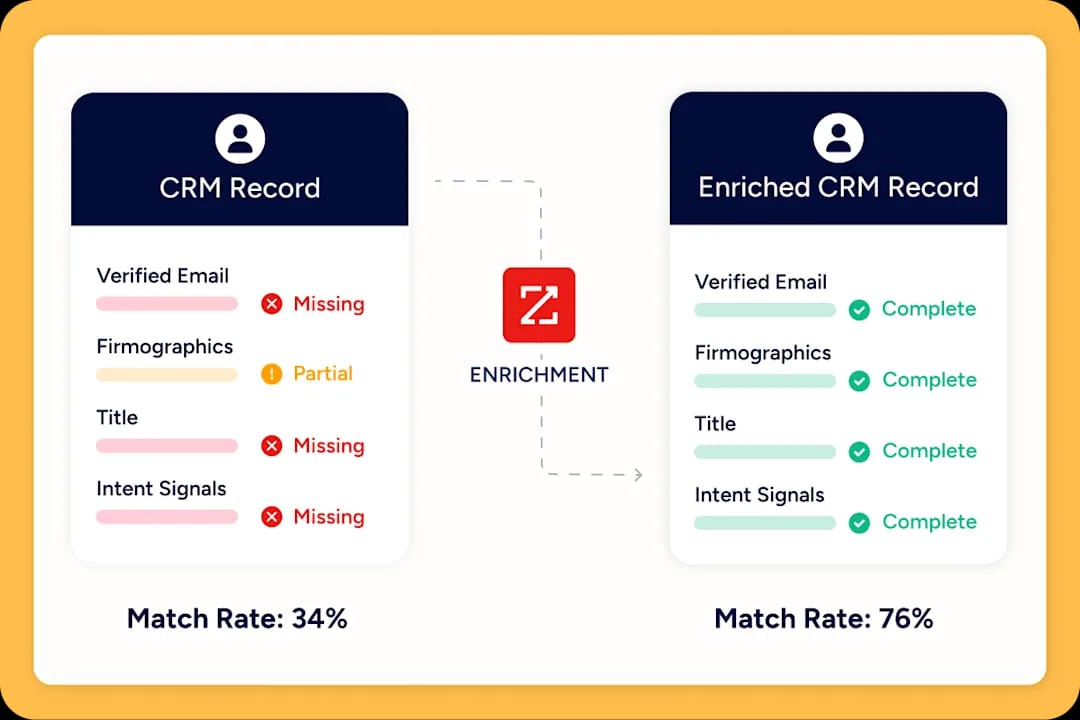
Its GTM Context Graph (an intelligence layer processing 1.5B+ data points daily) fuses this data with your CRM records, conversation transcripts, and behavioral signals to reveal not just what's happening in your pipeline, but why. Buyer intent data identifies accounts researching your category before they fill out a form.
GTM Studio lets marketers describe audiences in plain language and launch multi-channel plays in minutes, while GTM Workspace gives sellers AI-powered next-best-actions within their workflow. Because ZoomInfo integrates with both Salesforce and marketing automation platforms via the Enterprise API and MCP, it strengthens whichever execution layer you choose rather than replacing it.
If building campaigns on verified buyer data and real-time intent signals sounds like the missing piece, see how ZoomInfo works.
ActiveCampaign vs. Pardot vs. ZoomInfo at a glance
ActiveCampaign | Pardot | ZoomInfo | |
|---|---|---|---|
Primary function | Marketing automation + CRM | B2B marketing automation (Salesforce-native) | AI GTM platform |
CRM requirement | Built-in CRM | Requires Salesforce CRM | Integrates with Salesforce, HubSpot, Dynamics |
Contact database | Your contacts only | Your contacts only | 500M contacts, 200M+ verified emails |
Buyer intent data | None | Limited (Einstein AI scoring) | 210M IP-to-org pairings, 6T+ keyword signals |
AI capabilities | Active Intelligence (campaign builder, agents) | Agentforce + Einstein scoring | GTM Context Graph + AI agents |
Channels | Email, SMS, WhatsApp | Email, SMS (via credits) | Email, display ads, social, Connected TV |
Learning curve | Moderate | Steep | Moderate to steep |
Starting price | $15/month (1,000 contacts) | $1,250/month (10,000 contacts) | Custom-quoted (free tier available) |
Free option | 14-day trial | No free trial | ZoomInfo Lite (permanent free tier) |
Best for | SMBs and mid-market teams | Salesforce-native enterprises | B2B teams needing data, intent, and ABM |
They solve different halves of the same problem
ActiveCampaign and Pardot share a core function: executing marketing campaigns.
They take contacts you already have and move them through nurture sequences, score their engagement, and hand qualified leads to sales. Both do this well, though for different audiences at different price points.
What neither platform provides is the answer to the question that comes before campaign execution: who should you be targeting in the first place?
ZoomInfo fills that gap.
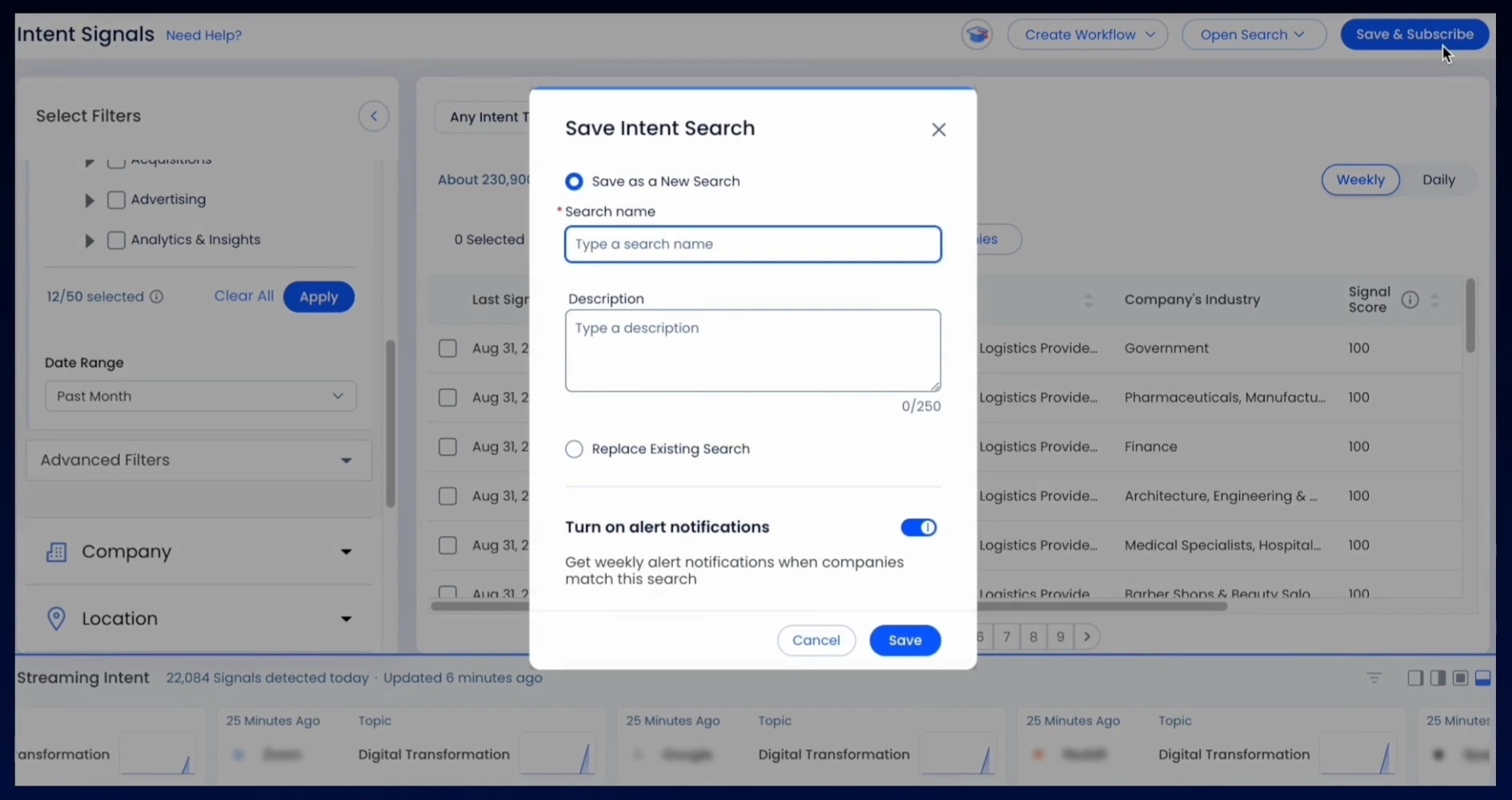
Its B2B data platform identifies accounts in your total addressable market with 300+ company attributes, surfaces decision-makers at those companies with verified contact information, and tracks buyer intent signals showing which accounts are researching solutions in your category.
Source: ZoomInfo
That intelligence flows directly into your marketing automation platform (whether it's ActiveCampaign, Pardot, or another tool) via native integrations, making every campaign more precisely targeted.
The practical difference: ActiveCampaign and Pardot help you nurture leads. ZoomInfo helps you find the right ones to nurture.
ActiveCampaign wins on automation depth for smaller teams
ActiveCampaign's visual automation builder is, by most accounts, the strongest in its price class.
You can design multi-step workflows with conditional branching that routes contacts based on email engagement, website behavior, purchase history, or custom field values. The builder supports unlimited automation actions on Plus plans and above, with no cap on complexity.
The Active Intelligence system adds an AI layer. Describe a campaign goal in plain language, and AI agents generate the campaign structure, draft content, and suggest audience segments based on data points from similar businesses.
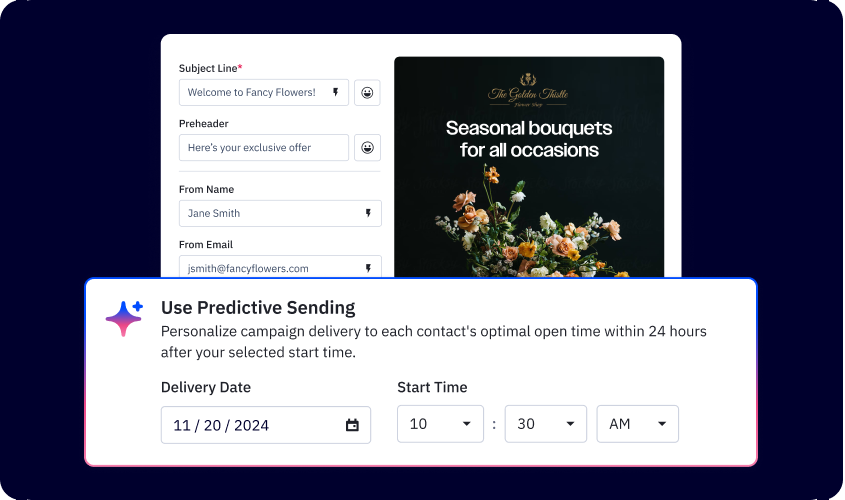
Predictive Sending analyzes each contact's engagement history to deliver emails when that person is most likely to open, rather than picking one send time for the entire list.
Source: ActiveCampaign
For a three-person marketing team running a SaaS company or e-commerce store, this capability at $15–$150/month is hard to beat. ActiveCampaign also covers SMS and WhatsApp natively, so cross-channel campaigns don't require bolting on separate tools.
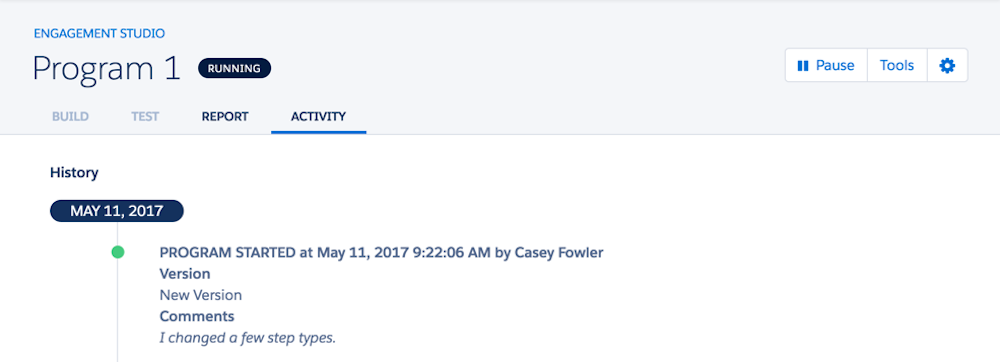
Pardot's Engagement Studio handles similar automation tasks but with more constraints.
Source: Salesforce
Rule steps evaluate up to five conditions, and the automation logic is less flexible than ActiveCampaign's builder or Marketo's smart campaigns. Where Pardot compensates is its connection to Salesforce: a prospect entering an Engagement Studio program is the same record your sales rep sees in Sales Cloud, with no sync delay or data translation.
Pardot owns the Salesforce ecosystem
If your company runs on Salesforce, Pardot's value is straightforward: it's the only marketing automation platform that shares the same data model as your CRM.
That native integration isn't just a convenience. It means marketing engagement data (email opens, form submissions, page visits, content downloads) flows directly into the lead and contact records your sales team already works from.
Engagement History Dashboards embed on Account, Lead, Contact, and Opportunity records in Salesforce, refreshing roughly every ten minutes. Sales reps see what marketing is doing without logging into a separate system.
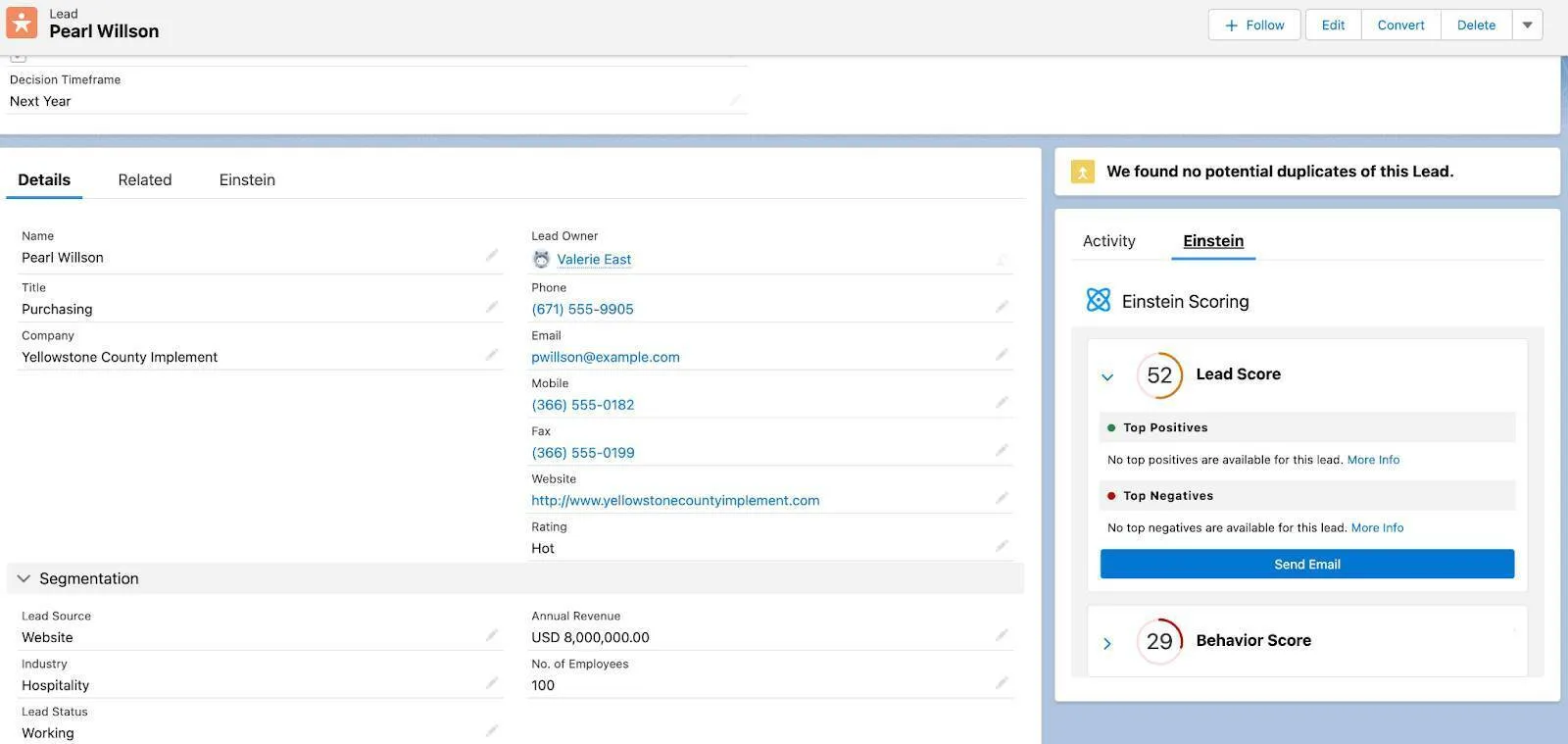
The dual lead scoring and grading system is designed for B2B complexity. Lead scoring measures behavioral engagement (what a prospect does), while lead grading evaluates profile fit against your ideal customer (who the prospect is).
Source: Salesforce
Using both signals together gives sales a two-dimensional view: "This person is engaged AND matches our ICP" versus "This person clicked a lot but works at a company that doesn't fit."
Agentforce Campaign Creation extends these capabilities with AI, letting marketers generate campaign briefs, audience segments, and email content from natural language prompts. Einstein Attribution trains a machine learning model on your historical deal data to build a multi-touch attribution model specific to your sales cycle.
For organizations committed to Salesforce, this integration depth is a structural advantage. For everyone else, the Salesforce CRM requirement (Enterprise Edition or higher for the newest features) is a barrier that shapes the entire buying decision.
ZoomInfo provides the intelligence layer both platforms lack
ActiveCampaign and Pardot are execution engines. They take the contacts in your database and run campaigns against them. But they assume you already know which accounts to pursue, which people matter at those accounts, and when those accounts are ready to buy.
ZoomInfo operates upstream of both. Three capabilities set it apart:
Data coverage that eliminates manual research. ZoomInfo's database spans 500M contacts and 100M companies, backed by 300+ human researchers and achieving up to 95% accuracy on first-party data. That means verified direct dials, business emails, org charts, technographics, and company attributes for your target accounts. In a Fortune 500 competitive RFP analyzing 25 million contacts across vendors, an independent consultant concluded that "no other competitor came even close."
Buyer intent signals that time your outreach. ZoomInfo Intent tracks research activity across 210 million IP-to-organization pairings and 6 trillion+ new keyword-to-device pairings monthly. When a company starts researching topics related to your product, ZoomInfo surfaces that signal so your team can act while interest is fresh, rather than waiting for an inbound form fill that may never come.
Guided Intent identifies topics historically correlated with your deal success rather than requiring manual topic selection.
The GTM Context Graph connects signals to outcomes. The GTM Context Graph (ZoomInfo's intelligence layer) processes 1.5B+ data points daily, unifying your CRM records, conversation intelligence, and behavioral signals with ZoomInfo's third-party data.
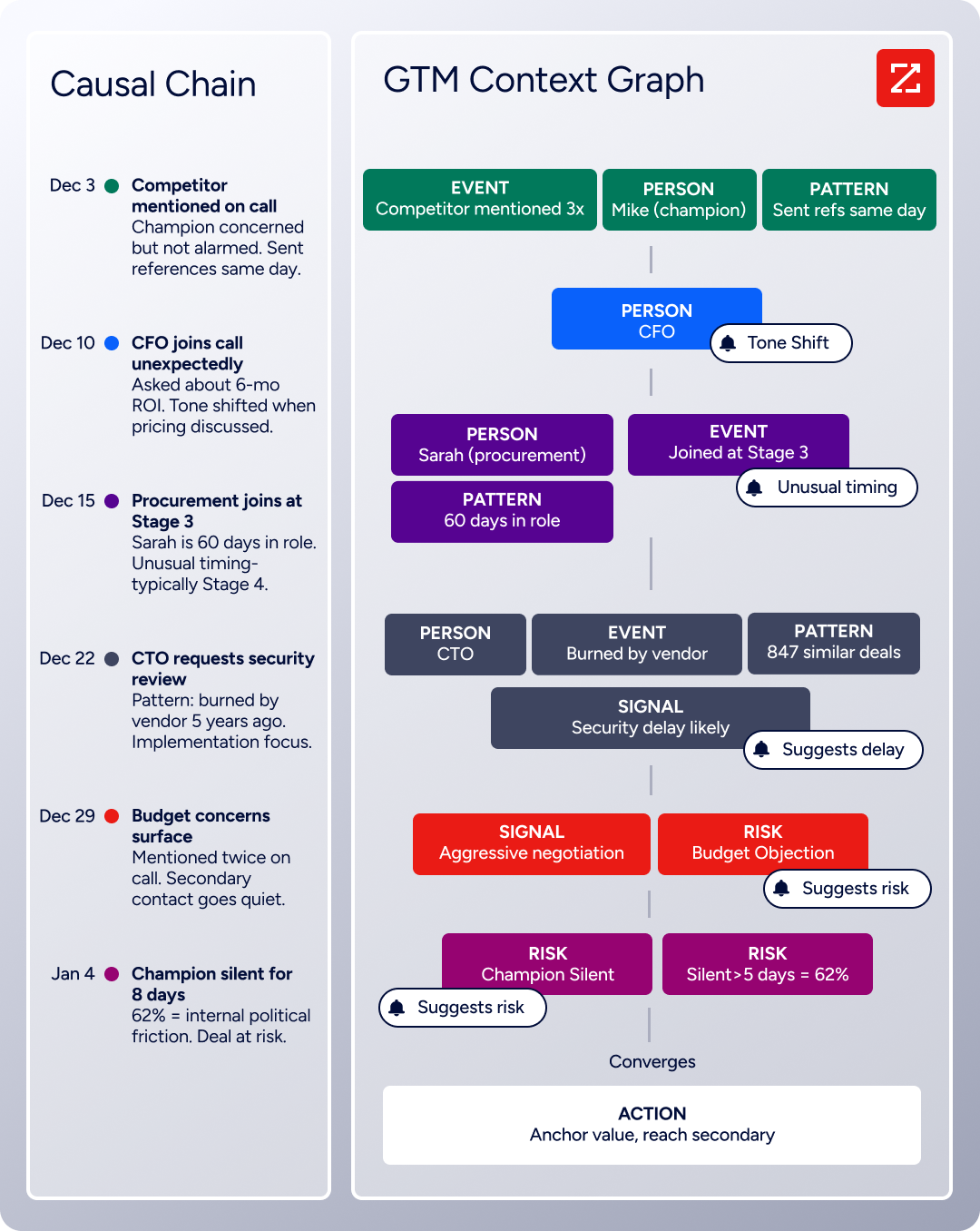
It captures not just what happened in a deal, but why, so the AI drafting your next follow-up understands the concern behind the conversation and your next campaign targets accounts matching your actual win patterns.
Seismic attributed 39% of active pipeline to ZoomInfo-influenced opportunities and became 54% more productive. "That combination of our internal CRM data, external signals, and AI has helped us craft very specific account- and persona-based messages," said CBO Toby Carrington. (Seismic)
Pricing reflects fundamentally different models
The cost structures reveal what each platform prioritizes.
ActiveCampaign charges by contact count, starting at $15/month for 1,000 contacts on the Starter plan.
Pricing is transparent and scales predictably: Starter runs $149/month for 10,000 contacts. Plans are available on monthly, quarterly, or annual billing, with a 14-day free trial and 30-day money-back guarantee for first-time subscribers.
However, advanced features (conditional content, predictive sending, revenue attribution) are locked behind Professional and Enterprise tiers, and pricing has climbed in recent years. ActiveCampaign charges once per unique contact regardless of how many automations that contact appears in, a meaningful distinction from platforms that bill per list.
Pardot operates on a flat per-organization monthly fee, billed annually with no monthly option.
Growth+ starts at $1,250/month, Plus+ at $2,750/month, Advanced+ at $4,400/month, and Premium+ at $15,000/month. That base fee includes only 10,000 contacts (75,000 on Premium+), with additional contacts at $100 per 10,000 per month.
The newer AI and SMS capabilities require separately purchased Einstein Request Credits, Messaging Credits, and Data 360 Credits, adding cost unpredictability. Pardot also requires a Salesforce CRM license on top of its own subscription, so the true entry price is higher than the listed figure.
ZoomInfo uses custom-quoted, consumption-based pricing with no publicly listed prices.
Pricing scales around data access, API consumption, seats, and credit volume. ZoomInfo offers two free entry points: ZoomInfo Lite (a permanent free tier with access to the B2B database and 10 monthly export credits) and a 7-day free trial of paid features.
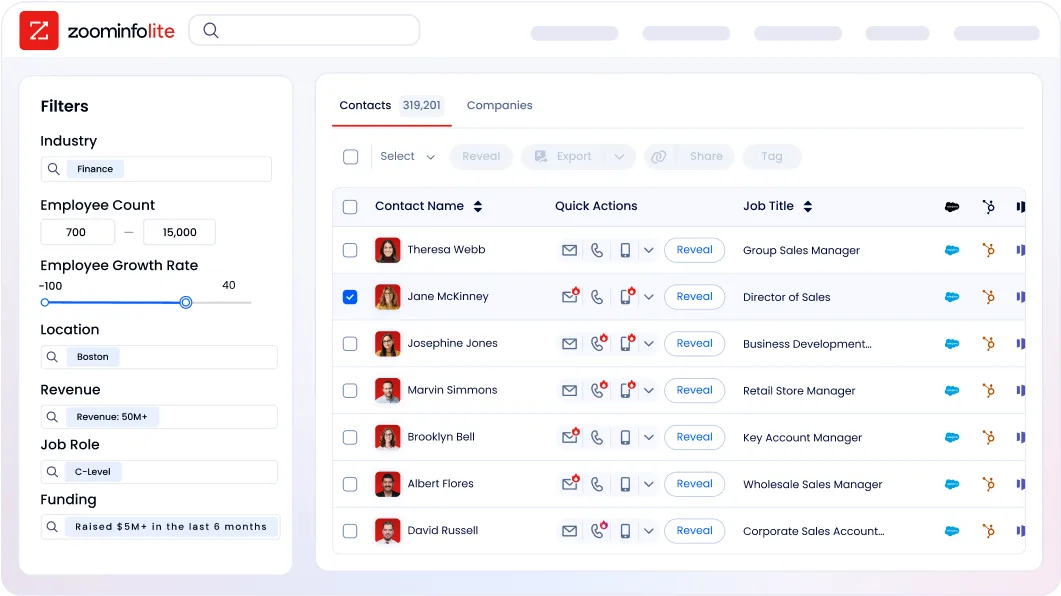
The credit system means costs depend on actual usage rather than contact storage, and credits consumed on a record stay active for 12 months of free re-enrichment.
For a small team running 5,000 contacts, ActiveCampaign is the clear value play. For a Salesforce enterprise, Pardot is a significant but justifiable investment. ZoomInfo's value is measured differently: the ROI comes from finding the right accounts faster and improving conversion rates across your existing stack.
Redwood Logistics achieved a 99% reduction in cost-per-click and 310% increase in click-through rate by targeting campaigns with ZoomInfo data. "It's about the right data at the right time to help us reach out with the right message across the full buyer journey," said Chelsea Kenyon, Senior Director of Digital Strategy. (Redwood Logistics)
AI capabilities differ in scope and approach
All three platforms have made AI central to their roadmap, but each applies it differently.
ActiveCampaign's Active Intelligence focuses on campaign creation and optimization.
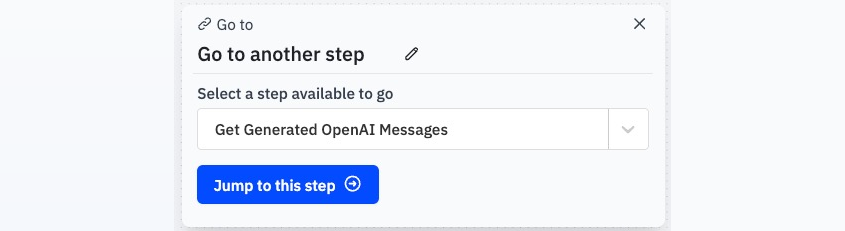
AI agents generate campaigns from natural language prompts, suggest audience segments, draft content, and optimize send times and messaging. The system draws on anonymized data points from similar businesses, so a new customer benefits from aggregate platform learning.
Source: ActiveCampaign
ActiveCampaign frames this as "autonomous marketing": marketers set goals, and AI handles the strategy. The approach is accessible (many features work on lower-tier plans) but limited to the marketing execution layer.
Pardot's AI lives within the Salesforce Agentforce and Einstein ecosystem.
Einstein Behavior Scoring assigns 0–100 scores based on engagement patterns. Einstein Lead Scoring analyzes historical conversion data to rank current leads. Agentforce Campaign Creation generates campaigns from prompts. Einstein Attribution trains a data-driven attribution model on your deal history.
The AI capabilities are broad, but much of them require additional credit purchases, and they only reason about data already in Salesforce.
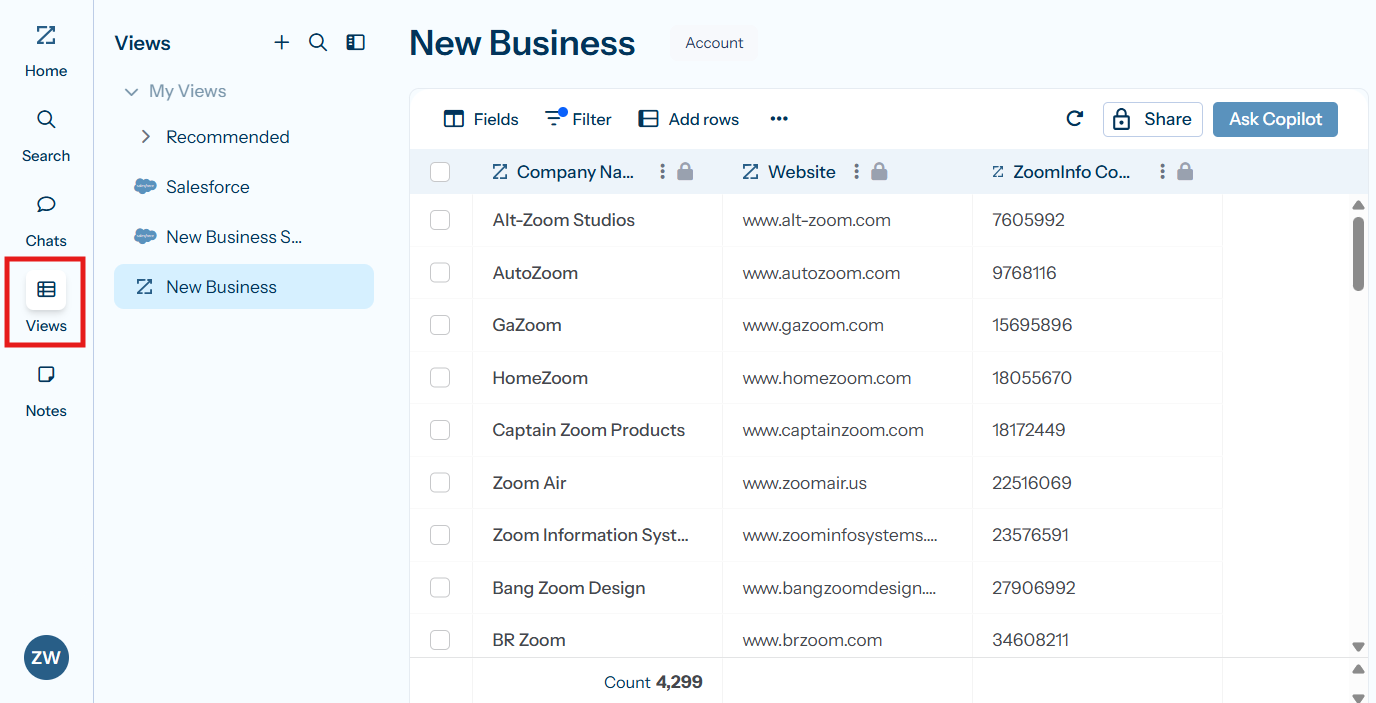
ZoomInfo's AI reasons across a wider data surface.
The GTM Context Graph doesn't just analyze your CRM records. It fuses them with third-party intelligence (intent signals, org chart changes, funding rounds, hiring patterns, competitive mentions from conversation intelligence) to produce insights neither internal nor external data could generate alone.
AI agents in GTM Workspace surface next-best-actions for sellers, while GTM Studio lets marketers build and launch targeted plays using natural language. The AI isn't confined to marketing automation; it spans the entire go-to-market motion.
Source: ZoomInfo
Account-based marketing takes different forms
B2B companies increasingly target specific accounts rather than broad audiences. Each platform approaches ABM differently.
ActiveCampaign doesn't position itself as an ABM platform.
It handles account-level organization through its CRM and supports segmentation based on company attributes, but it lacks native intent data, account-level engagement scoring, or ABM-specific dashboards. For SMBs with shorter sales cycles and individual decision-makers, this isn't a problem. For companies selling to buying committees, it's a gap.
Pardot offers native ABM features including Einstein Key Account Identification (which ranks accounts by purchase likelihood based on historical opportunity data), ABM dashboards tracking pipeline by account, and the ability to detect when multiple contacts from the same company engage simultaneously, signaling a buying committee forming.
These features work well within the Salesforce ecosystem but rely entirely on data already in your CRM.
ZoomInfo treats ABM as a core use case.
ZoomInfo Marketing provides a native demand-side platform for display advertising based on 300+ company attributes, with audiences that update automatically as signals change. FormComplete reduces landing page forms to a single field while auto-appending the rest from ZoomInfo's database.
Source: ZoomInfo
Contact-level website visitor identification reveals not just which companies visited your site, but which specific people. And the intent data layer shows which target accounts are researching before they ever engage with your content.
The distinction matters: Pardot's ABM works with accounts you already know about. ZoomInfo's ABM helps you discover accounts you should know about.
Impartner saw a 45% increase in website engagement and saved 15 hours through automation. "ZoomInfo has literally changed the way we go to market," said Jeremy Melius, Sr. Director of Marketing Operations. (Impartner)
Integration ecosystems reflect different architectures
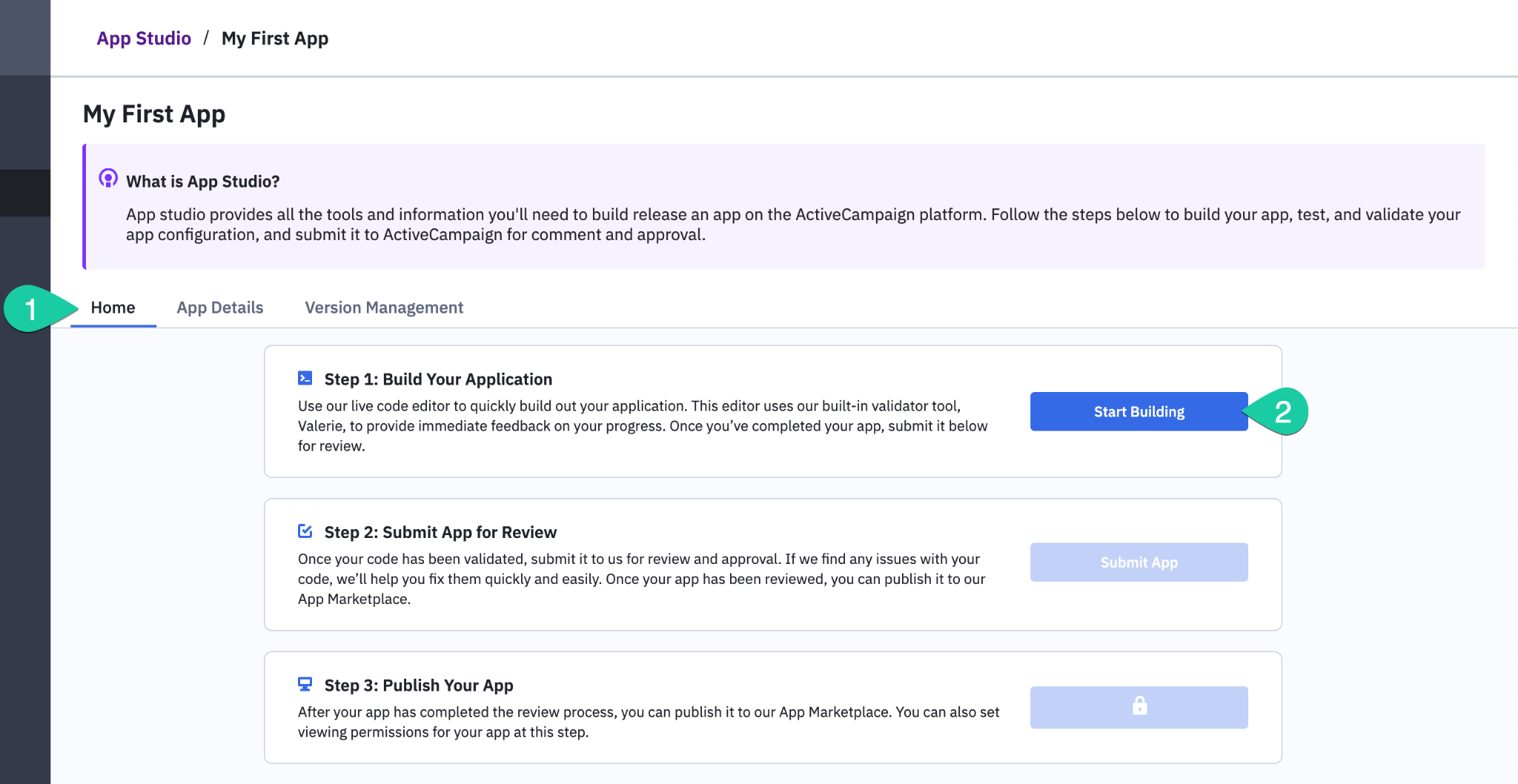
ActiveCampaign takes an open approach with 1,000+ integrations spanning CRM, e-commerce, forms, advertising, and developer tools.
Key connections include Salesforce, Shopify, WordPress, Zapier, and Google Ads. The platform also offers MCP connectors for Claude and ChatGPT. For developers, a REST API and App Studio provide programmatic access. The ecosystem is broad and accessible to teams without dedicated engineering resources.
Source: ActiveCampaign
Pardot lives inside the Salesforce universe.
Its deepest integration is with Sales Cloud and Service Cloud, which share the same data model. Beyond Salesforce, the AppExchange marketplace lists 12,000+ partner apps, and the platform includes native connectors for Eventbrite, Google Ads, and webinar platforms. The Account Engagement API supports programmatic access via OAuth 2.0.
For teams already in the Salesforce ecosystem, the integration depth is strong. For teams outside it, connecting Pardot to non-Salesforce tools often requires middleware.
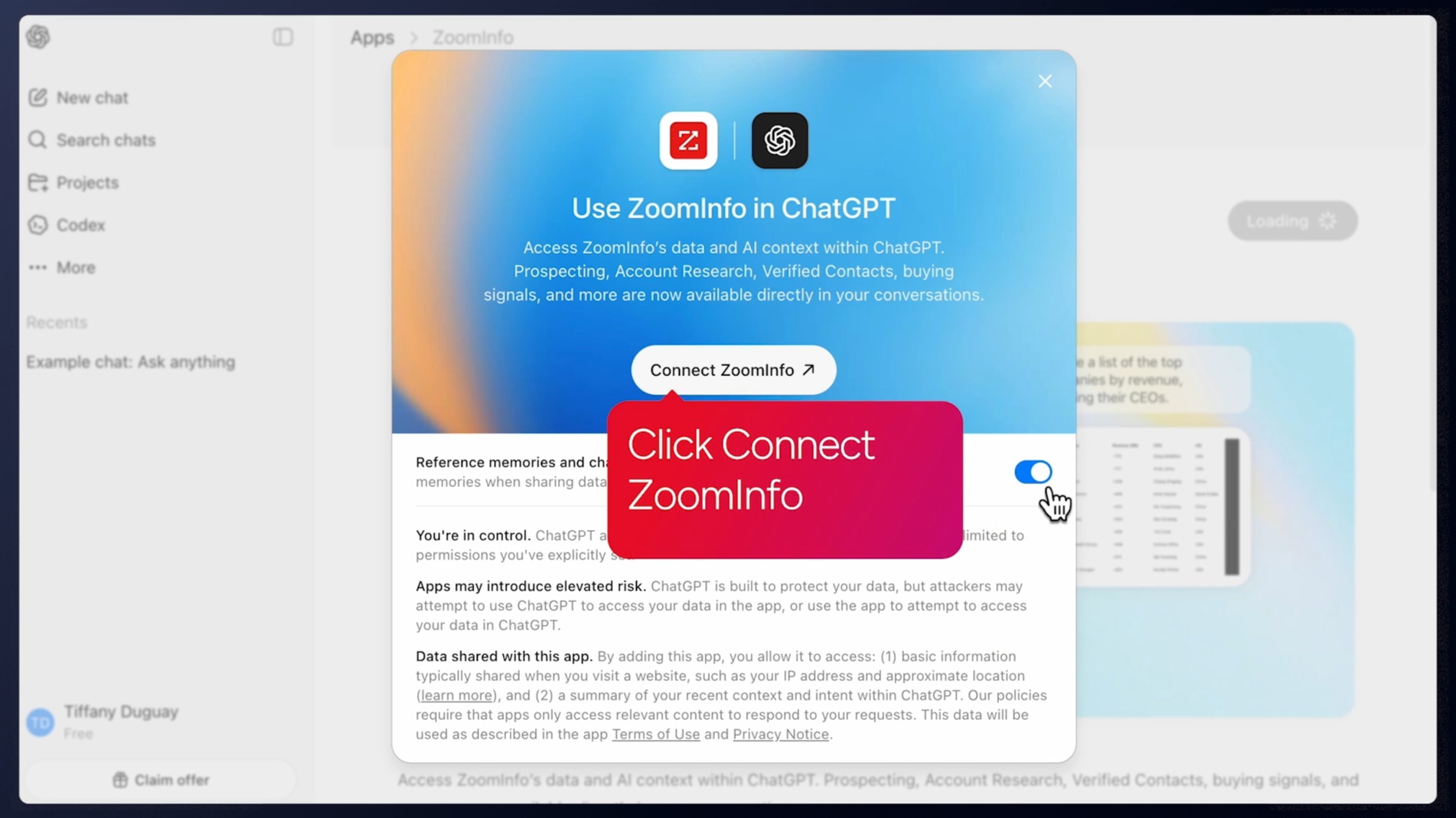
ZoomInfo operates as infrastructure that plugs into any existing stack.
The ZoomInfo Marketplace lists 172+ integration partners across CRM, marketing automation, sales engagement, data warehouses, and AI categories, including native integrations with Salesforce, HubSpot, and Microsoft Dynamics 365.
Cloud Partners deliver ZoomInfo data directly into AWS, Google Cloud, Snowflake, and Databricks. The Enterprise API and MCP server expose ZoomInfo's data and GTM Context Graph to any AI agent or custom application. This means ZoomInfo strengthens whichever marketing automation platform you use rather than competing with it.
Source: ZoomInfo
BDO Canada achieved an 87% reduction in time spent on internal data dashboard updates. "The plug-and-play aspect of the API means I can integrate it easily into any process and get information at a moment's notice," said Jerry Wilson, Senior Marketing Intelligence Analyst. (BDO Canada)
Email deliverability and data quality determine campaign success
The best automation doesn't matter if your emails don't reach the inbox or your contact data is stale.
ActiveCampaign has invested in deliverability infrastructure.
The platform routes emails through a private network rather than the public internet, supports DKIM and DMARC authentication, offers dedicated IP management, and reports 99.88% deliverability (with EmailToolTester independently measuring 94%).
The platform also filters Apple Mail Privacy Protection opens from reporting, giving more accurate engagement data. ActiveCampaign processed 109 billion emails in 2025 with a reported average open rate of 40.4%.
Pardot benefits from Salesforce's enterprise infrastructure and compliance framework, with SOC 2 Type II, ISO 27001, HIPAA, and other enterprise certifications.
However, deliverability tools within Pardot are less prominent. Dedicated IP addresses are an add-on at $500/month on Plus (included on Advanced+ and above). The platform's email builder has been cited by reviewers as outdated, frequently requiring HTML knowledge for customization.
ZoomInfo approaches this from the data side.
Rather than improving deliverability to bad email addresses, ZoomInfo ensures you're emailing verified addresses in the first place.
With 200M+ verified business email addresses and a verification pipeline backed by NLP, AI, ML, and 300+ human researchers, ZoomInfo data reduces bounce rates before they happen. Combined with ActiveCampaign's or Pardot's delivery infrastructure, the result is campaigns that reach people at the right companies.
Support and onboarding vary with price point
ActiveCampaign provides chat and ticket support on all paid plans, with priority support on Professional and a dedicated account team on Enterprise.
Free migration services cover contacts, templates, and segments from competitor platforms. The ActiveCampaign Community has 180,000+ members, and the Learn portal offers structured onboarding paths. One-on-one specialist sessions start at $79. For SMBs, this is more than adequate. For complex implementations, you may need to hire a certified consultant.
Pardot tiers its support behind Salesforce's Success Plans.
The Standard plan (included free) provides self-serve documentation and Trailhead modules. The Premier plan costs 30% of net license fees and adds 24/7 support with 1-hour response times for critical issues. The Signature plan (custom pricing) includes a designated Customer Success Manager with 15-minute response times.
Trailhead offers role-based learning paths, and a formal Pardot Specialist certification exists, signaling the platform's complexity.
ZoomInfo redesigned its onboarding program from 30 to 90 days, structured across planning, implementation, education, and adoption phases, producing a 25% improvement in customer satisfaction scores. ZoomInfo University provides role-specific learning paths and certifications. Professional services are available through ZoomInfo Labs. Direct support is accessible via the Help Center and phone.

ActiveCampaign vs. Pardot vs. ZoomInfo: Which should you choose?
The right platform depends on where your biggest gap is: execution, ecosystem integration, or intelligence.
Choose ActiveCampaign if:
You're a small or mid-size team that needs automation at a manageable price
Your sales cycles are short with individual or small-group decision-makers
You want email, SMS, and WhatsApp in one platform without enterprise complexity
A built-in CRM is sufficient for your sales pipeline needs
You value speed to launch over depth of analytics
Choose Pardot if:
Your organization already runs Salesforce CRM and wants native integration
You manage long, complex B2B sales cycles with buying committees
Marketing-sales alignment through shared data is your top priority
You need enterprise-grade compliance (SOC 2, HIPAA, FedRAMP)
You have the budget and admin resources for a Salesforce-ecosystem platform
Choose ZoomInfo if:
You need to identify and prioritize accounts before campaigns begin
Buyer intent data and contact-level intelligence would improve your targeting
Your marketing automation platform (ActiveCampaign, Pardot, or another) would perform better with verified B2B data feeding it
You want a single platform for data, intent signals, ABM, and go-to-market orchestration
You're building an AI-driven GTM motion where intelligence is the foundation
Try ZoomInfo Lite for free or request a demo to see the full platform.
The most effective B2B marketing stacks don't choose between execution and intelligence. They layer them. ActiveCampaign or Pardot handles the campaign delivery. ZoomInfo provides the data, signals, and account intelligence that make those campaigns reach the right people at the right time. That combination, not any single platform, is what turns marketing spend into pipeline.
ActiveCampaign vs. Pardot vs. ZoomInfo FAQ
What is the fundamental difference between ActiveCampaign, Pardot, and ZoomInfo?
ActiveCampaign is a marketing automation platform with a built-in CRM, designed for SMBs that need email, SMS, and WhatsApp campaigns with automation.
Pardot (Marketing Cloud Account Engagement) is Salesforce's B2B marketing automation platform, built natively on Salesforce CRM for enterprise teams managing complex sales cycles.
ZoomInfo is an AI GTM platform providing 500M contacts, buyer intent signals, and account-based marketing tools that feed into whichever marketing automation platform you use.
Can ZoomInfo replace ActiveCampaign or Pardot?
ZoomInfo is not a direct replacement for either. ActiveCampaign and Pardot handle campaign execution: building emails, running automation sequences, and scoring leads.
ZoomInfo operates upstream, identifying which accounts to target, providing verified contact data, and surfacing intent signals that indicate when accounts are researching. The three work best as layers, with ZoomInfo feeding intelligence into ActiveCampaign or Pardot for execution.
Which platform is cheapest to get started with?
ActiveCampaign starts at $15/month for 1,000 contacts with a 14-day free trial.
ZoomInfo offers a permanent free tier (ZoomInfo Lite) with 10 monthly export credits and a 7-day free trial of paid features.
Pardot has no free trial and no monthly billing option; the lowest tier starts at $1,250/month billed annually, and requires a Salesforce CRM license on top.
Do I need Salesforce CRM to use Pardot?
Yes. Pardot requires a Salesforce CRM license. The newest AI and multichannel features (Agentforce Campaign Creation, SMS, Data Cloud integration) require Salesforce Sales Cloud or Service Cloud Enterprise Edition or higher. Organizations on Professional Edition must upgrade before accessing these capabilities.
Which platform has the best AI capabilities?
Each applies AI differently. ActiveCampaign's Active Intelligence generates campaigns from natural language prompts and optimizes send times per individual contact.
Pardot's Einstein and Agentforce provide lead scoring based on historical conversion patterns and AI-assisted campaign creation within the Salesforce ecosystem.
ZoomInfo's GTM Context Graph reasons across the widest data surface, fusing CRM data, conversation intelligence, intent signals, and third-party B2B data to surface insights about why deals move or stall, not just what happened.
Which platform is best for account-based marketing?
ZoomInfo offers the most complete ABM capabilities: buyer intent data tracking research across 210 million IP-to-organization pairings, a native demand-side platform for display advertising, contact-level website visitor identification, and AI-powered account scoring.
Pardot provides ABM features within the Salesforce ecosystem, including Einstein Key Account Identification and ABM dashboards, but relies on data already in your CRM.
ActiveCampaign does not position itself as an ABM platform.
How do ActiveCampaign and Pardot compare on email automation?
ActiveCampaign's visual automation builder supports unlimited actions with complex branching logic, and is widely considered more flexible than Pardot's Engagement Studio.
However, Pardot's native Salesforce integration means prospect engagement data flows directly into CRM records with no sync delay.
ActiveCampaign offers broader channel coverage (native email, SMS, WhatsApp) at a lower price, while Pardot's SMS and WhatsApp require separately purchased messaging credits through Marketing Cloud Next.
Does ZoomInfo integrate with both ActiveCampaign and Pardot?
ZoomInfo integrates natively with Salesforce (which powers Pardot) and lists ActiveCampaign in its integration ecosystem. The Enterprise API and MCP server can connect ZoomInfo data to any marketing automation platform. ZoomInfo's data enrichment, intent signals, and contact intelligence can feed into either platform's campaigns, improving targeting accuracy regardless of which execution layer you use.
