
Choosing between Acuity Scheduling and Setmore for appointment booking comes down to five questions:
Do you need a scheduling tool that doubles as a revenue platform, or one that keeps things simple and cheap?
How important are built-in payment features like packages, subscriptions, and gift certificates?
Are you a solo practitioner, or do you need to manage multiple staff calendars?
Does your business require HIPAA compliance for handling protected health information?
Are you also trying to find and reach customers before they ever land on your booking page?
Here's what we recommend:
Acuity Scheduling is the scheduling platform for service businesses that treat every appointment as a revenue event.
Built for beauty professionals, wellness practitioners, fitness instructors, and consultants, Acuity goes beyond booking with deposits, prepayments, packages, subscriptions, and gift certificates built into the scheduling flow.
Its no-show reduction tools (automated reminders, deposit enforcement, and cancellation policies) have helped 75% of Acuity businesses reduce no-shows. As a Squarespace company, Acuity also offers native website integration.
The tradeoff: plans start at $16/month, SMS reminders require the Standard tier, and HIPAA compliance is locked behind the Premium plan.
Setmore is the scheduling tool for small businesses that want online booking running fast without a large upfront cost. Its free plan supports up to four staff members with unlimited email reminders and payment processing through Square, Stripe, or PayPal.
Setmore's customizable booking page, social media integrations with Facebook and Instagram, and built-in customer review system make it a practical choice for businesses that capture bookings from multiple channels.
The tradeoff: two-way calendar sync, SMS reminders, and recurring appointments require the Pro plan, and the free plan caps appointments at 200 per month.
Both platforms solve the scheduling problem. But what happens before a client ever reaches your booking page? For businesses that also need to find, qualify, and reach new prospects, there's a third dimension to consider.
ZoomInfo is an AI GTM platform that operates at a different layer. While Acuity and Setmore manage what happens after a prospect decides to book, ZoomInfo helps B2B teams identify the right prospects first.
Built on a B2B data platform of 500M contacts, 100M companies, 135M+ verified phone numbers, and 200M+ verified business emails, ZoomInfo's GTM Context Graph combines this data with your CRM records, conversation transcripts, and behavioral signals to show not just who your prospects are, but when they're ready to buy and why.
For service businesses in B2B markets (consultants, agencies, professional services firms), ZoomInfo fills the gap no scheduling tool can: generating the pipeline that fills your calendar.
Acuity Scheduling vs. Setmore at a glance
Acuity Scheduling | Setmore | ZoomInfo | |
|---|---|---|---|
Core focus | Revenue-driven appointment scheduling | Accessible online booking | B2B prospect identification and GTM intelligence |
Staff calendars | 1 (Starter) to unlimited (Enterprise) | Up to 4 (Free), unlimited (Pro) | N/A |
Payment processors | Stripe, Square, PayPal | Square, Stripe, PayPal, LawPay | N/A |
SMS reminders | Standard plan and above | Pro plan only | N/A |
HIPAA compliance | Premium plan ($49/month) | Pro plan (Setmore Health) | N/A |
Two-way calendar sync | All plans | Pro plan only | N/A |
Booking page branding removal | Premium plan | Pro plan | N/A |
API access | Premium plan | Pro plan | Included in all relevant plans |
Starting price | $16/month (annual) | $0 (Free) / $5/user/month (Pro, annual) | Custom-quoted |
Free plan | 7-day trial only | Yes (up to 4 users, 200 appointments/month) | ZoomInfo Lite (permanent free tier) |
Best for | Service businesses monetizing appointments | Small teams wanting affordable scheduling | B2B teams filling the pipeline that feeds the calendar |
Acuity is built for businesses where every appointment is revenue
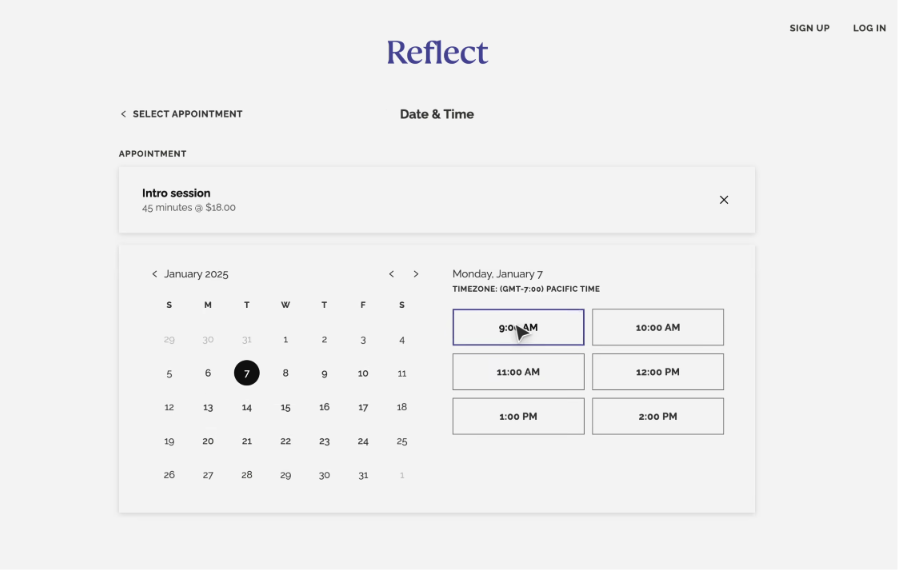
Acuity Scheduling treats each booking as a financial transaction, not just a calendar entry. That philosophy shows in every layer of the product.
Source: Acuity Scheduling
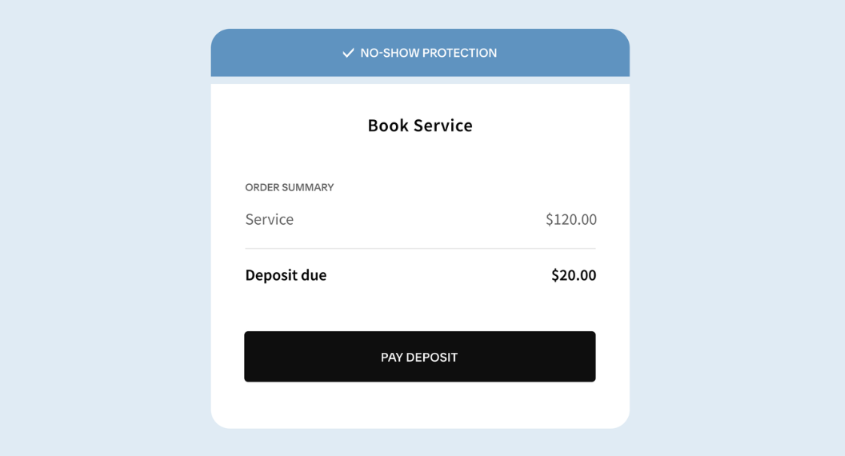
When a client books through Acuity, the business can require a deposit or full prepayment before confirming the appointment. The payment links directly to the appointment record, so there's no reconciliation between a scheduling tool and a separate payment system.
Source: Acuity Scheduling
Three processors are supported (Stripe, Square, and PayPal), and Acuity adds no transaction fee on top of the processor's rate.
Beyond single transactions, Acuity includes a loyalty and retention toolkit: appointment packages (discounted bundles with automatic session tracking), recurring subscriptions and memberships with automatic billing, digital gift certificates sold from the booking page, and coupon codes for promotions.
A yoga studio can sell a 10-class package. A massage therapist can run a monthly membership. A tutor can offer gift cards that new clients redeem for their first session. All of it happens within the same booking flow.
The November 2025 launch of Acuity POS added tap-to-pay and card reader support from the mobile app. Staff can check out clients in person, charge a card on file for no-shows, and send payment links by text, all without leaving Acuity. This feature is currently U.S.-only.
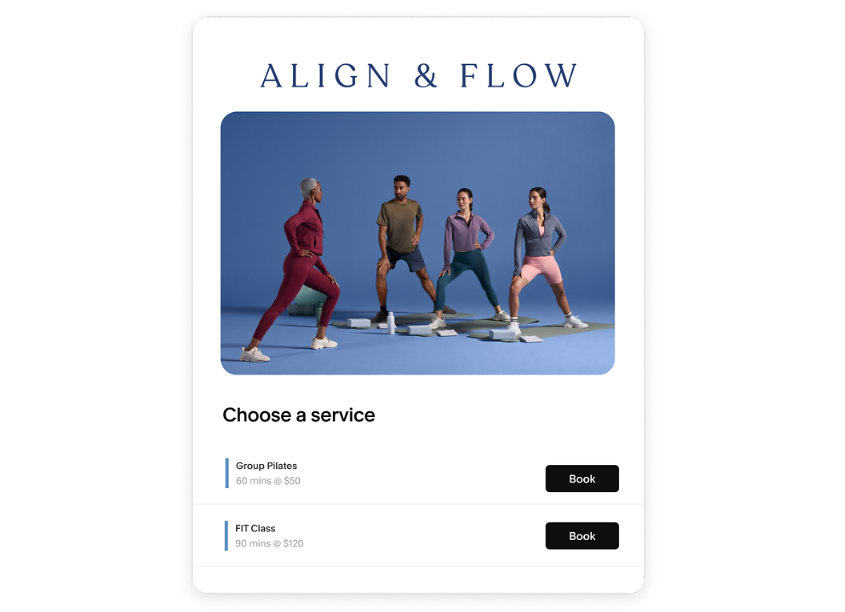
For businesses that run both individual appointments and group sessions, Acuity's class scheduling supports capacity limits, waitlists, resource assignment (preventing double-booking of rooms or equipment), and recurring series with a duplicate class function.
Source: Acuity Scheduling
A pottery studio can assign specific wheels to each class. A fencing club can cap enrollment at 12 and close registration automatically when full.
The depth is real. So is the price: plans start at $16/month (annual) for a single calendar, and features like SMS reminders, packages, and video conferencing integrations don't appear until the $27/month Standard tier.
Setmore wins on accessibility and team pricing
Setmore takes the opposite approach. Instead of gating features behind higher tiers, it gives small teams a functional scheduling system at no cost.
Source: Setmore
The free plan includes up to four staff members, each with their own calendar and login. Online payments through Square, Stripe, and PayPal are available on the free tier. Email confirmations and reminders are included.
The customizable booking page supports brand colors, logos, staff profiles, and a built-in customer review system that collects and displays testimonials on the page.
For a three-person barbershop or a small consulting firm, that's a complete booking system without a monthly subscription. The 200-appointment monthly cap on the free plan is the main constraint.
Businesses that outgrow it can move to the Pro plan at $5/user/month (annual), which unlocks unlimited appointments, recurring bookings, two-way calendar sync, video appointments via Zoom or Google Meet, SMS reminders, and the option to remove Setmore branding.
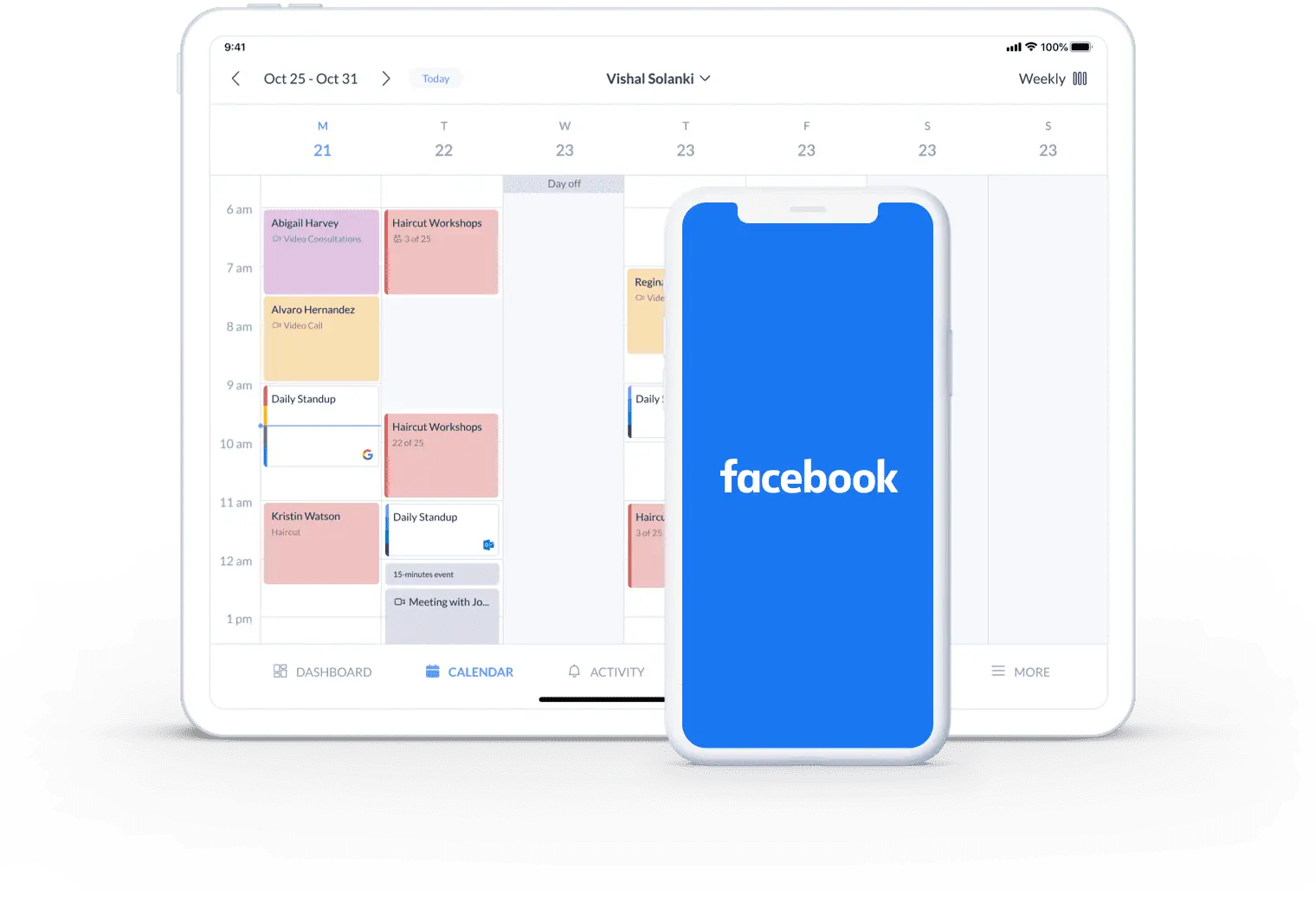
Setmore's social media integration stands out. Businesses can add a "Book Now" button to their Facebook and Instagram profiles, letting clients schedule without leaving the app.
Source: Setmore
Instagram posts can stream to the booking page to keep it current. For businesses that acquire clients through social channels, this direct path from discovery to booking removes real friction.
The customer review feature is another differentiator. After an appointment, Setmore can automatically email clients requesting a review. The business moderates which reviews appear on the booking page, placing social proof where new clients make their booking decision.
Where Setmore falls short is revenue tooling. There are no appointment packages, no subscription billing, no gift certificates, and no coupon system. Deposits use a workaround (applying a percentage reduction at booking) rather than a dedicated deposit feature. For businesses that need to monetize the booking moment beyond a simple payment, Acuity's toolkit goes deeper.
ZoomInfo fills the pipeline that fills your calendar
Acuity and Setmore both assume the client has already found you. They manage the booking, the payment, the reminder, and the follow-up.
But for B2B service businesses (consultants, agencies, professional services firms, coaches serving corporate clients), the harder problem is often generating the appointments in the first place.
This is where ZoomInfo operates. As an AI GTM platform, ZoomInfo identifies which companies are likely to need your services, who the decision-makers are, and when they're actively researching solutions.
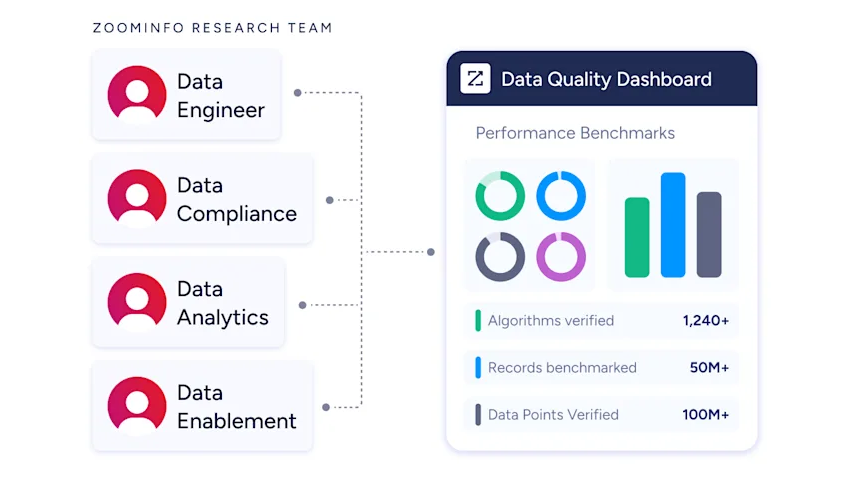
The foundation is data: 500M contacts, 100M companies, 135M+ verified phone numbers, 120M direct-dial phone numbers, and 200M+ verified business emails, verified through a multi-source pipeline backed by 300+ human researchers with up to 95% accuracy on first-party data.
Source: ZoomInfo
In a Fortune 500 competitive RFP analyzing 25 million contacts across vendors, the independent consultant concluded that "no other competitor came even close."
That data feeds the GTM Context Graph, which processes 1.5B+ data points daily by combining ZoomInfo's B2B data with a customer's CRM records, conversation transcripts, and behavioral signals.
The result is an intelligence layer that captures not just what happened in a deal, but why it happened. A scheduling tool records that a consultation was booked.
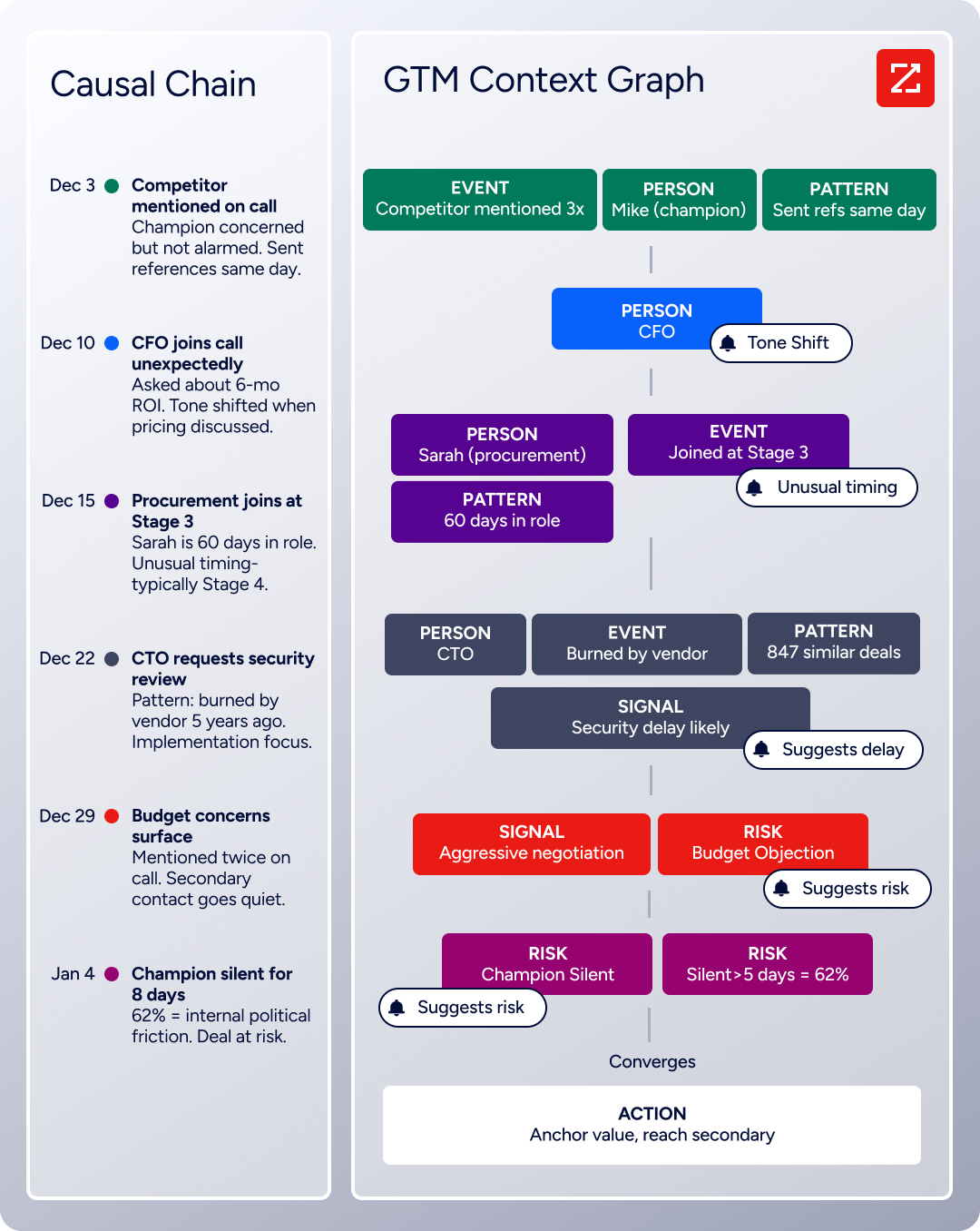
The GTM Context Graph understands that the prospect's company just raised a Series B, hired three VPs, and started researching your category.
For B2B service providers, ZoomInfo offers three ways to act on this intelligence. GTM Workspace gives sellers a single view where prioritized accounts, AI-drafted outreach, and deal execution come together.
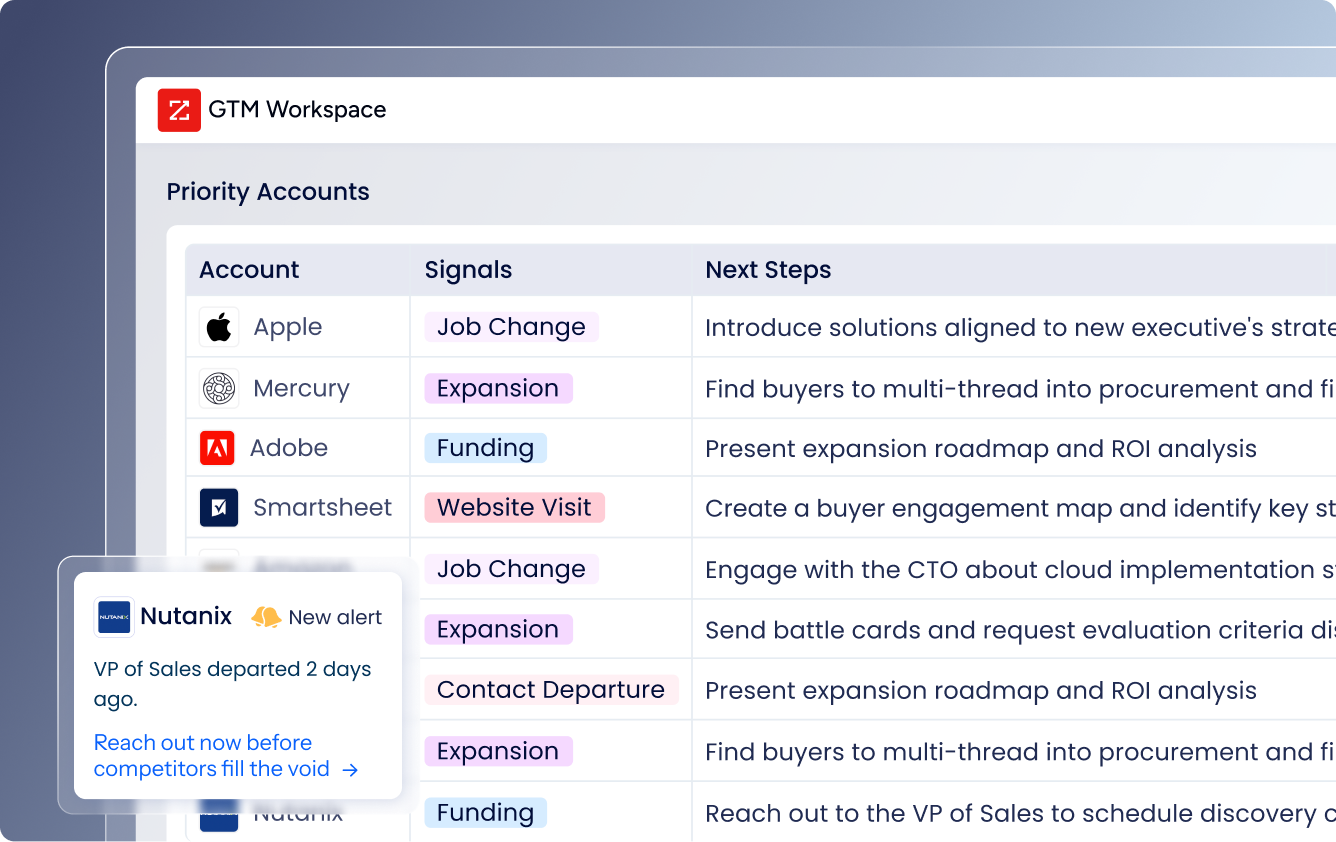
Source: ZoomInfo
GTM Studio lets marketers and RevOps teams define audiences in natural language and launch multi-channel campaigns. APIs and MCP expose the same intelligence to any custom tool or AI agent.
Seismic's sales team attributed 39% of active pipeline to opportunities identified or influenced by ZoomInfo signals, boosted productivity by 54%, and saved 11.5 hours per week. (Seismic case study)
No-show reduction: different strategies, same goal
No-shows are the universal pain point for service businesses. Both platforms address it, but with different tools.
Acuity layers its defenses: automated email and SMS reminders, deposits and prepayments collected at booking, enforced cancellation policies, and the ability to charge a card on file for no-shows or late cancellations.
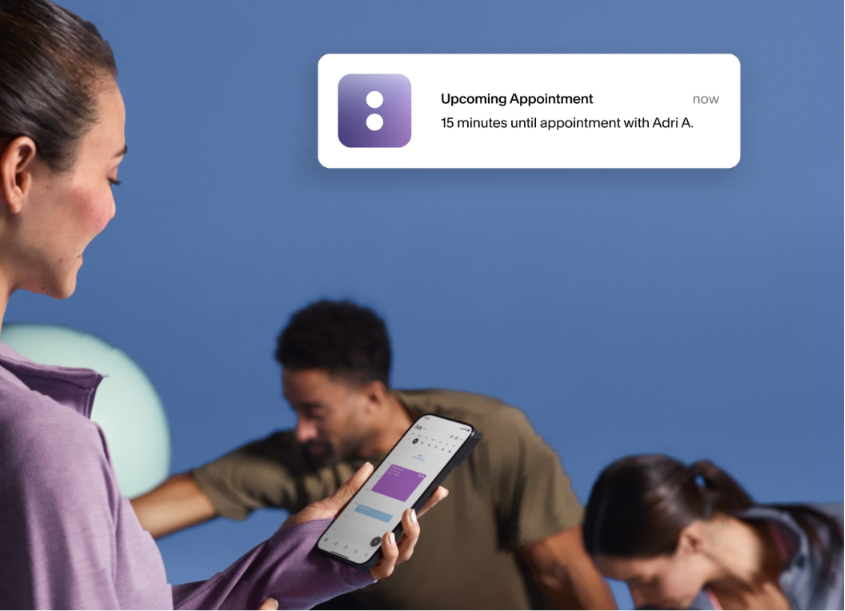
Source: Acuity Scheduling
A 2025 survey of 500 businesses found that 75% reduced no-shows after adopting Acuity. The combination matters: reminders alone don't carry the same weight as reminders backed by a deposit the client will forfeit.
Setmore relies on automated email and SMS reminders. SMS reminders are available on the Pro plan and can be customized with dynamic fields (client name, service, staff member, date, time). Businesses write their own message template and set the send timing up to 30 days in advance.
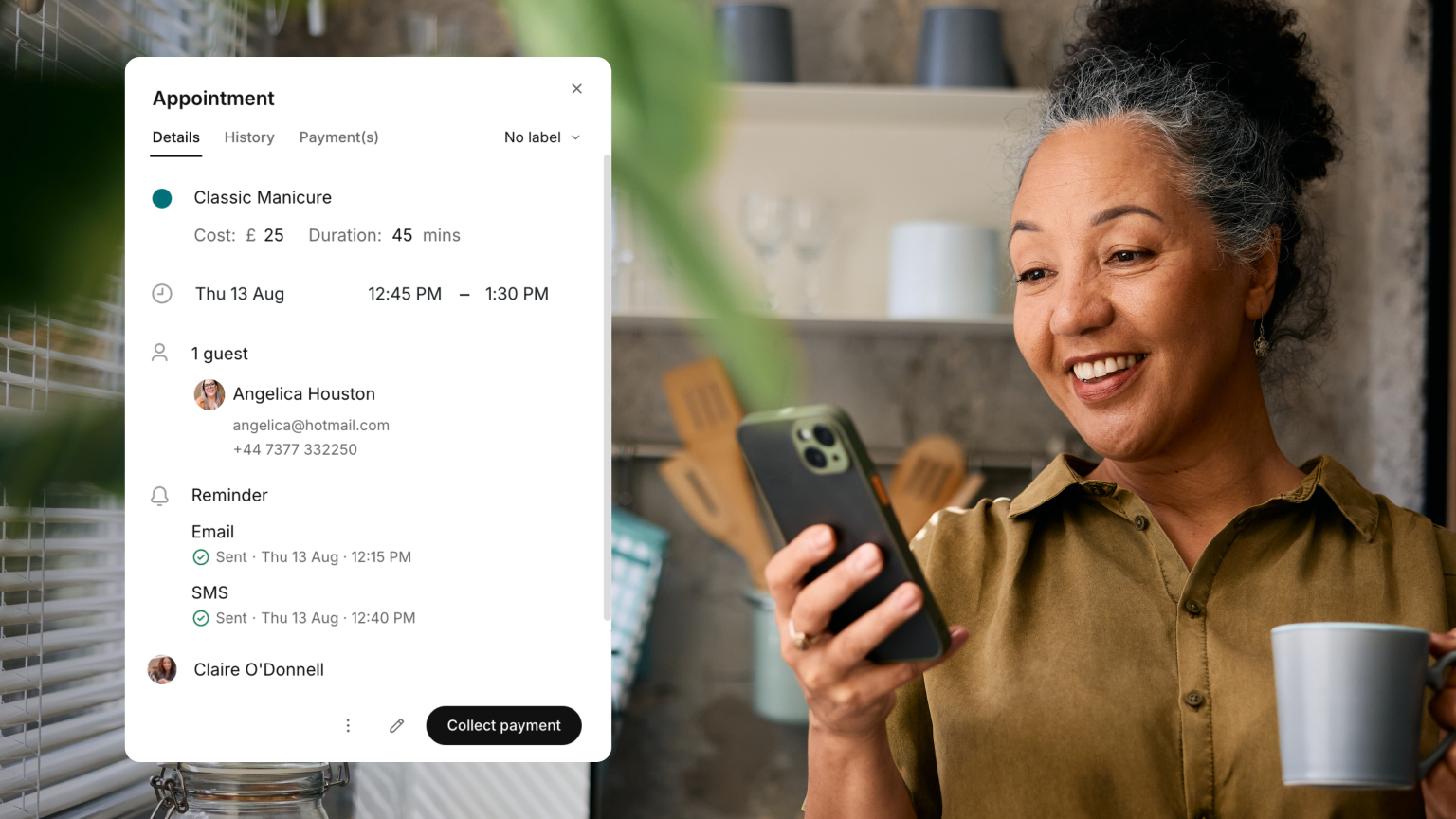
Source: Setmore
But Setmore lacks the financial enforcement layer. Without deposits, prepayments, or no-show fees, the reminder is the only defense.
For businesses where a missed appointment means lost revenue (a massage therapist's empty hour, a consultant's blocked afternoon), Acuity's financial tools provide stronger protection. For businesses where no-shows are less frequent or less costly, Setmore's reminder system may be enough.
Calendar management and availability controls
Both platforms sync with external calendars, but the details differ.
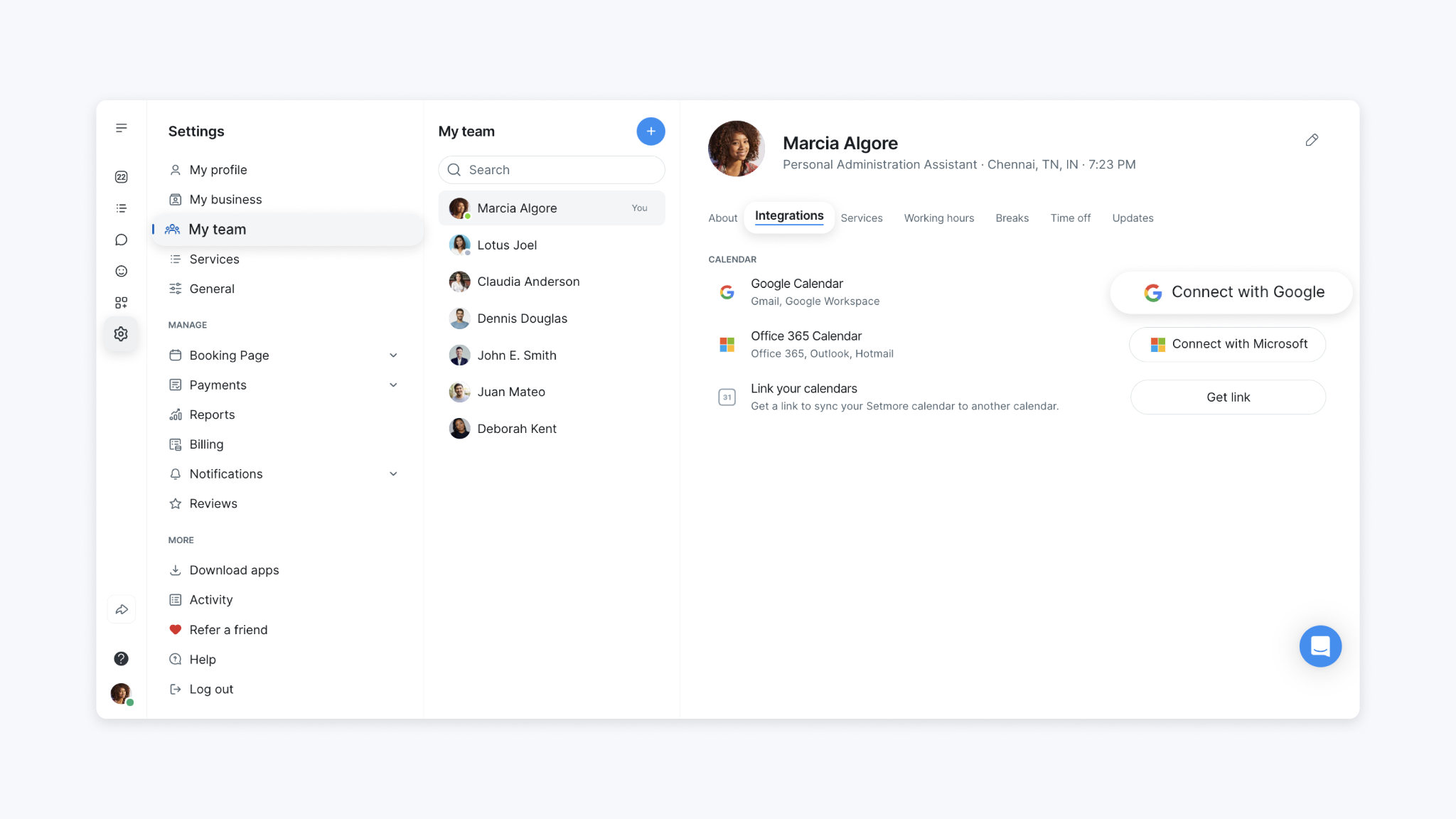
Acuity offers two-way calendar sync with Google Calendar, Outlook, iCloud, and Office 365 on all plans. Events in your personal calendar automatically block time in Acuity, and Acuity appointments push to your personal calendar. The sync runs in real time and prevents double-booking across all connected calendars.
Acuity's availability controls go further than most scheduling tools. Each appointment type can have its own availability schedule: a massage therapist might offer 90-minute sessions only on Mondays while accepting 30-minute consultations any day. Buffer times before and after appointments prevent back-to-back bookings.
A gap minimization setting restricts new bookings to slots adjacent to existing appointments, reducing scattered downtime. A "Look Busy" setting hides a portion of open availability to create the perception of higher demand.
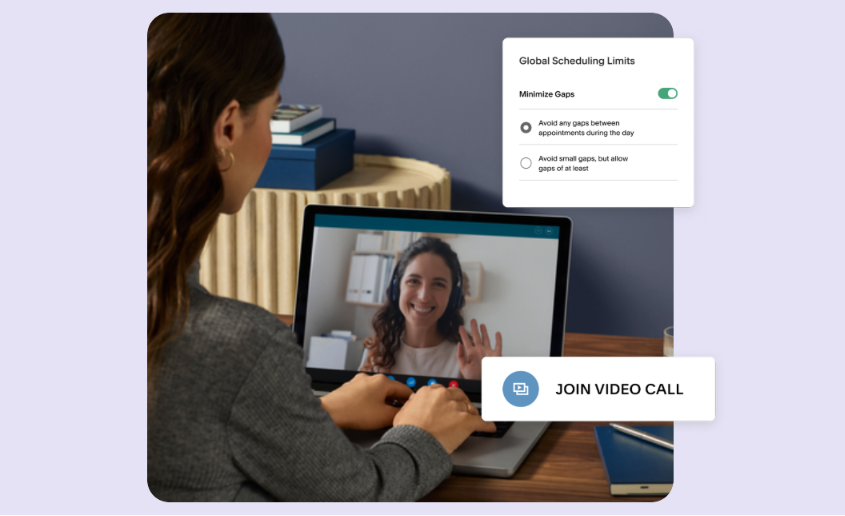
Source: Acuity Scheduling
Setmore supports two-way sync with Google Calendar and Office 365, but only on the Pro plan. The free plan offers one-way sync only. Working hours, breaks, and time off can be set per staff member, and the booking page reflects real-time availability. Class scheduling supports capacity limits and group bookings.
Source: Setmore
The availability gap matters most for businesses with complex scheduling needs. A multi-service business that needs different hours for different service types, per-appointment-type buffer times, and gap minimization will find Acuity more capable. A business with straightforward availability may not notice the difference.
Branding and client experience
Both platforms offer customizable booking pages, but the degree of control differs.
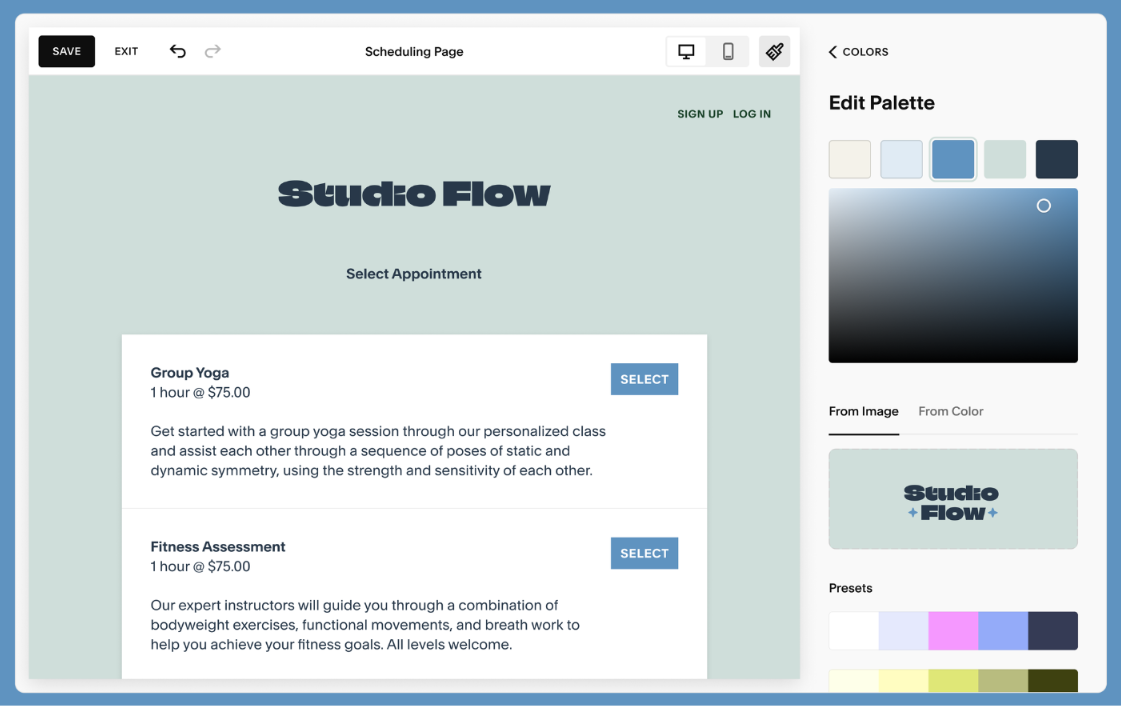
Acuity provides brand colors, images, custom copy, and the option to remove "Powered by Acuity" branding on the Premium plan. Premium-tier developers get custom CSS access for full visual control.
Source: Acuity Scheduling
As a Squarespace company, Acuity offers native website integration where booking pages can inherit Squarespace branding automatically, and a floating "Book Now" bar can persist across all pages.
A 2025 customer survey found 67% of customers said Acuity increased their professionalism.
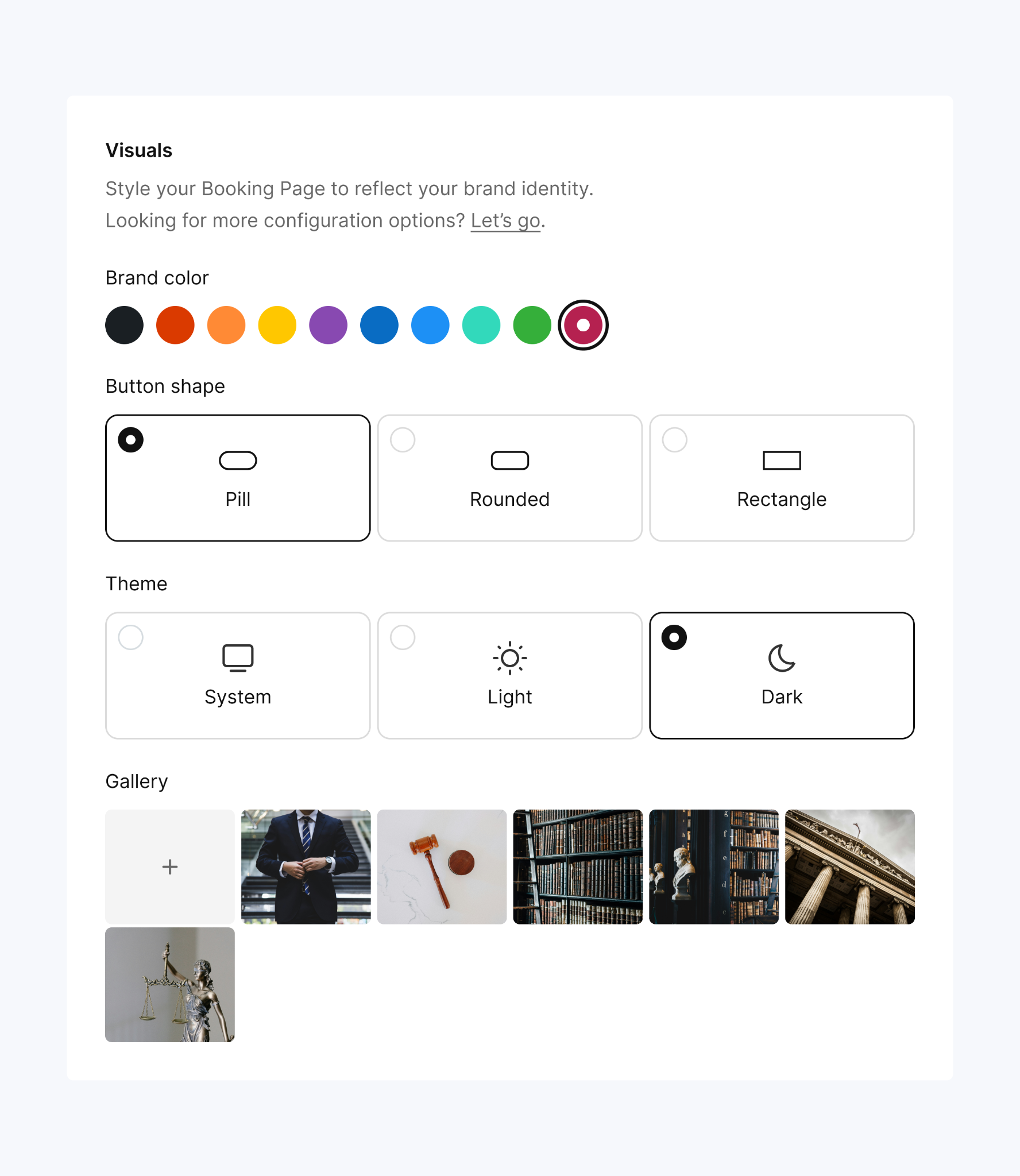
Setmore's booking page supports logos, banner images, brand colors, button shapes, image galleries, light/dark themes, and an "About Us" section.
Source: Setmore
Customer reviews display on the page with aggregate star ratings. Instagram posts can stream to the page for visual freshness. Removing Setmore branding requires the Pro plan.
Both approaches produce professional booking pages. Acuity has the edge for businesses already on Squarespace or those needing CSS-level customization. Setmore's built-in review display and Instagram streaming give it an advantage for businesses that rely on social proof and visual content to convert visitors.
Mobile experience
Both platforms offer full-featured mobile apps, but the depth of financial operations differs.
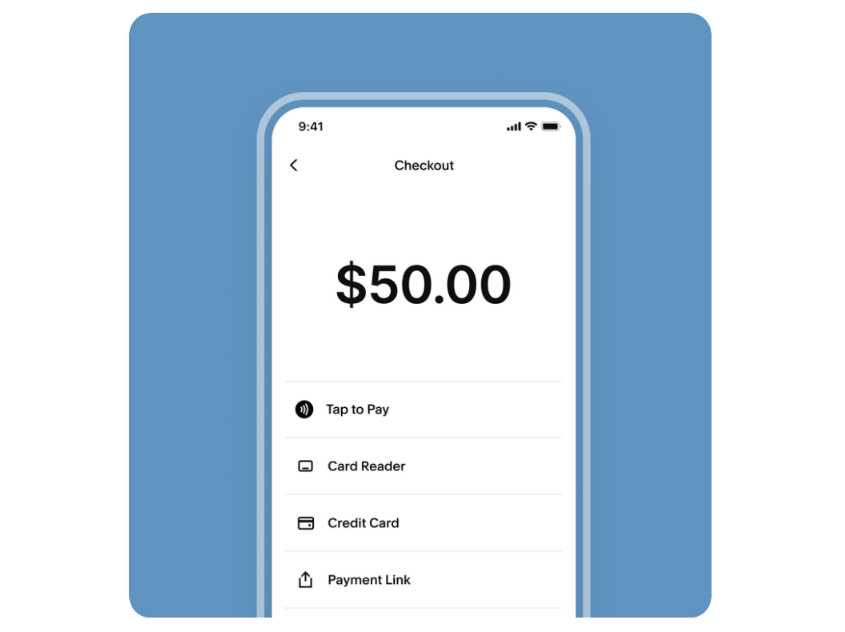
Acuity's mobile app (iOS and Android) includes real-time schedule management, drag-and-drop rescheduling with automatic client confirmation, tap-to-pay via Stripe, card reader support, payment link sending, invoice creation, no-show fee enforcement, tip collection, and client prep (appointment history, notes, intake form responses).
Source: Acuity Scheduling
The mobile app is included on all plans.
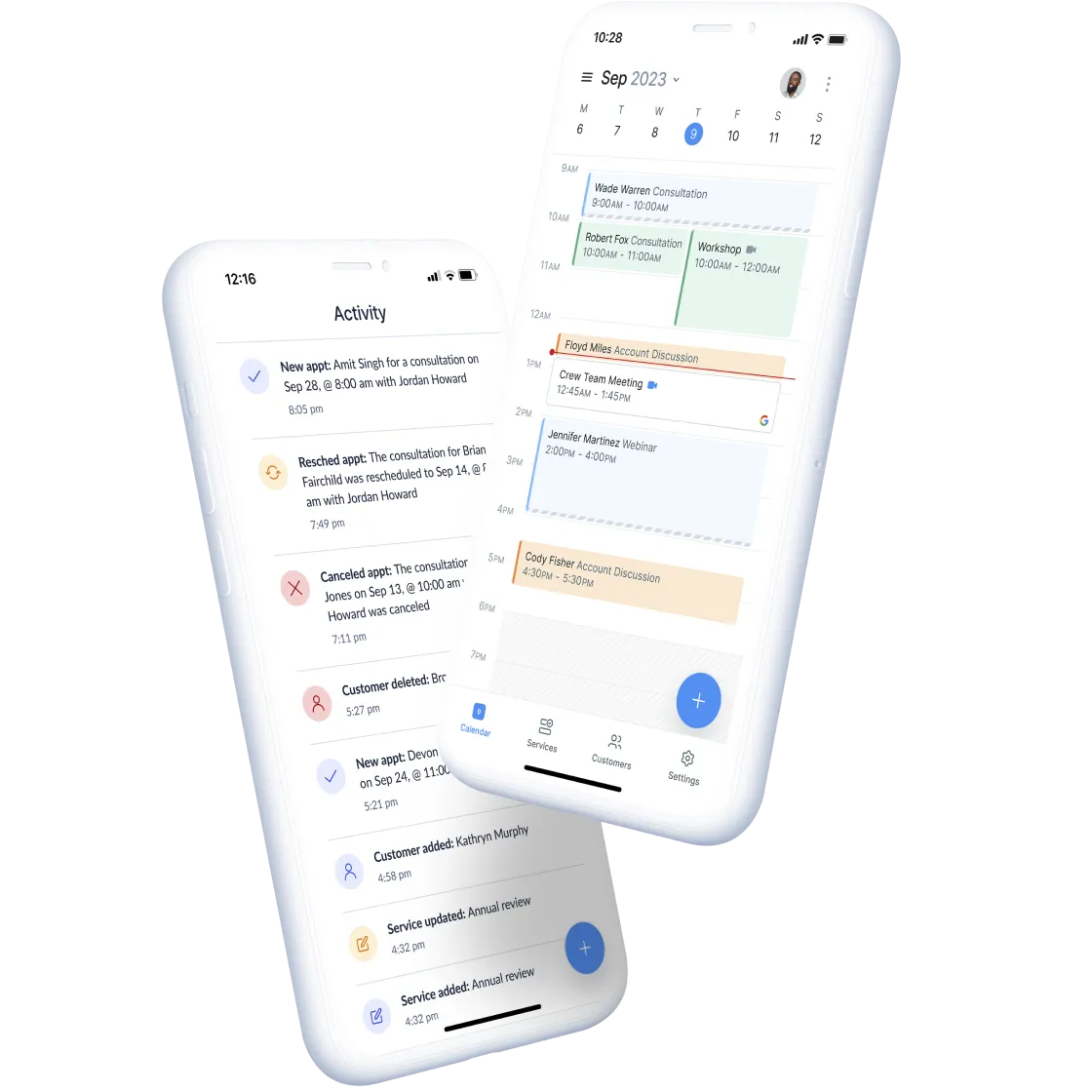
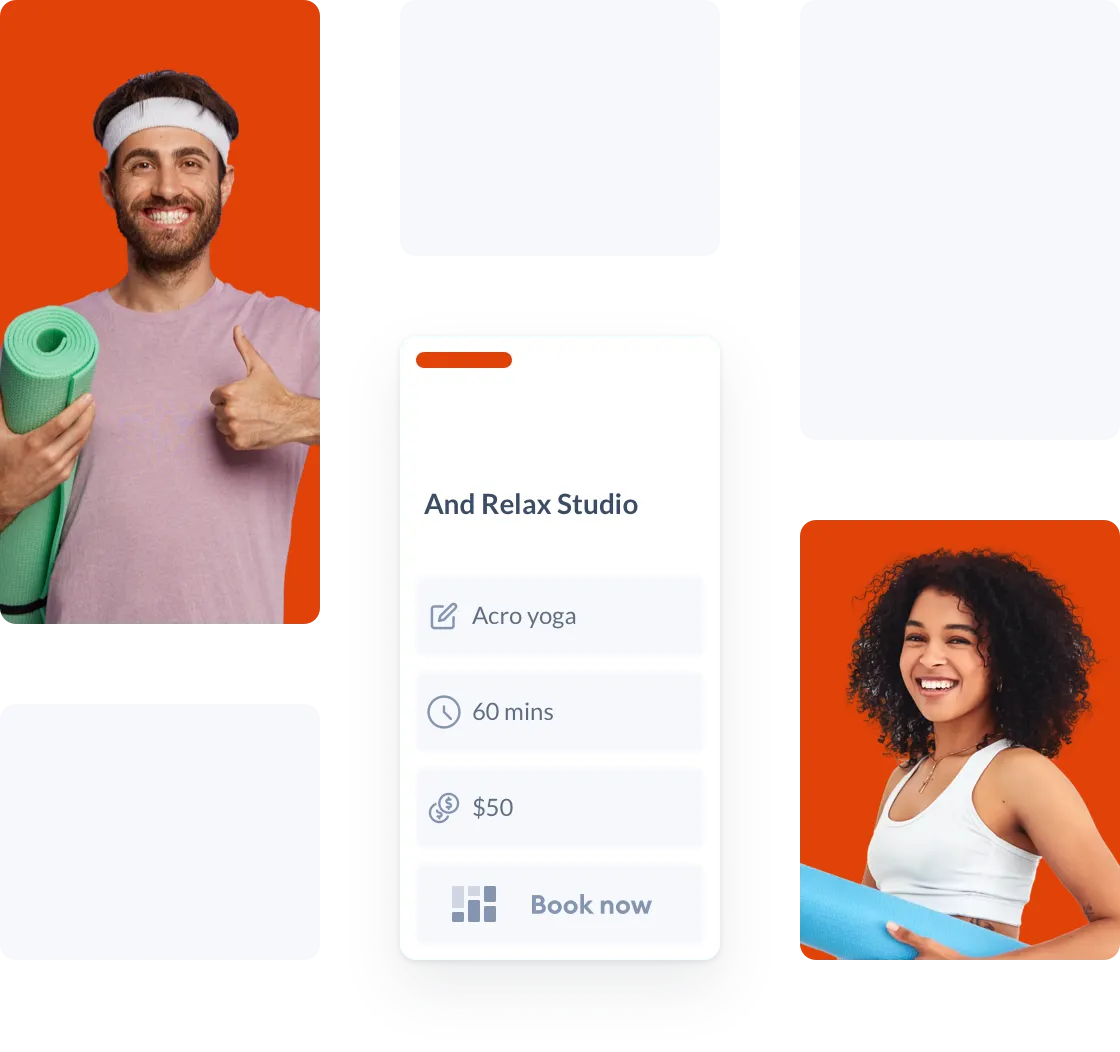
Setmore's mobile app (iOS and Android) provides calendar views (agenda, day, and 3-day), appointment management, push notifications, payment processing through Square and Stripe, video meeting integration, and customer management.
Source: Setmore
Real-time sync ensures changes on mobile appear immediately across all devices.
Both apps are capable. Acuity's edge is in financial operations: the range of payment methods, invoice management, no-show fee enforcement, and tip collection from the phone make it more useful for practitioners who handle checkout on the go.
Integrations and ecosystem
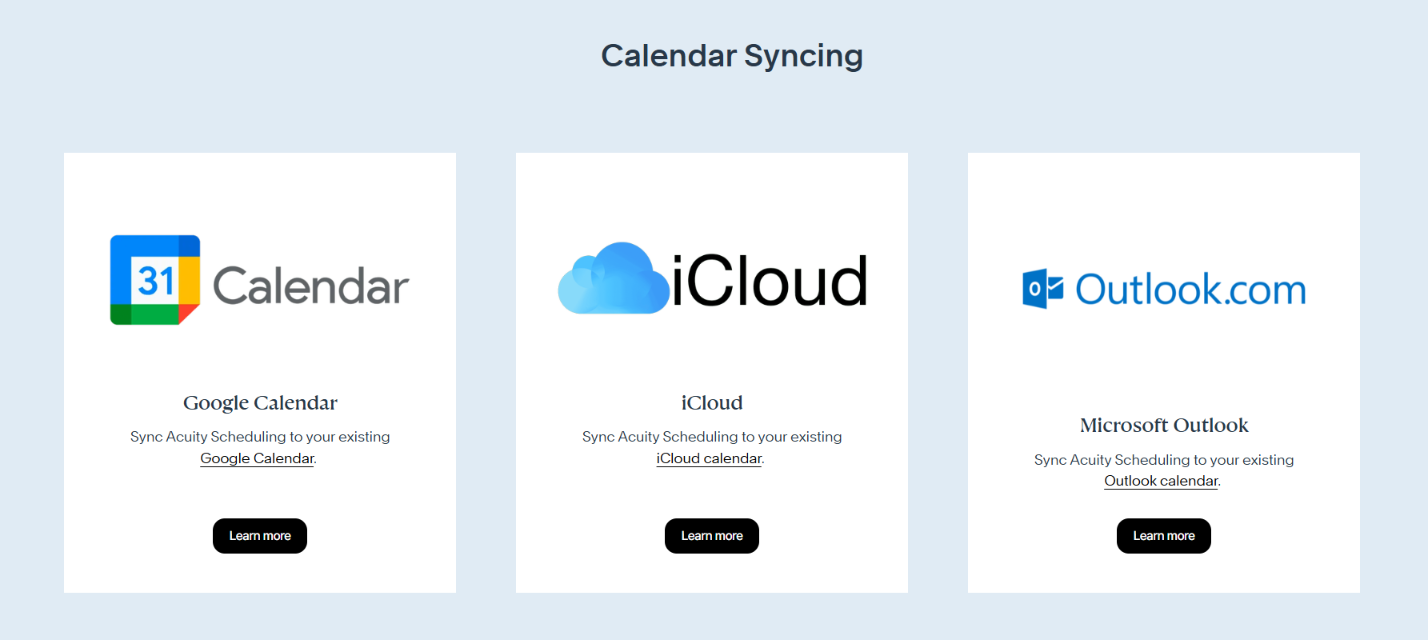
Acuity's integrations connect to the tools service businesses commonly use: Google Calendar, Outlook, and iCloud for calendar sync; Zoom, Google Meet, and GoToMeeting for virtual appointments; Mailchimp, ActiveCampaign, ConvertKit, and Constant Contact for email marketing; FreshBooks for accounting; and Zapier for connecting to 500+ additional apps.
Source: Acuity Scheduling
The September 2025 Airbnb Services integration lets beauty, wellness, fitness, and photography businesses list on Airbnb's services marketplace with two-way calendar sync.
Acuity also offers a REST API with webhooks, OAuth2, and official SDKs for Node.js and PHP, though API access requires the Premium plan.
Setmore's integrations cover similar ground: Google Calendar and Office 365 for calendar sync; Zoom and Google Meet for video; Square, Stripe, PayPal, and LawPay for payments; Mailchimp, Constant Contact, and MailerLite for marketing; Salesforce, HubSpot, Zoho CRM, and Freshsales for CRM; WordPress, Wix, Weebly, Squarespace, Shopify, and Joomla for website embedding; Slack for notifications; and QuickBooks for accounting.

Source: Setmore
Setmore connects to 3,000+ apps through Zapier and also supports Make (formerly Integromat). API access requires a Pro account and a manual request via email.
The CRM gap is where the two platforms diverge most. Setmore offers native connections to Salesforce, HubSpot, Zoho CRM, Freshsales, and Insightly. Acuity connects to Zoho CRM natively but requires Zapier for Salesforce. For businesses that need appointment data flowing into a CRM, Setmore's direct integrations are more extensive.
Pricing comparison
The pricing structures reflect each platform's target market.
Acuity Scheduling uses flat-fee subscription pricing with no per-user charges:
Plan | Annual Price | Monthly Price | Calendars | Key Additions |
|---|---|---|---|---|
Starter | $16/month | $20/month | 1 | Payments, email reminders, intake forms, mobile app |
Standard | $27/month | $34/month | Up to 6 | SMS reminders, packages, subscriptions, gift certificates, video conferencing |
Premium | $49/month | $61/month | Up to 36 | HIPAA BAA, remove branding, custom CSS, API access, multi-timezone |
Enterprise | Custom | Custom | Unlimited | SSO, VIP account management, 99.9% uptime SLA |
No setup fees, no cancellation fees, no per-transaction surcharges from Acuity. 7-day free trial with no credit card required. No permanent free plan.
Setmore uses per-user pricing:
Plan | Annual Price | Monthly Price | Users | Key Additions |
|---|---|---|---|---|
Free | $0 | $0 | Up to 4 | 200 appointments/month, email reminders, payments, booking page |
Pro | $5/user/month | $12/user/month | Unlimited | Unlimited appointments, SMS reminders, 2-way calendar sync, recurring appointments, remove branding, HIPAA, API |
30-day money-back guarantee on Pro. Permanent free plan available. Optional Live Receptionist add-on ($99/month, U.S. only).
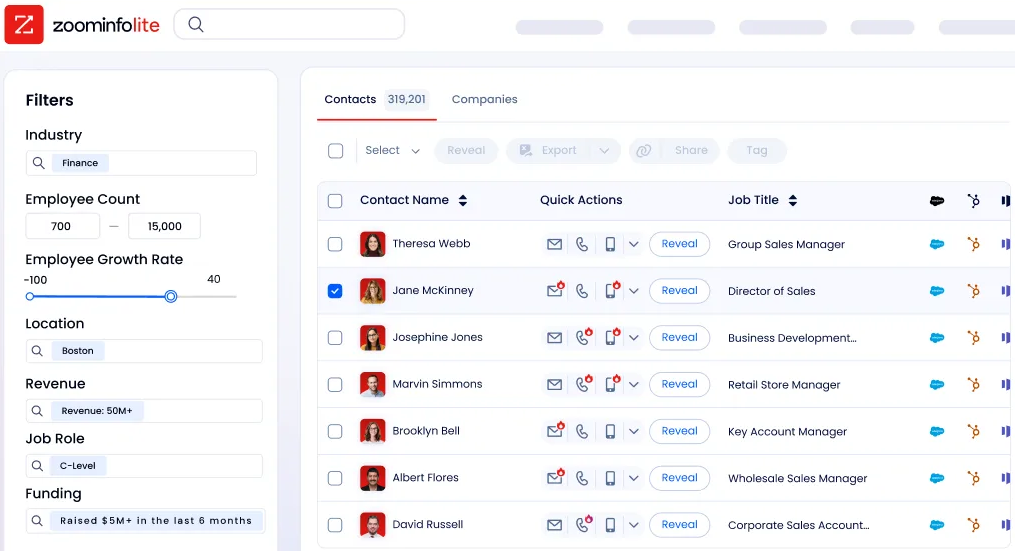
ZoomInfo uses custom-quoted, consumption-based pricing. ZoomInfo Lite is a permanent free tier with access to 100M+ verified profiles and 10 monthly export credits.
Source: ZoomInfo
Paid plans span Sales, Marketing, and Operations product lines with Professional, Advanced, and Enterprise tiers. A 7-day free trial is available with no credit card required.
The cost comparison depends on team size and needs. For a solo practitioner, Acuity Starter ($16/month) costs more than Setmore Pro ($5/month) but includes two-way calendar sync and avoids the 200-appointment cap.
For a four-person team, Setmore Free costs nothing versus Acuity Standard ($27/month for up to six calendars), though Setmore's free plan lacks SMS reminders, recurring appointments, and two-way sync.
For a six-person team needing full features, Setmore Pro ($30/month total) undercuts Acuity Standard ($27/month for up to six calendars), but Acuity includes packages, subscriptions, and gift certificates that Setmore doesn't offer at any tier.
HIPAA compliance comparison
Both platforms offer HIPAA compliance, but the access paths differ.
Acuity locks HIPAA behind the Premium plan at $49/month (annual). Subscribers can sign a Business Associate Agreement (BAA) with Acuity/Squarespace. Enterprise adds SSO via Okta/MedPlum using OAuth 2.0 and SAML.
For a solo therapist who needs compliant scheduling but doesn't need 36 calendars, the Premium price creates a mismatch between compliance needs and feature needs.
Setmore offers HIPAA compliance through its "Setmore Health" plan, tied to the Pro tier. The BAA covers protection and confidentiality of protected health information, notification of security incidents, and limitations on use and disclosure.
At $5/user/month (annual), Setmore's HIPAA option is more affordable for solo healthcare practitioners. The BAA does not automatically cover third-party integrations, so providers must verify compliance for any connected apps.
Acuity Scheduling vs. Setmore vs. ZoomInfo: Which should you choose?
The right choice depends on what problem is most pressing for your business.
Choose Acuity Scheduling if:
You run a service business where every appointment is a revenue event
You need packages, subscriptions, gift certificates, or deposit enforcement
No-show reduction with financial accountability is critical
You want detailed availability controls with per-service scheduling rules
You're building on Squarespace or need native website integration
Choose Setmore if:
You need a working booking system for a small team at zero cost
Social media booking (Facebook and Instagram) matters for client acquisition
Built-in customer reviews on your booking page would help convert visitors
Affordable per-user pricing matters more than advanced revenue tools
You want native CRM integrations with Salesforce, HubSpot, or Zoho
Add ZoomInfo if:
You're a B2B service business and your challenge is generating appointments, not just managing them
You need to identify decision-makers, track buying intent, and prioritize outreach
Your sales or business development team needs verified contact data and AI-powered prospecting
You want the intelligence layer that feeds the pipeline your scheduling tool manages
Explore ZoomInfo Lite for free, or request a demo of the full platform.
Acuity and Setmore each solve appointment scheduling well, with different strengths. Acuity gives service businesses the tools to turn every booking into a protected, monetized interaction. Setmore gives small teams an accessible entry point with strong social and CRM connectivity. For B2B service businesses, ZoomInfo adds the intelligence layer that ensures your calendar is full of the right appointments.
Acuity Scheduling vs. Setmore vs. ZoomInfo FAQ
What is the core difference between Acuity Scheduling and Setmore?
Acuity Scheduling is built for service businesses that monetize appointments directly. It includes packages, subscriptions, gift certificates, deposit enforcement, and a POS system within the scheduling flow. Setmore focuses on accessible online booking with a generous free plan (up to four users), built-in customer reviews on the booking page, and direct social media booking through Facebook and Instagram. Acuity is stronger on revenue tools; Setmore is stronger on affordability and social integration.
Which platform is cheaper for a small team?
Setmore is cheaper. Its free plan supports up to four staff members with online payments, email reminders, and a customizable booking page at no cost.
Acuity has no free plan (only a 7-day trial), with the Starter plan beginning at $16/month for a single calendar.
For a four-person team needing full features, Setmore Pro costs $20/month total versus Acuity Standard at $27/month.
Which platform is better for reducing no-shows?
Acuity has the stronger no-show reduction toolkit. It combines automated email and SMS reminders with deposits, prepayments, cancellation policies, and the ability to charge a card on file for no-shows. Acuity's own survey found 75% of businesses reduced no-shows after adopting the platform.
Setmore relies on email and SMS reminders without financial enforcement like deposits or no-show fees.
Does either platform support HIPAA compliance?
Both platforms offer HIPAA compliance with a signed Business Associate Agreement. Acuity requires the Premium plan at $49/month (annual). Setmore offers HIPAA through its Setmore Health plan tied to the Pro tier at $5/user/month (annual), making it more affordable for solo healthcare practitioners.
In both cases, the BAA does not automatically extend to third-party integrations.
How does ZoomInfo relate to Acuity Scheduling and Setmore?
ZoomInfo is not a scheduling tool. It is an AI GTM platform that helps B2B teams identify prospects, track buying intent, and generate pipeline.
While Acuity and Setmore manage what happens after a prospect decides to book, ZoomInfo helps businesses find and reach prospects before they ever visit a booking page. For B2B service businesses (consultants, agencies, professional services firms), ZoomInfo fills the pipeline that scheduling tools manage.
Which platform has better integrations?
Both platforms integrate with major calendar, payment, video conferencing, and email marketing tools. Setmore has an edge in native CRM integrations, connecting directly with Salesforce, HubSpot, Zoho CRM, Freshsales, and Insightly.
Acuity connects to Zoho CRM natively but requires Zapier for Salesforce. Acuity's advantage is its native Squarespace integration and the Airbnb Services marketplace connection. Both support Zapier for extended connectivity.
Can I accept payments on the free plan?
Yes, but only with Setmore. Setmore's free plan includes payment processing through Square, Stripe, and PayPal. Acuity does not have a free plan; payment processing starts with the Starter plan at $16/month.
Which platform is better for group classes and workshops?
Acuity has more developed class scheduling features, including capacity limits, waitlists, resource assignment (rooms, equipment), recurring series with duplication, and class-specific packages and intake forms. Setmore supports group bookings with capacity limits but lacks resource management and the same depth of class-specific configuration.
