

Choosing between Acumbamail vs. Brevo for your email marketing often comes down to these five questions:
Do you need a simple, affordable tool for newsletters and campaigns, or a customer engagement platform with CRM, chat, and loyalty features?
Is your business based in Spain or the Spanish-speaking world, or do you operate globally?
How important is marketing automation with conditional logic and multi-step workflows?
Do you need multi-channel messaging (WhatsApp, push notifications, mobile wallet) beyond email and SMS?
Does the quality of your contact data matter as much as the platform sending the emails?
In short, here's what we recommend:
Acumbamail is the right choice for Spanish-market SMBs, agencies, and public institutions that need an affordable email and SMS marketing tool with local compliance credentials. Its permanent free plan, 860+ responsive templates, and drag-and-drop editor make launching campaigns fast, even without technical skills.
Acumbamail holds ENS certification (Spain's National Security Scheme) and hosts all data on servers in Spain, making it one of the few email platforms eligible for Spanish government tenders. However, its automation lacks conditional branching, its integration ecosystem is narrow (16 native connections), and the platform is built for the Spanish market, with the English-language experience treated as secondary.
Brevo serves growing businesses that want to consolidate email, SMS, WhatsApp, live chat, CRM, and loyalty into one platform without paying enterprise prices. Its unlimited contacts on every plan (including Free), 150+ integrations, and built-in Aura AI agents for content generation, send-time optimization, and segmentation make it a legitimate all-in-one marketing hub.
With 600,000+ customers and a recent €500M funding round at unicorn valuation, Brevo is investing heavily in competing with HubSpot and Salesforce. The trade-off: automation still trails dedicated platforms like ActiveCampaign, reporting depth is limited, and costs add up once you need features beyond the base plan.
Both platforms handle email marketing execution well. But here's what most comparisons overlook: the campaigns you send are only as good as the contacts you're sending them to. Stale data, missing decision-makers, and blind targeting waste budget regardless of which platform you choose. That's where a different kind of tool becomes essential.
ZoomInfo is a B2B data and GTM platform that solves the problem upstream of your email marketing: identifying who to target and when they're ready to buy.
Built on a B2B data platform of 500M contacts, 100M companies, 135M+ verified phone numbers, and 200M+ verified business email addresses, ZoomInfo's GTM Context Graph fuses this data with your CRM records, conversation transcripts, and behavioral signals to reveal not just who your buyers are, but why they're in-market right now.
For B2B teams using Acumbamail or Brevo, ZoomInfo provides the targeting intelligence that turns generic blasts into campaigns that reach verified decision-makers at the right moment.
If building campaigns on verified, intent-driven contact data sounds like the missing piece in your email marketing, see how ZoomInfo works.
Acumbamail vs. Brevo at a glance
Acumbamail | Brevo | ZoomInfo | |
|---|---|---|---|
Core focus | Email & SMS marketing for Spanish-market SMBs | All-in-one customer engagement platform | B2B data intelligence and GTM execution |
Channels | Email, SMS, WhatsApp (Pro+) | Email, SMS, WhatsApp, push, chat, phone, wallet | Multi-channel orchestration via GTM Studio |
Automation | Basic (no conditional branching) | Visual workflows with cross-channel triggers | Signal-triggered GTM workflows |
Integrations | 16 native + Zapier | 150+ native + Zapier/Make | 120+ marketplace + APIs + MCP for any AI agent |
CRM | None | Built-in deal pipelines and contact management | GTM Context Graph with CRM unification |
AI features | AI text generation (Pro+) | Aura AI (content, segmentation, send-time, sales) | GTM Context Graph + AI agents for prospecting and outreach |
Data compliance | GDPR + ENS (Spanish government) | GDPR, CCPA, ISO 27001 | ISO 27001, ISO 27701, SOC 2 Type II, GDPR, CCPA |
Pricing model | By send volume or subscriber count | By email volume (contacts unlimited) | Custom, consumption-based |
Free plan | 2,000 emails/month, 250 subscribers | 300 emails/day, unlimited contacts | ZoomInfo Lite (permanent, 10 export credits/month) |
Best for | Spanish SMBs, agencies, public institutions | Growing global businesses consolidating tools | B2B teams that need verified contact data and buyer intent |
Two different approaches to email marketing
Acumbamail and Brevo both help you send marketing emails, but they come at the job from opposite directions.
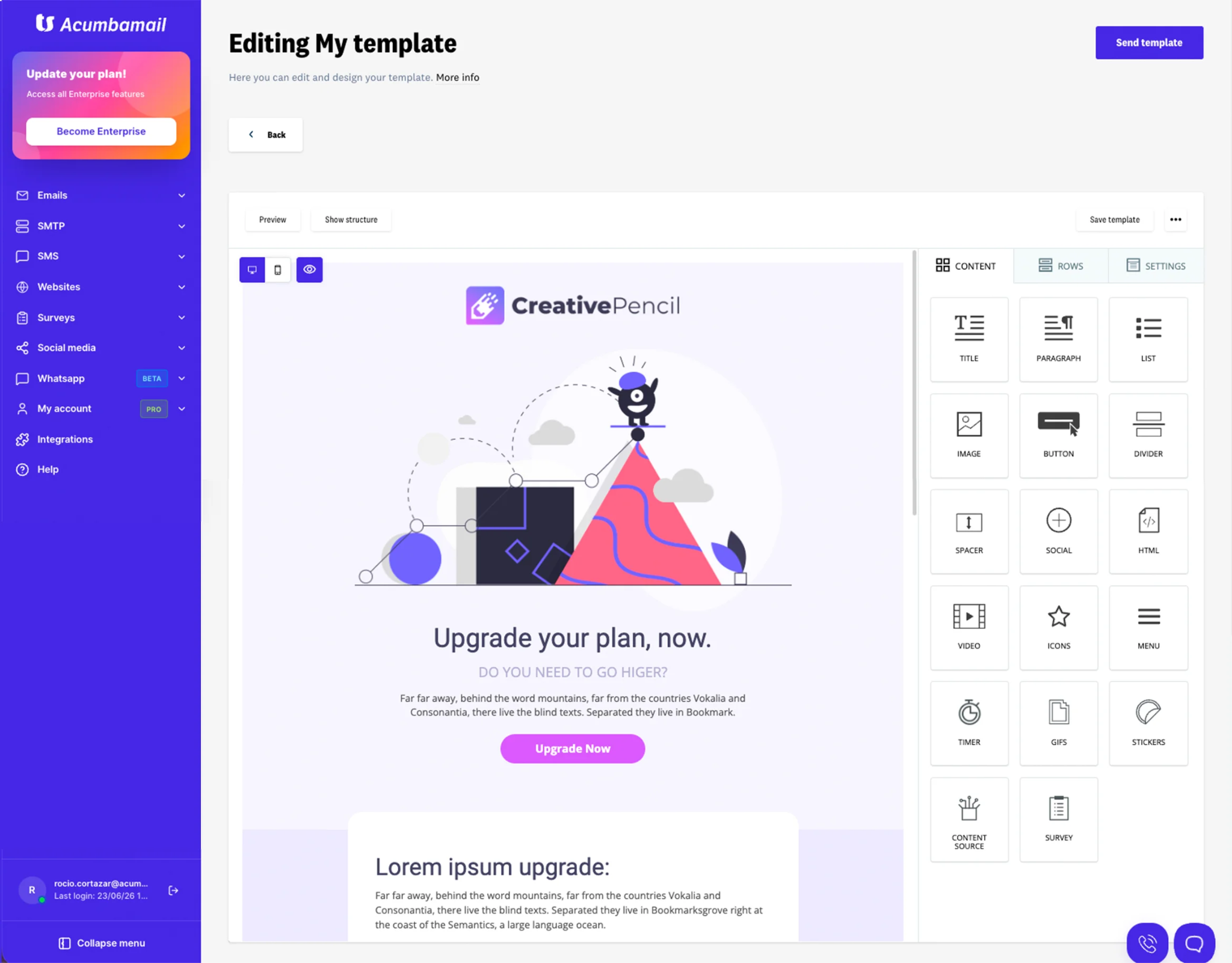
Acumbamail was built for one thing: making email marketing simple and affordable for Spanish businesses.
Source: Acumbamail
Three friends founded it in Ciudad Real in 2013, and the product still reflects that origin. The interface is clean. The templates are plentiful. The pricing is transparent.
If you're a Spanish SMB that needs to send a weekly newsletter to a few thousand subscribers, Acumbamail gets you from idea to inbox with little friction. It also bundles SMS, landing pages, and surveys into the same dashboard, so you don't need separate tools for basic multi-channel marketing.
Brevo started as Sendinblue in 2012 with a similar pitch: affordable email marketing priced by sends, not contacts. But the company's ambitions grew.

Source: Brevo
After a rebrand in 2023 and acquisitions of WonderPush (push notifications) and Octolis (CDP), Brevo now positions itself as a customer engagement platform. Email is one channel among many. The same account that sends your newsletter also manages your sales pipeline, handles live chat on your website, runs WhatsApp campaigns, and powers a loyalty program.
For businesses that just need email done well, Acumbamail's focused approach is a strength. For businesses that want one platform to handle marketing, sales conversations, and customer retention, Brevo's breadth is the draw.
Acumbamail wins on simplicity and Spanish-market compliance
If your business operates in Spain or serves Spanish-speaking markets, Acumbamail offers advantages that global platforms can't match.
Compliance is the most concrete differentiator. Acumbamail holds ENS certification (CCN-CERT #8819), Spain's National Security Scheme required for public administration IT systems. Few email marketing platforms carry this certification. Combined with infrastructure hosted in Spain and a named Data Protection Officer, Acumbamail is procurement-eligible for Spanish government bodies.

Source: Acumbamail
The platform also delivers good value for simpler use cases. Paid plans start at €24/month for 20,000 emails with analytics, automation, A/B testing, and API access included. The white-label agency model lets marketing agencies resell the platform under their own brand with client account isolation and shared credit pools, a capability that's unusual at this price point.
Where Acumbamail falls short is automation depth. Capterra reviewers consistently flag the lack of conditional branching ("if-then" logic), date-based triggers, and multi-step behavioral journeys as the platform's primary limitation. If your campaigns depend on sending different sequences based on whether a subscriber opened an email or clicked a specific link, Acumbamail won't support that workflow.
Brevo wins on breadth and global reach
Brevo's strength is consolidation. Instead of licensing separate tools for email, SMS, WhatsApp, live chat, CRM, and loyalty, a business can run all of these from one account.
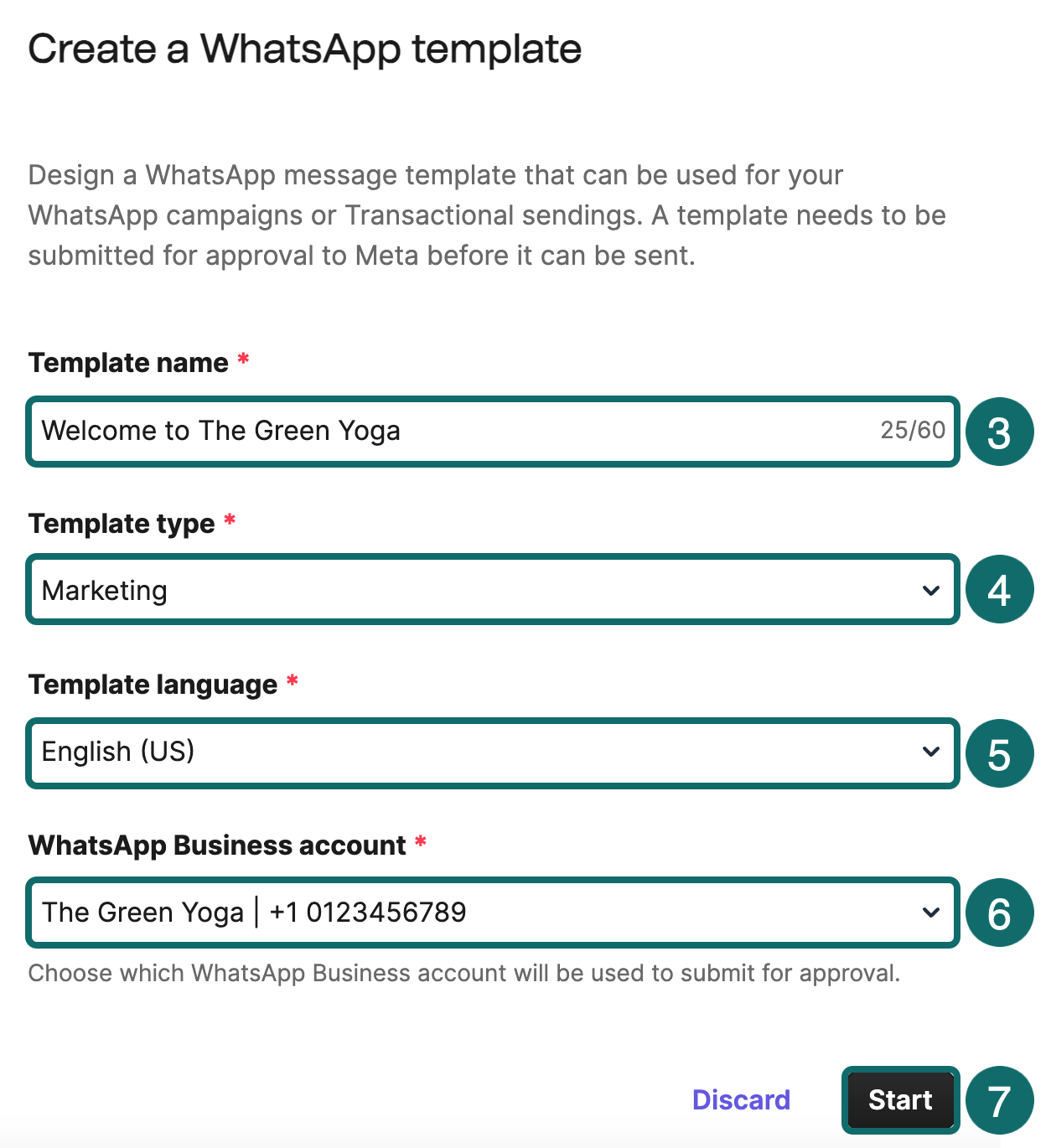
The channel breadth is real, not just marketing copy. Brevo is a certified WhatsApp Business Solution Provider, giving businesses direct access to WhatsApp's API rather than routing through a third party.
Source: Brevo
WhatsApp campaigns sit inside the same automation workflow builder as email and SMS, so a single workflow can send an email, wait 24 hours, then follow up via WhatsApp. Web and mobile push notifications, a built-in phone system with AI call summaries, and a mobile wallet loyalty program round out the channel mix.
The pricing model is also a structural advantage for certain businesses. Brevo charges by email volume sent, not by contacts stored. Contacts are unlimited on every plan, including Free. For businesses with large subscriber lists but moderate send frequency, this can be cheaper than platforms that charge per contact.
Acumbamail offers both volume-based and subscriber-based pricing, but its subscriber-based plans start higher (€39/month for 2,500 subscribers versus Brevo's unlimited contacts at $9/month on Starter).
Brevo's weakness mirrors Acumbamail's, just at a higher ceiling. G2 and Capterra reviewers report that advanced multi-step workflows and dynamic segmentation feel restrictive compared to ActiveCampaign or HubSpot. Reporting lacks the granularity needed for conversion-level analysis.
And while base pricing is low, features like removing Brevo branding ($10.80/month add-on on Starter), higher automation contact limits, and advanced segmentation require upgrading or purchasing add-ons.
The automation gap matters more than you think
Both platforms have automation limitations, but the severity depends on what you're trying to do.
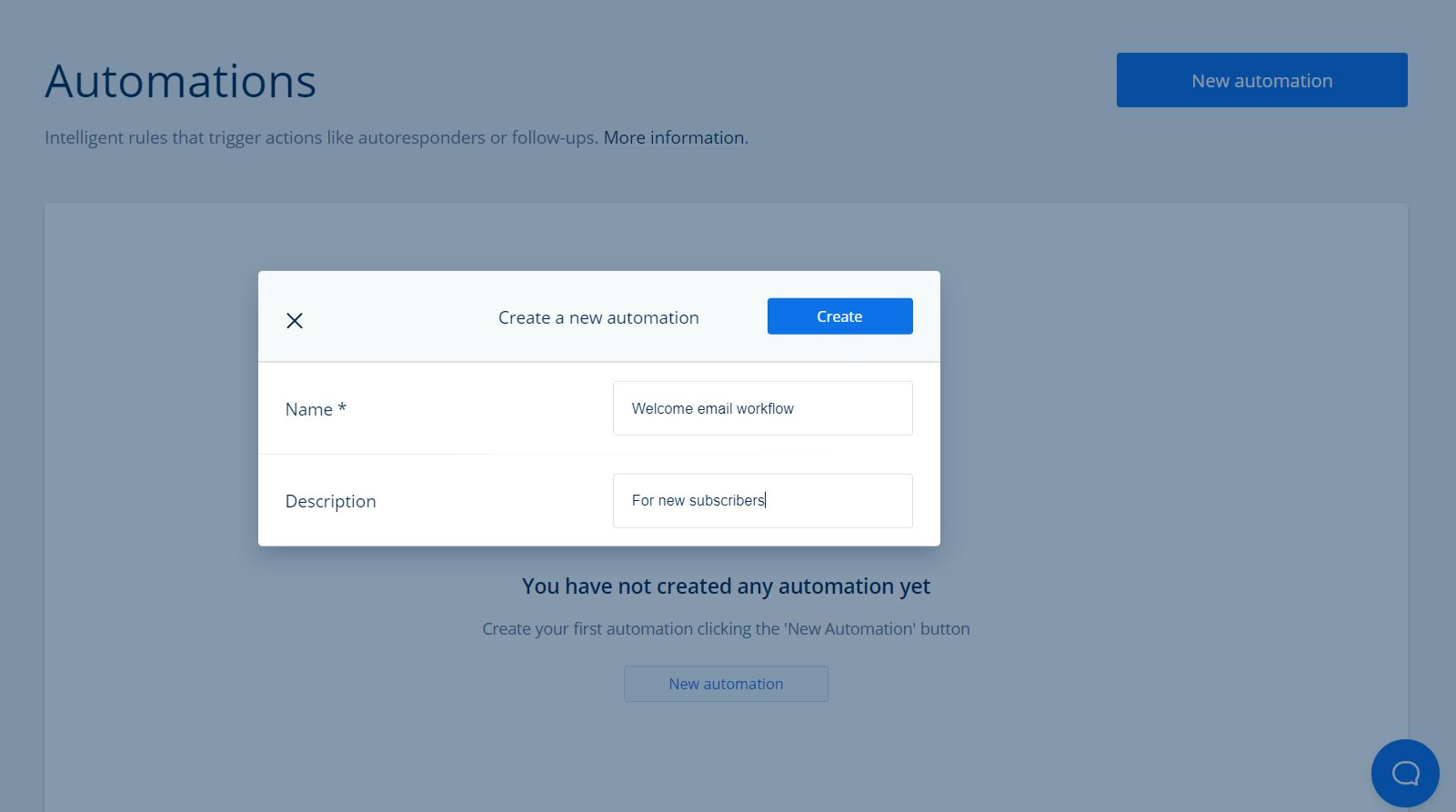
Acumbamail offers autoresponders (time-triggered after a subscriber joins a list) and basic automation workflows.
Source: Acumbamail
The Pro plan adds auto-resend to non-openers and optimal send-time per subscriber. But the automation engine doesn't support conditional branching based on subscriber behavior. You can't build a journey that says "if they clicked the pricing link, send email A; if they didn't, send email B."
For businesses sending newsletters and promotional campaigns, this is fine. For ecommerce brands running abandoned cart sequences or SaaS companies building onboarding drip series, it's a dealbreaker.
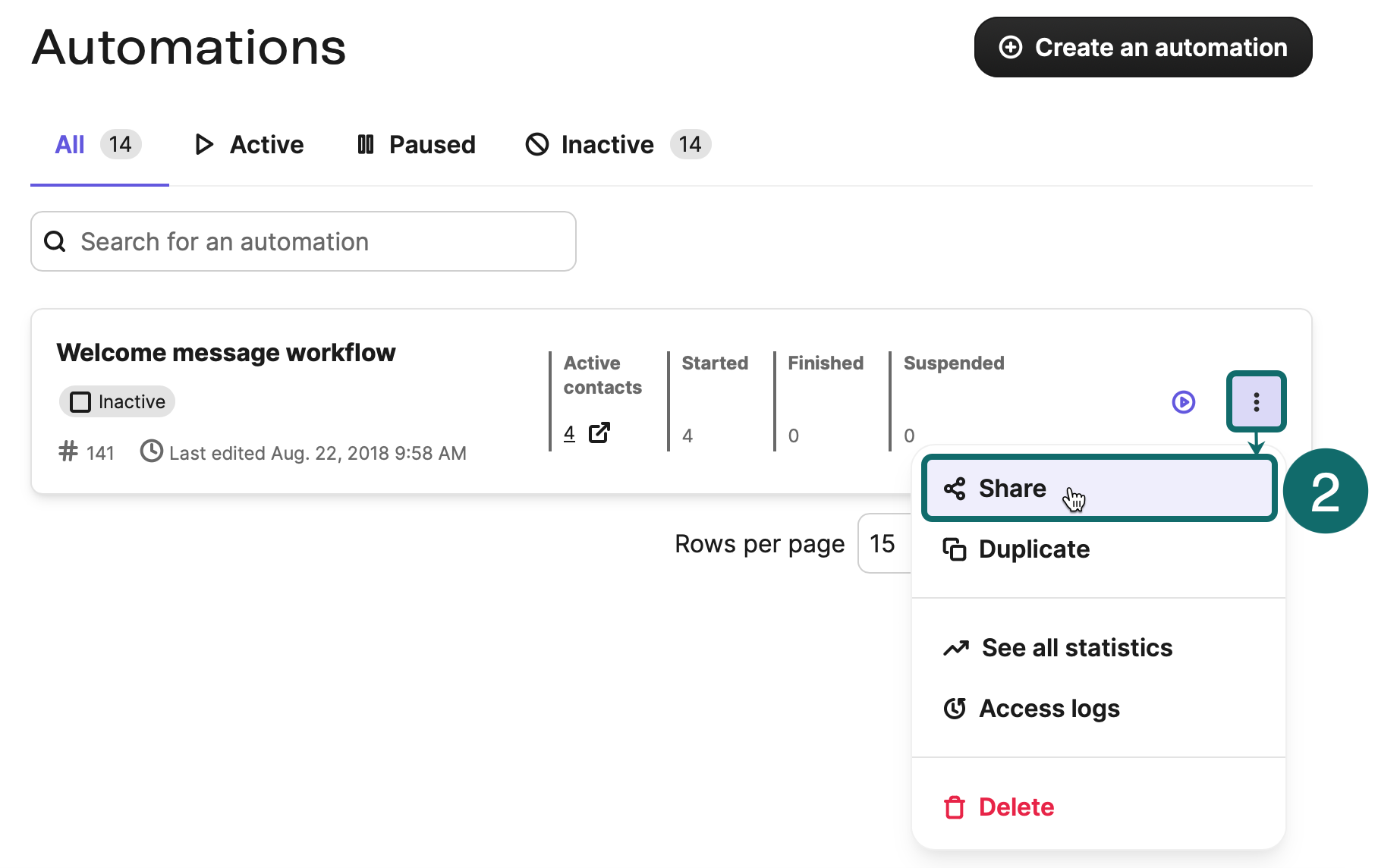
Brevo offers a visual workflow builder with pre-built templates for welcome series, abandoned cart recovery, birthday emails, and custom workflows.
Source: Brevo
Triggers include list entry, form submission, link clicks, and cart abandonment. The free plan includes automation for up to 2,000 contacts, and the Standard plan ($18/month) unlocks the full automation suite. Brevo's automation is more capable than Acumbamail's, but users who need conditional logic comparable to ActiveCampaign or Klaviyo still report hitting limitations.
For B2B teams, there's a different automation gap that neither platform addresses: the intelligence behind the targeting. Both Acumbamail and Brevo can execute campaigns, but neither tells you which companies are researching your solution category right now, or which decision-makers you should reach at those companies.
ZoomInfo fills the intelligence gap upstream
ZoomInfo isn't an email marketing platform. It's the data and intelligence layer that makes your email marketing platform more effective.
The relationship is complementary: Acumbamail or Brevo handles campaign creation, template design, delivery, and reporting. ZoomInfo handles the question that comes before all of that: who should you be emailing, and why now?
For B2B companies, this question matters. Sending a well-designed campaign to an outdated contact list wastes budget and damages sender reputation. Targeting an entire industry when only a handful of companies are in-market wastes time. Missing the VP who just joined the buying committee because your data is six months old means losing the deal before you knew it existed.
ZoomInfo's GTM Context Graph processes 1.5B+ data points daily, combining third-party B2B intelligence with a customer's CRM records, conversation transcripts, and behavioral signals. The result: instead of blasting a static list, marketers can identify which accounts show buying intent right now and reach verified contacts at those accounts through whatever email platform they already use.
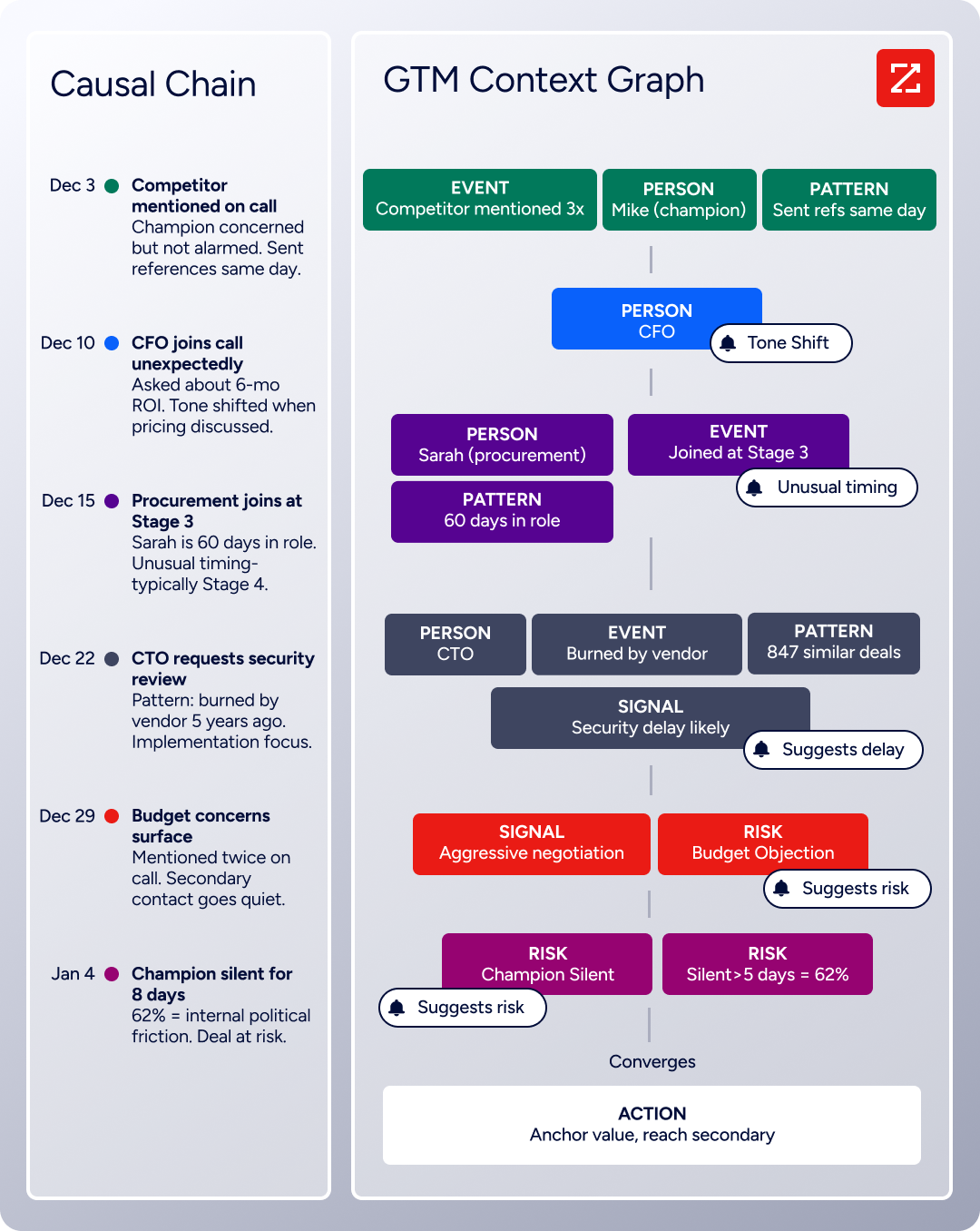
GTM Studio lets marketers describe audiences in plain language, enrich them with first- and third-party data, and activate multi-channel plays without engineering support.
GTM Workspace gives sellers a single view of prioritized accounts with AI-drafted outreach based on full account context. And for teams that build their own workflows, APIs and MCP deliver ZoomInfo's intelligence into any tool, including Brevo or any CRM feeding into Acumbamail.
"It's not just the data itself. It's more about the right data at the right time to help us reach out with the right message across that full buyer journey." (Chelsea Kenyon, Senior Director of Digital Strategy, Redwood Logistics)
Pricing models reveal different markets
The three platforms price for different buyers.
Acumbamail offers two pricing dimensions: by monthly send volume or by subscriber count.
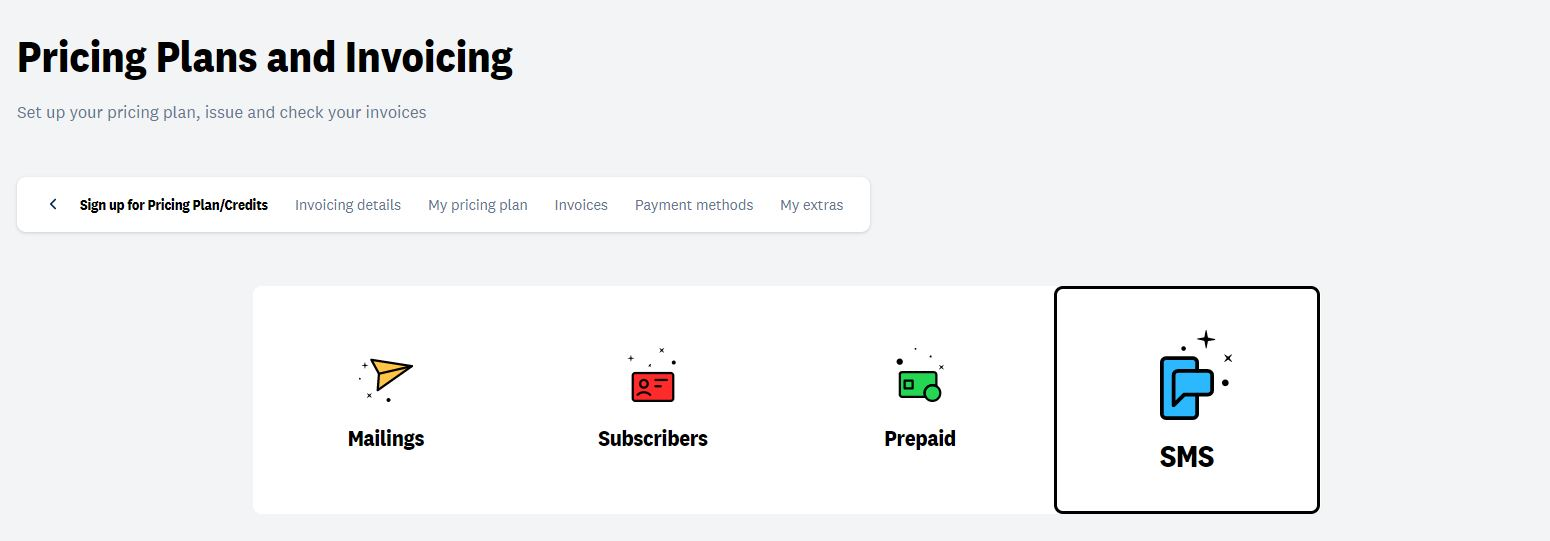
The free plan gives you 2,000 emails/month for 250 subscribers permanently. Volume-based paid plans start at €24/month (Basic, 20,000 emails) and scale to custom pricing above 2 million emails. Subscriber-based plans start at €39/month for 2,500 subscribers. A prepaid credit option (€60 for 5,000 emails, 2-year expiry) is available for infrequent senders. Annual billing saves 20%.
Source: Acumbamail
The pricing is transparent, but two details catch senders off guard. Overage charges apply when you exceed your monthly send limit (€0.005503 per email on the 20,000/month tier). And changing your plan tier mid-cycle forfeits unused credits with no prorated refund.
Brevo prices by email volume with unlimited contacts on every plan.
The free plan caps at 300 emails per day. Starter begins at $9/month for 5,000 emails. Standard starts at $18/month for 5,000 emails (with automation and A/B testing included). Professional jumps to $499/month for 150,000 emails with WhatsApp, push notifications, phone support, and 10 user seats.
Brevo's unlimited-contacts model works well for businesses with large lists and moderate send frequency. But several features require add-ons or upgrades: removing Brevo branding costs $10.80/month on Starter, the Sales CRM add-on starts at $27.92/month, and SMS and WhatsApp are billed separately by volume and destination.
ZoomInfo uses custom, consumption-based pricing with no published prices.
Costs depend on seats, credit volume, features, and contract length. ZoomInfo Lite provides a permanent free tier with access to the B2B database, 10 monthly export credits, and basic search and enrichment. Paid plans are organized into Sales, Marketing, and Operations tiers, each with Professional, Advanced, and Enterprise levels.
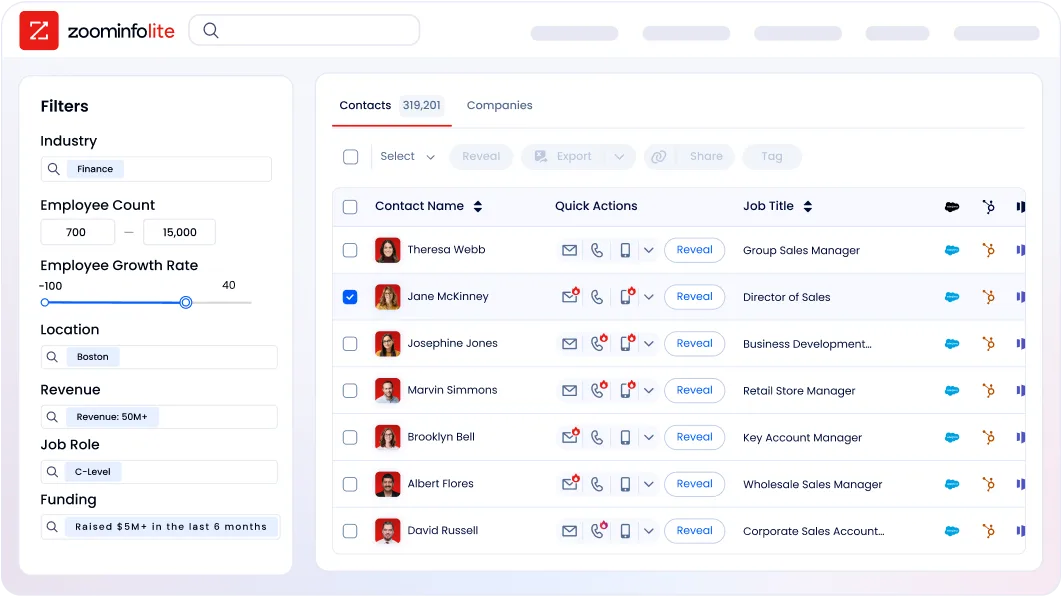
ZoomInfo's pricing reflects a different value proposition: you're paying for verified B2B intelligence and buyer intent signals, not email sends. For B2B teams, the cost comparison isn't ZoomInfo versus an email platform. It's ZoomInfo plus an email platform versus the cost of campaigns sent to unverified contacts with no intent data.
Integration ecosystems show where each platform fits
The integration story reveals each platform's role in a marketing stack.
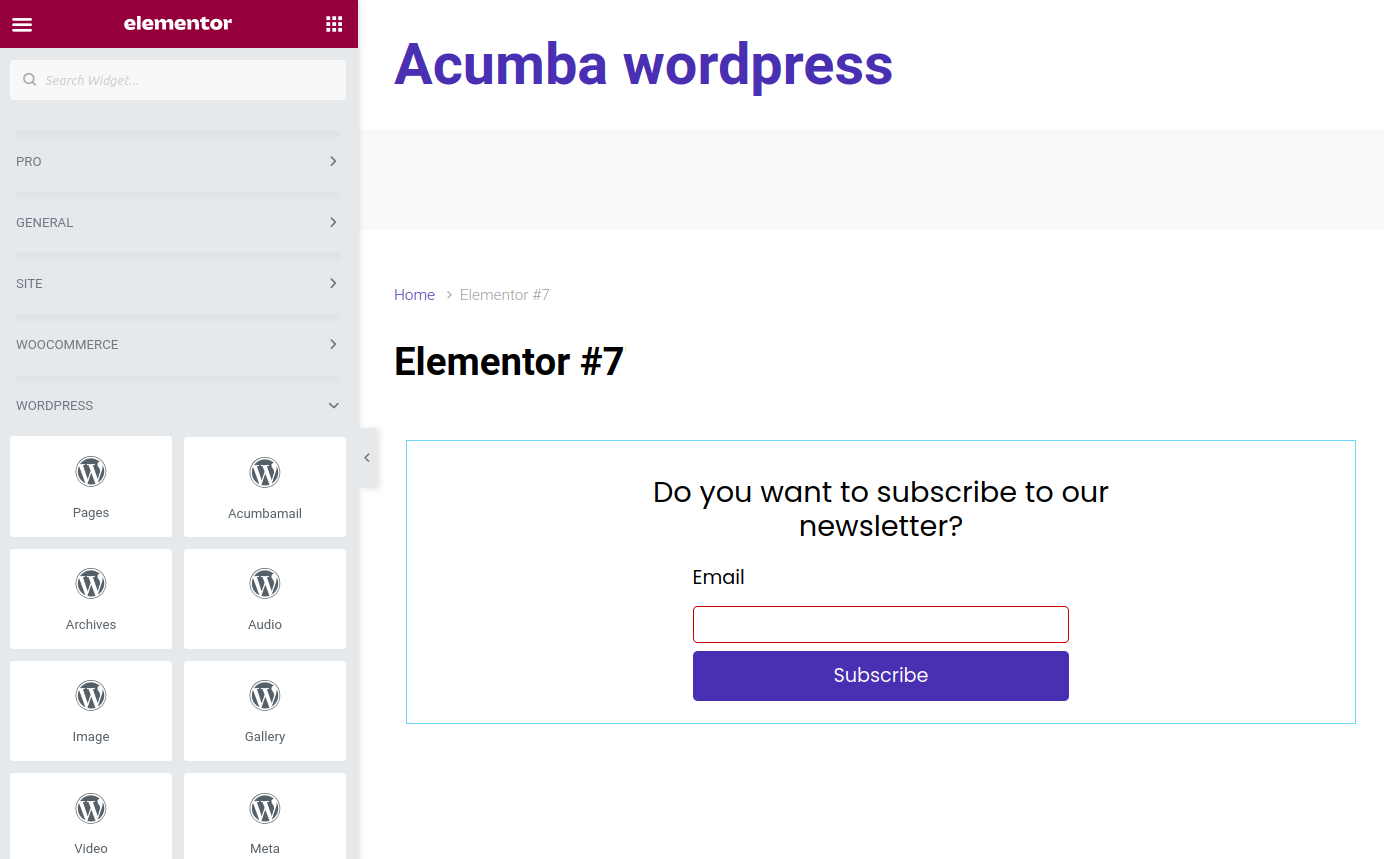
Acumbamail lists 16 native integrations focused on common SMB tools: WooCommerce, Shopify, PrestaShop, Magento for ecommerce; WordPress for CMS; Google Analytics for tracking; and Zapier as the primary middleware bridge.
Source: Acumbamail
No native connections to HubSpot, Salesforce, Zoho CRM, or Pipedrive exist. Capterra reviewers describe the integration footprint as "very low." For businesses running their marketing stack through a handful of Spanish-market tools, this is workable. For companies with complex tech stacks, it's a constraint.
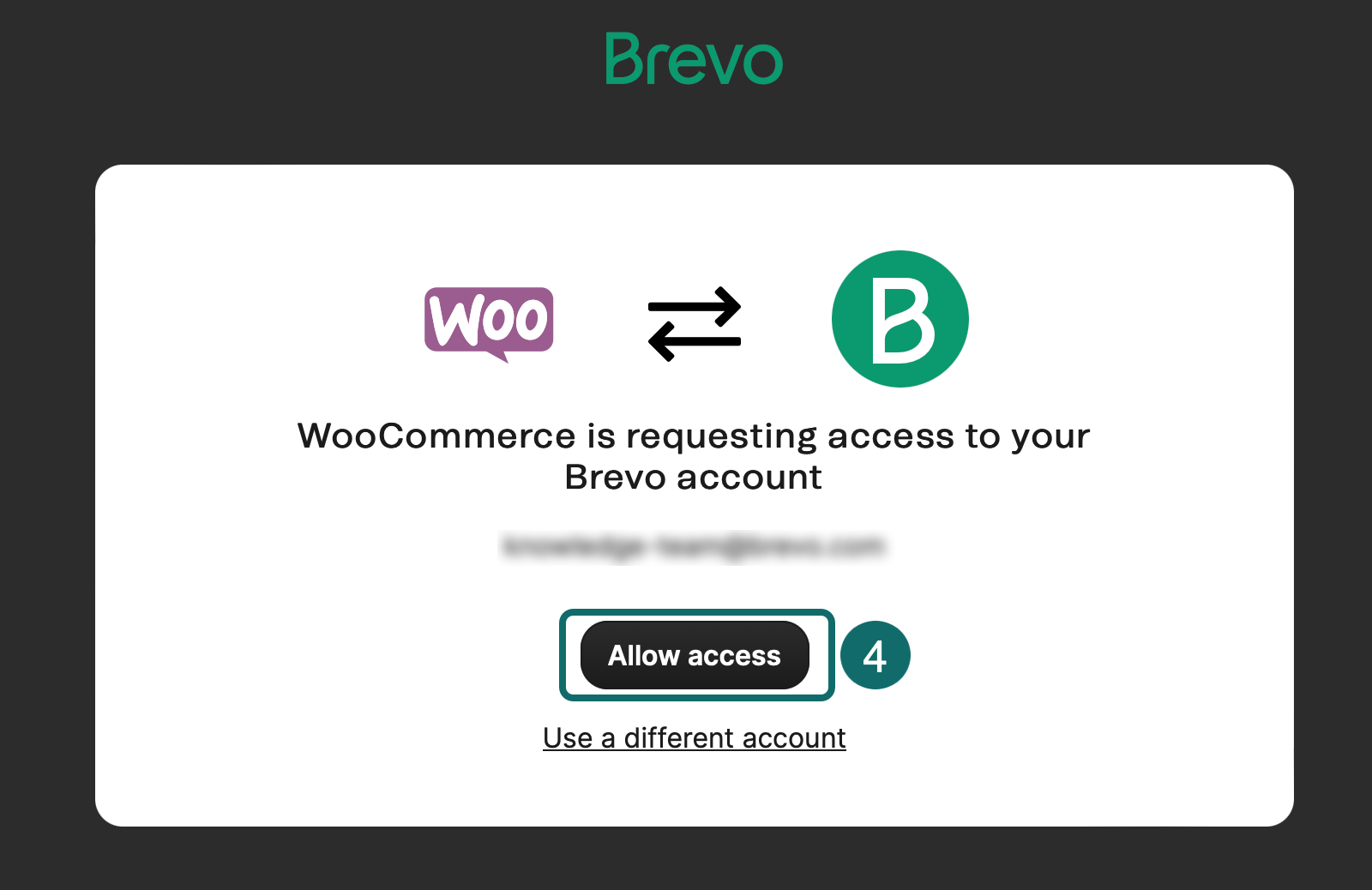
Brevo connects to 150+ tools via its marketplace, spanning Shopify, WooCommerce, BigCommerce, WordPress, Salesforce, Stripe, Zapier, and Make.
Source: Brevo
The REST API covers the full platform programmatically, with official SDKs for Node.js, Python, PHP, Java, C#, Go, and Ruby. Brevo's MCP server lets AI assistants like Claude connect to campaign data. For teams that need their email platform to talk to a CRM, an ecommerce platform, and an analytics tool at the same time, Brevo's ecosystem is broader.
ZoomInfo operates at a different level of the stack.
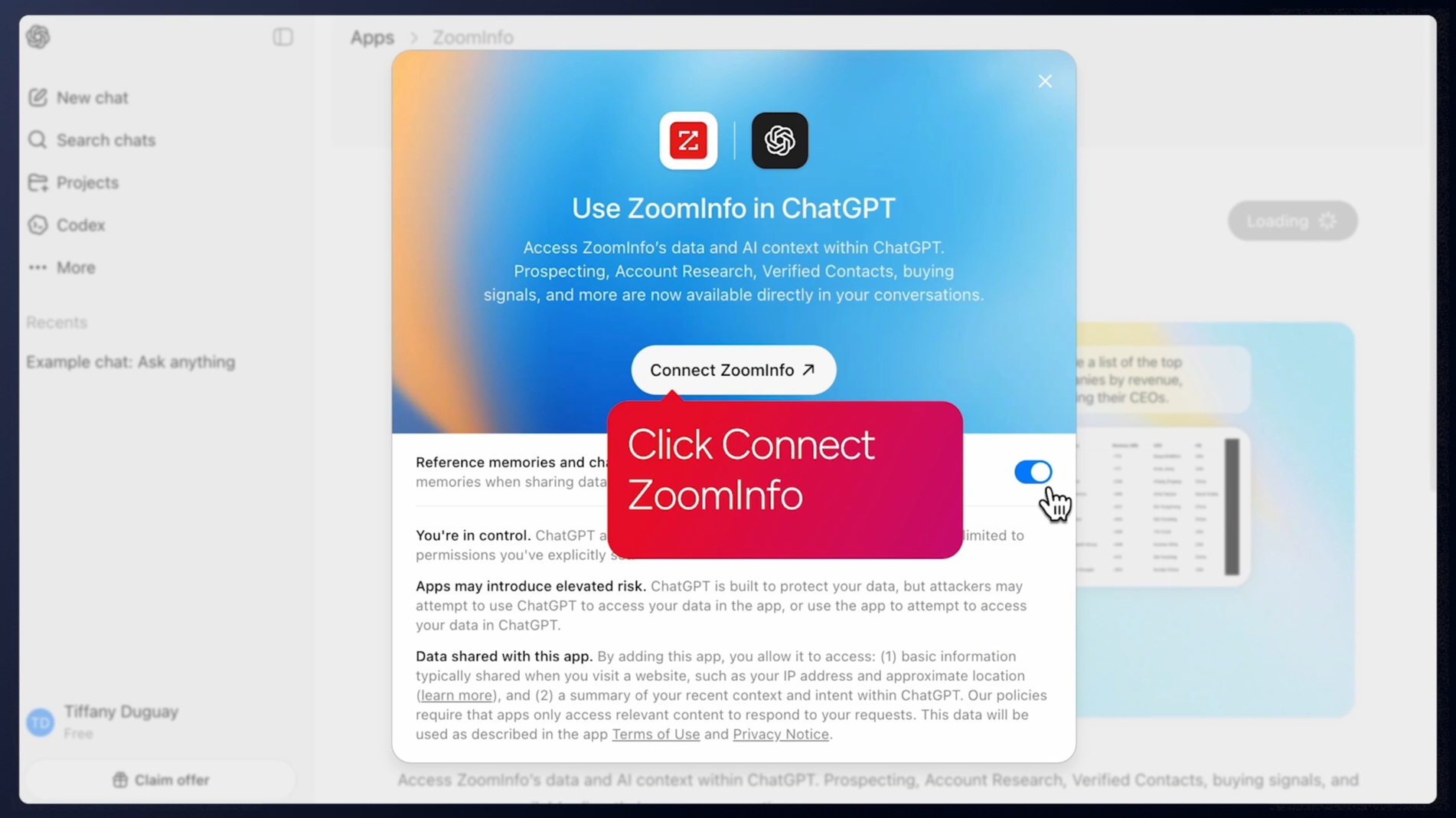
The ZoomInfo Marketplace lists 172+ integration partners, including native connectors for Salesforce, HubSpot, Microsoft Dynamics 365, Snowflake, and Databricks. The Enterprise API provides programmatic access to contact, company, intent, and intelligence data. The MCP server connects ZoomInfo's data to AI agents like Claude and ChatGPT.
Source: ZoomInfo
Rather than competing with email platforms for integrations, ZoomInfo feeds verified contact data and intent signals into whatever tools a team already uses.
"The plug-and-play aspect of the API means I can integrate it very easily into any process and get information at a moment's notice." (Jerry Wilson, Senior Marketing Intelligence Analyst, BDO Canada)
Deliverability and data compliance
Both email platforms take deliverability and compliance seriously, but their approaches reflect their target markets.
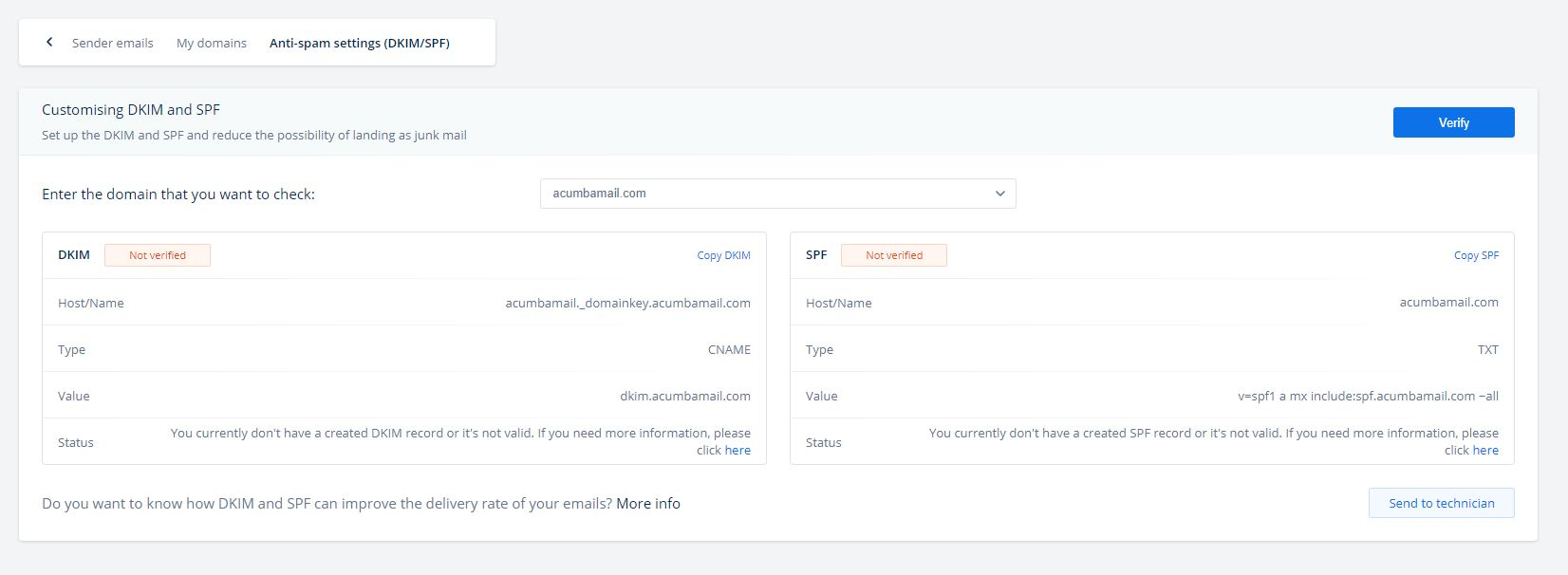
Acumbamail builds deliverability into the technical layer with DKIM, SPF, and DMARC support, updated to address the February 2024 Gmail/Yahoo DMARC mandate.
Source: Acumbamail
The Pro plan includes a campaign quality checker that runs SpamAssassin analysis, link verification, prohibited-words checks, and SPF/DKIM verification before sends. The list quality analysis tool flags purchased databases, spam traps, and blacklisted addresses.
For compliance, the combination of GDPR and ENS certification with Spanish-hosted infrastructure (ISO 9001, ISO 27001, ISO 22301 certified data centers) eliminates the data-transfer complexity that trips up companies using US-hosted platforms in European regulated industries.
Brevo claims a 99% email delivery rate on its enterprise page, with dedicated IPs available for high-volume senders on Enterprise plans.
The platform supports GDPR, CCPA, and CASL compliance natively, with double opt-in, consent records, and data request management built in. ISO 27001:2022 certification covers platform security. However, Capterra reviewers report an overly sensitive suspension algorithm that pauses campaigns even with healthy open rates of 25-41%, and slow support response when resolving suspensions.
ZoomInfo approaches deliverability from a different angle.
Source: ZoomInfo
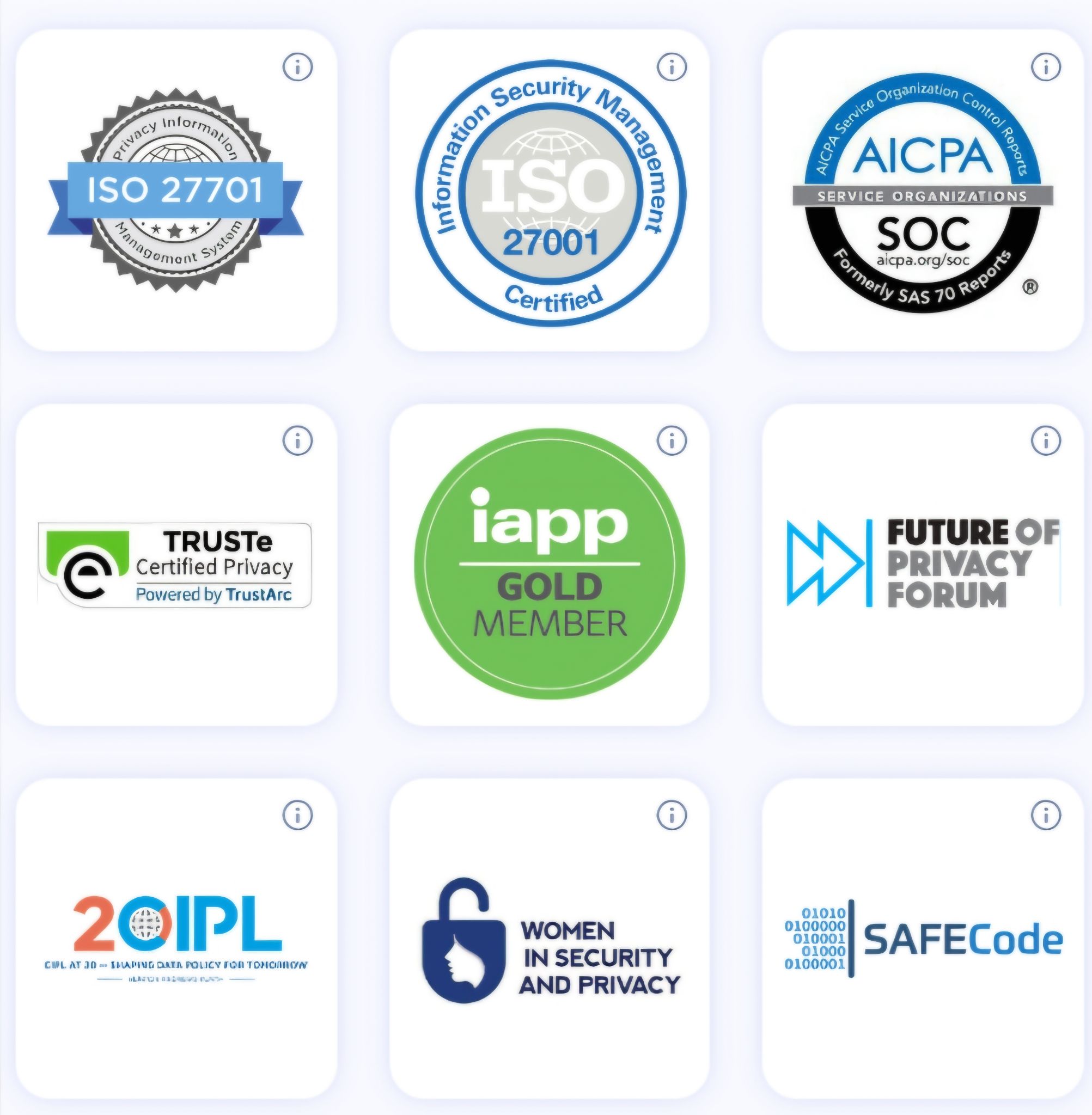
Rather than sending emails, it ensures the contacts you're sending to are accurate. The data verification pipeline uses NLP, AI, ML, and 300+ human researchers to maintain up to 95% accuracy on first-party data. For compliance, ZoomInfo holds ISO 27001, ISO 27701, SOC 2 Type II, TRUSTe GDPR, and TRUSTe CCPA certifications, all renewed annually.
Support reflects each platform's scale
Acumbamail includes phone, chat, and email support from the Basic plan upward.
Enterprise customers get priority support and a dedicated account manager. The team of 13 employees means you're working with people who know the product well. The downside: a notable share of Capterra reviews report no response to inquiries and slow resolution, suggesting support consistency varies.
Brevo tiers support by plan.
Free and Starter get email support in six languages. Professional adds phone support and a dedicated Deliverability Specialist. Enterprise gets a Customer Success Manager and tailored onboarding. G2 recognized Brevo with a "Best Support Enterprise Quality of Support" award.
The Help Center, developer docs, and community forum provide self-service resources. The trade-off: lower-tier customers report slower response times, and deliverability suspension issues can take time to resolve.
ZoomInfo provides support through a Help Center, ZoomInfo University with role-specific learning paths, and direct support via phone and contact form.

Enterprise customers get a dedicated account manager. The company redesigned its onboarding program from 30 to 90 days, producing a 25% improvement in customer satisfaction and winning Rocketlane's Golden Comet award. Gartner Voice of the Customer (2025) positioned ZoomInfo as the only vendor in the Customers' Choice quadrant, with a 4.7/5.0 average rating.
Acumbamail vs. Brevo vs. ZoomInfo: Which should you choose?
The right choice depends on what problem you're solving.
Choose Acumbamail if:
Your business operates primarily in Spain or Spanish-speaking markets
You need ENS-certified, Spanish-hosted infrastructure for public-sector or regulated-industry procurement
Your email marketing is newsletters and promotional campaigns, not complex behavioral automation
You want an affordable platform where a non-technical marketer can build and send campaigns independently
You need a white-label solution to resell email marketing to your agency clients
Choose Brevo if:
You want email, SMS, WhatsApp, live chat, CRM, and loyalty in one platform
You have a large contact list but moderate send frequency (unlimited contacts on every plan)
You need marketing automation with cross-channel workflows
Your business operates globally and needs a platform available in six languages
You're looking for a more affordable alternative to HubSpot with similar breadth
Add ZoomInfo if:
Your B2B campaigns need to reach verified decision-makers, not outdated contacts
You want to know which companies are researching your solution category before you email them
You're spending money on email marketing but can't tell if you're reaching the right accounts
You need to build targeted lists based on company attributes, technographics, and buyer intent signals
You want one intelligence layer that feeds accurate data into whatever email platform, CRM, or AI tool you use
See how ZoomInfo's B2B data and intent signals can sharpen your email marketing targeting.
"ZoomInfo gives us the information we need to execute. We don't have to go through and spend our time digging. It's already there, so we can be three steps ahead." (William Kenimer, VP of Revenue Operations, Vensure)
Acumbamail and Brevo are both capable email marketing platforms, each designed for a different buyer. Acumbamail delivers simplicity and Spanish-market compliance at a price that's hard to beat. Brevo delivers breadth and global scale with a pricing model that rewards large lists.
But for B2B teams, the platform that sends your emails is only half the equation.
The data that determines who receives those emails, whether those contacts are verified, and whether those companies are in-market right now is what separates campaigns that generate pipeline from campaigns that generate unsubscribes. That's the layer ZoomInfo provides, and it works with whatever email platform you choose.
Acumbamail vs. Brevo vs. ZoomInfo FAQ
What is the key difference between Acumbamail and Brevo?
Acumbamail is a focused email and SMS marketing platform built for the Spanish market, with local compliance credentials (ENS certification, Spanish-hosted infrastructure) and straightforward pricing starting at €24/month.
Brevo is a broader customer engagement platform covering email, SMS, WhatsApp, live chat, CRM, loyalty, and push notifications with unlimited contacts on every plan, targeting global businesses that want to consolidate multiple marketing tools into one.
How does ZoomInfo relate to Acumbamail and Brevo?
ZoomInfo is not an email marketing platform. It's a B2B data intelligence and GTM platform that provides the contact data, company intelligence, and buyer intent signals that make your email campaigns more effective. ZoomInfo tells you who to email and when they're ready to buy.
Acumbamail or Brevo handles the campaign creation, delivery, and reporting. They work together as complementary tools in a B2B marketing stack.
Which platform is cheapest for a small business?
Acumbamail and Brevo both offer permanent free plans. Acumbamail's free plan includes 2,000 emails per month for up to 250 subscribers. Brevo's free plan allows 300 emails per day with unlimited contacts but no automation or A/B testing.
For paid plans, Brevo Starter begins at $9/month for 5,000 emails, while Acumbamail Basic starts at €24/month for 20,000 emails. Which is cheaper depends on your list size and send frequency.
Which platform has better marketing automation?
Brevo has stronger automation than Acumbamail. Brevo offers a visual workflow builder with triggers based on list entry, form submission, link clicks, and cart abandonment, plus cross-channel automation spanning email, SMS, and WhatsApp.
Acumbamail's automation lacks conditional branching, date-based triggers, and click-based behavioral journeys, which limits its usefulness for anything beyond basic autoresponder sequences.
Can I use ZoomInfo with Acumbamail or Brevo?
ZoomInfo integrates with CRMs (Salesforce, HubSpot, Dynamics 365) and marketing platforms through its API and MCP server, so data enriched and lists built in ZoomInfo can flow into whatever system feeds your email platform. ZoomInfo also delivers data through APIs into any custom workflow. While there is no direct native integration with Acumbamail or Brevo, ZoomInfo data can reach either platform through CRM syncs, Zapier workflows, or API-based data pushes.
Which platform is best for ecommerce businesses?
Brevo is the stronger choice for ecommerce, with native integrations for Shopify, WooCommerce, BigCommerce, PrestaShop, and Magento, plus built-in abandoned cart recovery, product recommendations, and a loyalty program.
Acumbamail integrates with WooCommerce, Shopify, PrestaShop, and Magento for subscriber sync but lacks the depth of ecommerce-specific automation that Brevo provides.
ZoomInfo is designed for B2B rather than B2C ecommerce.
Is Acumbamail a good option for businesses outside Spain?
Acumbamail operates in Spanish, English, and Italian and serves 145,000 users across 45 countries. However, Capterra reviewers note that the platform defaults to Spanish on every login, some UI elements remain Spanish-only, and support replies occasionally arrive in Spanish for English inquiries.
For businesses outside the Spanish-speaking world, Brevo's six-language platform and global infrastructure provide a smoother experience.
How do the platforms handle transactional email?
Both Acumbamail and Brevo support transactional email via SMTP relay. Acumbamail provides SMTP at smtp.acumbamail.com with multiple port options and webhook event delivery, but transactional sending requires a volume-based or prepaid-credit plan and must be enabled by support.
Brevo includes full transactional API access on every plan including Free, with REST API and SMTP relay options, batch sending up to 1,000 personalized versions per request, and a claimed 99% delivery rate at 120,000 emails per minute.
