
Choosing between Adobe Campaign and Marketo comes down to five questions:
Are you running B2C campaigns at scale, or orchestrating B2B demand generation with long sales cycles?
Do you need to coordinate email, SMS, push, and direct mail from one workflow, or do you need lead scoring, nurture streams, and CRM-native sales handoffs?
Is your marketing team technically self-sufficient, or do you need a platform a dedicated admin can own without a systems integrator?
Are you already invested in the Adobe ecosystem, and if so, which parts?
Does your strategy depend on knowing who to target and when they're in-market, or just on executing campaigns once you already know?
In short, here's what we recommend:
Adobe Campaign serves large B2C enterprises that need to coordinate high-volume, multi-channel campaigns from one orchestration engine. Its Snowflake-backed architecture handles up to 20 million operations per hour and 1 million transactional messages per hour, with a visual workflow canvas connecting email, SMS, push, direct mail, and offline channels.
It's a Managed Cloud Service with Adobe Experience Platform integration. The trade-off: Campaign requires significant implementation investment, has no self-serve path, and lacks native B2B capabilities like lead scoring or account-based marketing.
Marketo (officially Adobe Marketo Engage) is the enterprise standard for B2B marketing automation. Its Smart Campaigns, multi-dimensional lead scoring, engagement programs with content exhaustion logic, and native Salesforce sync make it the platform demand generation teams choose for complex buying cycles.
Marketo handles both lead-based and account-based marketing natively, with features like Dynamic Chat, Interactive Webinars, and multi-touch revenue attribution (via Marketo Measure). The downsides: a steep learning curve, a dated interface, and a batch-based architecture that can introduce latency in lead routing.
Both platforms are marketing execution engines. But execution is only half the equation. The other half is knowing who to target, when they're ready to buy, and what signals matter. That's the intelligence layer, and it's where most marketing stacks have a gap.
ZoomInfo is an AI-powered GTM platform that provides the B2B data and intelligence foundation both Campaign and Marketo need. With 500M contacts, 100M companies, 135M+ verified phone numbers, and 200M+ verified business emails, ZoomInfo gives marketing teams verified targeting data for audience segmentation.
Its GTM Context Graph processes 1.5B+ data points daily, combining your CRM records, conversation transcripts, and behavioral signals with ZoomInfo's third-party intelligence to reveal not just who your buyers are, but when they're in-market and why they're likely to convert.
That intelligence flows into your marketing platform through APIs and MCP, into seller workflows via GTM Workspace, or through GTM Studio for marketers building and launching GTM plays.
If building your campaigns on verified data and real-time buying signals sounds like the missing piece, see how ZoomInfo works with your marketing stack.
Adobe Campaign vs. Marketo vs. ZoomInfo at a glance
Adobe Campaign | Marketo Engage | ZoomInfo | |
|---|---|---|---|
Primary focus | B2C cross-channel campaign execution | B2B marketing automation & demand gen | B2B data, intelligence & GTM orchestration |
Target buyer | Enterprise B2C marketers | Mid-market & enterprise B2B marketers | Sales, marketing, and RevOps teams |
Lead scoring | Not native | Multi-dimensional, behavioral + firmographic | Account Fit Score, Predictive Engagement Score |
ABM capabilities | None | Native lead-to-account mapping & scoring | Native ABM platform (Gartner MQ Leader) |
CRM integration | Salesforce, Microsoft Dynamics (bidirectional) | Salesforce, Microsoft Dynamics (native sync) | Salesforce, HubSpot, Microsoft Dynamics + 120+ integrations |
Channel coverage | Email, SMS, push, direct mail, in-app, WhatsApp | Email, web, mobile, SMS, ads, webinars, chat | Display ads, email sequences, website chat, multi-channel plays |
AI capabilities | AI Assistant for content, predictive send-time | GenAI Email Designer, Dynamic Chat AI | GTM Context Graph, AI agents in Workspace & Studio |
Throughput | 20M operations/hour, 1M transactional/hour | Enterprise-grade with documented guardrails | 1.5B+ data points processed daily |
Free trial | None | None | 7-day trial + permanent free tier (ZoomInfo Lite) |
Pricing model | Enterprise contract (not published) | Contact-volume subscription (not published) | Consumption-based (custom quoted) |
Learning curve | Steep; requires implementation partner | Steep; requires dedicated admin | Moderate; 90-day structured onboarding |
Same parent company, different platforms
Here's what makes this comparison unusual: Adobe owns both products.
Adobe Campaign traces back to Neolane, a French marketing automation company founded in 2001 and acquired by Adobe for $600 million in 2013.
Marketo was founded in 2006, went public in 2013, and was acquired by Adobe for $4.75 billion in 2018, the largest acquisition in Adobe's history.
Despite sharing a parent, these platforms serve different markets by design. Adobe's own documentation positions Campaign as distinct from Marketo Engage: Campaign handles B2C outbound marketing at scale, while Marketo handles B2B lead management. They're not interchangeable. The choice depends on whether your marketing motion is consumer-facing or business-to-business.
For B2B organizations, Marketo is the clear choice between the two Adobe products. But neither platform solves the upstream problem of knowing who to target and when they're ready to engage. That's where ZoomInfo enters the stack, not as a replacement for either, but as the intelligence layer that makes both more effective.
Campaign execution vs. demand generation: two different jobs
Adobe Campaign and Marketo solve different marketing problems.
Adobe Campaign excels at high-volume, multi-channel campaign orchestration for B2C businesses.
Think telecom companies sending millions of promotional SMS messages, retailers coordinating email and direct mail for seasonal campaigns, or financial services firms triggering transactional notifications at scale.
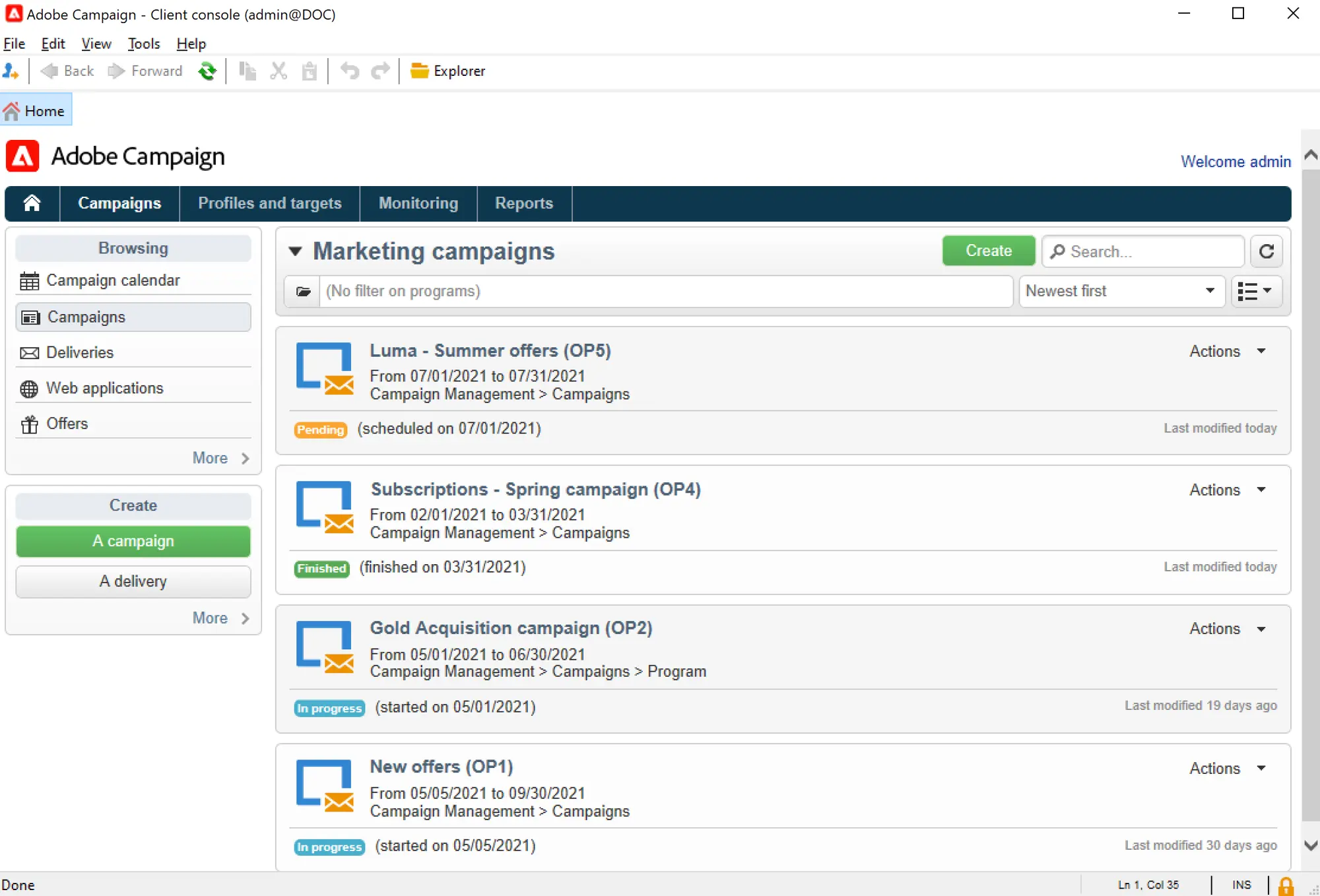
The platform's visual workflow engine lets marketers build multi-step, multi-channel campaigns with branching logic, approval flows, and scheduling from a single canvas. Its Plan, Program, Campaign hierarchy maps directly to how large marketing organizations manage annual budgets and objectives.
Source: Adobe Campaign
Marketo is built for the B2B buying cycle.
Its Smart Campaign engine combines triggers (real-time events like form fills or page visits) with filters (demographic and behavioral criteria) to automate the entire lead lifecycle: capture, scoring, nurturing, and sales handoff.
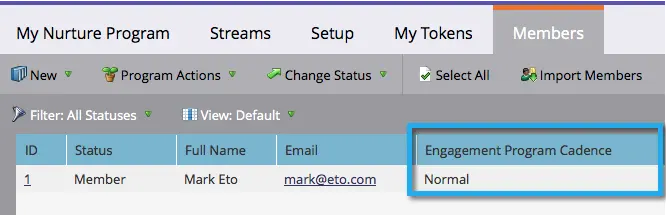
Engagement Programs deliver structured nurture sequences with content exhaustion logic, meaning the platform detects when a lead has consumed all available content in a stream and flags them for the next action.
Source: Adobe
The distinction matters because the two platforms are optimized for different data models. Campaign organizes around recipients and deliveries. Marketo organizes around leads, accounts, and programs. Forcing one to do the other's job creates unnecessary complexity.
Lead scoring and sales alignment: Marketo's home turf
Adobe Campaign has no native lead scoring.
It sends messages to audiences you've already defined. Identifying which contacts are sales-ready and routing them to reps requires external tooling or manual processes.
Marketo treats lead scoring as a core function.
Marketing teams build multi-dimensional scoring models that weight behavioral signals (email opens, page visits, webinar attendance) and demographic attributes (job title, company size, industry). Scores update automatically through Smart Campaign flow steps, and threshold-based triggers can alert sales reps or create CRM tasks the moment a lead qualifies.
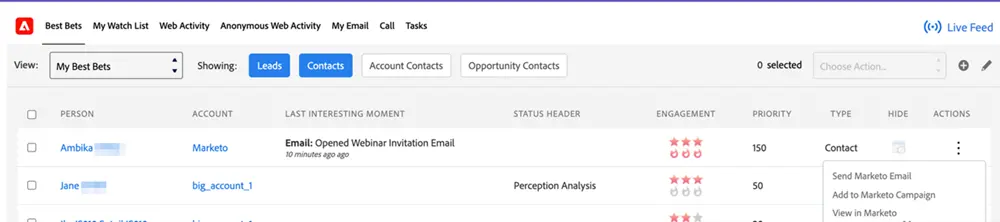
Marketo's Sales Insight extends this into the CRM itself, surfacing engagement data, scoring history, and a prioritized Best Bets list inside Salesforce. Reps see which leads are active, what content they've consumed, and what campaigns they're enrolled in, without leaving their workflow.
Source: Adobe
For a deeper look at Marketo's full feature set and how it holds up in practice, see our Marketo review.
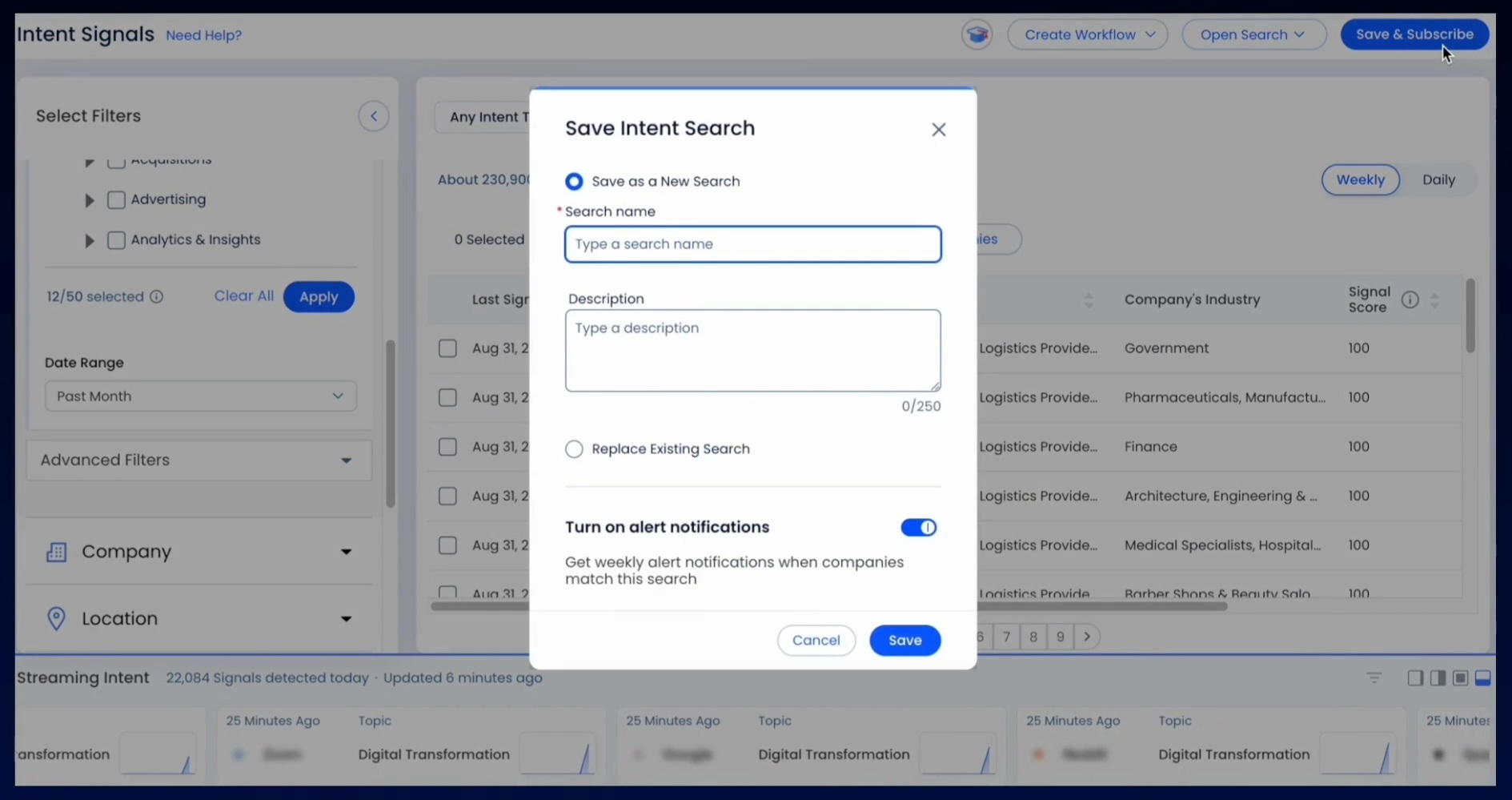
ZoomInfo adds a dimension neither Adobe product provides natively: verified contact data and buying signals that feed scoring models from the outside.
ZoomInfo's buyer intent data, drawn from 210 million IP-to-Organization pairings and 6 trillion+ keyword-to-device pairings monthly, reveals when target accounts are actively researching solutions. Guided Intent, exclusive to ZoomInfo, identifies topics historically correlated with deal success rather than requiring manual topic selection.
Source: ZoomInfo
These signals flow into Marketo's scoring models through native integrations, giving marketing teams a richer picture of buyer readiness than behavioral data alone.
Seismic's sales team attributed 39% of active pipeline to opportunities identified or influenced by ZoomInfo signals, boosted productivity by 54%, and saved 11.5 hours per week. (Seismic Case Study)
Account-based marketing capabilities
Adobe Campaign was designed for B2C audience segmentation, not account-based marketing.
It has no native lead-to-account mapping, no account-level engagement scoring, and no buying group identification. Organizations running ABM programs through Campaign would need to build the account logic externally and push pre-built segments into Campaign for execution.
Marketo supports both lead-based and account-based strategies within the same platform.
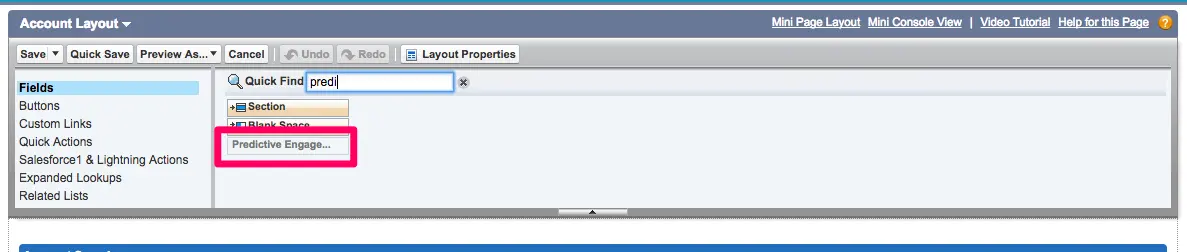
Its Predictive Engagement Score uses a lead-to-account mapping hierarchy with eight methods to associate individual contacts with their parent accounts, then scores accounts based on page views, engagement recency, and buying history. Adobe is also positioning Journey Optimizer B2B Edition as a buying group orchestration complement to Marketo.
Source: Adobe
ZoomInfo is a Gartner Magic Quadrant Leader for ABM Platforms in both 2024 and 2025.
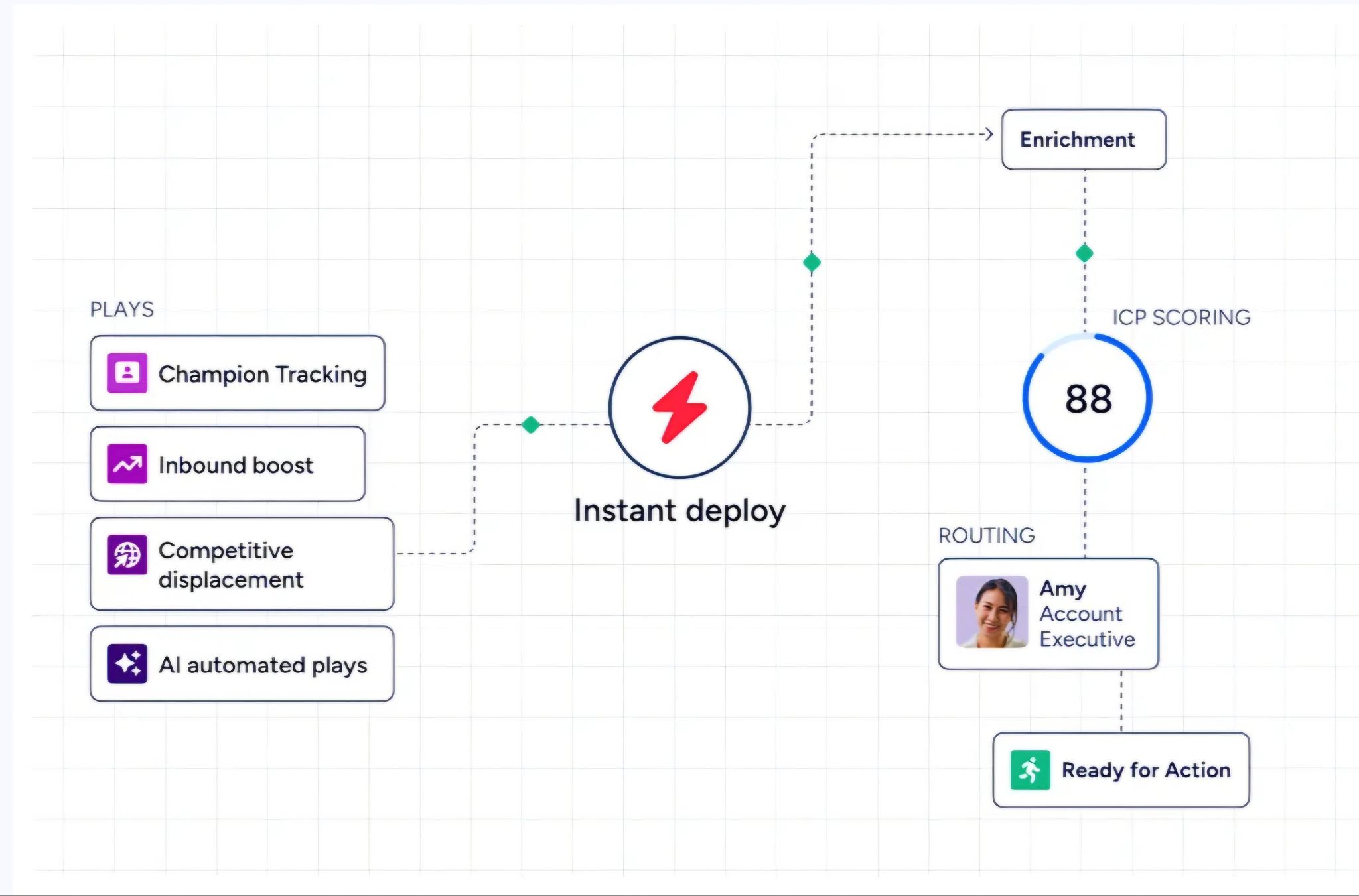
Where Marketo's ABM capabilities rely on data already in the system, ZoomInfo brings the external intelligence that makes ABM targeting precise: technographic profiles of 30+ million companies, org chart data with verified direct dials, and intent signals that reveal which accounts are researching your category.
Through GTM Studio, marketers describe target audiences in plain language, launch multi-channel plays against accounts matching proven win patterns, and measure pipeline impact, all without engineering support.
Source: ZoomInfo
Impartner saw a 45% increase in website engagement and saved 15 hours through automation after implementing ZoomInfo for account-based marketing. (Impartner Case Study)
Data management and audience segmentation
The two Adobe platforms handle customer data differently, but both assume you already have the data.
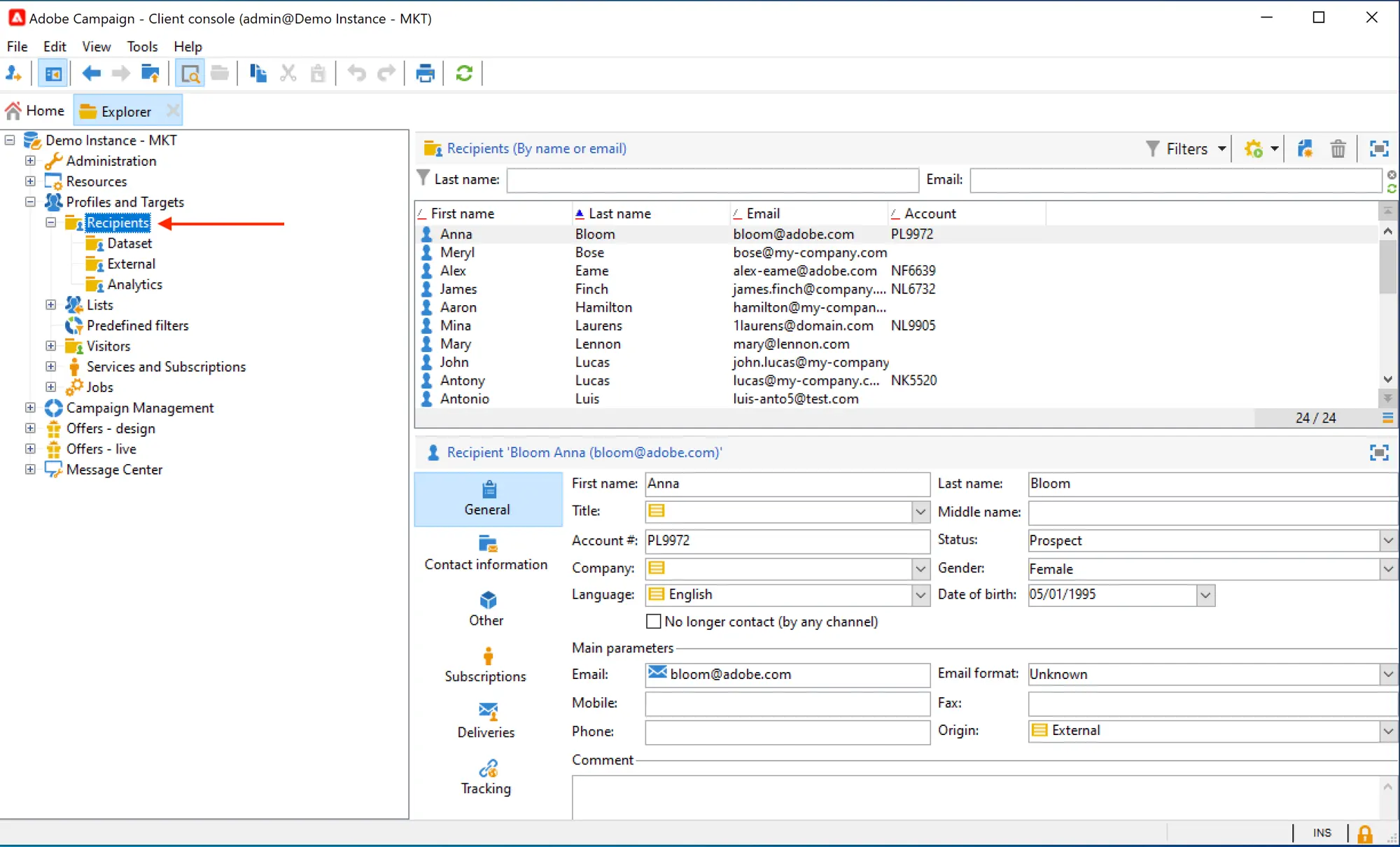
Adobe Campaign's v8 architecture stores all data in Snowflake via Full Federated Data Access, enabling it to query and segment millions of profiles in minutes.
Its Federated Data Access connector lets Campaign read from external databases without moving data into Campaign's schema, which matters for enterprises with data residency constraints. The segmentation engine handles large-scale queries, but it operates on whatever data you've loaded. Campaign itself doesn't source or verify contact data.
Source: Adobe
Marketo manages profiles through its lead database with bidirectional CRM sync for Salesforce and Microsoft Dynamics.
Smart Lists provide 150+ filters for segmentation across behavioral, demographic, and firmographic attributes. Marketo enriches profiles better than Campaign through web tracking and form captures, but it still depends on external sources for the initial quality and completeness of its database.
ZoomInfo solves the data quality problem both platforms inherit.
Its multi-source verification pipeline, backed by 300+ human researchers and achieving up to 95% accuracy on first-party data, ensures that contact and company data flowing into either Campaign or Marketo is current and verified.
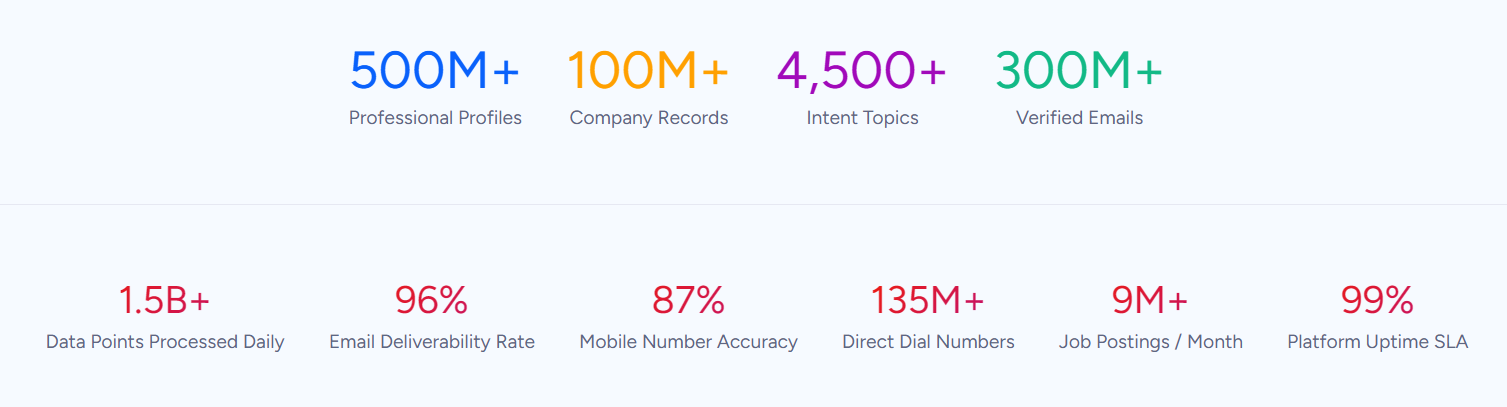
ZoomInfo Operations provides automated deduplication, multi-vendor enrichment from roughly 60 vendors, and entry-point validation that blocks bad data before it enters the system. For Marketo users, ZoomInfo is available through LaunchPoint, feeding enriched contacts, firmographics, and intent signals directly into the lead database.
SpringDB used ZoomInfo's enriched data for precise client targeting, achieving 2x to 3x increases in campaign conversions across channels and a 300% increase in database usability. (SpringDB Case Study)
AI capabilities: content generation vs. GTM intelligence
All three platforms invest in AI, but for different purposes.
Adobe Campaign embeds AI Assistant in the Campaign Web UI, powered by Microsoft Azure OpenAI and Adobe Firefly.
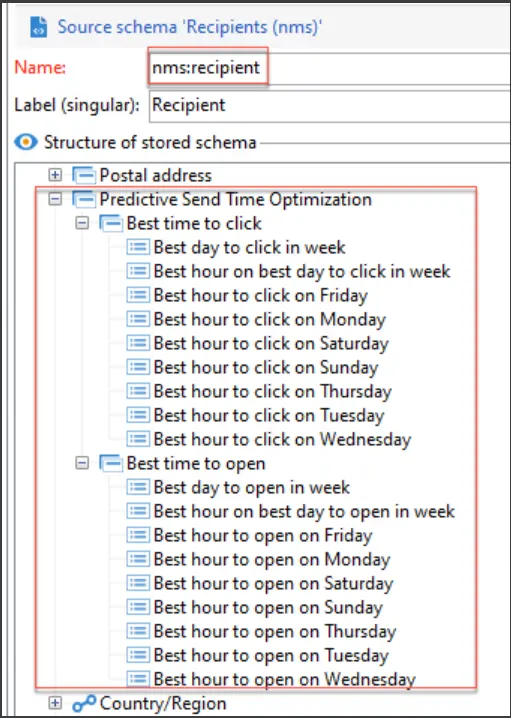
It generates email, SMS, and push content from a prompt and optional brand assets, with Content Credentials for AI provenance tracking. Campaign also offers Predictive Send-Time Optimization at the individual profile level, computing optimal send windows across all seven days per recipient.
Source: Adobe
These predictive features require Managed Cloud Services and Adobe Consulting engagement; they're not available out of the box.
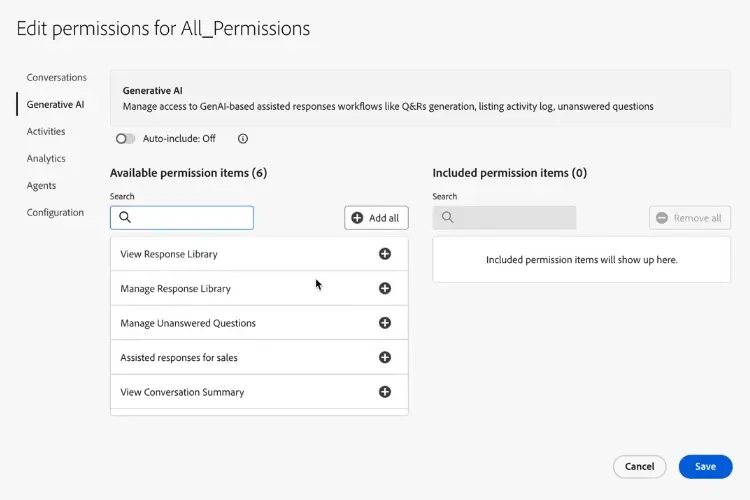
Marketo introduced a GenAI-powered Email Designer with AI Assistant that generates subject lines, section copy, and full emails using buying group role, journey stage, and communication strategy as structured inputs.
Dynamic Chat includes a Generative Response Card trained on a pre-approved Response Library. Adobe has also announced an Agentic Lead Orchestration engine that uses AI to generate and optimize lead marketing journeys.
Source: Adobe
ZoomInfo's AI operates at a different level. Rather than generating marketing content, the GTM Context Graph processes 1.5B+ data points daily to understand deal dynamics: why a deal advanced, why a champion went quiet, which signal combinations predict closed-won outcomes.
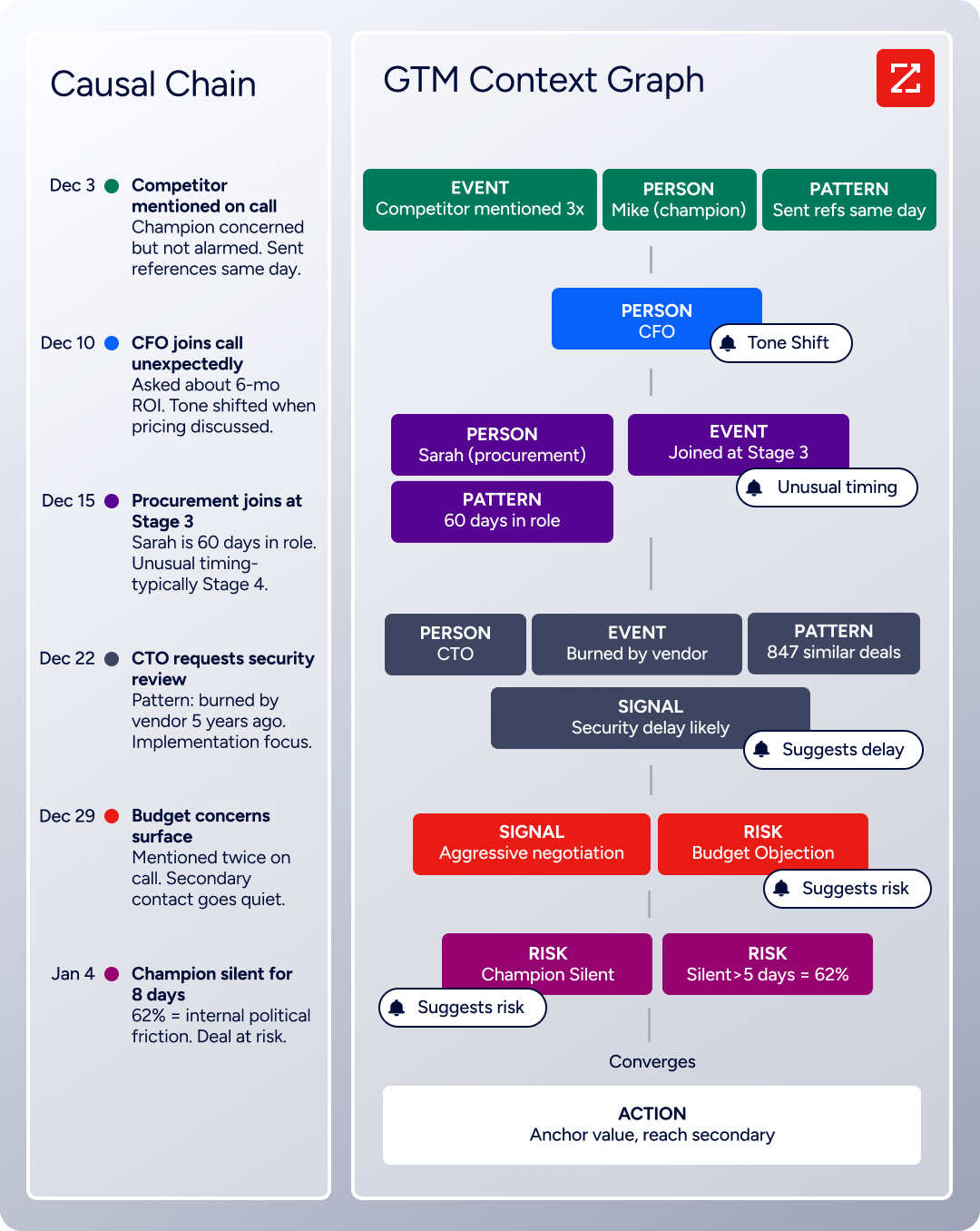
In GTM Workspace, AI agents handle account research, outreach drafting, CRM updates, and signal monitoring. In GTM Studio, marketers use natural language to build audiences and launch plays that improve as prospects respond.
The distinction matters: Campaign and Marketo use AI to create and optimize content. ZoomInfo uses AI to understand markets, accounts, and buying behavior, then delivers that intelligence into whatever execution platform you use.
Channel coverage comparison
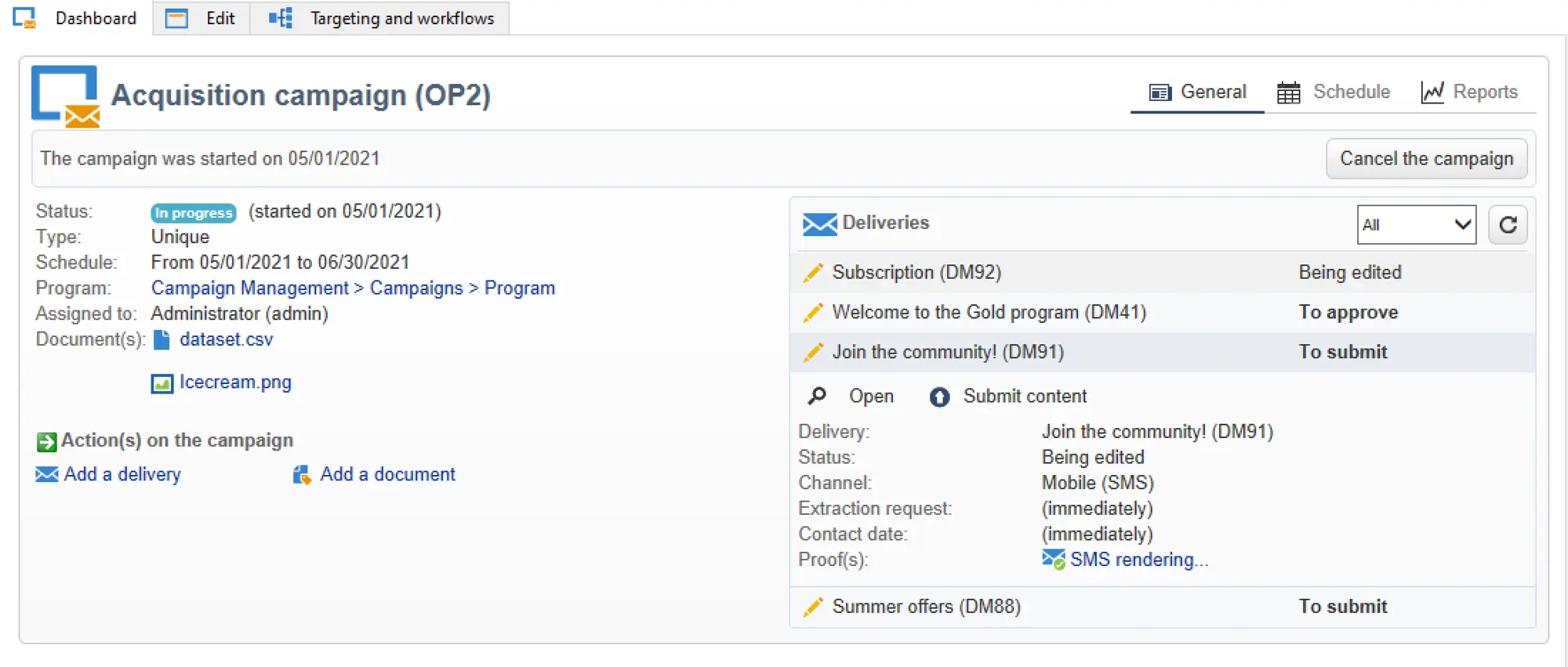
Adobe Campaign has the broadest channel coverage in this comparison.
Its workflow engine natively orchestrates email, SMS, push notifications, direct mail, in-app messaging, and WhatsApp from a single canvas, with offline channels (call center, in-store) treated as first-class delivery channels. For enterprises running coordinated online-offline campaigns, this orchestration is Campaign's primary value.
Source: Adobe
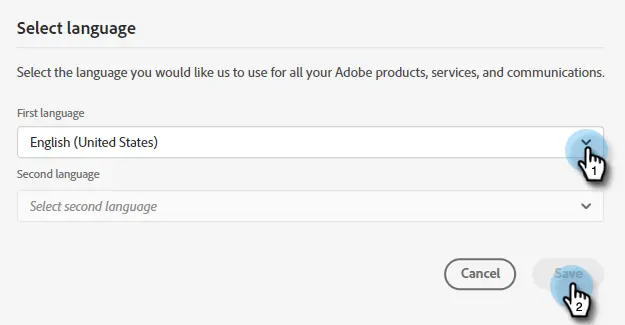
Marketo covers email, web, mobile push, SMS, social, and ads, with two notable additions.
Dynamic Chat provides native AI-powered chatbot and live chat capabilities with direct integration into lead records and Smart Lists. Interactive Webinars (powered by Adobe Connect) eliminates the need for a separate webinar platform, capturing attendee engagement data (poll responses, Q&A participation, link clicks) as structured Marketo activity records. No separate subscription required.
Source: Adobe
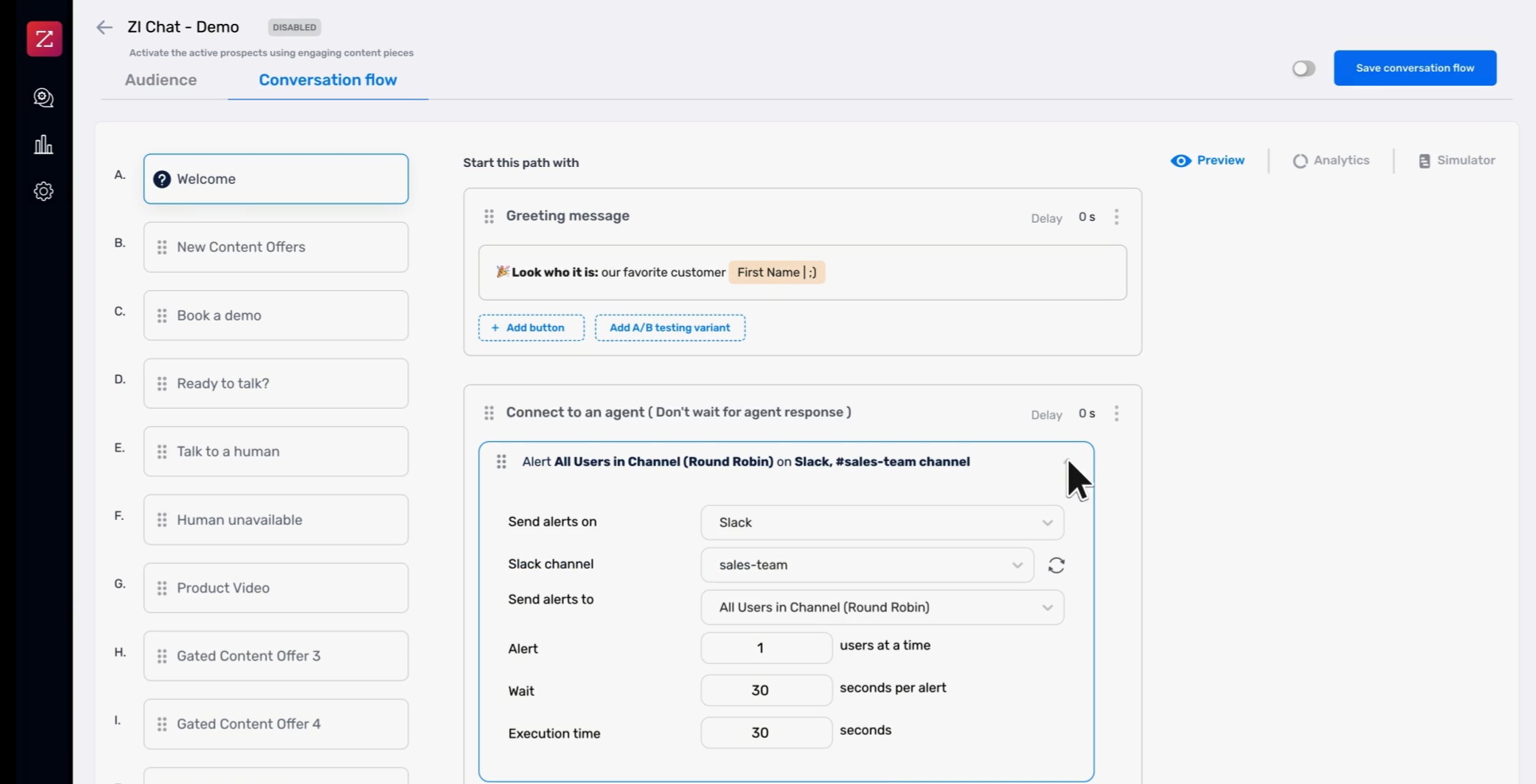
ZoomInfo extends channel reach through its native Demand-Side Platform for display advertising, multi-channel outreach workflows, and Website Chat that identifies the company behind anonymous visitors before they self-identify.
Source: ZoomInfo
ZoomInfo's channel capabilities are particularly valuable paired with a marketing automation platform: intent signals detected by ZoomInfo trigger campaigns in Marketo or Campaign, creating a closed loop between intelligence and execution.
Pricing and total cost of ownership
None of these platforms publish pricing, so evaluating cost requires understanding each commercial model.
Adobe Campaign is sold exclusively as an enterprise Managed Cloud Service under negotiated contracts.
The platform is structured into four packages (P1 through P4), determined through a consultative sales process. Beyond the license fee, expect implementation and consulting fees, support and deliverability packages, and mid-sourcing infrastructure costs. There is no free trial, no freemium tier, and no self-serve option. G2 reviewers consistently flag high cost as a barrier.
Marketo uses a contact-volume subscription across four tiers: Grow, Select, Prime, and Ultimate.
Key features are tier-gated: sandboxes require Prime or above, Marketo Measure (attribution) requires Ultimate, and Dynamic Chat's full GenAI features require a separate Prime add-on. Add-ons for Sales Insight, Website Personalization, additional API calls, and dedicated IPs add to the total.
Reviewers note that the cost-to-value equation works only at scale, and fast-growing companies can be penalized as their contact database expands.
For a detailed breakdown of what each Marketo tier includes and how costs scale, see our Marketo pricing guide.
ZoomInfo uses consumption-based pricing scaled around data access, API consumption, and AI activity.
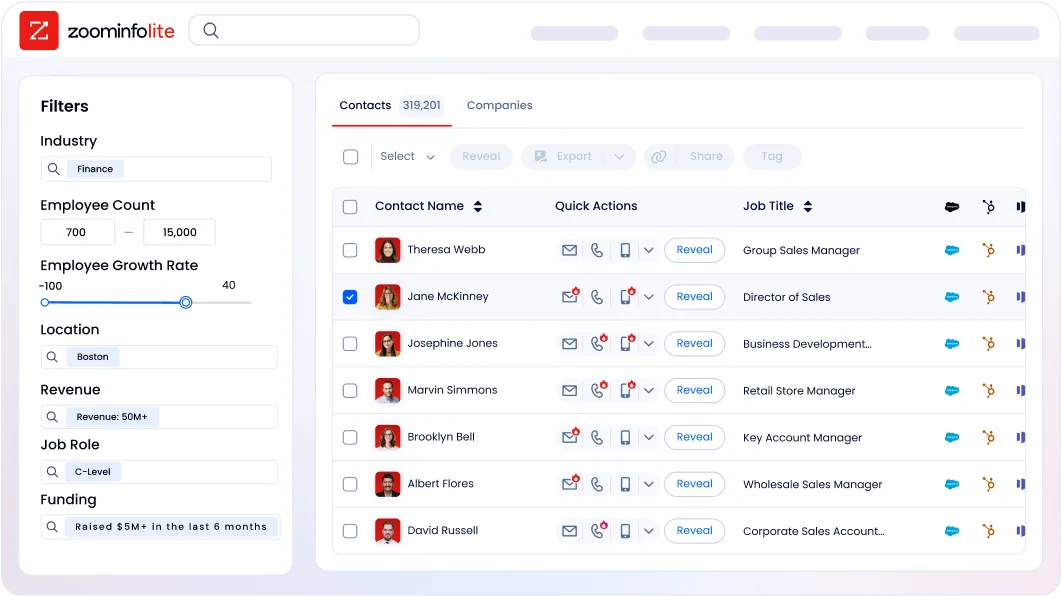
Sales plans come in Professional, Advanced, and Enterprise tiers, while Marketing plans offer Marketing Demand, ABM Lite, and ABM Enterprise options. ZoomInfo differentiates with two free entry points: ZoomInfo Lite (a permanent free tier with 10 monthly export credits and access to the B2B database) and a 7-day free trial with full platform access. API access is included in all relevant plans.
Implementation complexity and learning curve
All three platforms require real investment to deploy well, but the nature of that investment differs.
Adobe Campaign demands the most upfront. Migration from Campaign Classic v7 to v8 takes 6 to 18 months, and automated migration is explicitly "not yet available".
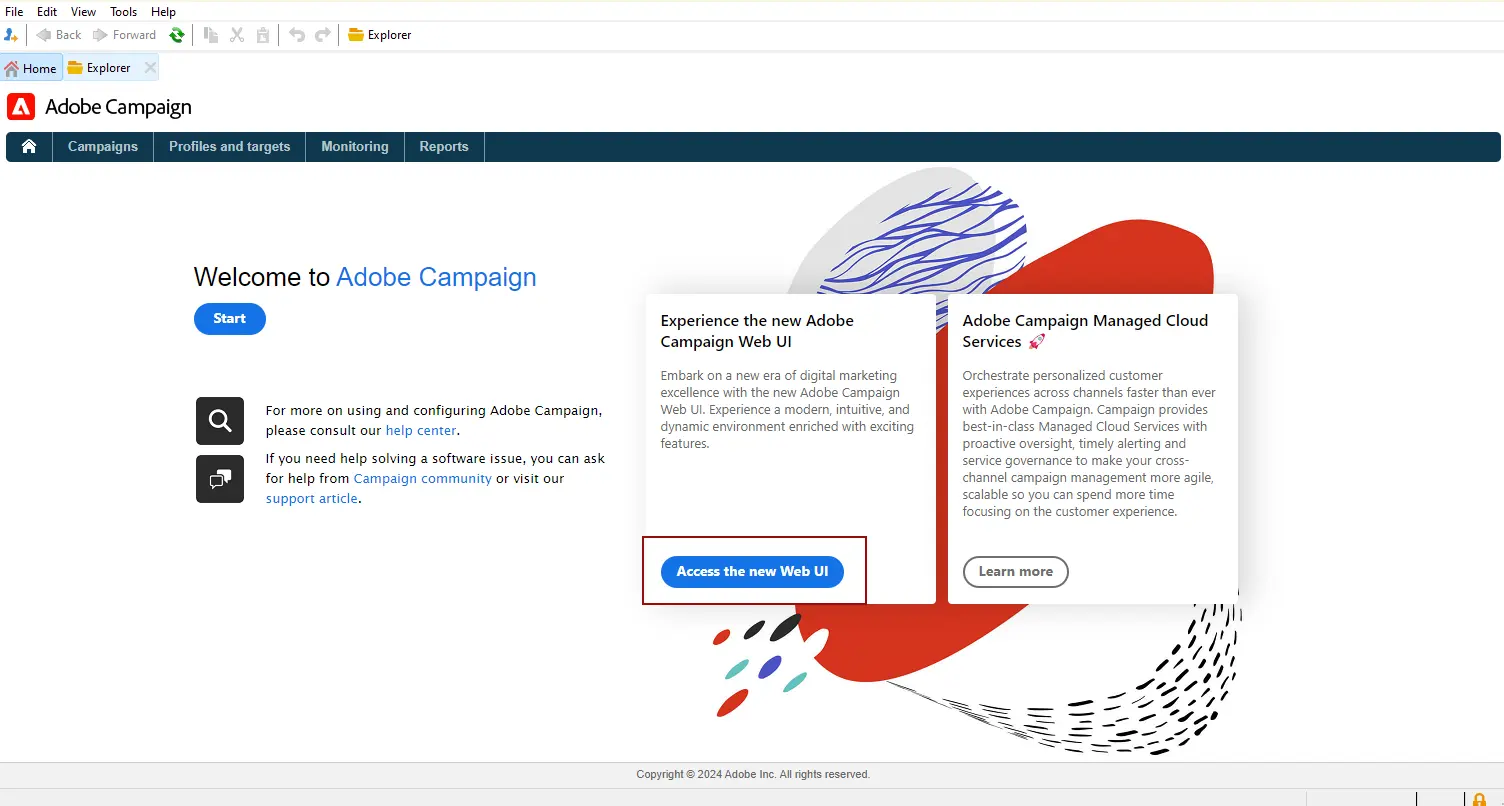
The platform ships with two interfaces: a Windows-only client console for advanced configuration and a browser-based Web UI for marketers. Most advanced tasks still require the client console, and the platform's API documentation requires familiarity with JavaScript and SOAP. Organizations typically rely on certified implementation partners throughout.
Source: Adobe
Marketo is feature-rich but complex.
Adobe's own onboarding guidance notes that setup "can take longer than you think" and that users who skip training spend consulting hours on basic concepts. The platform uses proprietary constructs (Smart Lists, Smart Campaigns, Programs, Tokens, Engagement Streams) that have no direct equivalent in competing tools.
A formally maintained glossary exists as a reference document, which signals the cognitive overhead involved. Most successful deployments require a dedicated Marketo administrator.
ZoomInfo redesigned its onboarding from 30 to 90 days, structured across planning, technical implementation, education, and adoption phases.
The redesign produced a 25% improvement in customer satisfaction scores. GTM Workspace "deploys in weeks, not months", and ZoomInfo University provides role-specific learning paths and certifications.

Integration and ecosystem fit
Adobe Campaign integrates natively across the Adobe Experience Cloud suite: Analytics, Experience Manager, Journey Optimizer, Target, and Real-Time CDP.
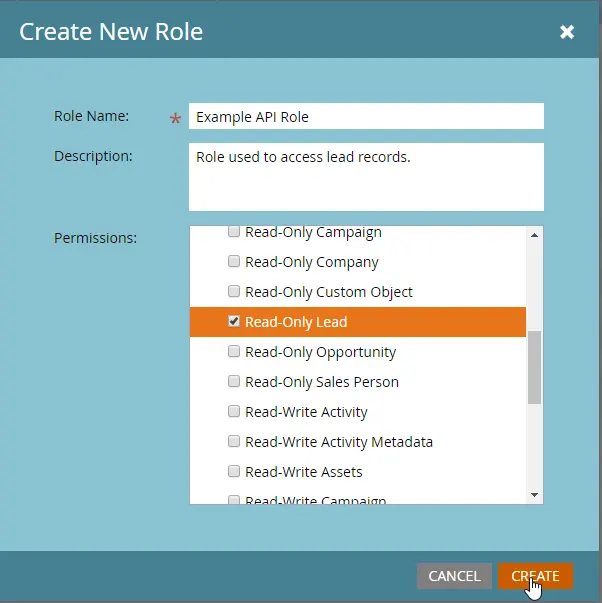
Outside the Adobe ecosystem, it offers bidirectional CRM connectors for Salesforce and Microsoft Dynamics. The Federated Data Access module connects to external databases including Snowflake, Google BigQuery, Amazon Redshift, and Databricks. REST API access, however, is available only on demand for non-FFDA environments, and the primary programmatic interface remains SOAP-based.
Marketo's LaunchPoint marketplace provides pre-built connectors across CRM, advertising, webinar, and analytics platforms.
Its native Salesforce sync runs bidirectionally with a 5-minute pause between cycles. The REST API provides 50,000 calls per day with documented rate limits. ZoomInfo is listed as an integration partner, connecting data and intent signals into Marketo's lead database.
Source: Adobe
ZoomInfo's App Marketplace lists over 120 integrations, and the platform connects natively with Salesforce, HubSpot, and Microsoft Dynamics.
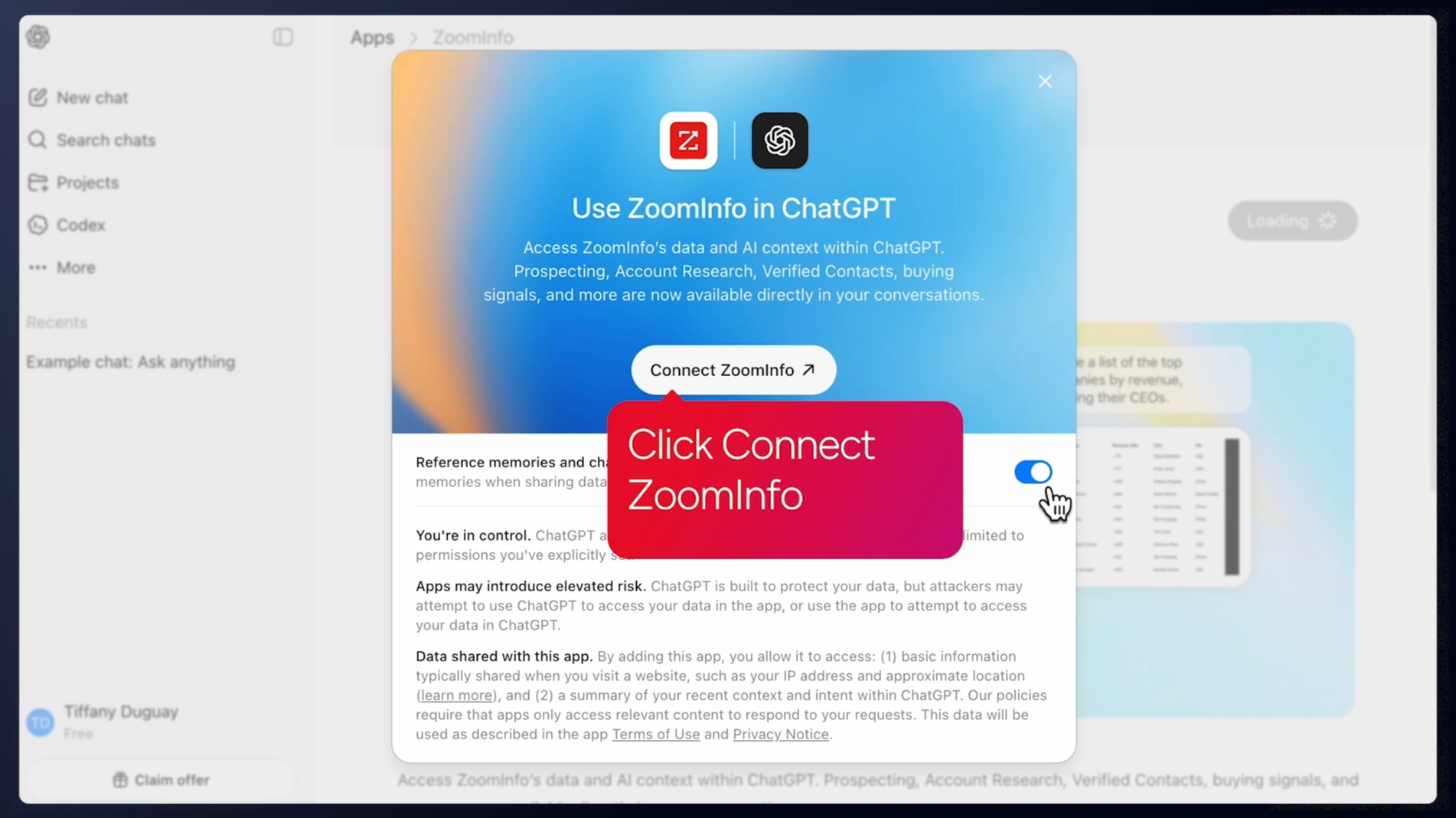
The Enterprise API and MCP server expose ZoomInfo's data and GTM Context Graph to any application, workflow, or AI agent. Cloud Partners enables direct data ingestion into AWS, Google Cloud, Snowflake, and Databricks. The key point: ZoomInfo works alongside either Adobe platform rather than replacing it, feeding intelligence into whatever execution tool the marketing team uses.
Source: ZoomInfo
"The plug-and-play aspect of the API means I can integrate it very easily into any process and get information at a moment's notice." — Jerry Wilson, Senior Marketing Intelligence Analyst, BDO Canada, which achieved an 87% reduction in time spent on internal data dashboard updates. (BDO Canada Case Study)
Adobe Campaign vs. Marketo vs. ZoomInfo: Which should you choose?
The best choice depends on your marketing motion, your team, and your data maturity.
Choose Adobe Campaign if:
You run high-volume B2C campaigns across email, SMS, push, and direct mail
You need to coordinate online and offline channels from one workflow engine
Your organization is already invested in Adobe Experience Cloud (AEP, AJO, AEM)
You have a dedicated MarTech operations team or systems integrator relationship
Transactional messaging throughput at enterprise scale is a requirement
Choose Marketo if:
You run B2B demand generation with complex, multi-touch buying cycles
Lead scoring, nurture programs, and CRM-native sales handoffs are core to your strategy
You need account-based marketing with native lead-to-account mapping
Interactive webinars and conversational marketing are part of your channel mix
You have or can hire a dedicated Marketo administrator
Use ZoomInfo with either platform if:
You need verified B2B data to fuel your targeting and segmentation
Knowing when accounts are in-market matters as much as reaching them
You want AI-driven intelligence that reveals why deals move, not just what happened
You're building ABM programs that require firmographic, technographic, and intent data
You need your data and intelligence accessible across any tool via API or MCP
Start with a free ZoomInfo trial and see what verified data and buying signals do for your marketing.
Adobe Campaign and Marketo are both established execution platforms, each built for a different marketing motion. But execution without intelligence is just volume.
ZoomInfo provides the data foundation and contextual intelligence that turns campaigns into pipeline, whether you're sending 20 million B2C messages through Campaign or nurturing a buying committee through Marketo's engagement programs. The most effective marketing stacks don't choose between execution and intelligence. They combine both.
Adobe Campaign vs. Marketo vs. ZoomInfo FAQ
Are Adobe Campaign and Marketo the same product?
No. Despite both being owned by Adobe, they serve different markets. Adobe Campaign handles B2C cross-channel campaign management: high-volume batch sends across email, SMS, push, and direct mail.
Marketo Engage is a B2B marketing automation platform focused on lead scoring, demand generation, account-based marketing, and CRM-integrated sales handoffs. Adobe's own documentation positions them as distinct products for distinct use cases.
Which platform is better for B2B marketing?
Marketo is the clear choice for B2B. It offers native lead scoring with multi-dimensional models, engagement programs with content exhaustion logic, native Salesforce and Microsoft Dynamics sync, account-based marketing capabilities, and features like Dynamic Chat and Interactive Webinars.
Adobe Campaign lacks native B2B features such as lead scoring, ABM, and CRM-native pipeline management.
How does ZoomInfo fit with Adobe Campaign or Marketo?
ZoomInfo is a complementary intelligence layer, not a replacement for either platform. It provides verified B2B data (500M contacts, 100M companies, 135M+ verified phone numbers) and buying signals that feed into Campaign's audience segmentation or Marketo's lead scoring and ABM programs.
ZoomInfo integrates with Marketo via LaunchPoint and with both platforms through its Enterprise API and MCP server.
Which platform has the steepest learning curve?
Adobe Campaign requires the most upfront investment, with implementations typically running 6 to 18 months, two separate interfaces (client console and Web UI), and a SOAP-based API that requires JavaScript knowledge.
Marketo is also complex, with proprietary concepts like Smart Campaigns, Tokens, and Engagement Streams that take months to master, and typically requires a dedicated administrator.
ZoomInfo's structured 90-day onboarding and role-specific training make it the most accessible of the three.
Can I use Adobe Campaign for B2B lead scoring and nurturing?
Adobe Campaign has no native lead scoring capability and is not designed for B2B demand generation workflows. It's optimized for B2C batch campaign execution and transactional messaging. For B2B lead management, Adobe offers Marketo Engage as the dedicated product, and ZoomInfo provides the data enrichment and intent signals that power effective scoring models.
Do any of these platforms offer a free trial or free plan?
Adobe Campaign has no free trial or free plan.
Marketo has no publicly available free trial.
ZoomInfo offers both a permanent free tier (ZoomInfo Lite, with 10 monthly export credits and access to the B2B database) and a 7-day free trial with full platform access, making it the most accessible entry point among the three.
Which platform handles multi-channel campaigns best?
Adobe Campaign has the broadest native channel coverage, orchestrating email, SMS, push notifications, direct mail, in-app messaging, WhatsApp, and offline channels from a single workflow canvas.
Marketo covers email, web, mobile, SMS, ads, webinars, and chat.
ZoomInfo adds display advertising via a native DSP, website chat with visitor identification, and multi-channel outreach workflows, and integrates with both Adobe platforms to trigger campaigns based on real-time buying signals.
How do the AI features differ across the three platforms?
Adobe Campaign's AI focuses on content generation (email, SMS, push) and per-profile send-time optimization, though the predictive features require separate consulting engagement.
Marketo's AI generates email content with buying-group-aware inputs and powers Dynamic Chat's conversational responses.
ZoomInfo's AI operates at the intelligence level, using the GTM Context Graph to understand deal dynamics, predict buying behavior, and power AI agents that handle account research, outreach, and signal monitoring across GTM Workspace and GTM Studio.
