
Choosing between Adobe Experience Platform and Oracle for your enterprise data and customer experience needs often comes down to five questions:
Do you need a dedicated customer data platform, or a broader enterprise suite where CX is one component of a larger system?
How deep is your current investment in the Adobe or Oracle ecosystem, and how much switching cost are you willing to absorb?
Are you primarily orchestrating consumer experiences across marketing channels, or managing business operations from finance to customer engagement?
Is your team prepared for a six-to-eighteen-month implementation, or do you need to start generating value in weeks?
For B2B go-to-market specifically, do you need verified prospect data and buying signals alongside your customer data infrastructure?
In short, here's what we recommend:
Adobe Experience Platform (AEP) is the strongest choice for large enterprises that need a dedicated data foundation for customer experience. Its Real-Time Customer Profile unifies online, offline, and CRM data into a continuously updated identity graph, powering personalization across every channel. AEP's applications (Real-Time CDP, Journey Optimizer, Customer Journey Analytics) all run on the same data layer, eliminating synchronization overhead. AEP demands heavy implementation investment, locks you into the broader Adobe Experience Cloud for full value, and was recently reclassified from Leader to Visionary in Gartner's 2025 CDP Magic Quadrant.
Oracle fits enterprises that want customer experience capabilities embedded within a complete business operating system. Oracle Fusion Cloud Applications unify ERP, HCM, supply chain, and CX on a single data model, so finance, workforce, and customer data live together rather than sync between separate platforms. Oracle's database heritage and its Fusion Agentic Applications add depth. The tradeoffs: complex licensing, implementation timelines that routinely run over schedule, and Oracle's exit from the advertising data cloud business in September 2024, which removed a major marketing data asset.
Both platforms handle customer experience data well for large enterprises. But neither was designed to answer the question B2B go-to-market teams ask first: who should we be selling to, and when are they ready to buy?
ZoomInfo is a B2B go-to-market platform that fills the intelligence gap both AEP and Oracle leave open. While AEP unifies customer interaction data and Oracle manages enterprise operations, ZoomInfo provides the B2B intelligence layer: 500M contacts, 100M companies, 135M+ verified phone numbers, and 200M+ verified business email addresses, fused with your CRM records, conversation transcripts, and behavioral signals through the GTM Context Graph. For B2B teams, ZoomInfo answers who to target, when to engage, and what to say. It works alongside either platform through APIs and MCP, the GTM Workspace for sellers, or GTM Studio for marketers and RevOps.
If ZoomInfo's B2B intelligence sounds like the missing layer in your enterprise stack, see how it works.
Adobe Experience Platform vs. Oracle vs. ZoomInfo at a glance
Adobe Experience Platform | Oracle | ZoomInfo | |
|---|---|---|---|
Core purpose | Customer data unification and experience orchestration | Complete enterprise suite (ERP, HCM, CX, database, cloud) | B2B go-to-market intelligence and execution |
Data focus | First-party customer interaction data (web, mobile, CRM, offline) | Enterprise operational and customer data across business functions | Third-party B2B intelligence (contacts, companies, intent, technographics) |
AI capabilities | Agent Orchestrator with 10 AI agents | Fusion Agentic Applications, AI Database 26ai, Select AI | GTM Context Graph processing 1.5B+ data points daily |
Target buyer | CMOs, CDOs, VP-level marketing technology leaders | CIOs, CFOs, large enterprise IT and business leaders | Sales, marketing, and RevOps leaders |
Pricing model | Profile-volume-based, enterprise quote only | Module and consumption-based, enterprise quote only | Consumption-based with free Lite tier |
Implementation timeline | 6–18 months | 6–12+ months (Fusion); 3–4 months (NetSuite) | Weeks |
Ecosystem lock-in | Adobe Experience Cloud dependency | Oracle database and application dependency | Open: API, MCP, 172+ marketplace integrations |
Analyst recognition | 8x Gartner DXP Leader; CDP Visionary (2025) | Leader across multiple Gartner MQs (ERP, HCM, CX, database) | Gartner ABM Leader; Forrester Intent Data Leader |
Free option | None | Always Free cloud tier (OCI only) | ZoomInfo Lite (permanent free tier) |
Different architectures solving different problems
Adobe Experience Platform and Oracle approach enterprise data from different starting points. Understanding that difference matters more than any feature comparison.
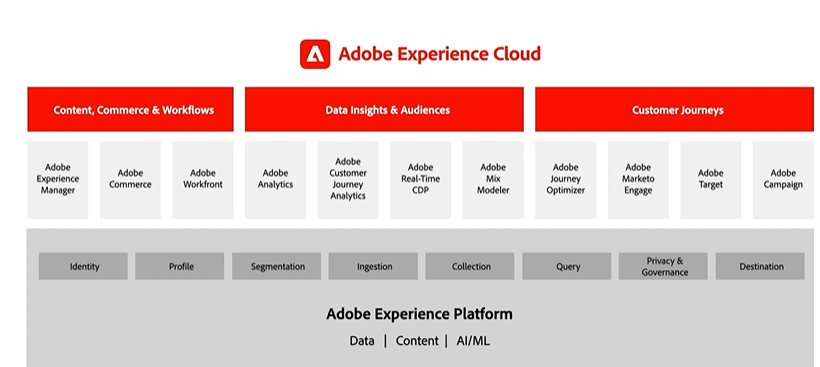
AEP is a customer data platform. Adobe designed it as the infrastructure layer beneath its enterprise product suite, centralizing and standardizing customer data from any system, then applying data science and machine learning to drive personalized experiences.
Source: AEP
Everything else (Real-Time CDP, Journey Optimizer, Customer Journey Analytics) runs on top of this shared data layer. The architecture assumes your primary challenge is unifying customer interactions across channels and making that data actionable for marketing.
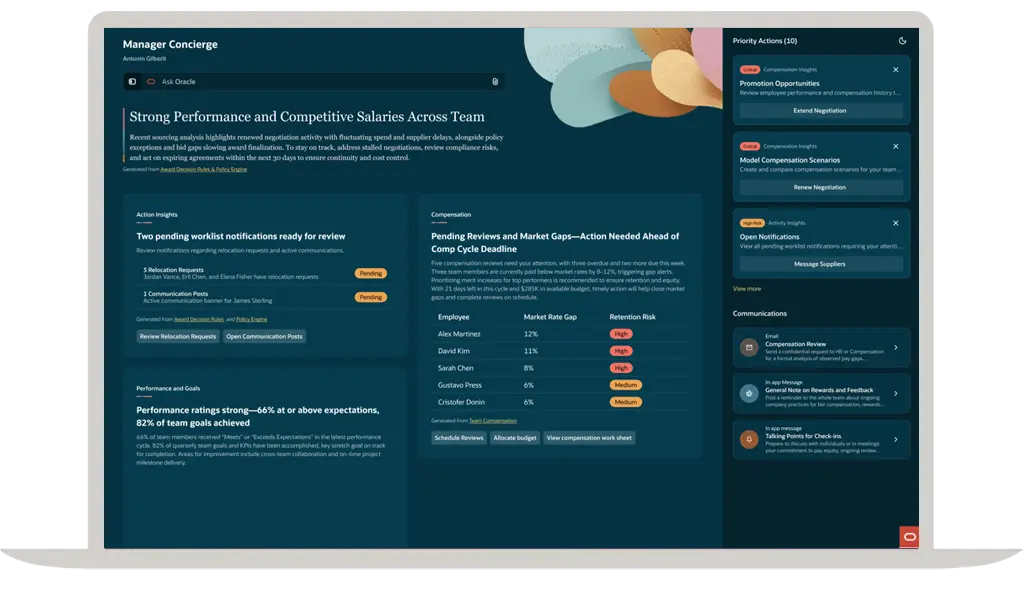
Oracle is an enterprise operating system. Fusion Cloud Applications span finance, supply chain, HR, sales, service, and marketing on a single data model. Customer experience is one dimension of a much larger platform.
Source: Oracle
Oracle's bet is that CX works best when it shares a data model with the rest of the business, so a sales team can see not just the customer's marketing interactions but their payment history, support tickets, and contract terms in one system.
For marketing-led organizations building personalization programs, AEP's focused architecture is the stronger foundation. For organizations where customer experience decisions need operational context (pricing, inventory, contract status), Oracle's unified model has a structural advantage. Neither approach is wrong. They solve different problems.
ZoomInfo sits outside this architectural debate entirely. It provides the external B2B intelligence (who to target, what they care about, when they're ready to buy) that feeds into whichever internal platform you choose.
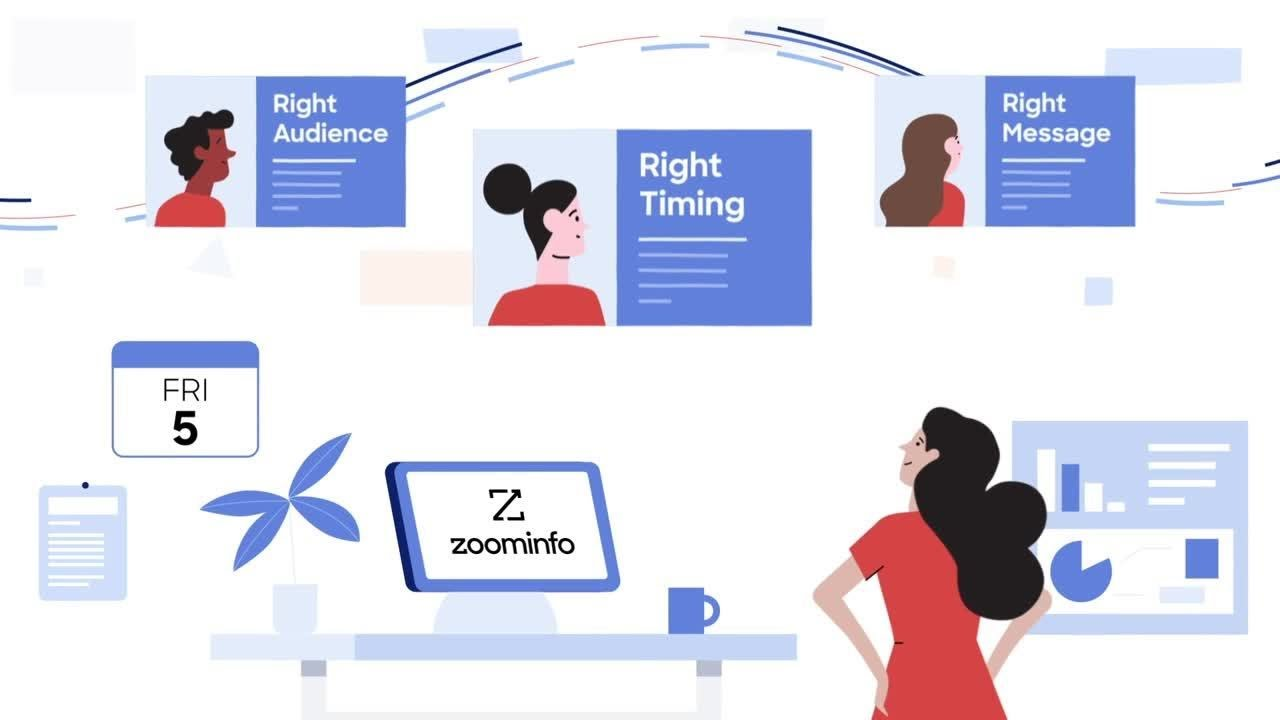
Whether your customer data lives in AEP or Oracle, ZoomInfo's 500M contacts and 100M company profiles give your sales and marketing teams the prospecting intelligence that internal data alone cannot provide.
Customer data and identity resolution
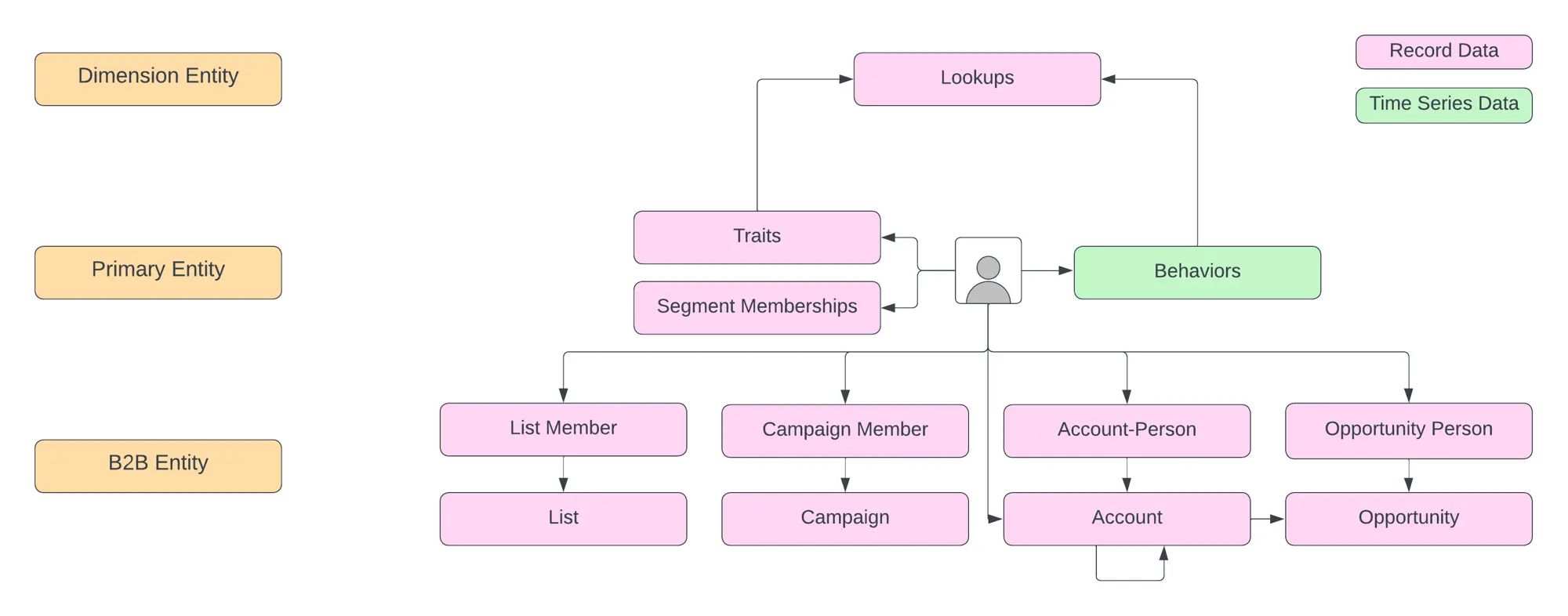
AEP's defining capability is its Real-Time Customer Profile, which merges data from multiple channels into a unified, continuously updated profile for each customer.
Source: AEP
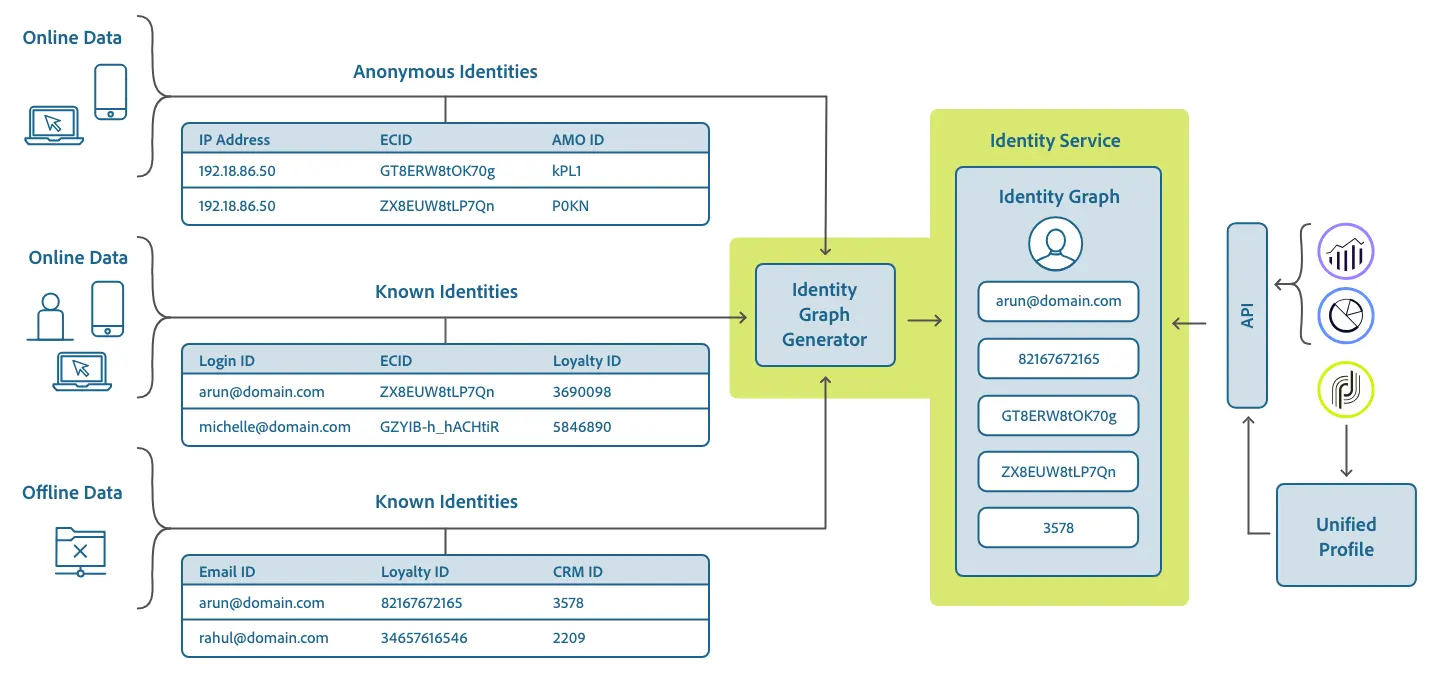
The Identity Service uses deterministic algorithms to link cookie IDs, CRM IDs, device IDs, email addresses, and phone numbers into a single identity graph. When a customer logs in on their phone after browsing anonymously on their laptop, AEP resolves both sessions to the same person in real time.
Source: AEP
This identity resolution powers three modes of audience segmentation: streaming (continuous, as data arrives), batch (every 24 hours), and edge (sub-millisecond, for same-page personalization). All data conforms to the Experience Data Model (XDM), Adobe's standardized schema. XDM enforces consistency but requires upfront schema design that adds to implementation timelines.
Oracle takes a different path. The Oracle AI Database 26ai converges relational, vector, JSON, graph, geospatial, and text data into a single engine under unified transactional guarantees.
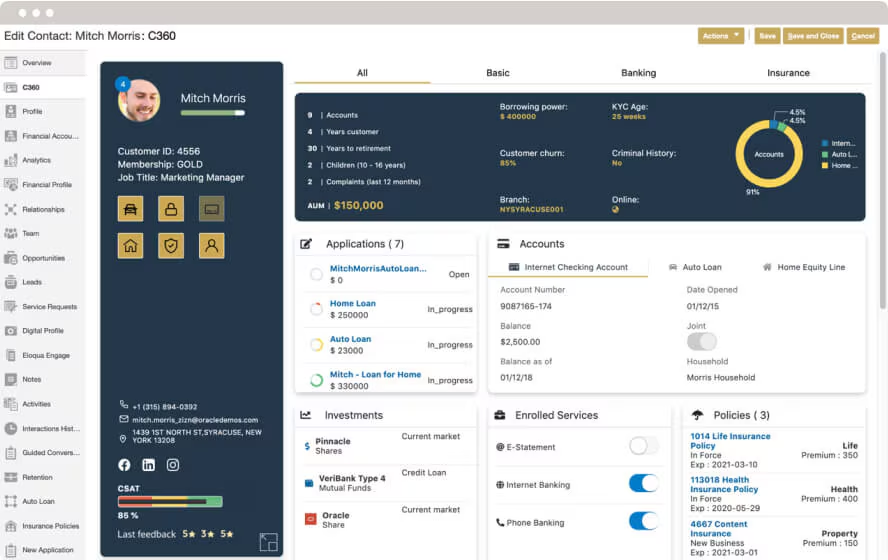
The Oracle Customer Data Platform within Oracle CX handles customer profile unification, though it hasn't achieved the same standalone recognition as AEP. Oracle's broader strength is that customer data sits alongside operational data (orders, invoices, support cases) on the same database, so a profile includes transactional context that AEP would need to import.
Source: Oracle
Oracle's exit from its Advertising & Data Cloud in September 2024 removed what was once a major differentiator. The BlueKai DMP and Oracle Data Marketplace, which covered more than 700 million audience profiles, are gone. Third-party cookie deprecation and GDPR enforcement made the architecture unviable. Organizations that relied on Oracle for third-party audience data now need an alternative source.
For B2B teams, neither platform's identity resolution was designed around the business buyer's journey. AEP resolves consumer identities across devices and sessions. Oracle resolves customer records across its operational systems.
But identifying that a VP of Engineering at a target account is researching your competitor, just changed jobs, or is showing intent signals on specific topics requires a different data layer entirely.
ZoomInfo's GTM Context Graph processes 1.5B+ data points daily to unify third-party B2B intelligence with a customer's own CRM records, conversation transcripts, and engagement signals. It captures not just who buyers are, but why deals move or stall. A CRM records that a deal moved to Stage 4.
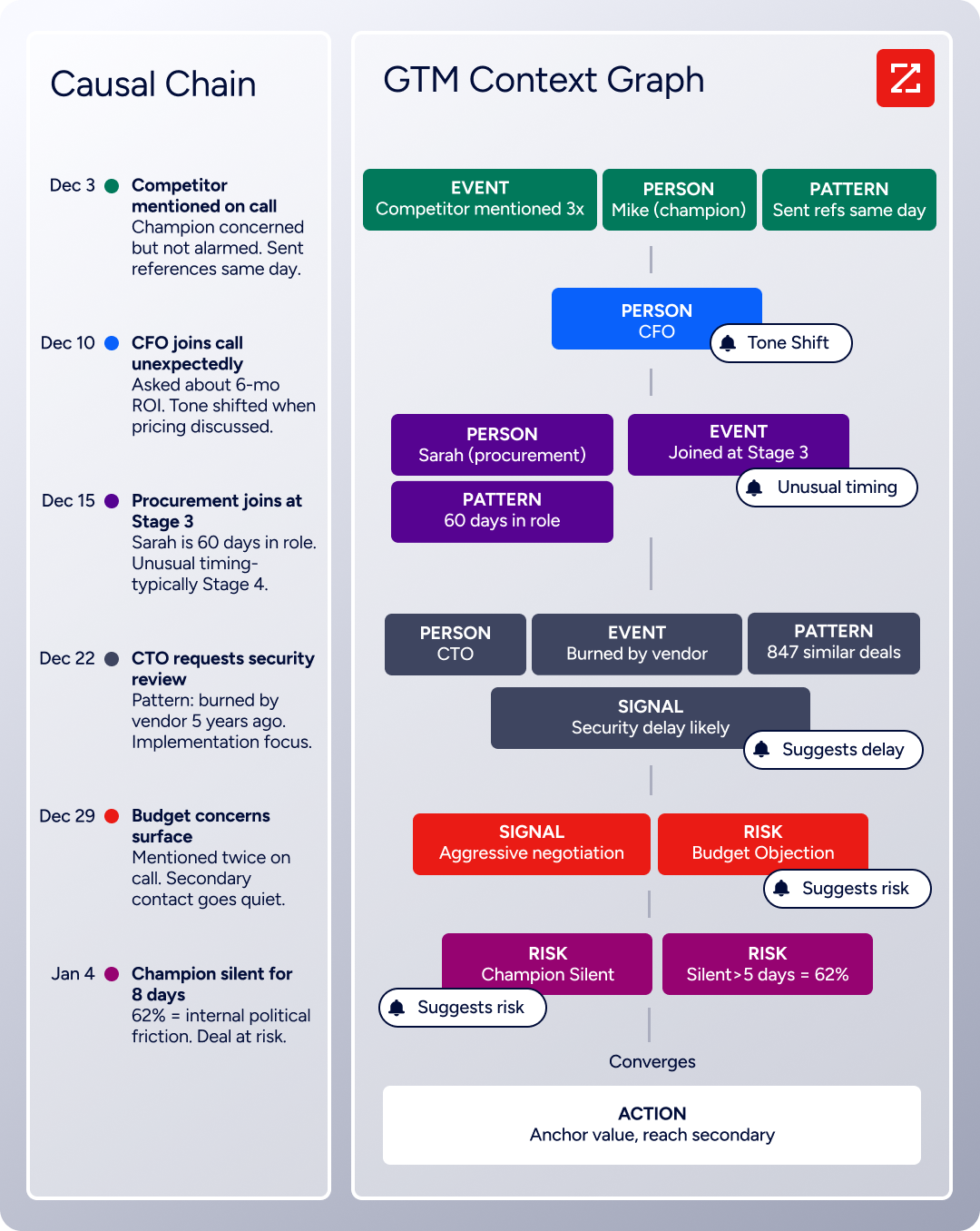
The GTM Context Graph reasons that executive sponsorship entering at this stage, combined with ROI-focused questions on the last call, matches the pattern behind closed-won deals in your segment.
Snowflake uses ZoomInfo data in their Account Propensity Scoring model, feeding over 70 company and technographic data fields. Accounts monitored using ZoomInfo-powered scores showed 90% higher opportunity open rates and 2x higher customer conversion rates. (Snowflake)
AI capabilities take different forms
All three platforms have invested in AI, but the applications diverge.
Adobe announced the AEP Agent Orchestrator at Summit 2025, introducing ten AI agents spanning audience creation, journey design, content production, data engineering, and experimentation. The Audience Agent lets marketers create segments through natural-language prompts instead of drag-and-drop rule builders.
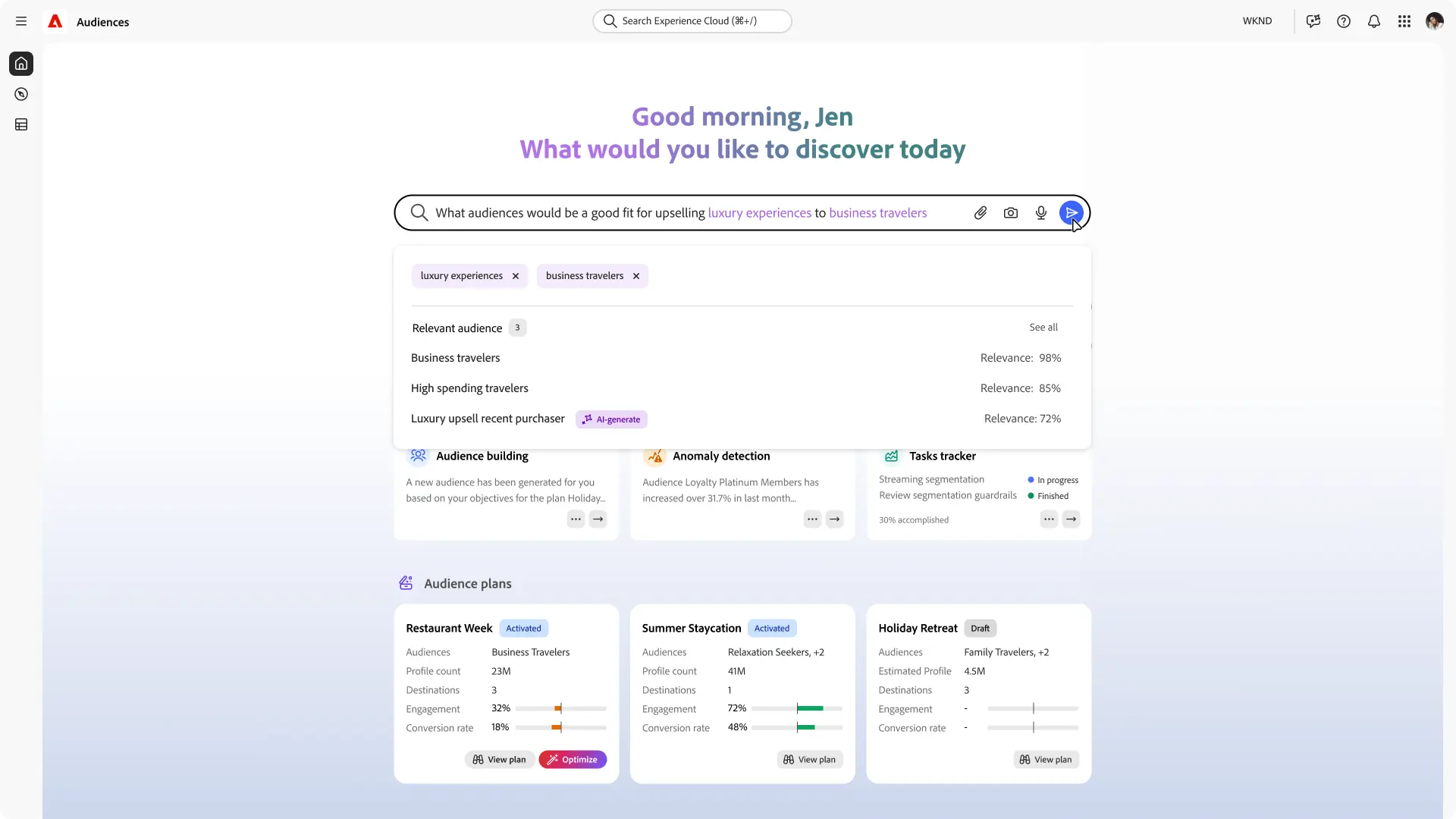
Source: AEP
The Journey Agent helps design and optimize cross-channel customer journeys. Adobe frames this as the shift from "Customer Experience Management" to "Customer Experience Orchestration", where AI agents handle execution rather than just providing insights.
Oracle's AI strategy runs across both its database and application layers. The Oracle AI Database 26ai embeds AI at the SQL level: Select AI translates natural language into database queries, AI Vector Search stores and searches vectors as a native data type, and the Private Agent Factory lets enterprises build AI agents that operate inside the database without sending data to third parties.
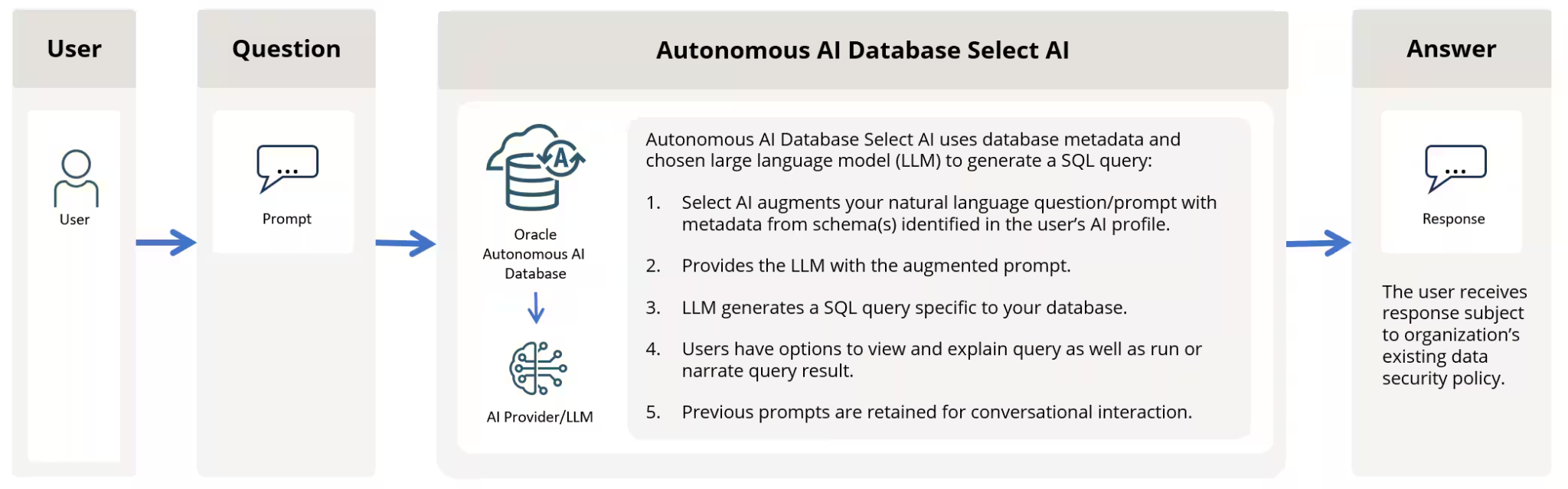
Source: Oracle
On the application side, Fusion Agentic Applications deploy 12 agentic workspaces across finance and supply chain, where AI agents make and execute decisions within existing security frameworks.
The distinction matters: Adobe's AI focuses on marketing personalization and content orchestration. Oracle's AI spans business operations from cash collections to warehouse logistics. Neither focuses on B2B sales intelligence.
ZoomInfo's AI operates in that gap. The GTM Context Graph reasons across signals and outcomes to tell sellers who to contact, when to engage, and what to say. GTM Workspace AI agents, built on Anthropic's Claude, handle account research, outreach drafting, CRM updates, and signal monitoring.
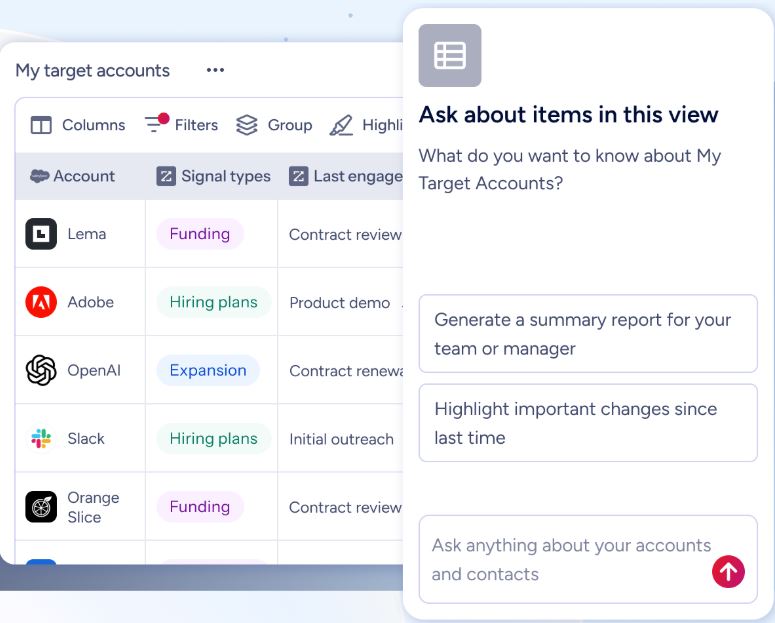
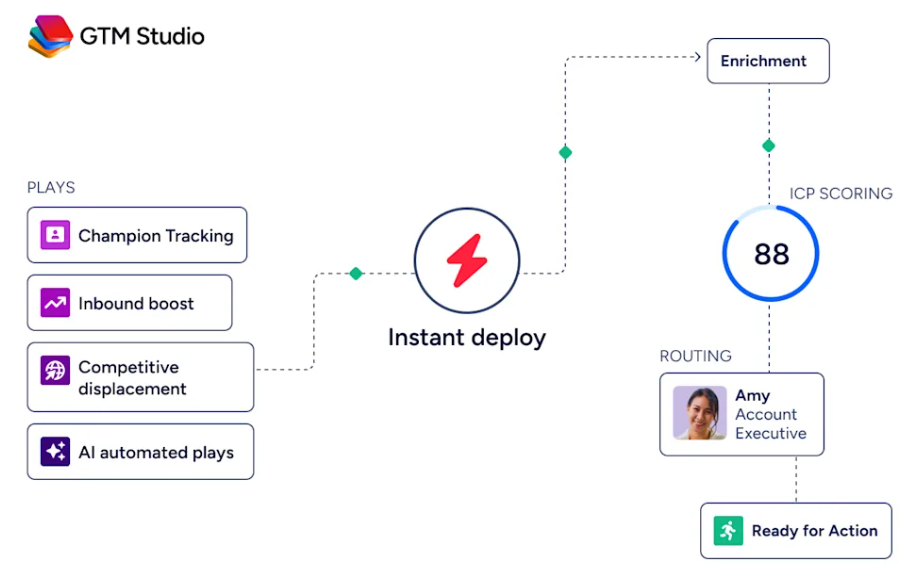
GTM Studio lets marketers describe audiences in plain language and launch multi-channel plays without engineering support. The AI learns continuously from user interactions, customer responses, and market changes.
Seismic attributed 39% of active pipeline to opportunities identified or influenced by ZoomInfo signals, reported 54% productivity gains, and saved 11.5 hours per week per seller. (Seismic)
B2B go-to-market: the gap both platforms leave open
Adobe Experience Platform was designed around the consumer journey. Its identity resolution links anonymous browsing sessions to known customer profiles. Its segmentation engine builds audiences for marketing campaigns. Its journey orchestration triggers personalized messages across email, push, web, and SMS.
Oracle's CX suite covers marketing, sales, and service, but Oracle invests most heavily in ERP, HCM, and infrastructure. Oracle CX holds Gartner Leader status in Sales Force Automation and CRM Customer Engagement Center, but it lacks the AppExchange-equivalent ecosystem and mid-market adoption that Salesforce dominates.
With Oracle's Advertising & Data Cloud shut down, B2B marketing teams lost access to what was once 300 million business professional profiles with firmographic and intent data.
Neither platform answers the questions B2B sellers ask every morning: Which accounts are actively researching solutions like ours? Who are the decision-makers, and how do I reach them? What happened on the last call that signals this deal is about to accelerate or stall?
ZoomInfo exists to answer those questions. Its data covers 500M contacts with 120M direct-dial phone numbers, 200M+ verified business email addresses, and technographic profiles of 30+ million companies tracking 30,000+ technologies.
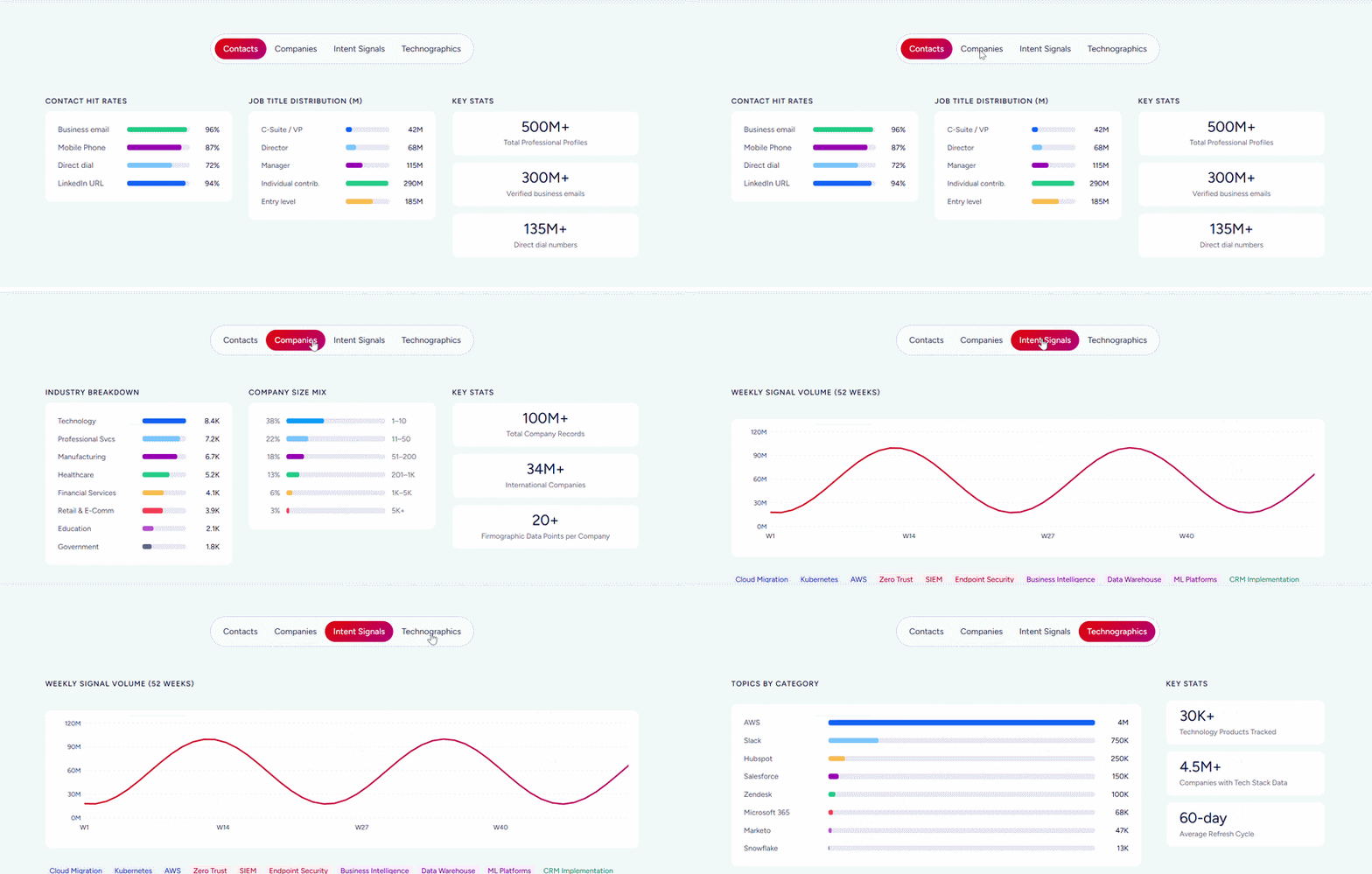
Buyer Intent data tracks signals from 210 million IP-to-Organization pairings and 6 trillion+ new keyword-to-device pairings monthly.
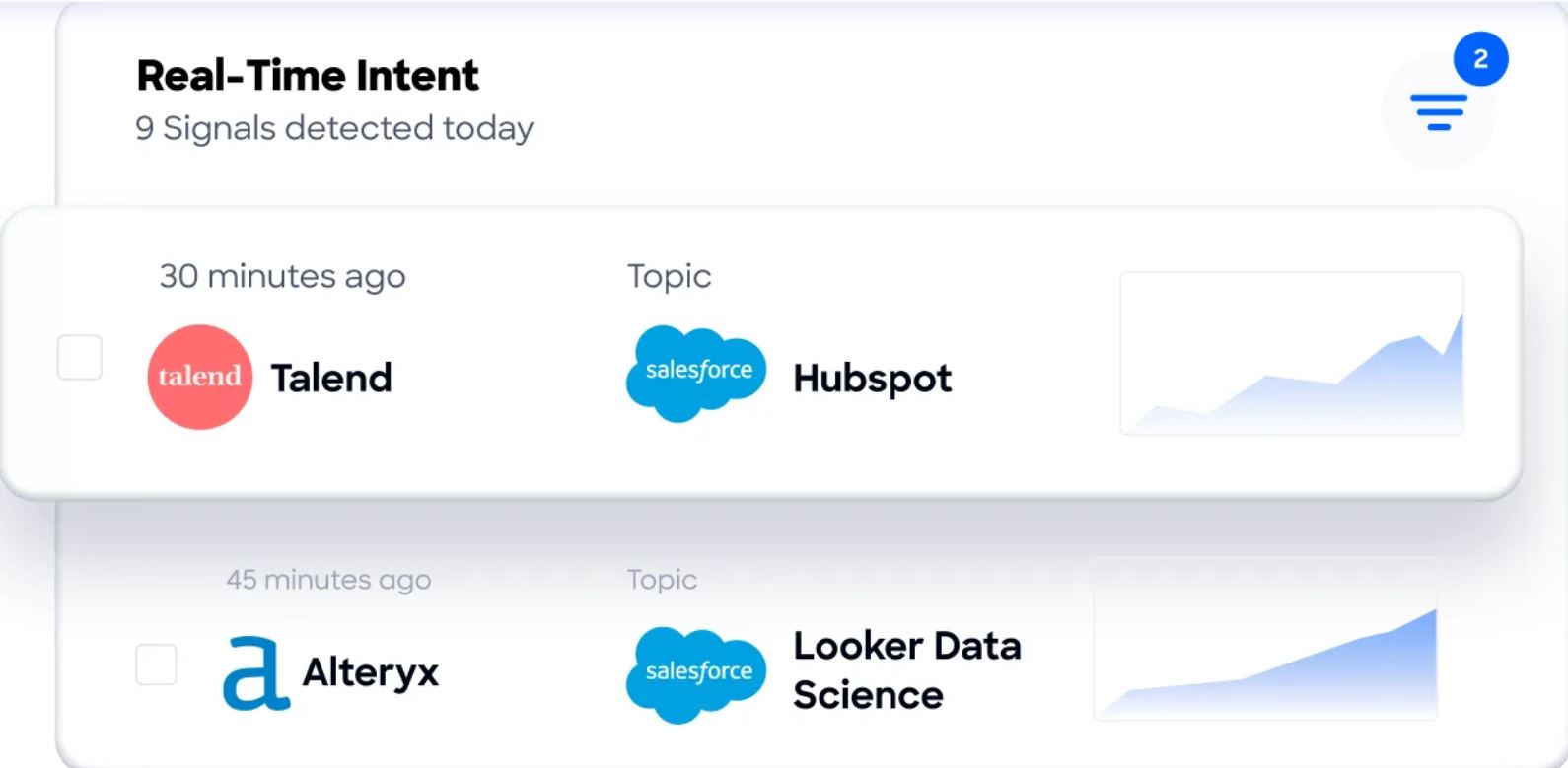
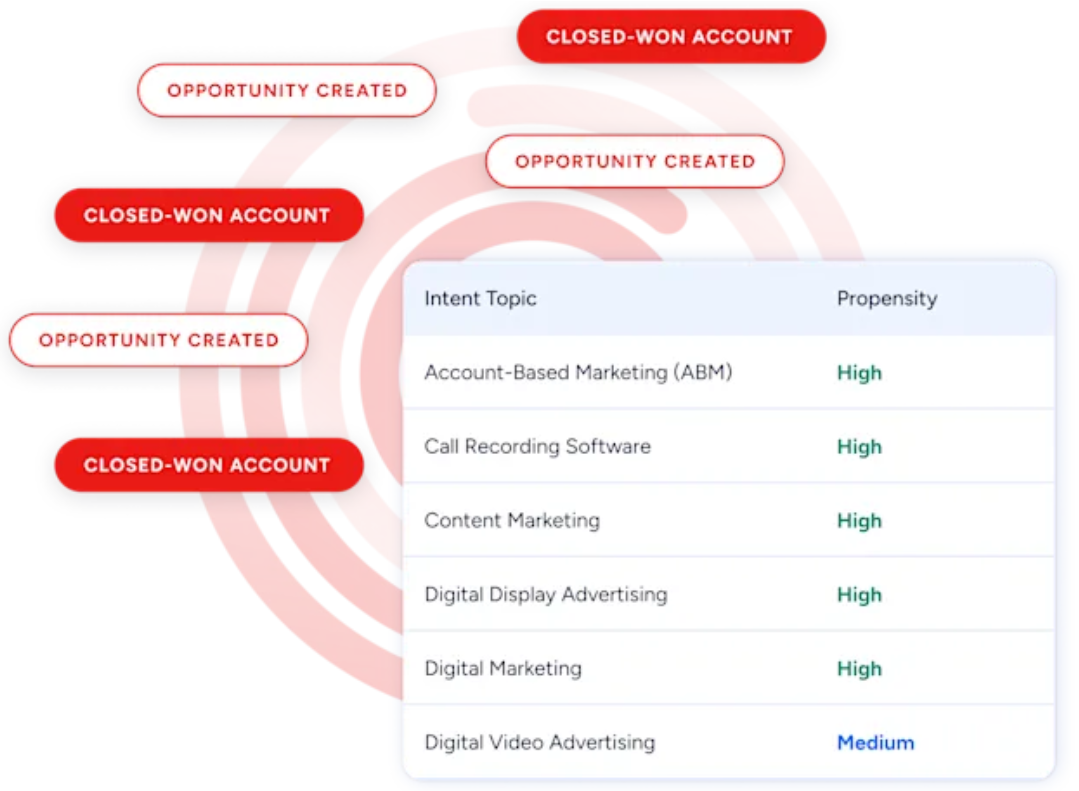
Guided Intent, exclusive to ZoomInfo, identifies topics historically correlated with deal success rather than requiring manual topic selection.
Independent reviewers have validated this data quality. In a Fortune 500 competitive RFP analyzing 25 million contacts across vendors, the independent consultant concluded that "no other competitor came even close." ZoomInfo holds 133 No. 1 rankings on G2 across Sales Intelligence, Buyer Intent, Data Quality, and related categories.
For B2B teams running AEP or Oracle as their customer experience backbone, ZoomInfo provides the prospecting intelligence that turns those platforms from systems of record into systems of revenue.
Redwood Logistics saw a 99% reduction in CPC, a 310% increase in CTR, and saved 20-25 hours per week. "It's not just the data itself. It's more about the right data at the right time to help us reach out with the right message across that full buyer journey." (Redwood Logistics)
Pricing and total cost of ownership
Neither AEP nor Oracle publishes pricing, and both carry hidden costs beyond the license fee.
Adobe Experience Platform uses profile-volume-based pricing, metered against Addressable Audience (total customer profiles) and Total Data Volume. The unit of sale is per 1,000 profiles. No self-serve signup exists. Real-Time CDP comes in Prime and Ultimate tiers, with Ultimate unlocking advanced source and destination connectors, Destination SDK for custom integrations, and higher data export limits.
Add-ons (Healthcare Shield, Privacy and Security Shield, Data Distiller, Agent Orchestrator, Federated Audience Composition) each carry separate SKU pricing. Implementation services from certified partners (Accenture, Deloitte Digital, IBM, EY) routinely add six figures or more. SelectHub reviewers describe the learning curve as steep, requiring substantial training before advanced features become usable.
Oracle's pricing spans three models depending on the product. OCI infrastructure uses a dual-track model: Pay As You Go at list prices, or Universal Credits with volume discounts on a minimum 12-month commitment. OCI pricing is competitive: a standard VM costs $54/month versus 2.3x at AWS and Azure, and enterprise support is included at no extra charge.
But Oracle Fusion Cloud Applications pricing is quote-only with no published figures, and NetSuite pricing is similarly opaque. Oracle's licensing complexity is consistently ranked among the worst in enterprise software, with annual support adding roughly 22% of initial license cost per year. Implementation projects commonly run over time and over budget.
ZoomInfo uses consumption-based pricing scaled around seats, credits, and AI activity. No prices are published for paid tiers (Professional, Advanced, Enterprise), but the platform offers two free entry points: ZoomInfo Lite (permanent free tier with access to the B2B database, 10 monthly export credits, and WebSights Lite) and a 7-day free trial of the full platform.
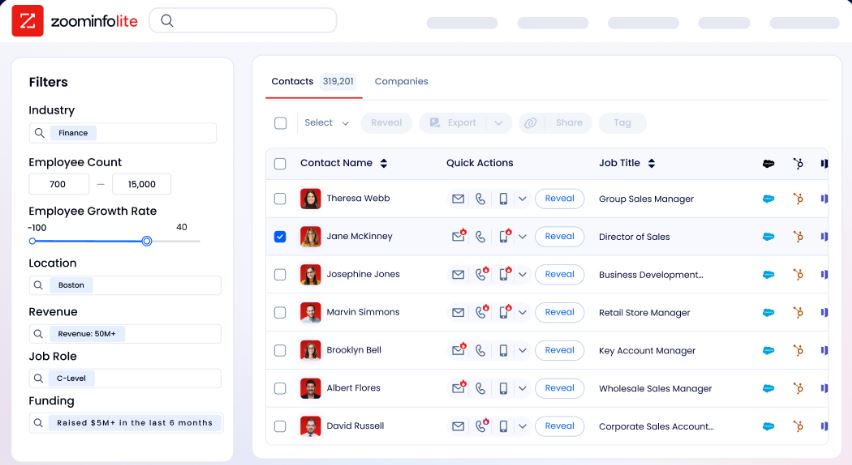
This is a meaningful difference. Both AEP and Oracle require enterprise sales engagement before a buyer can evaluate the product. ZoomInfo lets teams start for free and scale when the value is proven.
The total cost comparison is less about sticker price and more about what each dollar buys. AEP and Oracle both demand six-to-eighteen-month implementations, dedicated internal teams, and ongoing SI partner relationships before delivering value. ZoomInfo's GTM Workspace "deploys in weeks, not months."
Integration and ecosystem lock-in
All three platforms have integration strategies. The difference is how much flexibility each gives you.
AEP ships with 70+ source connectors spanning Adobe applications, cloud databases (Snowflake, BigQuery, Redshift), CRM systems (Salesforce, Microsoft Dynamics), and streaming sources (Amazon Kinesis, Azure Event Hubs). Its API-first design means full functionality is accessible via RESTful APIs. But the deepest value requires the broader Adobe stack.
Gartner's 2025 CDP Magic Quadrant noted that purchasing Adobe's CDP "may also require" an investment in Journey Optimizer, flagging bundling as a constraint on modular adoption. SelectHub reviewers note that integrating with non-Adobe software can feel difficult.
Oracle benefits from its large application ecosystem. Oracle Integration Cloud provides prebuilt adapters for Salesforce, SAP, ServiceNow, Snowflake, Workday, and hundreds more. The native integration between Oracle ERP, HCM, and CX on a shared data model is a genuine advantage for organizations wanting a unified enterprise platform.
But stepping outside the Oracle ecosystem carries the same friction as leaving Adobe's. G2 reviewers note that OCI has "a steeper learning curve compared to some other cloud providers" and that "documentation can be complex and not always intuitive."
ZoomInfo takes the most open approach. The App Marketplace lists 172+ integrations spanning CRM (Salesforce, HubSpot, Microsoft Dynamics 365), cloud data platforms (AWS, Google Cloud, Snowflake, Databricks), and AI tools (Claude, ChatGPT).
API access is included in all relevant plans, and the ZoomInfo MCP server connects AI models directly to ZoomInfo's B2B data as a native tool. The architecture is designed so the same intelligence powers ZoomInfo's own products and any third-party system.
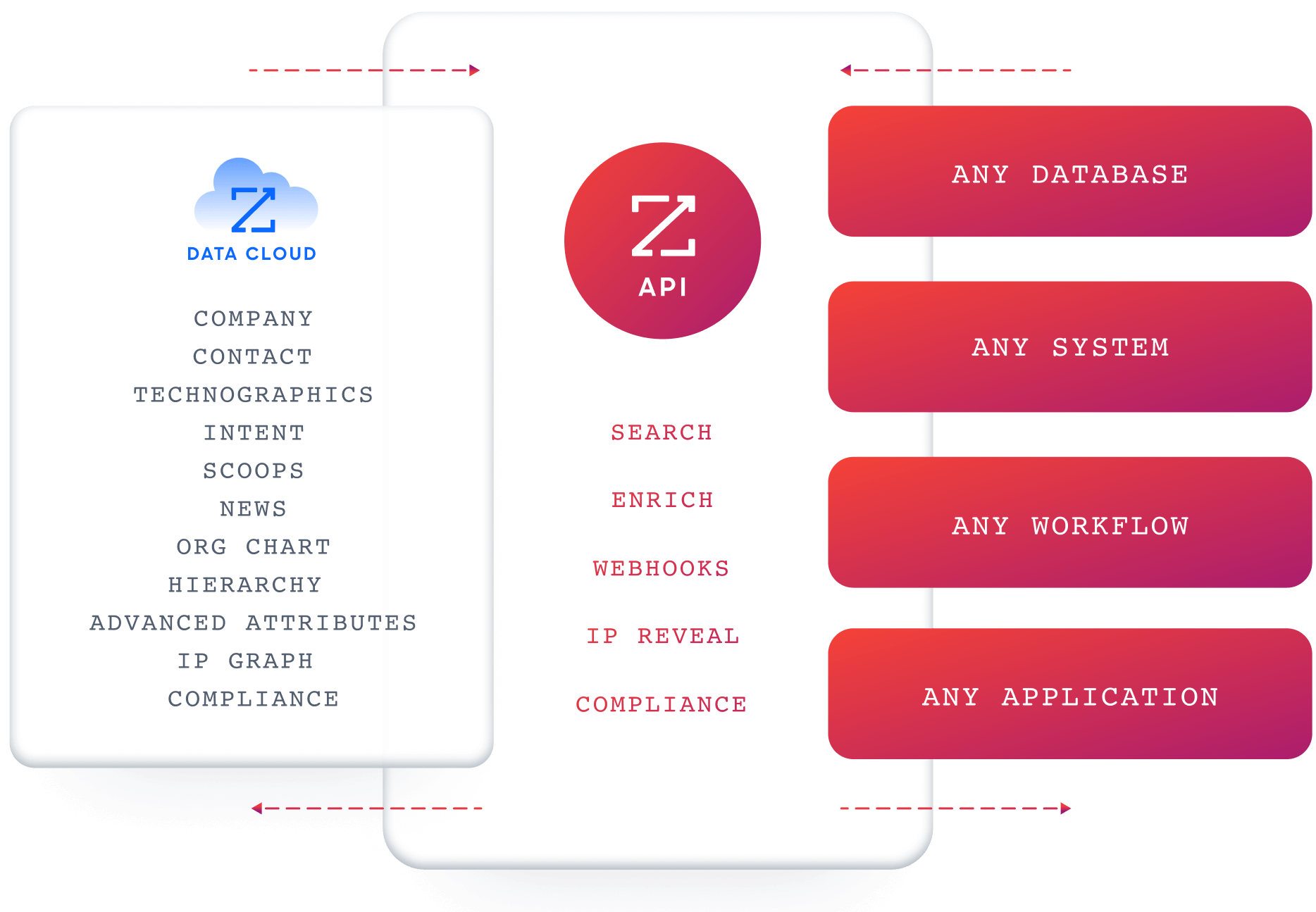
For teams that already use AEP or Oracle, ZoomInfo plugs in rather than competing. B2B intelligence from ZoomInfo can feed into AEP as a data source for profile enrichment, or into Oracle CX as prospecting intelligence for sales teams. The three platforms occupy different layers of the stack.
BDO Canada achieved an 87% reduction in time spent on updates to their internal data dashboards thanks to the ZoomInfo API. "The plug-and-play aspect of the API means I can integrate it very easily into any process and get information at a moment's notice." (BDO Canada)
Implementation complexity reflects different ambitions
The implementation timeline for each platform reveals what you're actually buying.
AEP implementations typically run six to eighteen months. TrustRadius reviewers describe the platform as one where "you need to be well trained and resourced to use the product" and note that "the time commitment to learn them is high since it's not a tool you can easily begin using without much training."
The platform requires upfront XDM schema design, data source mapping, identity namespace configuration, and merge policy setup before the first profile is unified. For organizations without dedicated data engineers or martech architects, AEP demands substantial investment before delivering value.
Oracle Fusion implementations reflect the platform's breadth. TrustRadius reviewers consistently flag difficulty accommodating local laws and regulations in multi-country deployments. Six-to-twelve-month timelines are common, with system integrators representing a second layer of cost. Oracle NetSuite is faster (three to four months using the Fast Track methodology), but Fusion and NetSuite serve different segments.
The OCI infrastructure layer is the easiest to start with, thanks to an Always Free tier that includes two compute VMs, two Autonomous Database instances, and 10TB of outbound data transfer with no time expiration.
ZoomInfo deploys on a different timeline entirely. GTM Workspace and GTM Studio are SaaS applications that connect to your CRM and begin surfacing intelligence immediately. There is no schema design phase, no data engineering prerequisite, and no SI partner engagement required.
The platform's 90-day onboarding program (which won Rocketlane's Golden Comet award) is structured, but teams are productive within weeks, not quarters.
This difference isn't just about speed. It's about organizational risk. An AEP or Oracle implementation that runs over budget or fails to deliver expected value is a seven-figure setback. ZoomInfo's free Lite tier and trial-first approach let teams prove value before committing.
Adobe Experience Platform vs. Oracle vs. ZoomInfo: Which should you choose?
The right choice depends on which problem you're solving and what infrastructure you already have.
Choose Adobe Experience Platform if:
Customer experience personalization across marketing channels is your primary objective
You already license multiple Adobe Experience Cloud products (Analytics, Target, Marketo Engage, Adobe Commerce)
You have dedicated MarTech engineering teams capable of managing XDM schema design and data governance
Your organization manages millions of customer profiles and needs real-time identity resolution
You're willing to invest six-to-eighteen months and significant budget in implementation
Choose Oracle if:
You need CX capabilities integrated with ERP, HCM, and supply chain on one data model
You already run Oracle Database or Oracle Fusion applications
You're evaluating across infrastructure, applications, and database, not just marketing technology
Your use cases span B2B and B2C with operational context requirements
You want AI embedded across business operations, not just marketing workflows
Choose ZoomInfo if:
B2B prospecting, pipeline generation, and sales intelligence are critical priorities
You need verified contact data, buyer intent signals, and company intelligence at scale
You want to start generating value in weeks, not months
You need intelligence that works inside your existing CRM, marketing platform, or custom tools
You want AI that reasons about why deals move, not just what happened
Start with ZoomInfo's free Lite tier or request a demo.
These platforms are not mutually exclusive. AEP and Oracle manage your internal customer and operational data. ZoomInfo provides the external B2B intelligence that tells you who to target next and why they're ready to hear from you. The most effective enterprise GTM stacks use both: a system of record for customer experience, and an intelligence layer for go-to-market execution.
Adobe Experience Platform vs. Oracle vs. ZoomInfo FAQ
What is the fundamental difference between Adobe Experience Platform, Oracle, and ZoomInfo?
Adobe Experience Platform is a customer data platform that unifies first-party interaction data into real-time customer profiles for personalization across marketing channels. Oracle is a broad enterprise technology company offering infrastructure, database, ERP, HCM, and CX applications on a unified data model.
ZoomInfo is a B2B go-to-market intelligence platform that provides verified contact data, company profiles, buyer intent signals, and AI-powered sales execution tools. AEP and Oracle manage internal data; ZoomInfo provides external B2B intelligence.
Which platform is best for B2B sales and marketing teams?
ZoomInfo is built for B2B go-to-market, with 500M contacts, 135M+ verified phone numbers, 200M+ verified business emails, and buyer intent data tracking 210 million IP-to-Organization pairings. AEP is strongest for B2C personalization and marketing orchestration.
Oracle CX covers B2B sales force automation but lacks the depth of ZoomInfo's prospecting intelligence and third-party data coverage, especially after Oracle shut down its Advertising & Data Cloud in September 2024.
How do pricing models compare across the three platforms?
AEP uses profile-volume-based pricing with no public rates, requiring enterprise sales engagement and certified implementation partners. Oracle's pricing varies by product: OCI infrastructure is competitively priced and transparent, but Fusion application and NetSuite pricing is quote-only with complex licensing.
ZoomInfo uses consumption-based pricing and is the only one of the three that offers a permanent free tier (ZoomInfo Lite) and a 7-day free trial.
Can these platforms work together, or are they competitors?
They occupy different layers of the enterprise stack and can work together. ZoomInfo's B2B intelligence (contacts, companies, intent signals) can feed into AEP as a data source for profile enrichment or into Oracle CX for sales prospecting. ZoomInfo's API and MCP server are designed for exactly this type of integration.
The platforms solve different problems: AEP manages customer experience data, Oracle manages enterprise operations, and ZoomInfo provides go-to-market intelligence.
Which platform has the strongest AI capabilities?
Each platform's AI serves a different purpose. AEP's Agent Orchestrator automates marketing workflows like audience creation, journey design, and content production. Oracle's Fusion Agentic Applications automate business operations across finance and supply chain, and its AI Database 26ai embeds AI at the SQL layer for natural-language queries and in-database agent workflows.
ZoomInfo's GTM Context Graph uses AI to reason across sales signals and outcomes, powering AI agents that handle account research, outreach drafting, and deal intelligence for revenue teams.
How long does each platform take to implement?
AEP implementations typically run six to eighteen months and require dedicated data engineering teams for XDM schema design and identity configuration. Oracle Fusion implementations take six to twelve months, though Oracle NetSuite can deploy in three to four months. ZoomInfo deploys in weeks with no schema design or data engineering prerequisite.
ZoomInfo's structured 90-day onboarding program covers planning, technical implementation, and adoption, but teams are productive within the first weeks.
What happened to Oracle's advertising and data cloud?
Oracle's Advertising & Data Cloud, built on the BlueKai DMP acquisition, reached end of life on September 30, 2024. Third-party cookie deprecation made the core DMP architecture unviable, and GDPR enforcement created regulatory risk. Oracle has fully exited the advertising data business. B2B teams that relied on Oracle's third-party audience data now need alternative intelligence sources.
Which platform has the best data governance and compliance?
AEP has the most developed marketing data governance framework, with schema-level data usage labeling that propagates automatically to all downstream datasets and automated policy enforcement at the point of activation. Oracle holds the broadest set of compliance certifications, including FedRAMP, HIPAA, multiple ISO standards, and regional certifications across Americas, EMEA, and Asia Pacific.
ZoomInfo maintains ISO 27001, ISO 27701, SOC 2 Type II, and TRUSTe GDPR/CCPA validations, all renewed annually. The right choice depends on your regulatory requirements and which data types you need to govern.
