
If you're comparing Adobe Experience Platform and SAP, you're weighing two enterprise platforms that approach business technology from opposite ends. Adobe built a specialist platform for customer data and experience delivery. SAP built a suite covering everything from financial accounting to warehouse management, with customer experience as one pillar among many.
The questions you should ask:
Do you need a dedicated customer data platform, or a business operations suite with CX capabilities included?
Are you already invested in the Adobe or SAP ecosystem, and how deep is that commitment?
Is real-time personalization across marketing channels your primary goal, or do you need finance, supply chain, and HR unified alongside your customer strategy?
How much implementation complexity can your organization absorb, and how long can you wait for results?
Does your B2B team also need prospecting intelligence and verified contact data to fill its pipeline?
In short, here's what we recommend:
Adobe Experience Platform is the right choice for marketing-led enterprises that need to unify customer data from every touchpoint and deliver personalized experiences across channels. Its Real-Time Customer Profile merges online, offline, and CRM data into continuously updated profiles, while applications like Real-Time CDP and Journey Optimizer put that data to work. Adobe has been named a Leader in the Gartner Magic Quadrant for Digital Experience Platforms for eight consecutive years. The trade-off: AEP demands heavy implementation investment, locks you into the Adobe ecosystem for full value, and is priced for large enterprises.
SAP is built for global enterprises that need every business function running on one data model. With 400,000+ customers across 180+ countries and modules spanning finance, supply chain, procurement, HR, and customer experience, SAP offers breadth no single competitor matches. Its CX suite includes Sales Cloud, Commerce Cloud, and a Customer Data Platform that connects front-office engagement with back-office ERP data. The trade-off: SAP implementations are among the most complex in enterprise IT, pricing is opaque, and the user experience still carries the weight of decades of accumulated functionality.
Both platforms handle customer data and business operations well. But for B2B companies, neither specializes in a critical layer: finding and reaching the right prospects. The best customer journey means nothing if your sales team can't identify who to target, verify their contact information, or detect when they're in market.
ZoomInfo is an AI-powered go-to-market platform that fills the B2B prospecting gap both Adobe and SAP leave open. Built on a B2B dataset of 500M contacts, 100M companies, 135M+ verified phone numbers, and 200M+ verified business emails, ZoomInfo's GTM Context Graph (processing 1.5B+ data points daily) combines this data with your CRM records, conversation transcripts, and behavioral signals to reveal not just what's happening in your deals, but why. Whether your customer data lives in Adobe Experience Platform, SAP, or both, ZoomInfo provides the prospecting intelligence that tells your team which accounts to pursue, when to engage, and what to say. Access it through GTM Workspace for sellers, GTM Studio for marketers and RevOps, or APIs and MCP in any front-end.
If building a B2B pipeline with verified contact data and real-time intent signals sounds like the missing piece, see how ZoomInfo works.
Adobe Experience Platform vs. SAP vs. ZoomInfo at a glance
Adobe Experience Platform | SAP | ZoomInfo | |
|---|---|---|---|
Core purpose | Customer data unification and experience delivery | Integrated enterprise business suite (ERP, finance, HR, supply chain, CX) | B2B prospecting intelligence and go-to-market execution |
Primary buyer | CMOs, CDOs, enterprise marketing teams | CIOs, CFOs, enterprise operations leaders | Sales, marketing, and RevOps leaders |
Data focus | Customer profiles and experience data | Transactional business data across all functions | B2B contact, company, intent, and signal data |
AI approach | AEP Agent Orchestrator with 10 specialized agents | Joule with 50+ assistants and 200+ agents | GTM Context Graph processing 1.5B+ data points daily |
Implementation timeline | 6–18 months | 10 weeks (GROW) to 12+ months (RISE) | Weeks |
Pricing model | Profile-volume-based, enterprise-only | FUE-based, enterprise-only | Consumption-based with free tier |
Free option | No | 30-day trial (S/4HANA Cloud) | ZoomInfo Lite (permanent free tier) |
Best for | Personalizing existing customer experiences | Running integrated global business operations | Finding and engaging new B2B prospects |
CX specialist vs. enterprise suite: a foundational difference
Adobe Experience Platform and SAP approach enterprise technology from different starting points.
Adobe built AEP as a customer data platform, designed to ingest and unify data from any source into customer profiles you can act on. Every capability (segmentation, activation, journey orchestration, analytics) sits on a shared data foundation using the Experience Data Model (XDM) as its universal schema.
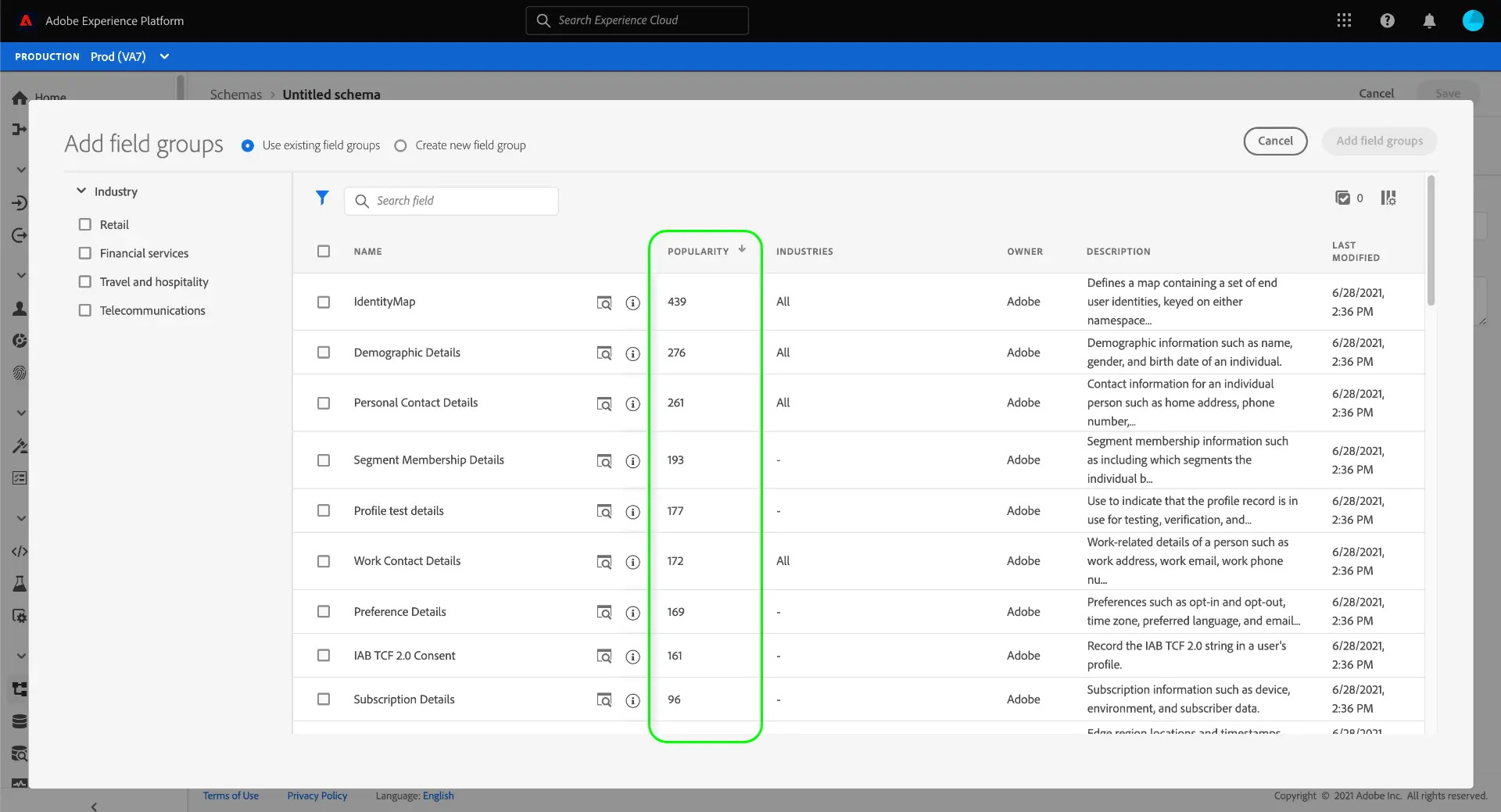
Source: AEP
The platform powers over one trillion experiences per year. It does one category of things well: capturing who your customers are and delivering personalized experiences at every touchpoint.
SAP started as an ERP company in 1972 and expanded outward. Its current suite covers seven pillars: Financial Management, Spend Management, Supply Chain Management, Human Capital Management, Customer Experience, Industry Solutions, and Enterprise Resource Planning.
The S/4HANA core runs finance, manufacturing, and logistics on an in-memory database. Customer experience lives in the SAP CX suite, which includes Sales Cloud, Service Cloud, Commerce Cloud, and a Customer Data Platform.
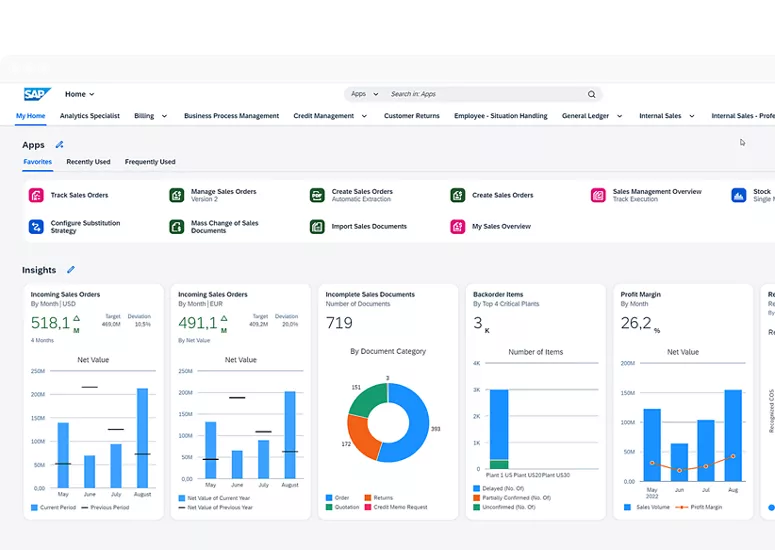
Source: SAP
The practical difference: if your primary challenge is unifying customer data from scattered sources and delivering personalized experiences across digital channels, AEP is the specialist. If your challenge is running a multinational organization where customer experience needs to connect to inventory, pricing, supply chain, and financial data, SAP provides that integration natively.
Neither platform was built to help B2B sales teams find new prospects, verify their direct-dial phone numbers, or detect when target accounts are researching your product category. That's a different problem.
The B2B prospecting gap neither platform fills
Here's what most Adobe-vs.-SAP comparisons miss: for B2B organizations, choosing a customer data platform or an enterprise suite solves only half the growth equation.
AEP excels at unifying customer data you already have. Its Real-Time Customer Profile merges identifiers across channels, and its Segmentation Service builds audiences from existing customer records. But AEP doesn't tell your sales team which companies are researching your product category this week.
It doesn't provide direct-dial phone numbers for the CFO at a target account. It doesn't detect when a competitor's customer just hired three new VPs in a buying role.
SAP's CX suite includes Sales Cloud with pipeline management and AI-powered deal scoring. It connects CRM to ERP data, giving sales reps visibility into order history and inventory. But SAP doesn't maintain a database of 500 million B2B professionals with verified contact information.
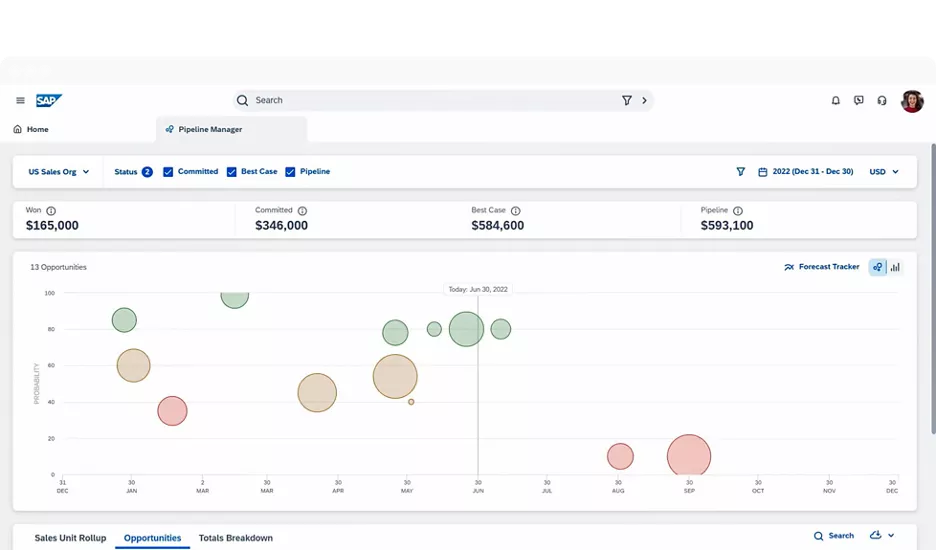
Source: SAP
It doesn't track buyer intent across 210 million IP-to-Organization pairings. It doesn't surface which accounts match your actual closed-won patterns.
ZoomInfo was built for this layer of the stack. The platform covers three data dimensions: identity data (500M contacts, 135M+ verified phone numbers, 120M direct-dial phone numbers, and 200M+ verified business emails), company context (100M companies with org charts, technographics, and company attributes across 30,000+ technologies), and dynamic signals that reveal when accounts are in-market.
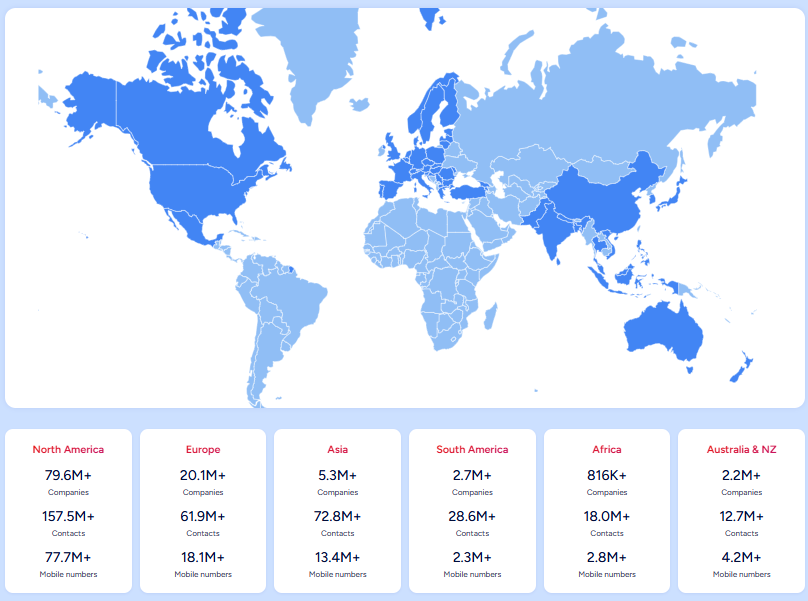
Independent testing confirms the quality: in a Fortune 500 competitive RFP analyzing 25 million contacts across vendors, the consultant concluded that "no other competitor came even close."
The GTM Context Graph goes further by unifying ZoomInfo's third-party data with your first-party CRM and conversation data, creating an intelligence layer that captures the connections between signals and outcomes.
A seller using GTM Workspace sees not just that a target account has high intent, but that the combination of executive sponsorship, competitive research, and budget approval patterns matches accounts that have historically closed. That intelligence feeds into whatever CRM, CX, or ERP platform manages the downstream relationship.
Redwood Logistics achieved a 99% reduction in CPC and a 310% increase in CTR using ZoomInfo's audience insights. As Chelsea Kenyon, Senior Director of Digital Strategy, explained: "It's not just the data itself. It's more about the right data at the right time to help us reach out with the right message across that full buyer journey." (Redwood Logistics)
Customer data unification takes different forms
AEP's core strength is its Real-Time Customer Profile, which merges data from multiple channels into a single view for each customer.
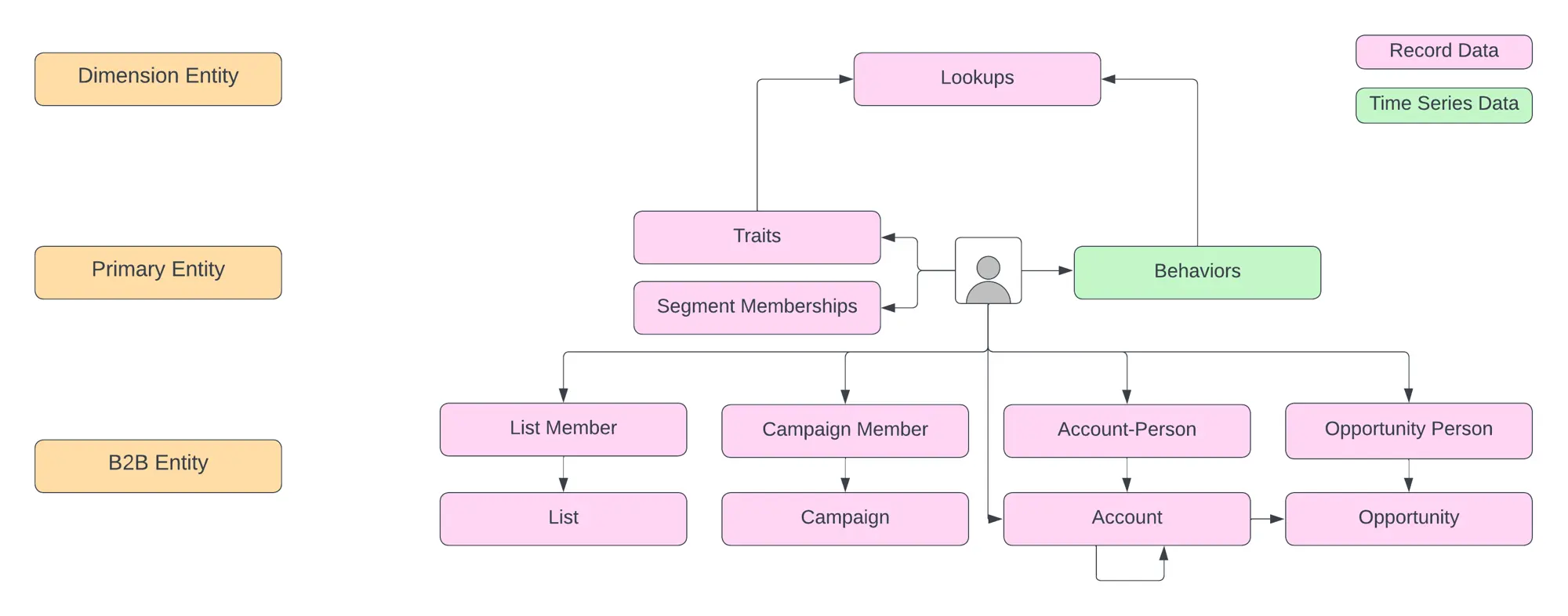
Source: AEP
The Identity Service resolves different identifiers (cookie IDs, CRM IDs, device IDs, email addresses) through deterministic identity stitching, building an identity graph that links anonymous and known interactions. Profiles update continuously as new data arrives through streaming ingestion.
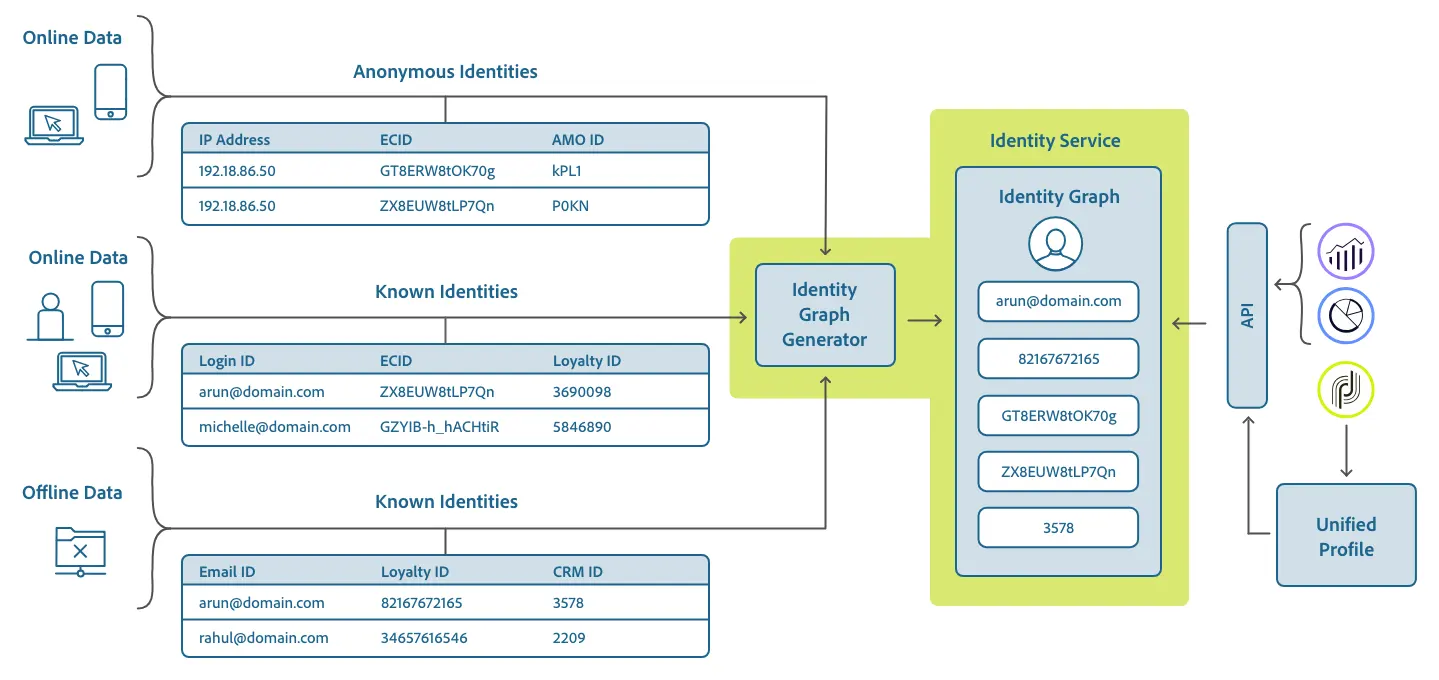
Source: AEP
The Segmentation Service evaluates audiences in three modes: streaming (near real-time as data lands), batch (scheduled 24-hour cycles), and edge (sub-millisecond evaluation for same-page personalization). AEP can also query data in external warehouses like Snowflake, BigQuery, or Databricks through Federated Audience Composition, building audiences without moving the data into the platform.
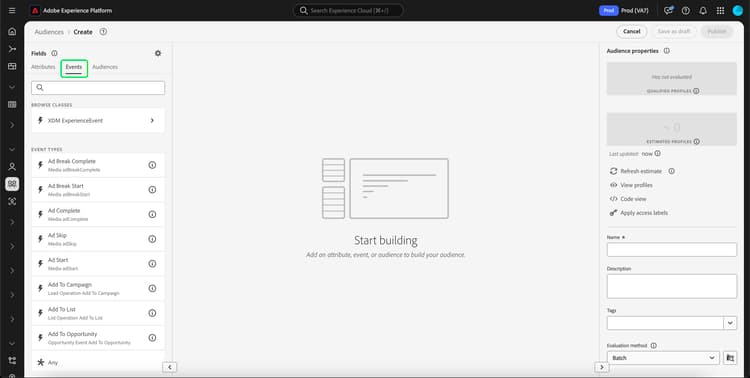
Source: AEP
SAP takes a different approach. The SAP Customer Data Platform unifies both front-end behavioral data and back-end ERP data (orders, supply chain, pricing) into a single profile.
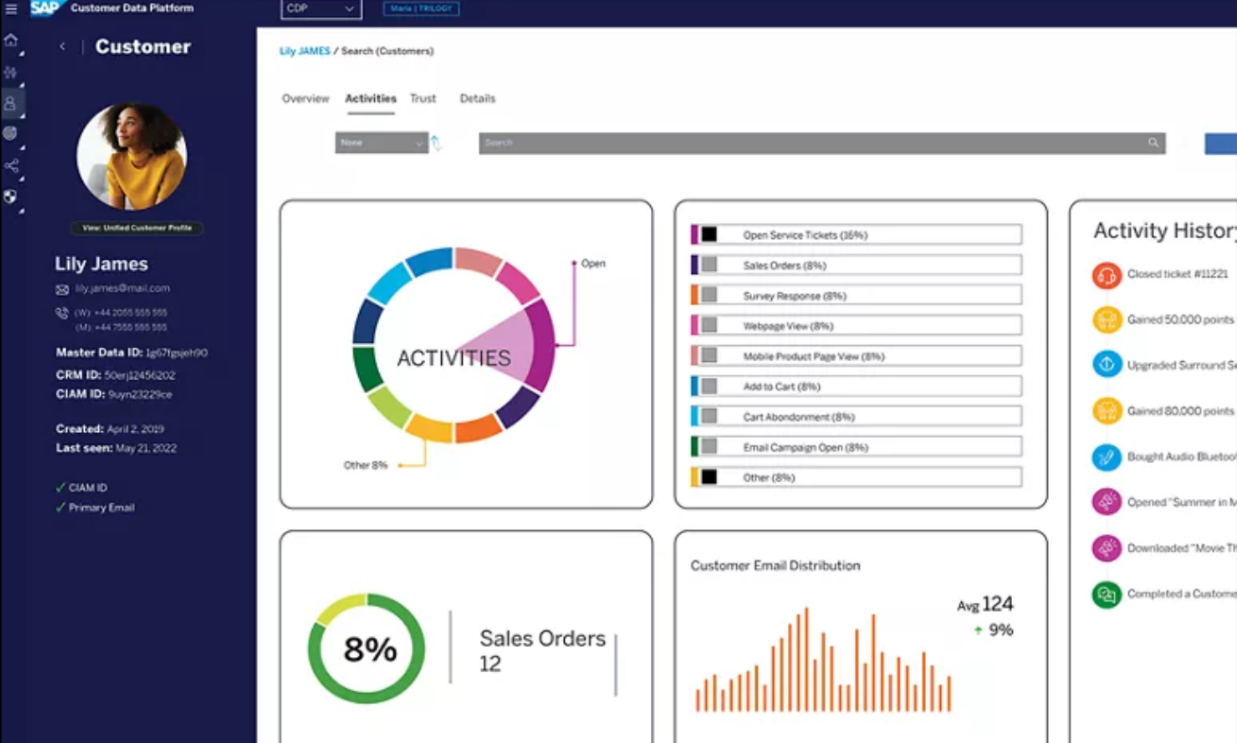
Source: SAP
The advantage is structural: when a service agent sees a customer's profile, it includes not just marketing interactions but real-time order status, inventory availability, and payment history pulled from SAP S/4HANA.
This native connection between CX and operations data is something AEP can only achieve through integration.
Both platforms require you to already have customers. Neither generates new B2B prospect data. If your database holds one million customer profiles, AEP and SAP will help you understand and engage those million people. But the next million? Finding them requires a different kind of data.
ZoomInfo provides that data layer. Its B2B database spans 500M contacts and 100M companies with 95% accuracy on first-party data, maintained by automated ML scanning of 28 million site domains daily and 300+ human researchers. Buyer intent signals track 210 million IP-to-Organization pairings, surfacing which companies are researching topics related to your solutions.
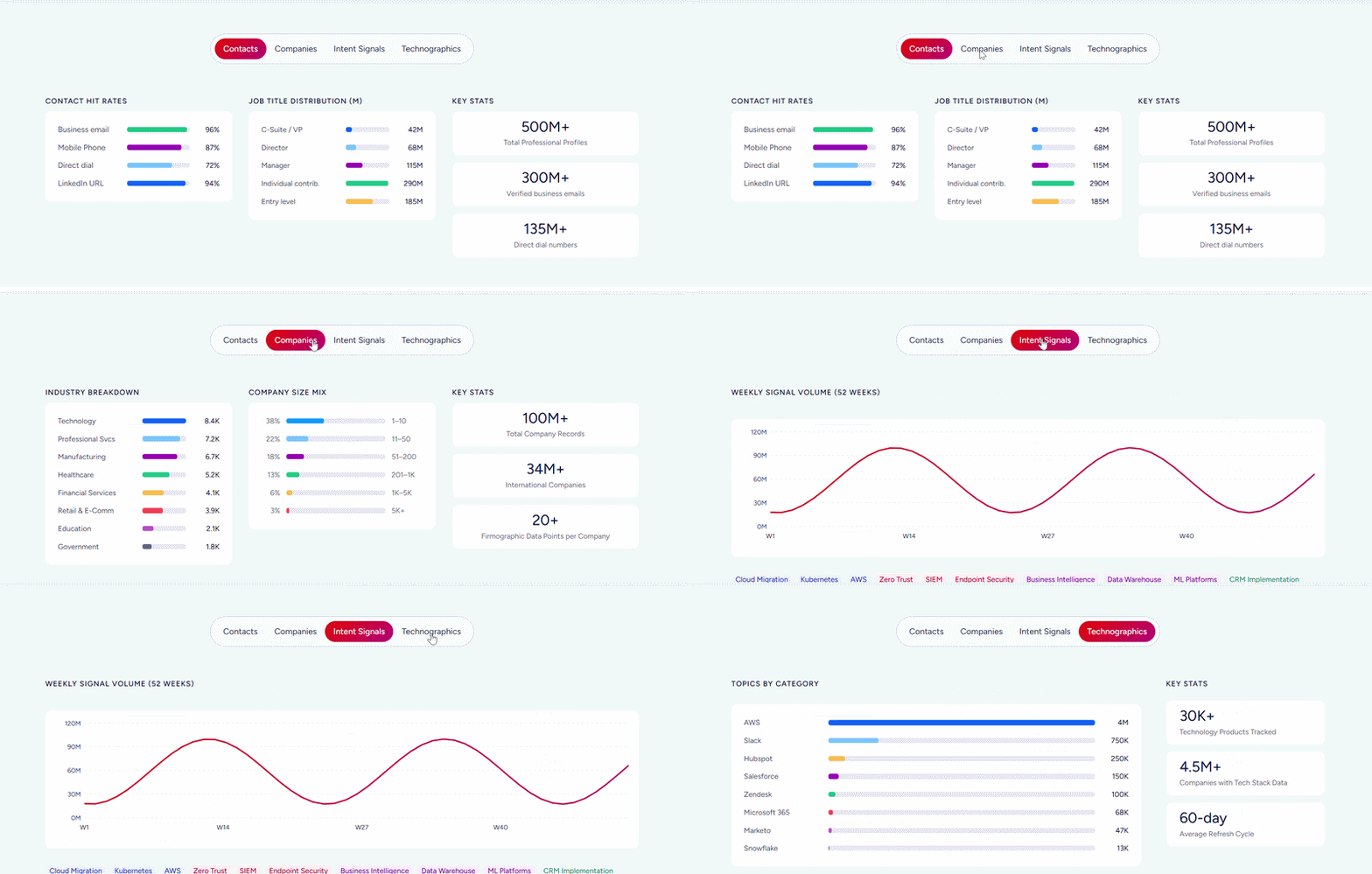
This prospecting intelligence feeds into whichever CX or ERP platform manages the customer relationship downstream.
"ZoomInfo gives us the information we need to execute. We don't have to go through and spend our time digging. It's already there, so we can be three steps ahead." (Vensure)
AI strategies reveal competing visions
All three platforms have made large AI investments, but their approaches reflect different assumptions about what enterprise AI should do.
Adobe launched the AEP Agent Orchestrator at Summit 2025, deploying ten specialized AI agents for audience creation, journey design, content production, data engineering, and experimentation. These agents run on natural-language prompts, letting marketers create audiences or design journeys without technical expertise.
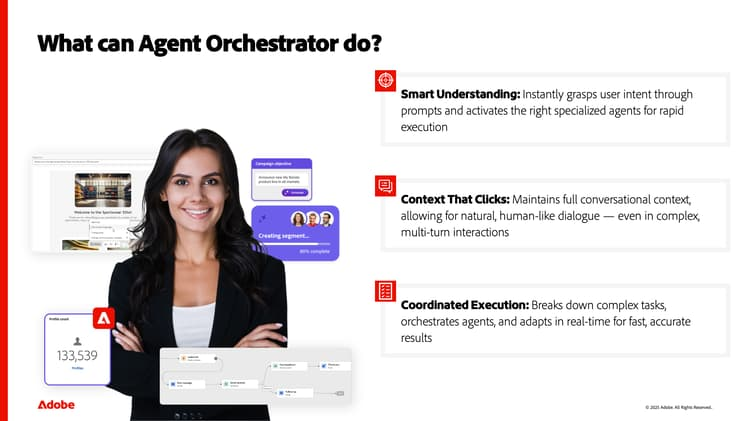
Source: AEP
Adobe's AI vision is Customer Experience Orchestration (CXO), where AI agents automate personalization across every channel. Adobe also introduced Brand Concierge, a consumer-facing application that lets brands deploy multimodal AI agents on their own properties.
SAP's AI strategy centers on Joule, which includes Joule Work (a conversational workspace), Joule Assistants (role-aware process coordinators), and Joule Agents (task executors).
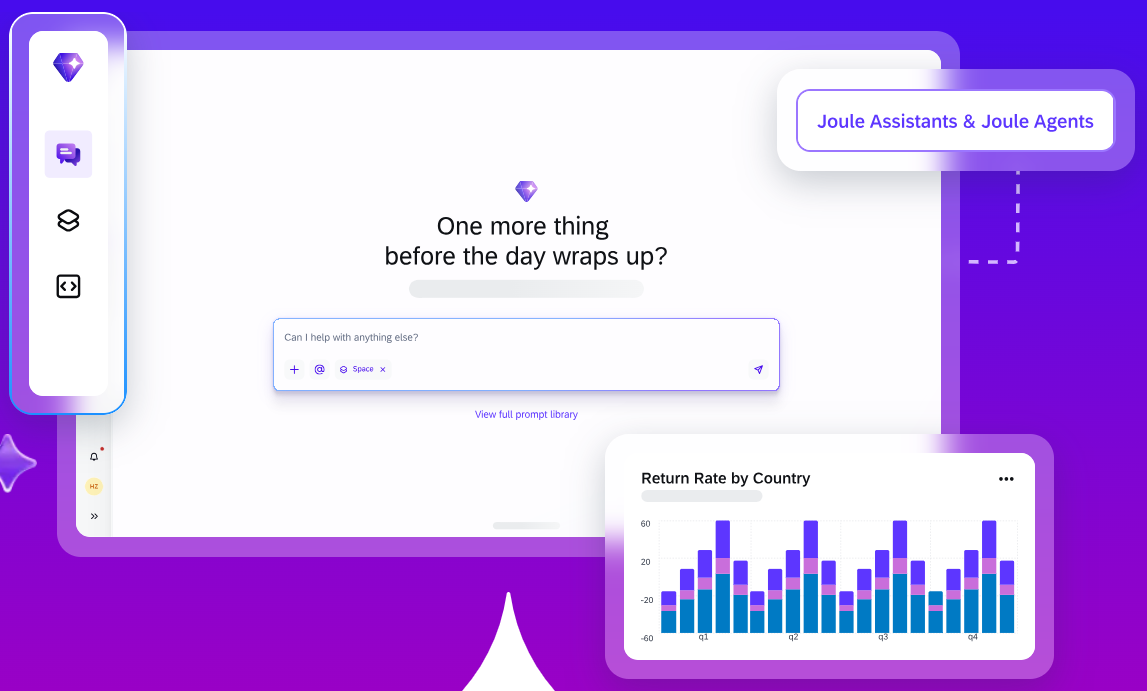
Source: SAP
At Sapphire 2026, SAP unveiled the "Autonomous Enterprise" vision with more than 50 domain-specific Joule Assistants orchestrating over 200 agents across finance, supply chain, procurement, HR, and CX.
The key difference: SAP's AI is grounded in transactional ERP data and process logic accumulated over 50 years.
ZoomInfo's AI operates in a different domain. The GTM Context Graph processes 1.5B+ data points daily, combining ZoomInfo's B2B data with a customer's CRM records, conversation transcripts, and behavioral signals.
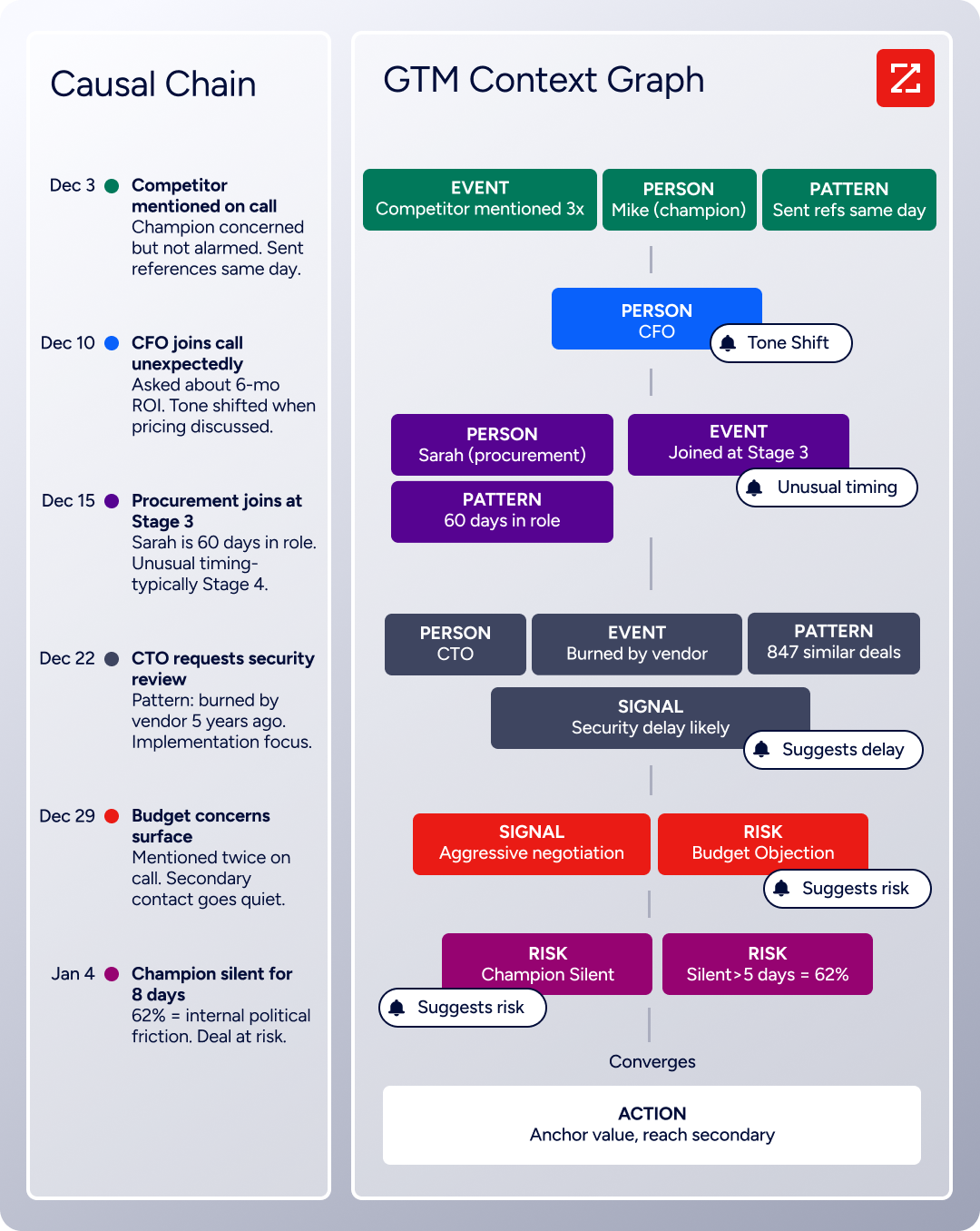
The distinction from generic "AI on CRM" tools: a CRM records that a deal moved from stage 3 to stage 4, but as ZoomInfo's CPO Dominik Facher writes, "The CRM recorded the state change. It has no record of why it happened." The GTM Context Graph captures why deals move, connecting executive sponsorship, competitive mentions, and buying signals to predict what happens next.
Adobe's AI optimizes how you engage existing customers. SAP's AI optimizes how you run business operations. ZoomInfo's AI optimizes how you find, prioritize, and win new business. For B2B companies, these are three distinct capabilities, and most organizations need all three.
Seismic's sales team attributed 39% of active pipeline to opportunities identified or influenced by ZoomInfo signals, boosted productivity by 54%, and saved 11.5 hours per week. As Toby Carrington, Chief Business Officer, put it: "That combination of our internal CRM data, external signals, and AI that's given all that context has helped us craft very specific account- and persona-based messages." (Seismic)
Implementation is where enterprise ambitions meet reality
Both AEP and SAP demand organizational commitment before delivering value.
Adobe Experience Platform implementations routinely run six to eighteen months for enterprise deployments. TrustRadius reviewers describe a platform where "you need to be well trained and resourced to use the product," noting that "the time commitment to learn them is high since it's not a tool you can easily begin using without much training."
AEP requires XDM schema design, data governance setup, and ongoing data quality management. Implementation typically involves certified SI partners (Accenture, Deloitte Digital, IBM, EY), adding six figures or more to the total cost. The platform targets "companies that are maturing or have matured in their digital offerings" with well-resourced teams.
SAP's implementation depends on which path you take. GROW with SAP targets mid-market companies new to SAP, with a public cloud edition that SAP says can activate in 30 days or less for the initial scope, at 50% lower implementation cost and 40–60% faster time-to-value.
RISE with SAP targets existing SAP customers migrating from legacy ECC to S/4HANA Cloud, a transformation that SAP says its agent-led tooling can cut by more than 35%.
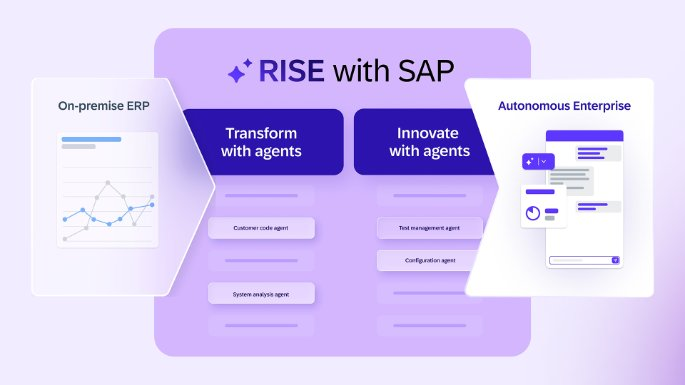
Source: SAP
In practice, RISE migrations still take six to twelve months or longer. G2 reviewers note a steep learning curve with cryptic transaction codes, and TrustRadius reviewers report users in "survival mode" for nearly a year after go-live.
ZoomInfo's implementation works on a different scale. GTM Workspace deploys in weeks, not months. The platform connects to CRMs (Salesforce, HubSpot, Microsoft Dynamics) through native integrations, and sellers can start using intent signals and verified contact data almost immediately.
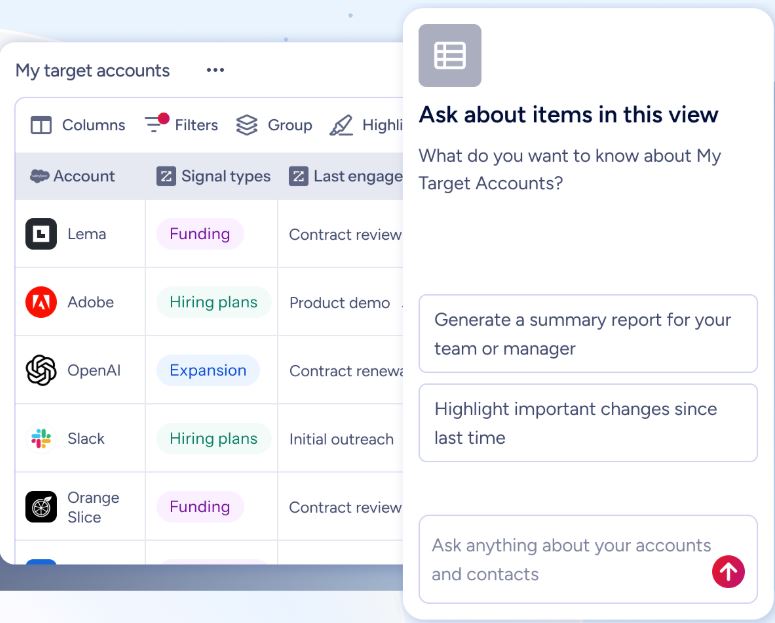
ZoomInfo redesigned its onboarding program from 30 to 90 days, producing a 25% improvement in customer satisfaction scores. For B2B teams waiting a year for their CX or ERP platform to go live, ZoomInfo can generate pipeline in the meantime.
Pricing opacity is the norm for both enterprise platforms
Neither Adobe nor SAP publishes pricing. Both require sales engagement for quotes.
AEP's pricing is profile-volume-based, metered against addressable audience (total customer profiles) and total data volume. The commercial vehicle is Real-Time CDP, sold in B2C, B2B, and B2P editions, each with Prime and Ultimate tiers. Ultimate unlocks Advanced Enterprise Destination Connectors, Advanced Enterprise Source Connectors, and Destination SDK for custom integrations.
A long list of add-ons (Healthcare Shield, Privacy and Security Shield, Data Distiller, Agent Orchestrator, Computed Attributes, additional sandboxes) are each priced separately. There is no free plan or self-serve trial.
SAP structures pricing around Full Use Equivalents (FUEs) rather than named-user seats. Users are classified into types (Advanced Use, Core Use, Self-Service Use), each converting to FUEs at different ratios. Like Adobe, the total cost includes separate line items for each module beyond core ERP.
G2 reviewers of SAP HANA Cloud note that "cost transparency can sometimes be challenging, especially when scaling resources dynamically." SAP does offer a free 30-day trial of S/4HANA Cloud Public Edition with limited functionality.
ZoomInfo uses consumption-based pricing with tiered plans across Sales, Marketing, and ABM product lines. Paid plans require custom quotes, but ZoomInfo offers two free entry points: ZoomInfo Lite (a permanent free tier with access to the B2B database, 10 monthly export credits, and WebSights Lite) and a 7-day free trial of the full platform.
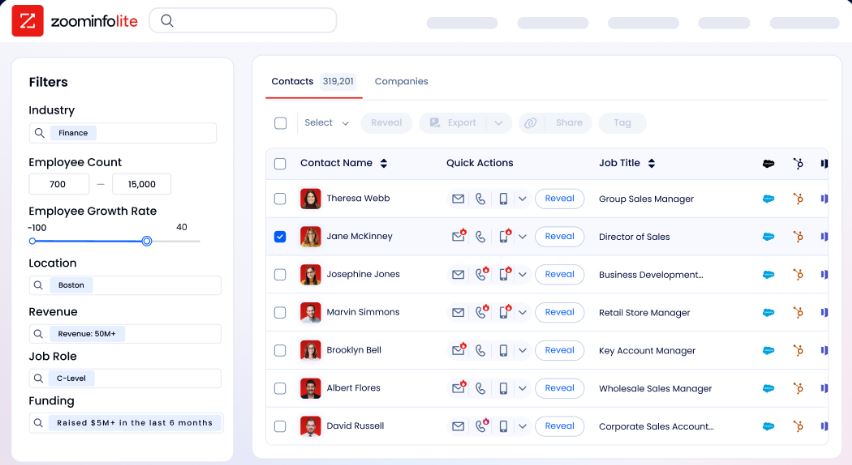
For enterprises evaluating large investments in AEP or SAP, ZoomInfo's lower entry barrier makes it easier to test B2B intelligence value before committing.
Integration ecosystems reflect different strategies
How each platform connects to the broader technology landscape reveals its priorities.
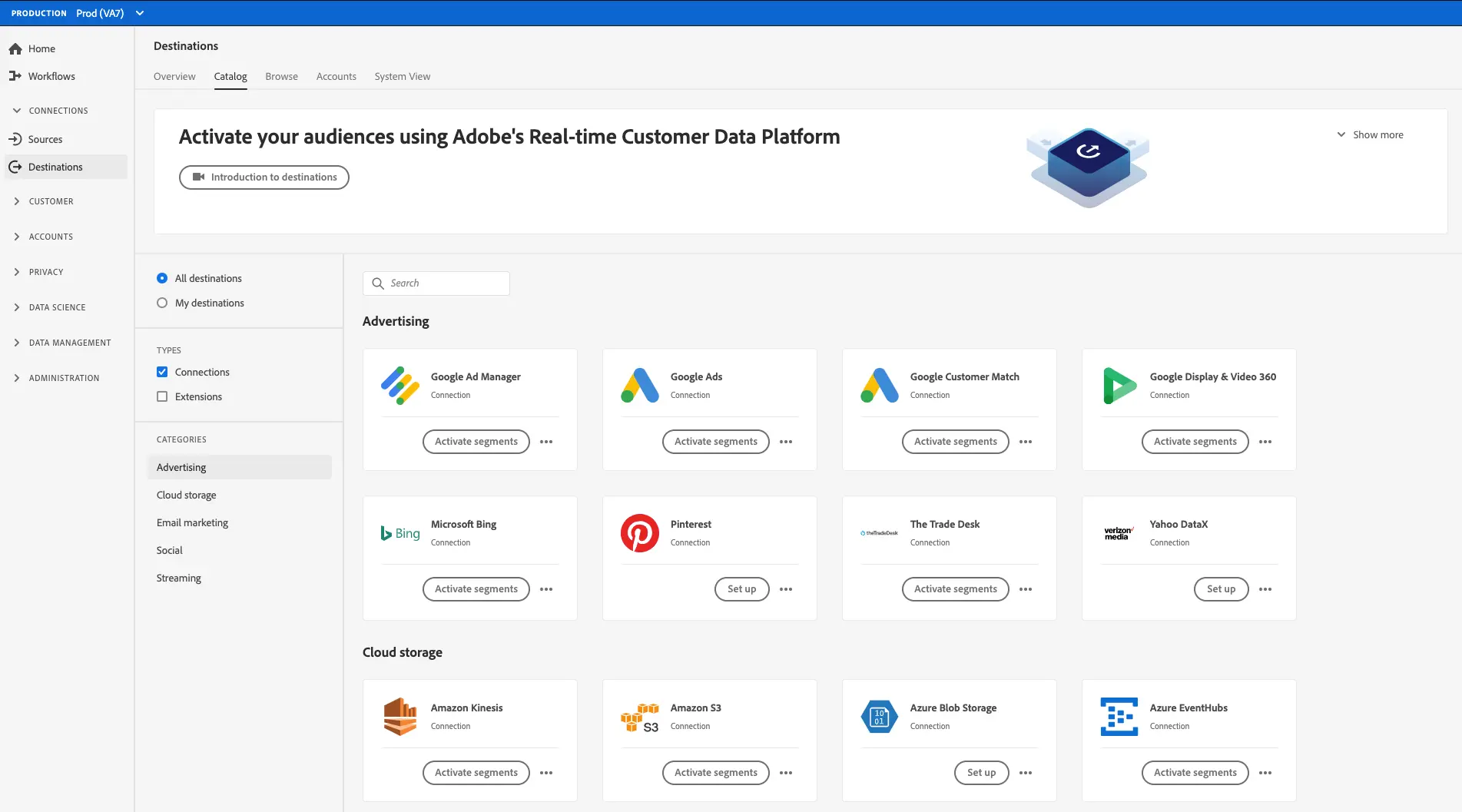
AEP ships with 70+ source connectors for data ingestion, spanning Adobe's own applications (Analytics, Marketo Engage, Audience Manager), cloud databases (Snowflake, BigQuery, Redshift), CRMs (Salesforce, Microsoft Dynamics), and streaming platforms (Amazon Kinesis, Azure Event Hubs). On the activation side, Destinations push audiences to advertising platforms, email tools, cloud storage, and CRMs.
The platform is built on RESTful APIs, and the Destination SDK lets partners build custom connectors. The strength is depth within the Adobe ecosystem; integrating with non-Adobe software often requires more effort, as SelectHub reviewers note.
Source: AEP
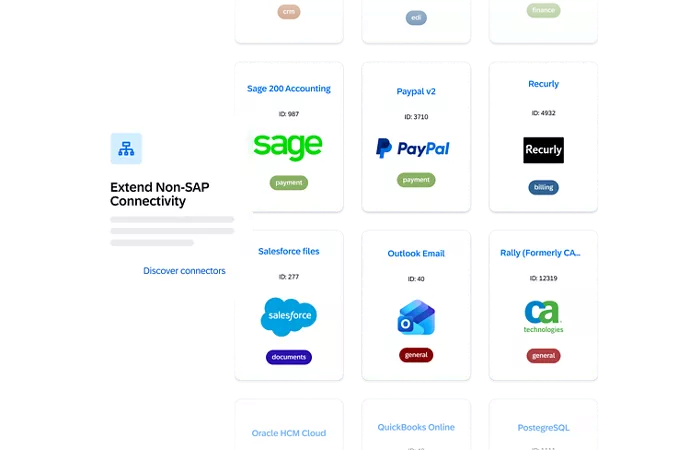
SAP runs the SAP Integration Suite, a platform with thousands of prebuilt connectors for SAP and third-party systems, over 160 prebuilt connectors to non-SAP cloud applications, and the SAP Business Network for B2B supplier collaboration. SAP's integration depth is strongest within its own suite (connecting S/4HANA to SuccessFactors to Ariba is well-mapped) and with enterprise middleware.
Source: SAP
Outside the SAP ecosystem, connections are possible but often require more configuration. New adapter additions in Q1 2026 include BambooHR, Microsoft Outlook, IBM MQ, Google BigQuery, and Anaplan.
ZoomInfo takes an open approach. The Marketplace lists 172+ integration partners spanning CRM, marketing automation, sales engagement, data warehouses, and AI platforms. Native integrations with Salesforce, HubSpot, and Microsoft Dynamics connect prospecting data to CRM workflows.
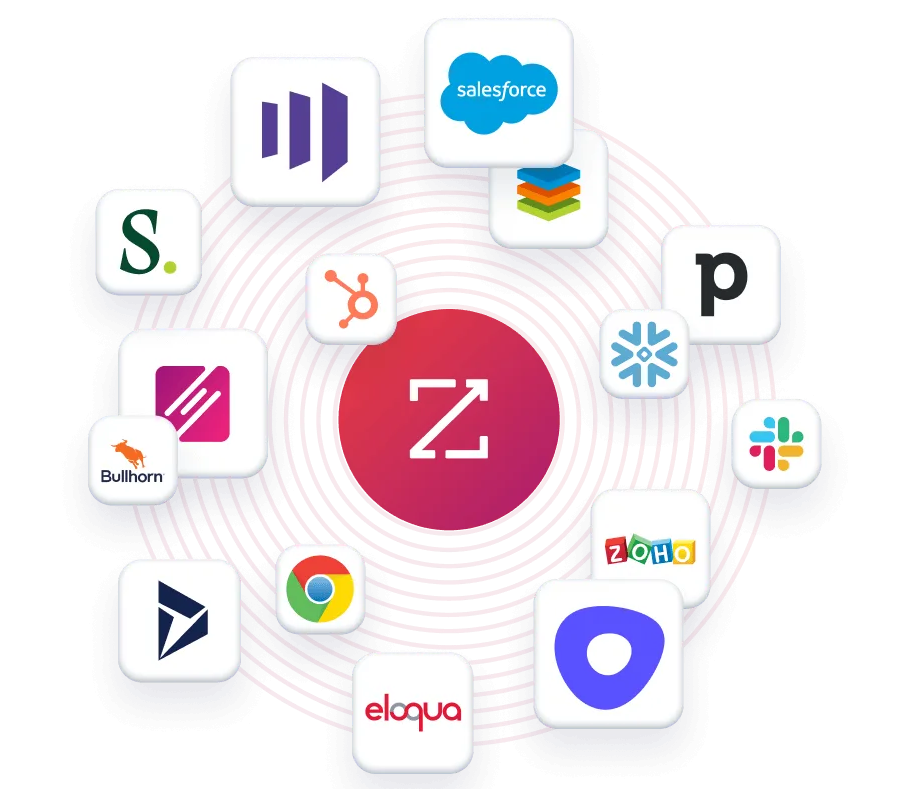
The Cloud Partners program delivers ZoomInfo data into AWS, Google Cloud, Snowflake, and Databricks. For AI-native workflows, the MCP server connects ZoomInfo data to any MCP-compatible AI agent (including Claude and ChatGPT), and API access is included in all relevant plans. The philosophy: ZoomInfo's intelligence should flow into whatever tools your team already uses, not replace them.
BDO Canada's Jerry Wilson, Senior Marketing Intelligence Analyst, reported an 87% reduction in time spent updating internal data dashboards thanks to ZoomInfo's API: "The plug-and-play aspect of the API means I can integrate it very easily into any process and get information at a moment's notice." (BDO Canada)
Adobe Experience Platform vs. SAP vs. ZoomInfo: Which should you choose?
The right choice depends on which problem is most urgent.
Choose Adobe Experience Platform if:
Your primary challenge is unifying customer data from scattered sources into profiles you can act on
You need real-time personalization across web, mobile, email, and advertising channels
You're already invested in Adobe's ecosystem (Analytics, Marketo Engage, Target, Commerce)
You have the budget and technical resources for a 6–18 month enterprise implementation
Your team includes dedicated MarTech engineers who can manage XDM schemas and data governance
Choose SAP if:
You need a suite covering finance, supply chain, HR, procurement, and CX under one data model
Your organization operates across multiple countries and requires regulatory localization
You're already running SAP ECC and need a cloud migration path (RISE with SAP)
You're a mid-market company looking for a cloud-native ERP with embedded AI (GROW with SAP)
Connecting customer experience to back-office operations data is a core requirement
Use ZoomInfo alongside either platform if:
Your B2B team needs verified contact data, direct-dial phone numbers, and business email addresses for prospecting
You want to identify which target accounts are researching your product category
You need sales intelligence that captures why deals move, not just that they moved
You want a platform that deploys in weeks and starts generating pipeline before your CX or ERP implementation finishes
You need B2B intelligence accessible in any tool via API, MCP, or native integrations
See how ZoomInfo powers your B2B pipeline with a free trial.
Adobe Experience Platform and SAP are both enterprise platforms, but they solve different problems. AEP specializes in customer data unification and experience personalization. SAP provides integrated business operations with CX capabilities included.
For B2B companies, neither replaces the need for dedicated prospecting intelligence: verified contacts, buying signals, and the contextual intelligence that turns data into deals. ZoomInfo provides that layer, feeding prospecting intelligence into whichever platform manages the customer relationship downstream.
The best B2B data strategy isn't choosing one platform. It's connecting the right ones.
Adobe Experience Platform vs. SAP vs. ZoomInfo FAQ
What is the fundamental difference between Adobe Experience Platform and SAP?
Adobe Experience Platform is a specialist customer data platform designed to unify customer profiles and deliver personalized experiences across marketing channels. SAP is an enterprise suite covering ERP, finance, supply chain, HR, procurement, and customer experience, with CX as one component. AEP goes deeper on customer data unification and real-time personalization; SAP goes broader across business operations and connects CX to back-office data like inventory, pricing, and order status.
Which platform is better for B2B customer experience?
SAP has stronger native B2B capabilities because its CX suite connects to ERP data. SAP Commerce Cloud supports B2B, B2C, and B2B2C models on a single codebase, and SAP Sales Cloud includes pipeline management and AI-powered deal intelligence. AEP supports B2B through its Real-Time CDP B2B Edition with account-level profiles, but its heritage and primary strength are in B2C personalization and marketing activation.
For dedicated B2B prospecting intelligence, ZoomInfo provides verified contact data, intent signals, and org chart mapping that neither platform covers.
How do the AI capabilities compare?
Adobe's AEP Agent Orchestrator deploys ten specialized agents for audience creation, journey design, content production, and data engineering, focused on marketing automation. SAP's Joule includes 50+ assistants and 200+ agents across finance, supply chain, HR, and CX, grounded in ERP process logic and transactional data.
ZoomInfo's GTM Context Graph processes 1.5 billion data points daily, combining B2B contact data with CRM records and conversation intelligence to surface why deals move and which accounts to prioritize.
Can these platforms be used together?
Yes. Adobe, SAP, and ZoomInfo occupy different layers of an enterprise technology stack. AEP handles customer data unification and experience personalization. SAP manages business operations and integrates CX with ERP.
ZoomInfo provides B2B prospecting intelligence that feeds into both. SAP has announced partnerships with Adobe at enterprise integration events, and ZoomInfo integrates with major CRMs that connect to both ecosystems.
Which platform is fastest to implement?
ZoomInfo deploys in weeks with native CRM integrations. SAP's GROW with SAP program can activate an initial S/4HANA scope in 30 days, though full implementations take longer. Adobe Experience Platform typically requires 6 to 18 months for enterprise deployments, with schema design and systems integrator involvement.
Both AEP and SAP implementations commonly involve partners like Accenture, Deloitte Digital, and IBM.
How do the pricing models compare?
Adobe Experience Platform uses profile-volume-based pricing with no published rates. SAP uses Full Use Equivalent (FUE) pricing, also custom-quoted. Both require enterprise sales engagement and add cost through add-on modules, implementation services, and ongoing support.
ZoomInfo uses consumption-based pricing with tiered plans and offers two free entry points: ZoomInfo Lite (a permanent free tier with 10 monthly export credits) and a 7-day free trial.
Which platform has the strongest data governance capabilities?
Adobe Experience Platform includes a built-in Data Usage Labeling and Enforcement (DULE) framework that enforces governance at the point of activation, along with Privacy Service for GDPR and CCPA request processing and optional Healthcare Shield for HIPAA readiness.
SAP holds ISO 27001, ISO 42001 (AI management), SOC 2, and TISAX certifications, and was designated a Critical ICT Third-Party Service Provider under the EU Digital Operational Resilience Act.
ZoomInfo maintains ISO 27001, ISO 27701, SOC 2 Type II, TRUSTe GDPR, and CCPA certifications. All three platforms offer enterprise-grade compliance, with specifics varying by regulatory requirement and industry.
Who should not buy these platforms?
AEP is not suited for small businesses, organizations without dedicated MarTech engineering resources, or companies seeking a standalone CDP outside the Adobe ecosystem. SAP is not suited for early-stage startups, companies needing rapid deployment without an SI partner, or organizations wanting transparent self-service pricing.
ZoomInfo is not suited for B2C companies or organizations with no outbound sales or data enrichment needs. Choosing the right platform starts with understanding which problem your organization needs to solve first.
Other tools worth evaluating side by side:
