
If you're comparing Altify vs. Salesforce, you're not comparing two separate platforms. Altify is 100% native to Salesforce. It runs inside your existing Salesforce org as a managed package. The real question is whether Salesforce's built-in sales tools cover your enterprise sales execution, or whether you need Altify's methodology enforcement and account planning layer on top.
That distinction matters, because the answer shapes how you spend six figures or more per year on your sales stack. Here are the questions that determine the right approach:
Do your reps follow a structured sales methodology, or does every deal unfold differently depending on who runs it?
Are your account plans living documents that drive daily action, or static slides that go stale between quarterly reviews?
Is your sales motion complex enough (large buying committees, six-to-seven-figure deals, multi-year cycles) to justify a dedicated execution layer?
Do your sellers have the data they need to map buying groups and find expansion opportunities, or are they working from incomplete CRM records?
Are you willing to invest in change management and services to drive adoption, or do you need tools your team can use immediately?
In short, here's what we recommend:
Salesforce (specifically Sales Cloud) is the CRM foundation. It manages your pipeline, tracks deals, automates workflows, and now deploys autonomous AI agents through Agentforce. With Einstein Lead Scoring, AI-generated account plans, pipeline management, and forecast rollups, Sales Cloud handles the full range of sales operations out of the box. For many organizations (especially those with straightforward sales motions or teams that haven't standardized on a formal methodology) Salesforce alone provides everything needed. The limitation: Salesforce's native tools are general-purpose. They track what happens in deals but don't enforce how deals should be run.
Altify adds a methodology execution layer on top of Salesforce. It embeds deal qualification frameworks (TAS, MEDDIC, or custom methodologies) into opportunity records, provides visual relationship and insight mapping for buying committees, and enforces stage-gate discipline so every rep follows the same playbook. For enterprise organizations running complex, multi-stakeholder deals where methodology consistency affects win rates, Altify turns Salesforce from a system of record into a system of execution. The trade-off: Altify only works on Salesforce, requires significant setup and change management investment, and account plans can consume 40+ hours per account in their standard configuration.
Both approaches address sales process and deal management. But neither solves a more basic problem: where does the intelligence come from? Relationship maps are only useful if you know who's on the buying committee. Account plans are only valuable if they're built on accurate, current data about the company. And deal qualification is only reliable if it's informed by real buying signals, not just what the rep remembers from the last call.
ZoomInfo is a GTM platform that provides the data and intelligence foundation enterprise sales teams need regardless of which execution approach they choose. With 500M contacts, 100M companies, 135M+ verified phone numbers, and 200M+ verified business emails in its B2B data platform, ZoomInfo delivers verified contact data, organizational insights, and buying signals that make account planning and deal execution work. Its GTM Context Graph fuses this data with your CRM records, conversation transcripts, and behavioral signals to reveal not just what's happening in a deal, but why. That intelligence flows through GTM Workspace for sellers, GTM Studio for marketers and RevOps, or APIs and MCP into any tool in your stack, including Salesforce.
If verified data and real-time buying signals sound like the missing piece, see how ZoomInfo works.
Altify vs. Salesforce vs. ZoomInfo at a glance
Salesforce (Sales Cloud) | Altify | ZoomInfo | |
|---|---|---|---|
Core function | CRM and sales automation | Methodology enforcement and account planning | B2B data intelligence and GTM execution |
Platform architecture | Standalone cloud platform | Salesforce-native managed package | Independent platform with Salesforce integration |
Sales methodology support | General-purpose stage tracking | Embeds any framework (TAS, MEDDIC, custom) into deal records | Methodology-agnostic; provides the intelligence that feeds any framework |
Account planning | AI-generated account plans (SWOT) | Living account plans with relationship maps, insight maps, whitespace analysis | Account research, buying group identification, org charts, and signal monitoring |
Contact data | Stores what reps enter | Uses contacts already in Salesforce | 500M contacts, 135M+ verified phone numbers, 200M+ verified emails |
Buying signals | CRM activity tracking | Deal qualification scoring from methodology adherence | Intent data, website visitor tracking, job changes, funding events, and hiring signals |
AI capabilities | Agentforce autonomous agents, Einstein scoring and forecasting | MaxAI for deal coaching, research automation, and relationship map population | GTM Context Graph, AI-drafted outreach, account summaries, buying group intelligence |
Pricing transparency | No published pricing; quote-based enterprise model | Custom-quoted; free tier available (ZoomInfo Lite) | |
Best for | Organizations needing a full CRM platform | Enterprise Salesforce teams running complex, methodology-driven sales | Teams that need verified data, buying signals, and AI-powered GTM execution |
Salesforce is the CRM foundation; Altify is the methodology layer on top
Understanding what you're comparing here matters.
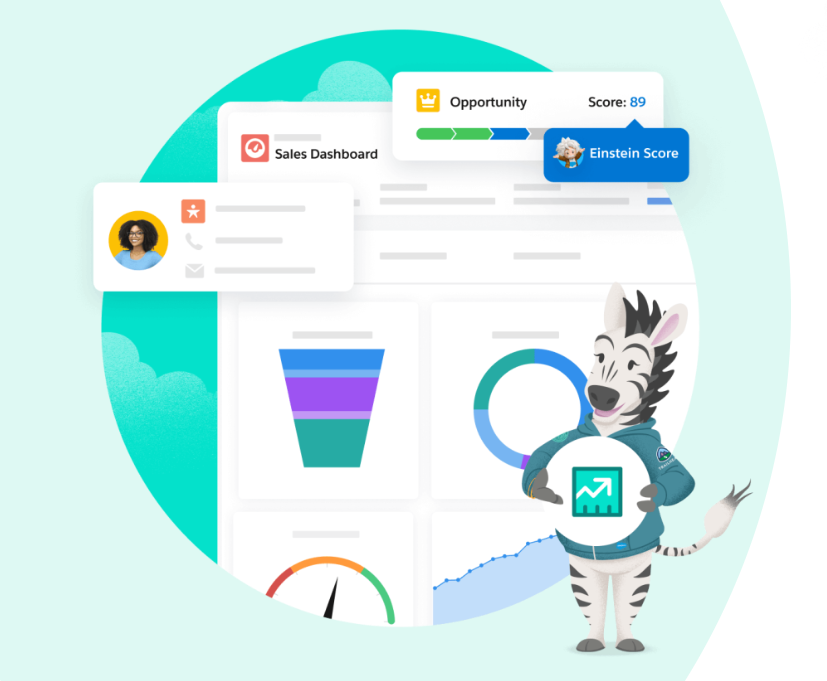
Salesforce is the system of record. It's where your deals, contacts, accounts, and activities live. Sales Cloud provides pipeline management, lead scoring, forecasting, quoting, and sales engagement tools.
Source: Salesforce
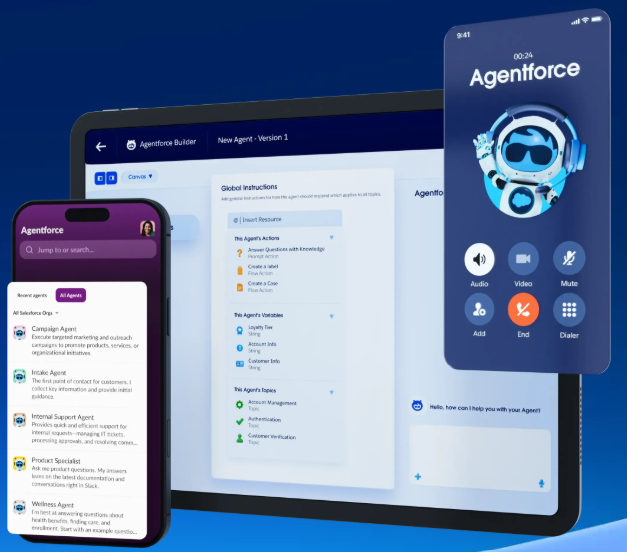
With Agentforce, it now deploys autonomous AI agents that handle account research, prospecting, coaching, and quoting.
Source: Salesforce
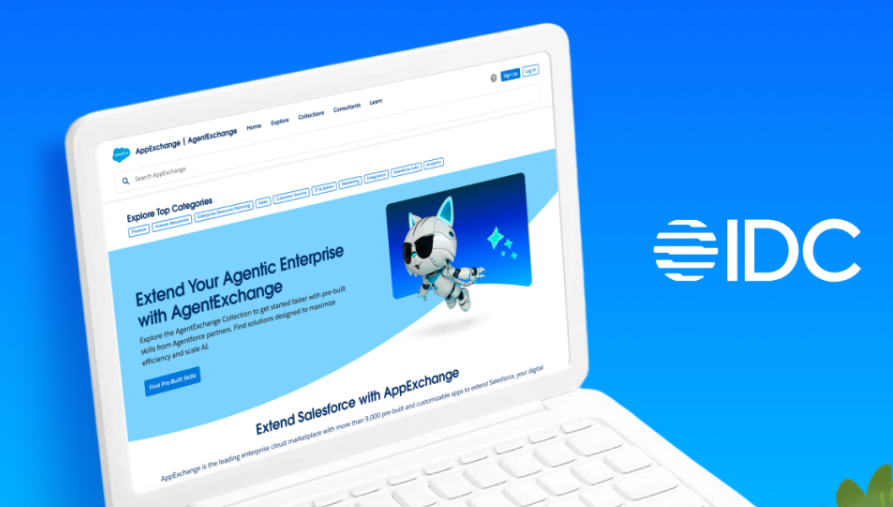
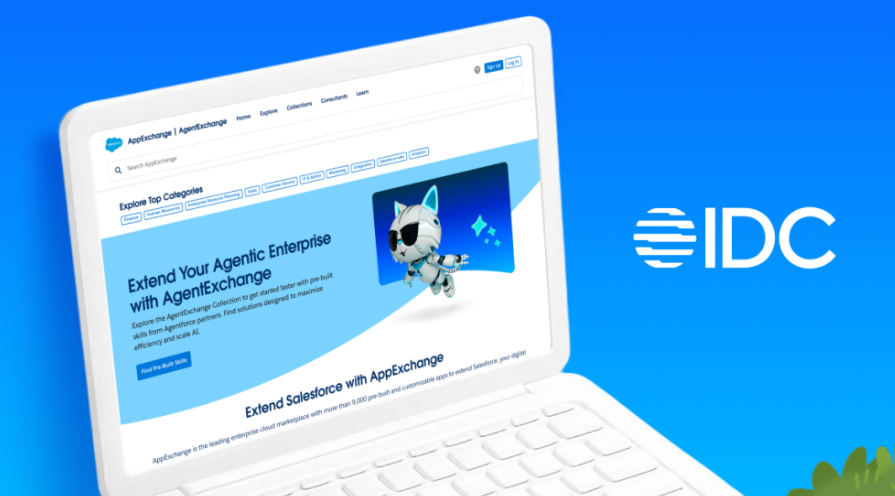
Salesforce has been the #1 CRM by IDC market share for over a decade, and its ecosystem of 9,000+ AppExchange apps means you can extend it in almost any direction.
Source: Salesforce
Altify sits inside that same Salesforce environment, but it serves a different purpose. Where Salesforce tracks deal data, Altify enforces deal discipline. It embeds a company's chosen sales methodology (whether TAS, MEDDIC, or a custom framework) into every opportunity record.
Each deal stage maps to a corresponding stage in the buyer's decision process. Qualifiers carry importance weightings, with an "Essential" tier that flags deal-critical criteria. The system calculates a Closure Probability score from objective qualifier completion, producing data-grounded forecasts rather than rep estimates.
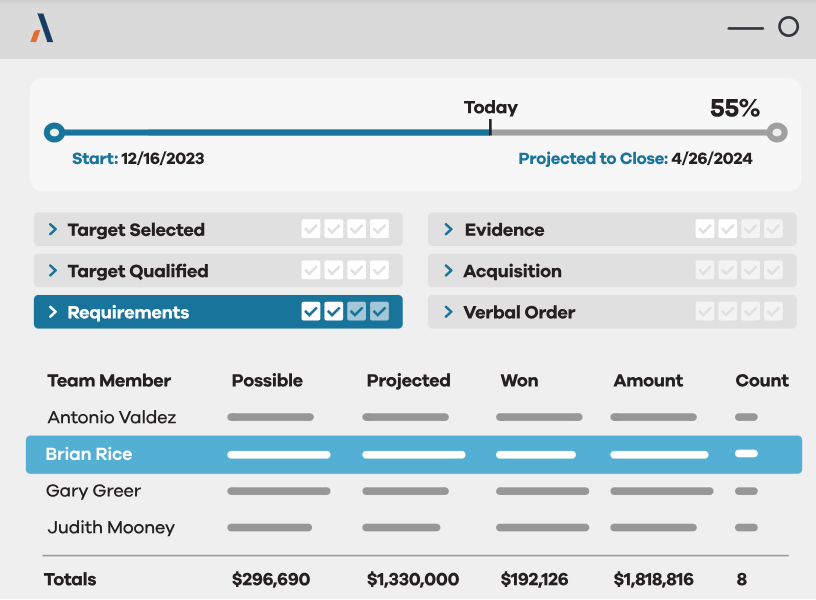
Source: Altify
The distinction matters in practice. Salesforce tells you a deal is in Stage 3. Altify tells you whether that deal qualifies to be in Stage 3, which buying committee members you haven't engaged, and what gaps need to be addressed before it can advance.
For organizations with straightforward sales motions, Salesforce's native capabilities are sufficient. For enterprise teams running six-to-seven-figure deals with large buying committees and long sales cycles, Altify's methodology enforcement can be the difference between consistent execution and deals that slip because each rep runs them differently.
Account planning: static documents vs. living strategy
Account planning is where the Salesforce-vs.-Altify distinction becomes most visible.
Salesforce Sales Cloud includes AI-generated account plans with SWOT analysis, pipeline health signals, and team selling capabilities. These features work for standard account management: tracking opportunities, monitoring pipeline, and coordinating team activity. But they're general-purpose tools designed to serve every Salesforce customer, from five-person startups to global enterprises.
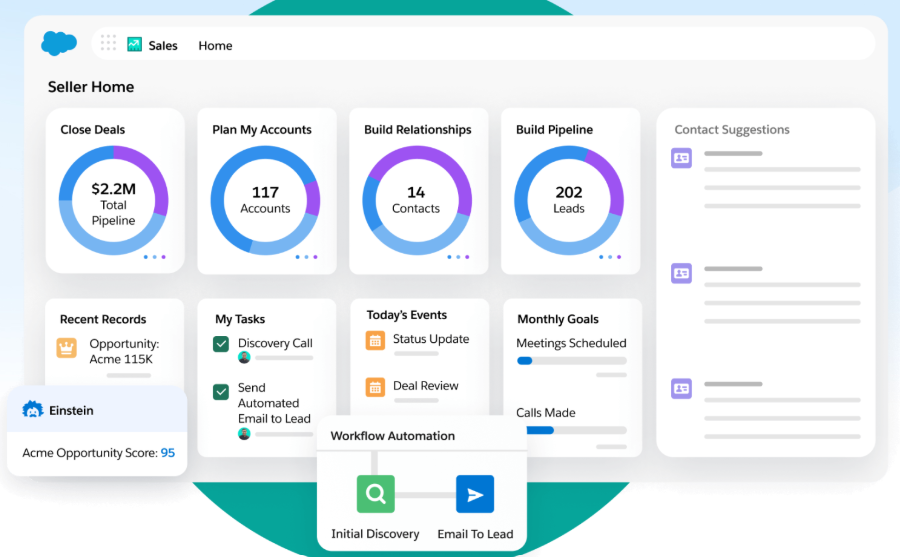
Source: Salesforce
Altify Accounts is built for strategic account management at scale. The core difference: Altify account plans are Salesforce records, not documents. They update in real time as opportunity data changes.
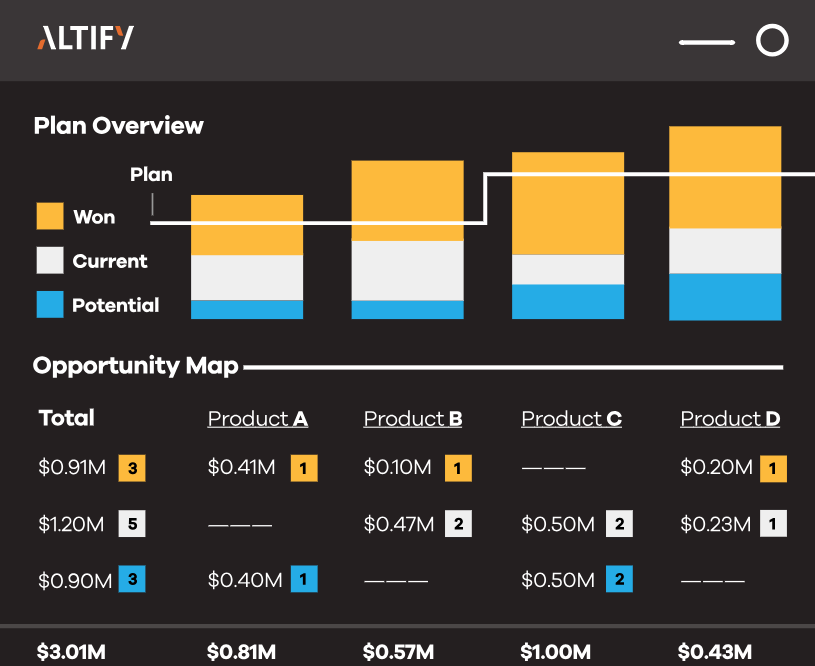
Source: Altify
The Opportunity Map visualizes whitespace across product families and account hierarchies, showing where cross-sell and upsell opportunities exist.
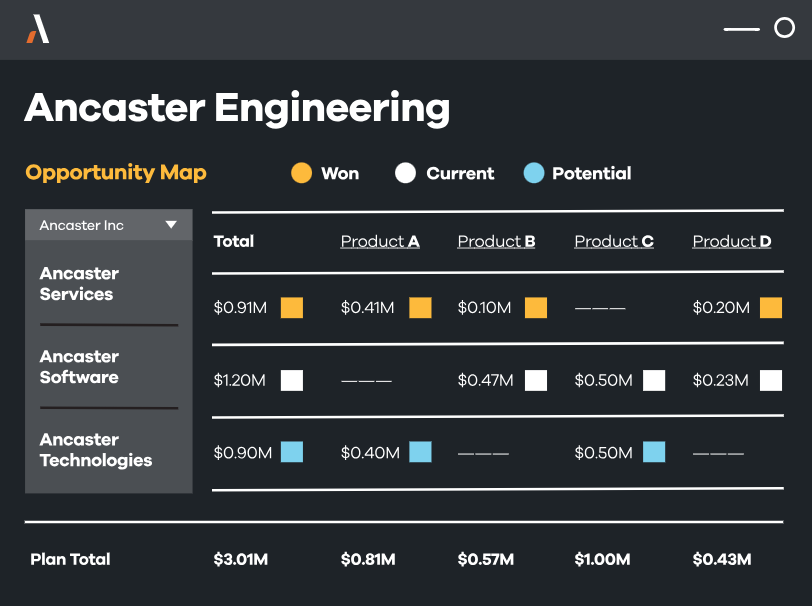
Source: Altify
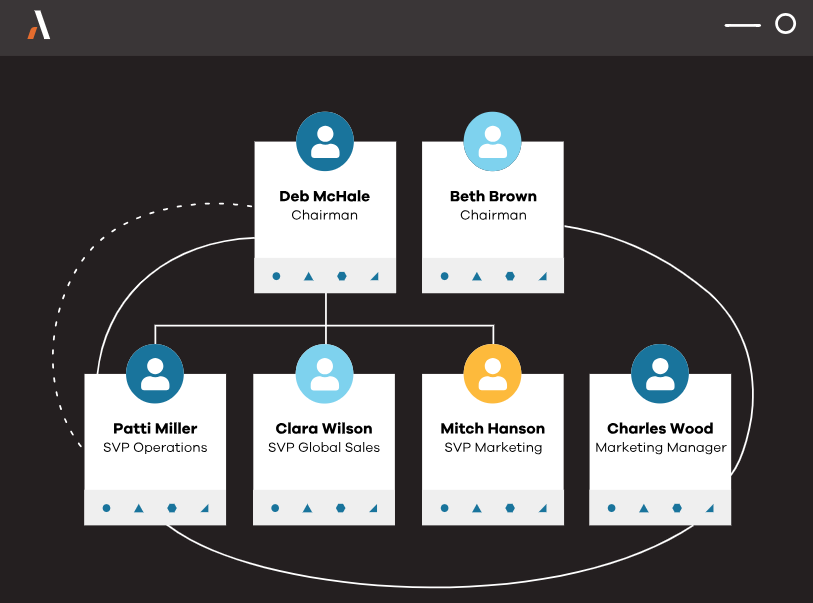
The Relationship Map tracks decision-makers, influencers, and blockers with color-coded relationship strength and influence lines that reveal political dynamics beyond the org chart. The Insight Map captures structured intelligence about account goals, pressures, initiatives, and obstacles.
Source: Altify
The trade-off is effort. TrustRadius reviewers note that Altify account plans are "overbuilt" in their standard configuration and can consume 40+ hours per account. The same reviewers report that "most users who begin using account plans quickly abandon them" due to setup difficulty. Altify acknowledges this by selling Revenue Enablement Services as an annual block of consulting hours, delivering roughly 5,000 hours of managed services annually to drive adoption and behavioral change.
This raises a practical question: what if the bottleneck isn't the planning template, but the data going into it?
The intelligence gap that neither Salesforce nor Altify closes
Salesforce stores what your reps enter. Altify structures how they enter it. Neither platform generates the intelligence that makes those entries accurate and complete.
A relationship map is only as good as the contacts on it. If your team knows three people at a target account but the buying committee has ten, your map has a seven-person blind spot. An insight map that captures goals and pressures is only useful if those insights come from real research, not assumptions. And an account plan that identifies whitespace requires knowing the account's actual technology stack, hiring patterns, and strategic direction.
This is where ZoomInfo changes the equation.
ZoomInfo's data platform covers 500M contacts, 100M companies, 135M+ verified phone numbers, 120M direct-dial phone numbers, and 200M+ verified business email addresses. That data is verified through a multi-source pipeline backed by 300+ human researchers, achieving up to 95% data accuracy. In a Fortune 500 competitive RFP analyzing 25 million contacts across vendors, an independent consultant concluded that "no other competitor came even close."

Source: ZoomInfo
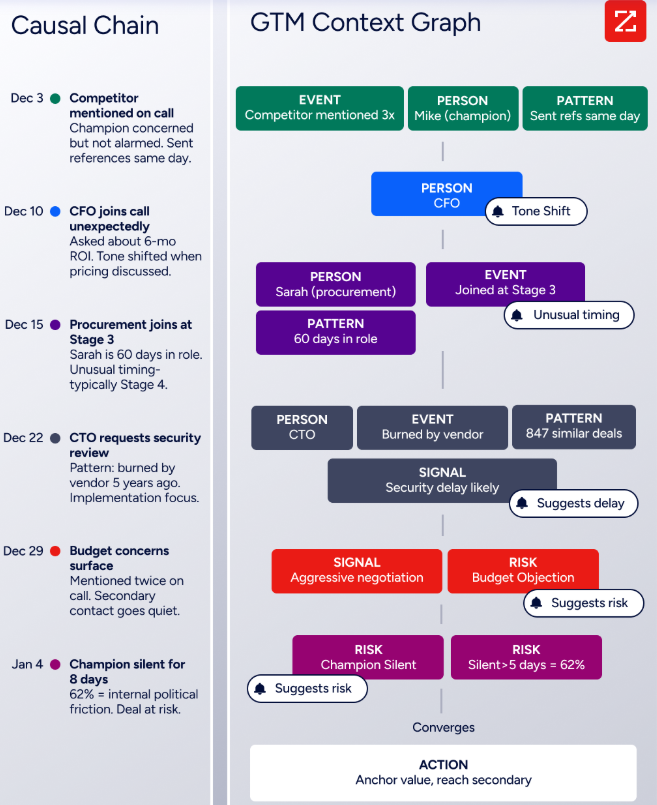
But scale alone doesn't explain the advantage. ZoomInfo's GTM Context Graph fuses this third-party data with your CRM records, conversation transcripts, email interactions, and behavioral signals (processing 1.5B+ data points daily) to build an intelligence layer that captures not just what happened in a deal, but why it happened.

Source: ZoomInfo
A CRM records that a deal's stage moved. The GTM Context Graph identifies that the CFO joining the last call and asking about six-month ROI matches the pattern behind closed-won deals in your segment, then connects that to third-party signals showing the company is hiring new VPs and researching your competitor.
That intelligence changes what account planning, deal qualification, and pipeline management can deliver.
"That combination of our internal CRM data, external signals, and AI that's given all that context has helped us craft very specific account- and persona-based messages. And people have responded to them right away." (Toby Carrington, CBO, Seismic)
AI capabilities take three different approaches
All three platforms have invested in AI, but their approaches reflect their different missions.
Salesforce's Agentforce deploys autonomous agents that handle entire workflows (prospecting, lead engagement, pipeline management, account research, sales coaching, and quoting) without constant human intervention.
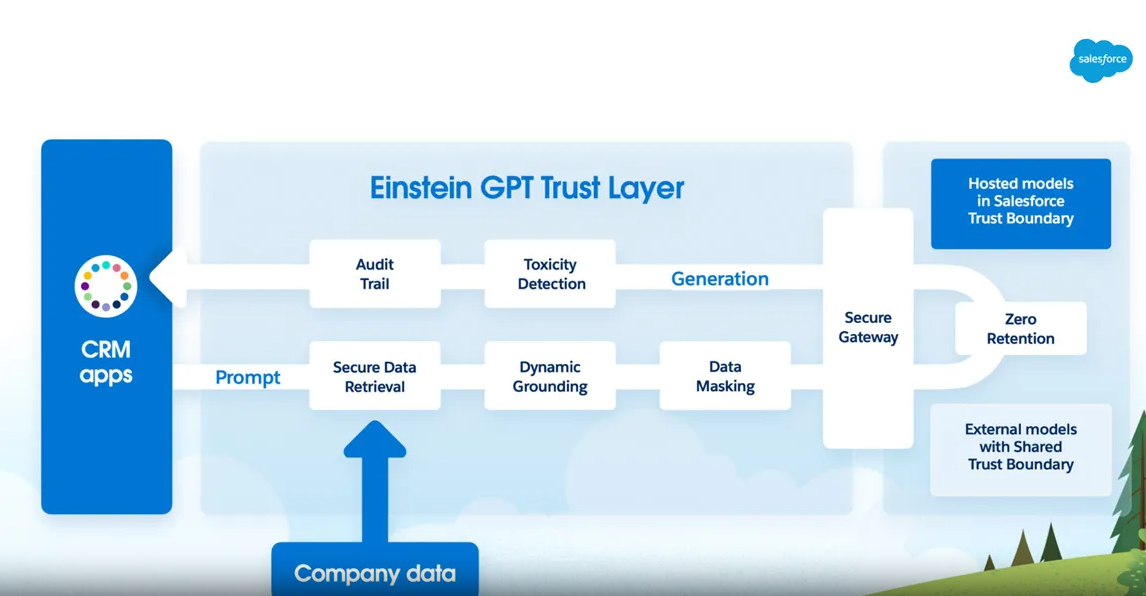
The Atlas Reasoning Engine uses a reason-act-observe-adapt loop, and the Einstein Trust Layer provides zero data retention with LLM partners, PII masking, and toxicity detection. This is broad AI applied across the entire CRM: Salesforce resolves 85% of support requests without human escalation. The limitation is that Agentforce reasons on CRM data. If the CRM data is incomplete or stale, the AI inherits those gaps.
Source: Salesforce
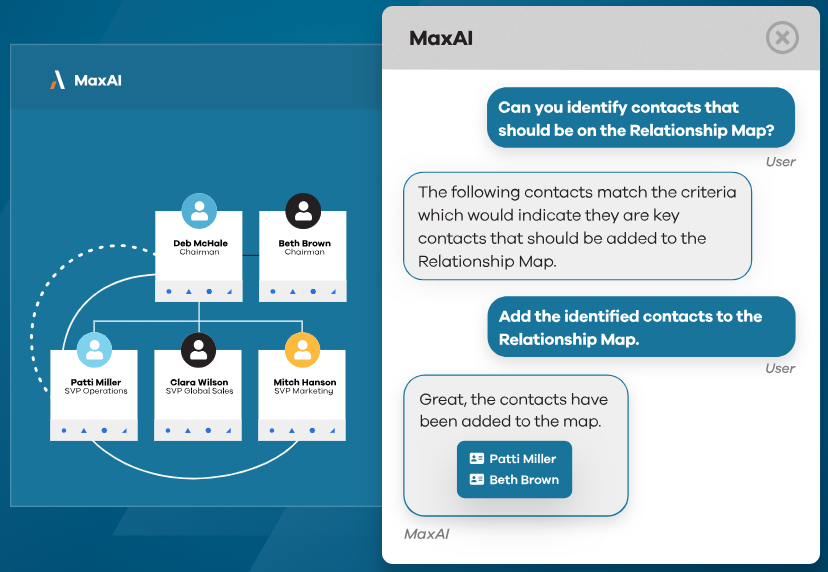
Altify's MaxAI is narrower. Built for Agentforce and running natively inside Salesforce, MaxAI automates account research, fills in missing contacts on relationship maps, surfaces buying insights, and delivers real-time deal risk coaching.
Source: Altify
It reads the actual process record (qualifier states, relationship map gaps, assessment fields) and adapts output to whatever sales methodology the organization has configured. MaxAI addresses the fact that only 30% of a seller's time is spent actually selling.
It can also write data back into Altify structures, creating actions, updating assessments, and linking contacts to decision criteria through a conversational interface. As of v9.18, Altify ships five MCP servers connecting its platform to external AI assistants like Claude, ChatGPT, and Copilot.
ZoomInfo's AI operates at a different layer. Rather than working within CRM records, ZoomInfo's GTM Context Graph connects the full spectrum of go-to-market data: CRM records, conversation intelligence from Chorus, email threads, product usage signals, and ZoomInfo's entire third-party data set.
Source: ZoomInfo
GTM Workspace AI agents answer three questions for every rep: who to contact, when to engage, and what to say. The results are measurable: Seismic attributed 39% of active pipeline to opportunities identified or influenced by ZoomInfo signals and reported 54% productivity gains.
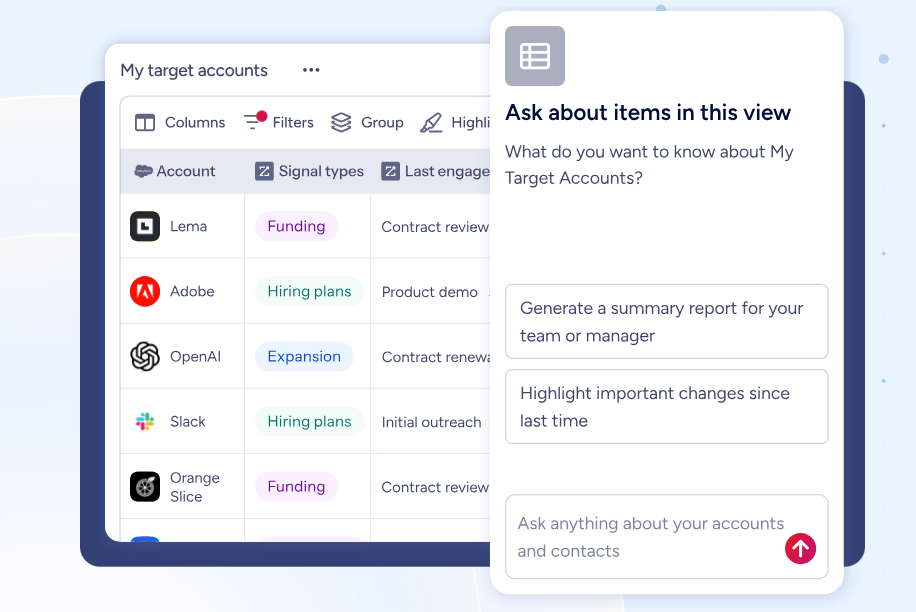
Source: ZoomInfo
The practical difference: Salesforce and Altify AI work with what's already in your CRM. ZoomInfo AI brings intelligence from outside your CRM (verified contacts, buying signals, org chart changes, competitive movements) and connects it to what's happening inside your deals.
For a deeper look at how Salesforce and ZoomInfo compare across the full platform, see our Salesforce vs. ZoomInfo comparison.
Buying group intelligence: mapping the committee that decides
Enterprise deals are won or lost based on how well you understand and engage the buying committee. Each platform approaches this differently.
Salesforce provides contact roles on opportunities and, with Agentforce, AI-generated account plans with SWOT analysis. These are useful starting points, but they depend on reps manually associating contacts to deals and keeping those associations current.
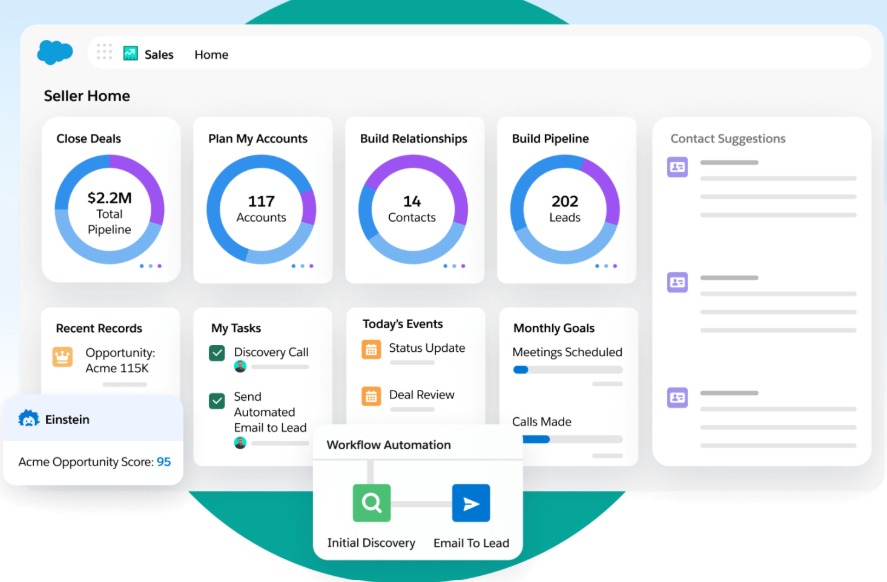
Source: Salesforce
Altify's Relationship Map goes further. Sellers assign buying roles to contacts (decision-maker, influencer, detractor, coach), draw influence lines that reveal political relationships separate from the formal org chart, and track support status with color-coded indicators.
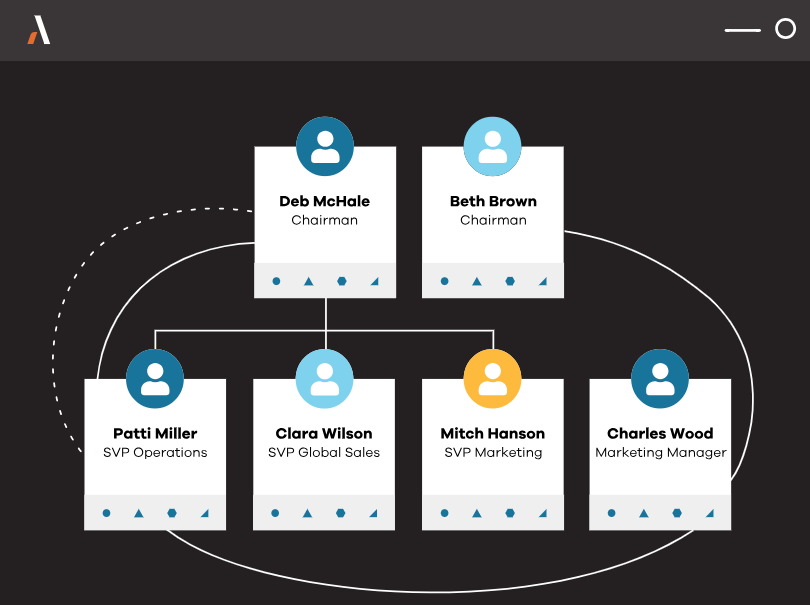
Source: Altify
This gives managers and sellers a visual, shared picture of where they stand with each member of the buying group. The map works at the account level and opportunity level, and MaxAI can fill in missing contacts and personas.
ZoomInfo provides the data that makes both approaches more effective. Department org charts with decision-makers' direct dials and emails, 300+ company attributes for segmentation, and Buyer Intent data tracking signals from 210 million IP-to-Organization pairings.
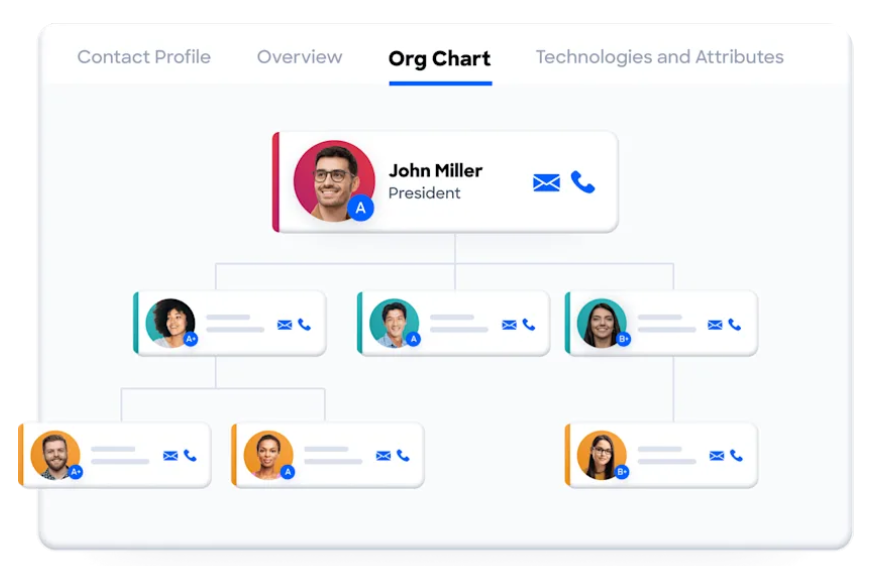
Source: ZoomInfo
ZoomInfo's Contact Recommendations use AI to suggest buying committee members ranked by motion: prospecting, deal acceleration, or renewals. Guided Intent, exclusive to ZoomInfo, identifies topics historically correlated with deal success rather than requiring manual topic selection.
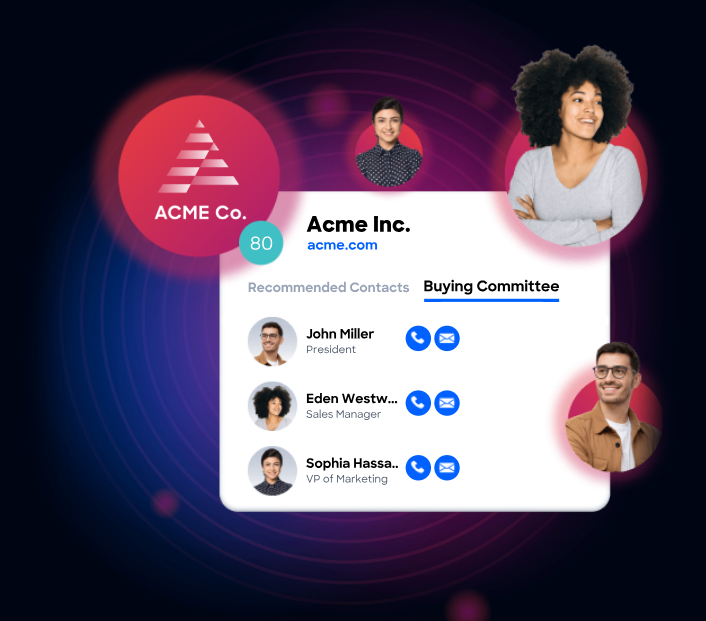
Source: ZoomInfo
The combination is where value compounds. Altify provides the structured framework for mapping relationships. ZoomInfo provides the verified data and buying signals that populate and enrich that framework. Salesforce provides the CRM where everything converges.
"ZoomInfo's not just a contact data company anymore. They've built a full system of execution. GTM Intelligence actually works the list, writes the outreach, triggers the play, and helps drive predictable growth." (Ian Brodie, CEO & Co-Founder, Levanta)
Forecasting and pipeline visibility
Forecast accuracy is where these tools' different philosophies produce different outcomes.
Salesforce provides real-time forecast rollups, Einstein Forecast overlay, and consumption forecasting. These rely on stage progression and deal amounts in the CRM. The strength is breadth: Salesforce aggregates across every deal, every rep, every territory, and layers AI predictions on top. The weakness is that stage progression often reflects rep optimism rather than actual buyer readiness.
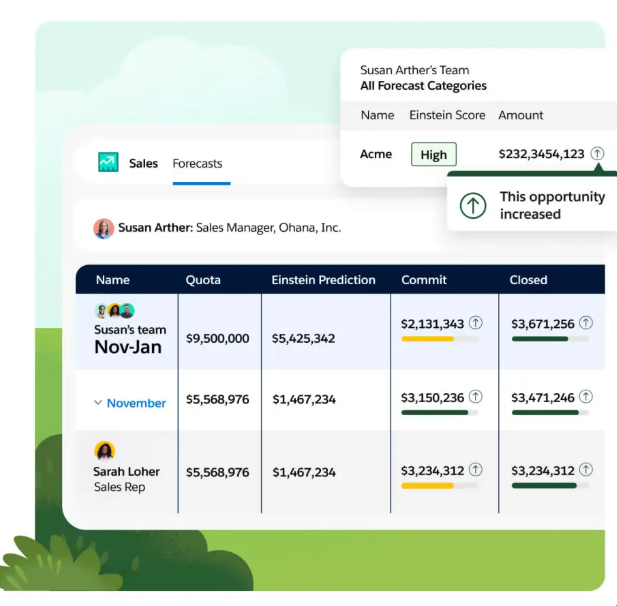
Source: Salesforce
Altify attacks this directly. Its Closure Probability score is calculated from structured qualifier data, not rep judgment. Each qualifier carries an importance weighting, and the system distinguishes between qualifiers that are simply incomplete and those that are both essential and unanswered.
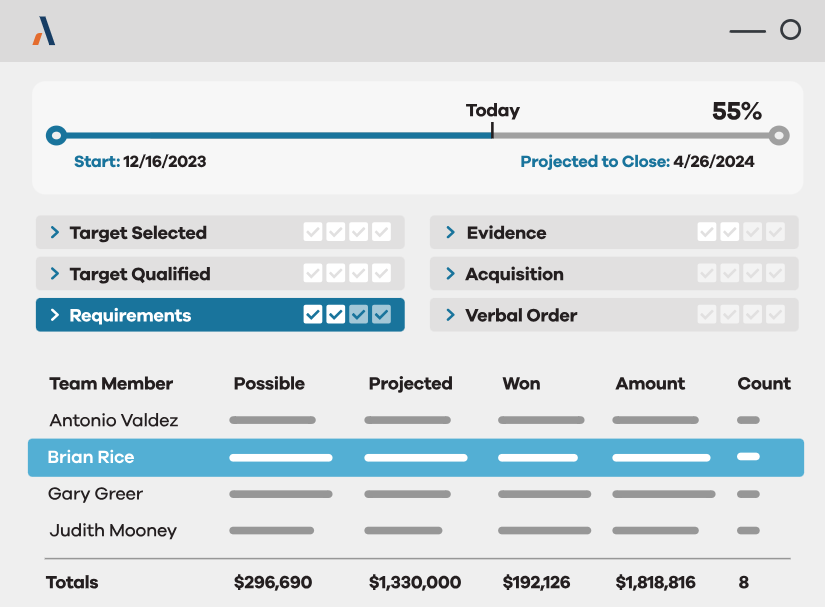
Source: Altify
TeamView gives managers a consolidated pipeline view organized by sales motion, with deal stage, risk signals, and qualifier gaps visible across the whole team.
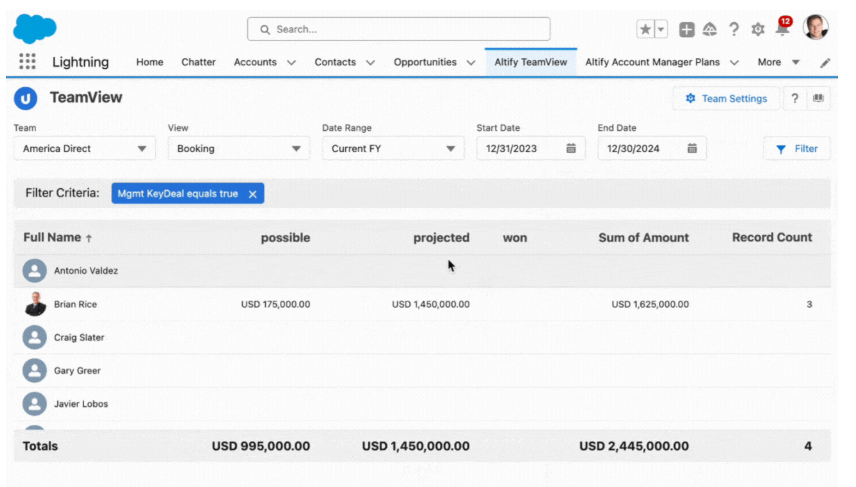
Source: Altify
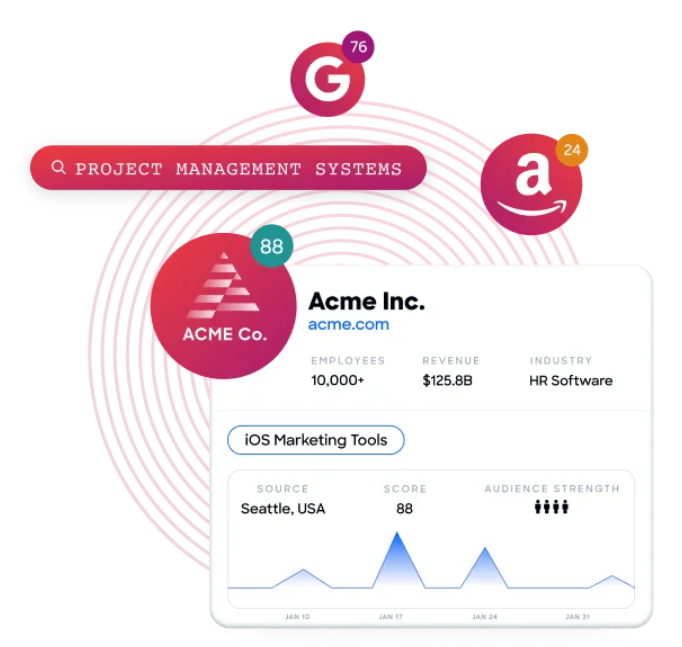
ZoomInfo contributes a different dimension to forecast accuracy: external validation. Rather than relying on internal CRM data alone, ZoomInfo brings buyer intent signals, website visitor tracking, job change alerts, competitive intelligence, and hiring patterns into the picture.
Source: ZoomInfo
A deal that looks healthy in Salesforce might show warning signs in ZoomInfo's data: the champion changed jobs, a hiring freeze suggests budget cuts, or a competitor's intent signals are spiking. This external intelligence gives sales leaders a reality check that no internal tool can provide.
"It's not just the data itself. It's more about the right data at the right time to help us reach out with the right message across that full buyer journey." (Chelsea Kenyon, Senior Director of Digital Strategy, Redwood Logistics)
Implementation and adoption realities
The practical experience of deploying these tools varies widely.
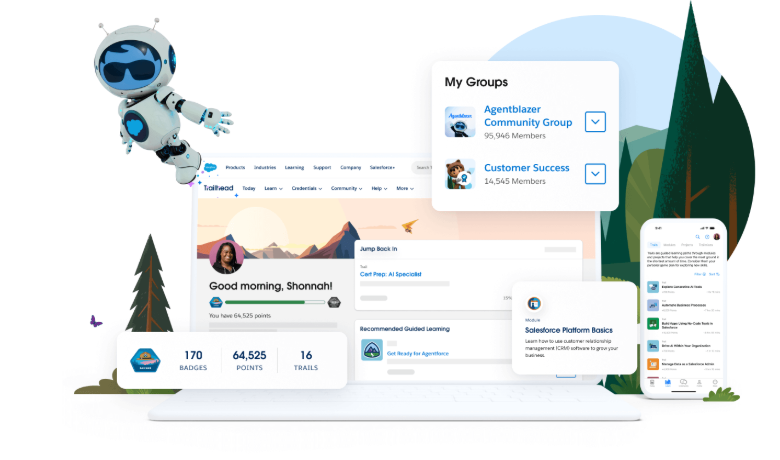
Salesforce implementation timelines range from weeks for a basic Sales Cloud deployment to 3–12 months for enterprise multi-cloud environments. Over 70% of implementations are partner-led, and the company's own executives acknowledge being "historically built for large enterprises." The learning curve is steep. Trailhead provides 1,500+ badges and 6+ million learners, but meaningful customization requires trained administrators.
Source: Salesforce
Altify adds a second layer of implementation complexity on top of Salesforce. The platform requires configuring methodology frameworks, setting up qualification gates, and training sellers on structured account planning. G2 reviewers note a steep learning curve with limited self-service training.
TrustRadius reviewers flag performance friction from auto-save behavior that creates noticeable latency. Altify addresses this by positioning its Revenue Enablement Services as essential, not optional, offering change management, coaching, methodology workshops, and a structured three-year enablement roadmap. This means the total investment includes both software licensing and a meaningful services commitment.
ZoomInfo takes a different approach. GTM Workspace "deploys in weeks, not months" and integrates natively with Salesforce, HubSpot, and Dynamics.
Source: ZoomInfo
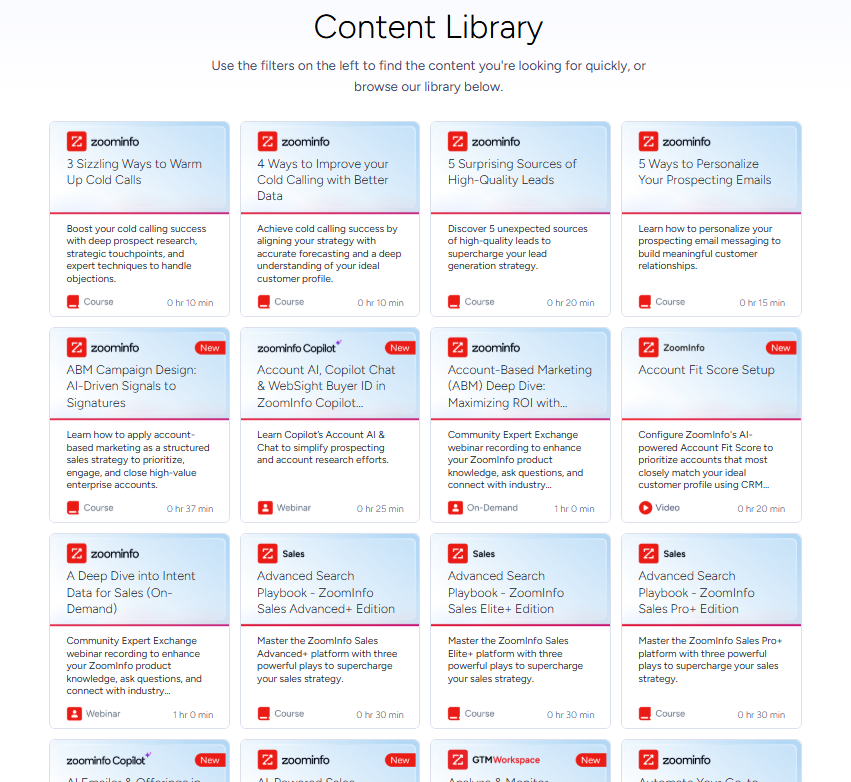
ZoomInfo redesigned its onboarding program from 30 to 90 days, producing a 25% satisfaction improvement. ZoomInfo University provides role-specific learning paths, certifications, and live webinars. The key architectural advantage: ZoomInfo doesn't require your team to change how they work. It plugs into your existing tools and workflows, enriching what's already there.
Source: ZoomInfo
Pricing structures reveal different market strategies
Salesforce Sales Cloud is the most transparent. Published tiers range from a free suite (max 2 users) through Starter ($25/user/month), Pro ($100/user/month), Enterprise ($175/user/month), Unlimited ($350/user/month), and Agentforce 1 ($550/user/month). Agentforce consumption is priced separately at $2 per conversation or $500 per 100,000 Flex Credits. The Premier Success Plan costs 30% of net license fees on top. Implementation typically requires partners, adding cost. A June 2025 pricing restructuring raised Enterprise/Unlimited list prices by an average of 6%.
Altify publishes no pricing. All commercial terms are handled through a sales-led process. The modular product structure (Insights, Sales Process, Opportunities, Accounts, MaxAI, Revenue Enablement Services) signals that pricing is scoped per module and per user count. G2 reviewers describe the cost as steep for smaller organizations. The total cost of ownership includes the Altify license, a separate annual services engagement, and the underlying Salesforce subscription (required, since Altify only runs on Salesforce).
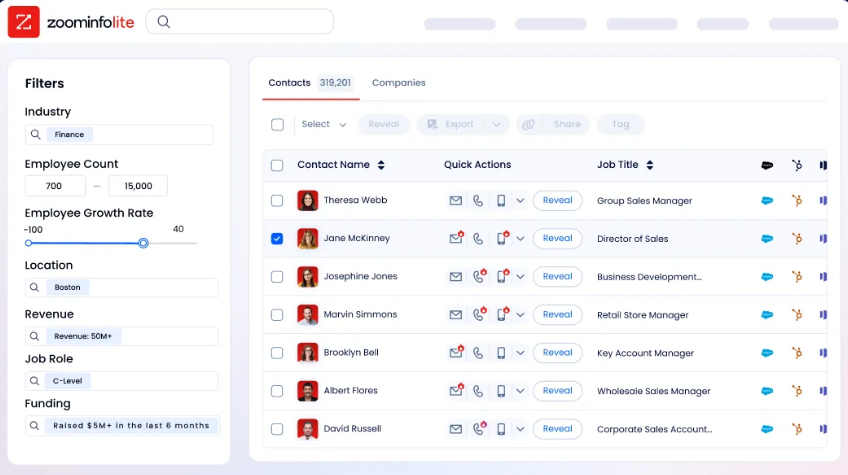
ZoomInfo uses a custom-quoted, consumption-based pricing model with tiered plans across Sales, Marketing, and Operations. While specific dollar amounts are not published for paid tiers, ZoomInfo offers two free entry points: ZoomInfo Lite (a permanent free tier with access to 100M+ verified profiles, 10 monthly export credits, and WebSights Lite) and a 7-day free trial with access to core platform features. API access is included in all plans, and MCP access extends the same intelligence to any AI agent.
Source: ZoomInfo
Integration and ecosystem comparison
Salesforce has the broadest ecosystem: 9,000+ AppExchange apps, 14+ million installs, 91% of customers using at least one app.
Source: Salesforce
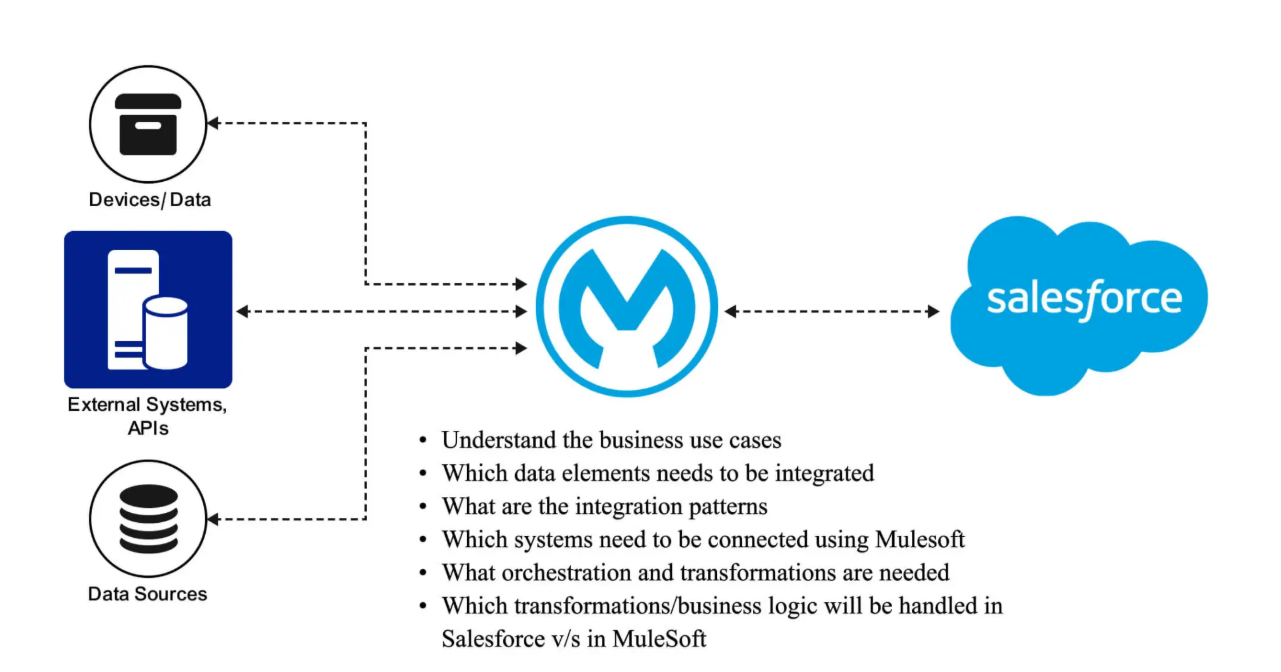
The platform provides REST, SOAP, Bulk, Metadata, and Tooling APIs, plus MuleSoft for enterprise integration. This openness is both a strength and a complexity: building a complete sales stack on Salesforce often means choosing, configuring, and maintaining multiple apps.
Source: Salesforce
Altify takes the opposite approach by design. It integrates with exactly one platform: Salesforce. No HubSpot, no Microsoft Dynamics, no standalone deployment. Within Salesforce, Altify connects to Slack (messages about account plans feed back into Altify), Google Docs (live plan details auto-populated for collaboration), and Tableau and Power BI for reporting. The MCP server suite connects to external AI assistants. This narrow scope is deliberate: by staying native to Salesforce, Altify inherits the CRM's security model, permissions, and audit trails without adding new endpoints.
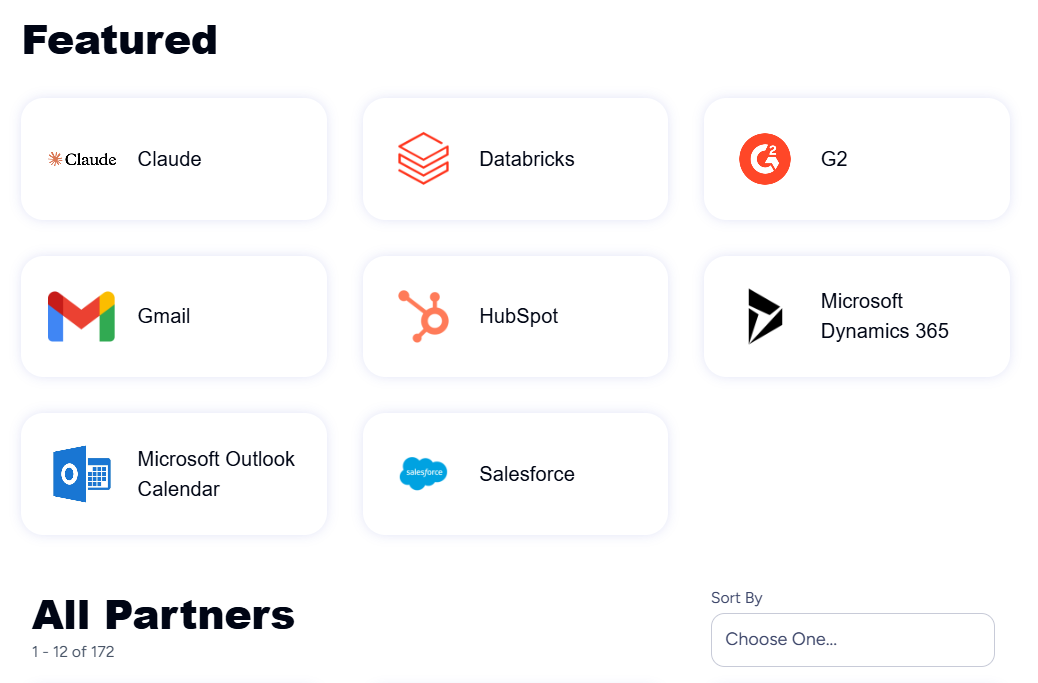
ZoomInfo connects to both Salesforce and the broader GTM stack. The App Marketplace lists 120+ partner integrations across CRM, marketing automation, sales engagement, data warehouse, and communications platforms.
Source: ZoomInfo
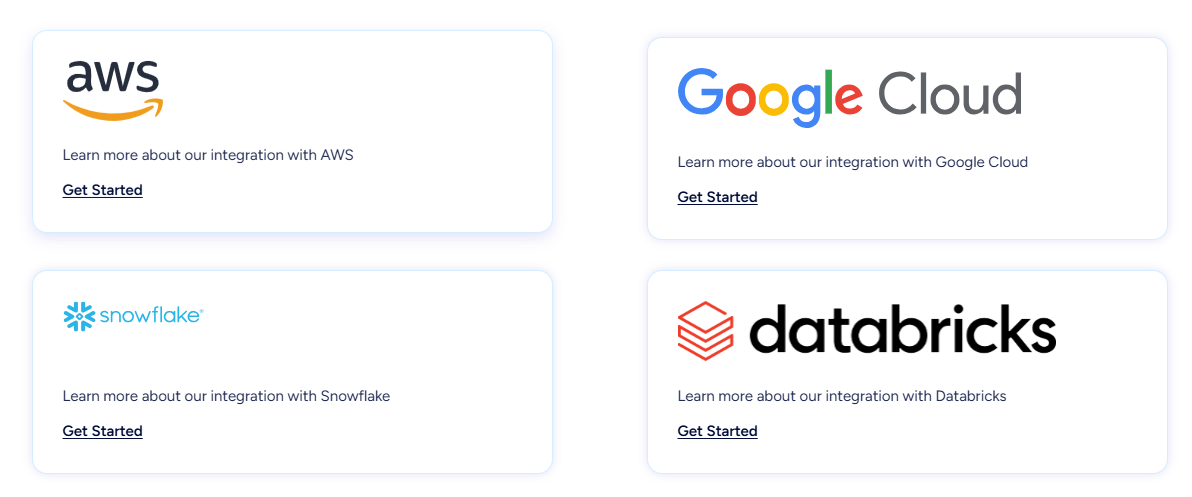
Cloud Partners enable direct data ingestion into AWS, Google Cloud, Snowflake, and Databricks. The Enterprise API provides programmatic access to ZoomInfo's data and GTM Context Graph.
Source: ZoomInfo
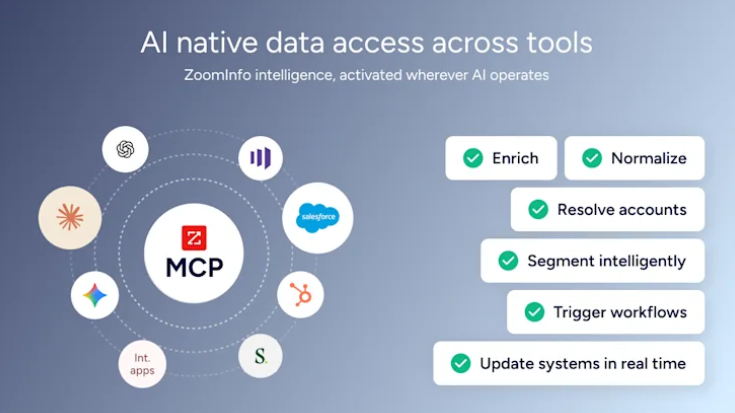
And ZoomInfo MCP connects AI models directly to ZoomInfo's B2B data as a native tool, currently supporting Claude and ChatGPT. This means ZoomInfo's intelligence is available whether your team works in Salesforce, HubSpot, Dynamics, a custom-built tool, or an AI agent.
Source: ZoomInfo
Altify vs. Salesforce vs. ZoomInfo: Which should you choose?
These three tools serve different functions. The right choice depends on your sales motion, your data needs, and your existing infrastructure.
Salesforce Sales Cloud is sufficient if:
Your sales motion is straightforward enough that standard pipeline stages and deal tracking cover your needs
You don't have a formal sales methodology you need to enforce across reps
Your team is adopting Agentforce and wants AI agents handling prospecting, coaching, and quoting natively
You want the broadest ecosystem of integrations and apps
You need a CRM platform, not an add-on to one you already have
Add Altify to Salesforce if:
You run complex enterprise deals with large buying committees and six-to-seven-figure contract values
You've invested in a sales methodology (TAS, MEDDIC, or custom) and need to enforce it consistently across your org
Strategic account planning is central to your revenue strategy
You're willing to invest in change management and multi-year services to drive adoption
Salesforce is your CRM and you have no plans to change that
Add ZoomInfo to your stack if:
Your team needs verified contact data, direct dials, and business emails that aren't in your CRM today
You want buying signals that tell you which accounts are in-market before they contact you
You need intelligence that feeds into any tool (Salesforce, Altify, or anything else in your stack)
You're building an AI-powered GTM motion and need an intelligence foundation, not just a data vendor
You want a platform that deploys in weeks and works without requiring your team to change how they operate
Start with ZoomInfo Lite for free or request a demo.
For many enterprise sales organizations, the best approach isn't choosing one over the others. Salesforce is the CRM. Altify is the methodology layer for teams that need structured execution discipline. ZoomInfo is the intelligence foundation that makes both more effective by providing verified data, buying signals, and account intelligence that neither Salesforce nor Altify generates on its own.
The account plan with real contacts, accurate org charts, and live buying signals is the plan that drives revenue. The one built on whatever the rep remembered to enter last Tuesday is the one that goes stale between quarterly reviews.
"Without ZoomInfo, it would be extremely difficult, if not impossible, to achieve our business objectives. Without it, we wouldn't be able to understand the market, have the right contact data, and make meaningful connections." (Thor Sanderson, Senior Manager of Sales Technology Enablement, Smartsheet)
Altify vs. Salesforce vs. ZoomInfo FAQ
Is Altify a competitor to Salesforce?
No. Altify is built 100% natively on the Salesforce platform and runs inside your existing Salesforce org as a managed package. It extends Salesforce with methodology enforcement, visual relationship mapping, and account planning. You need an active Salesforce subscription to use Altify. It does not work with any other CRM.
Can Salesforce Sales Cloud replace what Altify does?
Salesforce Sales Cloud provides pipeline management, AI-generated account plans, lead scoring, forecasting, and Agentforce autonomous agents. For organizations with straightforward sales motions, these native capabilities are often sufficient. Altify adds structured deal qualification frameworks, buyer-centered stage mapping with calculated Closure Probability scores, visual relationship and insight mapping for buying committees, and methodology enforcement at the workflow level. Teams running complex, multi-stakeholder enterprise deals typically find that Salesforce alone doesn't provide the execution discipline Altify offers.
How does ZoomInfo fit into a Salesforce and Altify stack?
ZoomInfo provides the data and intelligence that neither Salesforce nor Altify generates. Salesforce stores deal data. Altify structures how reps execute against deals. ZoomInfo supplies verified contact data, org charts, buying intent signals, and account intelligence that populate and enrich both platforms. ZoomInfo integrates natively with Salesforce, and its API and MCP access make the same intelligence available in any tool.
What does Altify cost?
Altify does not publish pricing. All commercial terms are handled through a sales-led process. The total cost of ownership includes the Altify license (likely per-module, per-user), a separate annual services engagement for change management and coaching, and the underlying Salesforce subscription. G2 reviewers describe the cost as steep for smaller organizations, and no mid-market or SMB tier is offered.
What is ZoomInfo's GTM Context Graph and why does it matter for sales execution?
The GTM Context Graph is ZoomInfo's intelligence layer. It processes 1.5 billion or more data points daily, fusing ZoomInfo's third-party B2B data with a customer's own CRM records, conversation transcripts, email interactions, and behavioral signals. The result is a layer that captures not just what happened in a deal, but why, connecting signals, patterns, and outcomes across thousands of deals. This matters for sales execution because it reveals connections between signals and outcomes that CRM data or methodology frameworks alone cannot surface.
Which platform has the best AI for enterprise sales?
Each platform's AI serves a different purpose. Salesforce Agentforce deploys autonomous agents across the full CRM (prospecting, coaching, quoting, and service). Altify's MaxAI provides methodology-aware deal coaching, relationship map population, and qualification gap analysis inside Salesforce. ZoomInfo's AI draws on the broadest data set (combining third-party B2B data, CRM data, conversation intelligence, and behavioral signals) to surface account insights, buying group recommendations, and AI-drafted outreach. The most effective enterprise sales teams often use AI from multiple platforms, each contributing intelligence from its domain.
Do I need all three platforms?
Not necessarily. Salesforce is required as the CRM foundation (or another CRM if you don't choose Salesforce, though Altify would not be an option in that case). Altify is worth adding for enterprise teams that need methodology enforcement and advanced account planning on top of Salesforce. ZoomInfo adds value for any B2B sales team that needs verified contact data, buying signals, and account intelligence, regardless of which CRM or methodology tools they use. The combination of all three creates a full stack: CRM infrastructure, methodology execution, and data intelligence.
Can ZoomInfo work without Salesforce?
Yes. ZoomInfo integrates with Salesforce, HubSpot, and Microsoft Dynamics, and its API and MCP access make its data and intelligence available in any application. Teams using any CRM (or building custom tools and AI agents) can access ZoomInfo's full intelligence platform. This flexibility is a core differentiator: ZoomInfo's data and GTM Context Graph are not locked into any single CRM.
