
Choosing between Amazon Connect vs. Salesforce for your customer engagement strategy often comes down to five questions:
Do you need a contact center platform, a CRM, or both?
Is your priority handling inbound customer interactions or managing the full customer lifecycle from prospecting through retention?
Does your team have AWS technical expertise, or do you need a solution that business users can configure without developers?
Are you looking for pay-as-you-go pricing or a predictable per-user model?
Do you know enough about your customers before they reach out, or are your agents working blind?
In short, here's what we recommend:
Amazon Connect is AWS's cloud contact center platform, built for organizations that handle customer interactions at scale across voice, chat, email, SMS, and WhatsApp. It processes over 16 million interactions daily and includes AI self-service, real-time agent assistance, and workforce management in its base pricing. The pay-as-you-go model (voice at $0.038/min, chat at $0.010/message) eliminates per-seat licensing entirely. But Amazon Connect works more like a developer toolkit than a finished product. It requires AWS expertise, offers thin native reporting, and is not a CRM. You'll need a separate system to manage customer records, sales pipelines, and relationship history.
Salesforce is the world's #1 CRM by market share, serving over 150,000 companies with a platform spanning sales, service, marketing, commerce, and analytics. Its Service Cloud handles customer service cases across channels, and its Agentforce AI agents can resolve 85% of support requests without human escalation. The breadth is real. But Salesforce is not a contact center. For telephony, it partners with Amazon Connect and others through Service Cloud Voice. And its pricing (per-user licenses starting at $175/user/month for Enterprise plus add-ons for digital engagement, AI, and field service) can surprise buyers who don't account for the full stack cost.
Both platforms do their jobs well. Amazon Connect excels at routing and handling customer interactions. Salesforce excels at managing customer relationships and data. But neither answers the question that matters most: who is this customer, what do they need, and are they about to buy or about to leave? That intelligence gap is where the real cost hides, in longer handle times, missed signals, and reactive conversations that could have been proactive.
ZoomInfo is a GTM intelligence platform that fills the layer both platforms lack. With 500M contacts, 100M companies, 135M+ verified phone numbers, and 200M+ verified business email addresses, ZoomInfo provides the B2B data that turns customer interactions from reactive to informed. Its GTM Context Graph combines this data with your CRM records, conversation transcripts, and behavioral signals, processing 1.5B+ data points daily to reveal not just what happened, but why. Whether your team works in ZoomInfo's GTM Workspace, runs plays from GTM Studio, or feeds their own tools through APIs and MCP, the same intelligence reaches every point where customer decisions happen, including Amazon Connect and Salesforce. Amazon Connect and Salesforce power customer engagement. ZoomInfo powers the intelligence behind it. See how GTM intelligence helps every conversation start with context.
Amazon Connect vs. Salesforce vs. ZoomInfo at a glance
Amazon Connect | Salesforce | ZoomInfo | |
|---|---|---|---|
Primary function | Cloud contact center (CCaaS) | CRM and customer engagement suite | B2B data and GTM intelligence |
AI capabilities | Self-service bots, agent assist, analytics (included) | Agentforce autonomous agents ($125+/user/mo add-on) | GTM Context Graph, AI-drafted outreach, intent signals |
Contact center | Native, full-featured | Via Service Cloud Voice (partners with Amazon Connect) | Not a contact center |
CRM | Not a CRM | Native, market-leading | Integrates with Salesforce, HubSpot, Dynamics |
B2B intelligence | None | Customer data only (no third-party B2B data) | 500M contacts, 100M companies, intent signals |
Technical requirement | AWS expertise required | Admin training required | Deploys in weeks |
Analyst recognition | Gartner MQ Leader for CCaaS (3 consecutive years) | Gartner MQ Leader for SFA (19 consecutive years) | Gartner MQ Leader for ABM Platforms; Forrester Wave Leader for Intent Data |
Pricing model | Pay-per-use (per minute/message) | Per-user monthly licenses + add-ons | Custom-quoted, consumption-based |
Best for | Handling customer interactions at scale | Managing the full customer lifecycle | Knowing your customers before they call |
Contact center vs. CRM: Two different starting points
The Amazon Connect vs. Salesforce comparison is unusual because these platforms solve different halves of the same problem.
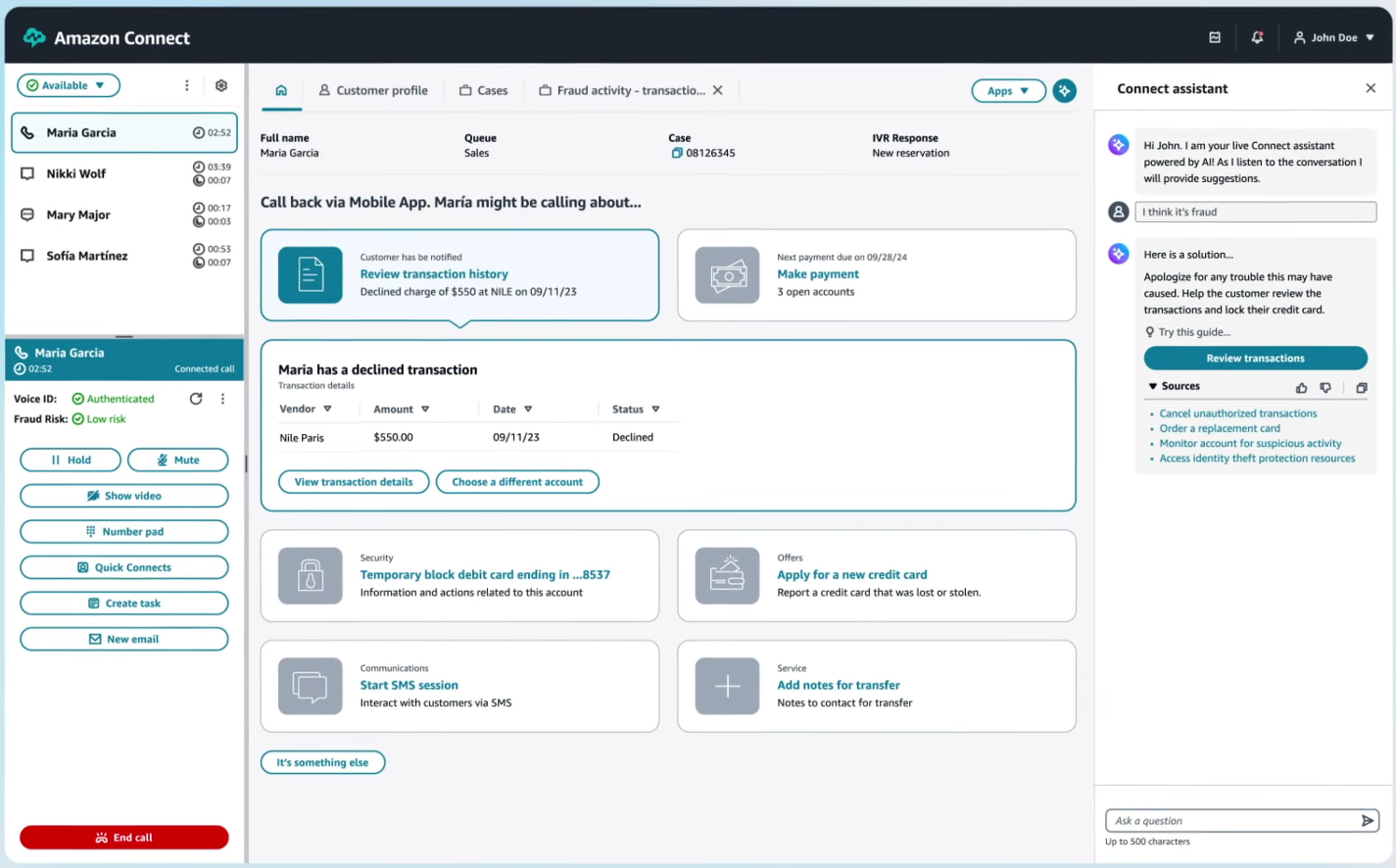
Amazon Connect starts from the interaction. A customer calls, chats, or emails. The platform routes them to the right agent, provides AI assistance during the conversation, transcribes and summarizes the call, and manages workforce scheduling. It handles over 16 million daily interactions and has shipped over 700 major feature releases since its 2017 launch.
Source: Amazon Web Services
Salesforce starts from the relationship. Before a customer ever calls, Salesforce tracks how they became a lead, what deals they're involved in, which marketing campaigns they responded to, and what products they've purchased. Service Cloud handles the case when something goes wrong, but it sits on a platform that already knows the customer's full history across sales, marketing, and commerce. That context is why Salesforce holds the #1 CRM market share position by IDC revenue data and has held Gartner MQ Leader status in Sales Force Automation for 19 consecutive years.
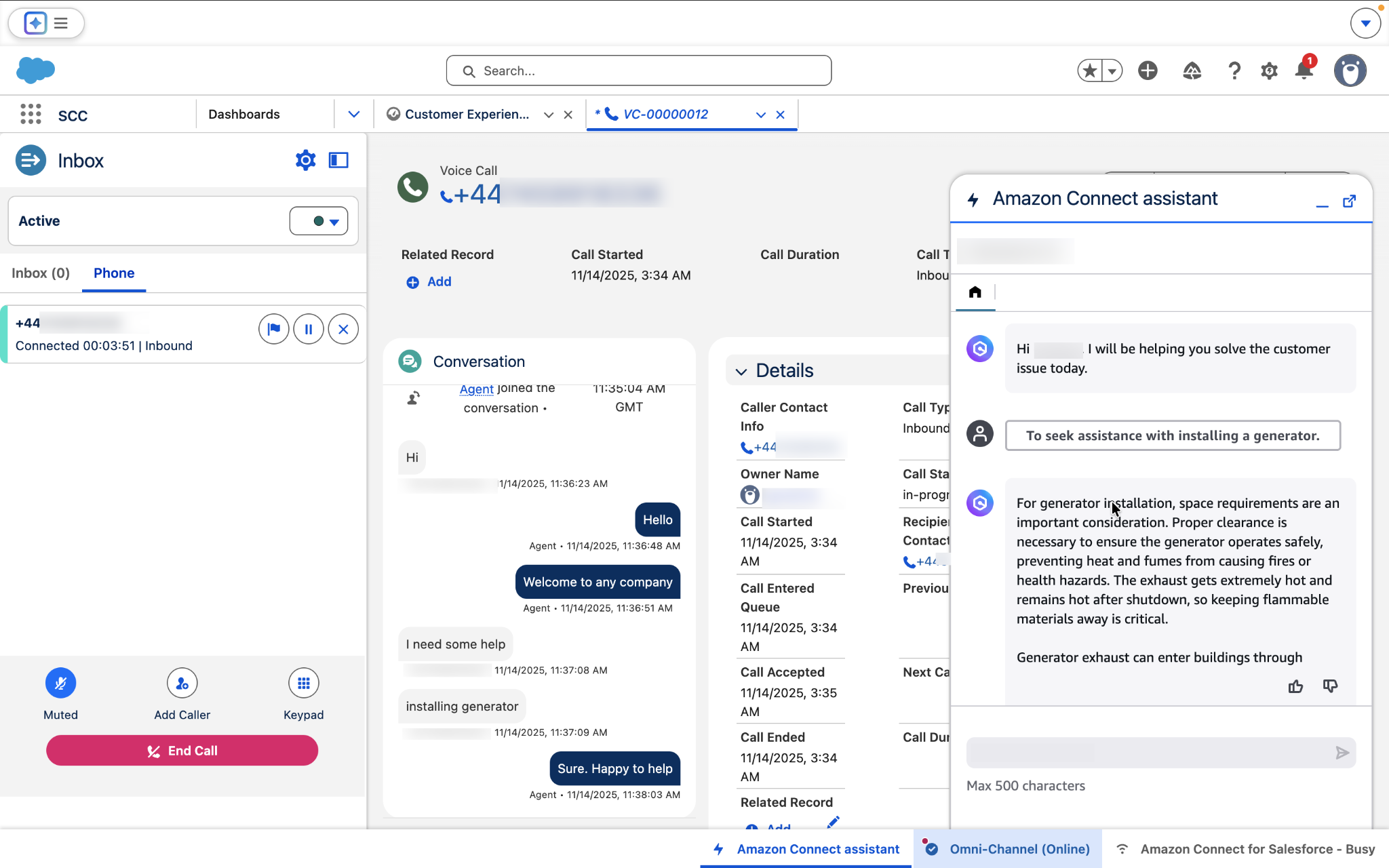
Most businesses need both. They need the interaction infrastructure and the relationship context. Amazon Connect acknowledged this by building a native Salesforce Service Cloud Voice integration. Salesforce acknowledged it by listing Amazon Connect as a voice partner for Service Cloud. Neither is a complete customer engagement solution alone.
Source: Amazon Web Services
But even when you combine both, a critical layer is still missing: external intelligence about who these customers and prospects are, what's happening at their companies, and whether they're in-market or at risk. That's the layer ZoomInfo provides.
Amazon Connect leads in contact center infrastructure
If your primary need is handling customer interactions, Amazon Connect is built for it.
The platform manages the full contact center stack: DID and toll-free numbers across 158 countries, direct connections to 40+ tier-1 carriers, skills-based routing across voice, chat, email, SMS, and WhatsApp, and a drag-and-drop Flow Designer where the same workflow logic runs across every channel. You build the IVR, chatbot, and agent experience once and apply it everywhere.
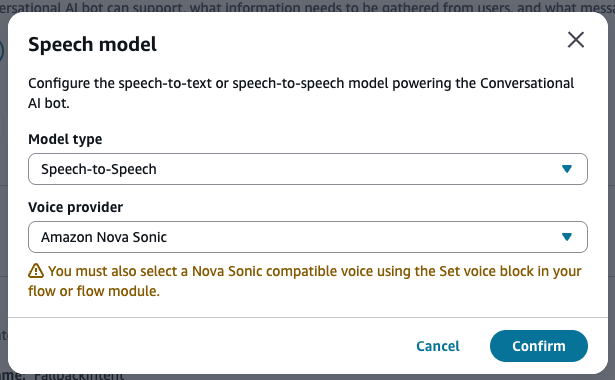
AI is where Amazon Connect has invested most. Agentic AI bots can navigate backend systems to reach resolution on their own, not just answer questions. Amazon Nova Sonic provides speech-to-speech voice AI in 30+ languages. Real-time agent assist monitors live conversations and surfaces recommended responses and next actions automatically. Post-contact AI summaries generate within seconds. All of these capabilities come included in the base per-interaction price, not as add-ons.
Source: Amazon Web Services
Workforce management is also native. ML-powered forecasting covers short-term (18 weeks), long-term (64 weeks), and intraday (updated every 15 minutes) predictions. Agents self-serve schedule changes within manager-defined parameters. Dashboards refresh every 15 seconds.
Salesforce Service Cloud handles customer service cases well, but it relies on partners for telephony. The Service Cloud Voice integration adds voice capability at $150/user/month on top of the base Service Cloud license, and it typically runs through Amazon Connect or another provider anyway. For organizations that need a full contact center, Amazon Connect is the infrastructure; Salesforce is an application that can sit on top of it.
Salesforce leads in customer relationship management
If your primary need is managing the entire customer lifecycle, Salesforce has no peer.
Where Amazon Connect sees a contact (an interaction with a start time and end time), Salesforce sees a relationship: the lead who became an opportunity, closed as a customer, opened three support cases, received four marketing campaigns, renewed their subscription, and is now evaluating an upgrade. Every piece of that history connects through Customer 360, which shares data across Sales Cloud, Service Cloud, Marketing Cloud, and Commerce Cloud without integration work.
Sales Cloud alone includes Einstein Lead Scoring, pipeline management, forecast overlays, conversation intelligence, and AI-generated account plans. Marketing Cloud orchestrates multi-channel journeys across email, SMS, WhatsApp, and advertising. Commerce Cloud handles B2C and B2B storefronts serving over two billion shoppers globally with 99.99% historical uptime. The platform extends into 17 industry verticals with dedicated data models and workflows.
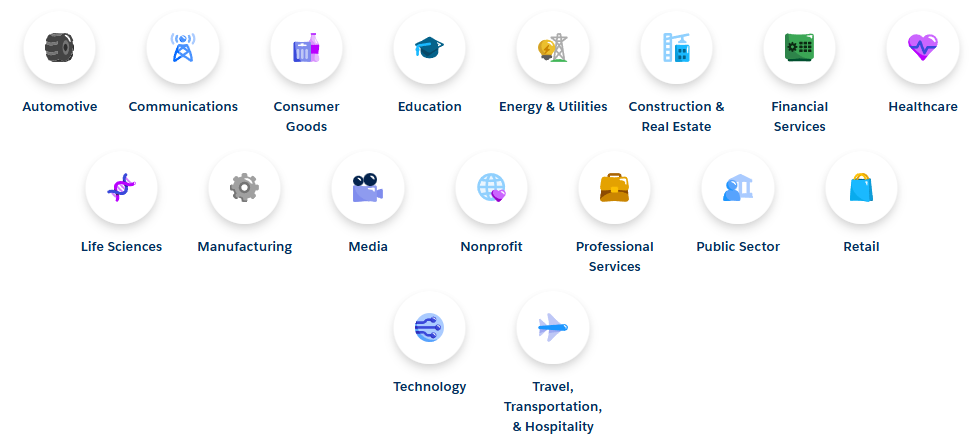
Source: Salesforce
The Agentforce AI platform deploys autonomous AI agents that handle customer service, sales development, coaching, and campaign management.
Amazon Connect, by contrast, is not a CRM. It doesn't track leads, manage pipelines, run marketing campaigns, or store long-term customer relationship data. It relies on integrations with Salesforce, ServiceNow, or Zendesk for customer record management. If you need both interaction handling and relationship management, you're running two platforms.
The intelligence gap neither platform closes
Here's what both platforms share: they manage what happens after a customer engages. Amazon Connect routes the call. Salesforce stores the case. But neither tells you who this company is, what's happening inside their organization, whether they're evaluating competitors, or which stakeholders you haven't reached yet.
Amazon Connect's Customer Profiles aggregates data from over 80 source integrations to build a unified view. But it only unifies data you already have. It doesn't add external intelligence about the company's tech stack, recent funding rounds, executive changes, or buying intent.
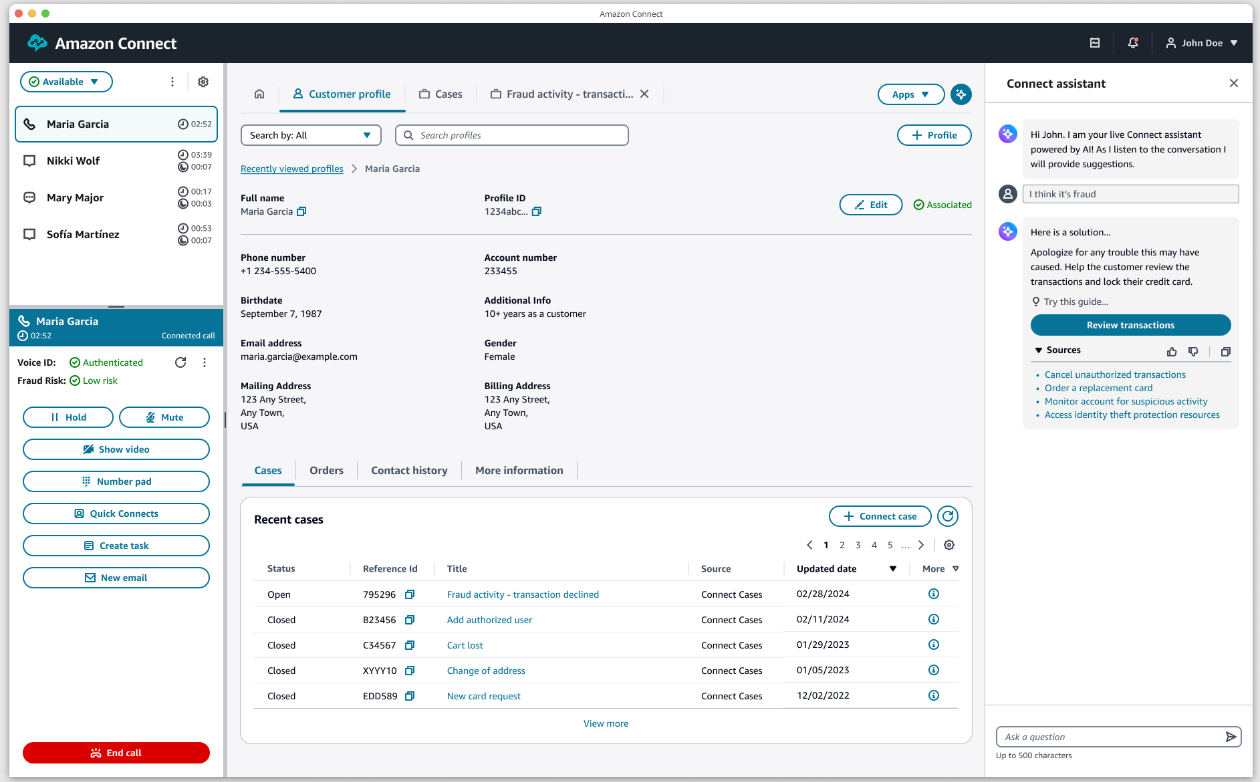
Source: Amazon Web Services
Salesforce's Data Cloud ingests and harmonizes customer data at scale, with 112 trillion records processed in FY26. But Data Cloud unifies your first-party data. It doesn't provide the third-party B2B intelligence, the verified direct dials, the intent signals, or the context about why a deal is moving or stalling.
ZoomInfo fills this gap. Its GTM Context Graph is an intelligence layer that combines ZoomInfo's B2B data with a customer's own CRM records, conversation transcripts, and behavioral signals. A CRM records that a deal moved to Stage 3. Conversation intelligence transcribes what the VP of Finance said on the last call. Intent data logs a spike in research activity. The GTM Context Graph connects all three to capture why the deal moved, then feeds that context into every downstream action.
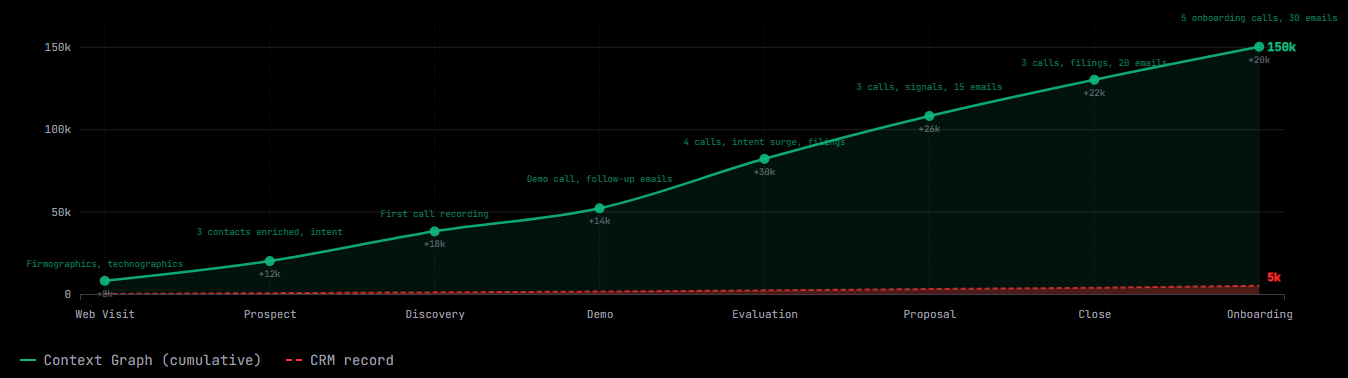
For contact center teams, this means agents know the caller's company context, buying signals, and relationship history before they pick up the phone. For sales teams, it means outreach that addresses the specific concern driving the conversation, not a generic script. For marketing teams, it means targeting accounts that match proven win patterns instead of broad lists that tripped a keyword threshold.
"That combination of our internal CRM data, external signals, and AI that's given all that context has helped us craft very specific account- and persona-based messages. And people have responded to them right away." (Toby Carrington, Chief Business Officer, Seismic)
For a direct look at how Salesforce and ZoomInfo compare on data, AI, and CRM capabilities, see our Salesforce vs. ZoomInfo breakdown.
AI capabilities take different approaches
All three platforms invest in AI, but with different goals.
Amazon Connect uses AI to make contact center operations faster and cheaper. Its AI stack, built on Amazon Bedrock, Lex, and Nova, handles self-service resolution, real-time agent coaching, automated quality evaluation across 100% of interactions, and post-contact summarization.
Source: Amazon Nova
Salesforce uses AI to automate the customer relationship. The Atlas Reasoning Engine powers Agentforce agents that autonomously handle sales prospecting, case resolution, campaign management, and IT service. The Einstein Trust Layer provides zero data retention with LLM partners, PII masking, and audit trails. But Agentforce requires additional licensing at $125/user/month or consumption-based Flex Credits at $500 per 100,000 credits. The AI works, but it's an add-on, not included.
ZoomInfo uses AI to provide intelligence that neither platform generates on its own. The GTM Context Graph processes 1.5B+ data points daily to identify buying intent, map stakeholder dynamics, and predict deal outcomes. Buyer Intent tracks signals from 210 million IP-to-Organization pairings and 6 trillion+ keyword-to-device pairings monthly. Guided Intent, exclusive to ZoomInfo, identifies topics historically correlated with deal success rather than requiring manual topic selection. The AI agents in GTM Workspace, built on Anthropic's Claude, answer three questions for every rep: who to contact, when to engage, and what to say.
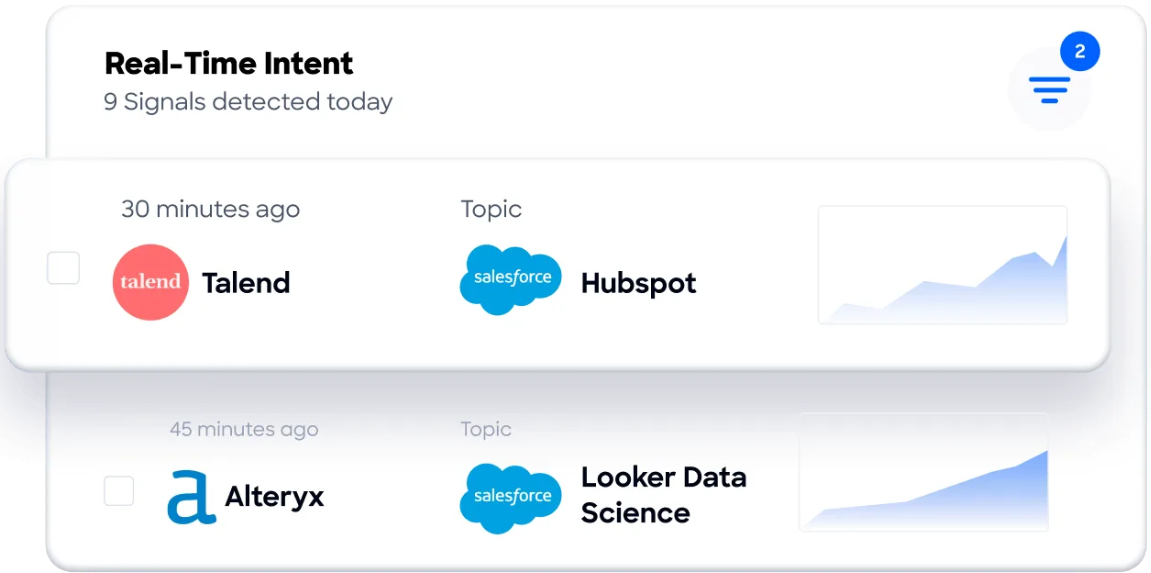
"They've built a full system of execution. GTM Intelligence actually works the list, writes the outreach, triggers the play, and helps drive predictable growth." (Ian Brodie, CEO & Co-Founder, Levanta)
Pricing models reflect different philosophies
The three platforms price themselves in different ways, and the model you choose shapes how you scale.
Amazon Connect charges per interaction. Voice costs $0.038/min, chat $0.010/message, email $0.080/email. No per-seat licenses, no minimum commitments, no long-term contracts. Telephony costs (carrier charges, phone number fees) are billed separately. The model works well for variable or seasonal volumes. Intuit scaled from 6,000 to 11,000 agents during tax season without renegotiating contracts. But costs can grow quickly with high call volumes, storage, and added AWS services. Pay-as-you-go is a strength at small or variable volumes and a risk at steady high volumes.
Salesforce charges per user per month, with prices varying by product and tier. Service Cloud alone starts at $175/user/month at Enterprise. Add Digital Engagement for omnichannel messaging ($75/user/month), Service Cloud Voice for telephony ($150/user/month), and Agentforce for AI ($125/user/month), and a single service agent can cost $525/month before implementation, training, or the Premier Success Plan at 30% of net license fees. Sales Cloud, Marketing Cloud, and Data Cloud are priced separately. Salesforce acknowledged its pricing model "needed to be easier to understand, more predictable, and more flexible" in a September 2025 update.
ZoomInfo uses custom-quoted, consumption-based pricing with no publicly listed prices. Costs scale around seat access, monthly credit volume (1 credit = 1 exported record), and features. A permanent free tier, ZoomInfo Lite, provides access to ZoomInfo's B2B database with 10 monthly export credits, no credit card required. Paid plans span Professional, Advanced, and Enterprise tiers with increasing access to intent signals, AI features, and integrations. API access is included in all relevant plans.
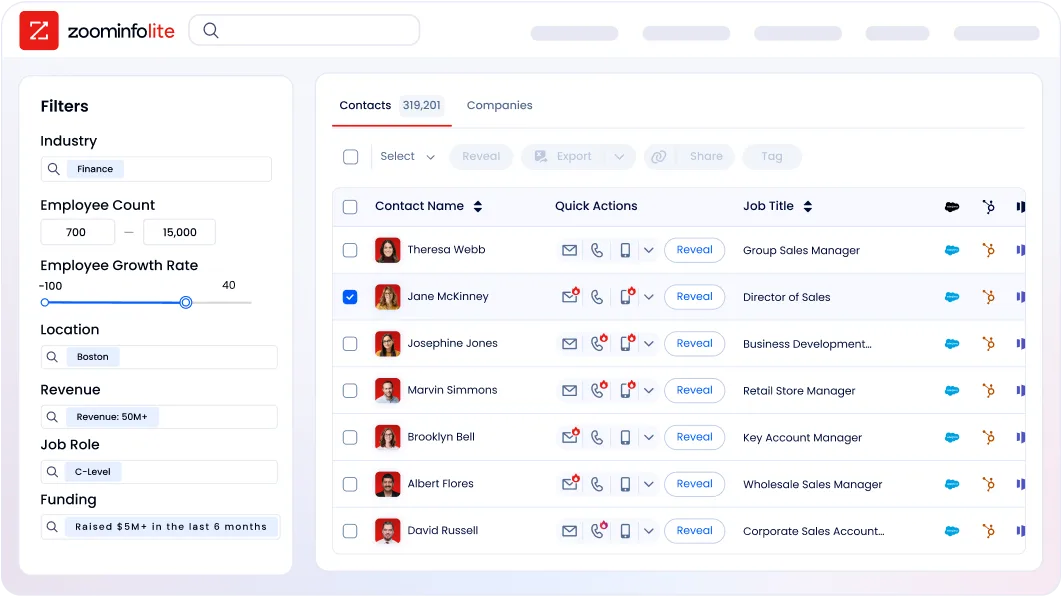
The pricing math depends on your starting point. If you already run Amazon Connect for your contact center and Salesforce for CRM, ZoomInfo adds the intelligence layer. If you're building from scratch, the order of investment depends on whether customer interactions or customer intelligence is your bottleneck.
Integration and ecosystem comparison
How each platform connects to the broader tech stack reveals its architectural philosophy.
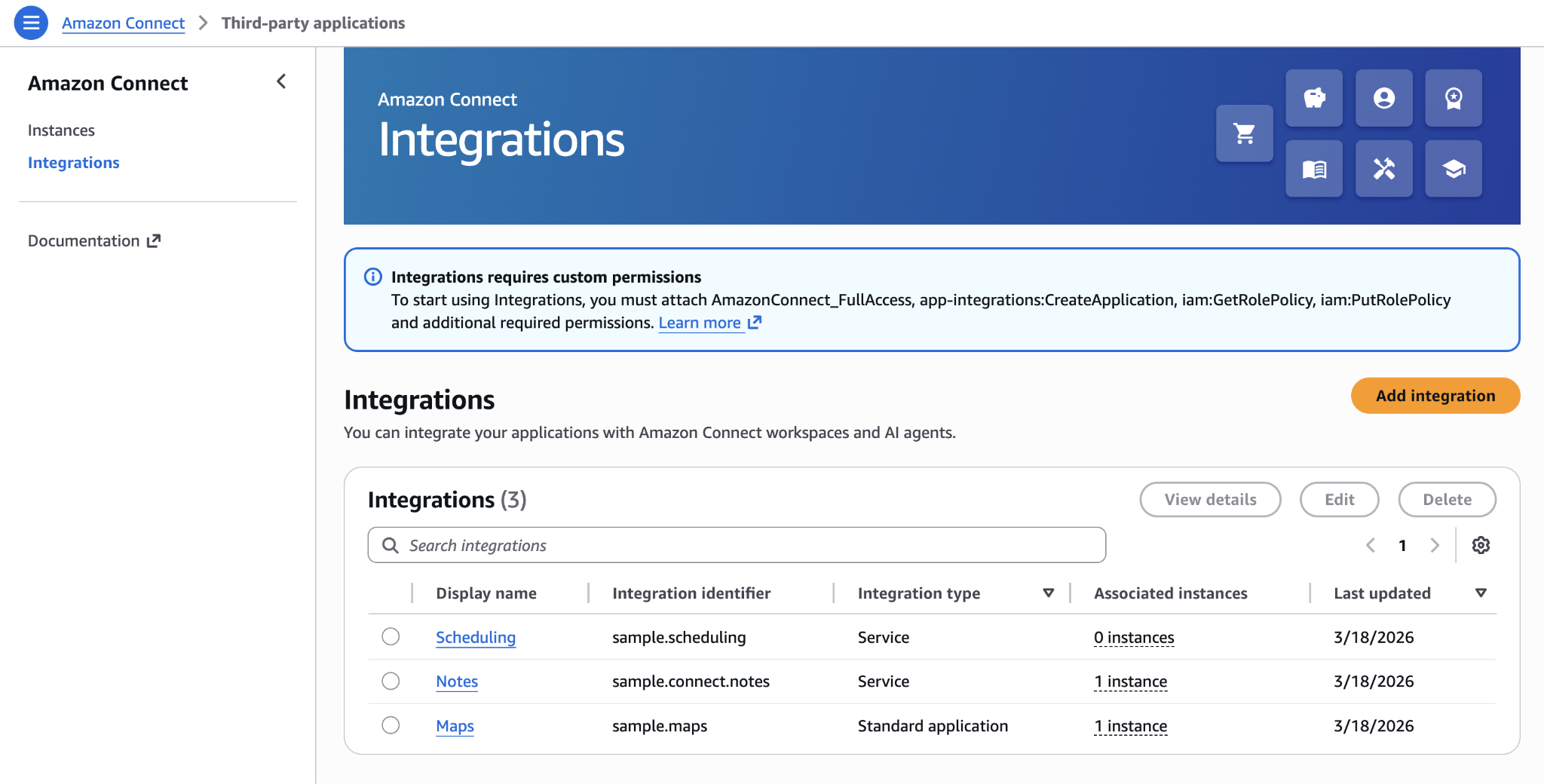
Amazon Connect integrates tightly with AWS. Lambda, DynamoDB, Redshift, Aurora, Lex, Bedrock, S3, Kinesis, and QuickSight all connect natively. For CRM, the main integration is with Salesforce Service Cloud Voice, which surfaces voice and digital channels inside the Salesforce console. Third-party apps can be embedded in the agent workspace via iframe. But outside the AWS ecosystem, integrations require engineering work. Zapier, Make, and Workato are not officially supported; connecting them requires custom EventBridge or Lambda bridges.
Source: Amazon Web Services
Salesforce has the broadest ecosystem in enterprise software. AppExchange hosts 9,000+ partner apps with 14+ million installs. MuleSoft provides enterprise integration with hundreds of pre-built connectors. The platform exposes REST, SOAP, Bulk, GraphQL, Streaming, and Pub/Sub APIs. For AI agents, AgentExchange launched with 250+ pre-built agent actions, topics, and templates from 200+ partners. The ecosystem's breadth is a genuine advantage, though MuleSoft is sold separately and complex integrations still require consulting help.
ZoomInfo connects broadly. Its App Marketplace lists 172+ integration partners. Native connectors exist for Salesforce, HubSpot, Microsoft Dynamics 365, and cloud platforms including AWS, Google Cloud, Snowflake, and Databricks. The ZoomInfo MCP server connects AI models directly to ZoomInfo's data with no custom coding, currently supporting Claude and ChatGPT. The Enterprise API provides programmatic access to search, enrich, and research endpoints. Because ZoomInfo integrates with both Amazon Connect and Salesforce, it acts as a shared intelligence layer across both platforms.
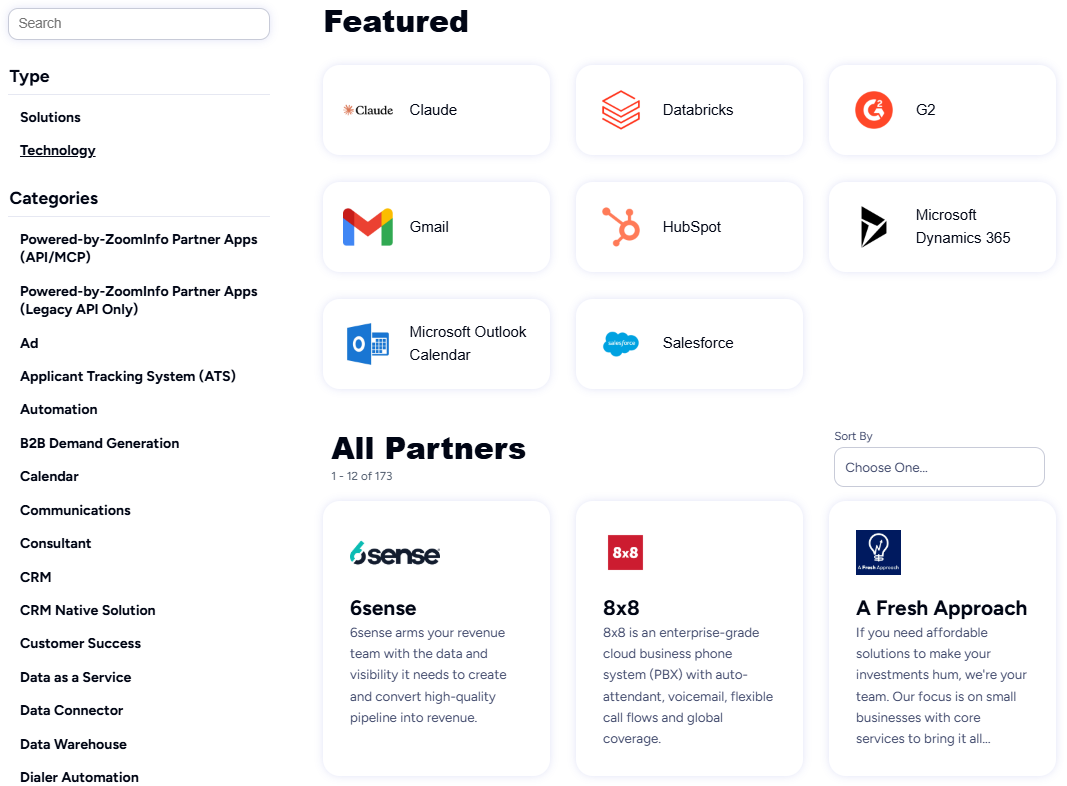
"The plug-and-play aspect of the API means I can integrate it very easily into any process and get information at a moment's notice." (Jerry Wilson, Senior Marketing Intelligence Analyst, BDO Canada)
The technical requirement varies
Each platform demands a different level of technical investment.
Amazon Connect requires AWS expertise. The most consistent criticism across review aggregators is that it feels like infrastructure to build on rather than a finished product. Advanced workflows require Lambda functions, custom IVR logic needs AWS developers, and the reporting is thin enough that most organizations add Amazon QuickSight or an external BI tool. AWS provides learning plans and specialty training badges, but organizations should plan for a learning curve after go-live. For teams already on AWS with engineers, this is manageable. For business-led teams without AWS architects, it's a real barrier.
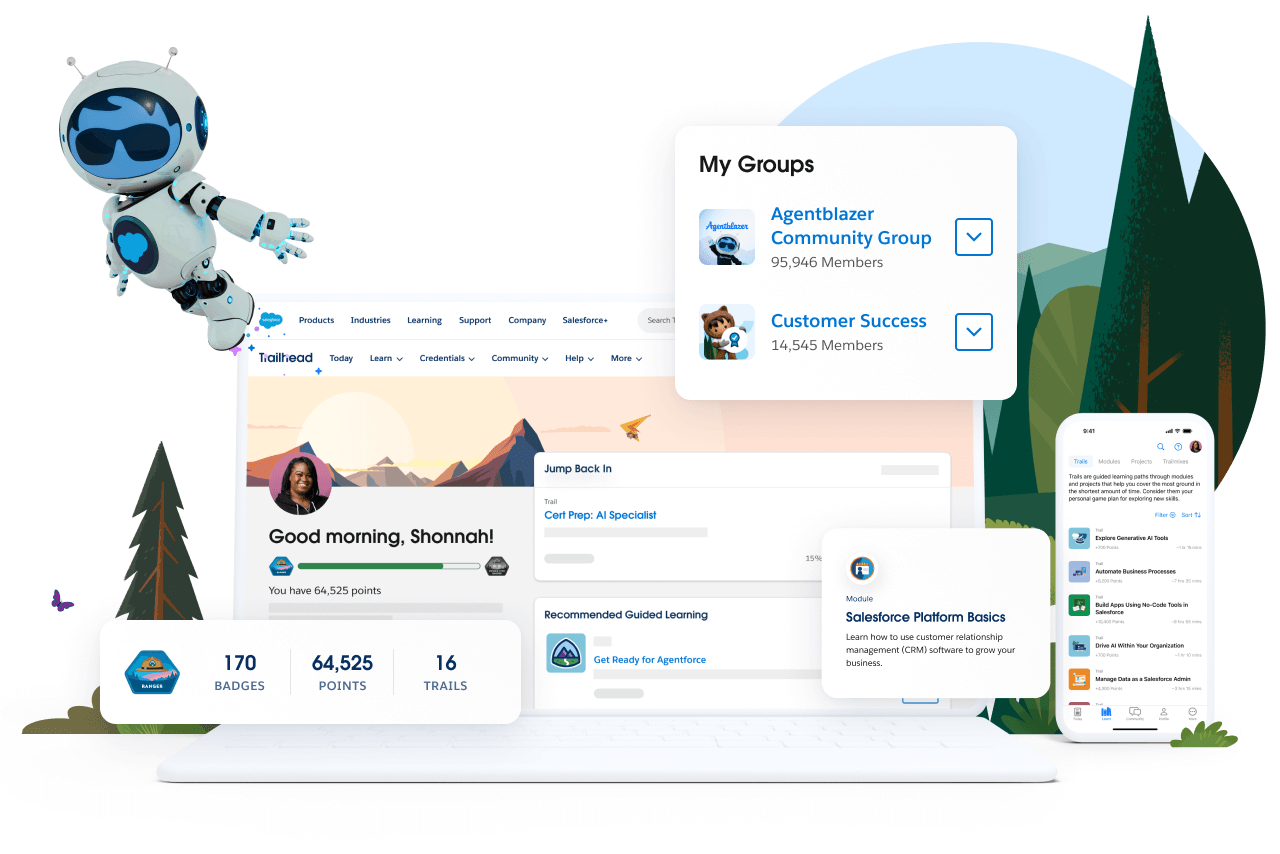
Salesforce requires trained administrators. The platform's breadth (Sales Cloud, Service Cloud, Marketing Cloud, Data Cloud, Agentforce, and more) means meaningful configuration goes well beyond defaults. Over 70% of implementations are partner-led, and timelines range from weeks (simple Sales Cloud) to 3-12 months for enterprise multi-cloud deployments. Trailhead provides 1,500+ badges and 6+ million learners, making self-directed learning feasible but slow. Salesforce has acknowledged being "historically built for large enterprises", and while the free CRM and Starter Suite expand access, the full value requires dedicated administration.
Source: Trailhead
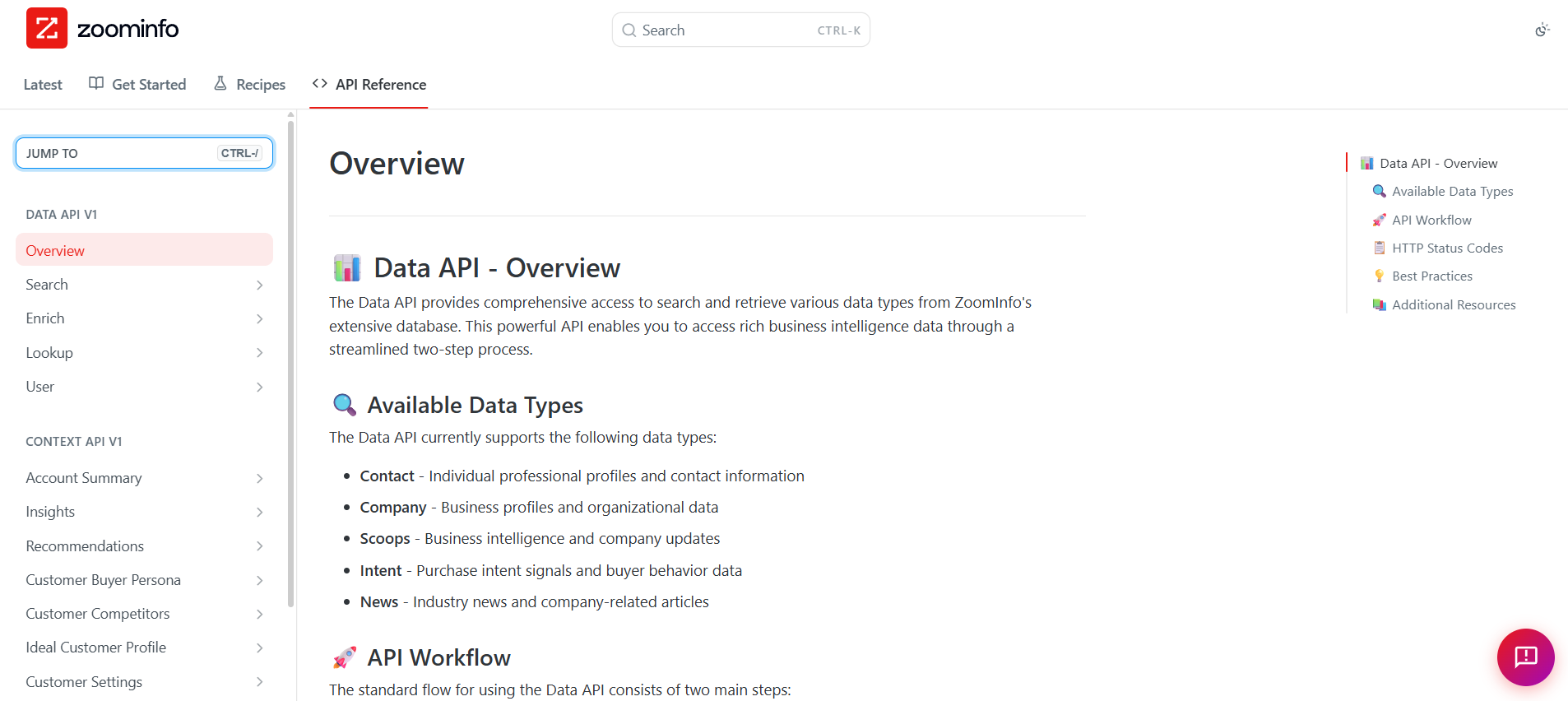
ZoomInfo is designed for faster adoption. GTM Workspace "deploys in weeks, not months" and is accessible to sales reps without technical backgrounds. GTM Studio lets marketers and RevOps teams describe audiences in plain language and launch plays without engineering tickets. ZoomInfo redesigned its onboarding from 30 to 90 days across planning, implementation, education, and adoption phases, producing a 25% improvement in satisfaction scores. For API users, the interactive reference at docs.zoominfo.com includes OAuth setup guides, code samples in five languages, and a developer portal for credential management.
Security and compliance comparison
All three platforms meet enterprise security requirements, but the specifics differ.
Amazon Connect operates under the AWS shared responsibility model and inherits AWS's infrastructure certifications. It's within scope for PCI DSS Level 1, HIPAA, SOC 1/2/3, ISO 27001/27017/27018/27701, FedRAMP, and GDPR. For organizations in regulated industries, the AWS-native architecture means data residency and encryption align with existing AWS security posture. Contact Lens automatically detects and masks PII in transcripts and recordings.
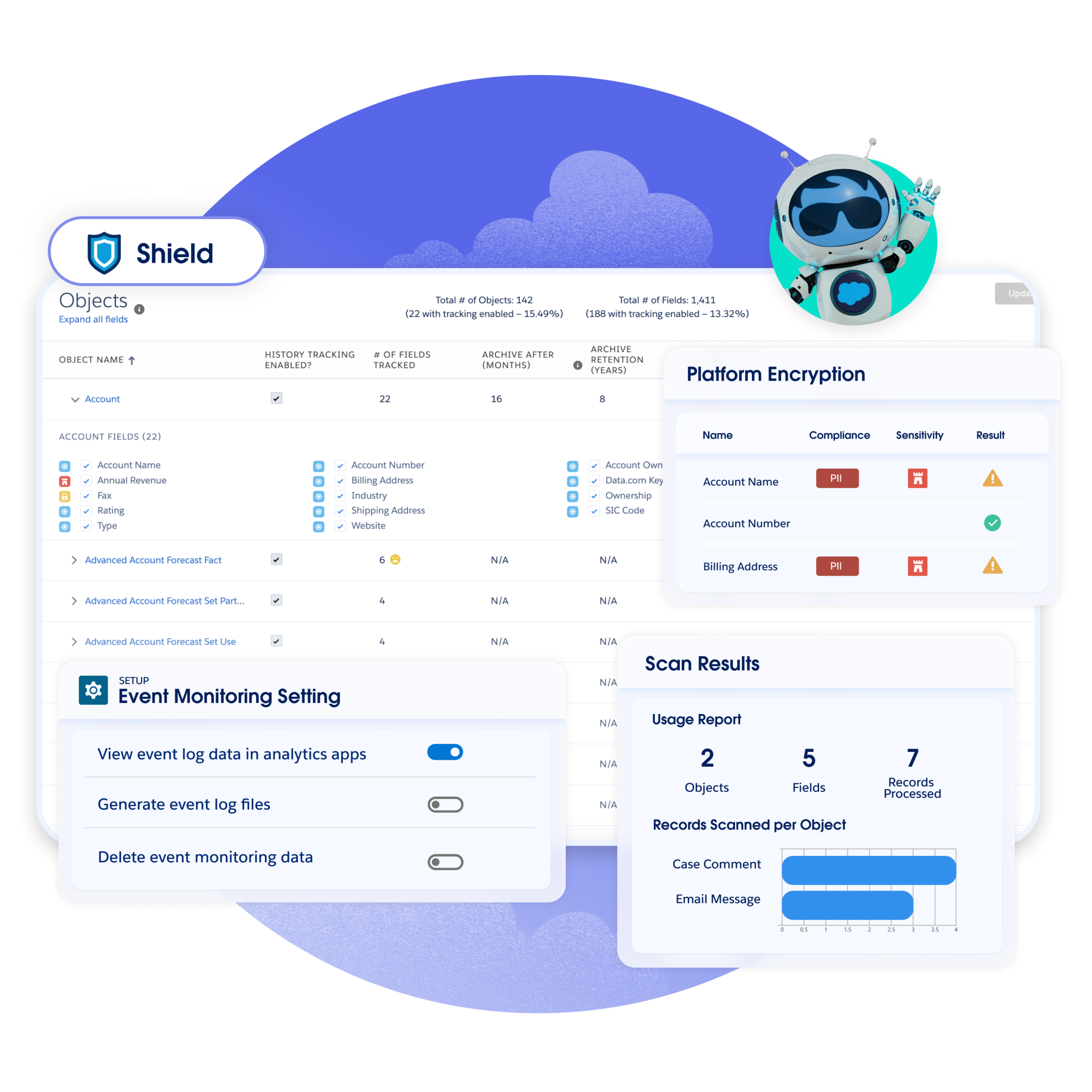
Salesforce provides security through its platform and premium add-ons. Core certifications include ISO 27001/27017/27018, SOC 1/2/3, FedRAMP, and HITRUST. The Einstein Trust Layer enforces zero data retention with LLM partners, PII masking, and toxicity detection for AI features. Salesforce Shield adds event monitoring, platform encryption with BYOK, and field audit trail as a premium add-on. Hyperforce enables regional data residency at no additional cost.
Source: Salesforce
ZoomInfo holds ISO 27001, ISO 27701, SOC 2 Type II, TRUSTe GDPR, and TRUSTe CCPA certifications, all renewed annually. It is a registered data broker in California and Vermont. For enterprises in regulated industries where B2B data privacy is a procurement concern, ZoomInfo's compliance stack and Trust Center provide the documentation that legal and security teams require.
Amazon Connect vs. Salesforce vs. ZoomInfo: Which should you choose?
These three platforms aren't alternatives to each other. They're layers of a customer engagement stack, and the right combination depends on where your biggest gap is.
Choose Amazon Connect if:
Your primary need is a contact center that scales with demand
You're already on AWS and have engineering resources to configure and maintain the platform
Pay-as-you-go pricing matters because your interaction volume varies
You need AI self-service, agent assistance, and quality management included in one price
You're willing to integrate with a separate CRM for relationship management
Choose Salesforce if:
You need a complete CRM covering sales, service, marketing, commerce, and analytics
Managing the full customer lifecycle (from lead to renewal) matters more than contact center infrastructure
Your organization can invest in implementation, training, and administration
You want the broadest enterprise app ecosystem and industry-specific solutions
You're prepared for per-user pricing that scales with team size, not interaction volume
Choose ZoomInfo if:
You need to know who your customers and prospects are before they engage
Your sales and service teams lack the B2B intelligence (verified contacts, intent signals, org charts, technographics) to prioritize accounts and personalize conversations
You want AI that shows why deals move or stall, not just what's in the CRM
You need a data foundation that works across your existing stack, whether that's Amazon Connect, Salesforce, or both
You want access to the same intelligence through native apps, APIs, or MCP in any AI agent
See how ZoomInfo's GTM intelligence works with your platform
Many organizations end up with all three: Amazon Connect handling interactions, Salesforce managing relationships, and ZoomInfo providing the intelligence that makes both more effective. The question isn't which one to buy. It's which gap to close first.
When your agents know who's calling before they answer, when your sales team can see buying intent before the prospect reaches out, and when your marketing team can target accounts based on proven win patterns instead of broad criteria, the investment in intelligence pays for itself in every interaction, every campaign, and every deal.
"Without ZoomInfo, it would be extremely difficult, if not impossible, to achieve our business objectives. Without it, we wouldn't be able to understand the market, have the right contact data, and make meaningful connections." (Thor Sanderson, Senior Manager of Sales Technology Enablement, Smartsheet)
Amazon Connect vs. Salesforce vs. ZoomInfo FAQ
What is the core difference between Amazon Connect, Salesforce, and ZoomInfo?
Amazon Connect is a cloud contact center platform that handles customer interactions across voice, chat, email, and messaging channels, with AI features included in pay-per-use pricing. Salesforce is a CRM platform that manages the entire customer lifecycle across sales, service, marketing, and commerce. ZoomInfo is a B2B intelligence platform that provides the data foundation (500M contacts, 100M companies, intent signals, and a GTM Context Graph processing 1.5B+ data points daily) that makes both platforms more effective.
Can Amazon Connect and Salesforce work together?
Yes. Salesforce Service Cloud Voice integrates directly with Amazon Connect, surfacing voice and digital channels inside the Salesforce CRM interface. This combination gives agents Amazon Connect's contact center infrastructure with Salesforce's customer relationship context. The integration adds cost, though: Service Cloud Voice is a $150/user/month add-on on top of the base Service Cloud license.
Which platform is cheapest for a customer service operation?
Amazon Connect is typically cheapest for variable or low-volume operations because it charges per interaction ($0.038/min for voice, $0.010/message for chat) with no per-seat fees. Salesforce charges per user per month, starting at $175/user/month for Enterprise Service Cloud before add-ons. At high volumes with stable agent counts, the total cost comparison depends on interaction patterns, but Salesforce's per-user model becomes more predictable. ZoomInfo is not a customer service platform; its cost is separate and justified by the intelligence it adds.
Which platform has the best AI capabilities?
Each platform's AI serves a different purpose. Amazon Connect includes AI self-service, real-time agent assistance, and automated quality evaluations in its base pricing (Zepz's AI assistant resolves 67% of inquiries instantly). Salesforce's Agentforce AI agents autonomously handle service cases and sales tasks (its own help site resolves 85% of requests without human escalation), but AI licensing is an add-on starting at $125/user/month. ZoomInfo's AI focuses on intelligence: its GTM Context Graph connects CRM data, conversation transcripts, and behavioral signals to reveal buying intent and deal dynamics that neither contact center nor CRM platforms capture.
Does ZoomInfo integrate with both Amazon Connect and Salesforce?
Yes. ZoomInfo lists Amazon Connect in its App Marketplace and Salesforce as a featured native integration. ZoomInfo data (verified contacts, company intelligence, intent signals) can enrich both platforms. The Enterprise API and MCP server can also power custom integrations with either platform, making the same intelligence available across the entire customer engagement stack.
Which platform requires the most technical expertise?
Amazon Connect requires the most. It functions as an AWS developer toolkit that needs engineers for advanced configuration, Lambda functions for custom workflows, and separate BI tools for detailed reporting. Salesforce requires trained administrators and most implementations are partner-led, but its interface is accessible to business users. ZoomInfo is designed for faster adoption, with GTM Workspace deploying in weeks and GTM Studio enabling marketers to launch plays in plain language without engineering support.
Do I need all three platforms?
Not necessarily. If your business is purely inbound customer service, Amazon Connect plus a basic CRM may suffice. If your business is relationship-driven sales and marketing, Salesforce plus ZoomInfo intelligence may be the right combination. If you operate a large contact center that also runs outbound sales and account-based marketing, all three layers (interaction infrastructure, relationship management, and B2B intelligence) compound each other's value.
Which platform has better data capabilities?
Amazon Connect's Customer Profiles aggregates data from 80+ source integrations into unified profiles for agents. Salesforce's Data Cloud ingests and harmonizes first-party data at scale, with 112 trillion records processed in FY26. ZoomInfo provides third-party B2B intelligence that neither platform offers: 500M contacts, 100M companies, 135M+ verified phone numbers, 200M+ verified business email addresses, intent signals from 210 million IP-to-Organization pairings, and technographic profiles of 30+ million companies. The platforms complement each other: ZoomInfo provides the external intelligence, while Amazon Connect and Salesforce manage the internal data.
