
Choosing between Amperity vs. Segment for your customer data needs often comes down to five questions:
Is your biggest problem fragmented customer identities across dozens of systems, or fragmented event data that never reaches the right tools?
Do you need AI-powered identity resolution for messy offline and online records, or a single API that routes behavioral events to 750+ destinations?
Are you a large consumer brand with millions of in-store and digital interactions, or a product-led company generating high volumes of behavioral data?
Does your data team prefer a lakehouse-native architecture that keeps data in Snowflake or Databricks, or a pipeline-first approach with real-time event streaming?
Is your primary goal understanding who your existing customers are, or tracking what they do across every touchpoint?
In short, here's what we recommend:
Amperity is the identity resolution specialist built for large consumer brands with fragmented customer data. Its patented Stitch engine uses up to 45 AI models to merge records across CRMs, loyalty programs, point-of-sale systems, and e-commerce platforms into unified profiles.
For retailers, airlines, and hospitality companies sitting on millions of records with no reliable way to connect them, Amperity solves a problem most CDPs barely attempt.
The trade-off: Amperity is enterprise-only, requires a sales conversation to see pricing, and has no self-serve path for smaller teams.
Segment is the developer-first data pipeline that made "instrument once, route everywhere" the standard for customer data collection.
Acquired by Twilio in 2020, Segment connects your website, mobile app, and server-side events to 750+ downstream tools through a single API. Its identity resolution handles cross-device stitching, and its Engage product adds audience building and journey orchestration.
For product-led companies and B2C businesses with strong engineering teams, Segment provides the data infrastructure backbone. But it's a pipeline first and an analytics tool second. You'll need external tools to visualize what the data means.
Both platforms solve real problems for companies managing customer data. But they share an assumption: that the data you need already exists somewhere in your systems, waiting to be unified or routed.
For B2B companies, this assumption breaks down fast. Your biggest intelligence gap isn't fragmented internal data. It's everything you don't know about the accounts and buyers you haven't reached yet.
ZoomInfo is an AI-powered go-to-market platform that approaches customer intelligence from the opposite direction.
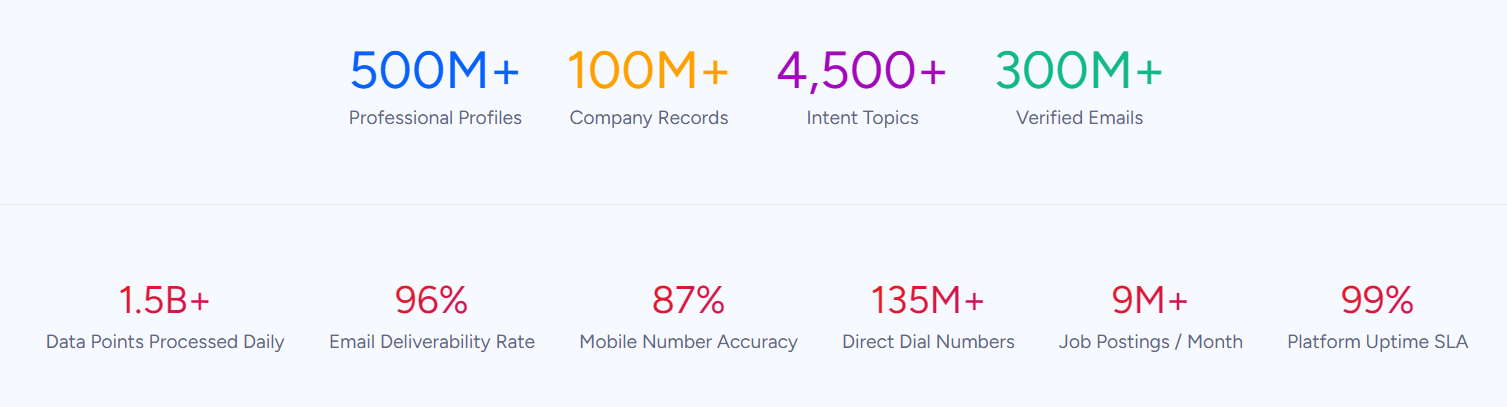
Instead of organizing data you've already collected, ZoomInfo provides B2B intelligence you can't generate internally: 500M contacts, 100M companies, 135M+ verified phone numbers, and 200M+ verified business emails, combined with buyer intent signals, technographics, and org charts.
Its GTM Context Graph processes 1.5B+ data points daily and fuses this external data with your CRM records, conversation transcripts, and behavioral signals to reveal not just what happened in a deal, but why. For B2B companies that evaluated a CDP and realized they needed prospect intelligence more than behavioral data unification, ZoomInfo fills the gap that neither Amperity nor Segment was designed to address.
If B2B intelligence sounds like what your go-to-market team needs, see how ZoomInfo works with a free trial.
Amperity vs. Segment vs. ZoomInfo at a glance
Amperity | Segment (Twilio) | ZoomInfo | |
|---|---|---|---|
Core approach | AI-powered identity resolution and unified customer profiles | Developer-first data pipeline with event routing to 750+ tools | B2B intelligence with AI-powered go-to-market execution |
Identity resolution | Patented probabilistic + deterministic matching (45 AI models) | Configurable rules-based identity stitching | B2B entity resolution across 500M contacts and 100M companies |
Integrations | 200+ pre-built connectors | 750+ integrations | 120+ marketplace integrations, plus Enterprise API and MCP |
Data architecture | Lakehouse-native (zero-copy with Databricks, Snowflake, BigQuery) | Event streaming with warehouse sync (Snowflake, BigQuery, Redshift, Databricks) | Proprietary B2B data platform with cloud partner delivery (AWS, Snowflake, Databricks) |
AI capabilities | AmpAI (natural language segments, journeys, queries) + Chuck (Databricks agent) | CustomerAI Predictions, Generative Audiences, Recommendations | GTM Context Graph (1.5B+ data points daily), AI agents for sales and marketing execution |
Free tier | None (enterprise sales required) | Free plan (1,000 MTUs, 2 sources) | ZoomInfo Lite (free, permanent) + 7-day full trial |
Pricing model | Consumption-based "Amps" (no public prices) | MTU-based (starts at $120/month for Team) | Custom-quoted, consumption-based (no public prices) |
Target company size | Enterprise ($500M+ revenue) | Startups to enterprise | Mid-market to enterprise |
Best for | Enterprise consumer brands with fragmented data | Product-led companies needing real-time event infrastructure | B2B teams needing prospect intelligence, intent data, and GTM execution |
Three platforms, three philosophies
The split between these platforms isn't about features. It's about which problem each considers primary.
Amperity starts with a question: who is this customer?
When someone buys shoes in-store, browses online, enrolls in a loyalty program, and calls customer service, they create four separate records in four separate systems. Amperity's architecture exists to collapse those records into one verified identity. Everything else (segmentation, activation, analytics) is built on top of that resolved identity.
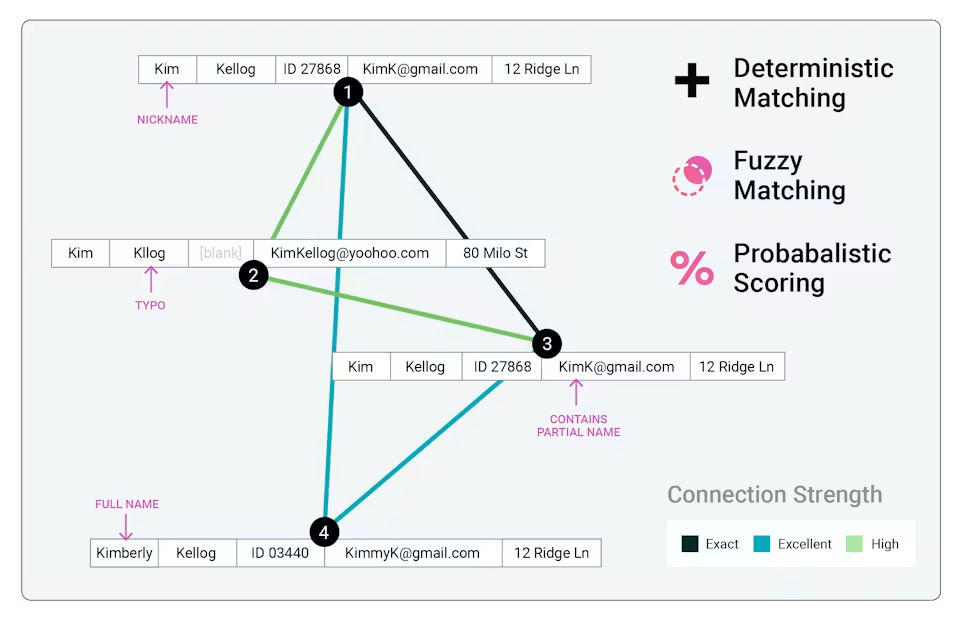
Source: Amperity
As Amperity puts it, the platform is designed to "get a return on customer data" by turning fragmented records into actionable profiles.
Segment starts with a different question: where does this data need to go?
When a user clicks a button on your website, that event contains valuable information. But if your analytics tool, your email platform, your ad network, and your data warehouse each need that event, you'd normally write four separate integrations.
Segment collects that event once and fans it out to every tool that needs it. Identity resolution exists in Segment, but it serves the pipeline. The pipeline doesn't serve the identity.
ZoomInfo starts with a question neither CDP asks: who should you be talking to next?
Both Amperity and Segment assume the data you need already exists in your systems. ZoomInfo operates on the premise that for B2B companies, the most valuable intelligence is external: the company you should target, the decision-maker you should contact, the intent signal that says they're researching your category right now.
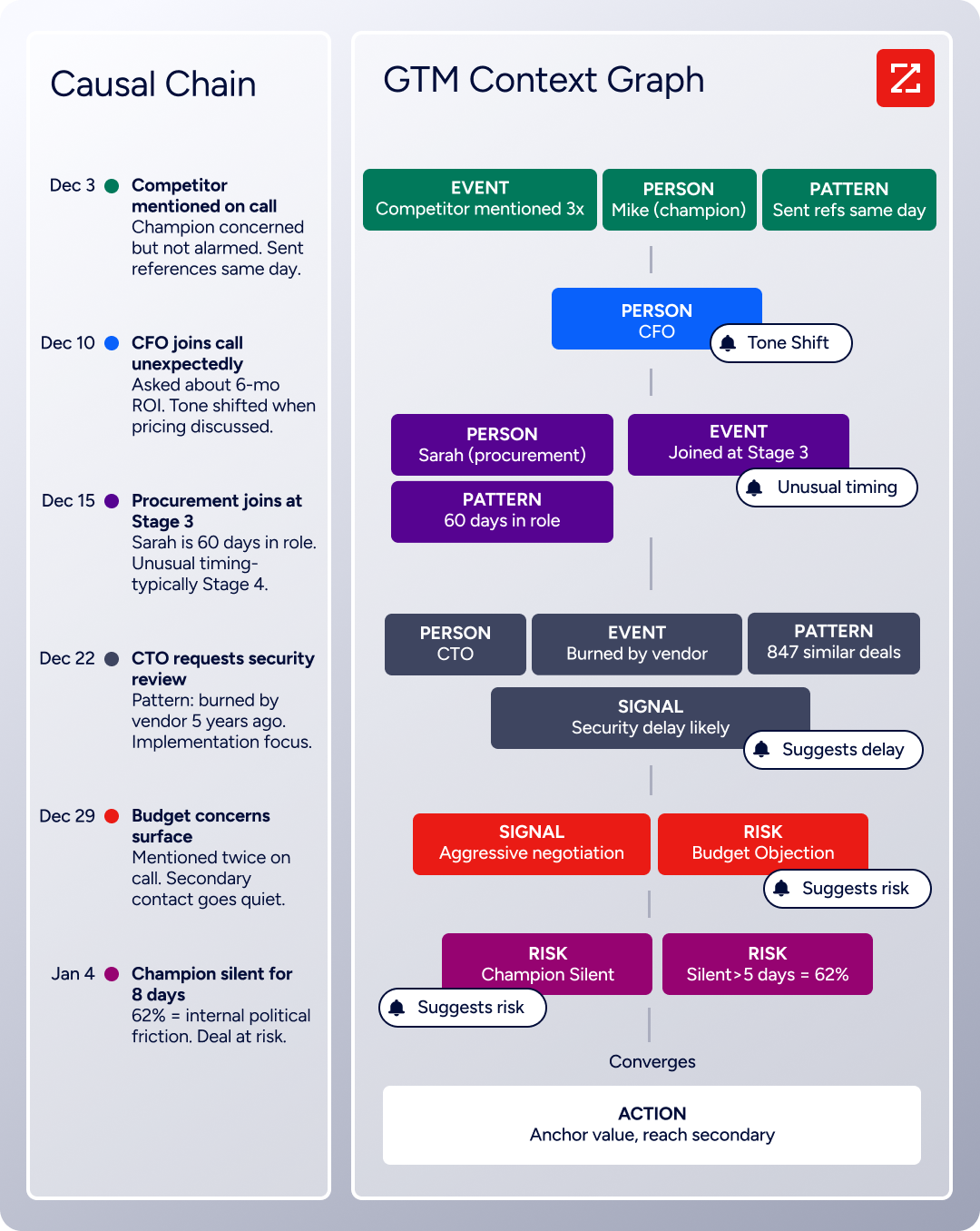
ZoomInfo's GTM Context Graph layers this external intelligence on top of your internal CRM and conversation data, capturing why deals move or stall.
These aren't competing approaches. They solve different stages of the same problem. But choosing the wrong one means investing months in infrastructure that doesn't address your actual bottleneck.
Identity resolution: Amperity's core advantage
This is where Amperity separates from the field.
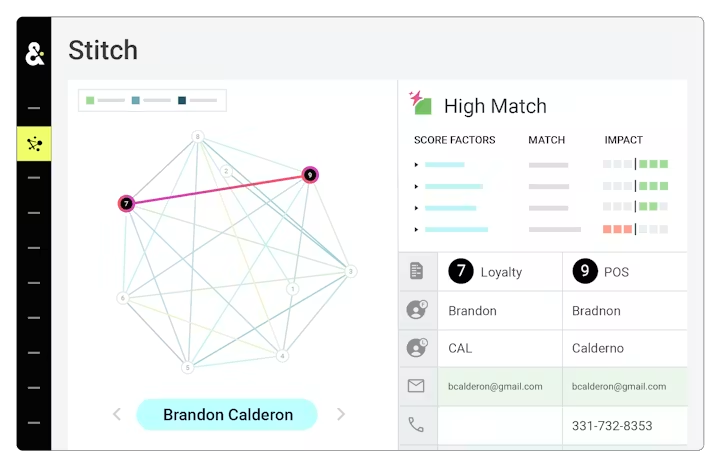
Amperity's Stitch engine runs a seven-stage pipeline that combines deterministic matching (exact email, phone) with probabilistic matching (name similarity, address proximity, behavioral patterns).
Source: Segment
The system scores match quality on a five-point scale and maintains three identity graphs: a Growth Graph (broader probabilistic matches for marketing reach), a Trust Graph (conservative deterministic matches for compliance), and an Opportunity Graph that measures the gap between the two.
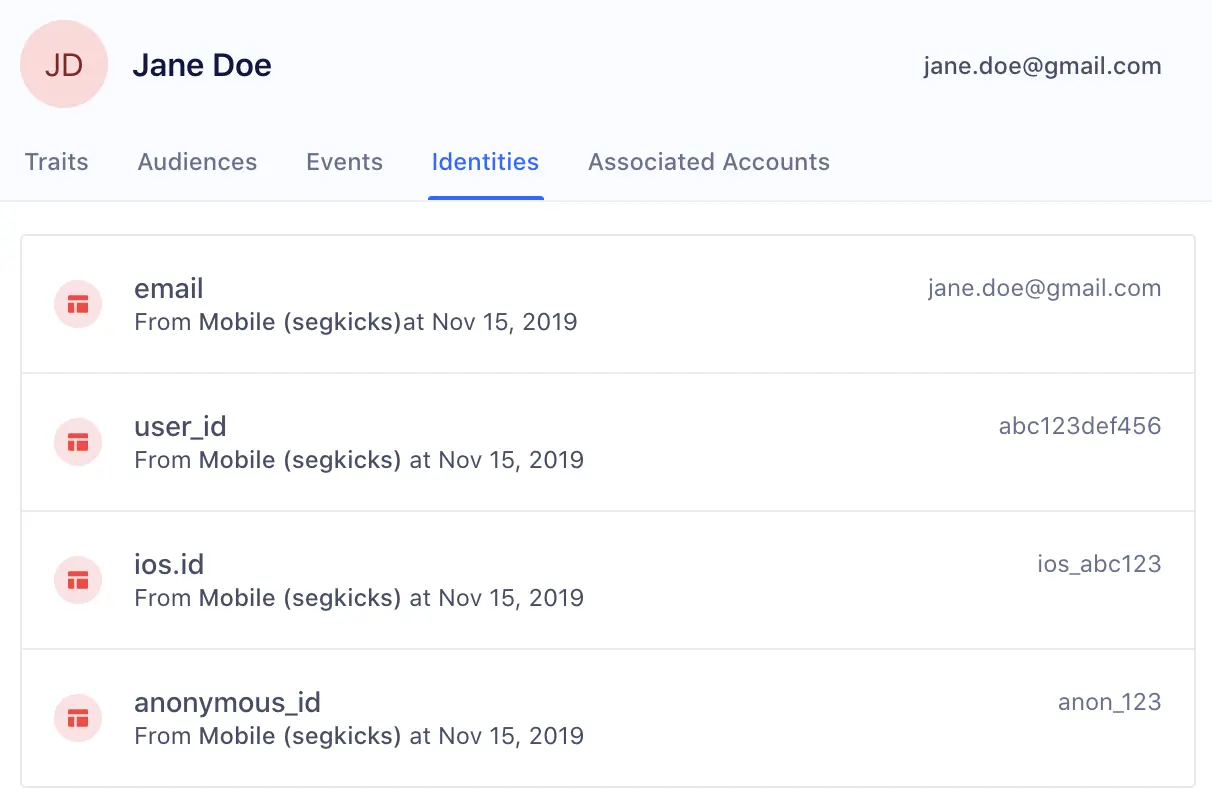
Segment's Unify handles identity resolution through a configurable rules-based system.
It merges anonymous and known profiles using cookie IDs, device IDs, email addresses, and custom external IDs. A "priority trust algorithm" prevents erroneous merges from shared devices. It works well for digital-first companies where the main identity challenge is cross-device stitching. But it wasn't designed for messy, large-scale offline-to-online matching.
Source: Segment
When a customer uses a different name at the register than the one on their loyalty card, Segment's rules-based approach often misses the connection. Amperity's probabilistic engine catches it.
ZoomInfo solves a different identity problem.
Its B2B entity resolution matches and verifies 500M contacts across 100M companies by scanning 28 million site domains daily with automated ML, supplemented by third-party partner data, a community of 200,000+ users who share data back, and 300+ human researchers. The result: verified contact data with up to 95% accuracy.
In a Fortune 500 competitive RFP analyzing 25 million contacts, the independent consultant concluded that "no other competitor came even close."
Seismic's sales team attributed 39% of active pipeline to opportunities identified or influenced by ZoomInfo signals, while reporting 54% productivity gains and saving 11.5 hours per week per seller. (Seismic Case Study)
Integration ecosystems reflect who built each platform
Segment's integration catalog is its signature advantage.
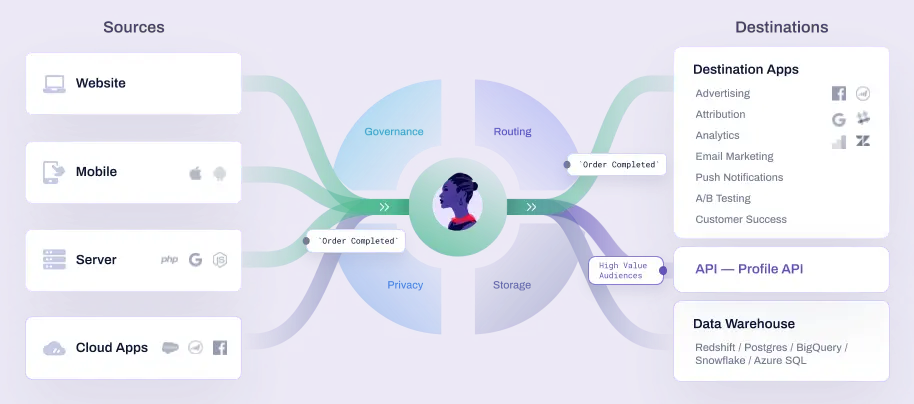
With 750+ pre-built connectors, it connects to virtually every analytics, advertising, CRM, email, and data warehouse tool a modern company uses. The Destination Actions framework gives teams granular control over which events trigger which actions in each tool, with field-level mapping and transformation.
The real differentiator isn't just breadth. It's the single-API collection model. Engineering teams instrument Segment's tracking code once, and every downstream tool receives the data it needs in the format it expects.
Adding a new analytics platform or switching email providers doesn't require re-instrumentation.
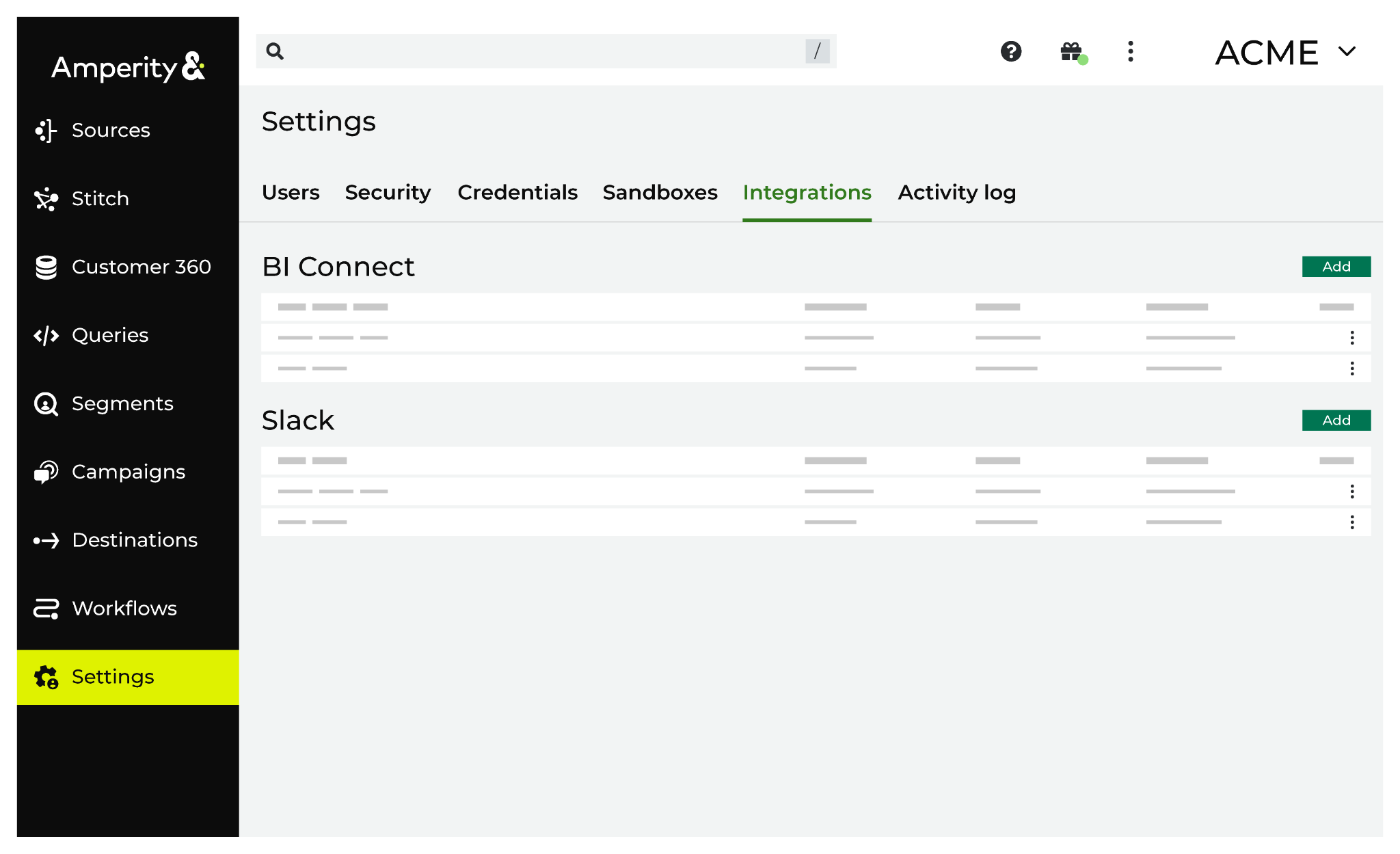
Amperity takes a narrower but deeper approach with 200+ pre-built connectors focused on the systems that matter most for customer data: CRMs, e-commerce platforms, loyalty programs, point-of-sale systems, email tools, and data warehouses.
Source: Amperity
Where Amperity's integration story stands out is Amperity Bridge, which enables zero-copy data sharing with Databricks, Snowflake, and BigQuery. Data stays in the customer's own lakehouse rather than being copied to a vendor silo.
ZoomInfo's integration ecosystem serves a different purpose: connecting B2B intelligence to go-to-market execution tools.
The ZoomInfo App Marketplace lists 120+ integrations spanning Salesforce, HubSpot, Microsoft Dynamics, Snowflake, Outreach, Salesloft, and more.
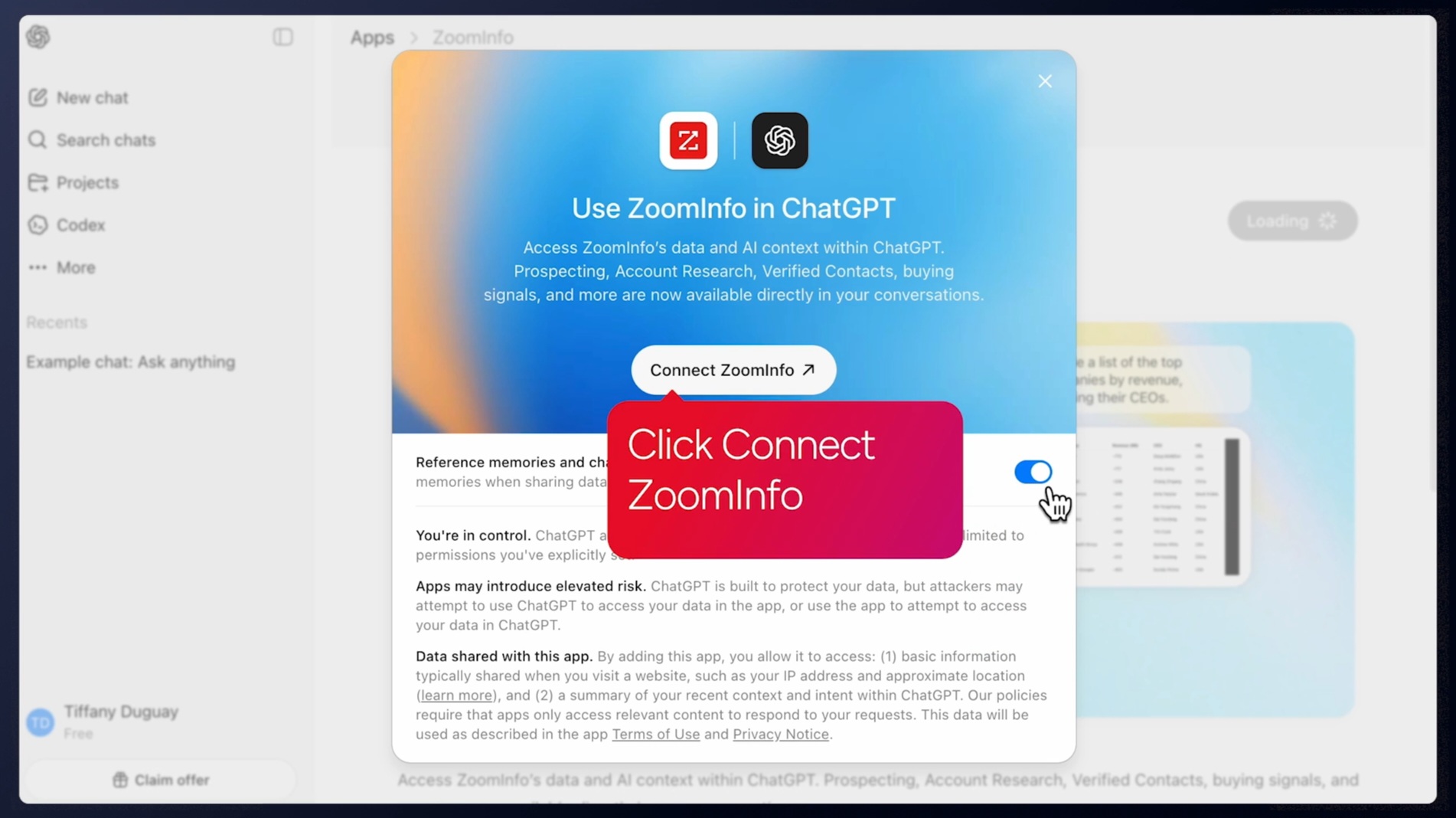
But the more significant access point is the Enterprise API and MCP server, which expose ZoomInfo's data to any tool, any AI agent, or any custom application. API access is included in all relevant plans, and the MCP server works with Claude and ChatGPT, with additional integrations on the way.
Source: ZoomInfo
AI capabilities serve different masters
All three platforms have invested in AI, but each applies it to a different problem.
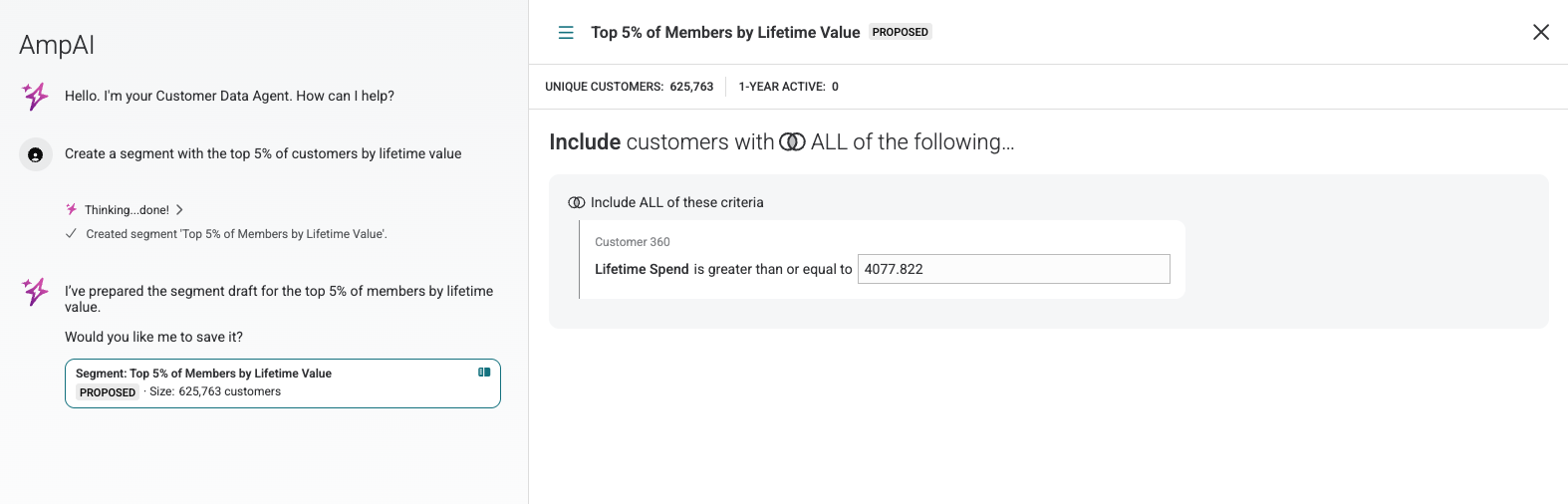
Amperity's AmpAI embeds generative AI into the platform's workflow editors.
Source: Amperity
The Customer Data Assistant lets marketers create segments and journeys from natural language prompts. The Queries AI Assistant writes and debugs SQL. Predictive models run against unified profiles, producing predicted CLV, churn propensity, product affinity scores, and event propensity without requiring a data science team.
Separately, Chuck is a command-line AI agent for data engineers working in Databricks. It applies Amperity's identity resolution models to raw data in Unity Catalog through natural language commands. Chuck offers a free tier, making it the only part of Amperity's platform accessible without a sales conversation.
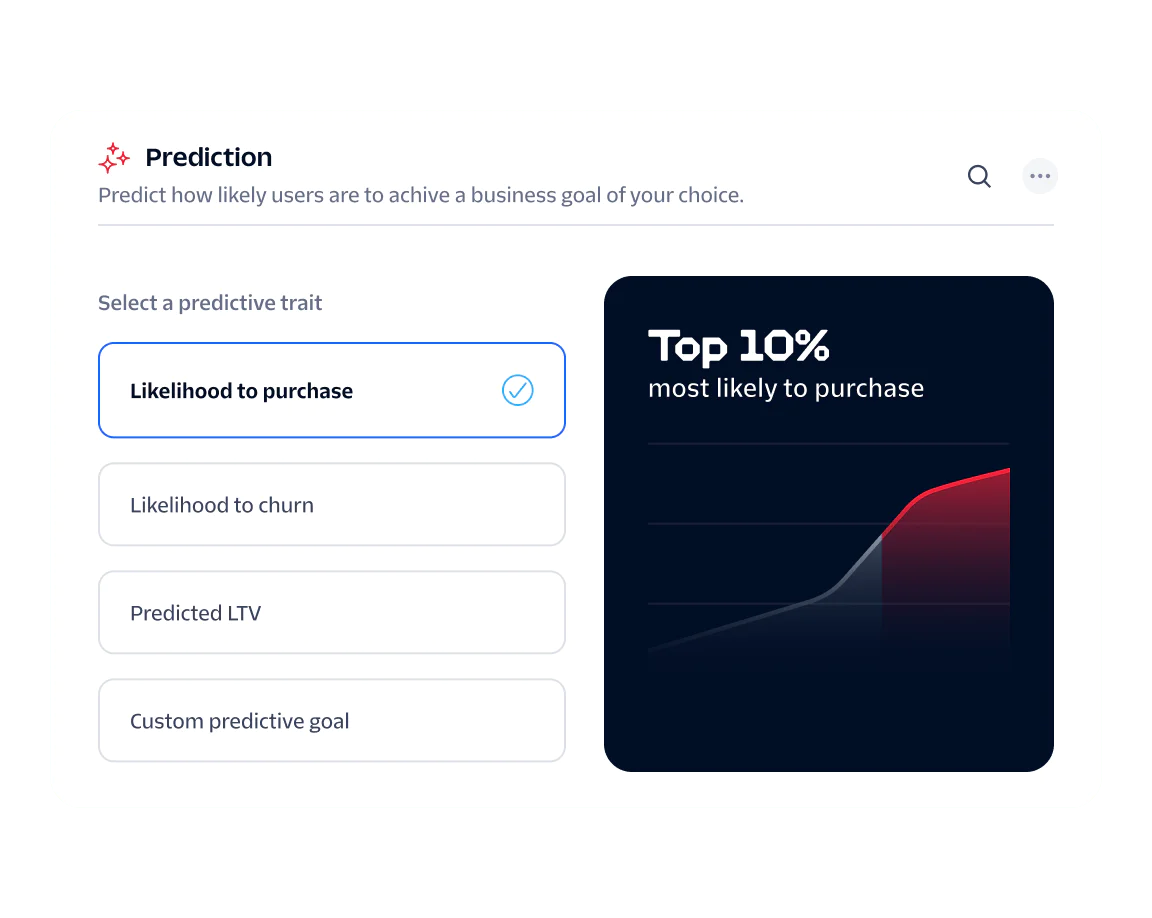
Segment's AI capabilities center on CustomerAI Predictions and Generative Audiences.
Source: Segment
Predictive Traits score customers for purchase likelihood, churn risk, and lifetime value without data science resources, and adoption grew 57% year-over-year in 2024. Generative Audiences (GA in 2025) let marketers build audience segments from natural language prompts.
Segment also offers Recommendations for AI-driven next-best-action suggestions. The combined AI suite requires Segment's full CDP tier, which means contacting sales.
ZoomInfo's AI operates at a different layer.
The GTM Context Graph processes 1.5B+ data points daily, fusing ZoomInfo's B2B data with CRM records, conversation intelligence from Chorus, and behavioral signals. The result isn't just predictions. It reveals why deals move or stall. As ZoomInfo's Chief Product Officer Dominik Facher writes: "The CRM recorded the state change. It has no record of why it happened."
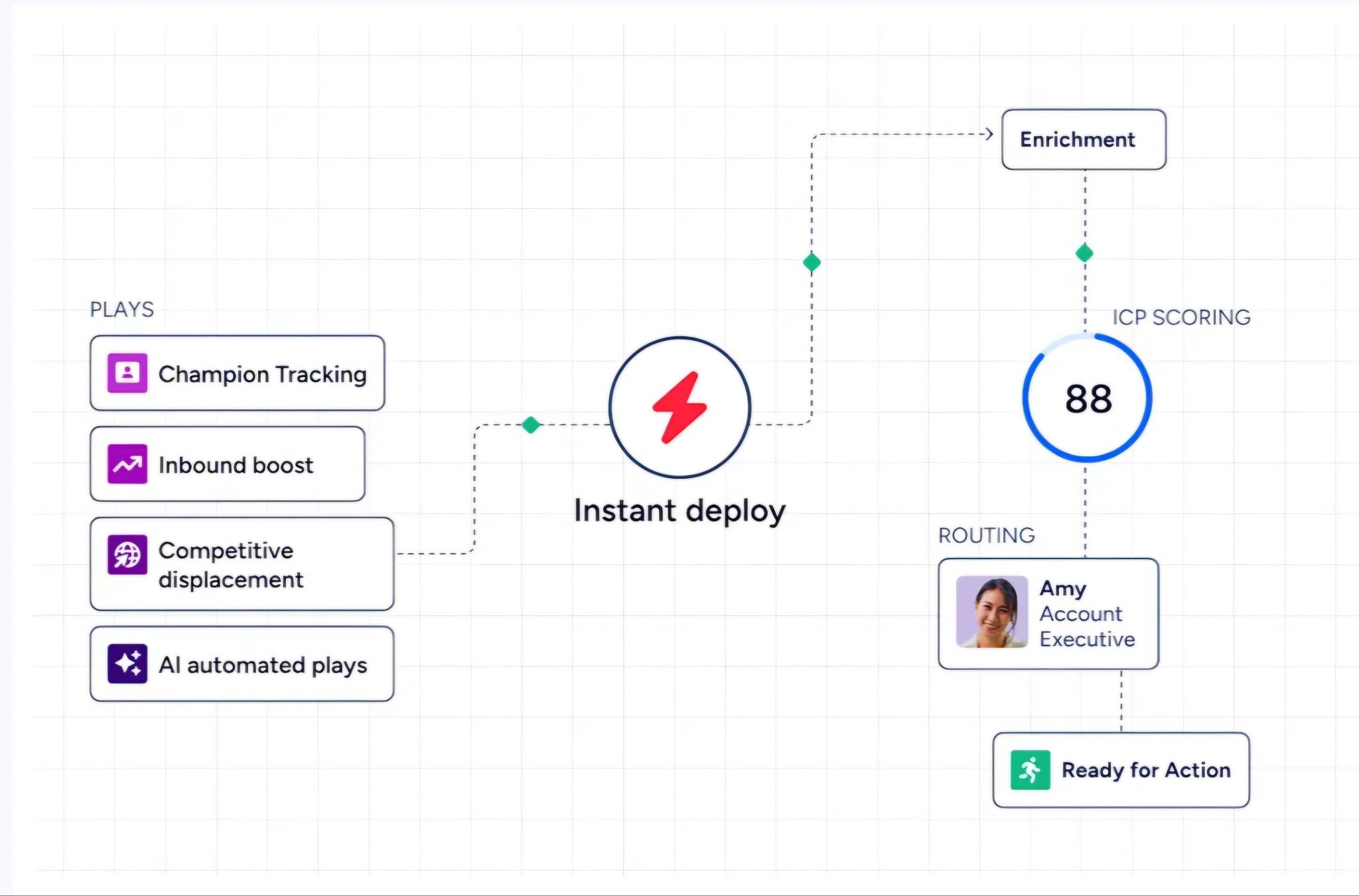
The GTM Context Graph captures that "why" and feeds it into GTM Workspace (where AI agents draft outreach, research accounts, and surface next-best actions for sellers) and GTM Studio (where marketers build and launch go-to-market plays in natural language).
Source: ZoomInfo
Redwood Logistics saw a 99% reduction in cost-per-click, a 310% increase in clickthrough rate, and saved 20-25 hours per week by activating ZoomInfo's data-driven insights. (Redwood Logistics Case Study)
The B2B gap neither CDP fills
Here's the scenario Amperity and Segment don't address: you're a B2B company, and your biggest problem isn't unifying the data you have. It's finding the accounts and contacts you should be pursuing.
CDPs assume your customer base generates enough behavioral data to power segmentation, personalization, and predictive models.
For consumer brands with millions of transactions, that assumption holds. For B2B companies with longer sales cycles, smaller customer counts, and buying committees of five to fifteen people, the data volume often isn't there. You can build a unified profile of your 500 existing accounts in either platform.
But neither tells you about the 50,000 companies in your addressable market that you haven't reached, or which of them are researching your category right now.
ZoomInfo fills this gap with three capabilities CDPs lack.
First, contact and company data. ZoomInfo provides 120M direct-dial phone numbers and 200M+ verified business email addresses across 100M companies, including firmographics, technographics, org charts, and department-level intelligence.
This isn't data you collected. ZoomInfo built and verified it through automated scanning, third-party partnerships, a community of 200,000+ users who share data back, and 300+ human researchers.
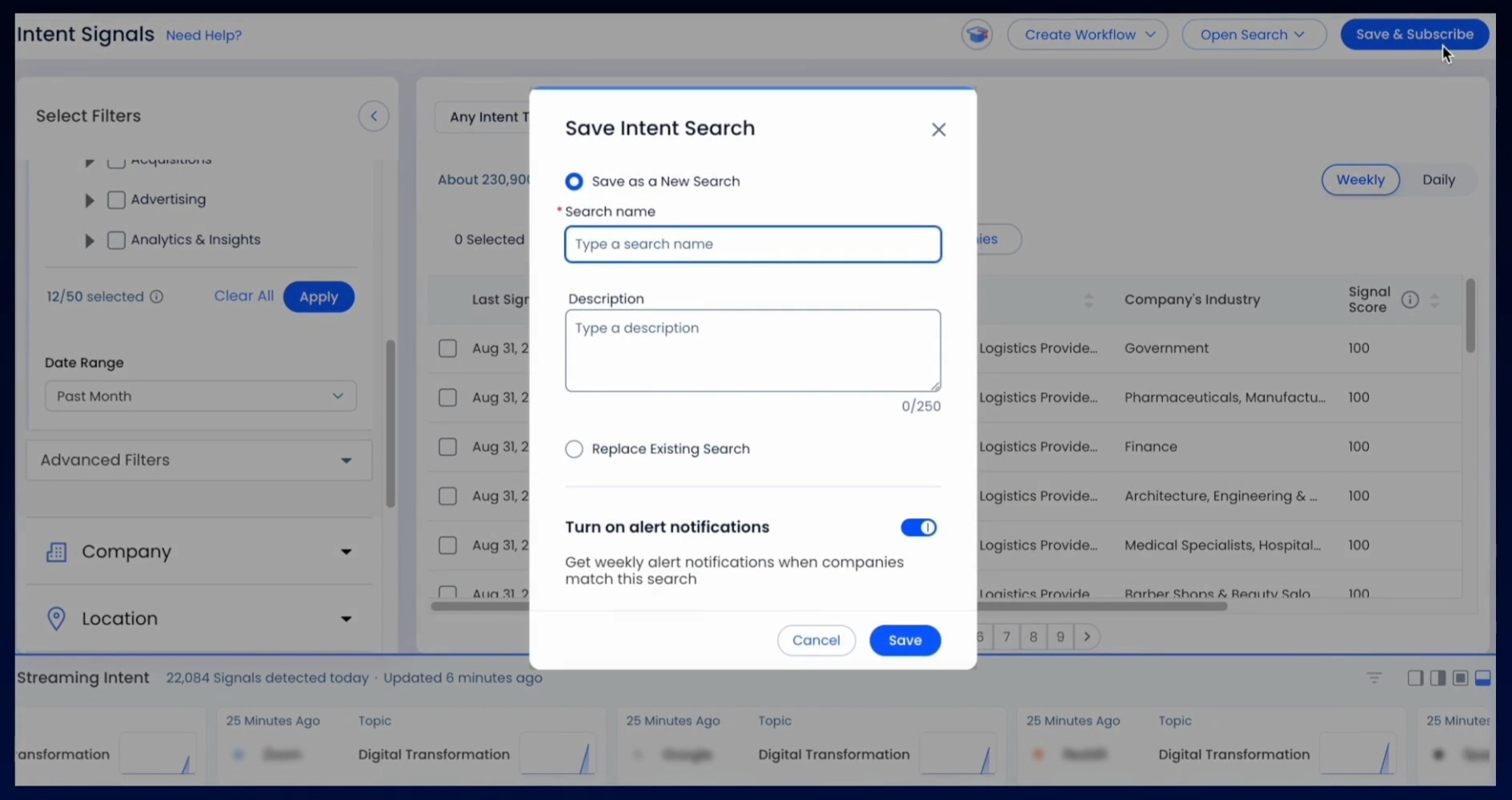
Second, buyer intent signals. ZoomInfo Intent tracks signals from 210 million IP-to-Organization pairings and 6 trillion+ keyword-to-device pairings sourced monthly.
Source: ZoomInfo
Guided Intent identifies topics historically correlated with deal success for your specific business, rather than requiring you to pick topics manually. CDPs can tell you which existing customers are engaged. ZoomInfo tells you which prospect accounts are researching your category before they visit your website.
Third, go-to-market execution built on that intelligence. GTM Workspace gives sellers a single surface where prioritized accounts, AI-drafted outreach, and deal context converge. GTM Studio gives marketers and RevOps teams a builder where audience definition, campaign orchestration, and pipeline measurement happen in natural language.
Both draw from the same GTM Context Graph, so the intelligence stays consistent regardless of which team uses it.
Snowflake feeds over 70 firmographic and technographic data fields from ZoomInfo into its Account Propensity Scoring model. Accounts monitored using ZoomInfo-powered scores showed 90% higher opportunity open rates and 2x higher customer conversion rates. (Snowflake Case Study)
Pricing: three different models, three different philosophies
The pricing structures reveal what each platform values and who it's built for.
Amperity uses a consumption-based model built around "Amps", a proprietary unit measuring platform usage.
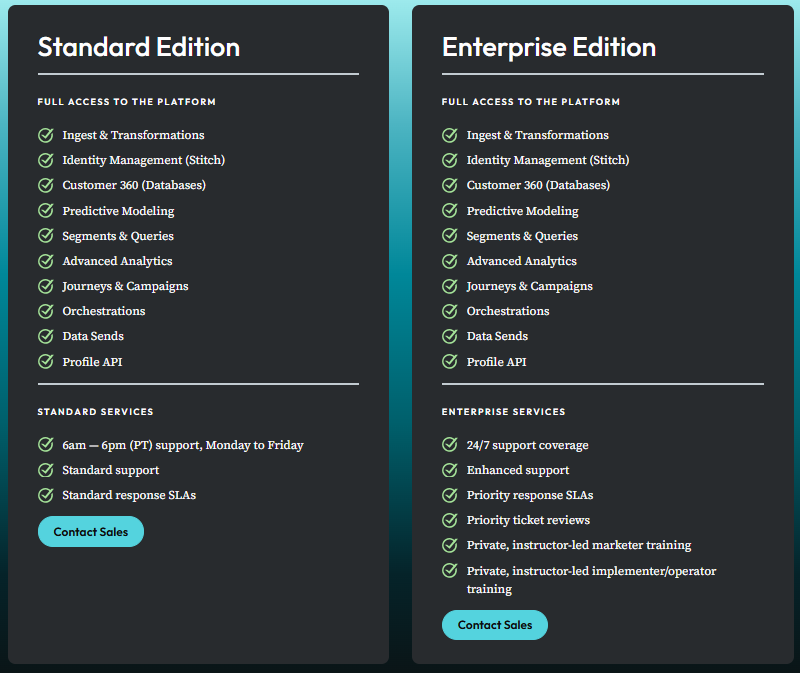
Activities that consume Amps include processing records, building segments, running campaigns, and activating insights. Storage is metered separately in terabytes. Amperity offers two editions (Standard and Enterprise), both with full platform access. The difference is support: Standard gets business-hours coverage, Enterprise gets 24/7 with priority SLAs and private training.
No public pricing exists.
The stated philosophy is "no add-ons and no hidden fees", but several cost drivers add complexity: premium connector surcharges of 25,000 Amps per month for advertising destinations (Meta, Google, TikTok, and others), compute sizing that affects consumption rate, and predictive modeling runs that can spike usage.
Only 10% of unused Amps roll over. There is no self-serve trial for the core platform. Realistically, Amperity fits companies with $500M+ in revenue and dedicated data teams.
Segment uses Monthly Tracked Users (MTUs) as its primary pricing metric.
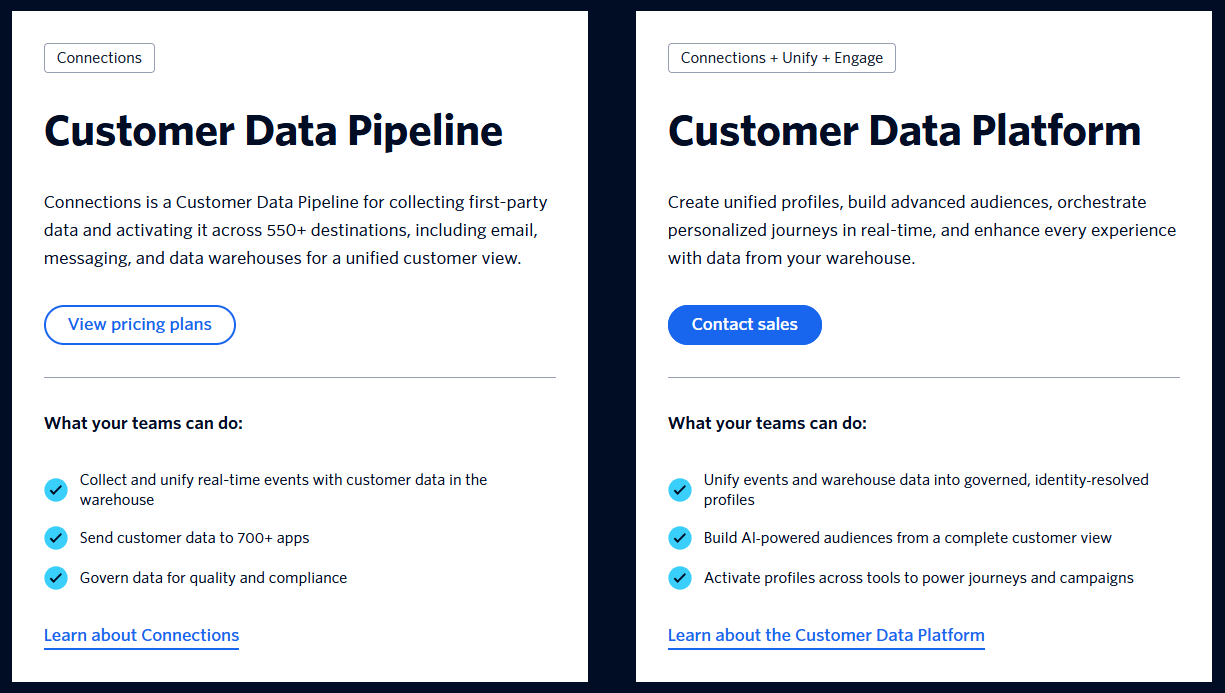
A Free plan supports 1,000 MTUs with 2 sources and 1 warehouse destination. The Team plan starts at $120/month for 10,000 MTUs with unlimited sources. Overage pricing ranges from $10-$12 per additional 1,000 MTUs.
The Business plan (custom pricing) adds Protocols, unlimited warehouses, HIPAA eligibility, and dedicated support. The full CDP (Connections + Unify + Engage) requires contacting sales.
Segment's pricing looks transparent at first, but costs can escalate. G2 reviewers consistently flag pricing as a barrier, with enterprise contracts reportedly reaching $400K.
The MTU model penalizes high-traffic, low-conversion businesses. Paid support adds another layer: Production support costs the greater of $250/month or 4% of monthly spend, while Business support costs the greater of $1,500/month or 6%.
ZoomInfo uses custom-quoted, consumption-based pricing with no publicly listed prices.
The mechanics are seat-and-credit-based, where credits determine export volume (1 credit = 1 exported record). Three product lines (Sales, Marketing, and Chorus) each have multiple tiers ranging from Professional to Enterprise.
What sets ZoomInfo apart on pricing is its free entry points. ZoomInfo Lite is a permanent free tier (not a trial) that includes access to ZoomInfo's B2B database, 10 monthly export credits, individual and company searches, the Chrome extension, website visitor tracking, and HubSpot integration.
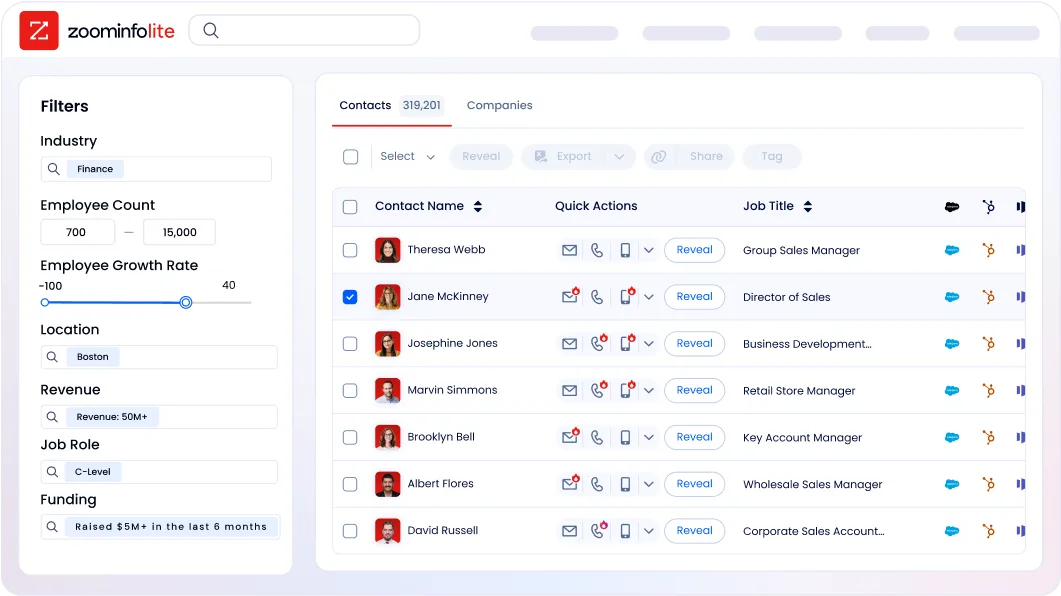
A separate 7-day free trial offers access to core platform features. Neither Amperity nor Segment's full CDP offers comparable no-commitment access.
Data governance and compliance: all three take it seriously
For regulated industries, governance capabilities can be a deciding factor.
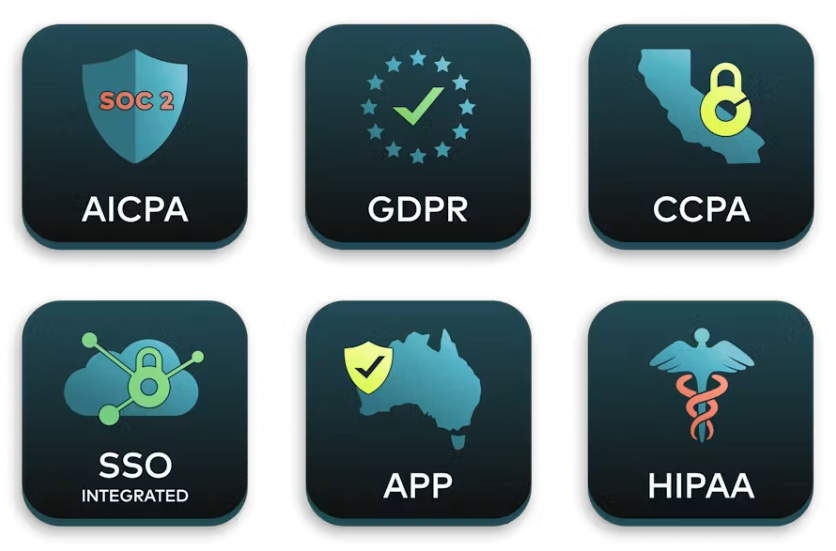
Amperity holds SOC 2, ISO 27001, HIPAA, GDPR, CCPA, and Australian Privacy Principles certifications.
Source: Amperity
Its built-in privacy rights workflow engine supports DSAR requests, record deletion, and selective PII removal for GDPR, CCPA, PIPEDA, and APP compliance. Role-based access controls and SSO integration are standard. BECU specifically cited role-based governance that protects PII as a prerequisite for their adoption.
Segment maintains SOC 2 Type II, ISO 27001/27017/27018, and HIPAA eligibility (with a signed BAA), along with PCI DSS compliance inherited from Twilio.
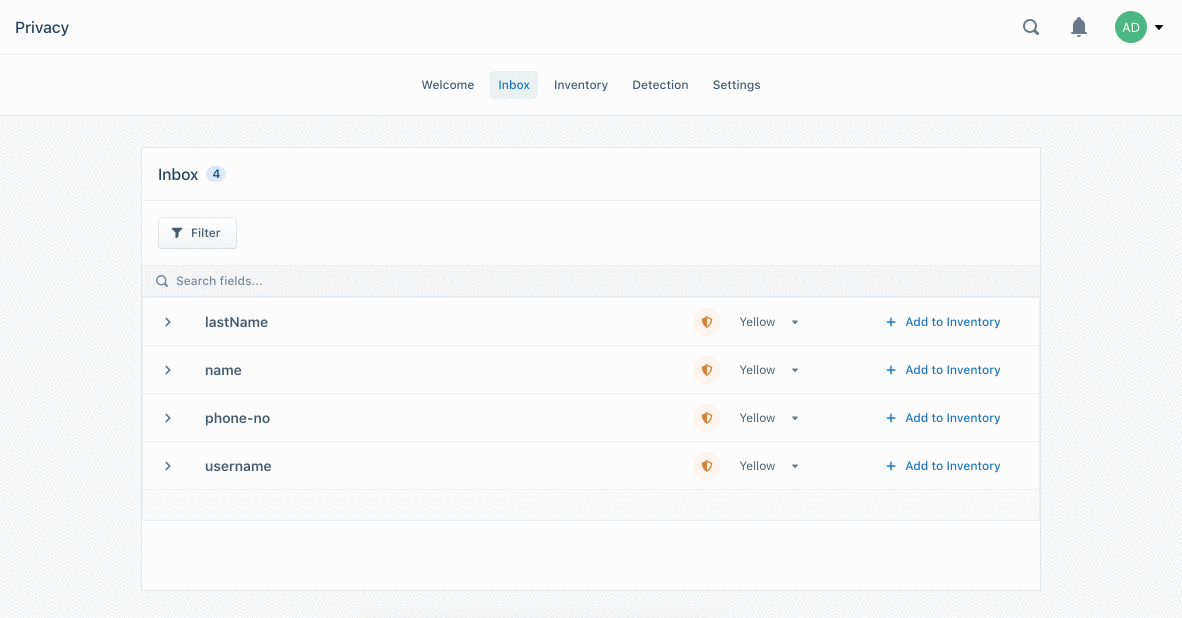
Its Protocols product adds data governance at the source, enforcing event schemas, blocking non-conforming data, and providing an audit trail. Segment's Privacy Portal detects and classifies PII across incoming event streams, and Regional Segment supports US and EU data residency.
Source: Twilio
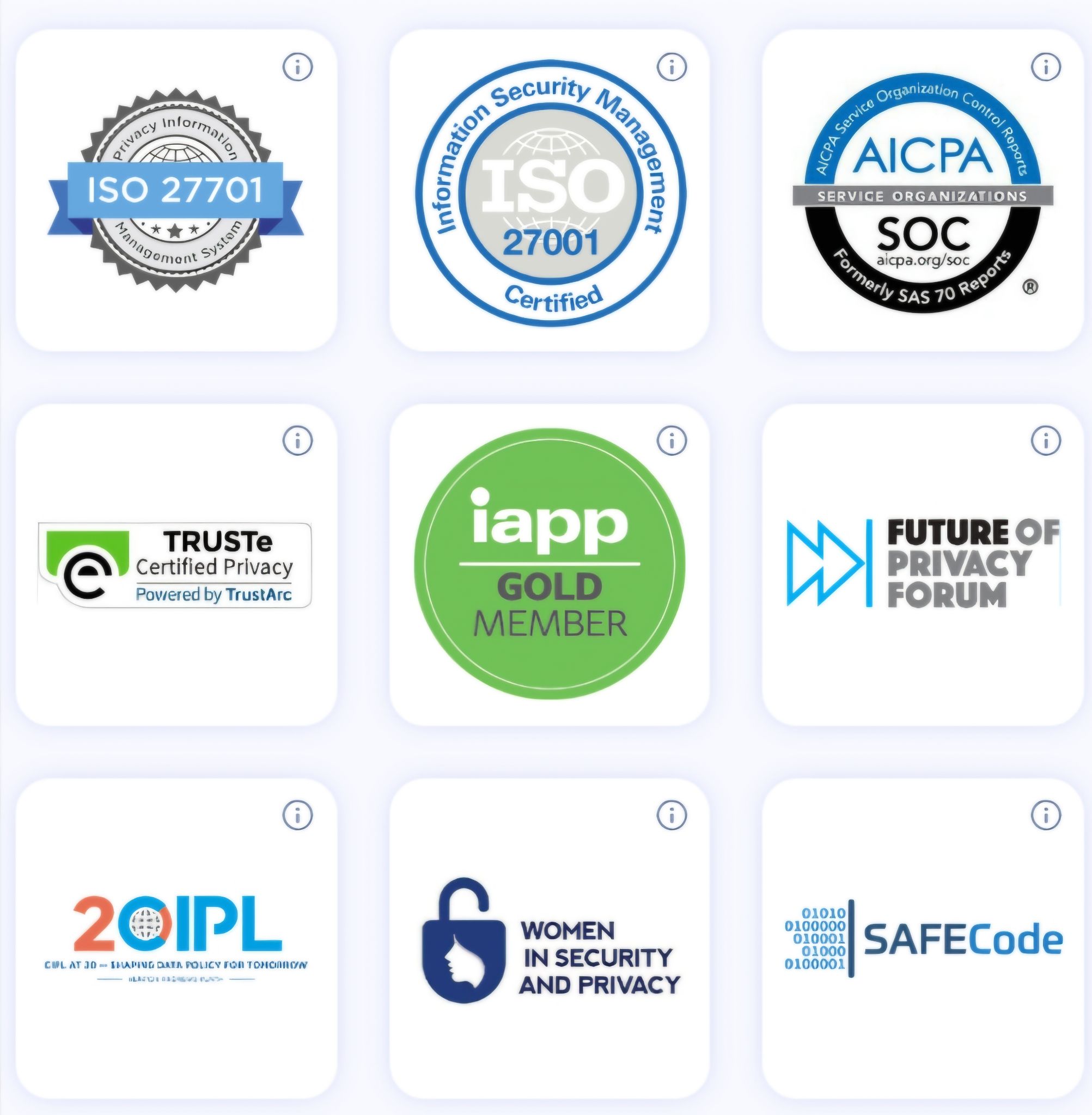
ZoomInfo holds ISO 27001, ISO 27701, SOC 2 Type II, TRUSTe GDPR, and TRUSTe CCPA certifications, all renewed annually.
Source: ZoomInfo
As a B2B data provider, ZoomInfo is also a registered data broker in California and Vermont and maintains a dedicated Trust Center for compliance documentation.
All three platforms meet enterprise security standards. The differences are in specialization: Amperity's privacy engine handles consumer data rights requests natively, Segment's Protocols prevent bad data from entering the pipeline, and ZoomInfo's compliance infrastructure is built into the B2B data layer itself.
Implementation and time-to-value
How quickly you get from contract signing to measurable results depends on which platform you choose and what you're starting with.
Amperity is built for complex enterprise deployments.
The platform's power is proportional to the quality and breadth of data fed into it. Schema-free ingestion and semantic tagging mean you don't need to pre-process data before loading, but configuring Stitch, setting up identity resolution rules, and building the Customer 360 requires real technical knowledge.
Amperity's Learning Lab provides role-based training paths for technical users, marketers, and analysts.
Segment rewards engineering investment.
Basic tracking (dropping a JavaScript snippet and calling analytics.track()) takes under an hour. But G2 users note that "initial implementation and event taxonomy design are hard to get right, and mistakes are expensive long-term."
A mature Segment implementation (identity resolution, Protocols governance, Reverse ETL, Engage audiences) requires expertise across data engineering, marketing ops, and IT. Segment Academy and Segment University provide training, and the documentation is thorough.
Source: Twilio Segment
ZoomInfo designed its onboarding for faster time-to-value.
The 90-day onboarding process produced a 25% satisfaction improvement and won an industry award for best customer onboarding. GTM Workspace "deploys in weeks, not months", and ZoomInfo University provides role-specific learning paths. The permanent free tier (ZoomInfo Lite) lets teams evaluate the data before committing, something neither Amperity nor Segment's full platform offers.

Levanta's CEO Ian Brodie noted: "ZoomInfo's not just a contact data company anymore. They've built a full system of execution. GTM Intelligence actually works the list, writes the outreach, triggers the play, and helps drive predictable growth." (Levanta Case Study)
Activation: from insight to action
Collecting and unifying data matters only if you can act on it. Here's how each platform bridges the gap.
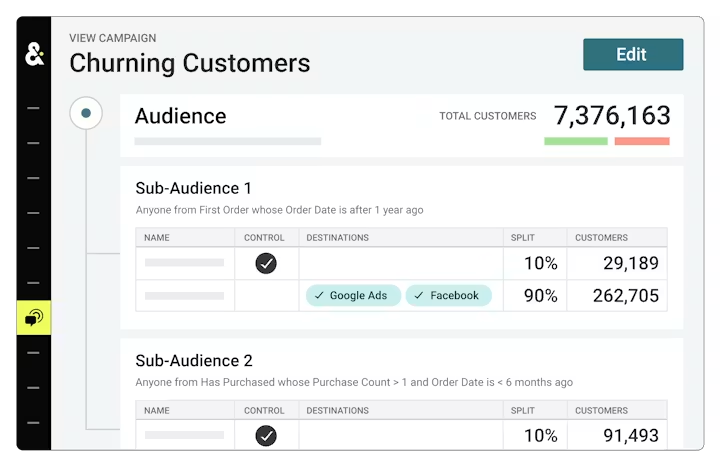
Amperity's Audience Hub provides a no-code segment builder where marketers choose attributes from the Customer 360, see real-time insights (customer count, revenue contribution, channel reachability), and push audiences to 200+ destinations including Meta Ads, Google Ads, Braze, Klaviyo, and Salesforce Marketing Cloud.
Source: Amperity
The Journeys canvas adds visual journey orchestration with conditional splits, delay nodes, and percent-split testing. Because every segment is built on deduplicated, identity-resolved profiles, activation starts cleaner.
Segment's Engage takes a different approach.
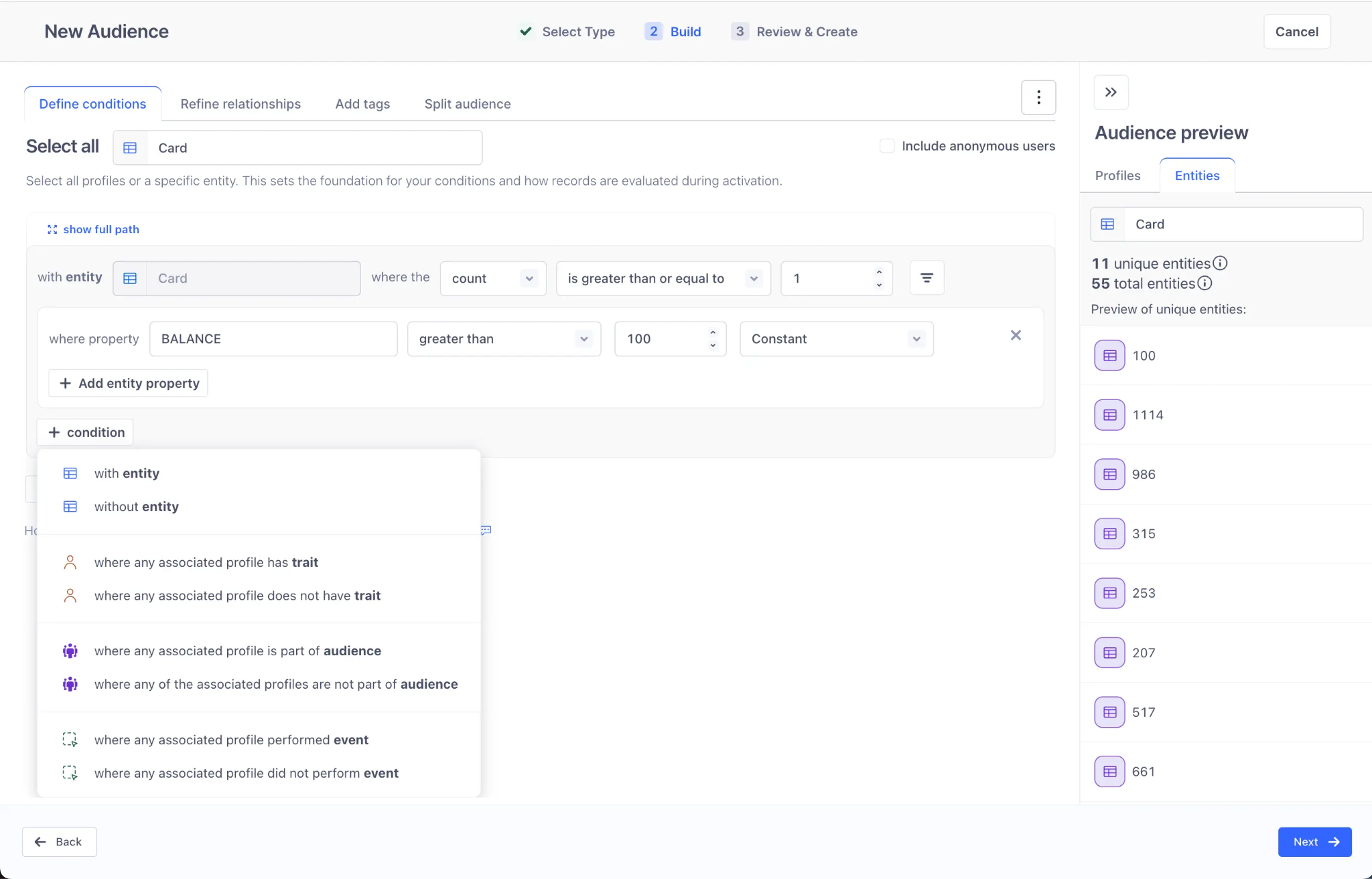
Audiences update in real time as events flow in, and Event-Triggered Journeys fire the instant a user performs a specific action (cart abandonment, form submission) rather than waiting for batch evaluation. Linked Audiences join warehouse data into audience definitions, blending real-time streaming behavior with historical warehouse data.
Source: Twilio Segment
Segment's activation advantage is its connection to Twilio's communications infrastructure: built-in SMS, email (SendGrid), WhatsApp, and voice channels that no standalone CDP can replicate.
ZoomInfo activates through three channels.
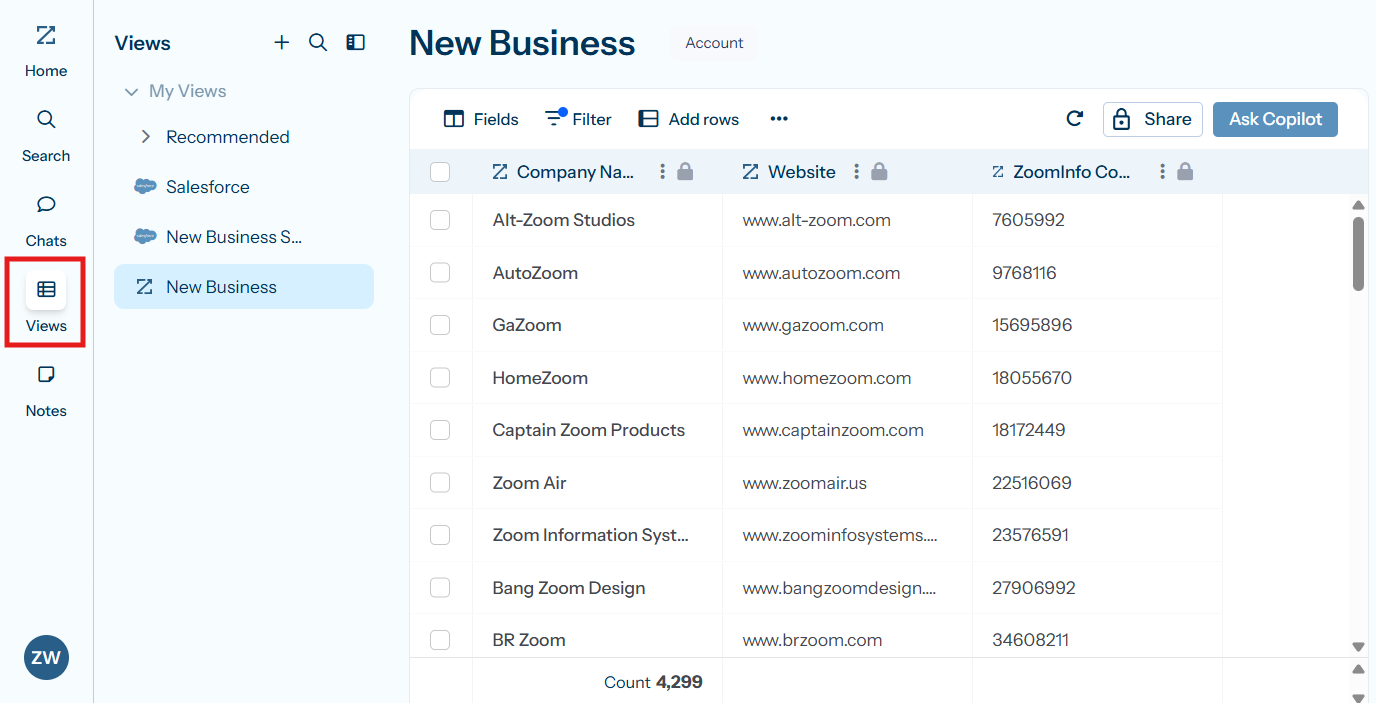
GTM Workspace gives sellers an AI-powered action feed with pre-drafted outreach on every signal (G2 comparisons, funding events, executive hires). GTM Studio lets marketers launch multi-channel plays (email, calls, ads, direct mail) triggered by buyer behavior, with pre-built templates for inbound acceleration, champion tracking, competitive displacement, and ICP targeting.
Source: ZoomInfo
For teams that build outside ZoomInfo, the Enterprise API and MCP expose the same intelligence to any tool or AI agent. Expansion plays that used to take 3 weeks now launch in 30 minutes through GTM Studio.
Amperity vs. Segment vs. ZoomInfo: Which should you choose?
The right platform depends on where your biggest data gap lives.
Choose Amperity if:
You're a large consumer brand (retail, travel, hospitality, financial services) with millions of customer records fragmented across offline and online systems
Identity resolution quality is your primary concern, and rules-based matching hasn't been enough
Your data team works in Databricks or Snowflake and you want a lakehouse-native architecture
You have the budget and organizational maturity for an enterprise CDP implementation
You need to unify data from M&A activity or multi-brand portfolios
Choose Segment if:
You're a product-led company generating high volumes of behavioral data across web, mobile, and server-side touchpoints
Your engineering team wants a single API that routes events to every downstream tool
You need real-time event streaming with a catalog of 750+ integrations
You want a free tier to start and the ability to scale incrementally
Data governance at the source (schema enforcement, event validation) is important
You value Twilio's native communications channels (SMS, email, WhatsApp) for activation
Choose ZoomInfo if:
You're a B2B company and your biggest intelligence gap is external: knowing which accounts to target, who the decision-makers are, and which prospects are actively in-market
You need verified contact data (direct dials, business emails) at scale, not just unified profiles of existing customers
Buyer intent signals and competitive intelligence are central to your go-to-market strategy
You want AI-powered execution (automated outreach, deal intelligence, go-to-market plays) built on top of the intelligence, not bolted on afterward
You need a platform that works inside your existing tools via API and MCP, or through native experiences for sellers and marketers
Start with ZoomInfo Lite for free, or see the full platform with a 7-day trial.
The companies that get this decision right aren't choosing between three competitors. They're identifying which layer of customer intelligence they're missing. If your customer data is fragmented and your profiles are unreliable, Amperity fixes the foundation. If your event data is siloed and your tools can't talk to each other, Segment connects the pipes.
If your go-to-market team lacks the external intelligence to find and engage the right buyers, ZoomInfo provides the data, the context, and the execution layer in one platform.
Amperity vs. Segment vs. ZoomInfo FAQ
What is the fundamental difference between Amperity, Segment, and ZoomInfo?
Amperity is a customer data platform specializing in AI-powered identity resolution for large consumer brands with fragmented offline and online data.
Segment is a developer-first customer data pipeline that collects behavioral events through a single API and routes them to 750+ downstream tools.
ZoomInfo is an AI-powered go-to-market platform that provides external B2B data (500M contacts, 100M companies, buyer intent signals) and AI-powered go-to-market execution. Amperity and Segment organize data you've already collected; ZoomInfo provides intelligence you can't generate internally.
Which platform is cheapest to get started with?
Segment offers the most accessible entry point with a permanently free plan supporting 1,000 Monthly Tracked Users, 2 sources, and 1 warehouse destination.
ZoomInfo Lite is also permanently free with 10 monthly export credits and access to the B2B database.
Amperity has no free tier or self-serve trial for its core platform; all paths go through sales, and the platform is designed for enterprise-scale deployments.
Can Amperity and Segment handle B2B use cases?
Segment has B2B support through account-level profiles using the Group call, and many SaaS companies use it for product analytics and customer journey tracking.
Amperity is built almost entirely for B2C consumer brands; it has no account-based marketing capabilities and no documented B2B use cases. Neither platform provides external prospect intelligence, verified contact data, or buyer intent signals.
B2B companies that need to discover and engage new accounts rather than unify existing customer data will find ZoomInfo built for that need.
How do the identity resolution approaches differ?
Amperity uses patented probabilistic and deterministic matching with up to 45 AI models running simultaneously, producing three parallel identity graphs with different accuracy-vs.-reach trade-offs. It handles messy, large-scale offline-to-online matching.
Segment uses configurable rules-based identity stitching with a priority trust algorithm, focused on merging cross-device digital identities.
ZoomInfo performs B2B entity resolution across 500M contacts and 100M companies using automated scanning, third-party partnerships, and 300+ human researchers, with up to 95% accuracy on first-party data.
Which platform has the best integration ecosystem?
Segment leads with 750+ pre-built integrations and a developer-first single-API collection model.
Amperity offers 200+ connectors focused on enterprise data systems, with zero-copy data sharing for Databricks, Snowflake, and BigQuery via Amperity Bridge.
ZoomInfo provides 120+ marketplace integrations plus Enterprise API and MCP access that expose its data to any tool or AI agent. Segment is strongest for routing behavioral event data; Amperity for lakehouse-native data sharing; ZoomInfo for embedding B2B intelligence into existing sales, marketing, and custom tools.
Do any of these platforms offer AI-powered audience building from natural language?
All three do. Amperity's AmpAI lets marketers create segments and journeys from natural language descriptions, with the AI grounded in tenant-specific schema and usage patterns.
Segment's Generative Audiences (GA in 2025) build audience segments from text prompts using CustomerAI.
ZoomInfo's GTM Studio allows marketers to explore, segment, and enrich data using natural language prompts on an AI-powered canvas, with audiences automatically fed into go-to-market plays.
Which platform is best for companies with both B2B and B2C needs?
Companies with both B2B and B2C operations may need more than one platform. Amperity handles B2C consumer data unification.
Segment can serve both B2B and B2C use cases as a data pipeline.
ZoomInfo provides B2B prospect intelligence and go-to-market execution. Some organizations use Segment as the data infrastructure layer alongside ZoomInfo for B2B intelligence, combining internal behavioral data with external prospect data for a more complete picture.
How do data governance capabilities compare?
All three platforms hold SOC 2 and ISO 27001 certifications. Amperity adds HIPAA, GDPR, CCPA, and Australian Privacy Principles compliance, with a built-in privacy rights workflow engine for data subject access requests, record deletion, and PII removal.
Segment adds HIPAA eligibility with a signed BAA, PCI DSS compliance via Twilio, Protocols for source-level schema enforcement, and EU data residency.
ZoomInfo adds ISO 27701, TRUSTe GDPR and CCPA validations, and is a registered data broker in California and Vermont. Each platform's governance fits its data type: consumer profiles (Amperity), behavioral events (Segment), and B2B contact intelligence (ZoomInfo).
More Amperity comparisons:
