
Apollo.io is a popular sales platform for small teams, rated 4.7/5 from 9,843 reviews on G2 thanks to a free plan, public pricing and data, sequences and a dialer in one place. But as teams grow, the same reviewers flag inaccurate data, a learning curve and credit limits, especially for phone numbers.
This guide compares nine Apollo alternatives with current G2 ratings and pricing, so you can match each one to the reason you're switching. For most mid-market and enterprise teams, ZoomInfo is the strongest fit. Amplemarket suits AI-led outbound, Cognism suits European calling and Lusha suits fast, low-cost lookups.
Apollo Alternatives at a Glance
Tool | Best for | Key differentiator | Starting price | G2 rating |
ZoomInfo | Mid-market and enterprise GTM teams | 500M contacts, the GTM Context Graph and execution tools | Free to start with consumption credits based on usage | 4.5 (9,178) |
Amplemarket | AI-led outbound | AI copilot plus built-in deliverability tools | $600/mo for 2 users | 4.6 (689) |
Cognism | Calling into Europe | Phone-verified mobiles and 16 do-not-call lists | Quote-based | 4.5 (1,372) |
Lusha | Quick LinkedIn lookups | Phone numbers at 5 credits, compared with Apollo's 8 | Free; $37.45/mo | 4.3 (1,667) |
LinkedIn Sales Navigator | Social selling | LinkedIn's network, AI insights and warm intros | $89.99/seat/mo | 4.4 (2,211) |
Seamless | High-volume prospecting | Real-time contact search | Free; paid quote-based | 4.4 (5,408) |
LeadIQ | Outreach triggered by job changes | Champion tracking built into every plan | Free; $15/mo | 4.2 (1,186) |
RocketReach | Predictable self-serve pricing | Unlimited lookups on annual plans | $27/mo | 4.4 (1,385) |
Hunter | Email discovery | Unlimited users on every plan | Free; $49/mo | 4.4 (656) |
How We Evaluated These Apollo Alternatives
We scored every tool on the same six criteria we use for all sales intelligence tools, weighted toward the most common reasons teams start looking beyond Apollo:
Data accuracy and verification. How contact data is verified, and whether phone numbers reach decision-makers rather than switchboards.
Platform breadth. Whether the tool only delivers contacts and sequences, or also explains why an account is worth working now.
Pricing transparency. Whether pricing is public and easy to model at your team's real volume.
Regional coverage. How deep the data goes outside North America, especially in Europe.
Compliance and governance. SSO, security certifications and GDPR and CCPA support.
Integrations and AI access. CRM sync, sales engagement connectors, and API or MCP access for AI agents.
Why Teams Look for Apollo Alternatives
Most teams don't leave Apollo because it's a bad tool. They leave because they hit one of its limits as they grow, according to our analysis of Apollo reviews on G2 and Capterra.
Data accuracy. Inaccurate and outdated data are among the most common complaints on G2, especially for phone numbers and job titles.
Phone credits. A phone number costs 8 credits, compared with 1 for an email, so phone-heavy teams burn through credits quickly. Our Apollo pricing guide breaks down the math.
Plan limits. Free and Basic plans cap sending at one mailbox and 250 emails a day per user, and features like A/Z testing and AI lead scoring start on Professional.
Depth of intelligence. Intent is limited to 1 to 12 topics depending on the plan, with no intelligence layer that connects CRM, conversation and behavioral data.
1. ZoomInfo
G2 rating: 4.5/5 for GTM Workspace (9,178 reviews)
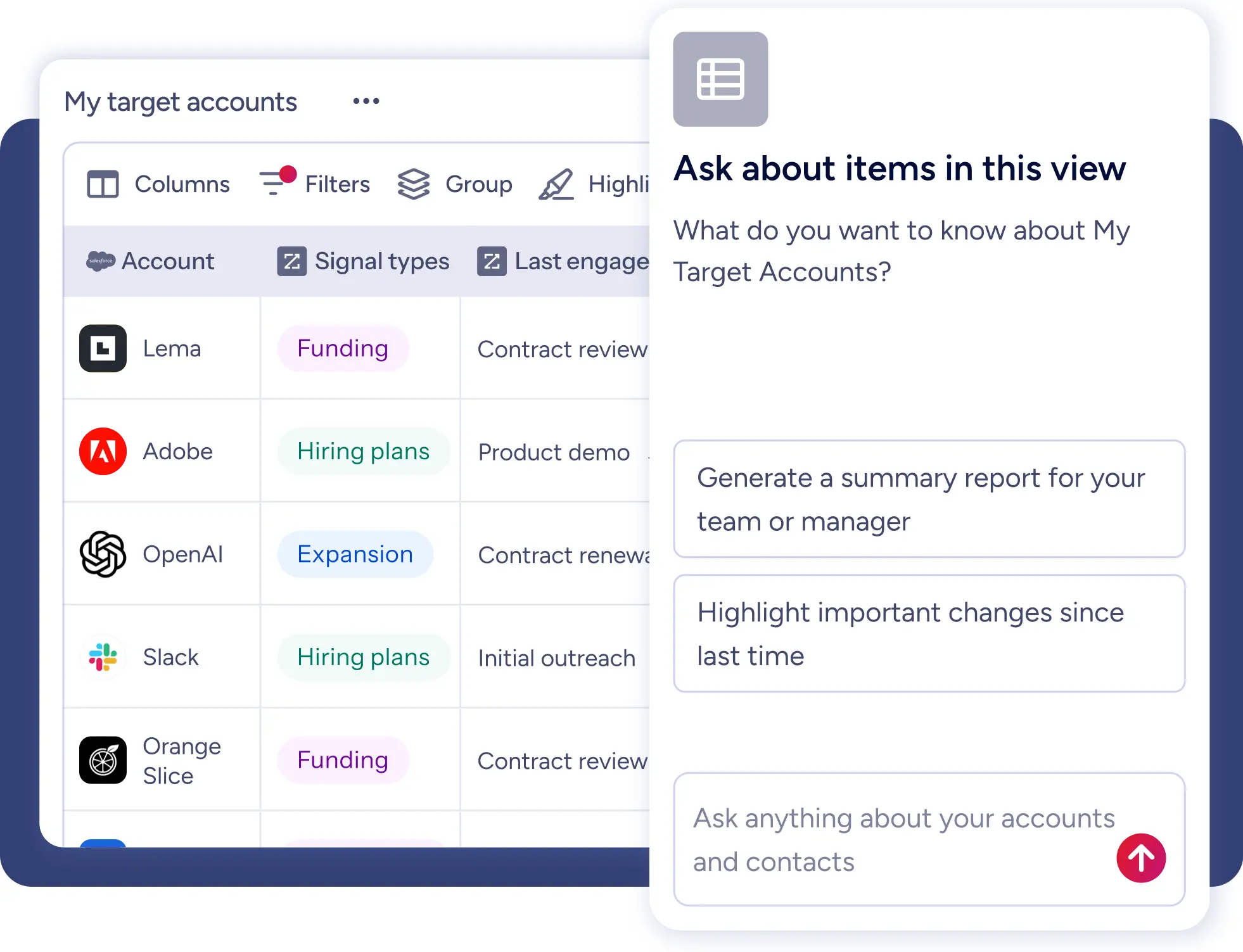
ZoomInfo is an all-in-one AI GTM Platform that combines the most comprehensive B2B data, an intelligence layer called the GTM Context Graph and access through whichever tools your team already uses. Where Apollo bundles data and outreach for small teams, ZoomInfo adds deeper data and shows why an account is ready to buy, then lets teams act on it without switching platforms.
The data foundation covers 500M contacts, 100M companies, 135M+ verified phone numbers, 120M+ direct-dial phone numbers and 200M+ verified business emails. Multi-source verification with 300+ human researchers delivers up to 95% accuracy on first-party data, which addresses the accuracy complaints that come up most in Apollo reviews.
The GTM Context Graph processes 1.5B+ data points daily, fusing that data with your CRM records, conversation transcripts and behavioral signals to explain not just what happened in your deals, but why. Teams act on it through three products: GTM Workspace for sellers, GTM Studio for marketers, RevOps and GTM engineers, and GTM.AI, the headless API and MCP option for any tool or AI agent.
Key features:
Verified contact and company data, including direct dials and mobile numbers
Proprietary buyer intent signals and website visitor identification
Prioritized account feeds, AI-drafted outreach and deal intelligence for sellers
Natural-language audience building and play orchestration for marketing and RevOps
Conversation intelligence through Chorus
API and MCP access for AI agents and custom tools
CRM data enrichment with bidirectional sync for Salesforce, HubSpot and Microsoft Dynamics
ConnectWise used ZoomInfo's CRM enrichment to fill in missing job titles and company details across its database.

"We're qualifying leads faster than ever. We have all the information we need up front, including fields like job titles and company size which are not included on our webforms."
Strengths vs. Apollo:
A larger data foundation, with 500M contacts compared with Apollo's 240M+
135M+ verified phone numbers and 120M+ direct dials, the area where Apollo reviewers report the most problems
Proprietary intent and visitor identification feeding one intelligence layer, rather than intent topics capped by plan
Conversation intelligence, sales execution and marketing orchestration in the same platform
API and MCP access with CRM, conversation and intent context from the GTM Context Graph, where Apollo MCP brings Apollo's contact data and actions into AI tools
Limitations:
Apollo's free plan and public per-seat prices make it simpler for a solo seller to start without a conversation.
A broader platform takes more time to roll out than a single outbound tool.
Pricing: Free to start with consumption credits based on usage.
Best for: Mid-market and enterprise sales, marketing and RevOps teams that need verified data at scale, buyer intelligence and execution tools in one platform.
Want the full head-to-head? Our Apollo vs. ZoomInfo comparison covers data, intent and pricing in detail.
2. Amplemarket
G2 rating: 4.6/5 (689 reviews)
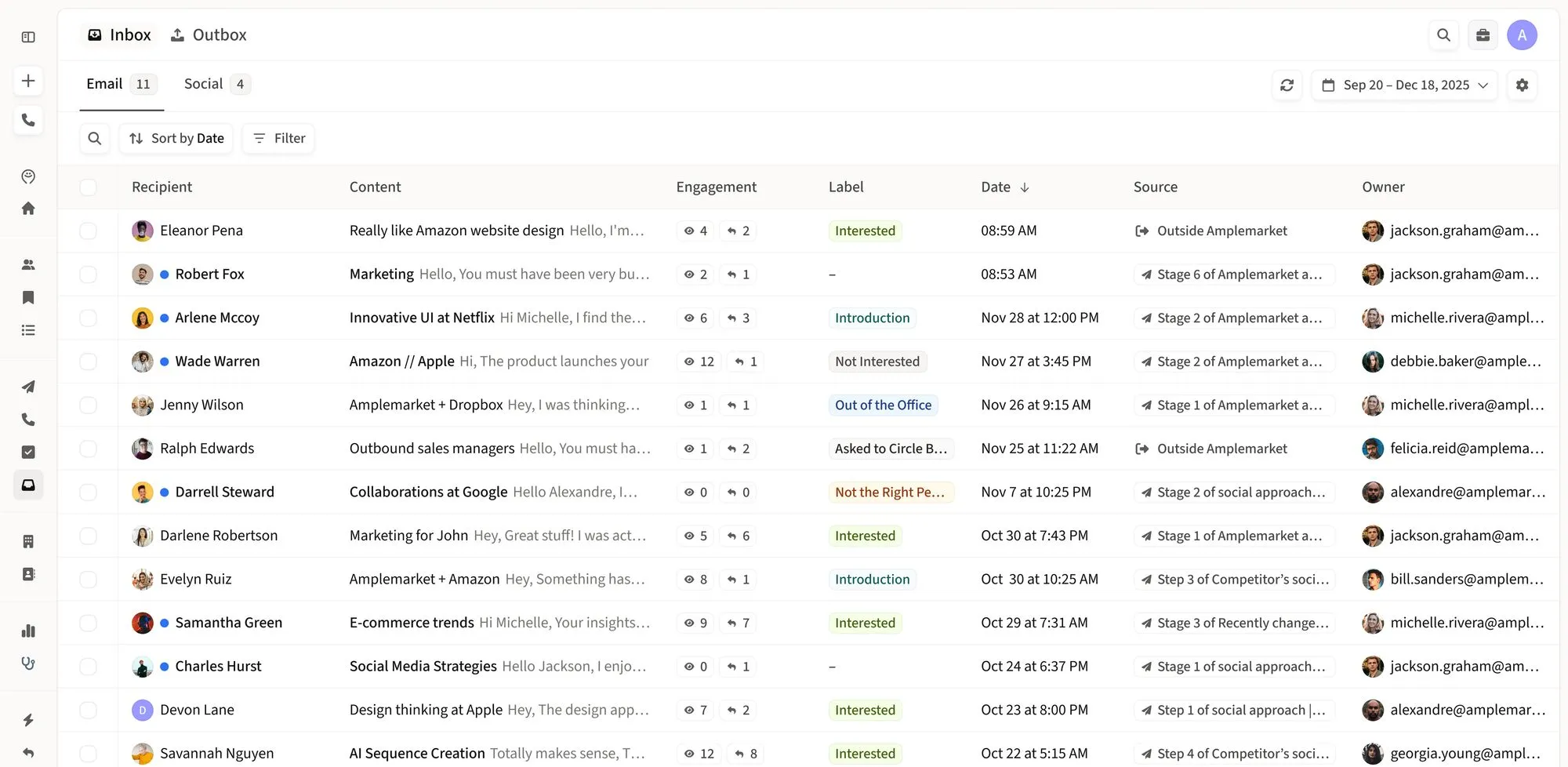
Amplemarket is an AI sales platform that combines B2B data, multichannel engagement and AI agents in one place. It targets the same outbound teams as Apollo, and its own pricing page highlights customers that migrated off Apollo.
Its AI copilot, Duo, detects buying signals and turns them into tailored playbooks and sequences for reps to approve. Where Amplemarket goes further than Apollo is deliverability, with domain health monitoring, warmup, spam checks and mailbox recommendations built in.
Key features:
Duo Copilot, which surfaces intent signals and drafts personalized, multichannel outreach
A B2B database with verified emails and real-time verified mobile numbers
Multichannel sequences across email, phone and social, plus a parallel dialer
Job change alerts for tracking top contacts into new roles
Domain Health Center, Deliverability Booster warmup, an email spam checker and mailbox recommendations
MCP access for prospecting in Claude or ChatGPT, available as an add-on
Strengths vs. Apollo:
Deliverability tools that go beyond Apollo's deliverability suite, including domain health monitoring and mailbox recommendations
Two or more mailboxes per user on every plan, compared with one on Apollo's Basic plan
An AI copilot built around signals, rather than prompts alone
Limitations:
No free plan, and a $600-a-month starting price compared with Apollo's free and $49 entry points
Growth and Elite pricing isn't public
Phone credits are limited on Startup, at 600 per user per year
G2 reviewers mention missing features, a learning curve and occasional sequence issues
Pricing:
Startup: $600/month (annual term), 2 users included, 13,500 email credits and 600 phone credits per user per year, 2 mailboxes per user
Growth: Custom, 4 users included, 35,000 email credits and 5,000 phone credits per user per year, 4 mailboxes per user, Duo Voice
Elite: Custom, 10 users included, 40,000 email credits and 9,600 phone credits per user per year, 8 mailboxes per user, Duo Voice and Duo Inbox
All plans include a free trial. G2 reviewers report an average discount of 13% and an 8-month return on investment.
Best for: Outbound teams that want AI-driven personalization and built-in deliverability tools, and can budget for a higher entry price.
Deciding between these two? Read Amplemarket vs. Apollo to see how their AI features and deliverability tools stack up.
3. Cognism
G2 rating: 4.5/5 (1,372 reviews)
Cognism is a London-based B2B data provider known for phone-verified mobile numbers in the UK and Europe. It screens phone data against 16 do-not-call lists before reps can use it, which makes it a common pick for teams prospecting under GDPR.
Unlike Apollo, Cognism is a data layer. It doesn't include sequencing or a dialer, so most teams pair it with a separate engagement tool. Learn more in our guide to what Cognism is and how it works.
Key features:
Phone-verified mobile numbers, branded as Diamond Data, with on-demand verification on Pro
Screening against 16 do-not-call lists, with restricted records withheld and not charged
AI search, an AI persona builder and AI company research
Bombora intent data on the Pro package
A Chrome extension for LinkedIn, Sales Navigator, Salesforce, HubSpot and Outreach
MCP and API access on both packages
Strengths vs. Apollo:
A strong reputation for European mobile data
Do-not-call screening built into every phone record
On-demand mobile verification for priority contacts
Limitations:
No native sequencing, dialer or conversation intelligence
No free plan or public pricing
Reviewers report thinner coverage in North America and APAC
Intent data is third-party and only on Pro
Pricing:
Standard and Pro: quote-based, with 5 seats included and one credit per revealed contact
CRM Enrichment: an add-on to either package
Capterra lists a starting price of $1,000 per feature per month, and G2 reviewers report an average discount of 15%.
Best for: Teams that sell mostly into the UK and Europe, rely on cold calling and already run a separate engagement tool.
Selling into Europe? Compare Apollo vs. Cognism on regional data, see how Cognism fares against ZoomInfo, or read what users say in our Cognism reviews.
4. Lusha
G2 rating: 4.3/5 (1,667 reviews)
Lusha is a B2B data and sales intelligence platform best known for its Chrome extension, which reveals contact details on LinkedIn, CRM records and company websites in a click. Lusha says it covers 300M+ business contacts and 30M+ company profiles across North America, EMEA, APAC and LATAM, and more than 280,000 teams use it.
Compared with Apollo, Lusha is lighter and more focused on lookups. It's a good fit for reps who mainly need the right email or phone number quickly, without a full outreach platform.
Key features:
Verified emails and direct dials, which Lusha says are 95–98% and 90%+ accurate
Lusha Deep Intel, which uses your ICP, CRM history and pipeline data to prioritize accounts and buying groups
Buying signals, with 7M new signals processed each week
A Chrome extension for LinkedIn, CRMs, any website, Gmail and Google Calendar
Automated email sequences and an AI assistant
API, webhooks and MCP connectors for Claude and ChatGPT
GDPR, CCPA, ISO 27001, ISO 27701 and SOC 2 Type II compliance
Strengths vs. Apollo:
Phone numbers cost 5 credits, compared with 8 on Apollo
A fast, simple extension workflow for LinkedIn prospecting
A broad set of security certifications, including ISO 27701
Limitations:
Smaller credit allowances, with 4,800 credits a year on Starter compared with 30,000 on Apollo's Basic plan
Lighter outreach features than Apollo's all-in-one outbound workflow
G2 reviewers often mention outdated contacts and credits that run out quickly on phone reveals
Pricing (billed yearly):
Free: $0, 40 credits per month, 1 seat
Starter: $37.45/month, 4,800 credits per year, 1 seat
Pro: $52.45/month, 7,200 credits per year, 2 seats, API and signals
Premium: $299.95/month, 40,800 credits per year, 5 seats
Scale: Custom, with SSO and 25 intent topics
An email costs 1 credit and a phone number costs 5. Yearly billing saves 25% compared with monthly.
Best for: Individual reps and small teams that prospect mostly on LinkedIn and want simple, transparent pricing.
Curious how Lusha holds up day to day? Our Lusha reviews cover accuracy and credits, and Lusha vs. ZoomInfo shows where each one fits.
5. LinkedIn Sales Navigator
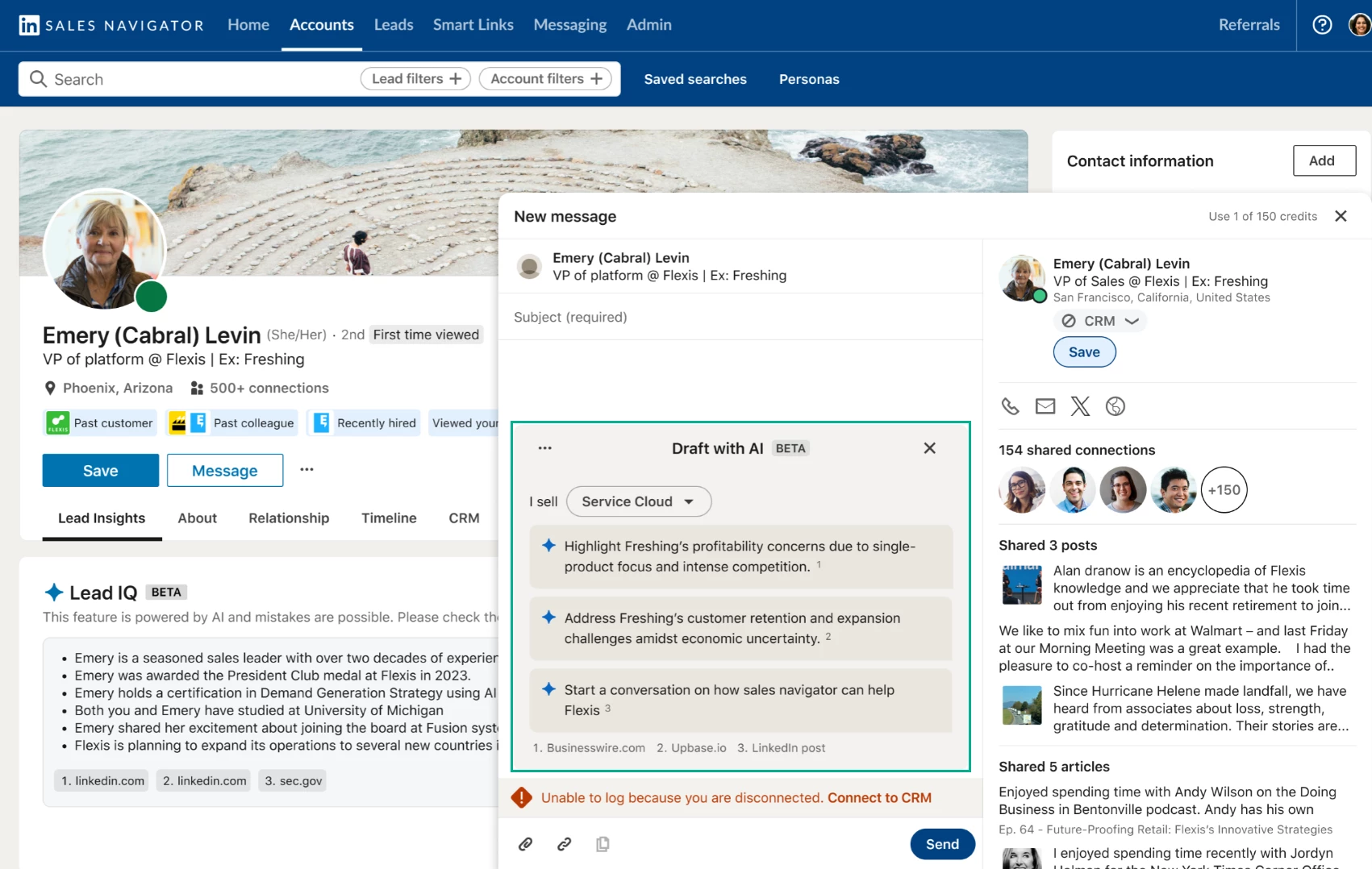
G2 rating: 4.4/5 (2,211 reviews)
LinkedIn Sales Navigator gives sales teams direct access to LinkedIn's professional network of 860M+ members and 60M+ companies. Reps use it to find and save leads, follow account updates and find warm paths into target accounts.
It isn't a straight Apollo replacement. Sales Navigator doesn't provide verified emails or phone numbers, so most teams run it alongside a contact data platform rather than instead of one.
Key features:
50+ advanced search filters for finding leads and accounts
Account IQ and Lead IQ, which give AI-powered account and lead insights
Buyer intent signals showing when buyers engage with your company
TeamLink for warm introduction paths across your team's network
CRM integrations with Salesforce, HubSpot, Microsoft Dynamics and Oracle, plus lead and contact creation from Sales Navigator
Strengths vs. Apollo:
Direct access to LinkedIn's network of 860M+ members and their latest profile updates
Warm introductions through TeamLink
Buyer intent based on engagement with your company on LinkedIn
Limitations:
No verified emails or direct-dial phone numbers
A higher per-seat price than Apollo's Basic and Professional plans, without contact data included
Outbound calling and email still need a separate data source
Pricing:
Core: $119.99/seat/month, or $89.99/seat/month billed annually
Advanced: $159.99/seat/month, or $149.99/seat/month billed annually
Advanced Plus: quote-based, for teams using an integrated CRM
A free trial is available. G2 reviewers report an average discount of 8% and a 12-month return on investment.
Best for: Account executives and account managers who rely on social selling and warm introductions, alongside a contact data platform.
Planning to pair Sales Navigator with a data platform? See how it works next to ZoomInfo in LinkedIn Sales Navigator vs. ZoomInfo, or explore other Sales Navigator alternatives.
6. Seamless (Formerly Seamless.AI)
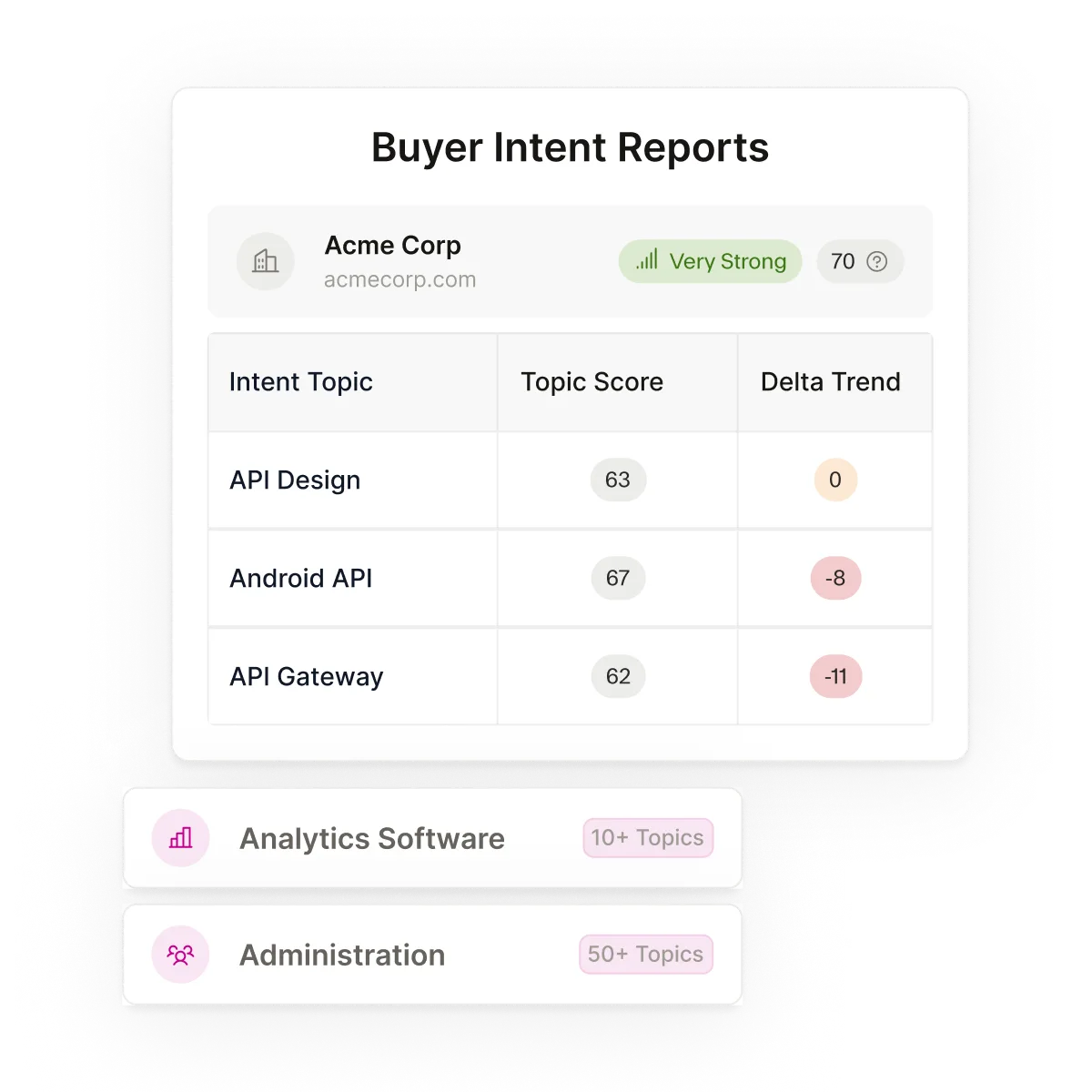
G2 rating: 4.4/5 (5,408 reviews)
Seamless, formerly Seamless.AI, is a real-time B2B search engine for contact data. Instead of serving records from a fixed database, it searches for verified emails and phone numbers at the moment of lookup. Seamless says it covers 1.7B+ contacts and 150M company profiles, and that more than 1,000,000 users rely on it.
Like Apollo, it offers a free starting point, which makes it one of the closest budget-first alternatives.
Key features:
Real-time search for verified emails and cell phone numbers
Buyer intent, job change tracking and data enrichment
A Chrome extension for LinkedIn Sales Navigator and company websites
Autopilot, which builds lead lists in the background from your ICP
Integrations with Salesforce, HubSpot, Salesloft, Outreach and Pipedrive, plus ChatGPT and Claude
Strengths vs. Apollo:
Real-time search at the moment of lookup, rather than cached records
A free plan to test data quality before paying
Discounts for teams switching from another provider
Limitations:
No public prices for paid plans
Inaccurate data and outdated contacts are common complaints on G2
Some G2 reviewers report difficulty canceling auto-renewing contracts
Pricing:
Free: 1 user and 50 credits
Paid plans: quote-based, with options for unlimited users, bulk credits, buyer intent and enrichment
Seamless also runs a Switch and Save offer that matches up to 50% of a competitor's remaining contract value in discounts or credits. G2 reviewers report an average discount of 12% and a 10-month return on investment.
Best for: High-volume SDR teams that want real-time search and a free plan to test data quality first.
Comparing budget-first tools? Our Apollo vs. Seamless.AI breakdown goes deeper, while Seamless.AI vs. ZoomInfo and Seamless.AI alternatives cover the rest of the field.
7. LeadIQ
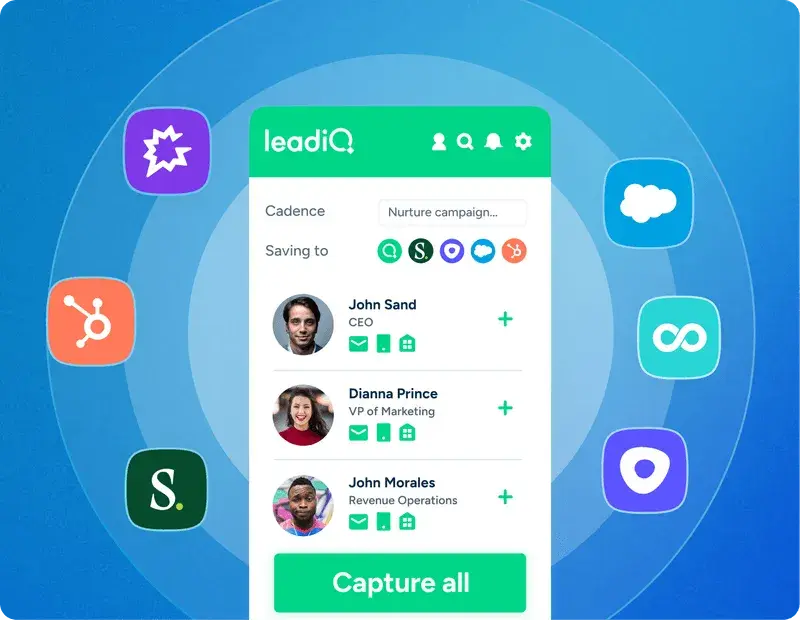
G2 rating: 4.2/5 (1,186 reviews)
LeadIQ is a sales prospecting platform built around capturing contacts from LinkedIn and tracking champions when they change jobs. One subscription includes a Chrome extension with an AI agent called Lando, an MCP integration and a developer API.
Where Apollo is a full outbound platform, LeadIQ focuses on getting accurate contacts into your CRM and sequencing tool in one click.
Key features:
Lando, an AI agent in the Chrome extension that reads CRM data, surfaces relevant contacts and flags champion moves with a suggested outreach angle
Champion tracking with job change alerts and updated contact data
Signals such as 10-K mentions, podcast mentions and hiring
CRM and webform enrichment
An AI outbound message writer
MCP and API access on every plan, including Free
Strengths vs. Apollo:
Champion tracking built into every plan
A lower paid entry point, with Pro from $15 a month billed annually
MCP access on the Free plan
Limitations:
G2 reviewers say contact accuracy, especially for phone numbers, can be inconsistent
No native sequencing or dialer, so it relies on a separate engagement tool
Database search is limited on Free and Pro
Pricing:
Free: $0, 1 user and 50 credits
Pro: from $15/month billed annually, up to 5 users, priced by credit volume
Enterprise: custom, adding AI Account Prospecting, CSV enrichment, Salesforce duplicate detection, governance controls and SSO
Every plan can be tried free for 30 days.
Best for: SDRs and account executives who use job changes as their main outreach trigger and prospect mostly from LinkedIn.
Need champion tracking backed by deeper data? See how LeadIQ measures up in our LeadIQ vs. ZoomInfo breakdown.
8. RocketReach
G2 rating: 4.4/5 (1,385 reviews)
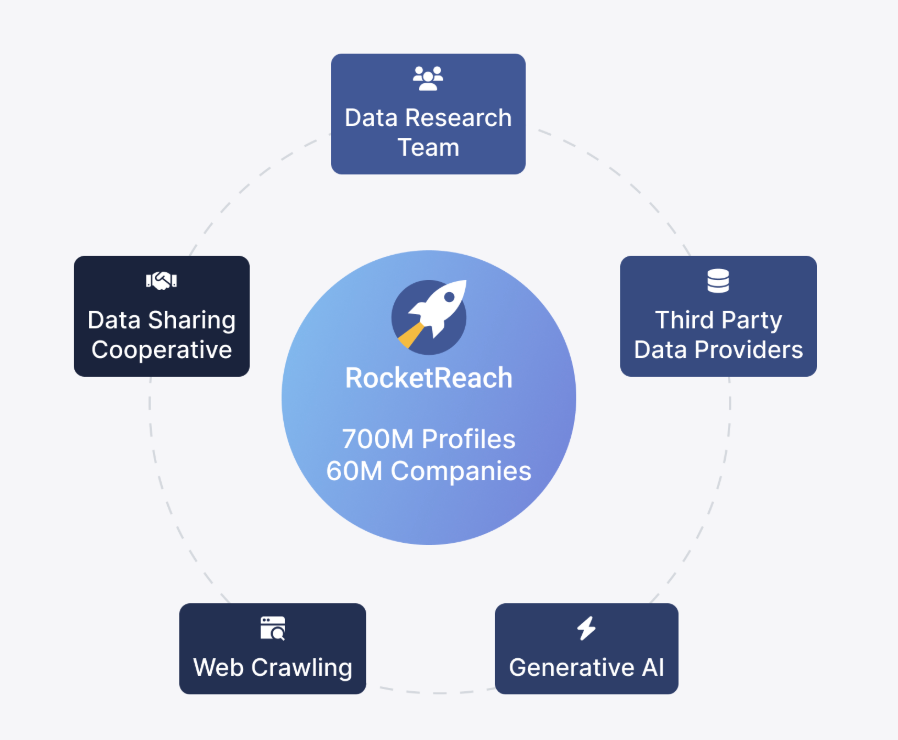
RocketReach is a contact and company intelligence platform with fully public, self-serve pricing. It says it covers 700M+ professionals across 60M+ companies, verifies data on demand with 98% accuracy, and counts 95% of the S&P 500 among its users.
Instead of Apollo's per-action credits, RocketReach's annual plans include unlimited lookups and cap exports instead, which makes costs easier to predict.
Key features:
Verified personal and professional emails, plus mobile and direct phone numbers on Pro and above
50+ search filters across work, industry and location
Technographics, news and org charts on Pro and above, and intent and healthcare data on Ultimate
Autopilot, which refreshes lists and runs prospecting jobs automatically
Sequences and an AI email writer, with up to 500 emails a day
MCP and API access on every plan
Strengths vs. Apollo:
Unlimited lookups on annual plans, rather than credits per email and phone number
Phone numbers included on Pro without a separate per-number cost
A large claimed database of 700M+ professionals
Limitations:
Exports are capped each year, starting at 1,200 on Essentials
Email sending is capped at 500 a day, and there's no built-in dialer
No intelligence layer that connects CRM, conversation and intent data
Pricing (billed annually):
Essentials: $27/month ($329/year), email only, 1,200 exports per year, 5 active Autopilots
Pro: $69/month ($829/year), email and phone, 3,600 exports per year, 10 Autopilots, Salesforce, Outreach, HubSpot, Salesloft and Bullhorn integrations
Ultimate: $142/month ($1,699/year), 20,000 exports per year, 25 Autopilots, intent data and Salesforce custom mapping
Custom team plans: from $6,000 a year, with pooled credits and a dedicated account manager
Monthly billing costs more and caps lookups at 100, 250 or 1,000 a month, depending on the plan.
Best for: Individual reps, recruiters and small teams that want predictable, self-serve pricing and a large contact database.
Looking for more self-serve options? Browse our RocketReach alternatives, or see how it compares in RocketReach vs. ZoomInfo.
9. Hunter.io
G2 rating: 4.4/5 (656 reviews)
Hunter is a platform for finding, verifying and emailing professional contacts, and it says more than 7 million people use it. It's best known for Domain Search, which finds the email addresses linked to a company's website, and for its email finder and verifier.
Hunter is narrower than Apollo. It focuses on email, without phone numbers or a dialer, which makes it a fit for marketers, founders and agencies running cold email rather than multichannel outbound.
Key features:
Domain Search, Email Finder and Email Verifier, with auto-verification on paid plans
Discover, a B2B database with filters and an AI assistant
Sequences with email account rotation, A/B testing and tracking
Signals from your existing leads and weekly new lead suggestions
Browser extensions, a Google Sheets add-on, an API and MCP
Unlimited team members on every plan
Strengths vs. Apollo:
Unlimited users on every plan, rather than per-seat pricing
Email account rotation for higher-volume sending
A simple, focused tool for email discovery and verification
Limitations:
Email only, with no phone numbers or dialer
No intent data or intelligence layer
G2 reviewers mention limited credits, price and occasional data quality issues
Pricing:
Free: 50 credits per month, 1 connected email account
Starter: $49/month, 24,000 credits per year, 3 connected email accounts
Growth: $149/month, 120,000 credits per year, 10 connected email accounts
Scale and Enterprise: for higher volumes, with up to 300,000 credits a year on Scale and custom limits on Enterprise
Yearly billing saves 30%.
Best for: Marketers, founders and agencies who need fast email discovery and cold email outreach without a full sales platform.
Focused on email? Our guide to email finder and verification tools compares more options, and our Hunter.io alternatives include tools with phone data too.
How to Choose the Right Apollo Alternative
As with any lead generation software, the right Apollo alternative depends on what's pushing you to switch. Most teams fall into one of these groups:
Teams that need more accurate data and phone coverage get the most from ZoomInfo's verified data, or from Cognism when most calls go into Europe.
Outbound teams that want AI personalization and stronger deliverability are the natural fit for Amplemarket.
Budget-conscious teams can start on the free plans from Lusha, Seamless, LeadIQ or Hunter, or RocketReach's $27-a-month Essentials plan.
Teams that sell through champions and job changes will find LeadIQ built around that motion.
Social sellers get the most from LinkedIn Sales Navigator, paired with a data platform for emails and phone numbers.
Teams that want data, intelligence and execution in one place should look at ZoomInfo, which covers prospecting, engagement, conversation intelligence and AI agents.
The Bottom Line on Apollo Alternatives
Apollo remains a strong starting point for founders and small teams. Its free plan, public pricing and all-in-one outbound workflow are hard to beat at that stage.
The alternatives on this list each solve a specific limit. Amplemarket strengthens outbound and deliverability, Cognism covers European calling, and Lusha, RocketReach, LeadIQ, Seamless and Hunter offer lighter or more specialized options. ZoomInfo is the one built for teams that have outgrown a contact-and-sequencing tool and need verified data, buyer intelligence and execution in one all-in-one AI GTM Platform.
See how ZoomInfo handles the same work on your own target accounts. Book a demo.
Frequently Asked Questions About Apollo Alternatives
Why Do Teams Look for Apollo Alternatives?
The most common reasons are data accuracy, phone credits and plan limits. Inaccurate and outdated data are among the top complaints on G2, phone numbers cost 8 credits each, and Apollo's Free and Basic plans cap sending at one mailbox and 250 emails a day per user.
What Is the Best Apollo Alternative for Enterprise Teams?
ZoomInfo is the strongest fit for mid-market and enterprise teams. It covers 500M contacts and 135M+ verified phone numbers, and its GTM Context Graph connects CRM, conversation and intent data to show which accounts to prioritize and why.
Is ZoomInfo Better Than Apollo?
It depends on your team. Apollo suits founders and small teams that want data and outreach in one self-serve tool. ZoomInfo suits teams that need deeper verified data, proprietary intent, an intelligence layer and execution tools that scale across sales, marketing and RevOps.
What Is the Best Free Apollo Alternative?
Lusha offers 40 free credits a month, Seamless and LeadIQ each offer 50 free credits, and Hunter includes 50 free credits a month for email discovery. Free to start with consumption credits based on usage, ZoomInfo also offers a free entry point.
Which Apollo Alternative Is Best for European Data?
Cognism is a strong choice for teams calling into the UK and Europe, with phone-verified mobiles and screening against 16 do-not-call lists. ZoomInfo covers 200M+ professional profiles and 45M+ mobile numbers outside North America for teams that sell globally.