

Choosing between Apollo and ZoomInfo for your go-to-market needs often comes down to five questions:
Are you an individual contributor or small team looking for fast, affordable access to prospect data, or an enterprise organization that needs verified, analyst-validated intelligence at scale?
Do you prioritize self-serve speed and consolidation into one tool, or depth of data coverage and accuracy?
Is your primary need outbound sequencing with built-in data, or an intelligence layer that powers prospecting, deal execution, marketing, and custom AI workflows?
How important are intent signals, conversation intelligence, and contextual deal intelligence versus contact discovery and email automation?
Do you need a platform you can start using today for free, or one that integrates with your existing CRM and tech stack at the enterprise level?
In short, here's what we recommend:
Apollo is an all-in-one sales platform built for speed and consolidation. With a free-forever plan, a database of 270M+ contacts and 70M companies, built-in multichannel sequences, a dialer, email deliverability tools, and AI personalization, Apollo lets small teams and individual reps start prospecting in minutes. Its product-led approach means you can replace your prospecting data subscription, outreach platform, and dialer with a single subscription starting at $49/seat/month. The trade-off: data accuracy and coverage do not match enterprise-grade alternatives, and features like API access require a custom plan.
ZoomInfo is an all-in-one AI GTM Platform built on the industry's strongest verified data foundation: 500M contacts, 100M companies, 135M+ verified phone numbers (including 120M direct dials), and 200M+ verified business emails. Its GTM Context Graph, which processes 1.5B+ data points daily, unifies this data with your CRM records, conversation transcripts from Chorus, and behavioral signals to reveal not just what happened in your pipeline, but why it happened and what to do next. Your team can run sales from GTM Workspace, launch GTM plays from GTM Studio, or power their own tools through the APIs and MCP in any front-end. ZoomInfo's enterprise focus means higher investment, but documented outcomes like Snowflake's 2x higher conversion rates and 90% higher opportunity open rates on top-scoring accounts show what verified data and contextual intelligence produce at scale.
Both platforms serve the same broad mission, but they are built for different stages of growth and different levels of go-to-market maturity.
Apollo vs. ZoomInfo at a glance
Apollo | ZoomInfo | |
|---|---|---|
Core Philosophy | Consolidated sales platform for speed and consolidation | all-in-one AI GTM Platform with verified data foundation |
Database Size | 270M+ contacts, 70M companies | 500M contacts, 100M companies |
Verified Phone Numbers | Not separately disclosed | 135M+ verified, 120M direct dials |
Email Accuracy | 91% claimed (7-step verification) | 200M+ verified business emails, up to 95% first-party accuracy |
Data Verification | Crowdsourced contributor network (2M+ sources) + engagement-suite verification | 300+ human researchers + ML + multi-source pipeline |
Intent Data | 1,600+ topics included free on all plans | 210M IP-to-Org pairings, 6T+ keyword pairings monthly; proprietary Guided Intent |
AI Capabilities | AI email generation, sequence building, call scripts | GTM Context Graph reasoning across CRM + intent + conversation + behavioral signals |
Conversation Intelligence | Built-in call recording and AI summaries | Chorus (14 patents, contextual intelligence engine) |
Direct-Dial Phone Numbers | Not separately disclosed | 120M direct dials, separately verified |
Free Tier | Free forever, 900 credits/year | ZoomInfo Lite (free forever, 10 exports/month) |
Starting Paid Price | $49/seat/month (annual) | Free to start with consumption credits based on usage |
Analyst Recognition | G2 badges (no Gartner or Forrester placement) | Gartner MQ Leader (ABM), Forrester Wave Leader (Intent Data) |
Best For | Startups, SMBs, individual reps, teams consolidating tools | Enterprise and upper mid-market teams needing verified data and contextual intelligence |
The core difference: Product-led accessibility vs. enterprise intelligence
The divide between Apollo and ZoomInfo is not about feature lists. It is about architectural philosophy.
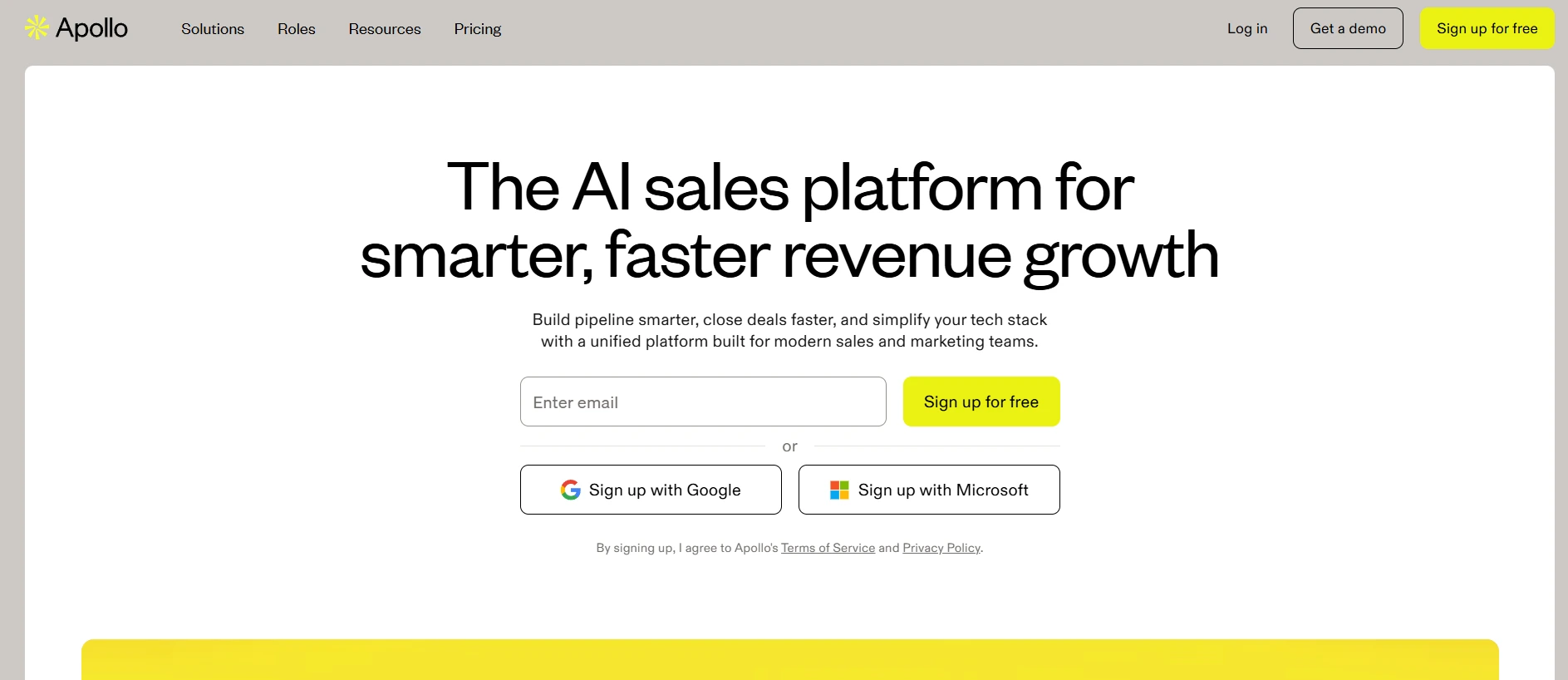
Apollo was founded in 2015 by Tim Zheng and Ray Li, who built their own prospecting tool while running a prior startup and realized other founders wanted it too. That origin shaped every design decision: Apollo serves the individual contributor who needs to find prospects, write emails, and make calls without waiting for procurement approval. The free-forever plan, the Chrome Extension on all plans, the ability to build a sequence in minutes: all of it prioritizes speed over depth. Apollo's stated mission is to make world-class end-to-end GTM simpler and accessible to all.
That accessibility drove real growth. Apollo reached $150M ARR by May 2025 and counts over 1 million users across 550,000+ companies. The Series D at a $1.6B valuation came after 9x revenue growth over two years. That growth came from making a previously enterprise-only capability (B2B data plus outreach) available to anyone with an email address.
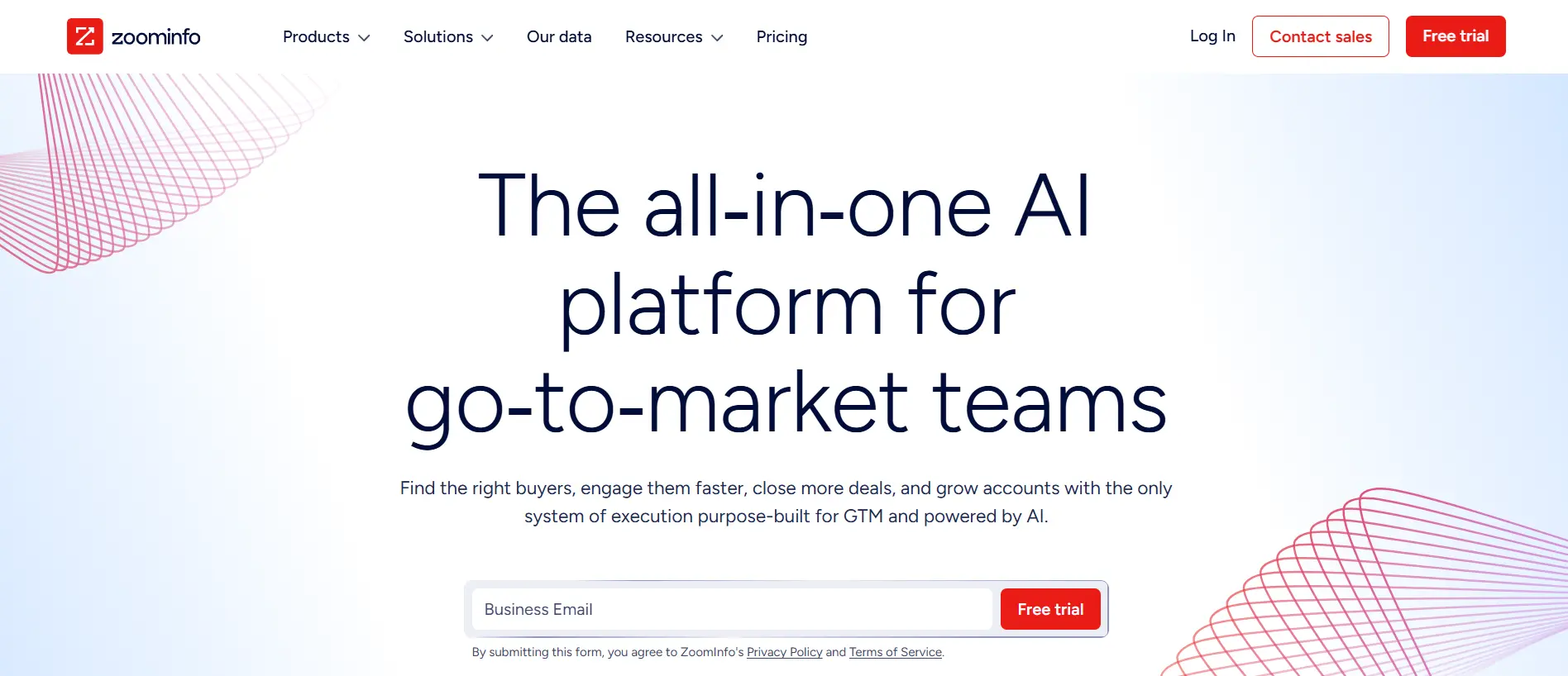
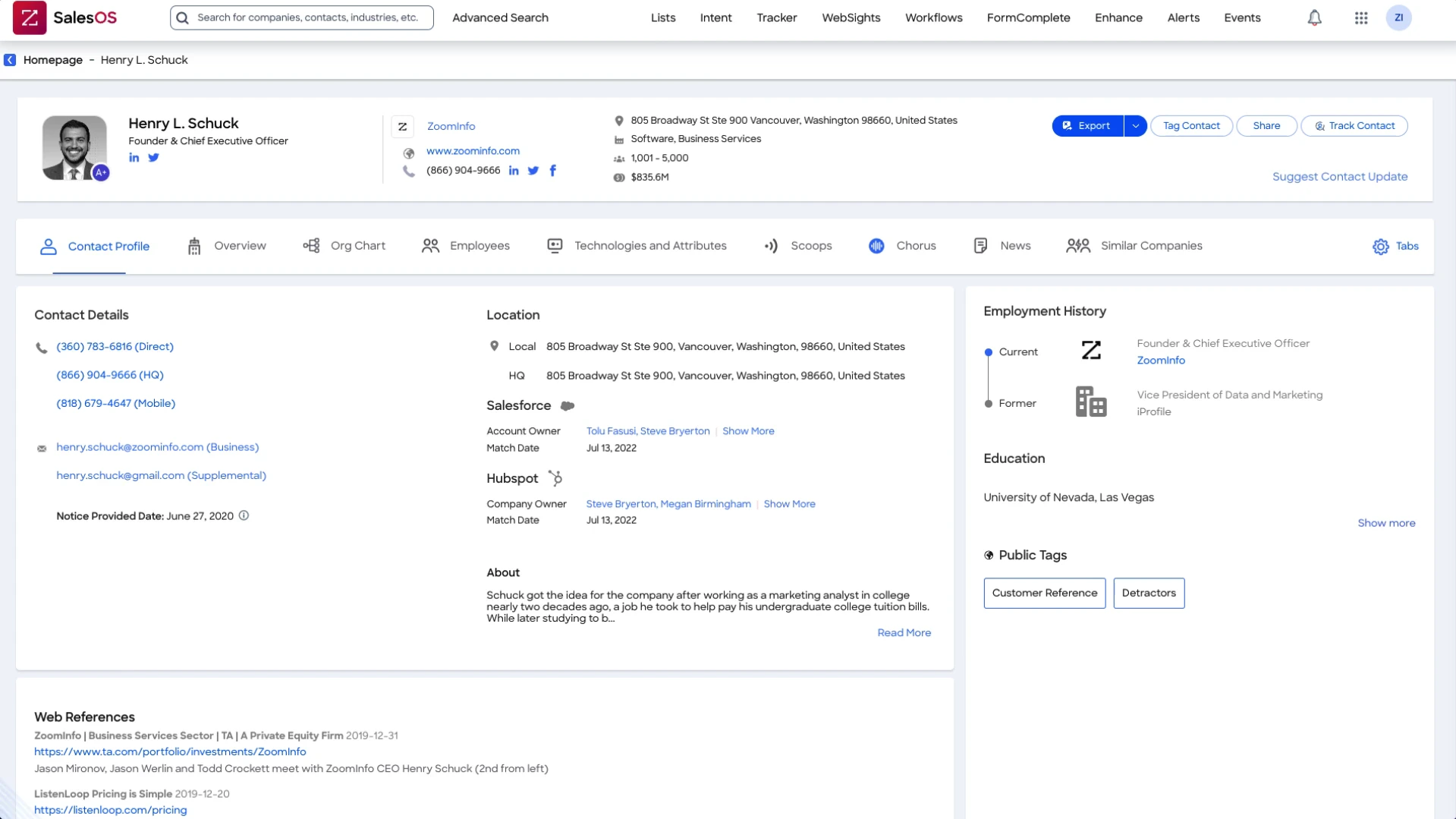
ZoomInfo was founded in 2007 by Henry Schuck, who put $25,000 on credit cards while in law school because he had seen how incomplete, stale data throws sand into the gears of every go-to-market motion. Nearly two decades later, that conviction has produced a public company (Nasdaq: GTM) with $1.25 billion in annual revenue, $455 million in free cash flow, and 35,000+ customers including Adobe, Snowflake, PayPal, and JPMorgan.
ZoomInfo's approach starts from one premise: data quality is the foundation everything else depends on. You cannot build an accurate pipeline forecast on contacts with a 30% bounce rate. You cannot run effective ABM campaigns against a TAM model built on stale company data. You cannot coach sellers on deal patterns if your conversation intelligence does not capture the context behind outcomes. So ZoomInfo built the most comprehensive verified B2B data platform first, then extended it into an intelligence layer, then into multiple access points that deliver that intelligence wherever decisions get made.
The contrast is clear: Apollo democratized access to sales tools. ZoomInfo invested in making those tools work on a verified, comprehensive foundation.
Data: Coverage, accuracy, and what the numbers actually mean
Both platforms lead with their database size, but the numbers tell different stories.
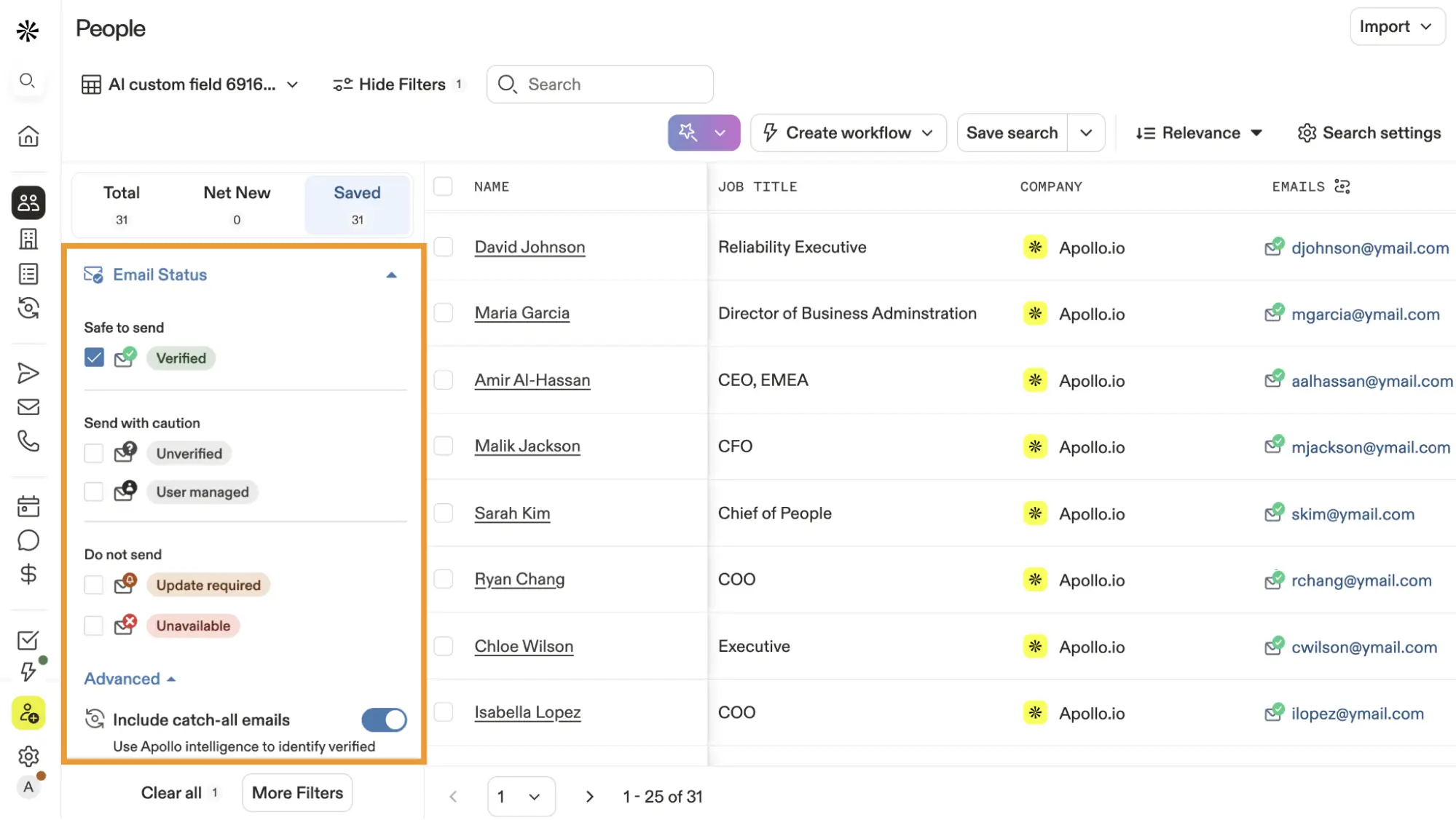
Apollo reports 270M+ contacts and 70M companies, sourced through four methods: a data contributor network of over 2 million sources (connected inboxes, CRMs, and CSV uploads that feed crowdsourced verification), its own engagement suite (bounces and replies from Apollo's outreach tools validate addresses in real time), public data crawling, and third-party providers. Apollo claims 91% email accuracy through a 7-step verification process and says it verifies 72 million emails and refreshes 150 million contacts monthly.
Source: Apollo
The contributor network model is clever: it grows as more users join, so Apollo's data improves with scale. But crowdsourced data inherits the biases of its contributors. Apollo's user base skews toward startups and SMBs, which means coverage is likely stronger for companies that startups sell to and weaker for niche verticals, regulated industries, or international markets.
ZoomInfo operates at a larger scale: 500M contacts, 100M companies, 135M+ verified phone numbers, 120M direct-dial phone numbers, and 200M+ verified business emails. What sets ZoomInfo's data apart is the verification infrastructure. The platform combines automated ML scanning of 28 million site domains daily, third-party partner data covering 95 million businesses, a community of 200,000+ ZoomInfo Lite users who share data back, and an in-house Data Training Lab of 300+ human researchers. Machine and human verification together produce up to 95% accuracy on first-party data.
Independent evaluators have confirmed those claims. In a Fortune 500 competitive RFP analyzing 25 million contacts across vendors, an independent consultant concluded that "no other competitor came even close." ZoomInfo was named a Leader in Forrester's Wave for Intent Data Providers (Q1 2025), receiving the highest possible scores across eight criteria. Forrester noted ZoomInfo had "the largest R&D investment of any provider in this evaluation." The Gartner Voice of the Customer 2025 report positioned ZoomInfo as the only vendor in the Customers' Choice quadrant with a 4.7/5.0 average rating.
Apollo holds G2 badges and industry awards (Forbes, Deloitte Fast 500, Stevie Awards), but no Gartner Magic Quadrant or Forrester Wave placements appear in its official sources. For enterprise buyers who weight analyst validation in vendor selection, this gap matters.
The practical difference shows up when reps pick up the phone or hit send. ZoomInfo's 120M direct-dial phone numbers gives sellers numbers that actually ring, and the 200M+ verified business emails means outbound sequences land in inboxes rather than bouncing. Apollo's phone number coverage isn't separately disclosed, and its email accuracy claim of 91% (versus ZoomInfo's verified email pool and up to 95% first-party accuracy) means a measurable gap in deliverability at scale. For a team sending hundreds of emails daily, a few percentage points of accuracy difference compounds into real differences in bounce rates, sender reputation, and pipeline generated.
Intent data and buying signals: volume vs. intelligence
Both platforms offer intent data, but the depth and methodology differ substantially.
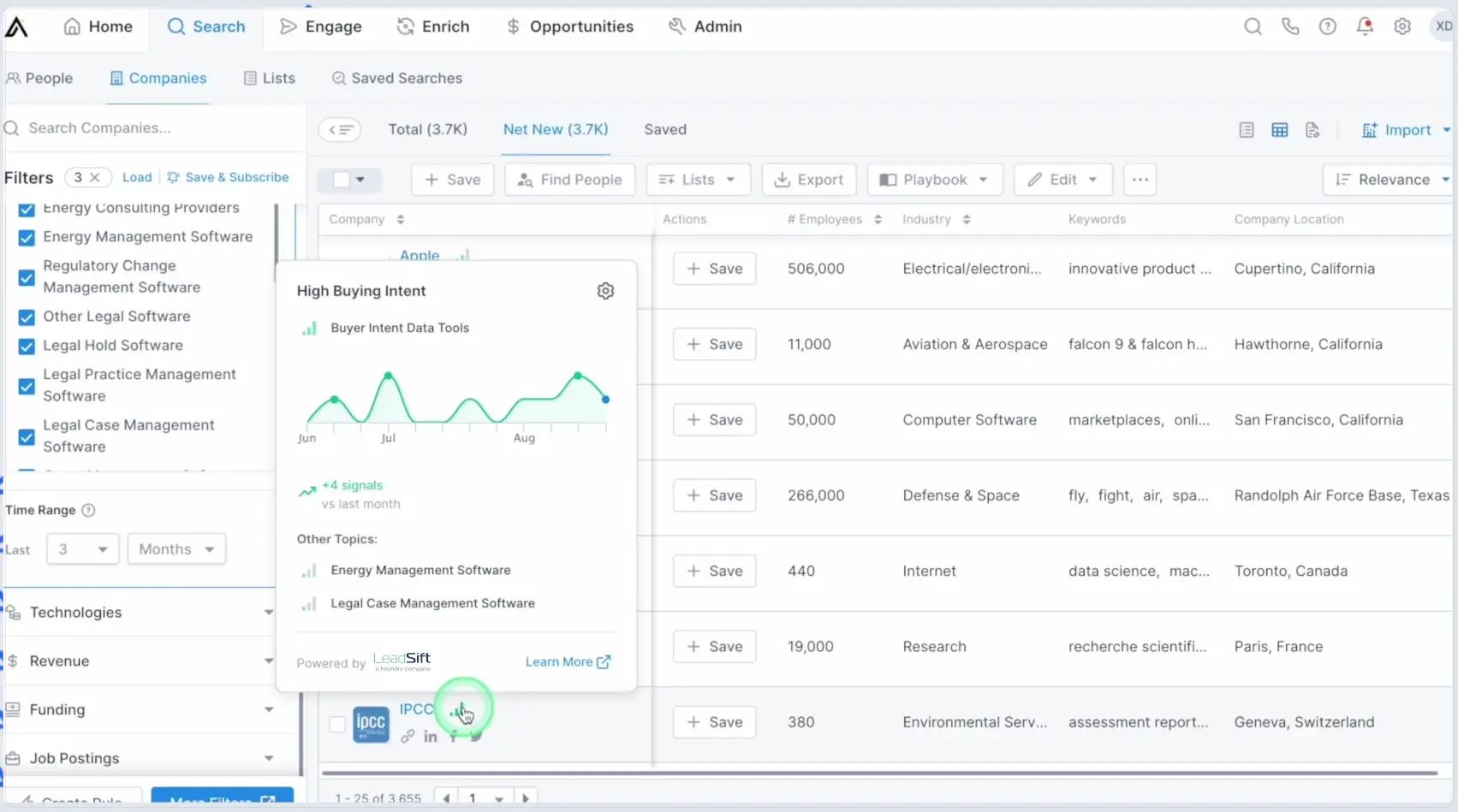
Apollo includes buying intent data on all plans, including the free tier, covering over 1,600 intent topics via a partnership with LeadSift (a Foundry company). Apollo claims 98% accuracy and refreshes signals weekly. Bundling intent data at no extra charge is a genuine differentiator for cost-conscious teams, since competitors often charge separately for it.
Source: Apollo
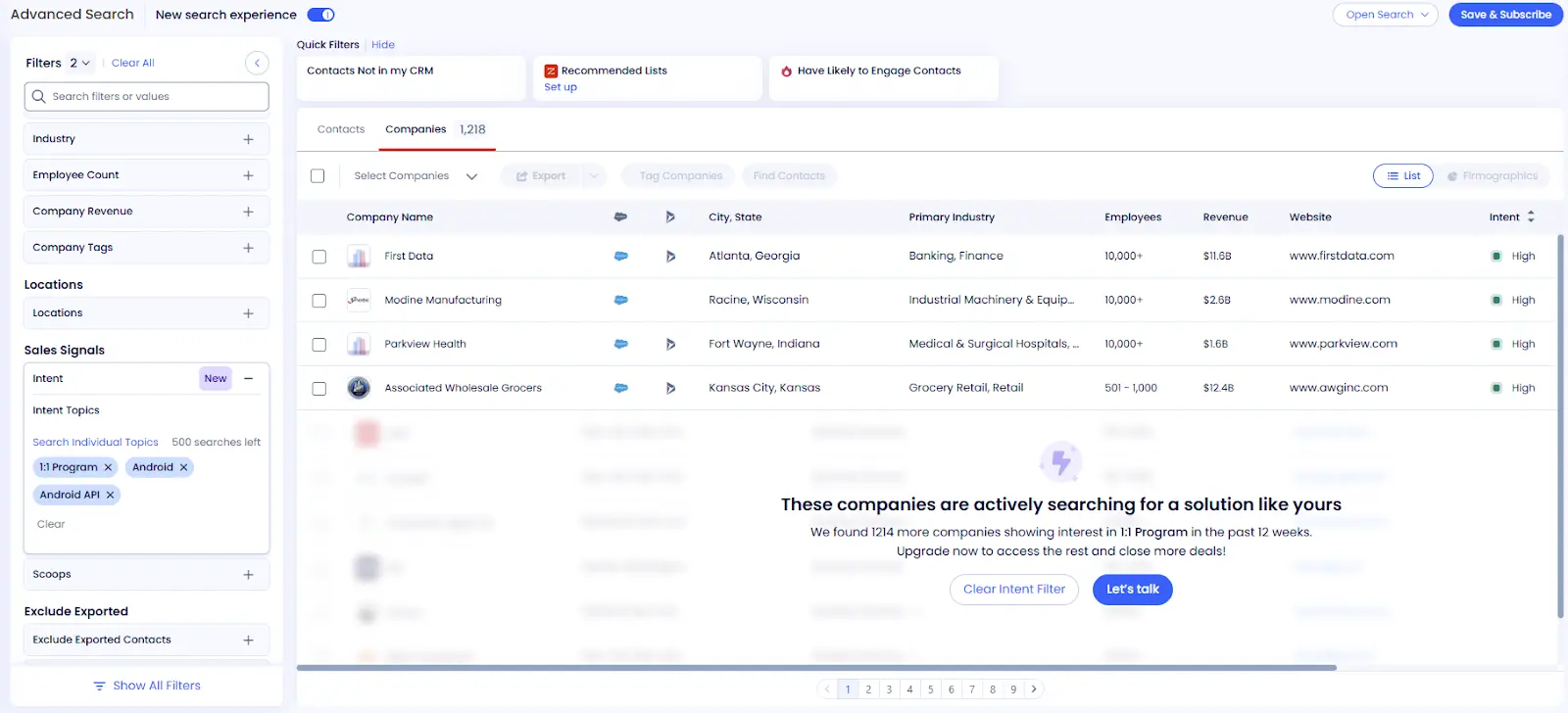
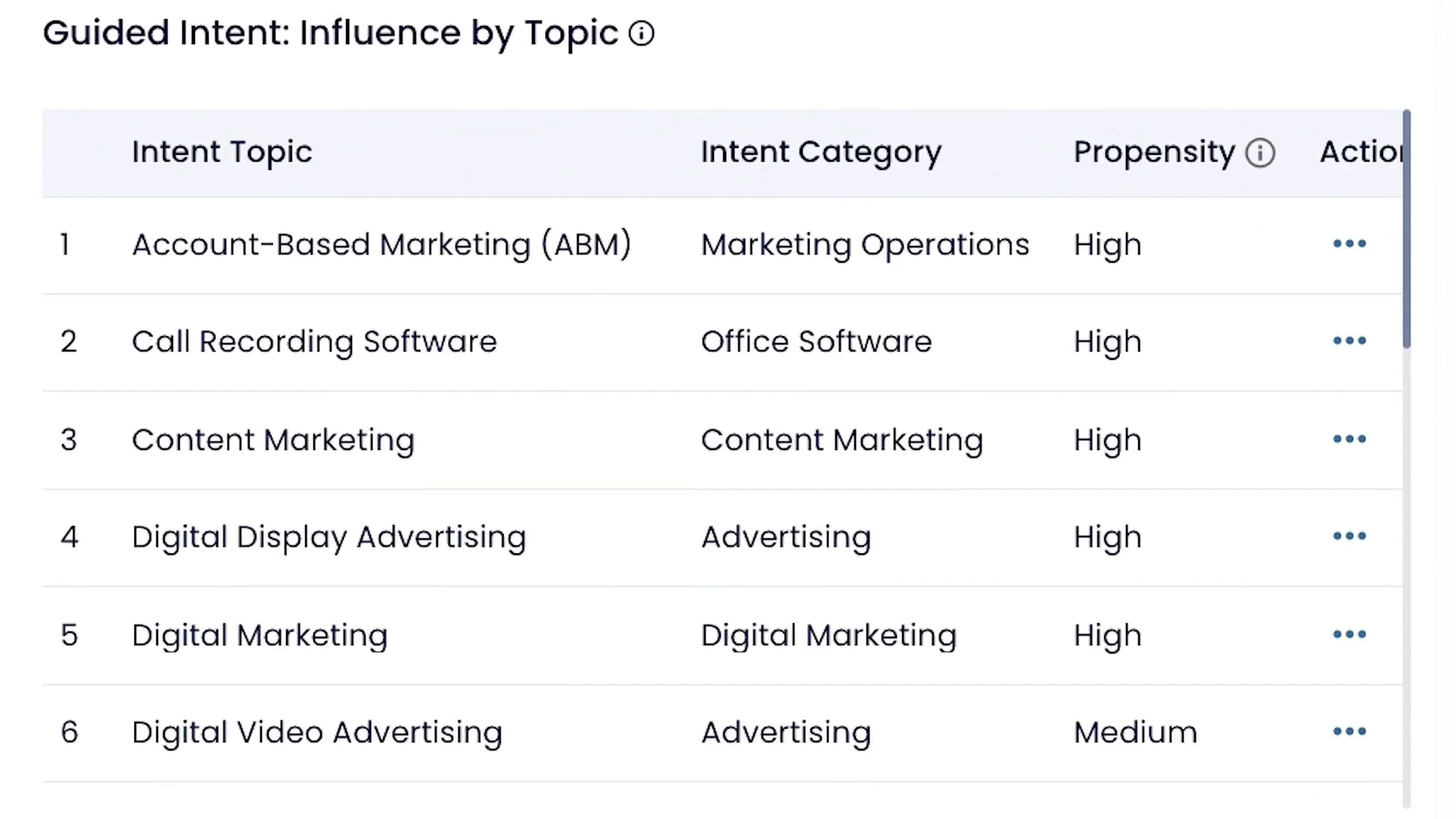
ZoomInfo tracks intent signals from 210 million IP-to-Organization pairings and 6 trillion+ new keyword-to-device pairings sourced monthly. The platform's Guided Intent feature is exclusive to ZoomInfo: it identifies topics historically correlated with deal success in your specific business rather than requiring you to select keywords manually. The system learns which intent signals actually predict pipeline for your company, not just which topics are trending across the category.
The critical difference is how intent data connects to the rest of the platform. In Apollo, intent signals help you filter prospect lists and prioritize accounts. In ZoomInfo, intent signals feed into the GTM Context Graph, where they are correlated with CRM records, conversation intelligence from Chorus, and behavioral signals to reveal why an account is showing intent and what that predicts about deal outcomes. An Apollo user sees that a company is researching a topic. A ZoomInfo user sees that a company is researching a topic, that the CFO joined the last call and asked about ROI timelines, that two new VPs were hired in the past quarter, and that this combination matches the patterns behind their closed-won deals in that segment.
For an enterprise AE managing 300 accounts, the difference between a list of companies researching a topic and a ranked, context-enriched view of those accounts matched to your closed-won deal patterns is measured in deals per quarter, not features per plan.
Sales engagement and outreach
Apollo's engagement capabilities are where its consolidation pitch is strongest.
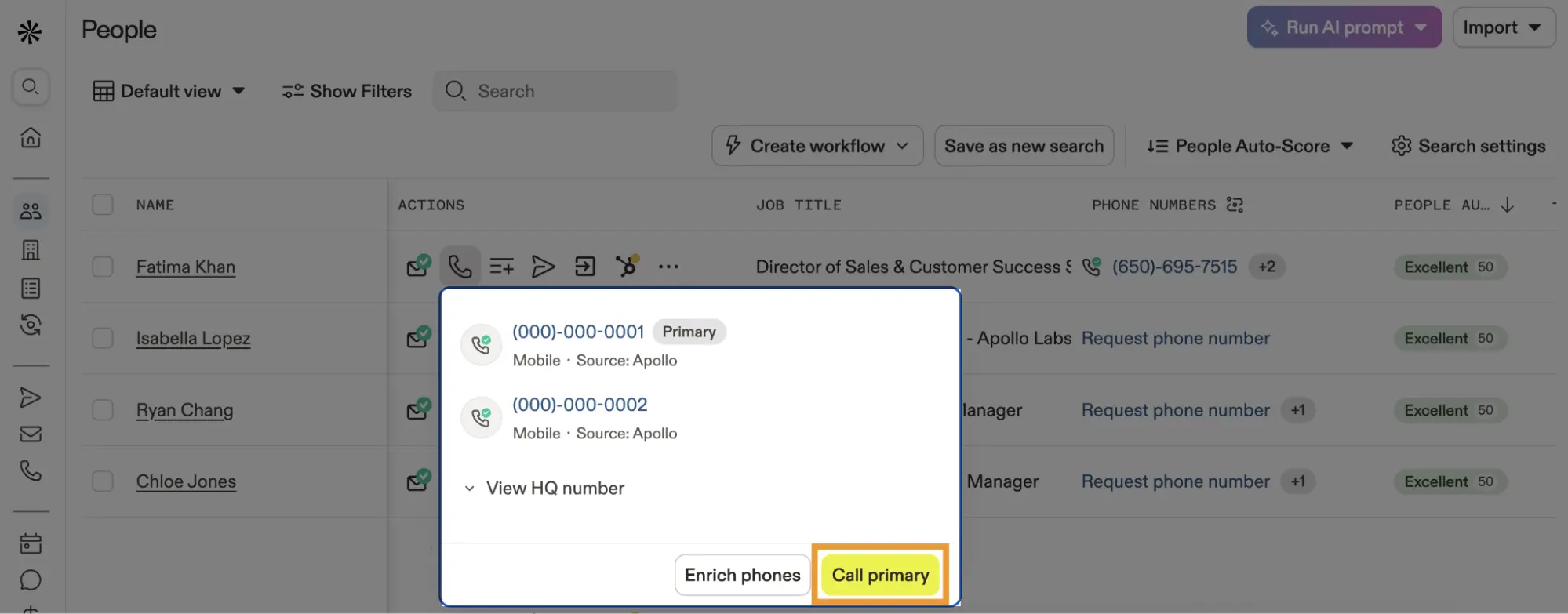
Apollo bundles multichannel sequences (email, phone, LinkedIn steps, custom tasks), a built-in dialer with Power Dialer and Parallel Dialer options, email deliverability tools (domain purchase, SPF/DKIM/DMARC setup, and mailbox warm-up), AI-powered email personalization, a meeting scheduler, and call recording with conversation summaries. Apollo claims reps can connect with 100+ prospects per hour using auto-skip dialing. All of this lives in the same platform as the prospect data: one login, from prospecting to sequence to call.
This is where Apollo's pitch is most compelling for individual contributors and small teams. The workflow goes from "I need to find a decision-maker" to "they are in a sequence" in under five minutes. The cost is a single subscription that replaces three or four point solutions.
Source: Apollo
ZoomInfo takes a different approach to engagement. Rather than building a full outreach stack internally, ZoomInfo built a partnership with Salesloft for sequencing and multi-touch execution, with ZoomInfo Buying Signals syncing directly to Salesloft Rhythm for AI-prioritized engagement. The philosophy: intelligence and execution are separate responsibilities. ZoomInfo provides the intelligence (who to contact, when, and why), and specialized tools handle the execution.
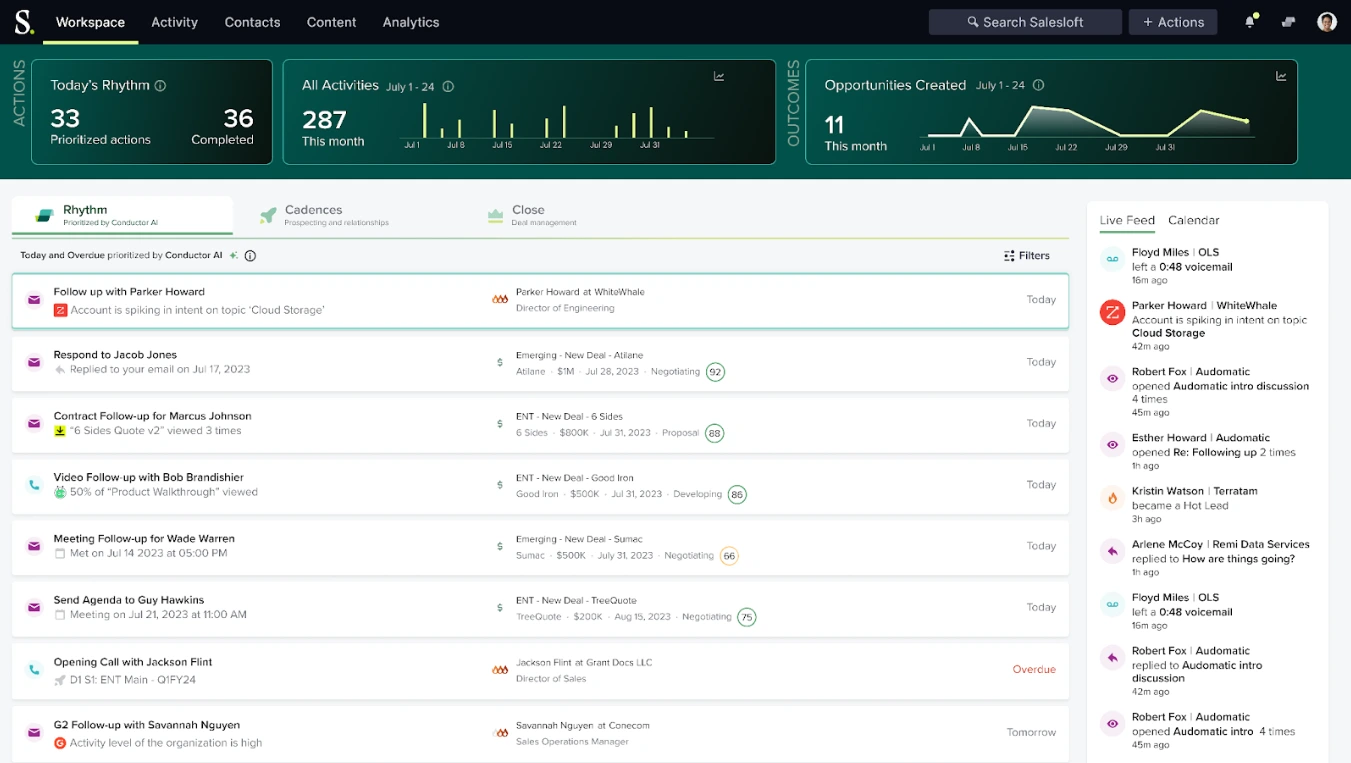
For sellers working inside ZoomInfo's ecosystem, GTM Workspace brings prioritized accounts, AI-drafted outreach, and deal execution into one place. Built on Anthropic's Claude, the AI agents inside Workspace answer three questions for every rep: who to contact, when to engage, and what to say, drawing on ZoomInfo's full data and the GTM Context Graph. Customers report booking nearly 60% more meetings per week and boosting pipelines by nearly 25% using GTM Workspace.
The trade-off: Apollo offers a self-contained outbound workflow with everything in one subscription. ZoomInfo offers deeper intelligence powering the engagement, but execution may involve partner tools (Salesloft, Outreach) or native tools (Workspace), adding complexity to the stack.
AI capabilities: Embedded assistant vs. contextual intelligence
Both platforms invest in AI, but the architectures differ.
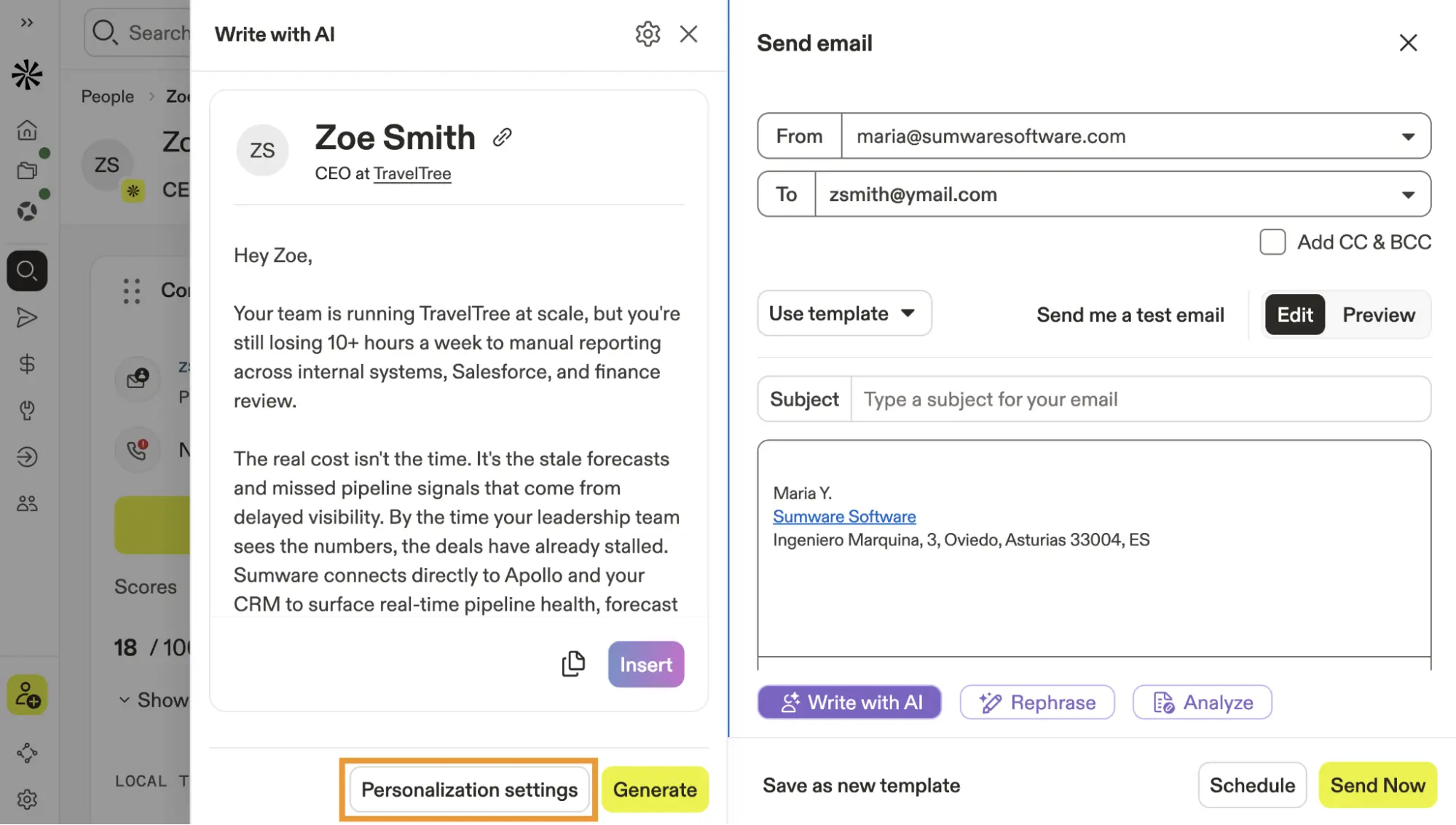
Apollo embeds AI throughout its workflow: natural language lead list building, AI-generated email personalization that matches the rep's tone, automated call summaries and CRM updates, and an AI chatbot for querying call transcripts. The AI runs on Google Gemini and is positioned as "the only AI sales assistant built on a database of 270M+ contacts and millions of sales engagement data points." Apollo reports 500% year-over-year growth in AI platform usage, with over 50,000 weekly active AI users. Results like Smartling's BDRs sending 10x more personalized emails show the productivity gains.
Apollo's AI works well for the use cases it covers: writing emails, building lists, summarizing calls. Its strength is speed. You describe what you want in plain language, and the system generates it.
Source: Apollo
ZoomInfo's AI goes deeper. The GTM Context Graph isn't an assistant that helps you write emails faster. It's an intelligence layer that captures the context behind your deals. As ZoomInfo's CPO Dominik Facher writes: "The CRM recorded the state change. It has no record of why it happened." The GTM Context Graph captures the "why" by fusing ZoomInfo's third-party data with a customer's CRM records, Chorus conversation transcripts, email threads, and behavioral signals, then extracting the connections between signals and outcomes across all of it.
This contextual intelligence shows up in several places. GTM Workspace's AI Assistant generates one-click account briefs that pull CRM history, company news, ZoomInfo signals, and stakeholder context into a 10-second summary. The Action Feed surfaces in-market buyers with pre-drafted actions on every signal. GTM Studio lets marketers describe audiences in plain language and launch multi-channel plays targeting accounts that match proven win patterns. Expansion plays that used to take 3 weeks now launch in 30 minutes.
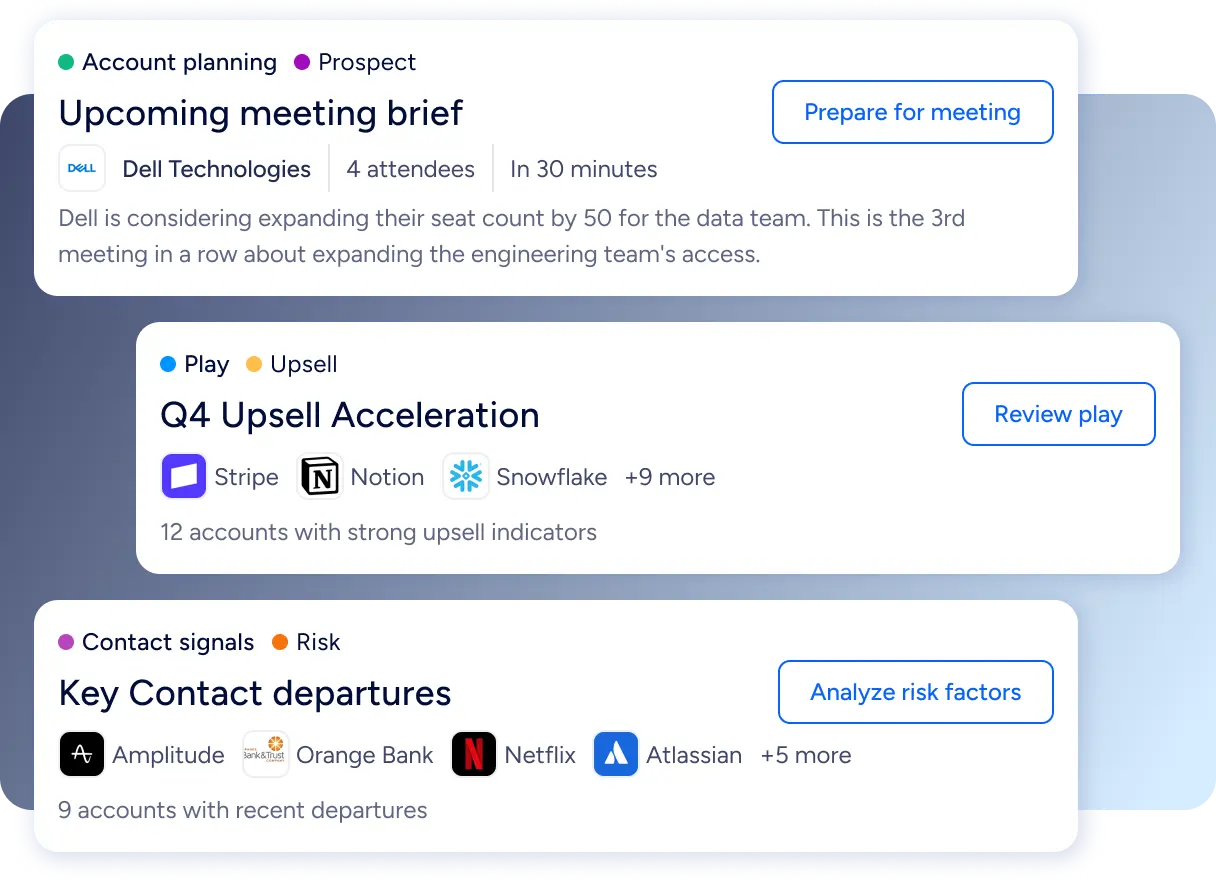
The difference: Apollo's AI helps you work faster on individual tasks. ZoomInfo's AI draws on your entire deal history to surface what to do next and why.
Conversation intelligence
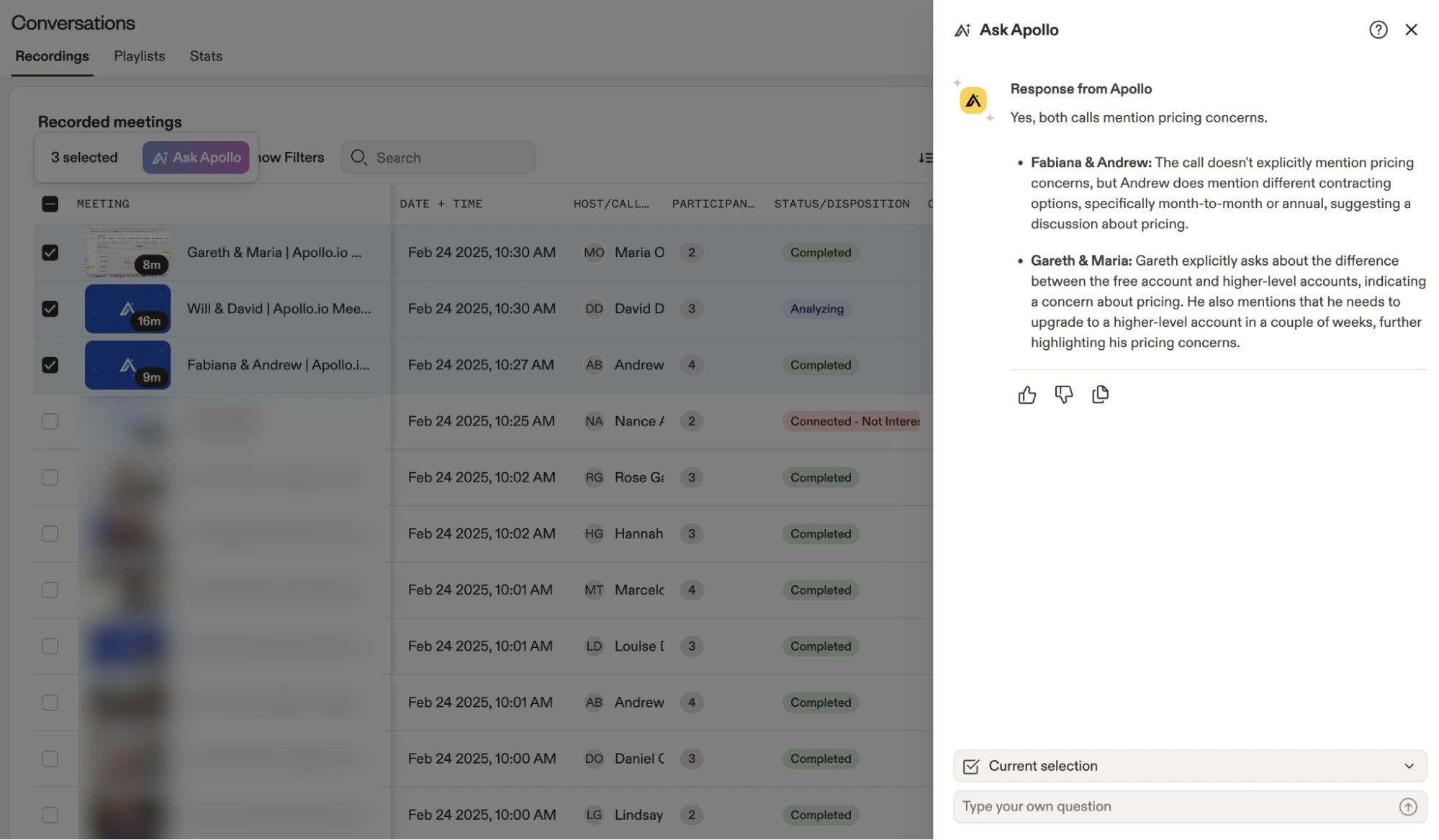
Apollo includes built-in conversation intelligence: call recording, transcription, AI summaries that break down outcomes, next steps, and objections, an AI chatbot on transcripts, and customizable scorecards for coaching. These features come included in the platform rather than priced as add-ons, which is a cost advantage over standalone tools like Gong.
Source: Apollo
ZoomInfo's Chorus is a dedicated conversation intelligence product backed by 14 technology patents using proprietary ML. It covers sales call analysis, team performance coaching, deal intelligence with automatic CRM sync, and market intelligence extraction at scale. But Chorus's deeper purpose, as CPO Facher has stated, is as the context capture engine that feeds the GTM Context Graph.
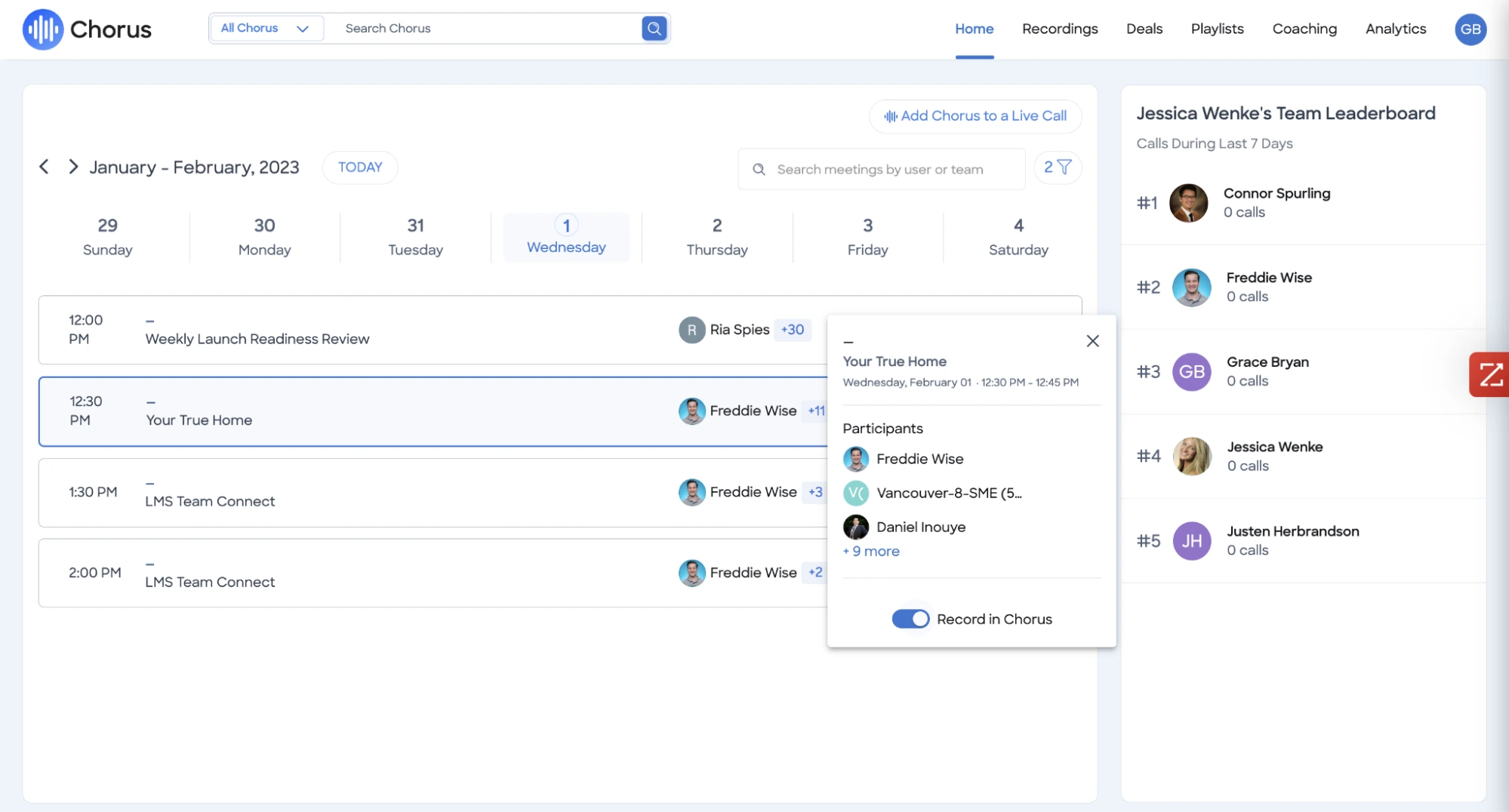
In practice: when a manager reviews a Chorus call, they see ZoomInfo's full profile and relationship history for every participant, contact details, company insights, and relevant signals through Connected Intelligence. The insights from that call don't stay in a call library. They feed the GTM Context Graph, informing account scoring, deal forecasting, and the AI-drafted outreach that other reps see in GTM Workspace.
Apollo's conversation intelligence is functional and included. Chorus is a specialized engine whose output compounds across the entire platform.
Marketing and ABM capabilities
Apollo approaches marketing primarily through its Inbound solution: website visitor tracking, form enrichment that auto-fills fields using just an email address, lead scoring, automated routing, and a built-in meetings scheduler. These tools cover the most common inbound workflows (capture, qualify, route, schedule), and form enrichment is platform-agnostic and doesn't consume credits. But Apollo doesn't offer ABM-specific tools like display advertising, audience syndication, or multi-channel campaign orchestration.
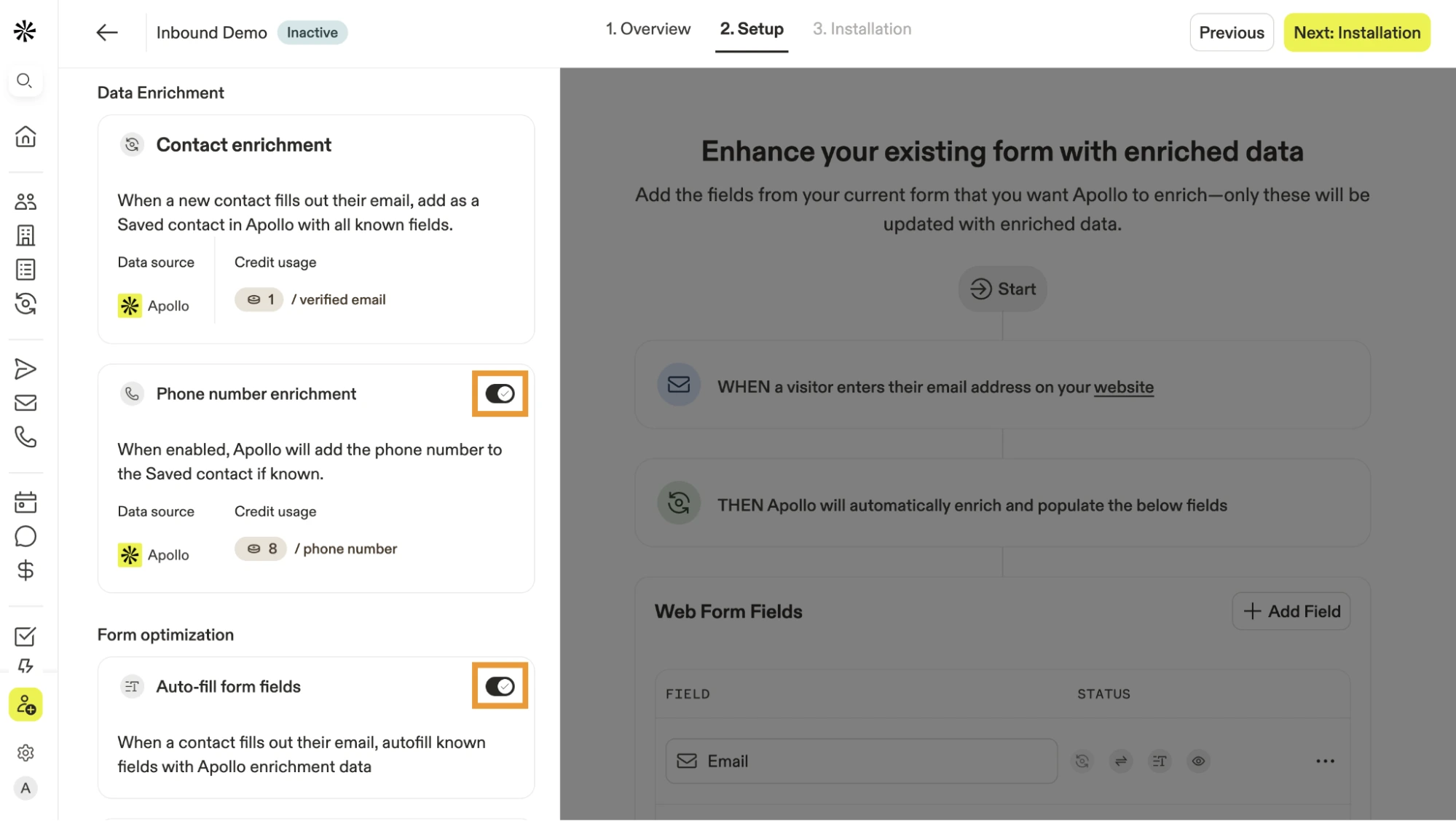
Source: Apollo
ZoomInfo provides a full ABM platform named a Gartner Magic Quadrant Leader for the second consecutive year. The Marketing product includes cross-channel advertising with a native DSP deploying display ads based on 300+ company attributes, FormComplete (which reduced forms to a single field; Smartsheet reported 40%+ increase in form fills, 84% increase in MQLs, and 59% increase in win rate), contact-level website visitor identification (not just company-level), and Account Fit Score for predictive scoring.
GTM Studio extends these capabilities further, letting marketers and RevOps teams build audiences using natural language, enrich with first- and third-party data, define triggers, and activate multi-channel plays (email, calls, ads, direct mail) without engineering support. Pre-built GTM plays for inbound acceleration, champion tracking, competitive displacement, and ICP targeting are launchable in one click.
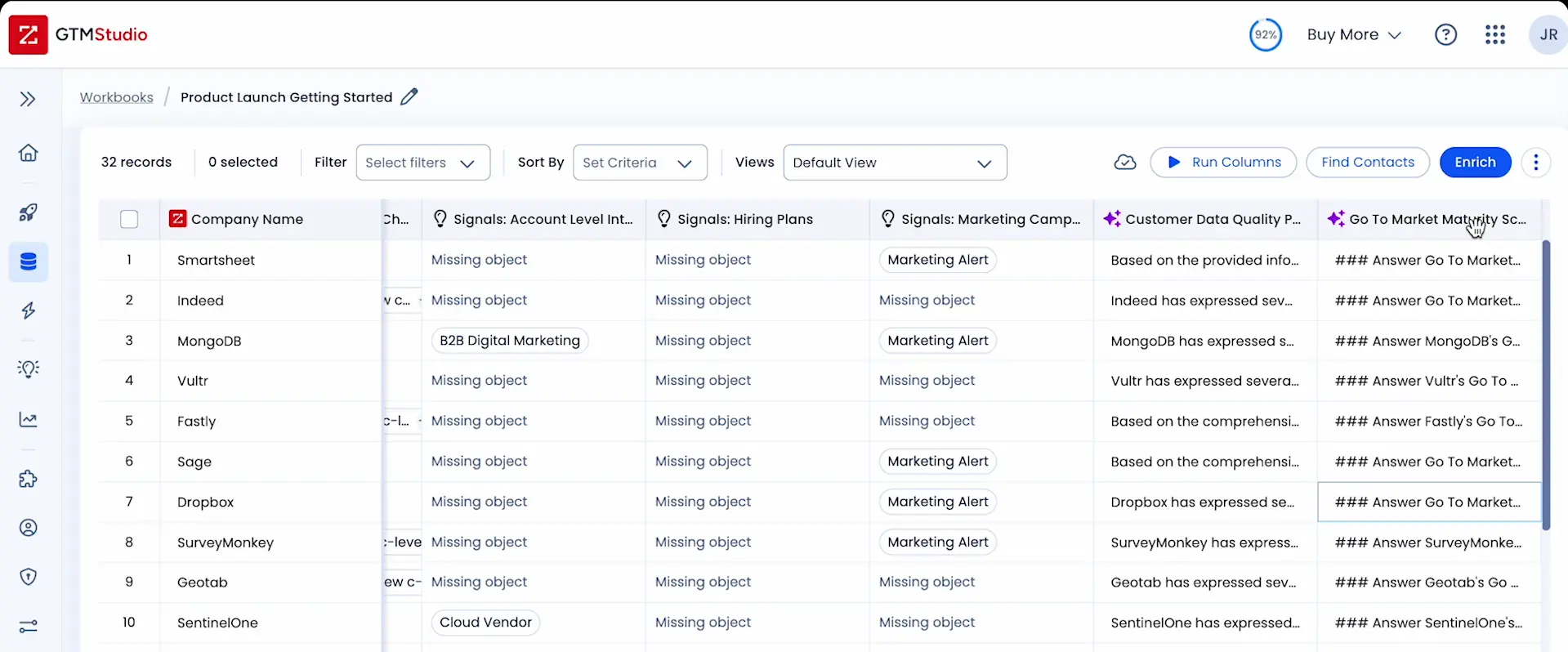
For teams running account-based marketing programs, ZoomInfo offers a complete execution layer that Apollo doesn't attempt to match.
Data enrichment and operations
Apollo offers several enrichment methods: CRM enrichment (connect Salesforce or HubSpot for scheduled jobs), CSV enrichment, API enrichment, and Waterfall Enrichment that queries dozens of third-party providers in sequence. Apollo reports Waterfall Enrichment delivers 5% more email coverage, 7% more phone numbers, and 45% lower bounce rate compared to single-source enrichment. CRM and CSV enrichment require the Professional plan ($99/seat/month) or above. API access requires a Custom plan.
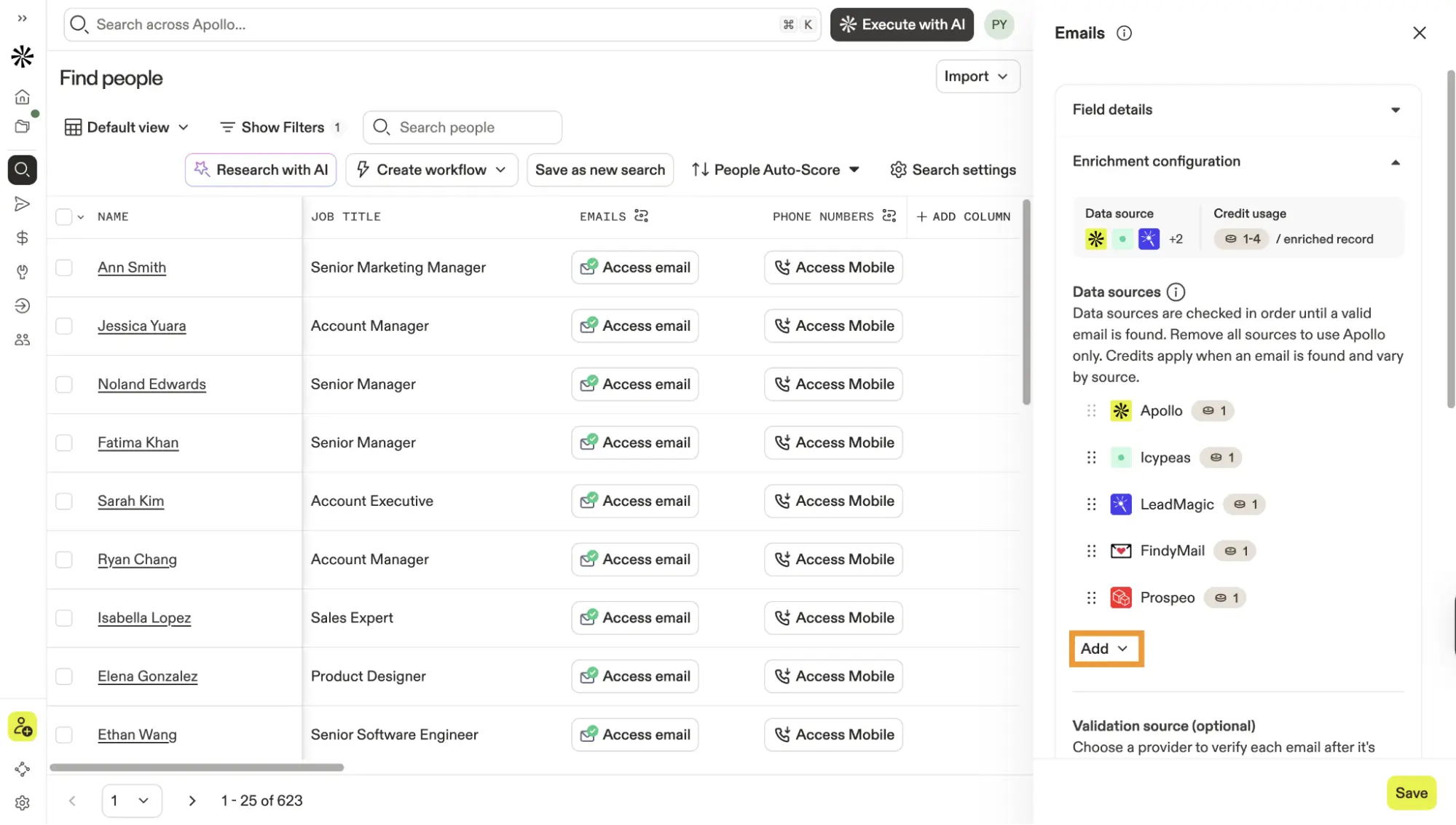
Source: Apollo
ZoomInfo Operations provides a more mature data management layer. Its multi-vendor enrichment waterfall draws from approximately 60 vendors through a codeless interface, with perimeter protection that blocks bad data at entry. The platform includes automated deduplication, lead-to-account matching using company hierarchies, and predictive modeling that builds your ICP from CRM win/loss data. Momentive reduced speed-to-lead from 20 minutes to 60 seconds using ZoomInfo Operations.
GTM Studio builds on Operations by adding waterfall enrichment from 25+ alternative data sources at no additional cost and AI-powered audience definition, workflow automation, and cross-tool synchronization, all accessible through natural language rather than engineering tickets.
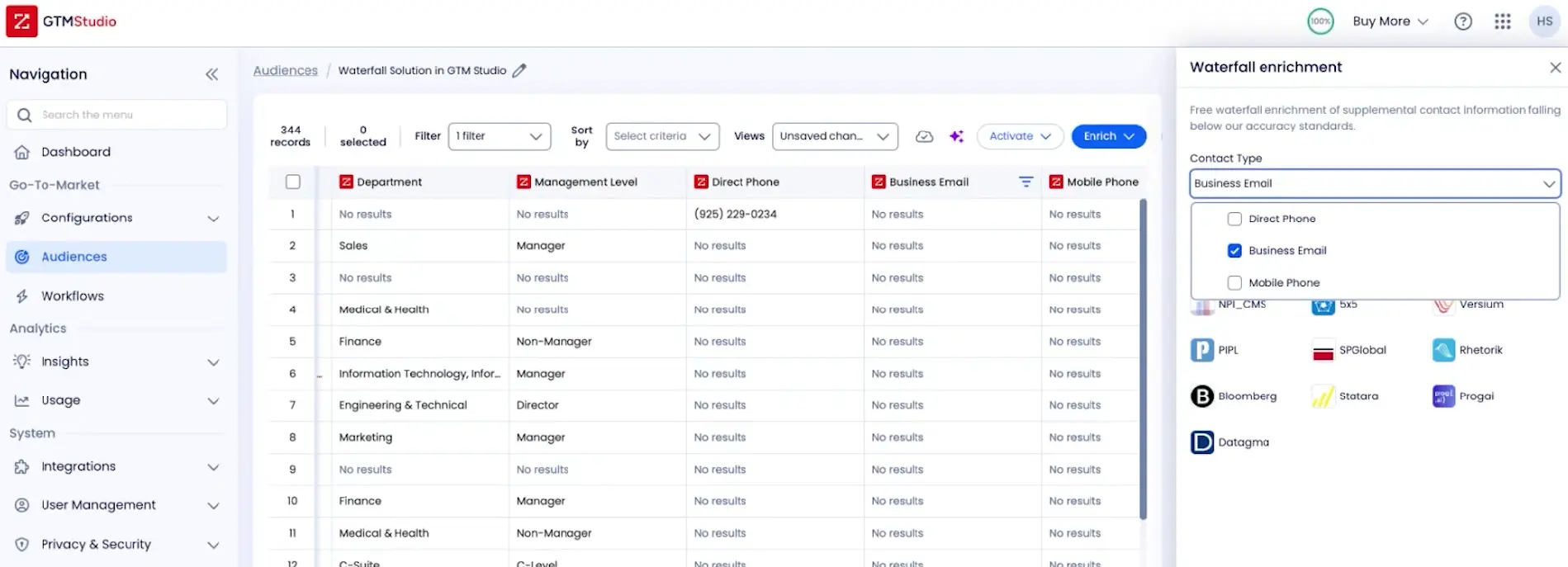
For RevOps teams managing data quality across a complex tech stack, ZoomInfo's Operations and GTM Studio offer deeper capabilities. Apollo's enrichment works well for simpler setups, particularly for teams already using Apollo as their primary prospecting tool.
Integrations and technical access
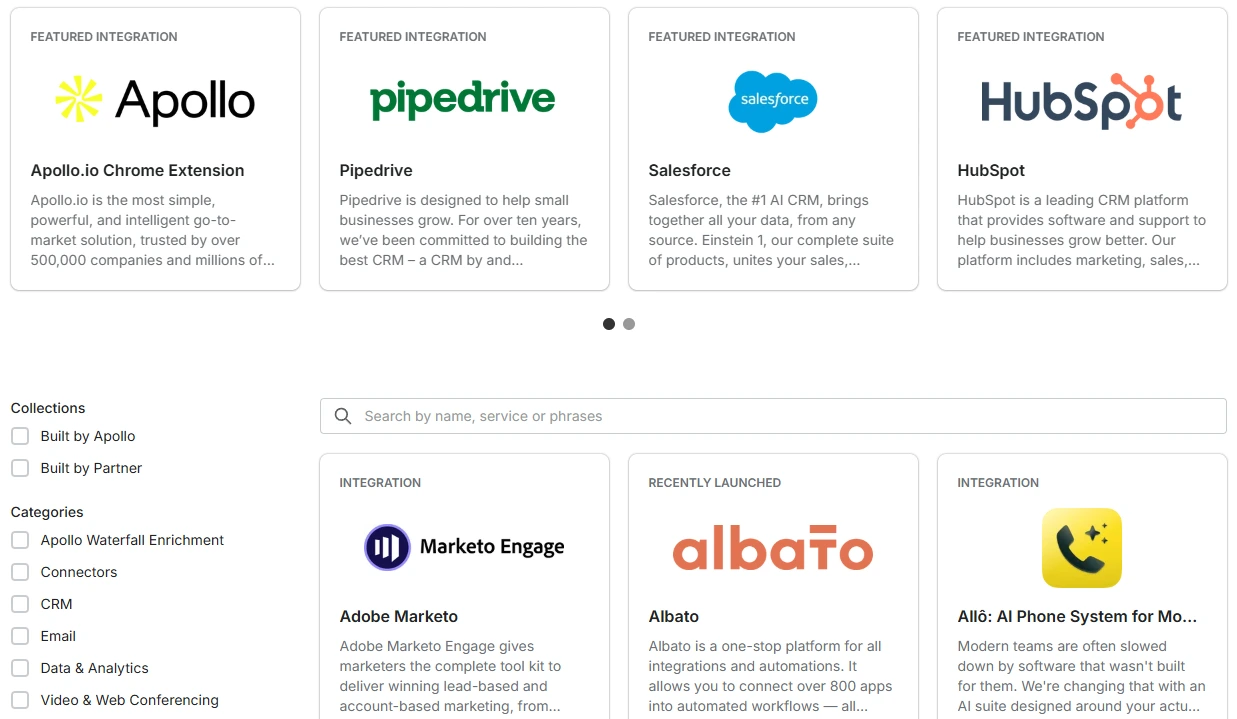
Apollo integrates natively with Salesforce (bidirectional), HubSpot (bidirectional), and Pipedrive, plus connections to Outreach, SalesLoft, Marketo, Sendgrid, and LinkedIn. The Integrations Marketplace includes partners across CRM, email, analytics, conferencing, and recruiting categories. Apollo's REST API covers enrichment, search, and CRUD operations for accounts, contacts, deals, sequences, tasks, and calls, with OAuth 2.0 for technology partners. However, API access requires a Custom plan, which blocks technical teams that want to evaluate programmatic capabilities before committing to an enterprise contract.
Source: Apollo
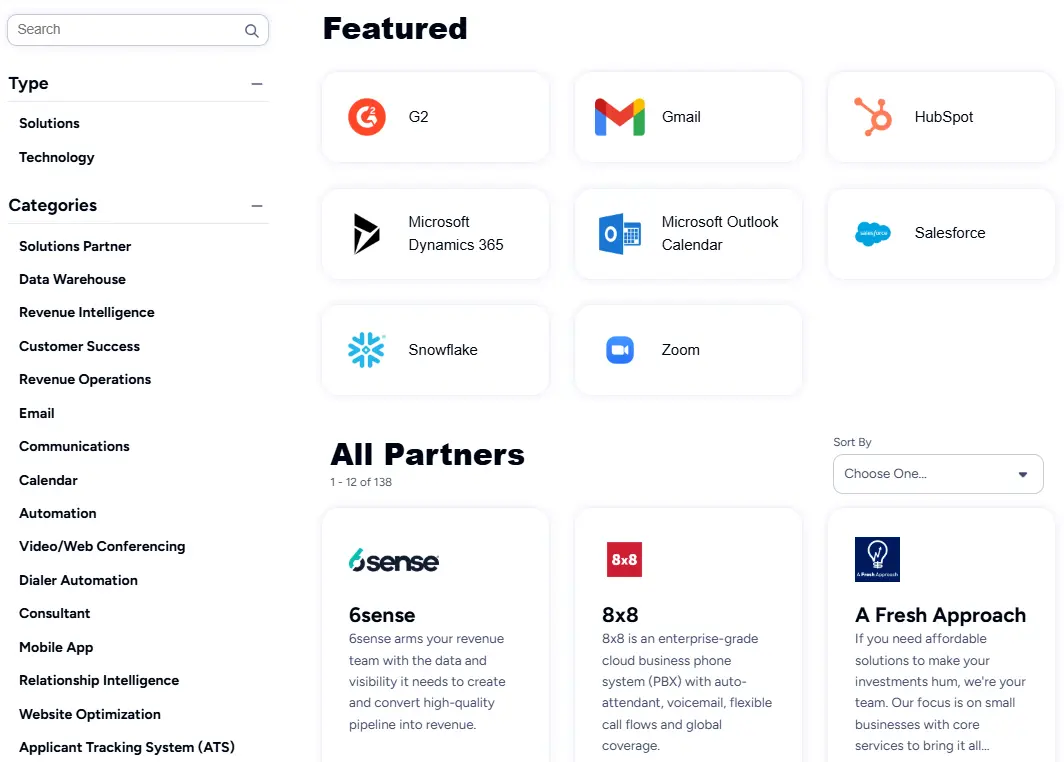
ZoomInfo offers a broader integration ecosystem. The App Marketplace lists 120 partner integrations across CRM, marketing automation, sales engagement, revenue intelligence, data warehouse, communications, and ATS categories. Featured integrations include Salesforce, HubSpot, Microsoft Dynamics 365, Snowflake, Gmail, Zoom, 6sense, and Bullhorn. Cloud Partners enable direct data ingestion into AWS, Google Cloud, Snowflake, and Databricks.
Where ZoomInfo stands apart is programmatic access. API access is included in all relevant plans, not gated behind an enterprise tier. The Enterprise API provides four areas of programmatic integration: Data API (search and enrich), AI intelligence endpoints (account summaries, lookalikes, and recommendations), Marketing API (audience management), and Platform API (bidirectional engagement data).
The ZoomInfo MCP server takes this further by connecting AI models directly to ZoomInfo's data. Listed in the Claude directory and supporting Claude and ChatGPT, the MCP server lets users interact with ZoomInfo data through natural language (searching companies, enriching contacts, running account research through any MCP-compatible AI assistant). CEO Schuck described a large financial services firm building an internal app using ZoomInfo's MCP server: "That's a surface area we would never see before."
For teams building custom AI agents and workflows, ZoomInfo's open access model (APIs on all plans, MCP for AI agents, Data Cubes for warehouses) provides flexibility that Apollo's Custom-plan-gated API doesn't match.
Security and compliance
Both platforms maintain strong security practices, with ZoomInfo's compliance stack reflecting its enterprise customer base.
Apollo holds ISO 27001 and SOC 2 Type 2 certifications, GDPR compliance as Data Processor and Controller, CCPA and CPRA compliance, and EU-US Data Privacy Framework certification. Infrastructure is hosted on Amazon Web Services with encryption in transit and at rest, annual penetration testing, and quarterly audits. Apollo maintains a Trust Center at trust.apollo.io and a Privacy Center for opt-out and data removal requests.
ZoomInfo maintains a broader certification stack, all renewed annually: ISO 27001 (since 2020), SOC 2 Type II (since 2020), ISO 27701 (Privacy Information Management, since 2022), TRUSTe GDPR Practices Validation, and TRUSTe CCPA Practices Validation. ZoomInfo is a registered data broker in California and Vermont.
For enterprise buyers in regulated industries (financial services, healthcare, government), ZoomInfo's ISO 27701 certification and data broker registrations provide assurance that Apollo's certification stack doesn't currently include.
How Apollo and ZoomInfo pricing differ
Apollo uses fully public, seat-based pricing with credit-based data consumption:
Plan | Price | What's included |
|---|---|---|
Free | $0 | 900 credits/year, basic filters, 1 intent topic, 250 daily emails, 1 mailbox |
Basic | $49/seat/mo (annual) | 30,000 credits/seat/year, advanced filters, 6 intent topics, unlimited sequences |
Professional | $79/seat/mo (annual) | 48,000 credits/seat/year, A/Z testing, dialer, 4,000 min call recording |
Organization | $119/seat/mo (annual, min 3 seats) | 72,000 credits/seat/year, 12 intent topics, advanced security, SSO, BYO LLM |
Enterprise | Custom | Fortune 500 focused; API access included |
Credits are consumed per data action: 1 credit per email accessed, 8 credits per phone number, up to 9 credits per enriched record. Add-ons cover website visitor identification, international dialer options, and local presence calling. For a detailed breakdown of Apollo's plan tiers and credit structure, see our Apollo pricing analysis.
ZoomInfo uses a consumption-credit model that is free to start. ZoomInfo Lite is a permanent free tier with 10 exports per month. A free trial is available to evaluate paid functionality. Paid plans are consumption-based: pricing is structured around actual GTM output (seat access, features, and credit usage) rather than flat per-seat tiers. The practical pricing question is less "which list price is lower?" and more "what operating model are you buying?"
Apollo can be attractive for smaller technical teams that want to assemble workflows themselves and upgrade incrementally. ZoomInfo is evaluated by teams that want one vendor for verified data, contextual intelligence, and multi-function execution.
Apollo vs. ZoomInfo: Which should you choose?
The choice between Apollo and ZoomInfo depends on your team's size, maturity, and what you need from a GTM platform.
Choose Apollo if:
You're a startup, SMB, or individual contributor who needs to start prospecting immediately without a procurement process
Budget is your primary constraint and you want a free tier with real functionality
Your GTM workflow is primarily high-volume outbound (find contacts, build sequences, make calls, send emails) and you want everything in one subscription
You value speed and don't want to wait weeks for implementation
Your team is small enough that the credit system and per-seat pricing remain affordable
You don't need ABM capabilities, multi-vendor enrichment, or analyst-validated data quality
API access isn't a requirement, or you're willing to commit to a Custom plan to get it
Apollo's free plan and transparent pricing make it easy to test before committing.
Choose ZoomInfo if:
You're an enterprise or upper mid-market team that needs the most comprehensive, verified B2B data available
Data accuracy directly impacts your revenue (high-volume outbound, ABM programs, CRM enrichment)
You need an intelligence layer that goes beyond contact data to provide contextual deal intelligence (the GTM Context Graph)
Your GTM operation spans sales, marketing, and RevOps, and you need a platform that serves all three
Analyst validation matters to your buying process (Gartner Leader, Forrester Leader)
You want to power custom AI agents, internal tools, or third-party applications with B2B data through APIs and MCP
Conversation intelligence with contextual data (Chorus) is important for coaching and deal management
ABM capabilities including display advertising, audience syndication, and predictive scoring are core to your strategy
Compliance requirements demand ISO 27701, data broker registration, and TRUSTe validations
Explore ZoomInfo's platform with a free trial or ZoomInfo Lite to experience the data quality difference firsthand.
Frequently asked questions
Why is Apollo so much cheaper than ZoomInfo?
Apollo uses public, seat-based pricing ($49 to $119 a month) plus a free-forever tier built for individual reps and small teams. ZoomInfo uses a consumption model sized to actual GTM output and targets enterprise and upper mid-market teams. The better question is what each platform costs at the data accuracy and scale your team actually needs, rather than which list price is lower.
Is Apollo's data as accurate as ZoomInfo's?
Apollo claims 91% email accuracy from a 7-step process and its 2M+ contributor network. ZoomInfo claims up to 95% first-party accuracy from 300+ human researchers plus ML verification. Independent testing put live bounce rates at 0.8% for ZoomInfo versus 1.8% for Apollo, with the gap widest on enterprise, niche, and regulated accounts and narrowest on SMB outreach.
Does ZoomInfo have a free plan like Apollo?
Yes. ZoomInfo Lite is a permanent free tier with 10 exports a month, and Apollo's free-forever plan offers 900 credits a year with limited sequences. Both also offer trials of paid functionality, though scaling teams will need a paid plan either way.
Can ZoomInfo replace Apollo?
For enterprise and upper mid-market teams, yes. ZoomInfo covers the full surface Apollo does, from contact data and intent to engagement through GTM Workspace, conversation intelligence through Chorus, and enrichment through GTM Studio. It doesn't match Apollo's $49 free-forever entry point, so early-stage and PLG teams often start on Apollo and consolidate onto ZoomInfo as their data and feature needs grow.
What is the best alternative to Apollo for enterprise teams?
The alternatives evaluated most at enterprise scale are ZoomInfo, LinkedIn Sales Navigator, and Cognism. The choice tends to follow geography and scale. Cognism suits European compliance-first teams, Apollo fits budget-conscious SMBs, and ZoomInfo is built for enterprise teams that need verified data depth, contextual intelligence, and analyst-backed validation across the full revenue org.
What about Clay for beginners on a tight budget?
Clay is a workflow orchestration layer rather than a standalone data provider, connecting to multiple vendors through waterfall enrichment to surface the best record. For beginners on a tight budget, Apollo's free tier is the easiest place to start, bundling data, sequences, and a dialer in one subscription. Clay suits technical teams building custom enrichment waterfalls, while ZoomInfo fits teams needing a verified, enterprise-grade foundation without assembling a multi-vendor stack.
Is Apollo a legit site?
Yes. Apollo is a legitimate platform, founded in 2015, backed by a $1.6B Series D, and used by over a million reps across 550,000+ companies, with a 4.7/5 G2 rating. The real question is fit, whether its crowdsourced data and SMB-focused coverage meet your accuracy and market requirements.
