
Choosing between Appcues and WalkMe comes down to questions most comparison articles skip:
Are you guiding your customers through your own product, or training your employees on someone else's software?
Do you need no-code tools your product team can run independently, or enterprise infrastructure managed by a dedicated IT team?
Is your goal converting trial users and driving feature adoption, or rolling out an ERP system to 50,000 employees?
Are you a SaaS company trying to reduce churn, or a Fortune 500 trying to reduce help desk tickets?
How important is it that your adoption efforts connect to finding and winning those users in the first place?
In short, here's what we recommend:
Appcues is built for SaaS product teams who want to onboard customers, drive feature adoption, and convert trial users without waiting on engineering. Its no-code builder lets product managers create in-app flows, behavioral emails, and push notifications from a single platform. Appcues works well for mid-market software companies where the product team owns the user experience. The tradeoff: it only works inside your own product, has no enterprise software training capabilities, and its analytics are still maturing.
WalkMe is the enterprise digital adoption platform for organizations deploying complex software (SAP, Salesforce, Workday) to large workforces. Acquired by SAP in 2024 for roughly $1.5 billion, WalkMe sits on top of any web or desktop application and provides step-by-step guidance, workflow automation, and usage analytics across the enterprise tech stack. The tradeoff: WalkMe's pricing, complexity, and implementation requirements put it out of reach for smaller teams, and its growing SAP focus raises questions for non-SAP shops.
Both platforms solve adoption problems, but they operate in different worlds. Appcues helps your customers succeed inside your product. WalkMe helps your employees succeed inside their software. Neither addresses the question that determines whether you have users to adopt anything in the first place: finding and engaging the right buyers.
ZoomInfo is an AI GTM platform that solves what happens before adoption begins. Built on a B2B data foundation of 500M contacts, 100M companies, 135M+ verified phone numbers, and 200M+ verified business email addresses, ZoomInfo's GTM Context Graph fuses this data with your CRM records, conversation transcripts, and behavioral signals to reveal not just who your buyers are, but why deals move or stall. Whether you access that intelligence through GTM Workspace for sellers, GTM Studio for marketers and RevOps, or APIs and MCP in any third-party tool, ZoomInfo fills your funnel with the right accounts before you worry about onboarding them.
If connecting your adoption efforts to the revenue engine that feeds them sounds like the missing piece, see how ZoomInfo works.
Appcues vs. WalkMe at a glance
Appcues | WalkMe | ZoomInfo | |
|---|---|---|---|
Primary use case | Customer-facing product adoption | Employee-facing enterprise software adoption | Finding and winning B2B buyers |
Target buyer | Product managers, CS teams at SaaS companies | IT leaders, CHROs at large enterprises | Sales, marketing, and RevOps teams |
Deployment | JavaScript/mobile SDK on your own product | Browser extension across any application | Platform + API/MCP access to B2B intelligence |
No-code builder | Chrome Extension overlay on your live app | Electron desktop editor with browser extension | Natural language audience building in GTM Studio |
AI capabilities | Multi-agent system (Captain AI) on all plans | DeepUI + contextual AI + Learning Arc | GTM Context Graph processing 1.5B+ data points daily |
Mobile support | Native iOS, Android, React Native, Flutter, Ionic | Web, desktop, and mobile via omnichannel DAP | Mobile app + Chrome extension |
Pricing model | MAU-based; quote only | Custom enterprise contracts; quote only | Consumption-based; quote only |
Free trial | Not publicly available | Not publicly available | 7-day free trial + permanent ZoomInfo Lite tier |
Security | SOC 2, GDPR, EU data residency | SOC 2 Type II, ISO 27001, FedRAMP Ready | SOC 2 Type II, ISO 27001, ISO 27701 |
Best for | SaaS teams driving product-led growth | Enterprises rolling out complex internal software | Revenue teams that need to find, win, and grow customers |
These platforms solve different problems
The comparison between Appcues and WalkMe is deceptive because the products look similar on the surface. Both create in-app guidance. Both use tooltips, modals, and checklists. Both claim to improve adoption.
But they point in opposite directions.
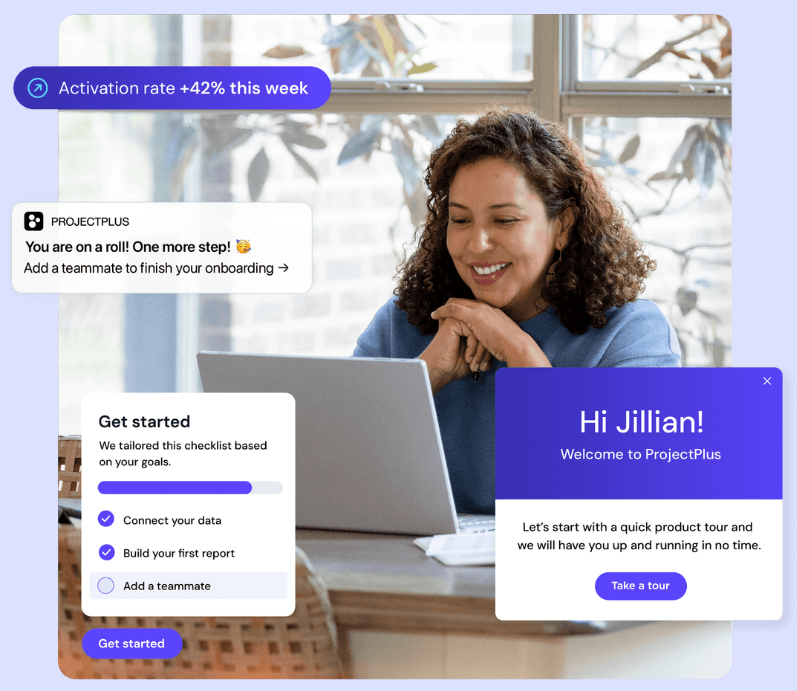
Appcues faces outward. It lives inside your product and speaks to your customers. When a new user signs up and doesn't know where to start, Appcues shows them. When a feature goes unused, Appcues surfaces it. When a trial user stalls, Appcues nudges them with a behavioral email. Everything revolves around helping your users find value in your product.
Source: Appcues
WalkMe faces inward. It sits on top of other companies' software and speaks to your employees. When your sales team can't figure out Salesforce, WalkMe walks them through it. When HR rolls out a new benefits portal, WalkMe trains the workforce. When IT deploys SAP S/4HANA to 10,000 employees, WalkMe keeps the help desk from drowning. Everything revolves around helping your employees use someone else's software.
This distinction matters because choosing the wrong one wastes budget. A SaaS company buying WalkMe to onboard trial users is using an aircraft carrier to cross a river. An enterprise buying Appcues to train employees on Workday is using a kayak in the ocean.
Appcues gives product teams speed and independence
Appcues was founded in 2013 by two former HubSpot employees who asked a pointed question: "Why can you build a website in minutes, but getting something live in your product takes weeks?" That frustration shaped the product.
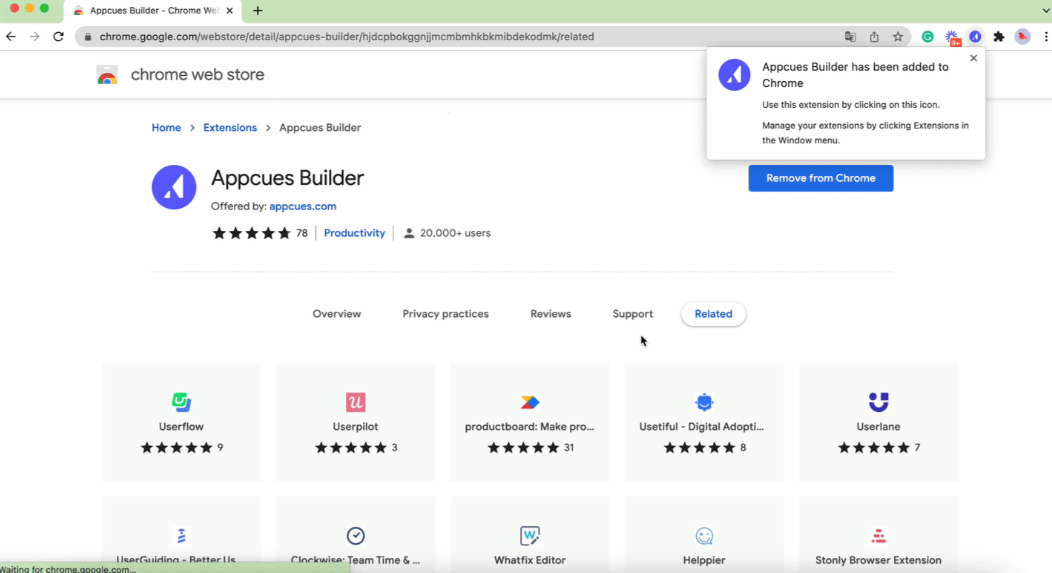
The Appcues Builder is a Chrome Extension that overlays on your live application. Product managers click on elements, attach tooltips or modals, set targeting rules, and publish, all without filing an engineering ticket. The builder supports four core pattern types: modals, slideouts, tooltips, and hotspots, each serving different interaction patterns. Tooltips walk users through sequential steps. Hotspots display simultaneously for self-directed discovery.
Source: Appcues
Appcues has expanded most notably in multi-channel coordination. In February 2025, the platform added native behavioral email and push notifications, creating a Workflows system that orchestrates in-app flows, emails, and push on a single canvas. A trial user who stalls on day three can receive an email triggered by their specific in-app behavior, not a generic drip sequence timed to a calendar.
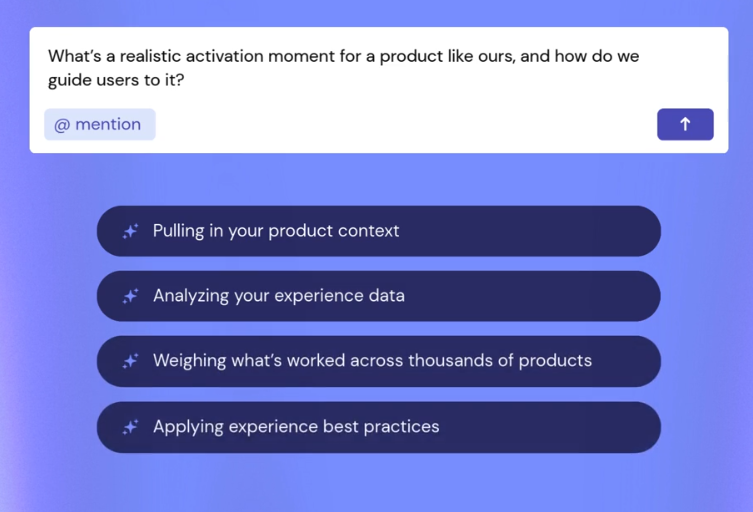
The Appcues AI system, included on every plan, uses five specialized agents for tasks like diagnosing delivery issues, drafting segments from plain language, and analyzing funnel performance. It draws on the account's actual Appcues data, not generic knowledge.
Source: Appcues
WalkMe operates at enterprise scale
WalkMe was founded in 2011 in Tel Aviv and has become the recognized leader in digital adoption platforms. Forrester named WalkMe a Leader in DAPs for Q4 2024, giving it the top score in AI/ML. The IDC MarketScape (2024) recognized it for "continuous innovation in AI-driven capabilities and for its proven expertise in accelerating user adoption across workflows in large scale enterprise deployments."
WalkMe solves a larger-scale problem than Appcues in every dimension.
The platform's technical foundation is DeepUI, an AI layer that understands application UIs contextually rather than relying on brittle element selectors. When Salesforce pushes an update that changes its interface, DeepUI adapts the published guidance automatically.
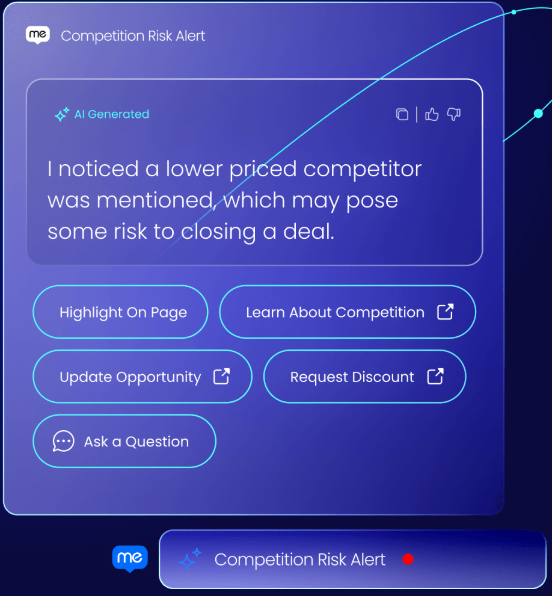
WalkMe's scope extends beyond walkthroughs. Workflow automation handles repetitive tasks by clicking buttons, selecting menus, and advancing screens inside target applications, all at the UI layer with no API integration required. WalkMe AI provides contextual assistance powered by screen-reading, business knowledge, and user memory, delivering next-best-action recommendations and writing assistance inside whatever application an employee is using.
Source: WalkMe
The newest addition, WalkMe Learning Arc, moves into enterprise digital learning with AI-powered course creation and in-app training delivery. As the designated successor to SAP Enable Now (reaching end of maintenance November 2030), Learning Arc has a built-in migration pathway across SAP's enterprise customer base.
The builder experience reflects different audiences
Appcues and WalkMe both offer no-code building tools, but using them reveals who they're designed for.
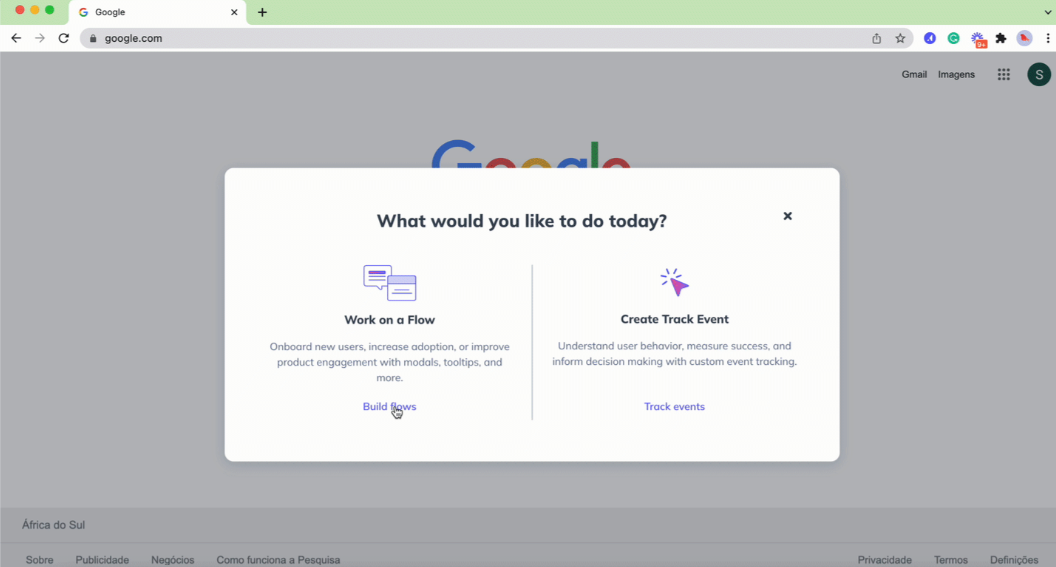
Appcues' Chrome Extension builder is lightweight by design. A product manager opens their app in Chrome, activates the extension, and starts building on the live UI. The builder assumes you're working on your own product, where you know the interface and user journey well. Building a welcome modal, then a tooltip walkthrough, then a behavioral email trigger can happen in a single session.
Source: Appcues
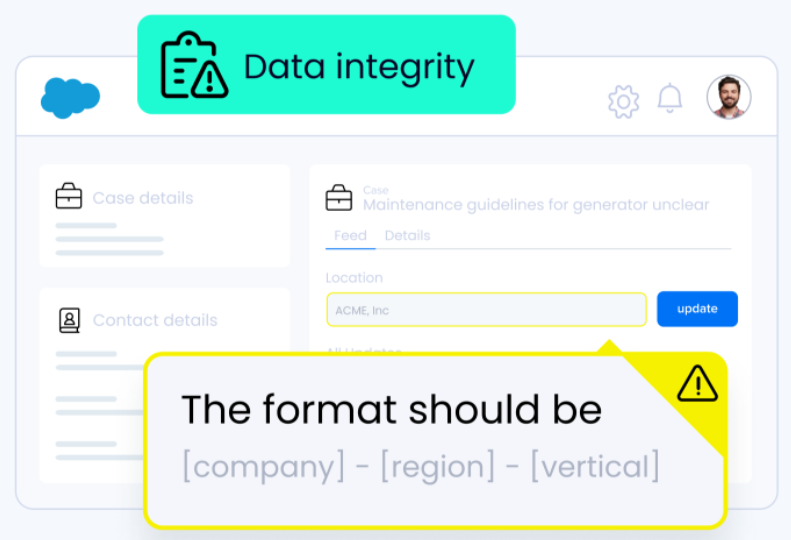
WalkMe's Editor is an Electron desktop application paired with a browser extension. It's built for IT administrators and digital adoption specialists who create guidance across applications they don't control. The Editor supports Smart Walk-Thrus with conditional branching and error-handling at every step, segmentation rules for role-based personalization, and AI-assisted content building with contextual recommendations.
Source: WalkMe
The learning curve difference is real. G2 reviewers consistently praise Appcues for intuitive flow building. WalkMe's G2 reviews flag a steeper learning curve for advanced configurations, with complex selectors and dynamic elements posing challenges. WalkMe recommends a Center of Excellence approach and offers structured certification through WalkMe University, including a 5-week Builder Basics Bootcamp with live instructor sessions.
The gap makes sense. Teaching a product manager to create an onboarding checklist is a different challenge than training an IT admin to build branching guidance across SAP S/4HANA with data validation rules and conditional error recovery.
Analytics tell different stories
What you measure depends on what you're optimizing for.
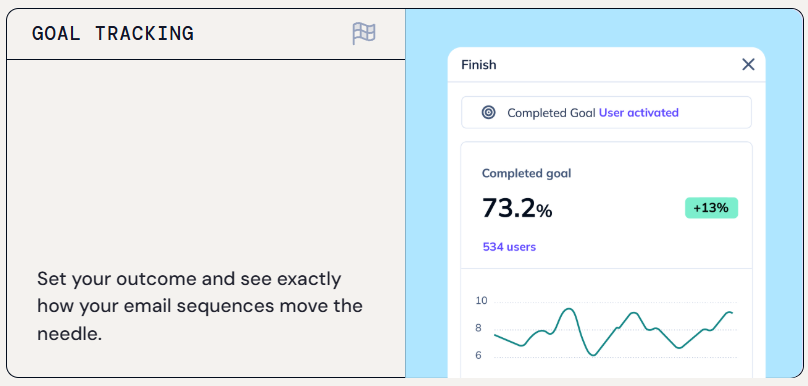
Appcues tracks how customers interact with your product: flow completion rates, feature adoption metrics, NPS responses, trial conversion attribution, and goal tracking tied to downstream outcomes. The upcoming funnel analytics will visualize user movement and drop-off across product steps. The focus is on product-led growth metrics: did the user reach their aha moment, did the feature announcement drive adoption, did the email re-engage the stalled trial.
Source: Appcues
However, G2 reviewers note that cross-product data insights are limited and metrics can feel inconsistent across Appcues features. Analytics depth is an area where Appcues is still building.
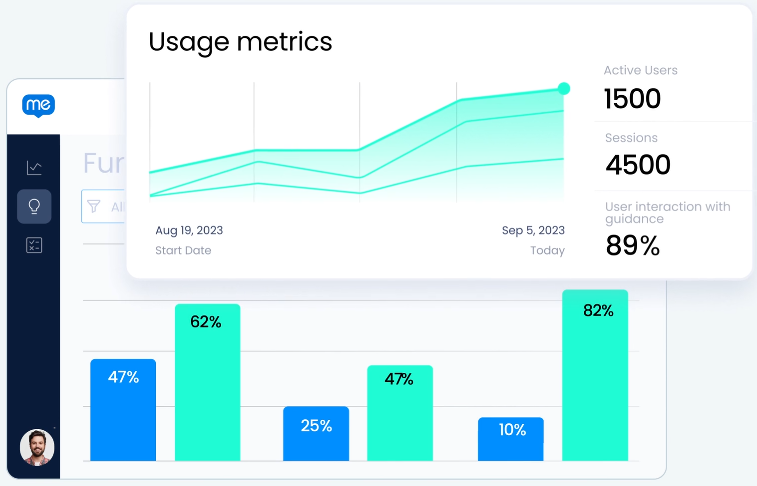
WalkMe's Data pillar operates at a different scale. App Discovery & Analytics automatically discovers every web application employees use (including shadow IT and unsanctioned AI tools) without per-app integrations. WalkMe Insights maps user interactions against defined workflows, identifying where people get stuck. Form Analytics captures field-level data: completion rates, time on each field, errors, and drop-off points. Discovery License Optimization overlays financial data on usage to identify wasted software spend.
Source: WalkMe
This breadth exists because WalkMe's buyer (typically a CIO or IT leader) needs to justify the investment across the entire tech stack. Showing that 40% of Salesforce licenses are underused while 30% of employees are using unsanctioned AI tools is the kind of insight that funds a WalkMe contract.
The upstream problem neither platform solves
Appcues helps you onboard the users who sign up. WalkMe helps employees use the software they're assigned. Neither addresses what happens before anyone shows up.
For SaaS companies, the question before "how do we onboard users" is "how do we find and convert the right users." For enterprises, the question before "how do we train employees on Salesforce" is "how do we fill the pipeline that Salesforce is supposed to manage."
ZoomInfo operates in this upstream space. As an AI GTM platform, it provides the intelligence that revenue teams need to identify, reach, and win buyers.
The foundation is data. ZoomInfo maintains 500M contacts, 100M companies, 135M+ verified phone numbers, and 200M+ verified business email addresses, verified through a pipeline backed by 300+ human researchers with up to 95% accuracy on first-party data. In a Fortune 500 competitive RFP analyzing 25 million contacts across vendors, an independent consultant concluded that "no other competitor came even close."
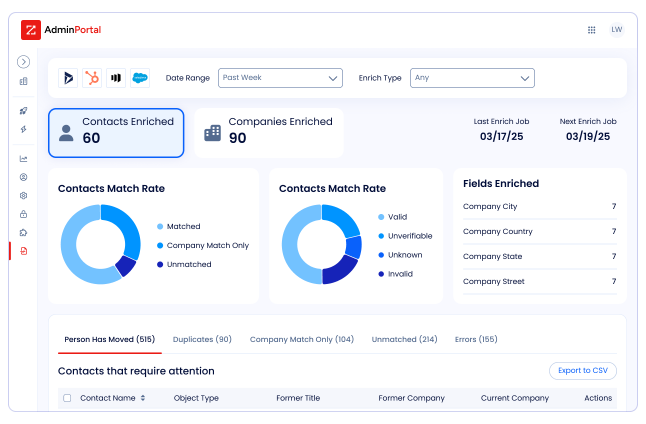
That data feeds the GTM Context Graph, which processes 1.5B+ data points daily by fusing ZoomInfo's B2B data with a customer's CRM records, conversation transcripts, and behavioral signals. The result is an intelligence layer that captures not just what happened in a deal, but why (connecting intent signals, org chart movements, and conversation patterns to actual outcomes).
Revenue teams access this intelligence through three channels. GTM Workspace gives sellers AI-prioritized accounts and AI-drafted outreach. GTM Studio gives marketers and RevOps a canvas for building audiences in natural language and launching multi-channel plays. APIs and MCP deliver the same intelligence into any third-party tool or AI agent.
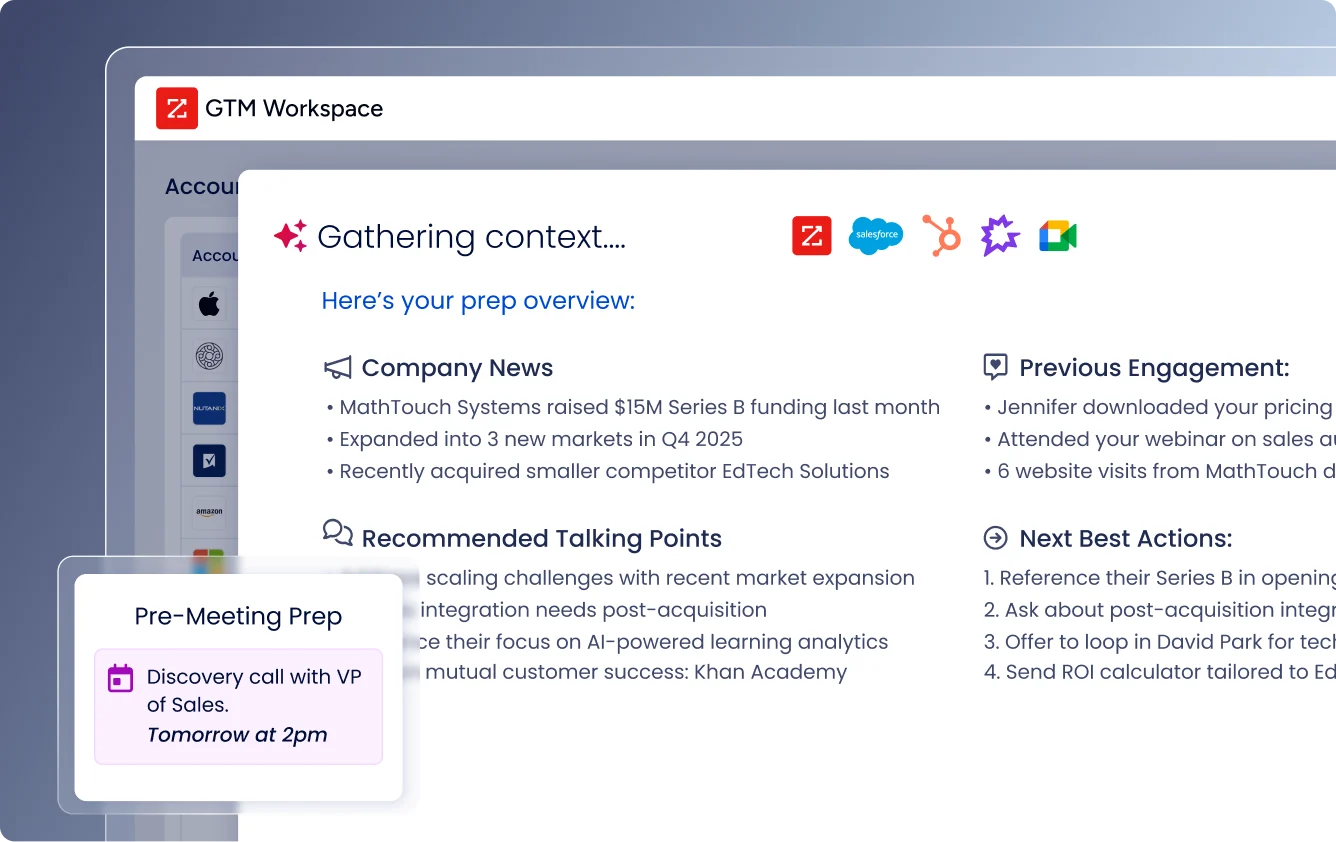
"ZoomInfo's not just a contact data company anymore. They've built a full system of execution. GTM Intelligence works the list, writes the outreach, triggers the play, and helps drive predictable growth." (Ian Brodie, CEO & Co-Founder, Levanta)
Pricing reflects different markets
Pricing transparency is limited across all three platforms, but the structures reveal different commercial thinking.
Appcues uses MAU-based pricing with three tiers: Start (up to 3,000 MAUs, 10 published experiences), Grow (up to 50,000 MAUs, 25 published experiences), and Enterprise (custom MAU volume, 100 published experiences). No dollar amounts are published. All plans include the full feature set, with tiers differentiating on MAU ceiling, published experience limits, email volume (1,000/month on Start, 5,000/month on Grow), reporting history length, and support level. Worth noting: each subscription covers only one product, and exceeding MAU limits triggers automatic overage charges.
WalkMe uses fully custom enterprise pricing with no published rates. Contracts are negotiated as Ordering Documents specifying user counts, target applications, and SLA tiers. Contracts are non-cancelable for the full commitment term, and fees are non-refundable except in cases of WalkMe's material breach. TrustRadius reviewers consistently call WalkMe expensive with opaque cost structures. For SAP customers, a WalkMe Standard tier is included in SAP subscriptions, with WalkMe Premium available for deeper customization.
ZoomInfo uses consumption-based pricing where customers pay based on usage: seats, credit volume, and AI activity. Three product lines (Sales, Marketing, and standalone products like Chorus and Chat) each have their own tier structures. What sets ZoomInfo apart commercially is its entry points: ZoomInfo Lite is a permanent free tier with access to the B2B database, 10 monthly export credits, and WebSights Lite, and a 7-day free trial offers access to core platform features with no credit card required.
Integration ecosystems serve different workflows
Where each platform connects tells you what workflow it belongs to.
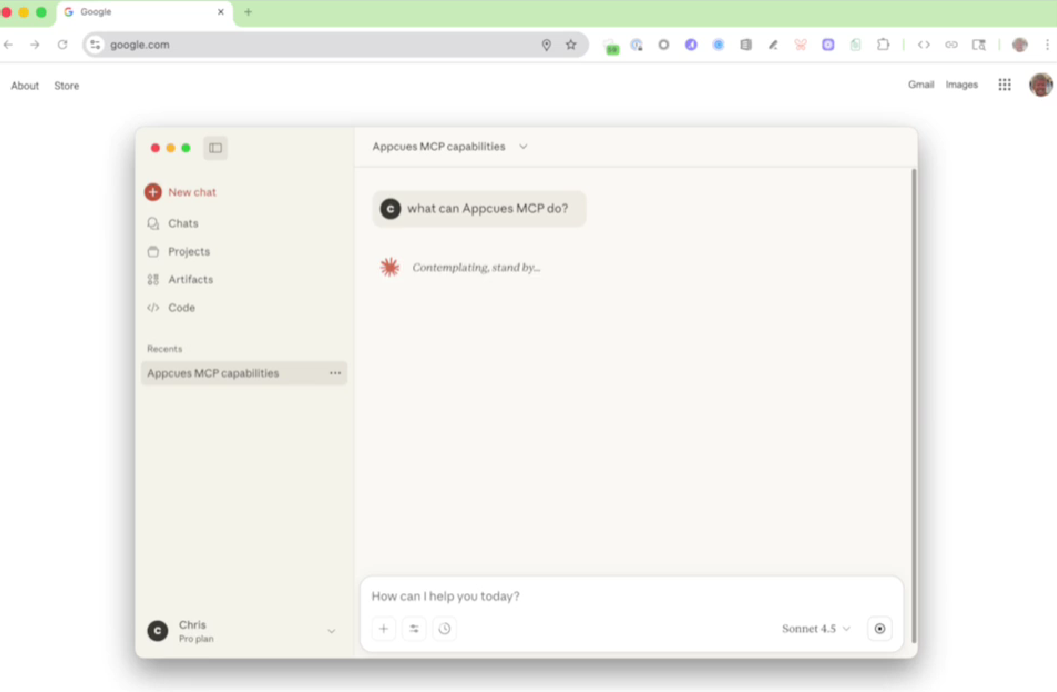
Appcues integrates with the tools product and marketing teams use daily. Two-way native connections with Salesforce, HubSpot, Marketo, Amplitude, Mixpanel, and Segment let user behavior data flow between product analytics, CRM, and engagement platforms. The Appcues MCP server opens data to external AI tools like ChatGPT and Claude. Webhook support and Zapier, Make, and IFTTT connectors extend reach to hundreds of additional tools.
Source: Appcues
WalkMe integrates with enterprise infrastructure. The Action Integration Center provides native connections to Salesforce, Jira, ServiceNow, and Slack, with dozens of pre-built API integrations. WalkMe's real integration story, though, is DeepUI, which sits on top of any web or desktop application without requiring first-party integrations. It works on SAP, Workday, Salesforce, Microsoft Dynamics, ServiceNow, and custom-built tools through a single browser extension deployment.
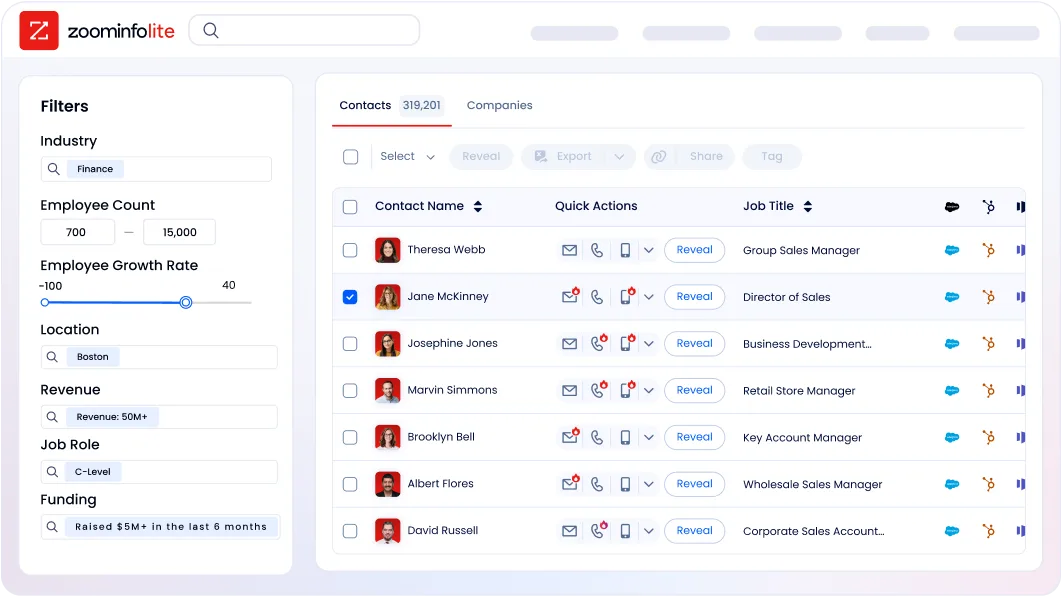
ZoomInfo connects to the revenue tech stack through its App Marketplace with 172+ integration partners. Native integrations cover CRMs (Salesforce, HubSpot, Microsoft Dynamics 365), cloud data platforms (Snowflake, AWS, Google Cloud, Databricks), and sales engagement tools. The Enterprise API and MCP server deliver ZoomInfo intelligence into any custom tool or AI agent, with API Access included in all relevant plans.
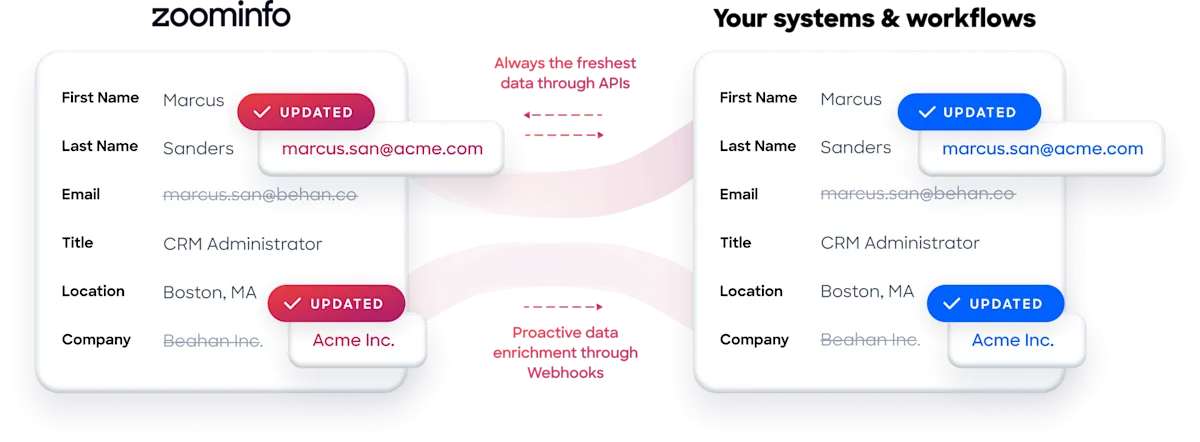
"The plug-and-play aspect of the API means I can integrate it very easily into any process and get information at a moment's notice." (Jerry Wilson, Senior Marketing Intelligence Analyst, BDO Canada)
Security and compliance at different levels
Enterprise security requirements vary depending on whether you're guiding SaaS customers or training Fortune 500 employees.
Appcues holds SOC 2 certification and GDPR compliance, with EU data residency launched in early 2026. The platform does not use customer or end-user data to train AI models. SSO via SAML is available on Enterprise plans and as a paid add-on for Grow. A Trust Center provides full certification details.
WalkMe carries the most extensive security portfolio. Beyond SOC 2 Type II, it holds ISO 27001, ISO 27701, ISO 27017, ISO 27018, ISO 27799, and CSA STAR certification. WalkMe achieved FedRAMP Ready status, making it one of the few DAPs qualified for US federal government deployment. WCAG 2.1 AA compliance covers accessibility requirements. This depth reflects WalkMe's enterprise buyer: CIOs at banks and government agencies require certifications that SaaS product teams typically don't.
ZoomInfo maintains ISO 27001, ISO 27701, SOC 2 Type II, TRUSTe GDPR, and TRUSTe CCPA certifications, all renewed annually. As a registered data broker in California and Vermont, ZoomInfo's compliance infrastructure is built into the data layer itself, essential for a platform handling hundreds of millions of business contact records.
The SAP acquisition changes WalkMe's trajectory
In September 2024, SAP completed its acquisition of WalkMe for roughly $1.5 billion. This is the most consequential development in the DAP market in years, and its implications cut both ways.
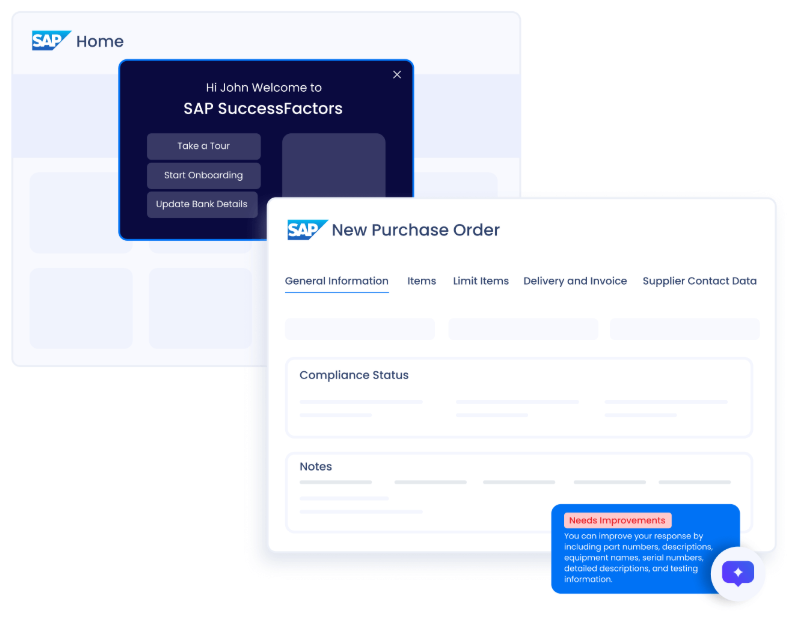
For SAP customers, the acquisition is a clear positive. WalkMe is now embedded natively into SAP applications with a Standard tier included in SAP subscriptions. The integration with SAP's AI copilot Joule promises "context-aware and proactive help across workflows". For organizations running SAP S/4HANA, SAP SuccessFactors, or SAP Concur, getting WalkMe bundled removes a procurement hurdle.
Source: WalkMe
For non-SAP customers, the picture is less clear. WalkMe's public messaging emphasizes continued support for Salesforce, Workday, ServiceNow, and Microsoft Dynamics. But strategic direction, roadmap priority, and engineering investment will tilt toward SAP. Organizations evaluating WalkMe for a primarily non-SAP stack should factor this trajectory into long-term planning.
Appcues vs. WalkMe vs. ZoomInfo: Which should you choose?
These three platforms occupy different positions in the technology stack. The right choice depends on which problem is most pressing for your business right now.
Choose Appcues if:
You're a SaaS company trying to improve customer onboarding, feature adoption, or trial conversion
Your product team needs to move fast without engineering dependencies
You want in-app messaging, behavioral email, and push notifications coordinated in one platform
You're looking for a tool your product managers can learn and use in days, not months
Your MAU count fits within the platform's pricing tiers
Choose WalkMe if:
You're an enterprise deploying complex software (SAP, Salesforce, Workday) to thousands of employees
You need guidance that works across your entire tech stack, not just one application
Software license optimization and usage analytics matter to your IT leadership
You have the budget and internal resources for an enterprise DAP implementation
You're an SAP customer who can benefit from the bundled WalkMe Standard tier
Choose ZoomInfo if:
Your most pressing challenge is finding the right buyers and filling pipeline before you worry about adoption
You need verified B2B contact data, intent signals, and account intelligence to fuel your GTM motions
Your sales team needs AI-powered prioritization and outreach, not just a contact database
Your marketing team wants to build and activate audiences in natural language without engineering support
You want a platform that works everywhere: through native UIs, APIs, or MCP-connected AI agents
See how ZoomInfo's GTM intelligence can power your revenue engine with a free trial.
Appcues makes your product stickier for customers. WalkMe makes enterprise software usable for employees. ZoomInfo ensures you have the right buyers in your pipeline in the first place. The most effective teams recognize these as different stages of the same revenue cycle, and invest in each accordingly.
Appcues vs. WalkMe vs. ZoomInfo FAQ
What is the core difference between Appcues, WalkMe, and ZoomInfo?
Appcues is a customer engagement platform for SaaS companies, helping product teams onboard users, drive feature adoption, and convert trials through in-app flows, behavioral email, and push notifications. WalkMe is an enterprise digital adoption platform that guides employees through complex internal software like SAP and Salesforce. ZoomInfo is an AI GTM platform that provides B2B intelligence, helping revenue teams find, reach, and win buyers through verified contact data, intent signals, and AI-powered outreach.
Which platform is easier to implement?
Appcues has the lowest implementation barrier. Its Chrome Extension builder lets product managers create and publish experiences without developer involvement beyond a one-time SDK installation. WalkMe requires more investment, with an Electron desktop editor, structured certification programs, and WalkMe's own recommendation of a Center of Excellence approach. ZoomInfo's GTM Workspace deploys in weeks, and the permanent free tier (ZoomInfo Lite) lets teams start with no commitment.
Can Appcues and WalkMe be used together?
Yes, because they solve different problems. A SaaS company might use Appcues for customer-facing onboarding inside its own product while using WalkMe to train internal employees on Salesforce or SAP. In practice, most mid-market SaaS companies find Appcues sufficient, while large enterprises typically deploy WalkMe across their internal tech stack and may not need Appcues at all.
Which platform has stronger AI capabilities?
Each platform applies AI to its domain. Appcues AI includes five specialized agents for segmentation planning, delivery troubleshooting, and funnel analysis, all included on every plan. WalkMe AI uses DeepUI to provide screen-aware, contextual assistance across any application, with front-end automation that can complete workflows on its own. ZoomInfo's GTM Context Graph processes 1.5B+ data points daily, fusing third-party B2B data with first-party CRM and conversation intelligence to reveal why deals move or stall.
How does pricing compare across the three platforms?
None of the three publish specific dollar amounts. Appcues prices on monthly active users with three tiers (Start, Grow, Enterprise). WalkMe uses fully custom enterprise contracts that are non-cancelable for the commitment term. ZoomInfo uses consumption-based pricing with seats, credits, and AI activity. ZoomInfo is the only one offering free entry points: ZoomInfo Lite (permanent free tier) and a 7-day free trial.
Which platform is best for a SaaS company focused on product-led growth?
Appcues is the strongest fit. It was built for SaaS product teams who need to onboard users, drive feature adoption, and convert trials without engineering dependencies. Published customer results include a 55% increase in user activation (Paddle) and 112% increase in feature adoption (Vidyard). ZoomInfo complements this by filling the top of the funnel with qualified buyers who then enter the product experience Appcues manages.
Which platform is best for a large enterprise rolling out new software?
WalkMe is built for this scenario. Its DeepUI technology works across any web or desktop application without code changes, its guidance adapts automatically when applications update, and its analytics provide visibility into usage across the tech stack. The SAP acquisition strengthens WalkMe's position for organizations in the SAP ecosystem, with a Standard tier included in SAP subscriptions.
Does ZoomInfo compete with Appcues or WalkMe?
Not directly. ZoomInfo operates upstream in the revenue cycle, helping teams identify and engage buyers before they become users or employees who need adoption guidance. A SaaS company might use ZoomInfo to find and convert prospects, Appcues to onboard them inside the product, and its CRM to manage the relationship. An enterprise might use ZoomInfo for pipeline generation, Salesforce for deal management, and WalkMe to ensure employees use Salesforce effectively.
Related Appcues and WalkMe comparisons:
