

Choosing between Appcues and Whatfix comes down to a question most comparison articles skip: who are you trying to guide?
Are you onboarding external customers inside your own SaaS product, or training internal employees on enterprise software like Salesforce or SAP?
Do you need multi-channel engagement (in-app, email, push), or multi-environment coverage (web, desktop, VDI, mobile)?
Is your priority speed of deployment and self-service, or governance and change management?
Are you guiding thousands of SaaS trial users toward activation, or tens of thousands of employees through an ERP migration?
Does adoption start when a user logs into your product, or when you identify the right buyer in the first place?
In short, here's what we recommend:
Appcues fits SaaS product teams who need to guide their own customers through onboarding, feature adoption, and trial conversion without waiting on engineering. Its no-code builder lets product managers and marketers create in-app flows, behavioral emails, and push notifications from a single Workflows canvas. But Appcues covers only web and mobile SaaS applications (not desktop or VDI), and users frequently request deeper cross-product analytics.
Whatfix serves large enterprises that need adoption of complex internal software across thousands of employees. Its Digital Adoption Platform overlays guidance on any application, including web, desktop, mobile, and VDI/Citrix environments, and its Mirror product creates application simulations for hands-on training. The trade-off is complexity: setup takes real effort, pricing is opaque, and the platform targets enterprise scale, not quick SaaS deployments.
Both platforms solve the adoption problem after users arrive. But for SaaS companies, adoption depends on something that happens before anyone opens your product: reaching the right buyers. That's a different problem.
ZoomInfo is a go-to-market platform that helps sales, marketing, and RevOps teams identify, engage, and win the right customers. Built on B2B data covering 500M contacts, 100M companies, 135M+ verified phone numbers, and 200M+ verified business email addresses, ZoomInfo's GTM Context Graph combines this data with your CRM records, conversation transcripts, and behavioral signals to show not just who your buyers are, but why deals move or stall. For SaaS companies investing in adoption tooling, ZoomInfo helps ensure the users entering your product are the ones most likely to succeed, so onboarding efforts aren't wasted on poorly qualified accounts.
If finding the right buyers sounds like the missing piece of your adoption strategy, see how ZoomInfo works.
Appcues vs. Whatfix vs. ZoomInfo at a glance
Appcues | Whatfix | ZoomInfo | |
|---|---|---|---|
Primary function | Customer engagement for SaaS products | Employee adoption for enterprise software | B2B go-to-market intelligence |
Target user | Product managers, marketers, CS teams | L&D, HR, IT, digital transformation teams | Sales, marketing, RevOps teams |
Who you're guiding | Your customers (external users) | Your employees (internal users) | Your prospects (before they become users) |
Channels | In-app, email, push notifications | In-app guidance, simulations, analytics | Data, intent signals, outreach, advertising |
Environment coverage | Web and mobile apps | Web, desktop, mobile, VDI/Citrix | Any tool via API, MCP, or native products |
AI capabilities | Multi-agent system (5 specialized agents) | ScreenSense engine + 3 AI Agents | GTM Context Graph + AI-powered agents |
Setup complexity | Light (Chrome extension, ~1hr mobile SDK) | Significant (enterprise deployment) | Configurable by use case |
Pricing model | MAU-based, quote-only | Flat fee + per-user license, quote-only | Consumption-based, quote-only |
Customer base | 4,000+ SaaS companies | 700+ enterprises (80+ Fortune 500) | Trusted by over half the Fortune 500 |
They solve different problems for different audiences
This distinction should drive your decision.
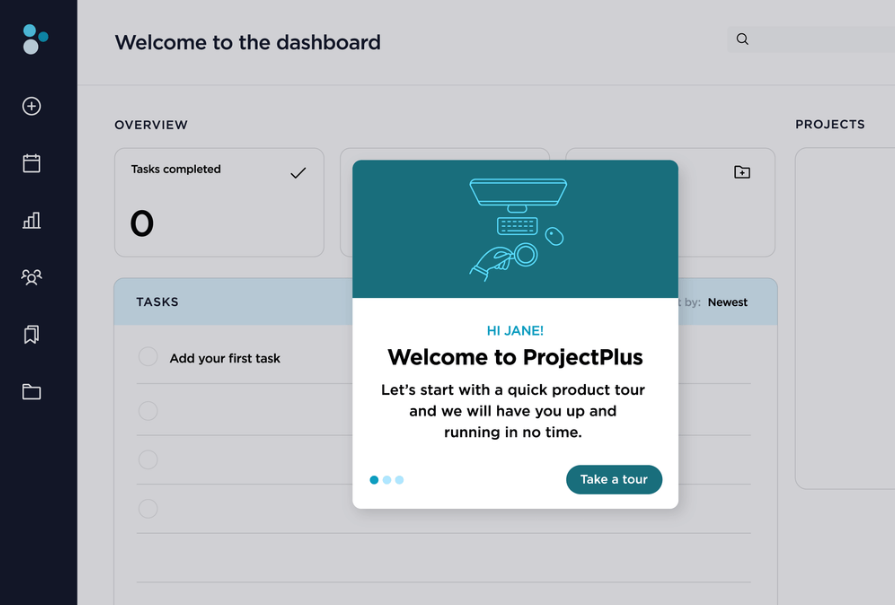
Appcues is built for SaaS product teams who own the experience their customers see. If you sell software and want to guide users through onboarding, drive feature adoption, convert free trials, or collect in-app feedback, Appcues gives your product and marketing teams those tools without engineering tickets. The people you're guiding are your customers.
Source: Appcues
Whatfix is built for enterprise IT and L&D teams who need employees to actually use the software the company already bought. If your organization just rolled out Salesforce, SAP S/4HANA, or Workday and employees are struggling, Whatfix overlays guidance on those applications. The people you're guiding are your colleagues, internal users navigating someone else's software.
Source: Whatfix
The overlap is narrow. Appcues has no desktop or VDI support, no application simulation, and no change management governance tools. Whatfix has no behavioral email, no push notifications, and no multi-channel engagement orchestration. They were designed for different buyers solving different problems.
If you're a SaaS company guiding your own customers, Appcues fits. If you're an enterprise training employees on internal tools, Whatfix is built for that job. The rest of this article explains the nuances within each use case.
Appcues excels at multi-channel customer engagement
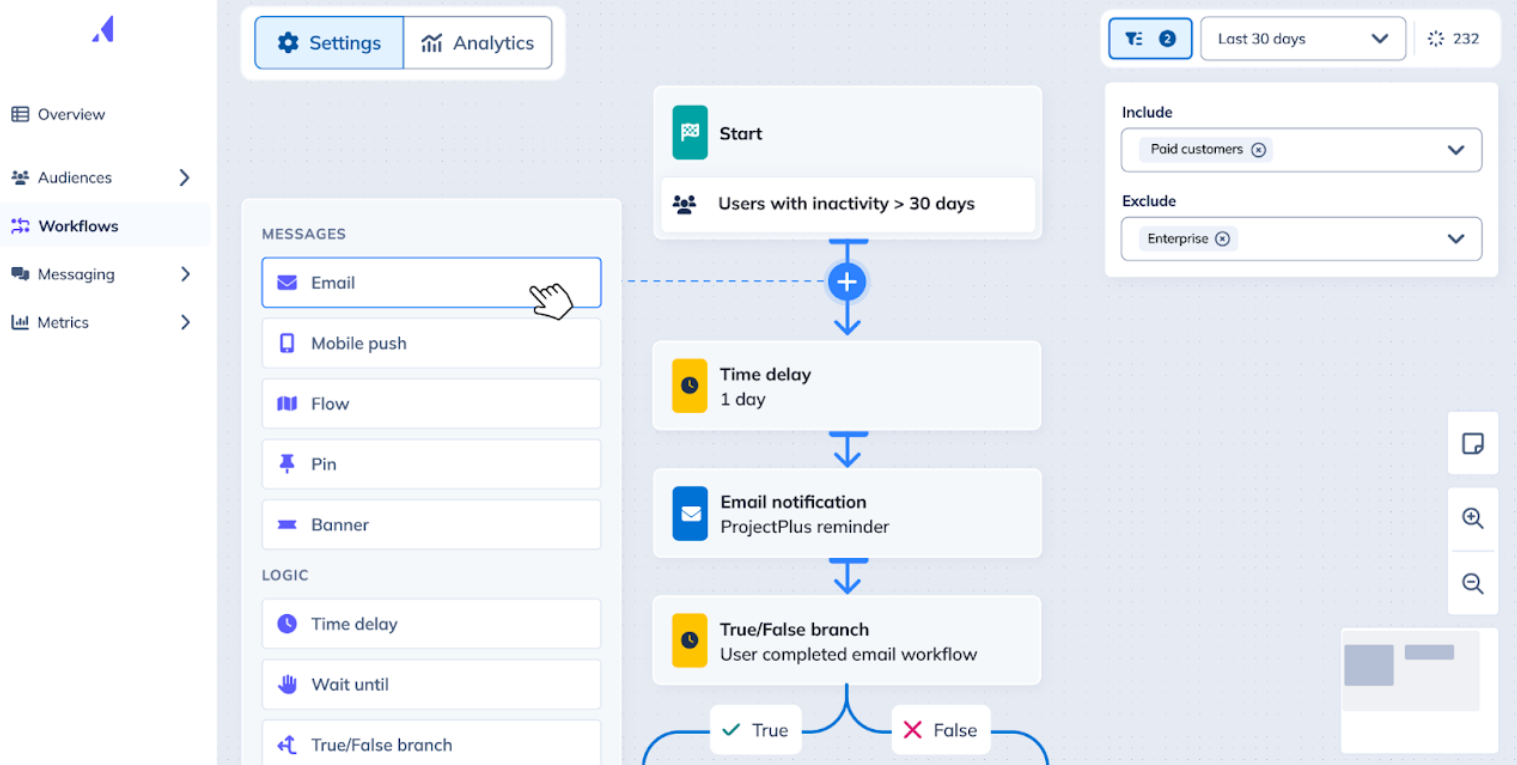
Appcues expanded beyond in-app guidance in February 2025, adding native email and push notifications to become what it now calls a customer engagement platform. Product teams can now orchestrate journeys that follow users across channels from a single Workflows canvas.
Source: Appcues
A practical example: a trial user completes their first project inside your app. Appcues triggers a tooltip highlighting an advanced feature. If the user doesn't engage within 48 hours, a behavioral email follows up. If they still don't return, a push notification brings them back. All three touchpoints live in one workflow, triggered by the same behavioral data, with no separate email tool or push service required.
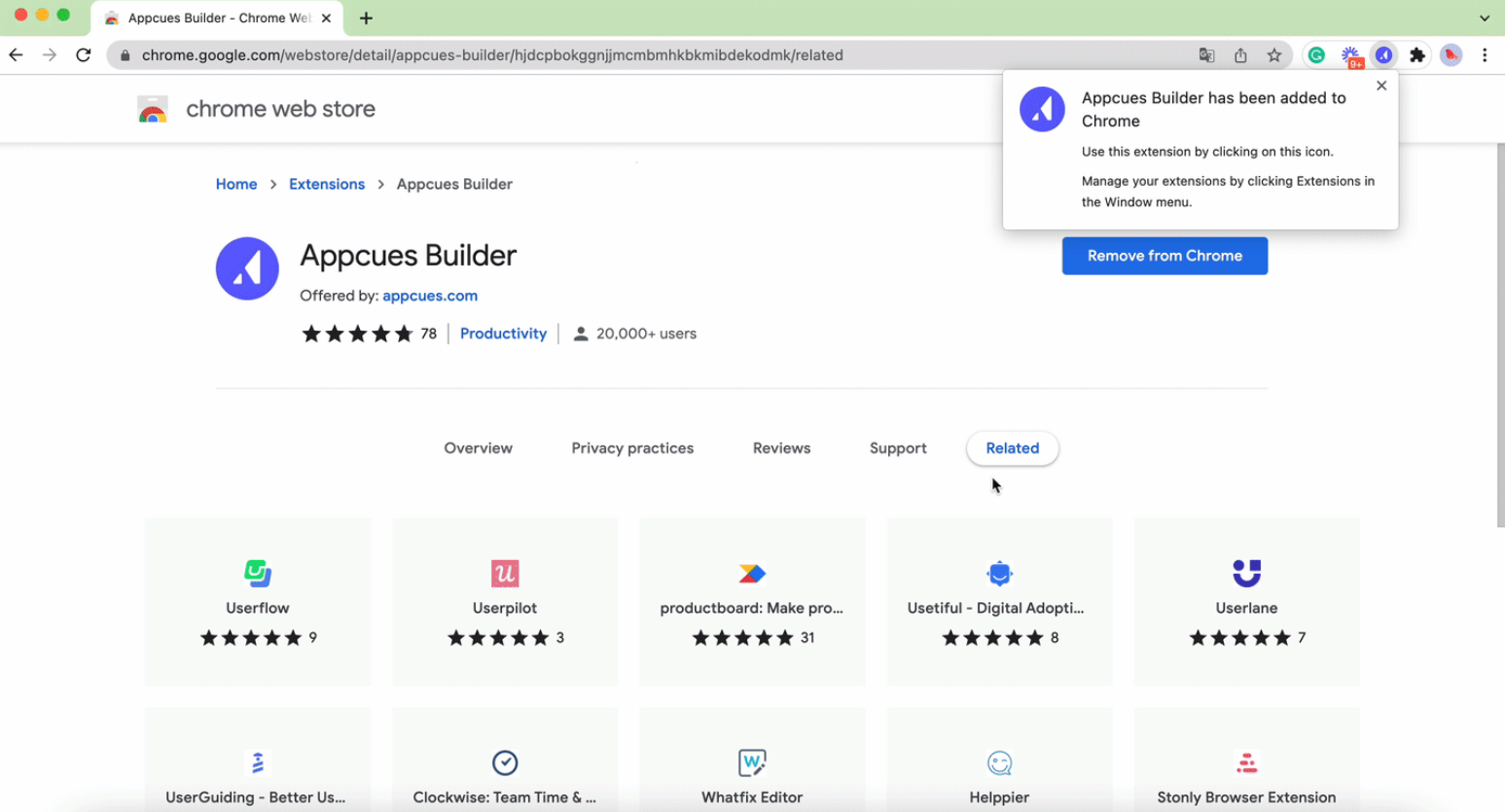
The Appcues Builder runs as a Chrome Extension overlaid on your live product, so teams build experiences in the real UI. Four pattern types (modals, slideouts, tooltips, and hotspots) combine with checklists, banners, surveys, pins, and a launchpad resource center. Mobile support covers iOS, Android, React Native, Flutter, and Ionic.
Source: Appcues
Where Appcues falls short: G2 reviewers note that analytics lack cross-product depth, the builder needs frequent page refreshes due to bugs, and advanced customization still requires developer involvement despite the no-code pitch. Support skews to US time zones, which creates delays for European customers.
Whatfix handles enterprise environments no other DAP can reach
Whatfix's main advantage is environmental breadth. Most adoption tools work on web applications. Whatfix covers web, Windows and Mac desktop applications, mobile, and VDI/Citrix environments under one platform. For an enterprise running SAP on desktop alongside Salesforce on web and a custom mobile app, that breadth matters.
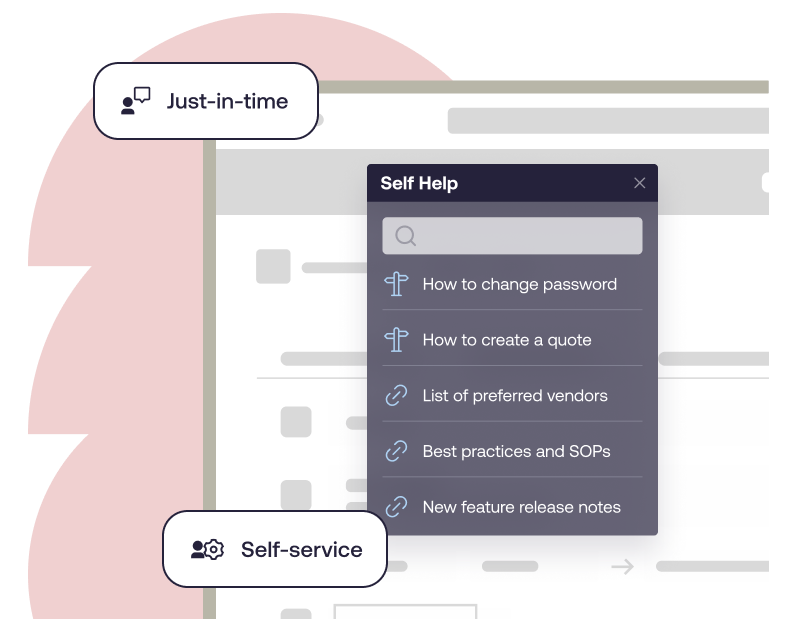
The guidance capabilities run deep. Flows walk users step-by-step through tasks inside the live application. Smart Tips provide contextual tooltips on specific UI elements. The Self Help widget adds a searchable support layer inside any application, with AI-powered search. Beacons highlight features without interrupting workflow. Task lists track sequential completion.
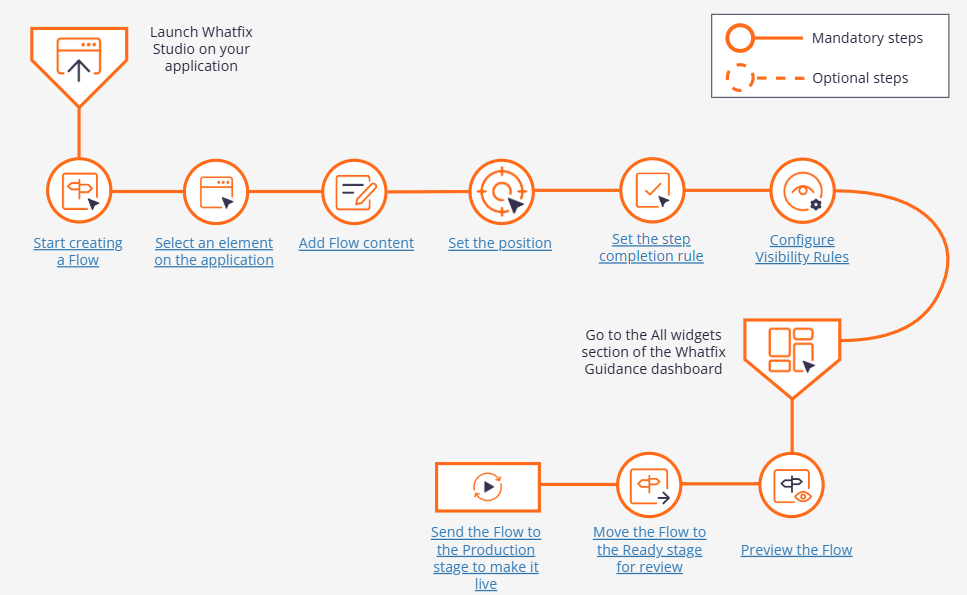
Source: Whatfix
Where Whatfix separates from Appcues is in enterprise-specific capabilities. Content Lifecycle Management includes multi-level approval workflows, staging environments, and one-click rollback. Adoption Everywhere exports a single authoring session into videos, slide decks, PDFs, and how-to articles at once, feeding both in-app guidance and LMS content from one source. Auto-translation (on Premium plans) supports global deployments without manual rework.
The trade-offs are real. G2 reviewers and SoftwareReviews both flag a steep learning curve during initial setup. UI changes in the target application can break existing flows, a recurring concern even with Whatfix's Auto Testing+ feature. And Product Analytics is a separate paid add-on, not included in the core DAP subscription.
Adoption starts before users ever open your product
Appcues and Whatfix both address what happens after users arrive. But for SaaS companies, adoption outcomes depend on decisions made long before the first login. Which accounts did sales target? Were the buyers a good fit? Did the prospect understand the product's value before purchasing? If you're onboarding users who were never right for your product, no in-app guidance will prevent churn.
ZoomInfo operates upstream. Its GTM Context Graph processes 1.5B+ data points daily, combining third-party B2B intelligence with a customer's own CRM data, conversation transcripts, and behavioral signals. The result: an intelligence layer that shows which accounts match your ideal customer profile, which prospects are researching solutions like yours, and which buying committees are engaged.
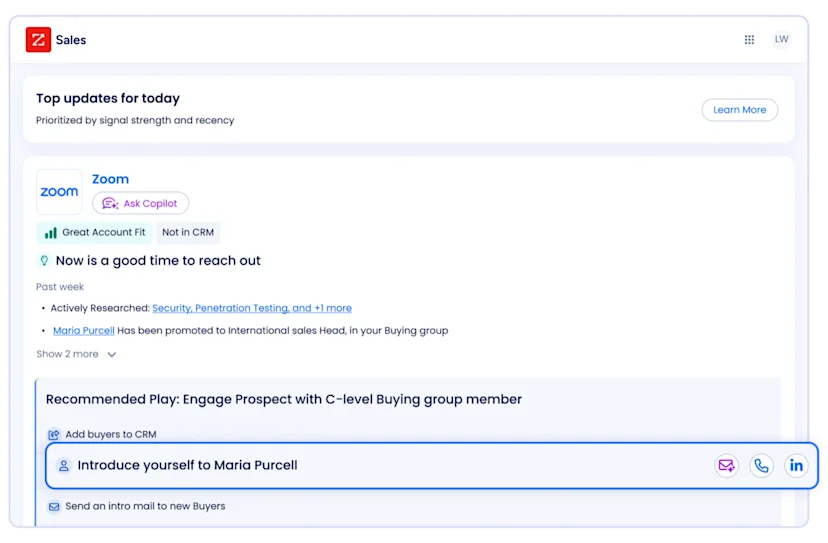
For SaaS companies, this intelligence directly affects adoption. When sales targets accounts that match proven win patterns, the customers who arrive are more likely to succeed with the product. When marketing builds audiences using intent signals from 210 million IP-to-organization pairings, trial users sign up with genuine need, not curiosity. When RevOps enriches CRM data with 300+ company attributes, the product team can personalize onboarding by industry, company size, and tech stack before the user ever sees a tooltip.
Teams access ZoomInfo through three products: GTM Workspace for sellers, GTM Studio for marketers and RevOps, and APIs and MCP for any custom tool or AI agent. The same intelligence that helps your sales team find the right accounts can feed directly into the product data that powers your Appcues or Whatfix deployment.
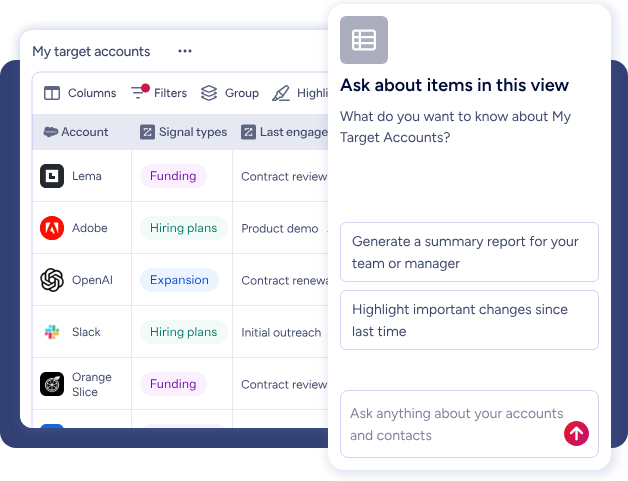
"That combination of our internal CRM data, external signals, and AI that's given all that context has helped us craft very specific account- and persona-based messages. And people have responded to them right away." Seismic attributed 39% of active pipeline to opportunities identified or influenced by ZoomInfo signals and saw 54% productivity gains. (Seismic)
AI capabilities take different approaches
Both platforms invested in AI, but their designs reflect their different audiences.
Appcues built a multi-agent AI system with five specialized agents: an Advisor for best-practice guidance, a Delivery Specialist that diagnoses why experiences aren't showing, a Segmentation Planner that turns plain-language audience descriptions into targeting logic, an Experience Builder that generates flows from prompts, and a Growth Analyst that answers performance questions with charts and data. Every plan includes the system at no extra cost, and Appcues does not use customer data to train its models.
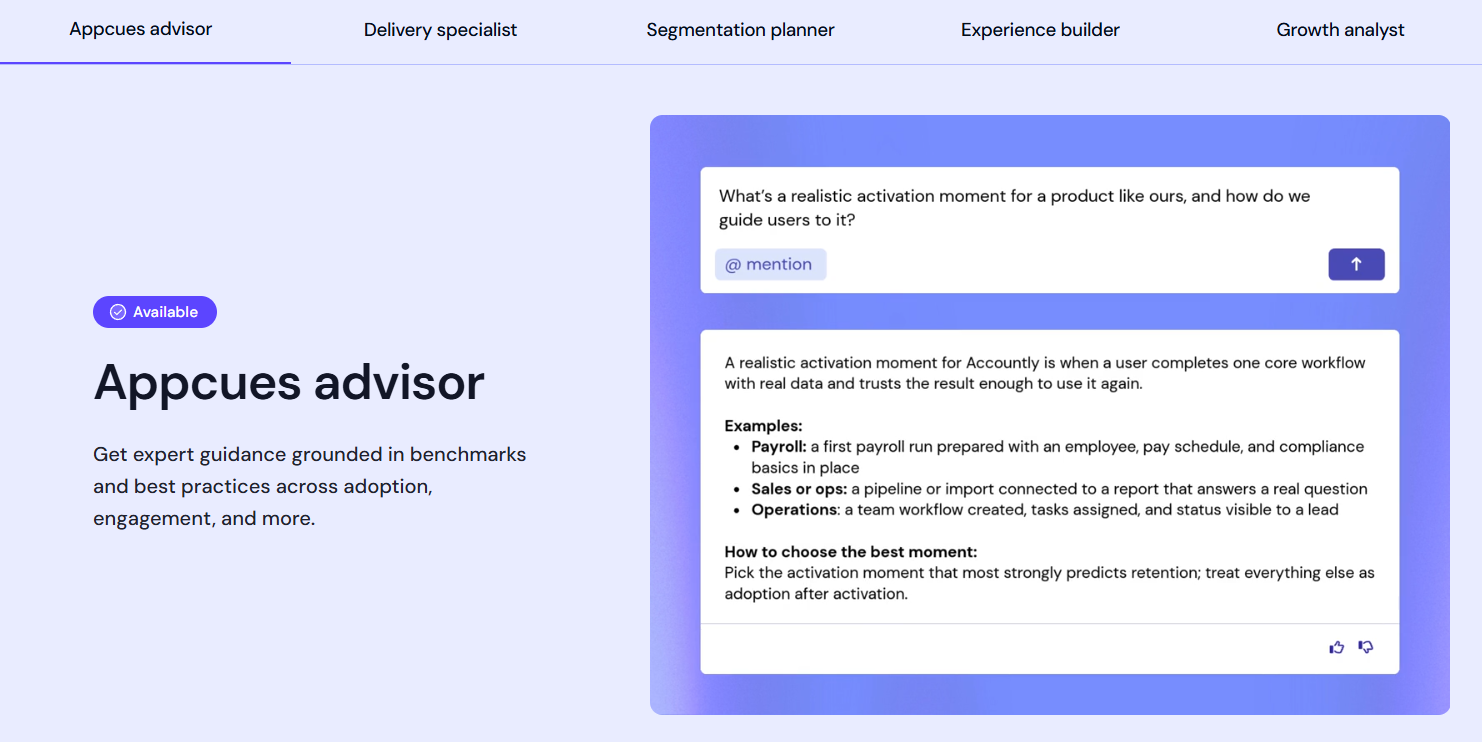
Source: Appcues
What this means for SaaS teams: a product manager can ask Captain AI "which onboarding flows have the highest drop-off?" and get a visual answer from their account's actual data, then ask it to draft a new flow targeting the drop-off point. No analytics expertise required.
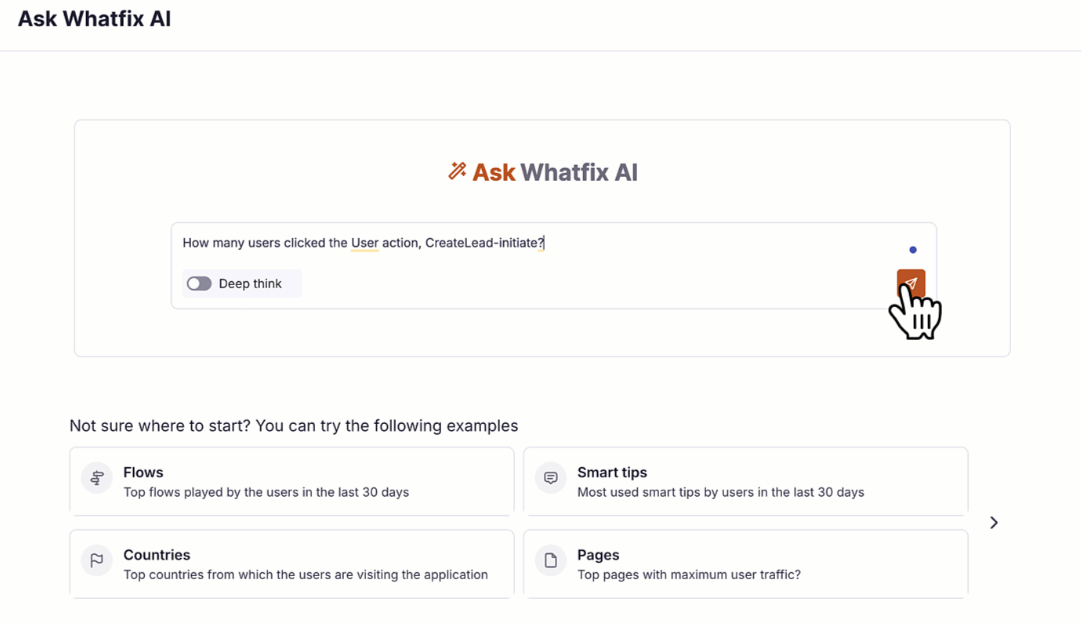
Whatfix built ScreenSense, a patented context engine trained to read enterprise application GUIs. It detects what screen a user is on, interprets whether they're stuck or exploring, and triggers appropriate guidance automatically. On top of ScreenSense sit three AI Agents: an Authoring Agent that generates guidance content from natural-language prompts, a Guidance Agent that surfaces contextual answers within the user's workflow, and an Insights Agent that turns behavioral data into recommendations.
Source: Whatfix
What this means for enterprise teams: when SAP updates its interface, ScreenSense adapts existing flows to the new UI instead of requiring manual rebuilds. The Authoring Agent lets L&D teams create a complete guided flow by clicking through the application once, then review and edit the result.
The key difference: Appcues AI is a conversational assistant that helps SaaS teams build, target, and analyze faster. Whatfix AI is a perception engine that reads enterprise application context and adapts guidance on its own.
Mirror gives Whatfix a training capability Appcues doesn't have
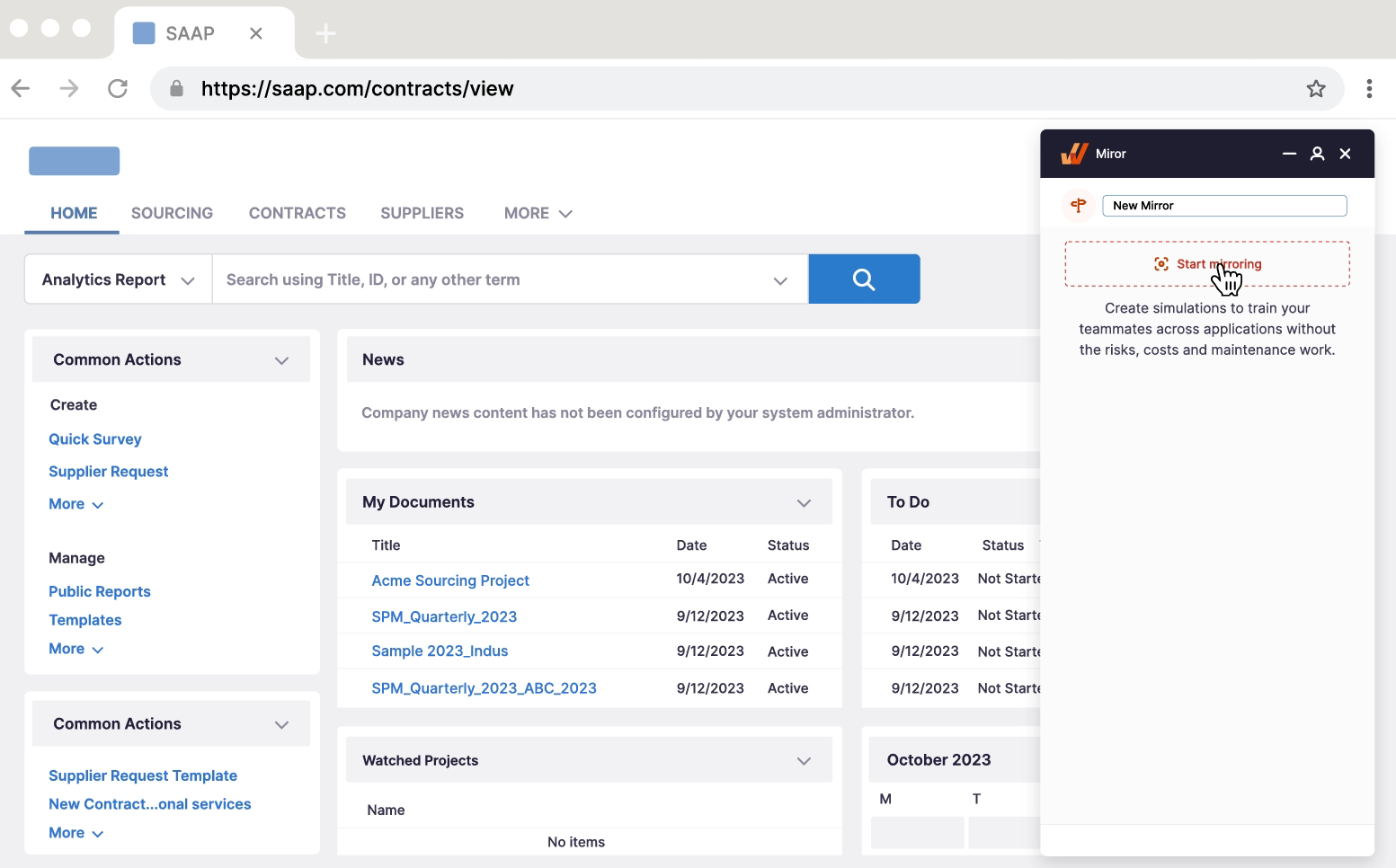
Whatfix Mirror creates interactive replicas of web applications for risk-free training. Appcues has no equivalent.
The problem is straightforward: enterprises historically needed separate test environments with provisioned accounts, extra licenses, and dedicated infrastructure just to let employees practice. Mirror eliminates that overhead by capturing screens from the live application and connecting them into an interactive simulation that employees access via a shared link or LMS integration.
Source: Whatfix
Mirror also includes AI-powered roleplay, where workflow simulations combine with conversational AI so employees can rehearse real-world interactions (sales calls, customer support scenarios, HR interviews). Assessments measure proficiency by tracking accuracy and completion time within the simulation itself, not through disconnected quizzes.
For enterprises managing ERP migrations, CRM rollouts, or compliance training at scale, Mirror provides a pre-go-live training environment that doesn't exist in Appcues. It's a separate product with its own pricing, which adds cost, but the alternative is maintaining expensive sandbox environments.
Pricing structures reflect different markets
Neither platform publishes prices, but their models reveal who they're built for.
Appcues uses MAU-based pricing with no per-seat charges. Three tiers (Start, Grow, Enterprise) scale by monthly active users, number of published experiences, email volume, and reporting history depth. Start supports up to 3,000 MAUs with 10 published experiences. Grow supports up to 50,000 MAUs with 25 published experiences. Enterprise offers custom MAU volume with 100 published experiences. Every plan includes the full feature set: all experience types, integrations, and AI. Behavioral email comes with volume allowances (1,000 emails on Start, 5,000 on Grow).
A notable limitation: a single subscription covers only one product. Organizations running multiple SaaS products need separate subscriptions for each. MAU overages are automatically charged to the credit card on file at undisclosed rates.
Whatfix uses a hybrid flat-fee plus per-user license model. License fees are based on employee count for internal apps or MAUs for customer-facing apps. Three tiers (Standard, Premium, Enterprise) exist for each product (DAP, Product Analytics, Mirror), and each platform variant (Web & Desktop, Mobile, OS) carries its own pricing. The Standard plan limits integrations to two and content aggregation to 2,000 articles. Premium adds auto-translation, unlimited integrations, and a named CSM. Enterprise adds multi-app support, VDI, and offline mode.
The complexity compounds. Product Analytics is a separate product with its own tiers (Standard is free with DAP; Premium and Enterprise cost extra). Mirror is another separate product. Mobile DAP is separate. For an enterprise needing DAP across web and desktop, Product Analytics Premium, Mirror, and mobile support, the total involves multiple line items, none publicly priced.
Integration approaches match their ecosystems
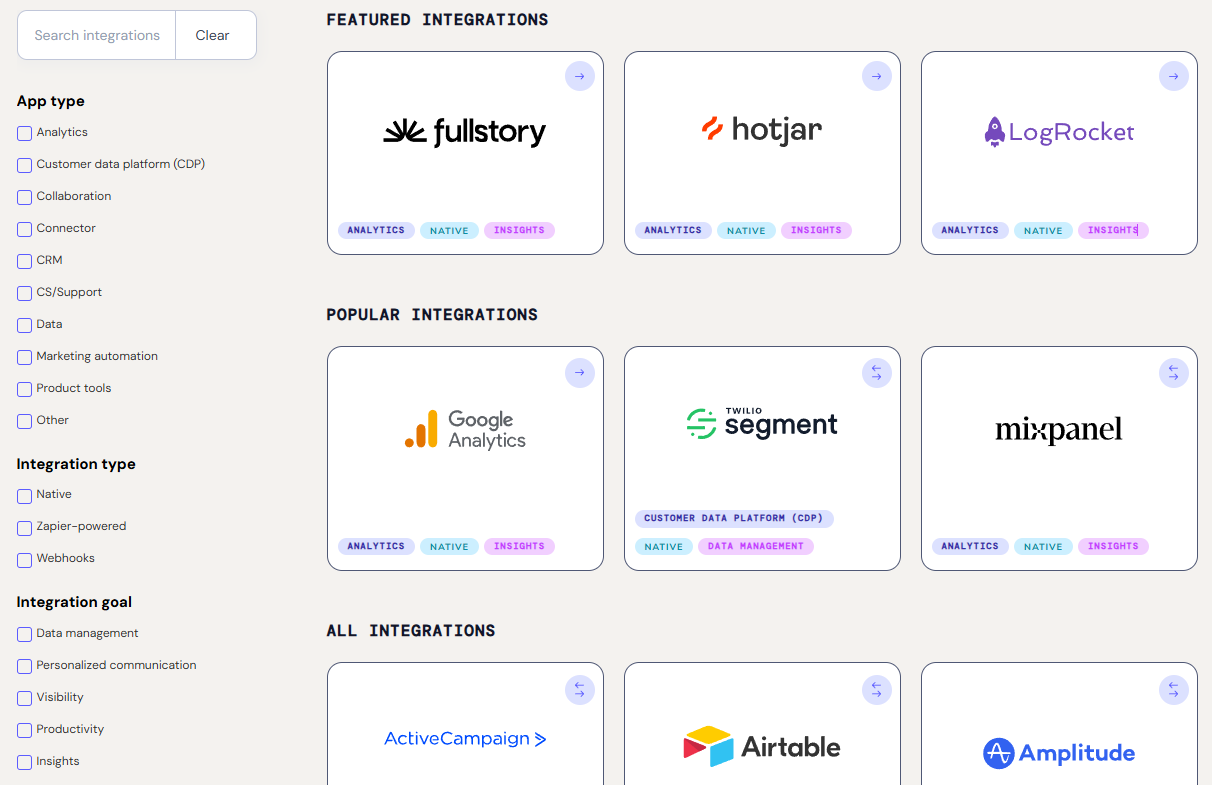
Appcues maintains an Integration Hub with native connections to analytics tools (Amplitude, Mixpanel, Heap, FullStory), CDPs (Segment, Fivetran, Census, Hightouch), CRMs (Salesforce, HubSpot), marketing automation (Marketo, Customer.io, Klaviyo), and support platforms (Intercom, Zendesk). Two-way integrations with Segment, Salesforce, HubSpot, and Marketo enable bidirectional data flow. Zapier, Make, and IFTTT extend reach. An MCP Server connects Appcues data to AI tools like Claude and ChatGPT.
The philosophy: connect to the tools product and marketing teams already use for analytics, engagement, and CRM.
Source: Appcues
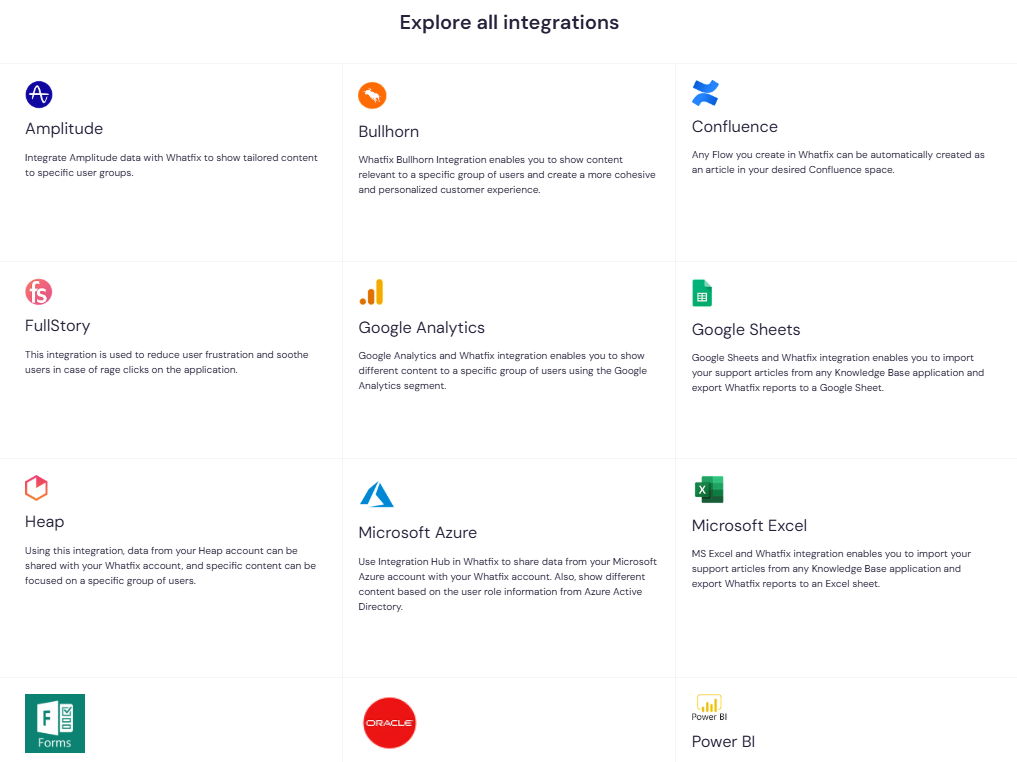
Whatfix integrates with enterprise applications (Salesforce, SAP SuccessFactors, Oracle, Workday, ServiceNow), analytics and BI tools (Amplitude, Google Analytics, Heap, Power BI), and survey platforms (SurveyMonkey, Microsoft Forms). SCORM 1.2 and xAPI 1.0 compliance enables export to any conformant LMS (SAP Litmos, Docebo, LearnUpon). A REST API with OpenAPI spec supports custom integrations.
The philosophy: connect to the internal software employees use, and feed content to the LMS the L&D team already manages.
Source: Whatfix
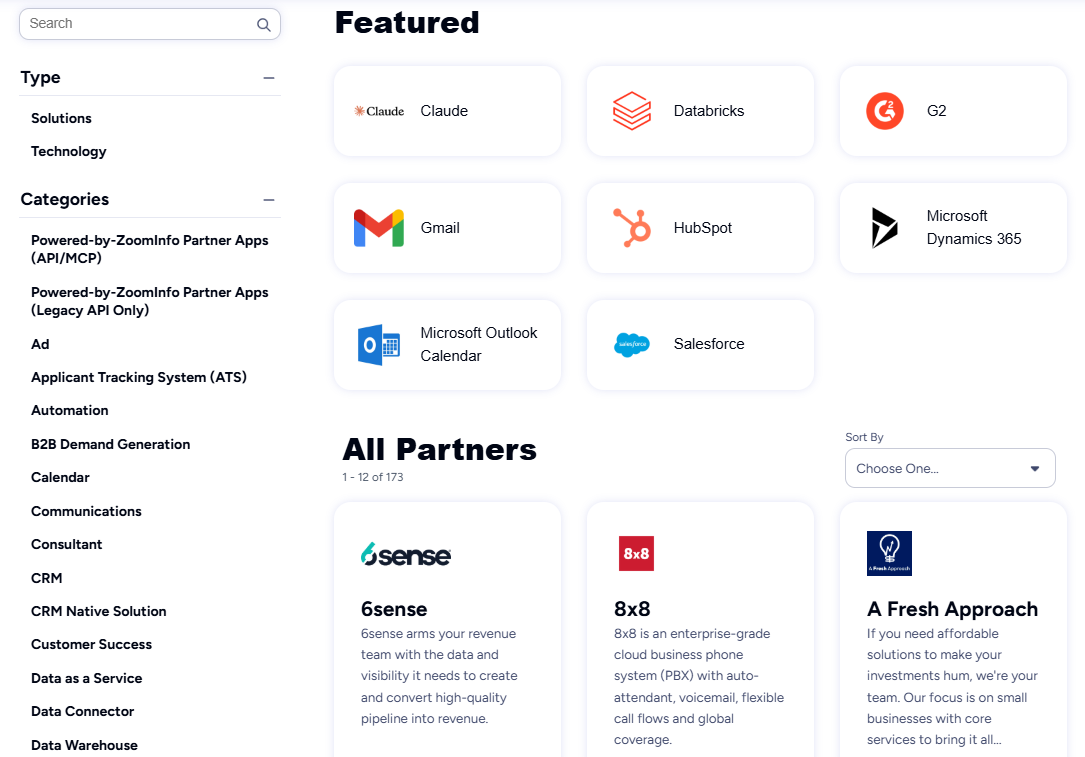
ZoomInfo offers its App Marketplace with 172+ partners across CRM, marketing automation, sales engagement, data warehouse, and AI categories. Native integrations with Salesforce, HubSpot, and Microsoft Dynamics 365 join cloud data platform delivery via AWS, Google Cloud, Snowflake, and Databricks. The Enterprise API and MCP server make ZoomInfo data accessible in any custom tool or AI agent.
"The plug-and-play aspect of the API means I can integrate it very easily into any process and get information at a moment's notice." BDO Canada reported an 87% reduction in time spent on internal data dashboard updates using ZoomInfo's API. (BDO Canada)
Security and compliance comparison
All three platforms carry enterprise security certifications, but the depth varies.
Appcues holds SOC 2 certification and GDPR compliance, with a Trust Center at trust.appcues.com. EU data residency launched as early preview in January 2026. SSO via SAML is included on Enterprise plans and available as a paid add-on for Grow. Appcues dropped cookies as of SDK v5.0.0, relying on localStorage and sessionStorage instead.
Whatfix holds SOC 2 certification and ISO 27001:2013. A VPAT certification confirms accessibility compliance for US federal procurement (WCAG 2.1 AA, Section 508). SSO and IP whitelisting are available on all plans. Data residency is configurable, and Whatfix supports both cloud and self-hosted deployment. Its US Army PEO-Enterprise deployment covering 1.1 million personnel signals federal-level security readiness.
ZoomInfo carries the broadest compliance stack: ISO 27001, ISO 27701, SOC 2 Type II, TRUSTe GDPR, and TRUSTe CCPA certifications, all renewed annually. ZoomInfo is a registered data broker in California and Vermont. For organizations in regulated industries evaluating any of these tools, ZoomInfo's compliance infrastructure starts at the data layer itself.
Appcues vs. Whatfix vs. ZoomInfo: Which should you choose?
The right tool depends on who you're trying to reach and what problem you're solving.
Choose Appcues if:
You're a SaaS company guiding your own customers through onboarding and adoption
Your product teams need to launch in-app experiences without engineering
Multi-channel engagement (in-app + email + push) from one platform matters
You want fast deployment with a no-code Chrome Extension builder
Your application runs on web or mobile (not desktop or VDI)
Choose Whatfix if:
You're an enterprise training employees on complex internal software
You need guidance across web, desktop, mobile, and VDI/Citrix environments
Change management governance (approval workflows, staging, rollback) is required
Application simulation for risk-free training would reduce your go-live risk
You operate in a regulated industry with accessibility and compliance requirements
Choose ZoomInfo if:
You need to identify and reach the right buyers before adoption starts
Your go-to-market team lacks the data quality and intent signals to target well
You want intelligence that shows why deals move or stall
You need B2B data and signals accessible in any tool via API and MCP
You're building a complete customer lifecycle from prospecting through adoption
Discover how ZoomInfo's GTM intelligence powers the upstream side of your customer lifecycle.
Appcues and Whatfix both do their jobs well, but they do different things. Appcues helps SaaS companies engage their customers. Whatfix helps enterprises train their employees. The right choice follows from which problem you're solving.
For SaaS companies that choose either platform, ZoomInfo addresses the question that comes before adoption: are you reaching the right buyers in the first place? The best adoption strategy doesn't start with a tooltip. It starts with knowing who should see it.
Appcues vs. Whatfix vs. ZoomInfo FAQ
What is the core difference between Appcues and Whatfix?
Appcues is a customer engagement platform for SaaS product teams who want to guide their own customers through onboarding, feature adoption, and trial conversion using in-app flows, behavioral email, and push notifications. Whatfix is a digital adoption platform for enterprise IT and L&D teams who need to train employees on internal software like Salesforce, SAP, or Workday using in-app guidance, application simulations, and multi-format content exports. They target different audiences solving different problems.
Which platform supports desktop and VDI environments?
Only Whatfix. Appcues covers web and mobile applications only. For enterprises running legacy desktop software or virtual desktop infrastructure, Whatfix is the only option in this comparison with native coverage.
How does ZoomInfo relate to Appcues and Whatfix?
ZoomInfo is not a digital adoption tool. It is a B2B go-to-market intelligence platform that helps sales, marketing, and RevOps teams identify and engage the right buyers. For SaaS companies using Appcues or Whatfix, ZoomInfo solves the upstream problem: ensuring the users entering your product are qualified prospects who match your ideal customer profile, which directly affects whether adoption efforts succeed.
Which platform has better AI capabilities?
Both invested in AI with different focus areas. Appcues built a multi-agent AI system with five specialized agents for building, targeting, diagnosing, and analyzing experiences (included on every plan). Whatfix built ScreenSense, a patented context engine that reads enterprise application GUIs, plus three AI Agents for authoring content, guiding users, and analyzing behavior. Appcues AI helps SaaS teams move faster. Whatfix AI adapts to enterprise application complexity.
Do either Appcues or Whatfix publish pricing?
Neither publishes dollar figures. Appcues uses MAU-based pricing with three tiers (Start, Grow, Enterprise) and includes all features on every plan. Whatfix uses a hybrid flat-fee plus per-user license model with separate pricing for each product (DAP, Product Analytics, Mirror) and each platform variant (Web and Desktop, Mobile, OS). Both require contacting sales for a quote.
Which platform is easier to set up?
Appcues deploys faster. Its Chrome Extension builder overlays on your live product for immediate authoring, and the mobile SDK takes about an hour of developer time. Whatfix requires heavier enterprise deployment, with reviewers noting a steep learning curve for setup and configuration. The difference reflects their markets: SaaS product teams expect self-service speed, while enterprise IT teams expect governance and thoroughness.
Can Whatfix create training simulations?
Yes. Whatfix Mirror is a separate product that creates interactive replicas of web applications for hands-on, risk-free training. It also includes AI-powered roleplay for scenario-based practice (sales calls, HR interviews). Appcues has no equivalent. Mirror is priced separately from the core DAP subscription.
Which platform has stronger analyst validation?
Whatfix has the strongest analyst presence: a Leader in the Forrester Wave Q4 2024, a Gartner Customers' Choice for DAP three consecutive years, and an Everest Group PEAK Matrix Leader for six consecutive years. Appcues was named a G2 Leader in Digital Adoption Platforms and a SoftwareReviews Gold Medalist in 2023. ZoomInfo holds its own analyst recognition as a Leader in the Gartner Magic Quadrant for ABM Platforms and a Leader in the Forrester Wave for Intent Data Providers B2B.
More Appcues and Whatfix comparisons:
