
If you're comparing Apty vs. WalkMe, you've already identified the problem: your enterprise software isn't delivering the returns you expected. Employees skip steps, enter bad data, ignore new features, and default to workarounds that undermine the systems you spent millions deploying.
Both platforms attack this problem through digital adoption. But choosing between them depends on how you answer these questions:
Do you need the category pioneer backed by SAP, or a focused challenger that guarantees measurable ROI?
Is your organization running primarily SAP applications, or a mixed tech stack spanning multiple vendors?
Can you invest months in implementation and administrator training, or do you need results in weeks?
Do you want the broadest feature set, or the fastest path from deployment to proven outcomes?
Are you solving just the adoption problem, or the data quality challenge across your CRM and enterprise applications?
In short, here's what we recommend:
Apty is built for enterprises that want to prove software adoption ROI, not just track activity. Its two-module design pairs in-app guidance with Apty PULSE, a monitoring layer that tracks how employees use applications across the tech stack. Apty deploys in 1–2 days without IT involvement, supports 1,000+ applications, and backs its claims with a 2x ROI guarantee in year one. The trade-off: Apty is a smaller company (~68 employees) with less market presence than WalkMe, and its enterprise ecosystem is still maturing.
WalkMe invented the DAP category and still leads it. With 900+ employees and 27% Fortune 500 penetration, and patented DeepUI technology that automatically adapts guidance when applications update, WalkMe offers the broadest feature set in the DAP market. Since SAP's $1.5 billion acquisition in September 2024, WalkMe is now embedded natively into SAP products. The trade-off: WalkMe is expensive, has a steep learning curve for administrators, and its strategic direction increasingly prioritizes the SAP ecosystem.
Both platforms solve the adoption side of enterprise software ROI: getting employees to follow the right processes. But adoption is only half the equation. Even when every sales rep follows the CRM workflow perfectly, the ROI suffers if contact records are outdated, phone numbers are disconnected, and company data is stale. That's a data quality problem no amount of in-app guidance can fix.
ZoomInfo is an AI-powered GTM platform that addresses the other half of CRM data quality. While DAPs ensure employees use enterprise software correctly, ZoomInfo ensures the data inside that software is accurate and current, maintaining 500M contacts and 100M companies, 135M+ verified phone numbers, and 200M+ verified business email addresses with up to 95% accuracy. For organizations investing in both adoption tools and sales technology, ZoomInfo complements either DAP by addressing data quality, which guidance alone cannot fix.
If CRM data quality is part of your enterprise software ROI strategy, see how ZoomInfo works.
Apty vs. WalkMe vs. ZoomInfo at a glance
Apty | WalkMe | ZoomInfo | |
|---|---|---|---|
Primary function | Digital adoption with ROI measurement | Digital adoption with AI assistance | B2B data enrichment and GTM intelligence |
Founded | 2018 | 2011 | 2007 |
Company size | ~68 employees | 900+ employees (SAP subsidiary) | Public company (NASDAQ: GTM) |
Implementation time | 1–2 days | Weeks to months | Deploys in weeks |
AI capabilities | Prescriptive AI (see-change-prove loop) | DeepUI + contextual AI assistant | GTM Context Graph + AI agents |
Application coverage | 1,000+ applications | Any web or desktop application | 120+ CRM/sales integrations |
Starting price | $9,500/app/year | Custom quotes only | Custom quotes (free tier available) |
Best for | Enterprises wanting fast, measurable adoption ROI | Large enterprises needing the broadest DAP feature set | Teams needing accurate CRM data alongside adoption tools |
WalkMe built the category. Apty wants to prove it missed the point.
WalkMe deserves credit for creating the Digital Adoption Platform category. When Gartner formally defined "Digital Adoption Solutions" in 2019, WalkMe had shaped the definition. Fifteen years of enterprise deployments, 35 million users across 42+ countries, and recognition as a Leader in the Forrester Wave for DAP (Q4 2024) give WalkMe an incumbency advantage that's hard to replicate.
Apty arrived in 2018 with a different thesis. Krishna Dunthoori, who spent nearly two decades implementing software for Fortune 500 companies, founded Apty on the observation that first-generation DAPs measured the wrong things. Completion rates, tooltip interactions, and walkthrough engagement tell you whether guidance was consumed, not whether it changed behavior or produced business outcomes.
Apty calls its approach "DAP 2.0" and frames the difference bluntly: "You launched the guidance. You tracked the clicks. But why do errors still persist?" The platform closes the loop between deploying guidance and proving that guidance changed how work gets done.
This philosophical split shapes every product decision. WalkMe builds for breadth: more features, more surfaces, more application coverage, more AI. Apty builds for proof: faster deployment, prescriptive analytics, and a financial guarantee that the investment pays off.
Implementation speed is not a minor difference
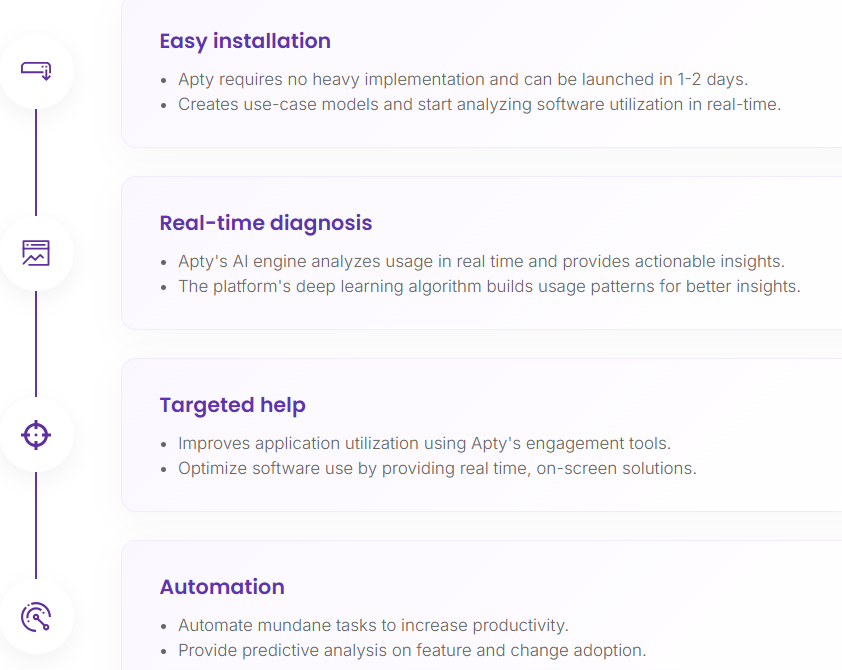
Apty claims deployment in 1–2 days without IT involvement. The platform installs activity trackers in the production environment, capturing user interaction patterns before any guidance becomes visible. G2 confirmed this, awarding Apty the "Fastest Implementation" badge in its enterprise tier.
Source: Apty
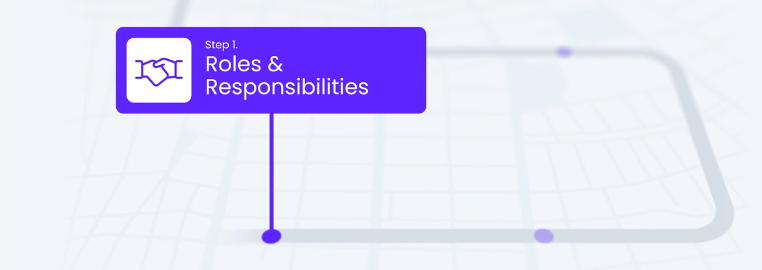
WalkMe's implementation takes longer. The platform recommends a Center of Excellence approach and offers a Digital Adoption Institute with structured training, including a 5-week Builder Basics Bootcamp with weekly live instructor sessions.
Source: WalkMe
G2 reviewers cite steep learning curves for advanced configurations (34 mentions), and building production-ready content for large SAP or Workday environments typically requires dedicated internal champions.
That longer setup isn't a flaw. WalkMe's implementation time buys more customization, more branching logic, and tighter integration with complex enterprise workflows. For organizations deploying across 50,000+ employees with hundreds of applications, that investment pays dividends in content quality and coverage.
But for organizations that need to prove adoption ROI quickly (often to justify continued investment), Apty's speed advantage matters. Apty PULSE starts delivering insights within 2 days and produces a full adoption health diagnosis within 30 days. That timeline lets adoption teams demonstrate value before the first budget review.
The SAP acquisition changes WalkMe's trajectory
SAP's $1.5 billion acquisition of WalkMe in September 2024 is the defining event in the DAP market. SAP stated: "WalkMe X's AI capabilities will supercharge SAP's copilot Joule with context-aware and proactive help across workflows."
For SAP-centric enterprises, this is good news. WalkMe is now embedded natively into SAP applications with a WalkMe Standard tier included in SAP subscriptions and WalkMe Premium available for customization. Organizations running SAP S/4HANA, SuccessFactors, Concur, or Ariba get a DAP integrated with their core systems.
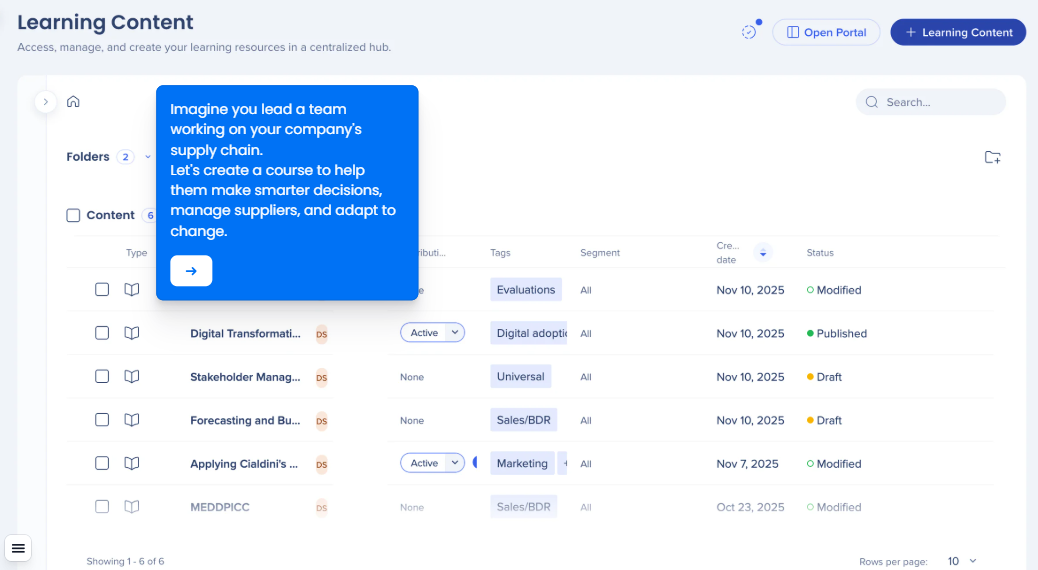
The WalkMe Learning Arc, a digital learning product, is the designated successor to SAP Enable Now (reaching end of maintenance November 30, 2030), creating a built-in migration pathway.
Source: WalkMe
For enterprises running primarily non-SAP stacks, the acquisition raises a strategic question. WalkMe's product roadmap, sales priorities, and engineering resources will orbit SAP's ecosystem. WalkMe still supports Salesforce, Workday, ServiceNow, and Microsoft Dynamics 365, and the company emphasizes continued broad application support. But the gravitational pull of a parent company with 300,000+ enterprise customers is real.
Apty, by contrast, remains independent and vendor-neutral, with integrations across Salesforce, Workday, ServiceNow, Microsoft Dynamics, Coupa, and Infor, plus custom application support. No ecosystem allegiance pulls its roadmap in one direction. For organizations running a mixed tech stack, that independence has value.
AI capabilities take different forms
Both platforms have invested in AI, but with different priorities.
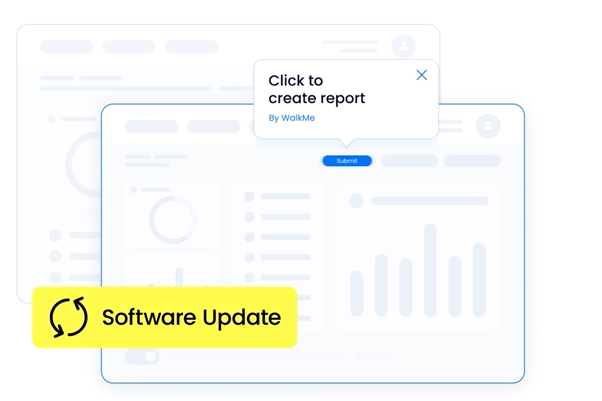
WalkMe's DeepUI technology is its standout technical asset. DeepUI uses AI to understand application interfaces the way a person would, reading visual elements, layout, and interaction patterns rather than relying on brittle DOM paths or hardcoded element IDs.
Source: WalkMe
When an application updates its UI, DeepUI re-identifies elements by their meaning and automatically adapts published guidance.
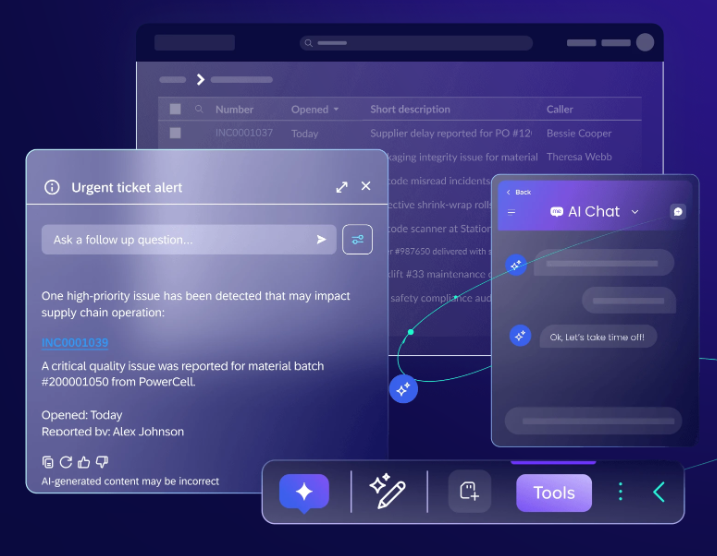
Beyond DeepUI, WalkMe AI delivers contextual help inside applications: next-best-action recommendations, conversational automation, writing and reading assistance, and input validation. WalkMe AI works across any application, drawing on 7 billion interactions between people and software every year.
Source: WalkMe
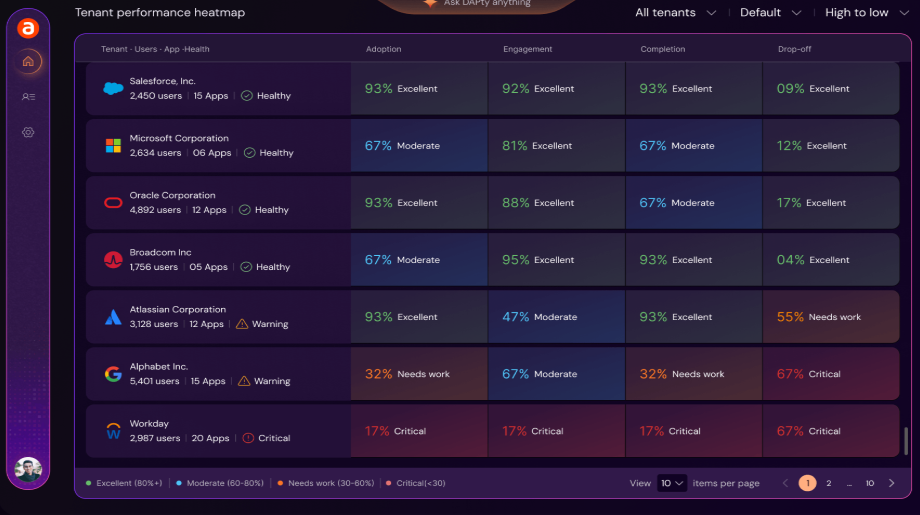
Apty's AI follows a three-phase loop: see, change, prove. The AI watches how work happens, catches skipped steps and workflow deviations, then suggests interventions and drafts guidance content. The differentiator is the closing of that loop: the system tracks how work changes over time and connects fixes to measured outcomes, tying specific interventions to specific results.
Source: Apty
WalkMe's AI is broader. Apty's AI is focused on proving that interventions moved the needle. The right choice depends on whether you need an AI assistant that helps across every application, or an AI engine that proves adoption ROI to your CFO.
Analytics: going wide vs. going deep
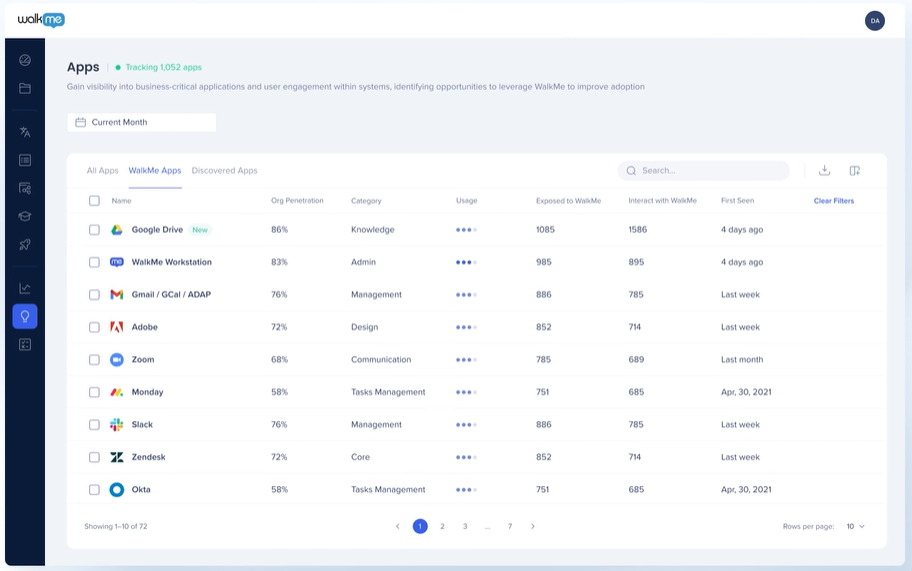
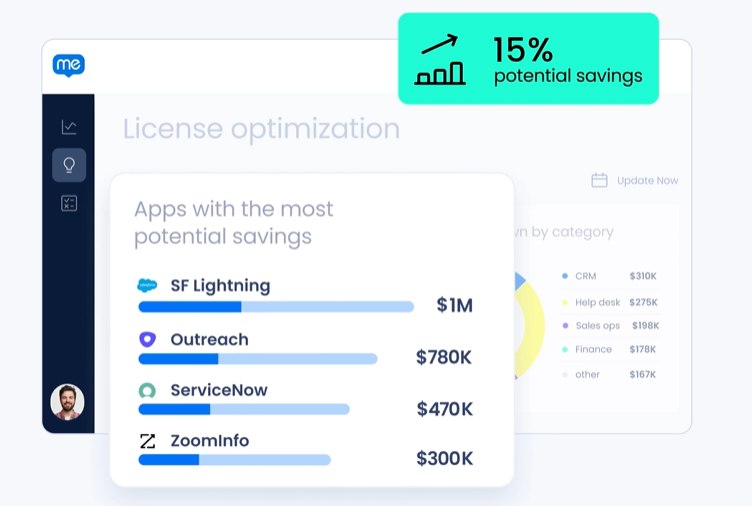
WalkMe's analytics suite is the broader of the two, spanning four products. App Discovery & Analytics captures usage across every web-based application (including shadow IT and unsanctioned AI tools) through a browser extension, with no per-app integrations required.
Source: WalkMe
WalkMe Insights maps user interactions against defined workflows to identify where people get stuck. Form Analytics captures field-level interaction data (completion rates, time on field, errors, drop-off points). Discovery License Optimization overlays financial data on usage metrics to identify wasted software licenses.
Source: WalkMe
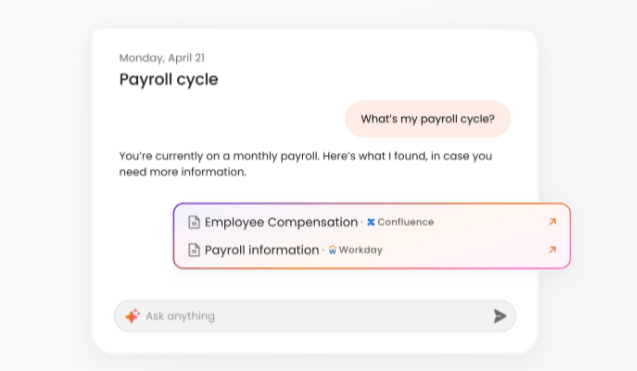
Apty PULSE takes a narrower but more prescriptive approach. Rather than presenting raw dashboards for human interpretation, PULSE uses AI to pinpoint improvements and provides data-backed prescriptions. The system doesn't just show you where employees struggle; it recommends what to do about it. PULSE also monitors multi-application business processes across the tech stack, tracking user journeys that span multiple enterprise systems.
Source: Apty
WalkMe gives you more data. Apty gives you more direction. WalkMe works when you have a dedicated analytics team that can interpret broad datasets and build action plans. Apty works when you need the platform itself to tell you where to focus next.
Apty offers a 2x ROI guarantee in year one or the investment is returned, the only such guarantee in the DAP market.
CRM data quality has two sides
Both Apty and WalkMe treat CRM data quality as a core use case. Apty's real-time field validations block form submissions until input data meets predefined criteria, reporting a 70% reduction in errors and a 50% reduction in data overhead costs. WalkMe's validation safeguards intercept errors at the point of data entry, and Form Analytics identifies which fields cause problems.
These capabilities address one side of CRM data quality: process compliance. Making sure employees fill in the right fields, in the right format, following the right workflow. That matters.
But there's a second side neither DAP can address: whether the contact records, company profiles, and intelligence in the CRM are accurate and current in the first place. A sales rep can follow every Salesforce workflow perfectly and still waste hours calling disconnected phone numbers, emailing addresses that bounce, and working accounts with outdated company information.
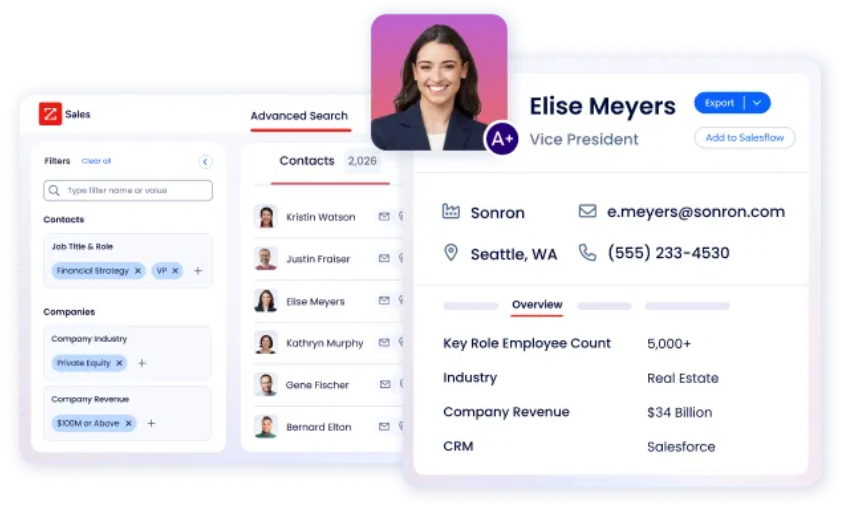
This is where ZoomInfo fits. ZoomInfo maintains a B2B data platform with 500M contacts and 100M companies, 135M+ verified phone numbers, 120M direct-dial phone numbers, and 200M+ verified business email addresses. ZoomInfo verifies that data through a multi-source pipeline backed by 300+ human researchers, reaching up to 95% accuracy on first-party data.
Source: ZoomInfo
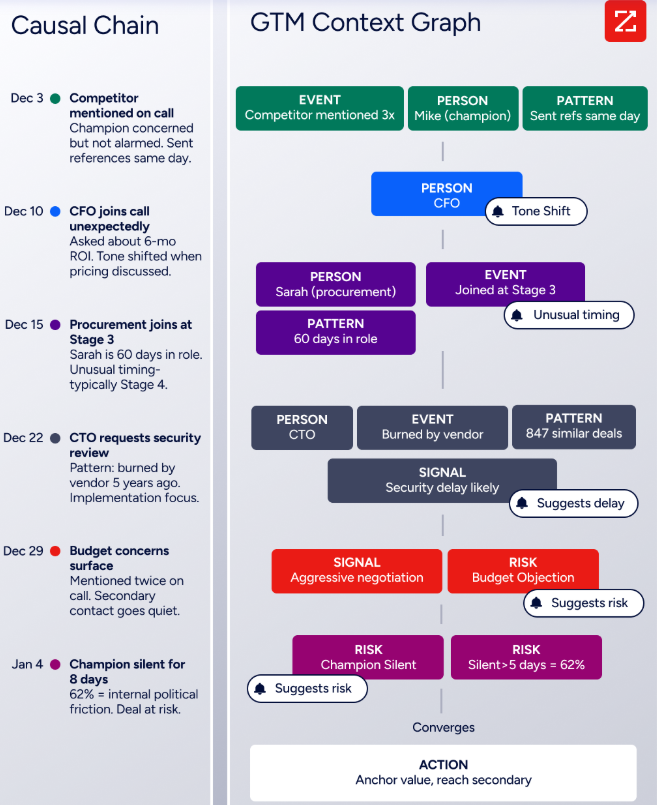
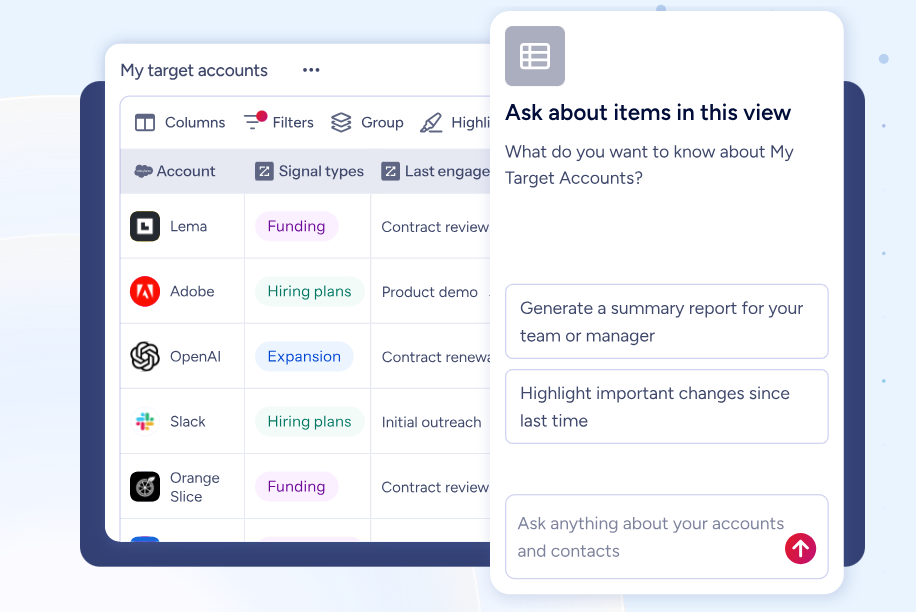
ZoomInfo's GTM Context Graph, which processes 1.5B+ data points daily, goes further. It fuses B2B data with your CRM records, conversation transcripts, and behavioral signals into a layer that captures not just what happened in a deal, but why it happened.
Source: ZoomInfo
That intelligence flows into downstream actions through GTM Workspace for sellers, GTM Studio for marketers and RevOps, or APIs and MCP in any third-party tool.
Source: ZoomInfo
For enterprise leaders investing in DAP infrastructure, the point is simple: a DAP ensures your employees follow the right processes. ZoomInfo ensures the data those processes operate on is worth the effort. Both are necessary for full CRM ROI.
"ZoomInfo gives us the information we need to execute. We don't have to go through and spend our time digging. It's already there, so we can be three steps ahead." (Vensure)
Pricing reflects who each platform is built for
Apty publishes a pricing floor: $9,500 per app, billed annually. Final pricing depends on employee count, implementation complexity, compliance requirements, and integrations, but the published starting point gives buyers a concrete anchor for early budgeting. Every customer gets the full feature set from day one, with optional add-ons for on-premise authoring, white-labeling, and professional services.
WalkMe publishes no pricing. The pricing page is a contact-sales form. Contracts are negotiated, non-cancelable, and based on a custom mix of user counts, target applications, and SLA tiers. TrustRadius reviewers consistently call WalkMe expensive, with multi-year commitments and add-on costs making total cost of ownership hard to predict during evaluation.
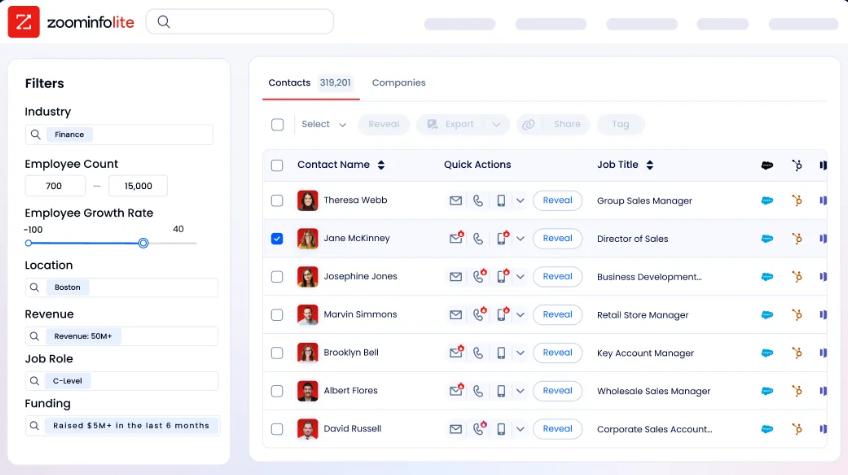
ZoomInfo uses custom-quoted, consumption-based pricing with no published dollar amounts for paid tiers. However, ZoomInfo offers two free entry points neither DAP matches: ZoomInfo Lite (a permanent free tier with access to the B2B database and 10 monthly export credits) and a 7-day free trial of the full platform.
Source: ZoomInfo
The pricing contrast maps to target market. Apty's published floor and full-feature model signals mid-to-large enterprises. WalkMe's opaque, negotiated model targets the largest global organizations where procurement teams expect complex vendor negotiations. ZoomInfo's consumption-based model scales with actual usage, fitting teams from individual sellers to full enterprise deployments.
"It's not just the data itself. It's more about the right data at the right time to help us reach out with the right message across that full buyer journey." (Redwood Logistics)
Apty vs. WalkMe vs. ZoomInfo: Which should you choose?
Choose Apty if:
You want to prove adoption ROI quickly with a financial guarantee
Fast deployment matters (days, not months)
You're running a multi-vendor tech stack and want a vendor-neutral DAP
Your organization doesn't have a large dedicated DAP administration team
Prescriptive analytics (the platform tells you what to fix) appeals more than broad dashboards
Price transparency during evaluation matters to your procurement process
Choose WalkMe if:
You need the broadest feature set in DAP, including app discovery, license optimization, and AI assistance
Your enterprise runs primarily on SAP applications
You have the resources for a multi-month implementation and a dedicated Center of Excellence
Content resilience matters (DeepUI automatically adapts guidance when applications update)
You're deploying across tens of thousands of employees and need proven enterprise scale
Digital learning (WalkMe Learning Arc) is part of your L&D strategy
Add ZoomInfo to your stack if:
CRM data quality is part of your enterprise software ROI equation
Your sales team wastes time on outdated contacts, disconnected phone numbers, or incomplete account records
You want AI-powered prospecting, intent signals, and account intelligence alongside your adoption tools
You need verified B2B data enrichment that complements the process compliance your DAP enforces
See ZoomInfo in action with a free trial.
Enterprise software ROI is not a single-tool problem. DAPs solve the adoption gap: making sure employees use software correctly. ZoomInfo solves the data gap: making sure the information inside that software is accurate, complete, and current. The enterprises getting the most from their technology investments address both.
"That combination of our internal CRM data, external signals, and AI that's given all that context has helped us craft very specific account- and persona-based messages. And people have responded to them right away." (Seismic)
Apty vs. WalkMe vs. ZoomInfo FAQ
What is the core difference between Apty and WalkMe?
Both are Digital Adoption Platforms that help employees use enterprise software correctly through in-app guidance, walkthroughs, and analytics. Apty positions itself as "DAP 2.0," focused on proving measurable ROI with prescriptive analytics, a 2x ROI guarantee, and deployment in 1–2 days. WalkMe is the category pioneer with the broadest feature set, patented DeepUI technology for automatic content resilience, and SAP integration following its $1.5 billion acquisition by SAP in 2024.
How does ZoomInfo relate to digital adoption platforms like Apty and WalkMe?
ZoomInfo is not a digital adoption platform. It is an AI-powered GTM platform that enriches CRM data with verified contacts, company profiles, intent signals, and AI-powered insights. It complements DAPs by solving a different side of enterprise software ROI: while DAPs ensure employees follow the right CRM processes, ZoomInfo ensures the data inside the CRM is accurate and complete. Together, they address both the adoption and data quality sides of the CRM ROI equation.
Which platform is faster to implement?
Apty deploys in 1–2 days without IT involvement, validated by G2's Fastest Implementation badge in the enterprise tier. WalkMe recommends a Center of Excellence approach with structured training and typically requires weeks to months for full deployment, especially across large SAP or Workday environments.
How does the SAP acquisition affect WalkMe for non-SAP customers?
WalkMe continues to support Salesforce, Workday, ServiceNow, Microsoft Dynamics, and other non-SAP applications. However, the strategic direction increasingly prioritizes SAP ecosystem integration, with WalkMe now embedded natively into SAP products and the WalkMe Learning Arc designated as the successor to SAP Enable Now. Organizations with primarily non-SAP tech stacks should evaluate whether WalkMe's roadmap aligns with their long-term needs.
Which platform is more affordable?
Apty publishes a starting price of $9,500 per application per year with the full feature set included. WalkMe does not publish pricing and requires negotiated contracts, with user reviews consistently describing it as expensive. ZoomInfo's pricing is consumption-based and custom-quoted, but it offers a permanent free tier (ZoomInfo Lite) and a 7-day free trial that neither DAP matches.
What is WalkMe's DeepUI technology and does Apty have an equivalent?
DeepUI is WalkMe's patented AI that understands application interfaces visually rather than relying on hardcoded element references. When an application updates its UI, DeepUI re-identifies elements and adapts published guidance without manual rework. Apty does not have a publicly documented equivalent. Apty's AI focuses on prescriptive analytics (identifying where workflows break down and recommending interventions) rather than automatic content resilience.
Which platform offers better analytics?
WalkMe offers broader analytics: app discovery, workflow completion tracking, form-level field analysis, shadow IT visibility, and software license optimization across the tech stack. Apty PULSE offers narrower but more prescriptive analytics, using AI to identify pain points and deliver data-backed recommendations rather than presenting raw dashboards. The right choice depends on whether you have a dedicated analytics team (WalkMe) or need the platform to direct your next action (Apty).
Can I use ZoomInfo alongside either Apty or WalkMe?
Yes. ZoomInfo integrates with the same enterprise applications that Apty and WalkMe overlay, including Salesforce, Microsoft Dynamics, and other CRM platforms. A DAP ensures sales reps follow the correct CRM workflows, while ZoomInfo ensures the contact and company records in that CRM are verified and current. The two tools address different sides of the same data quality challenge.
More Apty and WalkMe comparisons:
