
If you're comparing Assima vs. Whatfix, you're choosing between two different approaches to enterprise software adoption: training employees in a realistic simulation before they touch the live system, or guiding them inside the live application when they need help.
The right choice depends on how you answer these questions:
Are you preparing employees for a major ERP or CRM rollout with a hard go-live deadline, or managing ongoing adoption across applications that update frequently?
Do your employees need to practice complex workflows risk-free before going live, or do they need contextual help while working in production?
Is your primary concern training content that stays current as applications change, or analytics that show where users struggle?
Are you running desktop-based systems like SAP GUI alongside web applications, or primarily web and mobile environments?
Beyond training, are you also investing in the data quality that makes your CRM and sales tools worth adopting in the first place?
In short, here's what we recommend:
Assima is built for large enterprises rolling out complex systems like SAP S/4HANA, Oracle Cloud, or Workday, where employees need to practice in an environment that looks and behaves like the live application.
Its patented cloning technology captures enterprise interfaces as interactive, editable objects, producing realistic simulations. Changes propagate automatically across all affected screens.
However, it's priced for enterprise budgets with no free trial, its analytics lag behind competitors, and its thin public review presence makes independent evaluation difficult.
Whatfix is built for organizations that need ongoing in-app guidance after deployment. Its Digital Adoption Platform overlays walkthroughs, tooltips, and self-help widgets inside live applications across web, desktop, mobile, and VDI/Citrix environments.
With ScreenSense AI powering contextual guidance and three AI Agents handling content creation, user support, and analytics, Whatfix earned recognition as a Forrester Wave Leader (Q4 2024).
But setup is complex, flows can break when application UIs change, and pricing is quote-based with analytics and simulation sold separately.
Both platforms help employees adopt enterprise software. But here's a question neither one answers: is the software your team is learning to use actually powered by data worth working with?
ZoomInfo is a GTM platform that addresses the other half of the enterprise software ROI equation. While Assima and Whatfix ensure employees can use CRM, sales, and marketing tools, ZoomInfo ensures those tools contain the B2B intelligence that makes them productive.
Its data platform spans 500M contacts, 100M companies, 135M+ verified phone numbers, and 200M+ verified business email addresses, flowing into CRM systems through native integrations with Salesforce, HubSpot, and Microsoft Dynamics.
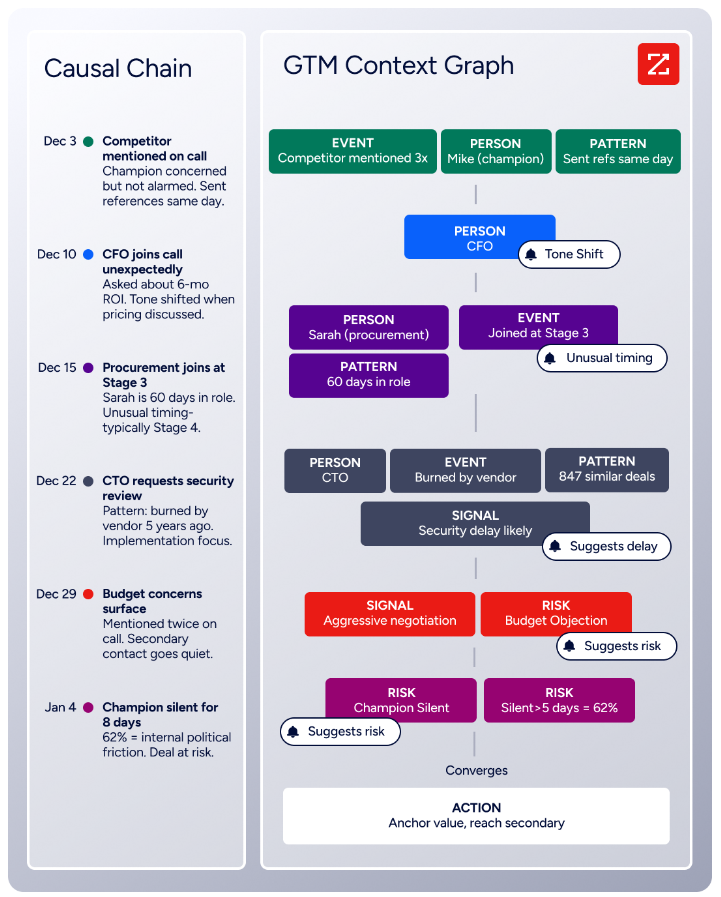
Its GTM Context Graph processes 1.5B+ data points daily, combining CRM records with conversation intelligence and intent signals to reveal not just what's happening in your deals, but why.
For organizations investing in software adoption, ZoomInfo makes that adoption pay off.
If the ROI of your CRM and sales technology matters as much as training your team to use it, see how ZoomInfo powers the data layer.
Assima vs. Whatfix at a glance
Assima | Whatfix | ZoomInfo | |
|---|---|---|---|
Primary focus | Pre-go-live simulation training | Post-deployment in-app guidance | B2B data and GTM intelligence |
Core approach | Patented cloning of application UIs | Overlay-based walkthroughs and tooltips | Data enrichment, intent signals, AI-powered GTM |
Environment support | Web, desktop, cloud apps (including homegrown) | Web, desktop, mobile, VDI/Citrix | CRM integrations (Salesforce, HubSpot, Dynamics) |
AI capabilities | Not prominently featured | ScreenSense engine + 3 AI Agents | GTM Context Graph + AI agents for sales execution |
Analytics | Click-level tracking | Product Analytics (separate product) | GTM intelligence, intent signals, deal insights |
Analyst recognition | Listed in Gartner Peer Insights | Forrester Wave Leader, Gartner Customers' Choice | Gartner MQ Leader (ABM), Forrester Wave Leader (Intent) |
Free trial | No | Yes (sales-assisted) | 7-day trial + permanent free tier (ZoomInfo Lite) |
Pricing model | ~CA$2,500/user/month (reported) | Quote-based (flat fee + per-user) | Consumption-based pricing |
Best for | Large ERP/CRM rollouts with thousands of users | Ongoing adoption across multiple evolving applications | Powering CRM/sales tools with accurate B2B data |
Simulation training vs. in-app guidance: two philosophies of adoption
Assima and Whatfix approach digital adoption from opposite ends of the employee journey.
Assima trains employees before they touch the live system. Its cloning technology captures enterprise application interfaces as interactive, editable objects.
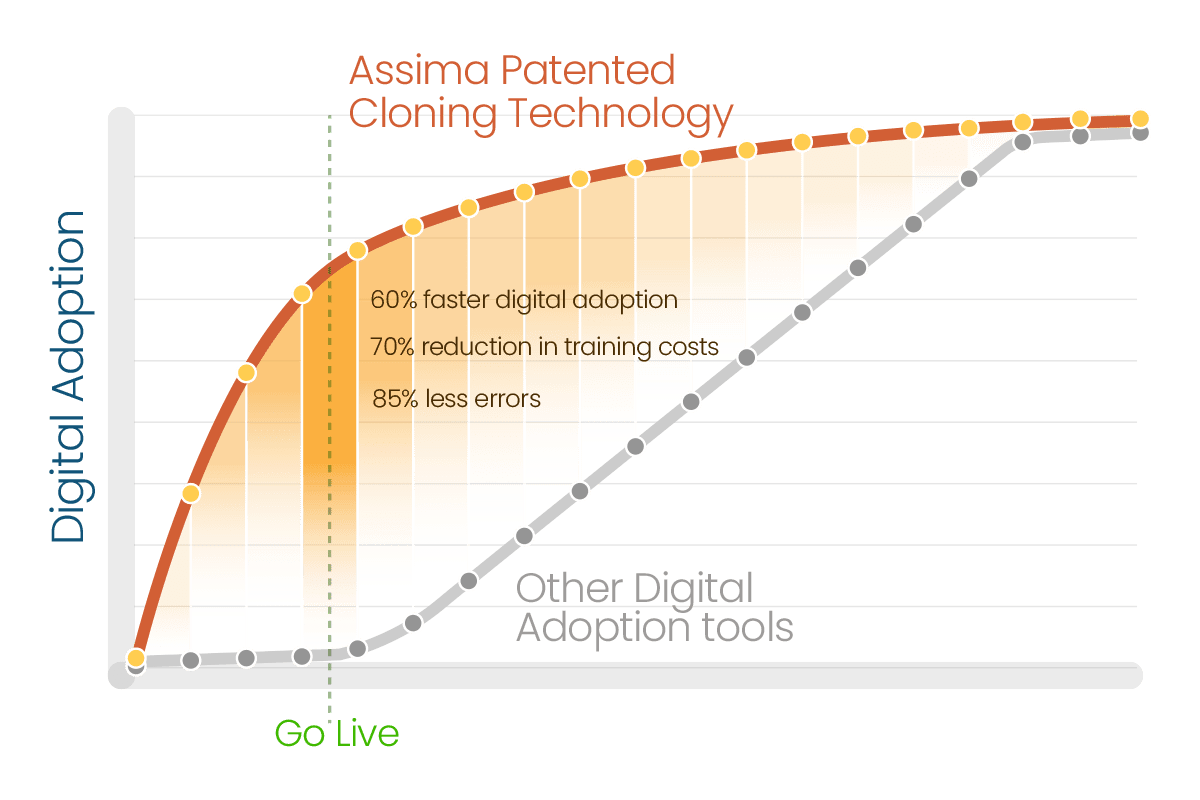
Employees click, scroll, use dropdown menus, and enter data in any order, replicating cross-application processes that span multiple enterprise systems.
The production environment is never touched during content creation, which removes a common IT security barrier in regulated sectors.
Whatfix supports employees inside the live application. Rather than building a separate training environment, the DAP injects an overlay into the target application.
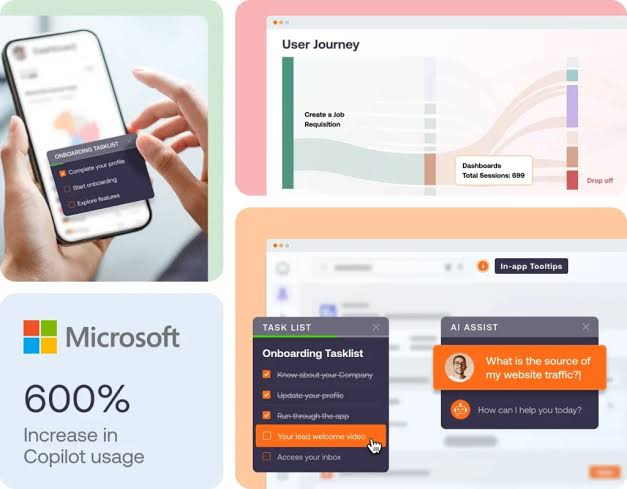
When an employee gets stuck, a step-by-step Flow appears on the screen. When a feature goes unused, a beacon draws attention to it. When a process changes, a pop-up notification explains what's different. No context switching, no separate training portal.
The difference has practical consequences.
Assima excels during the compressed, high-stakes training windows typical of major ERP rollouts. When 10,000 employees need to be ready before a go-live deadline that cannot slip, simulations let L&D teams build training content before the production system is even complete, decoupling training readiness from IT delivery.
Whatfix excels at the long tail of adoption: the months and years after go-live when employees encounter unfamiliar features, forget training, or face software updates. Its Self Help widget gives users searchable access to guidance without submitting a support ticket.
Whatfix also offers Mirror, a simulation product that captures web application screens to create interactive replicas for hands-on practice.

Source: Whatfix
Mirror closes some of the gap with Assima's simulation capabilities, but the approach differs: Mirror builds simulations from screen captures, while Assima's cloning technology captures UI elements as editable objects with automatic change propagation.
Content creation and maintenance tell you who owns the program
How each platform handles content authoring reveals who will actually run the adoption program day to day.
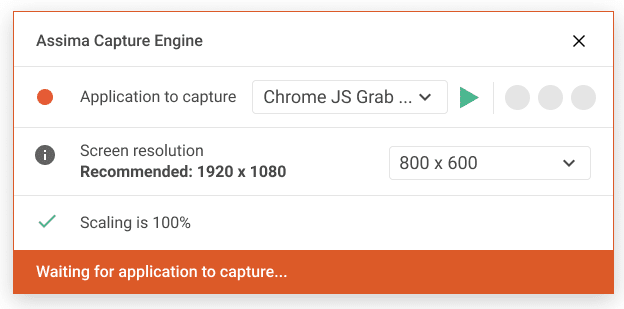
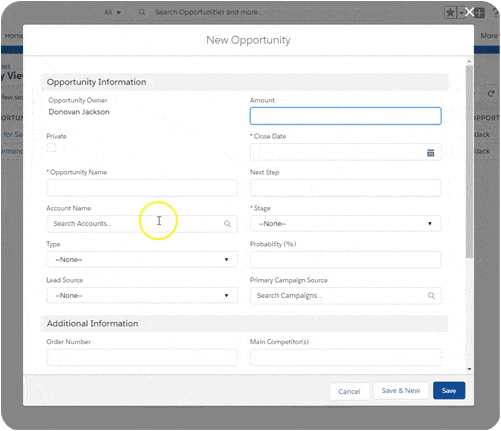
Assima uses a capture-edit-publish workflow. An instructional designer clicks through a process in the live application while the cloning technology records every UI element as an editable object. After capture, every object can be resized, moved, deleted, copy-pasted, and re-colored.
Source: Assima
Changes automatically propagate across all affected screens, so updating a field label changes it everywhere that label appears. No re-recording needed.
The editing capability is real. Data can be mass-replaced across lessons for quick anonymization, and training content can be authored before production systems are complete by editing captured screens to reflect planned changes.
For organizations maintaining training across frequent software updates, Assima's approach means minutes of editing rather than weeks of re-recording.
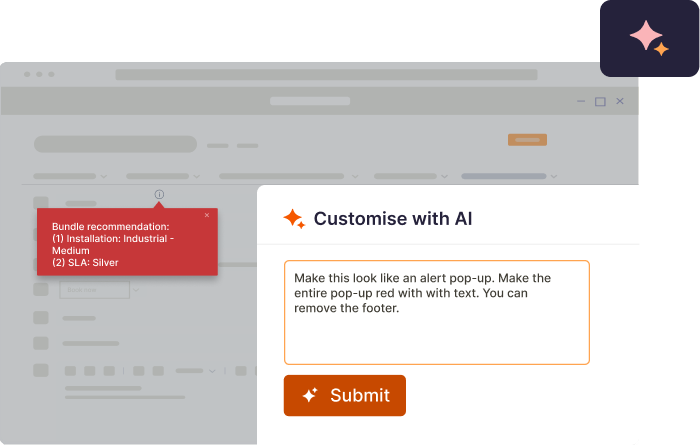
Whatfix takes a different approach. Content authors use Whatfix Studio, a no-code browser-based editor that records interactions on the live application to build step-by-step Flows and other in-app elements.
The Authoring Agent can generate Flows from natural-language prompts, and Auto Testing checks existing Flows for breakage when the application UI changes.
Source: Whatfix
Both approaches have trade-offs. Assima's cloning produces more capable multi-step simulations but requires dedicated authors (Assima offers a 2-day training course).
Whatfix's no-code editor is more accessible to non-technical L&D teams but produces guidance overlays rather than interactive simulations.
The maintenance story also differs. Assima's object-level editing means a single change cascades across all affected lessons automatically. Whatfix's Flows are more susceptible to breakage when UI elements move or change, a concern flagged by reviewers on SoftwareReviews and G2, though ScreenSense AI and Auto Testing reduce this problem by adapting to UI changes.
Enterprise application coverage shapes your shortlist
Both platforms claim broad enterprise application support. The specifics determine which one fits your environment.
Assima works on any web-based, desktop, or cloud enterprise application, including homegrown systems that no other training tool natively supports. Named platforms include SAP S/4HANA and SAP ECC, Oracle Cloud, Salesforce, Workday, ServiceNow, EPIC, Cerner, and Guidewire.
Because it can clone any application UI regardless of the underlying technology, a healthcare system running EPIC and a manufacturer running SAP can use the same platform.
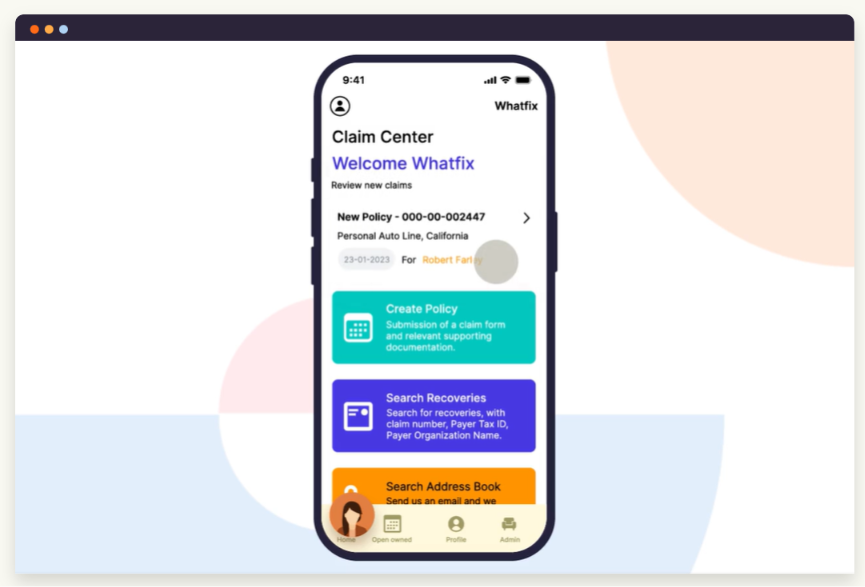
Whatfix covers web, desktop (Windows/Mac), mobile, and VDI/Citrix environments, with mobile and VDI as Enterprise-tier features. Application-specific overlays exist for ERP, HCM, CRM, ATS, CLM, and procurement platforms.
The mobile and VDI/Citrix support gives Whatfix an edge for organizations with field workers, remote access via Citrix, or employees who need guidance on phones and tablets.
Source: Whatfix
Where they diverge sharply is cross-application process training. Assima positions itself as the only solution that can deliver realistic training for processes that cut across applications, a common reality in enterprises where a single workflow might touch SAP, Salesforce, and a homegrown system simultaneously.
Whatfix can deliver guidance across multiple applications, but each application requires separate configuration, and the guidance works as an overlay rather than a unified simulation.
Another difference is legacy system support. Assima handles thick-client and desktop applications, including green-screen emulators, through its cloning approach. Whatfix supports desktop applications too, and its in-app features work across both web and desktop environments, but VDI support is reserved for Enterprise-tier customers.
AI is reshaping both platforms at different speeds
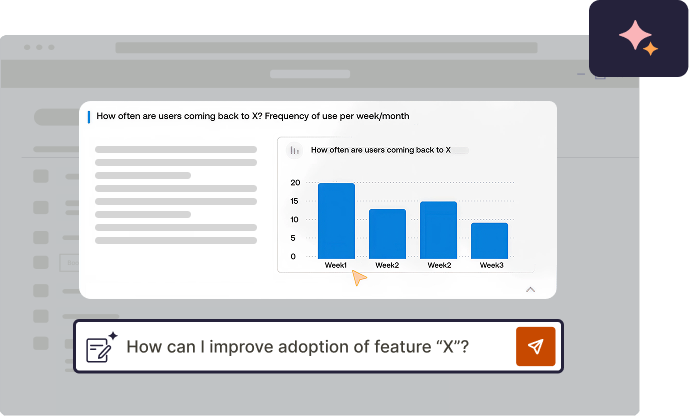
Whatfix has invested more visibly in AI. ScreenSense, unveiled in February 2025, is a patented context engine trained on GUI interactions. It detects what screen a user is on, interprets whether they are stuck or exploring, and triggers appropriate guidance.
Three AI Agents sit on top of ScreenSense: the Authoring Agent generates content from natural-language prompts, the Guidance Agent delivers contextual answers in-workflow, and the Insights Agent translates behavioral data into recommendations.
Source: Whatfix
Assima's advantage rests on its patented cloning technology rather than AI. The platform's editing workflow remains manual. No AI features, agents, or generative capabilities are prominently marketed.
Source: Assima
For organizations that want AI-assisted content creation, guidance that adapts to user behavior, and natural-language analytics queries, Whatfix has a clear lead.
That said, Assima's cloning approach solves a problem that AI overlay tools still struggle with: producing training environments realistic enough that employees build genuine muscle memory. AI-generated tooltips and walkthroughs work well for simple tasks.
Procedural training on complex ERP transactions is a different challenge, and Assima's simulation model was built to address it.
Analytics determine whether you can prove adoption worked
Measuring training effectiveness is where Assima and Whatfix diverge most.
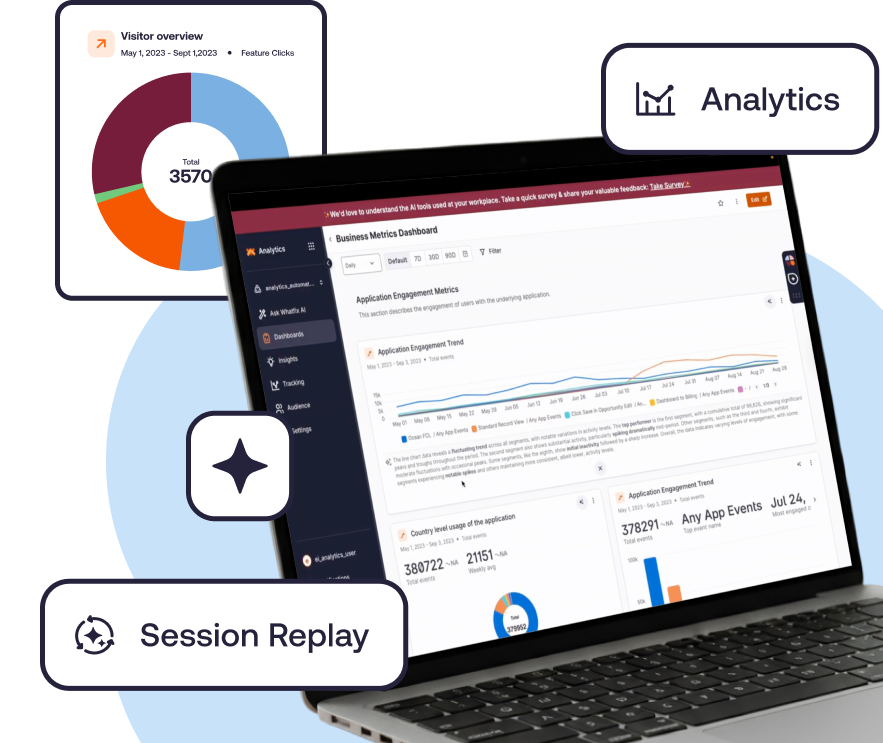
Whatfix offers Product Analytics as a dedicated module with AutoCapture (no-code event tracking), funnels, user journey maps, session replay, cohorts, and an AI Insights Agent that surfaces patterns and recommends actions.
Source: Whatfix
This gives L&D and IT teams visibility into how employees actually use applications: where they drop off, which features go unused, and which workflows generate the most errors.
The analytics-to-intervention loop is native: identify a friction point, create a targeted Flow, and measure the result.
The catch is that Product Analytics is a separate product with its own pricing. The Standard tier comes free with any DAP purchase, but Premium and Enterprise tiers cost extra.
Assima's analytics are more limited. The platform tracks actions and content usage in real-time down to every click and input field, but a reviewer on Capterra flagged that "the reporting and analytics section can be improved to provide more insights for training needs."
Competitors in the DAP space have invested heavily in usage analytics dashboards; Assima tracks at the click level but the aggregation layer for L&D intelligence lags behind.
For organizations that need to prove training ROI with quantitative adoption data, show executives where employees struggle, and iterate on guidance based on behavioral evidence, Whatfix's analytics are a meaningful advantage.
Pricing and total cost of ownership
Neither platform publishes transparent pricing, but the available data points tell different stories.
Assima reportedly costs approximately CA$2,500 per user/month according to Capterra, a figure that reflects its enterprise-only positioning. No free trial is available; the only entry point is a demo booking.
A reviewer on Capterra noted that "separate licenses for each technology like SAP, Microsoft, Oracle, SharePoint" adds cost and administrative overhead for organizations with diverse application estates. Professional services (content creation, onboarding, and translation management) are billed separately.
Whatfix uses a hybrid flat-fee plus per-user license model, with pricing varying by product (DAP, Product Analytics, Mirror) and platform (Web, Desktop, Mobile).

Source: Whatfix
The Standard plan limits integrations to two and content aggregation to 2,000 articles. Add-ons like white-labeling and enterprise project management cost extra. Whatfix does offer a free trial, though it's sales-assisted rather than self-serve.
The total cost comparison depends on the use case. For a one-time ERP rollout training tens of thousands of users, Assima's simulation approach may deliver lower cost-per-user when amortized across the training population.
For continuous adoption support across a portfolio of applications that update quarterly, Whatfix's subscription model spreads cost more predictably but accumulates over time.
The data layer that makes adoption pay off
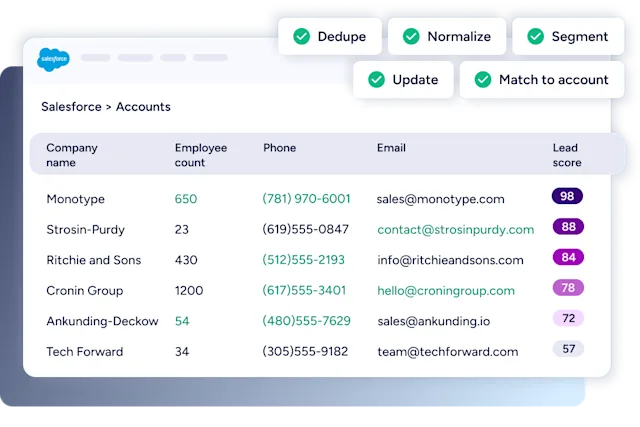
Enterprise organizations spend months rolling out Salesforce, SAP, or HubSpot. They invest in adoption platforms to train employees. Then they discover the CRM is full of outdated contacts, missing phone numbers, and duplicated records.
The adoption program works (employees know how to use the software) but the software doesn't deliver results because the data inside it isn't worth working with.
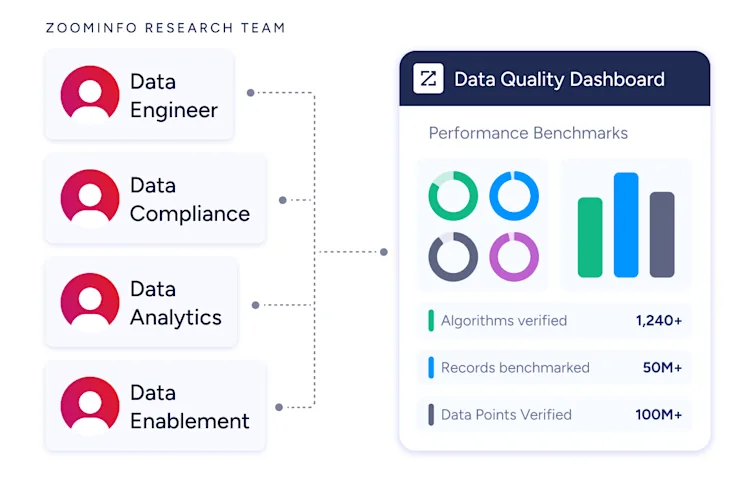
This is the problem ZoomInfo solves. While Assima and Whatfix address the human side of software adoption, ZoomInfo addresses the data side. Its database covers 500M contacts and 100M companies, verified through a pipeline backed by 300+ human researchers with up to 95% accuracy on first-party data. That data flows directly into the CRM systems your team is learning to use.
Source: ZoomInfo
The GTM Context Graph takes this further. It processes 1.5B+ data points daily, combining a customer's CRM records, conversation transcripts, and behavioral signals with ZoomInfo's third-party intelligence to capture not just what happened in a deal, but why it happened.
Source: ZoomInfo
For the sales team navigating Salesforce through Assima simulations or Whatfix walkthroughs, ZoomInfo provides the intelligence that makes every CRM interaction productive.
Source: ZoomInfo
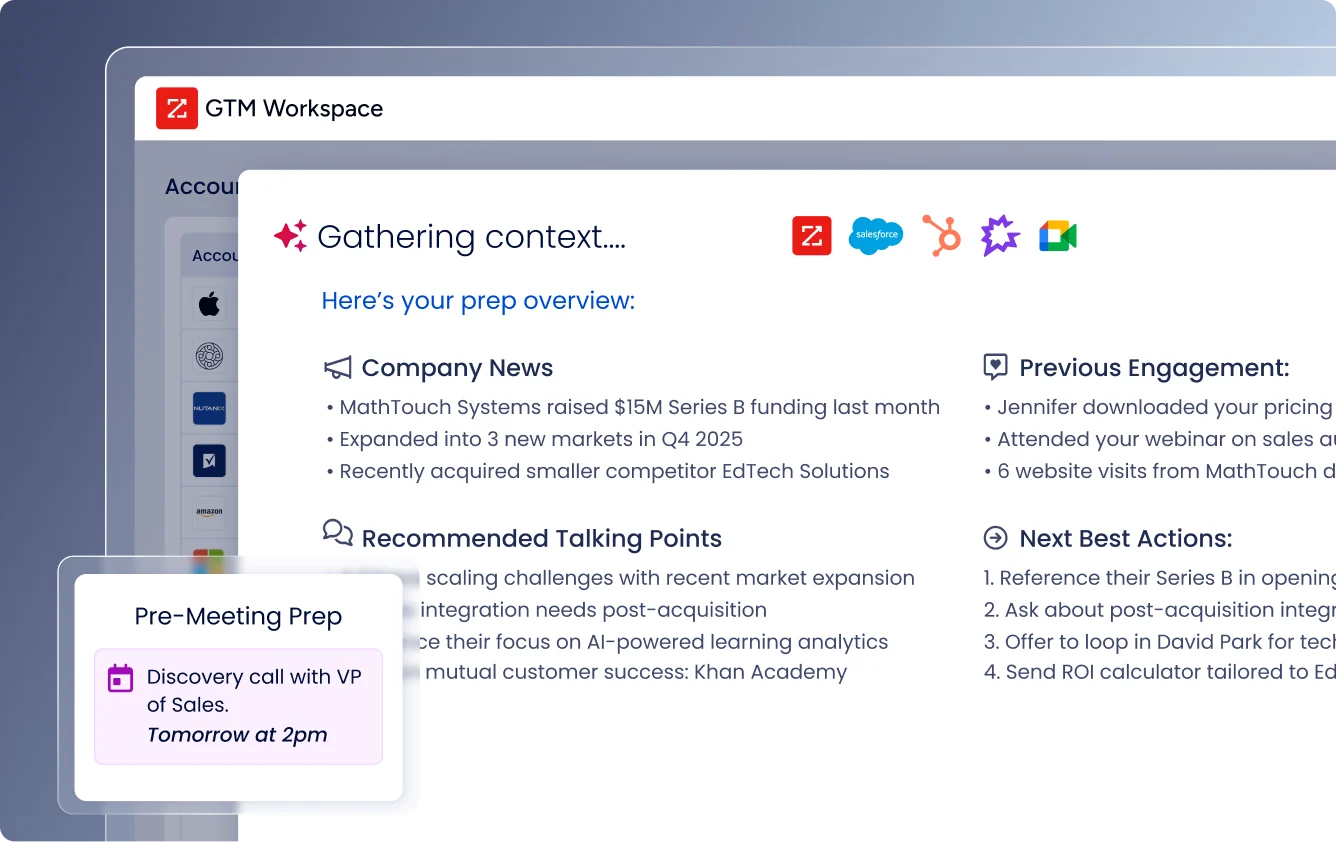
Teams access ZoomInfo's intelligence through three channels: GTM Workspace for sellers, where AI agents handle account research, outreach drafting, and signal monitoring; GTM Studio for marketers and RevOps, where audience definition and campaign orchestration happen in natural language; and APIs and MCP for teams building on any third-party tool. All three draw from the same GTM Context Graph.
Source: ZoomInfo
The complementary relationship is straightforward. Assima or Whatfix ensures your team can use the tools. ZoomInfo ensures the tools are worth using.
"ZoomInfo gives us the information we need to execute. We don't have to go through and spend our time digging. It's already there, so we can be three steps ahead." (Vensure)
Security and compliance for regulated industries
Both Assima and Whatfix serve regulated industries where security is not optional.
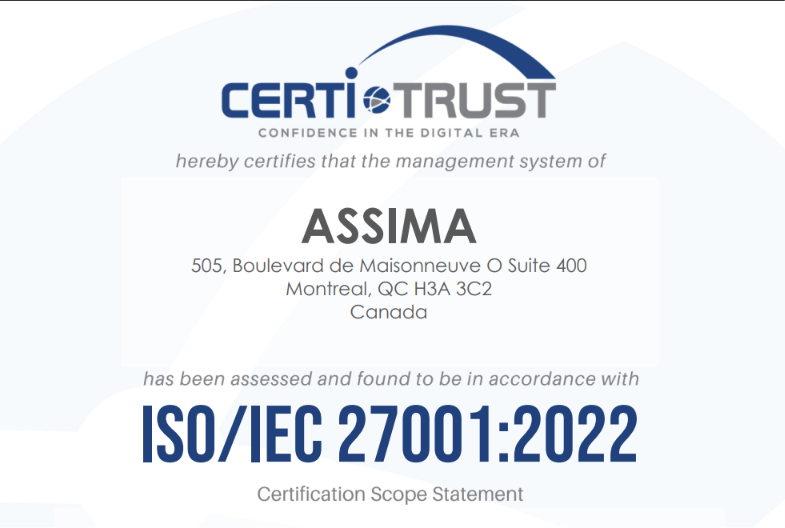
Assima holds ISO/IEC 27001 and ISO/IEC 27701 certifications and has been vetted against the IBM Cloud Framework for Financial Services, a framework co-developed with Bank of America covering cybersecurity, data privacy, and access management.
Source: Assima
Data is encrypted at rest and in transit, with Bring Your Own Key (BYOK) encryption available. Customers choose North American or European Azure data centers for data residency.
For healthcare and financial services, one-click PHI/PII anonymization replaces sensitive data across all training content in minutes.
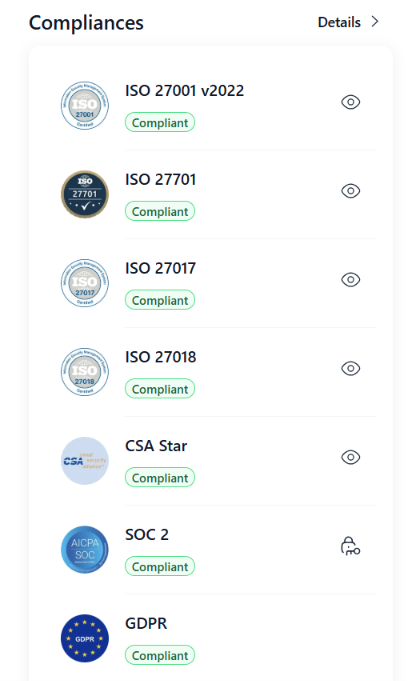
Whatfix holds SOC 2 and ISO 27001:2013 certifications and maintains a Trust Center with centralized access to security policies and compliance documents. SSO and IP Whitelisting are available on all plans.
Source: Whatfix
Data residency options and a VPAT/Section 508 certification support federal procurement requirements, evidenced by Whatfix's US Army PEO-Enterprise deployment covering 1.1 million personnel.
Assima's distinct advantage in regulated environments is that its cloning technology captures only user interface objects, not source code or database content, and the production environment is never touched during content creation.
For organizations where any contact with live patient data or financial records during training is unacceptable, this architectural boundary matters.
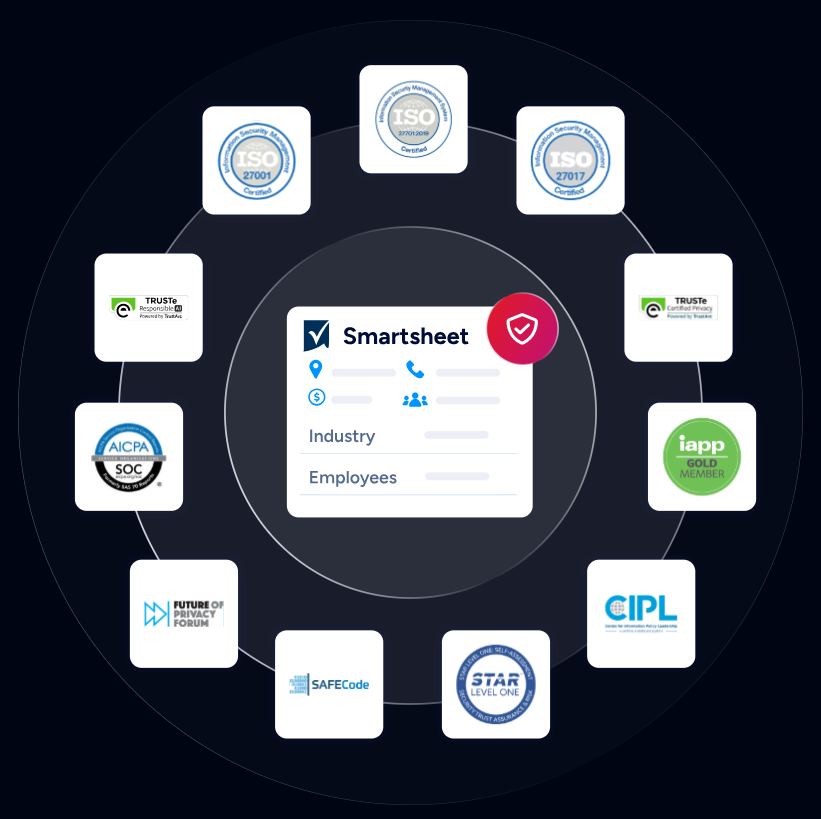
ZoomInfo maintains its own compliance infrastructure with ISO 27001, ISO 27701, SOC 2 Type II, and TRUSTe GDPR and CCPA certifications, all renewed annually.
Source: ZoomInfo
Assima vs. Whatfix vs. ZoomInfo: Which should you choose?
The choice between Assima and Whatfix depends on where adoption breaks down in your organization. ZoomInfo serves a different purpose, complementing whichever adoption tool you choose.
Choose Assima if:
You're running a major ERP/CRM rollout (SAP S/4HANA, Oracle Cloud, Workday) with thousands of users to train before go-live
Training realism matters, and employees need to practice in an environment that looks and behaves like the live system
You're replacing Oracle UPK or SAP Enable Now and need a migration path for existing training content
Regulated industry requirements demand PHI/PII anonymization and production system isolation during training
Your training spans multiple languages and you need localization without re-recording
Choose Whatfix if:
You need ongoing adoption support across multiple applications, not just one-time pre-rollout training
In-app guidance (tooltips, walkthroughs, and self-help) matters more than simulation training
You want analytics that measure how employees actually use applications and where they struggle
Your environment includes mobile apps or VDI/Citrix that need DAP coverage
AI-powered content creation and adaptive guidance are priorities
Add ZoomInfo if:
Your adoption investment targets CRM, sales, or marketing tools that depend on accurate B2B data
You want your Salesforce, HubSpot, or Dynamics CRM filled with verified contacts and company intelligence, not stale records
Your sales and marketing teams need intent signals, buyer insights, and AI-powered outreach alongside their software training
You're building an enterprise software stack where data quality is as important as user adoption
See ZoomInfo in action with a free trial or permanent free tier.
Assima and Whatfix solve the same problem from different angles: Assima builds confidence before go-live through simulation, while Whatfix sustains productivity after deployment through contextual guidance. Many organizations will benefit from both approaches at different stages of their software lifecycle. ZoomInfo complements either by ensuring the enterprise software being adopted delivers value through accurate data.
"That combination of our internal CRM data, external signals, and AI that's given all that context has helped us craft very specific account- and persona-based messages. And people have responded to them right away." (Seismic)
Assima vs. Whatfix vs. ZoomInfo FAQ
Is Assima a digital adoption platform like Whatfix?
Not exactly. Assima positions itself as a "systems training platform" focused on simulation-based training before go-live, with its Assima Assist module providing some in-app guidance and its In-App Search surfacing training content inside live applications.
Whatfix is a full digital adoption platform with in-app walkthroughs, product analytics, and simulation capabilities via Mirror.
Assima's strength is realistic pre-deployment training; Whatfix's strength is ongoing post-deployment guidance and adoption measurement.
Which platform is better for SAP S/4HANA migrations?
Both support SAP S/4HANA. Assima has dedicated SAP Enable Now replacement positioning and can import existing Oracle UPK content (an average project of 100 UPK simulations can reportedly be migrated within an hour).
Whatfix offers in-app guidance overlays on SAP and holds a Forrester Wave Leader designation for DAP. Assima is typically stronger for the initial training phase of a migration; Whatfix is stronger for ongoing SAP adoption support and change management after go-live.
How do Assima and Whatfix handle application updates differently?
Assima's patented cloning technology captures UI elements as editable objects, so changes propagate automatically across all affected training content (the company claims a 90% reduction in rework versus screenshot-based tools).
Whatfix's Flows can break when UI elements change, though its Auto Testing and ScreenSense AI features detect breakage and recommend fixes.
Both approaches reduce maintenance effort, but Assima's object-level editing offers more resilience to application changes.
Does Whatfix offer simulation training like Assima?
Yes, through its Mirror product, a separately sold module that captures web application screens to create interactive replicas for hands-on practice. Mirror also includes AI-powered roleplay for scenario-based training like sales calls and customer service.
However, Assima's simulation technology goes further: it captures application interfaces as interactive, editable objects using patented cloning technology, while Mirror builds simulations from screen captures. Assima also supports cross-application process simulations spanning multiple enterprise systems.
What is the pricing difference between Assima and Whatfix?
Neither publishes transparent pricing. Assima reportedly costs around CA$2,500 per user/month according to Capterra, with separate licenses potentially required per technology and no free trial.
Whatfix uses a hybrid flat-fee plus per-user model with separate pricing for its three products (DAP, Product Analytics, Mirror), all quote-based with a sales-assisted free trial available. Total cost depends on use case, deployment scope, and which products and tiers you need.
How does ZoomInfo relate to Assima and Whatfix?
ZoomInfo serves a different purpose. While Assima and Whatfix help employees learn and adopt enterprise software (especially CRM, ERP, and HCM systems), ZoomInfo is a B2B data and GTM intelligence platform that powers the data layer inside those systems.
The three are complementary: adoption tools ensure your team can use the software; ZoomInfo ensures the software contains the accurate contacts, company intelligence, and buying signals that make it productive.
Which platform has stronger analyst recognition?
Whatfix leads in analyst coverage for the DAP category: Forrester Wave Leader (Q4 2024) with the highest scores across 15 of 21 criteria, Gartner Customers' Choice three consecutive years, and Everest Group PEAK Matrix Leader six consecutive years.
Assima is listed in Gartner Peer Insights but does not appear in Magic Quadrant or Wave reports. ZoomInfo operates in a different category, holding Leader positions in the Gartner Magic Quadrant for ABM Platforms and the Forrester Wave for Intent Data Providers.
Can either platform train employees on custom or homegrown applications?
Both claim support for custom applications. Assima works on any web-based, desktop, or cloud application, including homegrown systems and green-screen emulators (its cloning technology captures any UI regardless of the underlying technology).
Whatfix supports custom web and desktop applications through its overlay-based approach and covers VDI/Citrix environments at the Enterprise tier.
For organizations with proprietary internal tools, both platforms can accommodate them, though Assima's approach of cloning the actual interface may produce more realistic training for non-standard UIs.
More Whatfix comparisons and alternatives:
