
Choosing between Atlassian and Salesforce often comes down to five questions:
Do you need to manage how work gets done, or how customers get won?
Is your priority tracking projects and engineering workflows, or tracking deals and revenue pipelines?
Are you looking for tools that connect developers, IT, and business teams, or tools that connect sales, service, and marketing?
Do you need a platform your technical teams will adopt naturally, or one that gives customer-facing teams a single view of every account?
How important is it that your go-to-market intelligence (the data about who to sell to and when) lives inside the same system where your team works?
In short, here's what we recommend:
Atlassian is the platform for teams that build and ship. Its suite, anchored by Jira for project tracking, Confluence for documentation, Bitbucket for code, and Jira Service Management for IT operations, gives engineering, IT, and business teams one place to work. With 300,000+ customers including 80% of the Fortune 500, Atlassian is the default choice for organizations that need workflow customization, agile project management, and a 7,000+ app marketplace to extend into nearly any use case. Where Atlassian falls short is anywhere customer relationships and revenue operations matter. It has no CRM, no sales pipeline, no marketing automation, and no native go-to-market data.
Salesforce is the platform for teams that sell and serve. As the #1 CRM by market share, it unifies sales, service, marketing, and commerce on a single customer record, giving 150,000+ companies a view of every account. Its Agentforce AI platform, which has reached $800M ARR and handled millions of autonomous conversations, is pushing Salesforce beyond CRM into automated customer operations. But Salesforce doesn't manage engineering sprints, track code deployments, or serve as your company wiki. And while it handles customer relationships well once you have them, the intelligence about which companies to target, which contacts to reach, and when they're ready to buy has to come from somewhere else.
These two platforms solve different problems. Atlassian manages the work. Salesforce manages the customer. But neither answers this question on its own: how do your go-to-market teams find and prioritize the right buyers in the first place?
ZoomInfo is an AI GTM platform that fills the intelligence gap both Atlassian and Salesforce leave open. Built on 500M contacts, 100M companies, 135M+ verified phone numbers, and 200M+ verified business email addresses, ZoomInfo's GTM Context Graph fuses this data with your CRM records, conversation transcripts, and behavioral signals to show not just what's happening in your accounts, but why. That intelligence reaches your team through the GTM Workspace for sellers, GTM Studio for marketers and RevOps, or APIs and MCP that pipe it into any tool, including Salesforce and Atlassian.
If buyer intelligence sounds like the missing layer in your tech stack, see how ZoomInfo works.
Atlassian vs. Salesforce vs ZoomInfo at a glance
Atlassian | Salesforce | ZoomInfo | |
|---|---|---|---|
Core function | Project management, dev tools, ITSM, knowledge management | CRM, sales, service, marketing, commerce | B2B data, buyer intelligence, GTM execution |
Primary users | Engineering, IT, product, business ops | Sales, service, marketing, commerce | Sales, marketing, RevOps, GTM engineers |
AI platform | Rovo (2.3M MAU; grounded in Teamwork Graph) | Agentforce ($800M ARR; Atlas Reasoning Engine) | GTM Context Graph (1.5B+ data points/day) |
Integration depth | 7,000+ Marketplace apps | 9,000+ AppExchange apps | 172+ Marketplace partners, MCP for any AI agent |
Data model | Work items, pages, code, incidents | Accounts, contacts, opportunities, cases | 500M contacts, 100M companies, intent signals |
Self-serve entry | Free plans (Jira, Confluence, Trello, JSM) | Free CRM (2 users), Starter at $25/user/mo | ZoomInfo Lite (free, permanent) + 7-day trial |
Analyst recognition | Gartner Leader: DevOps, CWM, ESM | Gartner Leader: SFA (19 years), CDP, CEC, Commerce | Gartner Leader: ABM Platforms; Forrester Leader: Intent Data |
Enterprise pricing | Per-user, per-product; sales-quoted at Enterprise tier | Per-user, per-cloud; $175–$550/user/mo + consumption | Custom-quoted, consumption-based |
Best for | Teams that build, ship, and operate | Teams that sell, serve, and market | Teams that need to find, prioritize, and engage buyers |
They solve different problems, and that's the point
The reason people search "Atlassian vs. Salesforce" isn't usually because they're choosing between them. It's because they're trying to figure out what each one does and whether they need both.
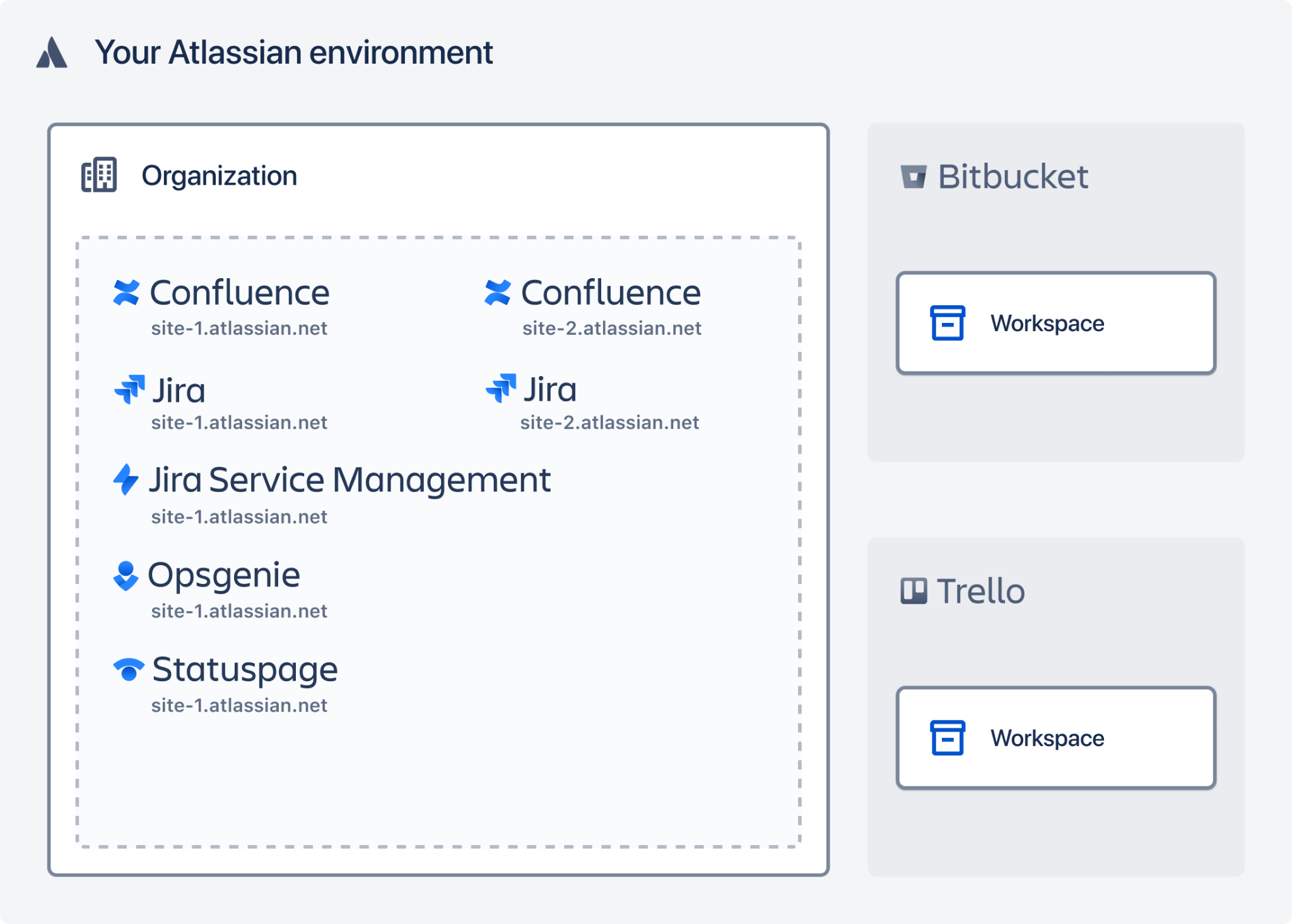
Atlassian started in 2002 as a developer tool company.
Jira was built for tracking bugs and managing sprints. Over two decades, the platform expanded into knowledge management (Confluence), code hosting (Bitbucket), IT service management (JSM), and AI-powered search and automation (Rovo). But the DNA remains the same: Atlassian organizes how work gets planned, executed, and documented inside an organization.
Source: Atlassian
Salesforce started in 1999 as a cloud CRM.
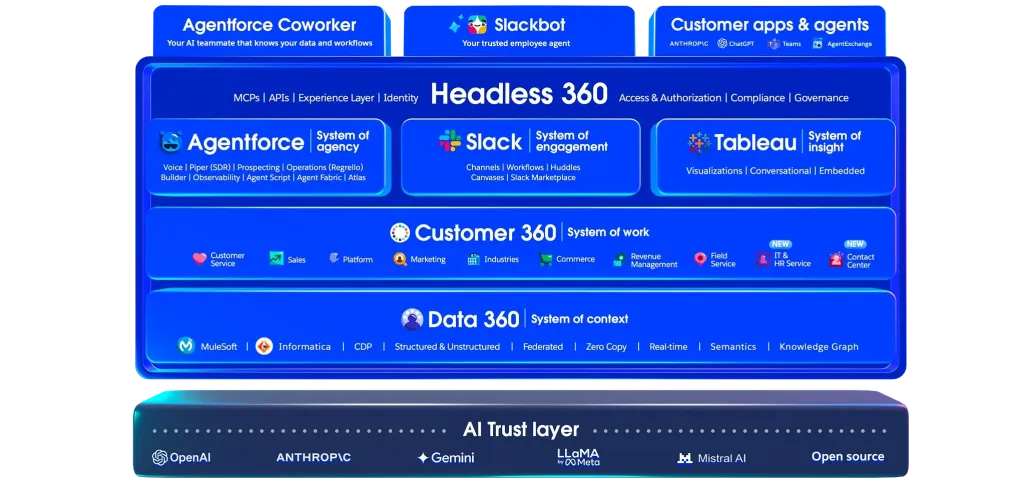
Its founding idea (delivering sales force automation through the web as a subscription) became the template for the SaaS industry. Through acquisitions of Tableau ($15.7B), Slack ($27.7B), MuleSoft ($6.5B), and Informatica (~$8B), Salesforce expanded into analytics, collaboration, integration, and data management. But the center of gravity is always the customer record: who bought, who's buying, who might buy next.
Source: Salesforce
These aren't competing tools. They're complementary systems on opposite sides of the enterprise. Atlassian faces inward (how your teams work). Salesforce faces outward (how you engage customers).
The gap sits in between: the intelligence that tells go-to-market teams which companies to pursue, which contacts to reach, and what signals indicate readiness to buy. That's the layer ZoomInfo provides.

Project management and work tracking
This is Atlassian's territory.
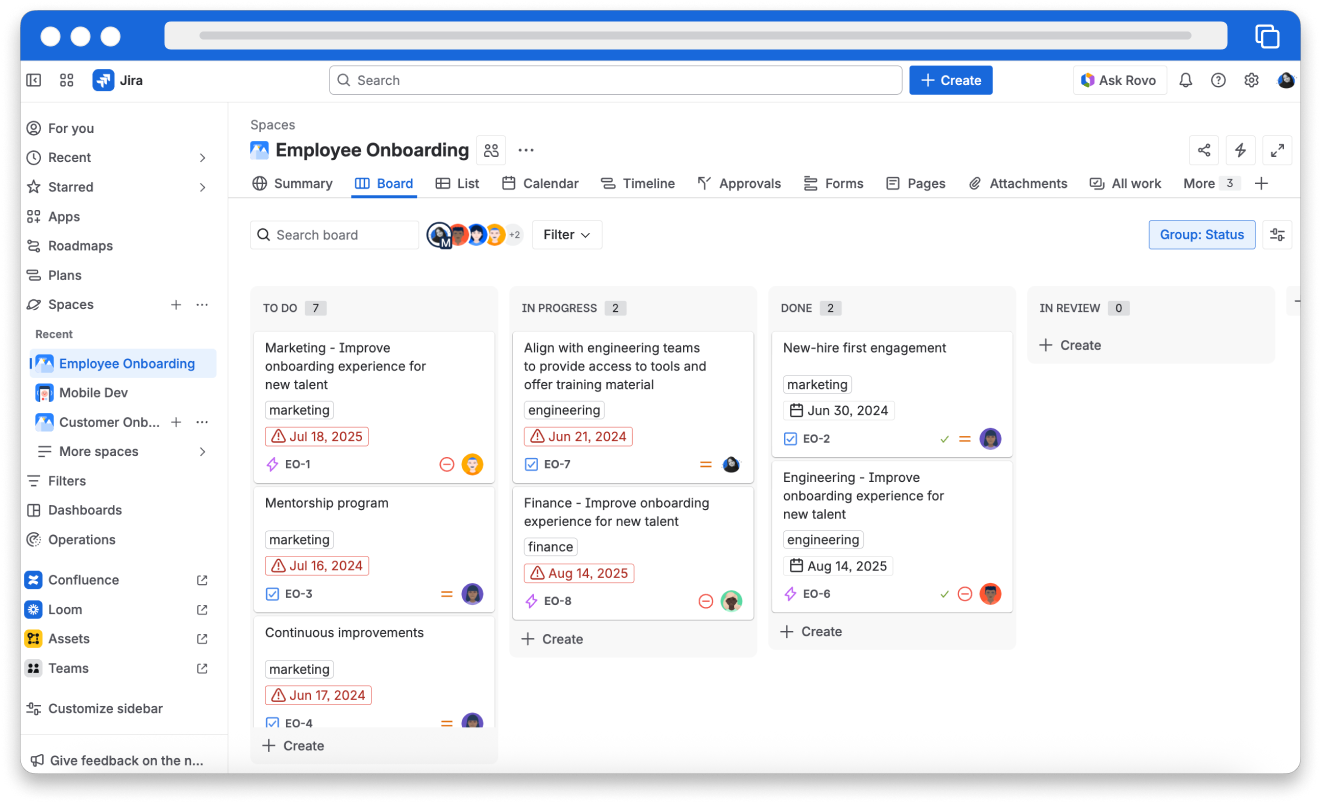
Jira is the most widely used project tracking tool in software development, and increasingly across business teams. Its workflow engine supports custom statuses, conditions, validators, and post-functions that can model nearly any process.
JQL (Jira Query Language) gives teams SQL-like power to filter and report across any combination of fields. Scrum boards, Kanban boards, Timeline views, and automation rules handle everything from two-week sprints to multi-year roadmaps. Jira Product Discovery (20,000+ customers) extends this into idea prioritization and customer feedback capture.
Source: Atlassian
Salesforce has no equivalent. Its project management capabilities are limited to basic task tracking within the CRM.
Some teams use Salesforce's Flow automation to build lightweight project workflows, but these are workarounds, not tools built for the job. The $27.7B acquisition of Slack added collaboration, but Slack is a messaging platform, not a project management system.
ZoomInfo doesn't compete here either. It's not a project management tool. But its intelligence connects to the project management layer in a practical way: when your sales team closes a deal in Salesforce, the implementation work moves into Jira. ZoomInfo's data about the customer (org charts, tech stack, key contacts) can inform how that handoff happens.
Go-to-market data and buyer intelligence
This is where ZoomInfo fills a gap that neither Atlassian nor Salesforce addresses natively.
Atlassian has no go-to-market data capabilities. It doesn't track buyer intent, provide contact databases, or offer account intelligence. Atlassian's data model covers work items, pages, and code, not companies, contacts, and purchase signals.
Salesforce manages customer data but doesn't generate it. It tracks relationships you already have. Sales Cloud records leads, contacts, and opportunities. Marketing Cloud manages campaigns and customer journeys. Data Cloud (112 trillion records ingested in FY26) unifies data from across Salesforce's clouds.
But the underlying intelligence (which companies are in-market, who the decision-makers are, what their direct phone numbers and verified emails are) has to come from an external source.
ZoomInfo was built for exactly this. The platform's three data dimensions work together:
Identity data identifies who matters: 500M contacts with 120M direct-dial phone numbers and 200M+ verified business email addresses, with department org charts showing decision-makers and their reporting relationships.
Company context reveals what matters: 100M companies with firmographics, technographic profiles across 30,000+ technologies, parent-child hierarchies, and financial data.
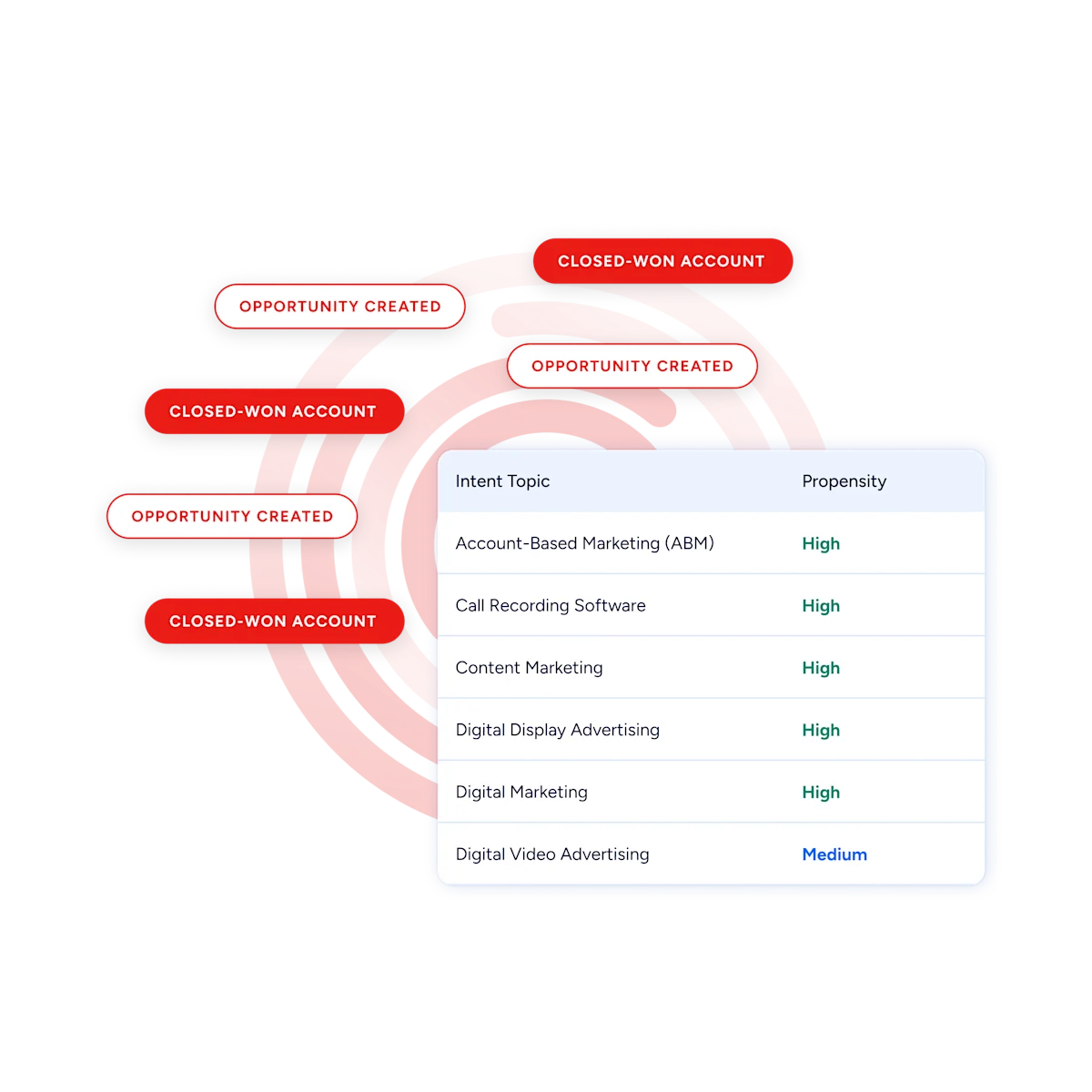
Dynamic signals tell you when it matters: Buyer Intent data tracking signals from 210 million IP-to-Organization pairings, WebSights identifying anonymous website visitors by company, and Guided Intent (exclusive to ZoomInfo) identifying topics historically correlated with deal success rather than requiring manual topic selection.
Source: ZoomInfo
This data is verified at scale. A Fortune 500 competitive RFP analyzing 25 million contacts across vendors concluded that "no other competitor came even close." ZoomInfo earned 133 No. 1 rankings on G2 in Summer 2025 across Sales Intelligence, Buyer Intent, Data Quality, and related categories.
Snowflake uses ZoomInfo for at least one-third of the most critical data features in their Account Propensity Scoring model. Accounts monitored using ZoomInfo-powered scores showed 90% higher opportunity open rates and 2x higher customer conversion rates. (Snowflake case study)
CRM and customer relationship management
This is Salesforce's territory.
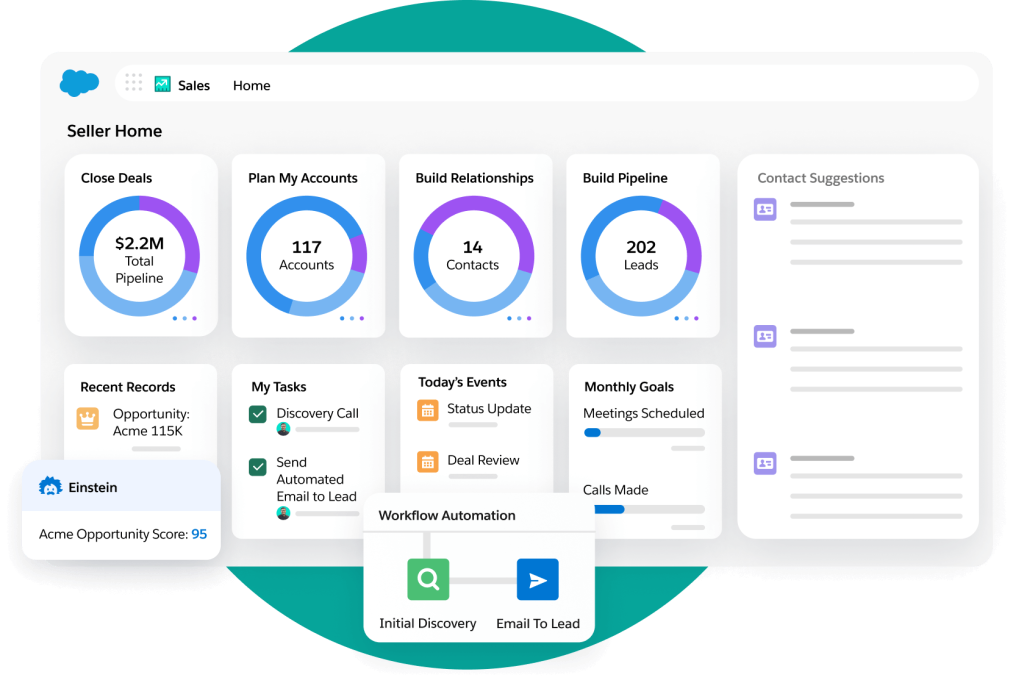
Sales Cloud manages the sales lifecycle: leads, accounts, opportunities, quotes, and forecasts. Einstein Activity Capture auto-syncs emails and calendar events. Pipeline management surfaces AI deal insights and change signals. Revenue Lifecycle Management handles CPQ, contract lifecycle, and subscription management. Salesforce has held the Gartner Magic Quadrant Leader position for Sales Force Automation for 19 consecutive years.
Source: Salesforce
Service Cloud handles case management, omnichannel support (chat, SMS, WhatsApp, phone, email), knowledge management, and field service.
Atlassian has no CRM. Jira Service Management handles IT and internal service requests, not customer relationship management. While JSM serves 65,000+ customers as an ITSM platform, it was designed for internal teams (IT, HR, facilities), not for managing external customer accounts and sales pipelines.
ZoomInfo complements Salesforce's CRM by providing the data that populates it.
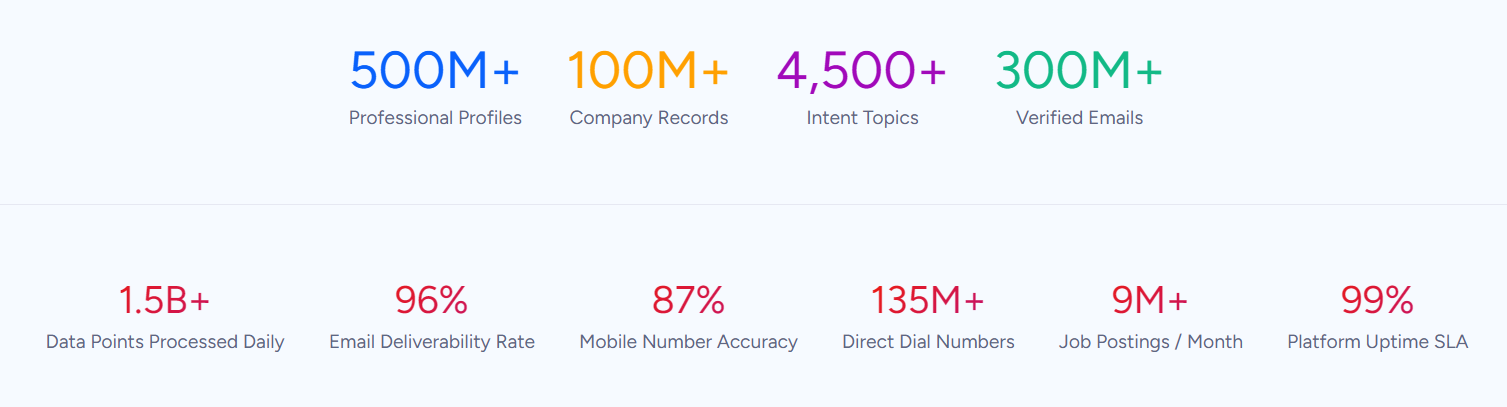
A CRM is only as useful as the data inside it, and Forbes estimates 91% of CRM data is incomplete. ZoomInfo's 500M contacts and 100M companies, verified through a pipeline backed by 300+ human researchers with up to 95% accuracy, fill the gaps that make CRM data usable. The native Salesforce integration enriches accounts and contacts directly within the CRM.
Source: ZoomInfo
Seismic attributed 39% of active pipeline to opportunities identified or influenced by ZoomInfo signals, and sellers saved 11.5 hours per week. (Seismic case study)
For a deeper look at how Salesforce and ZoomInfo compare across data quality, pricing, and go-to-market use cases, see our full Salesforce vs. ZoomInfo comparison.
IT service management
Both Atlassian and Salesforce compete in ITSM, though from different directions.
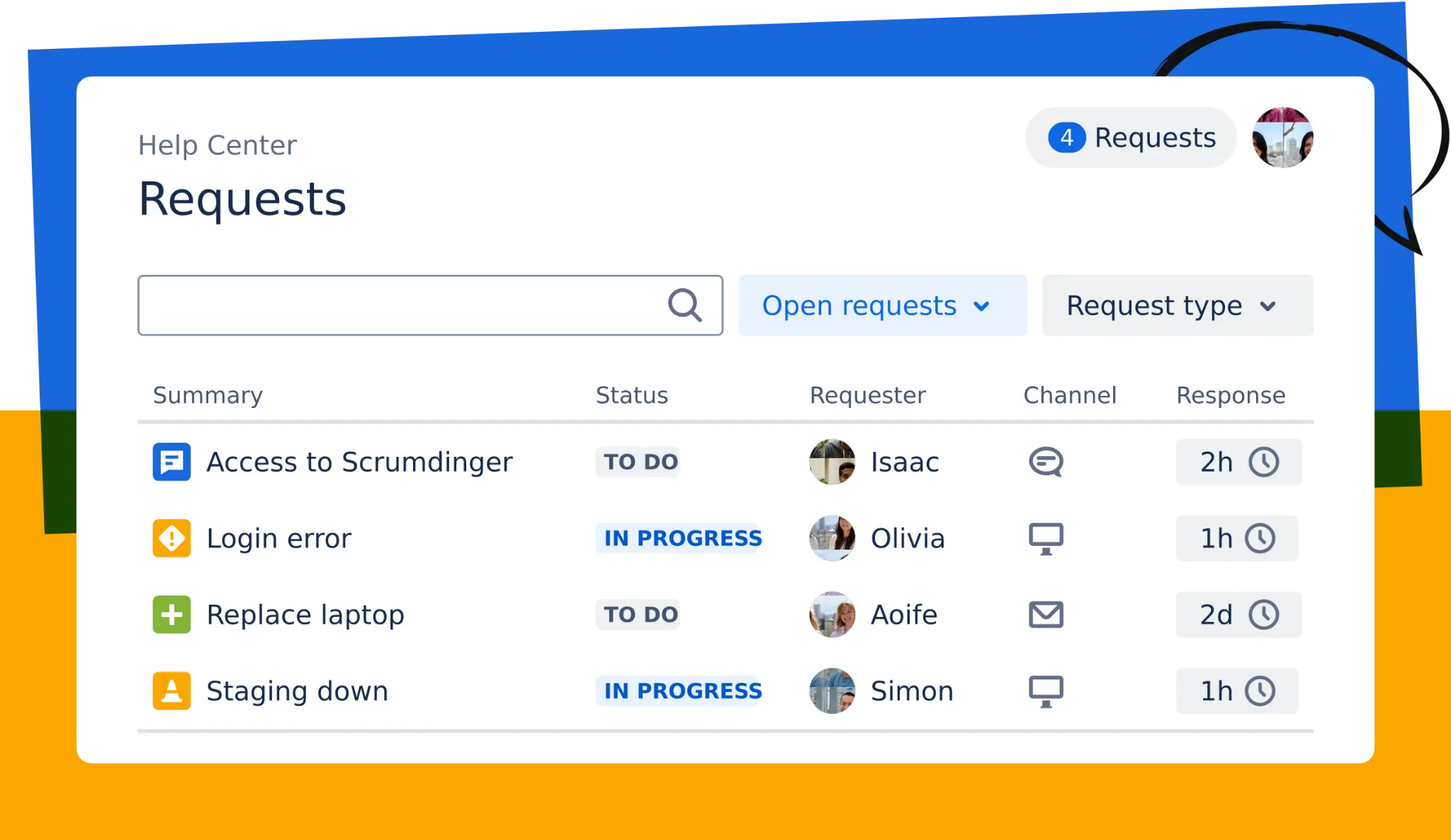
Jira Service Management covers the four core ITIL processes: incident management (with Opsgenie on-call escalation built in), change management (with deployment gating via Bitbucket Pipelines), problem management, and request management. Its self-service portal, SLA engine, and Assets CMDB come included, not sold as add-ons.
At $20/agent/month for Standard, JSM undercuts ServiceNow's enterprise pricing by an order of magnitude.
Source: Atlassian
JSM's structural advantage is its position within the Atlassian ecosystem. When an incident fires, the developer who needs to fix it is already in Jira. The runbook lives in Confluence. The code change goes through Bitbucket. The deployment is gated by JSM's change approval. No middleware required.
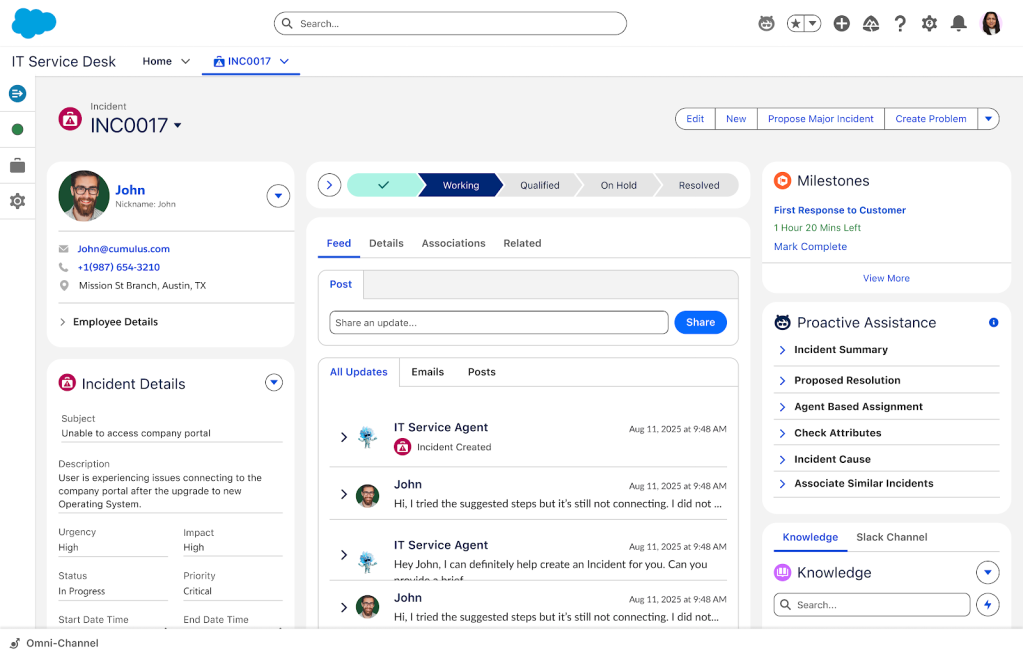
Salesforce entered ITSM with Agentforce IT Service, directly challenging ServiceNow. 180 organizations selected Agentforce IT Service in its first months. Salesforce's advantage is that IT service sits on the same platform as customer service, sales, and marketing, so an IT issue affecting a high-value customer can be correlated with the account's revenue and relationship history.
Source: Salesforce
For go-to-market teams evaluating either platform's ITSM capabilities, ZoomInfo isn't a factor.
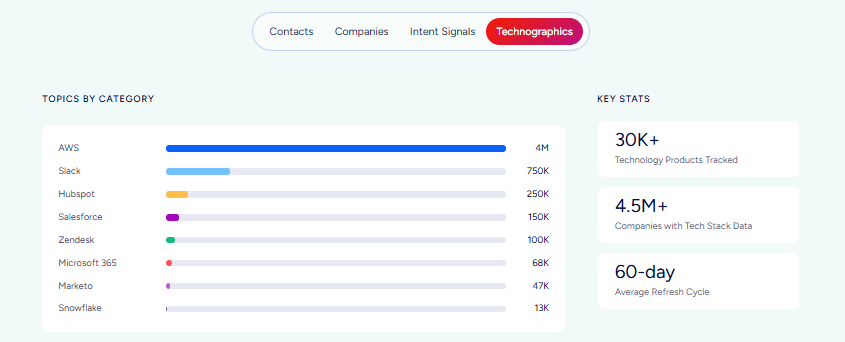
But the reverse is true: ITSM data from either platform can feed signals about a prospect's technology environment. ZoomInfo's technographic data profiles 30+ million companies across 30,000+ technologies, telling you what tools a target company uses without needing access to their service desk.
AI capabilities take different approaches
All three platforms have invested in AI, each grounded in different data.
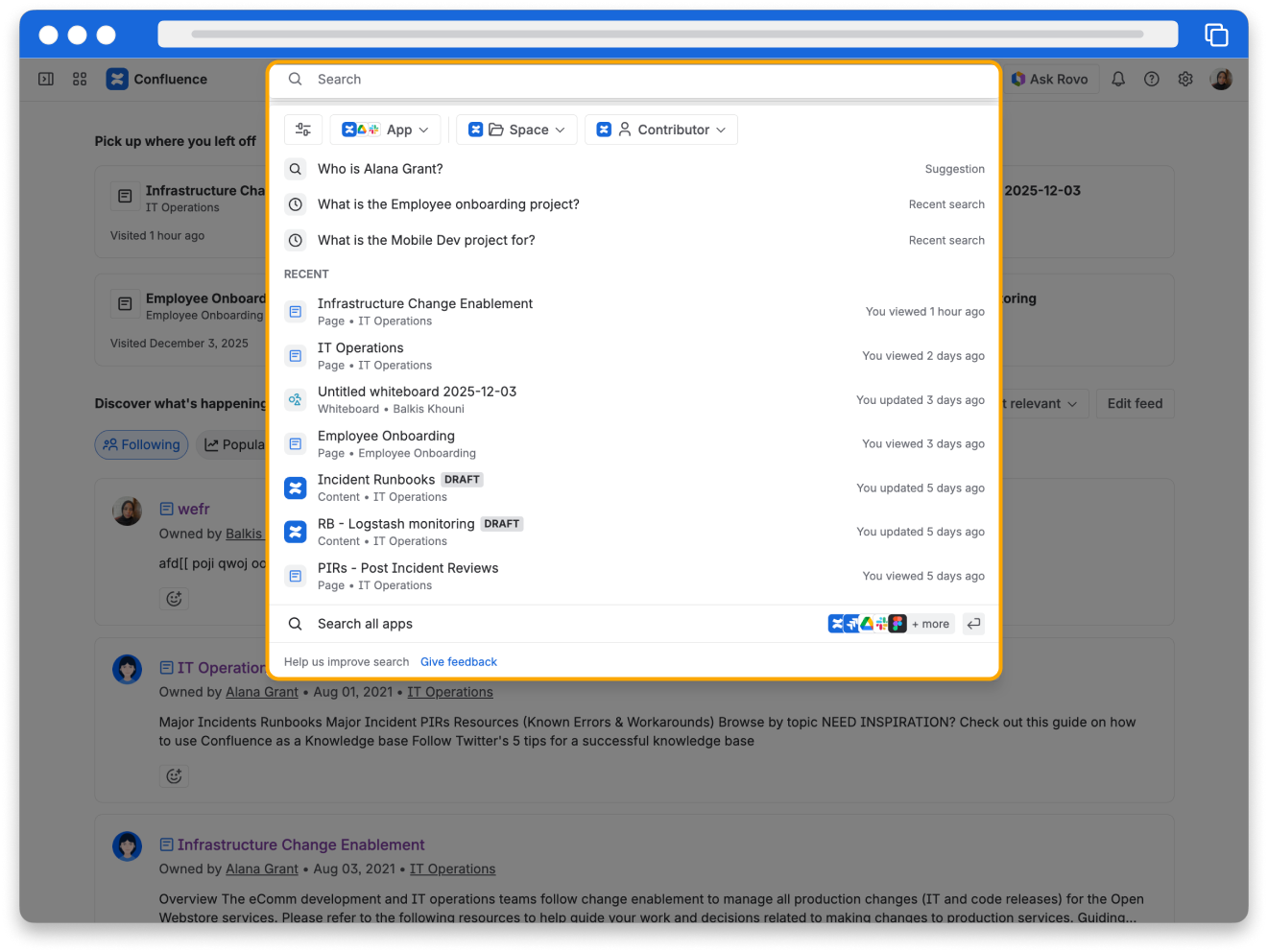
Atlassian's Rovo (2.3M monthly active AI users, growing 50% quarter-over-quarter) is grounded in the Teamwork Graph, a data model linking work items, people, and knowledge across Jira, Confluence, and connected third-party tools.
When a user asks Rovo "Why is the sprint delayed?", it correlates blocked Jira tickets, the Confluence spec that changed requirements, and the Bitbucket PR stuck in review. Rovo Chat offers Standard, Think Deeper, and Deep Research modes. Rovo Dev provides AI coding assistance in the CLI, VS Code, and Bitbucket code review. Rovo Studio, the no-code AI agent builder, is coming to general availability at Team '26.
Source: Atlassian
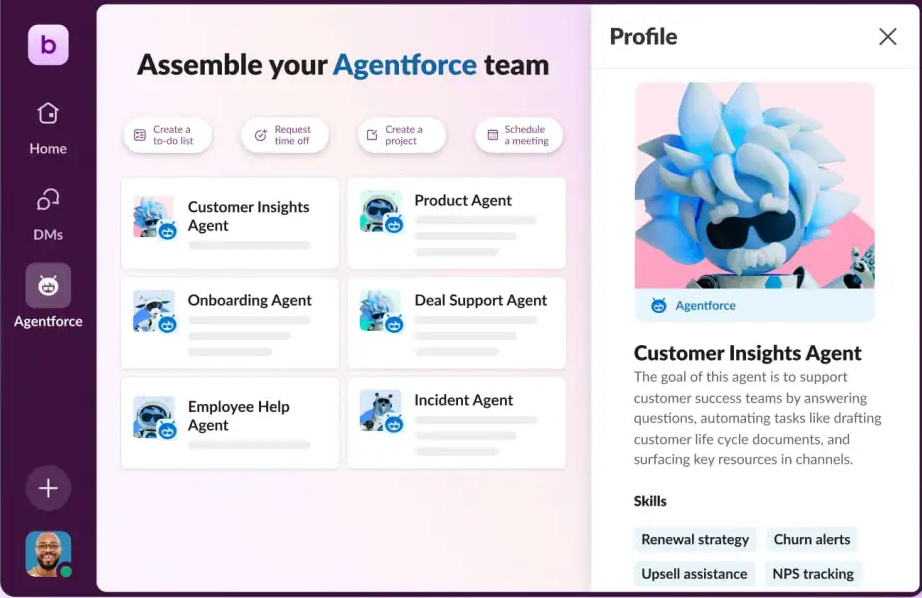
Salesforce's Agentforce is powered by the Atlas Reasoning Engine, which uses a Reasoning and Acting (ReAct) loop: reason, act, observe, adapt.
Pre-built agents cover service, SDR, sales coaching, personal shopping, and campaign assistance. The Einstein Trust Layer provides zero data retention with LLM partners, PII masking, and toxicity detection. Salesforce reports that Agentforce resolves 85% of its own support requests without human escalation.
Source: Salesforce
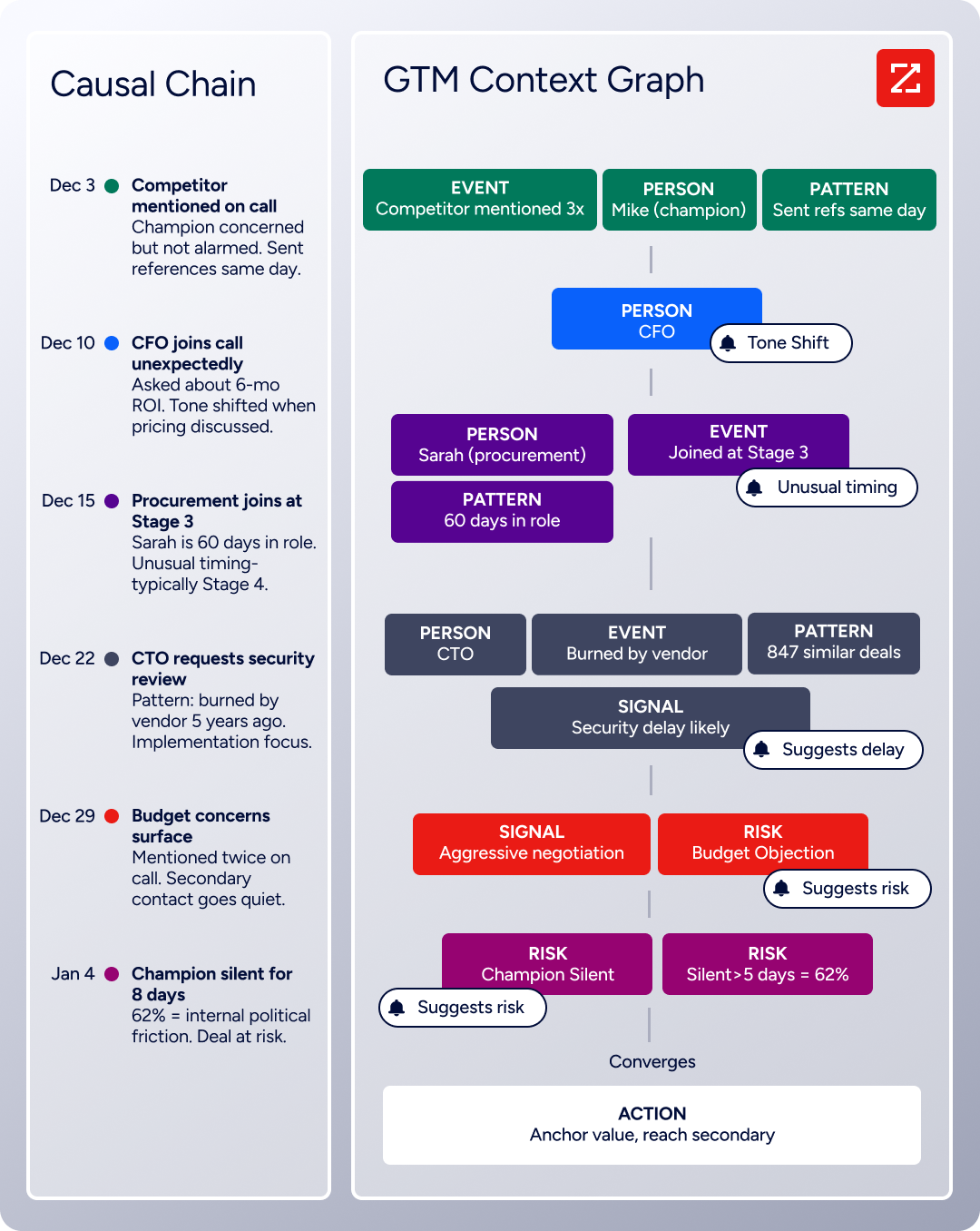
ZoomInfo's GTM Context Graph (1.5B+ data points processed daily) takes a different approach.
Rather than reasoning about internal work (Rovo) or customer service interactions (Agentforce), ZoomInfo's AI reasons about go-to-market outcomes. It fuses third-party B2B data with a customer's CRM records, conversation transcripts, and behavioral signals to capture why deals move or stall, not just that they did. A CRM records that a deal's stage moved; the GTM Context Graph recognizes that executive sponsorship entering at this stage, combined with ROI-focused questions on the last call, matches the pattern behind closed-won deals in your segment.
AI agents inside GTM Workspace then draft outreach addressing the concern the intelligence identified, while GTM Studio targets accounts matching your win patterns, not generic ICP models.
Source: ZoomInfo
"ZoomInfo's not just a contact data company anymore. They've built a full system of execution. GTM Intelligence actually works the list, writes the outreach, triggers the play, and helps drive predictable growth." — Ian Brodie, CEO & Co-Founder, Levanta (Levanta case study)
Knowledge management and documentation
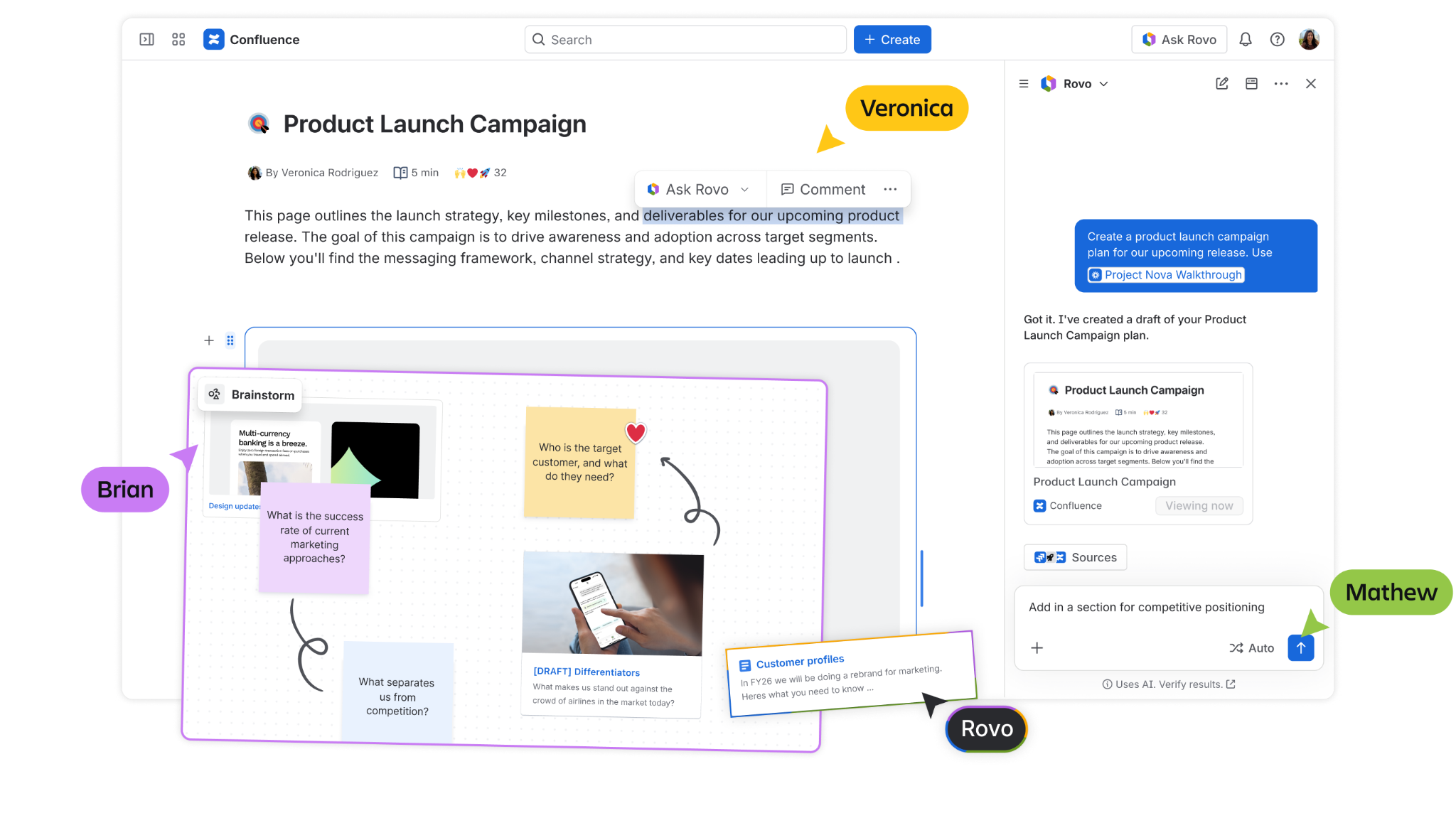
Confluence is Atlassian's knowledge management platform: wiki, team workspace, and (via Company Hub) internal intranet.
It organizes content into Spaces with hierarchical page trees, and its Macros system pulls live Jira data into documentation. A Confluence page with a Jira macro always shows the latest sprint status, not a screenshot from last week. Beyond traditional pages, Confluence offers Live Docs (real-time co-editing), Whiteboards (infinite canvas with one-click conversion to Jira issues), and Databases (structured data with table, board, calendar, and timeline views).
Rovo AI can draft from an outline, summarize long pages, reformat content for different audiences (Remix), and generate audio briefings.
Source: Atlassian
Salesforce approaches knowledge differently.
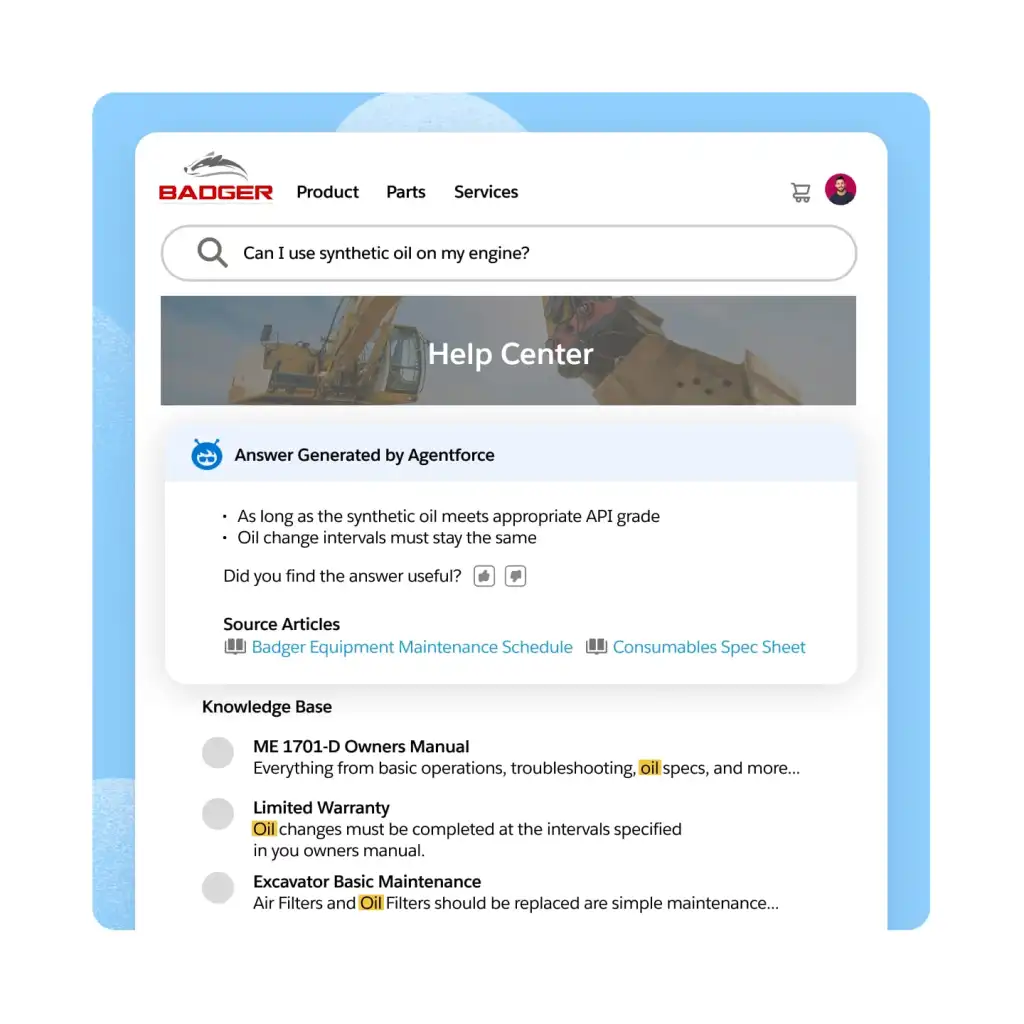
Knowledge Management within Service Cloud provides a knowledge base for customer-facing support articles, integrated with case resolution workflows. It serves service agents and customer self-service, not internal team documentation. Slack adds a collaboration layer with channels, canvases, and threaded conversations, but Slack is built for real-time communication, not structured knowledge.
Source: Salesforce
ZoomInfo's knowledge layer is specialized: it captures intelligence about external companies and contacts, not internal documentation. Account summaries, buying group insights, and competitive intelligence from the GTM Context Graph serve as a real-time knowledge base about your market, not your organization.
Integration ecosystems and developer platforms
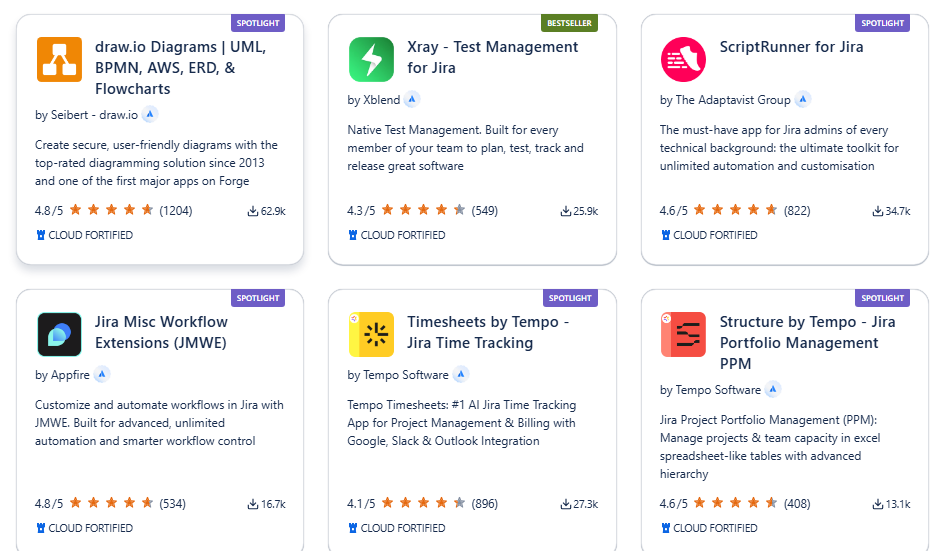
Atlassian's Marketplace hosts 7,000+ apps from 2,200+ partners, with 3,000+ for Jira alone.
Forge is the primary app development framework, running Node.js serverless functions on Atlassian's infrastructure. Atlassian exposes product-specific REST APIs for Jira (v2 and v3), Confluence (v1 and v2, plus GraphQL), and other products, with OpenAPI specs and Postman collections at developer.atlassian.com. The Atlassian MCP Server lets external LLMs interact with Atlassian data programmatically. Native integrations span Slack, Microsoft Teams, GitHub, GitLab, Google Workspace, and more.
Source: Atlassian
Salesforce's AppExchange is the largest enterprise cloud marketplace: 9,000+ partner apps, 14+ million installs, 91% of customers using at least one app.
The Salesforce Platform offers more than 30 APIs across REST, SOAP, GraphQL, and gRPC. MuleSoft provides enterprise integration with hundreds of pre-built connectors and a reported 426% ROI. AgentExchange (launched March 2025) adds a marketplace for Agentforce components with 250+ pre-built agent actions. The Headless 360 initiative exposes every platform capability as an API, MCP tool, or CLI command.
ZoomInfo integrates with both ecosystems.
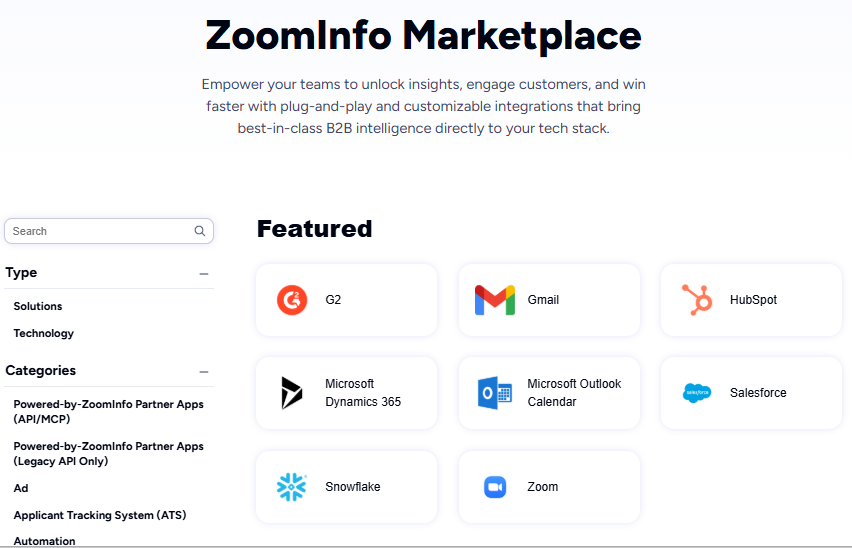
The ZoomInfo App Marketplace lists 172+ partners, with featured integrations for Salesforce, HubSpot, and Microsoft Dynamics 365. ZoomInfo's Enterprise APIs cover search, enrich, AI intelligence, marketing audiences, and engagement data. The MCP server at https://mcp.zoominfo.com/mcp connects ZoomInfo data to any MCP-compatible AI client, including Claude and ChatGPT. API access comes included in all relevant plans.
Source: ZoomInfo
"The plug-and-play aspect of the API means I can integrate it very easily into any process and get information at a moment's notice." — Jerry Wilson, Senior Marketing Intelligence Analyst, BDO Canada, who saw an 87% reduction in time spent on data dashboard updates. (BDO Canada case study)
Pricing reflects different value models
Each platform's pricing structure reveals who it's built for.
Atlassian uses per-user, per-product pricing with free tiers. Jira, Confluence, JSM, Trello, and Bitbucket all offer perpetual free plans (not time-limited trials) for small teams.
Paid plans start low: Trello at $5/user/month, Bitbucket at $3.65/user/month, JSM at $20/agent/month. Enterprise pricing requires sales engagement. The volume model decreases per-user cost as seat count increases. Hidden costs include the Guard add-on for SSO/SAML (included only at Enterprise tier), Rovo credit overages, Marketplace app fees, and Data Center premiums for self-hosted deployments.
Salesforce pricing starts at a free CRM for up to 2 users, with Starter Suite at $25/user/month. But meaningful deployments typically require Enterprise ($175/user/month) or Unlimited ($350/user/month).
The top-tier Agentforce 1 edition runs $550/user/month and includes unmetered Agentforce, Tableau Next, Slack Enterprise+, and Data Cloud credits. Agentforce consumption is priced separately at lower tiers: $2 per conversation or $500 per 100,000 Flex Credits. Marketing Cloud starts at $1,500/org/month. Premier Support adds 30% of net license fees. Over 70% of implementations are partner-led, adding cost.
ZoomInfo uses custom-quoted, consumption-based pricing with no published prices.
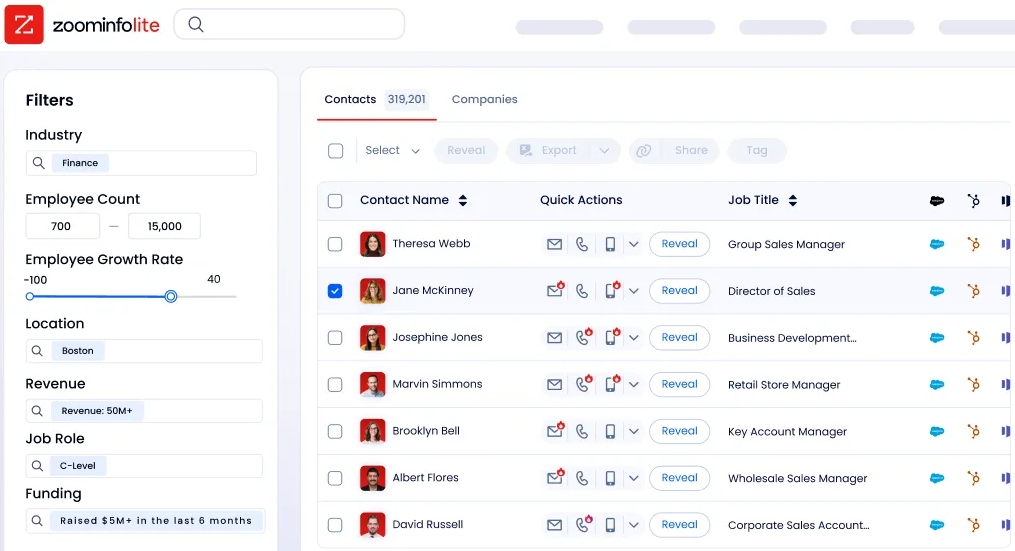
Plans are organized into Sales (Professional, Advanced, Enterprise) and Marketing (Marketing Demand, ABM Lite, ABM Enterprise) tiers. Credits fuel data exports (1 credit = 1 contact or company profile export). ZoomInfo Lite provides permanent free access with 10 monthly export credits, and a separate 7-day free trial offers broader access.
Source: ZoomInfo
The three platforms typically coexist in a tech stack rather than replace each other. An enterprise might run Atlassian for engineering and operations, Salesforce for customer management, and ZoomInfo for buyer intelligence, each serving a distinct function.
Security, compliance, and enterprise readiness
All three platforms meet enterprise security standards, each with distinct strengths.
Atlassian holds SOC 2 Type II, ISO 27001, and FedRAMP Moderate authorization for Jira, Confluence, and JSM.
Atlassian Guard provides SSO/SAML/SCIM provisioning, data classification labels, threat detection, and content scanning (included at Enterprise tier, add-on for lower tiers). Data Center deployment gives organizations with strict data sovereignty requirements a self-managed option. Infrastructure runs on AWS with multi-AZ failover and AES-256 encryption at rest.
Salesforce holds ISO 27001/27017/27018, SOC 1/2/3, FedRAMP (Government Cloud), and HITRUST.
Salesforce Shield (premium add-on) provides event monitoring, platform encryption with BYOK, field audit trail, and PII detection. Hyperforce enables deployment on public cloud infrastructure with regional data residency at no additional cost. The Einstein Trust Layer provides zero data retention with LLM partners, making it critical for regulated industries adopting Agentforce.
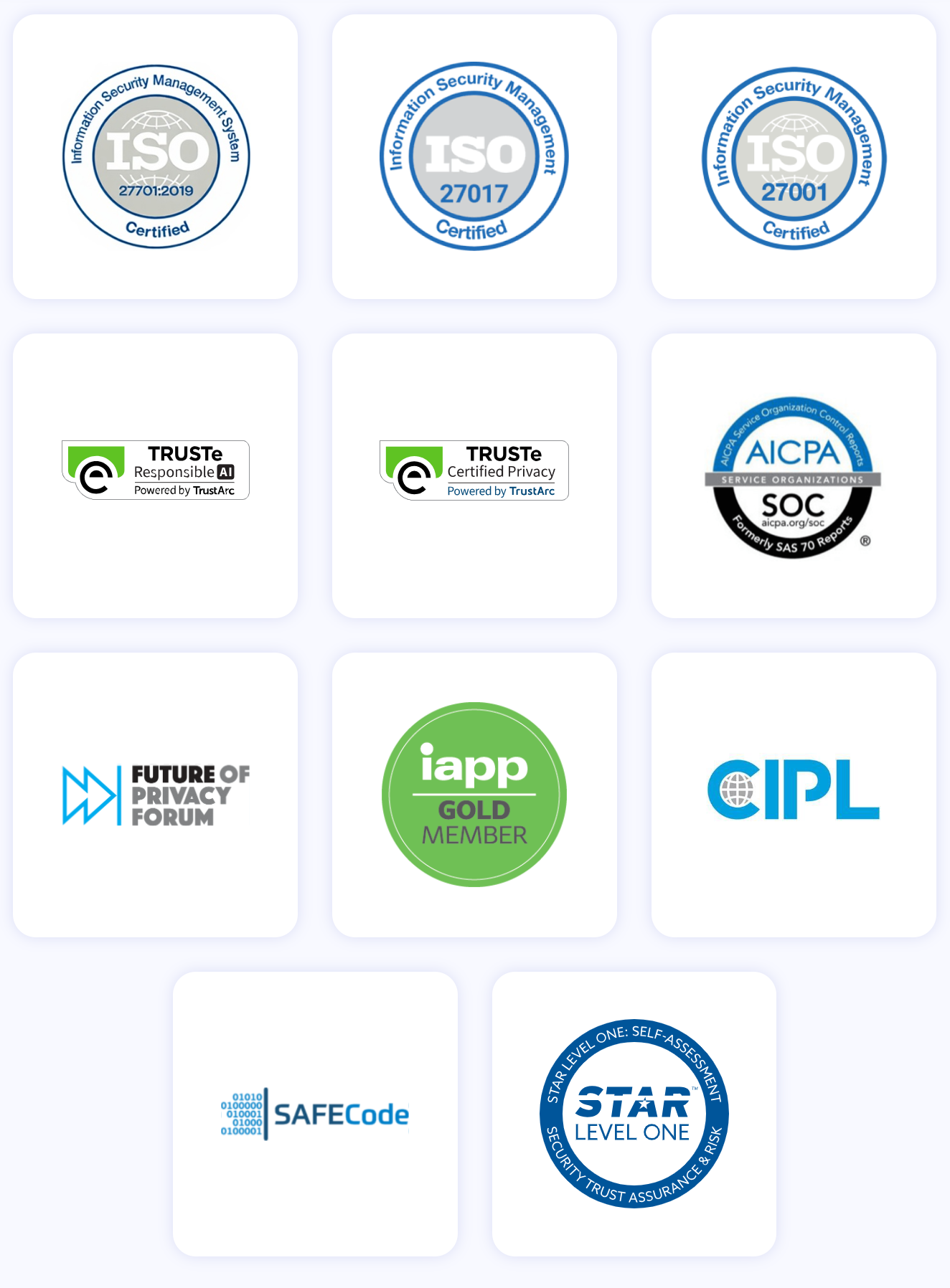
ZoomInfo maintains ISO 27001, ISO 27701, SOC 2 Type II, TRUSTe GDPR, and TRUSTe CCPA certifications, all renewed annually.
ZoomInfo is a registered data broker in California and Vermont. A dedicated Trust Center provides transparency into data practices. For B2B data providers, privacy compliance is a core requirement, and ZoomInfo's privacy infrastructure is built into the data layer.
Atlassian vs. Salesforce vs. ZoomInfo: Which should you choose?
The choice depends on what problem you're solving. In many organizations, the answer is some combination of all three.
Choose Atlassian if:
Your primary need is managing engineering projects, sprints, and deployments
You need an IT service management platform at a fraction of ServiceNow's cost
Your teams need a shared knowledge base and documentation system
Workflow customization and agile methodology support matter
You want free tiers to get started before committing
Choose Salesforce if:
Your primary need is managing customer relationships, sales pipelines, and revenue
You need CRM, service, marketing, and commerce on a single platform
Autonomous AI agents for customer-facing interactions are a priority
You require the largest enterprise ecosystem (9,000+ apps, 17 industry clouds)
Your organization has the budget and administrative resources for a full enterprise deployment
Choose ZoomInfo if:
You need verified B2B data to fuel your sales and marketing efforts
Your CRM data is incomplete and your team wastes time researching prospects manually
You want AI that understands why deals move, not just that they moved
Intent signals and buyer intelligence should drive your go-to-market strategy
You need intelligence that works in any tool, whether Salesforce, HubSpot, or your own custom systems
Try ZoomInfo free with ZoomInfo Lite or a 7-day full trial.
Atlassian manages the work. Salesforce manages the customer. ZoomInfo provides the intelligence that tells your go-to-market teams who to pursue and when. Together, they cover three layers: internal operations, customer engagement, and buyer intelligence. The question isn't which one to choose. It's which layers you're still missing.
Atlassian vs. Salesforce vs. ZoomInfo FAQ
What is the core difference between Atlassian, Salesforce, and ZoomInfo?
Atlassian is a project management, software development, and IT service management platform. Its core products (Jira, Confluence, Bitbucket, JSM) manage how work gets planned, tracked, and documented inside an organization.
Salesforce is a CRM and customer engagement platform. Its core products (Sales Cloud, Service Cloud, Marketing Cloud, Commerce Cloud) manage how organizations sell to, support, and market to customers.
ZoomInfo is a B2B data and go-to-market intelligence platform that provides verified contact data, company intelligence, and buyer intent signals to fuel prospecting and pipeline generation.
Do companies typically use Atlassian and Salesforce together?
Yes. Atlassian and Salesforce solve different problems and are frequently used alongside each other. Engineering and IT teams use Atlassian for project management and service operations, while sales, service, and marketing teams use Salesforce for customer relationship management. They are complementary, not competitive.
ZoomInfo often serves as a third layer, providing the buyer intelligence that feeds Salesforce's CRM and informing which accounts and contacts go-to-market teams should prioritize.
How do the AI capabilities compare across the three platforms?
Atlassian's Rovo (2.3M monthly active users) is grounded in work data. It reasons across Jira tickets, Confluence pages, and Bitbucket code to help teams understand project status and blockers. Salesforce's Agentforce ($800M ARR) reasons across customer data; it autonomously handles service cases, sales coaching, and marketing campaigns using the Atlas Reasoning Engine.
ZoomInfo's GTM Context Graph reasons across go-to-market data. It fuses B2B intelligence with CRM records and conversation transcripts to reveal why deals move or stall, then powers AI-drafted outreach and account prioritization.
Which platform is cheapest to get started with?
Atlassian offers the most generous free tiers: Jira, Confluence, JSM, Trello, and Bitbucket all have perpetual free plans for small teams. Salesforce offers a free CRM for up to 2 users, with Starter Suite at $25/user/month. ZoomInfo offers ZoomInfo Lite as a permanent free tier with 10 monthly data export credits plus a 7-day free trial of paid features.
At enterprise scale, Atlassian is typically the least expensive per user, Salesforce the most expensive (especially with multi-cloud deployments and add-ons), and ZoomInfo falls in between with custom-quoted pricing based on data consumption.
Can ZoomInfo integrate with both Atlassian and Salesforce?
ZoomInfo integrates natively with Salesforce through a featured Marketplace connector that enriches CRM records with verified contact data, company intelligence, and buying signals. ZoomInfo does not have a direct native integration with Atlassian's core products, since they serve different functions. However, ZoomInfo's APIs and MCP server let any system access its intelligence programmatically, so organizations building custom workflows between platforms can pull ZoomInfo data into any tool.
Which platform is best for IT service management?
Atlassian's Jira Service Management is built for ITSM, covering incident, change, problem, and request management with a built-in CMDB (Assets) and on-call management (Opsgenie), starting at $20/agent/month. Salesforce entered ITSM with Agentforce IT Service, with 180 organizations selecting it in its first months, using its CRM data to correlate IT issues with customer impact. ZoomInfo does not offer ITSM capabilities.
How do the platforms handle enterprise security and compliance?
All three hold SOC 2 Type II and ISO 27001 certifications. Atlassian adds FedRAMP Moderate authorization and offers Data Center for self-hosted deployments. Salesforce adds HITRUST, Government Cloud (FedRAMP), and Hyperforce for regional data residency. ZoomInfo adds ISO 27701 (privacy management), TRUSTe GDPR and CCPA validations, and is a registered data broker in California and Vermont.
Which platform has the largest integration ecosystem?
Salesforce leads with 9,000+ AppExchange apps and 14 million+ installs, plus MuleSoft for enterprise integration. Atlassian follows with 7,000+ Marketplace apps from 2,200+ partners. ZoomInfo's Marketplace lists 172+ partners, but its integration strategy focuses on depth over breadth, with native connectors for major CRMs, cloud data platforms (Snowflake, Databricks, AWS, Google Cloud), and AI platforms via MCP.
