
Choosing between Brevo and Kit (formerly ConvertKit) for your email marketing often comes down to five questions:
Are you a business running multichannel campaigns, or a creator building an audience through a newsletter?
Do you need email, SMS, WhatsApp, and CRM under one roof, or a focused platform built around email and monetization?
Is your priority reaching thousands of contacts across multiple channels cheaply, or nurturing an engaged subscriber list?
Do you already know who your audience is, or do you need help identifying the right people to reach?
Are you selling products to consumers, or selling B2B solutions to buying committees?
In short, here's what we recommend:
Brevo is the multichannel marketing platform for businesses that need email, SMS, WhatsApp, live chat, and CRM in a single tool. Its send-volume pricing model (unlimited contacts on every plan, including Free) makes it cheaper than contact-count platforms for companies with large lists. With 150+ integrations, native transactional email, and an AI layer called Aura that generates content and optimizes send times, Brevo covers a lot of ground at SMB prices. The tradeoff: automation workflows feel restrictive next to dedicated tools, reporting lacks depth for conversion-level analysis, and the email editor occasionally struggles with complex layouts.
Kit (formerly ConvertKit) is the email-first platform built for creators who earn a living from their audience. Its Creator Network of 74,000+ professional creators powers organic list growth through mutual recommendations, a growth loop that competitors cannot easily replicate. Kit's visual automation builder, integrated commerce (digital products, paid newsletters, coaching), and 99.8% delivery rate make it the tool of choice for authors, podcasters, and course creators like James Clear, Ali Abdaal, and Tim Ferriss. But Kit has no SMS or WhatsApp capability, reporting is limited to 90-day windows, and the September 2025 price increase (Creator plan jumping from $15 to $33/month) has frustrated early-stage creators.
Both platforms excel at sending emails to people who already know you. But for B2B teams, there's a question neither Brevo nor Kit answers: how do you identify the right contacts to reach in the first place?
ZoomInfo is a B2B data and GTM platform built on 500M contacts, 100M companies, 135M+ verified phone numbers, and 200M+ verified business email addresses. Its GTM Context Graph processes 1.5B+ data points daily, combining this data with your CRM records, conversation transcripts, and behavioral signals to reveal not just what happened in a deal, but why. For B2B organizations, ZoomInfo operates upstream of any email tool. It tells you who to target, when they're ready to buy, and what to say, making whatever email platform you choose more effective. Your team accesses this intelligence through the GTM Workspace for sellers, GTM Studio for marketers and RevOps, or APIs and MCP in any front-end.
If you're a B2B team wondering whether better data would improve your campaign results, see how ZoomInfo works.
Brevo vs. Kit vs. ZoomInfo at a glance
Brevo | Kit (formerly ConvertKit) | ZoomInfo | |
|---|---|---|---|
Core function | Multichannel marketing platform | Creator email & monetization platform | B2B data intelligence & GTM platform |
Channels | Email, SMS, WhatsApp, push, chat, phone, wallet | Email only | Multi-channel orchestration via GTM Studio |
Automation | Visual workflow builder, multichannel | Visual automations, creator-focused | AI-powered GTM plays and workflows |
CRM | Built-in sales CRM with pipelines | No native CRM | Full B2B intelligence with 500M contacts |
AI capabilities | Aura AI (content, segmentation, send-time) | AI subject line generator, Kitlytics app | GTM Context Graph, Copilot (within GTM Workspace) |
Key differentiator | Multichannel breadth at low cost | Creator Network growth loop | Verified B2B data + intent signals |
Pricing model | By emails sent (unlimited contacts) | By subscriber count | Custom, consumption-based |
Free plan | 300 emails/day, unlimited contacts | Up to 10,000 subscribers | ZoomInfo Lite (permanent free tier) |
Best for | SMBs and ecommerce needing email + SMS + CRM | Creators building audience-driven businesses | B2B teams targeting accounts and buying committees |
Different platforms for different missions
Brevo and Kit look similar from a distance. Both send emails. Both offer automation. Both have free plans. But their design philosophies point in opposite directions, and choosing the wrong one means fighting the platform instead of using it.
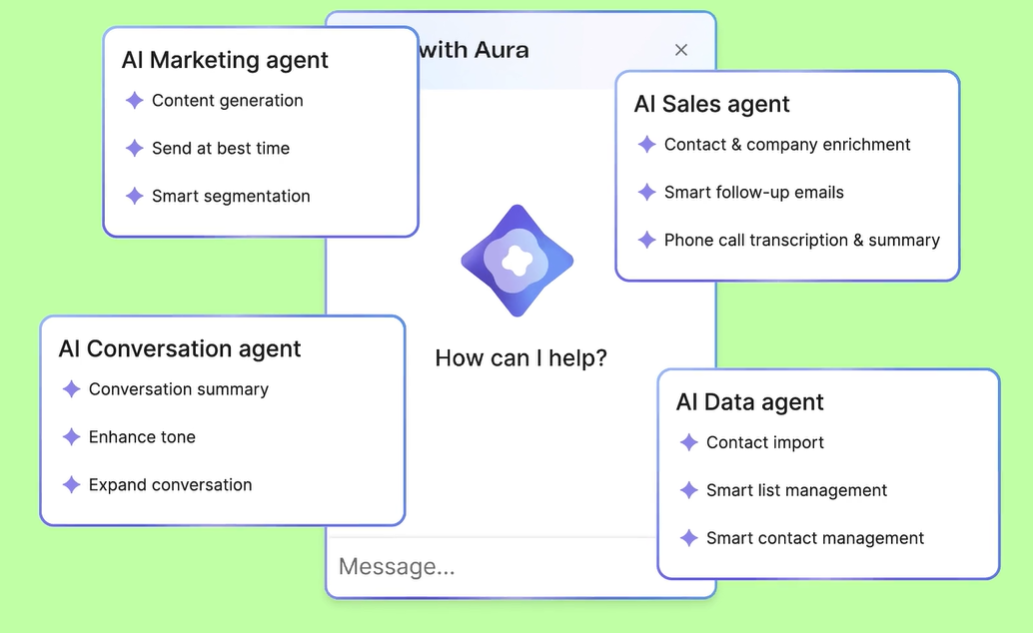
Brevo was built for businesses, particularly SMBs and ecommerce companies, that need to communicate with customers across every channel. A Shopify store running abandoned cart emails, SMS flash sale alerts, and WhatsApp order confirmations can manage all three from a single Brevo dashboard. The platform's Aura AI Marketing Agent generates copy, auto-segments audiences, and optimizes send times per recipient. And because Brevo charges by emails sent rather than contacts stored, a company with 50,000 contacts sending monthly newsletters pays a fraction of what Mailchimp would charge.
Source: Brevo
Kit was built for one audience: individual creators. The platform assumes you're a person (not a brand) who writes a newsletter, sells digital products, and grows through peer recommendations. Everything from the visual automation builder to the Commerce feature (ebooks, courses, coaching, paid newsletters) to the Creator Network reflects this focus. Kit avoids SMS, WhatsApp, and multichannel complexity because creators don't need it. They need their emails to land in the inbox, and Kit's shared IP pool, composed almost entirely of permission-based creator audiences, delivers a 40% average open rate across the platform.
Source: Kit
The gap between them becomes clear when you look at what each platform can't do. Brevo cannot cross-promote your newsletter with 74,000 other creators. Kit cannot send a WhatsApp campaign or manage a sales pipeline.
Brevo wins on channel breadth, Kit wins on creator growth
Brevo's multichannel capability is real, not a checkbox. As a certified WhatsApp Business provider, Brevo integrates WhatsApp directly into automation workflows alongside email and SMS. A single workflow can send an email, wait 24 hours, then fire an SMS follow-up if the email went unopened, all without switching tools or syncing data between platforms. Brevo cites a 98% average open rate for WhatsApp messages, making it a useful engagement channel for businesses with mobile-first customers.

Source: Brevo
Add in push notifications, live chat, VoIP phone, and wallet integration (with a reported 95% card retention rate), and Brevo consolidates what would otherwise require four or five separate subscriptions.

Source: Brevo
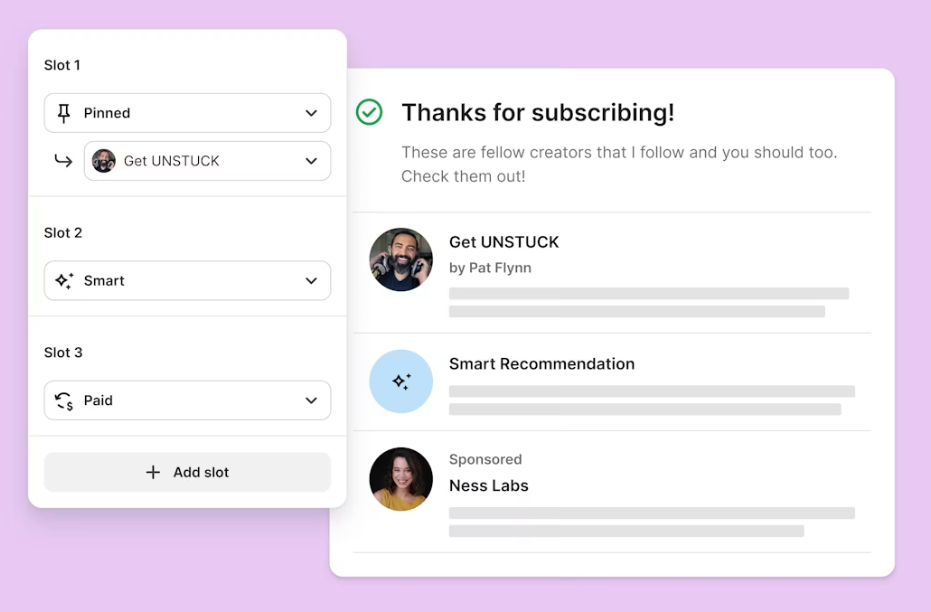
Kit takes the opposite approach: invest everything in making email work better rather than spreading across channels. The Creator Network and Recommendations feature is Kit's most distinctive asset.
Source: Kit
When someone subscribes to a creator's newsletter, they see curated recommendations for other Kit creators and can subscribe to those too, without leaving the signup flow. Kit reports 2x email list growth for creators using mutual recommendations.
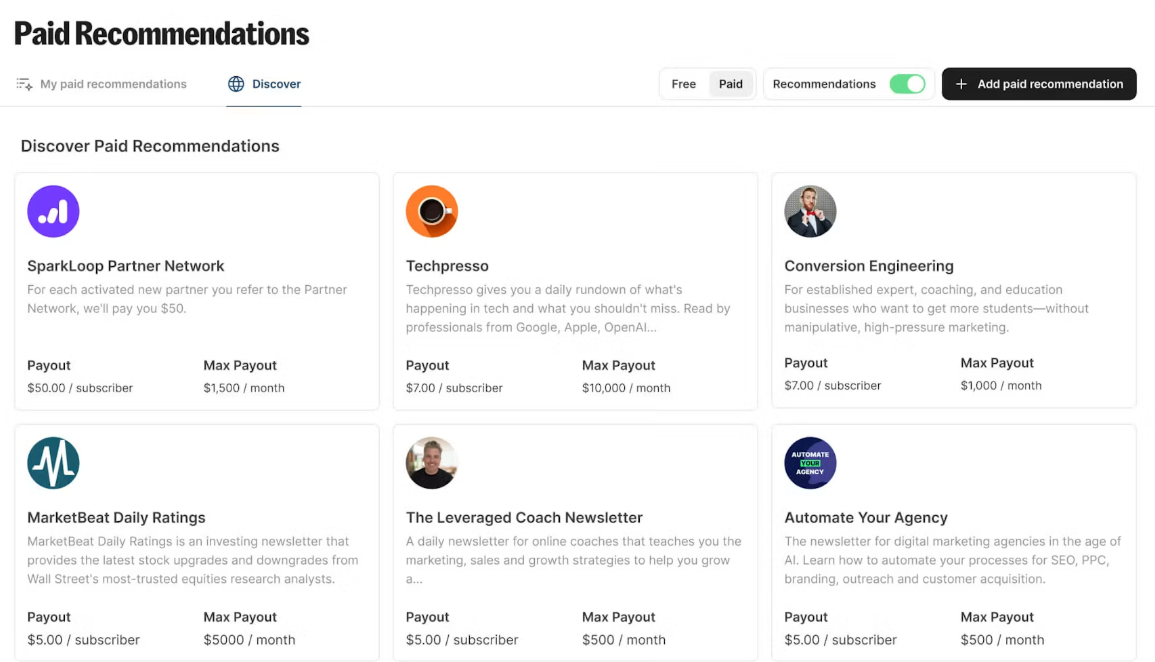
This network effect is something Brevo doesn't have. Kit's Paid Recommendations take it further: creators can pay to appear in other newsletters' recommendation slots (paying only for subscribers who convert), or earn revenue by recommending paying creators to their own audience. The cross-platform reach through Kit's SparkLoop partnership means Kit creators can advertise in newsletters on any platform, not just Kit.
Source: Kit
Automation built for different workflows
Both platforms offer visual automation builders, but they're designed for different jobs.
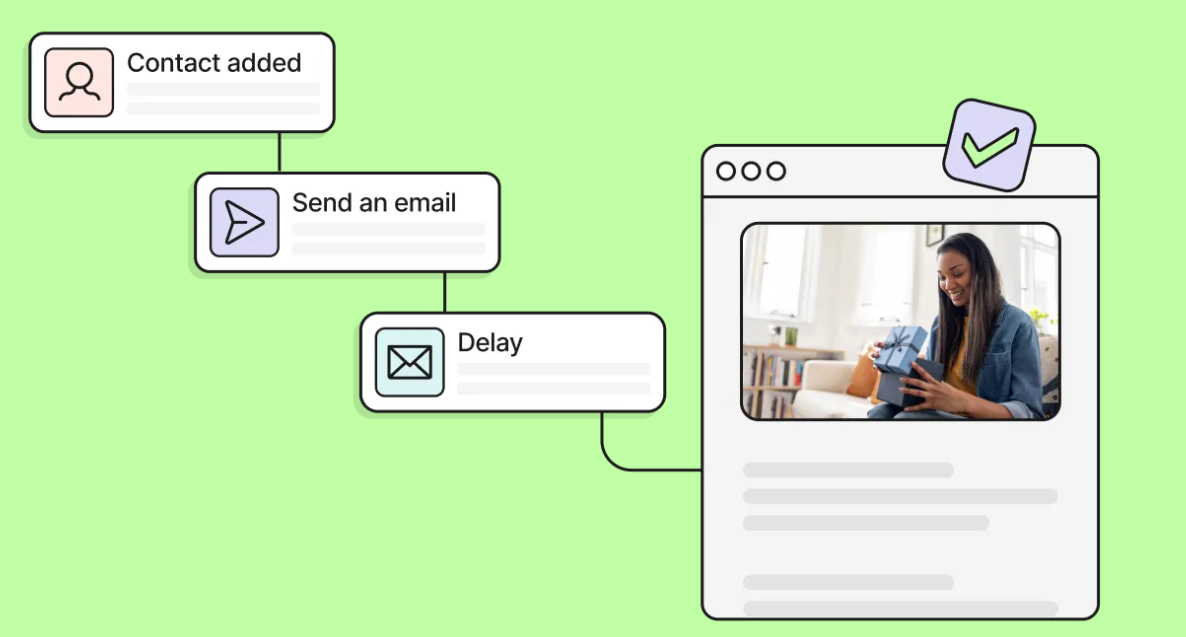
Brevo's automation editor handles multichannel sequences: email followed by SMS followed by WhatsApp, all triggered by subscriber behavior, form submissions, cart abandonment, or custom dates. Pre-built templates cover welcome series, abandoned cart recovery, and birthday campaigns. The automation engine supports lead scoring, dynamic segmentation based on purchase history and campaign interactions, and AI-driven product recommendations.
Source: Brevo
The limitation shows up at the complexity ceiling. G2 reviewers consistently note that advanced multi-step workflows and dynamic segmentation feel restrictive compared to ActiveCampaign or HubSpot. For straightforward ecommerce flows (cart abandonment, post-purchase nurture, re-engagement), Brevo handles the job. For conditional branching logic with dozens of paths, you'll hit walls.
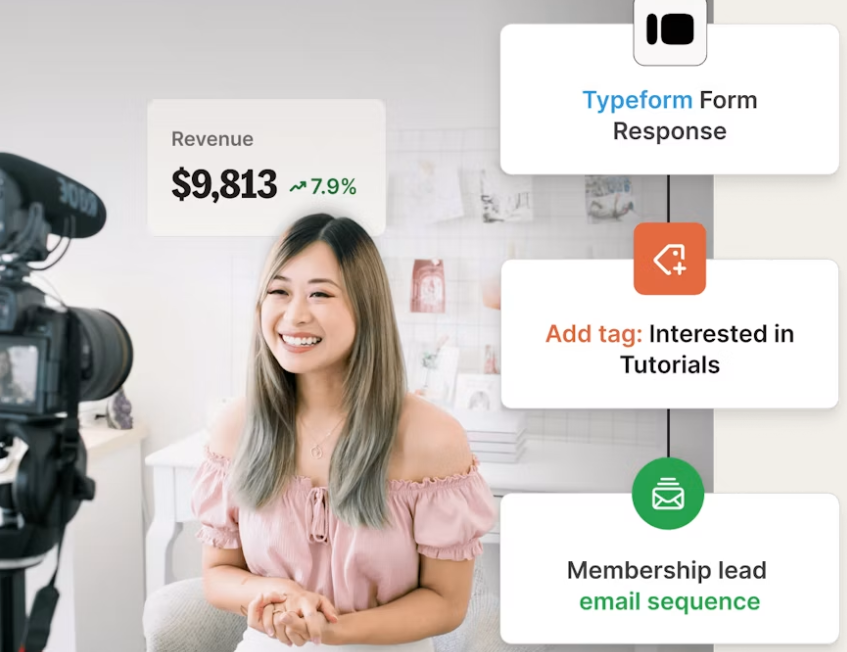
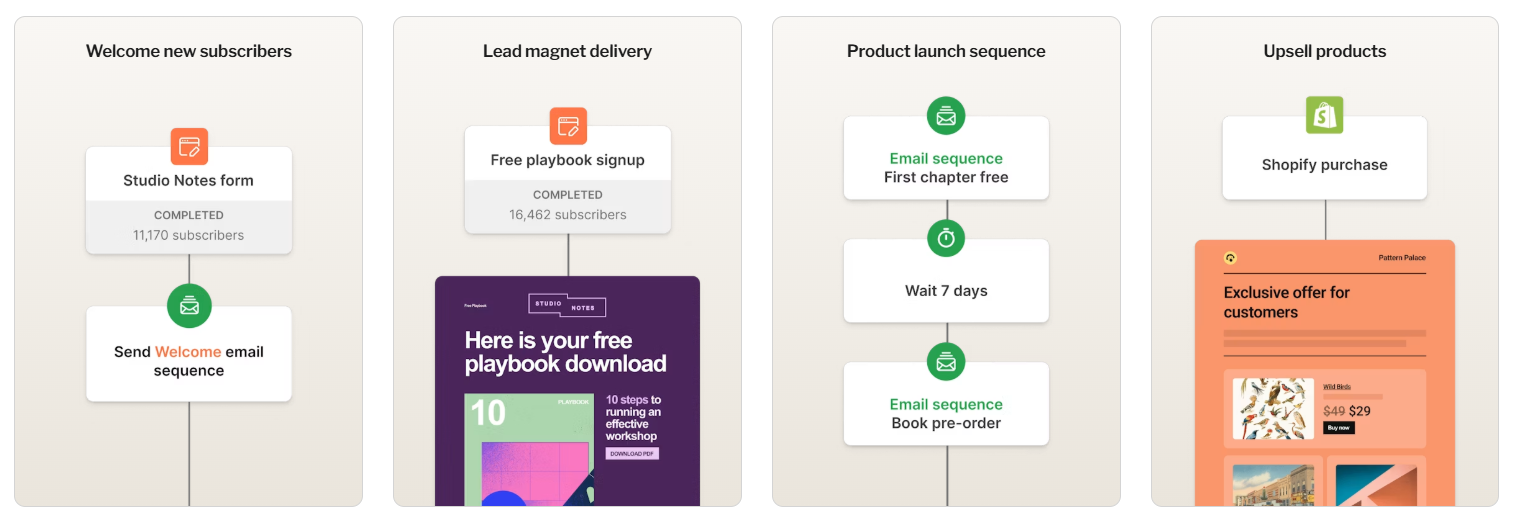
Kit's Visual Automations are built for creator business models. The canvas-based builder chains triggers (form submission, tag applied, product purchased), actions (enroll in sequence, add tag, set custom field, send webhook), and conditions (yes/no branching based on subscriber data) into workflows that run continuously. New automation templates for post-webinar sales pitches, self-paced email courses, and community upsells shipped in January 2026.
Source: Kit
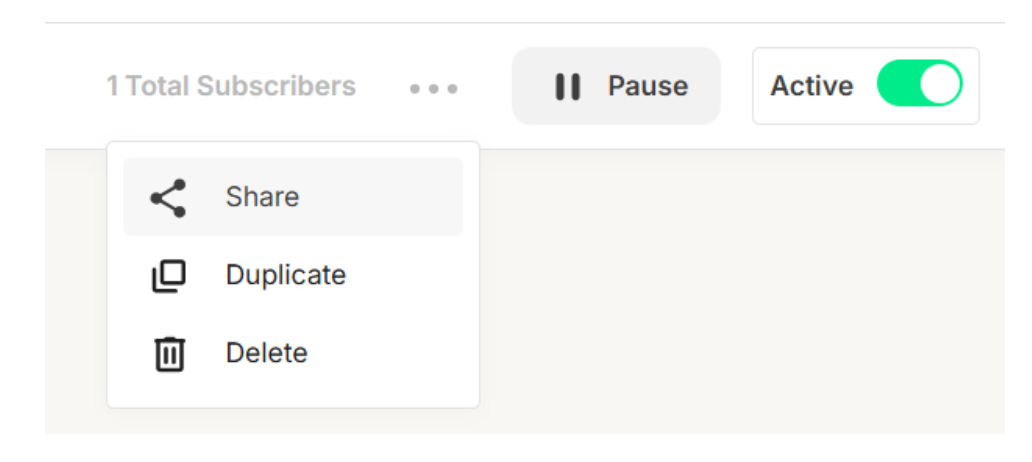
Kit's automation shines in the details creators care about: continuously looping subscribers through evergreen content sequences, sharing automations with other Kit users (so course creators can distribute pre-built funnels to students), and tight integration with Kit Commerce so a product purchase automatically triggers a welcome-and-onboarding workflow.
Source: Kit
The catch: A/B testing is not available inside automation workflows on either platform. Kit limits it to broadcasts and sequences. And Kit's free Newsletter plan restricts automation to a single basic Visual Automation, which is not enough for creators who want multi-stage subscriber journeys from day one.
The targeting gap neither platform fills
Brevo and Kit both excel at engaging people who've already raised their hand: subscribers who filled out a form, customers who placed an order, creators who joined a network. But for B2B organizations, the harder problem comes before anyone opts in: identifying which companies are researching your solution, finding the right contacts within those companies, and knowing when to reach out.
This is the layer where ZoomInfo operates. Brevo and Kit handle the "how" of communication. ZoomInfo answers the "who" and "when."
ZoomInfo's data platform (500M+ contacts across 100M companies) is verified through a multi-source pipeline backed by 300+ human researchers and achieving up to 95% accuracy on first-party data. In a Fortune 500 competitive RFP analyzing 25 million contacts across vendors, an independent consultant concluded that "no other competitor came even close."

Source: ZoomInfo
For B2B marketers, the practical difference matters. Sending a product announcement to 10,000 subscribers via Brevo or Kit is straightforward. But knowing which of those subscribers work at companies researching your category, which contacts on the buying committee you haven't reached yet, and whether a competitor just lost a key account requires a different kind of platform.
ZoomInfo's Buyer Intent Data tracks signals from 210 million IP-to-Organization pairings, while Guided Intent (exclusive to ZoomInfo) identifies topics historically correlated with deal success rather than requiring manual topic selection.
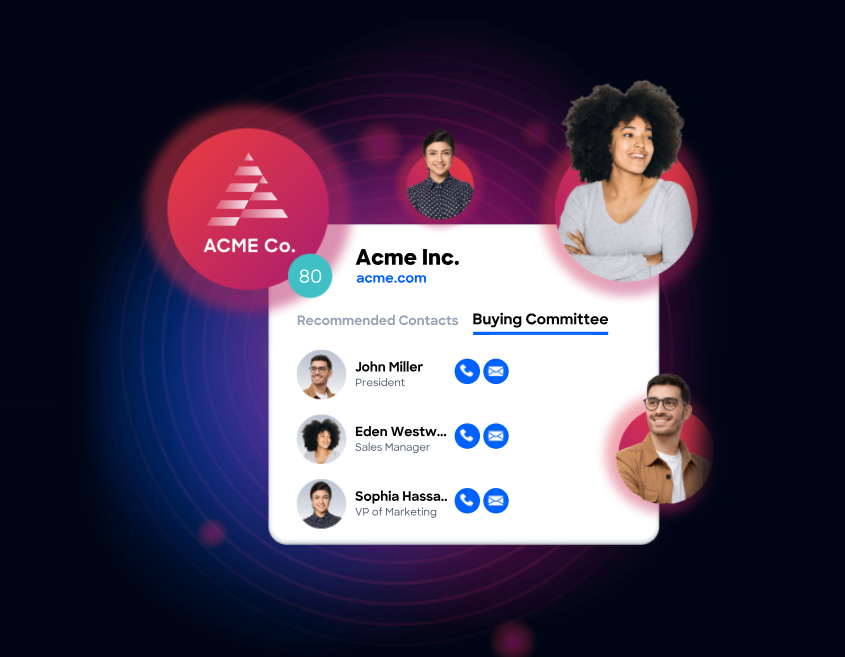
Source: ZoomInfo
GTM Studio lets marketers describe audiences in natural language and launch multi-channel plays targeting accounts that match proven win patterns, with no engineering ticket required.
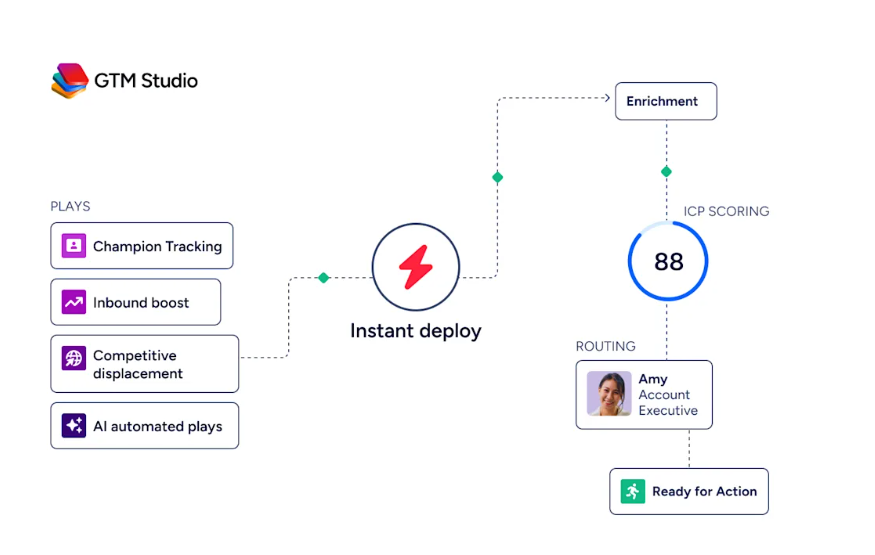
Source: ZoomInfo
"It's not just the data itself. It's more about the right data at the right time to help us reach out with the right message across that full buyer journey." (Chelsea Kenyon, Senior Director of Digital Strategy, Redwood Logistics)
Pricing reflects different value propositions
The three platforms price on different units, which makes direct comparison hard. The right model depends on what you're paying for.
Brevo charges by emails sent per month, with unlimited contacts on every plan:
Free: 300 emails/day, unlimited contacts, no credit card required
Starter: From $9/month for 5,000 emails/month
Standard: From $18/month for 5,000 emails/month (adds automation, A/B testing, AI send-time optimization)
Professional: From $499/month for 150,000 emails/month (adds WhatsApp, push, phone support, 10 seats)
Enterprise: Custom pricing
The send-volume model is Brevo's clearest advantage for list-heavy businesses. A company with 50,000 contacts sending twice a month pays based on 100,000 sends, not 50,000 contacts. But watch the add-ons: removing Brevo branding costs $10.80/month extra on Starter, and Sales CRM features require a separate add-on starting at $27.92/month.
Kit charges by subscriber count, with unlimited sends on all plans:
Newsletter (Free): Up to 10,000 subscribers, unlimited broadcasts, 1 basic automation
Creator: From $33/month for 1,000 subscribers (adds unlimited automations, A/B testing, App Store access)
Pro: From $66/month for 1,000 subscribers (adds engagement scoring, deliverability reporting, collaborative editing, SparkLoop)
Kit's free tier is generous (10,000 subscribers with commerce features), but the September 2025 price increase stings. G2 reviewers cite pricing as the most common complaint, particularly for creators not yet generating revenue. Kit also takes a 3.5% + $0.30 fee on digital product sales and a 23.5% fee on Paid Recommendations earnings.
ZoomInfo uses custom, consumption-based pricing with no published dollar amounts. All pricing is quote-based and scales around data access, API consumption, and AI activity. The platform offers ZoomInfo Lite as a permanent free tier with access to the B2B database, 10 monthly export credits, and basic website visitor identification. A 7-day free trial provides access to the full platform. For B2B teams evaluating the investment, the calculus is different: ZoomInfo's value comes from finding the right 500 accounts to target rather than blasting 50,000 contacts and hoping for the best.
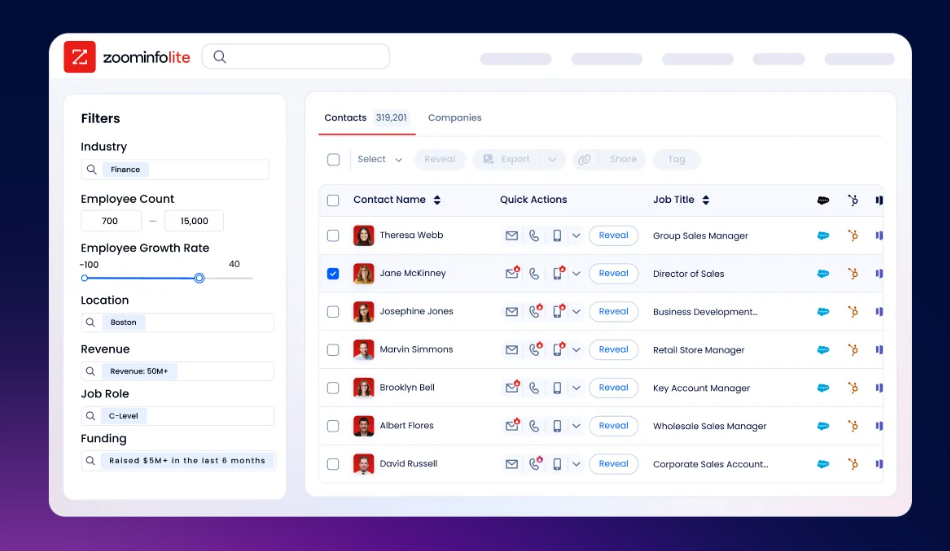
Source: ZoomInfo
"ZoomInfo gives us the information we need to execute. It's already there, so we can be three steps ahead." (William Kenimer, VP of Revenue Operations, Vensure)
Deliverability and data quality determine different outcomes
For email platforms, deliverability means inbox placement. For intelligence platforms, data quality means targeting accuracy. Both determine whether your marketing reaches the right person.
Brevo claims a 99% deliverability rate and has earned G2 recognition for support quality. But Capterra reviewers report an overly sensitive suspension algorithm that pauses campaigns even with healthy open rates of 25-41%. Independent benchmarks also show Brevo's inbox placement can fluctuate more than some competitors.
Kit reports a 99.8% delivery rate across over one billion messages sent monthly, with a 40% average open rate. Kit's deliverability advantage comes from its audience composition: because the platform serves almost exclusively permission-based creator audiences, its shared IP pool carries a healthier reputation than mixed-sender networks. Kit also invests in deliverability education, with a Deliverability Defined podcast, monthly deliverability reports, and a 34-article help center collection.
ZoomInfo approaches the quality question from the data side. Sending to an unverified email address doesn't just waste a send. It damages your sender reputation, which drags down deliverability for every subsequent campaign. ZoomInfo's verification pipeline combines automated ML scanning of 28 million domains daily, third-party partner data from 95 million businesses, and 300+ human researchers to ensure the contacts you export into Brevo or Kit are real people at real companies. The NeverBounce acquisition added email verification directly into the data layer.
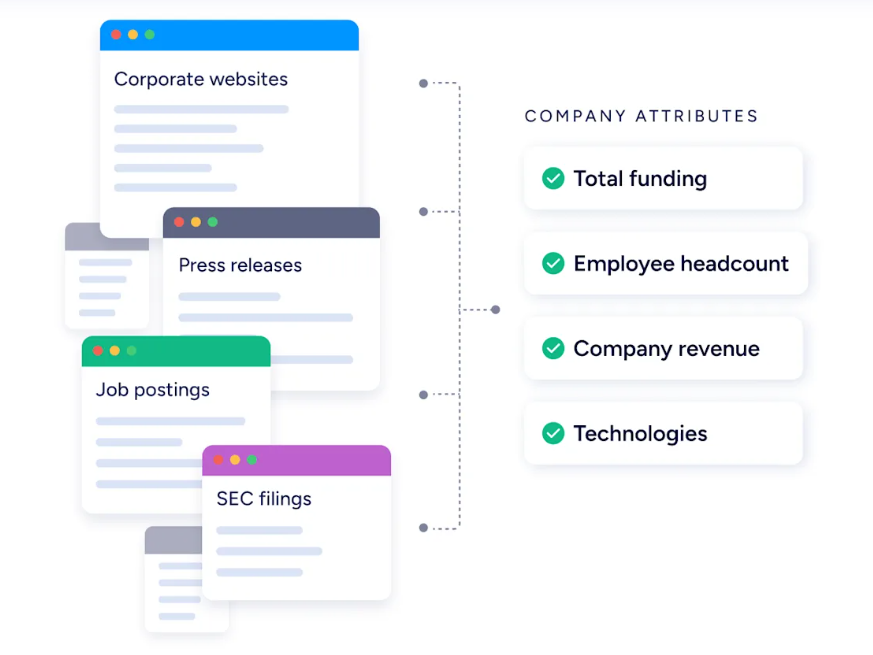
Source: ZoomInfo
For B2B marketers, this upstream quality control is the difference between building campaigns on a clean foundation and spending months recovering sender reputation after a batch of invalid addresses torpedoes your domain.
Integration ecosystems reflect different audiences
Brevo connects to 150+ third-party tools through its app marketplace, with native plugins for Shopify, WooCommerce, BigCommerce, PrestaShop, WordPress, Salesforce, and Stripe. The REST API covers the full platform, with SDKs in seven languages (Node.js, PHP, Python, Java, C#, Go, and Ruby). Brevo's MCP server connects its data to AI assistants like Claude and ChatGPT.
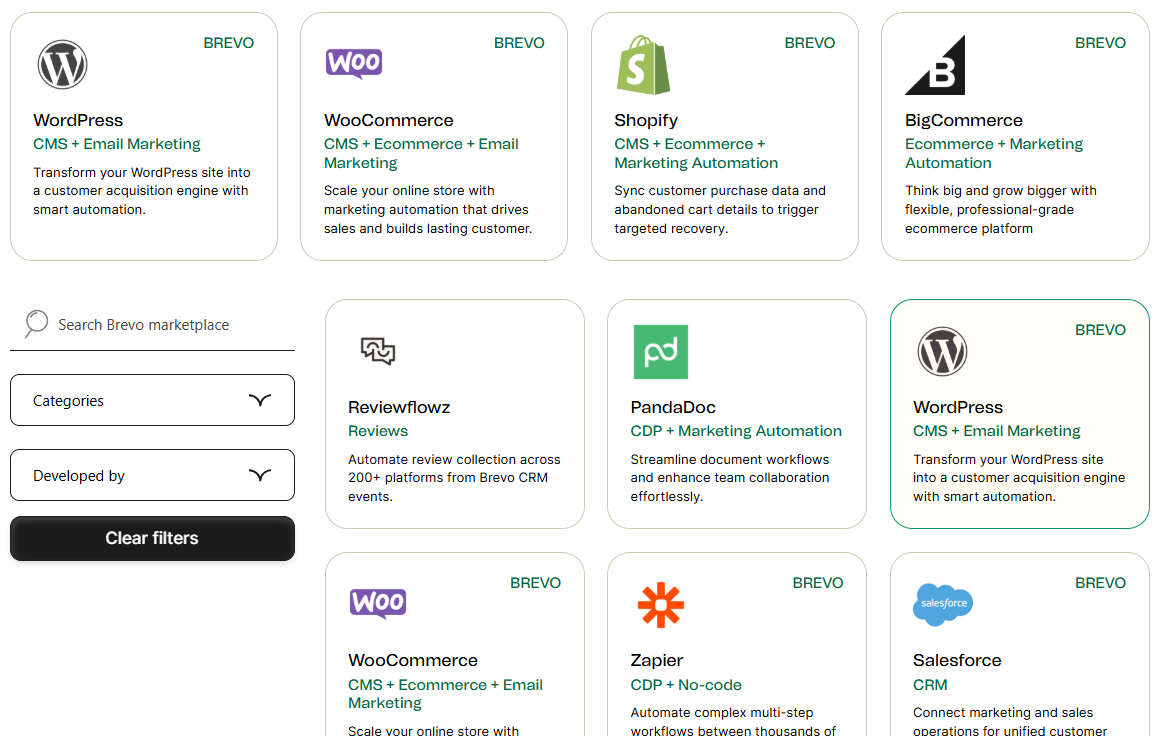
Source: Brevo
Kit operates its own App Store with integrations across 14 categories, from Shopify and Kajabi to Canva and Manychat. 70% of Kit's creators have at least one app installed, suggesting healthy ecosystem adoption. The API v4 is modern and well-documented, but API access requires a paid plan (Creator or Pro). Kit also offers its own MCP server for AI assistant integration on Creator plans and above.
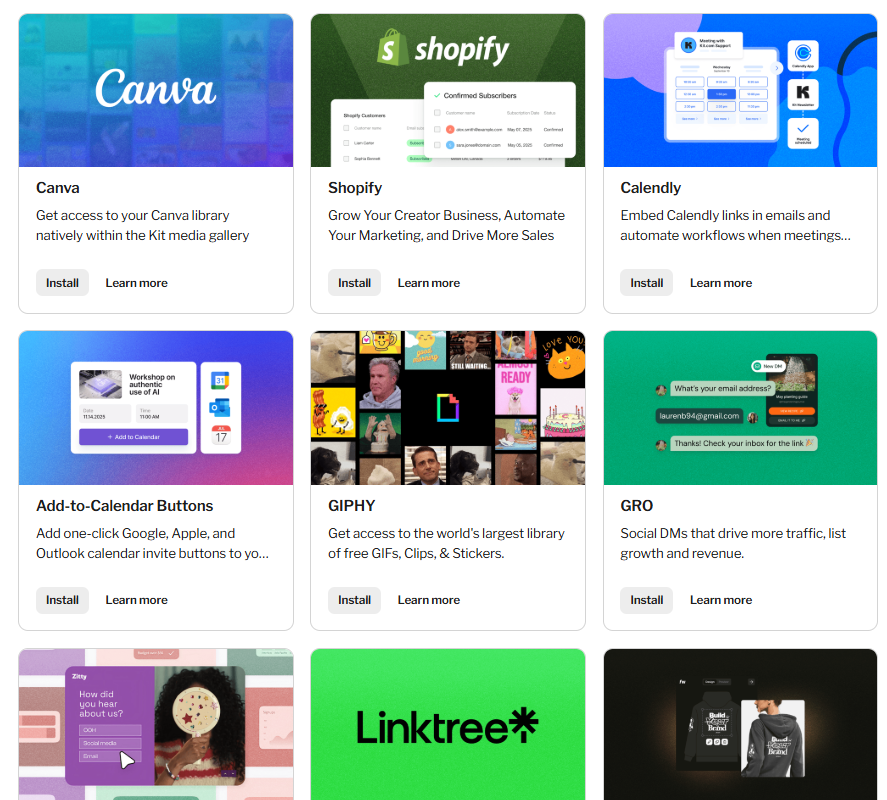
Source: Kit
ZoomInfo's App Marketplace lists 172+ integration partners spanning CRM (Salesforce, HubSpot, Dynamics 365), cloud platforms (AWS, Snowflake, Databricks, Google Cloud), sales engagement (Salesloft, Outreach), and AI (Claude, ChatGPT).
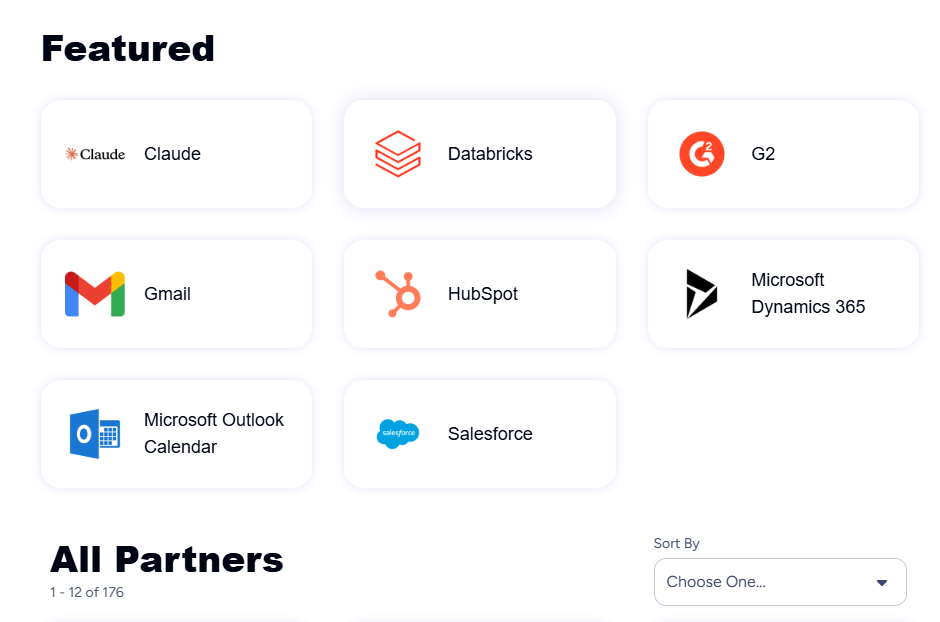
Source: ZoomInfo
The Enterprise API provides programmatic access to the full B2B intelligence layer, and ZoomInfo's MCP server enables any MCP-compatible AI agent to search, enrich, and research accounts through natural language. API access is included in all relevant plans.
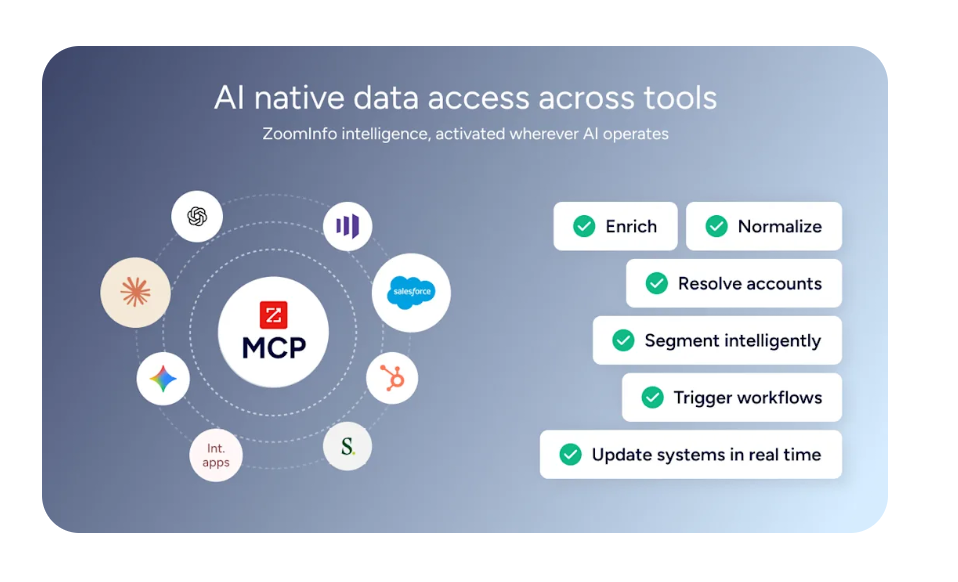
Source: ZoomInfo
The key integration insight: ZoomInfo feeds data into platforms like Brevo and Kit, not the other way around. A B2B team can use ZoomInfo to identify in-market accounts, export verified contacts, and then enroll them in Brevo campaigns or Kit sequences. The intelligence layer works upstream of the communication layer.
Brevo vs. Kit vs. ZoomInfo: Which should you choose?
The choice depends on what you're building, who you're reaching, and where your biggest gap is.
Choose Brevo if:
You need email, SMS, WhatsApp, and CRM in a single platform
You have a large contact list and want to pay by sends, not contacts
You're running an ecommerce business with abandoned cart, loyalty, and transactional email needs
Your team includes non-technical marketers who need drag-and-drop simplicity
GDPR compliance and EU data residency are requirements
Choose Kit if:
You're a creator building a newsletter, course, or digital product business
Growing through peer recommendations matters more than multichannel breadth
Your income depends on high deliverability and inbox placement
You want to sell digital products and paid subscriptions without a separate storefront
Email is your primary channel, and you don't need SMS or WhatsApp
Choose ZoomInfo if:
You're a B2B team that needs to identify, reach, and engage the right accounts
Your campaigns underperform because you're targeting the wrong people, not because of the email tool
You need verified contact data, buyer intent signals, and org chart intelligence
You want AI-powered plays that target accounts matching your actual win patterns
You need the intelligence layer that makes any downstream email platform more effective
Explore ZoomInfo's free trial to see how verified data changes campaign results.
Brevo and Kit are both good at what they do. Brevo gives businesses multichannel reach at a fair price. Kit gives creators a focused, high-deliverability email platform with built-in growth and monetization. But for B2B organizations, the platform that sends the email matters less than the intelligence that tells you who to send it to. That's the layer ZoomInfo occupies, and it works regardless of which email tool sits downstream.
"That combination of our internal CRM data, external signals, and AI that's given all that context has helped us craft very specific account- and persona-based messages. And people have responded to them right away." (Toby Carrington, Chief Business Officer, Seismic)
Brevo vs. Kit vs. ZoomInfo FAQ
What is the fundamental difference between Brevo, Kit, and ZoomInfo?
Brevo is a multichannel marketing platform that handles email, SMS, WhatsApp, live chat, and CRM for businesses. Kit (formerly ConvertKit) is an email-first platform built for creators who grow and monetize through newsletters, digital products, and audience recommendations. ZoomInfo is a B2B data intelligence and GTM platform that provides verified contact data, buyer intent signals, and AI-powered targeting. Brevo and Kit handle communication; ZoomInfo handles the intelligence that determines who to communicate with.
Which platform is cheapest to start with?
All three offer free entry points. Brevo's free plan allows 300 emails per day with unlimited contacts. Kit's free Newsletter plan supports up to 10,000 subscribers with unlimited broadcasts. ZoomInfo Lite is a permanent free tier with access to the B2B database and 10 monthly export credits. Among paid plans, Brevo's Starter begins at $9/month, Kit's Creator at $33/month for 1,000 subscribers, and ZoomInfo uses custom, consumption-based pricing.
Can I use ZoomInfo with Brevo or Kit?
Yes. ZoomInfo operates upstream of email platforms. A B2B team can use ZoomInfo to identify in-market accounts, find verified contacts within those companies, and export that data into Brevo or Kit for campaign execution. ZoomInfo's API and integrations make it possible to feed enriched, verified contacts directly into your email platform of choice.
Which platform is better for ecommerce businesses?
Brevo is the stronger fit for ecommerce, with native integrations for Shopify, WooCommerce, BigCommerce, and PrestaShop, plus abandoned cart recovery workflows, transactional email on any paid plan, and a loyalty program with mobile wallet integration. Kit's commerce features are designed for digital products (ebooks, courses, coaching), not physical goods. ZoomInfo focuses on B2B, not consumer ecommerce.
How do deliverability rates compare between Brevo and Kit?
Kit reports a 99.8% delivery rate and a 40% average open rate across its platform, benefiting from a shared IP pool composed almost entirely of permission-based creator audiences. Brevo claims a 99% deliverability rate for enterprise sending. Kit invests more visibly in deliverability education through a dedicated podcast, monthly reports, and extensive documentation. Both platforms support SPF, DKIM, and DMARC authentication.
Which platform has the best automation capabilities?
It depends on the use case. Brevo's automation supports multichannel workflows combining email, SMS, and WhatsApp in a single sequence, making it better for businesses with cross-channel needs. Kit's visual automations are built for creator workflows like welcome sequences, product launch funnels, and evergreen content delivery. ZoomInfo's GTM Studio enables AI-powered GTM plays that target accounts based on intent signals and win patterns, operating at the strategy layer rather than the individual message level.
Does Kit still work for non-creators?
Kit was designed for and optimized around creator workflows. Its pricing model (subscriber count), automation templates (webinar pitches, course upsells, newsletter referrals), and growth tools (Creator Network, Paid Recommendations) all assume the user is an individual creator or small creator team. B2B companies or traditional businesses would find Brevo's multichannel capabilities and CRM more aligned with their needs, while ZoomInfo addresses the B2B intelligence gap that neither email platform covers.
What does ZoomInfo offer that email marketing platforms don't?
ZoomInfo provides the intelligence layer before any email is sent: verified B2B contact data (500M contacts with up to 95% accuracy), buyer intent signals showing which companies are researching your category, org chart intelligence revealing buying committee members, and a GTM Context Graph that captures why deals move or stall. Email platforms tell you how many people opened your message. ZoomInfo tells you whether you're messaging the right people in the first place.
