
Choosing between Brevo vs. Zoho for your sales and marketing needs often comes down to these five questions:
Do you need a marketing-first platform that handles email, SMS, and WhatsApp from one place, or a CRM-first platform that manages your entire sales process?
Is your priority running multichannel campaigns and automations, or building deal pipelines with customization and AI-powered forecasting?
Do you want simple, send-volume-based pricing, or a per-user model with an ecosystem of 55+ integrated apps?
How important is it that your platform provides verified B2B contact data and buying intent signals, not just tools to reach people you already know?
Are you looking for a tool your marketing team can master quickly, or one your technical admins can configure to fit complex sales processes?
In short, here's what we recommend:
Brevo is the multichannel marketing platform for businesses that want email, SMS, WhatsApp, live chat, and CRM in one place without enterprise complexity or pricing. Its send-volume pricing model (unlimited contacts on every plan, including Free) makes it cheaper than contact-count competitors for businesses with large lists. Brevo's Aura AI handles content generation, send-time optimization, and audience segmentation across channels. However, its automation logic has a lower ceiling than dedicated CRM platforms, reporting lacks depth for complex pipeline analysis, and the Sales CRM is still maturing.
Zoho is the single-vendor business suite offering 55+ integrated applications spanning CRM, finance, HR, marketing, and support, all from one company that has never taken outside funding. Zoho CRM provides sales force automation, AI-powered forecasting through Zia, territory management, CPQ, and customization through no-code, low-code, and pro-code paths. At $40/user/month for Enterprise (versus Salesforce at $165), the price gap is hard to ignore. The tradeoff: setup requires real investment, the interface can feel dense, and support quality varies by tier.
Both platforms give you tools to reach and manage your customers. But neither solves a more basic problem: knowing which companies are actually in-market for what you sell, who the decision-makers are, and how to reach them with verified contact data. That's where a different kind of platform becomes essential.
ZoomInfo is an AI-powered go-to-market platform built on the largest B2B data foundation in the industry: 500M contacts, 100M companies, 135M+ verified phone numbers, and 200M+ verified business emails. Its GTM Context Graph processes 1.5B+ data points daily, fusing this data with your CRM records, conversation transcripts, and behavioral signals to reveal not just what happened in your pipeline, but why. Sellers access this intelligence through GTM Workspace, marketers and RevOps through GTM Studio, and any custom tool or AI agent through the API and MCP. For B2B teams, ZoomInfo doesn't replace your marketing automation or CRM. It makes both more effective by ensuring you target the right accounts with verified data and real-time buying signals.
If knowing who to target and when to engage them sounds like the missing layer in your go-to-market stack, see how ZoomInfo works.
Brevo vs. Zoho vs. ZoomInfo at a glance
Brevo | Zoho CRM | ZoomInfo | |
|---|---|---|---|
Primary function | Multichannel marketing + CRM | CRM + full business suite | B2B data intelligence + GTM execution |
AI capabilities | Aura AI (content, send-time, segmentation) | Zia AI (scoring, forecasting, agentic agents) | GTM Context Graph + AI agents |
Marketing channels | Email, SMS, WhatsApp, push, chat, wallet | Email, SMS, WhatsApp, social (via integrations) | Display ads, email, Connected TV, LinkedIn, Meta |
CRM depth | Basic deal pipelines, growing fast | Enterprise-grade SFA, CPQ, territory management | Account intelligence, not a transactional CRM |
B2B contact data | Only your own contacts | Only your own contacts | 500M contacts, 135M+ verified phones |
Buyer intent signals | None | None | Intent data from 210M IP-to-org pairings |
Integrations | 150+ apps | 1,100+ apps + 55 Zoho products | 172+ marketplace partners + API/MCP |
Pricing model | By email volume sent (unlimited contacts) | Per user/month ($14–$52) | Consumption-based (custom-quoted) |
Free plan | 300 emails/day, unlimited contacts, permanent | Up to 3 users, permanent | ZoomInfo Lite (permanent, 10 exports/month) |
Best for | SMBs needing multichannel marketing | SMB-to-mid-market needing CRM + suite | B2B teams needing data, signals, and GTM execution |
Marketing automation: Brevo leads, Zoho catches up
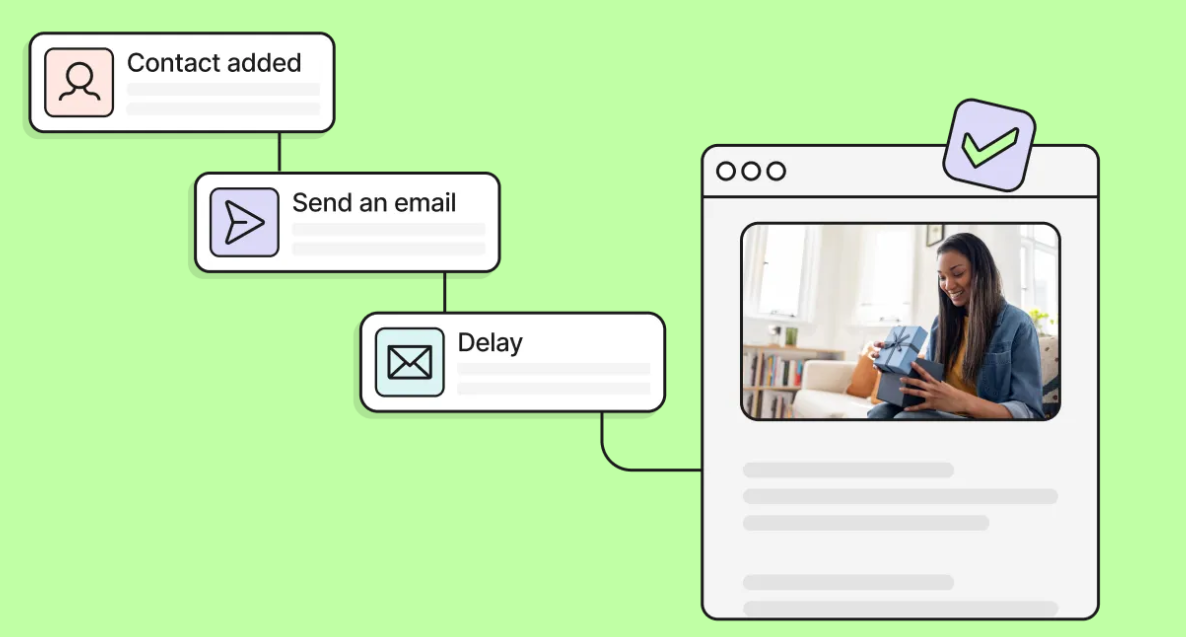
Brevo was built for marketers. Its core strength is multichannel automation from a single workflow builder. A marketer can design a sequence that sends an email, waits 24 hours, follows up with an SMS, then triggers a WhatsApp message if the first two go unanswered, all in one visual workflow without switching tools or syncing data between platforms.
Source: Brevo
The channel breadth is real. Brevo is a certified WhatsApp Business Solution Provider with direct API access, not a third-party relay. WhatsApp sits inside automation workflows alongside email and SMS, with two-way reply management in a shared inbox. Web and mobile push notifications, mobile wallet campaigns, and live chat round out the channel set, all from the same dashboard.

Source: Brevo
The drag-and-drop email editor includes 50+ responsive templates and works fast. The Aura AI Marketing Agent generates subject lines and body copy from prompts, optimizes send times per recipient using historical engagement data, auto-segments audiences, and delivers product recommendations. For ecommerce businesses, abandoned cart recovery workflows come pre-built, and Brevo cites an average 10–15% revenue increase from this single automation.

Source: Brevo
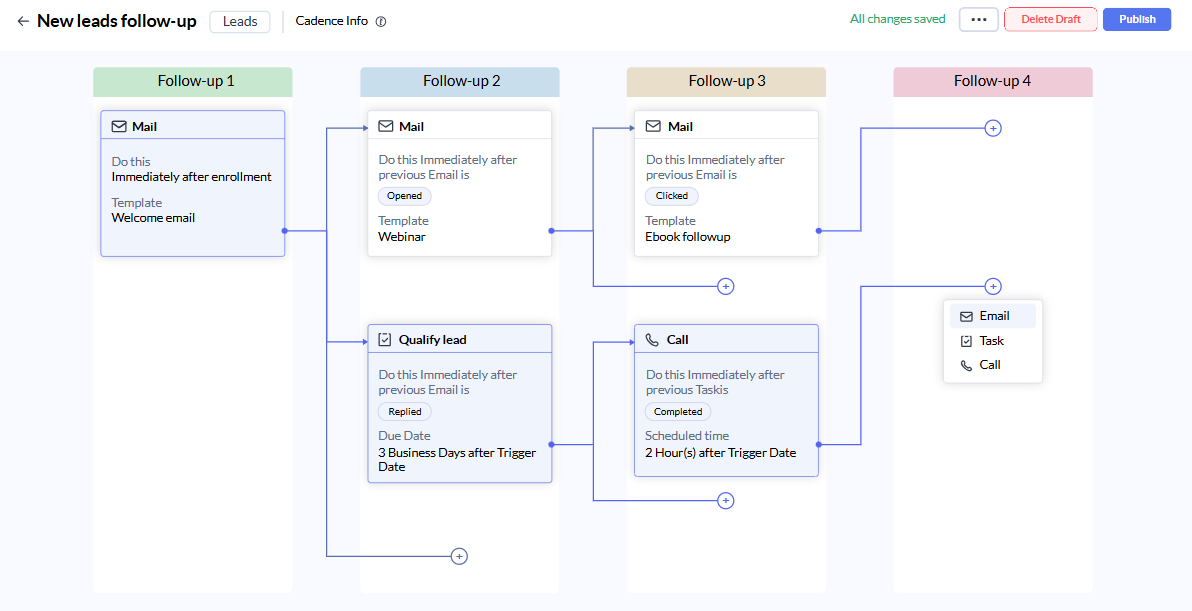
Zoho approaches marketing automation from the CRM side. Cadences let reps build branching, multichannel follow-up sequences that react to prospect behavior, routing to a phone call if an email is ignored, or skipping ahead if a link is clicked.
Source: Zoho
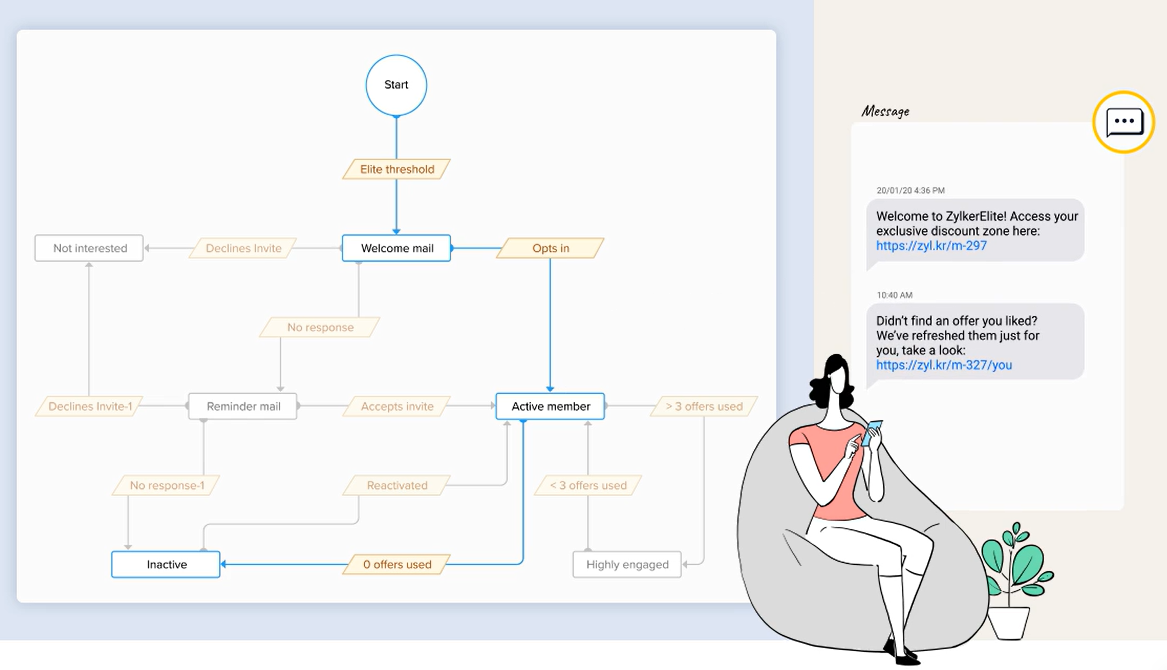
CommandCenter, available at the Enterprise tier, maps end-to-end customer journeys spanning multiple departments and external apps, with PathFinder showing how customers actually move through touchpoints.
Source: Zoho
But Zoho's marketing tools serve the sales process, not standalone marketing campaigns. Zoho CRM handles email, phone, WhatsApp, SMS, and live chat within the CRM record, but the campaign creation experience is less polished than Brevo's dedicated editor. For email marketing at scale, most Zoho users pair CRM with Zoho Campaigns, a separate product in the suite, adding another tool to configure and maintain.
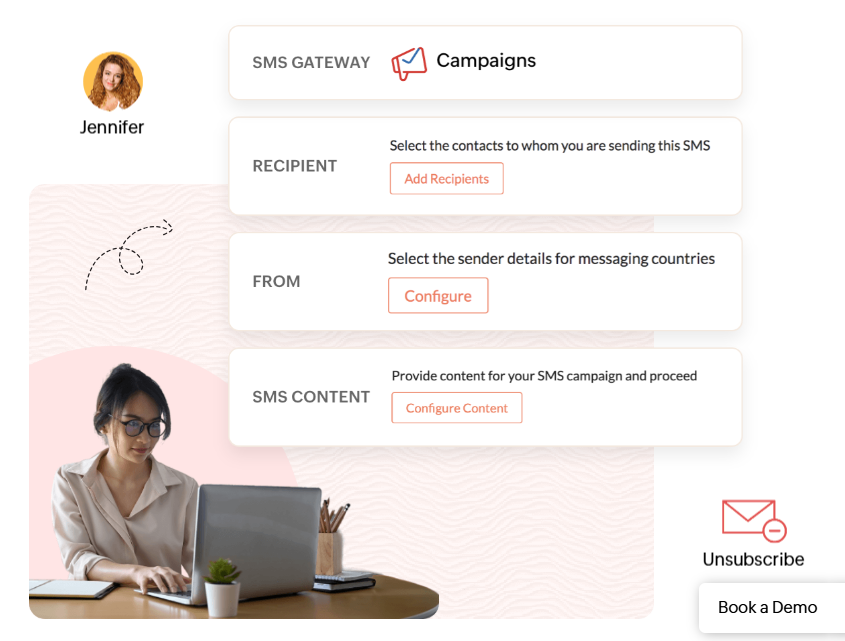
Source: Zoho
Both platforms share one limitation: they can only market to contacts you already have. Neither provides a database of prospects to target or signals showing which companies are actively researching solutions like yours.
CRM and sales: Zoho dominates
Zoho CRM is a full sales force automation platform with capabilities that outclass Brevo's CRM by a wide margin.
The difference starts with pipeline management. Zoho supports multiple configurable pipelines with distinct stages per product, geography, or sales motion. Blueprint enforces sales process compliance by requiring reps to complete specific criteria before advancing a deal. It's not a visual aid; it's a process enforcement layer that ensures every rep follows the same steps.
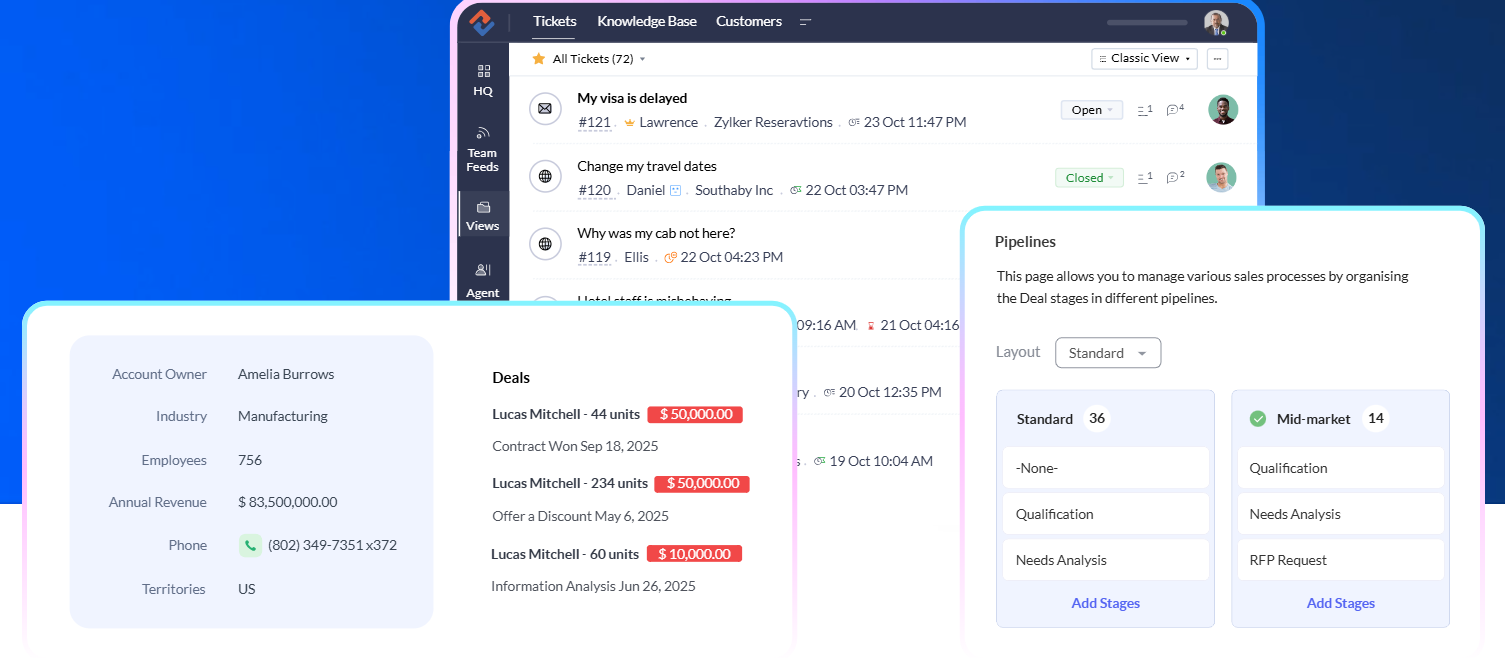
Source: Zoho
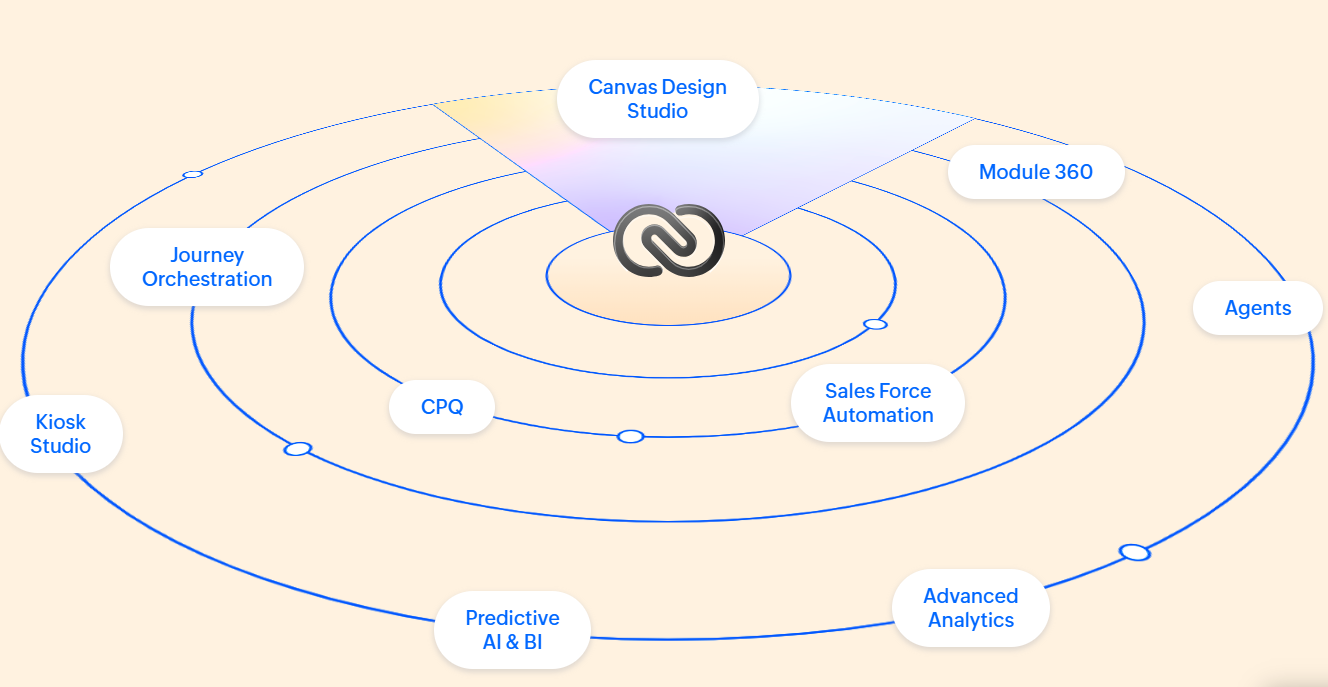
Territory management, available at the Enterprise tier, defines rule-based territory hierarchies with automated account assignment and territory-level analytics. CPQ handles product bundle configuration, pricing rules, and quote generation directly from deal records. Sales forecasting segments the pipeline into Committed, Best Case, and Open Deals with top-down and bottom-up views.
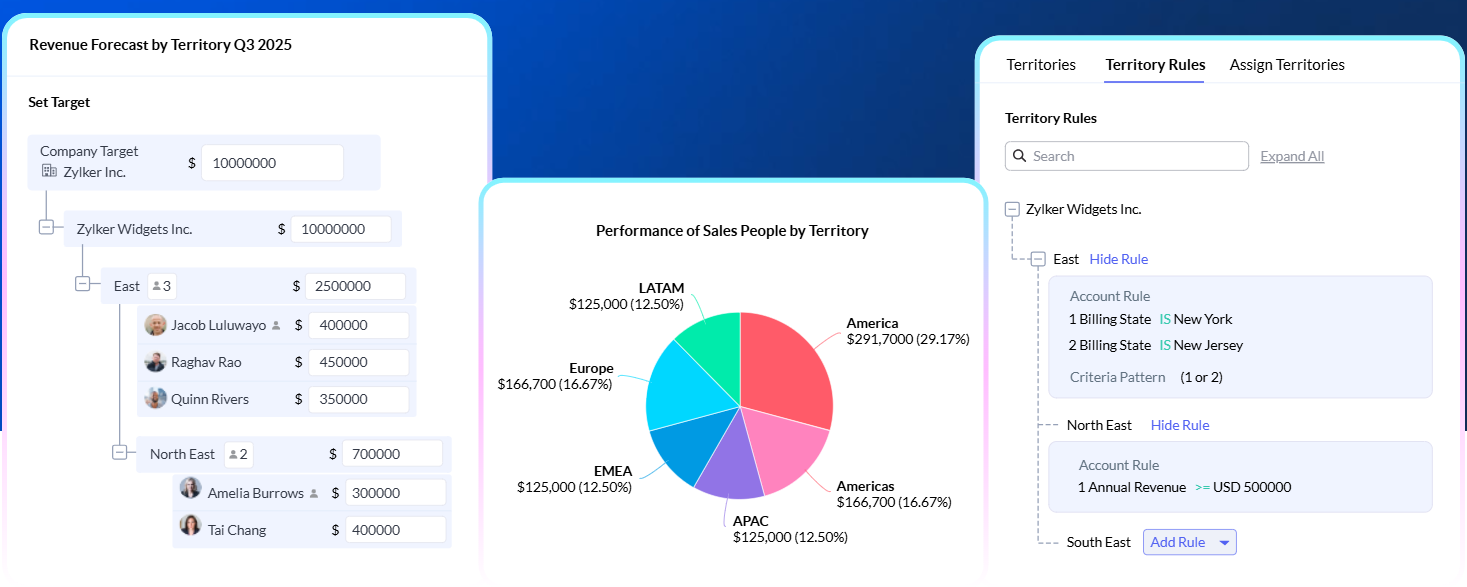
Source: Zoho
Zoho's Zia AI covers predictive lead scoring, churn prediction, field prediction, AI-powered forecasting with anomaly detection, and autonomous AI through Zia Agents, entities that perform multi-step sales tasks like lead nurturing and follow-up scheduling. Zia analyzes email sentiment across eight emotion categories, transcribes calls with extracted intelligence, and monitors CRM audit logs to suggest new automation rules. QuickML lets Ultimate-tier users build custom ML models on CRM data without a separate data science platform.
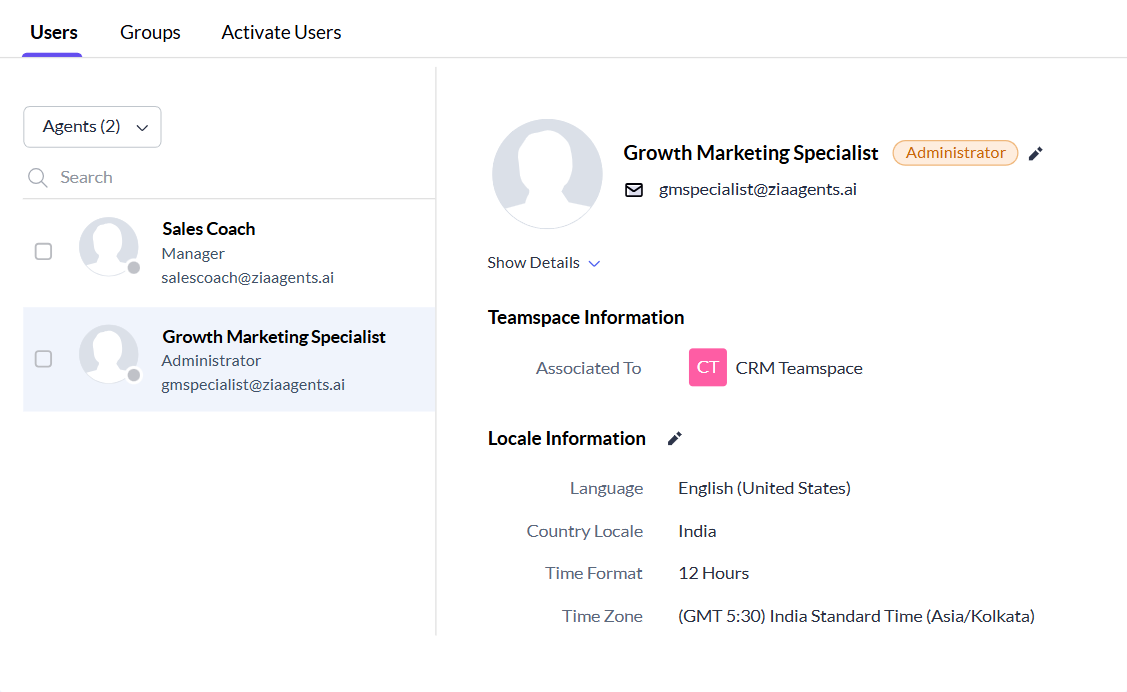
Source: Zoho
The customization depth is unusual at this price point. Canvas Design Studio lets admins rebuild CRM interfaces without code. Kiosk Studio creates guided interactive flows embeddable anywhere in the CRM. Wizards replace long forms with sequential, context-aware screens. For developers, REST APIs, GraphQL, serverless Deluge functions, and the Widget SDK provide full programmatic control.
Source: Zoho
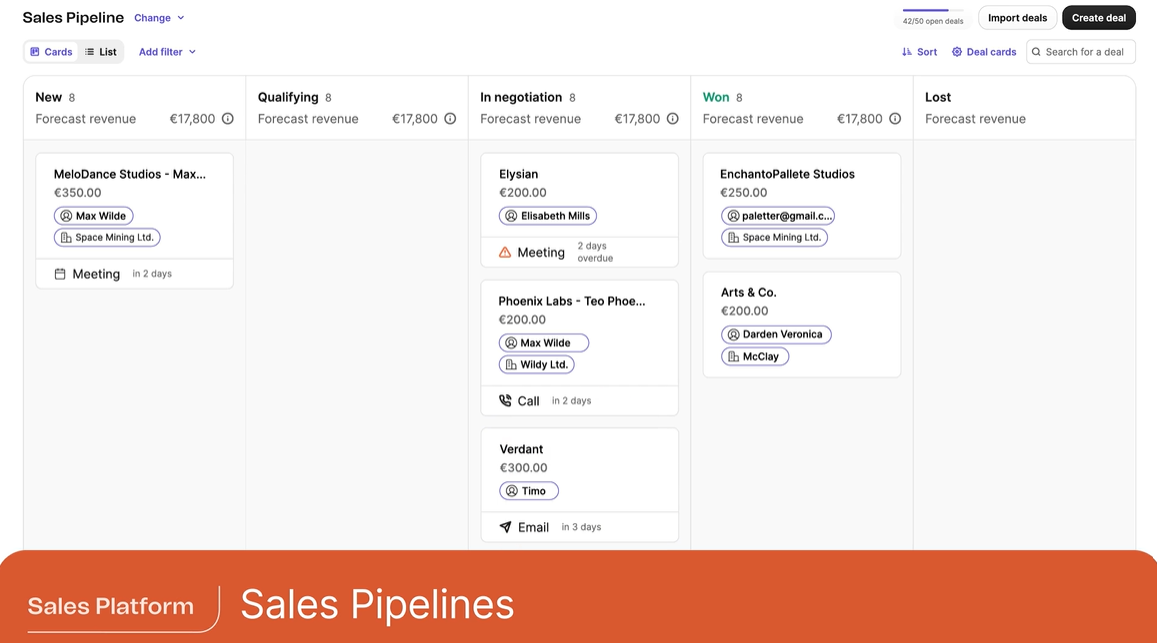
Brevo's Sales Platform, by comparison, is a functional but basic CRM. It covers deal pipelines, task management, and a shared inbox. It includes a cloud-based phone with AI call transcripts, a meeting scheduler with payment collection, and live chat with CRM sync. These features are well-executed and well-integrated with Brevo's marketing side, which is its structural advantage: a lead captured via live chat enters the marketing CRM immediately and can be enrolled in campaigns without any connector.
Source: Brevo
But for anything beyond straightforward deal tracking, Brevo's CRM hits walls that Zoho CRM cleared years ago. No territory management, no Blueprint-style process enforcement, no CPQ, no multi-pipeline configurations, and no forecasting with Zoho's level of granularity.
The data gap neither platform fills
Brevo and Zoho are tools for engaging and managing people whose contact information you already have. They help you communicate with your existing database. They do not help you find new prospects, identify companies actively researching solutions in your category, or verify that the contact data in your CRM is still accurate.
This is the gap ZoomInfo fills. With 500M contacts, 100M companies, 135M+ verified phone numbers, and 200M+ verified business emails, ZoomInfo provides the raw material that makes marketing automation and CRM effective. The data is verified through a multi-source pipeline backed by 300+ human researchers and reaches up to 95% accuracy on first-party data. In a Fortune 500 competitive RFP analyzing 25 million contacts across vendors, an independent consultant concluded that "no other competitor came even close."

Source: ZoomInfo
For sales reps, this means the direct dial actually rings and the email actually lands. For RevOps, enrichment workflows don't require stitching together three vendors and a manual research layer to get a complete account picture. For marketers, TAM modeling becomes a continuously verified census of the buyable market, not a theoretical exercise built on stale snapshots.
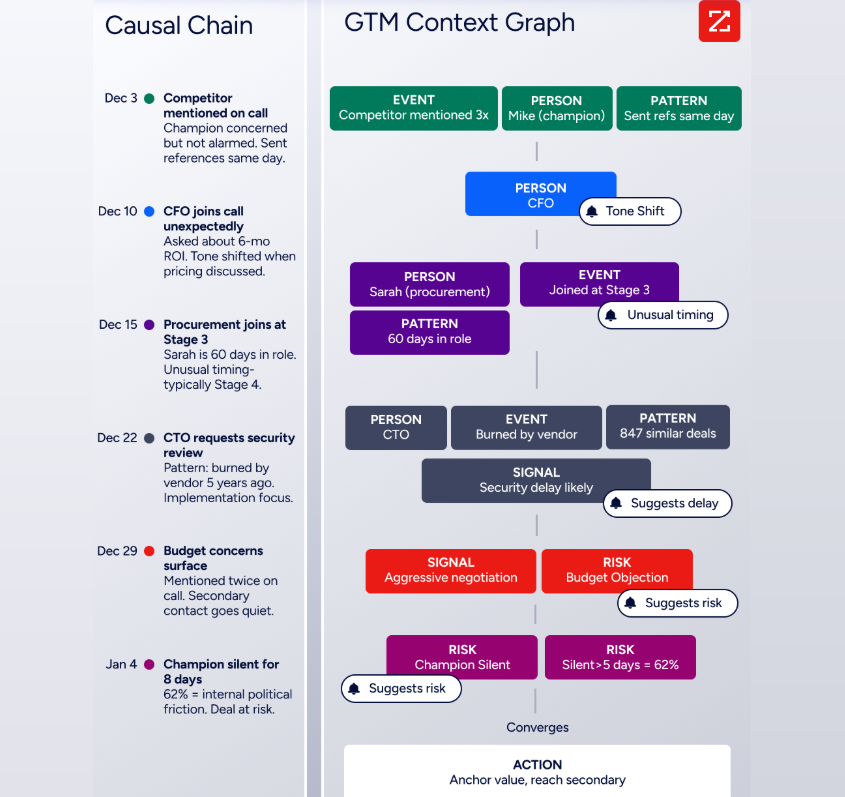
But the data is just the foundation. ZoomInfo's GTM Context Graph fuses that third-party intelligence with your CRM records, conversation transcripts, and behavioral signals into a layer that captures why deals move or stall. A CRM records that a deal moved to Stage 3. Conversation intelligence transcribes what the VP of Finance said on the last call. Intent data logs a spike in research activity. The GTM Context Graph reasons across all three to surface the pattern behind closed-won deals and identify which accounts match it right now.
Source: ZoomInfo
"ZoomInfo's not just a contact data company anymore. They've built a full system of execution. GTM Intelligence works the list, writes the outreach, triggers the play, and helps drive predictable growth." (Levanta)
AI comparison: different problems, different approaches
The three platforms use AI for different purposes.
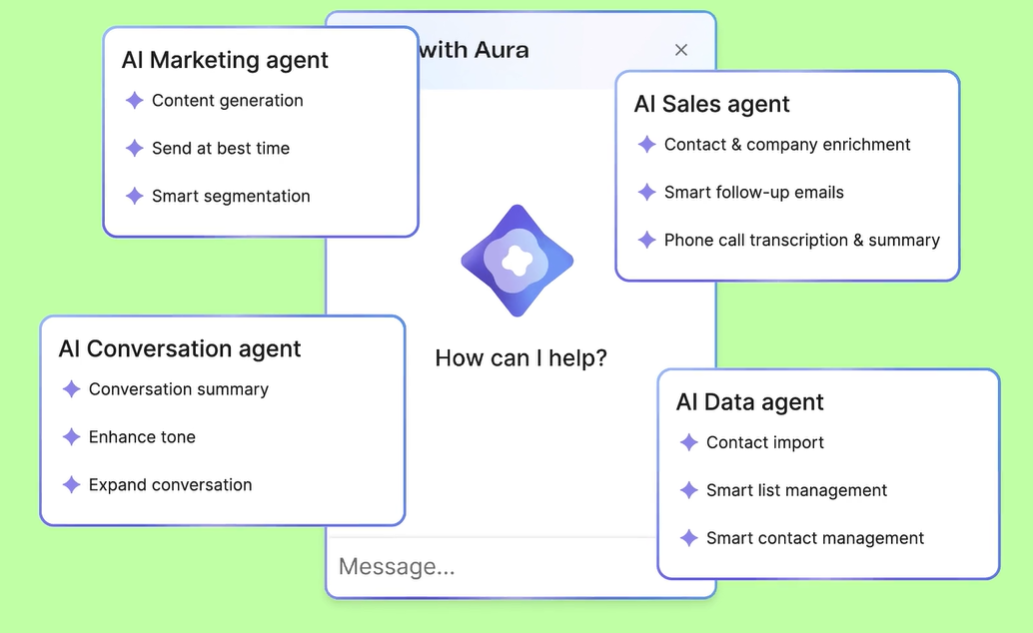
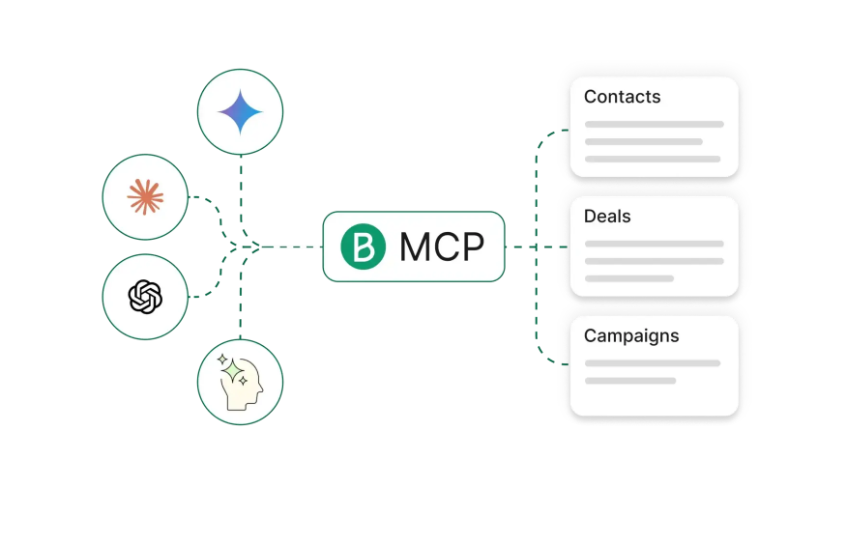
Brevo's Aura AI is a marketing execution assistant. It generates email copy, optimizes send times per recipient, auto-segments audiences from real-time data, and delivers product recommendations within campaigns. It also includes a Sales Assistant that enriches contacts, drafts sales emails, and summarizes calls. The MCP server connects Brevo's data to external AI assistants like Claude and ChatGPT, letting teams manage campaigns from inside their AI tool of choice.
Source: Brevo
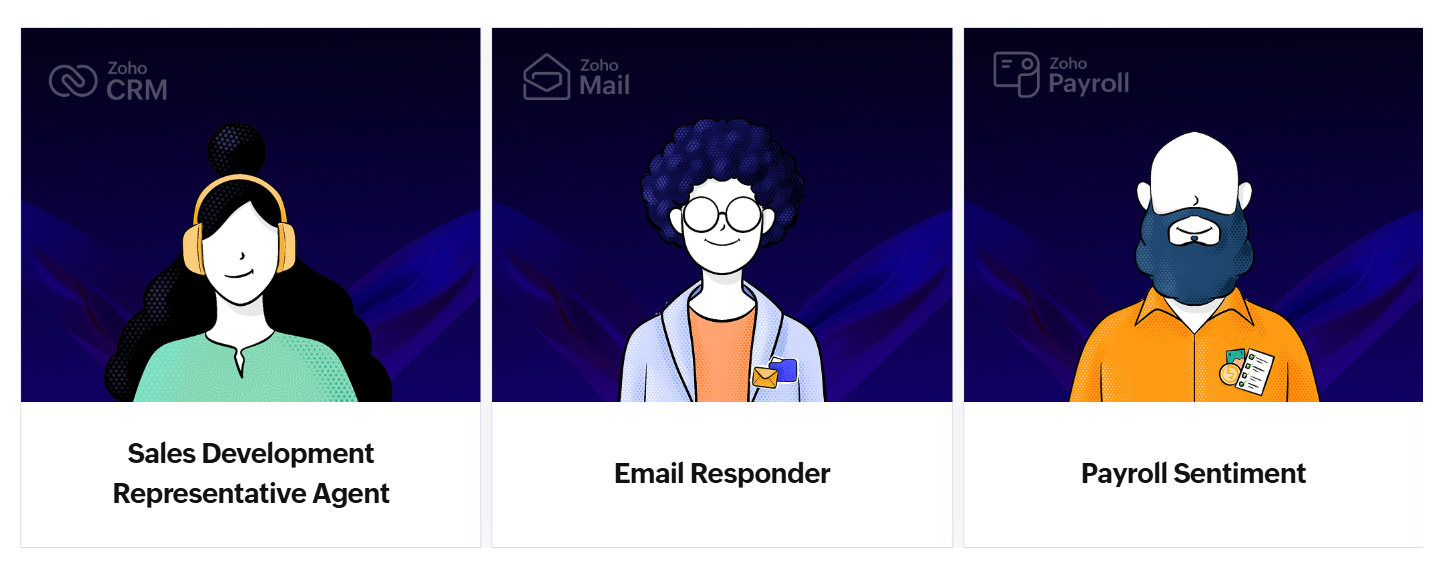
Zoho's Zia AI is a CRM intelligence engine. It scores leads by conversion likelihood, predicts churn at the product level, classifies email sentiment and intent, transcribes calls, detects pipeline anomalies, and suggests workflow rules based on audit log analysis. Zia Agents operate as autonomous entities that handle multi-step sales tasks. Zia Agent Studio offers a low-code environment with 100+ pre-built agents integrated across 60+ applications. Zoho runs proprietary language models built in-house, so customer data stays within Zoho's infrastructure.
Source: Zoho
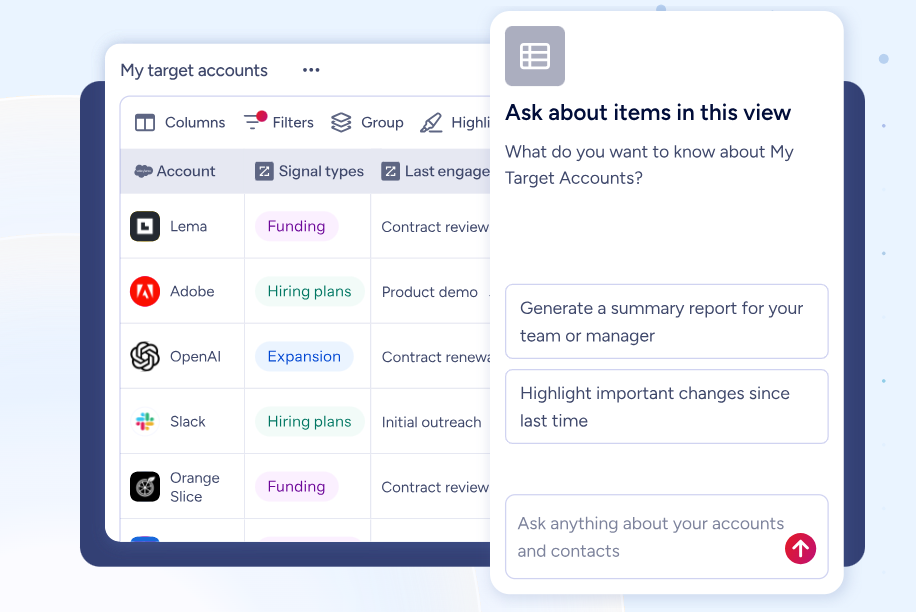
ZoomInfo's GTM Context Graph is an intelligence layer. Rather than assisting with individual tasks, it connects entities, signals, conversations, and outcomes into a graph where AI reasons about go-to-market decisions at the pattern level. The AI inside GTM Workspace drafts outreach that addresses the specific concern a prospect raised because it understands why that concern matters now.
Source: ZoomInfo
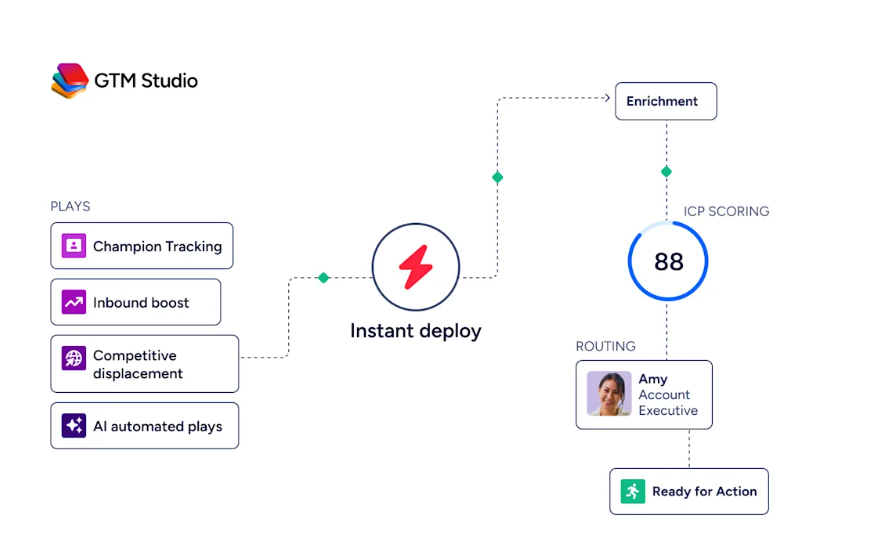
GTM Studio lets marketers describe audiences in plain language and launch plays against accounts matching proven win patterns, no engineering ticket required.
Source: ZoomInfo
The distinction matters most in practice. Brevo's AI makes your campaigns better. Zoho's AI makes your sales process smarter. ZoomInfo's AI tells you who to sell to and why they're likely to buy right now.
"That combination of our internal CRM data, external signals, and AI that's given all that context has helped us craft very specific account- and persona-based messages. And people have responded to them right away." (Seismic)
Pricing philosophy comparison
Each platform's pricing model reveals who it's built for.
Brevo charges by emails sent, not contacts stored. Contacts are unlimited on every plan, including Free. This makes Brevo cheaper than contact-count competitors for businesses with large lists and moderate send frequency. The free plan is permanent (300 emails/day, no credit card), Starter begins at $9/month, Standard at $18/month, and Professional at $499/month for 150,000+ emails with 10 seats included. SMS and WhatsApp are billed separately by volume and destination.
The catch: several needed features sit behind plan upgrades or add-ons. Marketing automation and A/B testing require Standard ($18/month). WhatsApp campaigns and push notifications require Professional ($499/month). Removing Brevo branding on Starter costs $10.80/month extra. The Sales CRM add-on runs $27.92–$58.50/month. The base prices are low, but a fully featured setup can climb once you add everything up.
Zoho CRM uses per-user pricing: Free for up to 3 users, Standard at $14/user/month, Professional at $23, Enterprise at $40, and Ultimate at $52 (all annual billing). At Enterprise, you get Zia AI, territory management, journey orchestration, and custom functions. Compared to Salesforce Enterprise at $165/user/month, that's a 76% savings. Month-to-month billing is available with no lock-in contracts.
Hidden costs exist here too. Premium support is a paid add-on. Enterprise support with a dedicated TAM is an additional fee. Jumpstart implementation runs $200/hour with a 10-hour minimum. Additional data storage costs approximately $20/month per GB. Portal user licenses are purchased separately.
ZoomInfo uses consumption-based pricing that is custom-quoted, with no publicly listed prices. Costs scale around seats, credit volume, API consumption, and AI activity. Credits are purchased annually; one credit equals one new contact or company profile exported. Search and viewing are free; enrichment consumes credits. This model fits organizations that need verified B2B data at scale, but the lack of transparent pricing means smaller teams can't easily evaluate fit without a sales conversation.
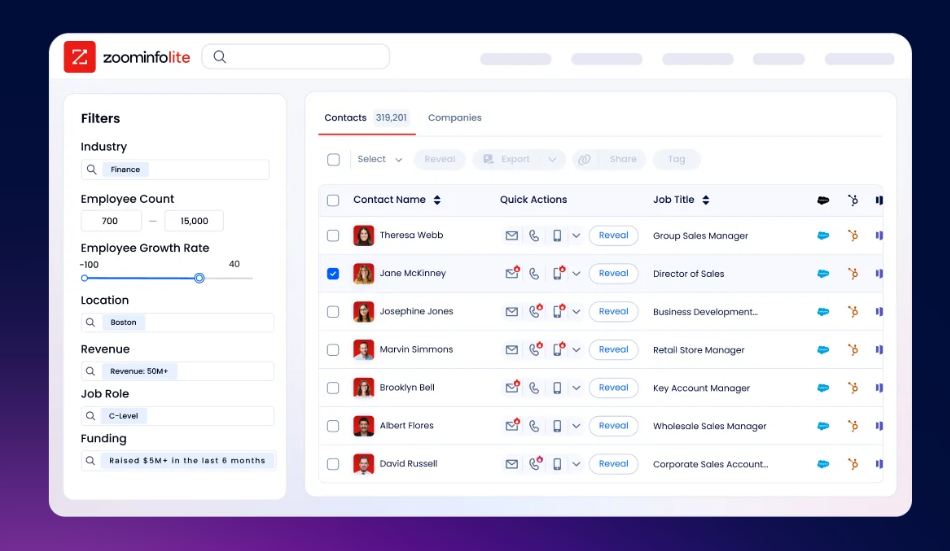
ZoomInfo offers two free entry points: ZoomInfo Lite (permanent, 10 exports/month, access to 100M+ verified profiles) and a 7-day free trial of paid features.
Source: ZoomInfo
Integration ecosystems reflect different strategies
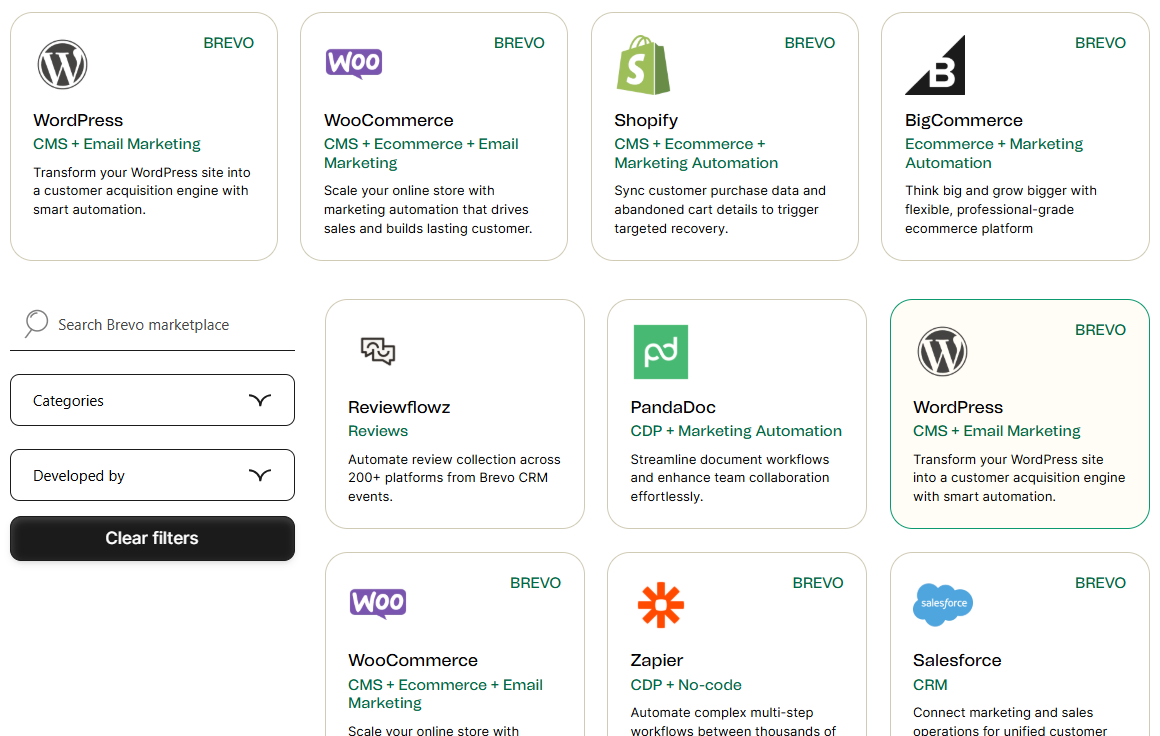
Brevo connects to 150+ third-party tools with strong ecommerce coverage: Shopify, WooCommerce, BigCommerce, PrestaShop, and Magento native plugins.
Source: Brevo
The unified REST API covers the full platform (transactional email, contacts, SMS, WhatsApp, ecommerce data, CRM, loyalty) with SDKs for Node.js, PHP, Python, Java, C#, Go, and Ruby. Zapier and Make connectors fill gaps. The MCP server makes Brevo's data accessible to AI assistants, an unusual bet for a marketing platform.
Source: Brevo
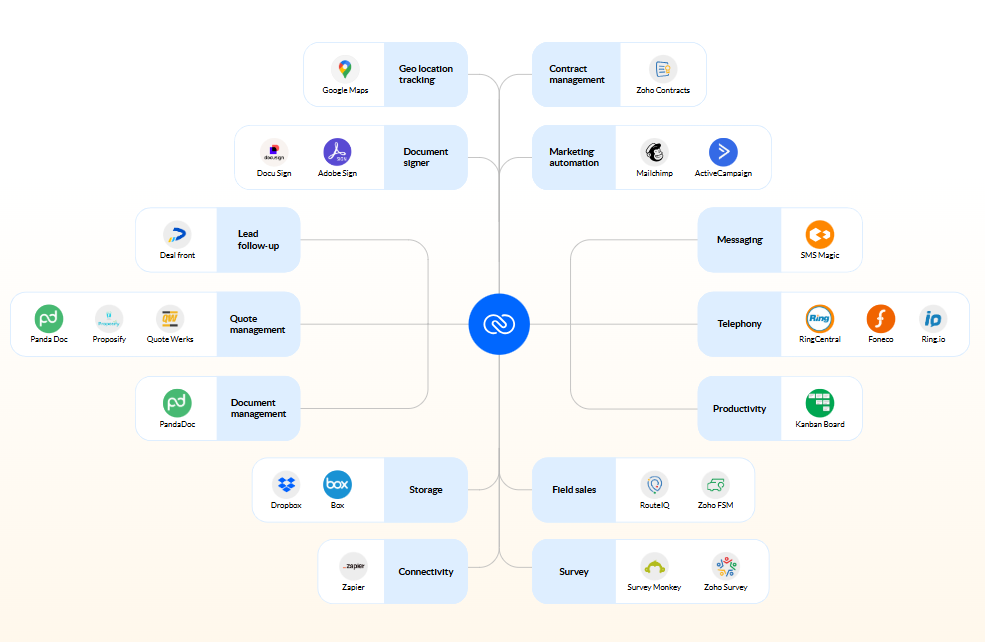
Zoho CRM lists 1,100+ marketplace extensions, but the real integration advantage is the Zoho ecosystem itself. Zoho CRM connects natively to 40+ first-party applications: Zoho Books, Campaigns, Desk, Sign, Analytics, SalesIQ, and Projects. This eliminates the fragile third-party integration chains that plague multi-vendor stacks.
Source: Zoho
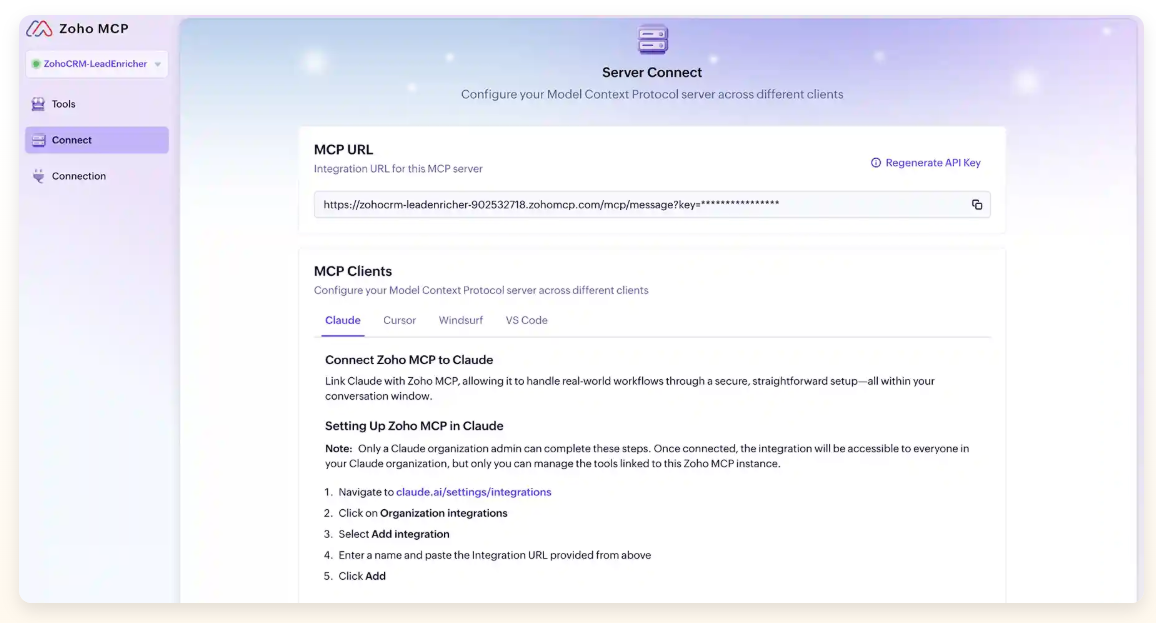
The developer platform includes REST APIs, GraphQL, serverless Deluge functions, Widget SDK, and four MCP servers for AI agent integration. Zoho Flow handles cross-app workflow automation.
Source: Zoho
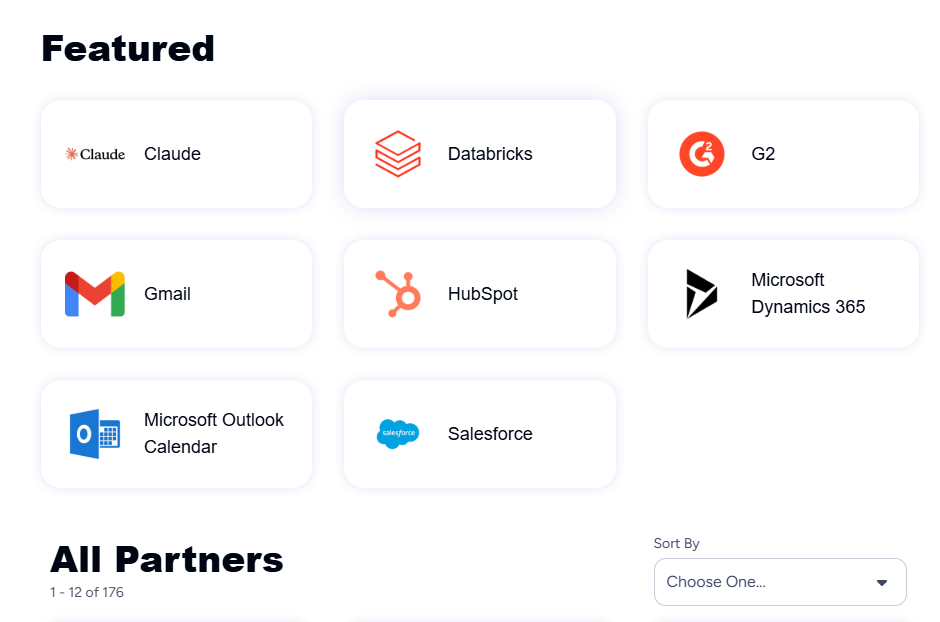
ZoomInfo integrates across 172+ marketplace partners including Salesforce, HubSpot, Microsoft Dynamics 365, Snowflake, Databricks, and AWS.
Source: ZoomInfo
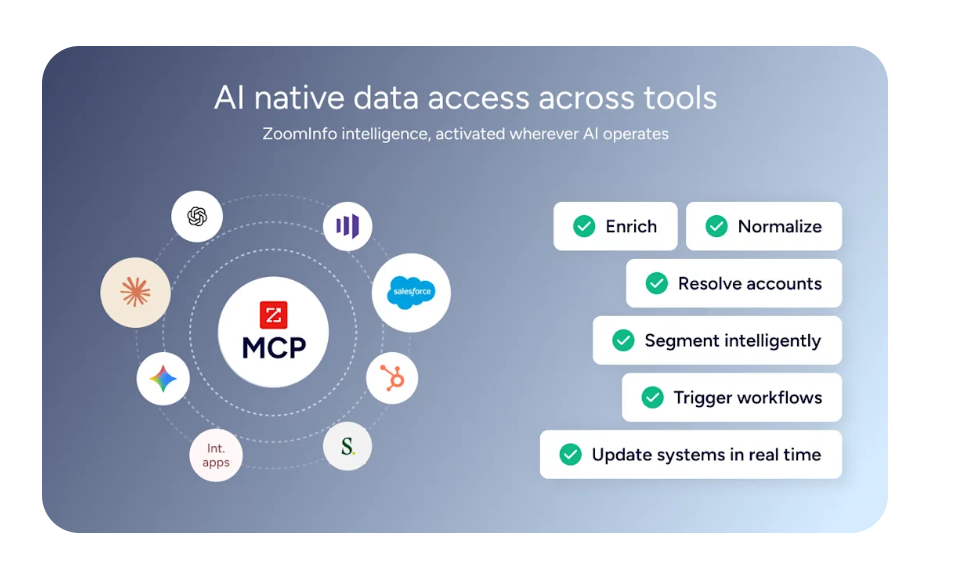
The Enterprise API provides programmatic access to ZoomInfo's data and intelligence, with OAuth 2.0 authentication and an interactive developer portal. The MCP server at https://mcp.zoominfo.com/mcp connects AI models directly to ZoomInfo's B2B data, currently supporting Claude and ChatGPT.
Source: ZoomInfo
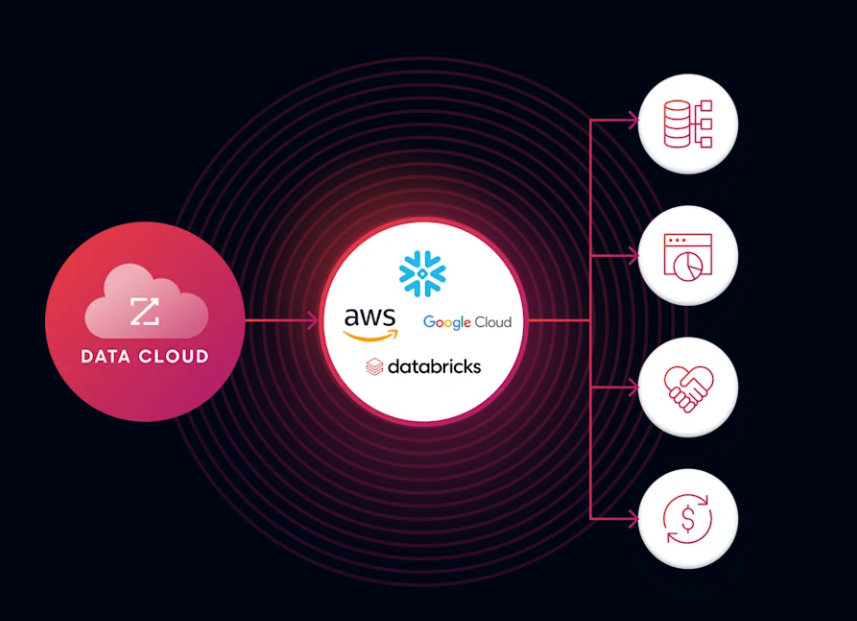
Cloud Partners delivers ZoomInfo data directly into AWS, Google Cloud, Snowflake, and Databricks environments.
Source: ZoomInfo
The integration philosophy differs by design. Brevo integrates with tools marketers already use. Zoho builds most tools itself. ZoomInfo feeds intelligence into whatever tools teams choose.
Transactional messaging: Brevo's structural advantage
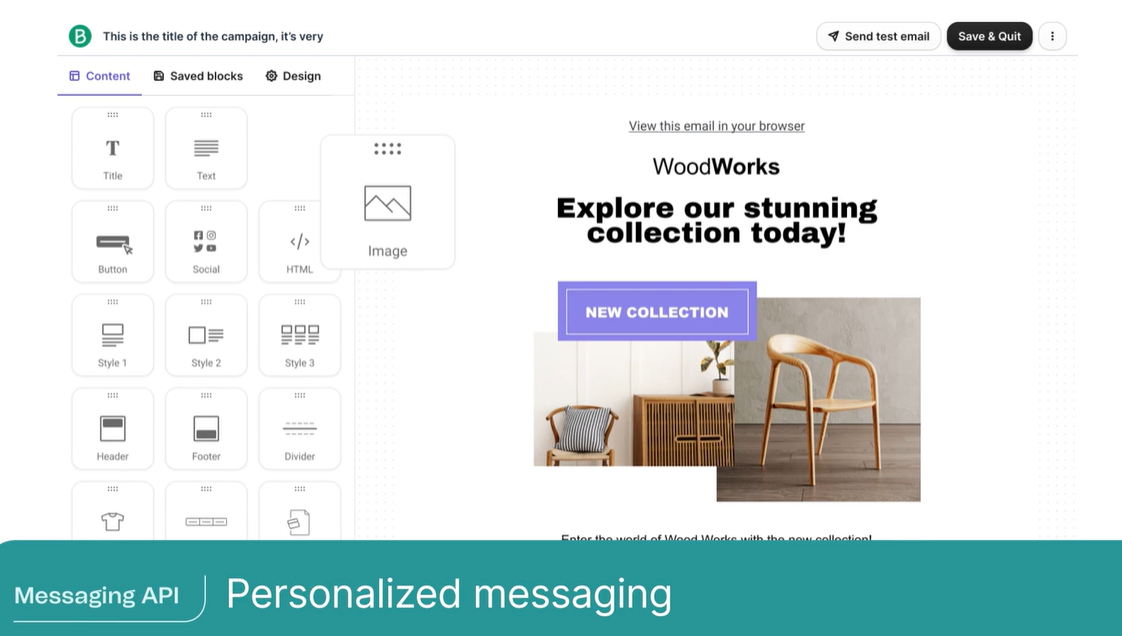
One area where Brevo holds a clear lead over Zoho CRM is transactional messaging. Brevo's Transactional Messaging delivers order confirmations, shipping updates, password resets, and account notifications via email, SMS, and WhatsApp through a single API. The infrastructure handles 120,000 emails per minute with a claimed 99% delivery rate.
Source: Brevo
The key differentiator: transactional sending is included in any paid Brevo plan, with full API access even on the Free tier (300 emails/day). Developers get both a REST API and an SMTP relay, real-time event webhooks for 12 distinct email events, batch sending of up to 1,000 personalized versions per API call, and an email sandbox for testing. For ecommerce and SaaS companies that need transactional messaging alongside marketing campaigns, this single-vendor consolidation eliminates an entire integration layer.
Zoho CRM is not a transactional email platform. Transactional messaging would typically require Zoho's separate tools (like ZeptoMail for transactional email) or third-party services, adding complexity and vendor management.
Security, compliance, and data privacy
All three platforms maintain strong security postures, but with different emphases.
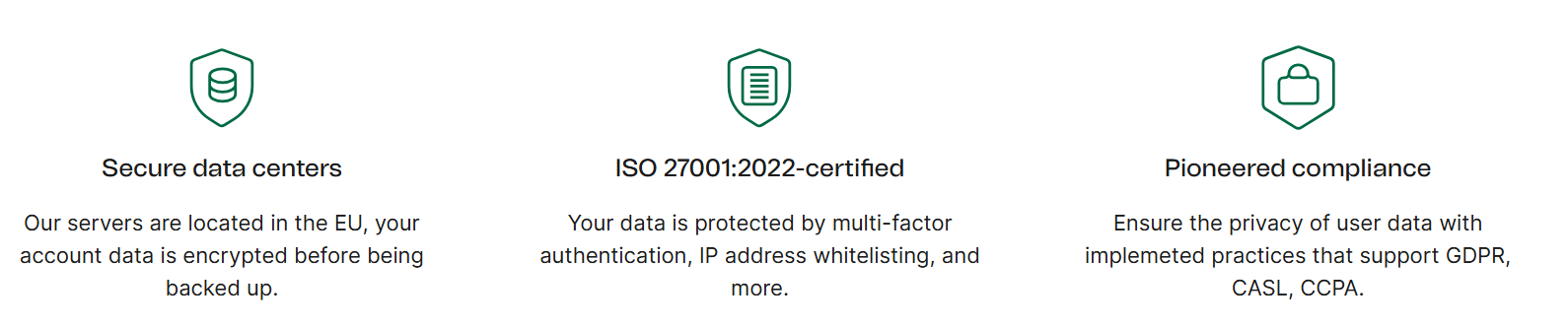
Brevo is ISO 27001:2022 certified with EU data residency by default, GDPR-native architecture (double opt-in, consent records, data subject request management), and CCPA support. Enterprise accounts get SSO/SAML and dedicated IPs. Brevo is also a certified B Corporation.
Source: Brevo
Zoho holds ISO 27001, ISO 27701, SOC 2 Type 2, and HIPAA certifications. The company operates its own data centers globally with biometric access and AES-256 encryption, runs a bug bounty program, and maintains a published privacy stance: "the only way we make money is from the software license fees you pay us," with no advertising revenue and no third-party trackers. Zoho's AI models are built in-house, so customer data stays within Zoho's infrastructure. For organizations evaluating data sovereignty, Zoho's bootstrapped ownership and refusal to take outside funding offer structural guarantees that publicly traded or VC-backed competitors cannot.
ZoomInfo maintains ISO 27001, ISO 27701, SOC 2 Type II, TRUSTe GDPR, and TRUSTe CCPA certifications, all renewed annually. The company is a registered data broker in California and Vermont, with a dedicated Trust Center at trust.zoominfo.com. Compliance infrastructure is built into the data layer itself, including a Compliance API for managing opt-out requests programmatically.
Brevo vs. Zoho vs. ZoomInfo: Which should you choose?
The right platform depends on what your business actually needs most.
Choose Brevo if:
Multichannel marketing (email, SMS, WhatsApp, push) is your primary need
You want unlimited contacts with pricing based on send volume
You need transactional email and marketing campaigns in one platform
Your sales process is straightforward and doesn't require complex pipeline management
You value ease of use and fast onboarding over customization
Choose Zoho CRM if:
Sales pipeline management, forecasting, and process automation are your top priorities
You want a single-vendor ecosystem covering CRM, finance, HR, and marketing
Customization through no-code, low-code, and pro-code tools matters to your team
You're looking for enterprise CRM capabilities at a fraction of Salesforce pricing
Data privacy and vendor independence matter to your organization
Choose ZoomInfo if:
You need verified B2B contact data and buyer intent signals to fill your pipeline
Knowing which companies are actively in-market for your solution would change your outreach
Your CRM data is incomplete or stale and you need automated enrichment at scale
You want account intelligence that tells you who to target, when to engage, and what to say
You're building an outbound-first go-to-market motion or scaling account-based marketing
See ZoomInfo in action with a free trial.
Brevo and Zoho each solve real problems well. Brevo makes multichannel marketing accessible and affordable. Zoho CRM delivers enterprise-grade sales management at mid-market prices. But for B2B teams, the highest-leverage investment is often upstream of both: ensuring you target the right accounts with verified data, real-time buying signals, and intelligence about why deals move. ZoomInfo provides that layer, and it works alongside whichever marketing or CRM platform you choose, making both more effective.
"Without ZoomInfo, it would be extremely difficult (if not impossible) to achieve our business objectives. Without it, we wouldn't be able to understand the market, have the right contact data, and make meaningful connections." (Smartsheet)
Brevo vs. Zoho vs. ZoomInfo FAQ
What is the core difference between Brevo, Zoho, and ZoomInfo?
Brevo is a multichannel marketing platform that handles email, SMS, WhatsApp, push notifications, and basic CRM from one interface, priced by email volume with unlimited contacts. Zoho is a CRM-first business suite with 55+ integrated applications, offering sales automation, AI forecasting, and customization at a fraction of Salesforce's cost. ZoomInfo is a B2B data intelligence platform providing 500M contacts, buyer intent signals, and AI-powered GTM execution, designed to tell you who to target and when they're ready to buy.
Which platform is cheapest to get started with?
All three offer permanent free plans. Brevo's free plan includes 300 emails/day with unlimited contacts and no credit card required. Zoho CRM's free plan covers up to 3 users with 5,000 records. ZoomInfo Lite provides 10 monthly data exports from its B2B database at no cost. For paid plans, Brevo starts at $9/month, Zoho CRM at $14/user/month, and ZoomInfo requires custom pricing through a sales conversation.
Can I use ZoomInfo alongside Brevo or Zoho?
Yes, and this is often the most effective approach. ZoomInfo integrates with both Zoho CRM and other major CRMs to enrich and update contact records automatically. ZoomInfo provides the verified prospect data and buying signals, while Brevo or Zoho handles campaign execution and deal management. ZoomInfo's API and MCP make its data accessible in any tool.
Which platform has the best AI capabilities?
Each platform's AI serves a different purpose. Brevo's Aura AI focuses on marketing execution: generating content, optimizing send times, and segmenting audiences. Zoho's Zia AI focuses on CRM intelligence: scoring leads, predicting churn, classifying email sentiment, and running autonomous sales agents. ZoomInfo's GTM Context Graph reasons across B2B data, CRM records, and conversation intelligence to surface why deals move and which accounts match your win patterns.
Which platform is best for B2B sales prospecting?
ZoomInfo is the clear choice for prospecting, with 500M contacts, 135M+ verified phone numbers, and 200M+ verified business emails, plus buyer intent data from 210 million IP-to-organization pairings. Neither Brevo nor Zoho CRM provides a B2B contact database or intent signals; both work only with contacts you already have in your system.
How do the platforms handle email deliverability?
Brevo cites a 99% deliverability rate for enterprise accounts, includes dedicated IPs at the Enterprise tier, and provides a Deliverability Specialist on Professional plans. Zoho CRM handles email through its CRM interface or through Zoho Campaigns for dedicated marketing, with standard deliverability tools. ZoomInfo focuses on data accuracy rather than email sending; its value is ensuring the email addresses in your CRM are verified and current, which directly improves deliverability on whichever sending platform you use.
Which platform is easiest to set up and use?
Brevo has the lowest barrier to entry, with a drag-and-drop interface and Capterra "Ease of Use 2026" recognition. Zoho CRM offers more power but requires significant configuration before delivering value; success depends on investing time in setup, not expecting immediate out-of-box results. ZoomInfo's GTM Workspace deploys in weeks, not months, though the full platform represents a real onboarding investment.
Which platform offers the best support?
Brevo provides email support on all paid plans, phone support and a Deliverability Specialist on Professional, and a Customer Success Manager on Enterprise. Zoho includes email, phone, and chat support (24x5) free on all paid plans through Classic Support, with Premium and Enterprise support tiers available as paid add-ons. ZoomInfo provides multi-channel support through its Help Center, ZoomInfo University, and direct phone support, with dedicated customer service managers on Enterprise plans.
Keep comparing Brevo:
