

Choosing between Calendly and Chili Piper for scheduling and lead conversion comes down to five questions:
Do you need a simple scheduling link anyone on your team can share, or a conversion engine that qualifies, routes, and books in one motion?
Are your leads mostly self-scheduling from your website, or does your sales team need to route and hand off leads across territories and roles?
How sophisticated is your lead routing today, and how much does your CRM need to drive it?
Is your scheduling tool a standalone need, or one piece of a larger conversion problem?
How confident are you that the data behind your routing logic is accurate, complete, and current?
In short, here's what we recommend:
Calendly is the scheduling platform more than 20 million people and businesses use, including 86% of Fortune 500 companies. Its strength is removing friction from booking: share a link, let invitees pick a time, and Calendly handles the rest (calendar sync, video links, reminders, follow-ups).
For sales teams, Routing Forms qualify and direct inbound leads to the right rep's calendar based on form answers or CRM ownership. The free tier makes it easy to start, and paid plans at $10-16/seat/month keep it accessible.
Where Calendly shows its limits is in complex, multi-step inbound conversion: its routing works but wasn't designed for high-volume B2B demand conversion, and its options for branding and advanced lead matching are narrower than specialized tools.
Chili Piper serves B2B revenue teams that need to turn inbound demand into booked meetings fast. Its Form Concierge qualifies prospects, routes them to the correct rep, and displays a calendar instantly after form submission. Distro automates lead distribution inside Salesforce based on triggers and ownership rules. Handoff manages the SDR-to-AE transition.
The trade-off is cost and complexity: pricing starts at $30/user/month plus mandatory platform fees, configuration changes often require a knowledgeable admin, and the learning curve is steeper than simpler scheduling tools.
Both platforms handle scheduling and routing. But neither solves the quality of data feeding that layer. Routing rules are only as good as the contact records, company attributes, and buying signals behind them. That's where ZoomInfo comes in.
ZoomInfo is a B2B data and intelligence platform with 500M contacts, 100M companies, 135M+ verified phone numbers, and 200M+ verified business email addresses. Its GTM Context Graph processes 1.5B+ data points daily, combining this data with your CRM records, conversation transcripts, and behavioral signals to show the full context of your accounts: not just what happened, but why, and what to do next.
ZoomInfo integrates with both Calendly (via enrichment data for hidden field routing) and Chili Piper (as a listed enrichment partner that enables shorter forms and smarter routing). From there, your team can run sales motions from GTM Workspace, launch plays from GTM Studio, or connect through the API and MCP.
If verified data and buying signals are the missing piece in your scheduling and conversion stack, see how ZoomInfo works.
Calendly vs. Chili Piper vs. ZoomInfo at a glance
Calendly | Chili Piper | ZoomInfo | |
|---|---|---|---|
Core function | Scheduling automation | Demand conversion (qualify, route, schedule) | B2B data and GTM intelligence |
Primary user | Anyone who books meetings | B2B revenue teams with inbound volume | Sales, marketing, and RevOps teams |
Lead routing | Routing Forms with CRM lookup | Form Concierge + Distro (Salesforce-native) | Enrichment data that powers routing in both tools |
CRM integration | Salesforce, HubSpot (Teams+) | Deep Salesforce; growing HubSpot | Salesforce, HubSpot, Dynamics 365, 120+ integrations |
AI features | Notetaker (meeting recaps), AI Assistant (beta) | Chat AI, Spam Checker, Meeting Prep | GTM Context Graph, AI agents, intent signals |
Free tier | Yes (1 event type, 1 calendar) | Free basic scheduling only | ZoomInfo Lite (permanent free tier) |
Starting price | $10/seat/month | $30/user/month + $150/month platform fee | Custom-quoted, consumption-based |
Best for | Teams needing simple scheduling | Teams needing fast inbound conversion | Teams needing the data that makes conversion work |
Calendly handles scheduling, Chili Piper handles demand conversion
These tools solve related but different problems.
Calendly's job is to eliminate scheduling friction. You connect your calendar, set availability, and share a link. Invitees see open slots in their time zone, pick one, and both parties get a calendar invite with a video link. That simplicity is the product's core strength. With a 4.7/5 rating on Capterra across thousands of reviews, users cite the clean, intuitive interface as the reason they chose it.
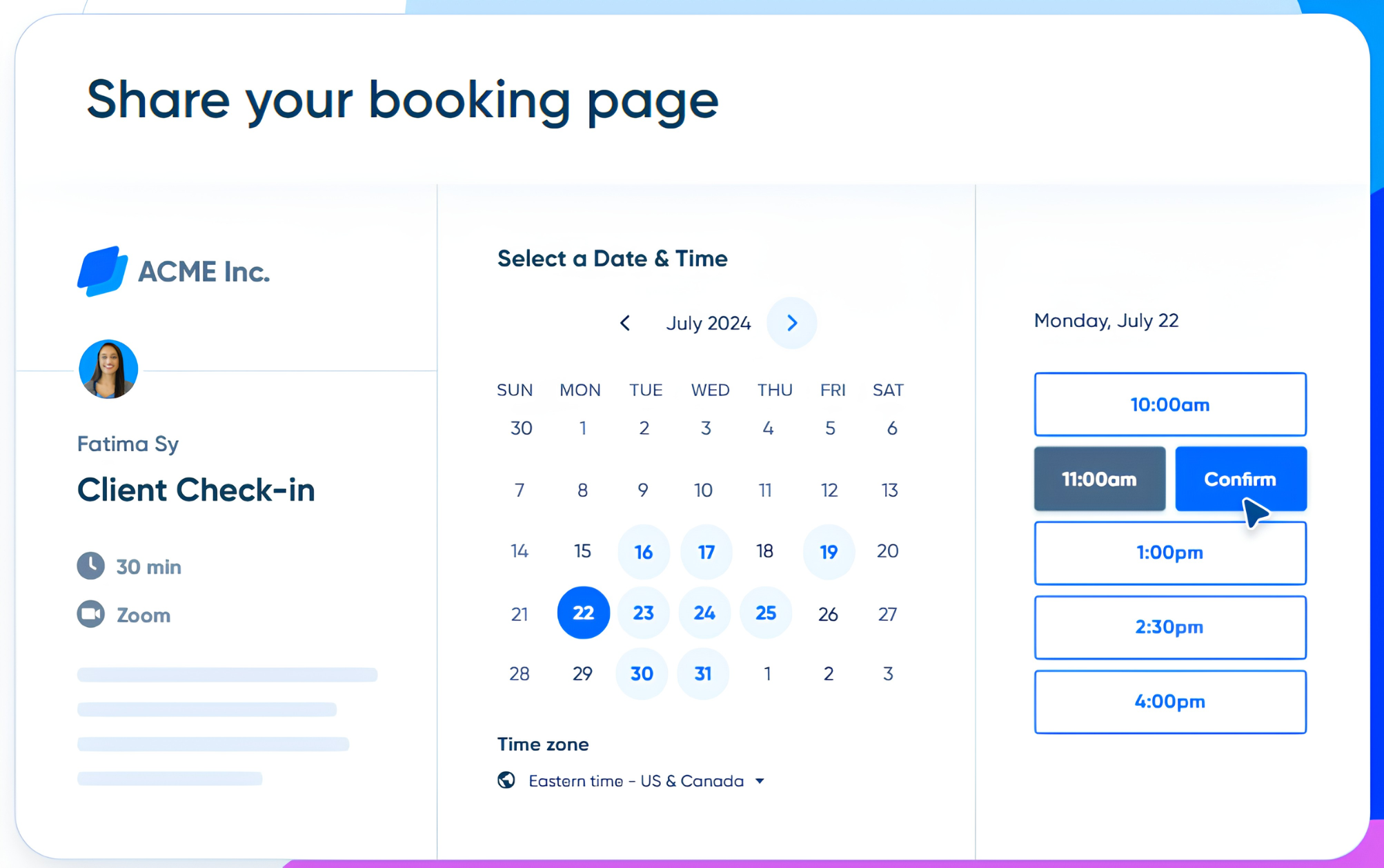
Source: Calendly
Chili Piper's job is to convert inbound demand into pipeline. When a prospect fills out a demo request form on your website, Form Concierge qualifies the prospect, routes them to the correct rep, and displays that rep's calendar in one unbroken flow.
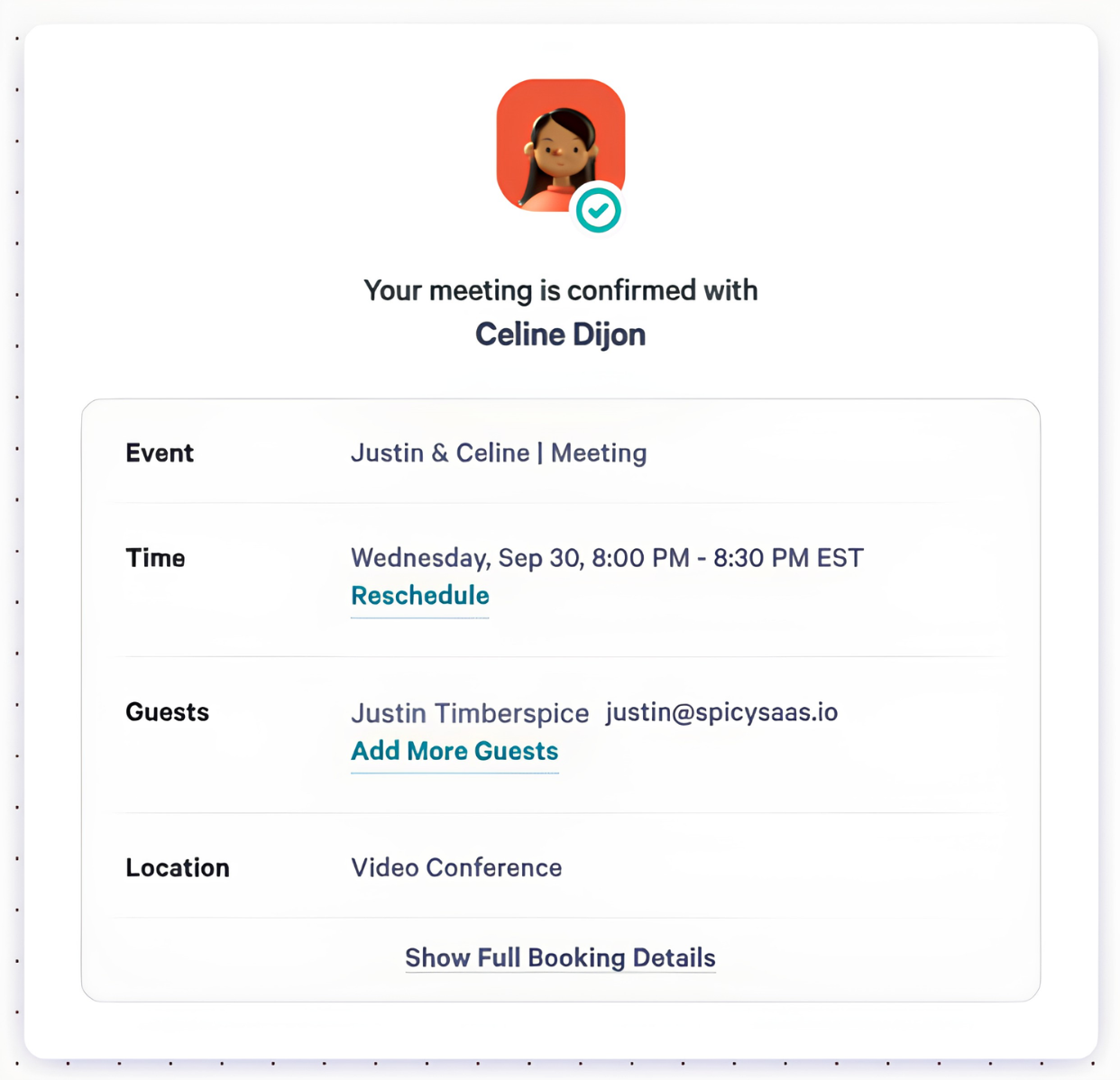
Source: Chili Piper
The prospect never leaves the page, never waits for a follow-up email, and never goes cold.
The distinction matters because your actual need determines which tool fits. A consulting firm scheduling client calls needs Calendly. A SaaS company processing hundreds of inbound demo requests per month across territories needs Chili Piper. A startup founder booking investor meetings needs Calendly. An enterprise revenue team enforcing SLAs on speed-to-lead needs Chili Piper.
Where the two overlap is in basic one-on-one scheduling. Chili Piper's ChiliCal provides personal scheduling links similar to Calendly's core offering and is included free with any other Chili Piper product. Calendly's Routing Forms add lead qualification before booking. But in each case, the overlap covers the other tool's secondary function, not its primary strength.
Lead routing is where the gap widens
Calendly's Routing Forms place a qualification step before the booking page. Visitors answer questions (company size, use case, role), and conditional logic directs them to the right event type or rep. For teams using Salesforce or HubSpot, Calendly can perform a real-time CRM lookup to match visitors to their assigned account owner and route to that rep's calendar.
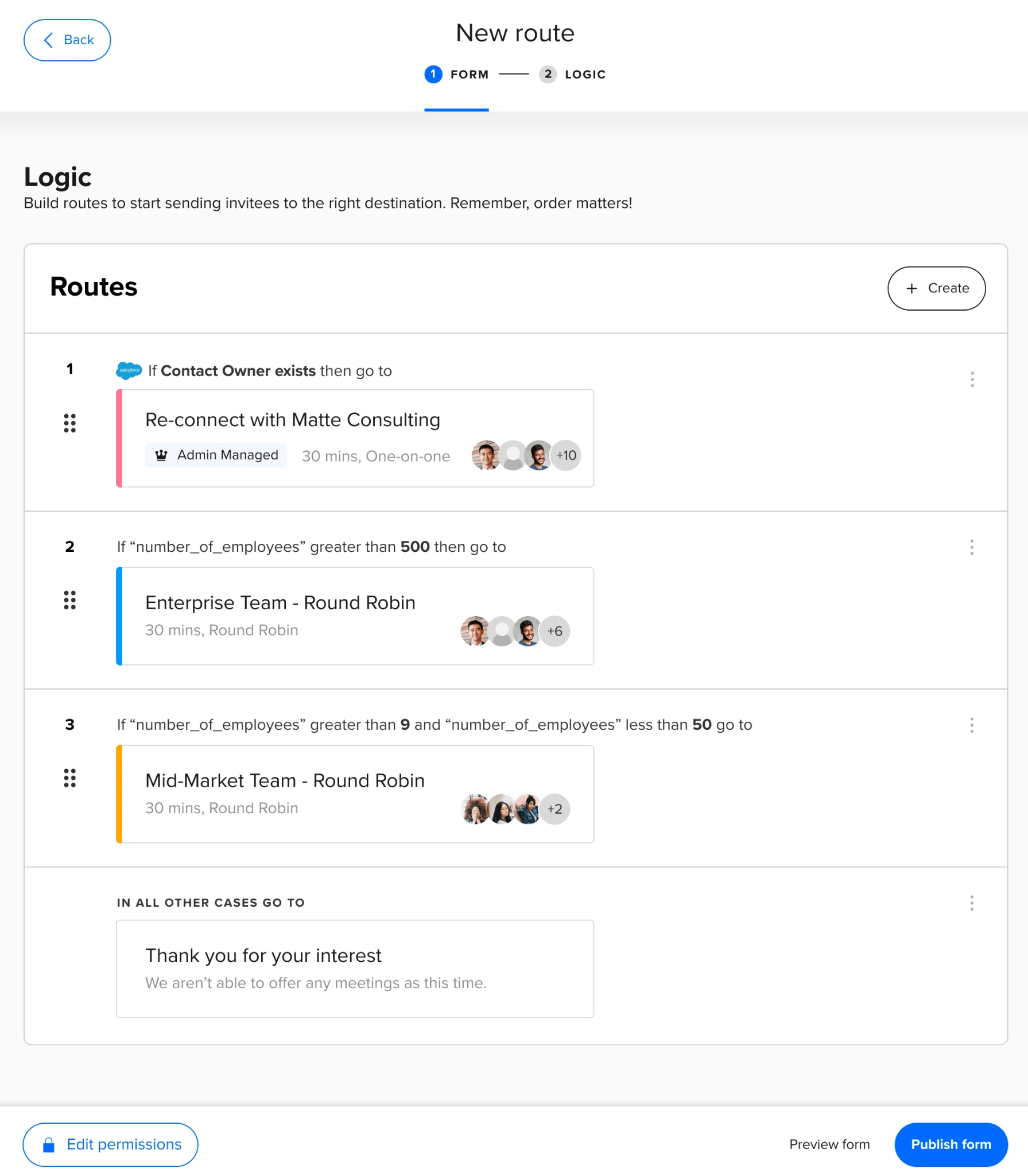
Source: Calendly
This covers most inbound routing scenarios. Where it stops: Calendly's routing operates at the form level. It can screen, match, and direct, but it doesn't distribute leads with weighted round-robin, enforce SLAs, handle lead-to-account matching with fuzzy logic, or manage multi-stage handoffs.
Chili Piper's routing engine goes deeper. Distro routes any Salesforce object (leads, contacts, accounts, opportunities, cases, or custom objects) based on triggers, ownership rules, and conditional logic.
It includes weighted round-robin distribution (where reps receive 200%, 100%, or 50% of the standard allocation), capping to limit how many records a rep receives per day or week, SLA enforcement that triggers reassignment or alerts if follow-up doesn't happen within a set window, and lead-to-account matching using exact and fuzzy algorithms.
Chili Piper's Handoff extends this to the SDR-to-AE transition. When an SDR qualifies a prospect on a cold call, they trigger the Handoff Scheduler from their CRM or Chrome extension. The system evaluates routing rules, displays the right AE's availability, and books the meeting in seconds. Handoff Live enables instant transfers during live calls.
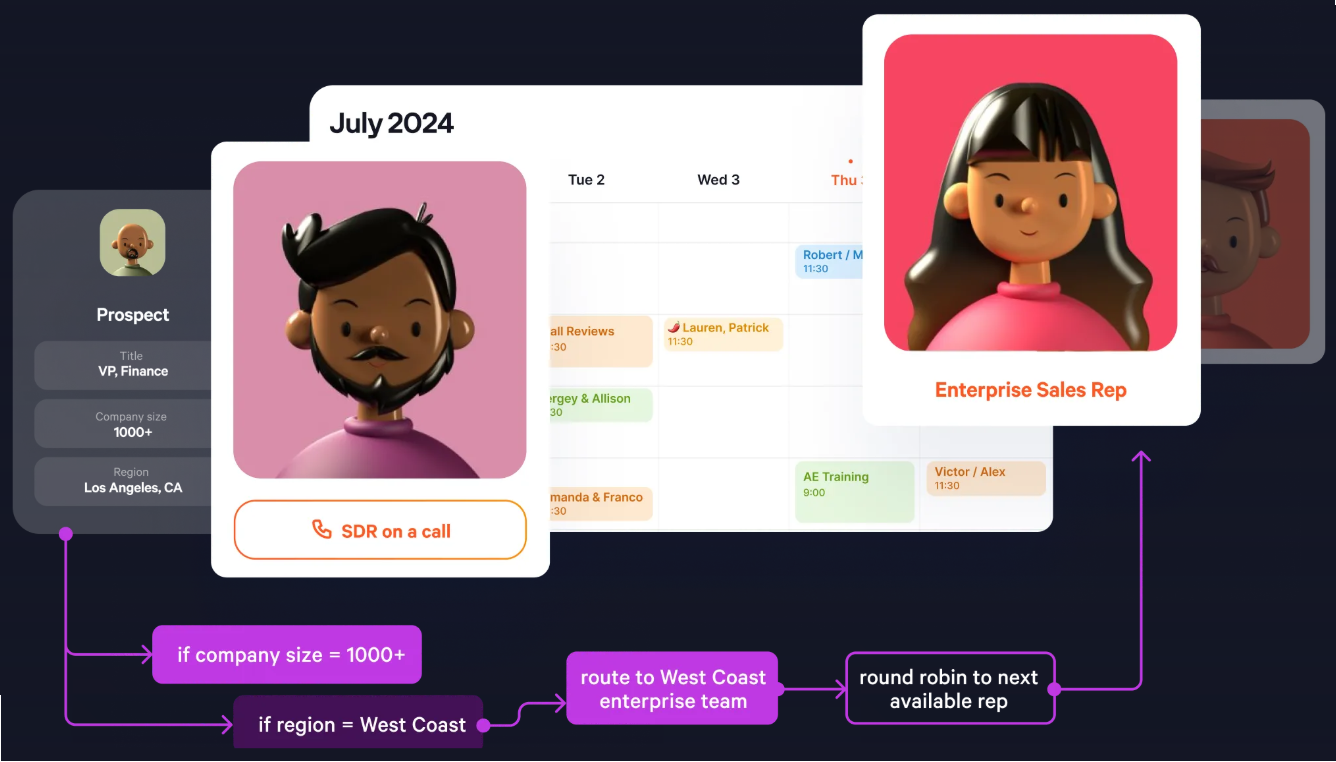
Source: Chili Piper
For a five-person sales team with straightforward territories, Calendly's routing is sufficient. For a fifty-person team with overlapping territories, multiple handoff stages, and SLA requirements, Chili Piper's routing is hard to replicate with simpler tools.
CRM integration depth shapes the buying decision
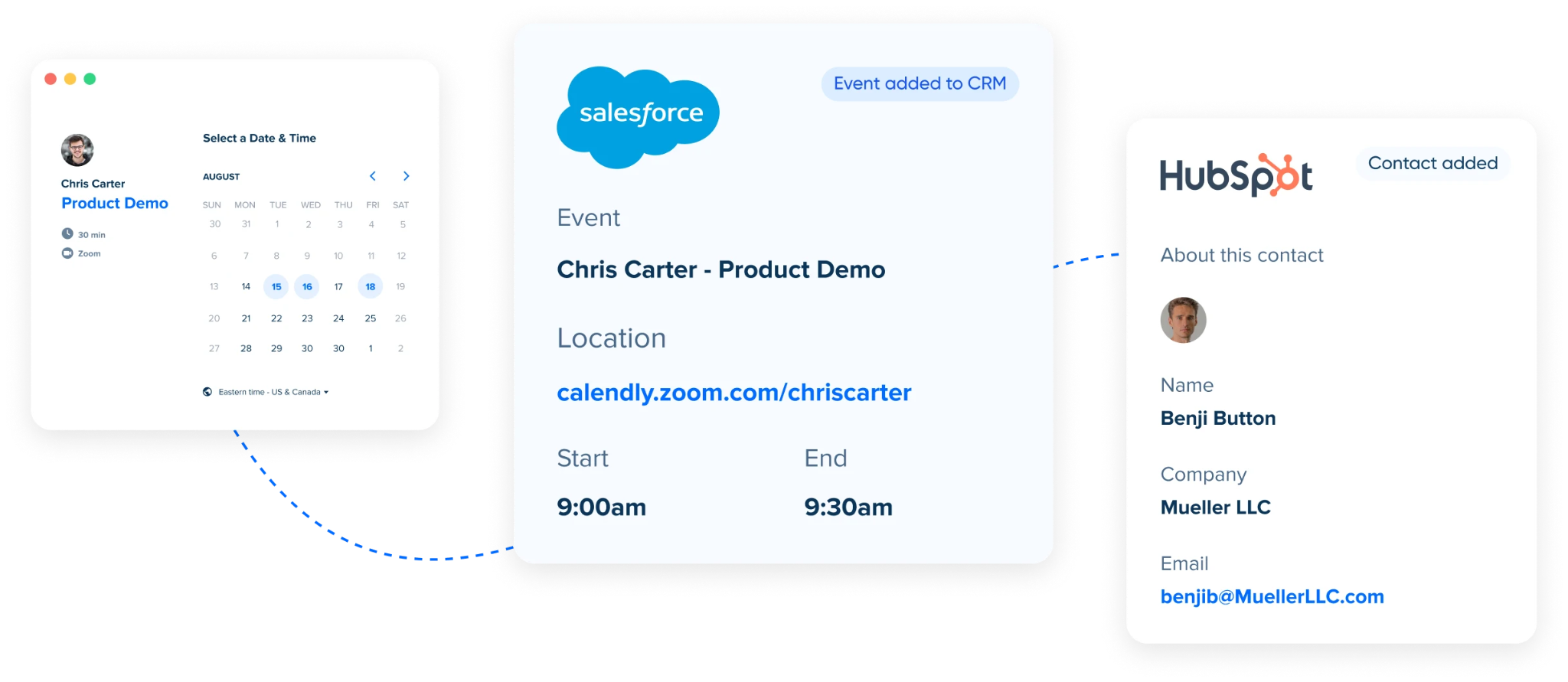
Calendly's CRM integration keeps scheduling data flowing into your system of record without manual entry. On the Teams plan ($16/seat/month), Salesforce and HubSpot integrations sync meeting data, create or update leads, contacts, and opportunities automatically, and route based on CRM ownership. The Enterprise plan adds Microsoft Dynamics 365 and Salesforce lookup routing with field-level filtering.
Source: Calendly
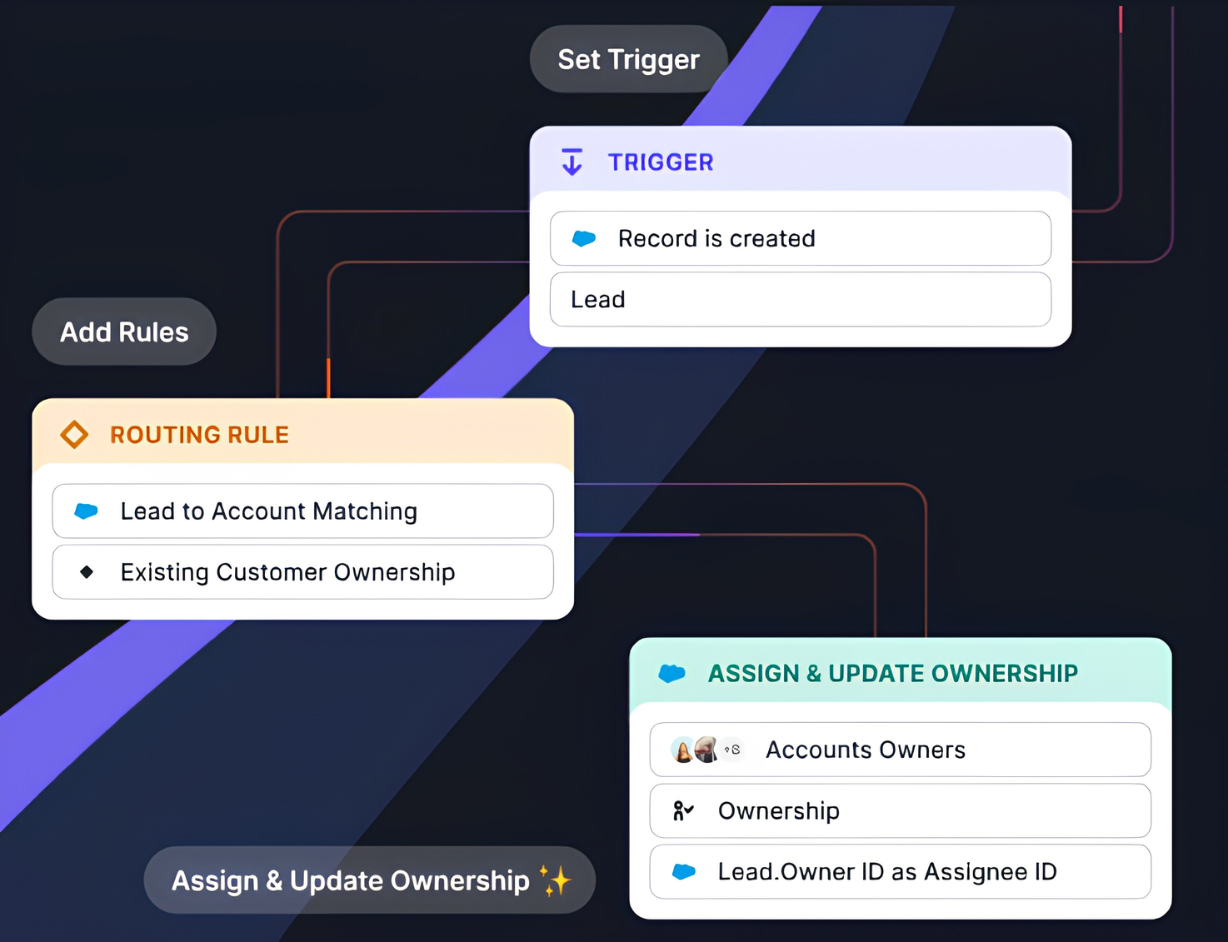
Chili Piper's CRM integration runs deeper, particularly with Salesforce. Distro's visual router builder operates directly on Salesforce objects, triggers routing from field updates, and can update ownership across multiple related objects at once.
Source: Chili Piper
It handles lead conversion (automatically converting leads to accounts, contacts, and opportunities), creates Salesforce tasks, and maintains routing logs for audits. G2 reviewers note that Chili Piper's Salesforce integration is more mature than its HubSpot integration, so HubSpot-first teams may find gaps.
For RevOps teams that treat Salesforce as the backbone of their go-to-market process, Chili Piper's native depth gives it an edge. For teams that need clean meeting-to-CRM sync without the complexity, Calendly covers the requirement at lower cost.
Both tools are only as good as the data behind them
Here's the problem neither Calendly nor Chili Piper solves: routing logic depends on the quality of data feeding it. A CRM lookup fails when the record is stale. Territory-based routing misassigns when company data is incomplete. Form-based qualification misses when the prospect doesn't know (or won't enter) the right answers.
This is where ZoomInfo changes the equation. Instead of relying on what prospects tell you in a form or what's already in your CRM, ZoomInfo provides the verified data that makes routing decisions accurate.
For teams using Calendly's Routing Forms, ZoomInfo enrichment data can power hidden field routing through Clearbit or direct ZoomInfo integration.
The visitor fills out a short form (name and email), ZoomInfo enriches the record with company size, industry, and revenue in the background, and Calendly routes on those hidden fields instead of self-reported answers. Shorter forms, higher completion rates, more accurate routing.
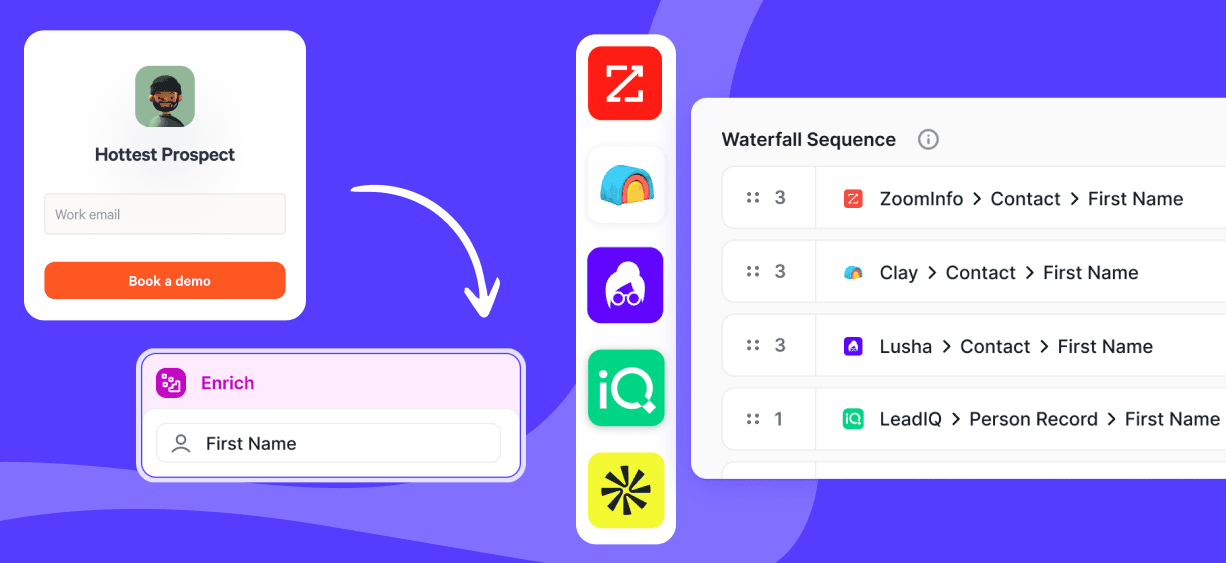
For Chili Piper users, ZoomInfo is a listed enrichment partner that feeds data into Form Concierge's routing engine. Chili Piper's enrichment feature fills lead information automatically from providers like ZoomInfo, so teams collect complete records while prospects fill out fewer fields.
Source: Chili Piper
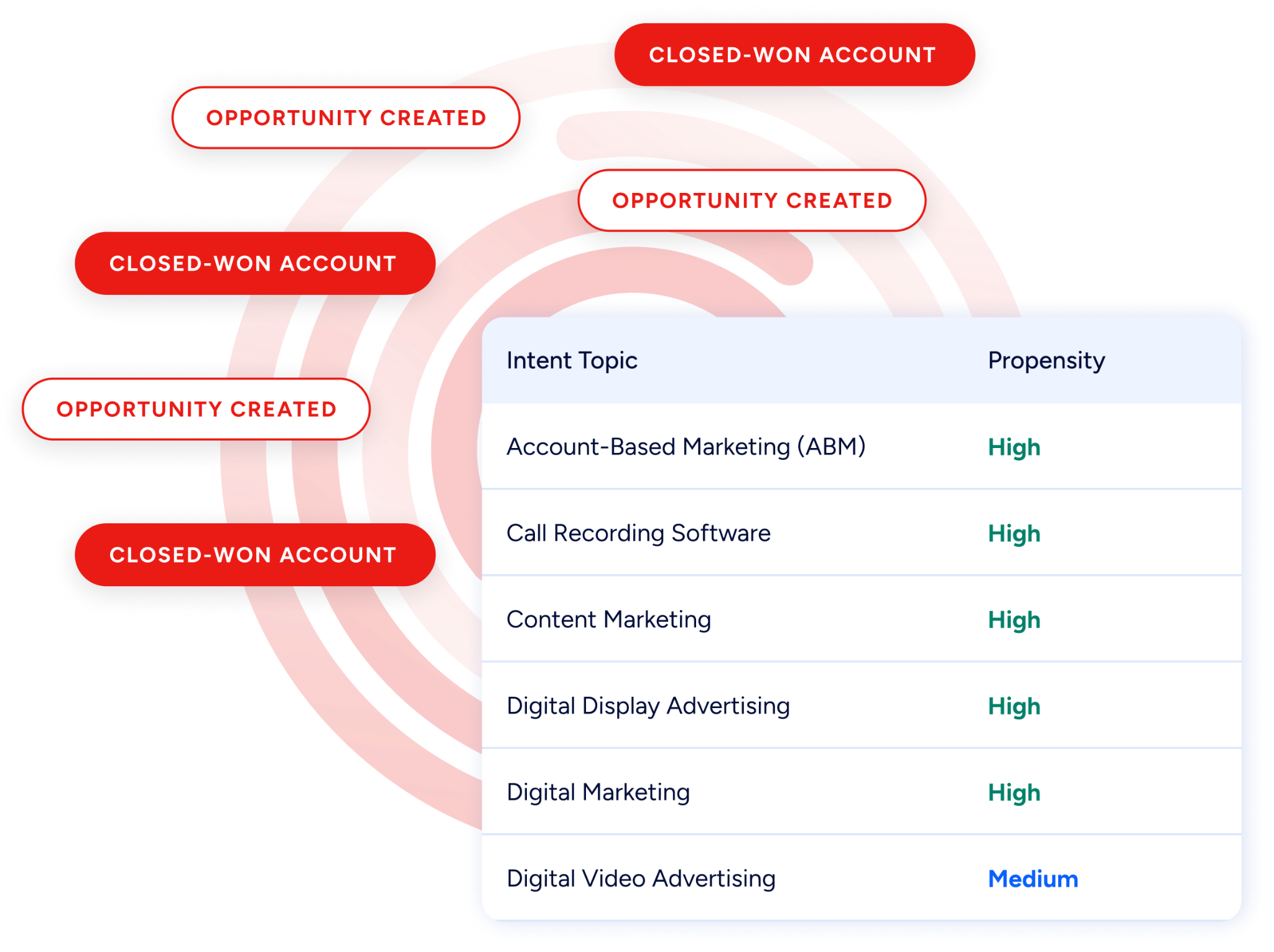
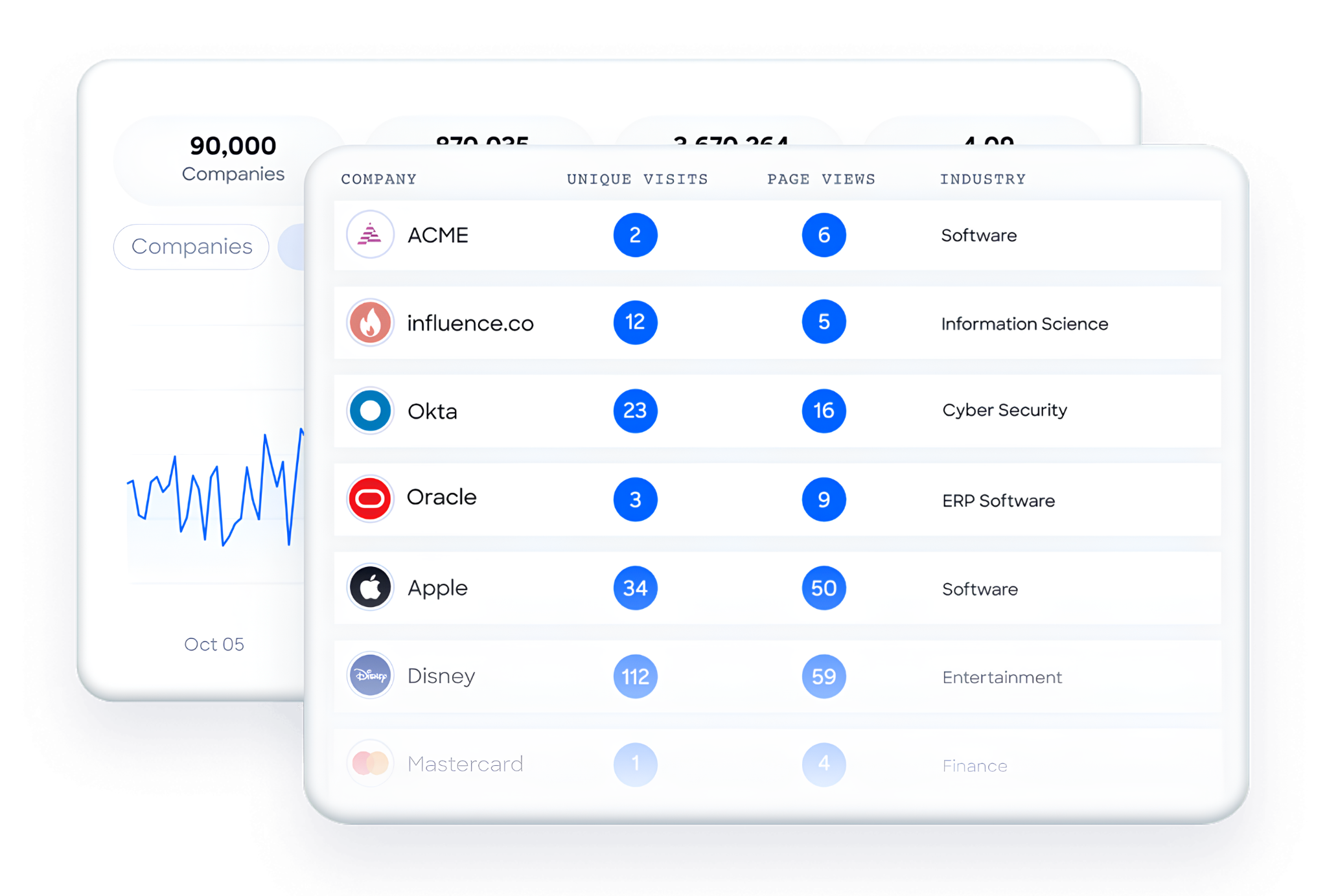
ZoomInfo's value goes beyond form enrichment. The platform's buyer intent data tracks signals from 210 million IP-to-organization pairings and 6 trillion+ keyword-to-device pairings sourced monthly, surfacing which accounts are researching your category before they fill out a form.
Source: ZoomInfo
WebSights resolves anonymous website traffic to companies, identifying buying team members and their direct contact information. The GTM Context Graph combines all of this (third-party data, CRM records, conversation intelligence, behavioral signals) into a single view that shows which accounts to prioritize and why.
Source: ZoomInfo
The practical result: your scheduling tool books the meeting, but ZoomInfo determines whether you're booking the right meetings with the right people at the right time.
Seismic's sales team attributed 39% of active pipeline to opportunities identified or influenced by ZoomInfo signals, reported 54% productivity gains, and saved 11.5 hours per week per seller. (Seismic case study)
Pricing reflects different ambitions
Calendly uses transparent, per-seat pricing:
Free: 1 event type, 1 calendar, unlimited meetings
Standard: $10/seat/month (annual), with unlimited event types, 6 calendars, HubSpot/Zapier integrations, Stripe/PayPal payments
Teams: $16/seat/month (annual), with Salesforce, round-robin, Routing Forms, Managed Events
Enterprise: Starts at $15,000/year, with Salesforce lookup routing, SSO/SAML, SCIM, dedicated support
For a 20-person sales team on the Teams plan, you're looking at roughly $3,840/year. The math is simple.
Chili Piper combines per-user licensing with platform fees:
Concierge: $30/user/month + platform fees starting at $150/month (tiered by lead volume)
Distro: $30/user/month + $150/month platform fee
Handoff: $30/user/month + $150/month platform fee
Chat AI: $20,000/year flat fee + $1,000/month platform fee
Bundle discounts: Buying multiple products reduces per-user costs and consolidates platform fees
ChiliCal: Free with any other product
For that same 20-person team on Concierge alone, costs start at $750 (users) + $150 (platform fee) = $900/month, or $10,800/year. Add Distro and the bundle pricing adjusts, but annual costs for a multi-product deployment rise fast. Chili Piper maintains a strict no-discount policy. Multi-year contracts (2-4 years) can reduce pricing by 15-40%.
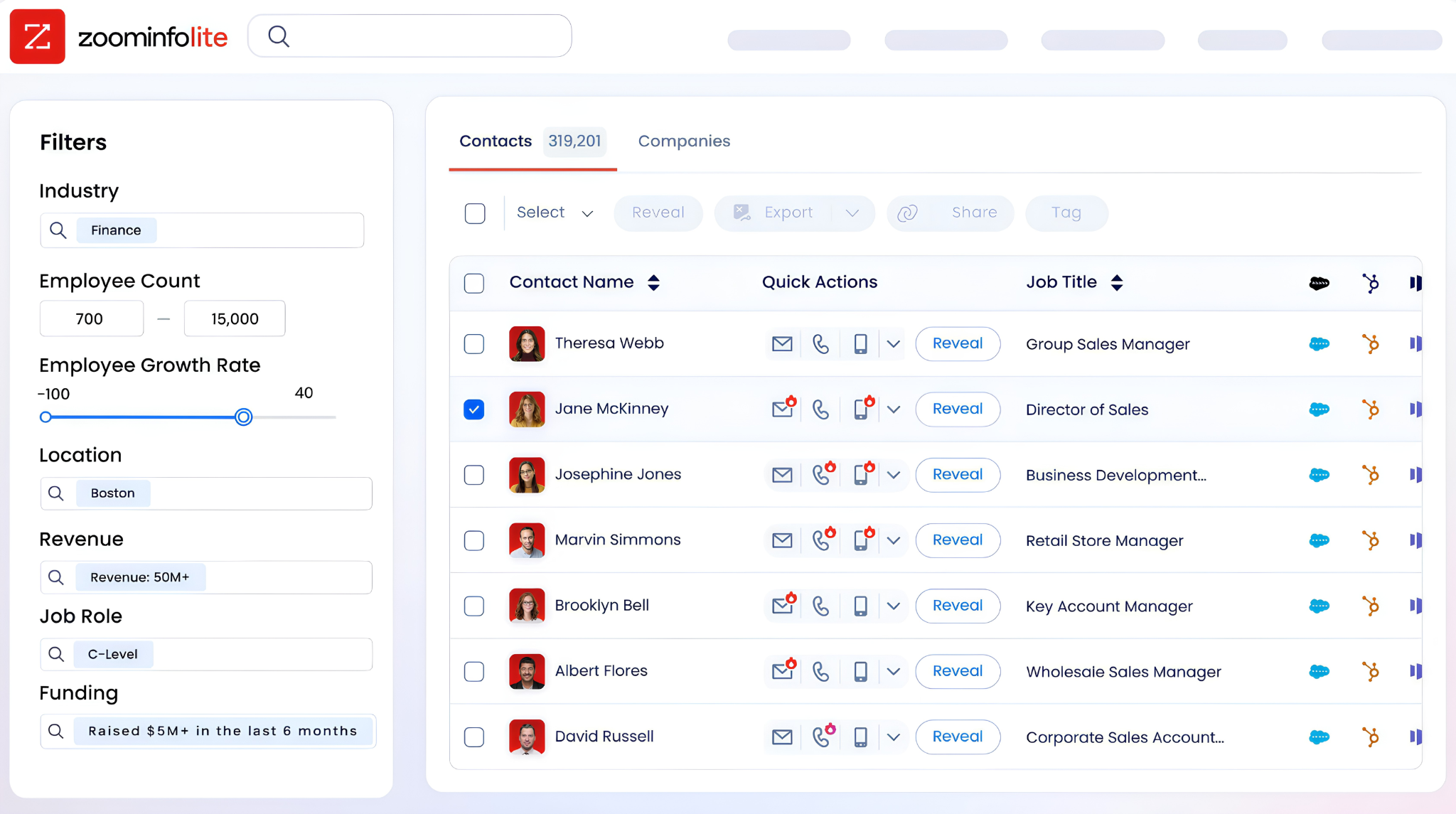
ZoomInfo uses custom-quoted, consumption-based pricing. No paid-tier prices are published. Pricing scales around seats, credit volume (1 credit = 1 contact or company export), and features. ZoomInfo Lite is a permanent free tier with access to the B2B database, 10 monthly export credits, and basic search and enrichment.
Source: ZoomInfo
A 7-day free trial provides broader access. For teams evaluating ZoomInfo behind their scheduling stack, the ROI calculation comes down to how much better routing, outreach, and conversion get with verified data versus operating without it.
"ZoomInfo's not just a contact data company anymore. They've built a full system of execution. GTM Intelligence works the list, writes the outreach, triggers the play, and helps drive predictable growth." (Ian Brodie, CEO and Co-Founder, Levanta case study)
AI features are expanding on all three platforms
Calendly's AI centers on the meeting lifecycle. Notetaker joins meetings as a recording bot that generates transcripts, summaries, and action items. It's included in all paid plans with unlimited recaps.

Source: Calendly
The Contacts module builds relationship records from scheduling activity, and an upcoming email feature will generate personalized messages from contact history. An AI Assistant in beta answers natural-language questions about scheduled meetings.
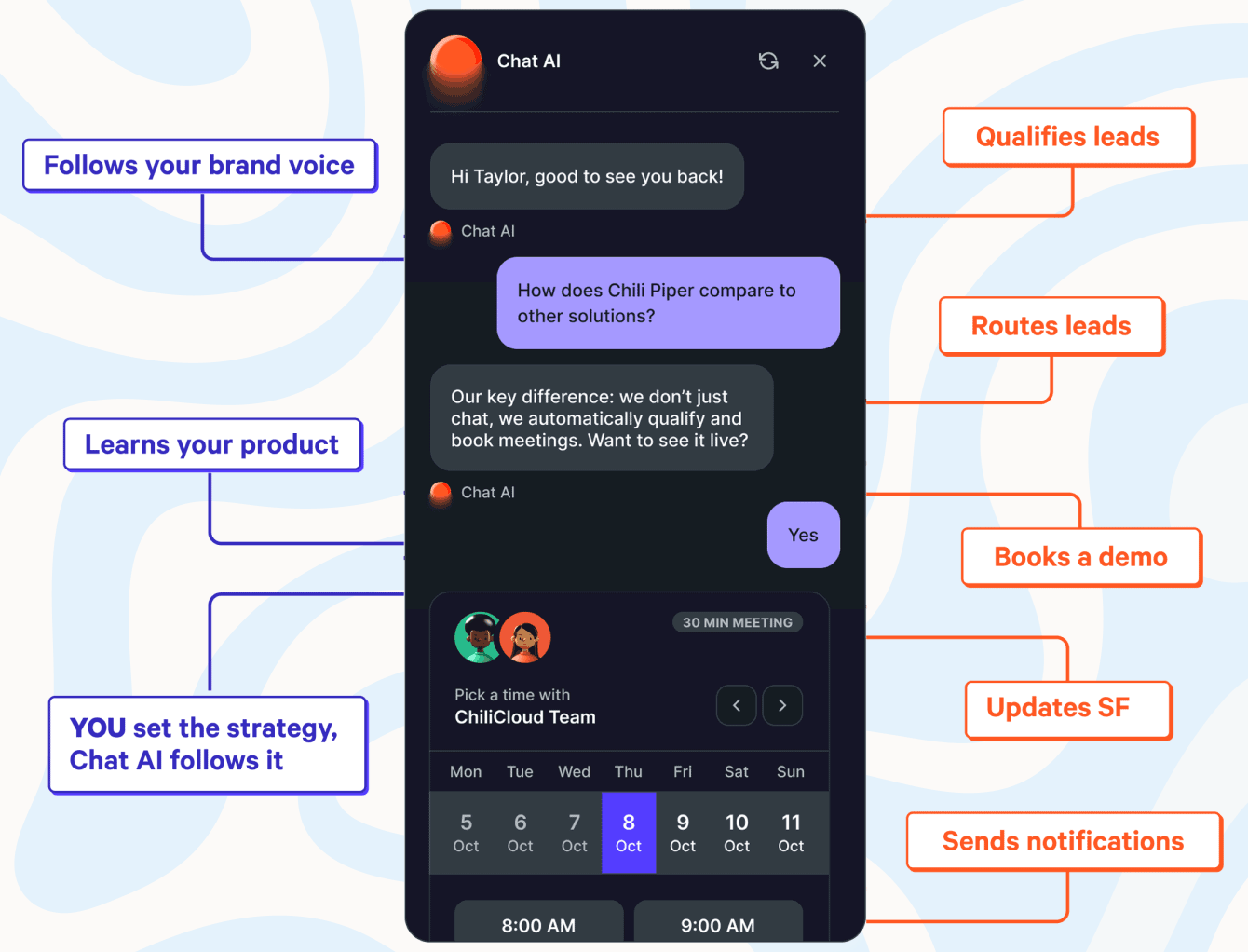
Chili Piper's AI targets the conversion pipeline. Chat AI is a 24/7 website assistant that engages visitors, answers questions from a company knowledge base, qualifies leads, and books meetings through Chili Piper's routing logic without a human. Spam Checker filters fake submissions and competitor domains before they reach sales calendars. Meeting Prep gives reps instant context for every scheduled meeting.
Source: Chili Piper
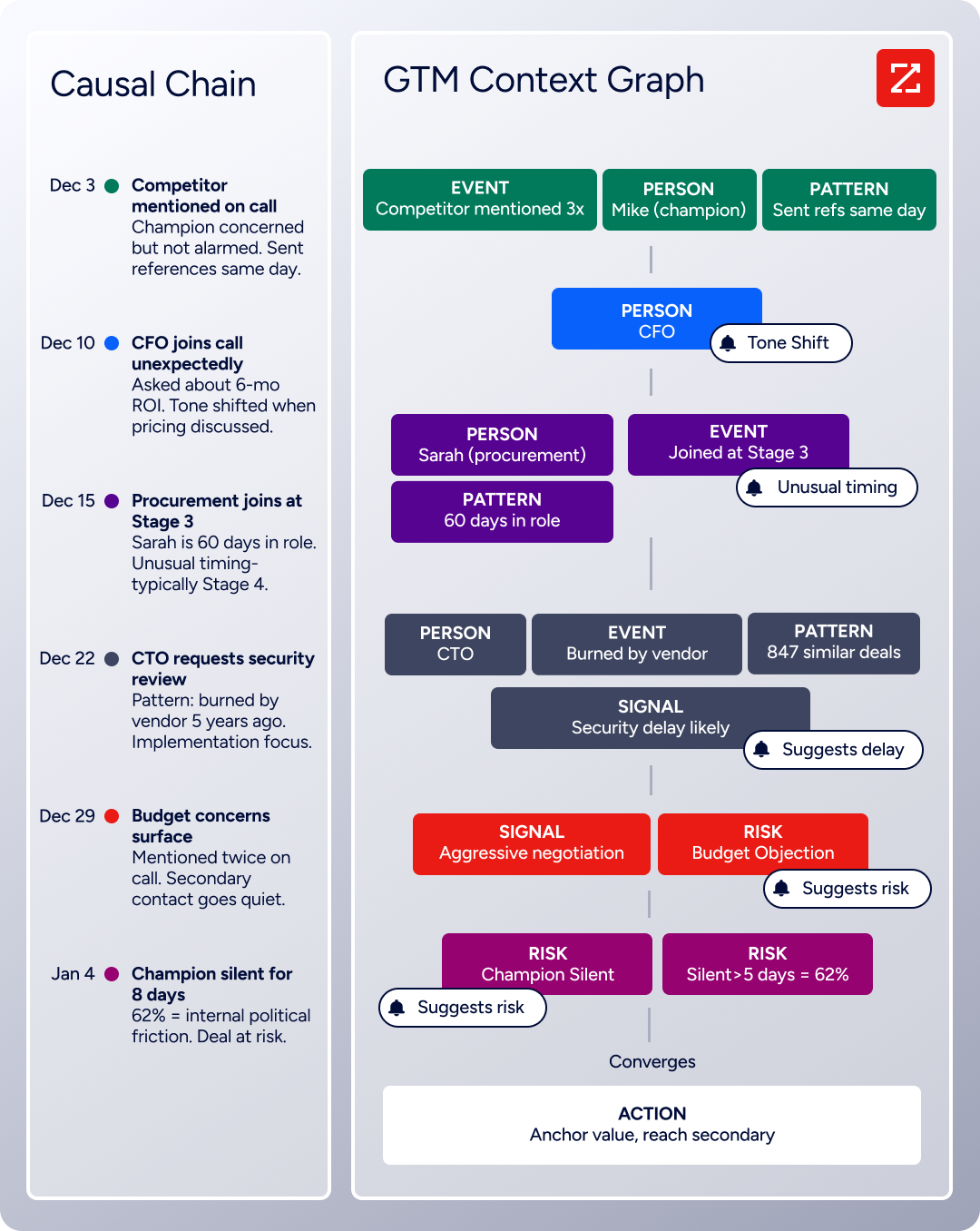
ZoomInfo's AI operates at a different scale. The GTM Context Graph processes 1.5B + data points daily, combining third-party intelligence with CRM records, conversation transcripts, and engagement data to reason about deal dynamics, not just record them.
Source: ZoomInfo
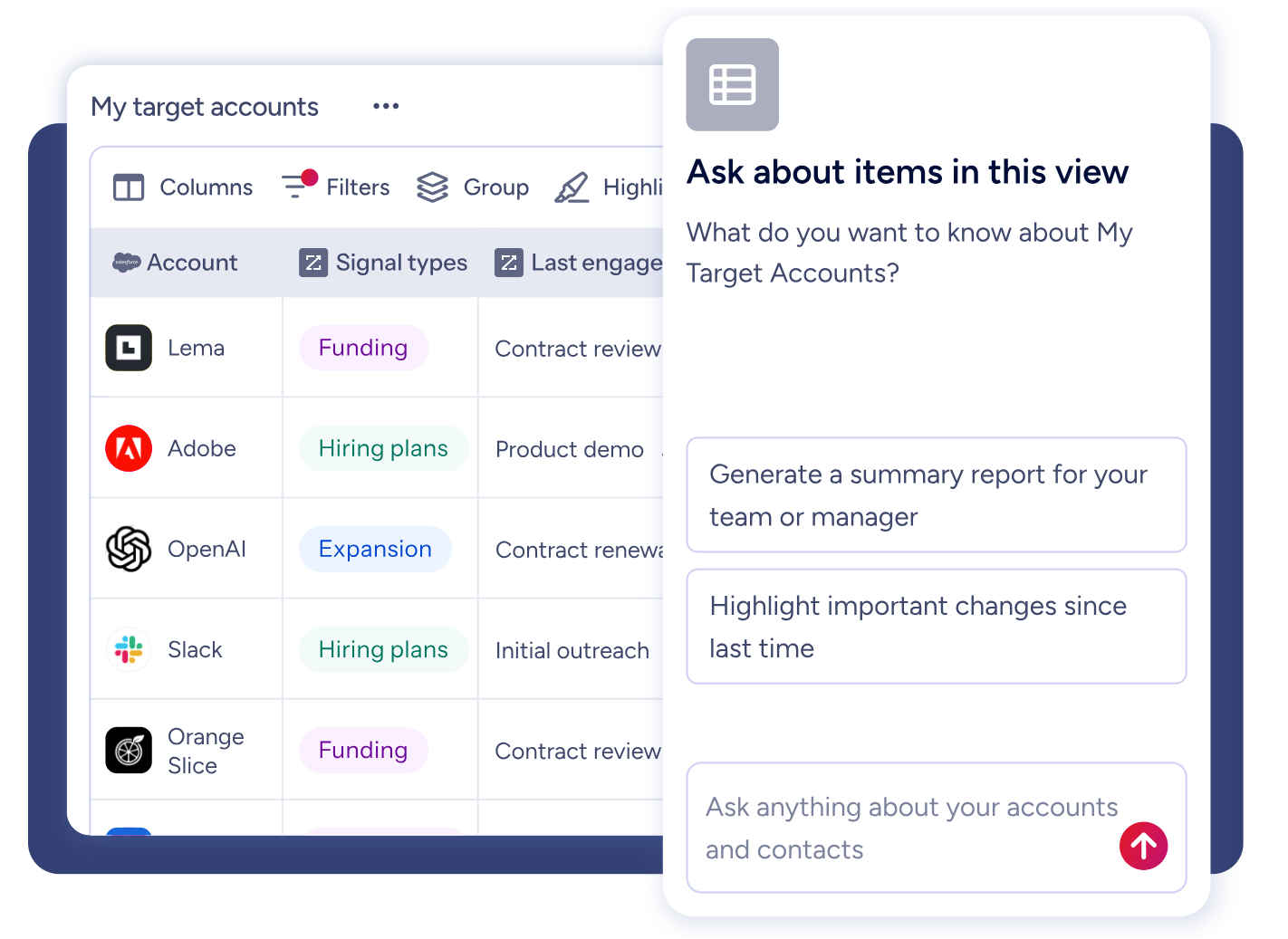
In GTM Workspace, AI agents handle account research, outreach drafting, CRM updates, and signal monitoring.
Source: ZoomInfo
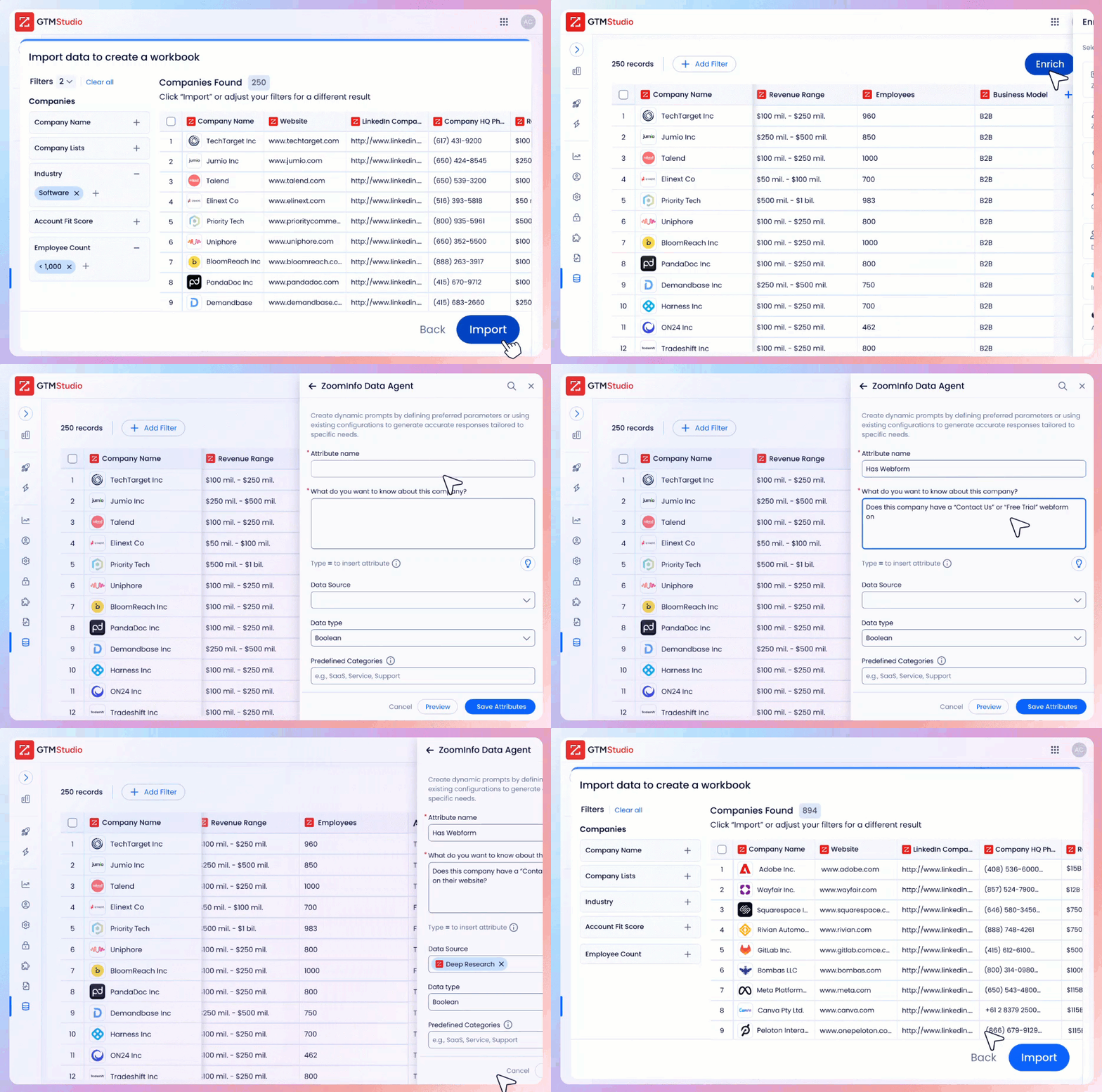
In GTM Studio, marketers describe audiences in natural language and launch multi-channel plays targeting accounts that match proven win patterns.
Source: ZoomInfo
The difference: Calendly's AI helps you manage meetings after they're booked. Chili Piper's AI helps you convert website visitors into meetings. ZoomInfo's AI helps you identify, prioritize, and reach the right accounts before they visit your website, and makes the intelligence from every conversation available to every team.
Opportunities at higher-scoring accounts identified by ZoomInfo signals were 43% more likely to become qualified pipeline and moved 58% faster through qualification. (Spekit case study)
Support and onboarding differ significantly
Calendly scales support by plan tier. Free users get self-service only (help center and community forum). Standard and Teams users get 24/7 chat and email support. Enterprise customers get dedicated account support, onboarding, phone support, and success metrics. The platform is built for self-serve adoption: a 17-minute video course covers the getting-started workflow, and most users are productive within minutes.
Chili Piper calls its approach "Customer Love." New customers typically go through about three calls with a designated Implementation Specialist over roughly three weeks. G2 reviewers consistently praise support quality, noting that support teams help customers get started well.
The trade-off: the platform's complex configuration (routing rules, Salesforce integrations, distribution logic) demands ongoing admin involvement. Small changes like territory tweaks or new queues often need a knowledgeable admin.
ZoomInfo provides support through a Help Center, ZoomInfo University with role-specific learning paths and certifications, and professional services through ZoomInfo Labs.

Source: ZoomInfo
The company redesigned its onboarding program from 30 to 90 days, producing a 25% improvement in satisfaction scores. Given the platform's breadth (data, intelligence, conversation tools, API access), the onboarding investment matches the scope.
Security and compliance for enterprise buyers
All three platforms meet enterprise security requirements, though certifications and infrastructure differ.
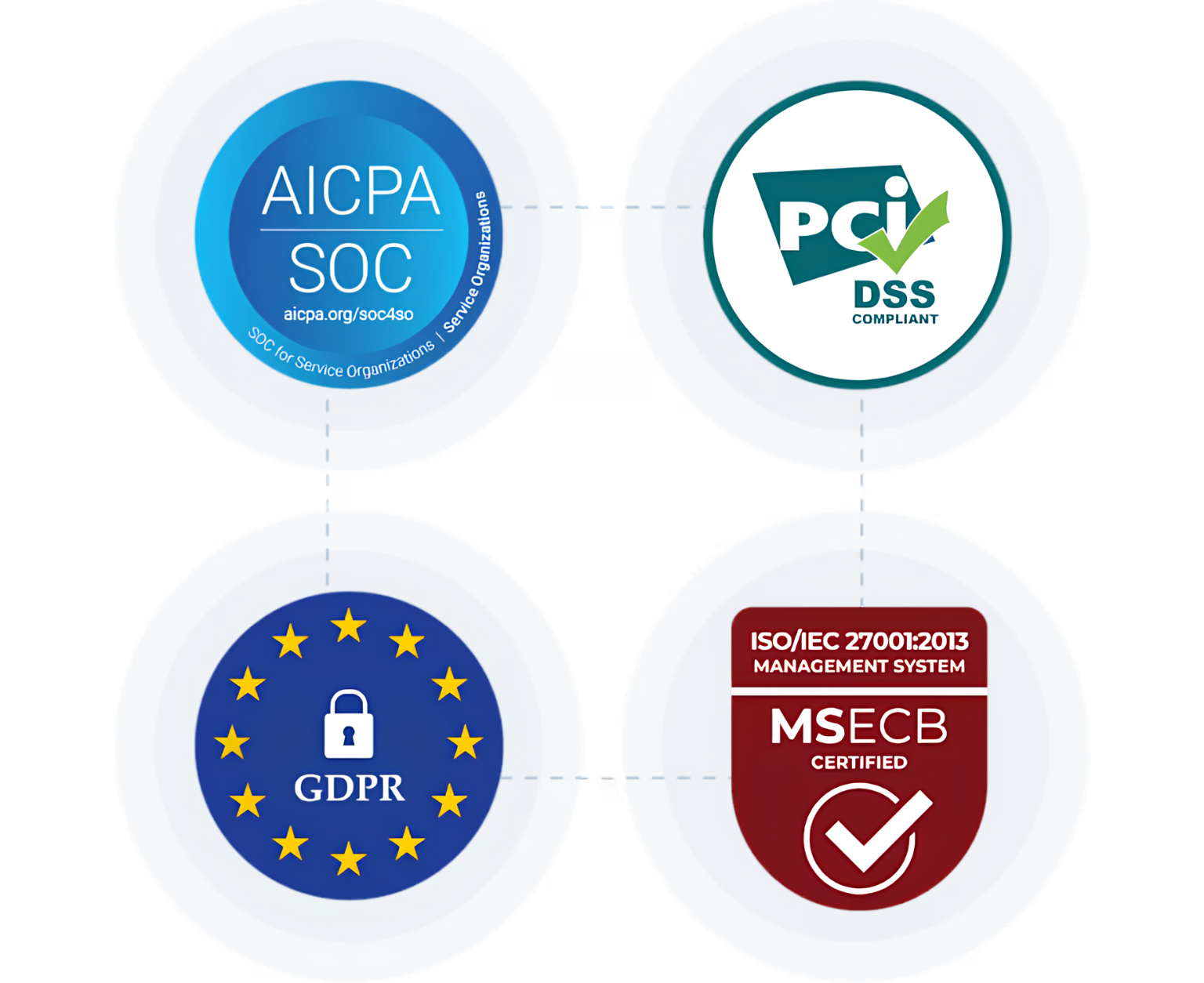
Calendly holds SOC 2 Type 2, SOC 3, ISO/IEC 27001, GDPR, CCPA, CSA STAR Level 1, and PCI DSS certifications. Enterprise features include SAML SSO, SCIM provisioning, audit logs, domain control, and data deletion APIs. Calendly encrypts data with TLS 1.2+ in transit and AES-256 at rest.
Source: Calendly
Chili Piper holds SOC 2 Type 2 and ISO 27001 accreditation. Infrastructure runs on Google Cloud Platform and Kubernetes, with each tenant in a separate database instance. Chili Piper encrypts in-transit data with 256-bit SSL and is GDPR compliant.
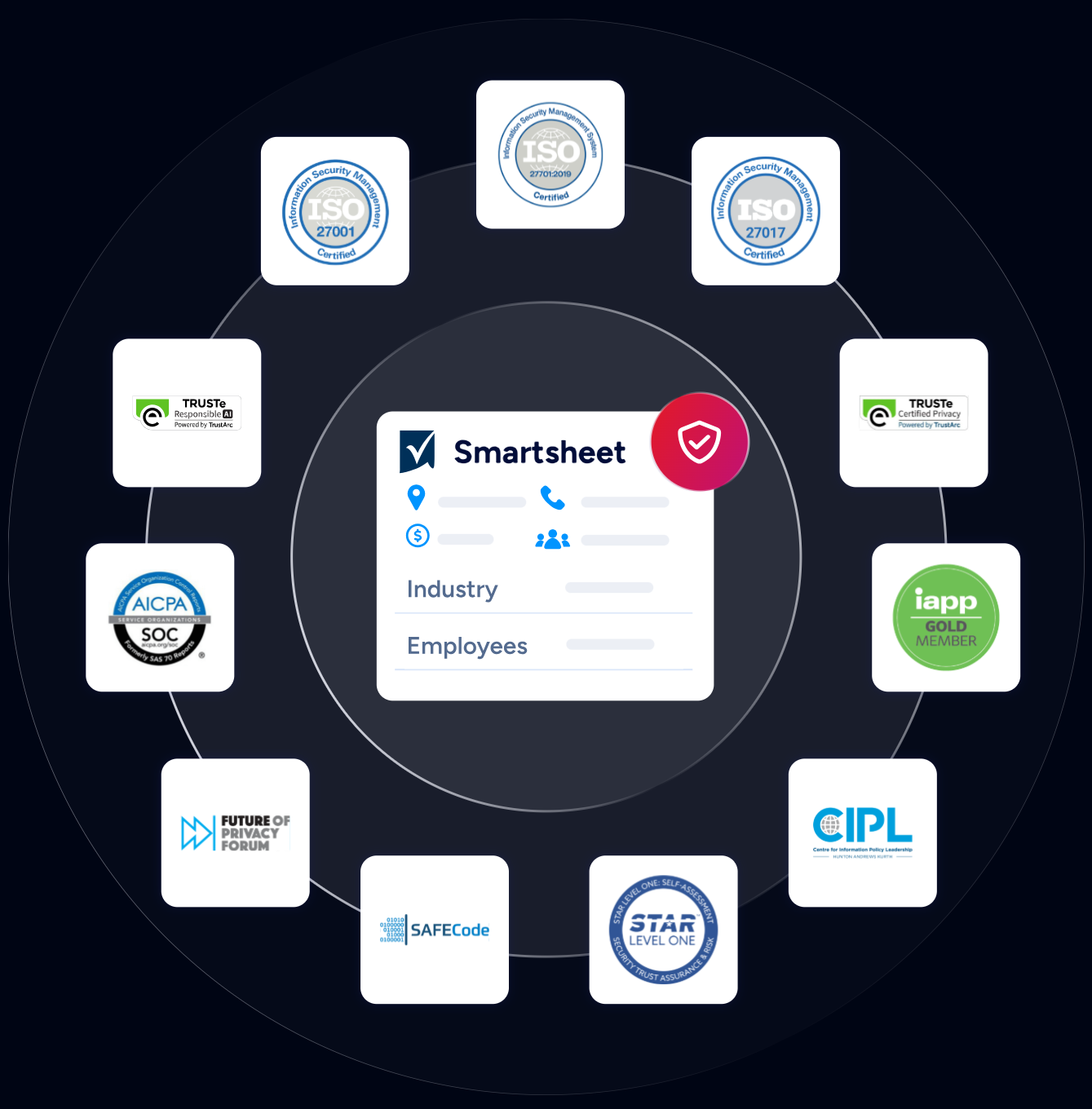
ZoomInfo maintains ISO 27001, ISO 27701, SOC 2 Type II, TRUSTe GDPR, and TRUSTe CCPA certifications, all renewed annually. As a registered data broker in California and Vermont, ZoomInfo has built privacy compliance into its data operations, which matters for enterprise buyers concerned about data sourcing and handling.
Source: ZoomInfo
Calendly vs. Chili Piper vs. ZoomInfo: Which should you choose?
The choice depends on what's limiting your pipeline today.
Choose Calendly if:
Scheduling friction is your primary bottleneck
You need a tool anyone on your team can adopt in minutes
Your routing needs are straightforward (CRM ownership matching, basic qualification)
You value transparent pricing and a generous free tier
Your team spans sales, recruiting, customer success, and education
Choose Chili Piper if:
You have high-volume inbound demand and need to convert it fast
Your routing logic involves territories, weighted distribution, SLAs, and multi-stage handoffs
Salesforce is your primary CRM and RevOps controls the go-to-market workflow
You can invest in a dedicated admin to configure and maintain routing rules
Speed-to-lead is a competitive advantage you're willing to pay for
Add ZoomInfo to either if:
Your routing accuracy depends on data you don't currently have
You want to identify in-market accounts before they fill out a form
Verified contact data (direct dials, business emails) would improve your outreach conversion
You need enrichment to shorten forms while increasing routing precision
You're ready to move from reactive scheduling to proactive pipeline generation
Explore ZoomInfo Lite for free, or request a demo to see how the data layer works with your existing stack.
The real insight from this comparison: Calendly and Chili Piper optimize the moment a lead becomes a meeting. ZoomInfo optimizes everything upstream and around that moment: who you're targeting, whether you can reach them, when they're ready to buy, and what intelligence your team has walking into the conversation.
Strong conversion stacks combine a scheduling tool matched to their complexity needs with the data layer that improves every routing decision, every outreach, and every meeting.
Calendly vs. Chili Piper vs. ZoomInfo FAQ
What is the core difference between Calendly, Chili Piper, and ZoomInfo?
Calendly automates scheduling, eliminating the back-and-forth of booking meetings for individuals through enterprise teams. Chili Piper is a demand conversion platform that qualifies, routes, and schedules inbound leads into meetings instantly, built for B2B revenue teams with high inbound volume.
ZoomInfo is a B2B data and intelligence platform that provides verified data, intent signals, and account intelligence powering routing and outreach in both Calendly and Chili Piper.
Which platform is cheaper for a small team?
Calendly is the most accessible, with a permanent free plan and paid plans starting at $10/seat/month. Chili Piper's entry point is higher: $30/user/month plus a $150/month platform fee for a single product, with a three-month minimum on monthly contracts. ZoomInfo offers a permanent free tier (ZoomInfo Lite with 10 monthly export credits) and a 7-day trial, but paid plans are custom-quoted.
Can I use ZoomInfo with Calendly or Chili Piper?
Yes. ZoomInfo enrichment data can power Calendly's hidden field routing through integrations with tools like Clearbit, enabling shorter forms and smarter routing without the prospect entering company data manually. Chili Piper lists ZoomInfo as a native enrichment partner for Form Concierge, where ZoomInfo data fills lead records automatically to enable accurate routing with fewer form fields.
Which platform has better lead routing for enterprise sales teams?
Chili Piper has the most sophisticated routing engine. Distro handles weighted round-robin distribution, lead-to-account matching with fuzzy logic, SLA enforcement, workload capping, and multi-object Salesforce updates. Calendly's Routing Forms cover CRM ownership lookup and conditional logic, which works for straightforward routing but lacks Chili Piper's depth for complex enterprise workflows.
Do I need Chili Piper if I already have Calendly?
It depends on your inbound conversion complexity. If you need scheduling and basic lead routing, Calendly handles it well. If you process high volumes of inbound leads that need instant qualification, territory-based distribution, multi-stage handoffs, and SLA enforcement, Chili Piper adds capabilities Calendly doesn't cover.
Many organizations use Calendly for general scheduling and Chili Piper specifically for inbound sales conversion.
How does ZoomInfo's data improve scheduling conversion rates?
ZoomInfo improves conversion at multiple points. Before the form: intent signals identify which accounts are researching your category, so outreach targets the right accounts at the right time. At the form: enrichment shortens forms (fewer fields for the prospect) while providing more accurate data for routing.
After the booking: verified contact information (direct dials, business emails) ensures outreach reaches the intended person. Across the pipeline: the GTM Context Graph connects buying signals to account context, so your team knows why a deal is moving and what to say next.
Which platform is easiest to implement?
Calendly has the lowest implementation barrier. Connecting a calendar and sharing a link takes minutes, and the Getting Started course is 17 minutes long. Chili Piper's onboarding involves about three calls with an Implementation Specialist over three weeks, reflecting deeper configuration needs.
ZoomInfo's onboarding runs 30 to 90 days depending on scope, covering planning, technical setup, education, and adoption.
What happens if I outgrow Calendly's routing capabilities?
Calendly's Routing Forms work well for most inbound qualification, including CRM ownership lookup and conditional logic. If you need weighted distribution, SLA enforcement, lead-to-account matching, or multi-stage handoffs, you can add Chili Piper for those workflows while keeping Calendly for general scheduling, or migrate your inbound conversion flow to Chili Piper entirely.
Adding ZoomInfo enrichment to either tool can also extend routing by providing richer data for routing decisions without changing the scheduling platform.
