

Choosing between Chameleon and WalkMe comes down to five questions most comparison articles skip:
Are you guiding your own SaaS product's users, or guiding employees across your company's entire software stack?
Is your team a small product group that needs to move independently, or an enterprise IT organization managing adoption at scale?
Are you deploying in-app experiences on a single web application, or across dozens of apps including desktop software?
Do you need something running in days, or are you prepared for a multi-month implementation with dedicated administrators?
And beyond adoption itself: do you have the B2B data foundation to know which users and accounts deserve your attention?
In short, here's what we recommend:
Chameleon fits B2B SaaS product teams who want to build, launch, and iterate on in-app experiences without engineering involvement. Its AI-powered Copilot builds campaigns from conversation, the Chrome Extension builder makes creating tours and tooltips fast, and the platform covers a wide range of in-app experience types, from onboarding tours to interactive demos. But Chameleon is web-only with no mobile support, its analytics are shallower than dedicated product intelligence tools, and the pricing jump from Startup ($279/month) to Growth (~$15,000/year) is steep.
WalkMe is built for large enterprises managing digital adoption across their entire software stack. Its patented DeepUI technology automatically adapts guidance when applications update, and the platform works on any web or desktop application without code changes. WalkMe includes workflow analytics, form analytics, and license optimization, plus an AI-powered learning product. But WalkMe requires significant admin investment, pricing is enterprise-only with no published rates, and the SAP acquisition raises questions about long-term vendor neutrality for non-SAP customers.
Both platforms help you guide users through software. But for B2B SaaS companies, adoption doesn't happen in isolation. Before you can onboard users, you need to find them. Before you can target the right segments with the right in-app experiences, you need accurate data about who those users are, what companies they represent, and which accounts are worth prioritizing. That upstream intelligence is what's missing from the adoption layer.
ZoomInfo is a B2B go-to-market platform that solves the other half of B2B growth: identifying ideal customers, enriching CRM data, and surfacing buyer intent signals. Its data covers 500M contacts, 100M companies, 135M+ verified phone numbers, and 200M+ verified business email addresses. Both Chameleon and WalkMe integrate with CRMs like Salesforce and HubSpot for in-app experience targeting. ZoomInfo ensures the data those integrations draw from is accurate, complete, and current. For B2B companies evaluating digital adoption tools, ZoomInfo fills the pipeline those tools activate and enriches the CRM data that powers their segmentation.
If building a complete B2B growth stack (from pipeline generation to product adoption) sounds right, see how ZoomInfo works.
Chameleon vs. WalkMe vs. ZoomInfo at a glance
Chameleon | WalkMe | ZoomInfo | |
|---|---|---|---|
Core focus | In-app product adoption for B2B SaaS | Enterprise digital adoption across all applications | B2B go-to-market intelligence and data |
Target buyer | Product managers and product marketers | Enterprise IT, HR, and change management leaders | Sales, marketing, and RevOps teams |
Application coverage | Web apps only | Web, desktop, and mobile | CRM, sales tools, any front-end via API/MCP |
AI capabilities | Copilot (campaign builder) + Ranger (governance) | DeepUI + WalkMe AI (contextual assistance) | GTM Context Graph + AI-powered agents |
Builder experience | Chrome Extension visual builder | Electron desktop editor + browser extension | N/A (data and intelligence platform) |
Analytics | Experience-level engagement metrics | Workflow, form, and application usage analytics | Contact, company, and intent intelligence |
Pricing | From $279/month (Startup) | Custom enterprise pricing | Custom consumption-based; free tier available |
Implementation | Days to weeks | Weeks to months | Weeks |
Security | SOC 2 Type II, GDPR, CCPA | FedRAMP Ready, SOC 2, ISO 27001, ISO 27701 | ISO 27001, ISO 27701, SOC 2 Type II |
Best for | Mid-market B2B SaaS companies | Large enterprises (5,000+ employees) | B2B companies building pipeline and enriching CRM data |
Different products for different problems
Chameleon and WalkMe both carry the "Digital Adoption Platform" label, but they solve different problems for different organizations.
Chameleon serves B2B SaaS product teams building customer-facing adoption experiences.
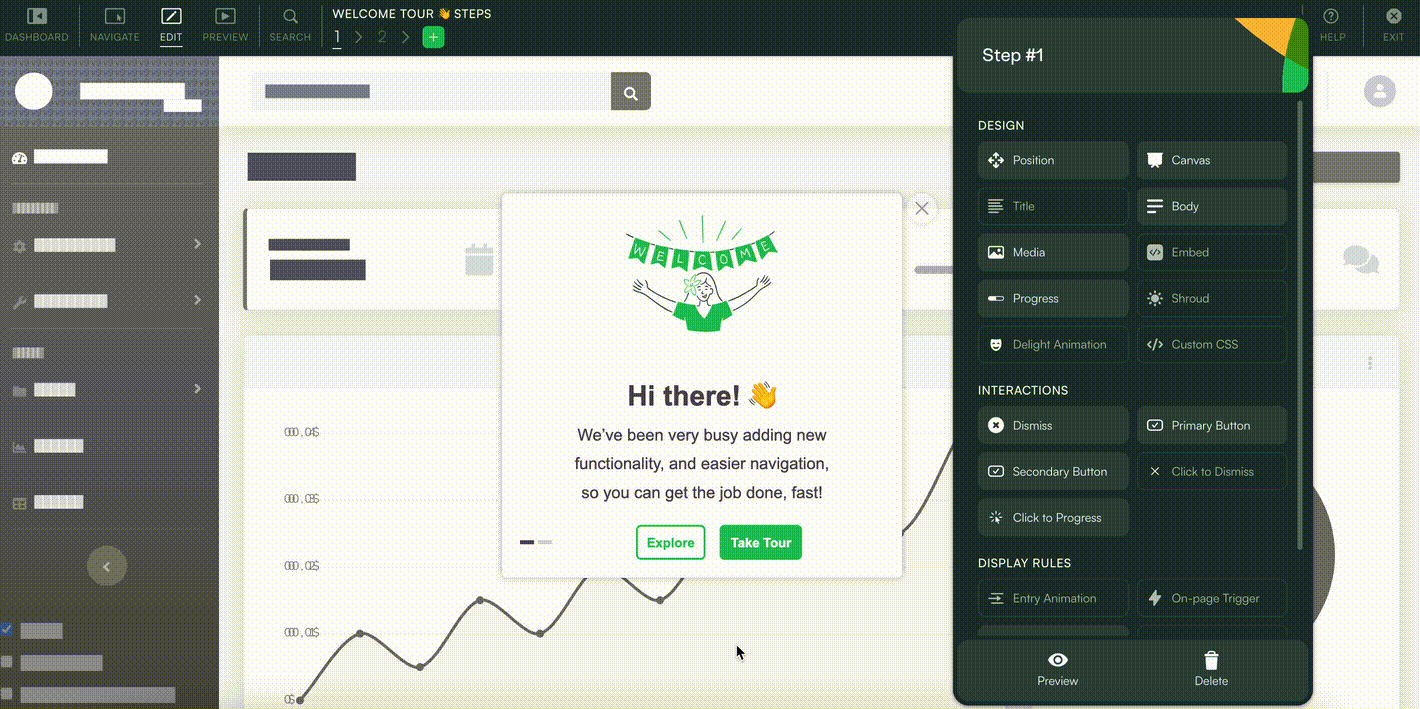
A product manager at a mid-market SaaS company uses Chameleon to guide their product's users through onboarding, feature discovery, and in-app surveys. The users being guided are external: trial signups, new customers, and existing accounts exploring new features. The buyer and builder are typically the same person (a product manager or product marketer) who wants to launch in-app campaigns without filing engineering tickets.
Source: Chameleon
WalkMe serves enterprise IT and change management teams deploying adoption programs across internal software.
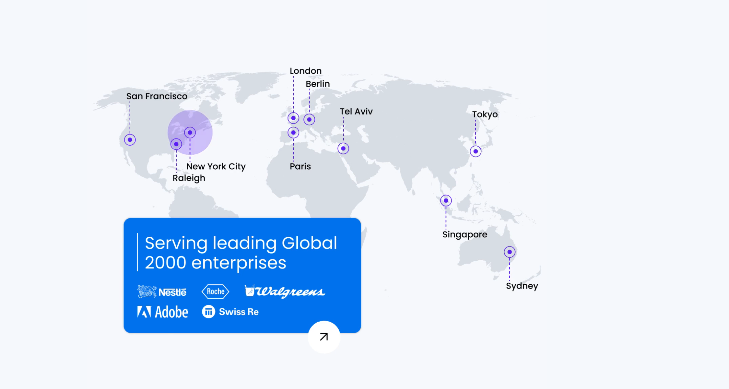
A CIO rolling out SAP S/4HANA to 50,000 employees uses WalkMe to guide those employees through unfamiliar workflows. The users being guided are internal: employees, contractors, and agents navigating enterprise applications they didn't choose and may not enjoy using. WalkMe targets organizations where software complexity creates measurable productivity loss, estimating that enterprises lose 51 workdays per employee annually to technology friction.
Source: WalkMe
This distinction shapes everything: how the product is built, how it's priced, how it's implemented, and what it measures.
Chameleon optimizes for speed and independence. Product teams should be able to create, test, and ship an onboarding tour during a sprint without involving developers. The Chrome Extension builder, AI Copilot, and template library reflect this philosophy.
WalkMe optimizes for scale and resilience. Enterprise IT needs guidance that survives quarterly Salesforce releases, works across 30 different applications, and meets FedRAMP compliance requirements. DeepUI, the desktop editor's branching logic, and the analytics suite reflect that philosophy.
Neither approach is wrong. They're solving different problems at different scales.
Building experiences: Chrome extension vs. desktop editor
The day-to-day experience of creating in-app guidance differs between the two platforms.
Chameleon's Chrome Extension builder opens as an overlay on top of your live product.
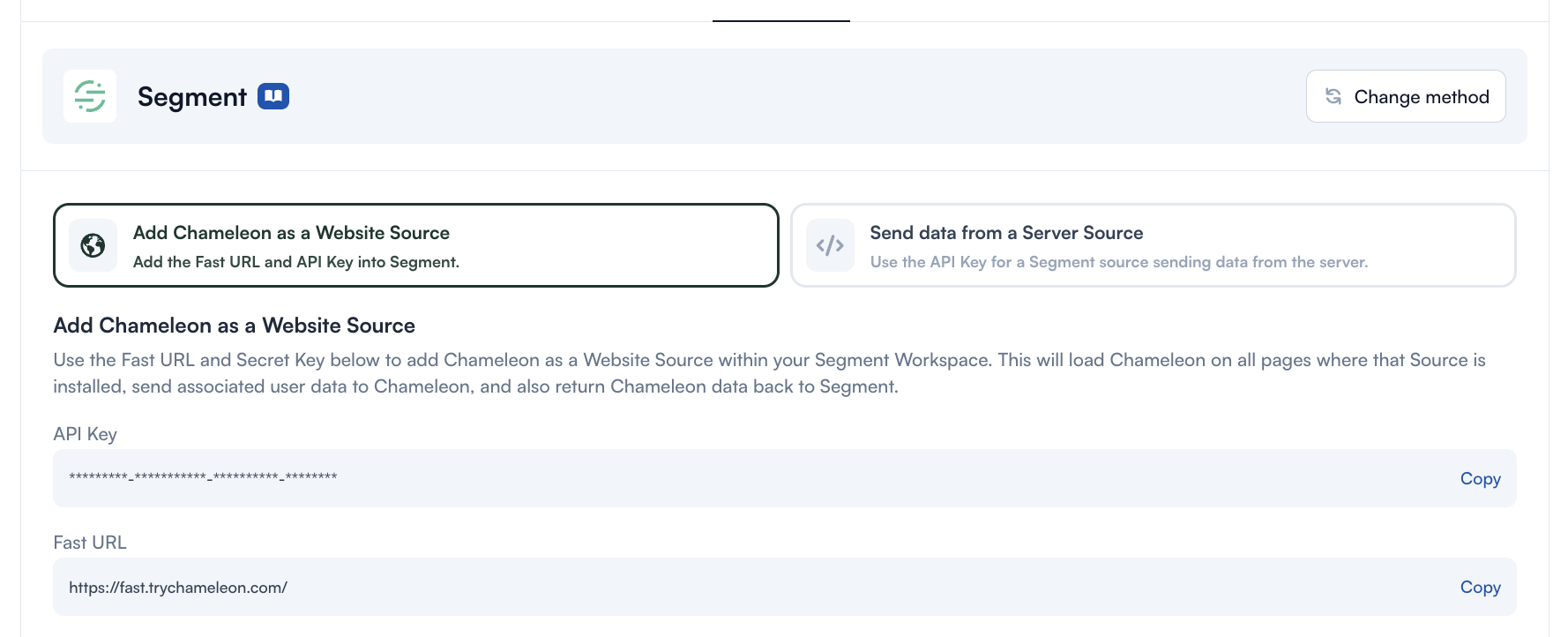
You point and click to anchor a tour step, tooltip, or survey to a specific UI element, customize the copy and styling, set targeting rules, and publish. The process feels like using a design tool, not writing code. Chameleon earned G2's Most Implementable Enterprise badge for Spring 2026, and installation can take a few minutes depending on the method. The fastest path is via Twilio Segment or Freshpaint, which can cut implementation to under a day.
Source: Chameleon
The builder's strength is breadth of experience types in a single platform. Tours, Tooltips, Microsurveys, Launchers, Checklists, Banners, Embeddables, HelpBar, Interactive Demos, and Automations are all built from the same interface with the same styling system. Chameleon also offers 50+ templates for common patterns.
The trade-off: G2 reviewers report that element selectors can break when the application updates its DOM structure. Chameleon's Ranger agent now detects and helps fix detached elements, but this remains a recurring maintenance point after product releases.
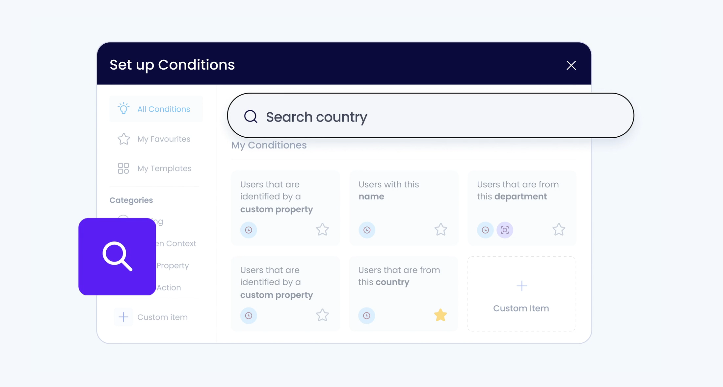
WalkMe's builder is the WalkMe Editor, an Electron-based desktop application paired with a browser extension.
It's more capable than Chameleon's builder but more complex. Content types include Smart Walk-Thrus (step-by-step guided flows), SmartTips (contextual tooltips), and ShoutOuts (announcements), with branching logic and user conditions for multi-path workflows.
Source: WalkMe
WalkMe's structural advantage is DeepUI.
When the underlying application changes its interface, DeepUI re-identifies elements by their semantic meaning and visual context rather than relying on brittle DOM paths. For enterprises managing guidance across dozens of applications, this automatic adaptation cuts ongoing maintenance substantially.
The trade-off: G2 reviewers flag a steep learning curve for advanced configurations. WalkMe recommends a Center of Excellence approach with dedicated internal champions, and offers structured training through the Digital Adoption Institute including a 5-week Builder Basics Bootcamp. This is not a tool you hand to a product manager and expect results by Friday.
AI takes different shapes on each platform
All three platforms invest in AI, but with different goals.
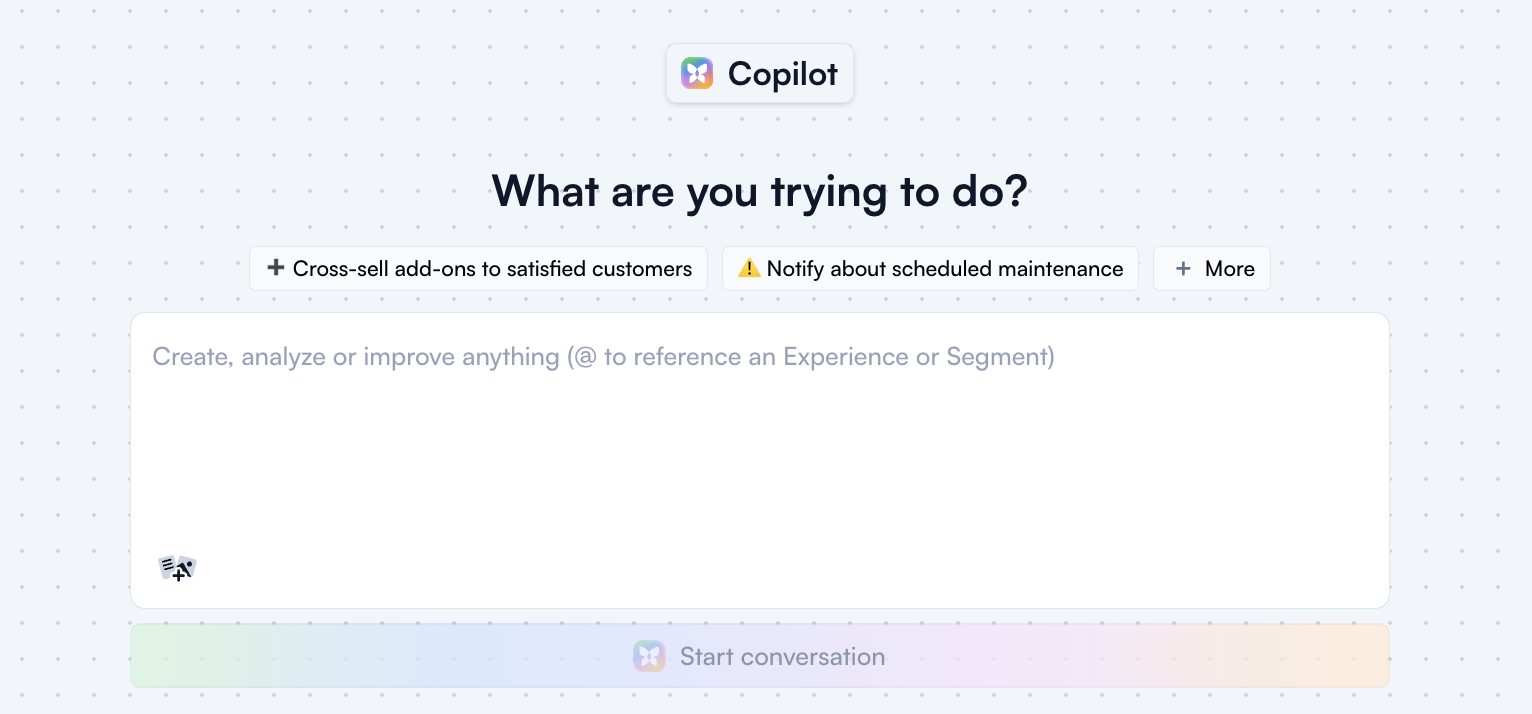
Chameleon's AI accelerates campaign creation and maintains account hygiene.
Copilot takes a goal description and handles the full cycle: research, strategy, content creation, audience targeting, and campaign assembly. It reads help documentation and product pages, validates content accuracy, generates A/B test variants, and translates experiences.
Ranger runs automated weekly scans, flagging stale content, naming inconsistencies, and detached elements. Chameleon says Copilot is built on 10 years of data from thousands of product teams. As of June 2026, Copilot is accessible via MCP, enabling use from Slack and external AI tools.
Source: Chameleon
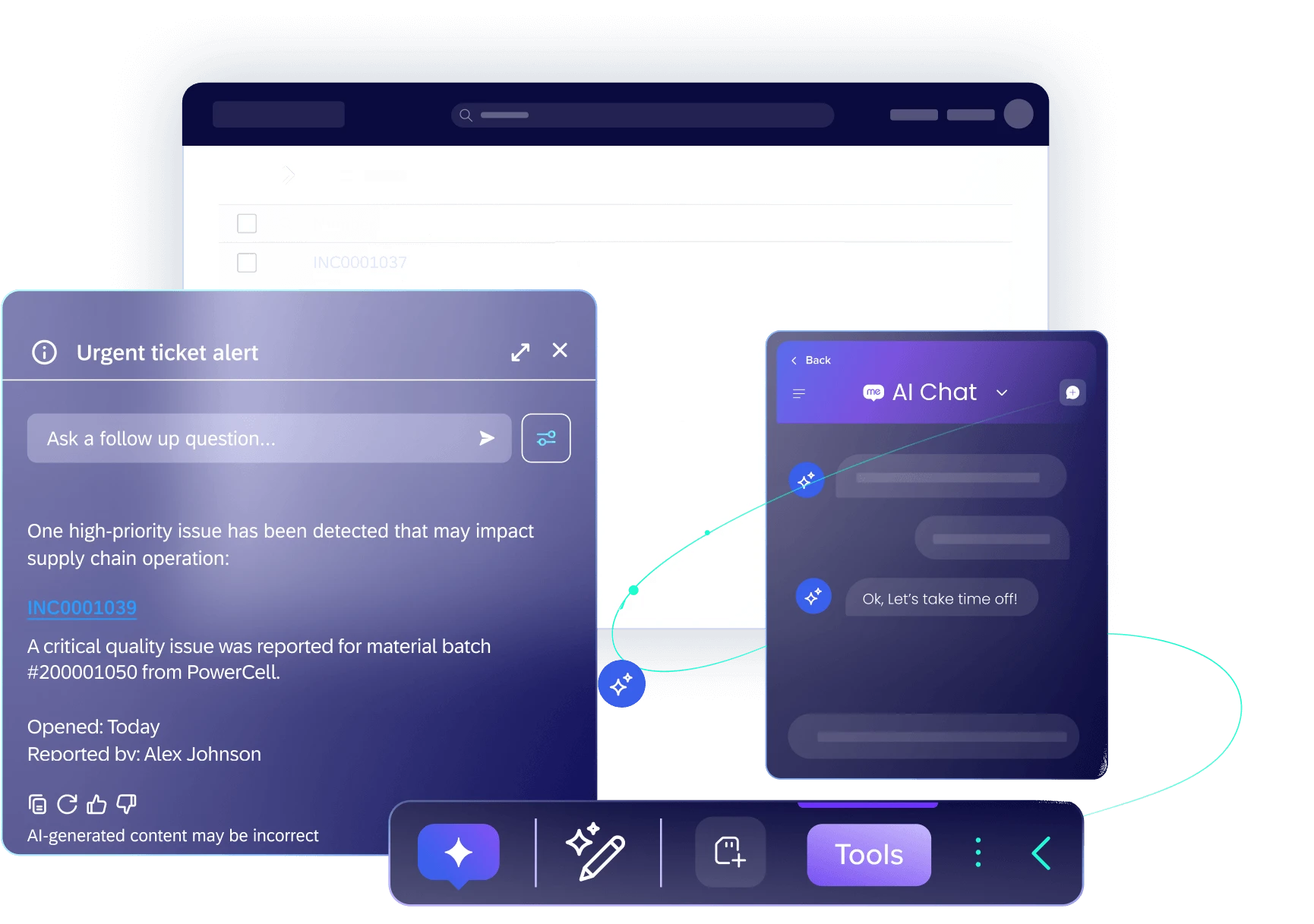
WalkMe's AI operates at a different level.
WalkMe AI reads what's on the user's screen, combines it with business knowledge, and delivers proactive next-step recommendations across any application. The system can complete multi-step workflows on behalf of users through front-end automation. WalkMe Learning Arc uses AI to turn prompts and uploaded files into training courses. The ambition is broader: not just building better guidance, but replacing manual tasks entirely.
Source: WalkMe
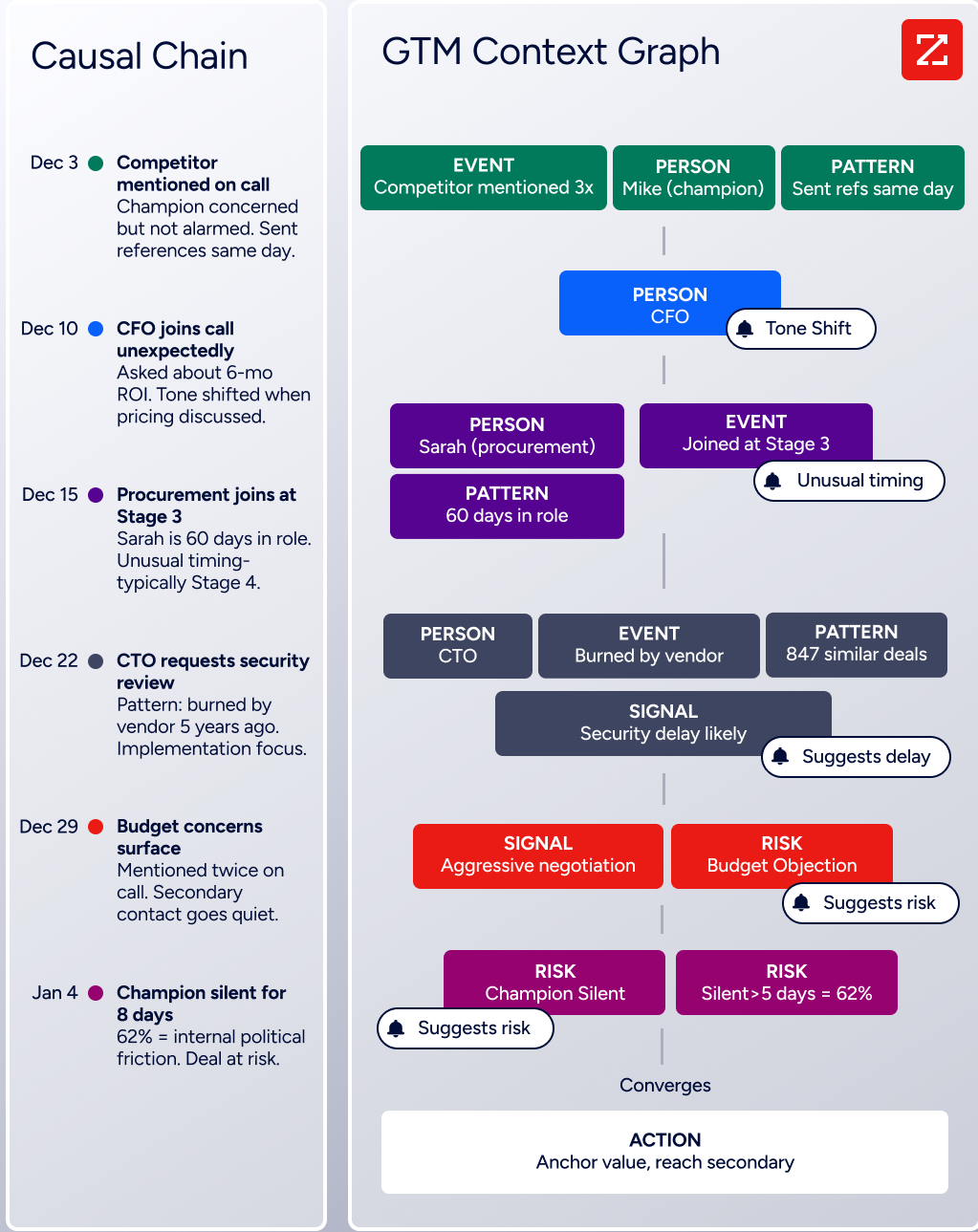
ZoomInfo's AI solves a different problem.
The GTM Context Graph processes 1.5B+ data points daily, combining B2B contact and company data with CRM records, conversation transcripts, and behavioral signals to capture not just what happened in a deal, but why it happened.
AI agents inside GTM Workspace handle account research, outreach generation, and signal monitoring for sellers, while GTM Studio lets marketers and RevOps describe audiences in natural language and launch multi-channel plays without engineering support.
Source: ZoomInfo
Seismic's sales team boosted productivity by 54%, saved 11.5 hours per week, and attributed 39% of active pipeline to opportunities identified or influenced by ZoomInfo signals. (Seismic Case Study)
Analytics reveal what each platform cares about
What a platform measures tells you what it's built to optimize.
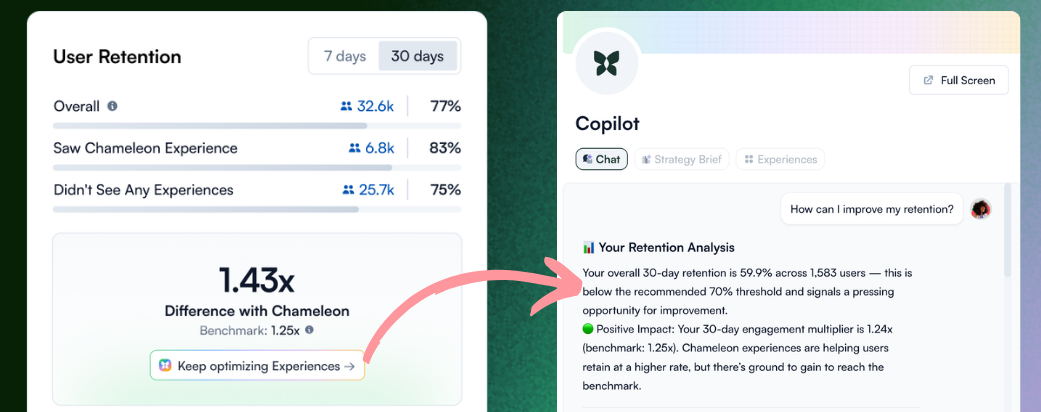
Chameleon measures experience-level engagement: tour completion rates, tooltip interactions, survey responses, and conversion goals tied to custom events.
Recent additions include a User Retention Chart linking experiences to retention curves and an Engagement Index tracking positive-to-negative interaction ratios. Data syncs to Mixpanel, Amplitude, Heap, and other analytics tools.
Source: Chameleon
But Chameleon's analytics stay scoped to the experience layer. It doesn't offer session replay, heatmaps, or product analytics. Buyers who want behavioral analytics and in-app guidance in one tool will need to pair Chameleon with a separate product analytics platform.
WalkMe measures at a deeper level.
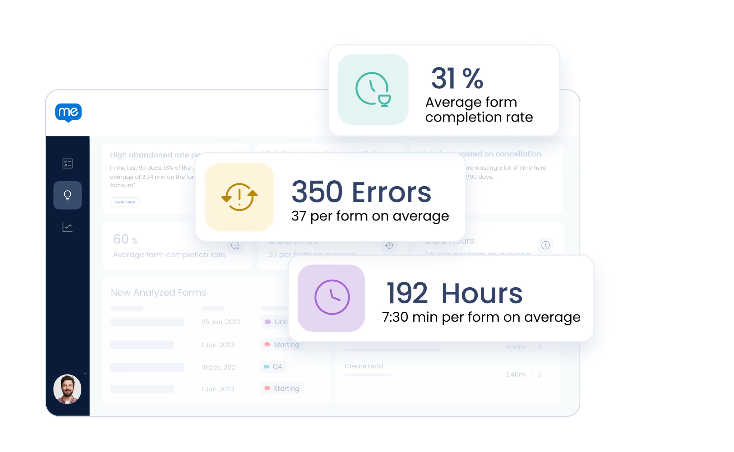
App Discovery & Analytics tracks which applications employees actually use across the entire tech stack, including shadow IT and unsanctioned AI tools. WalkMe Insights maps user interactions against defined workflows to identify where people get stuck or make mistakes. Form Analytics captures field-level data: completion rates, time on field, errors, and drop-off points. Discovery License Optimization overlays financial inputs on usage data to surface unused or underused software licenses.
Source: WalkMe
For enterprises spending millions on software, this visibility into actual usage justifies WalkMe's price point. A platform that can prove you're wasting $500,000 annually on unused Salesforce licenses pays for itself quickly.
ZoomInfo measures something neither DAP touches: the health and completeness of your B2B data.
Its analytics cover contact accuracy, company intelligence depth, intent signal strength, and pipeline attribution. For companies whose CRM data drives their adoption platform's segmentation, this matters.
Both Chameleon and WalkMe target in-app experiences based on user properties and company attributes pulled from CRMs. Stale or incomplete CRM data means those targeting rules fire on wrong assumptions, sending enterprise onboarding flows to freemium trial users or skipping high-value accounts entirely.
Application coverage draws a clear line
Chameleon works on web applications. WalkMe works on almost everything.
Chameleon supports SPAs (React, Vue, Angular), Shadow DOMs, iframes, and Electron apps.
The platform covers modern web-based SaaS well, but it has no support for native iOS or Android apps. As B2B SaaS products increasingly include mobile components, this is a real limitation.
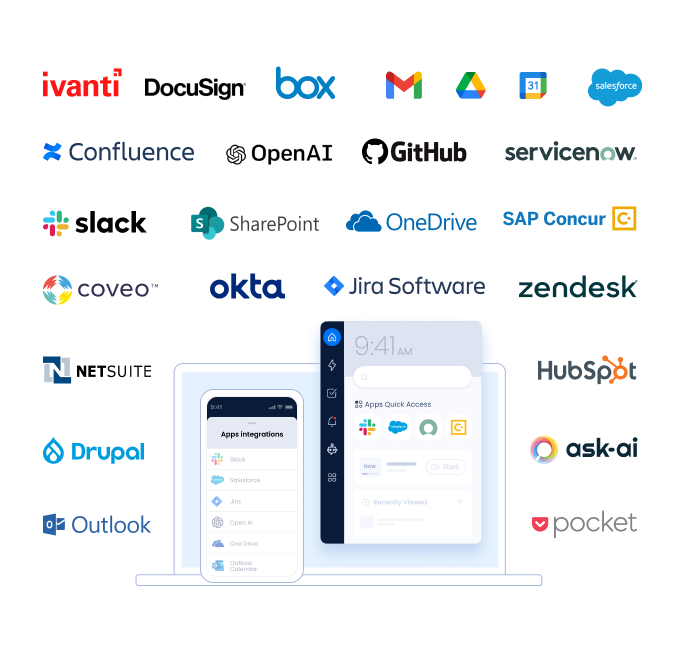
WalkMe deploys across web, desktop, and mobile surfaces through its Omnichannel DAP capability. It works on SAP, Salesforce, Workday, Microsoft Dynamics 365, ServiceNow, and any other web or desktop application through a browser extension. No per-application integrations are required because DeepUI understands applications at the visual layer.
For enterprises running hundreds of applications (WalkMe's own research identifies an average of 625 applications per enterprise), this cross-application coverage is a core requirement Chameleon cannot address.
Source: WalkMe
Pricing reflects different worlds
Chameleon publishes its pricing and uses a usage-based model tied to Monthly Tracked Users (MTUs).
The Startup plan begins at $279/month and includes unlimited Tours and Tooltips, 5 Microsurveys, 1 Launcher, Copilot, HelpBar, and unlimited Interactive Demos. The Growth plan jumps to roughly $15,000/year, unlocking unlimited experiences, A/B testing, Ranger, dedicated Customer Success, and advanced integrations. Enterprise pricing is custom.
The steep jump between tiers is a common concern. G2 reviewers note that analytics depth "could go deeper for the price point," and the MTU-based model means costs can scale unpredictably as a user base grows. A 14-day free trial with full feature access is available.
WalkMe does not publish pricing.
Contracts are fully custom, negotiated per deal via an Ordering Document, with fees based on the number of End Users and Target Applications. TrustRadius reviewers consistently cite WalkMe as expensive, with multi-year contracts and add-ons making budgeting difficult. No free trial is publicly offered.
For SAP customers, WalkMe is embedded into SAP applications with a WalkMe Standard tier included in SAP subscriptions, which lowers the cost barrier for organizations already in the SAP ecosystem.
ZoomInfo uses a custom-quoted, consumption-based pricing model.
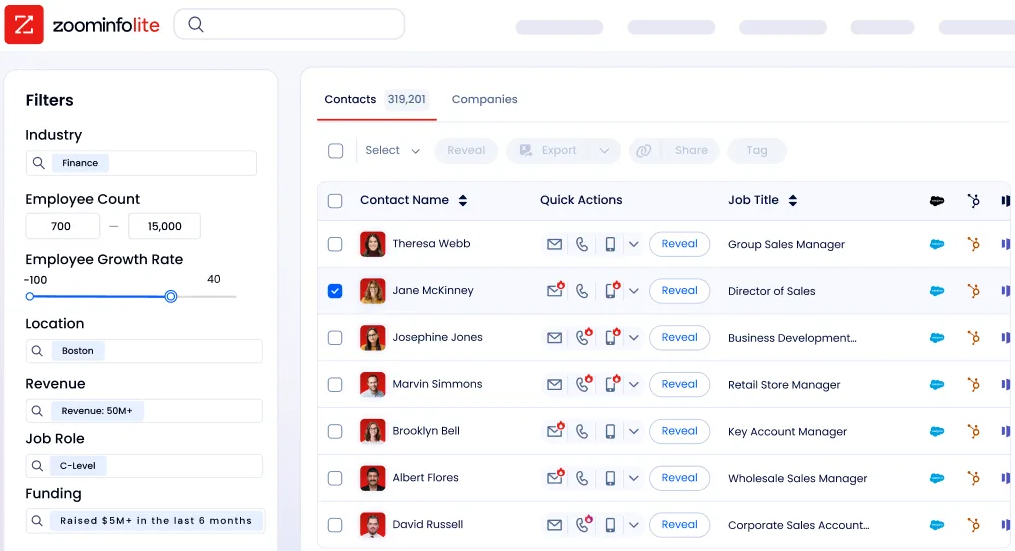
No standard prices are published, but the platform offers two free entry points: ZoomInfo Lite (a permanent free tier with 10 monthly export credits) and a 7-day free trial of the full platform. For B2B companies already investing in a DAP, the question is whether better CRM data justifies additional spend, and ZoomInfo's documented outcomes suggest it often does.
Source: ZoomInfo
Smartsheet's Thor Sanderson, Senior Manager of Sales Technology Enablement: "ZoomInfo is our one source of truth for account data, and even more so for contact data. There's no other provider in the market that provides you with that level of detail." (Smartsheet Case Study)
Better data makes better adoption targeting
This is where ZoomInfo fits into the digital adoption equation.
Both Chameleon and WalkMe rely on external data for targeting. Chameleon's segmentation engine targets user properties, behavioral events, and company data imported from Salesforce, HubSpot, Mixpanel, Heap, and Amplitude. WalkMe's segmentation rules personalize guidance by role, department, location, and behavioral context. In both cases, the quality of the in-app experience depends on the quality of the data feeding those rules.
ZoomInfo solves this problem.
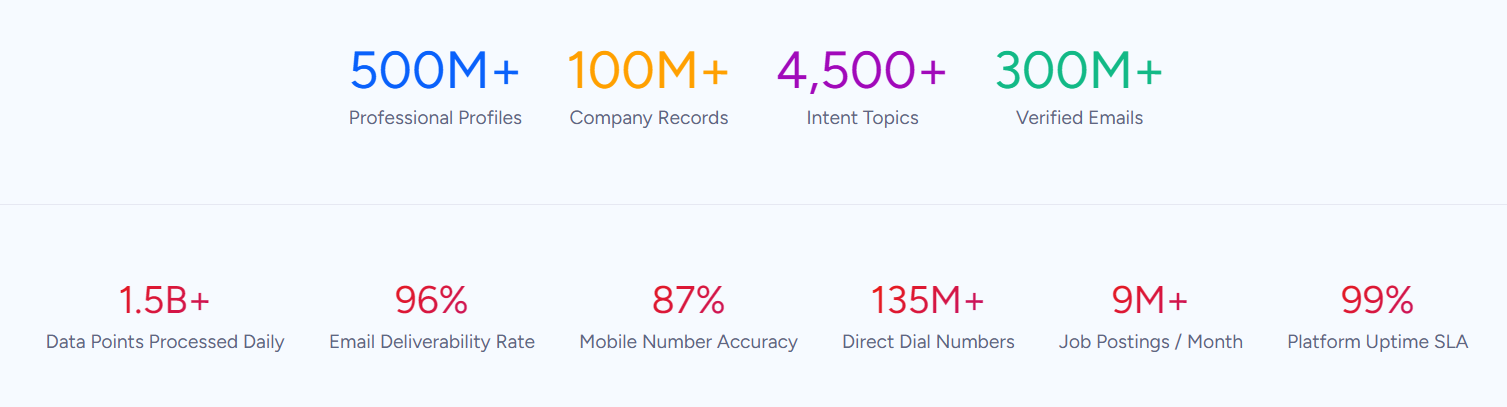
Its data platform maintains 500M contacts and 100M companies, verified through a multi-source pipeline backed by 300+ human researchers with up to 95% accuracy on first-party data. When this data enriches a CRM, every downstream system that pulls from that CRM (including your digital adoption platform) inherits better targeting.
Source: ZoomInfo
For a B2B SaaS company using Chameleon, this means the difference between a generic onboarding tour shown to every new signup and a targeted experience that recognizes an enterprise buyer from a Fortune 500 account and treats them accordingly.
For an enterprise using WalkMe, it means the CRM data powering sales team guidance in Salesforce reflects accurate org charts, current job titles, and verified contact information.
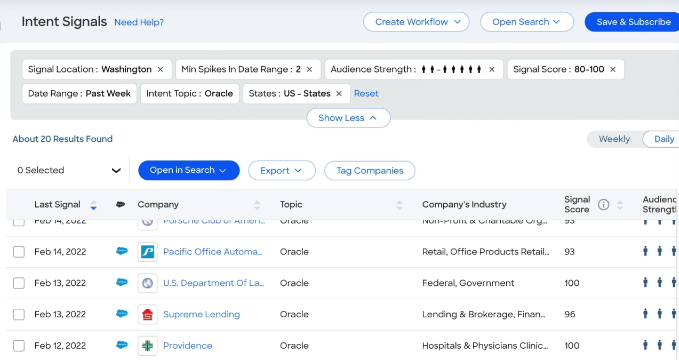
ZoomInfo also surfaces something neither DAP provides: buyer intent data. Tracking signals from 210 million IP-to-Organization pairings, ZoomInfo identifies when companies are actively researching relevant products. For B2B SaaS companies, this means knowing which accounts are comparing your product to competitors before they land in your trial, letting you prepare targeted adoption experiences for the highest-intent prospects.
Source: ZoomInfo
The intelligence is accessible through GTM Workspace for sellers, GTM Studio for marketers and RevOps, and APIs and MCP for any custom tool or AI agent. The same data that enriches your CRM is available everywhere your team works.
Levanta CEO Ian Brodie: "ZoomInfo's not just a contact data company anymore. They've built a full system of execution. GTM Intelligence actually works the list, writes the outreach, triggers the play, and helps drive predictable growth." (Levanta Case Study)
Chameleon vs. WalkMe vs. ZoomInfo: Which should you choose?
These three platforms serve different functions in the B2B growth stack. The right combination depends on your company's stage, scale, and priorities.
Choose Chameleon if:
You're a B2B SaaS company building customer-facing in-app experiences
Your product team needs to move independently without engineering tickets
You want a wide range of experience types (tours, tooltips, surveys, demos, checklists) in one platform
Your application is web-based and mid-market in scale
Speed matters more than enterprise-grade analytics
A starting price of $279/month fits your budget
Choose WalkMe if:
You're a large enterprise driving adoption across your entire software stack
You need guidance that works on web, desktop, and mobile applications
Automatic adaptation to application updates is critical for your content volume
You require workflow analytics, form analytics, and license optimization
Compliance requirements include FedRAMP, ISO 27001, or similar certifications
You have the resources for a dedicated digital adoption team and multi-month implementation
You're in the SAP ecosystem and can use the embedded WalkMe Standard tier
Add ZoomInfo if:
You're a B2B company that needs to fill the pipeline your DAP then activates
Your CRM data is incomplete, stale, or inaccurate, undermining your adoption targeting
You want buyer intent signals to identify which accounts are in-market before they reach your product
Your sales and marketing teams need verified contact data, company intelligence, and AI-powered prospecting
You want a data foundation that powers better segmentation across every tool in your stack
Start with ZoomInfo Lite for free, or explore the full platform with a 7-day trial.
Digital adoption and customer acquisition are two sides of the same growth equation. Chameleon and WalkMe help you keep and activate the users you've won. ZoomInfo helps you find and win them in the first place. The companies that grow fastest invest in both sides.
BDO Canada achieved an 87% reduction in time spent on internal data dashboard updates using ZoomInfo's API, with Senior Marketing Intelligence Analyst Jerry Wilson noting: "The plug-and-play aspect of the API means I can integrate it very easily into any process and get information at a moment's notice." (BDO Canada Case Study)
Chameleon vs. WalkMe vs. ZoomInfo FAQ
What is the core difference between Chameleon and WalkMe?
Chameleon is a digital adoption platform for B2B SaaS product teams, designed to create customer-facing in-app experiences like onboarding tours, tooltips, and surveys on a single web application.
WalkMe is an enterprise digital adoption platform for IT and change management teams, built to guide employees across an organization's entire software stack, including web, desktop, and mobile applications.
Chameleon prioritizes speed and product team independence. WalkMe prioritizes scale, cross-application coverage, and enterprise compliance.
Which platform is better for a B2B SaaS startup?
Chameleon is the stronger fit. Its Startup plan begins at $279/month, installation can happen in minutes via a JavaScript snippet or Segment, and the Chrome Extension builder lets product managers create and publish in-app experiences without engineering involvement.
WalkMe's enterprise-only pricing, multi-month implementation, and requirement for dedicated administrators make it impractical for startups and smaller SaaS companies.
How do the AI capabilities compare?
Chameleon's AI focuses on campaign creation and account governance. Copilot builds campaigns from conversation, while Ranger scans the account weekly for stale content and naming inconsistencies.
WalkMe's AI focuses on contextual enterprise assistance, reading what's on a user's screen and delivering proactive recommendations, automated workflows, and data validation across any application.
ZoomInfo's AI focuses on go-to-market intelligence, surfacing buyer intent, generating account insights, and powering AI agents that automate prospecting and outreach.
Can either platform work on mobile apps?
WalkMe supports mobile through its Omnichannel DAP capability. Chameleon is web-only and does not support native iOS or Android applications. For B2B SaaS companies with hybrid web and mobile products, this is a real limitation of Chameleon.
How does ZoomInfo complement a digital adoption platform?
ZoomInfo enriches CRM systems like Salesforce and HubSpot with verified contact data, company intelligence, and buyer intent signals. Both Chameleon and WalkMe pull from CRM data for targeting and segmentation.
More accurate CRM data means better in-app targeting, showing the right experience to the right user at the right time. Beyond data enrichment, ZoomInfo fills the pipeline that adoption platforms then activate, covering the acquisition side of B2B growth.
Which platform handles application updates better?
WalkMe has a structural advantage through its patented DeepUI technology, which uses AI to re-identify UI elements by their visual and semantic context when applications change. ENGIE reported that DeepUI eliminated the need to manually test and correct over 100 digital adoption solutions after each Salesforce release.
Chameleon's element selectors can break when an application updates its DOM structure, though the Ranger agent now detects and helps fix detached elements.
What security certifications does each platform hold?
WalkMe holds the broadest security portfolio: FedRAMP Ready, SOC 2 Type II, ISO 27001, ISO 27701, ISO 27017, ISO 27018, and WCAG 2.1 AA accessibility compliance. Chameleon holds SOC 2 Type II, GDPR, and CCPA certifications. ZoomInfo holds ISO 27001, ISO 27701, SOC 2 Type II, and TRUSTe GDPR and CCPA validations.
For regulated industries and government agencies, WalkMe's FedRAMP certification is a deciding factor.
Do these platforms require developer resources to set up?
Chameleon requires minimal developer involvement, a one-time JavaScript snippet installation and user identification setup. After that, product teams operate independently.
WalkMe requires more setup, with a desktop editor installation, browser extension deployment across users, and structured training recommended through WalkMe's Builder Basics Bootcamp.
ZoomInfo integrates with CRMs through pre-built connectors and offers API and MCP access for custom implementations, with setup typically measured in weeks.
Comparing Chameleon and WalkMe? These related breakdowns go deeper:
