
Choosing between Cloudingo and RingLead for Salesforce data quality comes down to five questions:
Do you need a focused deduplication tool, or a platform that also handles enrichment, lead routing, and workflow automation?
Is your data quality problem limited to Salesforce, or does it span your go-to-market stack?
Do you want to clean existing data, or prevent dirty data from entering your CRM?
Is your team a single Salesforce admin, or a RevOps function managing multiple systems?
Are you solving a one-time cleanup problem, or building ongoing data quality infrastructure?
One thing to know upfront: RingLead no longer exists as a standalone product. ZoomInfo acquired RingLead in September 2021 and absorbed it into ZoomInfo Operations. The ringlead.com domain now redirects to ZoomInfo's Operations product page. If you're searching for RingLead, you're searching for ZoomInfo Operations.
That context reshapes this comparison. Here's what we recommend:
Cloudingo is a Salesforce deduplication and data quality platform built for admins who want no-code tools to find, merge, and prevent duplicate records.
With 14+ matching styles, scheduled automation, and an undo/restore capability that reverses merges, Cloudingo gives Salesforce admins precise control over data cleanup.
Starting at $2,500/year per Salesforce org with no per-user charge, it's accessible without a long procurement cycle. But Cloudingo focuses on Salesforce data hygiene. It won't enrich records with missing contact details, route leads, or connect data quality efforts to a broader go-to-market strategy.
RingLead (now ZoomInfo Operations) was originally a standalone data orchestration platform for deduplication, lead-to-account matching, and codeless data management.
Since the acquisition, those capabilities have been folded into ZoomInfo Operations, which adds data enrichment from ZoomInfo's B2B database, lead routing, workflow automation, and predictive modeling.
The trade-off: you're buying into ZoomInfo's broader platform rather than a point solution, with pricing that requires a sales conversation and no public price list.
Both paths address CRM data quality, but from different starting points. Cloudingo treats data quality as an isolated discipline. ZoomInfo treats it as a foundation for the go-to-market motion. For organizations that need their data quality investment to power enrichment, routing, and AI-driven workflows (not just merge duplicates), ZoomInfo offers a broader platform.
ZoomInfo is an AI-powered go-to-market platform that absorbed RingLead's data quality capabilities and built on them with a large B2B database: 500M contacts, 100M companies, 135M+ verified phone numbers, and 200M+ verified business emails.
ZoomInfo Operations doesn't just clean your data. It enriches records from 60+ data vendors, routes leads based on territory and account ownership, triggers workflows from buying signals, and scores accounts using 300+ firmographic, technographic, and intent attributes.
For RevOps teams building a data quality foundation that feeds into sales execution, ZoomInfo connects the cleanup to the outcome.
If your data quality needs extend beyond deduplication into enrichment, routing, and automated GTM workflows, see how ZoomInfo Operations works.
Cloudingo vs. RingLead (ZoomInfo Operations) at a glance
Cloudingo | RingLead (ZoomInfo Operations) | ZoomInfo (Full Platform) | |
|---|---|---|---|
Primary focus | Salesforce deduplication and data quality | CRM data quality, enrichment, and lead routing | AI-powered go-to-market platform |
Matching depth | 14+ matching styles with synonym libraries | Customizable matching rules across objects | Matching plus enrichment from 500M+ contacts |
Automation | Scheduled, real-time, and mass merge | Multi-step workflows with conditional logic | Signal-triggered GTM workflows across channels |
CRM support | Salesforce only (plus Marketo add-on) | Salesforce, HubSpot, Microsoft Dynamics, Marketo, Eloqua | Salesforce, HubSpot, Dynamics + 172 marketplace integrations |
Data enrichment | None (normalize and standardize only) | Multi-vendor enrichment via DataExchange (60+ sources) | 500M contacts, 200M+ verified emails, waterfall enrichment |
Lead routing | None | Territory, round-robin, lead-to-account matching | Full routing plus intent-based prioritization |
Undo/restore merges | Yes (Professional and Enterprise) | Not documented as a standalone feature | Not documented as a standalone feature |
Security | SOC 2 Type II, 256-bit SSL | ISO 27001, ISO 27701, SOC 2 Type II | ISO 27001, ISO 27701, SOC 2 Type II, TRUSTe GDPR/CCPA |
Pricing model | $2,500/yr per Salesforce org (annual, published) | Custom-quoted as part of ZoomInfo platform | Custom-quoted, consumption-based |
Free trial | 10-day trial, no credit card | Free trial of broader ZoomInfo platform | 7-day free trial + ZoomInfo Lite (permanent free tier) |
Best for | Salesforce admins needing dedicated deduplication | RevOps teams already on ZoomInfo | Organizations building a complete GTM data foundation |
Cloudingo goes deep on deduplication; ZoomInfo goes broad on data operations
The difference between these tools is scope.
Cloudingo does one thing well: finding and merging duplicate records in Salesforce. The platform offers 14+ matching styles including exact match, fuzzy match, nickname recognition (Robert vs. Bob), company name cleaning (ACME Inc. vs. ACME Co.), and cross-field matching.

Source: Cloudingo
You can build filters that catch duplicates sharing an email or a phone number, even if nothing else matches. Synonym libraries for first names, states, countries, and street abbreviations are editable, so admins can tune match sensitivity to their industry.
ZoomInfo Operations inherited RingLead's deduplication engine and wrapped it in a broader data orchestration layer.
The matching rules support Lead-to-Account, Contact-to-Account, and Account-to-Account deduplication with customizable criteria. But deduplication is one step in a larger pipeline.
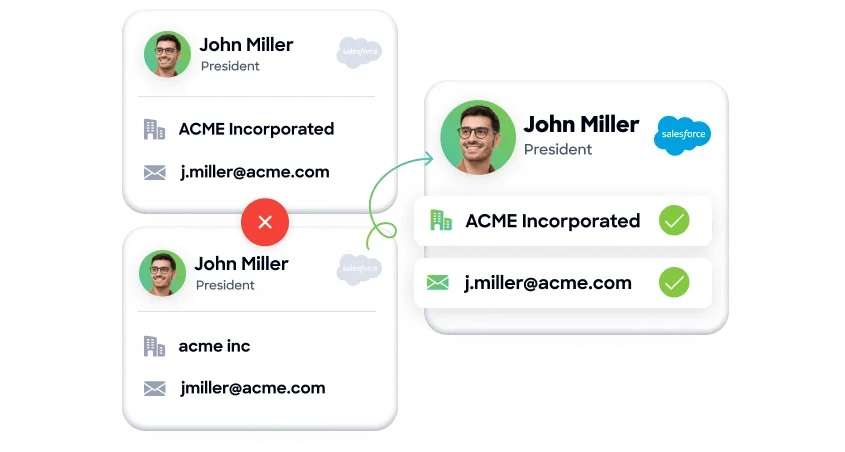
Before matching begins, ZoomInfo can enrich incoming records with firmographic, technographic, and contact data from its own database and 60+ third-party sources. After deduplication, it can route the clean record to the right rep, trigger a sales engagement sequence, or update an account score.
For a Salesforce admin whose mandate is "clean up our duplicates," Cloudingo's depth is hard to beat. For a RevOps leader whose mandate is "fix our data and make it drive revenue," ZoomInfo's breadth is the point.
Merge safety: Cloudingo's undo capability stands alone
Merging records in Salesforce is permanent. The native recycle bin recovers deleted records within 15 days, but Salesforce does not restore relationships for merged or converted records. One aggressive merge job can break account hierarchies, orphan activities, and destroy months of relationship history.
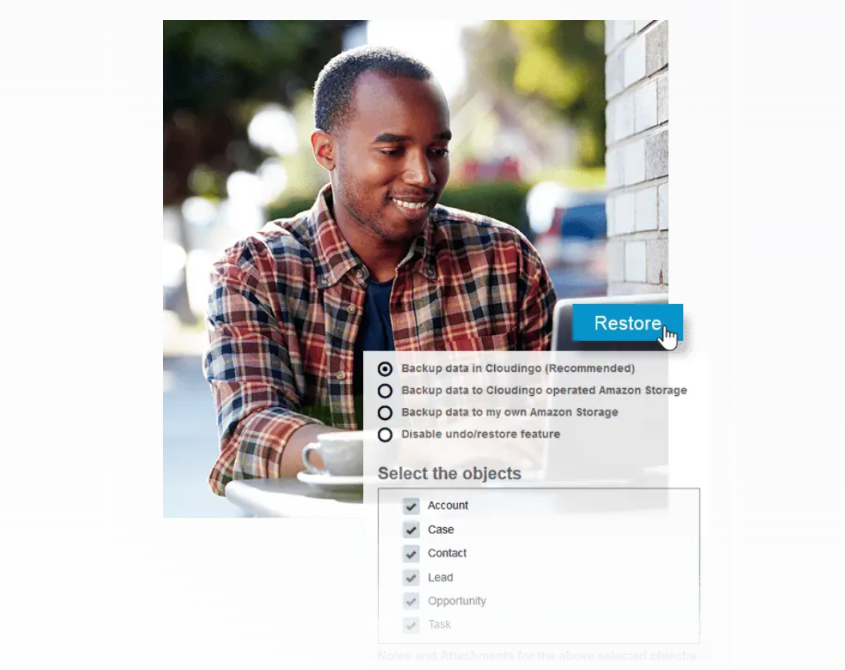
Cloudingo addresses this with an undo and restore feature the company describes as industry-unique. Before any merge executes, Cloudingo captures the field values and relationships of all records involved and writes an encrypted backup.
Source: Cloudingo
If a merge needs reversing, the admin locates the affected group in the post-merge report and clicks Restore. Cloudingo inserts a new record from the backup, reattaches related objects, and re-parents lookups.
Storage options include Cloudingo's own servers, Amazon AWS, or Microsoft Azure, with self-hosted options retaining data indefinitely. The feature is available on Professional ($6,000/year) and Enterprise ($10,000/year) tiers.
ZoomInfo Operations does not document a comparable unmerge capability in its public materials. This matters most for organizations running their first large-scale deduplication, where admins want a safety net before processing hundreds of thousands of records.
For ongoing maintenance where matching rules have been validated over months, the risk of a bad merge is lower, but the safety Cloudingo provides is real.
Enrichment is the gap Cloudingo cannot close
Deduplication solves one half of the dirty data problem: too many records. The other half is incomplete records (contacts missing phone numbers, accounts missing industry classifications, leads with no company size data).
Cloudingo can normalize and standardize the data you already have (enforce title case, validate addresses, align abbreviations), but it cannot fill in fields that were never populated.
ZoomInfo Operations fills this gap natively. As ZoomInfo CEO Henry Schuck framed the RingLead acquisition: "A clean and unified view of the customer is absolutely critical for go-to-market teams.
The acquisition of RingLead allows our customers to marry ZoomInfo intelligence with other data sources to create a unified view of their customers."
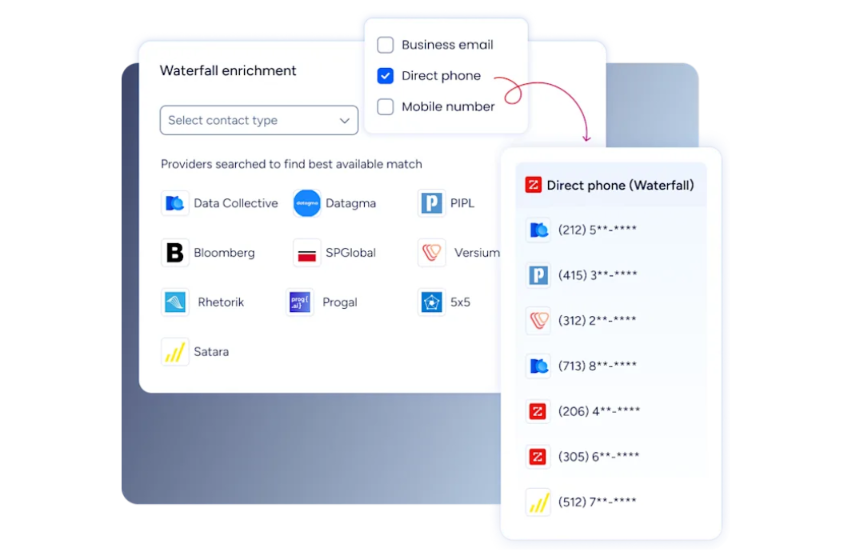
The enrichment works in three modes. Real-time enrichment catches new records at the point of entry, appending verified emails, direct dials, job titles, company attributes, and technographics before a routing or scoring workflow fires.
Scheduled batch enrichment processes existing records on a recurring cadence, keeping contacts who changed jobs and companies that changed size updated automatically.
And waterfall enrichment in GTM Studio cascades through 25+ additional data vendors when ZoomInfo's own database doesn't have a match, maximizing coverage without requiring separate vendor contracts.
Source: ZoomInfo
For organizations running Cloudingo, the enrichment gap means pairing it with a separate tool (ZoomInfo, Clearbit, or another provider) to get complete records. That's a viable approach, but it introduces a second vendor, a second contract, and a seam between deduplication and enrichment that someone has to manage.
Momentive's VP of Business Systems described the consolidation value directly: "Many of the data enrichment tools that were previously in our tech stack were point solutions which led to more data silos. ZoomInfo is different because they are a one-stop-shop that provides us with the data and the technology needed to orchestrate that data." (Momentive)
Lead routing separates data cleanup from revenue operations
Cloudingo cleans data. It does not route it.
Once records are deduplicated and standardized, they still need to reach the right salesperson. Territory assignment, round-robin distribution, lead-to-account matching, and rep availability management all fall outside Cloudingo's scope.
Organizations using Cloudingo need a separate routing tool like LeanData or native Salesforce assignment rules.
ZoomInfo Operations bundles lead routing and assignment into the platform. The routing workflow fires after deduplication and enrichment, evaluating enriched records against territory rules, account ownership, lead scores, and account attributes.
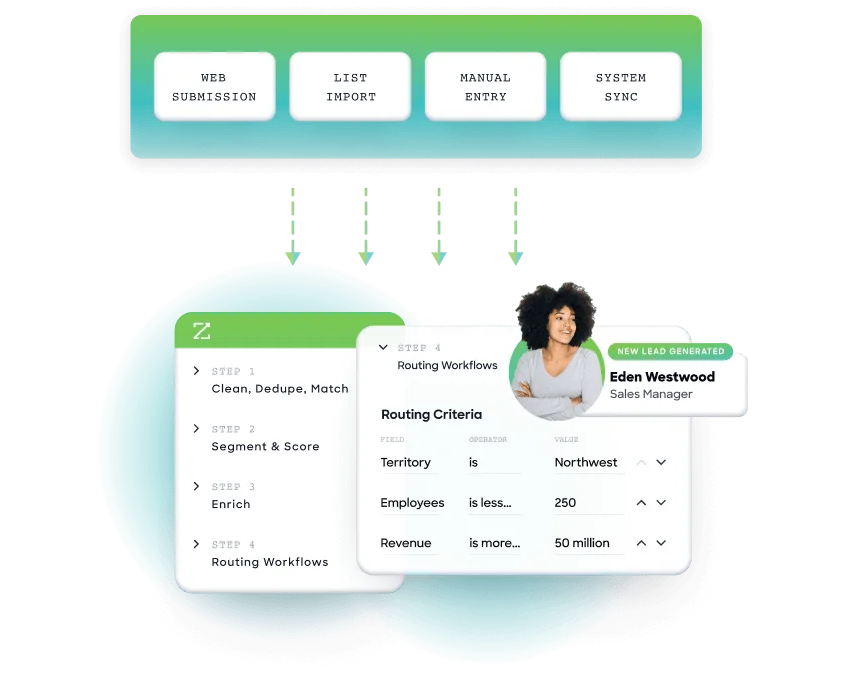
Momentive cut lead enrichment and routing from 20 minutes to under 60 seconds by running matching, deduplication, validation, and scoring in parallel rather than sequentially across disconnected tools.
The routing builder supports territory-based assignment, weighted round-robin, account-based routing, and lead score-based prioritization. A native Slack integration lets reps toggle availability without requiring RevOps to update routing rules manually.
Dynamic account teams and bulk territory updates handle organizational changes without rebuilding routing logic from scratch.
For organizations where data quality serves a downstream revenue process, the integrated approach eliminates the handoff between "clean data" and "act on data."
For organizations where data quality is the entire mandate, the routing capability is irrelevant, and Cloudingo's focused approach avoids paying for features they don't need.
CRM scope: Salesforce-only vs. multi-system
Cloudingo is built for Salesforce only (with a separate Marketo add-on at $5,000/year). The platform connects to Salesforce via OAuth API, runs in its own cloud, and does not store customer data.
That focus produces Salesforce-specific capabilities: support for Person Accounts, multi-account contact relationships, lead-to-contact conversions, and custom objects. But if your CRM is HubSpot or Microsoft Dynamics, Cloudingo is not an option.
ZoomInfo Operations connects natively to Salesforce, HubSpot, Microsoft Dynamics 365, Marketo, Oracle Eloqua, and Pardot.
The ZoomInfo App Marketplace lists 172 integrations across CRM, marketing automation, sales engagement, data warehouse, and AI categories.
Cloud data platform integrations deliver ZoomInfo data into Snowflake, AWS, Google Cloud, and Databricks.
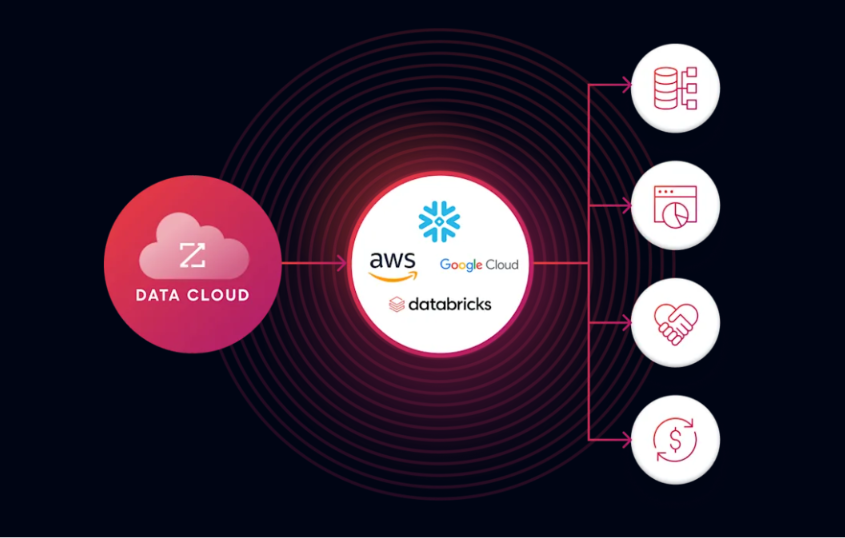
For Salesforce-only organizations, Cloudingo's exclusive focus is a strength. Every feature, every UI decision, and every support interaction assumes Salesforce context. For organizations running multiple systems, ZoomInfo's multi-platform reach avoids the need for separate data quality tools per system.
Automation and workflow comparison
Both platforms automate data quality tasks, but they define "automation" differently.
Cloudingo offers four merge modes: manual (side-by-side record comparison), mass (merge all selected groups in one click), scheduled automated (background jobs running nightly or weekly), and real-time (continuous filters that catch and merge duplicates the moment a new record enters Salesforce).
Admins configure which field values survive the merge using 15+ master record selection algorithms, set per-field overrides, and group related fields so address components always come from the same source record. The automation stays within data quality: find duplicates, merge them, standardize fields, repeat.
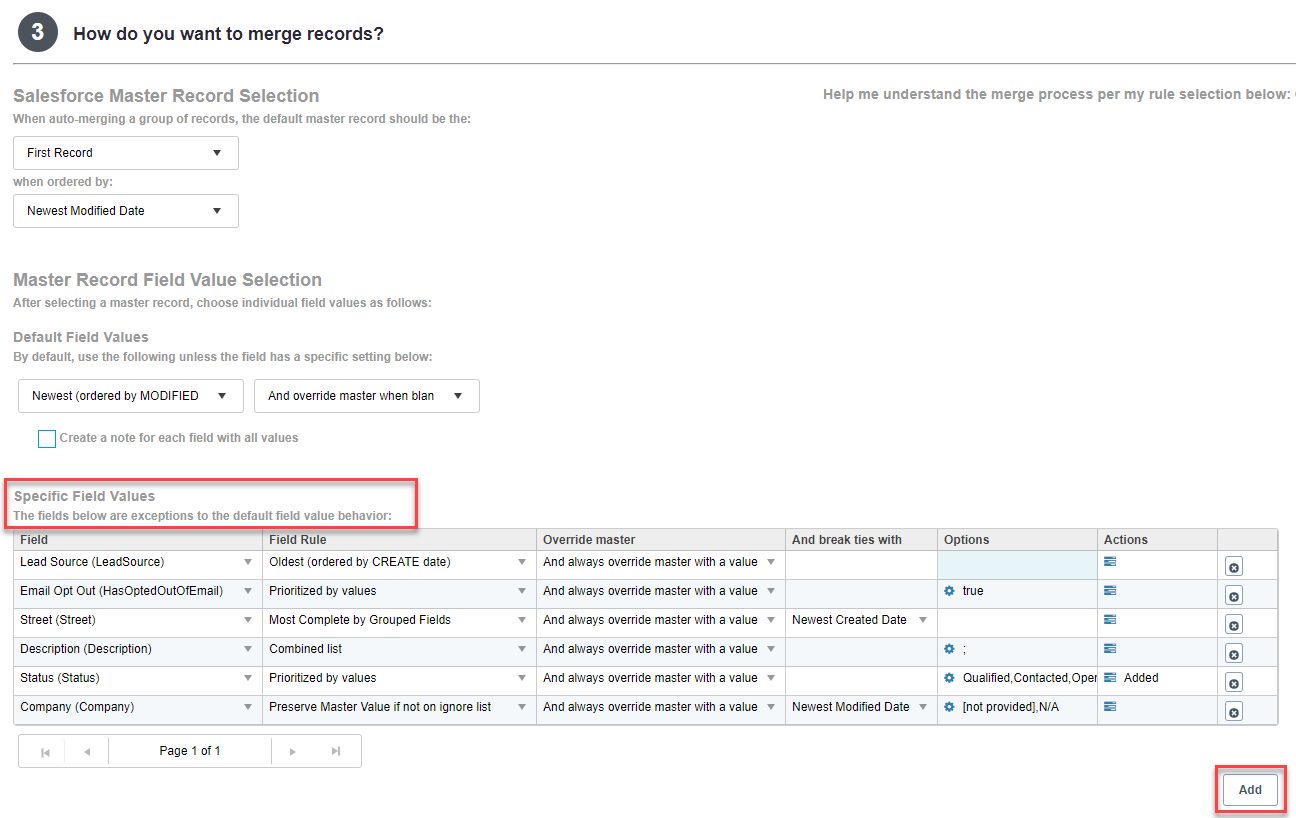
Source: Cloudingo
ZoomInfo Operations extends automation into go-to-market workflows. The Workflows engine fires triggers from buying signals: website visits, technology installations, funding rounds, and intent spikes tracked from 210 million IP-to-Organization pairings.
When a trigger fires, filters narrow the result to companies matching the user's ICP, and actions push contacts to CRM, enroll them in sales engagement sequences, or launch advertising campaigns. Safety Services increased MQLs by 200% in one month using these workflows.
GTM Studio takes this further with a drag-and-drop canvas for designing multi-channel plays. Pre-built templates for inbound acceleration, champion tracking, and competitive displacement can launch in one click. The plays run continuously, improving as prospects respond.
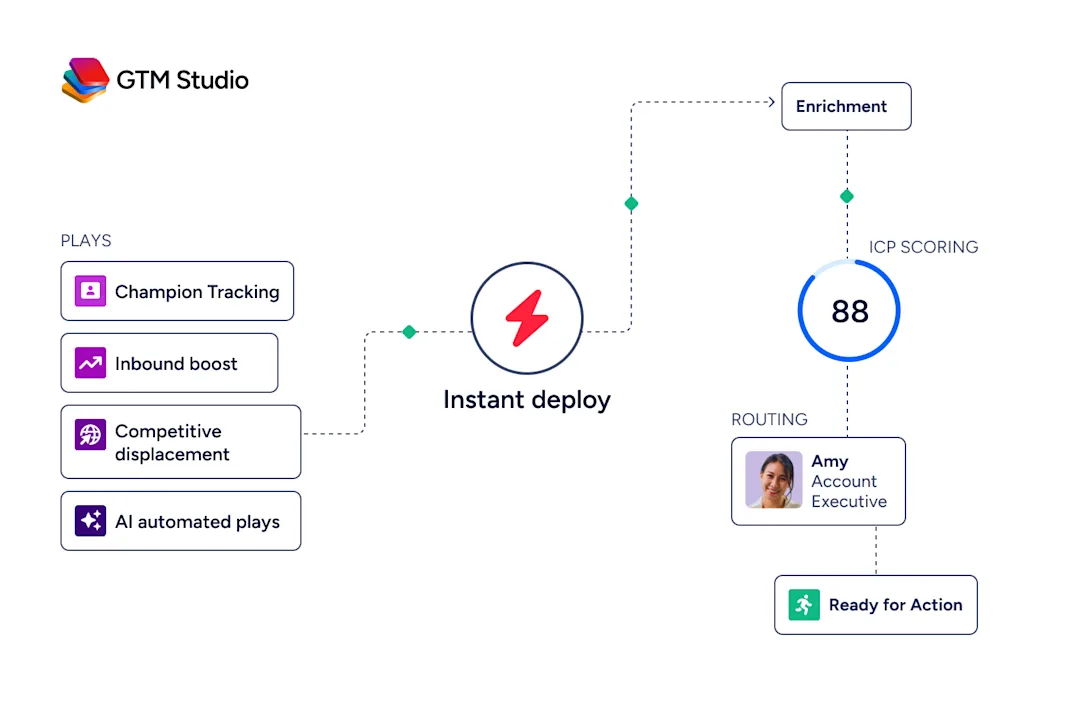
The trade-off is clear: Cloudingo automates the data quality loop. ZoomInfo automates the path from data quality to revenue action.
Pricing transparency favors Cloudingo
Cloudingo publishes its pricing on its website. Three tiers, clearly defined:
Tier | Price | Users | Key additions |
|---|---|---|---|
Standard | 1 | Mass merge, scheduled automation, standard import, Intelligence dashboard | |
Professional | 3 | Real-time merge, undo/restore, rapid import, enhanced reporting, customizable user roles | |
Enterprise | 8 | API integration (1,000 calls/day), unlimited custom objects, dedicated CSM, security audit |
Pricing is per Salesforce org, not per user. A 10-day free trial with no credit card gives admins 25 tokens to test against their live data. One variable cost to watch: $100 per 100,000 records above 300,000, counted across Leads, Contacts, Accounts, and applicable custom objects.
ZoomInfo does not publish pricing for Operations or any of its products. Contracts follow a consumption-based model, are annual, and non-cancellable.
For budget-constrained teams or organizations where a single admin needs to justify a purchase without a formal procurement cycle, Cloudingo's transparency matters. You know what you're paying before the first sales call.
With ZoomInfo, you commit to a sales-led evaluation, and the final price depends on usage patterns, number of users, credit volume, and which modules you need.
That said, the comparison isn't apples-to-apples. Cloudingo covers deduplication and data maintenance. ZoomInfo Operations covers deduplication, enrichment, routing, and workflow automation. Organizations that would otherwise buy Cloudingo plus a separate enrichment tool plus a separate routing tool may find ZoomInfo's bundled price competitive.
Cart.com added 400%+ more licenses while paying less than the combined cost of the tools ZoomInfo replaced, showing how platform consolidation can reduce total spend even when individual component pricing appears higher.
Security and compliance comparison
Both platforms meet enterprise security requirements, with ZoomInfo holding a broader certification portfolio.
Cloudingo is SOC 2 Type II compliant with 256-bit SSL encryption, OAuth-based Salesforce connection, and whitelisted server architecture.
The company does not store Salesforce record data beyond an index of primary matching fields. All operations, hardware, and team members are based in Dallas, Texas with no outsourcing.
As a certified Salesforce ISV partner, Cloudingo passes Salesforce's annual security audit and commissions annual third-party penetration testing. GDPR and CCPA compliance is confirmed, and a Data Protection Addendum is available.
ZoomInfo holds ISO 27001, ISO 27701, ISO 27017, SOC 2 Type II, TRUSTe GDPR Practices Validation, and TRUSTe CCPA Practices Validation (all renewed annually).
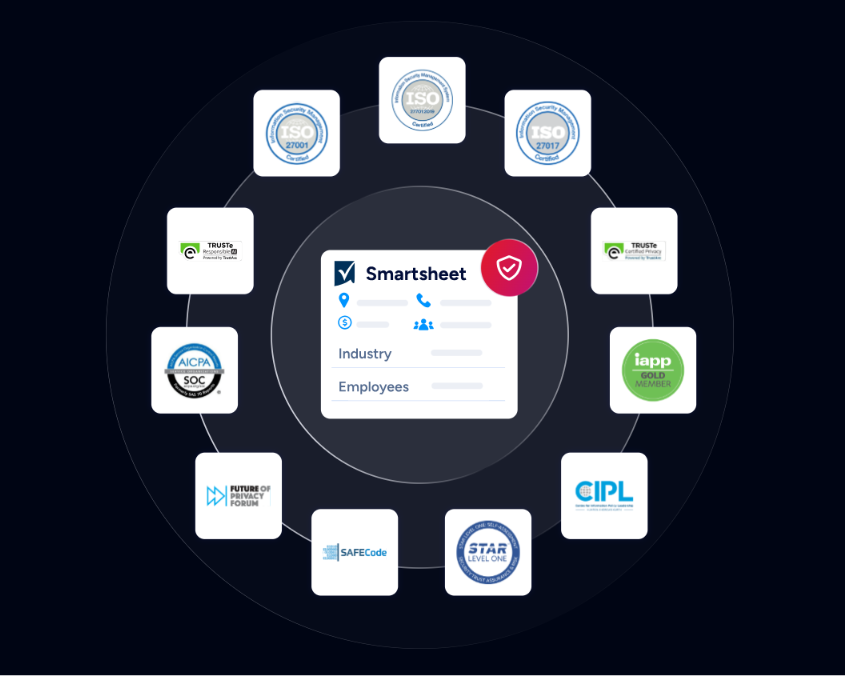
Technical controls include AES-256 encryption at rest, TLS 1.2+ in transit, MFA and SSO support, a 24/7 Cyber Security Operations Center, and a bug bounty program.
ZoomInfo is a registered data broker in California and Vermont. A Compliance API lets customers programmatically propagate opt-out and deletion requests from their CRM into ZoomInfo's platform.
For organizations in regulated industries where ISO certifications are procurement requirements, ZoomInfo's broader certification stack provides additional assurance. For organizations whose primary concern is that their deduplication tool doesn't introduce security risk, both platforms clear that bar.
The AI readiness question
Both platforms are preparing for AI, but from different directions.
Cloudingo's March 2026 survey of 323 Salesforce professionals found that 55.2% identified AI-assisted duplicate identification as the most valuable AI application in data management.
Cloudingo's blog content positions clean data as the prerequisite for Salesforce Agentforce: AI agents can't reason reliably on duplicate, incomplete, or inconsistent records. The argument is that Cloudingo is the infrastructure layer that makes AI adoption viable.
But Cloudingo's current matching engine is rules-based and manually configured. The AI-assisted matching that customers want is not yet part of the product.
ZoomInfo already operates at the AI layer. Its GTM Context Graph processes 1.5B+ data points daily, fusing CRM records, conversation intelligence, intent signals, and behavioral data into a layer that captures not just what happened in a deal, but why.
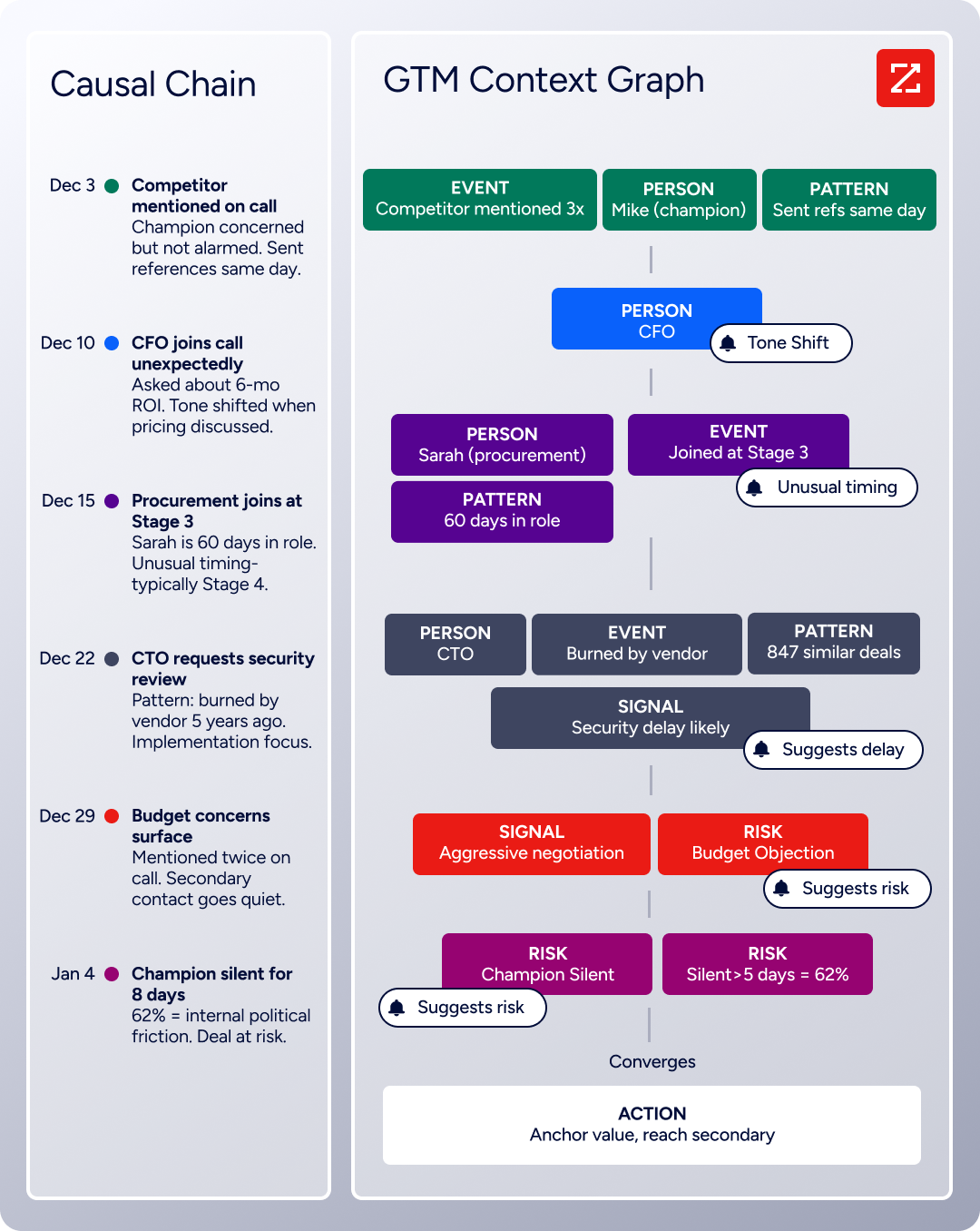
GTM Workspace uses AI agents built on Anthropic's Claude to handle account research, outreach generation, CRM updates, signal monitoring, and next-best-action recommendations.
GTM Studio uses AI to build audiences from natural language descriptions and orchestrate multi-channel plays that improve as prospects respond.
The practical difference: Cloudingo prepares your data for AI. ZoomInfo delivers AI on top of your data.
Seismic's sales team attributed 39% of active pipeline to opportunities identified or influenced by ZoomInfo signals, with 54% productivity gains and 11.5 hours saved per week per seller. (Seismic)
Who should choose what
The right tool depends on what "data quality" means in your organization.
Choose Cloudingo if:
You're a Salesforce admin whose primary job is deduplication and data cleanup
You need the safety of undo/restore before running large-scale merge jobs
Published, predictable pricing matters more than feature breadth
Your organization runs Salesforce only and doesn't need enrichment or routing
You want a focused tool you can evaluate and implement without a sales process
Choose ZoomInfo Operations if:
You're a RevOps team that needs deduplication, enrichment, routing, and workflow automation in one platform
You already use ZoomInfo for sales intelligence or marketing and want to extend that investment to data operations
Your data quality problem spans multiple CRMs and marketing automation platforms
Speed-to-lead matters and you need enrichment and routing to fire in the same pipeline as deduplication
You want data quality connected to buying signals, intent data, and AI-powered GTM workflows
See how ZoomInfo Operations automates revenue operations.
Cloudingo and ZoomInfo Operations solve the same surface-level problem (dirty CRM data) through different lenses. Cloudingo is the specialist for Salesforce deduplication, with matching depth and merge safety that data quality teams value.
ZoomInfo is the platform that treats data quality as the first step in a larger revenue operations workflow, connecting clean data to enrichment, routing, and AI-driven execution.
For organizations where data quality is the destination, Cloudingo delivers. For organizations where data quality is the starting line, ZoomInfo takes you further.
Cloudingo vs. RingLead vs. ZoomInfo FAQ
What happened to RingLead?
ZoomInfo acquired RingLead in September 2021 and absorbed the product into ZoomInfo Operations. The ringlead.com domain now redirects to ZoomInfo's Operations product page.
RingLead's deduplication, lead-to-account matching, and data orchestration capabilities are available as part of the ZoomInfo platform, alongside enrichment, lead routing, and workflow automation that were not part of the original RingLead product.
Which platform is best for Salesforce-only organizations?
Cloudingo is built for Salesforce with 14+ matching styles, synonym libraries, Person Account support, multi-account contact merging, and undo/restore capabilities. Its entire feature set assumes Salesforce context.
ZoomInfo Operations also supports Salesforce but additionally covers HubSpot, Microsoft Dynamics, Marketo, and Eloqua, making it the better fit for multi-system environments.
How does pricing compare between Cloudingo and ZoomInfo Operations?
Cloudingo publishes pricing starting at $2,500/year per Salesforce org with no per-user charge. ZoomInfo does not publish pricing for any product, classifying it as confidential. All ZoomInfo pricing requires a sales conversation and is custom-quoted based on usage, users, and modules.
For teams needing only deduplication, Cloudingo is the more accessible purchase. For teams needing deduplication plus enrichment, routing, and workflows, ZoomInfo's bundled pricing may cost less than buying separate tools.
Can Cloudingo enrich CRM records with missing data?
No. Cloudingo normalizes and standardizes existing data (enforcing title case, validating addresses, aligning abbreviations) but does not append missing fields like phone numbers, emails, or company data.
Organizations using Cloudingo need a separate enrichment provider. ZoomInfo Operations enriches records natively from ZoomInfo's database of 500M+ contacts and 60+ third-party data sources.
Which platform has better deduplication matching capabilities?
Cloudingo offers deeper matching configuration with 14+ matching styles, editable synonym libraries, OR logic and cross-match fields within a single filter, and field grouping to prevent mixed address components.
ZoomInfo Operations provides customizable matching rules with full control over data-merging outcomes but does not publicly document the same level of per-field matching granularity.
Cloudingo also offers undo/restore for merges, which ZoomInfo Operations does not document as a standalone feature.
Does ZoomInfo Operations include lead routing?
Yes. ZoomInfo Operations includes territory-based routing, weighted round-robin distribution, account-based routing, lead score-based routing, and rep availability management via a native Slack integration. Cloudingo does not include any lead routing capabilities.
Organizations using Cloudingo need a separate routing tool such as LeanData or native Salesforce assignment rules.
Which platform is better for AI readiness?
Cloudingo positions clean data as the prerequisite for Salesforce Agentforce and AI-driven workflows but does not currently offer AI-powered features.
ZoomInfo actively delivers AI capabilities through its GTM Context Graph, GTM Workspace (with AI agents for account research, outreach, and CRM updates), and GTM Studio (with AI-powered audience building and plays that improve as prospects respond). ZoomInfo treats data quality as the foundation for AI execution, not just AI readiness.
Can I try either platform before buying?
Cloudingo offers a 10-day free trial with no credit card required, including 25 tokens to test against live Salesforce data.
ZoomInfo offers a free trial of its broader platform (duration and Operations-specific feature access are not specified publicly) and ZoomInfo Lite, a permanent free tier with limited export credits. Neither platform offers a permanent free plan for their full data quality capabilities.
