
If you're comparing IBM Cognos Analytics and Xactly, you're trying to solve one of the hardest problems in enterprise decision-making: turning raw business data into actions that drive revenue.
This comparison is unusual. Cognos and Xactly rarely appear on the same shortlist because they solve different problems. Cognos is a business intelligence and reporting platform. Xactly is a sales performance management platform. The overlap is narrow, but buyers considering both tend to ask a deeper question: How do I connect the data I have to the decisions my revenue teams need to make?
The real questions you should be asking are:
Is your primary challenge reporting on business performance, or managing and optimizing sales compensation?
Do you need governed, compliance-ready analytics for regulated environments, or automated commission calculations with audit trails?
Are you trying to give executives and analysts better dashboards, or give sales reps real-time visibility into their earnings?
Does your organization need flexible deployment (cloud, on-premises, hybrid), or a pure cloud platform built for sales operations?
Is the intelligence gap in your organization about understanding what happened, or about knowing who to sell to next and why?
Here's what we recommend:
IBM Cognos Analytics is the right choice for enterprises that need governed, compliance-ready business intelligence across their organization. Built for IT leaders and data teams in regulated industries, Cognos delivers pixel-perfect reporting, centralized governance, and audit trails across cloud, on-premises, and hybrid deployments. Its AI-powered Reporting Agents, built on IBM watsonx.ai, automate report discovery, summarization, and distribution. However, Cognos carries a steep learning curve, requires implementation partners for enterprise deployments, and is designed for broad organizational analytics rather than revenue-specific workflows.
Xactly is the right choice for revenue operations and finance teams managing complex sales compensation at scale. As the creator of the Intelligent Revenue Platform, Xactly automates commission calculations, territory planning, quota management, and revenue forecasting, drawing on 20+ years of proprietary pay-and-performance data. Its Fleet of Agents handles compensation workflows autonomously, and its calculation engine processes over $7 billion in commissions monthly. But Xactly focuses narrowly on sales performance management and does not provide general business intelligence, dashboarding, or enterprise-wide reporting.
Both platforms work well within their domains. But neither solves the upstream problem that determines how effective your revenue teams are: whether they're talking to the right buyers, at the right time, with the right context. That's where ZoomInfo comes in.
ZoomInfo is an AI GTM platform built on a data foundation of 500M contacts, 100M companies, 135M+ verified phone numbers, and 200M+ verified business emails. Its GTM Context Graph, which processes 1.5B+ data points daily, unifies this data with your CRM records, conversation transcripts, and behavioral signals to reveal the full context of your accounts. That context gives AI the fuel to show not just what happened, but why it happened, and which actions to take next. Your team can drive sales motions from GTM Workspace, run GTM plays from GTM Studio, or power their own tools through the API and MCP in any other front-end. Where Cognos reports on historical performance and Xactly manages how reps get paid, ZoomInfo provides the intelligence that determines what they should be working on in the first place.
If that upstream intelligence sounds like the missing layer in your revenue strategy, see how ZoomInfo works.
IBM Cognos Analytics vs. Xactly vs. ZoomInfo at a glance
IBM Cognos Analytics | Xactly | ZoomInfo | |
|---|---|---|---|
Primary function | Enterprise BI reporting and analytics | Sales compensation and performance management | B2B go-to-market intelligence and execution |
Core strength | Governed, compliance-ready reporting | Automated commission calculations and planning | Buyer data and contextual AI |
Target buyer | IT leaders, data teams, finance in regulated industries | Compensation managers, RevOps, finance, CROs | Sales, marketing, RevOps, GTM engineers |
AI capabilities | Reporting Agents (watsonx.ai) for discovery, summarization, sharing | Fleet of Agents for compensation workflows, forecasting | GTM Context Graph (1.5B+ daily data points) powering AI account prioritization and outreach |
Deployment | Cloud, on-premises, hybrid, containers | Cloud SaaS | Cloud SaaS with API/MCP access |
Data foundation | Customer's own enterprise data sources | 20+ years of proprietary compensation data | 500M contacts, 100M companies, 135M+ verified phones, 200M+ verified emails |
Pricing model | Per-user; Standard from $11.25/user/month, Premium from $44.90/user/month (cloud) | Quote-based; all pricing negotiated | Custom-quoted, consumption-based |
Best for | Enterprise-wide dashboards, financial reporting, regulatory compliance | Complex sales comp, territory/quota planning, revenue forecasting | Prospecting, pipeline generation, buyer intent, account intelligence |
They solve different problems at different points in the revenue cycle
These three platforms rarely compete head-to-head because each one operates at a different stage of the revenue cycle.
Cognos Analytics sits at the back end. After revenue is generated, deals are closed, and operations are running, Cognos helps organizations understand what happened. It connects to ERP systems, CRM databases, and financial ledgers, then produces governed dashboards and scheduled reports for executives, finance teams, and board-level stakeholders.
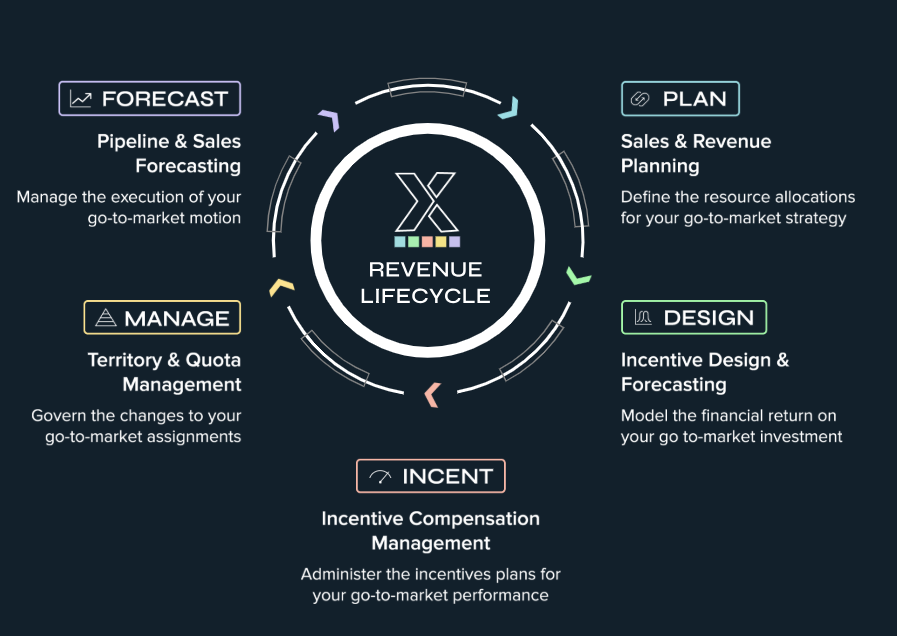
Xactly sits in the middle. Once deals close, Xactly calculates what each seller earns, tracks compliance, and forecasts commission costs. But it also reaches forward into planning: territory design, quota allocation, and incentive modeling before the selling begins. Its Forecast module uses AI to predict pipeline outcomes, and its Plan module helps organizations balance territories and set fair quotas.
ZoomInfo sits at the front end. Before a deal exists, ZoomInfo identifies who to sell to, when to engage, and what to say. Its GTM Context Graph captures why deals move or stall by fusing third-party B2B data with a customer's own CRM records, call transcripts, and engagement signals. This intelligence flows into every downstream action: the territories Xactly designs are only as good as the market data informing them, and the reports Cognos produces are only as useful as the pipeline feeding them.

Cognos is governed BI for enterprises that can't afford data mistakes
Cognos Analytics exists for organizations where a wrong number in a report has legal or financial consequences. Banks, government agencies, healthcare systems, defense contractors: these are environments where data lineage, access controls, and audit trails aren't features but requirements imposed by regulators.
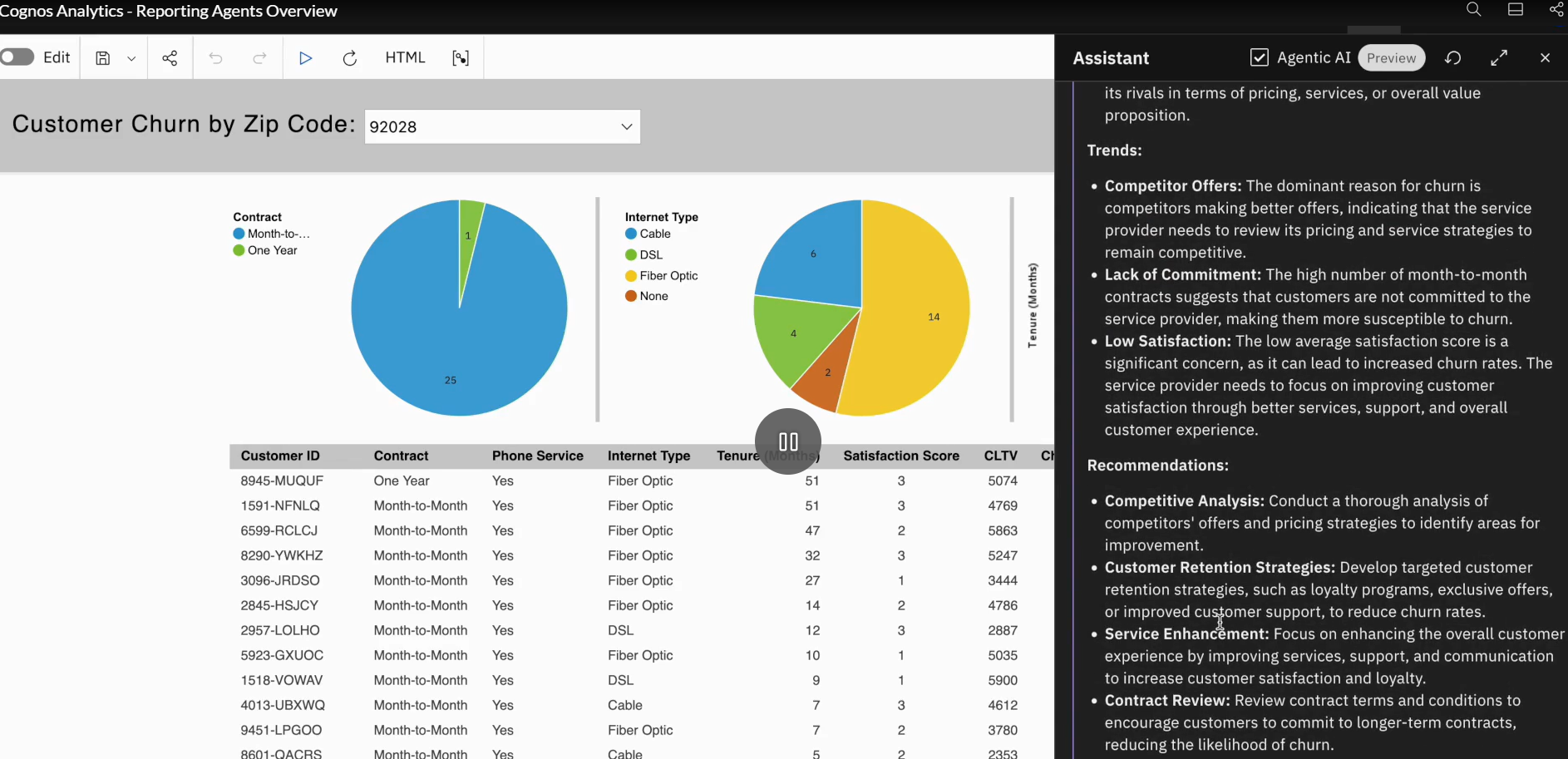
IBM positions Cognos as delivering "compliance-ready reporting, business analytics and agentic AI capabilities built on certified data models". That language is deliberate. This is not a self-service analytics tool competing with Tableau or Power BI on ease of use. It's a governed reporting platform that happens to include dashboards and AI.
Source: IBM
The platform produces pixel-perfect, high-volume scheduled reports and distributes them automatically in HTML, CSV, PDF, or Excel.
The AI layer added in recent releases gives Cognos a more modern surface. Three Reporting Agents, built on IBM watsonx.ai, automate three friction points: the Recommendation Agent uses RAG to find relevant reports even when users describe them differently than they're titled, the Summarization Agent generates executive-ready summaries from dense reports, and the Sharing Agent distributes reports across email and Slack while enforcing permissions.

Source: IBM
Every documented large deployment involves implementation partners. The platform's administration is still split between a legacy console and a modern interface, with IBM acknowledging a multi-release migration that won't be complete for some time.
Xactly is the compensation engine for revenue teams that have outgrown spreadsheets
If Cognos tells you what happened across the business, Xactly tells your sales reps exactly what they earned and why. That specificity is its strength and its boundary.
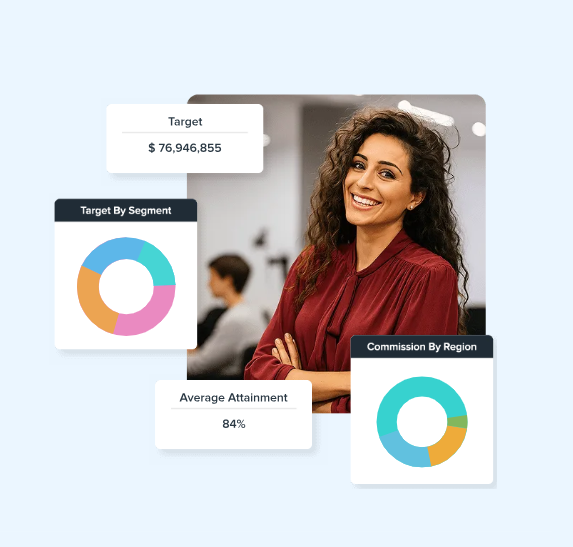
Xactly's core product, Incent, processes over $7 billion in calculated commissions and bonuses monthly. For companies managing complex commission structures (splits, draws, accelerators, clawbacks, and MBOs across hundreds or thousands of reps) this replaces the spreadsheet chaos that creates overpayments, disputes, and "shadow accounting," the informal spreadsheets reps maintain when they don't trust the official numbers.
Source: Xactly
The numbers back this up. A Forrester study validated a 90% average reduction in overpayments, 99.8% on-time commission payment accuracy, and 60% less time to create compensation plans.
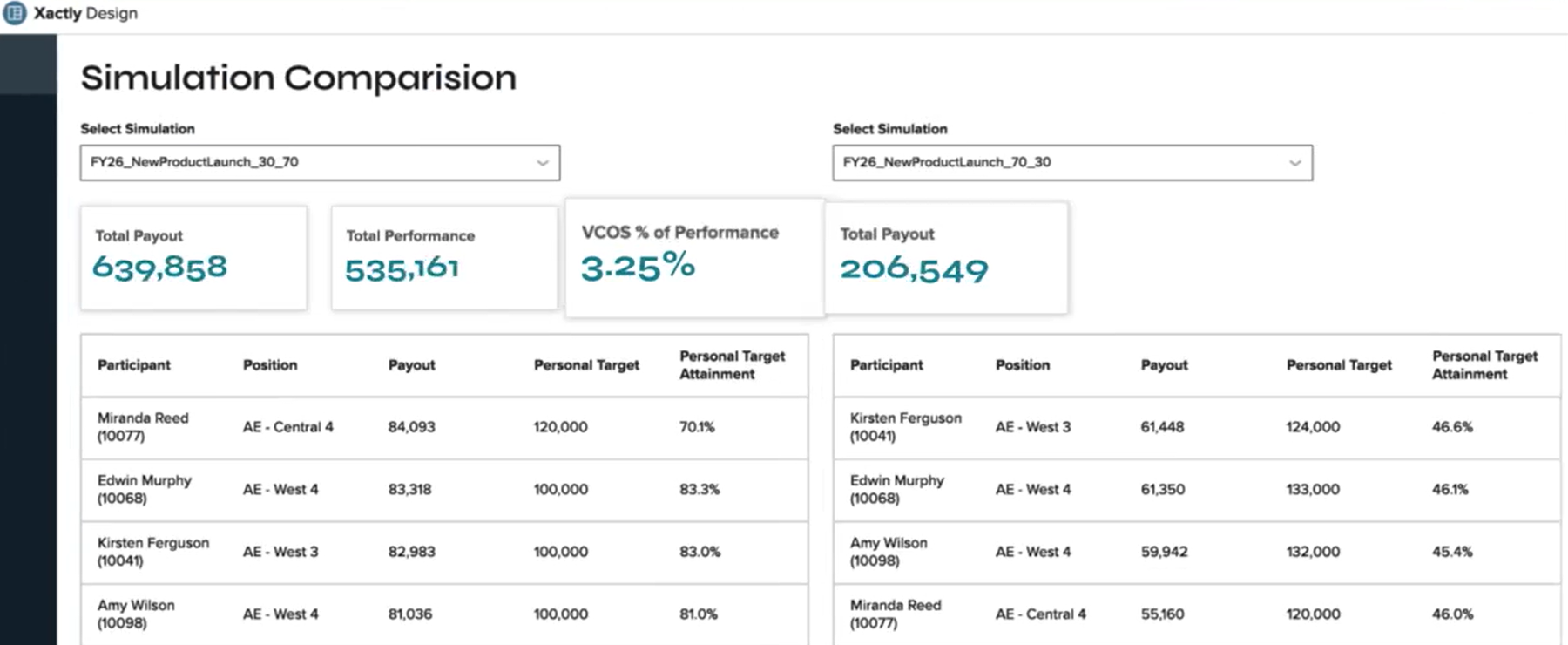
Where Xactly extends beyond commission management is in planning and forecasting. Xactly Design lets compensation teams simulate plan changes before rollout, testing how modifications to accelerators or thresholds would affect total payout spend, pay equity, and rep behavior.
Source: Xactly
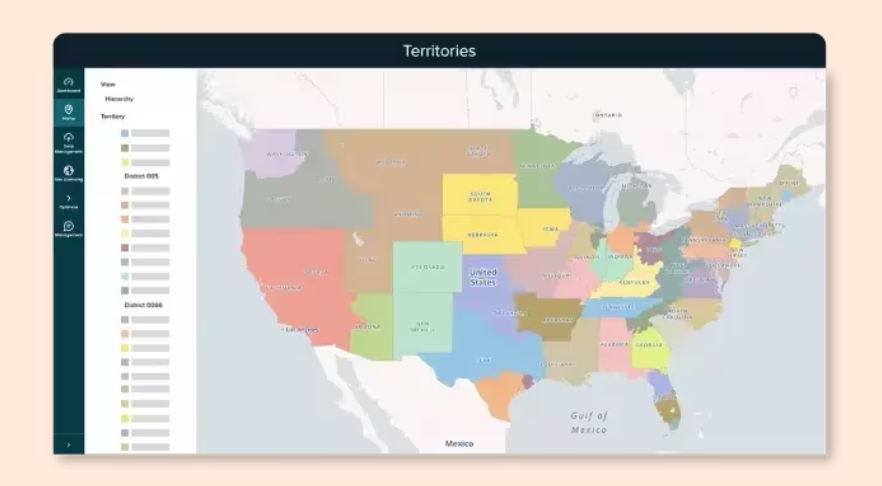
Xactly Plan, built on the AlignStar territory mapping engine, handles geographic and account-based territory design with an interactive map interface.
Source: Xactly
The platform's most defensible asset is its 20+ years of proprietary pay-and-performance data. No competitor can replicate two decades of compensation benchmarks across industries, and that data powers benchmarking, AI models, and simulation accuracy.
Source: Xactly
But Xactly is not a business intelligence platform. It won't build your executive dashboards, connect to your ERP for financial consolidation, or produce the cross-functional reporting Cognos handles. And its quote-based pricing and enterprise positioning mean it's not designed for small teams with simple compensation structures.
ZoomInfo powers the intelligence that makes both platforms more valuable
Cognos reports on what happened. Xactly manages how reps get paid. Neither answers the question that determines revenue outcomes: Are your sellers working the right accounts?
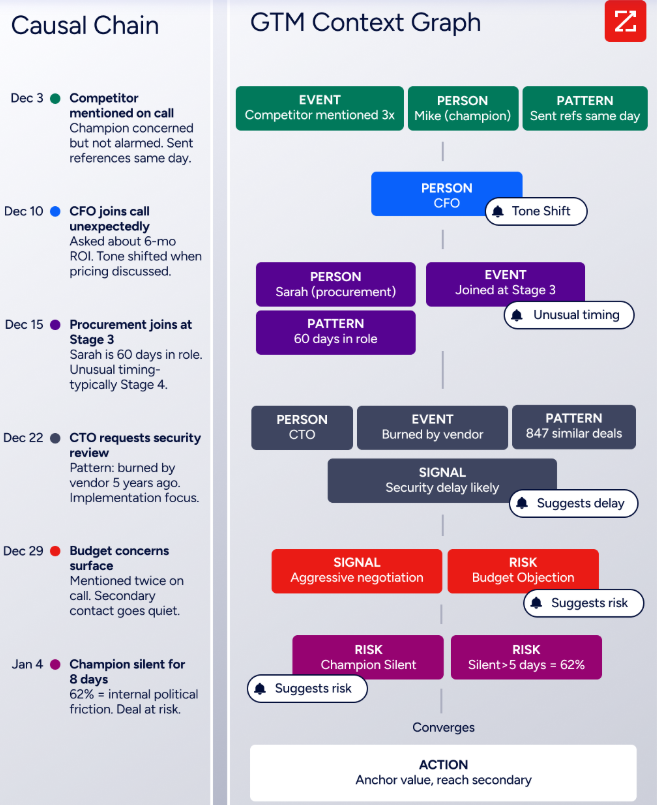
This is where ZoomInfo operates. Its GTM Context Graph doesn't just store data. It reasons across it. A CRM records that a deal moved to Stage 3. Conversation intelligence captures what the VP of Finance said on the last call. Intent signals show the company is researching a competitor. The GTM Context Graph connects these signals to understand why the deal moved, and what should happen next.
Source: ZoomInfo
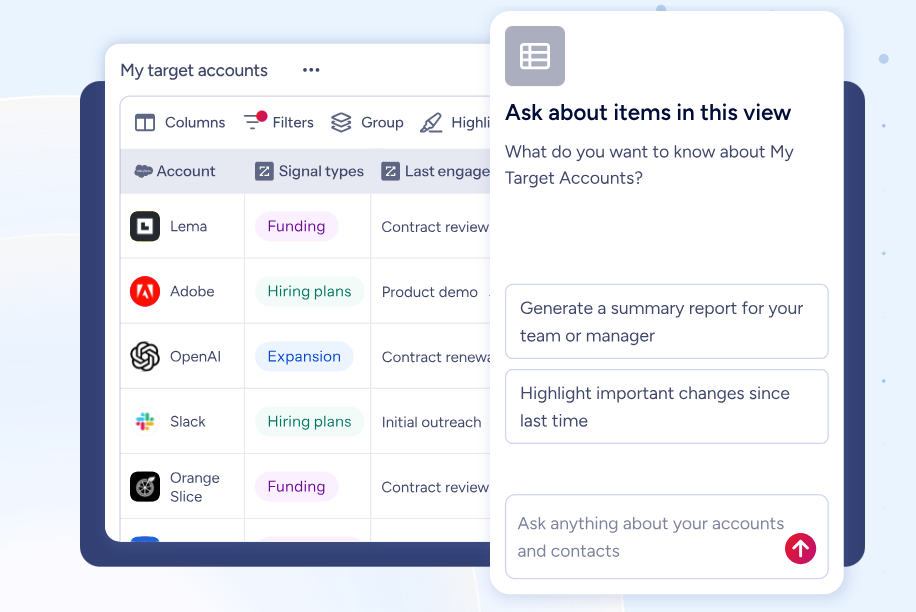
For sellers, GTM Workspace surfaces this intelligence in a single view. AI agents handle account research, draft outreach, monitor signals, and update CRM. Seismic attributed 39% of active pipeline to opportunities identified or influenced by ZoomInfo signals, with sellers saving 11.5 hours per week and increasing productivity by 54%.
Source: ZoomInfo
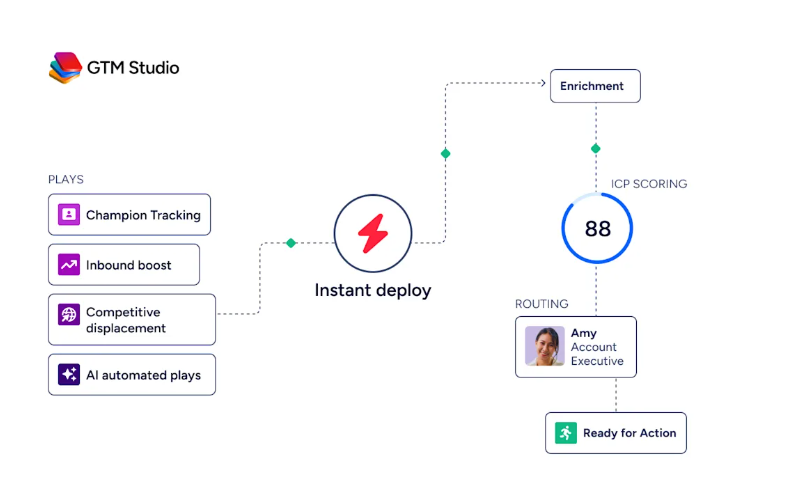
For marketers and RevOps teams, GTM Studio provides an AI-powered canvas where audience definition, campaign orchestration, and pipeline measurement happen in natural language. Expansion plays that used to take 3 weeks now launch in 30 minutes.
Source: ZoomInfo
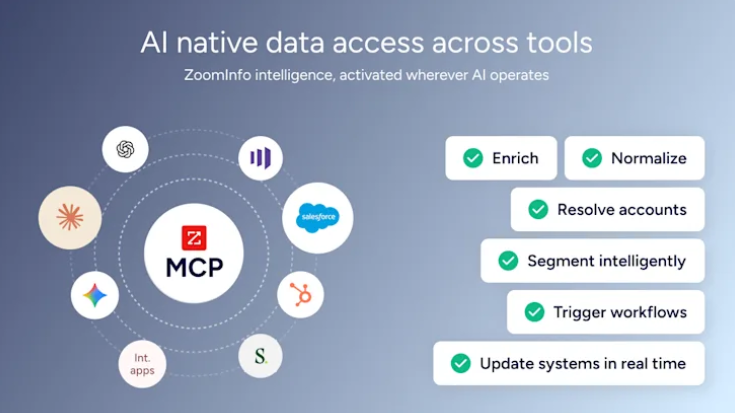
For teams building custom tools or connecting third-party platforms, ZoomInfo's Enterprise API and MCP server expose the same intelligence to any application or AI agent, from Anthropic's Claude to Salesforce to proprietary internal systems.
Source: ZoomInfo
The data foundation makes this work. ZoomInfo maintains 500M contacts, 100M companies, 135M+ verified phone numbers, and 200M+ verified business emails, verified through a multi-source pipeline backed by 300+ human researchers and achieving up to 95% accuracy on first-party data.

Source: ZoomInfo
In a Fortune 500 competitive RFP analyzing 25 million contacts across vendors, the independent consultant concluded that "no other competitor came even close."
"That combination of our internal CRM data, external signals, and AI that's given all that context has helped us craft very specific account- and persona-based messages. And people have responded to them right away." (Seismic)
AI capabilities take three different forms
All three platforms have invested in AI, but the implementations reflect their different missions.
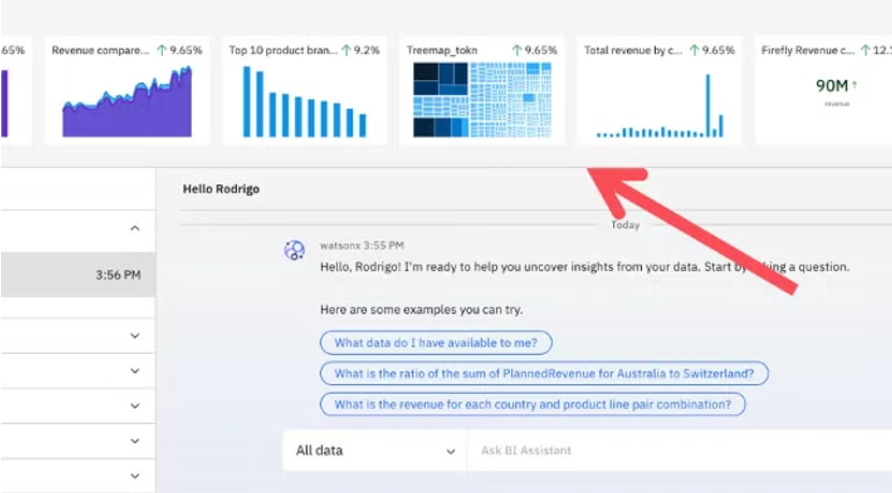
Cognos treats AI as an assistant for existing BI workflows. Its Reporting Agents automate report finding, summarizing, and sharing. The AI Assistant lets users query data in natural language and receive visualizations
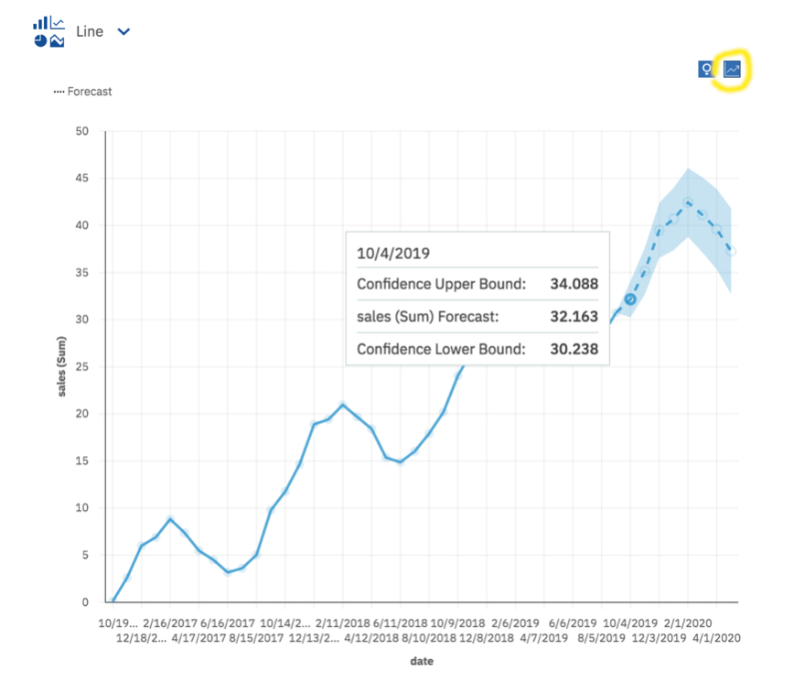
Forecasting is embedded directly into dashboards, automatically selecting from nine exponential smoothing models.
Source: IBM
The next-generation vision, built on IBM Granite foundation models, extends this to proactive question suggestions and multi-mode analytics. Cognos AI only provides insights based on certified company data, with explanations of how conclusions were reached, keeping governance intact.
Source: IBM
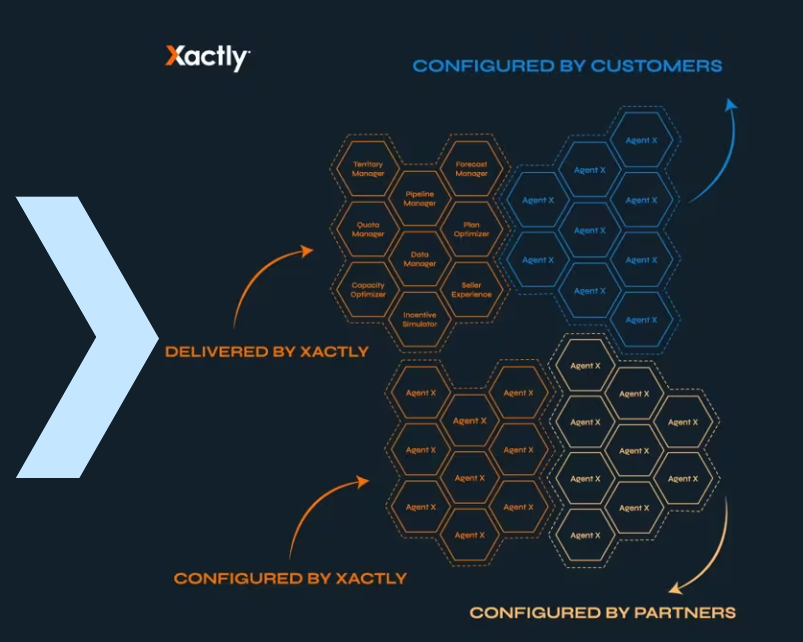
Xactly treats AI as autonomous agents for revenue operations. The Fleet of Agents, launched in May 2026, includes Workflow Agents (automating multi-step processes like dispute resolution), Optimization Agents (flagging underperforming territories), Builder Agents (configuring new agents via natural language), and External Agents (connecting to Salesforce, Workday, and ServiceNow).
Source: Xactly
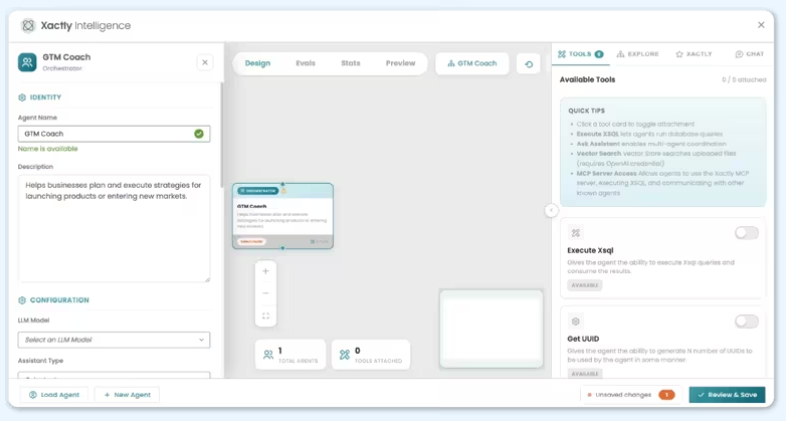
The Intelligence Studio lets customers and partners compose custom agents. Xactly's AI is grounded in its proprietary 20-year compensation dataset, a training corpus no general-purpose AI can match.
Source: Xactly
ZoomInfo treats AI as contextual reasoning across go-to-market data. The GTM Context Graph captures relationships between signals and outcomes across thousands of deals. AI agents in GTM Workspace, built on Anthropic's Claude, handle account research, outreach generation, signal monitoring, and CRM updates.
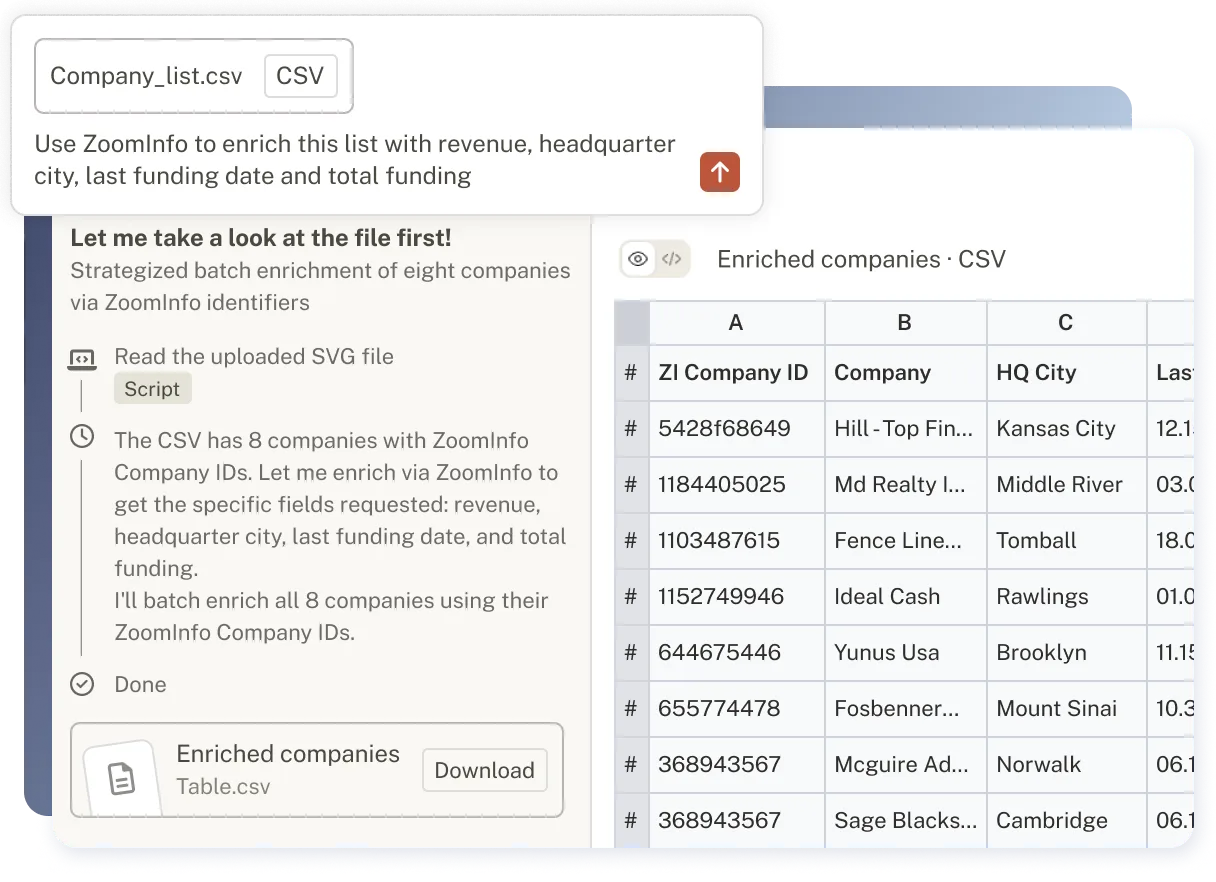
Unlike AI limited to internal data, ZoomInfo's AI draws from both first-party CRM data and third-party signals (intent, technographics, org changes, funding events) to produce intelligence neither source could generate alone.
Data philosophies define what each platform can see
The most important difference between these platforms is what data they access and what they do with it.
Cognos operates on your data. It connects to your databases, your ERP, your data warehouse, and produces reports from what's inside your organization. The value is in the governance layer: making sure that data is trustworthy, accessible to the right people, and presented in compliance-ready formats. Cognos brings no external data to the table. It makes your internal data usable.
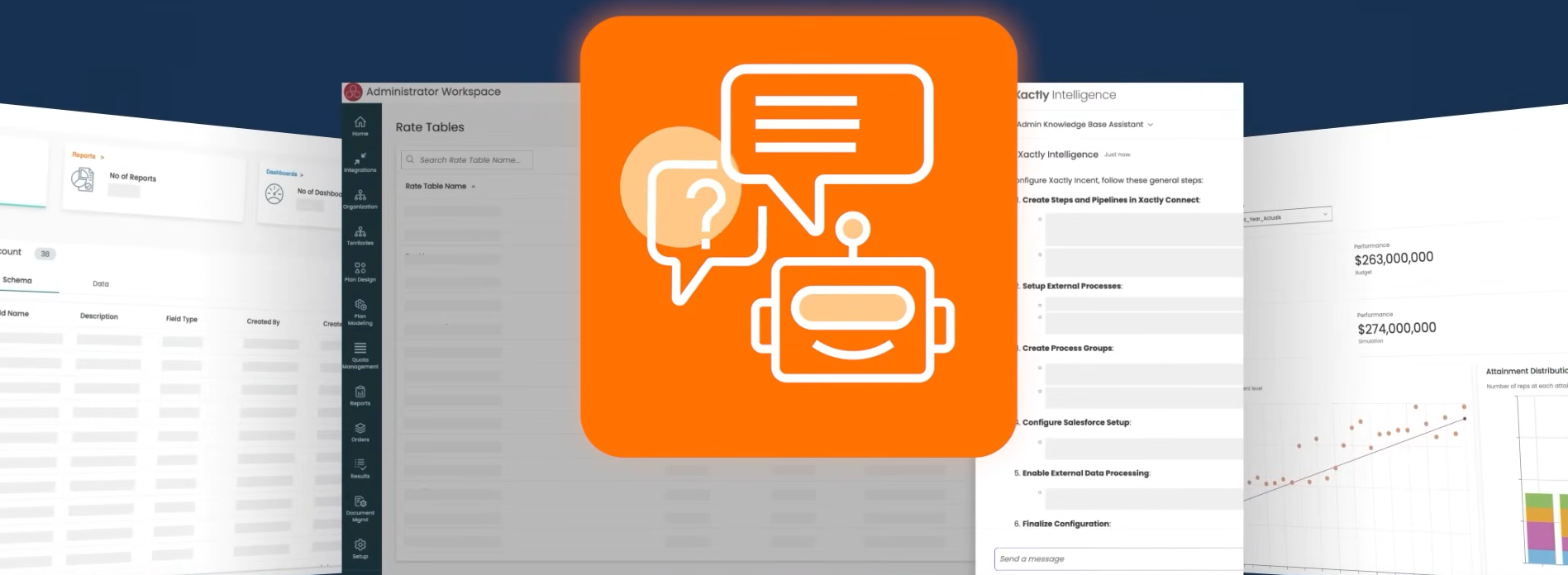
Xactly operates on your data plus its own proprietary benchmarks. Commission calculations run on your CRM transactions, HR records, and deal data. But the planning and design modules draw on 20+ years of aggregated pay-and-performance data from across Xactly's customer base, giving compensation teams external reference points for plan design and quota setting. This combination of internal operational data and external benchmark data is what makes Xactly's simulation and forecasting more accurate than spreadsheet-based alternatives.
Source: Xactly
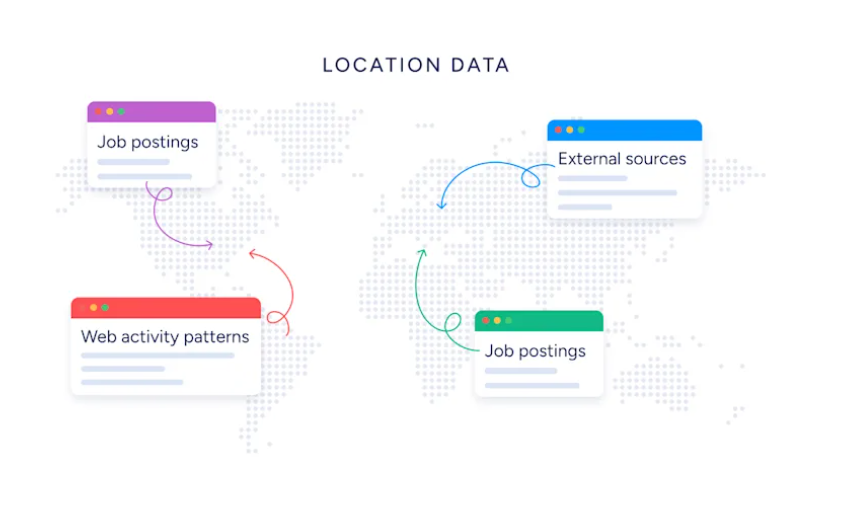
ZoomInfo operates on the world's data. Its 500M contacts and 100M companies, verified through automated ML scanning of 28 million site domains daily, third-party partner data covering 95 million businesses, and 300+ human researchers, represent the external market intelligence that neither Cognos nor Xactly provides. The GTM Context Graph then fuses this external intelligence with a customer's own first-party data, creating a single layer that captures buyer behavior across both internal and external signals.
Source: ZoomInfo
This distinction matters in practice. Cognos can tell you that Q2 revenue fell short in the Northeast region. Xactly can tell you that your Northeast reps' quota attainment dropped and model what plan changes might fix it. ZoomInfo can tell you that three of your largest Northeast accounts are researching a competitor, two key champions changed jobs, and fourteen new companies in the region match your ideal customer profile and show buying intent.
"ZoomInfo gives us the information we need to execute. We don't have to go through and spend our time digging. It's already there, so we can be three steps ahead." (Vensure)
Pricing reflects different market approaches
Cognos Analytics is the most transparent of the three on pricing. IBM publishes cloud SaaS rates: Standard starts at $11.25/user/month (annual billing), Premium at $44.90/user/month. Standard is limited to viewing reports and dashboards; you need Premium to create reports, run data explorations, and access Reporting Agents. On-premises and cloud-hosted deployments are quote-based. A 30-day free trial includes 5 Premium users. AWS Marketplace pricing runs from roughly $22/month for a Viewer to $803/month for an Administrator.
The hidden costs with Cognos are implementation and professional services. Every documented enterprise deployment involves IBM Business Partners or systems integrators, and on-premises deployments require dedicated IT resources for ongoing maintenance. Connecting cloud Cognos to on-premises data sources requires separate Satellite Connectors.
Xactly publishes no prices. All pricing is quote-based, with three Incent tiers (Core, Plus, Ultimate) and four separately priced planning modules (Plan, Design, Manage, Forecast). Implementation services, Technical Account Manager access, and consulting are all additional negotiated costs.
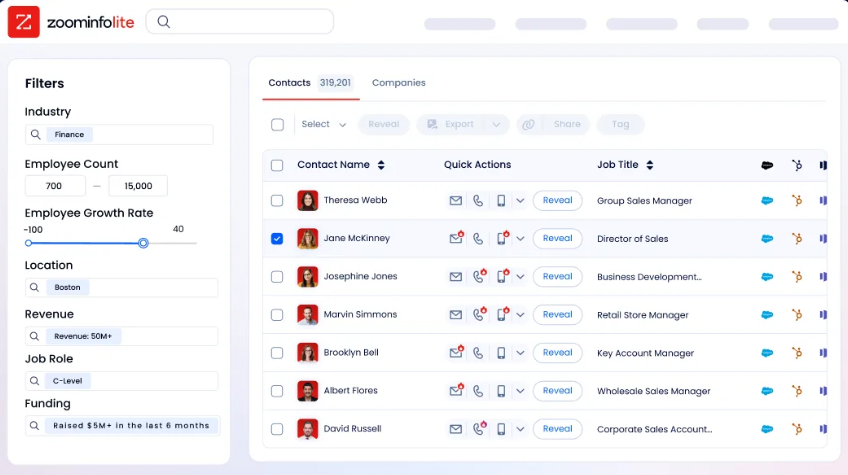
ZoomInfo uses custom-quoted, consumption-based pricing. No public prices, but ZoomInfo offers two free entry points that neither competitor matches: ZoomInfo Lite, a permanent free tier with access to the B2B database and 10 monthly export credits, and a 7-day free trial of the full platform. Paid plans are organized into Sales (Professional, Advanced, Enterprise) and Marketing (Marketing Demand, ABM Lite, ABM Enterprise) tiers, with Chorus and Chat priced separately.
Source: ZoomInfo
Integration ecosystems reflect each platform's role in the stack
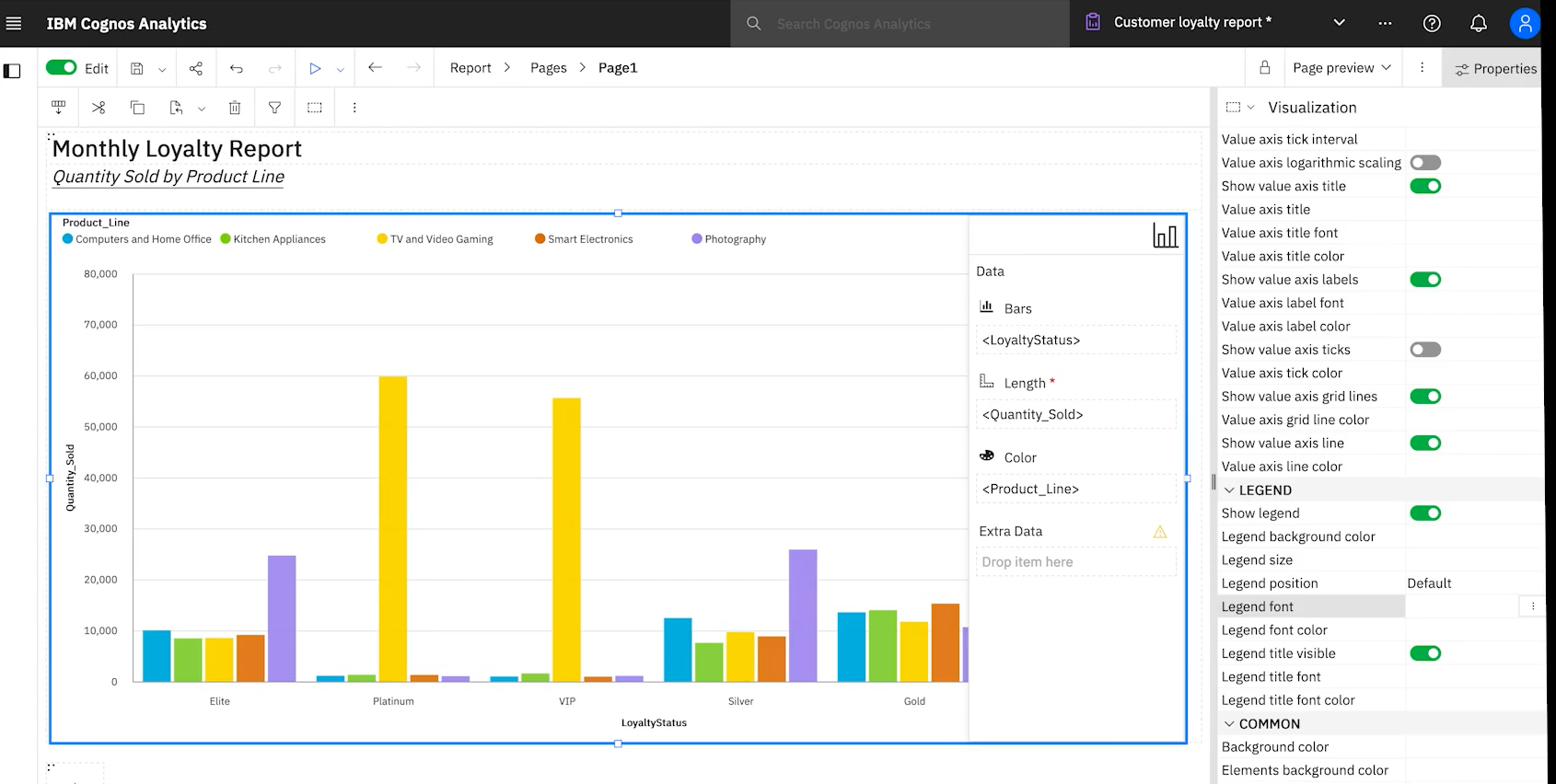
Cognos integrates primarily with data infrastructure. It connects to relational databases (IBM Db2, Oracle, SQL Server), OLAP sources, big data platforms (Hadoop, MongoDB), and the broader IBM ecosystem (Planning Analytics, SPSS, watsonx.data, Controller). Reports can be shared via email, Slack, and Microsoft Teams. Its REST API and JavaScript API support embedding and automation, though IBM does not publish language-specific SDKs.
Source: IBM
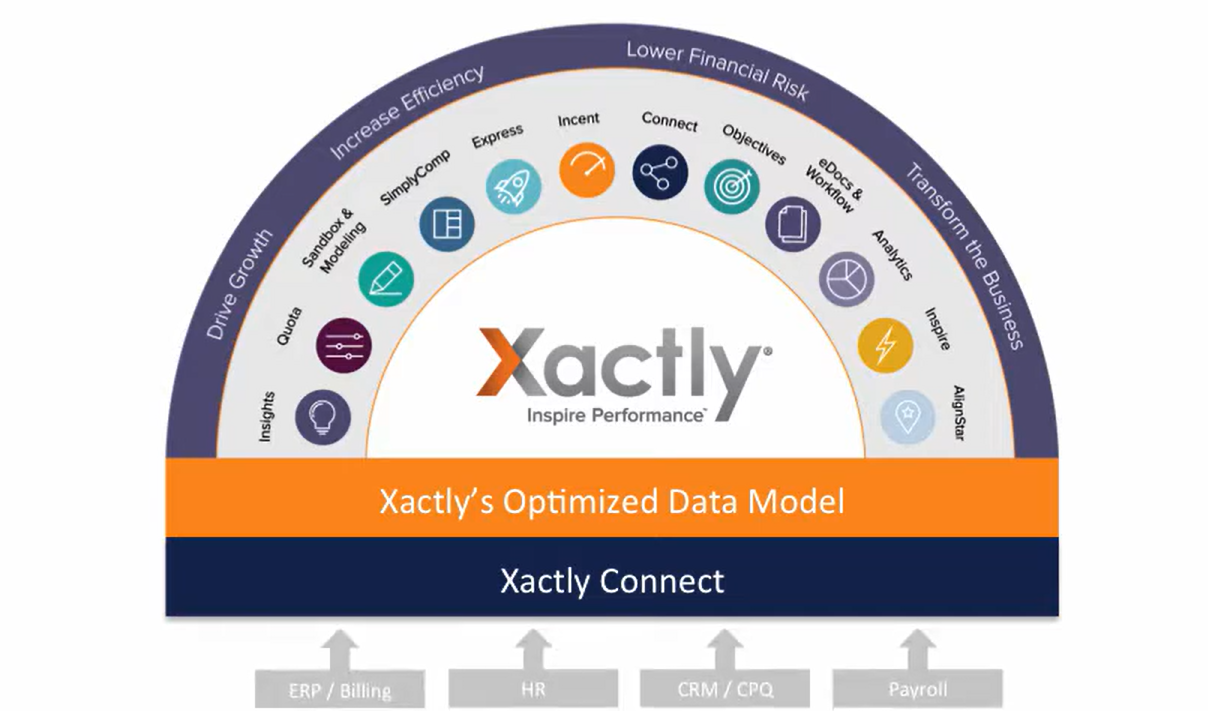
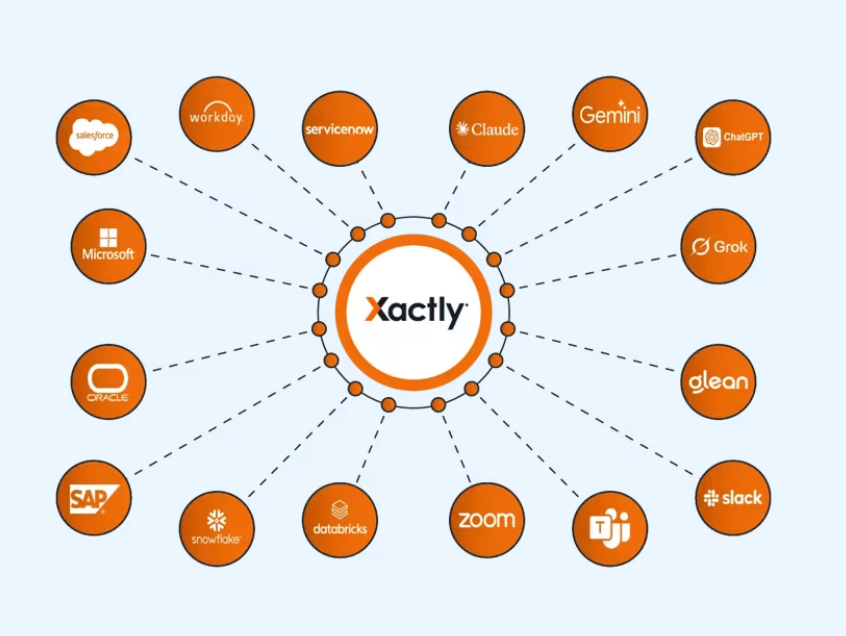
Xactly integrates with revenue operations infrastructure. Xactly Connect provides native connectors to Salesforce (80% of Xactly customers use it), HubSpot, Microsoft Dynamics, NetSuite, Snowflake, and Workday.
Source: Xactly
The Xactly for CRM add-on embeds compensation data directly in Salesforce, ServiceNow, and Dynamics. The Intelligence Connect MCP server enables AI agents from Claude, ChatGPT, or ServiceNow to access live Xactly data.
Source: Xactly
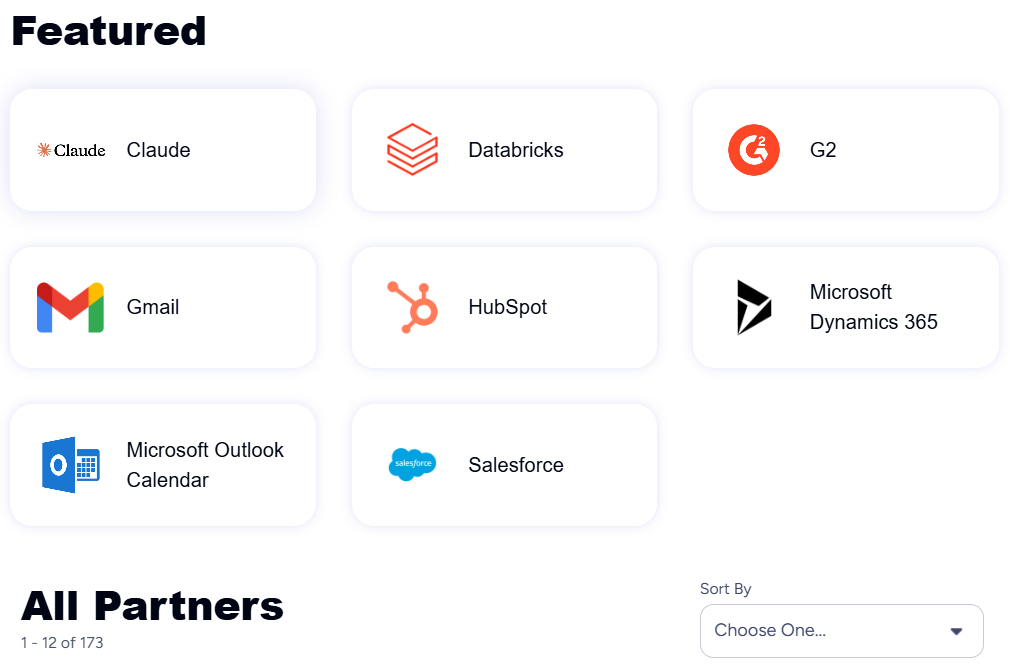
ZoomInfo integrates with everything go-to-market teams touch. The Marketplace lists 172+ integration partners across CRM (Salesforce, HubSpot, Dynamics 365), cloud data platforms (AWS, Google Cloud, Snowflake, Databricks), marketing automation (Marketo, Eloqua), sales engagement (Salesloft, Outreach), and AI platforms (Claude, ChatGPT).
Source: ZoomInfo
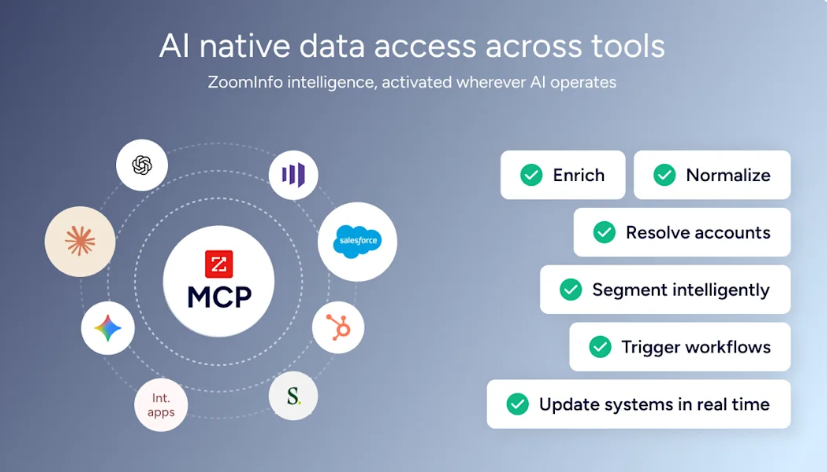
The Enterprise API provides structured programmatic access, while the MCP server makes ZoomInfo data natively accessible to any MCP-compatible AI agent. API access is included in all relevant plans.
Source: ZoomInfo
Security and compliance show enterprise readiness
All three platforms take security seriously, but their compliance profiles reflect their different regulatory exposures.
Cognos has the broadest compliance certification stack, inherited from IBM Cloud infrastructure: ISO 27001, ISO 27017, ISO 27018, ISO 27701, SOC 1/2/3, CSA STAR, HIPAA, PCI DSS, HITRUST, FedRAMP, GDPR, and CCPA/CPRA. This breadth is necessary because Cognos operates in government, defense, healthcare, and financial services environments. On-premises deployment gives regulated organizations complete data sovereignty.
Xactly maintains SOC 2 certification and operates data centers with 24/7 monitoring, biometric access, stateful inspection firewalls, and TLS 1.2 encryption. Its Commission Expense Accounting module directly supports ASC 606 and IFRS 15 compliance for revenue recognition. Regular third-party penetration testing and a transparent Security Incident Response Team demonstrate active security posture.
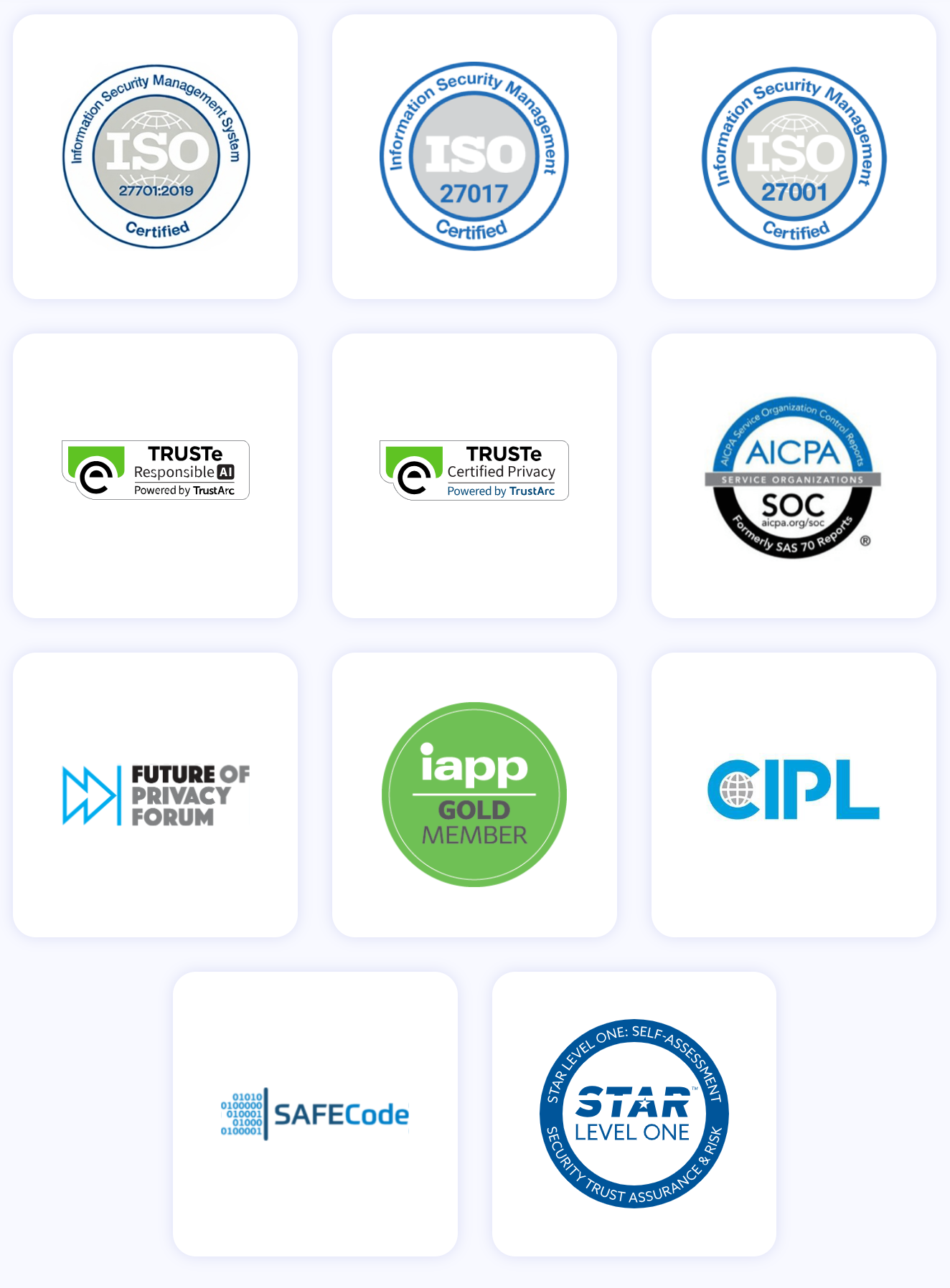
ZoomInfo holds ISO 27001, ISO 27701, SOC 2 Type II, TRUSTe GDPR, and TRUSTe CCPA certifications, all renewed annually. As a registered data broker in California and Vermont, ZoomInfo maintains a dedicated Trust Center and builds compliance infrastructure directly into the data layer. For enterprises in regulated industries, this privacy-first architecture is a prerequisite for using third-party data at scale.
IBM Cognos Analytics vs. Xactly vs. ZoomInfo: Which should you choose?
These platforms don't compete. They complement each other at different stages of the revenue cycle. The right choice depends on which stage is your bottleneck.
Choose IBM Cognos Analytics if:
Your primary need is enterprise-wide business intelligence and financial reporting
You operate in a regulated industry where governance, audit trails, and data lineage are non-negotiable
You need flexible deployment across cloud, on-premises, or hybrid environments
You have an existing IBM technology footprint (Planning Analytics, Controller, Cloud Pak for Data)
Your stakeholders need pixel-perfect scheduled reports and compliance-ready dashboards
Choose Xactly if:
You manage complex sales compensation with multiple roles, plan structures, and commission rules
Your commission process runs on spreadsheets and creates disputes, errors, or compliance risk
You need territory planning, quota management, and incentive design simulation in one platform
ASC 606 / IFRS 15 compliance automation is a requirement
You want AI-powered compensation benchmarking against 20+ years of industry data
Choose ZoomInfo if:
Your revenue challenge is upstream: finding the right accounts, the right contacts, and the right timing
You need B2B data to power prospecting, pipeline generation, and account intelligence
You want AI that reasons across buyer signals, CRM data, and conversation intelligence to guide next actions
Your team needs intelligence accessible through native tools, APIs, or AI agents in any front-end
You want a single platform that serves sellers, marketers, and RevOps without tool fragmentation
See ZoomInfo in action with a free trial
The enterprises getting the most from their revenue operations aren't choosing between reporting, compensation management, and go-to-market intelligence. They're connecting all three. Cognos tells you what happened. Xactly ensures your reps are paid accurately for what they closed. ZoomInfo makes sure they're working the right opportunities in the first place. The question isn't which platform to buy. It's which gap in your revenue cycle is costing you the most.
IBM Cognos Analytics vs. Xactly vs. ZoomInfo FAQ
What is the core difference between IBM Cognos Analytics, Xactly, and ZoomInfo?
IBM Cognos Analytics is an enterprise business intelligence platform for governed reporting, dashboards, and data visualization across an organization. Xactly is a sales performance management platform for automating commission calculations, territory planning, quota management, and revenue forecasting. ZoomInfo is an AI GTM platform providing B2B data, buyer intent signals, and contextual intelligence to help revenue teams identify and engage the right buyers.
Can these platforms be used together?
Yes. They operate at different points in the revenue cycle and complement each other. ZoomInfo identifies target accounts and provides buyer intelligence upstream. Xactly manages compensation, territories, and quotas for the sales team executing against those accounts. Cognos reports on the resulting business performance across the organization. Organizations using all three gain intelligence, execution, and measurement in a connected loop.
Which platform is best for sales teams?
For direct sales execution, prospecting, and pipeline generation, ZoomInfo is the strongest fit. GTM Workspace gives sellers AI-driven account prioritization, outreach drafting, and signal monitoring. For sales compensation management and earnings visibility, Xactly is the right choice, giving reps real-time commission tracking and managers deal-level payout forecasting. Cognos is not designed for direct sales use.
Which platform has the best AI capabilities?
Each platform applies AI differently. Cognos uses AI Reporting Agents built on IBM watsonx.ai to automate report discovery, summarization, and distribution. Xactly's Fleet of Agents automates compensation workflows, dispute resolution, and plan configuration, drawing on 20 years of proprietary data. ZoomInfo's GTM Context Graph uses AI to reason across buyer signals and CRM data, powering account prioritization, outreach generation, and deal intelligence in GTM Workspace and GTM Studio.
How does pricing compare across the three platforms?
Cognos has the most transparent pricing, with published cloud SaaS rates starting at $11.25/user/month for Standard and $44.90/user/month for Premium. Xactly publishes no prices and requires a sales conversation for all pricing. ZoomInfo uses custom-quoted, consumption-based pricing but offers a permanent free tier (ZoomInfo Lite with 10 monthly export credits) and a 7-day free trial, providing more accessible entry points for evaluation.
Which platform is best for regulated industries?
Cognos has the broadest compliance certification stack, including FedRAMP, HIPAA, PCI DSS, and HITRUST, plus on-premises deployment for complete data sovereignty. Xactly provides SOC 2 certification and built-in ASC 606/IFRS 15 compliance for commission accounting. ZoomInfo holds ISO 27001, ISO 27701, SOC 2 Type II, and TRUSTe GDPR/CCPA validations, with privacy compliance built into the data layer.
Does ZoomInfo provide business intelligence or reporting capabilities?
ZoomInfo is not a general-purpose BI or reporting platform. Its intelligence focuses on go-to-market: identifying target accounts, surfacing buyer intent, mapping buying committees, and guiding seller actions. For enterprise-wide financial reporting and dashboarding, Cognos is the appropriate choice. ZoomInfo's value is in the upstream intelligence that makes downstream reporting and compensation more accurate by ensuring revenue teams work the right opportunities.
Which platform integrates with Salesforce?
All three integrate with Salesforce, but at different levels. Xactly has its deepest integration there, with 80% of customers using Salesforce and a dedicated Xactly for CRM product embedded in the Salesforce interface. ZoomInfo offers native Salesforce integration through its Marketplace, with data enrichment, lead routing, and signal delivery directly into CRM workflows. Cognos connects to Salesforce as a data source for reporting and dashboards.
See how Xactly compares to other platforms:
