
Choosing between Dynamics 365 vs. Salesforce for your CRM and business applications often comes down to these five critical questions:
Do you already run Microsoft 365, Teams, and Azure, or is your organization platform-agnostic?
Do you need CRM only, or a unified CRM and ERP system under one vendor?
How much are you willing to invest in implementation before seeing value?
Is autonomous AI (agents that act, not just assist) a priority for your team right now?
Does your sales team spend more time in the CRM entering data, or actually selling?
In short, here's what we recommend:
Microsoft Dynamics 365 is the natural choice for organizations already invested in the Microsoft ecosystem. It offers a rare combination of CRM and ERP under one platform, with native integration into Teams, Outlook, Power BI, and Azure.
For companies that need to connect sales, service, finance, and supply chain operations on a single data layer (Microsoft Dataverse), Dynamics 365 delivers breadth that Salesforce can't match on the back-office side. The trade-off: implementations commonly cost $250,000 to $2 million, the UI can feel complex compared to CRM-focused competitors, and 60% of implementations exceed initial budgets by 20–40%.
Salesforce remains the #1 CRM by IDC market share and holds that position for good reason. Its CRM depth is unmatched, with purpose-built clouds for sales, service, marketing, and commerce, plus a 9,000+ app ecosystem on AppExchange and a 20-million-member Trailblazer community.
But Salesforce is a front-office platform. It doesn't do ERP, finance, or supply chain. And its pricing complexity, including separate charges for AI credits, data cloud usage, and premier support, has become a well-documented pain point.
Both platforms are powerful CRM systems that have added AI agent capabilities. But here's what neither solves on its own: the quality and completeness of the data your CRM runs on. A CRM is only as good as the contact records, company intelligence, and buying signals flowing through it. That's where ZoomInfo fits in.
ZoomInfo is an all-in-one AI GTM platform that sits underneath your CRM, whether that's Dynamics 365 or Salesforce, and powers it with the industry's most comprehensive B2B data: 500M contacts, 100M companies, 135M+ verified phone numbers, and 200M+ verified business email addresses.
ZoomInfo's GTM Context Graph—an intelligence layer processing 1.5B+ data points daily—fuses this data with your CRM records, conversation transcripts, and behavioral signals to reveal not just what's happening in your pipeline, but why deals move or stall.
That intelligence reaches your team through GTM Workspace for sellers, GTM Studio for marketers and RevOps, or APIs and MCP that pipe it directly into any tool, including Dynamics 365 and Salesforce.
If turning your CRM from a system of record into a system of intelligence sounds like the missing piece, see how ZoomInfo works with your platform.
Dynamics 365 vs. Salesforce vs. ZoomInfo at a glance
Dynamics 365 | Salesforce | ZoomInfo | |
|---|---|---|---|
Core strength | Unified CRM + ERP on Microsoft stack | Deepest CRM with broadest app ecosystem | Most comprehensive B2B data + GTM intelligence |
AI approach | Copilot + purpose-built agents (Sales Qualification, Account Reconciliation) | Agentforce with Atlas Reasoning Engine ($800M ARR) | GTM Context Graph processing 1.5B+ data points daily |
Ecosystem | Native Microsoft 365, Teams, Power Platform, Azure | 9,000+ AppExchange apps, Slack, MuleSoft, Tableau | 120+ integrations, APIs, MCP for any AI agent |
ERP capability | Full (Finance, Supply Chain, HR, Commerce) | None | N/A (data layer, not ERP) |
CRM depth | Strong, Gartner Leader 15 consecutive years | Strongest, Gartner Leader 19 consecutive years | Enriches and powers any CRM |
B2B data | Relies on third-party data providers | Relies on third-party data providers | 500M contacts, 100M companies, 135M+ verified phones |
Starting price | $65/user/month (Sales Professional) | $25/user/month (Starter Suite) | Consumption-based, free Lite tier available |
Implementation | $250K–$2M typical enterprise | Weeks (simple) to 12 months (multi-cloud) | Deploys in weeks |
The CRM depth gap: Salesforce leads, Dynamics 365 competes
Salesforce has held the Gartner Magic Quadrant Leader position for Sales Force Automation for 19 consecutive years.
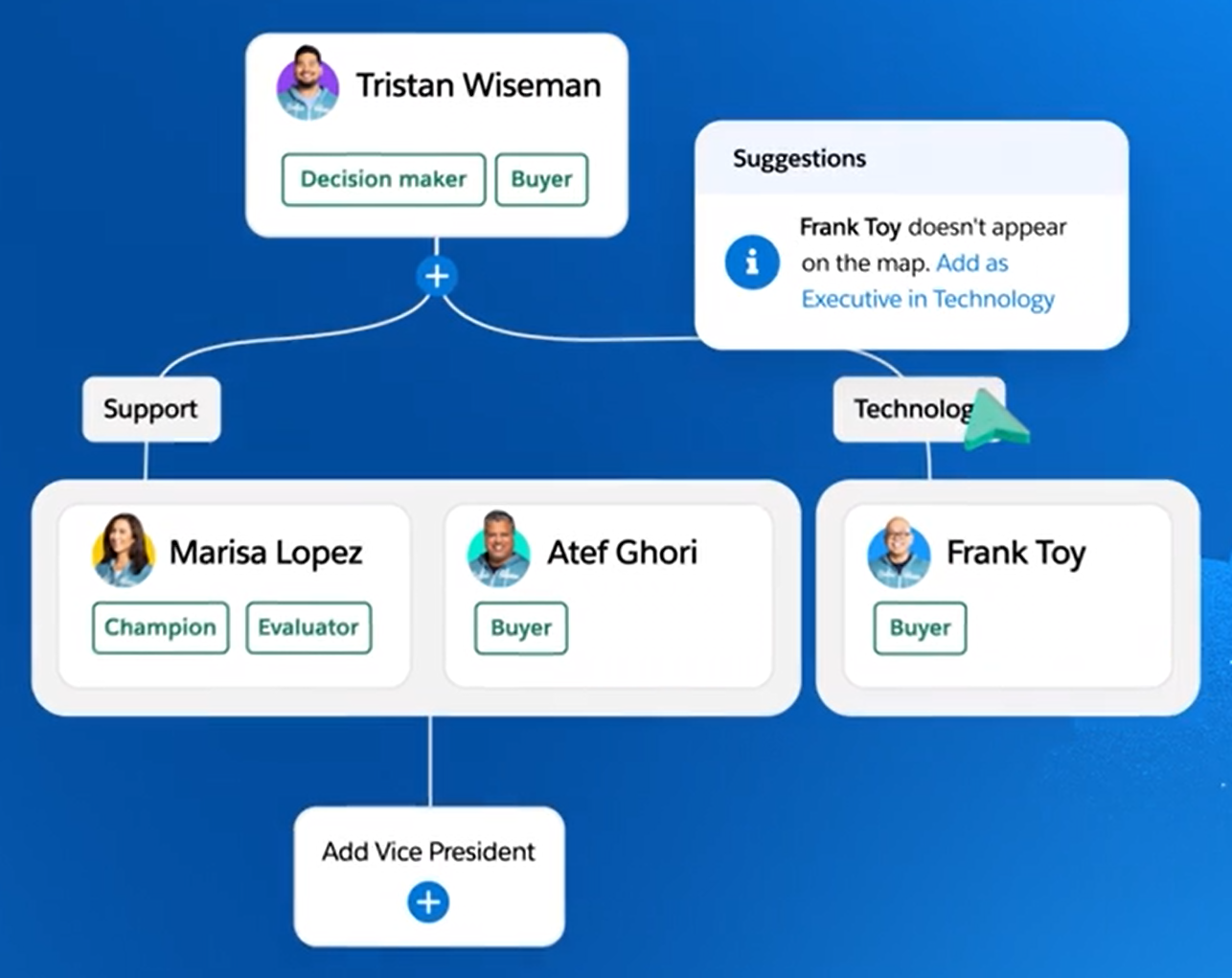
Source: Salesforce
Dynamics 365 has held it for 15 consecutive years. Both are leaders, but the depth of Salesforce's CRM functionality reflects a company that has done nothing but CRM for 27 years.
Salesforce Sales Cloud covers every stage of the revenue cycle: lead scoring, pipeline management, forecasting, conversation intelligence, CPQ, contract lifecycle, and commission management. Its Service Cloud handles case management, omnichannel routing, knowledge bases, and field service.
Marketing Cloud covers B2C engagement, B2B account engagement, personalization, and loyalty programs. Commerce Cloud powers B2C and B2B storefronts. Each of these is a mature, standalone product with years of refinement.
Dynamics 365 Sales covers the same core CRM territory: leads, opportunities, accounts, pipeline, and forecasting.
Source: Dynamics 365
Customer Service handles case management and omnichannel routing. Customer Insights combines a CDP with journey orchestration. The individual modules are strong, as the Gartner and Forrester recognitions confirm, with Dynamics 365 earning a Leader position in the Forrester Wave for CRM, Q1 2025.
The difference is one of focus. Salesforce has invested its entire R&D budget into the front office for over two decades. Dynamics 365 splits investment across CRM and ERP. For organizations that need CRM and nothing else, Salesforce's depth advantage is real. For organizations that also need finance, supply chain, or HR, the calculus changes.
Dynamics 365's ERP advantage is something Salesforce can't match
This is where the comparison tilts. Dynamics 365 is the only major platform that offers CRM and ERP under one vendor, one data model, and one AI layer.
Dynamics 365 Finance handles general ledger, accounts payable and receivable, cash flow forecasting, and multi-entity financial consolidation across 57 countries and 67 languages.
Supply Chain Management covers demand planning, procurement, manufacturing, warehousing, and transportation. Business Central serves SMBs needing finance, sales, service, and operations in a single system, and was named the best overall ERP system of 2025 by Forbes Advisor.
Source: Dynamics 365
All of it sits on Microsoft Dataverse, meaning a sales rep's pipeline data and the CFO's financial close data share the same foundation.
Salesforce doesn't play in this space.
It's a front-office platform. If you need ERP, you're integrating Salesforce with SAP, Oracle, NetSuite, or another vendor, adding cost, complexity, and data synchronization challenges.
For manufacturers, distributors, retailers, and project-based businesses that need their CRM to talk natively to their financial and operational systems, Dynamics 365's integrated architecture is a structural advantage.
The AI agent race: different engines, similar ambitions
Both platforms have bet heavily on autonomous AI agents, and both are credible.
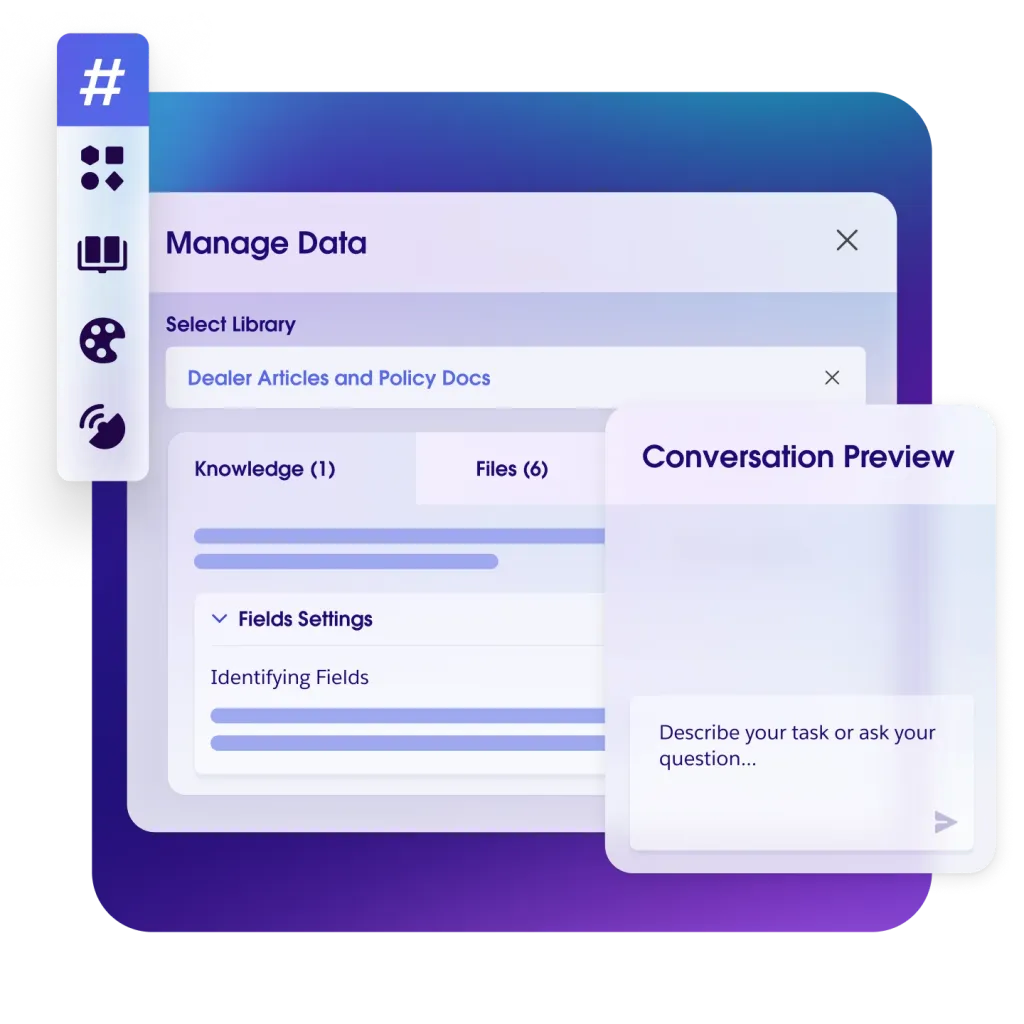
Salesforce's Agentforce runs on the proprietary Atlas Reasoning Engine, which uses a Reasoning and Acting (ReAct) loop: reason, act, observe, adapt.
Source: Salesforce
Pre-built agents cover sales development, service, commerce, IT service, and more. Salesforce reports that its own support site resolves 85% of requests without human escalation using Agentforce.
The Einstein Trust Layer provides zero data retention with LLM partners, PII masking, and audit trails, addressing enterprise governance concerns.
Microsoft's approach embeds Copilot and purpose-built agents directly into Dynamics 365 workflows.
The Sales Qualification Agent autonomously researches leads, generates outreach, handles follow-ups, and evaluates buying criteria before handing qualified prospects to sellers.
The Account Reconciliation Agent matches and clears financial transactions autonomously. The Scheduling Operations Agent optimizes field service dispatch in real time. Microsoft's advantage is that these agents sit on the same Azure OpenAI Service infrastructure that powers the rest of the Microsoft cloud, with Copilot accessible inside Teams, Outlook, and Excel.
The strategic difference: Salesforce's AI is deeper in CRM workflows, with more pre-built agent types and faster iteration (Agentforce went through five major releases in FY26 alone). Microsoft's AI is broader in reach, extending across ERP, collaboration, and productivity tools in ways Salesforce can't because Salesforce doesn't own those surfaces.
But both platforms share a limitation: their AI agents reason over whatever data lives in the CRM. If contact records are incomplete, company intelligence is stale, or buying signals are missing, the agents inherit those blind spots.
Your CRM's AI is only as good as the data behind it
This is where ZoomInfo changes the equation for teams using either platform.
A CRM records deal stages, activity logs, and customer interactions. But it doesn't tell you that the VP of Finance who joined your last call was hired three months ago from a company that already uses your product.
It doesn't know that your target account just posted four new VP roles and started researching your competitor's pricing page. It doesn't verify whether the email you're about to send will actually land or bounce.
ZoomInfo's GTM Context Graph fills those gaps. This intelligence layer fuses ZoomInfo's B2B data; 500M contacts, 100M companies, 135M+ verified phone numbers, and 200M+ verified business emails; with your CRM records, conversation transcripts, and behavioral signals. The result: AI that understands not just what happened in a deal, but why it happened, and what's likely to happen next.
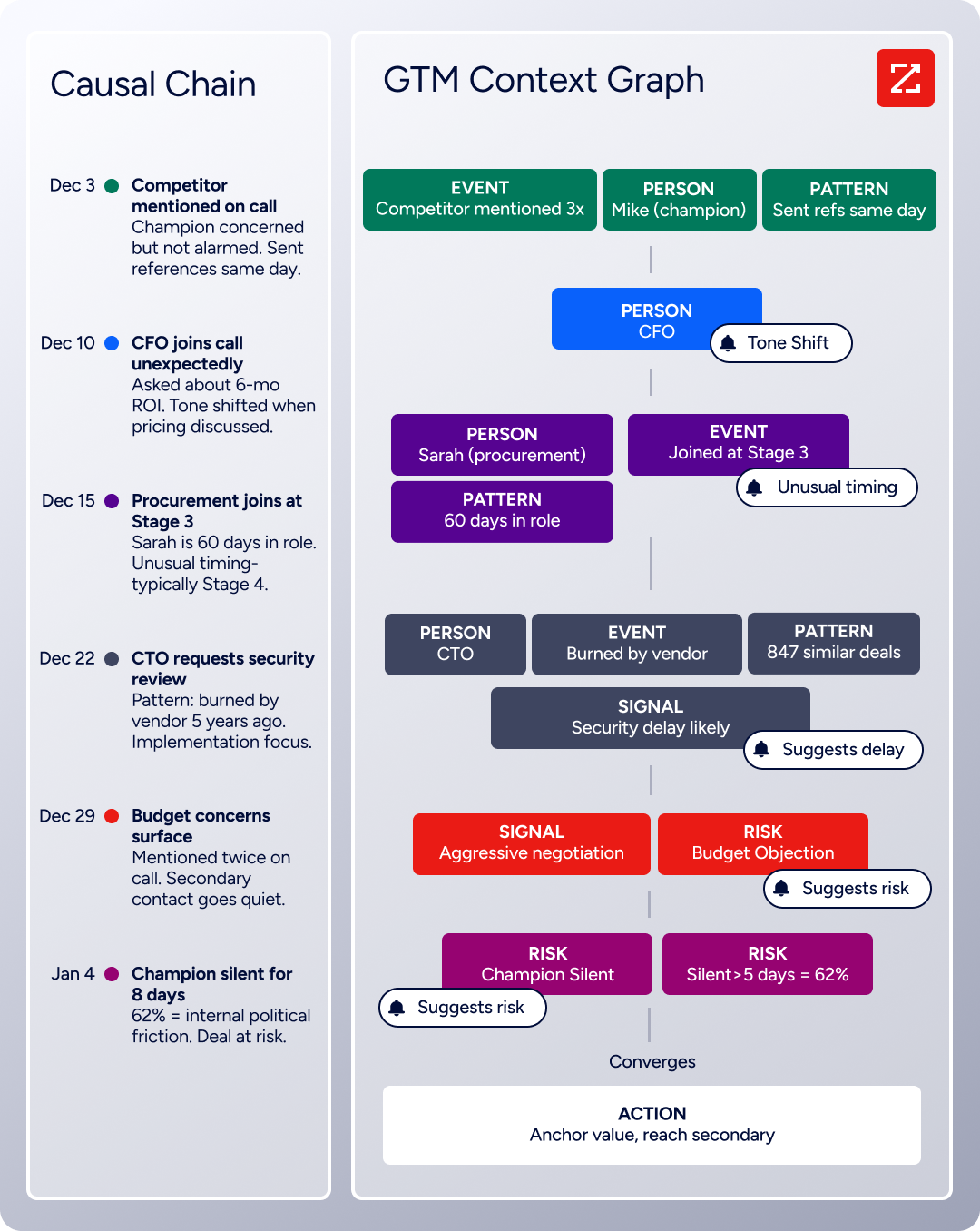
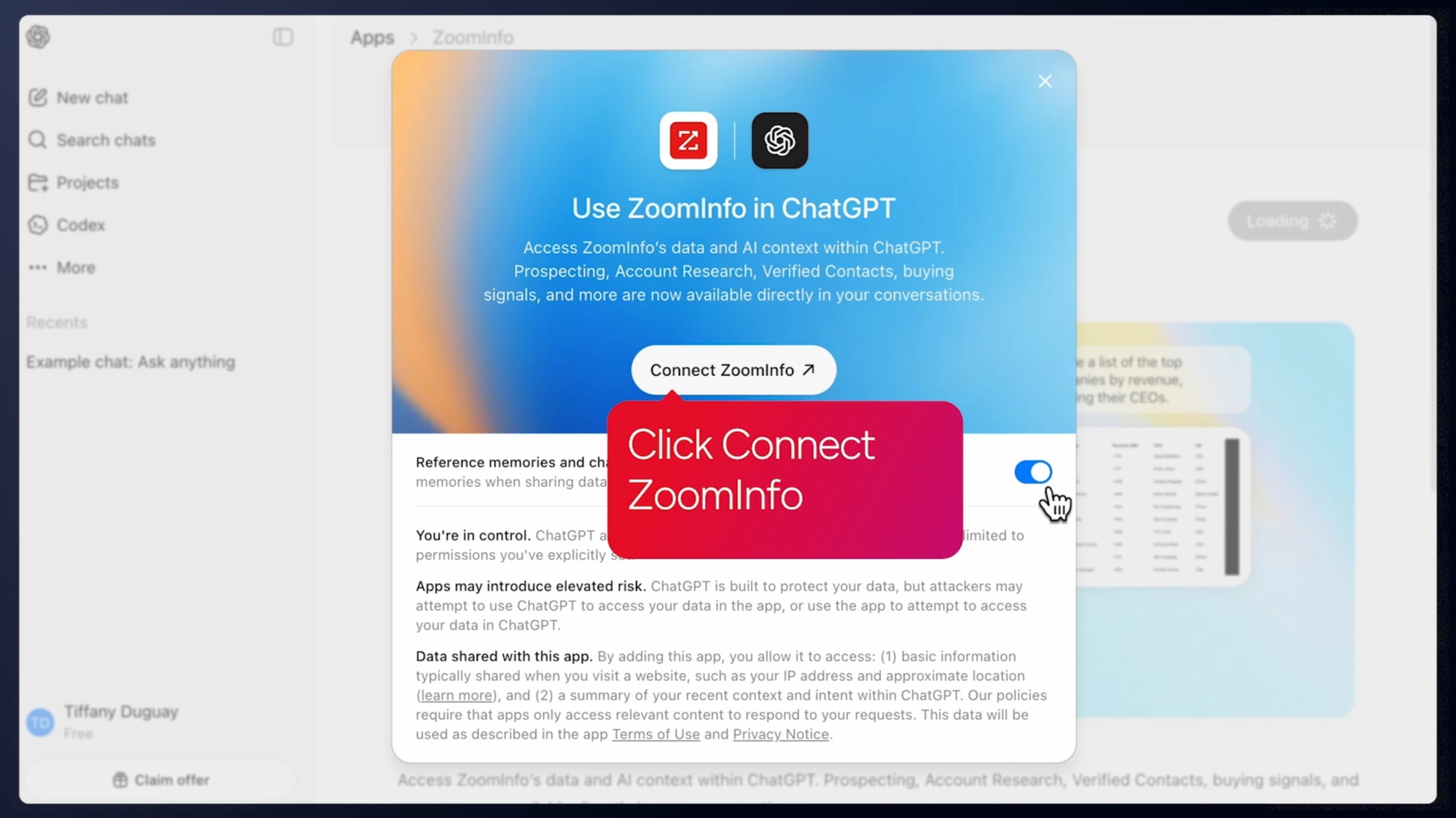
For Dynamics 365 users, ZoomInfo integrates directly via Dynamics 365 connector, enriching accounts and contacts with verified data. For Salesforce users, the native Salesforce integration does the same. And for teams building custom AI agents on either platform, ZoomInfo's MCP server and Enterprise API expose the same intelligence to any tool or model.
For a closer look at how Salesforce and ZoomInfo compare and complement each other, see our Salesforce vs. ZoomInfo breakdown.
The data advantage isn't just theoretical. In a Fortune 500 competitive RFP analyzing 25 million contacts across vendors, the independent consultant concluded that "no other competitor came even close."
Seismic's sales team attributed 39% of active pipeline to opportunities identified or influenced by ZoomInfo signals, boosted productivity by 54%, and saved 11.5 hours per week per seller. (Seismic Case Study)
The Microsoft ecosystem advantage is real (if you're in it)
Dynamics 365's strongest card isn't any single feature. It's the density of Microsoft-to-Microsoft integration.
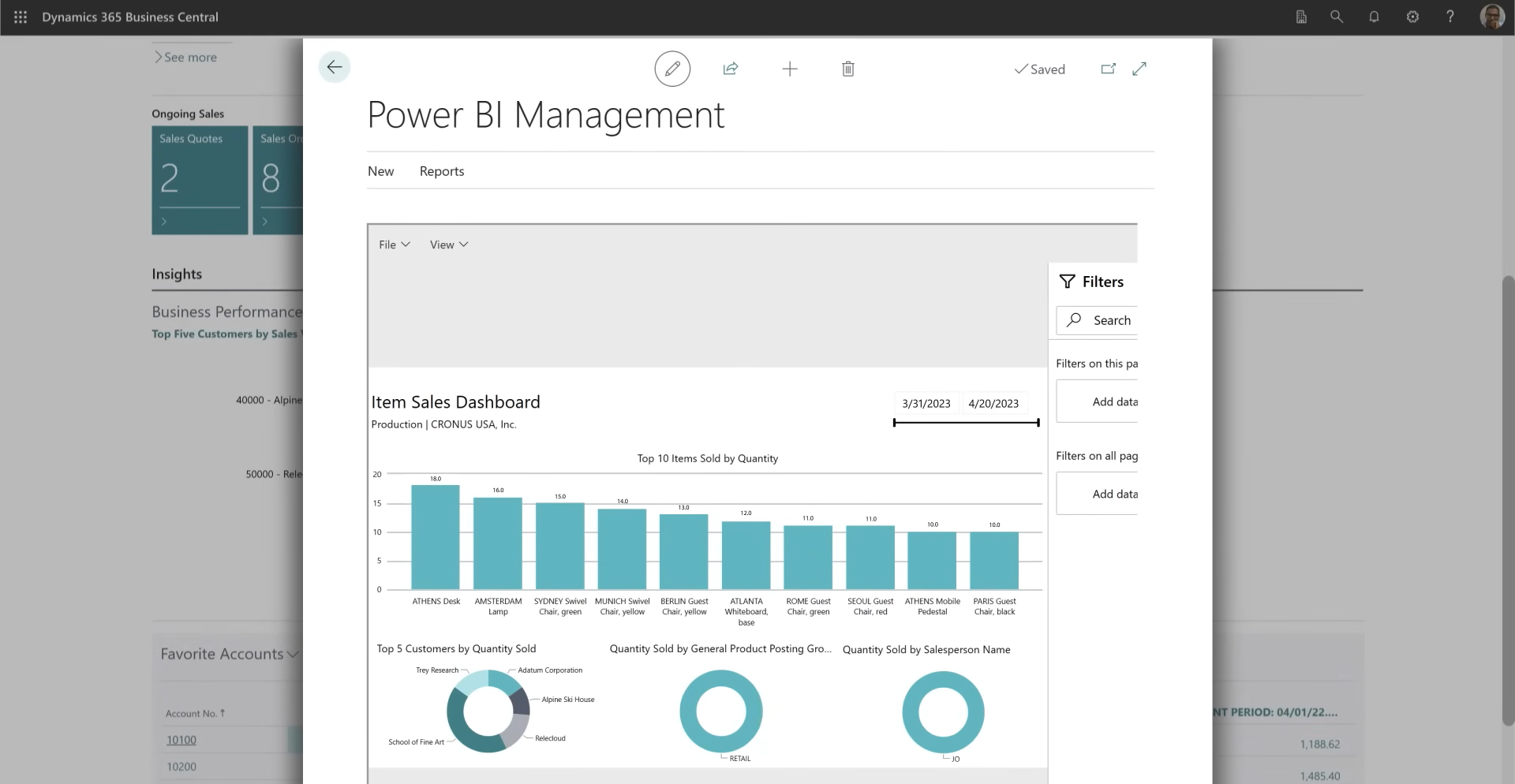
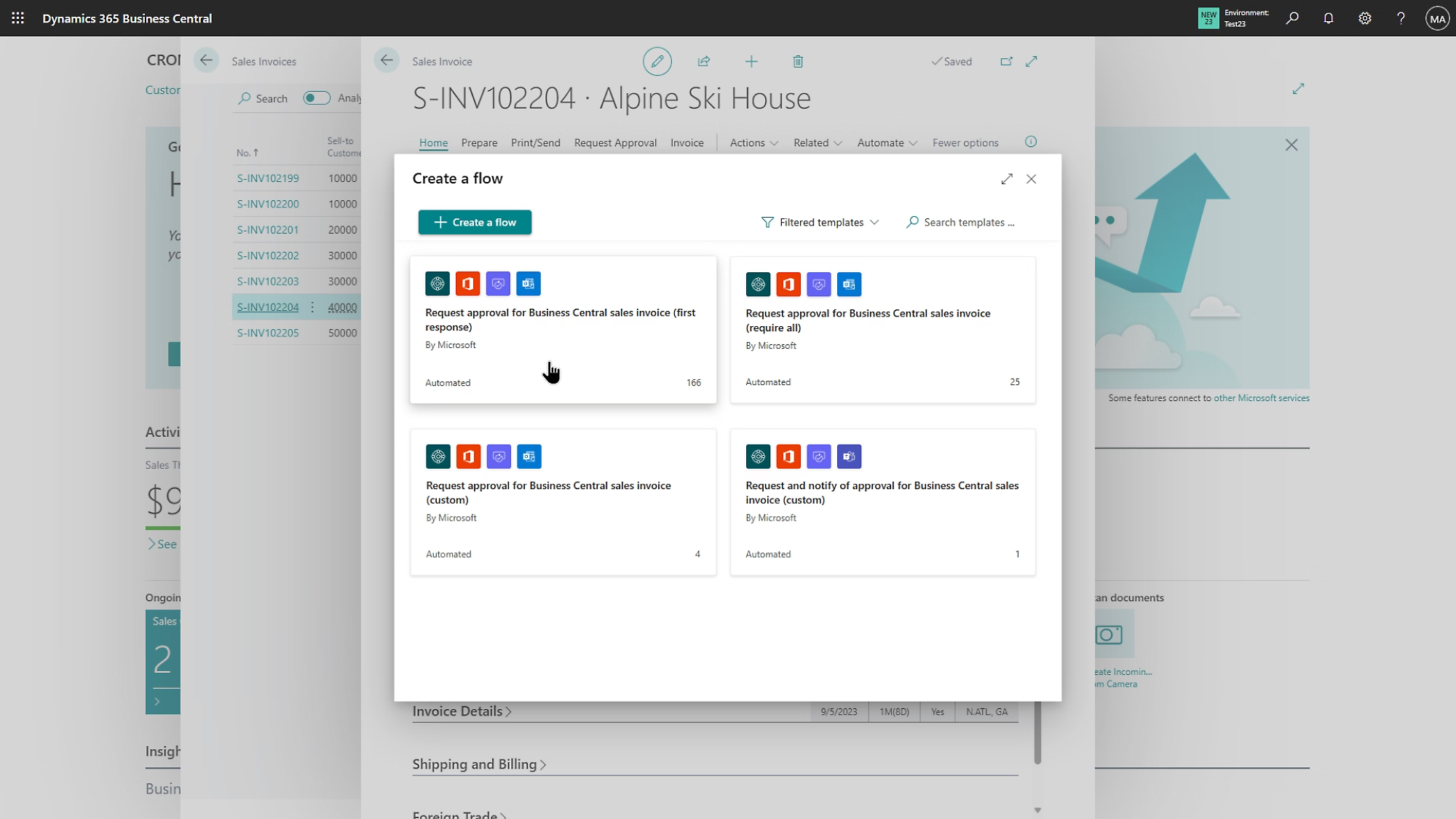
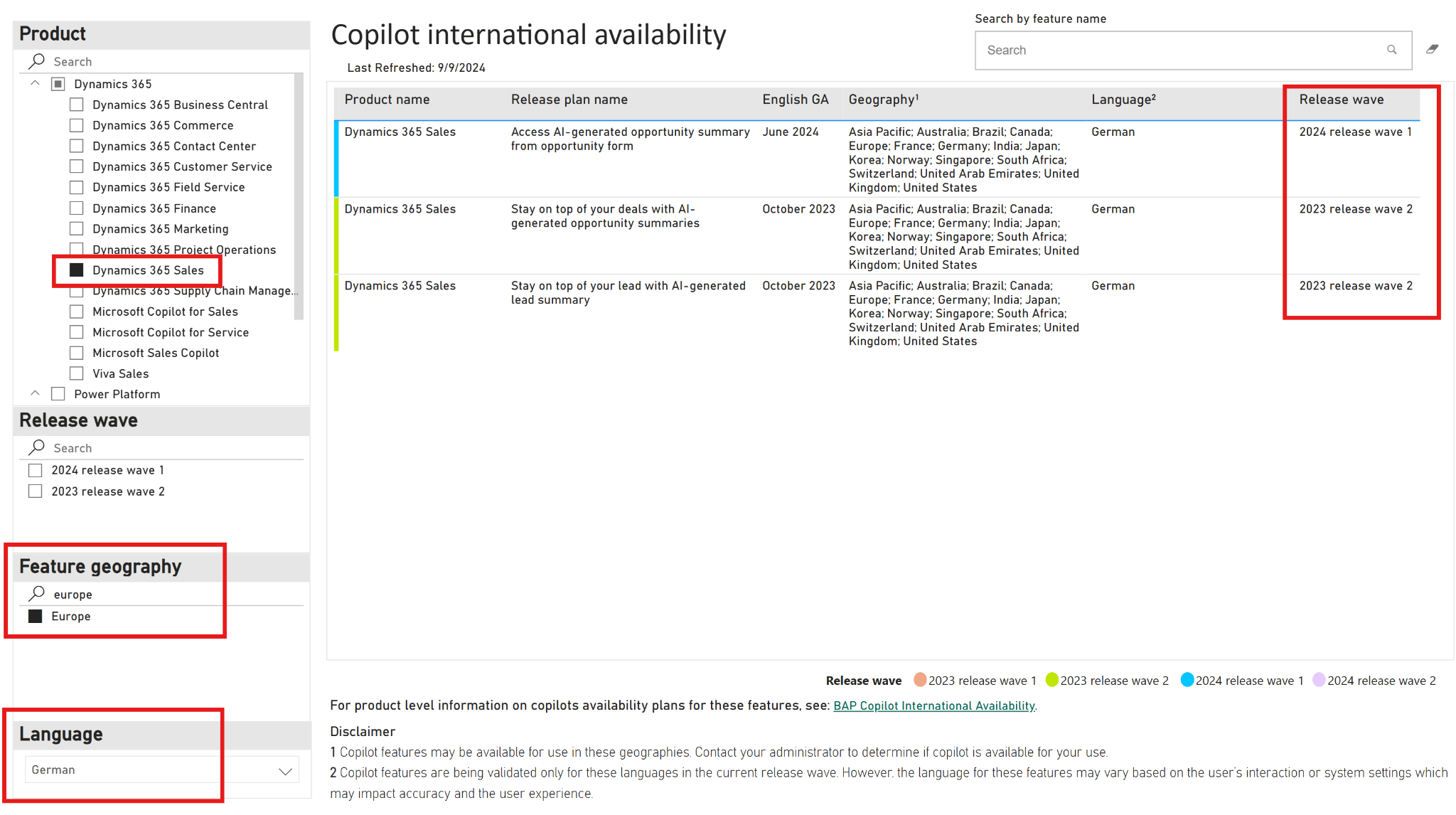
Sales reps surface CRM data inside Teams meetings and chats. Copilot drafts emails from Outlook using CRM context. Power BI dashboards pull from Dataverse without ETL pipelines. Power Automate triggers workflows across CRM and ERP.
Source: Dynamics 365
The Finance Agent surfaces financial insights directly inside Teams. No other vendor can replicate this level of native connectivity across productivity, collaboration, and business applications, because no other vendor owns all those surfaces.
For organizations running Microsoft 365, Azure, and Teams, adopting Dynamics 365 feels like extending an existing investment. For organizations on Google Workspace or AWS, it feels like buying into a stack you don't use.
Salesforce counters with Slack, MuleSoft for integration, and Tableau for analytics.
These are strong products individually. But they were acquired and integrated, not built on one codebase. The seams occasionally show in ways they don't with Microsoft's native stack.
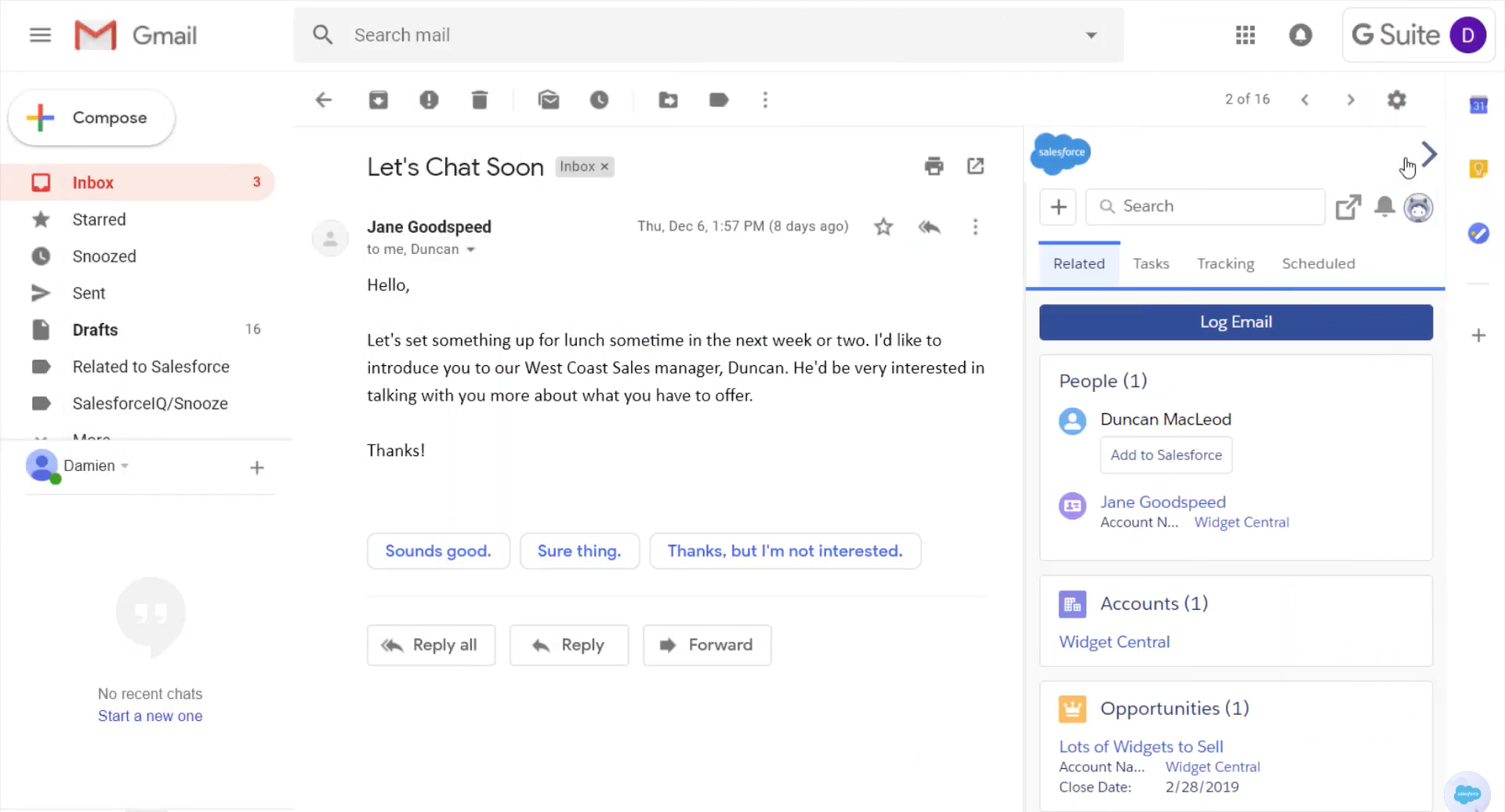
Salesforce does integrate well with both Microsoft and Google ecosystems through its Gmail and Outlook connectors, making it the more platform-agnostic choice for organizations that don't want to commit to a single vendor's infrastructure.
Source: Salesforce
Pricing comparison: prepare for complexity on both sides
Neither platform makes pricing simple, but the structures differ.
Dynamics 365 uses per-seat, per-month pricing billed annually for each module.
Sales Professional starts at $65/user/month, Sales Enterprise at $105/user/month, and Sales Premium at $150/user/month. ERP modules are higher: Finance at $210/user/month, Supply Chain Management at $210/user/month. Business Central (SMB ERP) starts at $80/user/month. AI agent usage requires separate Copilot Credits, and an Azure subscription is mandatory for running any agents.
Salesforce Sales Cloud starts lower at $25/user/month (Starter Suite) but scales steeply: Pro Suite at $100, Enterprise at $175, Unlimited at $350, and Agentforce 1 at $550/user/month.
Agentforce usage is separately metered at $2 per conversation or $0.10 per action via Flex Credits. Data Cloud credits, premier support (30% of net license fees), and add-ons like Digital Engagement ($75/user/month) and Field Service (from $175/user/month) push real-world costs well above list prices.
The hidden cost on both sides is implementation. Dynamics 365 enterprise ERP deployments commonly cost several multiples of annual license fees, and over 70% of Salesforce deployments are partner-led, adding professional services costs that can rival the license spend itself.
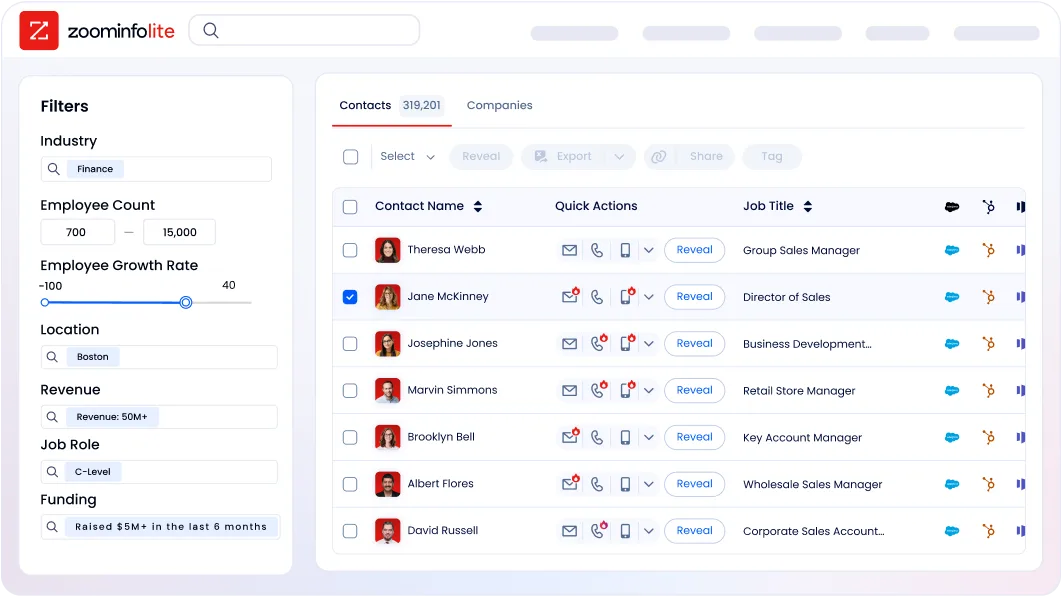
ZoomInfo uses consumption-based pricing.
There are no published dollar amounts for paid tiers, but the platform offers ZoomInfo Lite as a permanent free tier with access to the B2B database, 10 monthly export credits, and basic search. Paid plans scale by seats, credit volume, and features. A 7-day free trial provides full platform access.
Implementation reality check
Time-to-value differs sharply.
Salesforce can be deployed quickly for simple use cases.
A small team running Sales Cloud can be live in weeks. But enterprise multi-cloud deployments (Sales + Service + Marketing + Data Cloud + Agentforce) take 3–12 months and require dedicated Salesforce administrators and, typically, a consulting partner.

Source: Salesforce
Dynamics 365 CRM modules (Sales, Customer Service) have comparable deployment timelines to Salesforce.
But adding ERP modules changes the picture entirely. Enterprise Finance and Supply Chain Management implementations are major projects, with timelines of 6–12 months and budgets that routinely exceed initial estimates.
ZoomInfo deploys in weeks, not months.
Because it integrates with your existing CRM rather than replacing it, there's no data migration or process redesign involved. Connect the integration, configure enrichment rules, and your team starts working with better data immediately.
BDO Canada's Senior Marketing Intelligence Analyst Jerry Wilson reported an 87% reduction in time spent on data dashboard updates after implementing ZoomInfo's API: "The plug-and-play aspect of the API means I can integrate it very easily into any process and get information at a moment's notice." (BDO Canada Case Study)
AppExchange vs. AppSource vs. ZoomInfo's open access
Salesforce's AppExchange is the largest enterprise cloud marketplace: 9,000+ apps, 14+ million installs, and 91% customer adoption.
If you need a niche integration, it probably exists on AppExchange. The AgentExchange for Agentforce components launched with 200+ partners, including Google Cloud, Docusign, and Workday.
Microsoft's commercial marketplace hosts thousands of ISV solutions for Dynamics 365, covering industry verticals and functional add-ons.
While smaller than AppExchange, the broader Microsoft partner ecosystem (including Power Platform) provides extensive extensibility. Power Apps and Power Automate let organizations build custom functionality without leaving the Microsoft environment.
ZoomInfo takes a different approach to extensibility.
Rather than building a marketplace of apps on its platform, it makes its intelligence available everywhere. The ZoomInfo App Marketplace lists 120+ partner integrations, but the real extensibility story is the Enterprise API and MCP server, which let any tool, any AI agent, and any custom application consume ZoomInfo's data and GTM Context Graph. API access is included in all relevant plans.
Source: ZoomInfo
Who should choose what
The right choice depends on what problem you're actually solving.
Choose Dynamics 365 if:
You're already running Microsoft 365, Teams, and Azure
You need CRM and ERP under one vendor (finance, supply chain, manufacturing, HR)
Native integration with Outlook, Teams, Excel, and Power BI is a priority
Your organization can invest in a partner-led implementation
You're an SMB looking for an all-in-one ERP (Business Central)
Choose Salesforce if:
CRM depth and front-office excellence are your top priorities
You want the largest app ecosystem and partner community
AI agent maturity (Agentforce) is important to your near-term plans
You need purpose-built industry clouds for your vertical
Platform-agnostic infrastructure matters (works with Microsoft, Google, and AWS)
Use ZoomInfo with either CRM if:
Your sales team wastes time searching for contact data, direct dials, and company intelligence
You want AI that understands why deals move, not just what stage they're in
Your CRM data is incomplete, stale, or unverified
You need buyer intent signals, technographics, and org chart data flowing into your pipeline
You're building AI agents that need high-quality B2B data as a foundation
See how ZoomInfo powers your CRM with a free trial.
The reality is that Dynamics 365 and Salesforce are both strong CRM platforms, each with structural advantages the other can't easily replicate. Dynamics 365 wins on ERP breadth and Microsoft ecosystem depth. Salesforce wins on CRM depth, app ecosystem, and front-office AI maturity.
The choice between them often comes down to what you already use and whether you need back-office operations on the same platform.
But regardless of which CRM you choose, the data flowing through it determines whether your AI agents reason intelligently or hallucinate confidently. ZoomInfo ensures that foundation is accurate, comprehensive, and continuously verified, turning your CRM from a system of record into a system of intelligence.
Final Verdict
Dynamics 365 and Salesforce each serve different organizational profiles well. If your company lives in Microsoft and needs both front-office CRM and back-office ERP on one platform, Dynamics 365 is the logical choice. If your priority is the deepest possible CRM with the largest ecosystem and most mature AI agent platform, Salesforce is hard to beat.
ZoomInfo is the layer that makes either platform perform at its full potential.
With the most comprehensive B2B data in the industry and a GTM Context Graph that reasons across your entire go-to-market operation, ZoomInfo ensures your CRM's AI agents, workflows, and automations are built on a foundation of verified, complete, and continuously updated intelligence, not stale records and missing contacts.
Dynamics 365 vs. Salesforce vs. ZoomInfo FAQ
What is the main difference between Dynamics 365 and Salesforce?
Dynamics 365 is a combined CRM and ERP platform, covering sales, service, marketing, finance, supply chain, HR, and commerce under one vendor and one data model (Microsoft Dataverse). Salesforce is a CRM-focused platform with front-office capabilities in sales, service, marketing, and commerce, but does not offer ERP functionality.
Dynamics 365 excels for organizations needing both CRM and back-office operations; Salesforce excels for organizations prioritizing CRM depth and app ecosystem breadth.
Which platform has better AI capabilities?
Both are investing heavily in AI agents. Salesforce's Agentforce has reached $800M in ARR with pre-built agents across sales, service, commerce, and IT, powered by the proprietary Atlas Reasoning Engine.
Microsoft's Dynamics 365 embeds Copilot and purpose-built agents (Sales Qualification, Account Reconciliation, Scheduling Operations) that extend across CRM, ERP, and the broader Microsoft 365 ecosystem.
Salesforce leads on CRM-specific AI depth and iteration speed; Microsoft leads on breadth across business applications and productivity tools.
How does ZoomInfo work with Dynamics 365 and Salesforce?
ZoomInfo integrates natively with both platforms. For Dynamics 365, ZoomInfo enriches accounts and contacts with verified data through a direct connector. For Salesforce, ZoomInfo's native integration does the same.
ZoomInfo also offers APIs and an MCP server that pipe its intelligence into any AI agent or custom workflow built on either CRM, ensuring that the B2B data powering your CRM is accurate and complete.
Which is cheaper: Dynamics 365 or Salesforce?
Both have complex pricing. Dynamics 365 Sales starts at $65/user/month; Salesforce Starter Suite starts at $25/user/month. However, comparable enterprise tiers are similar: Dynamics 365 Sales Enterprise is $105/user/month versus Salesforce Enterprise at $175/user/month. Both charge separately for AI usage (Copilot Credits for Microsoft, Flex Credits for Salesforce).
The larger cost difference lies in implementation: Dynamics 365 ERP deployments commonly cost $250K to $2M, while Salesforce implementations vary widely depending on the number of clouds deployed.
Do I need ZoomInfo if I already have Salesforce or Dynamics 365?
Salesforce and Dynamics 365 are systems of record that manage your customer data.
ZoomInfo provides the data itself: verified contacts, direct dials, business emails, company intelligence, buyer intent signals, technographics, and org charts. Neither CRM generates this data natively. Without a data provider like ZoomInfo, CRM records decay over time (industry estimates suggest lists degrade roughly 22–25% annually), and AI agents built on that CRM inherit every gap and inaccuracy.
Which platform is better for small businesses?
Dynamics 365 Business Central ($80/user/month) is a strong option for SMBs needing CRM and ERP in one system, particularly those already using Microsoft 365.
Salesforce offers a free CRM tier and a Starter Suite at $25/user/month for SMBs that need CRM only. Business Central includes Copilot AI at no extra cost; Salesforce's free and Starter tiers are more limited in AI functionality. The choice depends on whether the business needs just CRM or a broader operational platform.
Which CRM is easier to implement?
For CRM-only deployments, both platforms can be implemented in weeks to months depending on complexity. Salesforce tends to have a shorter ramp for simple Sales Cloud setups, while Dynamics 365 Sales is comparable.
The gap widens when ERP is involved: Dynamics 365 Finance and Supply Chain implementations are major projects that routinely exceed initial budgets and timelines. Both platforms typically require certified implementation partners for enterprise deployments.
How does the app ecosystem compare?
Salesforce AppExchange has 9,000+ apps with 14 million+ installs and 91% customer adoption, making it the largest enterprise cloud marketplace.
Microsoft's commercial marketplace and Power Platform provide extensive extensibility for Dynamics 365, though the dedicated Dynamics 365 marketplace is smaller.
ZoomInfo takes a different approach with 120+ integrations and an open API/MCP architecture that lets any tool consume its intelligence, regardless of CRM choice.
