
If you're comparing Einstein Analytics (now called CRM Analytics) and Gong, you're really asking a harder question: your revenue team needs better intelligence, but you don't know where it should come from.
CRM Analytics mines the data already in your Salesforce org. Gong captures conversations between your reps and buyers. Both are valuable. But neither starts with the question that matters most: do you have accurate data about your buyers in the first place?
Before choosing, consider these questions:
Is your revenue challenge about analyzing existing CRM data, or about capturing what's happening in customer conversations?
Do you need intelligence that lives inside Salesforce, or intelligence that works across your entire GTM stack?
Are your reps struggling with CRM visibility, or with knowing who to contact, when to engage, and what to say?
How much of your buyer universe is represented in your CRM today?
Do you need a reporting layer, a coaching tool, or a complete intelligence foundation for your go-to-market motion?
In short, here's what we recommend:
CRM Analytics is Salesforce's native analytics platform, built to surface dashboards, AI predictions, and insights directly on Salesforce record pages. For organizations committed to the Salesforce ecosystem, it turns CRM data into pipeline reports, deal-risk scores via Einstein Discovery, and forecasting dashboards that reps can act on without leaving Salesforce.
But the platform is only as useful as the data inside your CRM, it starts at $140/user/month on top of existing Salesforce licenses, and it requires technical expertise to build custom dashboards and data models.
Gong approaches revenue intelligence from the opposite direction. Instead of reporting on CRM fields, it captures every customer interaction (calls, emails, meetings) and uses AI trained on 3B+ customer interactions to surface deal risks, coaching opportunities, and forecasting signals that CRM data misses.
The tradeoff: Gong's pricing is fully custom with no published rates, its enablement module only launched in February 2026, and it needs enough conversation volume to generate useful insights.
Both platforms deliver intelligence from data you already have. CRM Analytics analyzes your Salesforce records. Gong analyzes your customer conversations. But what if the real gap isn't analysis, it's the data itself?
ZoomInfo is an AI GTM platform that starts where CRM Analytics and Gong can't: with buyer data. Built on 500M contacts, 100M companies, 135M+ verified phone numbers, and 200M+ verified business email addresses, ZoomInfo's GTM Context Graph fuses this third-party data with your CRM records, conversation transcripts, and behavioral signals into a single intelligence layer that captures not just what happened in a deal, but why.
That intelligence reaches sellers through GTM Workspace, marketers and RevOps through GTM Studio, and any AI agent or custom tool through APIs and MCP.
If building your revenue intelligence on the largest B2B data foundation sounds like the right starting point, see how ZoomInfo works.
CRM Analytics vs. Gong vs. ZoomInfo at a glance
CRM Analytics | Gong | ZoomInfo | |
|---|---|---|---|
Core approach | Analytics on Salesforce CRM data | Conversation intelligence and revenue AI | B2B data + GTM intelligence |
Data source | Your Salesforce org | Recorded calls, emails, meetings | 500M contacts, 100M companies + your CRM + conversations + signals |
AI capabilities | Einstein Discovery predictions, prescriptive recommendations | 15+ specialized AI agents, deal scoring, coaching | GTM Context Graph, AI agents for prospecting, outreach, and deal execution |
Forecasting | CRM-data-based, within Salesforce | Conversation-signal-based, 300+ buying signals | Signal-based, combining third-party data + CRM + intent + conversations |
Requires Salesforce | Yes, mandatory | No, works with Salesforce, HubSpot, Dynamics | No, integrates with Salesforce, HubSpot, Dynamics, and 120+ tools |
Pricing | $140–$220/user/month (on top of Salesforce) | Custom quotes, no published pricing | Custom quotes, free tier (ZoomInfo Lite) available |
Free option | 30-day trial (Plus tier only) | No self-serve trial | ZoomInfo Lite (permanent, free) + 7-day trial |
Best for | Salesforce-native teams needing CRM reporting and predictions | Revenue teams needing conversation-based coaching and deal intelligence | GTM teams needing buyer data, intelligence, and execution |
These platforms solve three different problems
The confusion around CRM Analytics vs. Gong starts with a false assumption: that they compete directly. They don't. They address three distinct layers of revenue intelligence, and the gaps between those layers are where deals fall through.
CRM Analytics answers: "What does our Salesforce data tell us?"
It builds dashboards, runs predictions, and surfaces pipeline trends from the records your team has entered. The problem: only 1% of customer interactions make it into the CRM, according to Gong Labs research. CRM Analytics is analyzing a fraction of the picture.
Gong answers: "What are customers actually saying?"
It records every call, email, and meeting, then uses AI to detect deal risks, coaching moments, and competitive signals that CRM fields never capture. The problem: Gong can only analyze interactions that are already happening. It doesn't help you find buyers you haven't reached yet.
ZoomInfo answers: "Who should we be talking to, and why does it matter now?"
Its GTM Context Graph combines B2B data with your CRM records, conversation intelligence, and behavioral signals to build a complete picture of each deal. ZoomInfo's CPO Dominik Facher puts it plainly: "The CRM recorded the state change. It has no record of why it happened." The GTM Context Graph captures that "why."
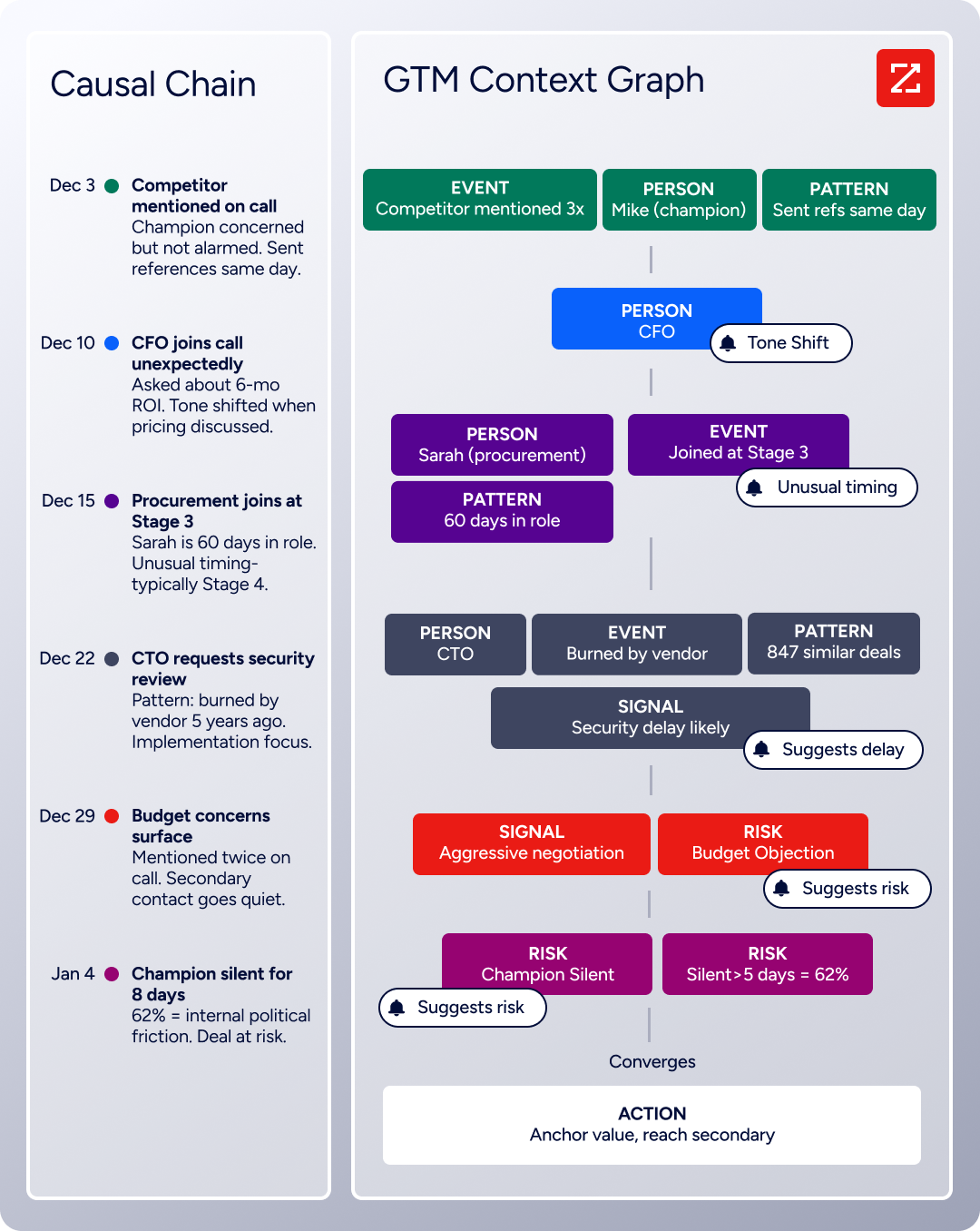
The practical difference: CRM Analytics tells you a deal moved from Stage 3 to Stage 4. Gong tells you the CFO joined the last call and asked about ROI. ZoomInfo connects both signals to third-party intelligence showing the company just hired three VPs and is researching your competitor, then surfaces the buying committee members your rep hasn't contacted yet.
For a direct look at how Gong and ZoomInfo position against each other, see our Gong vs. ZoomInfo comparison.
CRM Analytics is strong inside Salesforce, limited outside it
CRM Analytics delivers real value for organizations that have committed to Salesforce as their system of record.
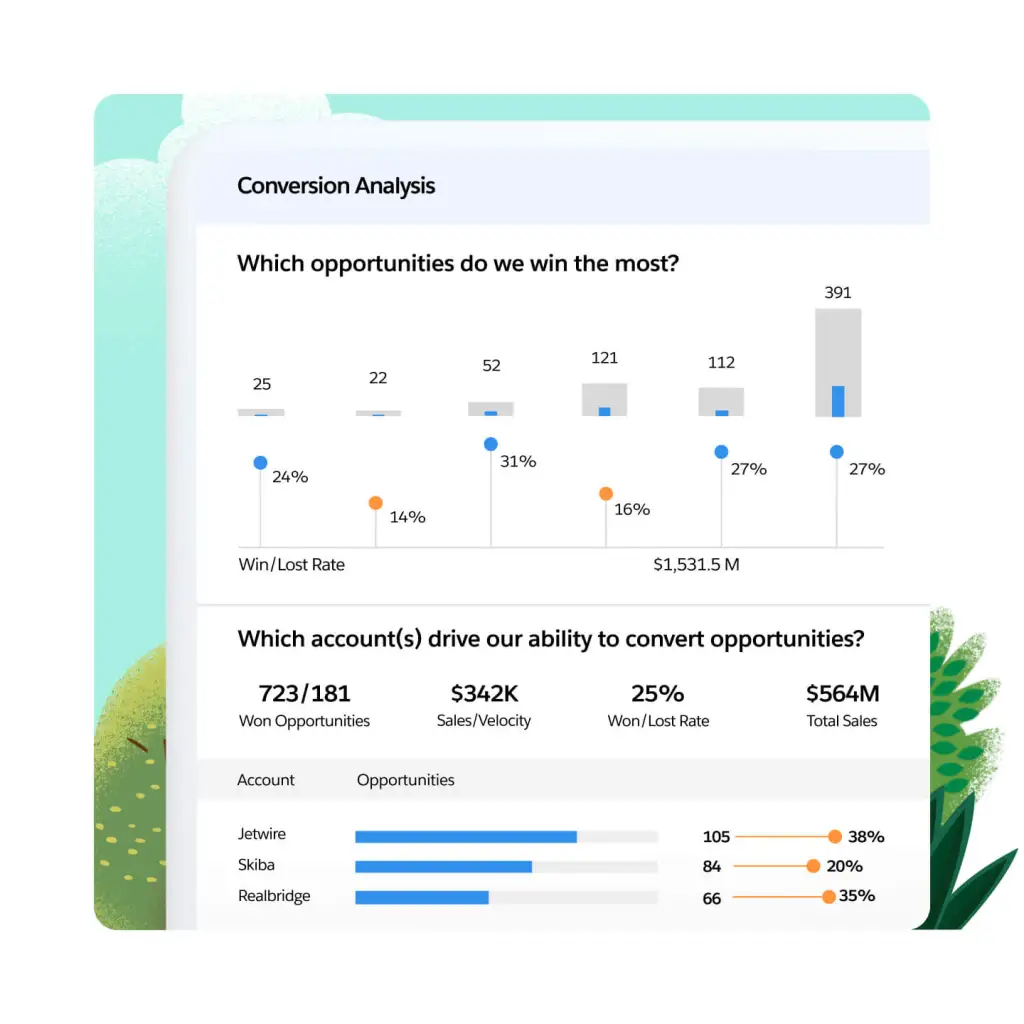
Dashboards and AI predictions embed directly on record pages, so a sales manager can see pipeline health, deal-risk scores, and quota progress without opening a separate tool. The native actions menu lets users schedule meetings, launch campaigns, and update records directly from a chart.
The pre-built apps speed up deployment. Sales Analytics ships with ready-made dashboards for pipeline health, team productivity, and quota progress. Revenue Intelligence adds a Commit Calculator for what-if forecasting and AI-powered account management that flags expansion potential. Setup uses a guided wizard, not a months-long implementation.
Source: CRM Analytics
Einstein Discovery goes further, moving from "what happened" to "what should I do." It surfaces win/loss predictions with specific recommendations for increasing deal probability, such as adjusting deal size or reassigning to a senior rep. This prescriptive layer, built into the CRM workflow, is something standalone BI tools cannot replicate.
But the limitations are structural. CRM Analytics operates inside the CRM, so its insights are only as complete as your Salesforce data. Native connectors for non-Salesforce data sources are limited, adding complexity when pulling from external systems.
Large datasets and complex queries cause lag. And at $140–$220/user/month on top of existing Salesforce licenses, organizations commonly restrict access to managers and analysts rather than front-line reps, which undermines the "insights in the flow of work" promise.
Gong captures what CRM data misses
Gong's core insight is that the most important revenue signals happen in conversations, not in CRM fields.
The Gong Revenue Graph captures every customer interaction and maps it to the right accounts, contacts, and deals. No manual logging required.
This conversation-first approach produces intelligence that CRM-based analytics can't match. Gong's AI, trained on 3B+ customer interactions, detects patterns invisible to human reviewers: budget constraints mentioned in passing, competitive threats signaled by specific language, and champion engagement dropping before it shows up in deal stage changes.
Gong Labs found that deals with certain email red flags take 31% longer to close, and that 15% of analyzed deals contain these flags.
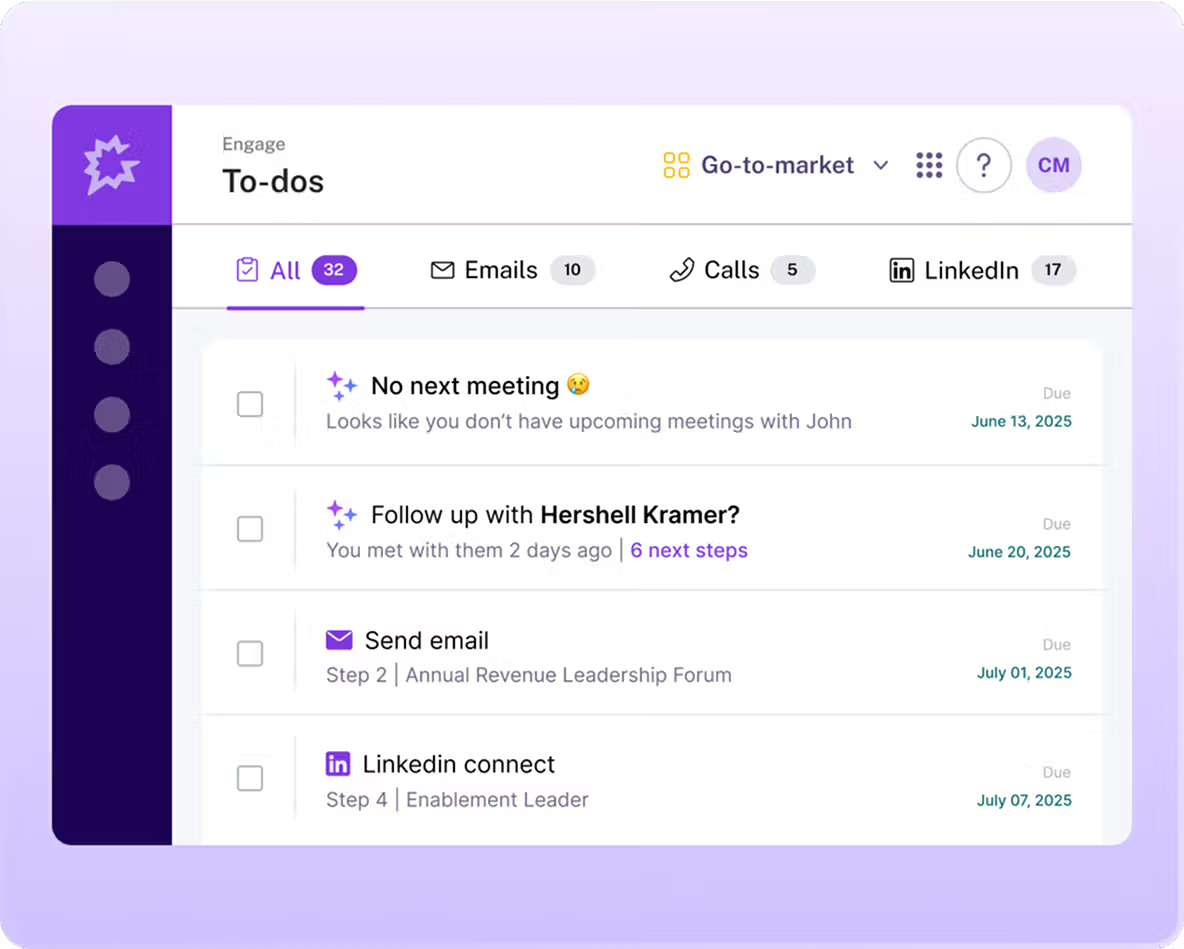
The platform now spans six products: Gong Engage for outreach, Gong Forecast for revenue prediction, Gong Enable for coaching, plus 15+ specialized AI agents included with every license.
Source: Gong
Gong's limitations mirror CRM Analytics' from the opposite direction. Gong analyzes interactions that are already happening, but it doesn't help you identify buyers you should be targeting. Its prospecting capabilities rely on partner integrations with contact data providers like LeadIQ, Cognism, and Apollo rather than a native data layer.
And while Gong Enable launched in February 2026, it enters a mature enablement market without years of customer proof. Gong Assistant, the conversational AI for natural-language queries, is also not yet generally available.
ZoomInfo starts with the data both platforms depend on
CRM Analytics analyzes Salesforce records. Gong analyzes customer conversations. Both assume the underlying data is complete. ZoomInfo questions that assumption.
Forbes estimates 91% of CRM data is incomplete. If your CRM is missing half the contacts in a buying committee, CRM Analytics will produce confident-looking dashboards built on an incomplete foundation. If your reps aren't talking to the right stakeholders, Gong will analyze the wrong signals.
The data gap isn't a nuisance; it's a structural limit on what any analytics or conversation intelligence platform can deliver.
ZoomInfo addresses this gap at the foundation.
Its B2B data platform covers 500M contacts, 100M companies, 135M+ verified phone numbers, and 200M+ verified business email addresses, verified through a multi-source pipeline backed by 300+ human researchers and reaching up to 95% accuracy on first-party data.
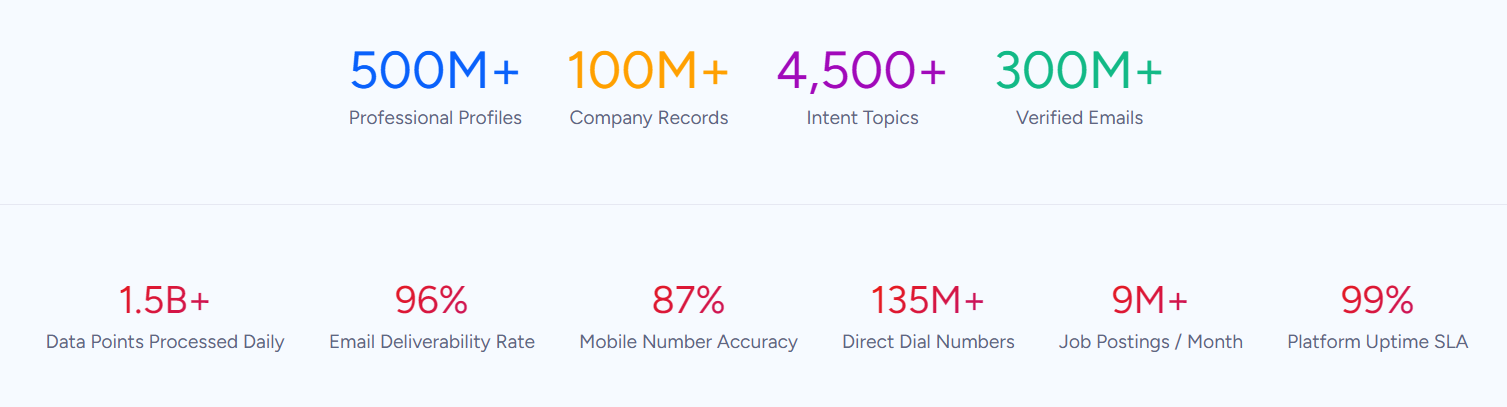
In a Fortune 500 competitive RFP analyzing 25 million contacts across vendors, an independent consultant concluded that "no other competitor came even close."
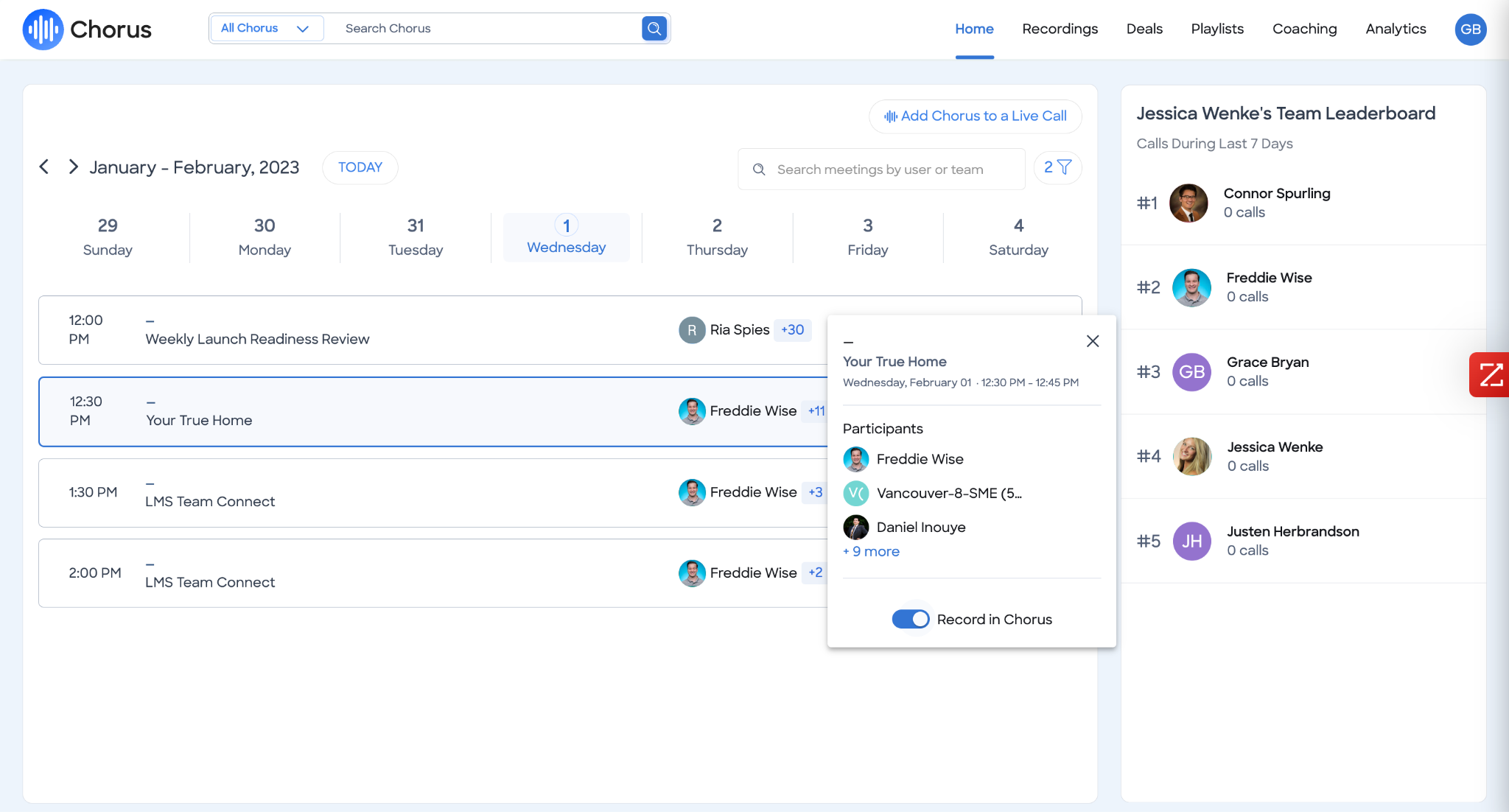
But data alone isn't what separates ZoomInfo. The GTM Context Graph unifies this third-party data with a customer's CRM records, conversation intelligence (via Chorus), email interactions, and behavioral signals into a single intelligence layer. It processes 1.5B+ data points daily and extracts the connections between signals and outcomes.
Source: ZoomInfo
Where CRM Analytics shows that a deal moved stages and Gong captures what the CFO said on the last call, the GTM Context Graph reasons across both to explain why the deal moved and which accounts in your pipeline show the same pattern.
Seismic's sales team attributed 39% of active pipeline to opportunities identified or influenced by ZoomInfo signals, boosted productivity by 54%, and saved 11.5 hours per week per seller. (Seismic Case Study)
Forecasting comparison: CRM fields vs. conversation signals vs. full-spectrum intelligence
Forecasting is where the data-source differences hit hardest.
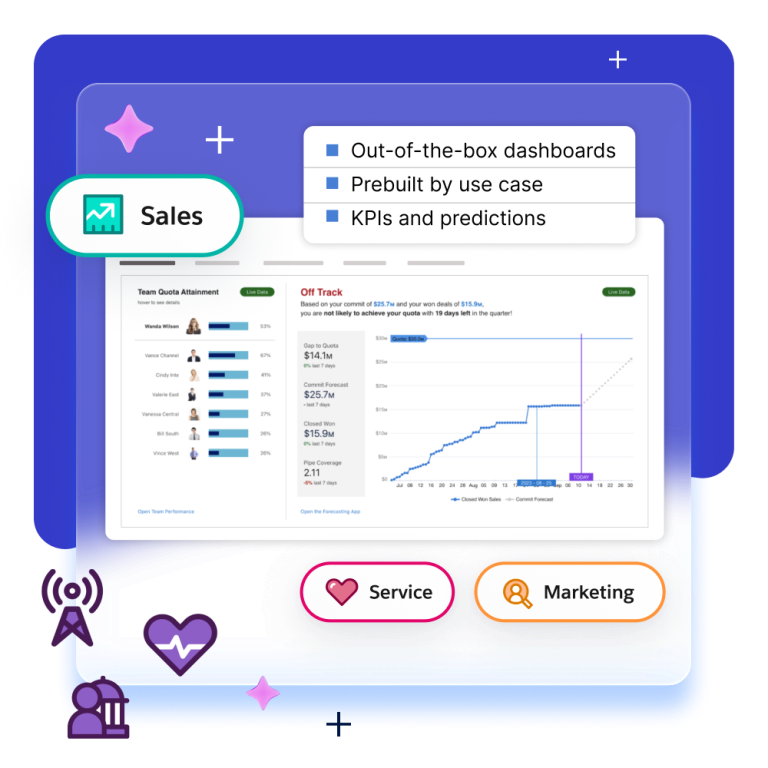
CRM Analytics builds forecasts from Salesforce pipeline data.
Revenue Intelligence provides real-time rollups by category, a Commit Calculator for what-if scenarios, and Einstein Discovery predictions that score deal likelihood based on CRM field patterns. For organizations with disciplined CRM hygiene, this delivers solid visibility. For everyone else, the forecasts inherit every data quality problem in the org.
Source: CRM Analytics
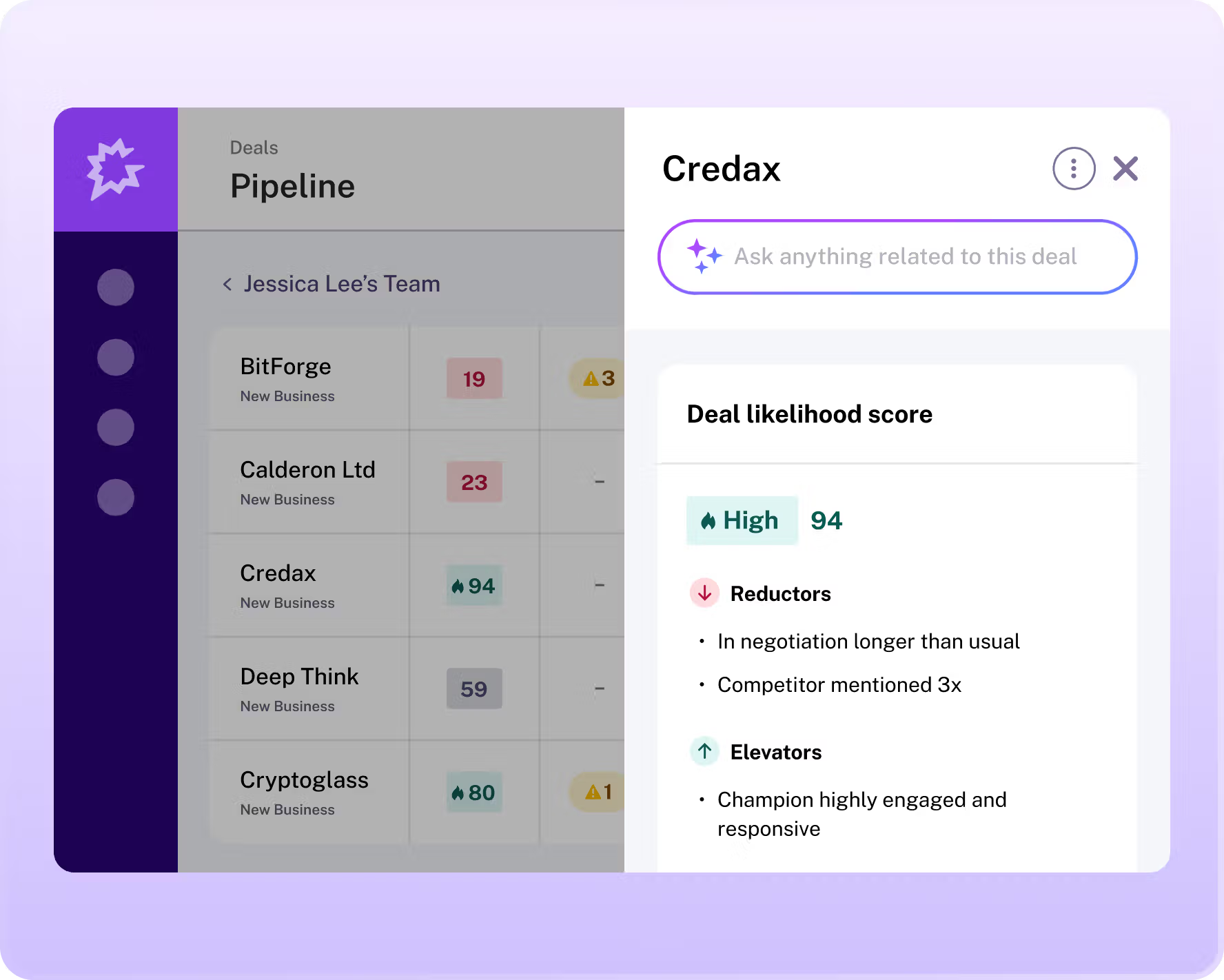
Gong Forecast builds predictions from 300+ signals extracted from actual customer conversations rather than rep-reported CRM fields.
Source: Gong
Gong's AI Deal Predictor is trained on 2.5B conversations and predicts outcomes with 20% more precision than CRM-only algorithms.
ZoomInfo adds a dimension neither platform covers: external market signals.
The GTM Context Graph combines CRM data with conversation intelligence, buyer intent signals tracked from 210 million IP-to-Organization pairings, technographic changes, hiring patterns, and funding events.
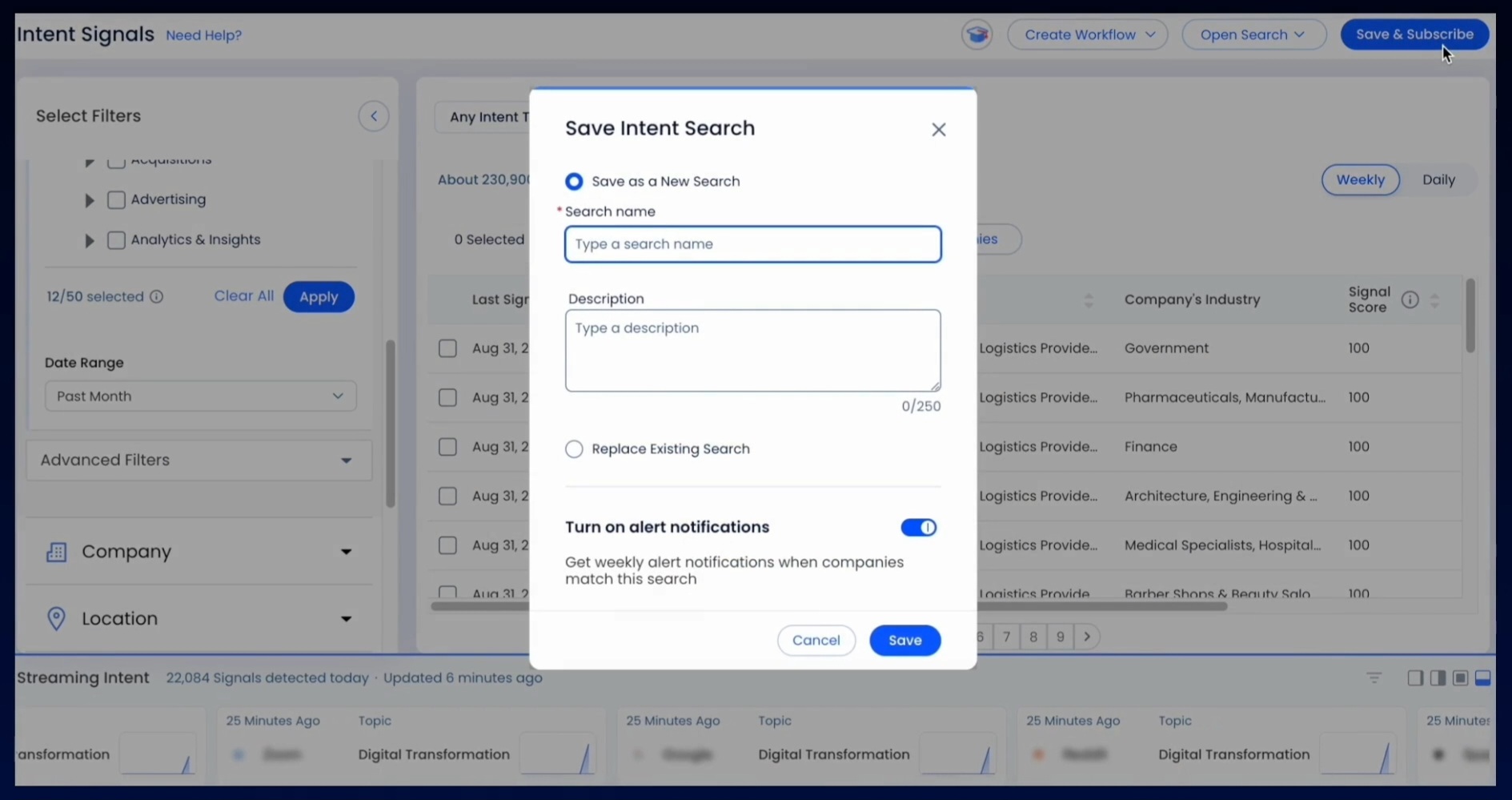
Source: ZoomInfo
This means ZoomInfo can identify at-risk deals before conversation signals appear, spot expansion opportunities in accounts that haven't engaged yet, and surface pipeline you didn't know existed. GTM Workspace users report boosting pipelines by 23% and booking nearly 60% more meetings per week.
Snowflake uses ZoomInfo for at least one-third of the most critical data features in their Account Propensity Scoring model. Accounts monitored using ZoomInfo-powered scores showed 90% higher opportunity open rates and 2x higher customer conversion rates. (Snowflake Case Study)
AI capabilities operate on different foundations
All three platforms feature AI prominently. The meaningful difference is what their AI has access to.
CRM Analytics' Einstein Discovery builds predictive models from Salesforce data using automated supervised machine learning.
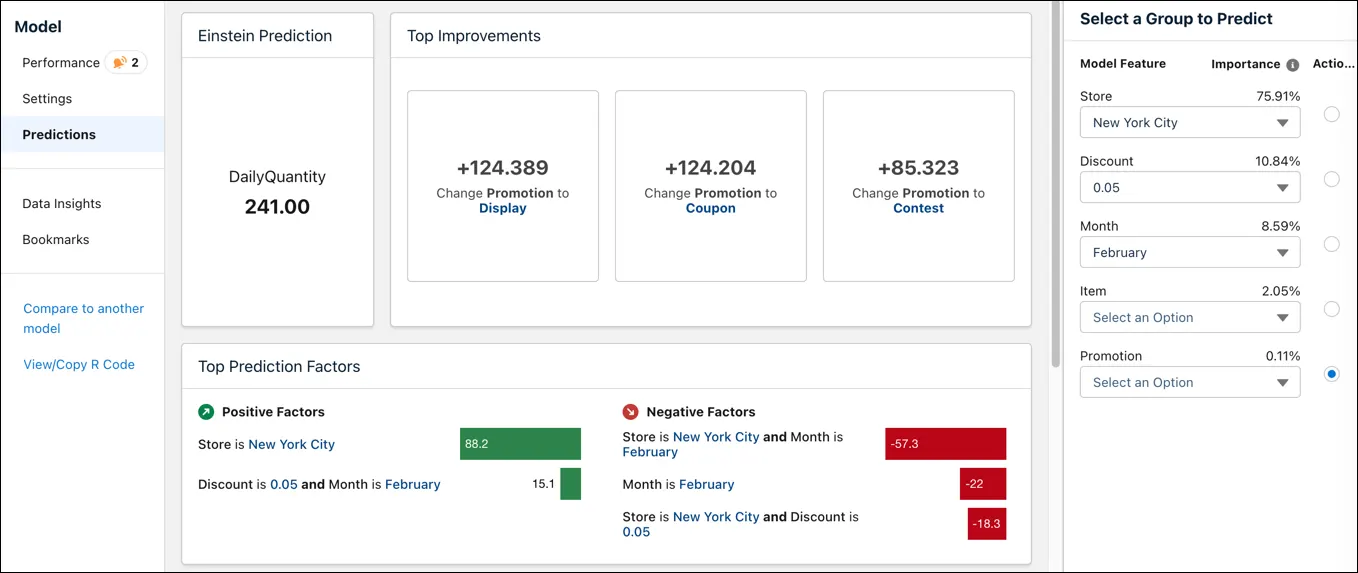
Source: CRM Analytics
It supports three prediction types: binary classification (will this deal close?), regression (what will this deal be worth?), and multiclass classification (which contract tier will the customer choose?). The prescriptive layer suggests actions tied to variables a user can control. It also includes bias detection for sensitive variables. The constraint: model quality depends entirely on CRM data completeness.
Gong's AI is revenue-specific, trained on a proprietary corpus of 3B+ customer interactions.
Its 15+ specialized agents cover distinct jobs: AI Deal Reviewer evaluates deals against sales methodologies, AI Call Reviewer scores rep performance using configurable scorecards, AI Trainer creates practice scenarios from real conversations, and AI Composer drafts personalized follow-ups from meeting context.
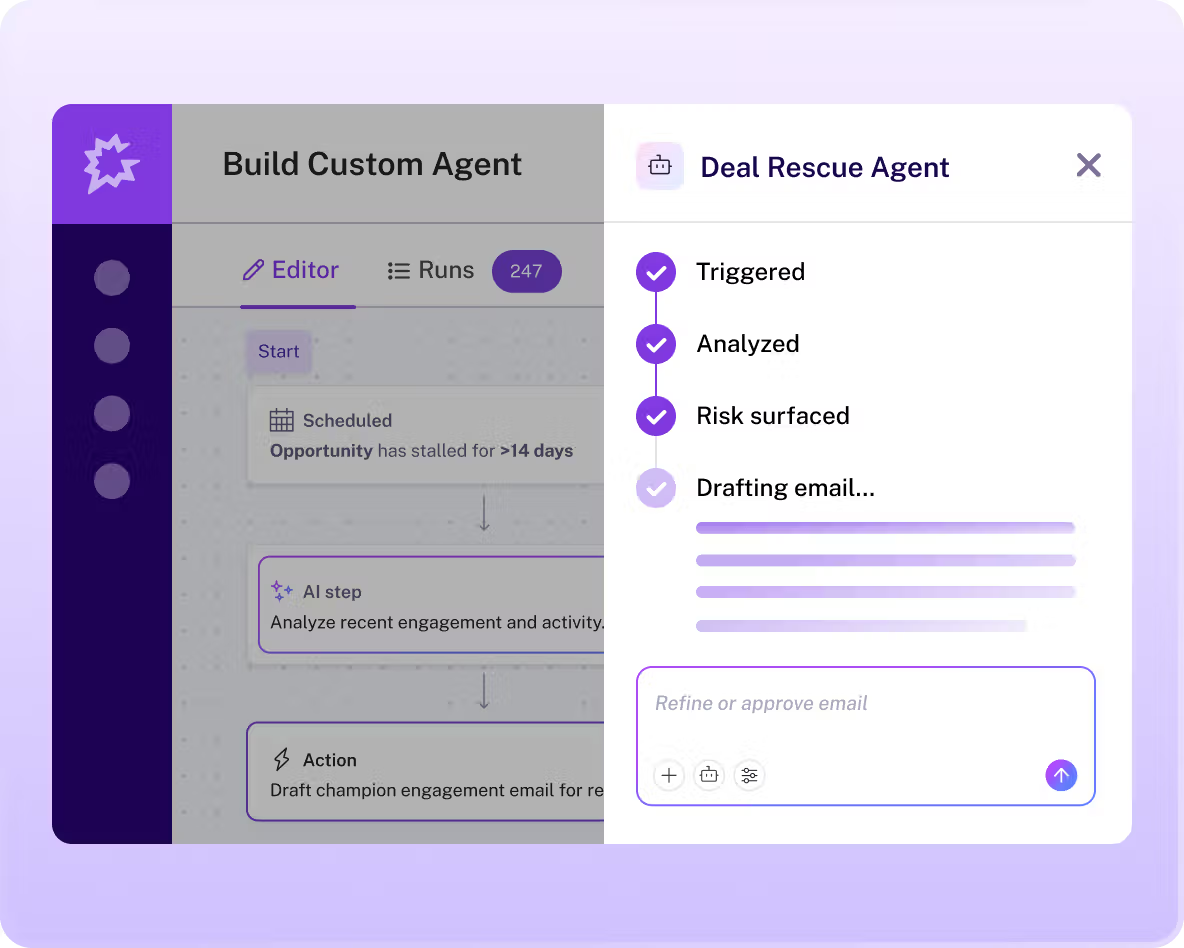
Source: Gong
All agents are included with Gong licenses at no additional cost. The constraint: Gong's AI analyzes and acts on existing interactions well, but it depends on partner data for prospecting intelligence.
ZoomInfo's AI operates on the broadest data foundation of the three.
Built on Anthropic's Claude, its agents within GTM Workspace research accounts, generate context-aware outreach, monitor buying signals, and update CRM fields automatically. GTM Studio lets marketers and RevOps teams describe audiences in natural language and launch multi-channel plays against accounts matching proven win patterns.
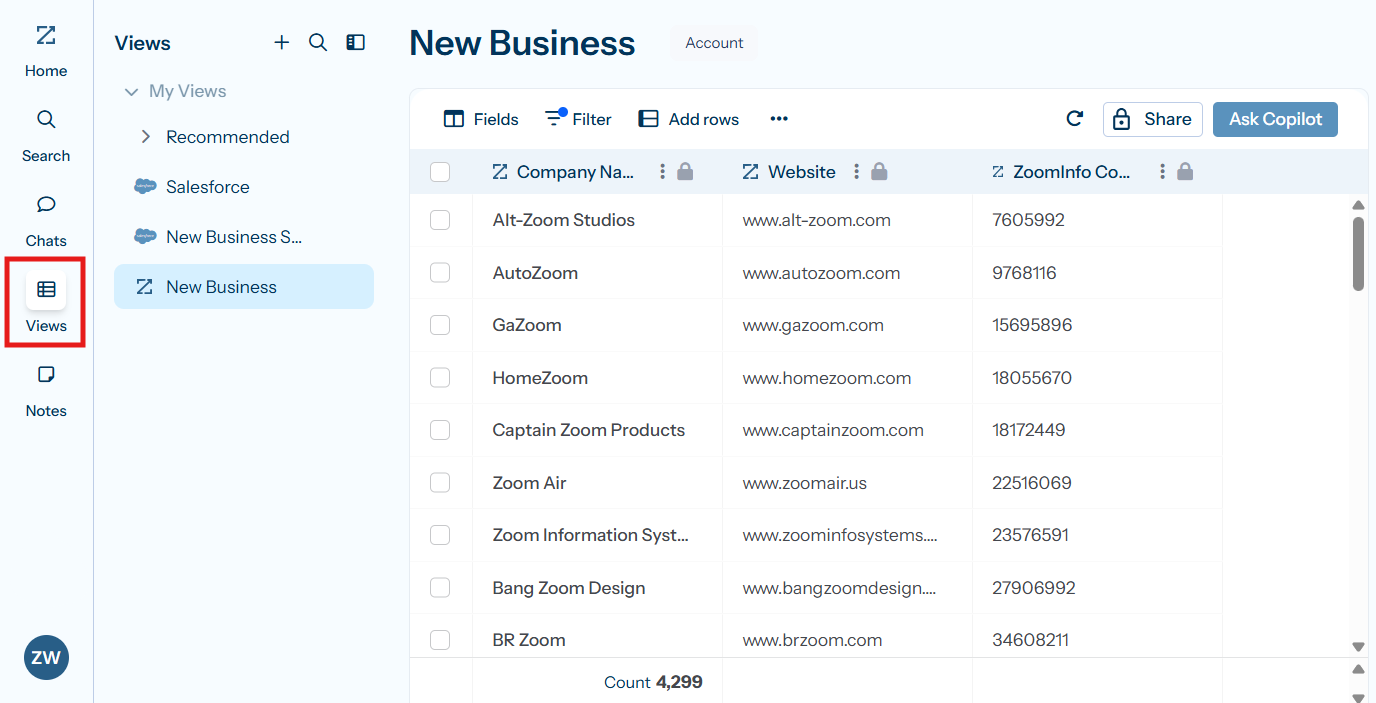
Source: ZoomInfo
Because ZoomInfo's AI draws from the GTM Context Graph (combining third-party data with first-party CRM and conversation data), its recommendations carry context that neither CRM-only nor conversation-only AI can match.
Integration and ecosystem flexibility
CRM Analytics lives entirely inside Salesforce.
That's both its greatest strength and its biggest limitation. Dashboards embed natively on record pages. Security inherits from Salesforce's role hierarchies and permission sets automatically. No separate governance layer to manage. But for organizations with significant data outside Salesforce, the integration story is weaker than dedicated BI platforms.
External connectors exist for Snowflake, BigQuery, Redshift, and others, but building and maintaining those pipelines requires ongoing Recipe maintenance and technical expertise.
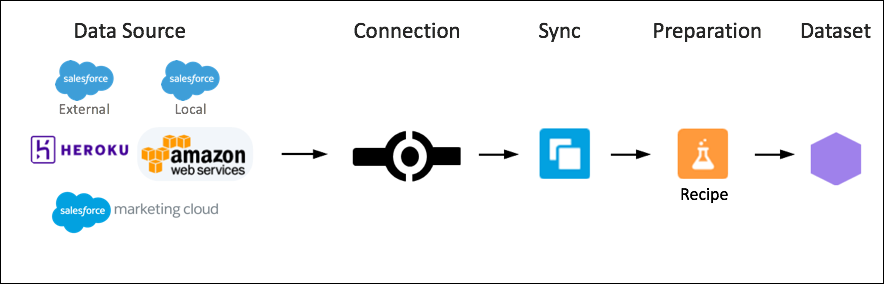
Source: CRM Analytics
Gong takes a CRM-agnostic approach with bi-directional CRM integrations for Salesforce, Microsoft Dynamics, and HubSpot.
Its Gong Collective marketplace has grown to 300+ integrations spanning CRM, telephony, email, web conferencing, and buyer intent categories. The recent MCP support positions Gong as a data source for external AI agents from Salesforce, Microsoft, and HubSpot. The Gong Anywhere Chrome Extension embeds functionality into Gmail, Salesforce, and HubSpot without leaving the browser.
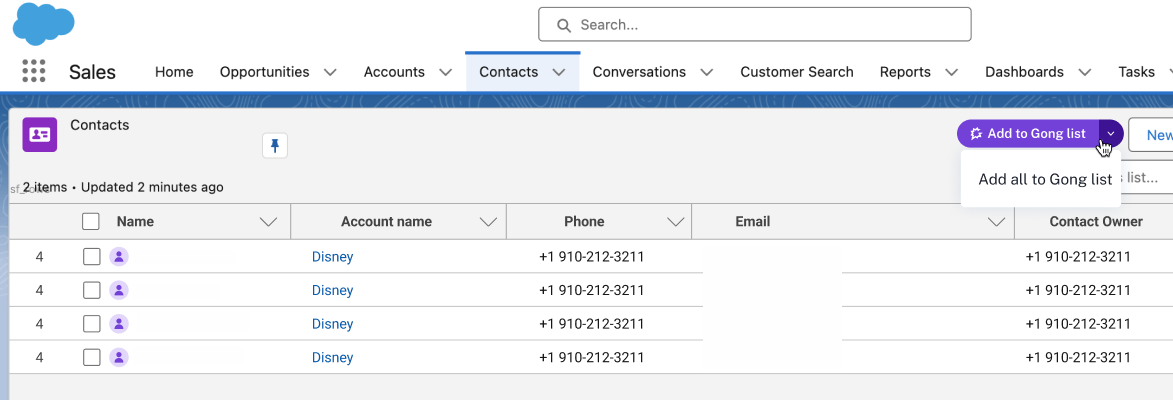
Source: Gong
ZoomInfo is designed to work everywhere.
API access is included in all relevant plans, and the ZoomInfo MCP server connects AI models directly to ZoomInfo's B2B data with no custom coding required. The App Marketplace covers 120+ integrations with Salesforce, HubSpot, Dynamics, Snowflake, and more. Cloud Partners enable direct data ingestion into AWS, Google Cloud, Snowflake, and Databricks.
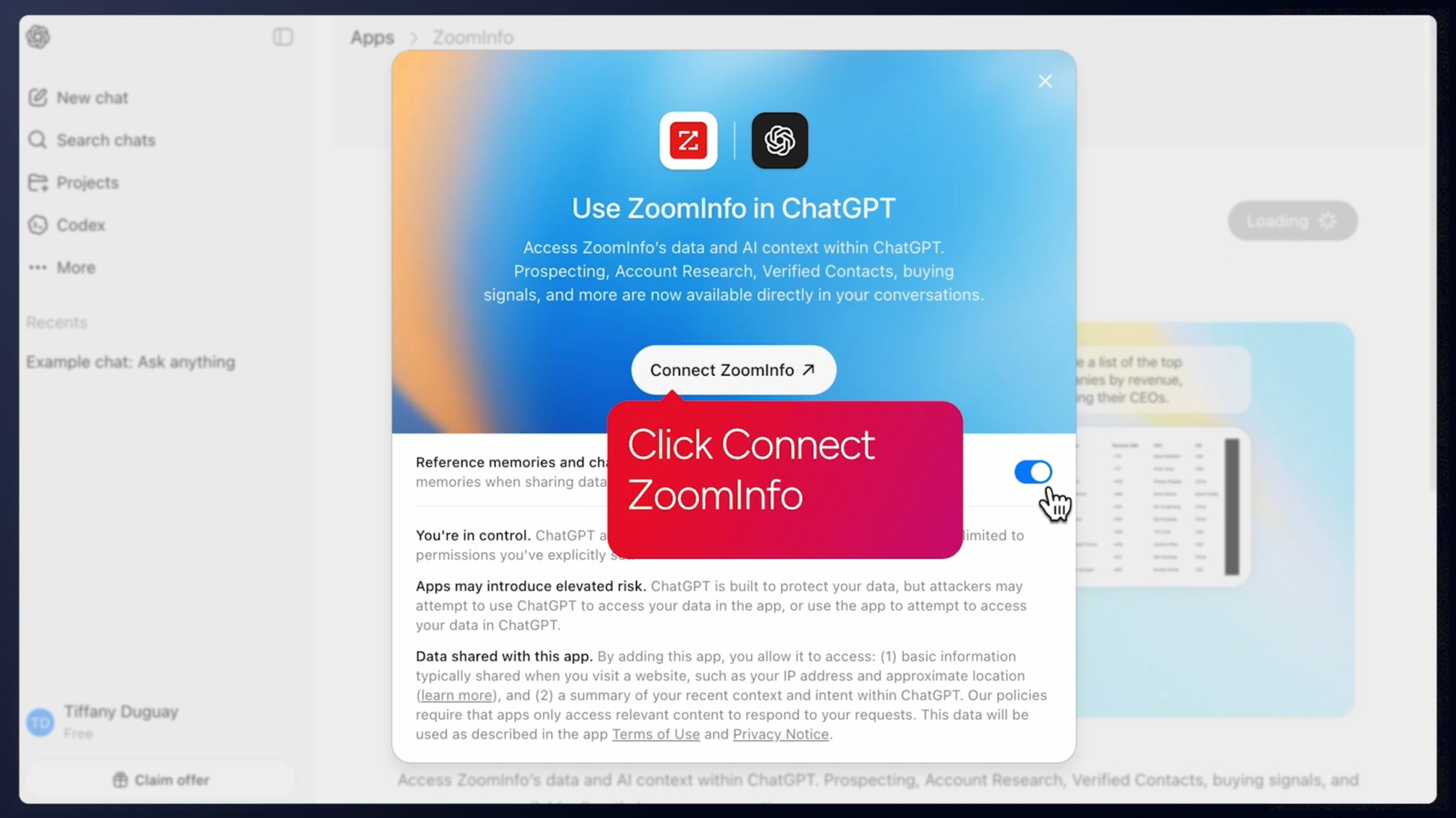
Source: ZoomInfo
CEO Schuck described a large financial services firm building an internal app using ZoomInfo's MCP server, representing access to "a surface area we would never see before." Unlike CRM Analytics, ZoomInfo doesn't require any specific CRM. Unlike Gong, it provides the underlying data layer, not just the analysis layer.
"The plug-and-play aspect of the API means I can integrate it into any process and get information at a moment's notice." — Jerry Wilson, Senior Marketing Intelligence Analyst, BDO Canada. BDO achieved an 87% reduction in time spent on internal data dashboard updates. (BDO Canada Case Study)
Pricing reflects different value propositions
CRM Analytics publishes transparent pricing, which helps with budgeting but reveals the cost structure's weight.
CRM Analytics Growth starts at $140/user/month, adding Einstein Discovery predictions at the Plus tier ($165/user/month), and reaching $220/user/month for Revenue Intelligence or Industry Cloud Intelligence.
All require annual contracts and stack on top of existing Salesforce licenses. There is no free plan, only a 30-day trial for the Plus tier. Organizations commonly limit licenses to managers and analysts to control costs, leaving front-line reps without the insights the platform was designed to deliver.
Gong publishes no pricing.
The model consists of per-user licenses plus a platform fee based on team size, with modular add-ons for Engage, Forecast, Enable, and Data Cloud on top of the Gong Foundation platform. All prospects receive custom quotes after selecting a team-size band (1–50, 51–1,000, 1,001–9,999, or 10,000+). The platform fee structure means smaller teams pay a disproportionate share of the base cost.
On the positive side, all standard integrations, Collaborator seats, and all 15+ AI agents are included at no additional cost. For a full breakdown of Gong's plan structure and total cost of ownership, see our Gong pricing breakdown.
ZoomInfo also uses custom-quoted pricing, but offers something neither competitor does: free entry points.
ZoomInfo Lite is a permanent free tier (no credit card, no time limit) with access to the B2B database, 10 monthly export credits, advanced search filters, the Chrome extension, and WebSights Lite.
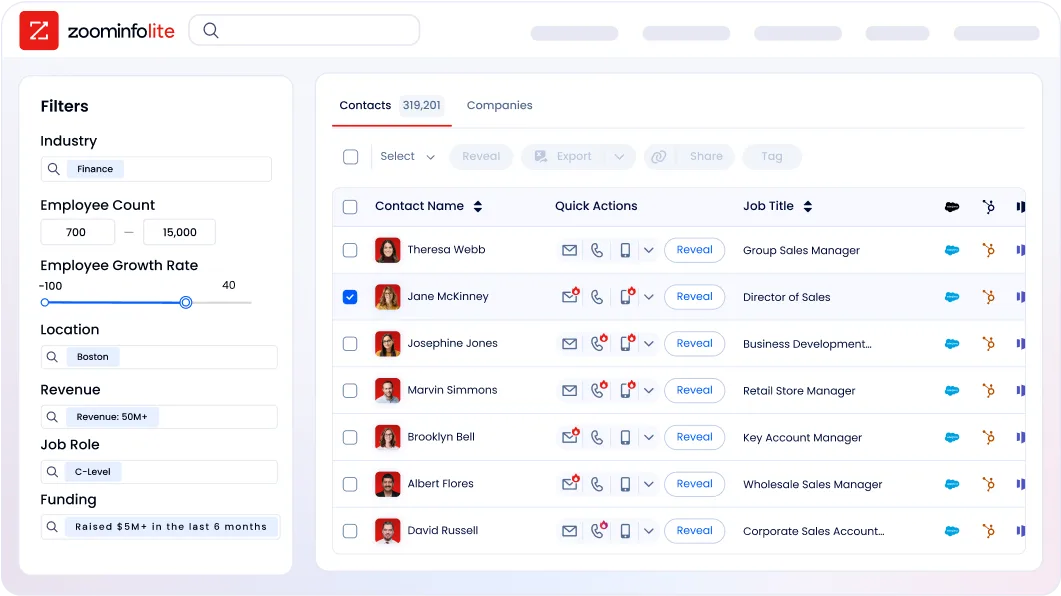
A separate 7-day free trial provides broader feature access. Paid plans are organized into Sales, Marketing, and Operations tiers with feature progression from Professional through Enterprise. ZoomInfo's pricing is consumption-based, scaling with usage rather than a fixed per-seat rate.
Security and compliance comparison
All three platforms carry enterprise-grade certifications, but the specifics differ.
CRM Analytics inherits Salesforce's compliance portfolio, including SOC 2 Type II, ISO 27001, ISO 27017, ISO 27018, ISO 42001, FedRAMP Moderate and High, HIPAA, PCI DSS, and GDPR with Binding Corporate Rules.
The inheritance model means CRM Analytics customers don't need separate certifications for the analytics layer. For regulated industries, this automatic coverage is a real advantage.
Gong holds SOC 2 Type II, ISO 27001, ISO 27017, ISO 27018, ISO 27701, ISO 42001 (AI Management), PCI DSS, CSA STAR, and EU-U.S. Data Privacy Framework certification.
Gong commits that customer data is never used to train AI models and offers bring-your-own-key encryption with granular data collection, redaction, and retention controls by region, role, or use case. Infrastructure runs on AWS with over 99.5% uptime.
ZoomInfo maintains ISO 27001, ISO 27701, SOC 2 Type II, TRUSTe GDPR, and TRUSTe CCPA certifications, all renewed annually.
Source: ZoomInfo
As a B2B data provider, ZoomInfo is also a registered data broker in California and Vermont, reflecting additional regulatory accountability specific to the data intelligence category. The dedicated Trust Center provides centralized access to compliance documentation.
CRM Analytics vs. Gong vs. ZoomInfo: Which should you choose?
The right platform depends on where your revenue intelligence gap is widest.
Choose CRM Analytics if:
Salesforce is your system of record and you need analytics that live natively inside it
Your CRM data is complete and well-maintained
Pipeline visibility, deal scoring, and forecast dashboards are your primary needs
Your team includes Salesforce admins who can build and maintain custom analytics
You want predictions and prescriptive recommendations embedded on record pages
Choose Gong if:
Customer conversations are your richest source of revenue intelligence
You need AI-powered coaching, call scoring, and deal risk detection
Forecast accuracy based on what buyers actually say matters more than CRM field analysis
You're ready to invest in a platform that spans engagement, forecasting, and enablement
Your organization has sufficient conversation volume to generate meaningful AI insights
Choose ZoomInfo if:
Your biggest challenge is incomplete buyer data, not incomplete analysis of existing data
You need B2B intelligence (contacts, companies, intent, technographics) to fuel your entire GTM motion
You want a single intelligence layer that connects third-party data with your CRM, conversations, and behavioral signals
You need flexibility to access intelligence in any tool (native products, APIs, MCP, or partner platforms)
You want to start free and scale into enterprise capabilities as your needs grow
Try ZoomInfo Lite for free or start a 7-day trial to experience the platform.
The most productive way to think about these platforms isn't which one to choose, but which layer of your intelligence stack needs the most attention. CRM Analytics makes your existing Salesforce data more visible and actionable. Gong makes your customer conversations more visible and actionable.
ZoomInfo provides the data foundation and contextual intelligence that makes everything else (including CRM Analytics and Gong) work better.
"It's not just the data itself. It's more about the right data at the right time to help us reach out with the right message across that full buyer journey." — Chelsea Kenyon, Senior Director of Digital Strategy, Redwood Logistics (Redwood Logistics Case Study)
CRM Analytics vs. Gong vs. ZoomInfo FAQ
What is the core difference between CRM Analytics, Gong, and ZoomInfo?
CRM Analytics is Salesforce's native analytics platform that surfaces dashboards, AI predictions, and insights from data already in your Salesforce org.
Gong is a revenue AI platform that captures and analyzes customer conversations (calls, emails, meetings) to detect deal risks, coaching opportunities, and forecasting signals.
ZoomInfo is an AI GTM platform built on the largest B2B dataset in the industry (500M contacts, 100M companies) that fuses this data with your CRM records and conversation intelligence into a single intelligence layer for the full go-to-market motion.
Which platform is the most affordable?
CRM Analytics publishes transparent pricing starting at $140/user/month, but this stacks on top of existing Salesforce licenses.
Gong publishes no pricing, using custom quotes with per-user licenses plus a platform fee.
ZoomInfo also uses custom quotes but offers the only permanent free tier among the three: ZoomInfo Lite provides access to the B2B database with 10 monthly export credits, no credit card or time limit required. ZoomInfo also offers a separate 7-day free trial with broader feature access.
Does CRM Analytics work without Salesforce?
No. CRM Analytics is built inside Salesforce and requires an existing Salesforce Cloud subscription to function. It inherits Salesforce's security model, permission sets, and data structure automatically. Organizations not using Salesforce as their primary CRM get no value from the product. Both Gong and ZoomInfo are CRM-agnostic, integrating with Salesforce, HubSpot, and Microsoft Dynamics.
How do the AI capabilities compare?
CRM Analytics uses Einstein Discovery for automated predictive models (deal win/loss, churn, lead conversion) built from Salesforce data, with prescriptive recommendations for improving outcomes.
Gong's AI is trained on over three billion customer interactions and includes 15+ specialized agents for deal scoring, call coaching, email composition, and forecasting.
ZoomInfo's AI operates on the broadest data foundation, combining third-party B2B data with CRM, conversation, and behavioral signals through its GTM Context Graph, powering prospecting, account research, outreach, and pipeline intelligence.
Can these platforms work together?
Yes. CRM Analytics and Gong operate on different data layers and don't directly compete.
ZoomInfo integrates with both Salesforce (enriching the CRM data that CRM Analytics reports on) and conversation intelligence workflows (via Chorus, its native conversation intelligence product). ZoomInfo's API and MCP access means its data can flow into virtually any tool in the stack, including platforms that Gong and CRM Analytics sit on top of.
Which platform is best for improving forecast accuracy?
Gong has the strongest documented results for forecast accuracy, with Upwork reaching 95% accuracy and Gong's AI predicting outcomes with 20% more precision than CRM-only algorithms.
CRM Analytics provides forecast dashboards within Salesforce with what-if modeling via the Commit Calculator.
ZoomInfo adds a dimension neither covers by surfacing external signals (intent data, hiring patterns, funding events) that can identify pipeline risk and opportunity before they appear in CRM data or conversations.
Which platform requires the least technical expertise to set up?
Gong is generally the fastest to deploy for its core conversation intelligence capability, since recording and transcription start working once connected to your communication tools.
CRM Analytics offers pre-built apps with guided wizards for standard deployments, but custom dashboards and data models require Salesforce admin or developer expertise.
ZoomInfo's GTM Workspace deploys in weeks, not months, while ZoomInfo Lite requires no setup at all for basic prospecting and data access.
What happens if our CRM data quality is poor?
This is where the platforms diverge most sharply. CRM Analytics will faithfully report whatever is in your CRM, accurate or not, producing confident dashboards on incomplete data.
Gong partially addresses this by capturing conversation data that reps never logged, but still depends on reps having the right conversations.
ZoomInfo directly solves the data quality problem by providing verified B2B data to enrich CRM records, with multi-vendor enrichment from approximately 60 vendors and perimeter protection that blocks bad data at entry.
