
Choosing between Forma.ai and Anaplan for sales performance management comes down to five questions:
Do you need a platform focused on sales compensation, or one that connects sales planning to finance, supply chain, and workforce planning?
Is your main pain point the speed of comp plan changes, or the ability to model cross-functional scenarios at enterprise scale?
Do you have a dedicated planning center of excellence, or do you need a platform your comp team can run without specialized model builders?
Are you willing to invest months in implementation for full modeling power, or do you need faster time to value?
Is your territory and quota planning driven by internal data alone, or would market intelligence on accounts, buying signals, and contacts make your plans more accurate?
In short, here's what we recommend:
Forma.ai serves sales compensation and revenue operations teams that need to design, test, and deploy comp plans fast. Its AI configuration lets comp analysts describe incentive logic in plain language and compile it into production-ready rules, without writing formulas or waiting on IT. Forma.ai connects territory planning, quota setting, and incentive compensation in one system, so a territory change cascades instantly to crediting and payouts. Named a Strong Performer and the only Customer Favorite in the Forrester Wave for SPM Solutions (Q1 2025), Forma.ai fits organizations whose primary bottleneck is the rigidity of their current comp system. The trade-off: Forma.ai is designed for sales performance management and doesn't extend into financial planning, supply chain, or workforce planning.
Anaplan is the enterprise planning platform for organizations that need sales performance management connected to the broader business. Territory and quota plans feed directly into financial budgets, supply chain forecasts, and workforce models on a single platform. With a 9-year streak as a Leader in the Gartner Magic Quadrant for Financial Planning Software and recognition as a Leader in the IDC MarketScape for SPM 2025, Anaplan serves the CFO and CRO who want planning to cross departmental boundaries. The trade-off: Anaplan's modeling power requires dedicated certified model builders, months-long implementations, and opaque enterprise pricing that includes significant partner costs.
Both platforms handle territory planning, quota management, and incentive compensation. But neither generates the account-level market intelligence, buyer intent signals, or verified contact data that makes those plans accurate. That's where ZoomInfo comes in.
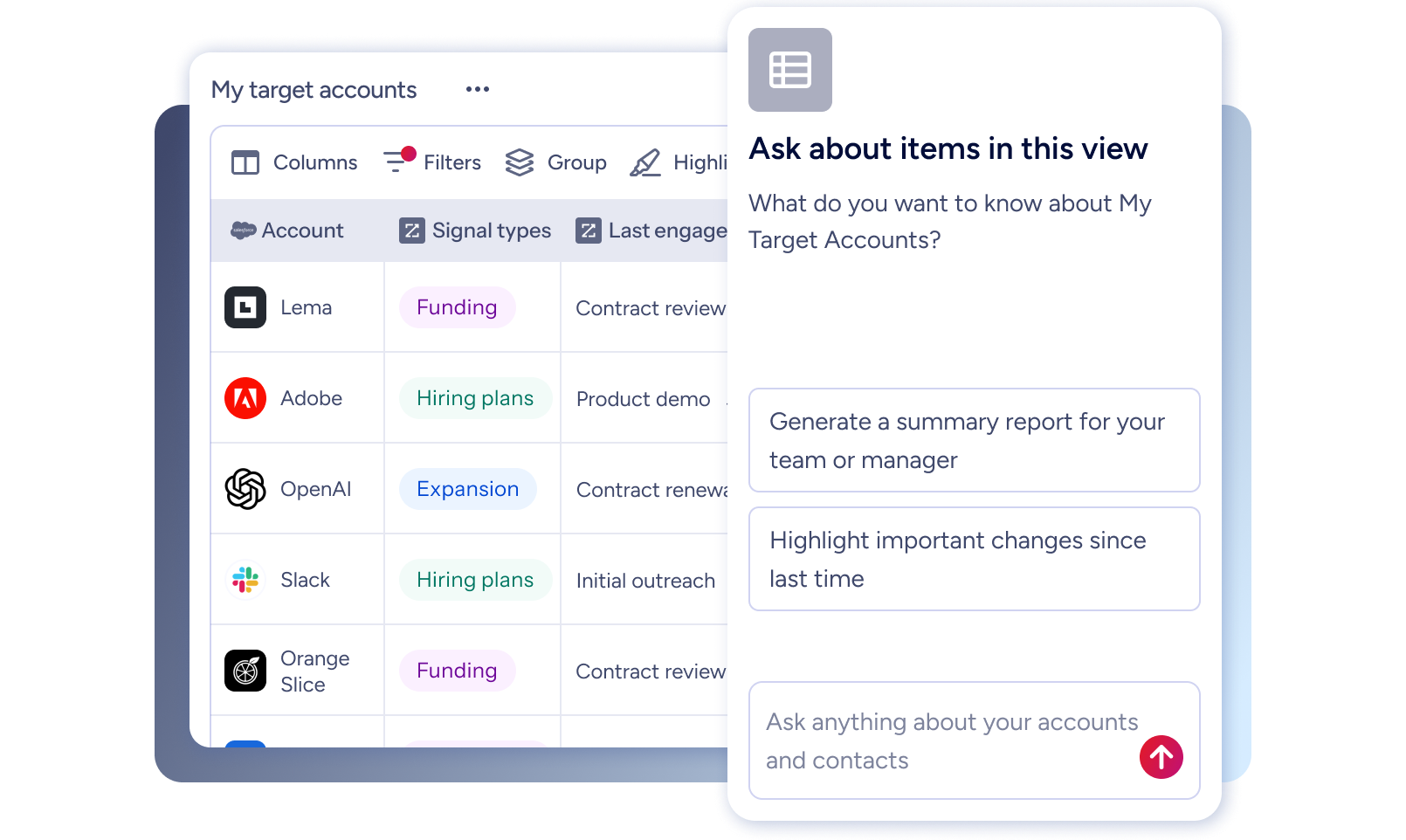
ZoomInfo is a GTM platform that provides the data foundation both Forma.ai and Anaplan need but don't produce. With 500M contacts, 100M companies, 135M+ verified phone numbers, and 200M+ verified business email addresses, ZoomInfo gives revenue leaders the market intelligence to build territories based on actual account potential, set quotas grounded in real buyer activity, and identify whitespace before competitors do. The GTM Context Graph processes 1.5B+ data points daily, combining this data with your CRM records, conversation transcripts, and behavioral signals to reveal what's happening in your market and why. Whether your team works inside ZoomInfo's GTM Workspace, builds plays in GTM Studio, or feeds intelligence into Forma.ai or Anaplan via APIs and MCP, ZoomInfo ensures your sales plans reflect real market conditions rather than stale assumptions.
If building territories and quotas on verified market intelligence sounds like the missing piece in your planning process, see how ZoomInfo works.
Forma.ai vs. Anaplan at a glance
Forma.ai | Anaplan | ZoomInfo | |
|---|---|---|---|
Primary focus | Sales compensation & sales performance management | Connected enterprise planning (Finance, Sales, Supply Chain, HR) | B2B data, GTM intelligence & execution |
Sales comp approach | AI-configured, no-code plan building | Formula-based multidimensional modeling | N/A (provides data that informs comp plans) |
Territory planning | AI-driven, connected to ICM | Geospatial mapping + modeling engine | Market intelligence to inform territory design |
Quota management | Top-down and bottoms-up, instant deployment | Multi-method, connected to financial budgets | Account-level data and intent signals for quota accuracy |
Cross-functional planning | Sales-only | Finance, Sales, Supply Chain, HR on one platform | GTM-focused: sales, marketing, RevOps |
AI capabilities | AI plan configuration, predictive modeling | $500M AI roadmap: agents, CoModeler, Forecaster | GTM Context Graph, AI-powered account intelligence |
Implementation timeline | Weeks to months | Months to 12+ months | Deploys in weeks |
Pricing model | Custom, quote-based; "lowest TCO" guarantee | Custom, quote-based; non-cancelable contracts | Consumption-based with free tier (ZoomInfo Lite) |
Best for | Sales comp teams needing speed and flexibility | Enterprises needing connected cross-functional planning | Teams needing verified market data to power GTM decisions |
The fundamental divide: sales comp specialist vs. enterprise planning platform
This comparison starts with scope.
Forma.ai does one thing: sales performance management. The platform handles incentive compensation, territory planning, quota management, and sales analytics in a single connected system. Every feature answers one question: how do you design, deploy, and optimize compensation plans that drive the right sales behaviors?
Anaplan answers a broader question: how does the entire enterprise plan, model, and execute? Sales performance management is one of several domains Anaplan covers. A territory change in Anaplan can flow automatically into a finance budget, a workforce headcount model, and a supply chain forecast. That connectivity is the product's reason for existing.
For a VP of Sales Compensation evaluating these two platforms, the decision isn't about which has better comp features in isolation. It's about whether sales planning needs to live on an island or connect to the broader business planning infrastructure.
Forma.ai eliminates the comp plan bottleneck
The pain that drives organizations to Forma.ai is specific: comp plan changes take too long. A new incentive structure gets designed in a strategy meeting, then spends months in a queue while technical teams configure formulas, build sandbox environments, test edge cases, and migrate to production. By the time the plan goes live, the market has moved.
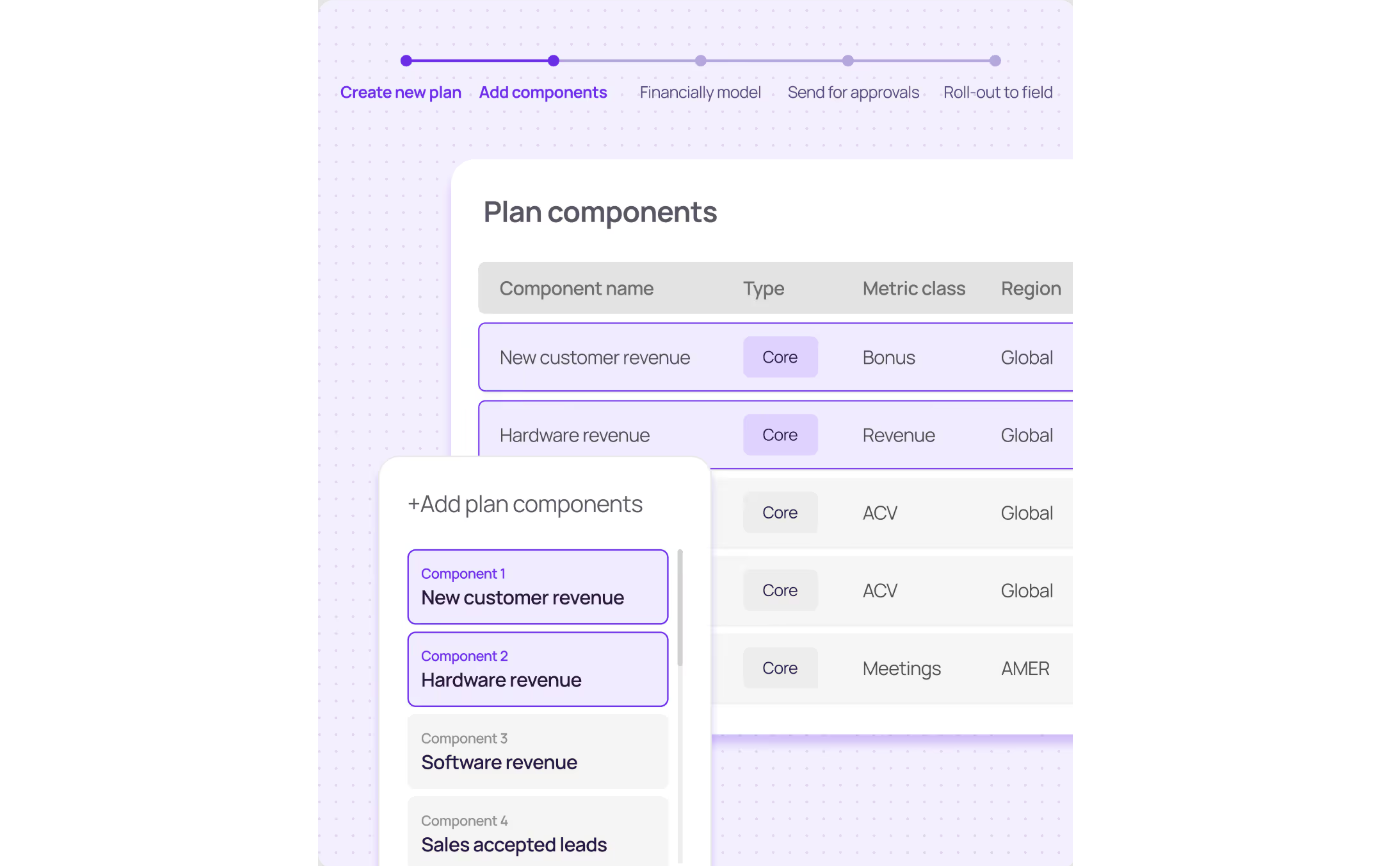
Forma.ai's architecture addresses this directly. Users describe plan logic in plain language, and AI translates it into validated, reusable plan components. No SQL. No formula construction. No IT ticket. The platform uses a unified rule structure that standardizes comp data so changes deploy instantly rather than requiring sandbox migrations.
Source: Forma.ai
The speed advantage extends to modeling. Forma.ai lets comp teams simulate compensation changes with real data in the platform, running multiple what-if scenarios without affecting the live commission run. When a model looks right, it goes live immediately. No rebuild, no migration.
Anaplan gives you cross-functional planning that comp-only tools can't
Anaplan's value isn't speed on a single task. It's connectivity across the entire planning chain.
When a sales leader adjusts territory assignments in Anaplan, that change can automatically update quota allocations, recalculate incentive compensation costs, flow into the finance team's revenue forecast, adjust headcount plans in the workforce model, and ripple into supply chain demand projections. All on one platform, sharing one data model, without manual reconciliation between systems.
This is what Anaplan calls Connected Planning, and it's the capability that justifies the platform's complexity. Nearly half of the Fortune 50 uses Anaplan because their planning problems don't respect departmental boundaries.

Source: Anaplan
Anaplan's modeling engine handles the math behind this connectivity. The Polaris engine supports quadrillions of addressable cells with unlimited hierarchies and dimensions. G2 users rate formula capabilities at 9.1/10 and scenario modeling at 9.2/10. For organizations running complex commission structures across thousands of payees with multi-currency, multi-entity, and overlay crediting requirements, Anaplan's modeling power is hard to match.
On the sales performance side, Anaplan's Revenue Performance Management suite covers territory planning with geospatial mapping, quota planning with top-down and bottom-up methodologies, incentive compensation management across hundreds of plans and thousands of payees, and sales forecasting connected to the financial plan. The Sales Incentives solution handles crediting, commission calculations, and ASC 606/IFRS 15 compliance tracking.
Plan configuration: no-code AI vs. formula-based modeling
How each platform handles the mechanics of building and changing comp plans reveals their philosophical differences.
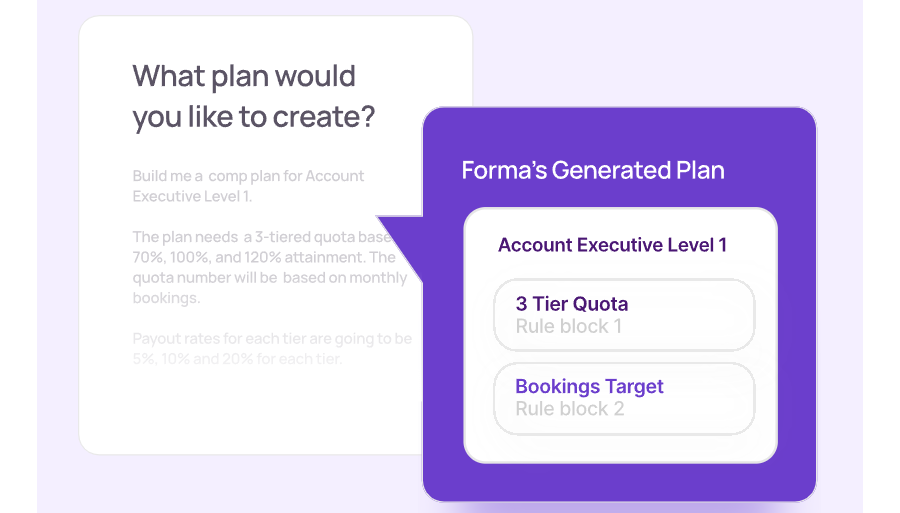
Forma.ai treats plan configuration as a design problem. Comp analysts select from a template library, and for novel components, describe the logic in natural language. AI compiles it. The result is a system that claims to be the only SPM platform using AI to automate plan configuration and logic, removing the need for SQL expertise or technical skills.
Source: Forma.ai
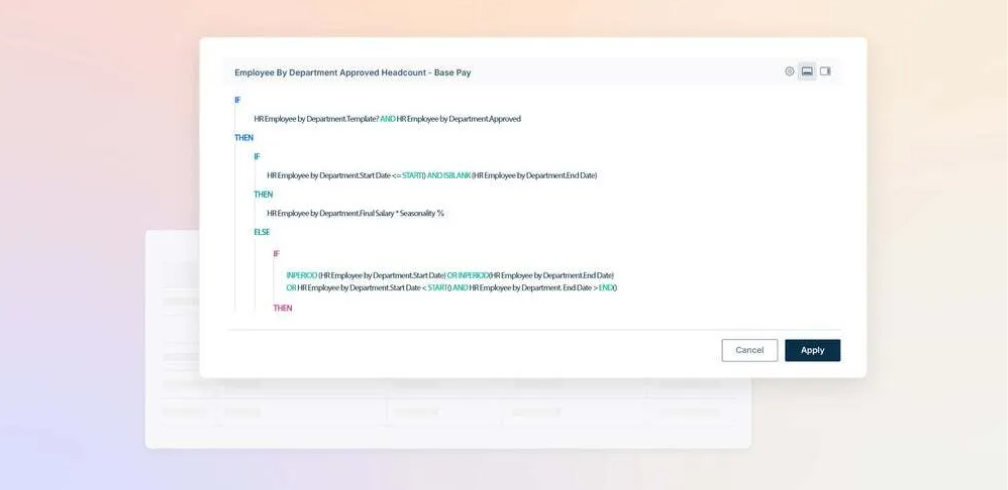
Anaplan treats plan configuration as a modeling problem. Model builders construct formulas, define dimensions, build hierarchies, and configure calculation logic using Anaplan's proprietary formula language and HyperBlock engine. The Certified Model Builder certification path requires approximately 74 hours of structured coursework, and community members describe it as "technical and intense." Of learners who passed Level 1, only 32% completed Level 2, and only 15% completed all three required components.
Source: Anaplan
Anaplan's CoModeler, which reached general availability in March 2026, aims to reduce this barrier by letting users build models through natural language conversation. It's a promising step, but it's early compared to Forma.ai's mature AI configuration layer.
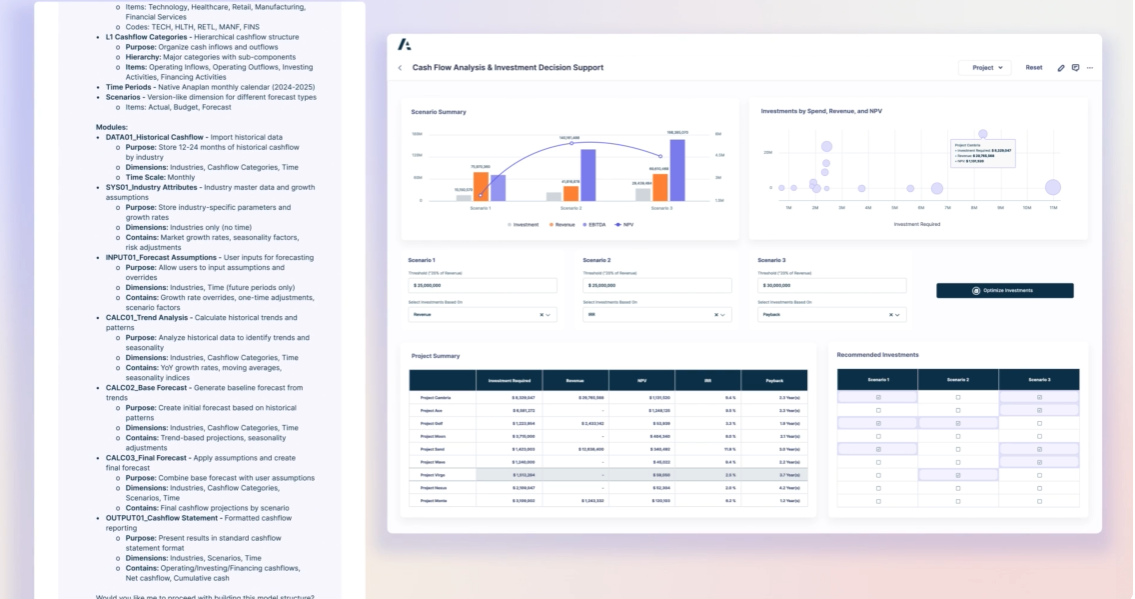
Source: Anaplan
The practical implication: organizations with dedicated planning centers of excellence and certified model builders will extract the most value from Anaplan's modeling flexibility. Organizations whose comp teams need to iterate on plans without technical intermediaries will move faster on Forma.ai.
Territory and quota planning: connected vs. specialized
Both platforms offer territory and quota planning, but with different architectures.
Forma Architect connects territory design directly to incentive compensation through Forma Operator. When a territory boundary shifts or a quota changes, crediting rules, plan documents, and payouts update automatically. This native connectivity between planning and execution eliminates the manual handoffs that plague organizations running separate TQM and ICM tools.
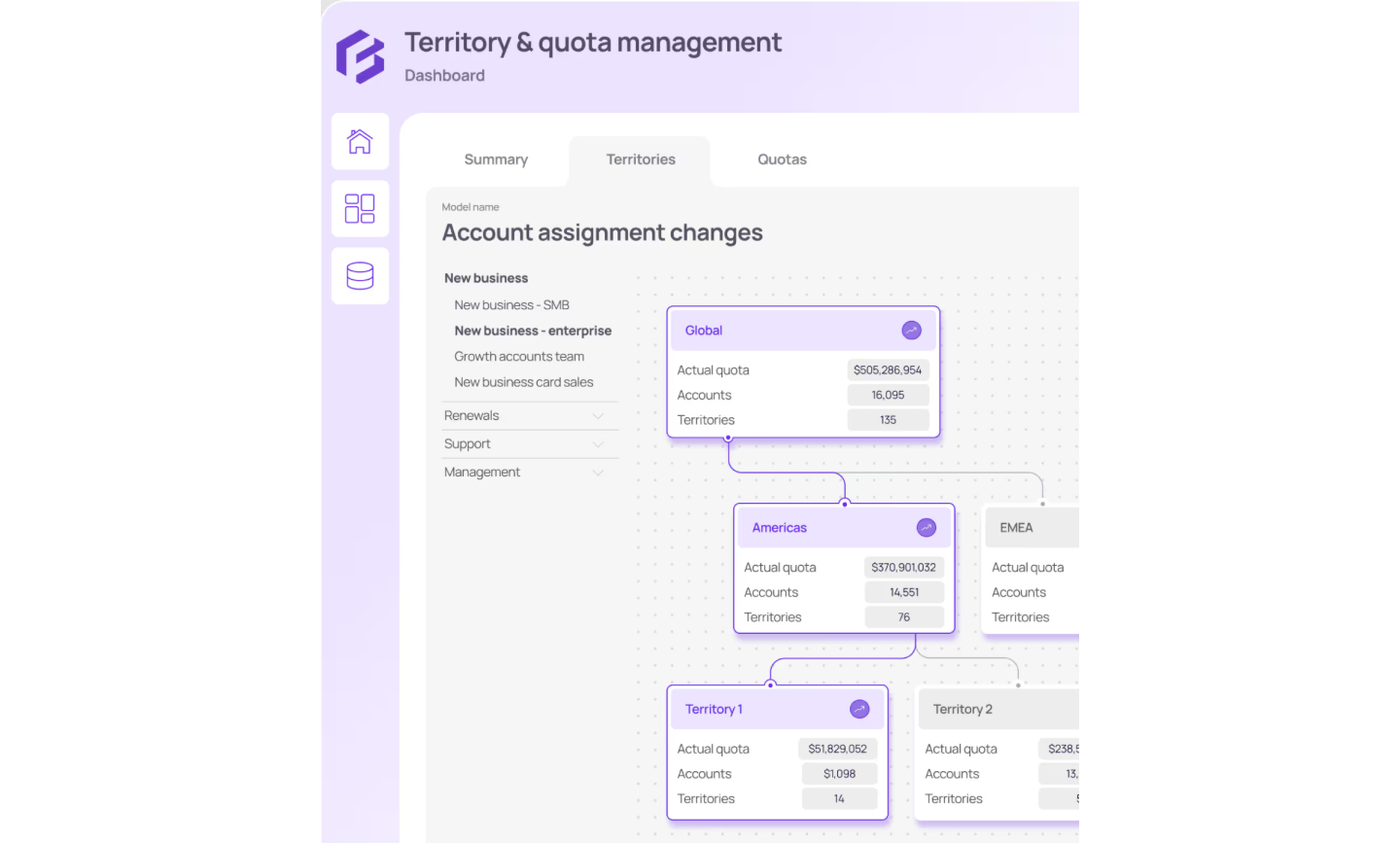
Source: Forma.ai
Architect uses AI insights that assess account potential and workload to match seller capacity with market demand. It handles complex hierarchies, overlays, and account-level exceptions through automated workflows. Multiple team members can make updates simultaneously across models in a collaborative workspace.
Anaplan's territory planning uses geospatial mapping and AI to design balanced territories. The company claims to offer the only RPM solution with AI-driven territory management and account segmentation integrated together. Quota planning supports both top-down and bottom-up methodologies with ramp and seasonality adjustments, connected to financial revenue targets.
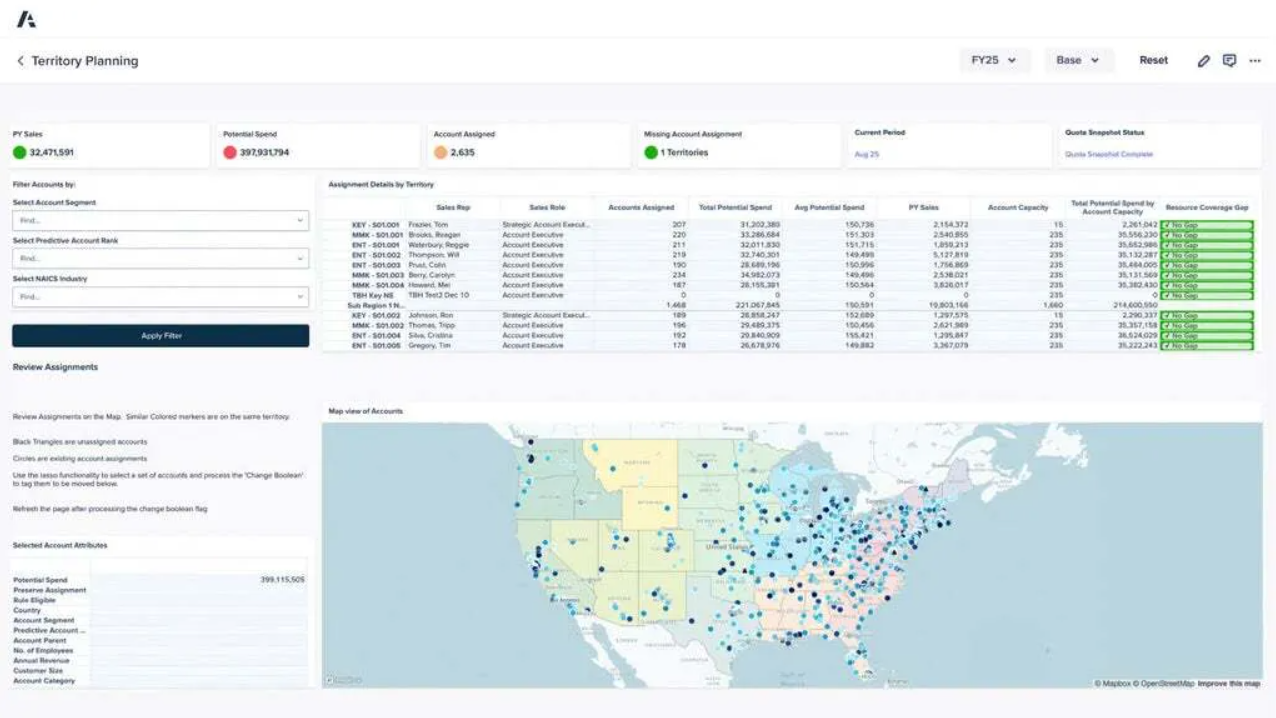
Source: Anaplan
Where Anaplan pulls ahead is the downstream connection: a quota change doesn't just update comp calculations, it flows into the financial P&L, the headcount model, and the demand forecast. Where Forma.ai pulls ahead is the upstream connection to execution: territory and quota changes deploy to live commission calculations instantly, without rebuilding rules or waiting on sandbox migrations.
But both platforms share a limitation. Their territory and quota planning relies primarily on internal operational data: CRM records, historical performance, and internal hierarchies. Neither generates the external market intelligence that tells you whether a territory has untapped potential, whether accounts are actively in-market, or whether your contact data for key decision-makers is current.
ZoomInfo provides the market intelligence that planning platforms lack
Territory plans built on stale CRM data produce misaligned coverage. Quotas set without visibility into account potential produce unfair targets. Both problems share a root cause: planning platforms model internal data, but the market exists outside.
ZoomInfo fills this gap with the external intelligence that makes internal planning models accurate.
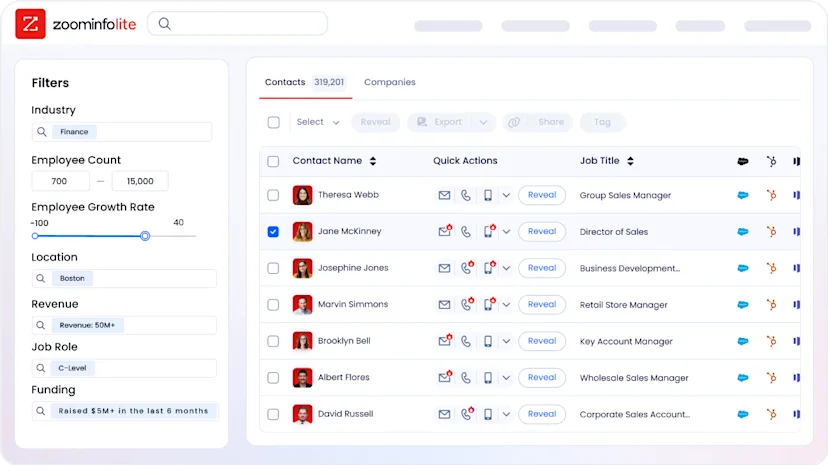
For territory design, ZoomInfo provides 300+ company attributes for market segmentation, including firmographics, technographics, org charts, and department-level structure across 100M companies. Instead of dividing territories by geography and headcount alone, revenue leaders can factor in technology stack, funding status, growth signals, and actual buying committee composition.
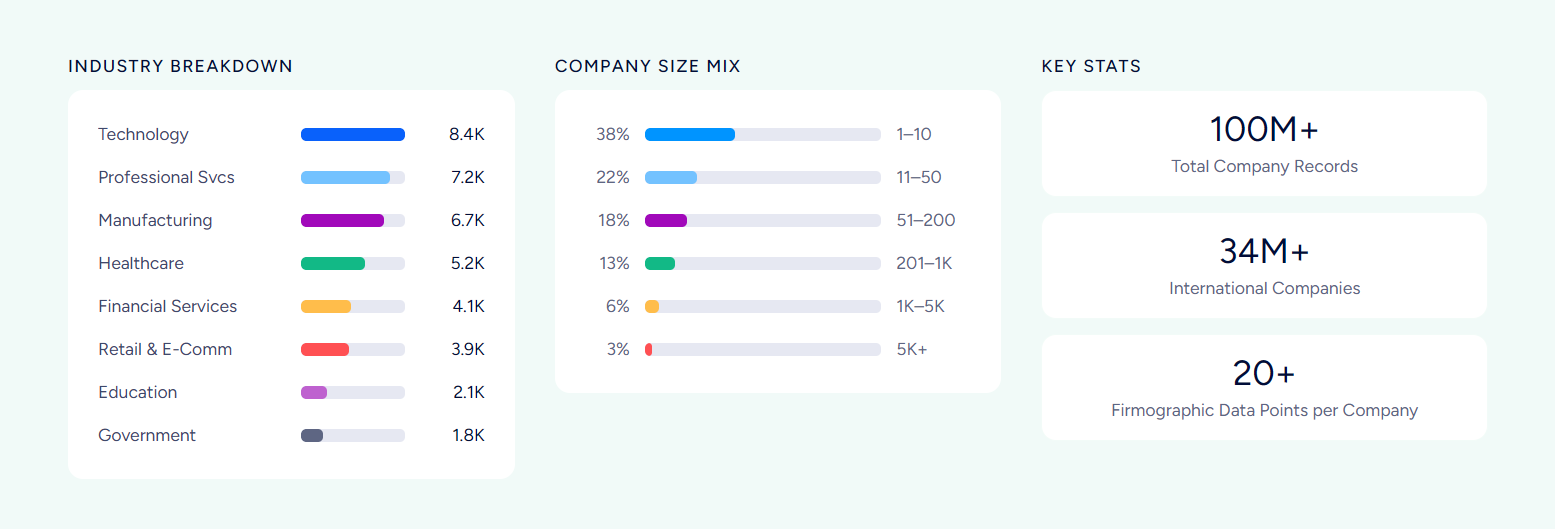
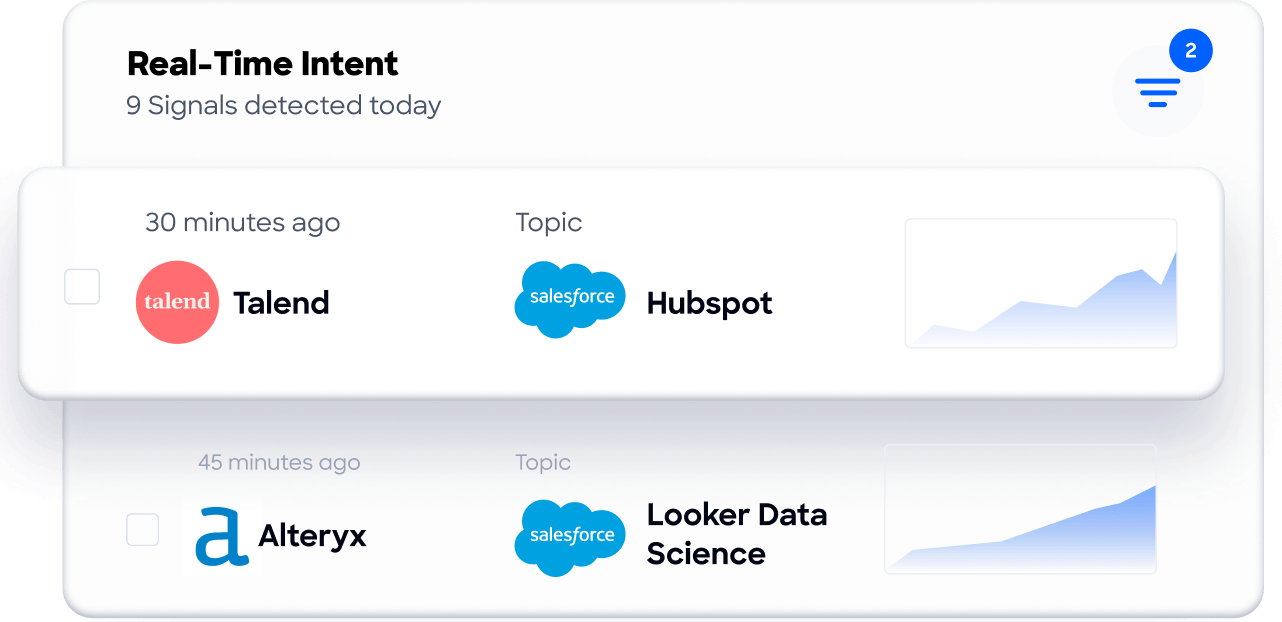
For quota setting, Buyer Intent data tracking signals from 210 million IP-to-Organization pairings reveals which accounts are actively researching solutions. Quotas grounded in real buying activity are fairer and more achievable than those based solely on historical bookings or manager intuition.
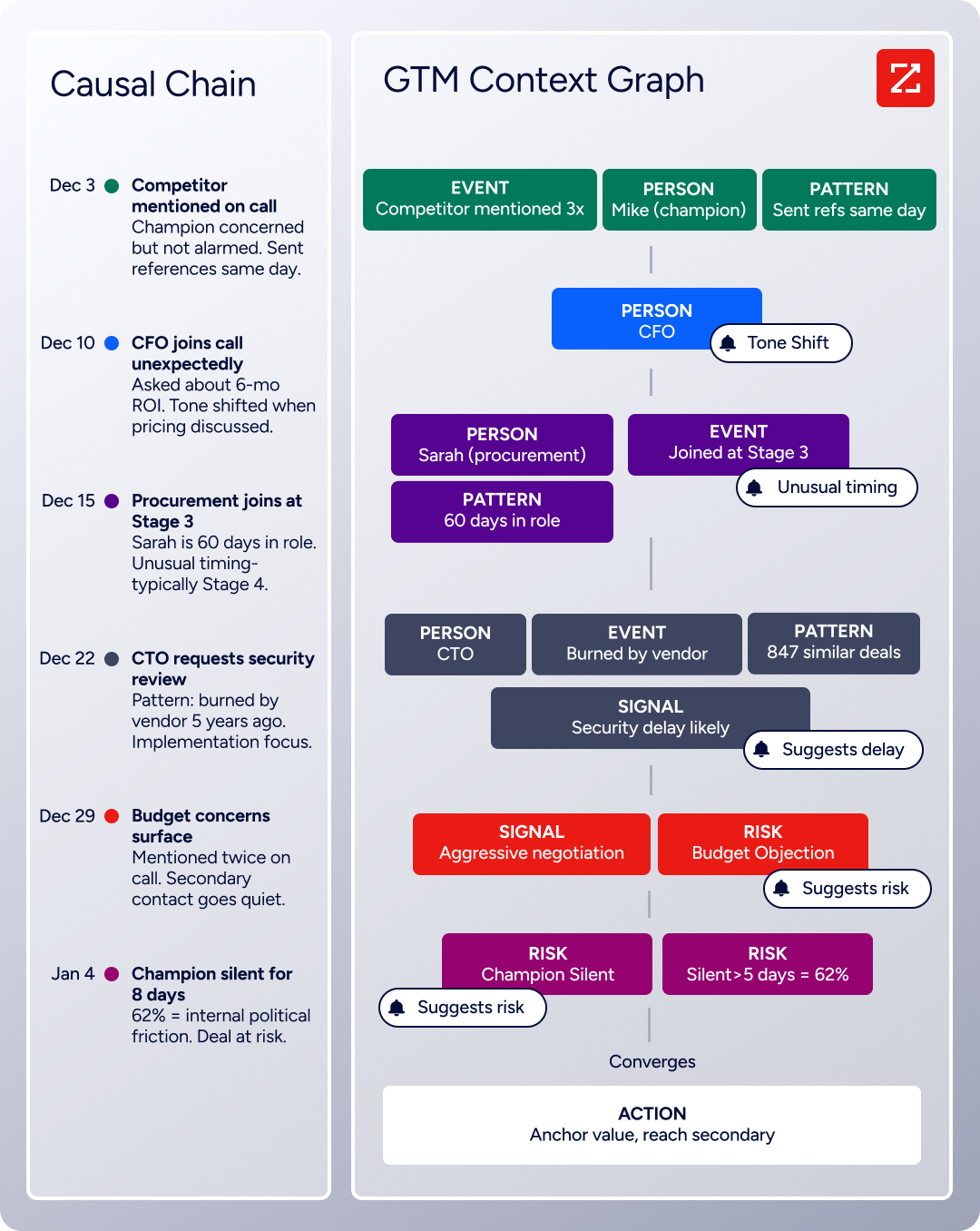
For account targeting and prioritization, the GTM Context Graph combines ZoomInfo's third-party data with your CRM records, conversation transcripts, and behavioral signals to identify patterns behind closed-won deals. This intelligence surfaces which account characteristics predict conversion, which territories have the highest untapped potential, and where quota allocation should shift.
"ZoomInfo's not just a contact data company anymore. They've built a full system of execution. GTM Intelligence actually works the list, writes the outreach, triggers the play, and helps drive predictable growth." (Ian Brodie, CEO & Co-Founder, Levanta)
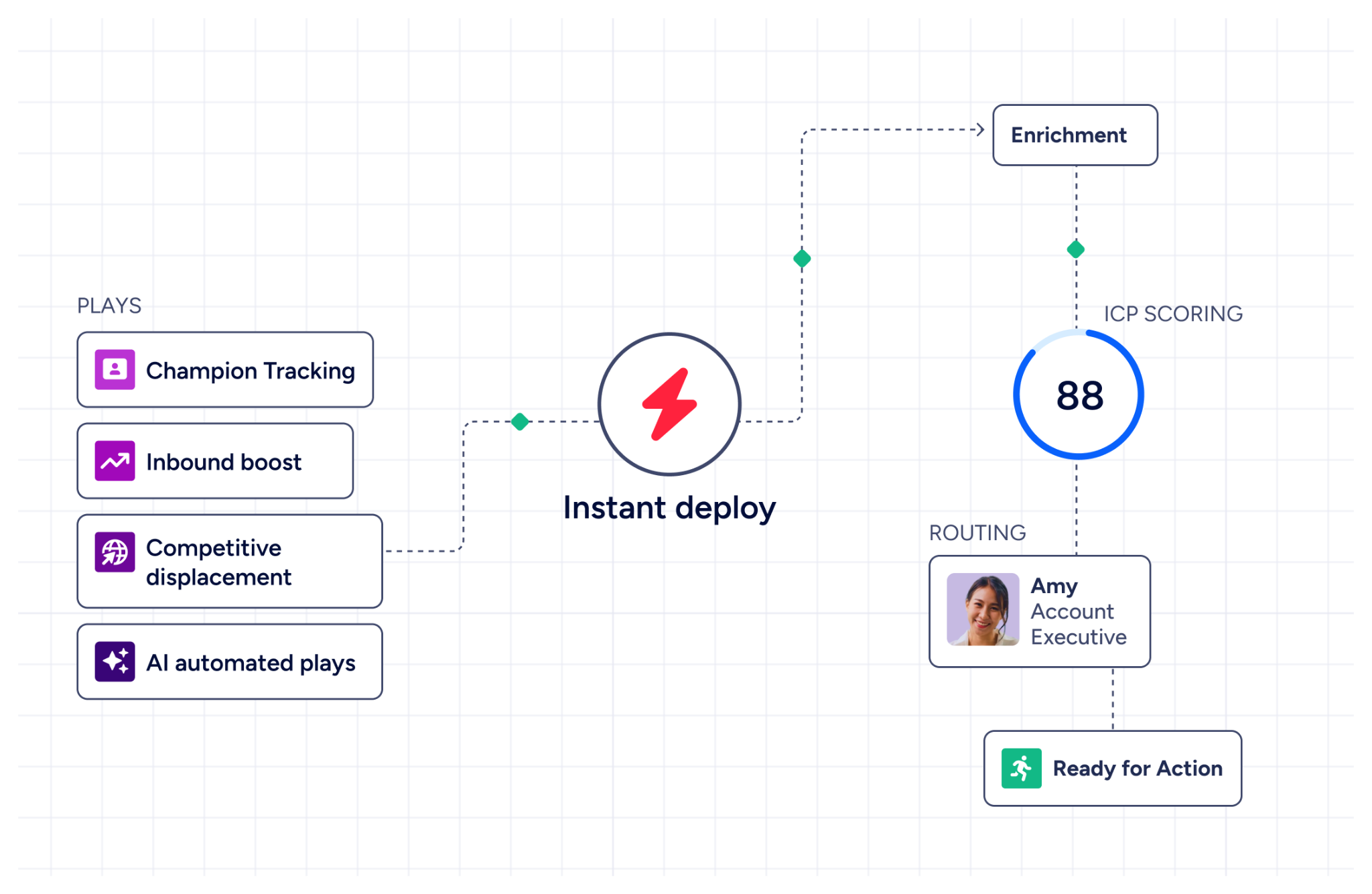
The intelligence is accessible through multiple channels. GTM Workspace gives sellers a single surface for account prioritization and AI-drafted outreach. GTM Studio gives marketers and RevOps teams an orchestration canvas for audience building and campaign activation. APIs and MCP deliver the same data into any custom application or planning platform, including Forma.ai or Anaplan, so territory and quota models can incorporate live market signals.
Implementation and time to value
The gap between purchase and production use is where these platforms diverge most.
Forma.ai includes professional services bundled into the license fee, so implementation doesn't require a separate consulting budget. The Forma.ai team works alongside your comp team to configure the platform, transform data, and go live. Customers consistently describe the vendor as an extension of their own organization. For organizations with complex comp structures, initial setup still takes meaningful time, but the implementation cost is embedded in the subscription rather than billed separately.
Anaplan implementations are a different scale. Enterprise deployments typically span multiple months and require 250+ certified implementation partners including Accenture, Deloitte, BCG, and McKinsey. G2's "Ease of Setup" score sits at 8.1/10, noticeably lower than the overall satisfaction rating, signaling implementation as a weak point. The need for dedicated certified model builders (internal or via consulting partners) adds cost beyond the license fee. For organizations that commit the resources, the payoff is a connected planning environment that serves the entire enterprise. For those that underestimate the investment, the result can be poorly designed models that are difficult to maintain.
ZoomInfo's implementation story differs from both. GTM Workspace "deploys in weeks, not months", and the platform's value is accessible from day one: search for contacts, identify in-market accounts, and enrich CRM data without waiting for a multi-month build.
AI capabilities across the three platforms
All three platforms invest in AI, but with different applications.
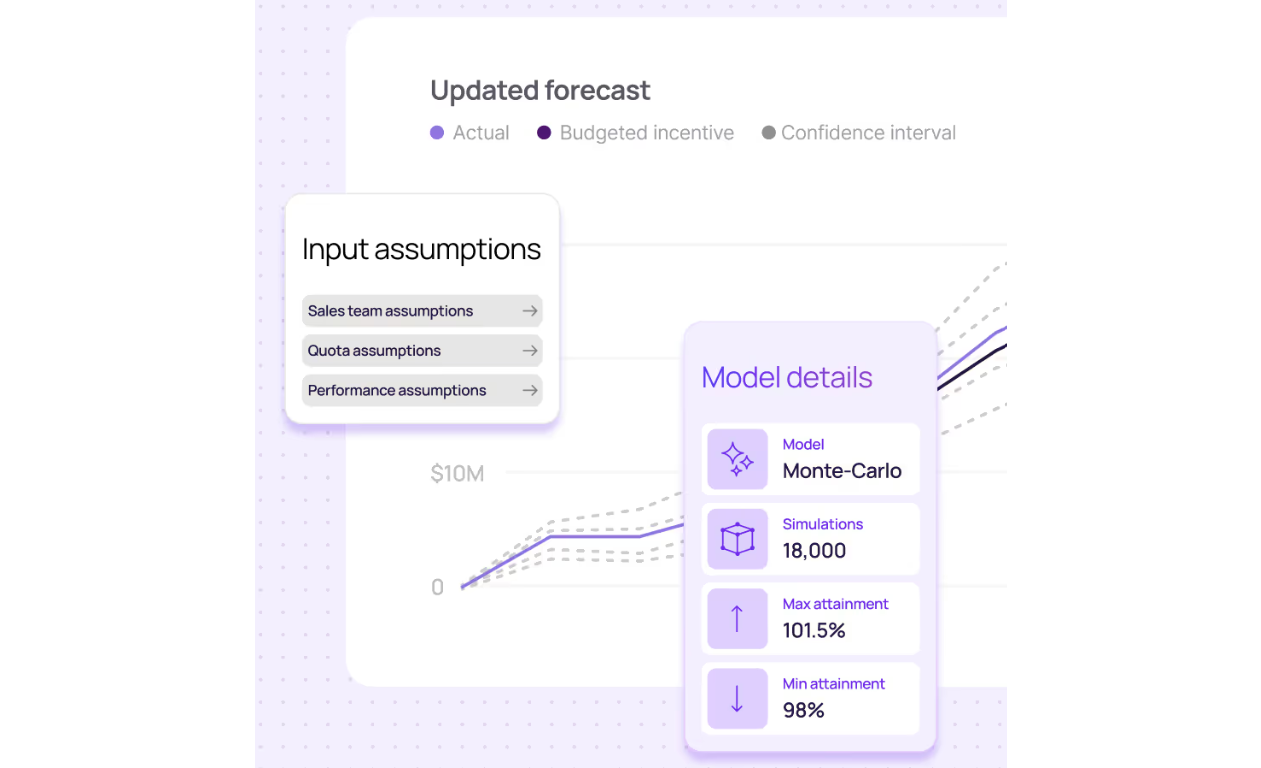
Forma.ai's AI focuses on plan configuration and predictive modeling. The platform's core innovation translates plain-language compensation logic into production-ready plan components. Forma Prophet adds ML-powered revenue intelligence, including Monte Carlo simulations for pressure-testing incentive structures and customer insight modeling for identifying unaddressed revenue potential.
Source: Forma.ai
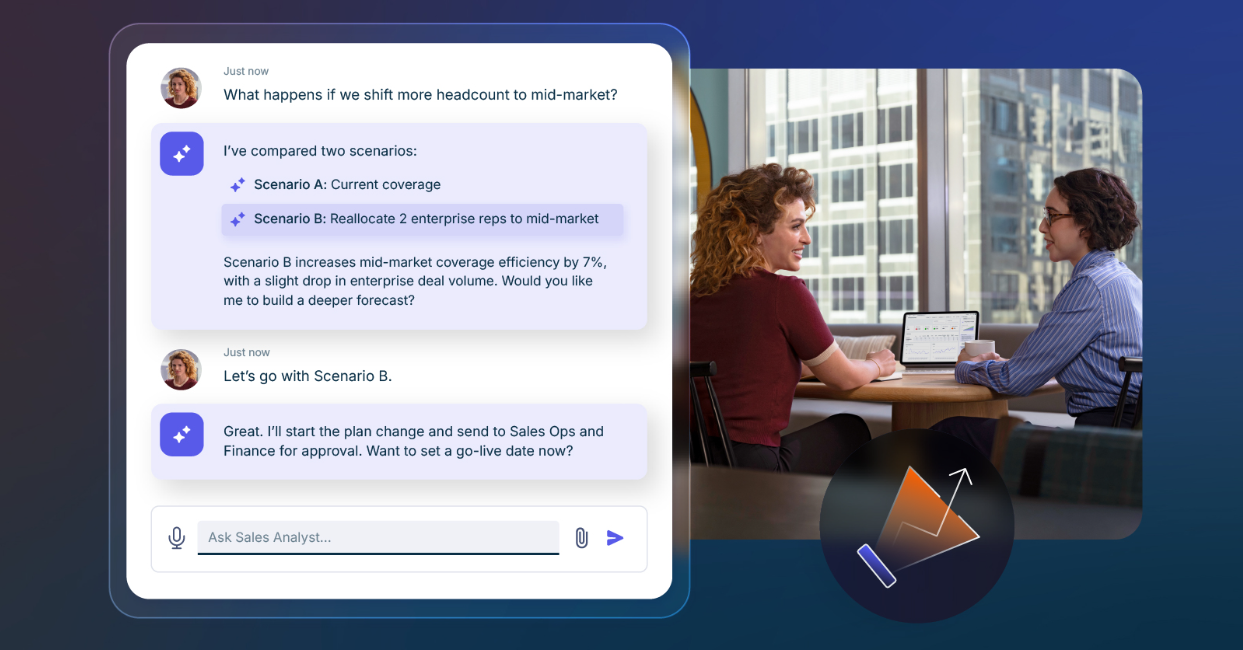
Anaplan's AI spans a broader surface. The company has committed to a $500M multi-year AI innovation roadmap covering predictive AI (Forecaster for ML time-series), generative AI (CoModeler for model building, Custom Analyst for natural-language queries), and agentic AI (role-based agents for Finance, Sales, Supply Chain, and Workforce). The Sales Analyst AI agent surfaces GTM risks, runs scenario comparisons, and triggers workflow actions through natural language.
Source: Anaplan
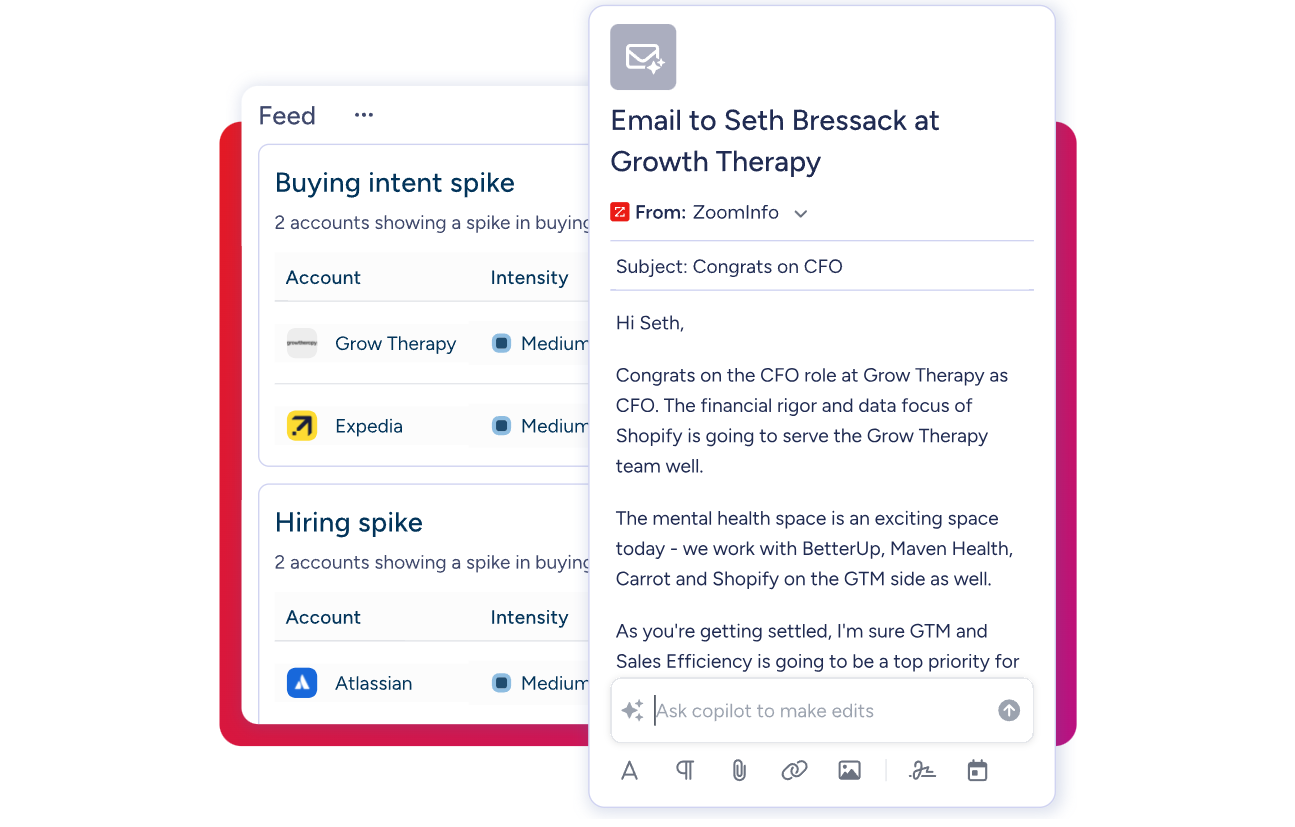
ZoomInfo's AI operates on a different layer. The GTM Context Graph processes 1.5B+ data points daily to understand why deals move or stall, not just that they did. AI agents inside GTM Workspace handle account research, outreach generation, CRM updates, and signal monitoring. The AI doesn't plan compensation. It provides the market intelligence that makes compensation planning accurate.
"That combination of our internal CRM data, external signals, and AI that's given all that context has helped us craft very specific account- and persona-based messages. And people have responded to them right away." (Toby Carrington, Chief Business Officer, Seismic)
Pricing and total cost of ownership
Neither Forma.ai nor Anaplan publishes pricing. Both use custom, quote-based models requiring a sales conversation. But the underlying economics differ.
Forma.ai structures pricing around three components: a one-time onboarding and implementation fee, an ongoing CompOps Platform subscription, and an AI-Configurator component priced by configuration scope. Professional services are bundled into the license, eliminating the need for a separate consulting budget. The homepage guarantees the lowest cost of ownership in the enterprise ICM category.
Anaplan's pricing is confidential under its contract terms. The SaaS Subscription Agreement reveals a structure that can compound: non-cancelable annual terms, separately priced applications, and additional professional services fees billed on a time-and-materials basis. Seat reductions mid-term are not permitted. Most large deployments require ongoing external consulting for model building and maintenance. The total cost of ownership includes license fees, implementation partner fees, internal model-builder headcount, and integration costs for supplementary reporting tools (since Anaplan's native reporting scores 6.4/10 on TrustRadius, leading most enterprises to add Power BI or Tableau).
ZoomInfo uses a consumption-based pricing model with multiple tiers across Sales, Marketing, and Data-as-a-Service products. Uniquely among the three, ZoomInfo offers ZoomInfo Lite as a permanent free tier with access to the B2B database, 10 monthly export credits, and basic search. A 7-day free trial with no credit card required is also available.
Integration and data connectivity
How each platform connects to your existing stack matters for adoption and long-term flexibility.
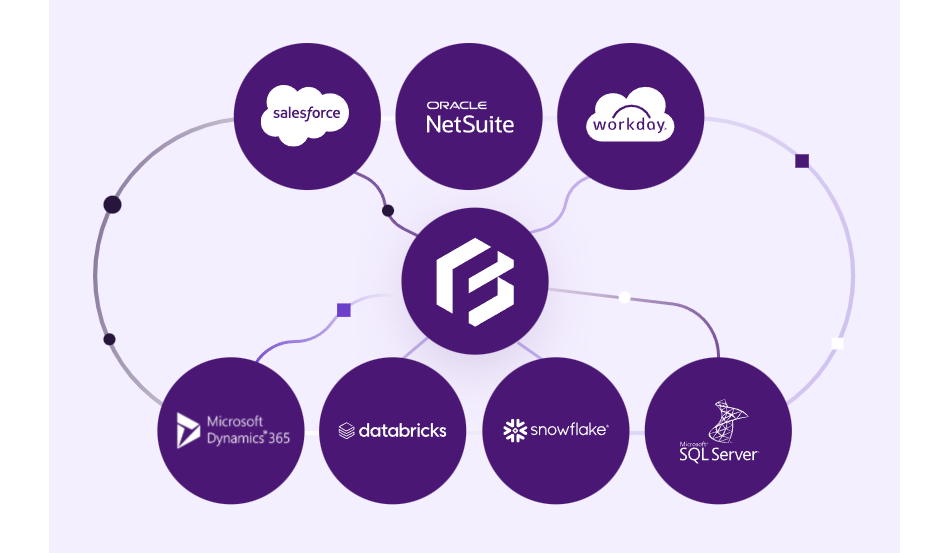
Forma.ai claims 600+ pre-built integrations (the dedicated integrations page references 200+) spanning CRM, ERP, HRIS, and custom data sources. The integration model is managed: Forma.ai works with customers to ensure data feeds are accurate and fit the proprietary data model. Public API documentation is not available; integration setup is handled through the enterprise sales process.
Source: Forma.ai
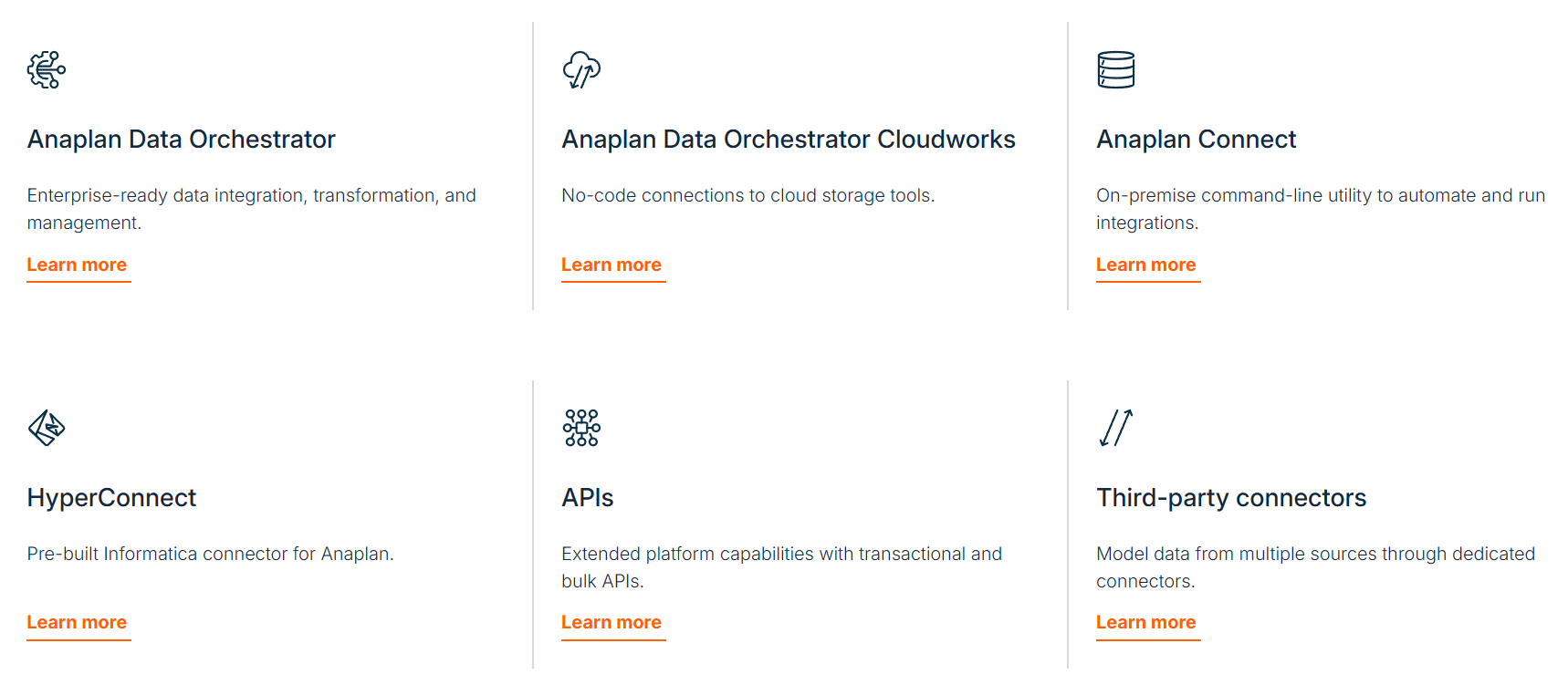
Anaplan offers a deeper integration stack for enterprise environments. CloudWorks connects natively to AWS S3, Google BigQuery, and Azure Blob Storage. The Anaplan Data Orchestrator provides no-code connectors to Salesforce, SAP, Oracle, Snowflake, and more. Third-party iPaaS connectors include MuleSoft, Boomi, Informatica, and SnapLogic. Productivity add-ins for Excel, PowerPoint, and Google Sheets extend the planning experience into familiar tools.
Source: Anaplan
ZoomInfo's integration approach makes its data accessible wherever you need it. The App Marketplace lists 172+ integration partners. The Enterprise API provides structured access to search, enrich, and intelligence endpoints. The MCP server connects ZoomInfo data directly to AI agents including Claude and ChatGPT. Cloud Data Cubes deliver ZoomInfo data into AWS, Snowflake, Google Cloud, and Databricks. API access is included in all relevant plans, making ZoomInfo's data programmable for any downstream planning or execution tool.
"The plug-and-play aspect of the API means I can integrate it very easily into any process and get information at a moment's notice." (Jerry Wilson, Senior Marketing Intelligence Analyst, BDO Canada)
Seller visibility and rep experience
What sellers see matters as much as what the back office builds.
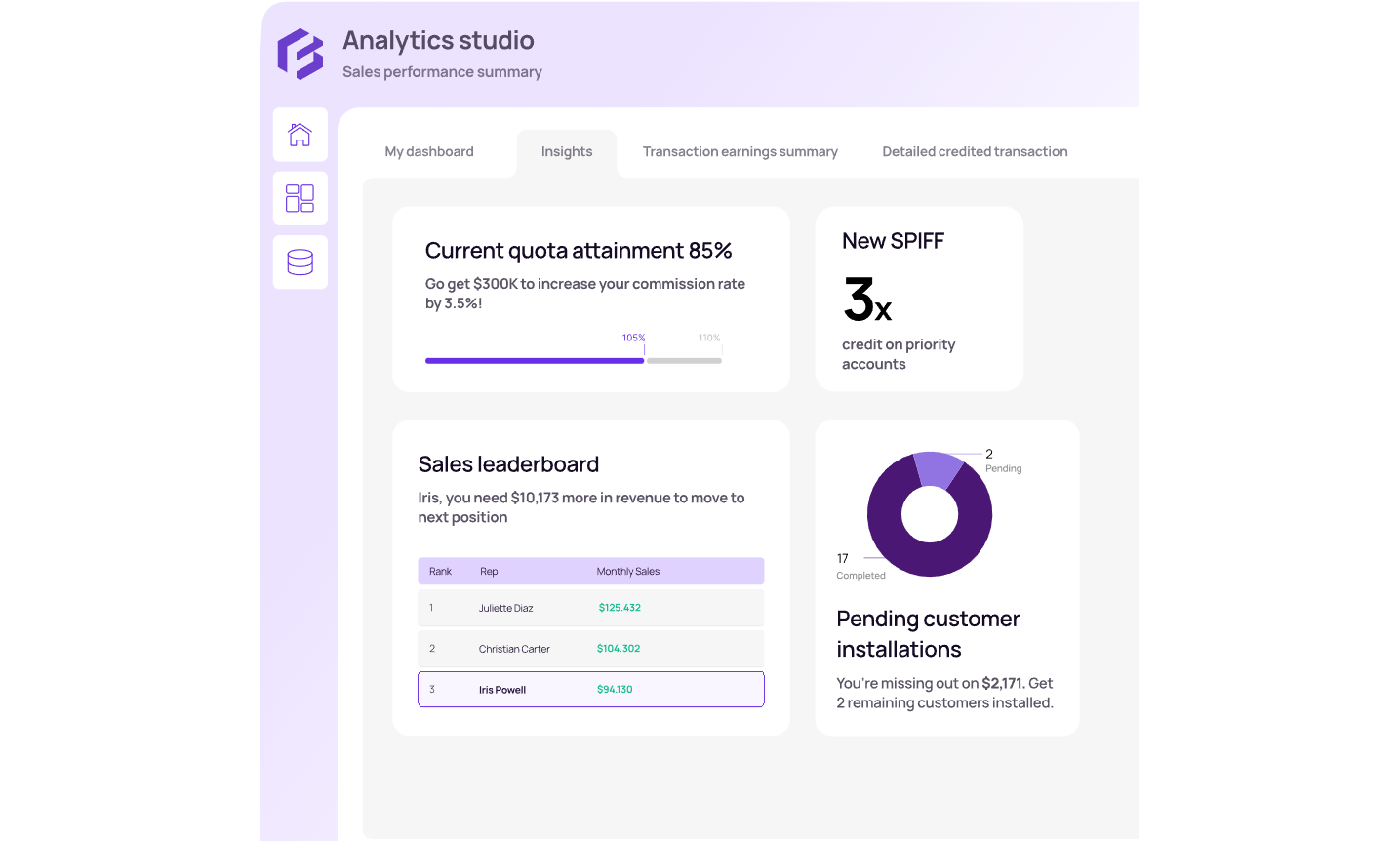
Forma.ai generates personalized incentive performance dashboards tailored to each rep's comp plan. Sellers see earnings, pipeline impact, leaderboard standings, and President's Club qualification status. Detailed commission statements with drill-down capabilities and a built-in dispute management flow reduce friction between sales and comp teams.
Source: Forma.ai
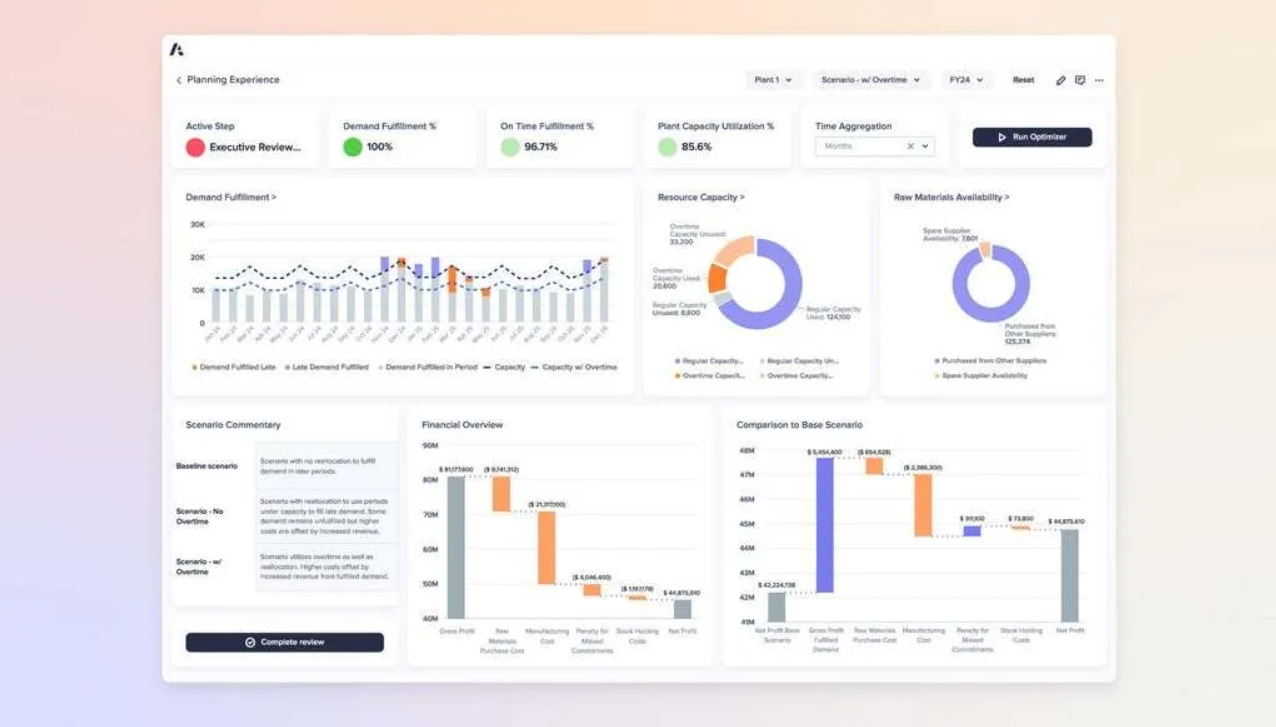
Anaplan's seller experience depends on how the model is built and configured. The Planning Experience provides a business-friendly interface with mobile access, and productivity integrations extend into Microsoft 365 and Excel. But Anaplan's seller-facing experience is not natively designed for individual rep commission visibility the way Forma.ai's is. The platform excels at manager and executive views of territory coverage, quota deployment, and forecast accuracy.
Source: Anaplan
ZoomInfo's rep experience is different in kind. GTM Workspace gives sellers a complete view of their book of business, AI-generated account briefs, an action feed of in-market buyers with pre-drafted outreach, and buying group intelligence. Sellers using GTM Workspace reported 54% productivity gains and 11.5 hours saved per week. It doesn't show commission earnings. It shows who to call, when to engage, and what to say.
Forma.ai vs. Anaplan vs. ZoomInfo: Which should you choose?
The right answer depends on where your biggest gap is.
Choose Forma.ai if:
Sales compensation is your primary bottleneck, not enterprise-wide planning
Your comp team needs to design and deploy plan changes in days, not months
You want AI-driven configuration without relying on certified model builders
Territory, quota, and ICM need to be connected in one system
Implementation support bundled into the license matters to your budget
You have hundreds or thousands of payees with complex, multi-layered comp structures
Choose Anaplan if:
You need sales planning connected to financial budgets, supply chain forecasts, and workforce models
Your organization has (or will invest in) a dedicated planning center of excellence
Multidimensional scenario modeling at enterprise scale is a core requirement
Cross-functional visibility from territory to P&L is non-negotiable
You're already in the Anaplan ecosystem for other planning functions
You're a Fortune 500 enterprise with the budget and timeline for a months-long implementation
Add ZoomInfo if:
Your territory plans rely on CRM data that's incomplete or outdated
You need verified contact data and org charts to map buying committees across accounts
Buyer intent signals would make your quota allocation and account prioritization more accurate
Your sellers need real-time market intelligence, not just commission statements
You want a data layer that feeds into any planning platform via API or MCP
You're building an AI-powered GTM stack and need B2B data at scale
Discover how ZoomInfo's market intelligence can power your sales planning with a free trial.
Forma.ai and Anaplan both solve real problems in sales performance management. Forma.ai solves the configuration and agility problem: getting comp plans from strategy to live calculation faster than anyone else. Anaplan solves the connectivity problem: linking sales plans to the broader enterprise planning ecosystem. ZoomInfo solves the intelligence problem: ensuring the market data underneath those plans is comprehensive, verified, and current.
The strongest GTM organizations don't choose between planning and intelligence. They use both. The plans tell your team what to do. The intelligence tells them where the opportunity actually is.
Forma.ai vs. Anaplan vs. ZoomInfo FAQ
What is the core difference between Forma.ai, Anaplan, and ZoomInfo?
Forma.ai is a sales performance management platform focused on incentive compensation, territory planning, and quota management, with AI that lets comp teams configure plan logic without coding. Anaplan is a connected enterprise planning platform where sales performance management is one domain alongside finance, supply chain, and workforce planning, all sharing one data model. ZoomInfo is a B2B data and intelligence platform providing verified contact data, company attributes, and buyer intent signals that inform territory design, quota accuracy, and account prioritization.
Which platform is better for sales incentive compensation management?
Forma.ai is built for ICM and designed so comp analysts can configure plans without technical skills. Anaplan's ICM capabilities require certified model builders and longer implementation timelines. Both handle complex enterprise commission structures; the difference is who can operate the system and how fast changes deploy.
Does Anaplan do everything Forma.ai does?
Anaplan covers territory planning, quota management, and incentive compensation, but with a different architecture. Anaplan's modeling engine requires proprietary formula expertise and dedicated model builders, while Forma.ai uses AI-driven natural language configuration. Anaplan adds cross-functional planning that Forma.ai doesn't offer: a territory change in Anaplan flows into financial budgets and workforce plans. Forma.ai adds native comp plan features Anaplan doesn't match: AI plan configuration, seller dashboards with individual earnings visibility, and professional services bundled into the license.
How does ZoomInfo complement Forma.ai or Anaplan?
ZoomInfo provides the external market intelligence that internal planning platforms lack. Territory plans become more accurate when they incorporate ZoomInfo's data on 100M companies with company attributes, technographics, and org charts. Quota setting improves when buyer intent signals reveal which accounts are actively in-market. Both Forma.ai and Anaplan can consume ZoomInfo data through API integrations, enriching planning models with verified, current market data rather than relying solely on CRM records.
Which platform requires the most technical expertise to operate?
Anaplan requires the most technical expertise. The Certified Model Builder path takes approximately 74 hours of structured coursework, and most large deployments require an internal center of excellence or ongoing external consulting. Forma.ai is designed for comp analysts without technical skills, using AI to handle configuration. ZoomInfo is accessible to sales, marketing, and RevOps users through its GTM Workspace and GTM Studio interfaces, with no model-building required.
How do the pricing models compare?
Neither Forma.ai nor Anaplan publishes pricing. Forma.ai uses a three-component structure (onboarding, platform subscription, AI-Configurator) with professional services bundled in, and guarantees the lowest total cost of ownership in enterprise ICM. Anaplan uses negotiated enterprise contracts with non-cancelable terms, separately priced applications, and additional implementation partner fees. ZoomInfo offers consumption-based pricing with a permanent free tier (ZoomInfo Lite) and a 7-day free trial, making it the only platform you can evaluate without a sales conversation.
Can I use all three platforms together?
Yes. Forma.ai or Anaplan handles the planning and compensation layer, while ZoomInfo provides the data and intelligence layer. ZoomInfo's APIs and MCP deliver verified contact data, company intelligence, and buyer intent signals that feed into either planning platform. The combination gives revenue leaders plans informed by real market conditions rather than stale internal data, executed against verified contacts with current direct-dial phone numbers and business emails.
Which platform has the strongest analyst recognition?
Anaplan has been named a Leader in the Gartner Magic Quadrant for Financial Planning Software for nine consecutive years and a Leader in the IDC MarketScape for Sales Performance Management 2025. Forma.ai was named a Strong Performer and the only Customer Favorite in the Forrester Wave for SPM Solutions (Q1 2025). ZoomInfo holds Leader positions in both the Gartner Magic Quadrant for ABM Platforms and the Forrester Wave for Intent Data Providers, plus 133 No. 1 rankings on G2 and the only Customers' Choice position in the 2025 Gartner Voice of the Customer report.
More Forma.ai comparisons:
