
If you're comparing Forma.ai vs. SAP CallidusCloud, you're asking one of the most important questions in revenue operations: how should we compensate our sellers?
Get it wrong and your top performers leave, quotas go unmet, and finance spends half the quarter reconciling spreadsheet errors. Get it right and compensation becomes a growth lever, not an administrative burden.
But before you pick a platform, make sure you're asking the right questions:
Do you need a platform that automates existing comp plans, or one that helps you design better plans from scratch?
Is your organization already running SAP ERP, or are you evaluating incentive compensation independent of your back-office stack?
How much do you rely on technical administrators or IT to make comp plan changes today?
Do you need territory and quota planning in the same system as incentive calculations, or are those handled separately?
Is your sales team finding and engaging the right buyers, or are you optimizing compensation for a pipeline that's already underperforming?
Here's what we recommend:
Forma.ai is the AI-native challenger built for enterprise comp teams that want to move faster. Its data model lets users describe compensation logic in plain language and have AI compile it into production-ready plan components, eliminating the months-long rollout cycles that plague legacy ICM tools. With territory planning, quota management, and incentive compensation in one platform, Forma.ai compresses the time between strategy and execution. The trade-off: Forma.ai requires an enterprise commitment, has no self-serve trial, and its initial setup has a real learning curve for organizations with complex compensation structures.
SAP CallidusCloud (now sold as SAP Incentive Management, SAP CPQ, SAP Territory and Quota, and SAP Sales Cloud) is the enterprise incumbent for organizations already invested in the SAP ecosystem. It handles large calculation volumes, multi-currency payouts, and regulatory compliance across global operations. SAP's native integration with S/4HANA, SuccessFactors, and Commerce Cloud creates a lead-to-cash thread that no standalone ICM tool can match. The trade-off: implementations typically take 6 to 12 months, the interface feels dated, and organizations outside the SAP stack pay the same complexity cost without the integration payoff.
Both platforms solve the compensation calculation problem. But here's what neither addresses: whether your sellers are finding and engaging the right buyers in the first place. The best comp plan in the world can't fix a pipeline built on stale data, missed buying signals, and guesswork about who to call next.
ZoomInfo is a GTM intelligence platform that sits upstream of your compensation stack, giving the sellers you're incentivizing the intelligence they need to win. Built on 500M contacts, 100M companies, 135M+ verified phone numbers, and 200M+ verified business emails, ZoomInfo's GTM Context Graph processes 1.5B+ data points daily and fuses this data with your CRM records, conversation transcripts, and behavioral signals to reveal not just what happened in a deal, but why. That intelligence reaches users three ways: GTM Workspace for sellers, GTM Studio for marketers and RevOps, or APIs and MCP into any tool in your stack. For revenue leaders choosing between Forma.ai and SAP CallidusCloud, ZoomInfo makes whichever investment you choose more effective.
If building a stronger pipeline sounds like the missing piece in your GTM strategy, see how ZoomInfo works.
Forma.ai vs. SAP CallidusCloud at a glance
Forma.ai | SAP CallidusCloud | ZoomInfo | |
|---|---|---|---|
Primary function | AI-native ICM + territory/quota planning | Enterprise SPM suite (ICM, CPQ, T&Q, CRM) | GTM intelligence + sales execution |
Plan configuration | AI-powered, natural language | Drag-and-drop with templates | N/A (complements ICM) |
Territory & quota | Native, connected to ICM | Separate module with geospatial tools | Territory intelligence via data + signals |
Implementation time | Weeks to months (white-glove) | 6 to 12 months typically | Deploys in weeks |
AI capabilities | Plan auto-configuration, scenario modeling | Joule copilot, prescriptive optimization | GTM Context Graph, AI-drafted outreach |
Pricing model | Custom enterprise quotes | Custom enterprise quotes | Custom, consumption-based |
Free trial | No | No (30-day Sales Cloud trial only) | 7-day trial + permanent free tier |
Analyst recognition | Forrester Strong Performer (Q1 2025) | Gartner SPM Leader (7 consecutive years) | Gartner ABM Leader; Forrester Intent Data Leader |
Best for | Enterprise comp teams wanting agility | Large orgs already running SAP ERP | Revenue teams needing buyer intelligence |
Two fundamentally different architectures for comp management
Forma.ai and SAP CallidusCloud approach the same problem from opposite directions.
SAP CallidusCloud (now SAP Incentive Management) descends from Callidus Software, incorporated in 1996 as one of the original enterprise incentive management systems. Its pipeline calculation engine processes transactions through four sequential stages: classify, allocate, reward, and pay.
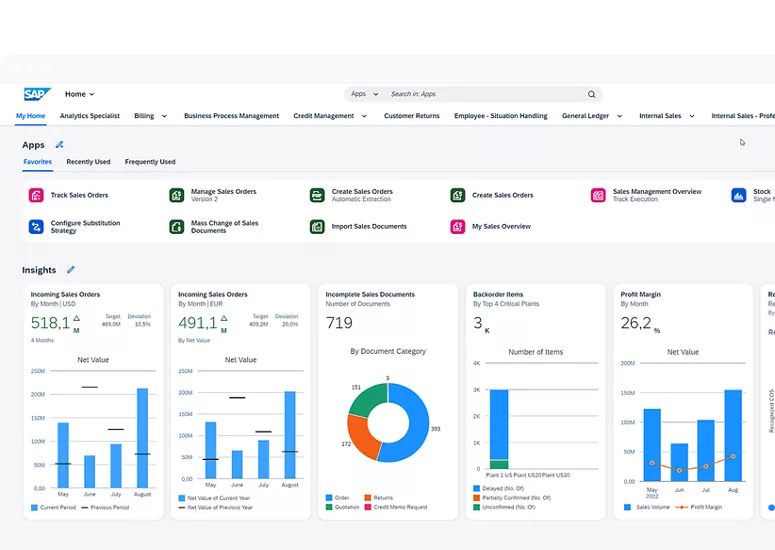
Source: SAP
This architecture was built to handle large transaction volumes with precision, and after nearly three decades, it does that well. SAP acquired CallidusCloud and folded it into the SuccessFactors and Customer Experience portfolios.
Forma.ai, founded in 2016 by a former ZS Associates consultant who spent years watching Fortune 500 companies wait six to eight months for compensation changes, was designed around a different premise.
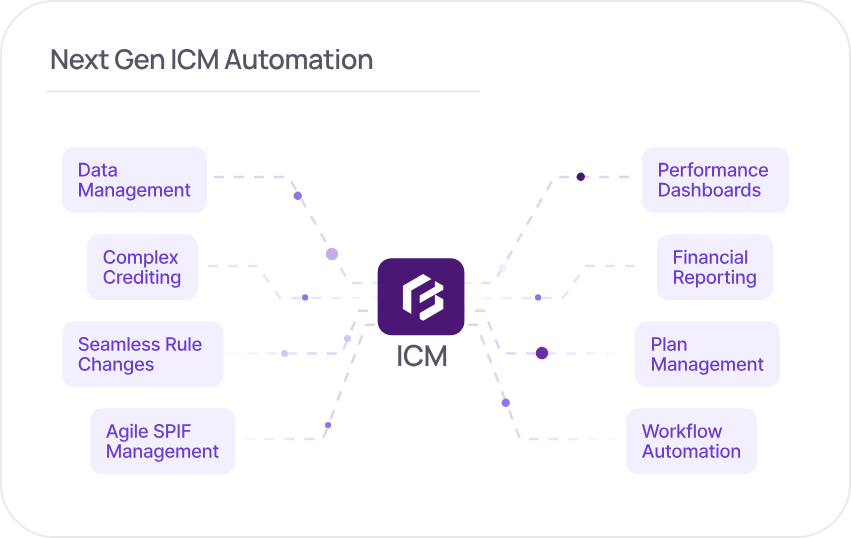
Source: Forma.ai
Instead of building a calculation engine that requires technical administrators to construct formulas, Forma.ai built a unified data model where users define parameters and AI translates requirements into rule logic.
The difference is structural: SAP requires formula construction for every plan change; Forma.ai requires parameter definition.
Plan design and configuration tell the real story
This is where Forma.ai creates the widest gap.
Traditional ICM platforms, SAP included, treat plan design as a technical configuration exercise. Compensation analysts define what they want, then either build formulas themselves or file a request with IT.

Source: SAP
SAP Incentive Management offers drag-and-drop interfaces and preconfigured templates, which reduces the burden compared to raw formula building. But reviewers consistently note that the software is complex to set up and administer, and configuring calculation rules and pipeline logic requires specialized knowledge.
Forma.ai works differently at the foundation. Users describe new incentive logic in plain language and AI compiles it into a validated, reusable plan component. No SQL, no formula construction, no IT queue. Changes go live instantly without rebuilding rules or migrating sandboxes.
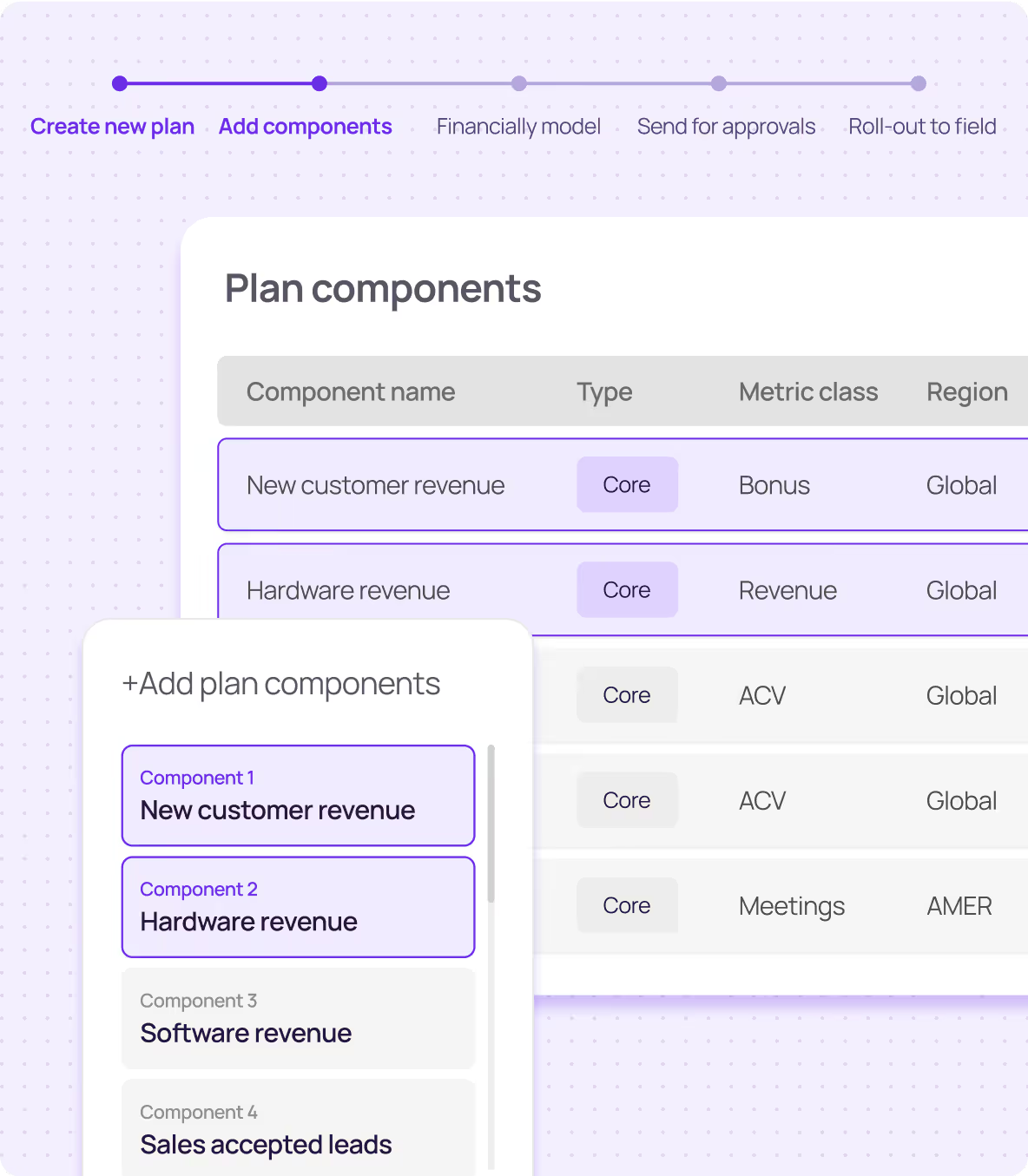
Source: Forma.ai
This difference compounds over time. When a mid-year strategy pivot requires comp plan adjustments, SAP customers face a configuration cycle that may involve their implementation partner. Forma.ai customers model the change, validate it against historical data, and deploy, all within the same platform.
SAP has recognized this gap. The Joule copilot now offers natural-language Q&A for incentive management questions and prescriptive AI recommendations for optimizing comp plan design. These additions narrow the AI gap, but Joule is a conversational layer on top of an existing architecture, not a rethinking of the architecture itself.
Territory and quota planning: connected vs. modular
Both platforms offer territory and quota management, but they integrate differently.
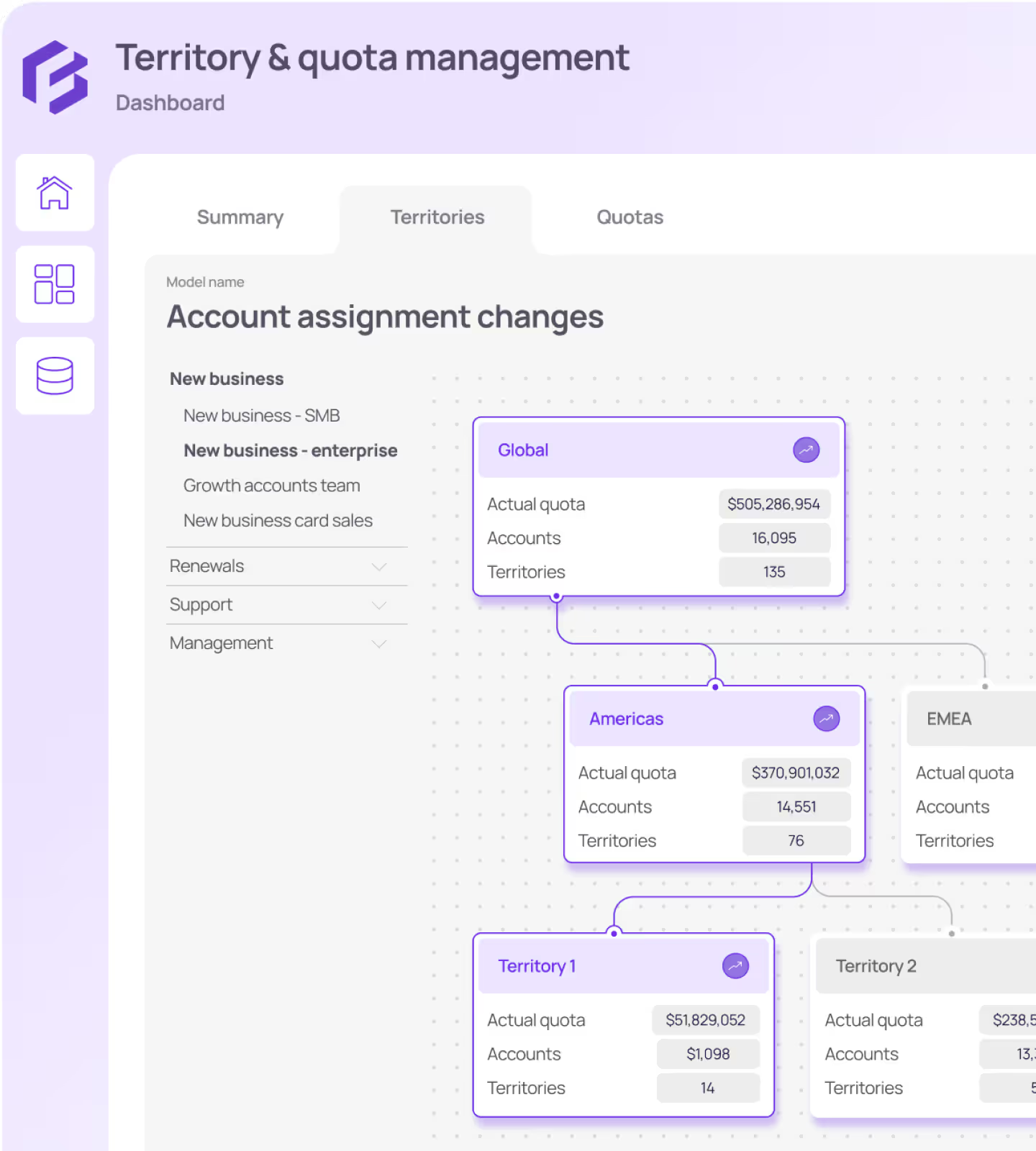
Forma.ai's Architect module connects directly to its ICM engine. When a territory changes or a quota is adjusted, crediting rules, plan documents, and payouts update automatically. There's no manual reconciliation, no data export, and no waiting for overnight crediting runs.
Source: Forma.ai
The platform uses AI-driven analysis to assess account potential and workload, matching seller capacity with market demand. Multiple team members can make updates simultaneously across models in a collaborative workspace.
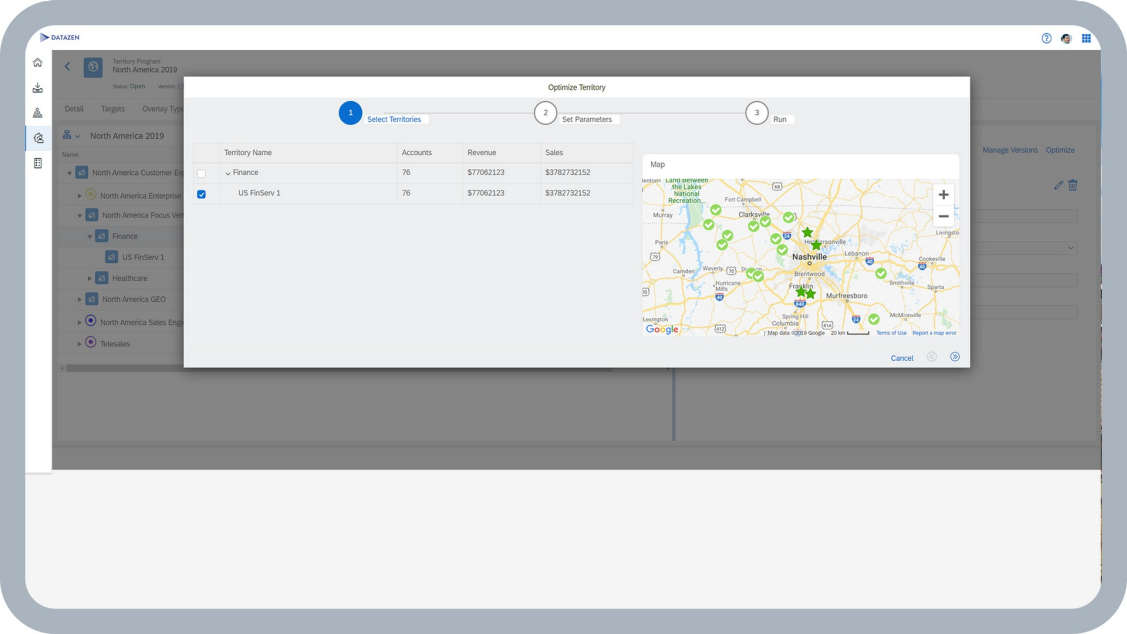
SAP Territory and Quota offers its own strengths. Its geospatial visualization tools map account and prospect data onto visual maps, making geographic coverage gaps immediately visible.
Source: Forma.ai
The AI optimization engine models the cost of disrupting existing rep-account relationships (what SAP calls "churn") against revenue potential, giving planners transparency into the trade-offs of every realignment decision.
The difference is in how these modules connect to compensation.
In Forma.ai, territory changes cascade directly to incentive calculations in real time. In SAP, Territory and Quota is a separate product within the SuccessFactors portfolio. It connects to SAP Incentive Management, but the depth of that integration depends on your specific deployment architecture and implementation.
Both Forma.ai and SAP face the same upstream limitation: their territory and quota intelligence is only as good as the data feeding it. If your account data is stale, your org charts are incomplete, or you're missing signals about which accounts are in-market, even the best planning tool will produce suboptimal results.
ZoomInfo's data layer becomes relevant in this area. ZoomInfo's 500M contacts, 100M companies, and 300+ company attributes provide the market intelligence that makes territory and quota decisions more accurate.
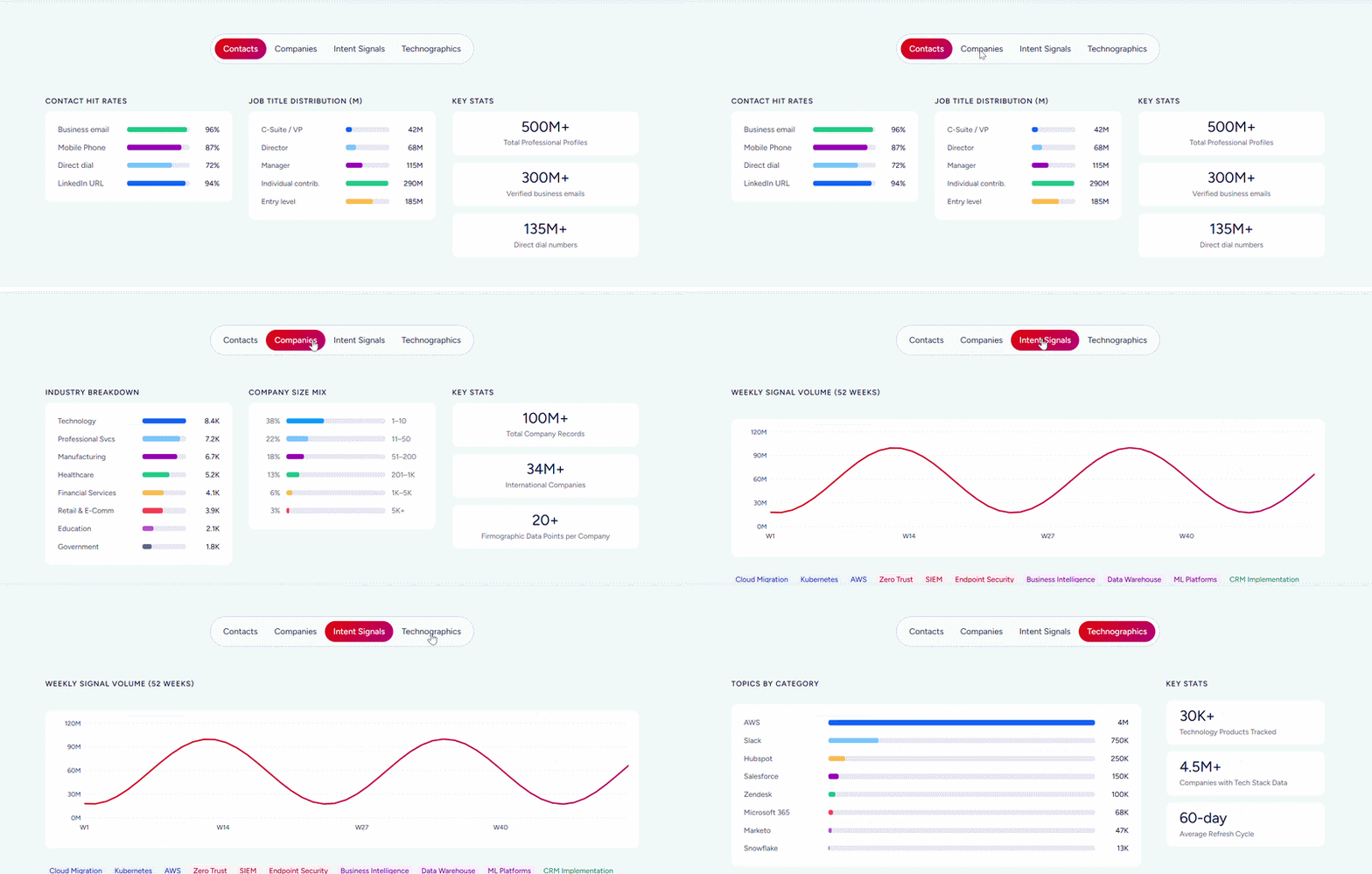
When a territory planner can see not just which accounts exist in a geography, but which ones are researching solutions (via buyer intent data), hiring in relevant departments, or showing technographic signals that indicate readiness, territory assignments become grounded in current market reality rather than last year's CRM snapshot.
"ZoomInfo is our one source of truth for account data, and even more so for contact data. There's no other provider in the market that provides you with that level of detail." (Smartsheet)
The SAP ecosystem advantage (and its constraints)
SAP CallidusCloud's strongest argument has nothing to do with compensation features. It's the ecosystem.
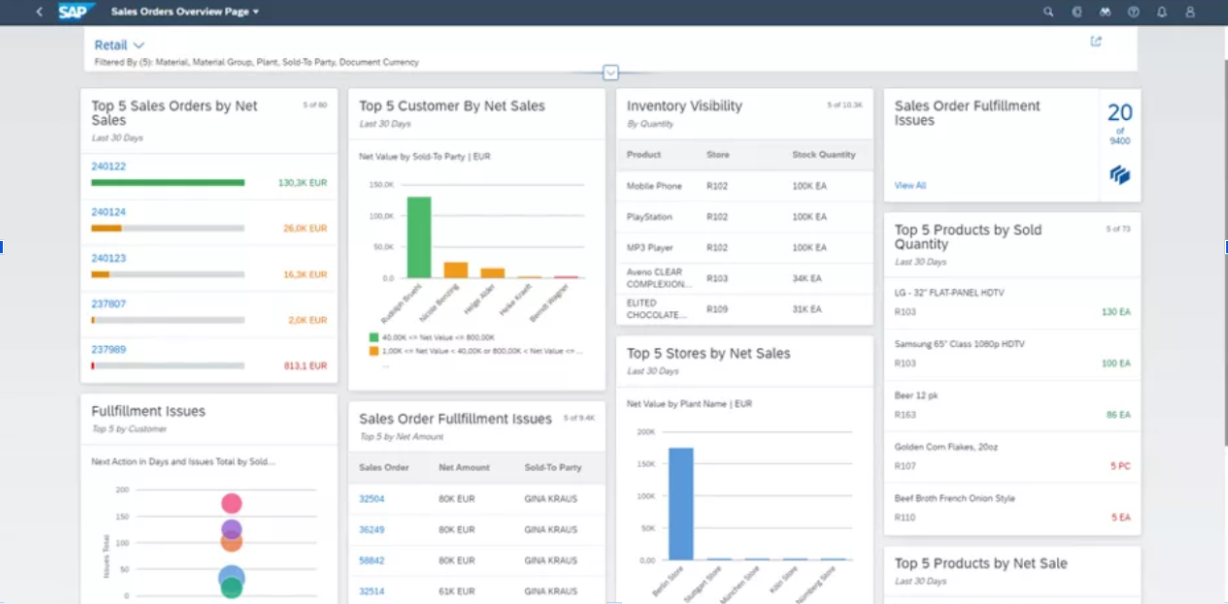
For organizations running SAP S/4HANA, the integration story is compelling. ERP financial metrics, inventory data, supply chain details, sales documents, and invoices feed into a single, data-driven incentive plan.
Source: SAP
Commission calculations pull directly from ERP order data without custom middleware. Territory assignments connect to HR records in SuccessFactors. Quotes generated in SAP CPQ flow through to commission crediting without manual reconciliation.
But the ecosystem advantage becomes a constraint for non-SAP organizations. User feedback shows the product is less compelling for organizations not already committed to SAP ERP. Capterra reviewers flag problems with the Salesforce integration, including performance issues during sandbox-to-production transfers and slow data loading.
Forma.ai is CRM-agnostic. Its 600+ pre-built integrations connect to CRM, ERP, HRIS, and custom data sources through a managed integration approach. The platform doesn't require any particular ERP or CRM, though it lacks the depth of native connectivity that SAP achieves within its own stack.
For revenue teams using Salesforce, HubSpot, or Microsoft Dynamics, ZoomInfo provides the data connectivity that SAP reserves for its own ecosystem. ZoomInfo integrates natively with Salesforce, HubSpot, and Microsoft Dynamics and offers API access across all plans, so the same buyer intelligence flows into whatever CRM and ICM combination you choose.
Implementation and time-to-value
This is SAP CallidusCloud's most consistent pain point and Forma.ai's most consistent selling point.
SAP implementations typically require 6 to 12 months with specialized partners, and costs for larger enterprises can exceed $100,000. The complexity is structural: configuring calculation pipelines, mapping data sources, building plan hierarchies, and testing across scenarios takes time regardless of the implementation team's quality.
SAP has not announced an accelerated deployment offering comparable to what faster-deploying competitors provide.
Forma.ai uses a white-glove implementation model where professional services are bundled into the license fee. There's no separate consultant spend. Customers consistently describe the Forma.ai team as an extension of their own organization. Implementation timelines vary by complexity, but the platform's architecture (parameter definition rather than formula construction) requires less configuration work.
G2 reviewers note that Forma.ai's initial setup takes real time because incentive structures can get complex, and early configuration has a noticeable learning curve. But the comparison is relative. Forma.ai's learning curve is measured in weeks; SAP's is measured in quarters.
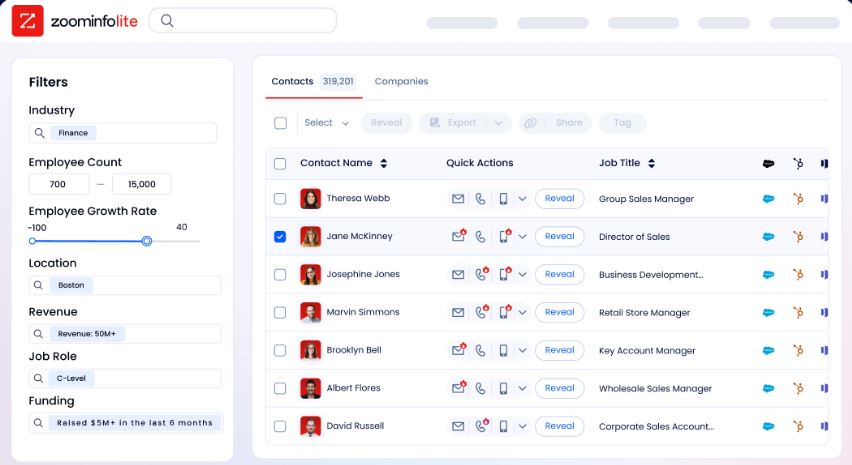
ZoomInfo sits at the opposite end of the spectrum. GTM Workspace "deploys in weeks, not months", and the platform offers a 7-day free trial plus a permanent free tier (ZoomInfo Lite) for teams that want to evaluate the data before committing.
Reporting, analytics, and seller visibility
Both ICM platforms give sellers visibility into their earnings, but the depth and usability differ.
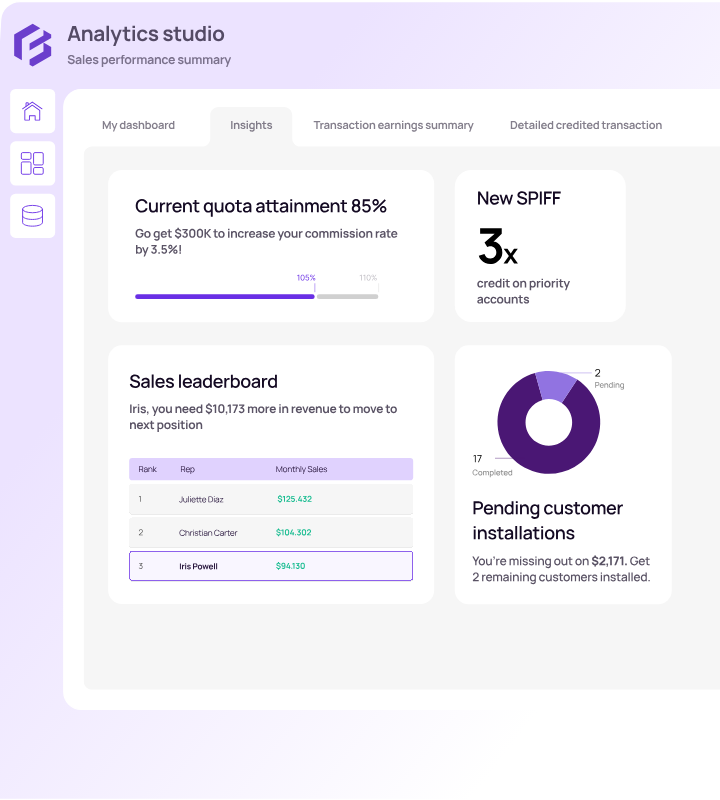
Forma.ai generates performance dashboards tailored to each rep's comp plan, showing earnings, pipeline impact, leaderboard standings, and President's Club qualification status.
Source: Forma.ai
The platform also includes commission statements with drill-down capabilities and a built-in dispute management flow.
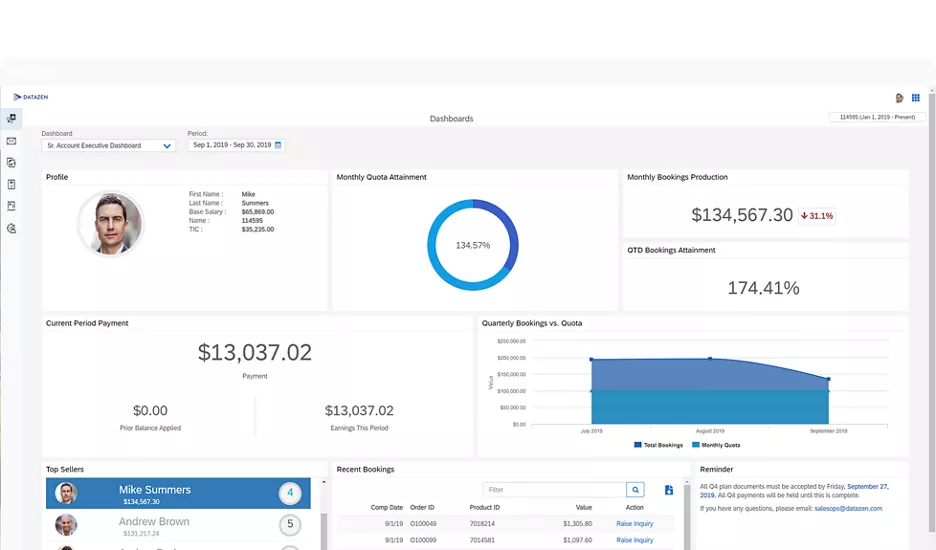
SAP Incentive Management provides one-click traceability into how it calculated commissions, plus embedded dispute workflows.
Source: SAP
However, users consistently describe pulling specific data as "cumbersome", and self-serve analytics are not a strength. Deeper reporting often requires SAP Analytics Cloud as a separate licensed product.
Where both platforms stop is at the intelligence that informs seller action. They tell reps what they've earned and where they stand against quota. They don't tell reps which accounts to prioritize next, which buying signals suggest a deal is accelerating, or which stakeholders they haven't yet engaged.
That's the gap ZoomInfo fills. GTM Workspace's Action Feed surfaces in-market buyers matched to target criteria, with pre-drafted actions on every signal.
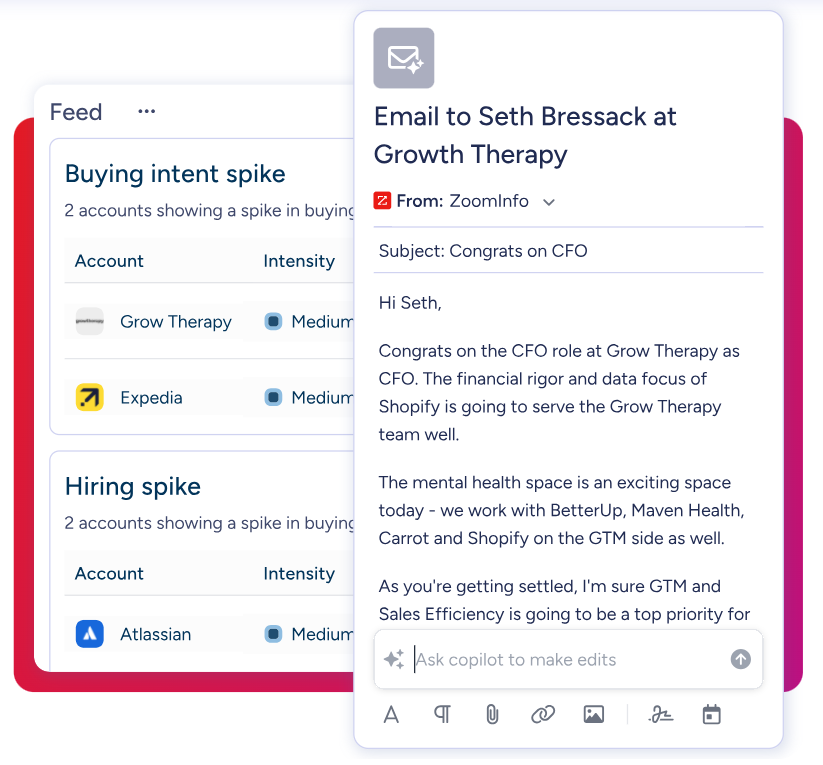
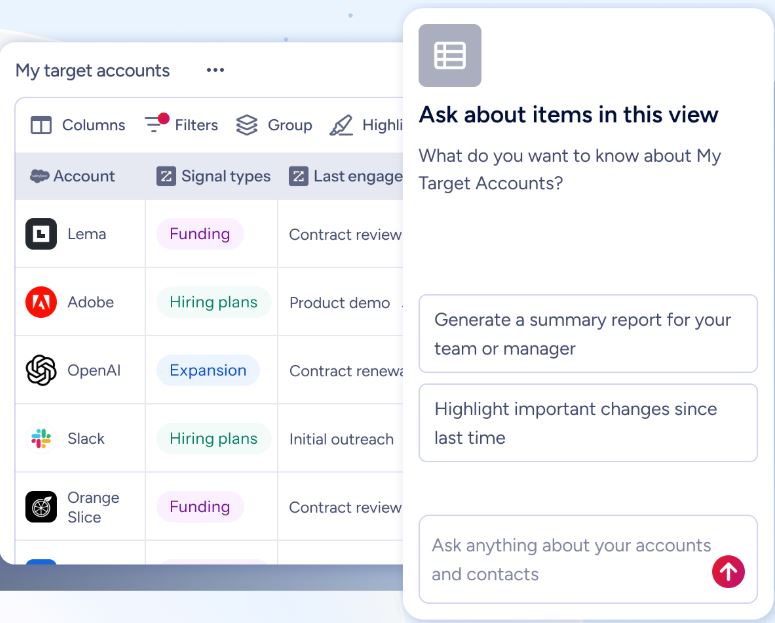
The AI Assistant generates account briefs pulling CRM history, company news, and stakeholder context into a 10-second summary.
Seismic's sales team boosted productivity by 54% and attributed 39% of active pipeline to ZoomInfo signals.
"That combination of our internal CRM data, external signals, and AI that's given all that context has helped us craft very specific account- and persona-based messages. And people have responded to them right away." (Seismic)
Compliance, audit, and security
For enterprises in regulated industries, both ICM platforms provide strong compliance capabilities.
SAP brings the full weight of its parent company's certification portfolio. The SAP Trust Center documents ISO 27001, ISO 27017, ISO 27018, SOC 1 and SOC 2, PCI DSS, CSA STAR, and FedRAMP availability. European Supervisory Authorities designated SAP a Critical ICT Third-Party Service Provider under DORA, the highest level of regulatory scrutiny for financial sector cloud providers in the EU.
For insurance carriers and financial services firms, this compliance depth is a real selection factor.
Forma.ai holds SOC 1 and SOC 2 certifications (Type 1 and Type 2), with multi-level encryption, third-party penetration testing, granular permission controls, and immutable audit trails. The platform includes built-in ASC 606 reporting tied directly to ICM calculations and automated SOX compliance workflows.
SAP's compliance portfolio is broader and deeper. Forma.ai's focuses on the compliance requirements most relevant to sales compensation. For organizations in heavily regulated verticals (insurance, financial services, government), SAP's certification breadth may be decisive. For organizations whose compliance needs center on SOX, ASC 606, and standard data security, both platforms meet the bar.
Pricing: enterprise quotes on both sides
Neither Forma.ai nor SAP CallidusCloud publishes pricing. Both require enterprise sales conversations.
Forma.ai's pricing structure has three components: a one-time onboarding and implementation fee, an ongoing CompOps Platform subscription, and an AI-Configurator component priced by configuration capability level. Professional services are bundled into the license, which removes a cost category that SAP customers typically pay separately.
SAP's pricing is also quote-only. Third-party estimates suggest per-user pricing starts around $134/user/month with minimum implementation costs around $20,000, making the platform cost-prohibitive for small businesses. Implementation services, often delivered by SAP Professional Services or certified partners, cost extra beyond the software license.
The total cost of ownership extends beyond the ICM platform itself. Both Forma.ai and SAP charge for the tools that calculate and manage comp. But the quality of the pipeline feeding those comp plans determines whether the investment generates returns. If reps chase the wrong accounts or miss buying signals, even a well-designed comp plan underperforms.
ZoomInfo's pricing is custom and consumption-based, with plans organized across Sales, Marketing, and Operations tiers. The permanent ZoomInfo Lite free tier provides access to the B2B database with 10 monthly export credits, and a 7-day free trial opens the full platform for evaluation.
Who each platform is (and isn't) built for
Forma.ai fits best with: Enterprises with 200+ payees running complex, multi-layered compensation structures who are frustrated by the rigidity and cost of legacy ICM tools. Industries with channel partner complexity, multi-country operations, or variable quota and territory structures get disproportionate value.
Forma.ai is not for: Organizations with fewer than 100 payees, simple flat commission structures, or teams that need instant self-serve access without an onboarding process.
SAP CallidusCloud fits best with: Large enterprises (1,000+ employees) already running SAP S/4HANA or SAP ERP who need ICM, CPQ, and CRM inside a single vendor relationship. Insurance carriers, financial services firms, and manufacturers with large configurable product catalogs and strict regulatory requirements are natural fits.
SAP CallidusCloud is not for: SMBs under 200 employees, Salesforce-native organizations with no SAP footprint, or startups needing fast-to-deploy ICM. The 6-to-12-month implementation timeline and high cost floor make the ROI equation difficult for smaller or simpler use cases.
ZoomInfo fits best with: B2B revenue teams that need buyer intelligence to build pipeline, prioritize accounts, and engage the right stakeholders. ZoomInfo works alongside either ICM platform (or any other), providing the data and signals that make seller performance, and therefore compensation investment, more effective. Named enterprise customers include Adobe, Snowflake, Thomson Reuters, and Databricks.
Forma.ai vs. SAP CallidusCloud vs. ZoomInfo: Which should you choose?
These three platforms serve different layers of the revenue stack. The right combination depends on your current infrastructure, your biggest bottleneck, and your growth trajectory.
Choose Forma.ai if:
You need flexibility in comp plan design without relying on IT
Speed of plan deployment is a competitive advantage for your business
You want territory, quota, and ICM connected in one platform
You're replacing a legacy ICM that has become a bottleneck
Bundled professional services appeal more than separate consultant engagements
Choose SAP CallidusCloud if:
You're already running SAP S/4HANA or SAP ERP and want native integration
You need CPQ alongside ICM in a single vendor relationship
Regulatory compliance depth (DORA, FedRAMP, ISO 42001) is a hard requirement
You manage agent/producer lifecycles in insurance or financial services
You have the implementation timeline and budget for a 6-to-12-month deployment
Add ZoomInfo regardless of your ICM choice if:
Your sellers need better intelligence about who to call, when to engage, and what to say
Your territory and quota planning would benefit from verified, current market data
You want AI-driven account prioritization and outreach grounded in real buying signals
You need a GTM intelligence layer that works across your entire stack via API, MCP, or native integrations
Pipeline quality, not just compensation mechanics, is your primary growth constraint
See how ZoomInfo's GTM intelligence platform can strengthen your revenue stack.
Compensation management and buyer intelligence solve different problems but share the same goal: making your revenue team more effective. Forma.ai and SAP CallidusCloud ensure sellers are paid accurately and incentivized toward the right behaviors. ZoomInfo ensures those sellers have the market intelligence, buying signals, and account context to hit the targets their comp plans are built around. The most effective GTM organizations invest in both layers.
"It's not just the data itself. It's more about the right data at the right time to help us reach out with the right message across that full buyer journey." (Redwood Logistics)
Forma.ai vs. SAP CallidusCloud vs. ZoomInfo FAQ
What is the core difference between Forma.ai and SAP CallidusCloud?
Forma.ai is an AI-native sales performance management platform where users describe compensation logic in plain language and AI compiles it into production-ready plan components. SAP CallidusCloud (now SAP Incentive Management) uses a pipeline calculation engine with drag-and-drop plan design, built for deep integration with the SAP ERP ecosystem.
Forma.ai prioritizes speed and flexibility in plan deployment; SAP prioritizes scale, compliance depth, and native connectivity across the SAP stack.
How does ZoomInfo relate to sales compensation platforms like Forma.ai and SAP CallidusCloud?
ZoomInfo is not a compensation management tool. It is a go-to-market intelligence platform that works alongside either ICM solution. ZoomInfo provides the buyer data, intent signals, and account intelligence that help sellers build stronger pipeline and close more deals. The comp plan incentivizes the right behaviors; ZoomInfo gives sellers the intelligence to execute on them.
Which platform is faster to implement?
Forma.ai typically deploys faster than SAP CallidusCloud. SAP implementations take 6 to 12 months with costs that can exceed $100,000 for larger enterprises. Forma.ai's timeline varies by complexity but benefits from an architecture that requires parameter definition rather than formula construction, plus professional services bundled into the license fee.
ZoomInfo deploys in weeks, with a free trial and permanent free tier available for immediate evaluation.
Is SAP CallidusCloud worth it if we don't use SAP ERP?
The value proposition shifts for non-SAP organizations. SAP's core differentiator is native integration with S/4HANA, SuccessFactors, and Commerce Cloud. Without that ecosystem, you absorb the same implementation complexity and cost without the integration payoff. Forma.ai or other CRM-agnostic ICM platforms may offer better ROI for non-SAP environments.
Which platform handles the most complex compensation structures?
Both handle enterprise-grade complexity. SAP Incentive Management supports multi-tier, multi-currency, split-credit, and draw-against-commission structures across global operations, backed by nearly three decades of edge-case handling. Forma.ai supports comparable complexity through its unified data model, with Autodesk running 2,500+ payees and 1,900 channel partners with 2,500+ unique compensation components on the platform.
Can Forma.ai or SAP CallidusCloud help with territory planning?
Yes. Forma.ai's Architect module offers AI-powered territory balancing connected to its ICM engine, so territory changes cascade instantly to compensation calculations. SAP Territory and Quota provides geospatial visualization and AI-based optimization with configurable churn and workload constraints. Both benefit from cleaner, more current account data, which is where ZoomInfo's data layer can strengthen territory decisions.
What kind of support does each platform provide?
Forma.ai bundles professional services and dedicated customer success management into its license, with phone and email support from Toronto and Pune offices. SAP offers three-tiered success plans (Foundational, Advanced, Max) anchored in SAP Enterprise Support, with support quality scaling by plan level.
ZoomInfo provides a Help Center, ZoomInfo University with role-specific learning paths, and direct support via phone and contact form, plus professional services through ZoomInfo Labs.
How do Forma.ai and SAP CallidusCloud compare on analyst recognition?
SAP held a Gartner SPM Leader position for seven consecutive years through 2020 and has been a Gartner CPQ Leader for eight consecutive years through 2026. Forma.ai was named a Strong Performer and the only Customer Favorite in the Forrester Wave for Sales Performance Management Solutions (Q1 2025). ZoomInfo is a Gartner Leader in ABM Platforms and a Forrester Leader in Intent Data Providers for B2B.
More Forma.ai comparisons:
