
Choosing between Forma.ai and Varicent for sales performance management comes down to five questions:
Does your comp team have the technical depth to manage a complex platform, or do you need one that removes technical configuration entirely?
Are you replacing a legacy ICM system and need proven enterprise scale, or do you want a newer architecture that prioritizes deployment speed?
Are bundled professional services worth a premium, or would you rather choose your own implementation partners?
Do you need the deepest calculation engine for thousands of plans, or the fastest plan deployment cycle?
How confident are you that the data flowing into your territory plans, quotas, and commission calculations is accurate?
In short, here's what we recommend:
Forma.ai is the challenger built for enterprises that want to move fast. Founded in 2016, it uses a unified data model that lets comp teams describe incentive logic in plain language and have AI compile it into validated plan components, eliminating SQL expertise or technical staff. The platform was named a Strong Performer in the Forrester Wave Q1 2025 and the only Customer Favorite. But initial setup has a learning curve, there's no self-serve trial, and organizations with simpler comp structures may find it more than they need.
Varicent is the established incumbent with over 20 years in the SPM market. Named a Forrester Wave Leader Q1 2025, receiving the highest possible scores in 16 criteria, Varicent handles the most complex compensation structures in regulated industries like financial services and insurance. The trade-off: a steeper learning curve, slower calculation speeds on complex plans, and reporting limitations that often require external BI tools.
Both platforms solve the same core problem: getting compensation right at enterprise scale. But neither addresses a fundamental challenge on its own. Territory plans, quota accuracy, and commission calculations are only as good as the sales data feeding them. Stale contacts, missing org chart data, and invisible buying signals mean your SPM platform is optimizing against incomplete information.
ZoomInfo is a B2B data and GTM platform that provides the data foundation both Forma.ai and Varicent depend on. With 500M contacts, 100M companies, 135M+ verified phone numbers, and 200M+ verified business emails, ZoomInfo gives revenue operations teams the verified intelligence they need to design territories that reflect actual market opportunity, set quotas grounded in real account potential, and ensure the CRM data flowing into compensation calculations is accurate. The GTM Context Graph combines this data with your CRM records, conversation intelligence, and behavioral signals to reveal not just what happened in a deal, but why, so your comp plans can incentivize the behaviors that drive revenue.
If building your sales performance stack on a verified data foundation sounds like the missing piece, see how ZoomInfo works.
Forma.ai vs. Varicent at a glance
Forma.ai | Varicent | ZoomInfo | |
|---|---|---|---|
Primary function | AI-powered SPM (ICM + territory/quota planning) | AI-native SPM (ICM + sales planning + seller insights) | B2B data intelligence and GTM execution |
Founded | |||
Forrester Q1 2025 | Strong Performer, Customer Favorite | Leader, highest scores in 16 criteria | Leader, Forrester Wave Intent Data Providers B2B Q1 2025 |
Plan configuration | AI compiles plain-language descriptions into plan logic | Plan builder with pre-built components + Designer Assistant AI | N/A (data layer, not compensation) |
Territory & quota | Forma Architect module | Sales Planning module with GenAI assistant | Territory intelligence via 500M contacts + intent signals |
Seller transparency | Dynamic performance dashboards per rep | Seller Insights portal with Research Assistant AI | GTM Workspace with AI-powered account briefs |
Pricing | Custom enterprise quotes only | Custom enterprise quotes only | Custom consumption-based pricing; free tier available |
Implementation | Services bundled in license | Professional services scoped via separate SOWs | Deploys in weeks |
Best for | Enterprises prioritizing deployment speed and plan flexibility | Regulated industries needing deep calculation and audit capabilities | Revenue teams needing verified data to power GTM and SPM systems |
Two philosophies for solving the same problem
Forma.ai and Varicent both manage incentive compensation, territories, and quotas for enterprise sales organizations. But they were built in different eras with different design principles, and those differences show up everywhere.
Forma.ai was founded in 2016 by Nabeil Alazzam, a former sales force effectiveness consultant at ZS Associates who spent years watching Fortune 500 companies take six to eight months to implement compensation changes, no matter which ICM platform they used. He built Forma.ai on the premise that the configuration layer was the bottleneck. The result is a unified rule structure where users define parameters rather than write formulas, and AI translates business intent into calculation logic.
Varicent has a longer history. Founded in 2005, it grew fast enough for PROFIT 100 Magazine to name it Canada's fastest-growing company by 2010. It caught IBM's attention in 2012 and operated within IBM's analytics division through 2019. When founder Marc Altshuller partnered with Great Hill Partners and Spectrum Equity to buy the company back in January 2020, the team immediately acquired Symon.AI to seed its current AI capabilities. The company has since grown from 120 to 700+ employees and added the former Co-President of Workday to its board.
The philosophical difference matters at the operational level. Forma.ai bets that eliminating technical configuration is the highest-leverage improvement. Varicent bets that calculation depth, compliance rigor, and AI across the full SPM workflow is what enterprises need. Which bet pays off depends on your organization.
Incentive compensation: flexibility vs. depth
Both platforms handle complex enterprise compensation. The difference is how they get there.
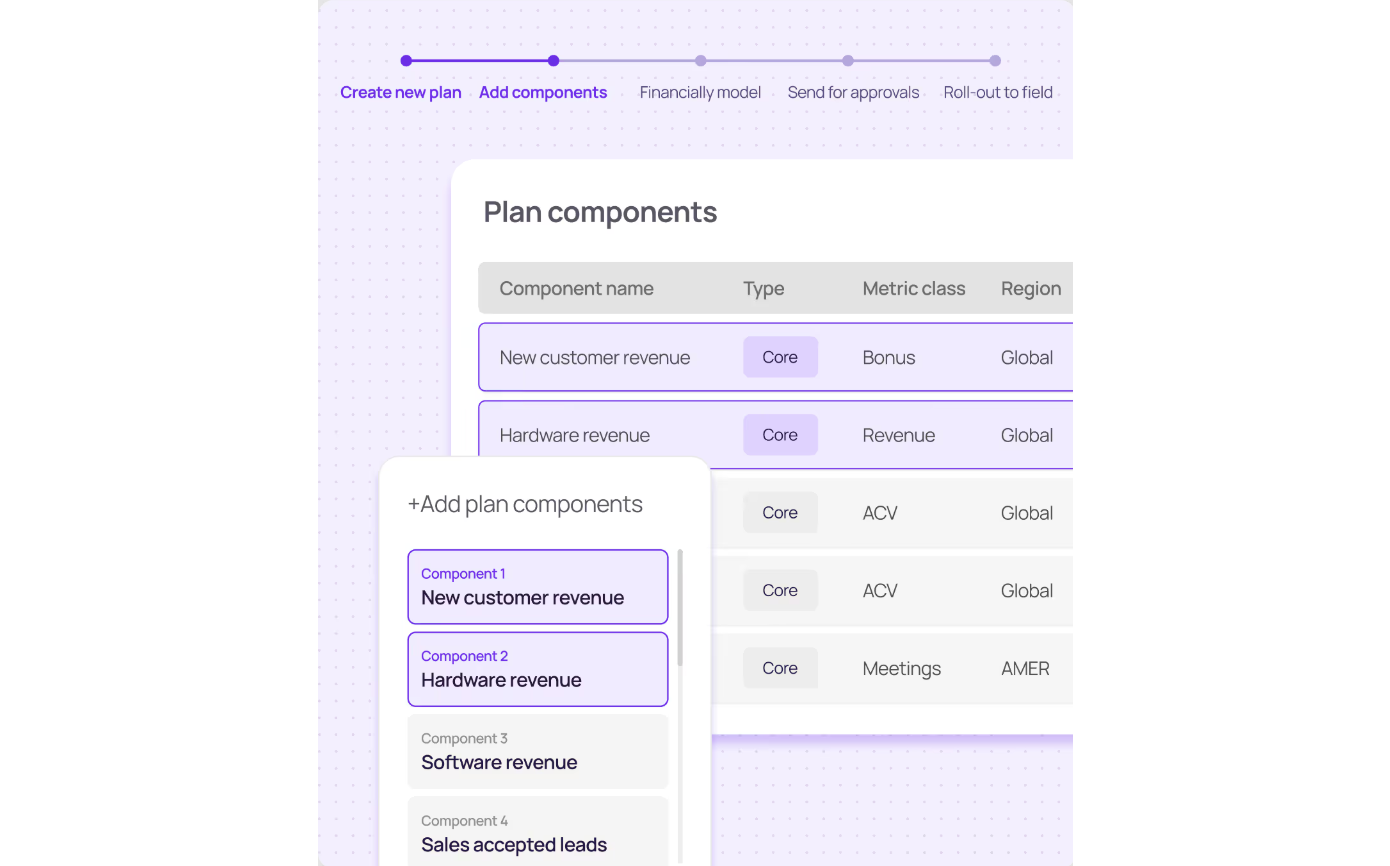
Forma.ai's Operator module lets comp teams describe incentive logic in plain language and have AI compile it into production-ready components. No SQL, no coding, no IT tickets.
Source: Forma.ai
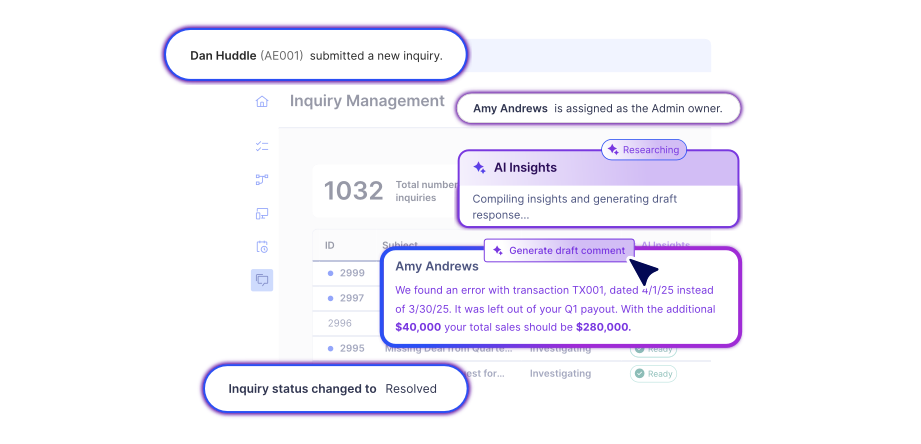
Varicent's Incentives module takes a different approach. Its calculation engine earned the highest possible score in "calculation processing" from Forrester, and the platform was the only evaluated vendor with in-depth AI capabilities. Rather than eliminating technical depth, Varicent provides AI assistants that work alongside it. The Designer Assistant helps admins build and validate plans. The Research Assistant resolves seller disputes by explaining calculations in full context.
Source: Varicent
The trade-off is clear: Forma.ai gets you live faster with less technical overhead. Varicent gives you deeper calculation capabilities for multi-tiered compensation structures, but requires more technical investment to get there.
Territory and quota planning compared
Territory and quota planning is where both platforms try to replace the annual spreadsheet exercise with continuous, data-driven planning.
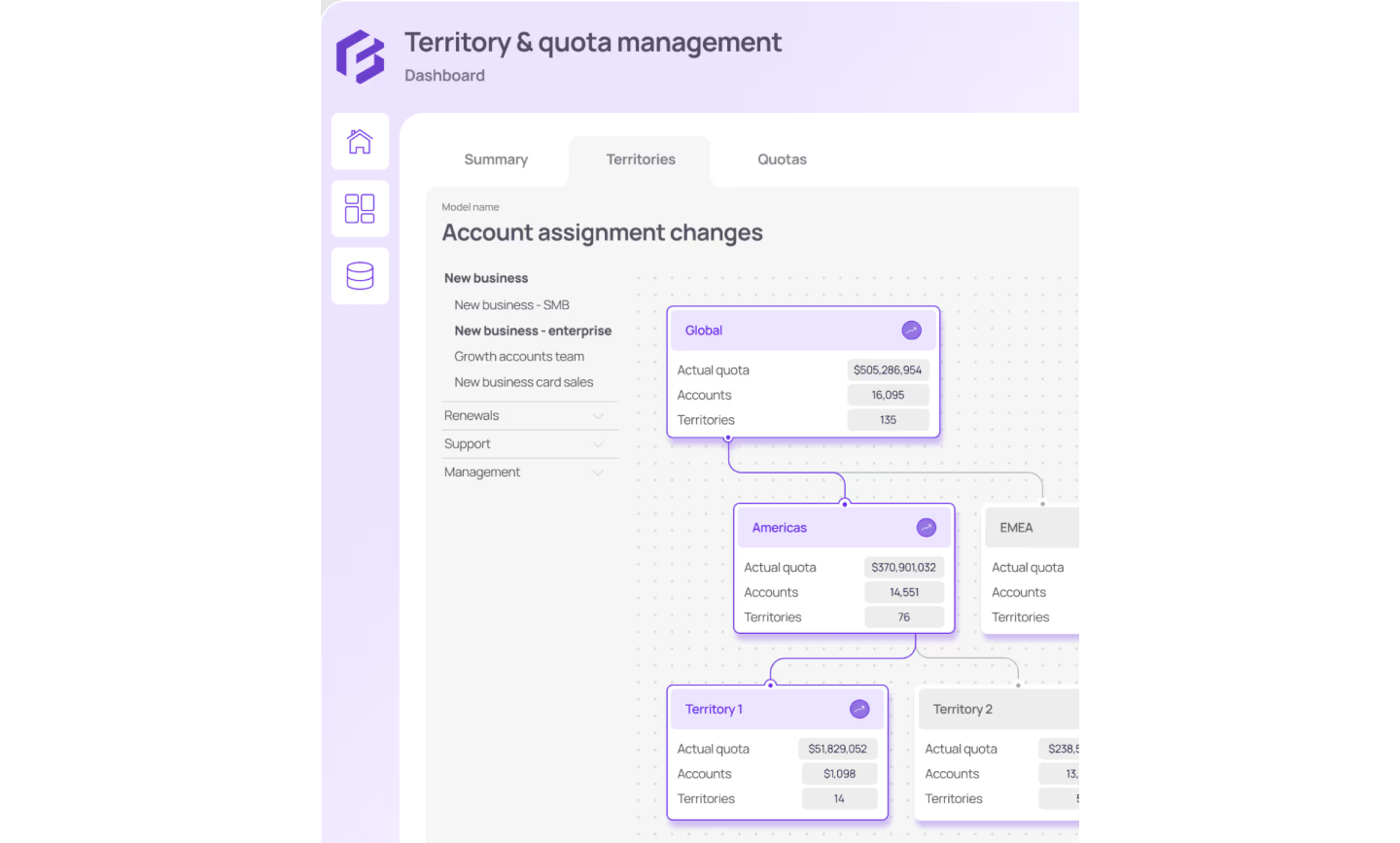
Forma Architect emphasizes the connection between planning and execution. When territory or quota changes are made, they cascade instantly to incentive calculations without manual reconciliation. AI assesses account potential and workload to match seller capacity with market demand. Teams can create and compare multiple planning scenarios, then publish final plans instantly.
Source: Forma.ai
Varicent Sales Planning adds GenAI to the process. The Sales Planning Assistant supports territory and quota design with scenario modeling and capacity balancing, while the ELT Assistant automates data extraction, loading, and transformation to keep plans running on clean data. A map-based visualization supports geographic territory design, and a precedence-based rules engine handles named account assignment automatically.
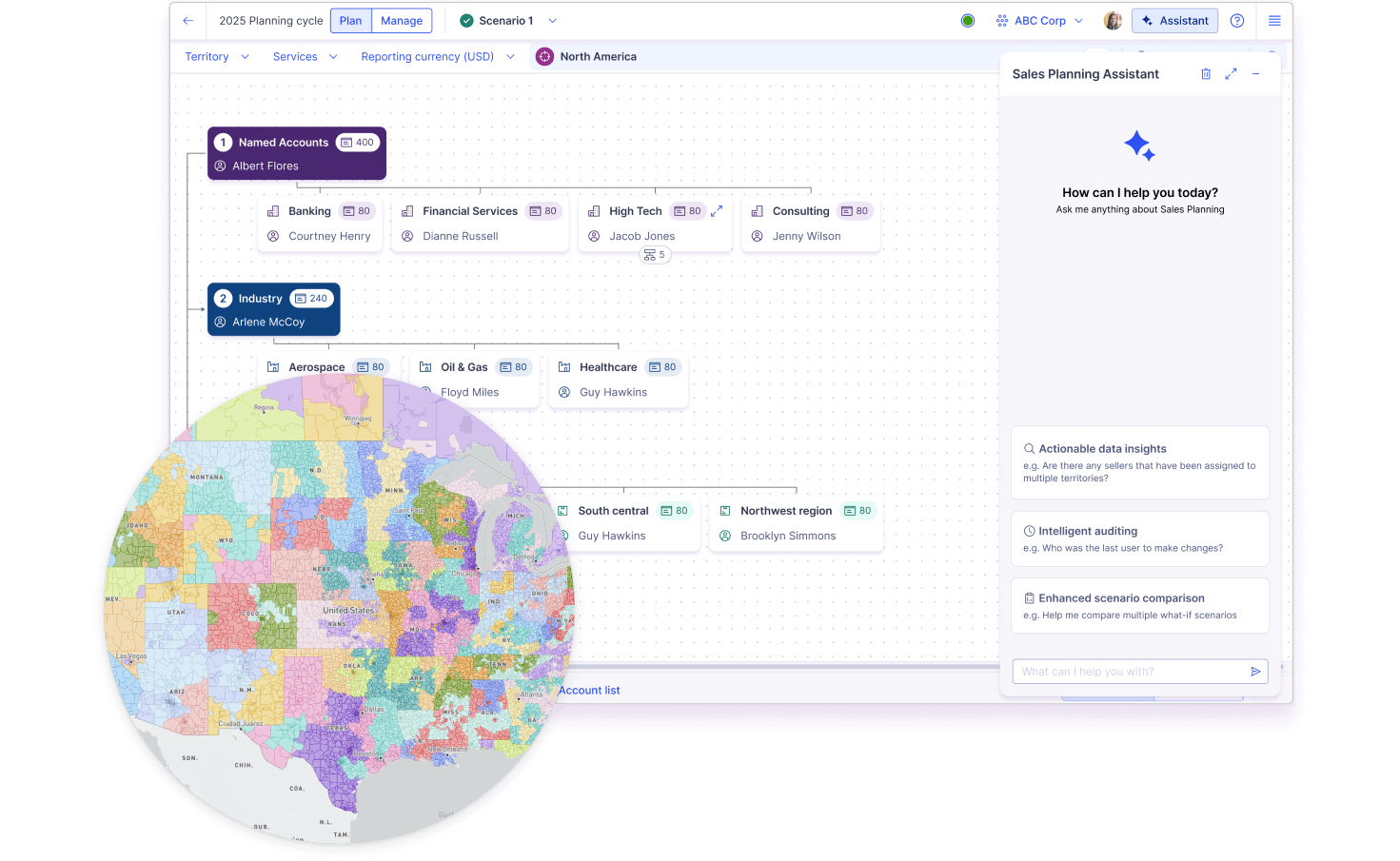
Source: Varicent
Both platforms promise to move organizations from annual planning to continuous replanning. But here's the gap neither fully addresses: territory plans and quota models are only as accurate as the account and contact data behind them. If your CRM has stale company attributes, missing decision-makers, or no visibility into which accounts are actively in-market, even the best planning engine is optimizing against incomplete information.
This is where ZoomInfo enters the picture. With 500M contacts across 100M companies and technographic profiles covering 30,000+ technologies across 30M+ companies, ZoomInfo provides the account intelligence that makes territory planning meaningful. Buyer Intent data tracking signals from 210M IP-to-Organization pairings reveals which accounts are actively researching solutions, so quota allocation reflects real demand rather than historical assumptions.
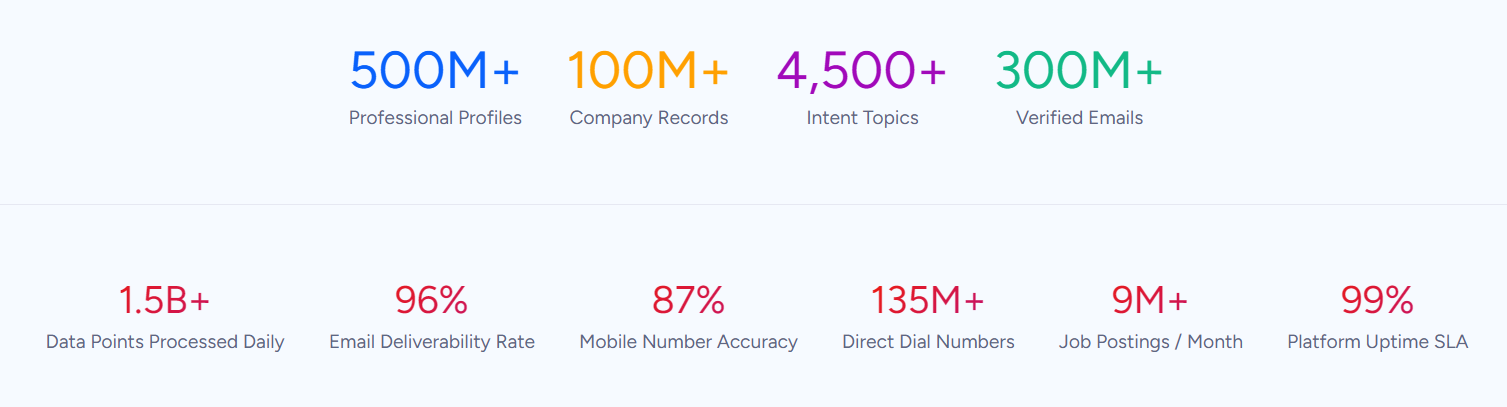
"We're right in the middle of re-architecting all of our data. ZoomInfo has been a major thought leader and partner in how we approach segmentation, territory planning, and hierarchy clarity." (Palo Alto Networks)
AI capabilities take different paths
Both companies invest in AI, but they deploy it differently.
Forma.ai uses AI primarily as a configuration engine. The core innovation is translating plain-English compensation requirements into validated plan logic without coding. Beyond configuration, Forma Prophet deploys machine learning models for customer segmentation, Monte Carlo simulation of incentive scenarios, and continuous effectiveness monitoring. The company's AI roadmap moves toward autonomous optimization, where the system recommends and iterates on plan design based on performance outcomes.
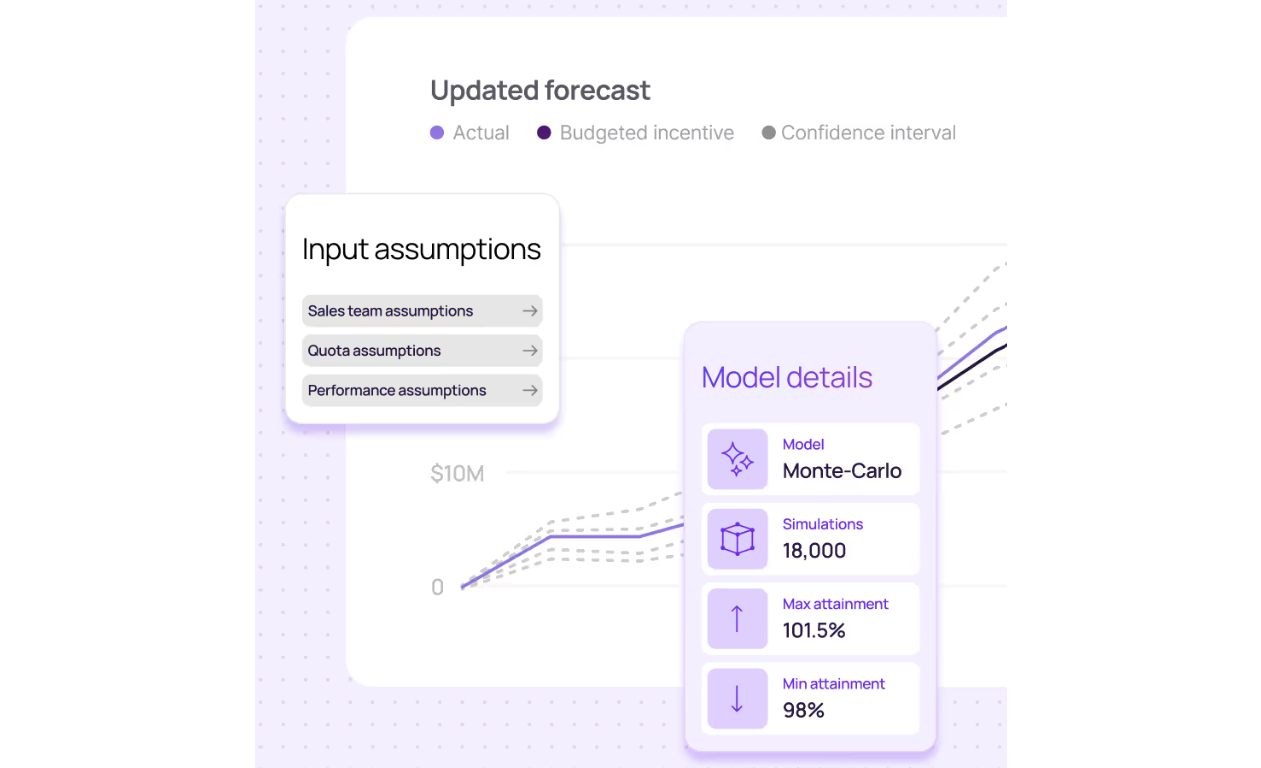
Source: Forma.ai
Varicent positions its AI as embedded across the architecture rather than concentrated in one feature. At the December 2025 Unlock Innovation Forum, the company unveiled four AI assistants: the ELT Assistant (data pipeline automation), the Sales Planning Assistant (scenario modeling), the Designer Assistant (plan building and validation), and the Research Assistant (dispute resolution).
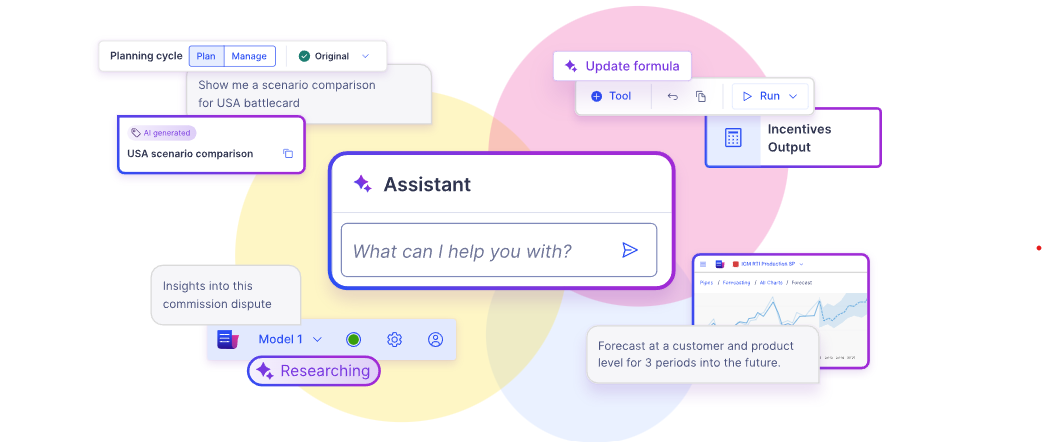
Source: Varicent
The practical difference: Forma.ai's AI removes the technical barrier to plan creation. Varicent's AI assists across the full workflow while preserving the technical depth underneath. Organizations that want their comp team to operate without technical staff will lean toward Forma.ai. Organizations that want AI to augment technical capabilities rather than replace them will lean toward Varicent.
Seller transparency and dispute resolution
Sales reps building shadow spreadsheets to verify their commissions is a universal problem. Both platforms address it with different mechanisms.
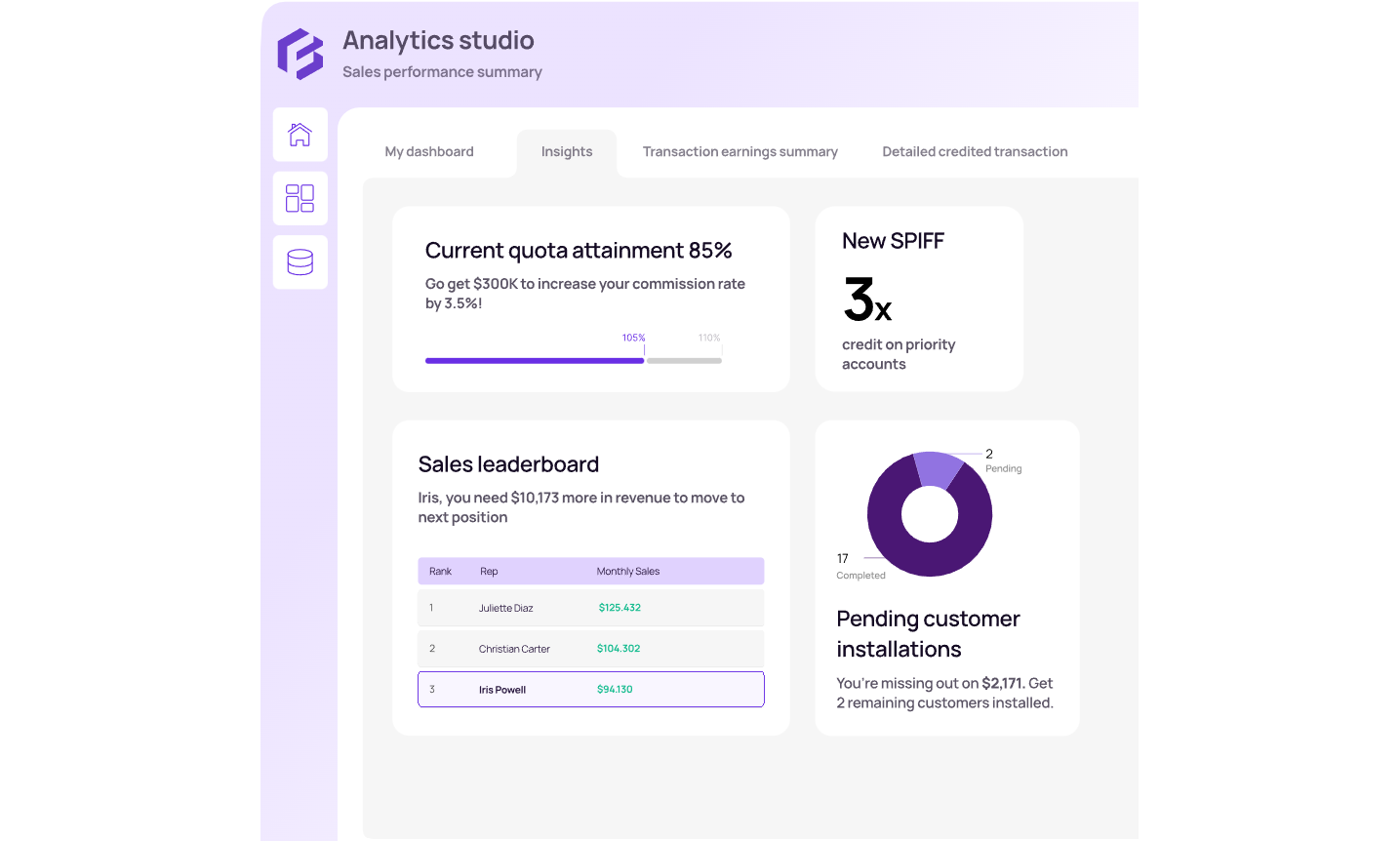
Forma.ai gives each seller a performance dashboard tailored to their comp plan, showing earnings, pipeline impact, leaderboard standings, and President's Club qualification status. Detailed commission statements with drill-down capabilities and a built-in dispute management flow handle questions when they arise.
Source: Forma.ai
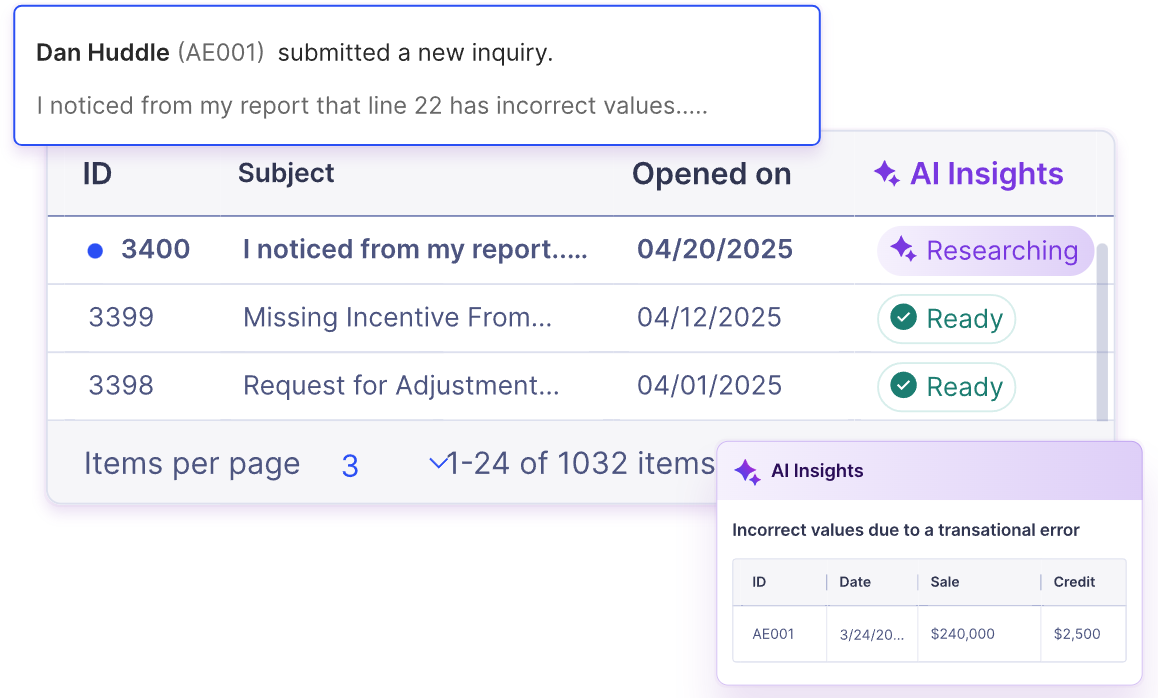
Varicent's Seller Insights goes further with its Research Assistant. When a seller submits a dispute, the AI reviews the inquiry against the full plan logic (quotas, credit rules, payout mechanics, territory assignments), assembles relevant details, and drafts a response for admin review. This human-AI model reportedly reduces inquiry resolution time by 40-90%.
Source: Varicent
Both approaches improve seller trust. Forma.ai emphasizes prevention through real-time visibility. Varicent emphasizes resolution speed through AI-assisted explanation.
The data foundation determines SPM success
Here's what both Forma.ai and Varicent assume but rarely discuss: the quality of compensation outputs depends entirely on the quality of upstream sales data.
Territory plans need accurate account-level intelligence (industry, headcount, revenue, technology stack) to distribute coverage fairly. Quota models need current market potential data to set targets that are achievable but ambitious. Commission calculations need clean CRM records with properly credited deals to avoid errors and disputes.
When CRM data is incomplete (and Forbes estimates 91% of CRM data is), every SPM platform inherits those gaps. A territory plan built on stale company attributes misallocates resources. A quota set without visibility into in-market accounts overestimates or underestimates potential. A commission run processing deals with incorrect crediting generates disputes.
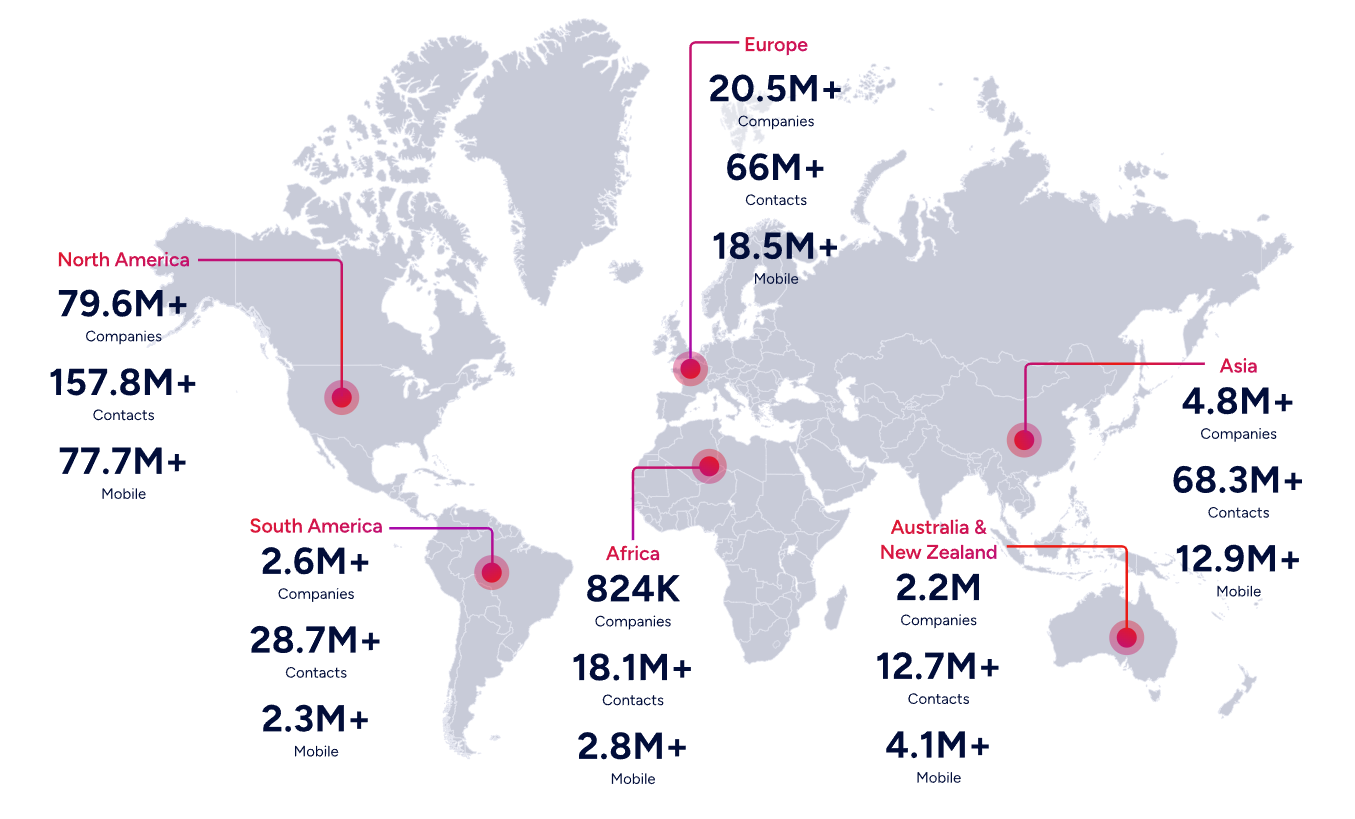
ZoomInfo solves this with the largest B2B data platform available. The data spans three dimensions: identity data (500M contacts, 135M+ verified phone numbers, 200M+ verified business emails), company context (100M companies with company attributes, org charts, and technographics), and dynamic signals that reveal when accounts are actively in-market. This data is verified at scale through a multi-source pipeline backed by 300+ human researchers and reaching up to 95% accuracy on first-party data.
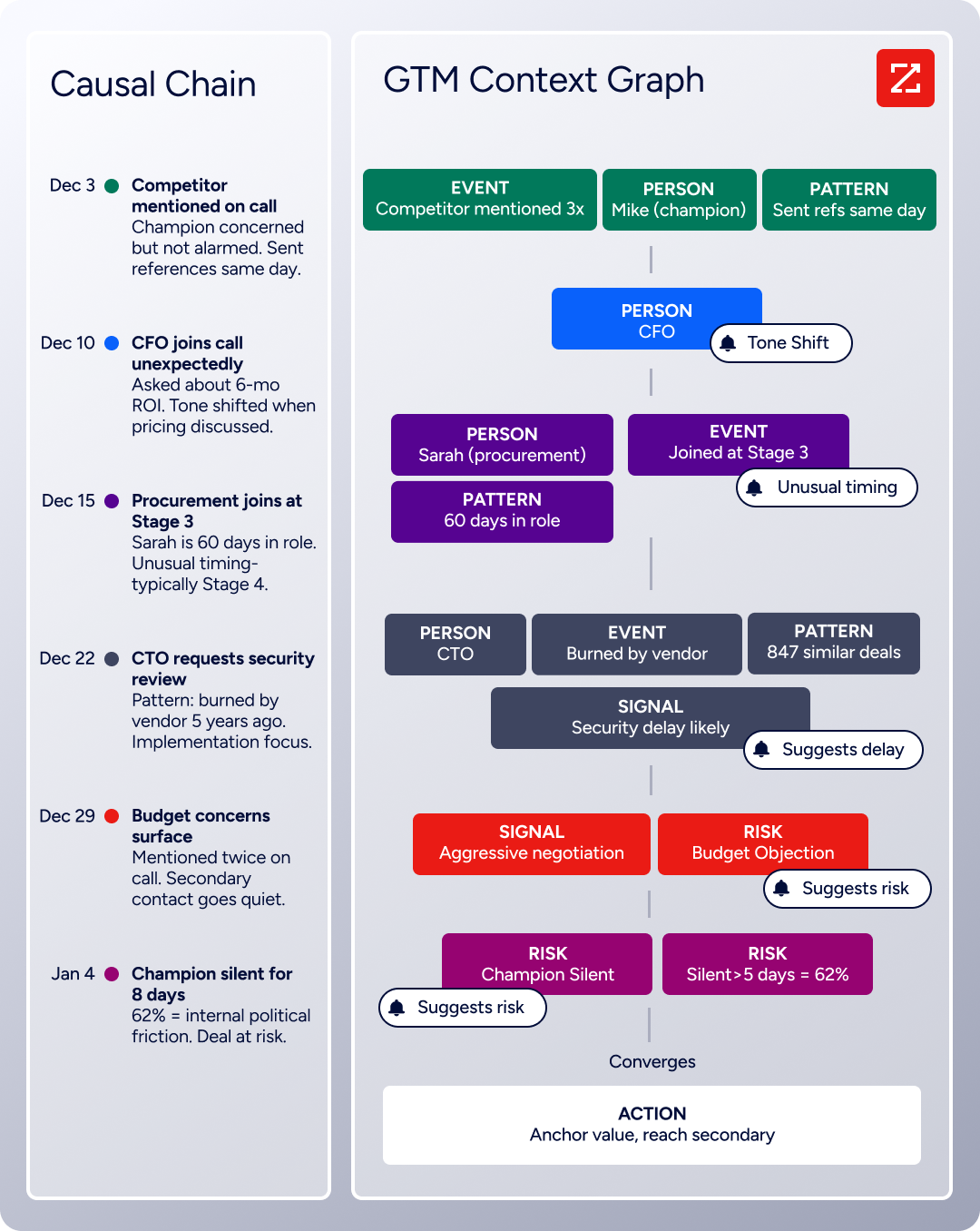
The GTM Context Graph then combines ZoomInfo's third-party intelligence with a customer's CRM records, conversation transcripts, and behavioral signals, processing 1.5B+ data points daily to capture not just what happened in a deal, but why it happened. This gives RevOps teams the context they need to design comp plans that incentivize the right behaviors.
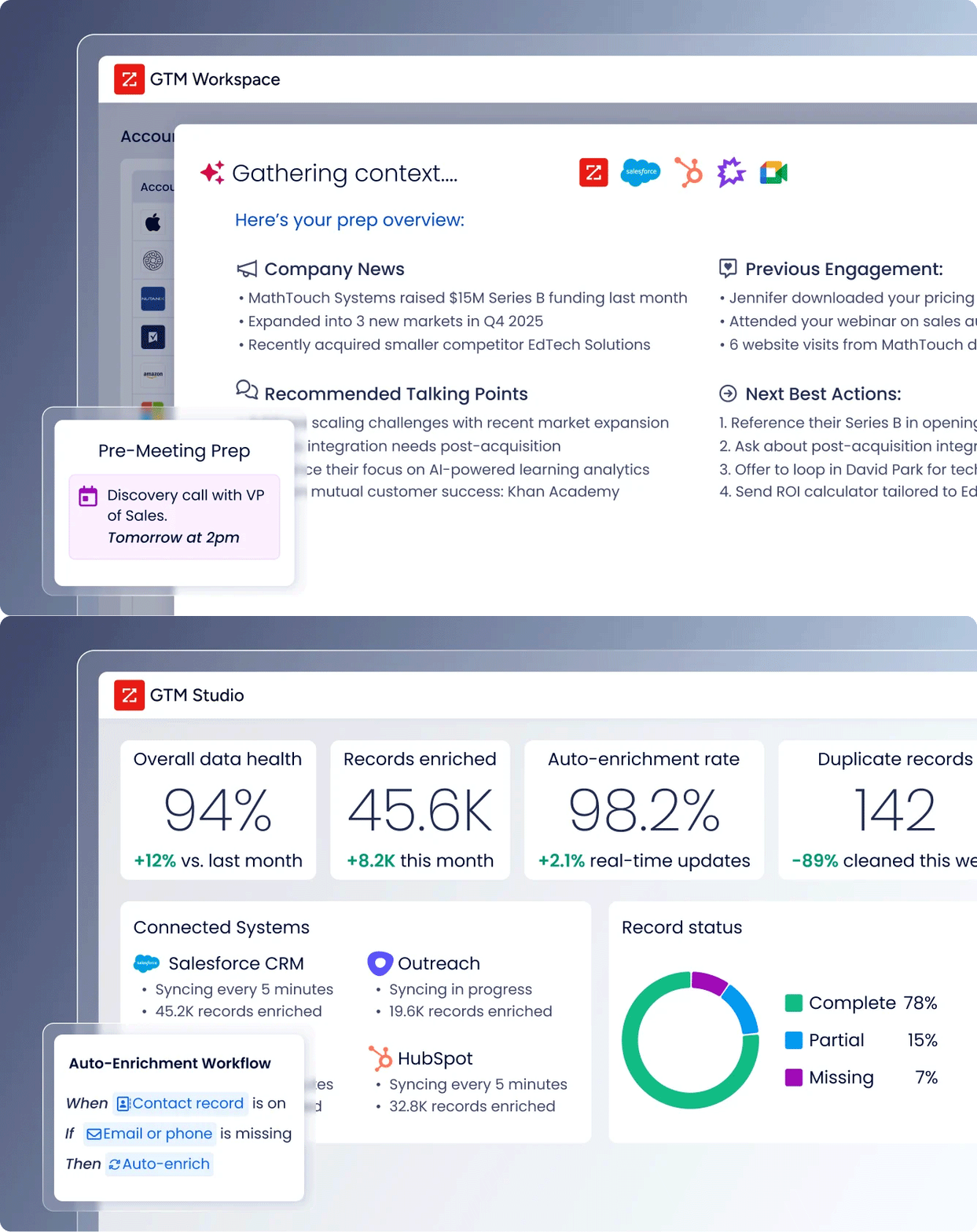
Your team can access ZoomInfo's intelligence through GTM Workspace for sellers, GTM Studio for marketers and RevOps, or APIs and MCP in any front-end, including the SPM platforms your compensation team uses.
"ZoomInfo is our one source of truth for account data, and even more so for contact data. There's no other provider in the market that provides you with that level of detail." (Smartsheet)
Implementation and ongoing support
Implementation is where enterprise SPM purchases often succeed or fail.
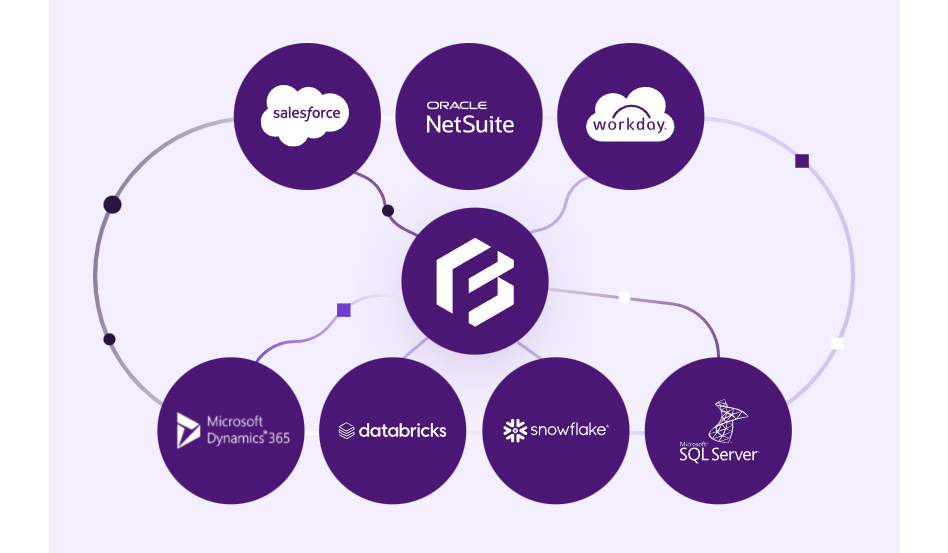
Forma.ai bundles professional services into the license fee, which is unusual in enterprise software. There's no separate consultant spend. The company positions its team as an extension of the customer's organization, including a dedicated approach to data feed management. This model offsets the initial setup complexity that G2 reviewers note is real for organizations with intricate incentive structures.
Source: Forma.ai
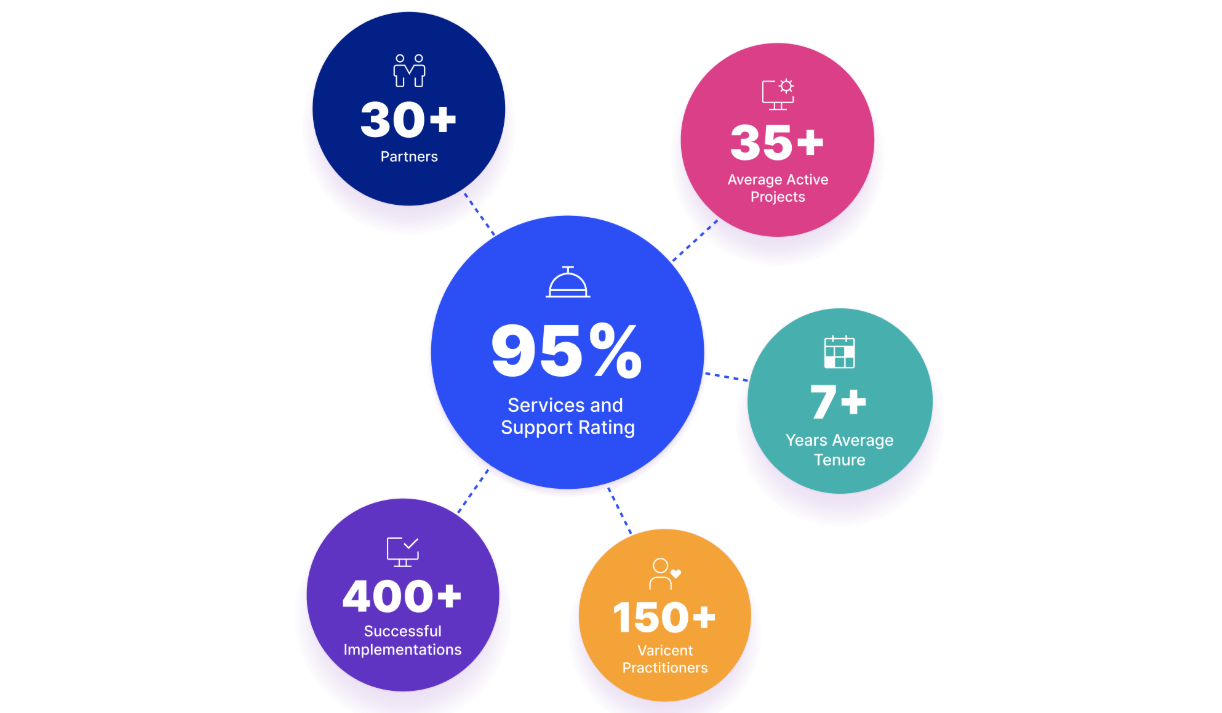
Varicent separates implementation from the platform subscription. Professional services are scoped through individual Statements of Work, and major SI partners include Deloitte, KPMG, Accenture, and Argano. Optional VIP Support tiers (Essential, Enhanced, and Elite) add dedicated Technical Account Managers and quarterly directed hours at additional annual cost. The company also provides guided coaching to help customers become self-sufficient.
Source: Varicent
The support models reflect different bets. Forma.ai bets that bundled services reduce total cost of ownership and speed up time-to-value. Varicent bets that enterprises prefer flexibility in choosing implementation partners and support levels.
On the user experience side, G2 reviewers note that Varicent's platform requires coding knowledge for routine plan changes and has "lengthy load times" on complex calculations. Forma.ai's G2 reviews flag that initial setup takes time and the platform can feel less intuitive than simpler alternatives. Neither platform is plug-and-play; the question is which kind of complexity your team is better equipped to handle.
Pricing and contract structure
Neither Forma.ai nor Varicent publishes pricing. Both require enterprise sales conversations to receive a quote.
Forma.ai's pricing structure has three components: a one-time Onboarding & Implementation fee, an ongoing CompOps Platform subscription, and an AI-Configurator component priced by configuration scope. The company guarantees the lowest cost of ownership in the enterprise ICM category. No free trial or self-serve access is available.
Varicent charges on a per-Entitlement basis (one Entitlement per Payee for ICM, one per Person on Quota for territory and quota planning). The contract structure includes annual subscriptions that auto-renew for additional one-year terms with 30 days' notice required to prevent renewal. A notable detail: if a renewal order is not executed before the subscription expires, Varicent converts to rolling 90-day terms at a 30% fee increase. All fees are non-refundable. No free trial is available.
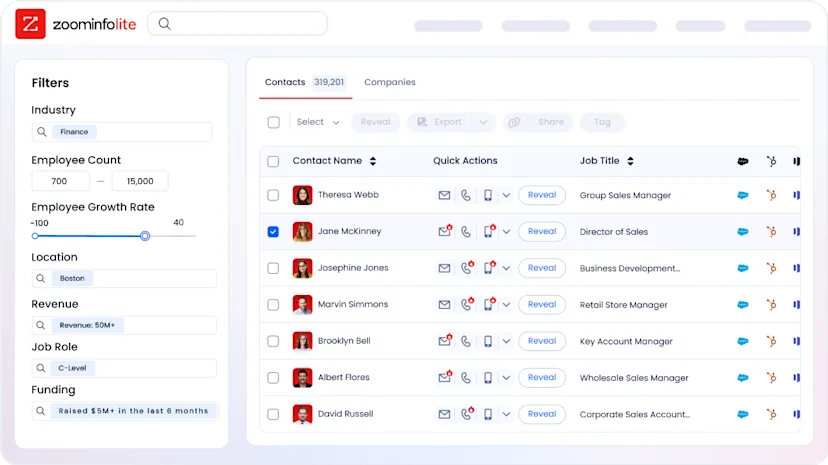
ZoomInfo uses consumption-based pricing with published tier structures (Professional, Advanced, Enterprise) for sales and marketing products. Unlike both SPM platforms, ZoomInfo offers a permanent free tier (ZoomInfo Lite) with access to the B2B database and 10 monthly export credits, plus a 7-day free trial of paid features.
Security and compliance for regulated industries
Both platforms serve regulated enterprises, and their certifications reflect it.
Forma.ai holds SOC 1 and SOC 2 compliance, with multi-level encryption, third-party penetration testing, and granular permission controls down to individual data field level. ASC 606 reporting is built into ICM calculations. The platform serves customers in regulated sectors including life sciences (Stryker, B.Braun, Solventum) and financial technology (WEX, Intralinks).
Varicent carries a broader certification stack: ISO 27001, ISO 27017, ISO 27018, SOC 2 Type II, and SOC 1 Type II. The security architecture includes virtual network segregation, WAF, SAST and DAST scanning, and 90-day immutable backup retention. Varicent's regulated-industry customer base runs deep, with Capital One, Zions Bancorporation, CNA Insurance, and Wawanesa all relying on the platform for auditable compensation processes.
ZoomInfo maintains ISO 27001, ISO 27701, SOC 2 Type II, TRUSTe GDPR, and TRUSTe CCPA certifications, all renewed annually. The company is a registered data broker in California and Vermont and operates a dedicated Trust Center.
For organizations in financial services or insurance where audit trails are non-negotiable, Varicent's broader ISO certification stack and compliance focus give it an edge. Forma.ai's SOC compliance and ASC 606 automation cover the essentials for most enterprise requirements.
Forma.ai vs. Varicent vs. ZoomInfo: Which should you choose?
The right choice depends on where your sales performance bottleneck sits.
Choose Forma.ai if:
Your comp team needs to design and deploy plan changes in days, not months
You want AI that eliminates technical configuration rather than augments it
Bundled professional services and low total cost of ownership matter
You're replacing a legacy ICM that requires IT involvement for every change
Your organization values deployment speed and plan flexibility over calculation depth
Choose Varicent if:
You manage thousands of sellers across multi-tiered, multi-currency comp structures
Regulatory compliance and audit trails are procurement requirements
You need the strongest calculation engine available, validated by Forrester
Your organization operates in financial services, insurance, or telecommunications
You want AI assistants across the full SPM workflow, not just plan configuration
Use ZoomInfo with either platform if:
You want the territories, quotas, and commission calculations in your SPM system to reflect actual market opportunity, not stale CRM data
Verified contact data, org charts, and intent signals should inform your sales planning
Your RevOps team needs a single source of truth for account intelligence feeding both GTM execution and sales compensation
You want AI-powered deal context that helps comp teams understand why deals move, not just that they moved
Start with ZoomInfo Lite for free or request a demo to see how verified data strengthens every layer of your sales performance stack.
"You'll get 10x the value if you think of ZoomInfo as a full platform and not just a tool for one team." (SpringDB)
Forma.ai and Varicent each address real problems in sales performance management. Forma.ai makes the compensation function faster and more accessible. Varicent makes it deeper and more compliant. But the best incentive plan still depends on the quality of the data underneath it. ZoomInfo provides that foundation, giving your SPM platform the verified intelligence it needs to produce territory plans, quotas, and commission calculations that reflect reality.
Forma.ai vs. Varicent vs. ZoomInfo FAQ
What is the core difference between Forma.ai and Varicent?
Forma.ai is a newer platform (founded 2016) that uses AI to translate plain-language compensation requirements into validated plan logic, eliminating technical configuration. Varicent is an established platform (founded 2005) with over 20 years in the market, offering deeper calculation capabilities and a broader set of AI assistants across the full SPM workflow. Forma.ai prioritizes deployment speed and plan flexibility. Varicent prioritizes calculation depth, regulatory compliance, and enterprise scale.
How does ZoomInfo relate to Forma.ai and Varicent?
ZoomInfo is not a sales compensation platform. It is a B2B data intelligence and GTM execution platform that provides the upstream data (verified contacts, company context, org charts, intent signals, technographics) that SPM tools like Forma.ai and Varicent rely on for accurate territory planning, quota setting, and commission calculations. ZoomInfo complements either SPM platform by ensuring the data flowing into it is current and complete.
Which platform did Forrester rank higher in Q1 2025?
Varicent was named a Leader in the Forrester Wave for Sales Performance Management Solutions for Incentive Compensation Q1 2025, receiving the highest possible scores in 16 criteria and the highest Strategy category score. Forma.ai was named a Strong Performer and the only Customer Favorite in the same evaluation, with Forrester commenting that its "disruptive approach is working."
Which platform is easier to implement?
Forma.ai bundles professional services into the license fee and positions itself as requiring no technical staff for plan configuration. Varicent separates implementation into scoped Statements of Work and partners with firms like Deloitte, KPMG, and Accenture for deployment. Both platforms have a learning curve during initial setup. Forma.ai aims for faster time-to-value through bundled support. Varicent offers more flexibility in choosing implementation partners.
Does either platform publish pricing?
Neither Forma.ai nor Varicent publishes pricing. Both require direct conversations with sales teams. Forma.ai structures pricing around three components (onboarding, platform subscription, and AI configuration). Varicent charges per Entitlement (per Payee for ICM, per Person on Quota for planning). ZoomInfo also uses custom pricing but offers a permanent free tier (ZoomInfo Lite) with 10 monthly export credits and access to its B2B database.
Which platform is better for regulated industries like financial services or insurance?
Varicent has deeper specialization in regulated industries, with ISO 27001, ISO 27017, ISO 27018, and SOC 2 Type II certifications. Its customer base includes Capital One, CNA Insurance, and Wawanesa. Financial services customers report 80% reduction in auditing time and 90% improvement in payment accuracy. Forma.ai holds SOC 1 and SOC 2 compliance and serves customers in life sciences and fintech, but its regulated-industry specialization is not as deep.
Can ZoomInfo data feed directly into Forma.ai or Varicent?
ZoomInfo integrates with CRM systems (Salesforce, HubSpot, Microsoft Dynamics) that serve as primary data sources for both SPM platforms. ZoomInfo's Enterprise API and MCP server allow data to flow into any system programmatically. By enriching and maintaining the CRM data that Forma.ai and Varicent ingest, ZoomInfo ensures the intelligence feeding territory plans, quotas, and commission calculations is accurate and current.
Which platform handles the most complex compensation structures?
Varicent has the edge for complexity. CDW manages 6,000 payees with 125 plans in a single system. Pitney Bowes has maintained 100% payout accuracy since 2017 while reducing admin headcount by 70%. Forma.ai handles significant complexity as well, but its architecture prioritizes eliminating configuration complexity rather than maximizing calculation depth.
See how Forma.ai compares to other platforms:
