
Gainsight has spent over a decade shaping customer success software. The platform helped create the CS category, and it now offers a product suite covering health scoring, renewal management, product analytics, customer education, and community engagement, all collected under what the company calls CustomerOS. For enterprise B2B companies focused on retention, it remains the default choice.
To write this Gainsight review, we analyzed it closely. We believe it's the right choice if:
You're a mid-market to enterprise B2B SaaS company with a CS team of 20 or more
You need a single platform spanning health scoring, renewals, product analytics, communities, and customer education
You want AI-driven churn prediction and automated lifecycle workflows
You have the admin resources and budget for a multi-month implementation
You're managing 10,000+ customer accounts across multiple product lines
However, Gainsight might not be the right choice if:
You're pre-Series B without a formal CS function
You need time-to-value in under 60 days
Your team lacks dedicated admin headcount for ongoing configuration
You're looking for transparent, self-serve pricing
You need lightweight CS tooling without enterprise complexity
Even when Gainsight is the right CS platform, its effectiveness depends on the quality of data flowing into it. Health scores built on stale CRM records produce stale insights. Renewal forecasts without accurate stakeholder data miss the people who actually decide.
This is where ZoomInfo fits: a GTM platform that provides verified B2B intelligence (contacts, org charts, intent signals, technographics) CS teams need to make Gainsight's workflows work.
We cover how ZoomInfo complements Gainsight later in this review.
What is Gainsight?
Source: Gainsight
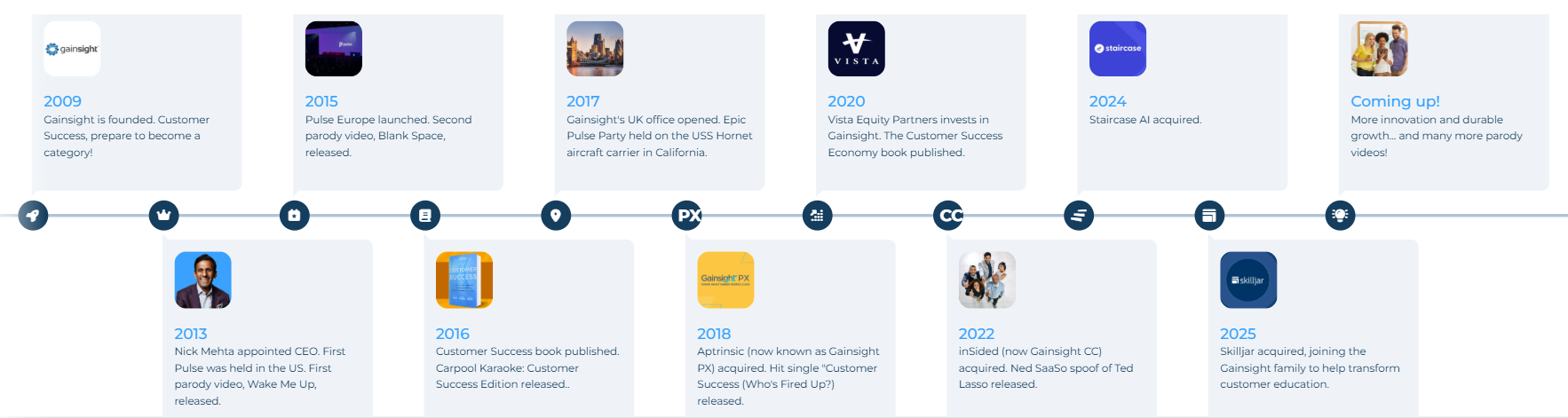
Gainsight traces its roots to 2009, when Jim Eberlin and Sreedhar Peddineni founded a startup called Jbara Software. In late 2012, Battery Ventures recruited Nick Mehta to lead the company, and in February 2013 it was rebranded as Gainsight. At the time, roughly 1,000 Customer Success Managers existed worldwide.
Gainsight didn't just build software for them; it built the profession around them, launching the Pulse conference in 2013 and co-authoring the Customer Success book in 2016.
Today, the company calls itself "The Customer Success Company" and serves 20,000+ customers with 1,200+ employees. Vista Equity Partners took a majority stake in November 2020 in a deal valued at approximately $1.1 billion. Chuck Ganapathi took over as CEO in August 2025 with 25 years of experience in CRM, AI, and enterprise software.
The product portfolio spans six products under the CustomerOS umbrella: the flagship CS platform, Staircase AI for conversation intelligence, Atlas AI Agents for autonomous retention, Skilljar for customer education, Customer Communities for peer support, and Gainsight PX for in-app product analytics. Customers include Docusign, Adobe, SAP, LinkedIn, GitLab, Okta, Zendesk, and Notion.
Gainsight Pros & Cons
Pros | Cons |
|---|---|
Category-creating platform with 15 years of CS expertise | Implementation typically takes 3 to 6 months |
Post-sales suite covering CS, PX, Communities, Education, and AI | Requires dedicated admin headcount for ongoing configuration |
AI-powered churn prediction and autonomous retention agents | No published pricing; enterprise-only budget required |
Configurable health scoring with multi-measure Scorecards | UI feels dated with excessive clicks and hidden nuances |
Salesforce integration with bi-directional CRM sync | Journey Orchestrator requires cloning entire programs to edit |
Gartner Magic Quadrant Leader (2024 and 2025) | Reporting engine lacks flexibility for ad-hoc analysis |
Staircase AI surfaces churn risk up to six weeks early | Acquired products (Skilljar, Communities) still integrating |
Gainsight Review: How it Works & Key Features
Customer 360 and Health Scoring: Gainsight gives CS teams a single, configurable view of every account.
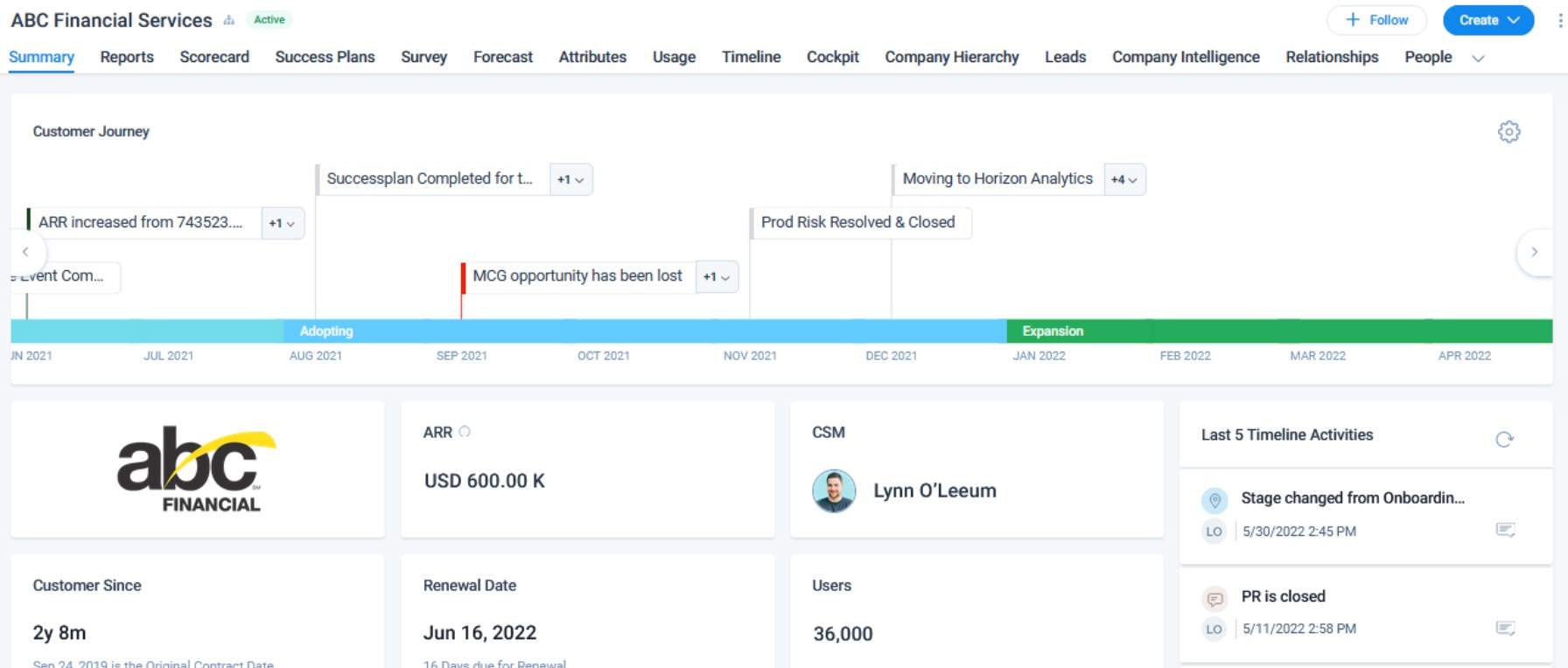
The Customer 360 (C360) is the hub of daily CSM work. It pulls data from multiple sources into a single view: health scores, ARR, NPS responses, open calls to action, product usage data, Timeline activities, relationships, and success plans.
Source: Gainsight
Admins can create up to 50 distinct C360 layouts and assign them to different user groups, so an enterprise CSM managing 10 strategic accounts sees a different workspace than a digital CS rep managing 500.
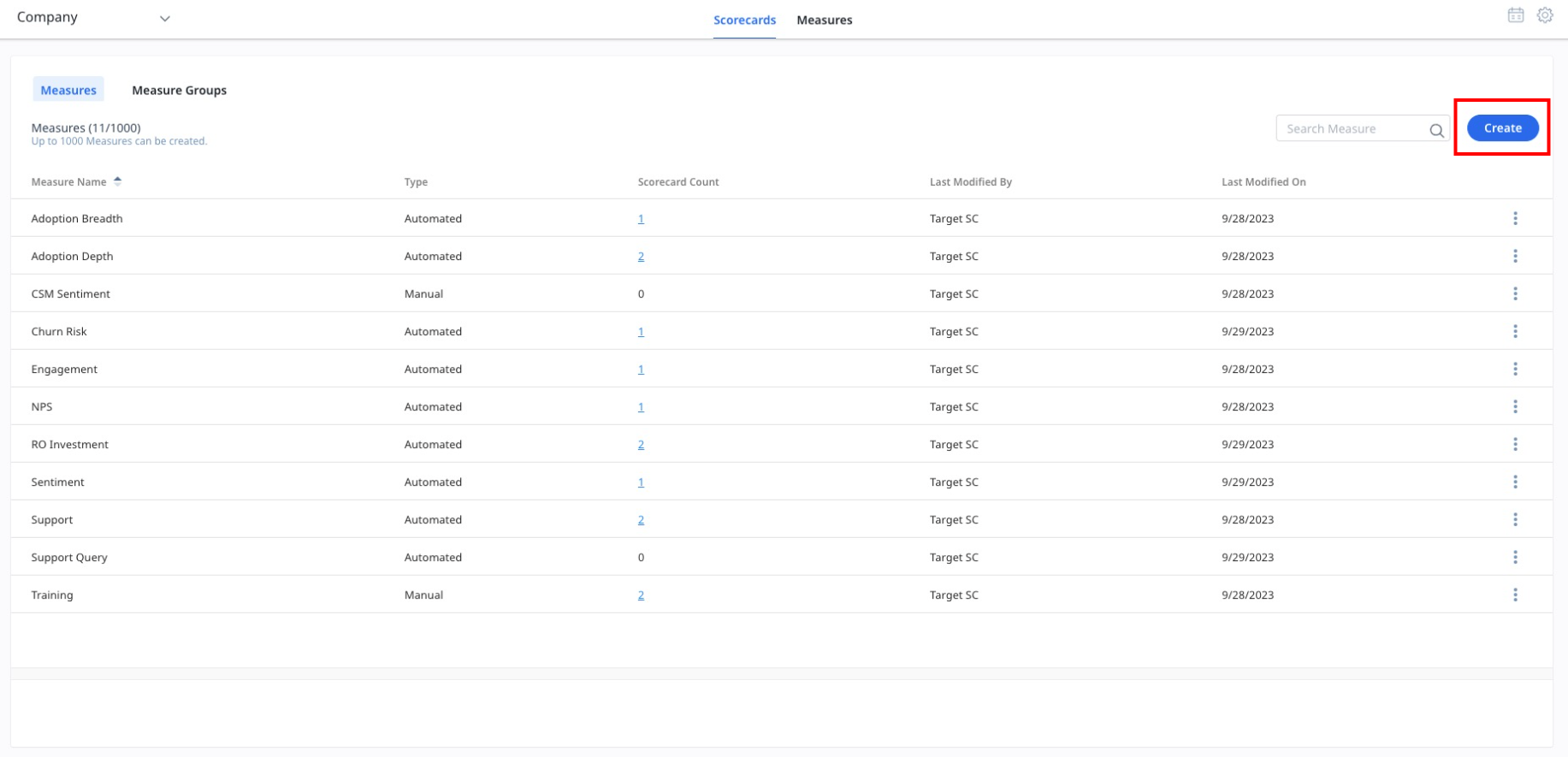
Health Scorecards track multiple dimensions of a customer's health, with each dimension called a Measure. A "Support" group might contain ticket age and severity sub-measures; a "Product" group might track feature adoption and login frequency. Scores update automatically through the Rules Engine or manually for subjective measures like relationship quality.
Source: Gainsight
The Rules Engine drives automation. It runs multi-step data transformations across large datasets (aggregations, merges, formulas, and time-series calculations), then uses those results to set Scorecard scores and trigger Calls to Action. When a customer's usage drops 50% or an executive sponsor departs, the system fires a risk CTA into the CSM's Cockpit automatically.
Cockpit organizes the CSM's day around these CTAs: risk alerts, expansion opportunities, lifecycle milestones, and follow-up tasks. Each CTA can trigger a Playbook of best-practice tasks, codifying institutional knowledge so every CSM follows the same recovery sequence when a risk fires.
Staircase AI: Gainsight reads customer communications to detect churn signals before they escalate.
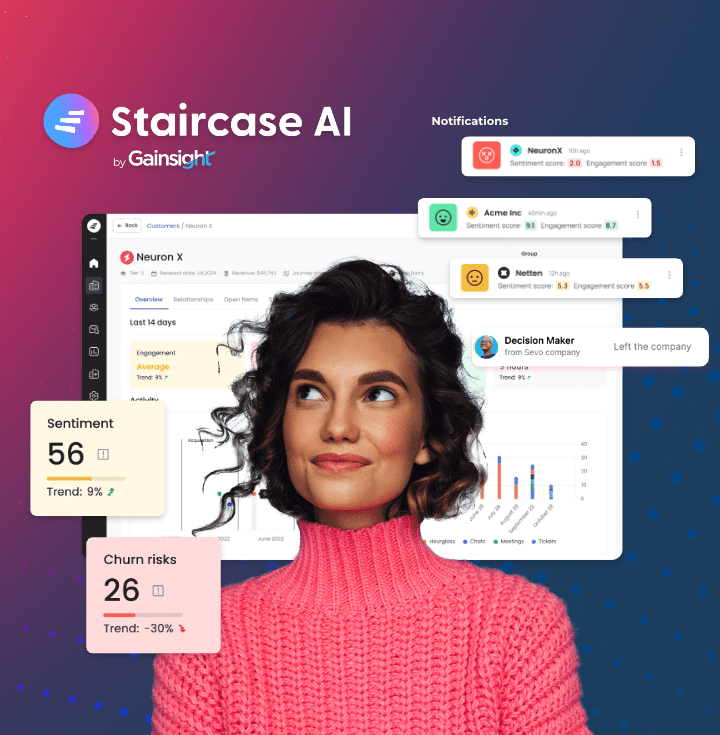
Staircase AI, acquired by Gainsight in 2024, analyzes emails, meeting recordings, support tickets, and Slack threads to surface sentiment and relationship health signals. The premise is that most churn risk first appears in conversation, not in product usage dashboards or CRM fields.
Source: Gainsight
The system operates on a zero-data-entry model: it ingests communications passively through integrations with email providers, calendar systems, and support tools. No manual logging required. It surfaces results inside C360 layouts, so CSMs see communication-derived insights alongside health scores and product usage without switching tools.
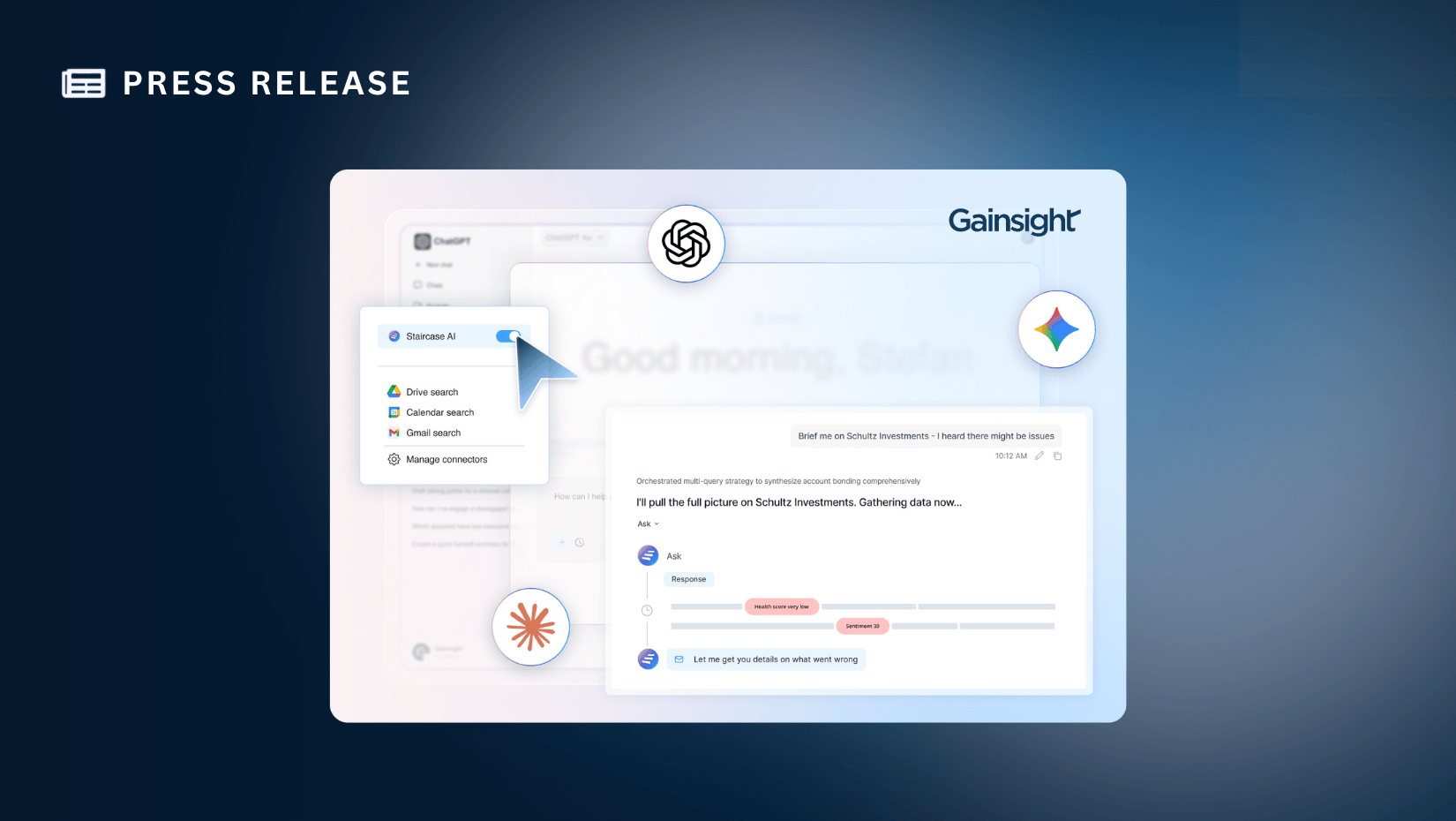
Gainsight claims Staircase surfaces churn risk up to six weeks earlier than usage data alone. It maps stakeholder networks for each account, flags single-point-of-failure risks, and detects when key contacts go dark. An "Ask Staircase" interface lets users query their communications in natural language with AI-generated analysis and source references.
The platform also supports Model Context Protocol (MCP), letting external AI tools integrate with Staircase's customer intelligence.
Source: Gainsight
Atlas AI Agents: Gainsight deploys autonomous agents to manage retention across long-tail accounts.
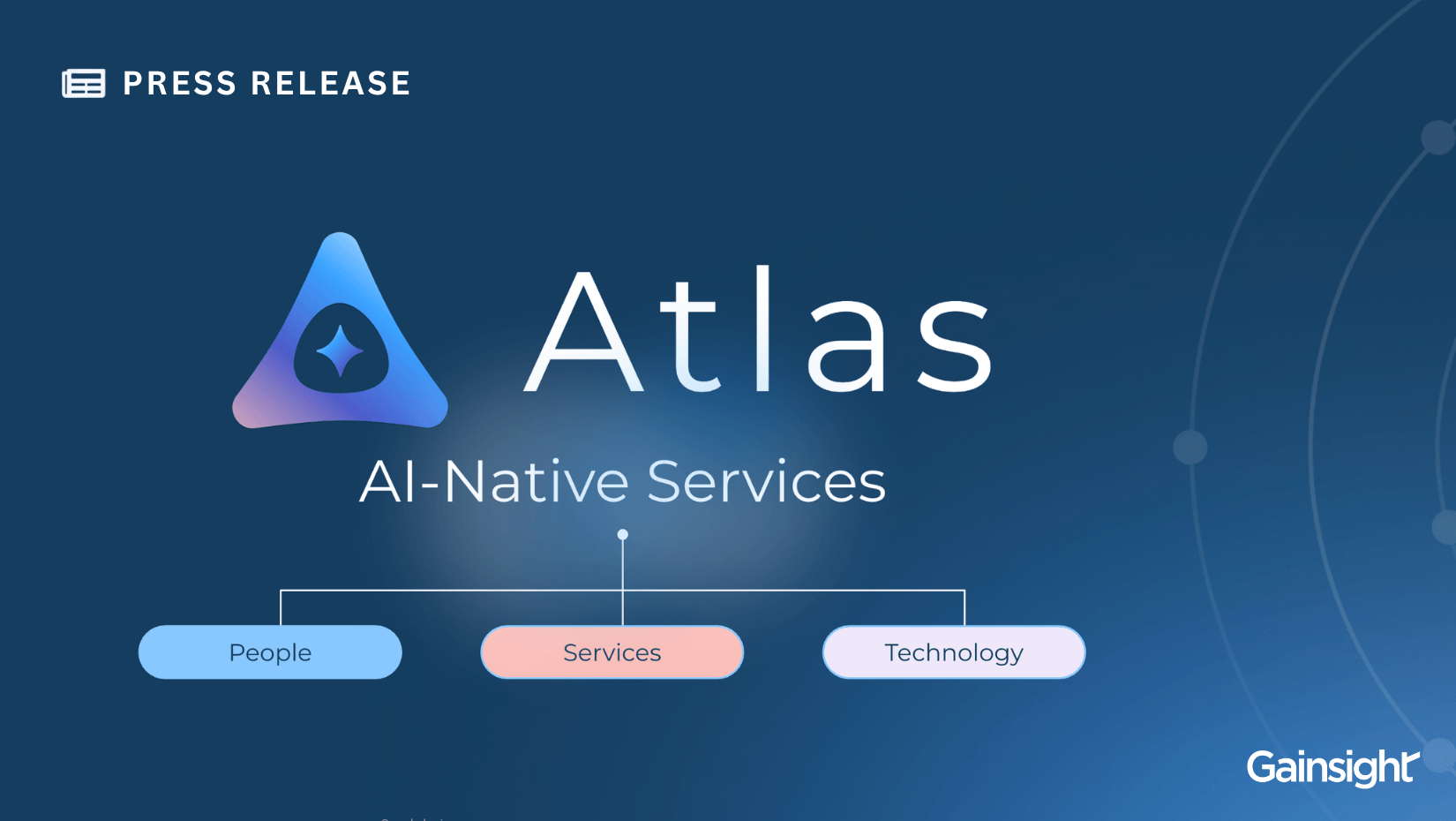
Atlas, launched in May 2025, is Gainsight's answer to the economics of CS coverage at scale. Even well-staffed teams can't give consistent attention to every account, especially the hundreds of smaller customers that collectively represent significant revenue.
Source: Gainsight
Atlas agents are designed for specific CS workflows. Each agent reasons over real-time data from across the Gainsight platform, combining Staircase AI's communication signals with structured data like health scores, product usage, and renewal dates. The architecture draws on fifteen years of retention experience in the agents' decision logic, paired with guardrails that keep actions within defined boundaries.
Current agents include the Renewal AI Agent (manages long-tail renewals with personalized outreach), the Staircase AI Agent (continuous risk monitoring), a Slack AI Agent (delivers customer intelligence in Slack), an Adoption AI Agent, and a Moderation AI Agent for communities.
The company frames this as "Retention-as-a-Service", a managed outcomes model where Gainsight aims to "own the retention outcome completely" rather than just providing tooling.
Renewal Center: Gainsight adds AI-powered forecasting to the renewal pipeline.
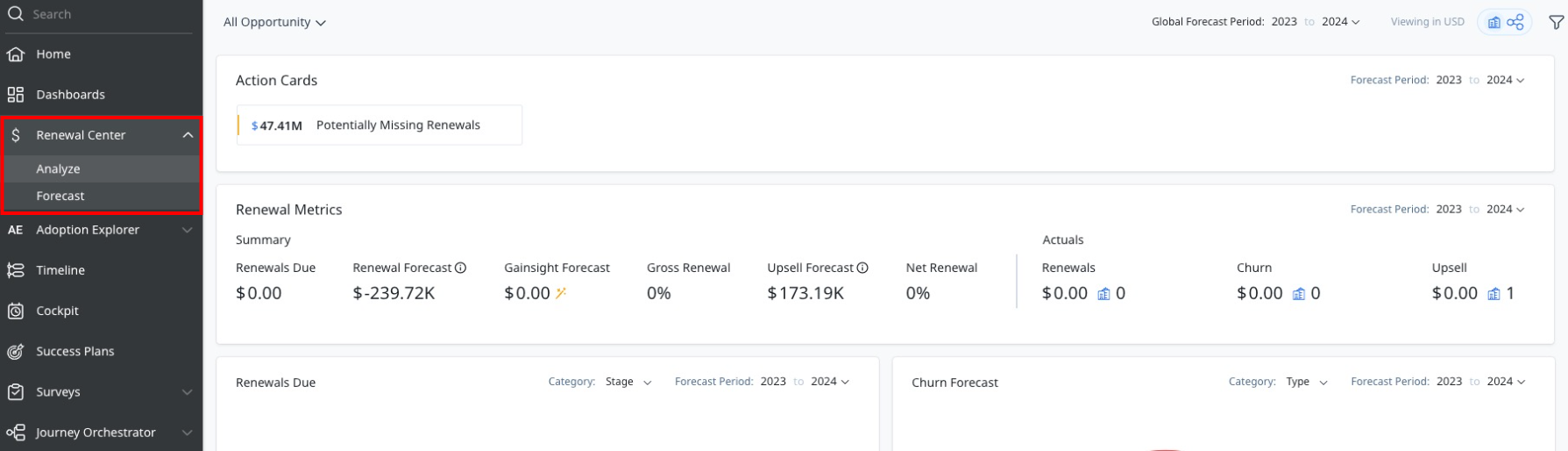
The Renewal Center is Gainsight's renewal management module, available as an add-on under Revenue Optimization. It syncs bi-directionally with Salesforce, enriching CRM renewal opportunities with Gainsight's health scoring, product usage, and timeline data.
Source: Gainsight
For each open renewal, Gainsight generates a machine-learning likelihood-to-renew score that draws on health scorecards, engagement signals, support history, and historical outcomes. The model learns from the customer's own data and refines its predictions over time. The Forecast Page lists all renewal opportunities with inline editing that syncs back to Salesforce in real time.
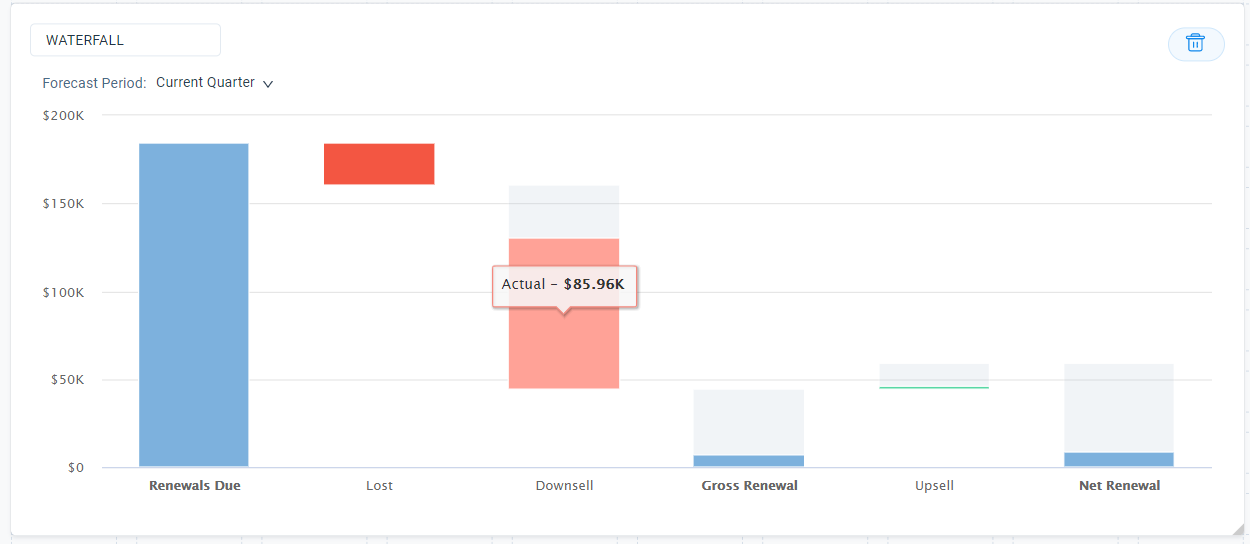
Waterfall visualizations track how the pipeline flows from Renewals Due through churn, downsell, and upsell to Net Renewal. Action Cards flag structural gaps: missing renewal opportunities, overdue unresolved renewals, and high-churn-risk opportunities.
Source: Gainsight
A Net Retention Dashboard tracks Gross Revenue Retention and Net Revenue Retention with ARR categorized by health segment.
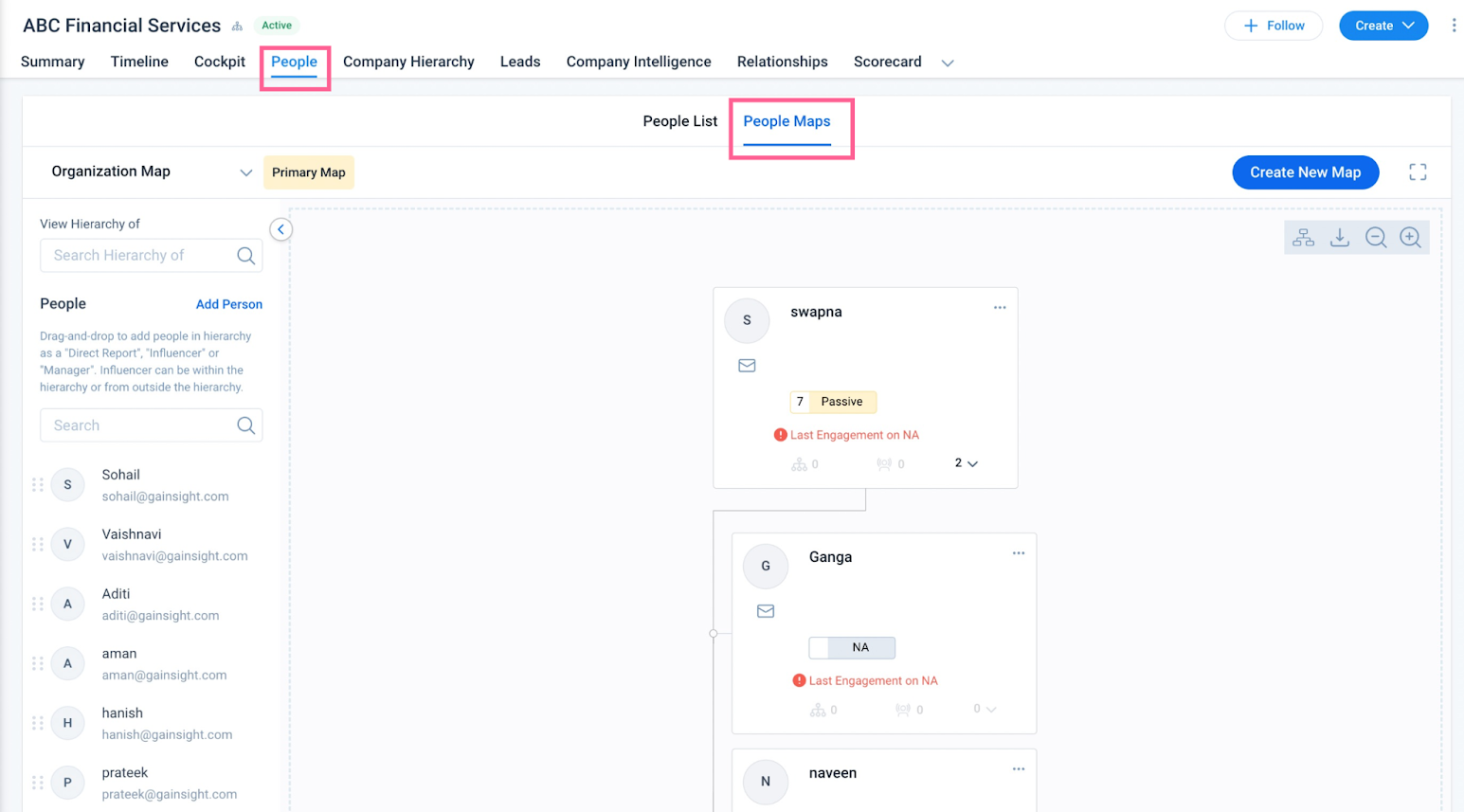
People Maps provide interactive org charts for every customer account, with influencer sentiment indicators (positive, negative, neutral). Sponsor Tracking monitors designated executives' LinkedIn profiles for title changes, location changes, or company departures, triggering a Playbook automatically when changes are detected.
Source: Gainsight
Renewal Center and Expansion Forecasting are Enterprise-tier features, not available on the Essentials plan.
Product Experience (PX): Gainsight tracks in-app behavior and delivers targeted engagement.
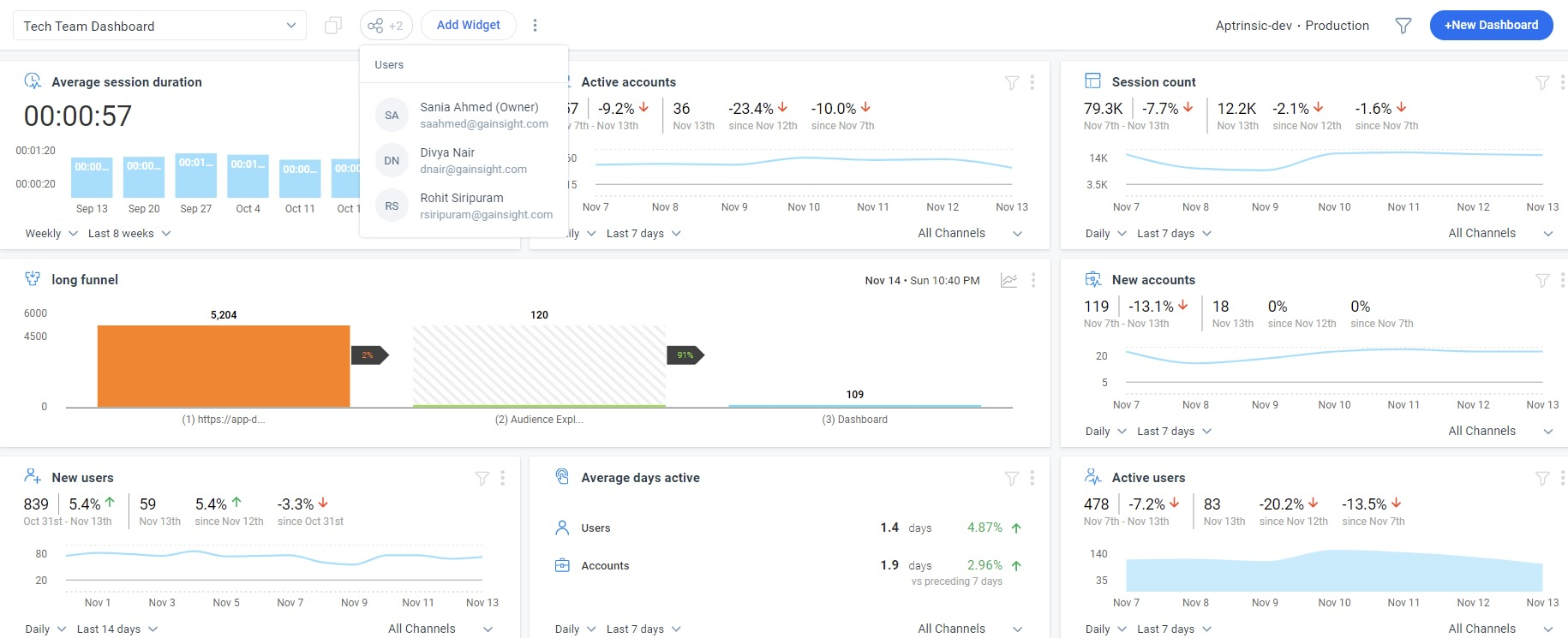
Gainsight PX, built on Aptrinsic (acquired in 2018), sits inside a customer's software product to capture usage data and deliver in-app messages. It instruments products via a JavaScript tag or Segment integration, with native SDKs for iOS, Android, React Native, Windows Desktop, C#, and Java.
Source: Gainsight
Product teams use a no-code product mapper to define which features and pages to track without custom event code. PX captures user interactions and handles billions of events per day with data freshness measured in seconds.
Engagement types include Dialogues (modal announcements), Sliders (multi-slide onboarding panels), Guides (multi-step walkthroughs spanning pages), and native email campaigns. An In-App Hub provides a persistent self-service resource center with search, task lists, and recommendation widgets. PX also embeds surveys (NPS, CES, rating, boolean) directly in the product.
Usage data flows into the CS platform nightly, making product behavior available in health scorecards, C360 views, CTAs, and playbooks.
Skilljar and Customer Communities: Gainsight extends the post-sales experience with education and peer support.
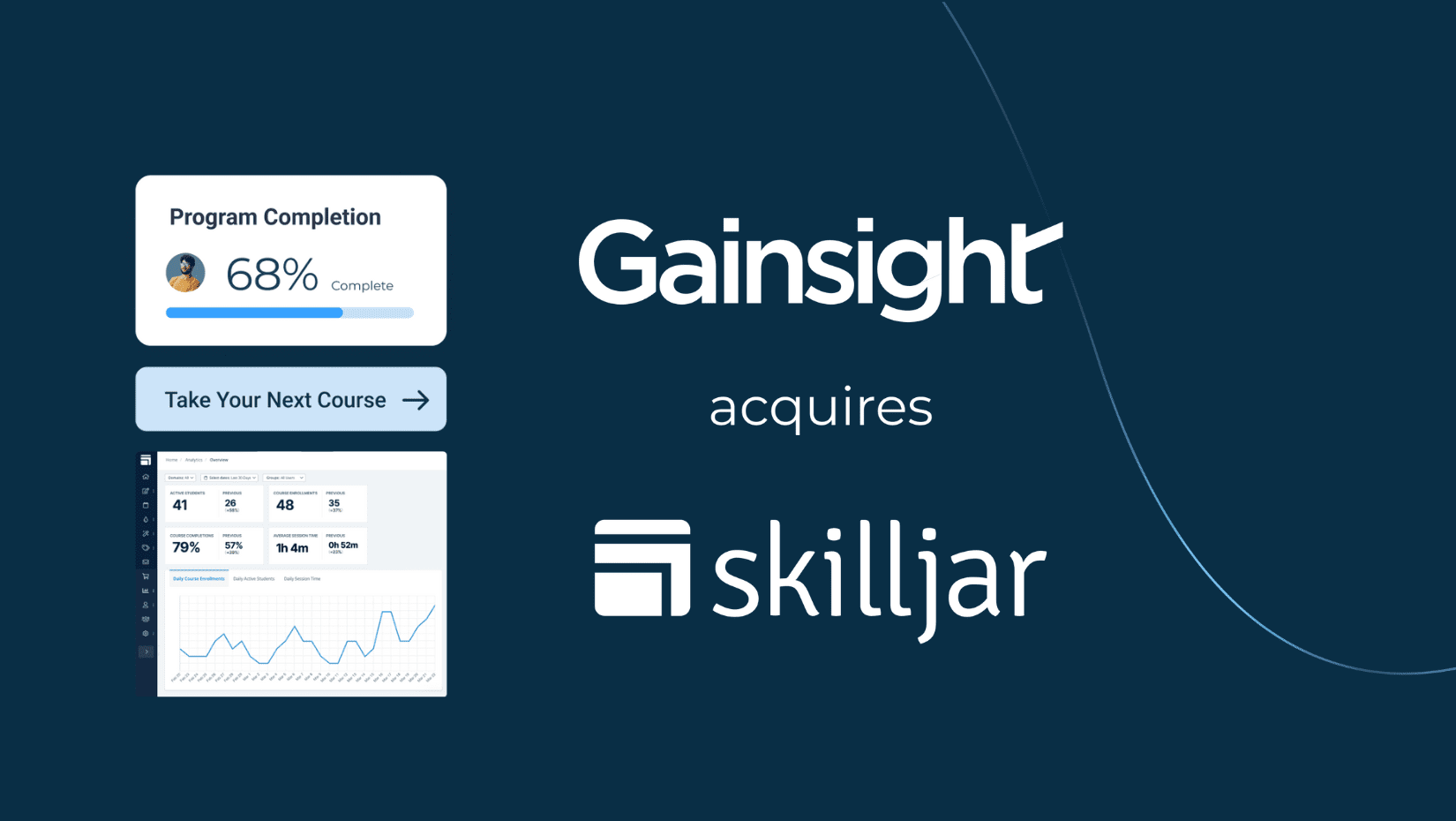
Skilljar (acquired April 2025) is an external LMS built for customer onboarding, partner training, and product adoption programs.
Source: Gainsight
Organizations create branded Academy sites where customers access structured courses, attend instructor-led sessions, and earn LinkedIn-shareable certificates. Skilljar includes a payment system with Stripe integration supporting subscriptions, course purchases, and training credit systems.
Customer Communities (built on inSided, acquired 2022) provides branded forums for peer-to-peer Q&A, product feedback, and knowledge base access. The ideation module lets product teams filter feature requests by the revenue value of the customers who voted. AI handles moderation, answer generation from the knowledge base, and multilingual translation.
The two products share SSO and federated search, so customers searching for help in the community see both peer answers and relevant Skilljar courses in one results set.
Pricing: Gainsight uses quote-based pricing with no published rates.
Gainsight does not publish prices for any product. All four lines (CS, PX, Skilljar, Communities) require contacting sales through the "Request Pricing" flow.
Customer Success comes in two tiers. Essentials includes 10 full users, up to 1,000 customer records, AI Insights (all seven AI modules at no additional cost), automations, C360, Playbooks, Success Plans, Dashboards, Health Scorecards, Surveys, and Journey Orchestrator.
Enterprise adds Renewal and Expansion Forecasting, Organizational Mapping, Sponsor Tracking, a Sandbox environment, and starts at 20 full users with up to 4,000 customer records.
Product Experience offers Essentials and Enterprise tiers differentiated by product tag count, monthly email volume, and integration access.
Skilljar has three tiers (Essentials, Professional, Enterprise) priced as an annual subscription plus a per-active-user fee that decreases at volume.
Customer Communities has Professional, Business, and Enterprise tiers with 3, 5, and 10 admin seats respectively.
Contracts are non-cancellable mid-term, and fees are non-refundable. The CS/Communities terms require three months' written notice before contract end to prevent auto-renewal. Communities contracts cap annual rate increases at 6%.
No Gainsight product has a free plan. PX and Communities offer limited free trials (duration undisclosed). Third-party sources indicate that enterprise CS implementations typically reach six figures annually when professional services are included.
Where Gainsight Falls Short
Gainsight is the most complete post-sales platform, but several limitations become apparent with use. These reflect a platform built for enterprise depth, not speed or simplicity.
Implementation Timeline. A typical Gainsight deployment takes 3 to 6 months, two to three times longer than alternatives like ChurnZero or Vitally. The platform requires structured onboarding across data modeling, user management, permissions configuration, rules engine setup, and data ingestion pipelines. A dedicated Gainsight admin is effectively mandatory, adding headcount cost on top of license fees.
Interface Complexity. G2 and Capterra reviewers consistently flag that Gainsight is not intuitive, requiring excessive clicks and formal training. The UI has accumulated layers from years of feature additions, with users describing numerous hidden system limitations and nuances. The power is real, but the learning curve is steep.
Journey Orchestrator Usability. The automated email and survey engine is a paid add-on, and reviewers call it complex and counterintuitive, requiring entire programs to be cloned to make a simple revision. Power users want inline editing, version control, and faster iteration on automation logic.
Reporting Limitations. Gainsight's own documentation acknowledges Reports and Dashboards Limitations. Users cite missing features for detailed analysis and limited reporting customization. Queries generating two or more tables don't render properly in Slack as of the May 2025 release.
Enterprise-Only Pricing. With no published rates, no permanent free tier, and annual commitments that reach six figures, Gainsight effectively excludes early-stage companies. The pricing structure assumes a mature CS operation with budget approval processes, not a scrappy team evaluating tools on a trial.
Acquired Products Still Maturing. Staircase AI, Skilljar, and Customer Communities were all acquired between 2022 and 2025 and are still being integrated into a unified experience. Cross-product data unification is ongoing. Skilljar-Communities federated search only reached the roadmap in late 2025.
Account Intelligence Gaps. Gainsight excels at orchestrating CS workflows once data is in the system, but its account intelligence is only as good as what you feed it. If your CRM has stale contacts, incomplete org charts, or no visibility into what's happening outside the account (leadership changes, funding events, competitive research), your health scores and renewal forecasts inherit those blind spots.
Gainsight doesn't provide external B2B intelligence. It needs it from somewhere else.
These limitations aren't failures. They're the natural result of building the deepest enterprise CS platform. But they point to a clear need: Gainsight runs the workflows, and it needs an intelligence layer feeding accurate, current data into them.
The Intelligence Layer Gainsight Needs: ZoomInfo
ZoomInfo is a GTM platform built on 500M contacts, 100M companies, 135M+ verified phone numbers, and 200M+ verified business emails. While Gainsight orchestrates the post-sale customer lifecycle, ZoomInfo provides the account intelligence that keeps those workflows accurate.
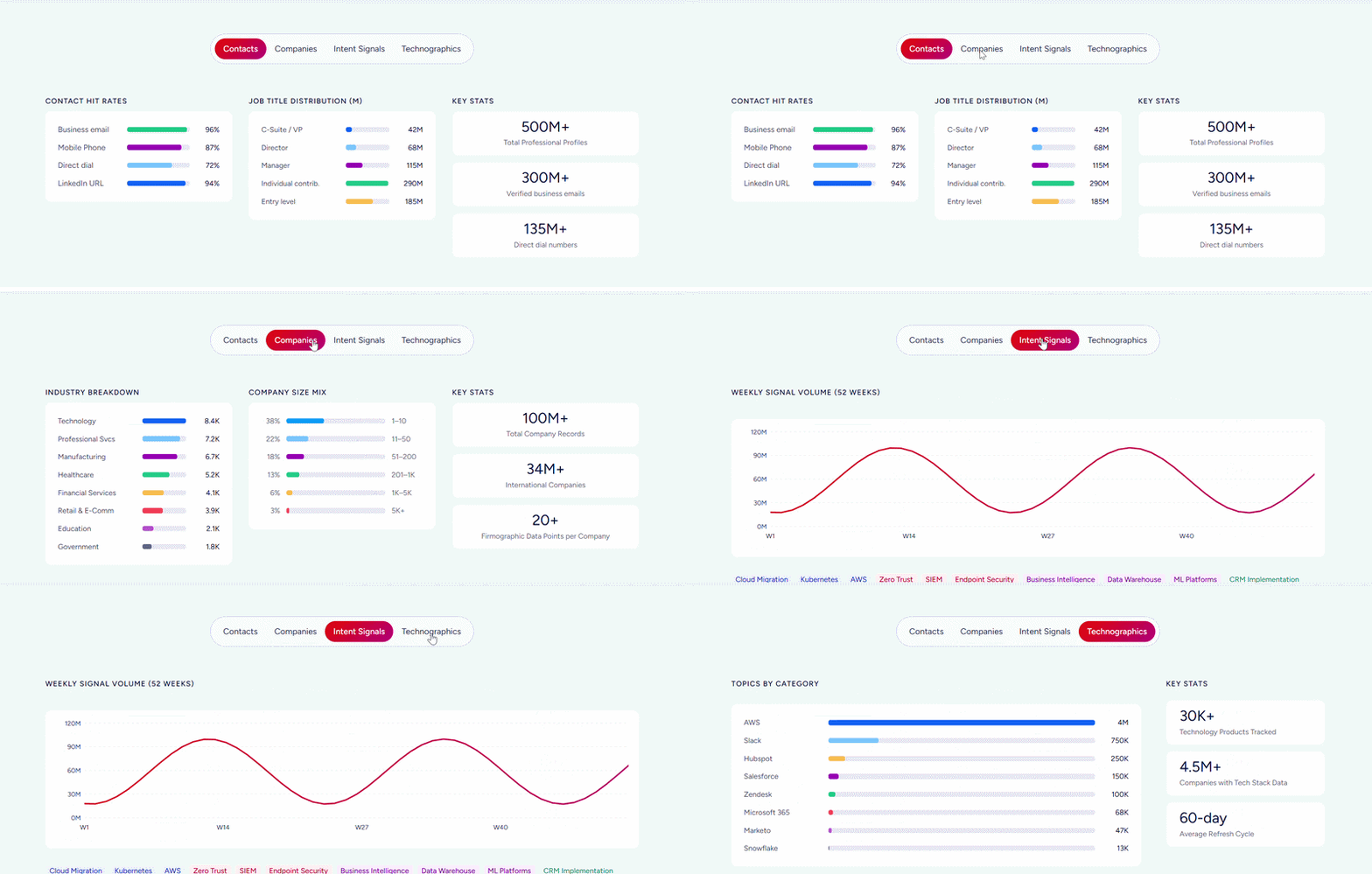
The relationship is straightforward: Gainsight tells you what to do with a customer. ZoomInfo tells you who to engage, what's changing, and why it matters.
Verified Contact and Company Data: ZoomInfo gives CS teams accurate stakeholder intelligence.
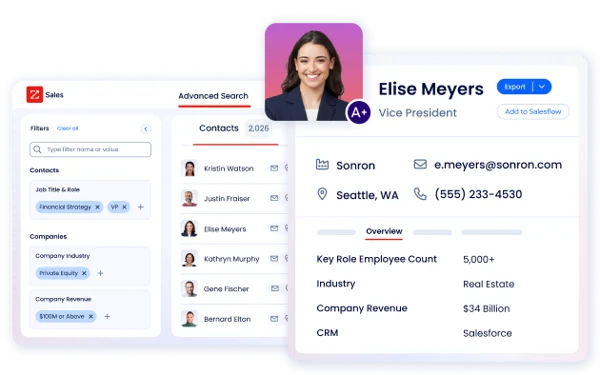
Renewal conversations fail when CSMs work with outdated contacts. An executive sponsor leaves, a new VP joins, and the CRM still shows last year's org chart. Gainsight's Sponsor Tracking monitors LinkedIn for changes, but it only tracks contacts already in the system. ZoomInfo fills the gaps upstream.
The platform provides 300+ company attributes for market segmentation, department org charts with decision-makers' direct dials and emails, and contact tracking with job-change alerts. With 120M direct-dial phone numbers and 200M+ verified business email addresses at 95%+ accuracy, CS teams can identify every stakeholder in a renewal or expansion conversation, not just the ones already logged.
For expansion plays, ZoomInfo's org chart data reveals who controls budget across departments, which new hires signal growth, and where whitespace exists for cross-sell. This intelligence feeds into Gainsight's C360 views, health scores, and renewal forecasts through CRM enrichment.
"ZoomInfo is our one source of truth for account data, and even more so for contact data. There's no other provider in the market that provides you with that level of detail." (Smartsheet)
Intent Signals and External Intelligence: ZoomInfo detects what's happening outside the account.
Gainsight's Staircase AI reads internal communications.
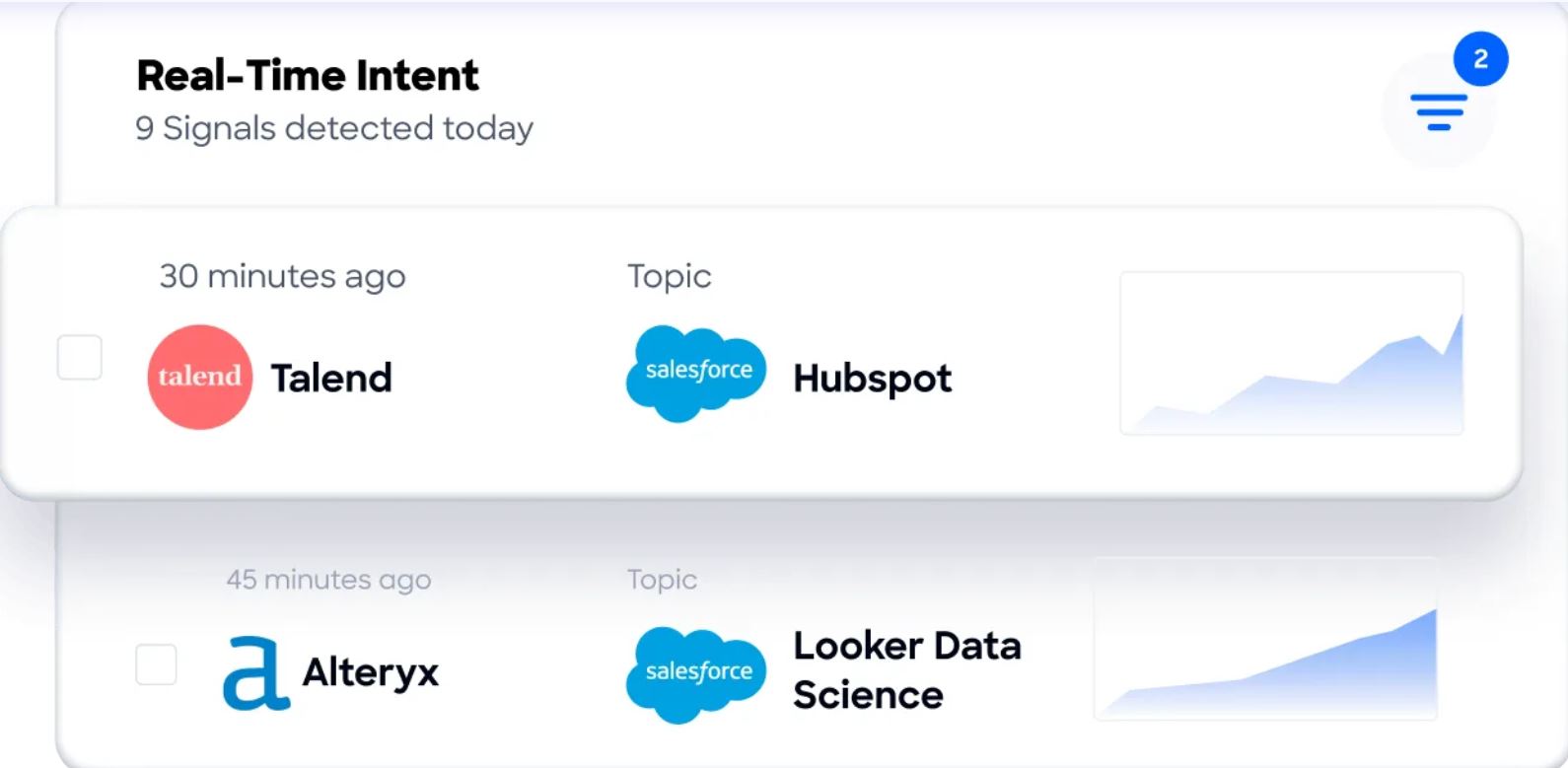
ZoomInfo reads the market. Buyer Intent tracks signals from 210 million IP-to-Organization pairings and 6 trillion+ keyword-to-device pairings sourced monthly, revealing when accounts are researching competitors, evaluating alternatives, or expanding into new areas.
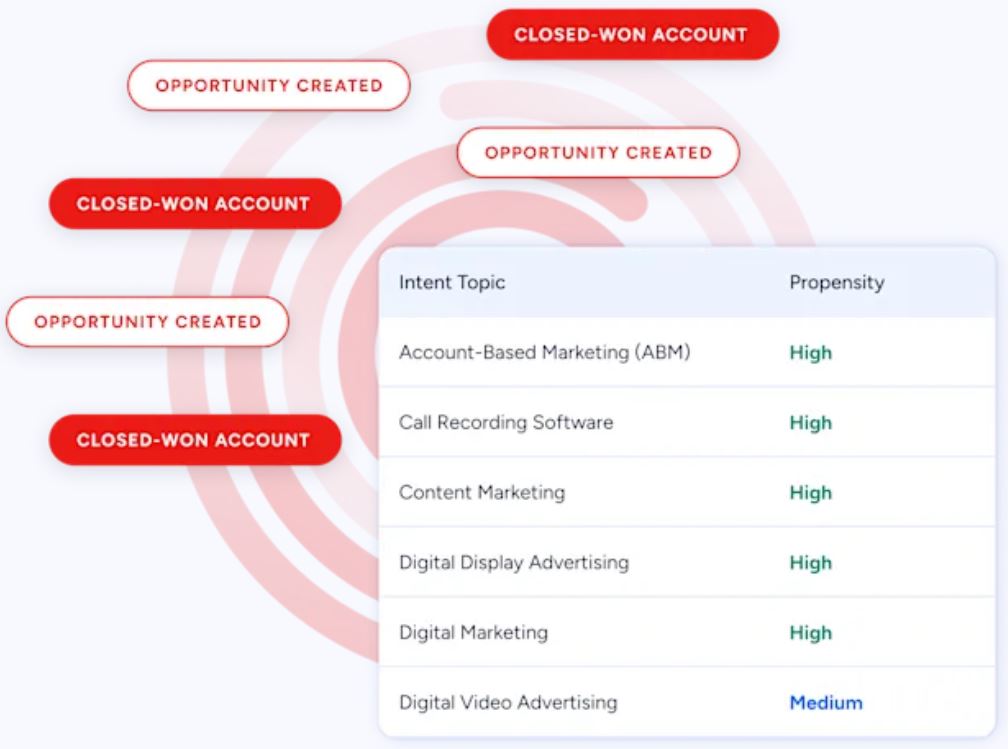
Guided Intent, exclusive to ZoomInfo, identifies topics historically correlated with deal outcomes rather than requiring manual topic selection.
For CS teams, this means detecting renewal risk before a customer mentions it in a call: if an account starts researching your competitor, that signal reaches your team before the conversation turns awkward.
Combined with Gainsight's internal signals (health scores, usage drops, sentiment shifts), ZoomInfo's external signals create a fuller picture of account risk and opportunity. A customer with declining product usage and active competitor research presents a different risk level than one with declining usage alone.
"That combination of our internal CRM data, external signals, and AI that's given all that context has helped us craft very specific account- and persona-based messages. And people have responded to them right away." (Seismic)
The GTM Context Graph: ZoomInfo connects data points to explain why accounts change.
ZoomInfo's GTM Context Graph combines its B2B data with a customer's CRM records, conversation transcripts, and behavioral signals into a single layer that processes 1.5B+ data points daily. The difference from a static database is reasoning: the GTM Context Graph captures not just what happened in an account, but why.
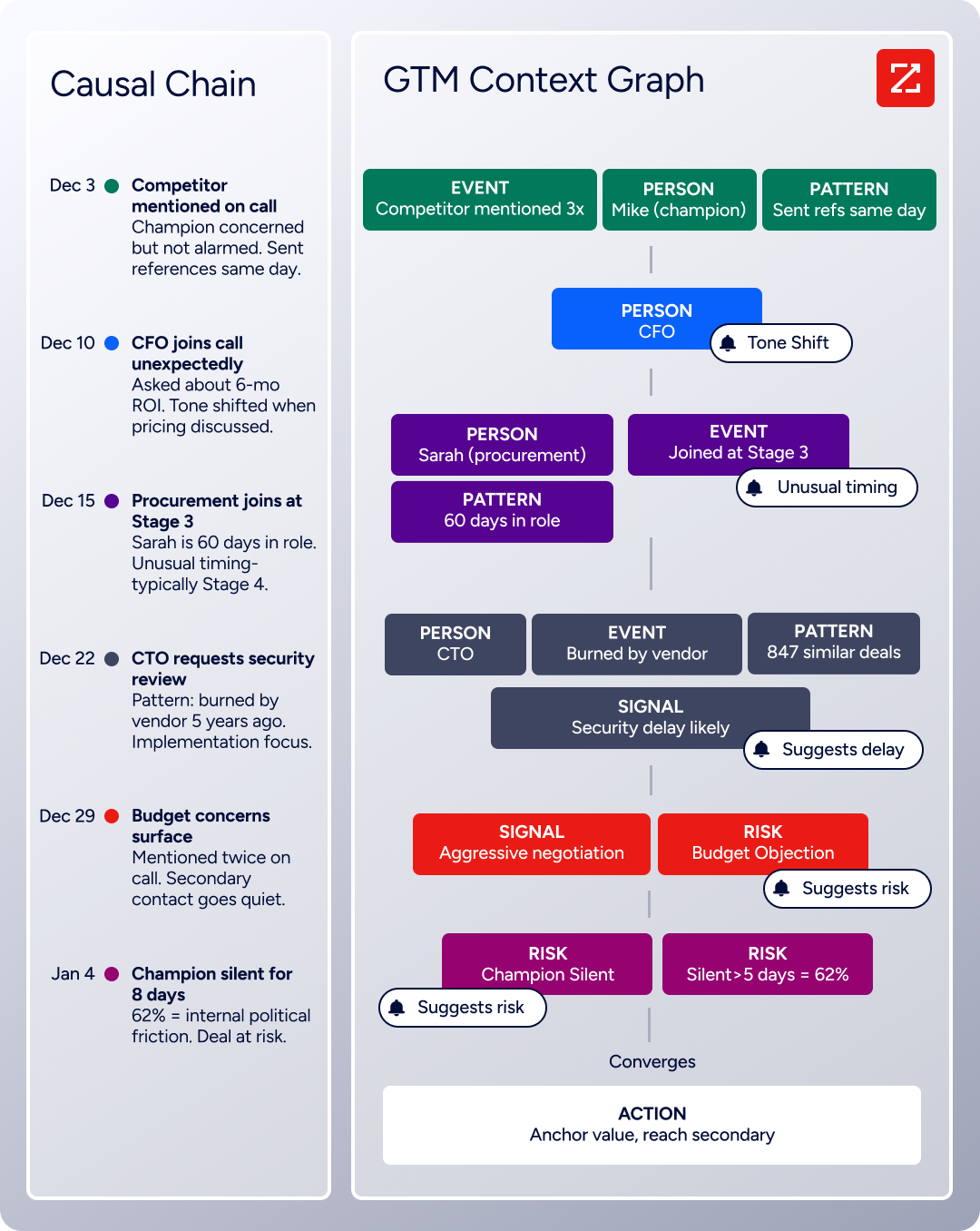
For CS teams, this means understanding the context behind account movements. A stalled renewal isn't just a red flag; the graph can reveal that the economic buyer changed roles, the technical champion is evaluating alternatives, and the account's hiring patterns suggest a strategic shift. That context turns a generic "renewal at risk" CTA in Gainsight into a specific action plan.
Universal Access: ZoomInfo delivers intelligence wherever CS teams work.
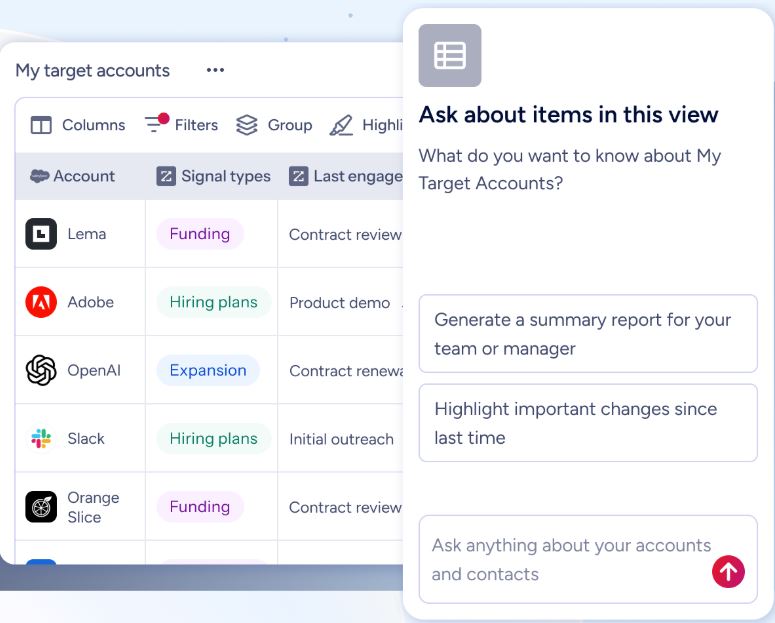
ZoomInfo's data reaches CS teams through three channels. GTM Workspace gives account managers and CS reps a single workspace with prioritized accounts, AI-drafted outreach, and customer health monitoring.
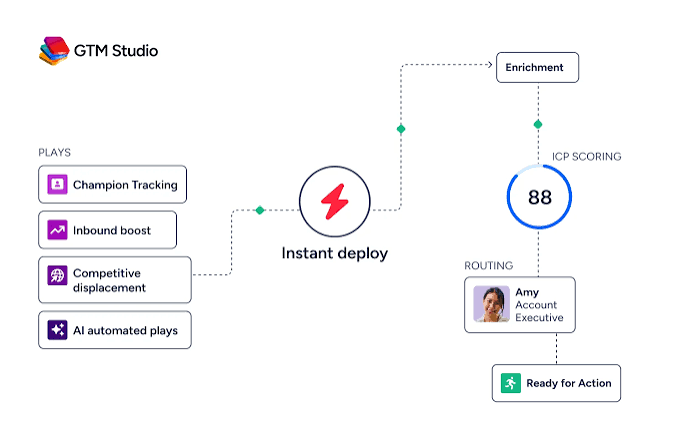
GTM Studio lets RevOps teams build enrichment workflows and automated plays without engineering tickets.
APIs and MCP expose the same intelligence to any tool in the stack, including the CRM that feeds Gainsight.
This means the same verified data powering a sales rep's prospecting also enriches the CRM records flowing into Gainsight's health scores. One data source, consistent across the revenue team.
"Anything that minimizes our team's need to switch contexts is beneficial. ZoomInfo offers a unified view, eliminating the need to navigate between systems." (Spekit)
Gainsight and ZoomInfo: How They Work Together
Aspect | Gainsight | ZoomInfo |
|---|---|---|
Primary focus | Post-sale customer lifecycle management | B2B intelligence and go-to-market execution |
Core strength | Health scoring, renewal workflows, CS automation | Verified contacts, intent signals, account intelligence |
Target users | CS teams, CS operations, product teams | Sales, marketing, RevOps, account management |
Where it fits | Managing existing customer relationships | Providing the data that makes those relationships visible |
AI capability | Autonomous CS agents, churn prediction, sentiment analysis | GTM Context Graph, AI account research, intent signals |
Contact data | Relies on CRM and manual entry | 500M contacts, 200M+ verified emails, 135M+ verified phones |
External signals | Internal communications via Staircase AI | Intent data, technographics, funding, hiring, leadership changes |
Integration | Salesforce integration, 110+ marketplace apps | 120+ marketplace integrations, APIs, MCP, cloud data partners |
Pricing | Quote-based, enterprise-only | Consumption-based pricing with a permanent free tier (ZoomInfo Lite) |
Final Verdict
Gainsight and ZoomInfo solve different problems that compound when combined. Choosing between them is the wrong frame; they occupy different stages of the customer lifecycle.
Gainsight is the right platform for B2B companies ready to operationalize customer success at scale. It provides the deepest workflow automation, the most configurable health scoring, and the broadest post-sales suite available.
If your CS team manages thousands of accounts, runs structured renewal motions, and needs to codify institutional knowledge into repeatable playbooks, Gainsight is the category leader for a reason. Its challenges (implementation complexity, admin overhead, enterprise pricing) are the tradeoffs of that depth.
ZoomInfo is the intelligence layer that ensures CS workflows are built on accurate data. Verified contacts mean your org charts reflect reality. Intent signals mean you see competitive research before the renewal call. Technographic and company data mean expansion conversations target the right stakeholders with relevant context.
Whether accessed through GTM Workspace, GTM Studio, or APIs and MCP feeding into your CRM, ZoomInfo's data improves every system it touches, including Gainsight.
Get started with ZoomInfo here.
Together, the two platforms close the loop: ZoomInfo feeds accurate, current intelligence into the CRM. Gainsight reads that intelligence to score health, trigger workflows, and forecast renewals. The result is a CS operation that acts on what's actually happening in accounts, not what was true six months ago.
Gainsight FAQ
What is Gainsight used for?
Gainsight is a customer success platform that helps B2B companies reduce churn, manage renewals, and grow existing accounts. It provides health scoring, automated workflows, renewal forecasting, customer education (via Skilljar), community management, and in-app product analytics (via Gainsight PX). The platform serves CS teams managing large portfolios who need a single system for the post-sale lifecycle.
How much does Gainsight cost?
Gainsight does not publish pricing for any of its products. All plans are quote-based and require contacting the sales team. The Customer Success product comes in Essentials and Enterprise tiers; third-party sources indicate that enterprise implementations typically reach six figures annually when professional services are included.
There is no permanent free plan, though Product Experience and Customer Communities offer limited free trials.
How long does it take to implement Gainsight?
Implementation typically takes 3 to 6 months, depending on the complexity of your CS operation and the number of data sources being connected. The process covers data modeling, user management, permissions configuration, rules engine setup, and integration with your CRM and other systems. A dedicated Gainsight admin is effectively required for both implementation and ongoing configuration.
What is Gainsight's Staircase AI?
Staircase AI is Gainsight's customer intelligence layer, acquired in 2024. It analyzes emails, meeting recordings, support tickets, and Slack threads to surface sentiment shifts, relationship health signals, and emerging risk. Gainsight claims it detects churn risk up to six weeks earlier than product usage data alone.
It operates on a zero-data-entry model, meaning CSMs don't need to manually log interactions for the system to work.
Does Gainsight integrate with Salesforce?
Yes, Salesforce is Gainsight's primary CRM integration. Gainsight is available in two deployment modes: Gainsight NXT (a standalone SaaS platform) and Gainsight for Salesforce (embedded inside Salesforce as a managed package). Both support bi-directional data sync. The Renewal Center syncs directly with Salesforce opportunities, and health scores, CTAs, and timeline data can surface within Salesforce views.
What are Gainsight's Atlas AI Agents?
Atlas AI Agents are autonomous agents launched in May 2025 that handle repetitive CS workflows at scale, including renewal outreach, adoption monitoring, and community moderation. They combine Staircase AI's communication signals with structured data like health scores and usage metrics to decide when and how to act.
Gainsight references 86% autonomy rates in agent-driven workflows, with human specialists handling escalations.
Who are Gainsight's main competitors?
In the customer success platform category, Gainsight's primary competitors include ChurnZero, Vitally, Planhat, and Totango. Gainsight differentiates through breadth (CS, product analytics, education, communities, and AI agents in one platform) and depth (configurable health scoring, renewal forecasting, and enterprise workflow automation). Lighter alternatives typically offer faster implementation and lower cost but narrower feature sets.
Can ZoomInfo complement Gainsight?
Yes. Gainsight orchestrates post-sale workflows based on the data in your systems. ZoomInfo enriches that data with verified B2B intelligence: accurate contacts, org charts, intent signals, technographics, and company attributes.
By keeping CRM records current and surfacing external account signals (competitor research, leadership changes, funding events), ZoomInfo ensures that Gainsight's health scores, renewal forecasts, and automated workflows reflect what's actually happening in your accounts.
