
Choosing between GetAccept vs. Docusign for your sales and agreement workflows often comes down to five questions:
Are you looking for an e-signature tool, or a deal workspace that includes proposals, buyer tracking, and contract management?
Does your team need visibility into how buyers engage with documents after you send them, or is getting the signature enough?
Are you a B2B sales organization closing complex deals, or do you need agreement workflows across departments like HR, legal, procurement, and real estate?
How important is having proposals, contracts, and signatures in one platform versus enterprise compliance and global legal coverage?
Do you have the B2B intelligence to know who to send those proposals and contracts to in the first place?
In short, here's what we recommend:
GetAccept is built for B2B revenue teams that want to manage the entire deal, not just the signature. Its Digital Sales Rooms give buyers and sellers a shared workspace where proposals, contracts, mutual action plans, and e-signatures live under one link. Real-time tracking shows who opened what, which pages they spent time on, and who else on the buying committee got involved. However, GetAccept's Professional plan requires a minimum of 5 users at $49/user/month, and features like CPQ, SSO, and conditional content are gated to the Enterprise tier.
Docusign is the market standard for electronic signatures and enterprise agreement management, used by 1.7 million customers including 95% of Fortune 500 companies. Its reach goes beyond signatures: the Intelligent Agreement Management (IAM) platform covers agreement preparation, workflow automation, AI-powered contract analysis via Iris AI, and post-signature obligation tracking. With 1,000+ pre-built integrations and legal enforceability in 180+ countries, Docusign handles compliance requirements that few competitors can match. The trade-off: it lacks buyer engagement features, and pricing escalates quickly, with advanced capabilities reserved for enterprise plans.
Both platforms handle the closing stage of a deal. But the deals that close fastest start with knowing who to target, when they're ready to buy, and what to say. That upstream intelligence separates a signed contract from a stalled pipeline. That's where ZoomInfo fits in.
ZoomInfo is a B2B intelligence and GTM platform built on a data foundation of 500M contacts, 100M companies, 135M+ verified phone numbers, and 200M+ verified business email addresses. Its GTM Context Graph processes 1.5B+ data points daily, combining this data with your CRM records, conversation transcripts, and behavioral signals to reveal not just what happened, but why. That intelligence reaches your team through the GTM Workspace for sellers, GTM Studio for marketers and RevOps, or through the API and MCP in any front-end. Whether your team closes deals in GetAccept's Digital Sales Rooms or Docusign's agreement workflows, ZoomInfo helps you send those proposals to the right people at the right time.
If verified data and AI-powered deal intelligence sound like the missing piece before your next proposal goes out, see how ZoomInfo works.
GetAccept vs. Docusign vs. ZoomInfo at a glance
GetAccept | Docusign | ZoomInfo | |
|---|---|---|---|
Core focus | Digital Sales Rooms and deal execution | Electronic signature and agreement lifecycle management | B2B data, buyer intelligence, and GTM execution |
E-signature | Included on all plans, eIDAS/ESIGN/UETA compliant | 180+ countries, eIDAS QES support | Not an e-signature tool |
Buyer engagement tracking | Page-level analytics, engagement scores, stakeholder mapping | Completion tracking and audit trails | Buyer intent signals, website visitor tracking, deal intelligence |
Proposal creation | Drag-and-drop editor with AI content generation | No native document creation (upload only) | Not a proposal tool |
Contract management | AI data extraction and renewal tracking | Full CLM with Iris AI, 6x Gartner Leader | Not a CLM tool |
Integrations | Salesforce, HubSpot, Dynamics, Pipedrive + 500 automation connectors | 1,000+ pre-built integrations | 120+ native integrations, API, and MCP access |
AI capabilities | Sales content generation, meeting summaries, contract data extraction | Iris AI for agreement review, clause analysis, agentic workflows | GTM Context Graph, AI account research, buying group intelligence |
Starting price | $25/user/month (eSign); $49/user/month (Professional, min. 5 users) | $10/month (Personal); $25/user/month (Standard) | Custom-quoted; free tier available (ZoomInfo Lite) |
Best for | B2B sales teams running complex, multi-stakeholder deals | Organizations needing enterprise-grade agreements across departments | Revenue teams needing intelligence to find, prioritize, and engage buyers |
Two different problems, two different platforms
GetAccept and Docusign are often compared because they both handle e-signatures. But the comparison misleads. These platforms solve different problems at different stages of the revenue cycle.
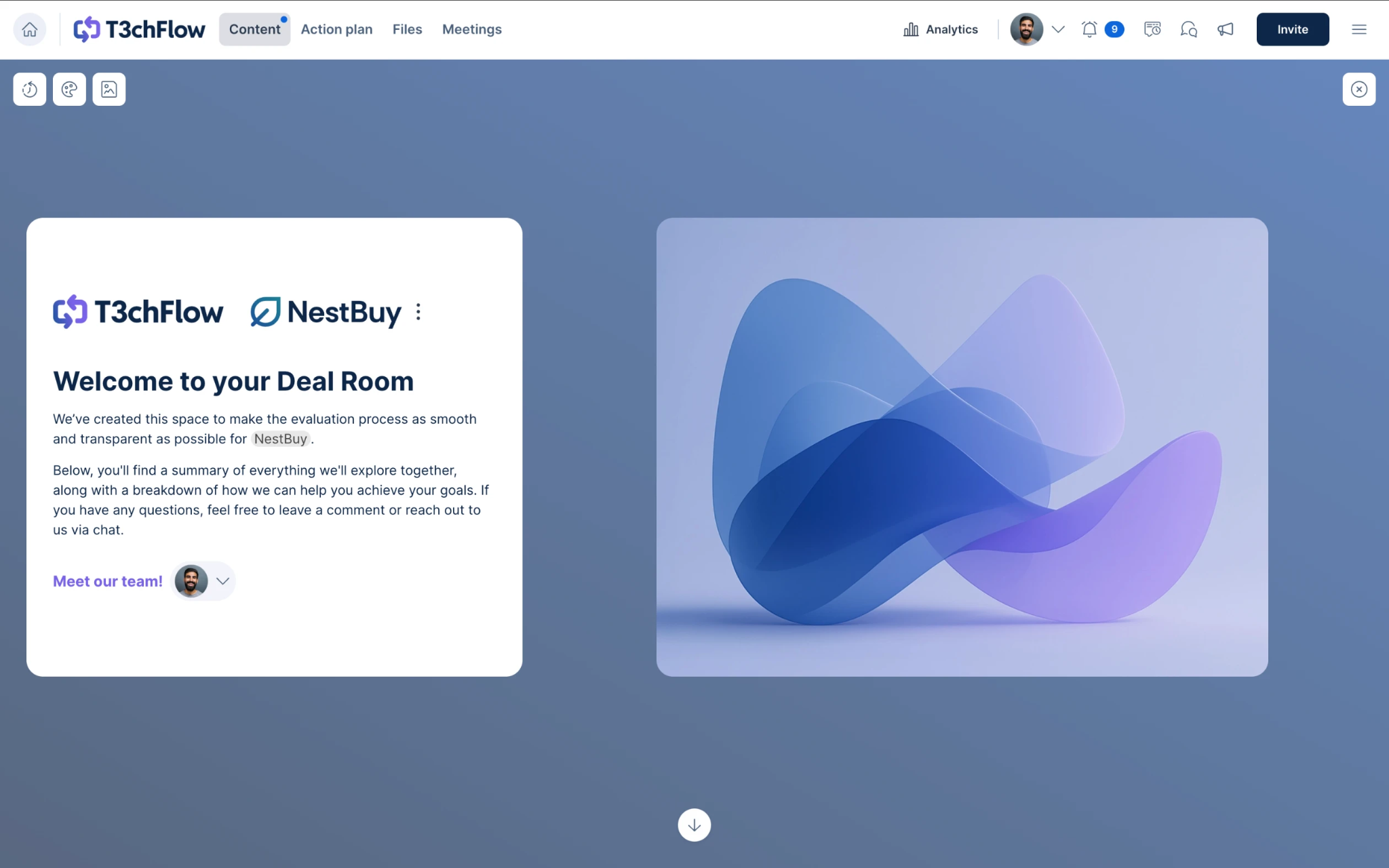
GetAccept was founded in 2015 on a prediction that B2B sales would move online. The founders built a platform around a specific workflow: what happens after a sales meeting ends and before a contract gets signed. That middle ground (where deals stall, stakeholders multiply, and proposals get buried in email threads) is where GetAccept lives.
Source: GetAccept
Its Digital Sales Room is a shared workspace where everything related to a deal exists under one link: proposals, pricing tables, mutual action plans, video introductions, and contracts ready for signature.
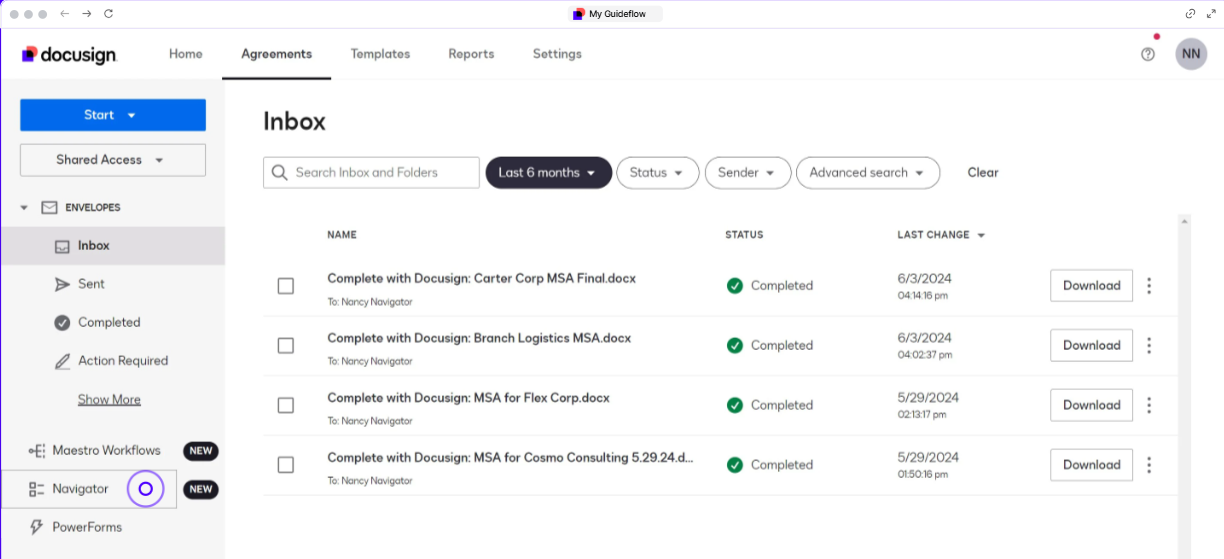
Docusign was founded in 2003 to replace wet-ink signatures with legally enforceable digital ones. Two decades later, it has expanded into what it calls Intelligent Agreement Management, covering the full agreement lifecycle from creation through post-signature obligation tracking.
Source: Docusign
But the DNA is still agreement infrastructure. Docusign is the system of record for contracts across sales, legal, HR, procurement, and real estate, not a tool designed around the seller-buyer relationship.
The practical difference shows up in daily use. A sales rep using GetAccept creates a branded deal room, embeds a personalized video, attaches a proposal with a pricing table, shares it via a single link, and watches in real time as the prospect reads the pricing section for six minutes and forwards the room to their CFO. A sales rep using Docusign uploads a finished contract, places signature fields, and sends it for signing.
Both are useful. But they answer different questions. GetAccept asks: how do I move this deal forward? Docusign asks: how do I get this document signed?
GetAccept wins on buyer engagement visibility
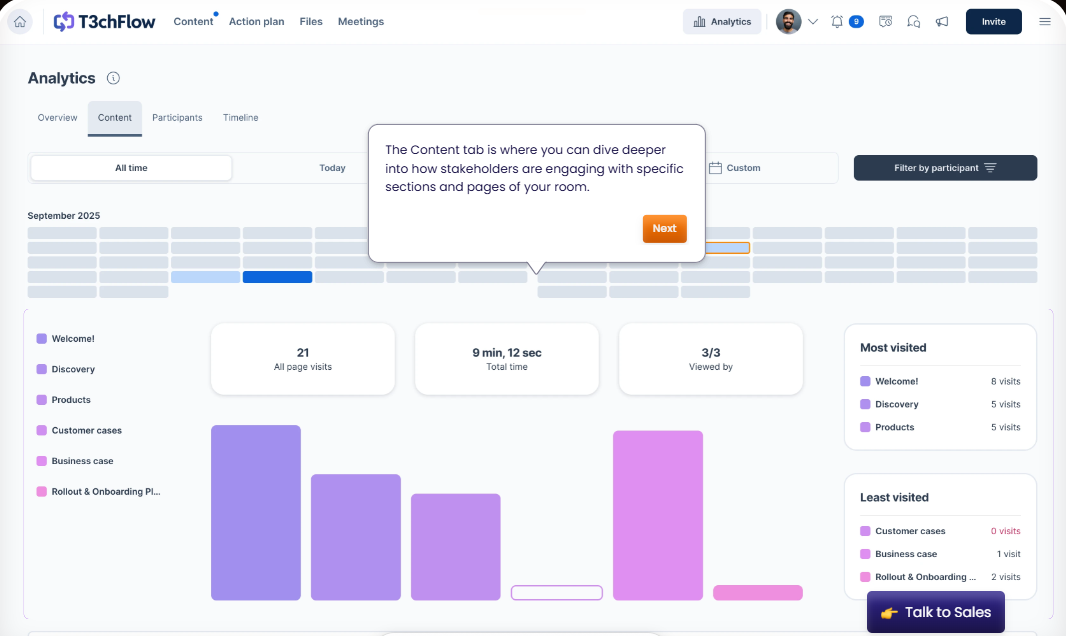
This is GetAccept's sharpest edge. Every interaction inside a Deal Room generates a tracked event. The Tracking & Analytics system shows sellers who visited, which pages held their attention longest, and who else inside the buying company received the room link.
Source: GetAccept
The Participant Engagement Score (PES) condenses this into a 0–5 composite score per stakeholder, calculated from visit frequency, time spent, chat and comment activity, file interactions, and mutual action plan engagement over the trailing 30 days. A PES of 4.5 tells a rep their champion is engaged. A PES of 1.2 on the economic buyer tells them the deal has a gap.
Docusign tracks whether a document was delivered, viewed, and signed. It records an automated audit trail with timestamps, IP addresses, and completion certificates.
For compliance and legal enforceability, this is what's needed. But it doesn't tell a seller which sections of a proposal held a buyer's attention, or whether the deal room was forwarded to a new stakeholder.
For teams that need engagement data to guide follow-up, GetAccept provides information that Docusign was never designed to capture.
Docusign dominates in compliance and global legal coverage
Docusign pulls ahead wherever legal enforceability, regulatory compliance, and enterprise-scale trust matter.
Docusign operates in 180+ countries with the signing experience available in 44 languages. Its compliance certifications span ISO 27001, SOC 1 Type 2, SOC 2 Type 2, PCI DSS, FedRAMP Moderate, HIPAA, and 21 CFR Part 11.

Source: Docusign
For European transactions, Docusign supports all three eIDAS tiers, from simple electronic signatures through Qualified Electronic Signatures (QES) as a qualified trust service provider.
GetAccept covers the essentials: GDPR, SOC 2, and eIDAS compliance with support for three signature tiers (Simple, Advanced, and Qualified via external trust service providers). Nordic eID support (BankID for Sweden, BankID NO for Norway, MitID for Denmark, Finnish Trust Network) is a real strength for Scandinavian businesses.
But GetAccept doesn't hold FedRAMP authorization, HIPAA certification, or 21 CFR Part 11 compliance. For government agencies, healthcare organizations, financial institutions, and life sciences companies, these aren't optional.
Docusign's Trust Center and its recognition as Newsweek's #1 Most Trusted Software Company in America reflect a compliance infrastructure built over two decades that newer platforms haven't matched.
The brand itself carries weight. 84% of signers say they are more likely to continue doing business with a company that uses Docusign. When a counterparty receives an agreement through Docusign, there's no explanation needed. That recognition has real commercial value in enterprise sales.
AI serves different masters in each platform
Both platforms invest in AI, but their AI solves different problems because their platforms serve different workflows.
GetAccept's AI layer is built for selling. It generates personalized proposal content from deal context, including meeting transcripts, buyer company data, and an organization's knowledge base.
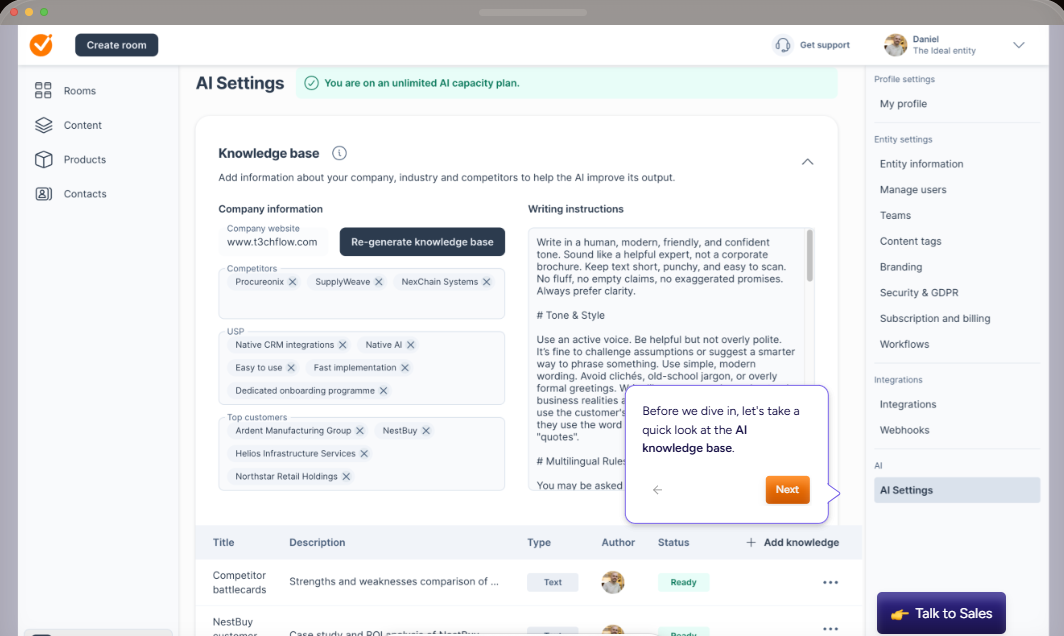
Source: GetAccept
Section Prompts let admins attach AI instructions to specific template sections so reps get consistent, on-brand output with one click.
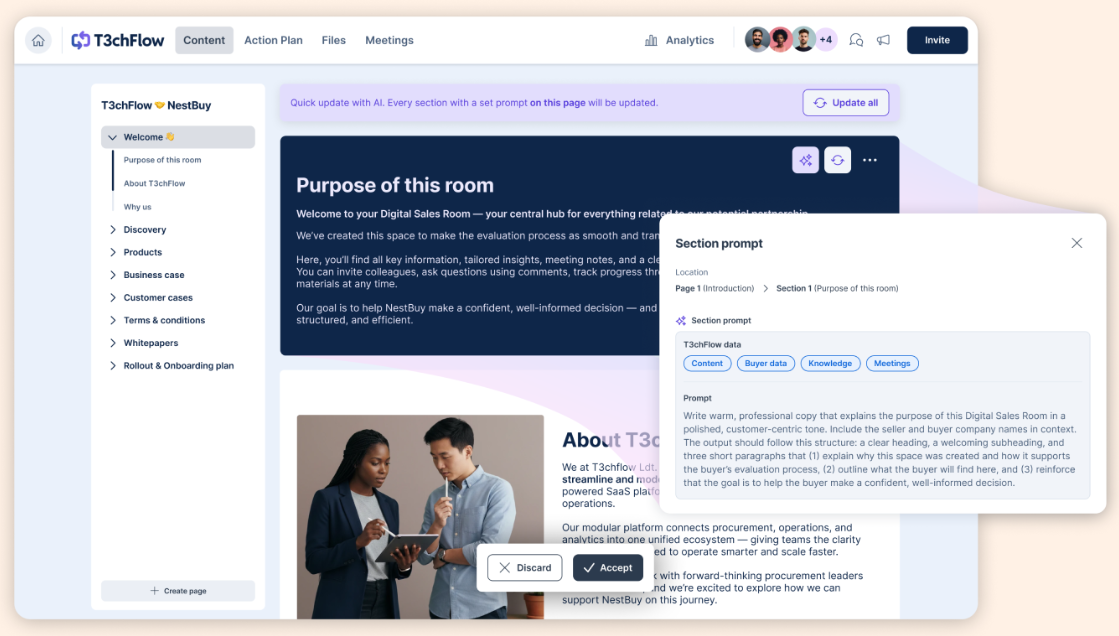
Source: GetAccept
The AI runs on a tuned version of Claude Sonnet hosted on EU servers, so no deal data leaves their infrastructure. On the post-signature side, AI Contract Management extracts structured data (renewal dates, notice periods, contract values) from signed contracts automatically.
Docusign's Iris AI is built for the agreement lifecycle. It analyzes clause language against custom playbooks, flags non-compliant terms, generates automated redlines, and extracts structured data from contract repositories.
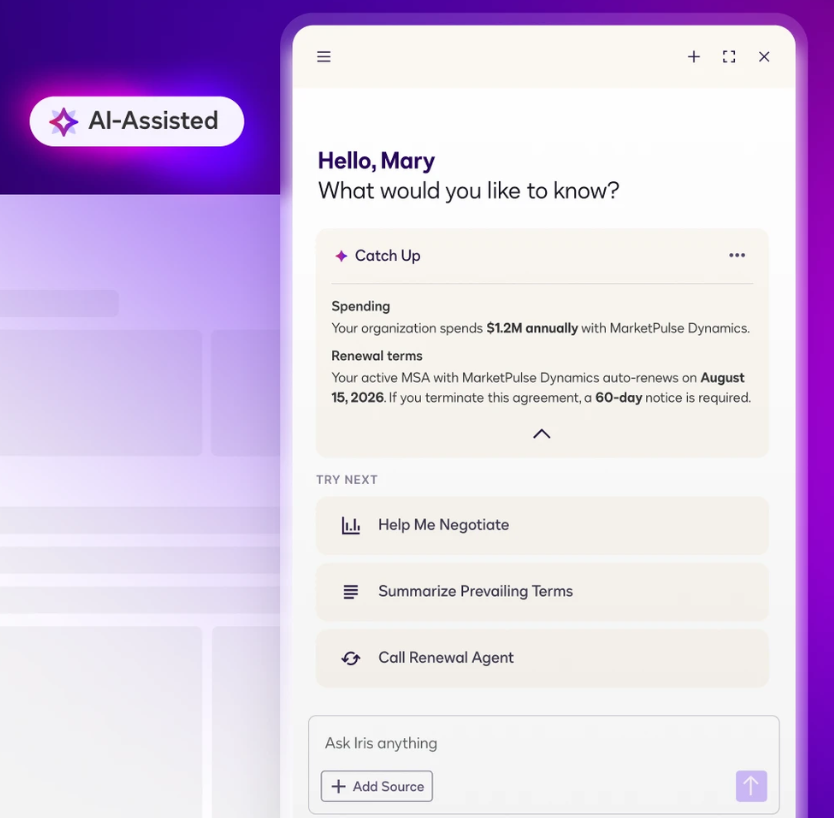
Source: Docusign
The newest capability is agentic: AI agents that triage legal intake requests, redline against company standards, and build relationship intelligence briefs on their own.
GetAccept's AI helps a rep write a better proposal faster. Docusign's AI helps a legal team review contracts faster with fewer errors. Neither replaces the other because they operate at different points in the business process.
Contract management takes different forms
GetAccept's Contract Management is a post-signature repository that centralizes signed agreements and uses AI to extract key data. It tracks renewal types (rolling, fixed, evergreen, transactional), surfaces notice deadlines, and sends automated renewal reminders.
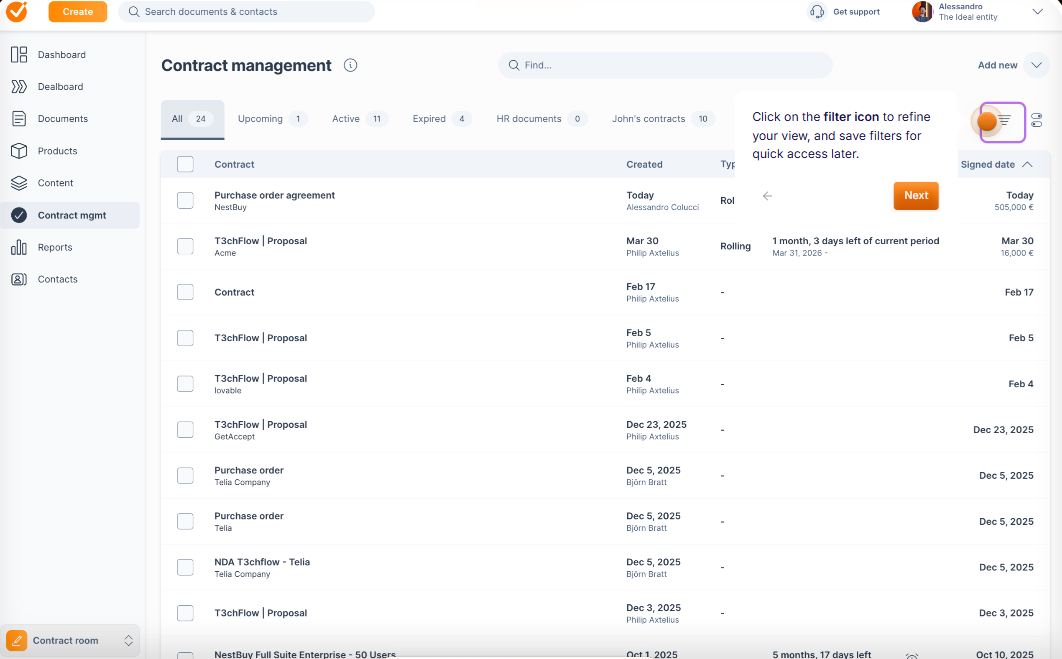
Source: GetAccept
Docusign's CLM operates at a different scale. It covers the full contract lifecycle: intake, dynamic template generation, AI-assisted review and redlining, multi-party negotiation with version control, workflow-automated approval routing, execution, and post-signature obligation tracking.
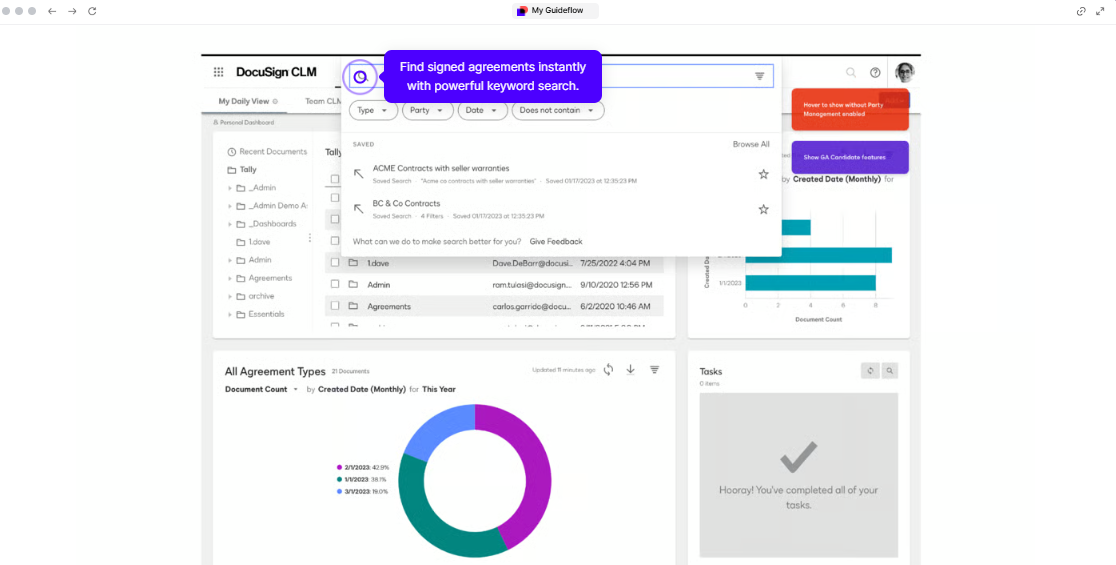
Source: Docusign
The distinction matters for buying decisions. If your primary need is tracking signed sales contracts and catching upcoming renewals, GetAccept handles it without a separate CLM purchase. If your legal and procurement teams need clause libraries, conditional approval routing, and AI-powered redlining across thousands of contracts, Docusign CLM is built for that work.
Integration depth reflects each platform's ecosystem
Docusign's 1,000+ pre-built integrations cover virtually every enterprise system: Salesforce, Microsoft 365, Google Workspace, SAP, ServiceNow, Slack, Teams, and Zoom.
The Docusign MCP Server (launched May 2026) connects agreement management to AI assistants like Claude, ChatGPT, and Microsoft Copilot. For enterprises with complex tech stacks, Docusign fits without forcing architectural changes.
GetAccept takes a different approach: fewer but deeper CRM integrations. Its connections with key CRM platforms (Salesforce, HubSpot, Microsoft Dynamics, Pipedrive, and SuperOffice) are bidirectional, meaning deal room events can automatically update CRM fields, stages, and pipeline data.
The May 2026 event-based conditional CRM sync allows automated field updates triggered by deal-stage logic. For broader automation, GetAccept offers 500+ connectors via its automation platform.
For sales teams living inside their CRM, GetAccept's depth of CRM integration often matters more than Docusign's breadth. For organizations that need agreement workflows across Salesforce, SAP, ServiceNow, and SharePoint simultaneously, Docusign's ecosystem is harder to match.
The intelligence gap neither platform fills
GetAccept tells you how a buyer engages with your deal room. Docusign tells you whether a contract was signed. Neither tells you which companies are researching solutions like yours right now, who the decision-makers are, or what their verified contact information is.
ZoomInfo fills this gap. As a B2B intelligence and GTM platform, ZoomInfo provides the upstream intelligence that determines whether your proposals and contracts reach the right people at the right moment.
ZoomInfo's Buyer Intent data tracks signals from 210 million IP-to-Organization pairings and 6 trillion+ new keyword-to-device pairings sourced monthly.
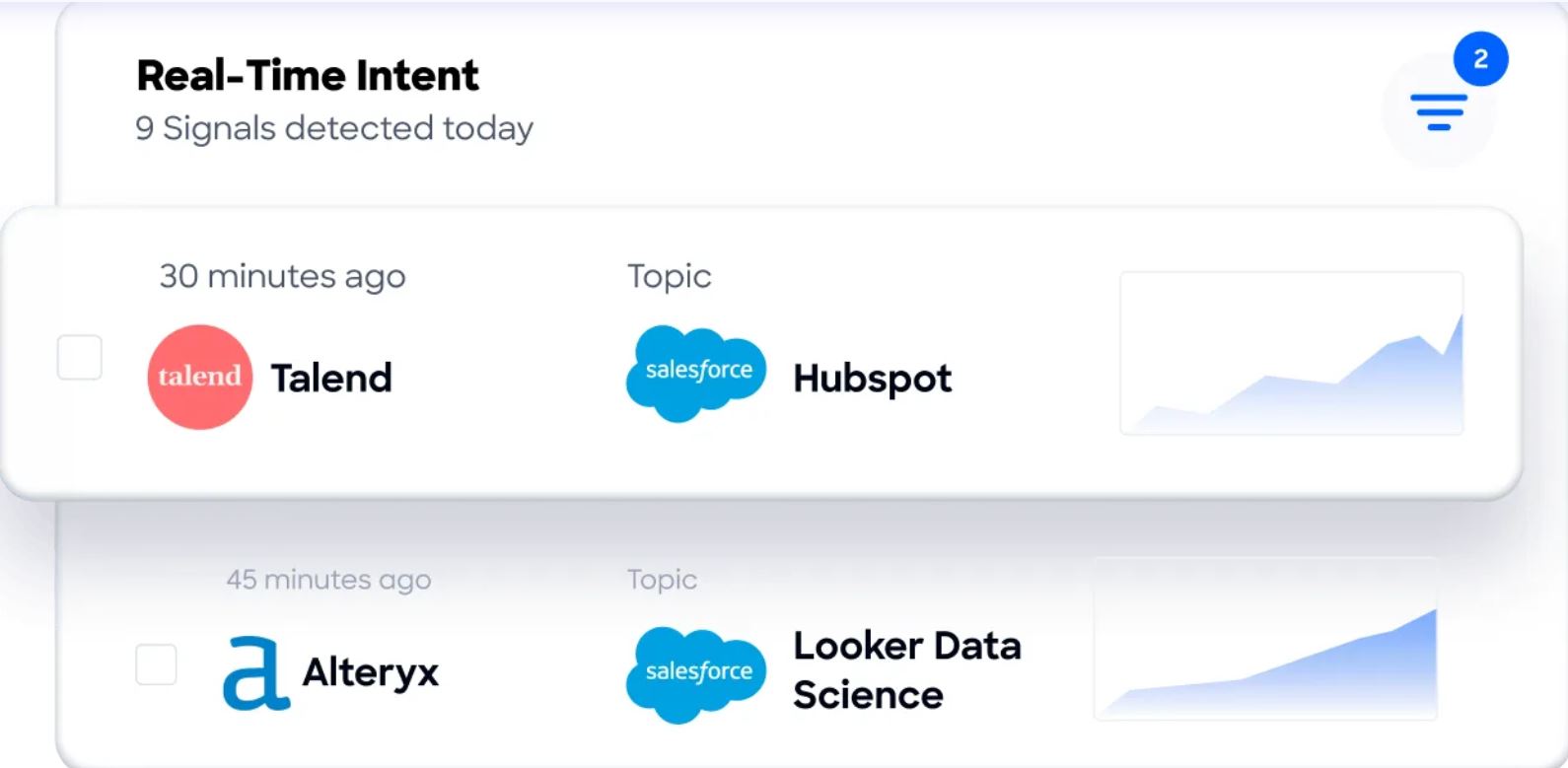
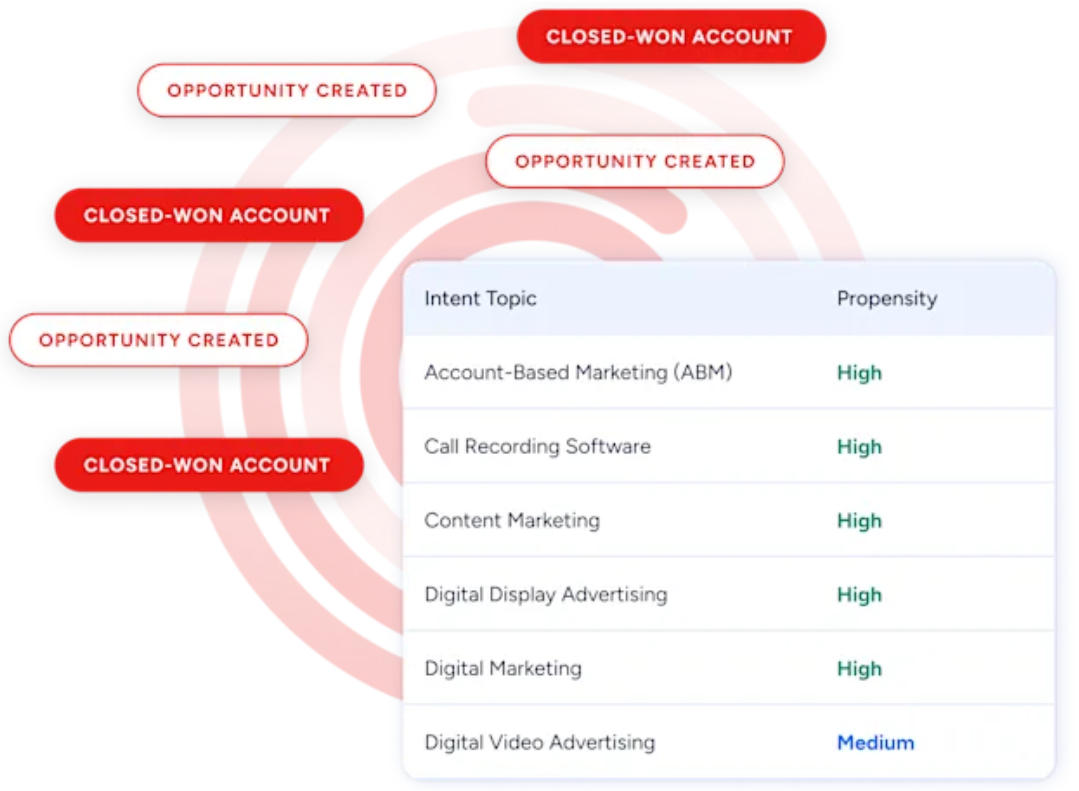
Guided Intent, exclusive to ZoomInfo, identifies topics historically correlated with deal success rather than requiring manual topic selection. When an account starts researching "contract management software" or "digital sales room," ZoomInfo surfaces that signal before the company ever fills out a form.
The GTM Context Graph goes further by combining ZoomInfo's B2B data with a customer's CRM records, conversation transcripts, and behavioral signals. It doesn't just record that a deal moved stages; it captures why, identifying patterns (like executive sponsorship entering at specific stages) that correlate with closed-won outcomes in your segment.
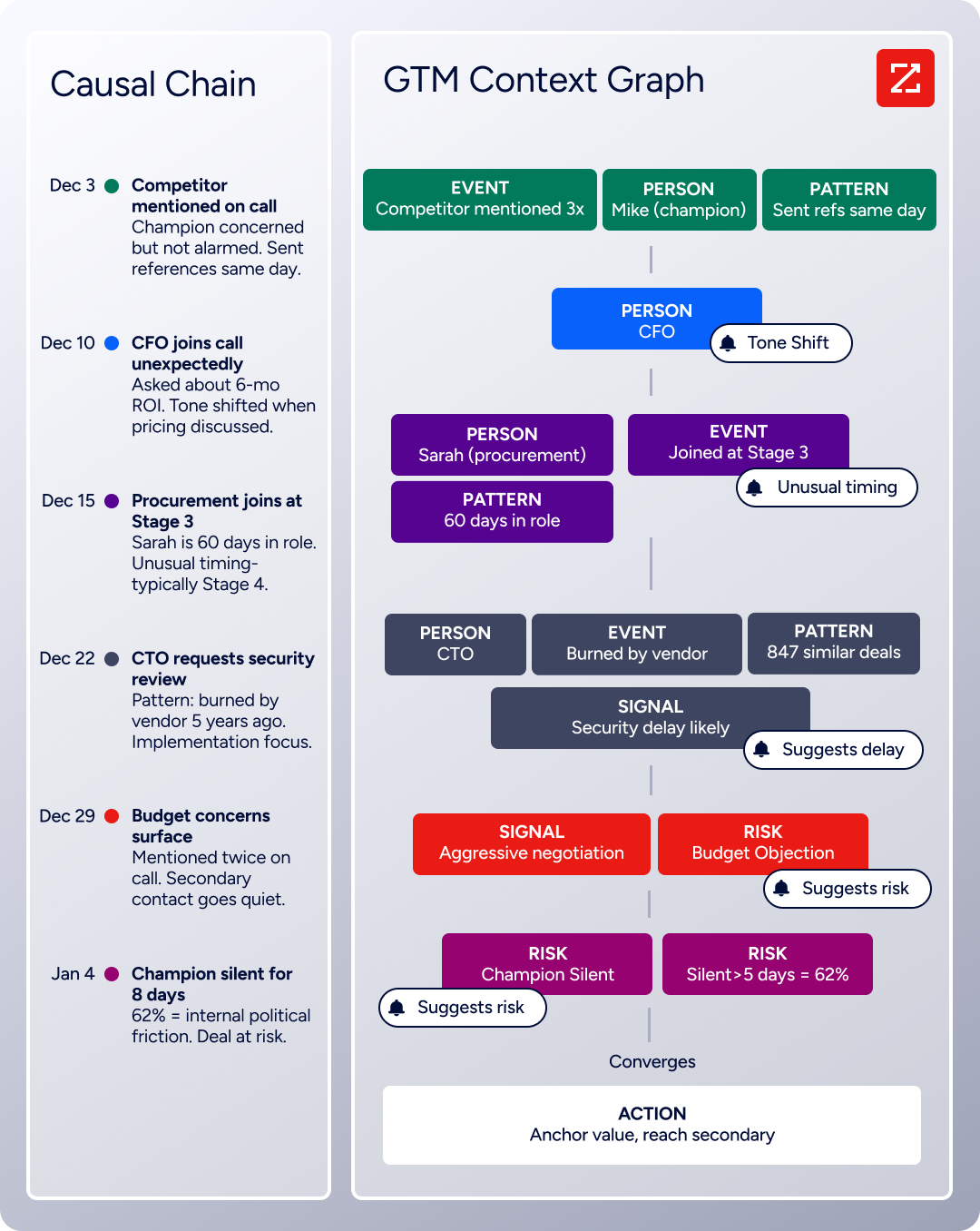
That intelligence reaches sellers through the GTM Workspace, marketers and RevOps through GTM Studio, and any other tool in the stack through the API and MCP.
For sellers using GetAccept, ZoomInfo answers the question that comes before "how do I run this deal?": who should I be selling to? For teams using Docusign, ZoomInfo identifies which accounts are in-market and which stakeholders should receive those agreements. The intelligence layer makes whichever deal execution platform you choose more effective.
"That combination of our internal CRM data, external signals, and AI that's given all that context has helped us craft very specific account- and persona-based messages. And people have responded to them right away." (Toby Carrington, CBO, Seismic)
Pricing models reflect different value propositions
GetAccept uses straightforward per-user pricing:
Plan | Price | Min. users | Key additions |
|---|---|---|---|
eSign | 1 | Unlimited e-signatures, basic editor, contract management, content library | |
Professional | 5 | AI suite, Digital Sales Rooms, Mutual Action Plans, CRM integrations, advanced branding | |
Enterprise | Custom | CPQ, SSO, conditional content, unlimited product library, API access |
The 5-user minimum on Professional means the floor is $245/month to access Digital Sales Rooms, AI features, and CRM integrations. Solo sellers or teams of two to four are limited to the eSign plan, which lacks these capabilities.
Docusign offers two product families:
Plan | Price | Envelope allowance | Key capabilities |
|---|---|---|---|
eSignature Personal | 5/month | Single user, basic templates, cloud storage | |
eSignature Standard | 100/user/year | Team templates, branding, scheduled sending | |
eSignature Business Pro | 100/user/year | Web forms, bulk send, payment collection | |
IAM Standard | Unlimited (web app) | AI search and analysis, Agreement Manager, 3 workflows | |
IAM Professional | Unlimited (web app) | AI-Assisted Review, 10 workflows |
Docusign's pricing draws a common complaint in user reviews: the Standard plan's 100 envelopes/user/year cap feels restrictive for high-volume users. Features like SSO, Salesforce integration, HIPAA compliance, and 24/7 support are restricted to Enhanced plans (contact sales). Users on G2 and Capterra also flag automatic renewal practices and difficulty reaching support as friction points.
ZoomInfo uses consumption-based pricing with no publicly listed prices. For teams exploring the platform, ZoomInfo Lite provides permanent free access to the B2B database with 10 monthly export credits, no credit card required. A 7-day free trial of paid features is also available.
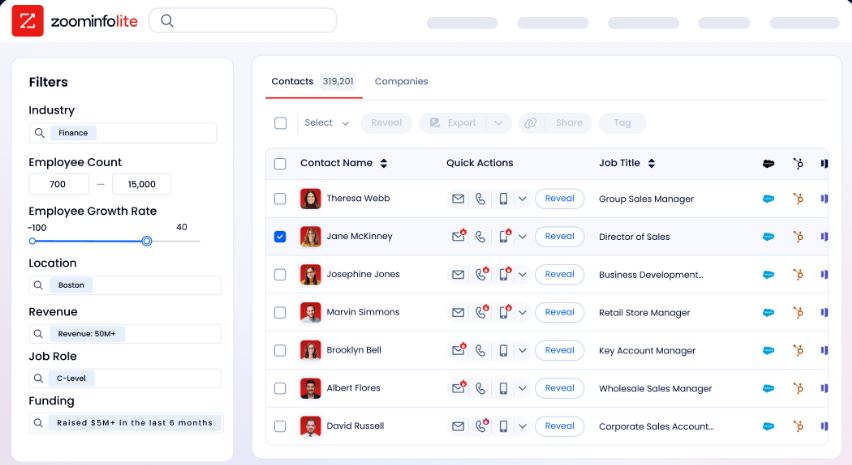
The cost comparison requires context. GetAccept and Docusign are deal execution tools. ZoomInfo is the intelligence layer that feeds those tools. The investments stack, not substitute: ZoomInfo helps you find and qualify buyers, then GetAccept or Docusign helps you close them.
Support and onboarding set different expectations
GetAccept assigns every paid customer a dedicated Customer Success Manager and claims an average response time under 3 minutes for support queries. Onboarding follows a structured playbook: kick-off meeting, admin training, content library setup, tech stack integration, and user training, with an average 30-day rollout. G2 reviewers consistently praise the speed and quality of support.
Docusign's support is tiered. Standard support (included with paid plans) provides chat support with a target 24-hour initial response. Phone support requires the Plus tier, and 24/7 live technical support is exclusive to Enhanced plans. Docusign University offers self-paced and instructor-led training, and the Developer Center serves technical teams. The gap between standard and enterprise support is a recurring friction point in user reviews.
ZoomInfo redesigned its onboarding program from 30 to 90 days across planning, technical implementation, education, and adoption phases, producing a 25% improvement in customer satisfaction scores. ZoomInfo University provides role-specific learning paths, product certifications, and live webinars.

GetAccept vs. Docusign vs. ZoomInfo: Which should you choose?
These three platforms aren't competing for the same budget line. The right combination depends on how your organization sells and what gaps you need to fill.
Choose GetAccept if:
You run a B2B sales organization with multi-stakeholder deals
Visibility into buyer engagement after sending a proposal matters to your close rates
You want proposals, contracts, mutual action plans, and e-signatures in one platform
Your team uses Salesforce, HubSpot, or Dynamics and wants deep CRM integration
You need a sales-focused deal execution tool that reps can adopt in weeks
Choose Docusign if:
You need agreement workflows across sales, legal, HR, procurement, or real estate
Global compliance coverage (FedRAMP, HIPAA, eIDAS QES, 21 CFR Part 11) is a requirement
Your organization processes high volumes of agreements and needs enterprise-grade infrastructure
You want AI-powered contract lifecycle management with clause analysis and automated redlining
Brand recognition matters to your counterparties and customers
Add ZoomInfo to your stack if:
You need verified B2B contact data and buyer intent signals to fill the top of your pipeline
You want AI account intelligence that tells your reps who to target, when to engage, and what to say
Your team's proposals and contracts would close faster if they reached the right decision-makers at the right time
You want a single intelligence layer that feeds any tool in your stack, from CRM to deal rooms to custom AI agents
Try ZoomInfo for free and discover who's in-market for your solution right now.
The most effective revenue teams don't choose between intelligence and execution. They use ZoomInfo to find and qualify the right accounts, then GetAccept or Docusign to close them. When the intelligence is accurate and the deal execution is structured, the pipeline moves.
"It's not just the data itself. It's more about the right data at the right time to help us reach out with the right message across that full buyer journey." (Chelsea Kenyon, Senior Director of Digital Strategy, Redwood Logistics)
GetAccept vs. Docusign vs. ZoomInfo FAQ
What is the fundamental difference between GetAccept, Docusign, and ZoomInfo?
GetAccept is a Digital Sales Room and proposal platform built for B2B sales teams, combining buyer engagement tracking, proposals, mutual action plans, and e-signatures in one deal workspace. Docusign is an electronic signature and agreement lifecycle management platform used across departments like sales, legal, HR, and procurement, with enterprise-grade compliance covering 180+ countries.
ZoomInfo is a B2B intelligence platform that provides verified contact data, buyer intent signals, and AI account insights to help revenue teams identify and engage the right prospects before any proposal or contract is sent.
Which platform is best for getting documents signed quickly?
Docusign is the fastest path for document signing. Its e-signature workflow is streamlined for uploading, tagging, and sending documents for signature, and recipients can sign without creating an account. Agreements sent via SMS through Docusign are completed 65% faster than those sent via email.
GetAccept embeds e-signatures inside a broader deal room experience, which adds engagement features but introduces more steps than a standalone signing workflow.
Can GetAccept replace Docusign for e-signatures?
For B2B sales contracts, yes. GetAccept's electronic signatures are legally binding under US ESIGN/UETA, UK Electronic Communications Act 2000, and EU eIDAS, with support for Simple, Advanced, and Qualified Electronic Signatures.
However, GetAccept lacks FedRAMP authorization, HIPAA certification, and 21 CFR Part 11 compliance, which Docusign offers on Enhanced plans. Organizations in government, healthcare, or life sciences will typically need Docusign's compliance infrastructure.
How does ZoomInfo work alongside GetAccept or Docusign?
ZoomInfo operates upstream in the revenue workflow. Its B2B database of 500M contacts and 100M companies, combined with buyer intent signals and the GTM Context Graph, helps teams identify which accounts are researching solutions and who the decision-makers are.
That intelligence feeds the deal execution stage, whether your team uses GetAccept's Digital Sales Rooms or Docusign's agreement workflows. ZoomInfo is not an e-signature or proposal tool; it's the intelligence layer that makes those tools more effective.
Which platform is more affordable for small sales teams?
Docusign's Personal plan starts at $10/month for a single user with 5 envelopes per month, making it the cheapest entry point for basic e-signature needs. GetAccept's eSign plan starts at $25/user/month with unlimited signatures, but accessing Digital Sales Rooms, AI features, and CRM integrations requires the Professional plan at $49/user/month with a minimum of 5 users ($245/month floor).
ZoomInfo Lite is free with 10 monthly export credits, providing access to verified B2B data at no cost.
Which platform provides the best visibility into deal progress?
GetAccept provides the deepest deal-level visibility through its Participant Engagement Score, page-level content analytics, and real-time activity feeds showing who engaged with which content and for how long. Docusign tracks document delivery, viewing, and signing events with timestamped audit trails, but does not offer page-level engagement analytics.
ZoomInfo provides account-level intelligence (including buyer intent signals, technology changes, and organizational shifts) that contextualizes deal progress within broader market activity.
Do any of these platforms offer AI-powered contract review?
Docusign's Iris AI performs automated contract review, including clause analysis against custom playbooks, risk flagging, automated redlining, and AI-assisted Q&A on contract portfolios. It reports 81% faster contract turnaround and 37% more time saved for legal teams. GetAccept's AI Contract Management extracts structured data from signed contracts (dates, values, renewal terms) but does not perform clause-level review or redlining.
ZoomInfo's AI focuses on account and buyer intelligence rather than contract analysis.
Which platform handles the widest range of business use cases?
Docusign covers the broadest range: sales contracts, HR onboarding, real estate transactions, financial services client onboarding, insurance policy processing, legal CLM, procurement, government approvals, healthcare consent, and remote notarization. GetAccept is designed for B2B sales, covering proposals, deal rooms, contracts, and related workflows.
ZoomInfo serves sales, marketing, and revenue operations teams with B2B data, intent signals, and GTM intelligence across prospecting, pipeline generation, ABM, and account management.
Related GetAccept and Docusign breakdowns:
