
If you're comparing Gong vs. Anaplan, you're weighing two different bets on how to improve revenue performance.
Gong captures every customer conversation and uses AI to tell you what's working, what's at risk, and what to do next. Anaplan models your entire sales organization (territory assignments, incentive compensation, capacity planning) and runs scenario planning at a scale spreadsheets cannot touch.
They overlap in one area: sales forecasting. But their approaches couldn't be more different. The questions you should ask before choosing reveal which one fits:
Is your primary challenge understanding what's happening inside deals, or planning how to allocate resources across your sales organization?
Do you need AI that analyzes customer conversations, or AI that models financial and operational scenarios?
Is territory design, quota setting, and incentive compensation a major pain point, or is deal execution and rep coaching?
How much implementation complexity and cost are you prepared to absorb?
Do you have the buyer intelligence data (verified contacts, intent signals, market context) that either platform needs to deliver results?
In short, here's what we recommend:
Gong is the right choice for revenue teams that want visibility into every customer interaction and AI that acts on those signals. Its Revenue Graph captures calls, emails, and meetings across your go-to-market motion, then surfaces deal risks, coaching moments, and forecast signals that CRM data alone misses.
The 15+ AI agents included with every license handle tasks from automated call scoring to email composition. Gong was named a Leader in the inaugural 2025 Gartner Magic Quadrant for Revenue Action Orchestration and ranked first across all four evaluated use cases.
However, Gong doesn't handle territory planning, quota allocation, or incentive compensation, and its pricing (per-user licenses plus a platform fee, all custom-quoted) can be significant for larger teams.
Anaplan is built for large enterprises that need to plan, model, and optimize their sales organization on one connected platform.
Its Hyperblock calculation engine handles territory design with geospatial mapping, quota allocation using top-down and bottom-up methodologies, incentive compensation across hundreds of plans and thousands of payees, and driver-based financial forecasting with scenario modeling.
Named a Leader in the Gartner Magic Quadrant for Financial Planning Software for nine consecutive years, Anaplan connects Finance, Sales, Supply Chain, and HR planning on a single platform so that a change in one area cascades through every connected model. The trade-off: implementations span months, require certified modeling expertise, and pricing is opaque and enterprise-only.
Both platforms can change how revenue teams operate. But they share a gap: neither provides the underlying buyer intelligence (verified contacts, intent signals, org charts, market context) that revenue teams need before they can forecast accurately, plan territories well, or engage the right buyers. That gap is what a third approach addresses.
ZoomInfo is a B2B data and AI GTM platform built on 500M contacts, 100M companies, 135M+ verified phone numbers, and 200M+ verified business email addresses. Its GTM Context Graph processes 1.5B + data points daily, combining this third-party data with your CRM records, conversation transcripts, and behavioral signals to capture not just what happened, but why deals move or stall.
For sellers, GTM Workspace puts prioritized accounts, AI-drafted outreach, and deal context into one workspace. For marketers and RevOps, GTM Studio turns audience definition and campaign orchestration into natural-language tasks.
For teams that work in other tools, APIs and MCP expose the same intelligence to any application or AI agent. Whether you use Gong, Anaplan, or both, ZoomInfo provides the buyer intelligence foundation that makes them more effective.
If buyer data and GTM intelligence sound like the missing piece, see how ZoomInfo works.
Gong vs. Anaplan vs. ZoomInfo at a glance
Gong | Anaplan | ZoomInfo | |
|---|---|---|---|
Core function | Revenue intelligence and action orchestration | Connected enterprise planning and modeling | B2B data and AI-powered GTM intelligence |
Primary buyer | CROs, sales managers, revenue ops | CFOs, heads of sales ops, planning teams | Sales, marketing, and RevOps leaders |
Sales forecasting | Conversation-signal-driven (300+ signals) | Driver-based model with scenario planning | Intent-signal-driven with market context |
Territory planning | Not a core capability | Geospatial, AI-driven | Market data for territory sizing |
Deal execution | AI agents across every deal stage | Not a core capability | GTM Workspace with AI agents |
Conversation intelligence | Core capability (Revenue Graph) | Not available | Available (Chorus) |
B2B contact/company data | Not a data provider | Not a data provider | 500M contacts, 200M+ verified emails |
Buyer intent signals | Not native (partner integrations) | Not native | Native (210M+ IP-to-org pairings) |
Implementation timeline | Weeks | Months (SI partners typically required) | Weeks |
Pricing transparency | Opaque (per-user + platform fee) | Opaque (enterprise-only) | Opaque (free tier available) |
Revenue intelligence vs. connected planning: two different problems
The Gong-Anaplan comparison is less "which should I pick" and more "which problem do I need to solve first."
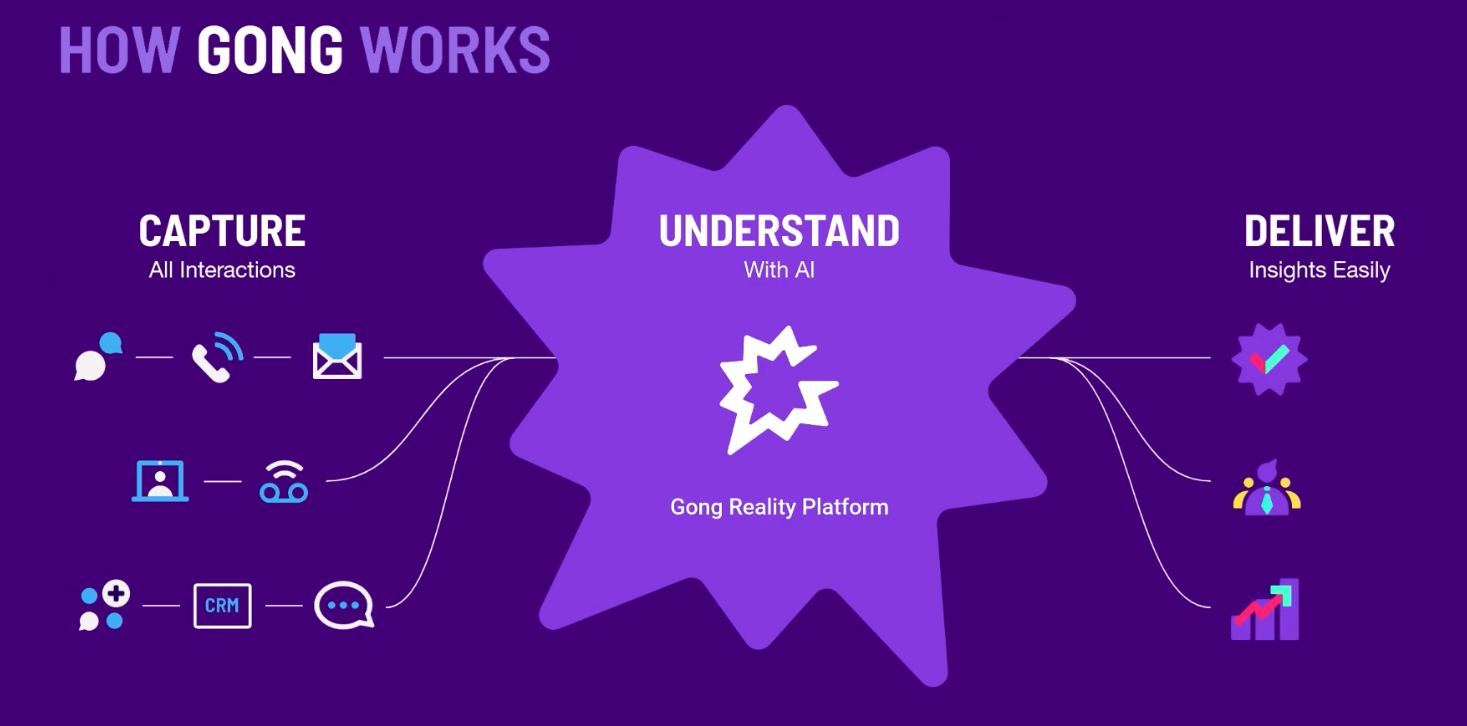
Gong lives in the world of deal execution. It records every customer call, email, and meeting, then uses AI trained on more than three billion customer interactions to detect deal risks, surface coaching opportunities, and generate forecasts grounded in buyer behavior rather than rep opinion.
Source: Gong
The CRO who asks "Will we hit our number this quarter?" gets an answer based on what customers said, not what reps typed into Salesforce.
Anaplan lives in the world of organizational planning. When a VP of Sales Operations needs to redesign 300 territories, reallocate quotas across regions, model four compensation plan scenarios, and show the CFO the P&L impact of each option, Anaplan connects those models so a change in one cascades through all of them.
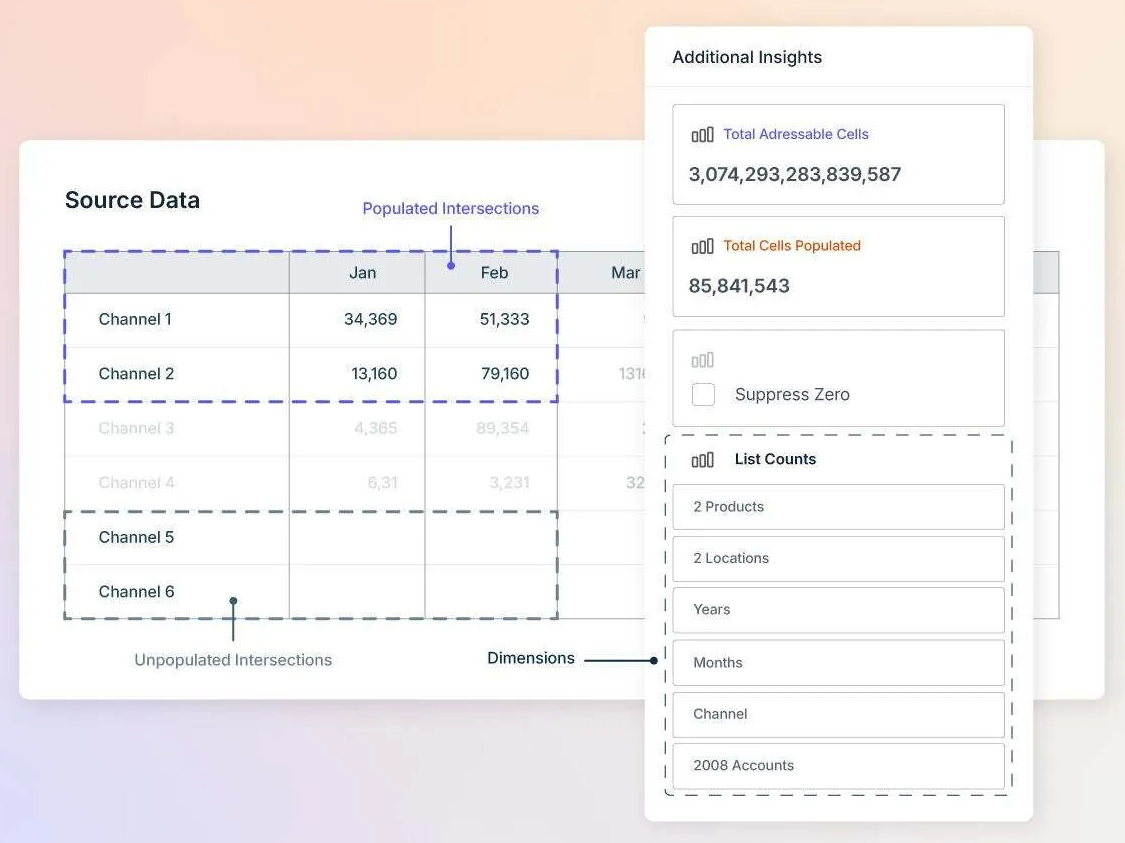
The Polaris engine handles quadrillions of addressable cells, and more than 2,500 enterprise brands, including nearly half of the Fortune 50, rely on it.
Source: Anaplan
The overlap is sales forecasting and, more broadly, revenue performance. But Gong approaches forecasting from the bottom up (what are customers telling us?) while Anaplan approaches it from the top down (what do our models predict?). Which direction matters more to your team is the first step.
Sales forecasting: conversation signals vs. planning models
The forecasting question crystallizes the difference between these platforms.
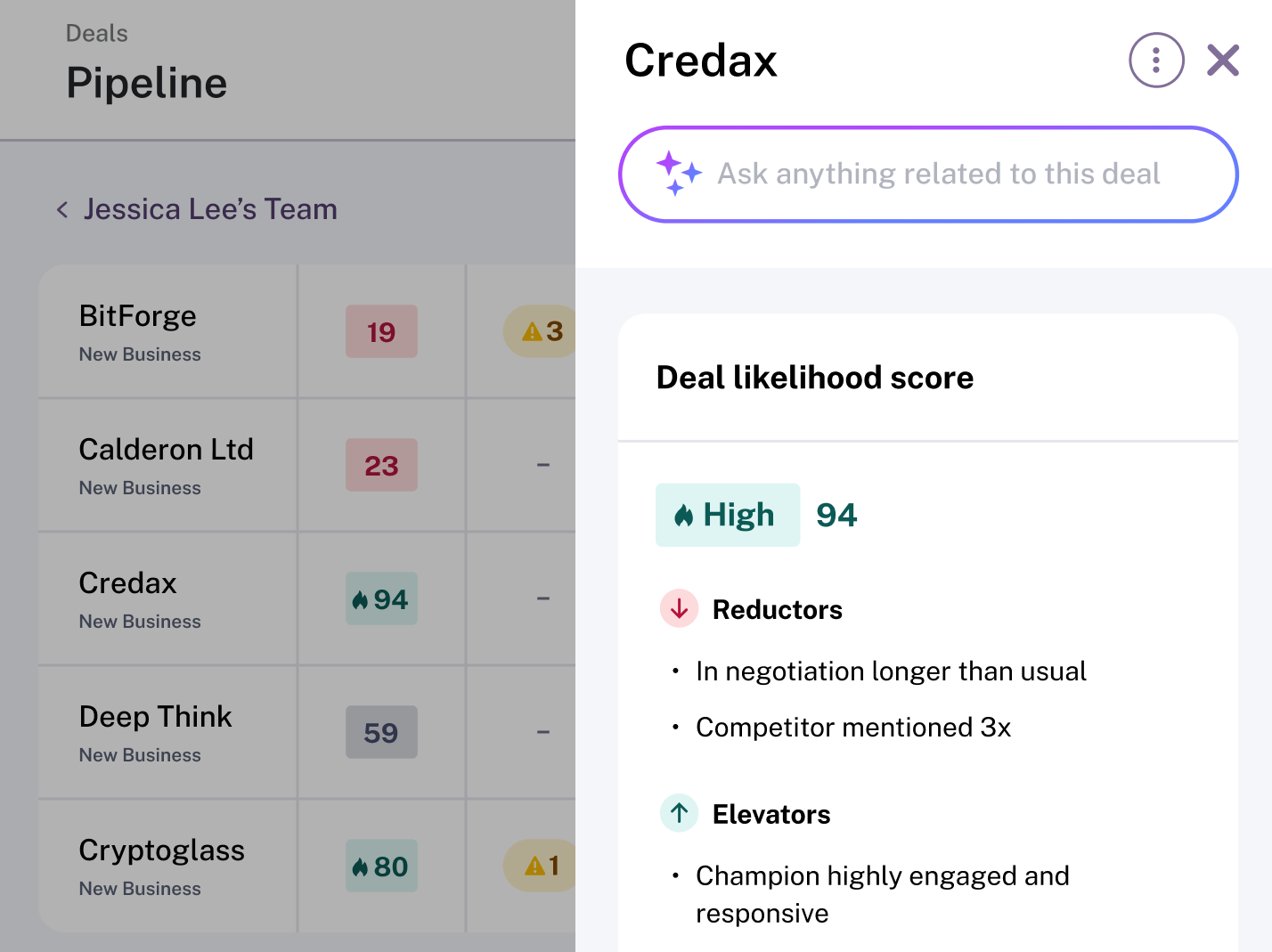
Gong treats forecasting as a signal-processing problem. Its Forecast product draws on 300+ signals from actual customer conversations to predict deal outcomes and validate pipeline calls.
Source: Gong
The AI Revenue Predictor achieves 20% more precision than CRM-only algorithms and 22% more accuracy than reps' own predictions. The logic: only 1% of customer interactions make it into the CRM, so forecasts built on CRM data alone rest on 1% of the evidence.
In practice, Gong detects risks no one sees. Legal hasn't joined the thread. The champion went quiet for eight days. Late-stage emails focus on scheduling, not business value. Gong Labs research found that deals with these red flags have 33% lower probability of winning.
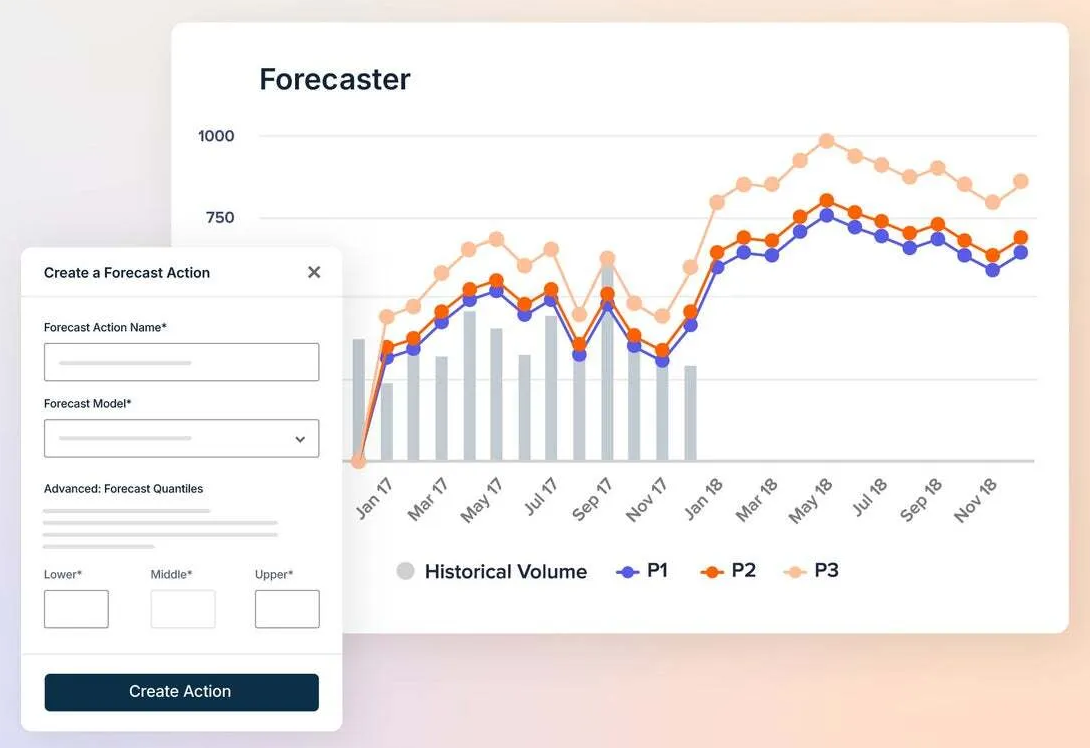
Anaplan treats forecasting as a modeling problem. Its driver-based forecasting engine builds financial models where revenue projections link to assumptions about headcount, capacity, market growth, pricing, and dozens of other variables.
Source: Anaplan
Change one assumption and the model recalculates the entire P&L, balance sheet, and cash flow in seconds. Rolling forecasts replace static annual plans with a 12-18+ month forward view that updates as new data arrives.
Anaplan's forecasting strength is strategic. It answers questions like: "If we add 50 reps in Q3 and increase average deal size by 10%, what's the revenue impact in Q4?" or "What happens to margin if raw material costs rise 15%?" The Finance Analyst AI agent runs inside the planning environment, monitoring performance deviations and surfacing variance drivers through natural language.
Where Gong tells you whether specific deals will close based on buyer behavior, Anaplan tells you what the organization's revenue capacity should be based on structural assumptions. Many mature revenue organizations need both views.
ZoomInfo adds a third forecasting dimension neither platform provides natively: what's happening outside your pipeline. Its buyer intent data tracks signals from 210 million IP-to-Organization pairings and 6 trillion+ new keyword-to-device pairings sourced monthly, revealing which accounts are researching before they ever enter your pipeline.

Source: ZoomInfo
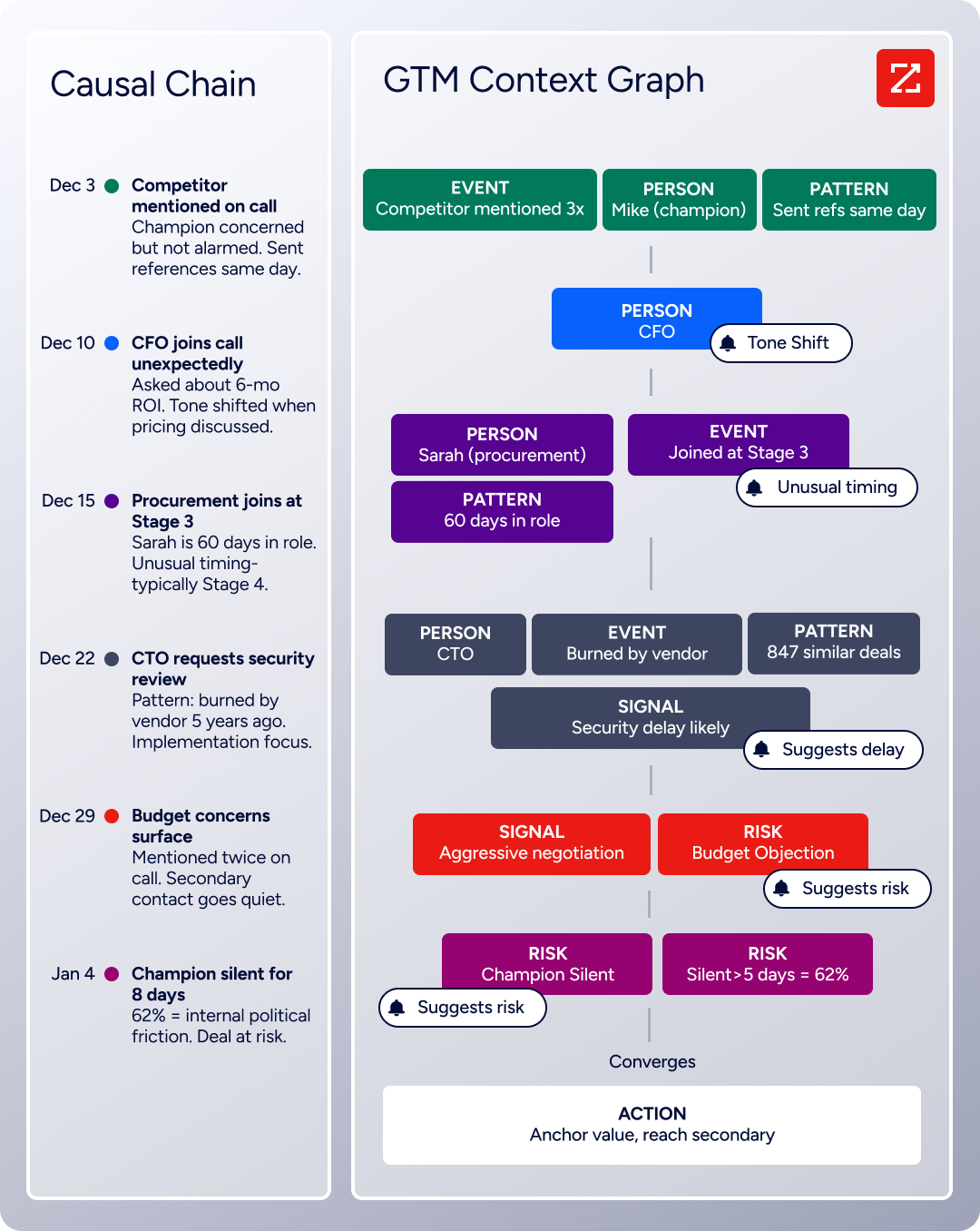
The GTM Context Graph then combines these external signals with your CRM and conversation data to capture not just what happened in a deal, but why it happened. That reasoning gives forecasts context that neither conversation analysis nor planning models alone can provide.
Source: ZoomInfo
Seismic's sales team attributed 39% of active pipeline to opportunities identified or influenced by ZoomInfo signals, reporting 54% productivity gains and saving 11.5 hours per week per seller. (Seismic case study)
Territory and quota planning: Anaplan's clear advantage
If territory design, quota allocation, and incentive compensation management are central to your sales operations, Anaplan has no close competition between these three platforms.
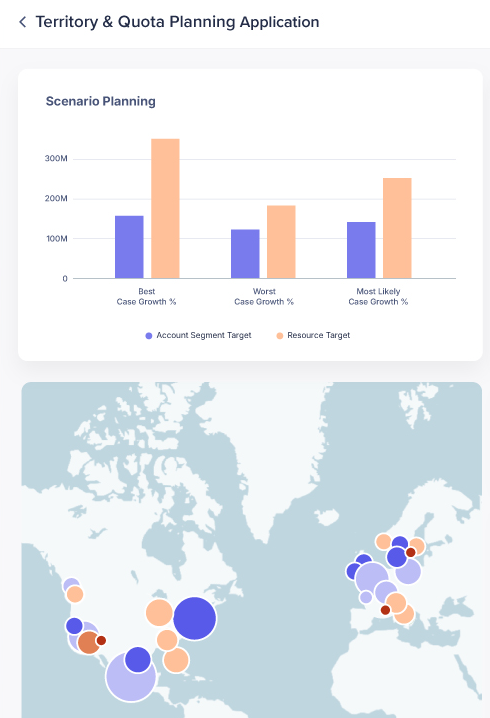
Anaplan's Territory Planning & Management solution uses geospatial mapping and AI to design balanced territories, with collaborative approval workflows so managers and reps can refine assignments before they're finalized. Quota Planning & Management links financial revenue targets directly to quota design, supporting both top-down and bottom-up methodologies with ramp and seasonality adjustments.
Source: Anaplan
The Sales Incentives solution handles compensation modeling across hundreds of plans, thousands of payees, and millions of transactions, including ASC 606/IFRS 15 compliance tracking and real-time rep earnings dashboards.
These capabilities connect to each other. Change a territory boundary, and the affected quotas recalculate. Adjust a quota, and the compensation model updates. Modify a compensation plan, and the financial forecast reflects the new cost structure. That connected planning loop is Anaplan's core value.
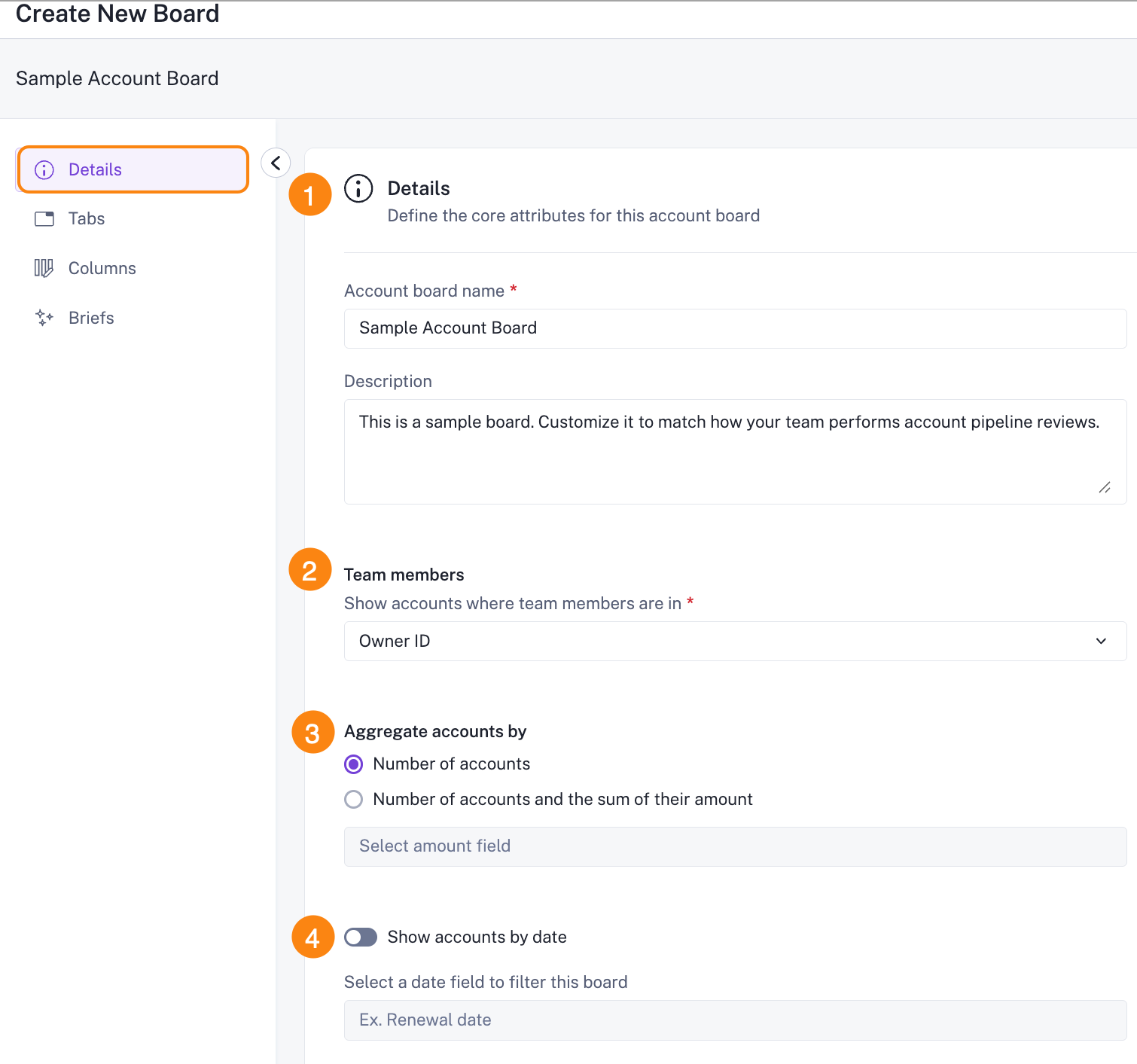
Gong doesn't compete here. Its strength is what happens after territories are assigned and quotas are set: helping reps execute within their territory and giving managers visibility into whether the plan is working based on actual deal activity. Gong's Account Console and Account Boards monitor account health and expansion signals, but they aren't planning tools.
Source: Gong
ZoomInfo contributes differently. Territory planning is only as good as the market data behind it, and ZoomInfo provides the most complete picture of who's in each territory and what they look like.
With 300+ company attributes covering firmographics, technographics, and org charts, plus parent-child hierarchy data, ZoomInfo gives planning teams the intelligence they need to size territories accurately and assign accounts based on real potential rather than guesswork.

Source: ZoomInfo
Palo Alto Networks' Director of Sales Operations called ZoomInfo's Company ID "transformational," noting it provides "a really clean approach to hierarchies and gives us a way to clearly communicate territory boundaries to our sellers." (Palo Alto Networks case study)
Deal execution and conversation intelligence: Gong's home court
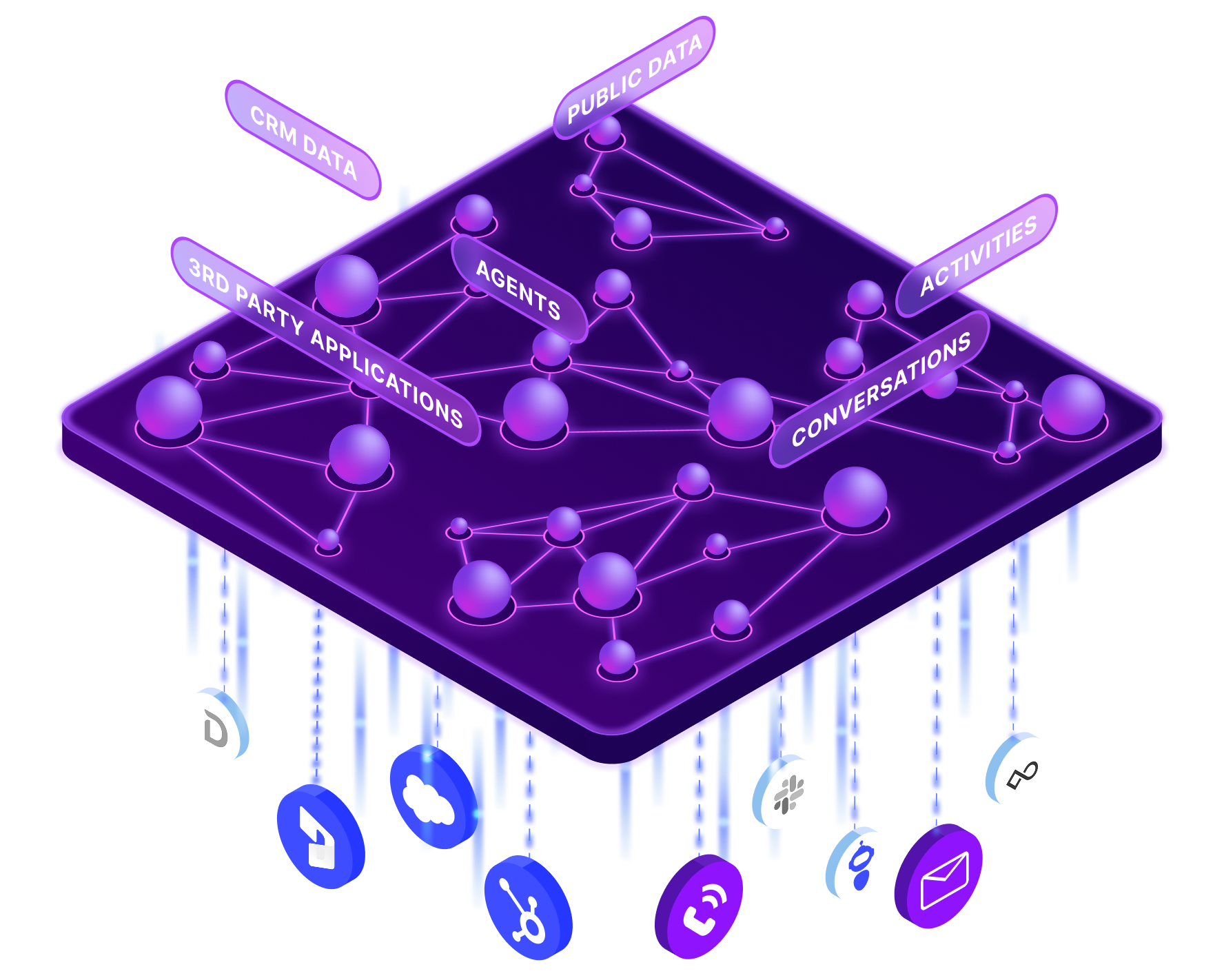
Where Anaplan plans the organization, Gong operates at the deal level. Its Revenue Graph captures every customer interaction across calls, emails, SMS, and digital touchpoints, maps them to the right people, accounts, and deals, and gives AI the data it needs to act.
Source: Gong
The 15+ AI agents included with every Gong license cover the full deal lifecycle. AI Deal Reviewer evaluates deals against your sales methodology. AI Deal Monitor detects signals like budgetary constraints and shifting priorities. AI Call Reviewer scores rep performance on configurable scorecards. AI Composer drafts follow-up emails from meeting context.
Gong Engage, the sales engagement layer, adds multi-channel outreach with AI-drafted emails that draw on real conversation context, delivering a 34% higher response rate compared to manually composed messages.
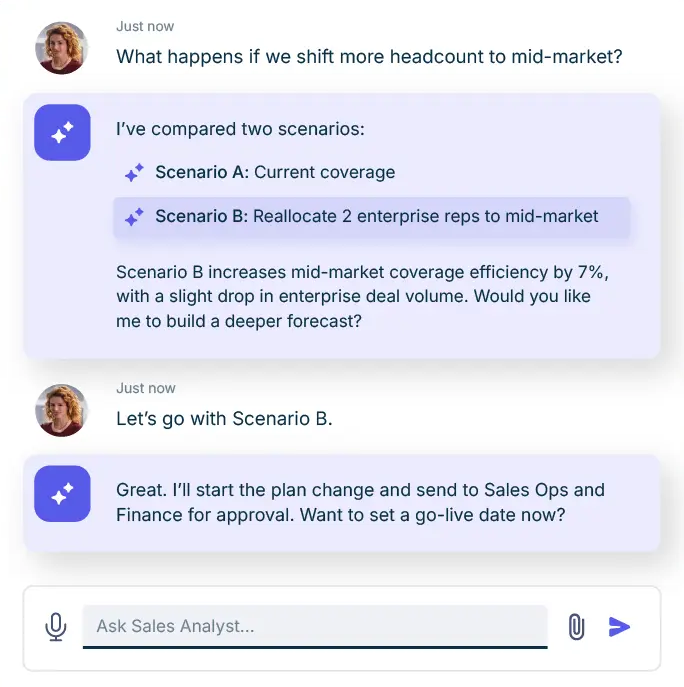
Anaplan has no equivalent capability. It doesn't record calls, analyze conversations, or coach reps. Its Sales Analyst AI agent operates on planning data, surfacing GTM risks and running scenario comparisons, but it analyzes models, not customer conversations.
Source: Anaplan
ZoomInfo operates in this space through two products. Chorus provides conversation intelligence with AI-generated call analysis, deal intelligence, and coaching scorecards, backed by 14 technology patents.

Source: ZoomInfo
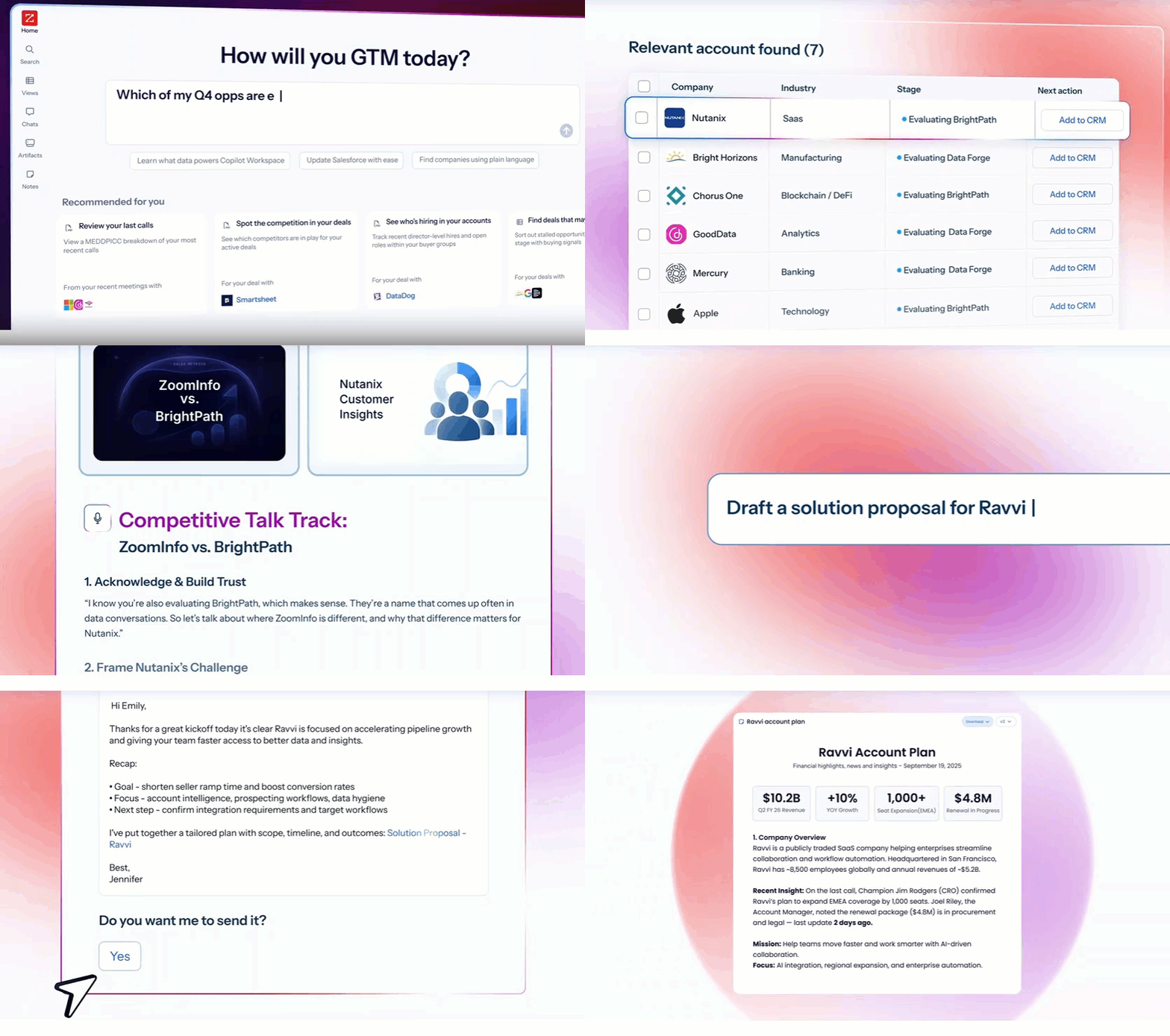
But ZoomInfo's primary advantage at the deal level is context: GTM Workspace gives sellers a complete book of business view combining CRM data, conversation history, B2B intelligence, and real-time buying signals in one place. AI agents inside Workspace handle account research, outreach generation, CRM updates, and signal monitoring, so sellers spend less time switching between tools and more time selling.
Source: ZoomInfo
Levanta CEO Ian Brodie noted: "ZoomInfo's not just a contact data company anymore. They've built a full system of execution. GTM Intelligence actually works the list, writes the outreach, triggers the play, and helps drive predictable growth." (Levanta case study)
The buyer intelligence gap both platforms leave open
Both Gong and Anaplan do their jobs well. But both assume you already have the data to feed them.
Gong captures what happens inside your deals. It records conversations, maps interactions, and surfaces signals from buyer behavior. What it doesn't provide: the B2B contact data, verified phone numbers, and company intelligence you need before a conversation ever happens. If your reps can't find the right people to call, Gong has nothing to analyze.
Anaplan models what your sales organization should look like. It designs territories, sets quotas, and runs financial scenarios. What it doesn't provide: the market data you need to build those models accurately. Territory plans built on incomplete account data create imbalanced workloads. Capacity models that undercount the addressable market miss growth opportunities.
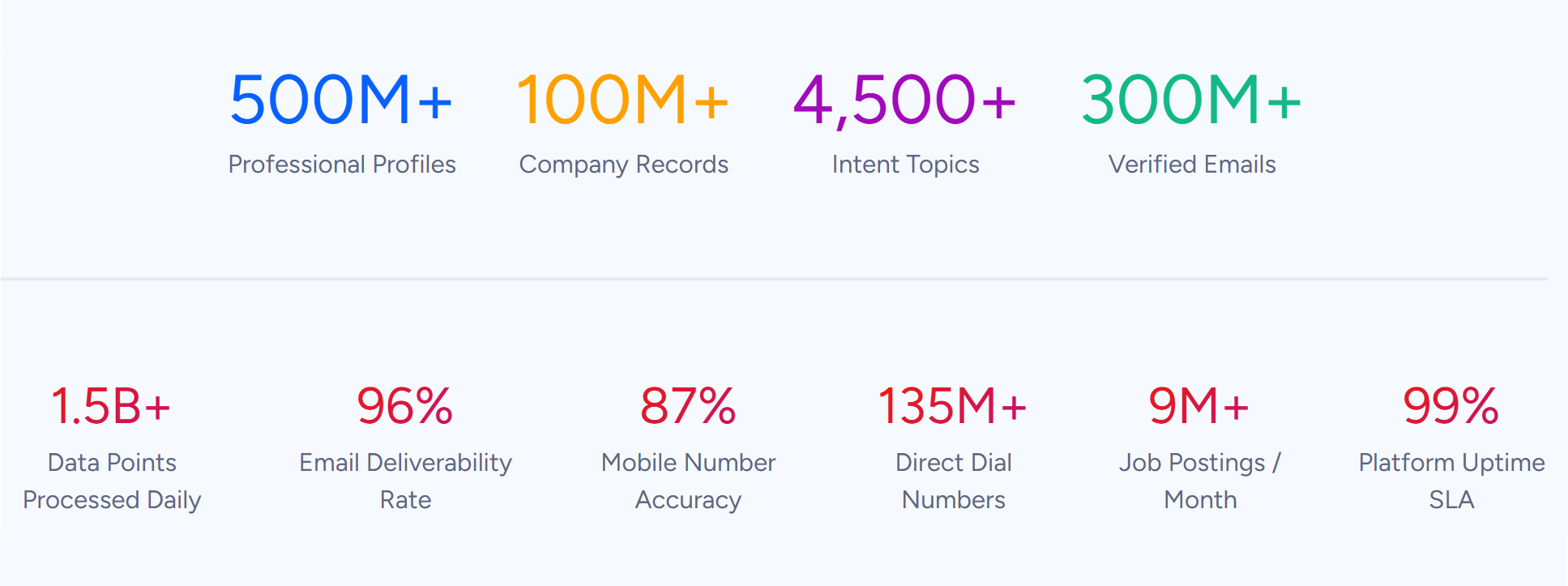
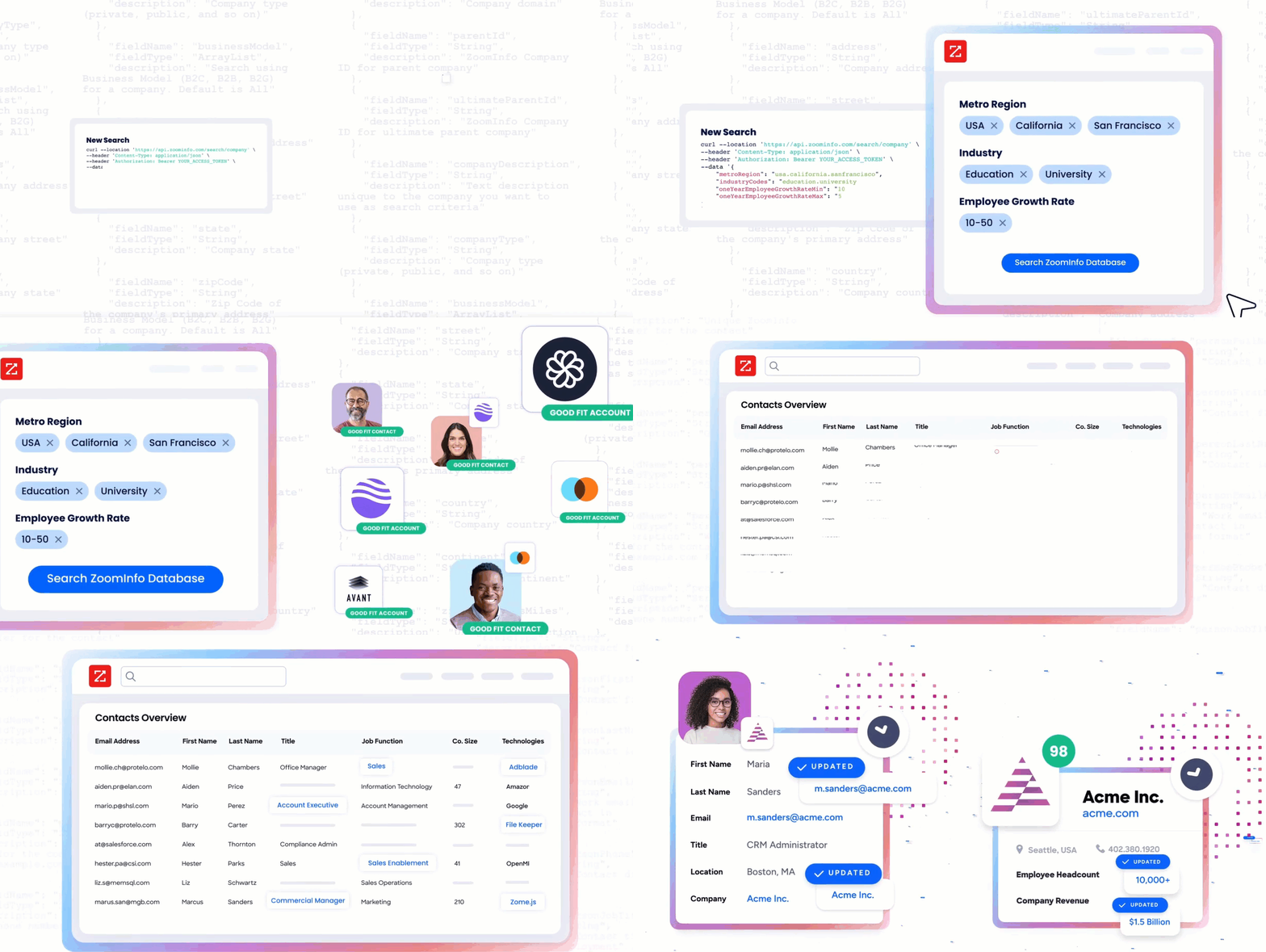
ZoomInfo addresses this directly. With 500M contacts, 100M companies, 135M+ verified phone numbers, and 200M+ verified business email addresses, ZoomInfo gives revenue teams the most complete picture of their market.
Source: ZoomInfo
The data is verified through a multi-source pipeline backed by 300+ human researchers, reaching up to 95% accuracy on first-party data. In a Fortune 500 competitive RFP analyzing 25 million contacts across vendors, the independent consultant concluded that "no other competitor came even close."
Beyond static data, ZoomInfo's buyer intent tracking identifies which companies are researching relevant topics, and Guided Intent (exclusive to ZoomInfo) surfaces the topics historically correlated with your deal success. Website visitor identification resolves anonymous traffic to companies and buying teams. Technographics profile the tech stack of over 30 million companies across 30,000+ technologies.

Source: ZoomInfo
This intelligence doesn't stay locked inside ZoomInfo's platform. APIs and MCP deliver it to any tool, including Gong and Anaplan. Teams that use Gong get better conversations because they reach the right buyers at the right time. Teams that use Anaplan get better plans because they model on verified market data rather than stale exports.
Source: ZoomInfo
Smartsheet's Senior Manager of Sales Technology Enablement noted: "ZoomInfo is our one source of truth for account data, and even more so for contact data. There's no other provider in the market that provides you with that level of detail." (Smartsheet case study)
Implementation complexity and pricing
All three platforms use custom-quoted pricing, so direct cost comparison requires talking to each sales team. But the buying experience and implementation burden differ.
Gong charges per-user licenses plus a platform fee based on user count. Integrations are included at no extra cost, and all 15+ AI agents come with every license rather than being sold as add-ons. The modular structure means you start with the Gong Foundation platform and add applications (Forecast, Engage, Enable) as needed.
A Call Intelligence seat offers a lower-cost entry point for teams that only need telephony recording and analytics, and non-selling stakeholders get free Collaborator seats. Implementation takes weeks, not months. The platform fee structure, however, means smaller teams pay a disproportionate share of the base cost. For a detailed look at how Gong's tiers and fees break down, see our Gong Pricing Breakdown.
Anaplan does not publish pricing, and the SaaS Subscription Agreement classifies pricing as Confidential Information. Every deal is custom-quoted through sales. Contracts are non-cancelable and non-refundable, and seat counts cannot be reduced mid-term.
Beyond the license, expect additional costs: implementation typically requires an SI partner from Anaplan's network of 250+ certified partners (including Accenture, Deloitte, BCG, and McKinsey), and most large deployments need an internal Center of Excellence with dedicated model builders.
G2's Ease of Setup score of 8.2/10 falls below its overall satisfaction rating, signaling implementation as a friction point. The Certified Model Builder certification path requires about 74 hours of structured coursework, and only 15% of learners who started completed all three required components.
ZoomInfo uses a consumption-based pricing model where seats control user access and credits control data export volume. Three tier families exist for Sales (Professional, Advanced, Enterprise), Marketing (Marketing Demand, ABM Lite, ABM Enterprise), and Chorus/Chat as standalone products.
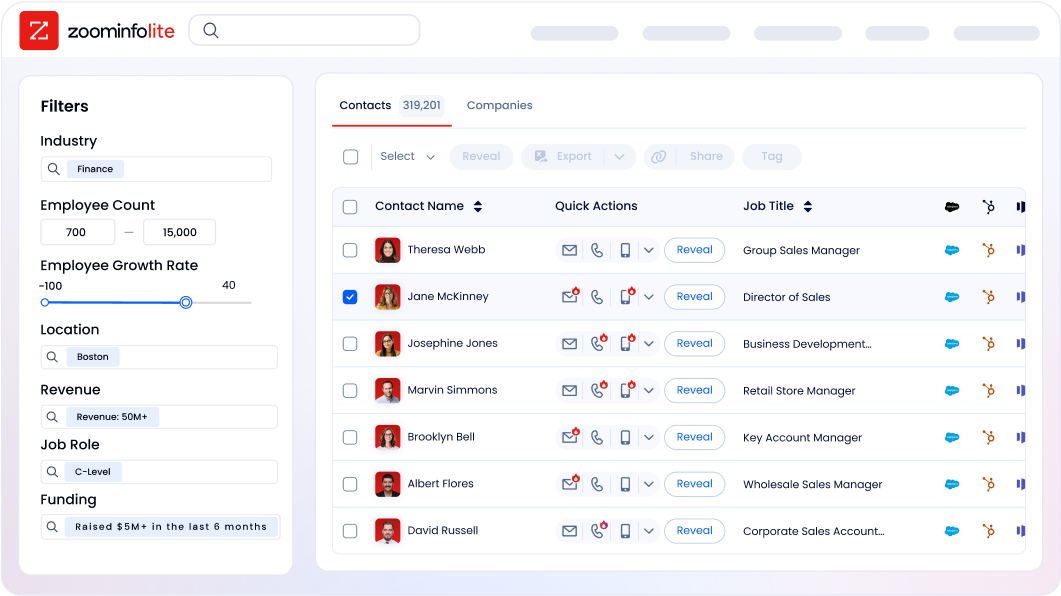
ZoomInfo offers two free entry points that neither Gong nor Anaplan matches: ZoomInfo Lite provides permanent free access to the B2B database with 10 monthly export credits, and a 7-day free trial offers broader platform access. GTM Workspace deploys in weeks, not months.
Source: ZoomInfo
Gong vs. Anaplan vs. ZoomInfo: Which should you choose?
The choice depends on which revenue problem is most urgent.
Choose Gong if:
Your primary challenge is understanding what's happening inside your deals and pipeline
You want AI trained on real customer conversations to improve forecasting and coaching
Your team needs sales engagement, enablement, and deal execution in one connected platform
You value behavioral deal intelligence over organizational planning models
Territory planning and incentive compensation management are handled elsewhere
Choose Anaplan if:
You're a large enterprise that needs connected planning across Finance, Sales, Supply Chain, and HR
Territory design, quota allocation, and incentive compensation modeling are major operational priorities
You need financial forecasting with scenario modeling and driver-based analysis
You have the budget and timeline for implementation partners and dedicated model builders
You want a platform recognized as a Leader in the Gartner MQ for Financial Planning Software for nine consecutive years
Choose ZoomInfo if:
You need the B2B buyer intelligence (verified contacts, intent signals, company data) that both Gong and Anaplan lack
You want an AI-powered workspace where prioritized accounts, drafted outreach, and deal context come together
You need a data foundation that feeds territory planning, prospecting, and forecasting with verified market intelligence
You want to use ZoomInfo inside your own tools via APIs and MCP, not just its native products
You value a free entry point to evaluate before committing
Start with ZoomInfo Lite for free, or request a demo of GTM Workspace.
The platforms aren't mutually exclusive. Gong and ZoomInfo integrate through the Gong Collective, and ZoomInfo's data can feed Anaplan's planning models through API connections. Many revenue organizations benefit from combining conversation intelligence (Gong) or connected planning (Anaplan) with buyer data (ZoomInfo). The question is which problem to solve first.
Gong vs. Anaplan vs. ZoomInfo FAQ
What is the fundamental difference between Gong, Anaplan, and ZoomInfo?
Gong is a revenue intelligence platform that captures customer conversations across calls, emails, and meetings, then uses AI to surface deal risks, improve forecasting, and coach reps. Anaplan is an enterprise planning platform that models and optimizes territories, quotas, incentive compensation, financial forecasts, and supply chain operations on a single calculation engine.
ZoomInfo is a B2B data and GTM intelligence platform that provides verified contact data, company intelligence, buyer intent signals, and AI-powered execution through GTM Workspace, GTM Studio, and open APIs.
Do Gong and Anaplan overlap at all?
They overlap in sales forecasting and revenue performance management, but approach both from opposite directions. Gong forecasts by analyzing real customer conversation signals: what buyers said, how engaged they are, and which deals show behavioral red flags.
Anaplan forecasts by running driver-based models with scenario planning, projecting what revenue should look like given assumptions about headcount, capacity, pricing, and market conditions. Gong gives you a deal-level view; Anaplan gives you an organizational view.
Which platform is best for territory planning and incentive compensation?
Anaplan, by a wide margin. It offers AI-driven territory design with geospatial mapping, quota planning with top-down and bottom-up methodologies, and incentive compensation management across hundreds of plans and thousands of payees. Gong does not handle territory planning or compensation management.
ZoomInfo provides the market data (company attributes, org charts, firmographics) that accurate territory planning depends on, but doesn't model territories or compensation itself.
Can ZoomInfo work alongside Gong or Anaplan?
Yes. ZoomInfo integrates with Gong through the Gong Collective marketplace. ZoomInfo's APIs and MCP server can deliver B2B data to Anaplan's planning models through data pipeline connections. Many revenue teams use ZoomInfo as the data foundation that feeds both conversation intelligence and planning platforms.
Which platform has the most transparent pricing?
None of the three publishes list prices. Gong discloses its pricing structure (per-user license plus platform fee) but quotes are custom. Anaplan classifies pricing as confidential and requires contracts that are non-cancelable and non-refundable. ZoomInfo uses consumption-based pricing and, alone among the three, offers a permanent free tier (ZoomInfo Lite with 10 monthly export credits) and a 7-day free trial.
Which platform is fastest to implement?
Gong and ZoomInfo both deploy in weeks. Anaplan implementations typically span multiple months and require certified implementation partners from its network of 250+ SI partners. Most large Anaplan deployments also need an internal Center of Excellence with dedicated model builders.
The Certified Model Builder certification path requires about 74 hours of structured coursework, and only 15% of learners who started completed all three required components.
Does Gong provide B2B contact or company data?
No. Gong captures and analyzes customer interactions that your team has already initiated. It does not provide a database of contacts, companies, or verified phone numbers for prospecting.
For contact data and buyer intelligence, Gong integrates with data providers through the Gong Collective marketplace. ZoomInfo provides 500M contacts, 135M+ verified phone numbers, and 200M+ verified business email addresses.
Which platform offers the strongest AI capabilities?
Each platform's AI serves a different purpose. Gong's AI is trained on more than three billion customer interactions and specializes in conversation analysis, deal prediction, and revenue forecasting from buyer behavior signals.
Anaplan's AI spans predictive forecasting (Forecaster), model optimization (Optimizer), AI-assisted model building (CoModeler), and domain-specific agents for Finance, Sales, Supply Chain, and Workforce planning, backed by a $500M multi-year AI investment.
ZoomInfo's GTM Context Graph processes 1.5B+ data points daily, combining B2B data with CRM records and conversation intelligence to reason about why deals move or stall, then powering AI agents that identify buyers, draft outreach, and surface signals across GTM Workspace and GTM Studio.
