
If you're searching for "Gong vs. Wingman," the first thing to know is that Wingman no longer exists as a standalone product. Clari acquired Wingman in June 2022 and rebranded it as Clari Copilot, folding it into the Clari Revenue Orchestration Platform. So this comparison is really Gong vs. Clari Copilot, and the questions worth asking are:
Do you need conversation intelligence as a standalone capability, or as part of a larger revenue platform?
Is real-time coaching during live calls more valuable to you than post-call analytics and AI agents?
How important is transcription accuracy for coaching and deal intelligence?
Do you want your conversation data feeding into forecasting, pipeline management, and prospecting from the same system?
Would your team benefit more from AI that analyzes conversations, or AI that combines conversation data with buyer intelligence and intent signals?
In short, here's what we recommend:
Gong calls itself the Revenue AI Operating System, built on a proprietary data engine called the Gong Revenue Graph that captures customer interactions across calls, emails, and web conferencing. With 5,000+ customers and 15+ AI agents covering deal prediction through sales coaching, Gong has built the most mature conversation intelligence platform on the market. It was named a Leader in the 2025 Gartner Magic Quadrant for Revenue Action Orchestration, ranking first across all four use cases.
However, its pricing is quote-based with no published rates, it charges both per-user fees and a platform fee, and its growing feature set demands real organizational commitment to get full value.
Clari Copilot (formerly Wingman) is the conversation intelligence module within Clari's Revenue Orchestration Platform. Its original strength (real-time battlecards and coaching during live calls) remains its defining feature. Copilot connects call data into Clari's forecasting and pipeline inspection tools, giving revenue leaders a single view from conversation to forecast. Following Clari's merger with Salesloft in December 2025, Copilot now sits inside a combined platform spanning sales engagement, forecasting, and conversation intelligence.
The trade-off: transcription accuracy falls short of Gong's, multilingual support is limited, and the post-merger platform is still being unified.
Both platforms treat conversation intelligence as the starting point and build outward into revenue operations. But conversations are only one layer of the revenue picture. What about the buyer data, intent signals, and company intelligence that determine whether your team is having the right conversations in the first place?
ZoomInfo is a GTM platform that lets your sales reps walk into every call knowing why the deal is moving, who's championing it, and what's likely to happen next. Your marketers can describe audiences in plain language and launch plays against accounts matching your proven win patterns. Your leaders can see deal risk before it shows up in CRM stage fields.
That depth comes from the GTM Context Graph, a data layer built on 500M contacts, 100M companies, 135M+ verified phone numbers, and 200M+ verified business email addresses, unified with your CRM records, conversation transcripts (via Chorus), and behavioral signals. Your team accesses this through GTM Workspace for sellers, GTM Studio for marketers and RevOps, or APIs and MCP in any front-end.
If a platform that connects buyer data, intent signals, and conversation intelligence into a single data layer sounds like what your team needs, see how ZoomInfo works.
Gong vs. Clari Copilot vs. ZoomInfo at a glance
Gong | Clari Copilot | ZoomInfo | |
|---|---|---|---|
Core focus | Revenue AI platform built on conversation data | Conversation intelligence within revenue orchestration | GTM platform (data + intelligence + engagement) |
Conversation intelligence | Post-call analysis with 15+ AI agents | Real-time battlecards and live coaching | Chorus: call recording, transcription, coaching, deal intelligence |
B2B data coverage | No native contact/company database | No native contact/company database | 500M contacts, 100M companies, 135M+ verified phone numbers |
Intent signals | Via partner integrations | Via partner integrations | Native buyer intent with 210M IP-to-Org pairings |
Sales engagement | Gong Engage (built-in) | Salesloft (post-merger) | GTM Workspace + Salesloft partnership |
Forecasting | Gong Forecast (AI-powered) | Clari Forecast (AI-powered) | Via CRM integration and GTM Context Graph |
AI agents | 15+ agents (included) | Revenue AI Agents (announced) | AI agents in GTM Workspace and GTM Studio |
Pricing transparency | Fully custom-quoted | Fully custom-quoted | Consumption-based; free tier available (ZoomInfo Lite) |
Analyst recognition | Leader, 2025 Gartner MQ for RAO | Leader, 2025 Gartner MQ for RAO | Leader, Gartner MQ for ABM Platforms (2024 & 2025) |
The conversation-first vs. data-first divide
Gong and Clari Copilot share a core assumption: the most valuable revenue intelligence comes from analyzing customer conversations. Record enough calls, transcribe them accurately, and apply AI to the transcripts, and you can coach reps, predict deals, and forecast revenue.
That assumption is right, as far as it goes. Conversations contain signals that CRM fields miss. Gong's own research found that only 1% of customer interactions make it into the CRM. But conversations only capture what happens after a prospect agrees to talk. They tell you nothing about who you should be talking to, which accounts show buying intent, or whether you're missing stakeholders on the buying committee.
ZoomInfo starts from the other end. Before any call is scheduled, ZoomInfo's GTM Context Graph (processing 1.5B+ data points daily) has already identified which accounts are researching solutions, which contacts hold decision-making authority, and what signals suggest a company is ready to buy. Then, through Chorus, it captures the conversations and feeds them back into the same data layer. The result: buyer data informs conversations, and conversations enrich buyer data.
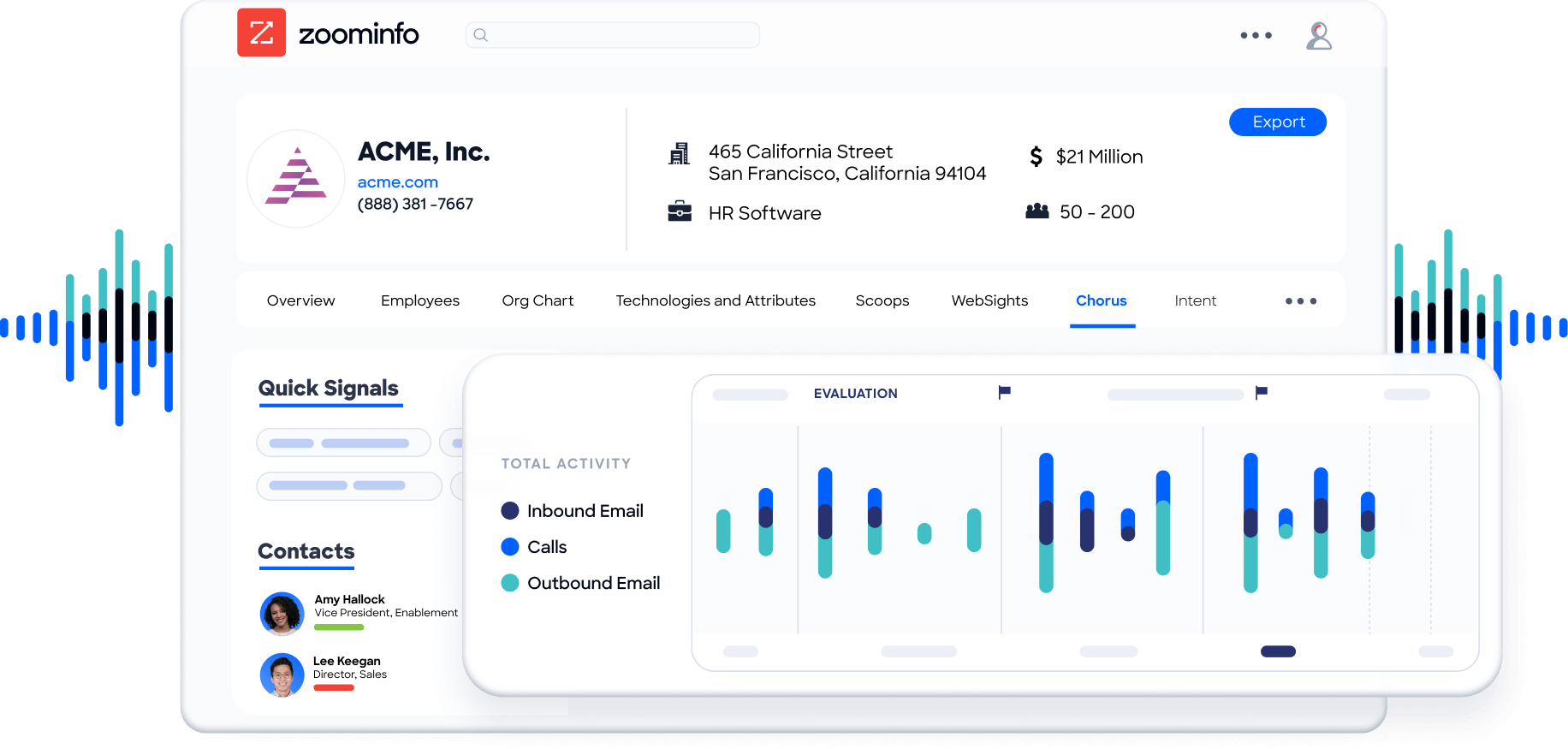
The practical difference shows up in everyday sales work. A Gong user reviews a call and learns the CFO asked about ROI timelines. Useful. A ZoomInfo user sees the same question and also knows the company just hired three new VPs, is researching a competitor's pricing page, and has an open job posting for the role that typically champions deals in this segment. That context changes the follow-up entirely.
Seismic's sales team boosted productivity by 54%, saved 11.5 hours per week, and attributed 39% of active pipeline to opportunities identified or influenced by ZoomInfo signals. (Seismic)
For a direct comparison of how Gong and ZoomInfo stack up on revenue intelligence, see our Gong vs. ZoomInfo breakdown.
Gong leads in conversation AI depth
Gong has invested heavily in conversation intelligence. The Gong Revenue Graph draws from more than three billion customer interactions, creating a proprietary dataset trained on revenue conversations. That gives Gong's AI a level of pattern recognition that newer entrants cannot easily match.
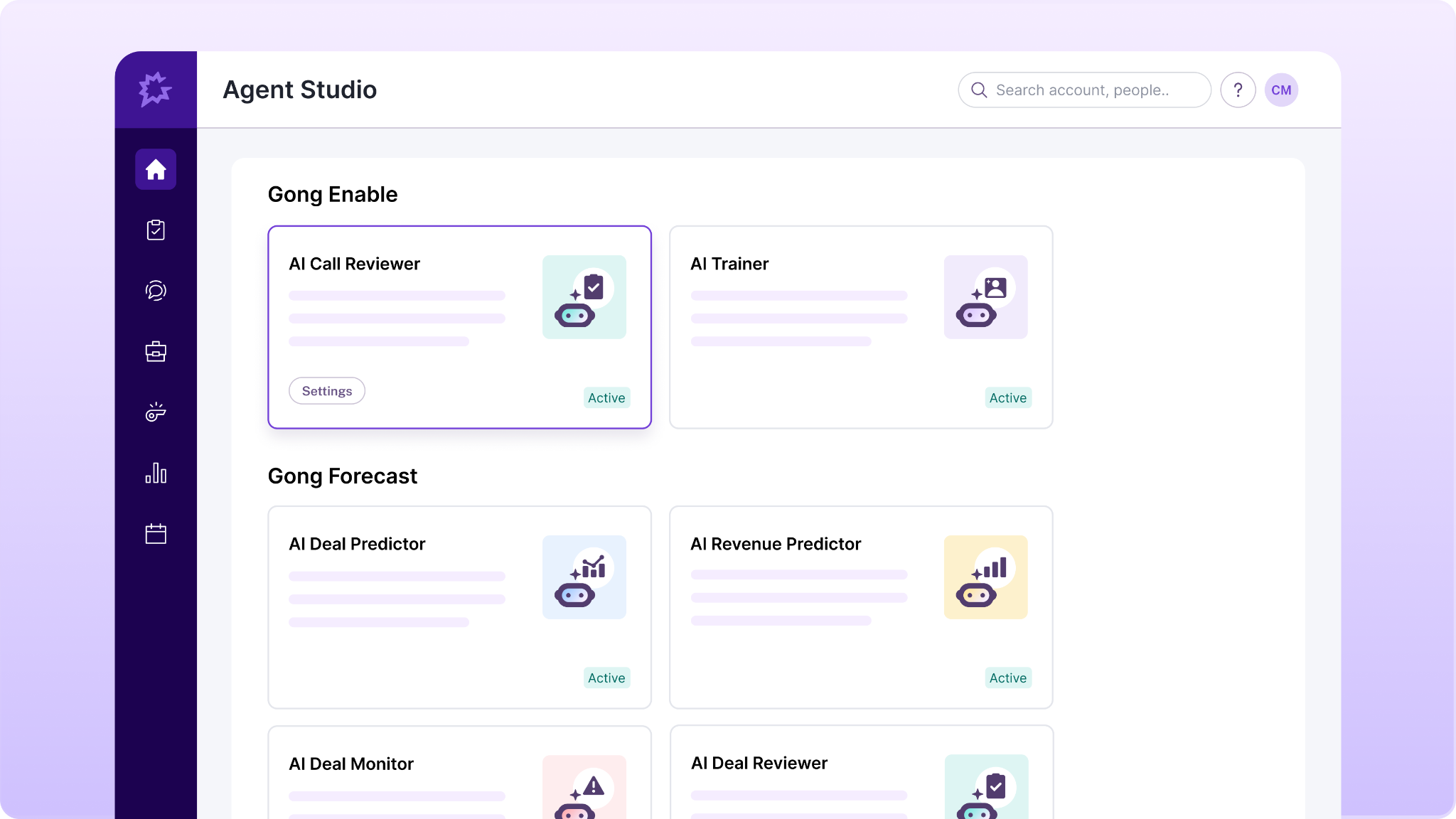
The 15+ AI agents cover nearly every revenue workflow. AI Deal Reviewer evaluates deals against sales methodologies. AI Call Reviewer scores rep performance on configurable scorecards. AI Trainer lets reps practice with AI-generated customer personas built from real interactions. AI Composer drafts follow-up emails from meeting context. AI Theme Spotter identifies recurring competitive threats and customer pain points across thousands of calls.
Source: Gong
These agents come included with Gong licenses at no extra cost, which is notable in a market where AI features often carry premium pricing. Gong also supports 70+ languages for transcription and insights, a real advantage for global teams.
Where Gong falls short is what happens before the call. The platform has no native contact database, no intent signals, and no prospecting tools. For pre-call intelligence, Gong relies on partner integrations through the Gong Collective (including LeadIQ, Cognism, and Apollo), but these are separate subscriptions and separate interfaces.
Clari Copilot's strength is live coaching
Clari Copilot's original Wingman DNA shows in its strongest feature: coaching that happens during the call, not after it.
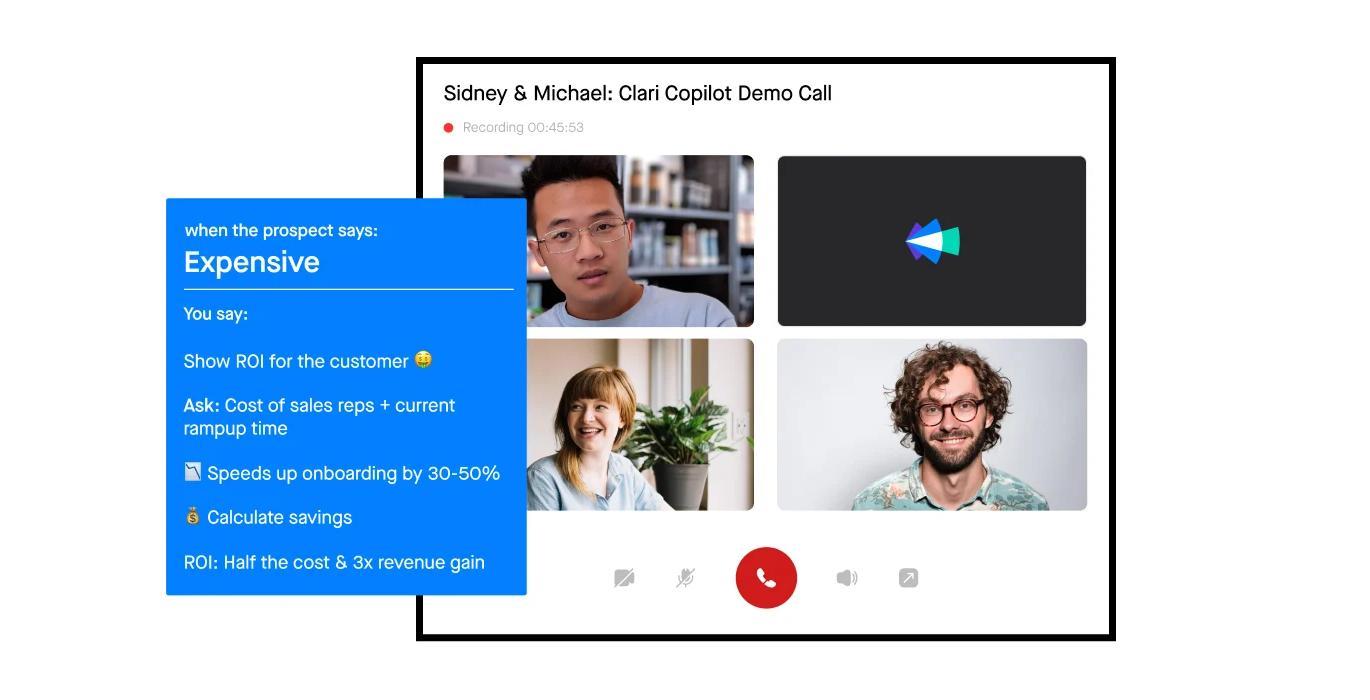
While a call is in progress, Copilot's AI monitors the live transcript and surfaces battlecards with specific response guidance when it detects competitor mentions, pricing objections, or technical questions. These cue cards are visible only to the rep, not the prospect. If a rep talks too long without buyer engagement, a monologue alert prompts them to bring the conversation back. The system tracks talk-to-listen ratio, script compliance, and buyer sentiment as the call progresses.
Source: Clari
This real-time approach solves a genuine problem. Post-call coaching, even delivered quickly, cannot recover a moment that already passed. A rep who fumbles a pricing objection on Tuesday and gets coaching feedback on Thursday has already lost that opportunity. Copilot tries to close that gap entirely.
Beyond live coaching, Copilot's integration with the broader Clari platform is its strategic advantage. Conversation signals feed directly into Clari Forecast and Clari Inspect, so buyer signals detected in a call flow into pipeline inspection and revenue predictions without crossing a third-party integration boundary. BirchStreet adopted Copilot to surface objections instantly and shorten cycle times. Affinity combined Copilot with Clari Forecast to streamline forecast reviews without bouncing between systems.
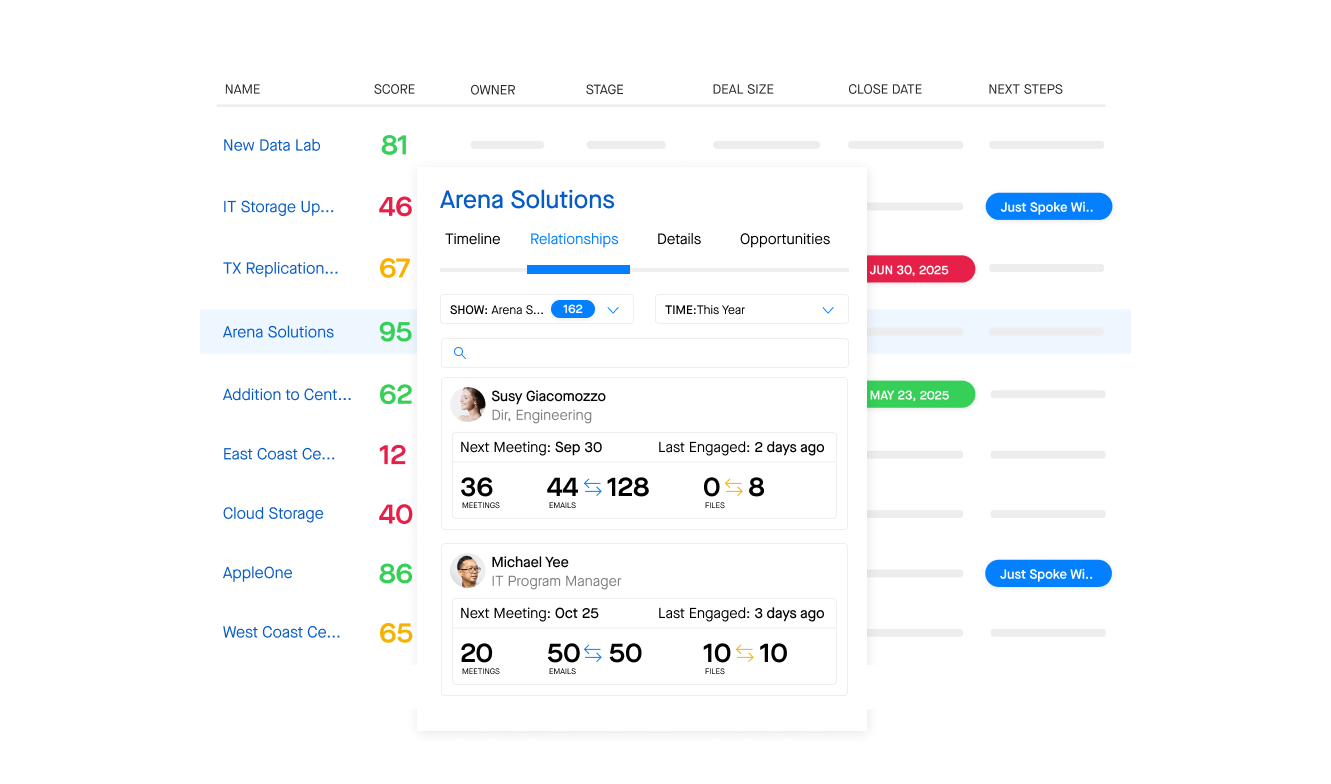
Source: Clari
However, Copilot's weaknesses are well-documented. G2 reviewers note transcription accuracy falls short of category leaders, with speaker attribution errors and issues with dialects and technical jargon. Multilingual support beyond English is limited, which restricts international deployments. Recording reliability is inconsistent; calls that start 15-20 minutes ahead of schedule sometimes fail to record. And the December 2025 merger with Salesloft has created overlapping products with separate interfaces, with platform unification described as a multi-year effort.
Forecasting approaches diverge
Both Gong and Clari have built AI-powered forecasting, but from different starting points.
Gong Forecast builds predictions from conversation data. Rather than relying on rep-submitted pipeline stages, it processes 300+ signals from actual customer interactions to predict deal outcomes. Its AI Revenue Predictor delivers 20% more precision than CRM-only algorithms and 22% more accuracy than reps' own predictions.
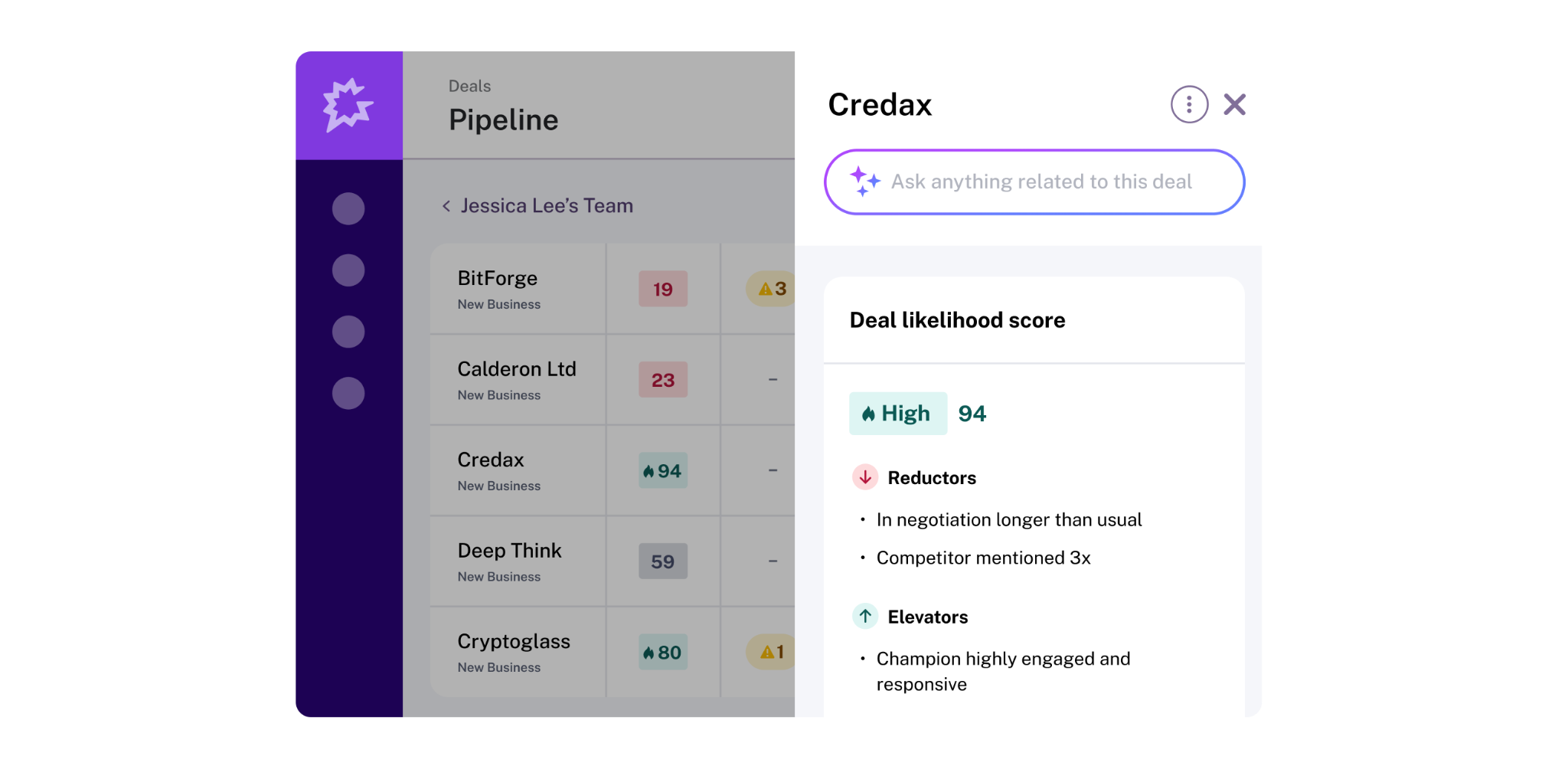
Source: Gong
Clari Forecast takes a broader approach, combining CRM data, activity signals, and conversation intelligence into a single forecasting engine. The platform targets 98% forecast accuracy by week two of the quarter by triangulating hard numbers, deal context, and AI signals.
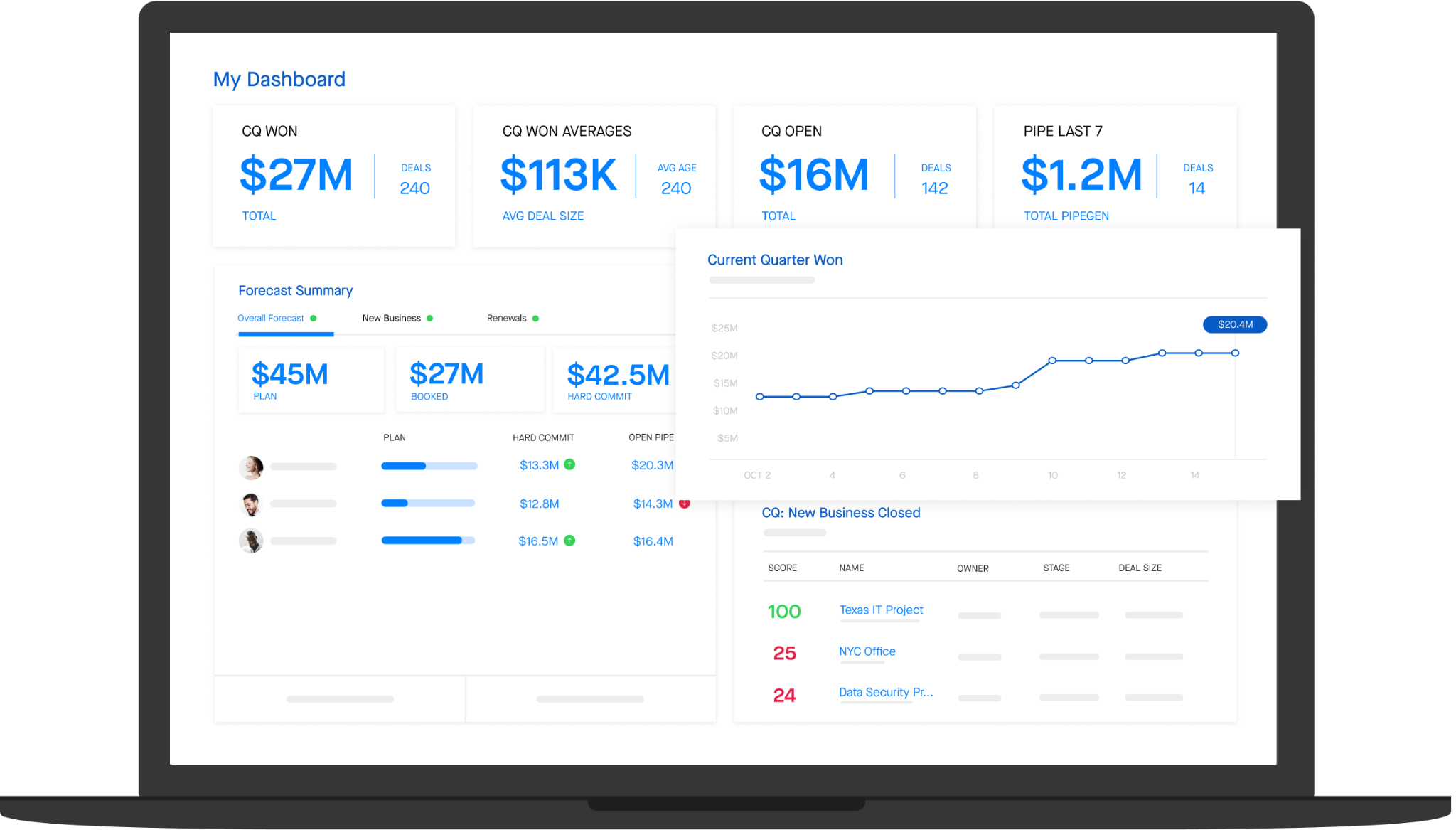
Source: Clari
ZoomInfo takes a different approach. Rather than building a standalone forecasting product, ZoomInfo's GTM Context Graph feeds contextual intelligence into your existing CRM and forecasting workflow. The graph captures the why behind deal movements: executive sponsorship entering at a critical stage, a champion going quiet because of internal friction, a competitor mention that predicts deal risk. As CPO Dominik Facher writes: "The CRM recorded the state change. It has no record of why it happened." ZoomInfo provides the contextual layer that makes your existing forecasting more accurate.
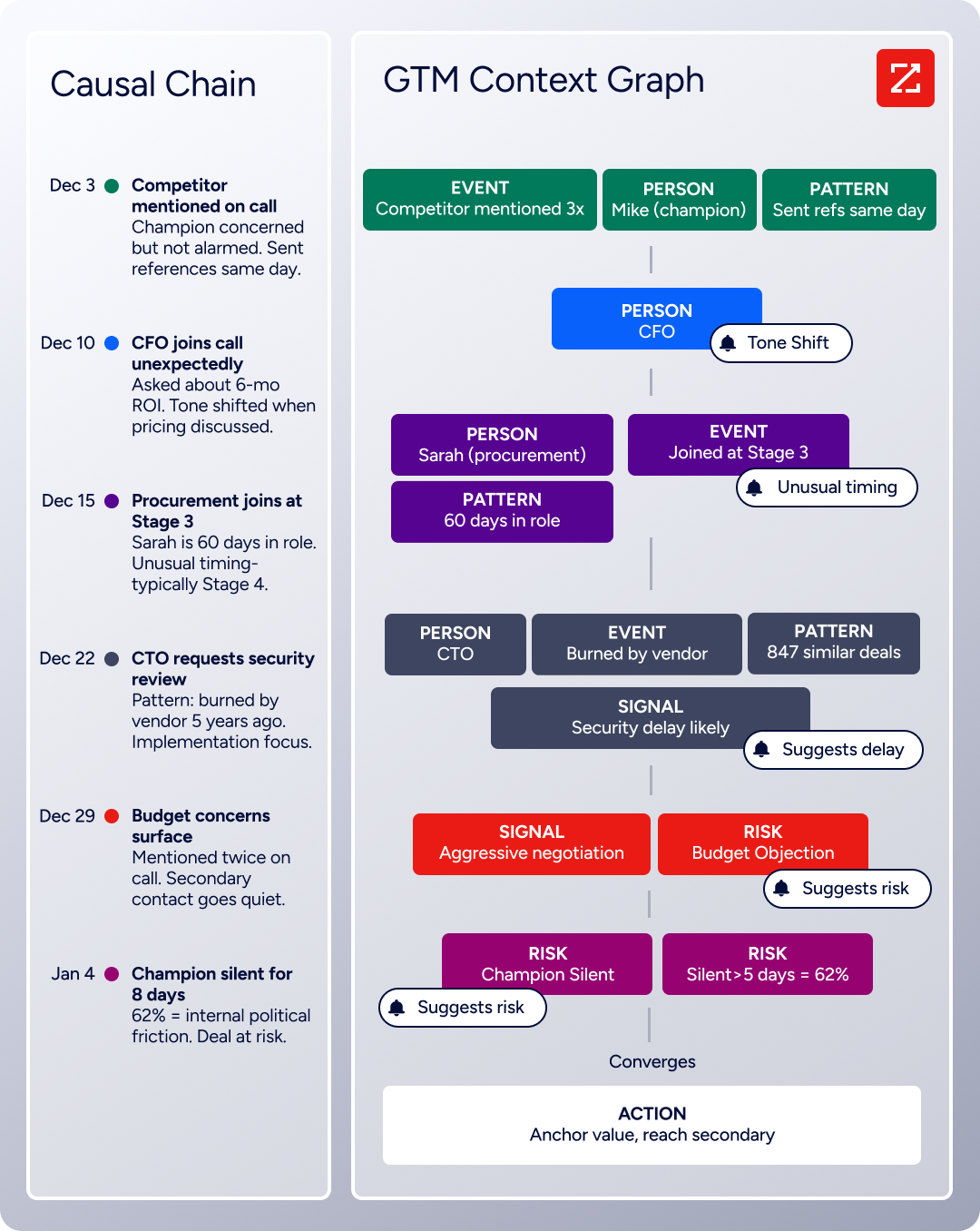
For teams whose primary need is a dedicated forecasting product, Gong or Clari delivers it natively. For teams that want forecasting fed by buyer data (intent signals, org chart changes, technographic shifts, and conversation data combined), ZoomInfo provides the broader context.
The data gap neither CI tool fills
Here is the structural limitation of conversation-first platforms: they can only analyze conversations that already happened. They cannot tell you which conversations you should be having.
Gong's 300+ integrations through the Gong Collective include data enrichment partners, and Clari Copilot connects with tools like ZoomInfo, LeadIQ, and LinkedIn. But these are add-ons. The core platforms do not include native buyer data.
ZoomInfo was built to solve this problem. The platform combines 500M contacts with 135M+ verified phone numbers and 200M+ verified business email addresses alongside company attributes, org charts, and technographics for 100M companies. Buyer intent data tracks signals from 210 million IP-to-Organization pairings and 6 trillion+ new keyword-to-device pairings sourced monthly. WebSights resolves anonymous website traffic to companies, identifying buying teams and surfacing contact information before a visitor fills out a form.
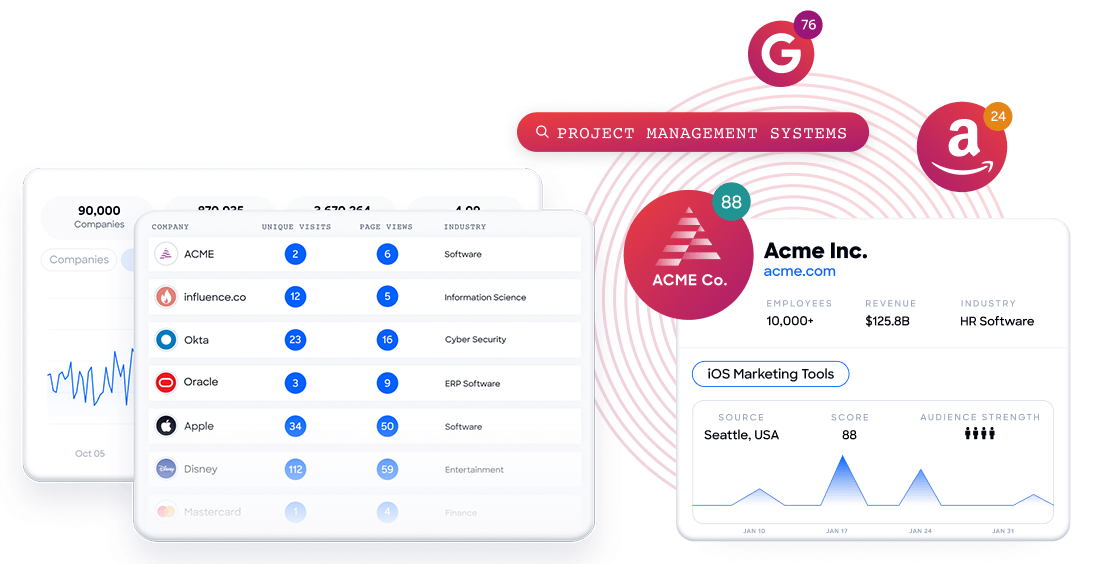
This data is verified through a collection and verification system backed by 300+ human researchers, reaching up to 95% accuracy on first-party data. In a Fortune 500 competitive RFP analyzing 25 million contacts across vendors, the independent consultant concluded that "no other competitor came even close."
The practical impact: your SDRs aren't guessing who to call. Your AEs walk into meetings knowing the buying committee, tech stack, and intent signals. Your marketing team targets accounts showing active buying behavior, not just static company attributes. And when those conversations happen, ZoomInfo's Chorus captures the intelligence and feeds it back into the same data layer, creating a continuous loop.
Vensure scaled prospecting with ZoomInfo's B2B data: "We don't have to spend our time digging. It's already there, so we can be three steps ahead." (Vensure)
Sales engagement and execution
Revenue intelligence has limited value if it doesn't connect to execution. All three platforms have moved into sales engagement, each from a different direction.
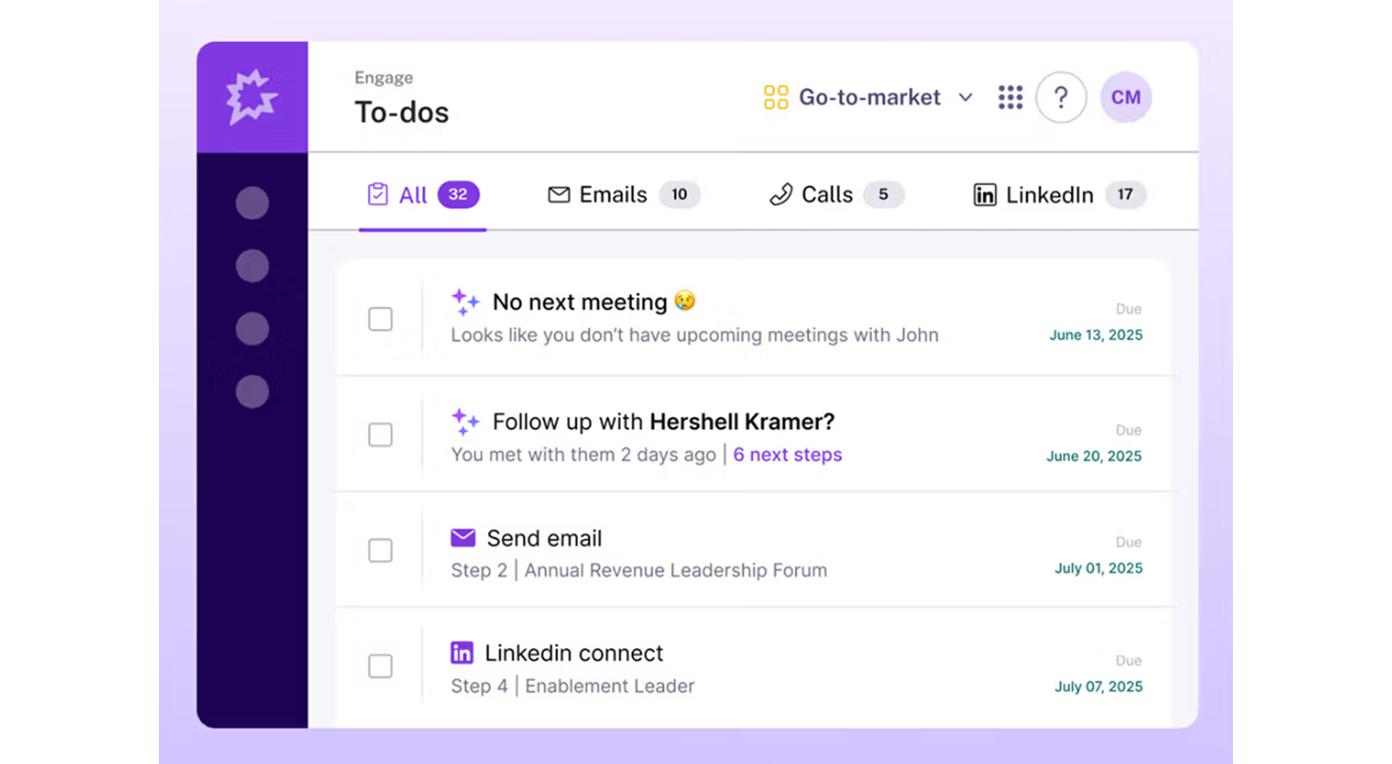
Gong Engage, launched in June 2023, brings outreach into the Gong platform. Reps manage multi-channel sequences across email, phone, and LinkedIn from one workspace. AI Composer drafts emails from real conversation context, delivering a 34% higher response rate on AI-composed emails. The Gong Dialer provides VoIP calling with local number matching, call recording, and CRM auto-sync.
Source: Gong
Clari Copilot gained full sales engagement capabilities through the December 2025 merger with Salesloft. The combined platform covers conversation intelligence, sales cadences, pipeline management, and forecasting under one roof. Copilot's AI-generated call summaries can now go through Salesloft with one-click delivery. The integration is early, though: platform unification is a multi-year effort, and buyers currently navigate overlapping products with separate pricing and interfaces.
ZoomInfo approaches engagement through GTM Workspace, where sellers see prioritized accounts, AI-drafted outreach, and deal execution in a single view. The workspace draws on the GTM Context Graph, so outreach is informed by intent signals, org chart data, and conversation history at the same time. For structured cadences, ZoomInfo's partnership with Salesloft connects buyer signals to sequencing workflows. ZoomInfo also offers a native dialer, website chat, and multi-channel marketing orchestration through GTM Studio.
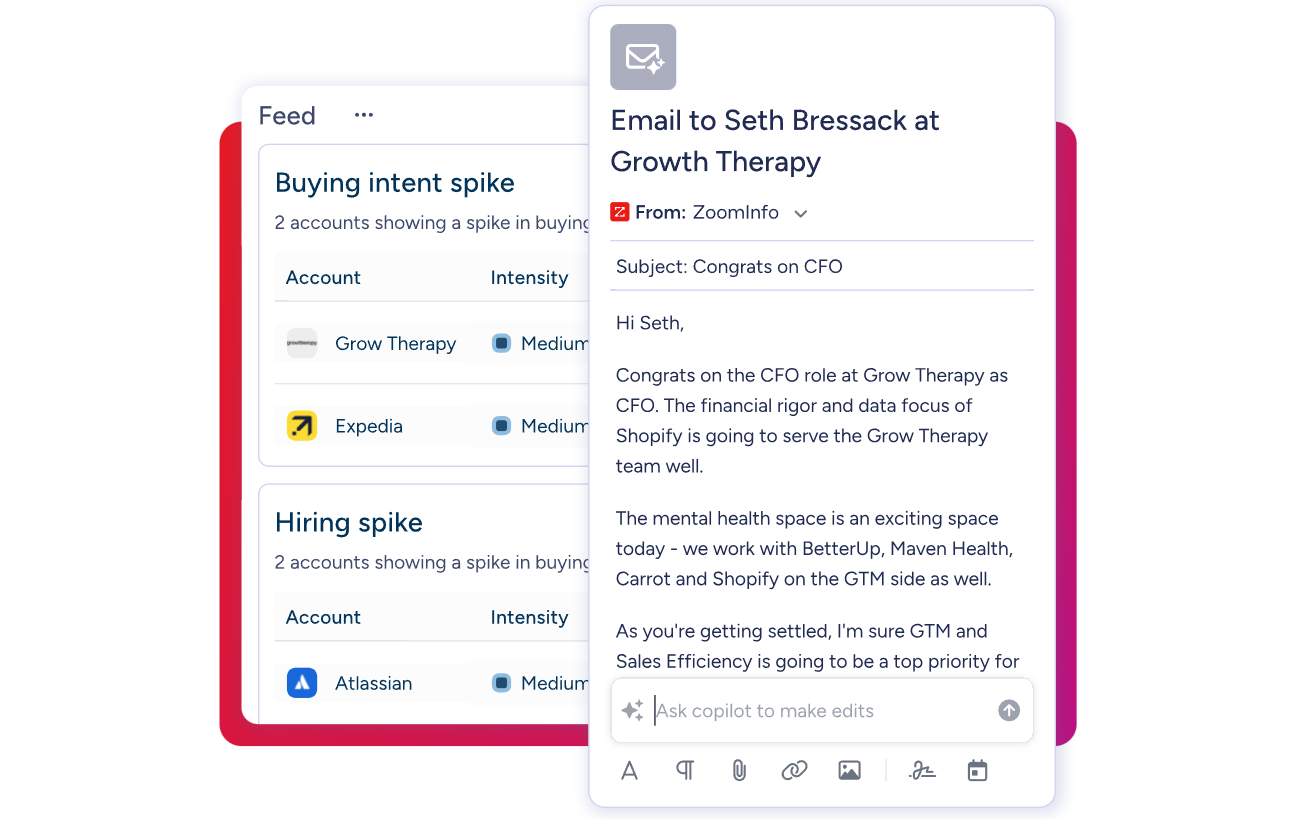
The distinction: Gong and Clari Copilot build engagement tools around conversation data. ZoomInfo builds engagement around buyer intelligence, with conversations as one of many inputs.
"ZoomInfo's not just a contact data company anymore. They've built a full system of execution. GTM Intelligence actually works the list, writes the outreach, triggers the play, and helps drive predictable growth." (Levanta)
Platform openness and interoperability
No single tool owns the entire revenue stack. Each platform has moved toward interoperability, with different philosophies.
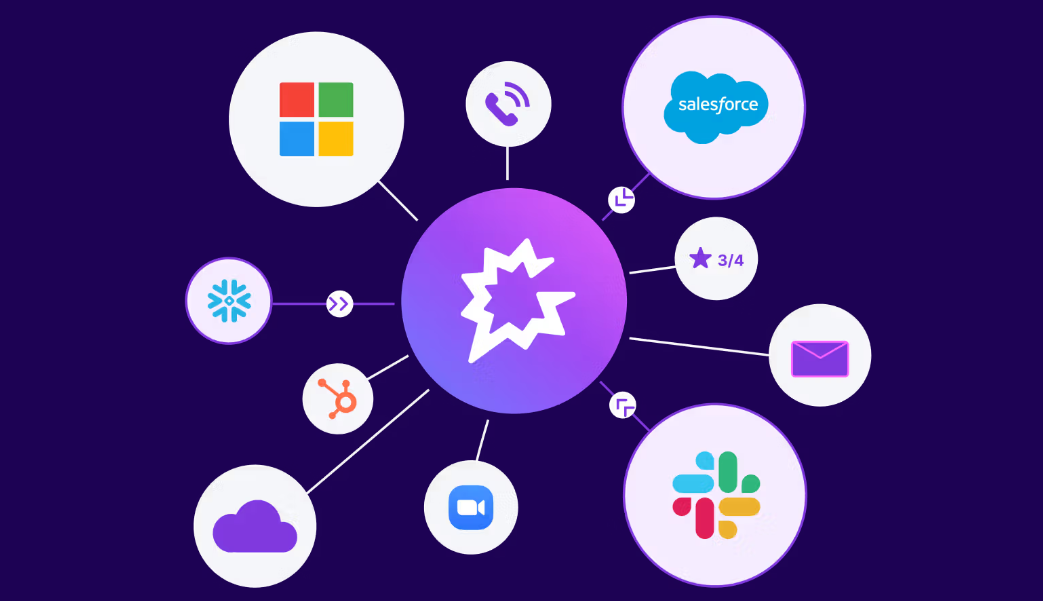
Gong has built over 300 integrations through the Gong Collective. Gong now supports Model Context Protocol (MCP) as both Client and Server, enabling external AI agents from Salesforce, Microsoft, and HubSpot to query the Gong Revenue Graph directly. Gong Data Cloud exports data to Snowflake and Databricks. The MCP Server component is coming soon, so bidirectional capability is not yet live.
Source: Gong
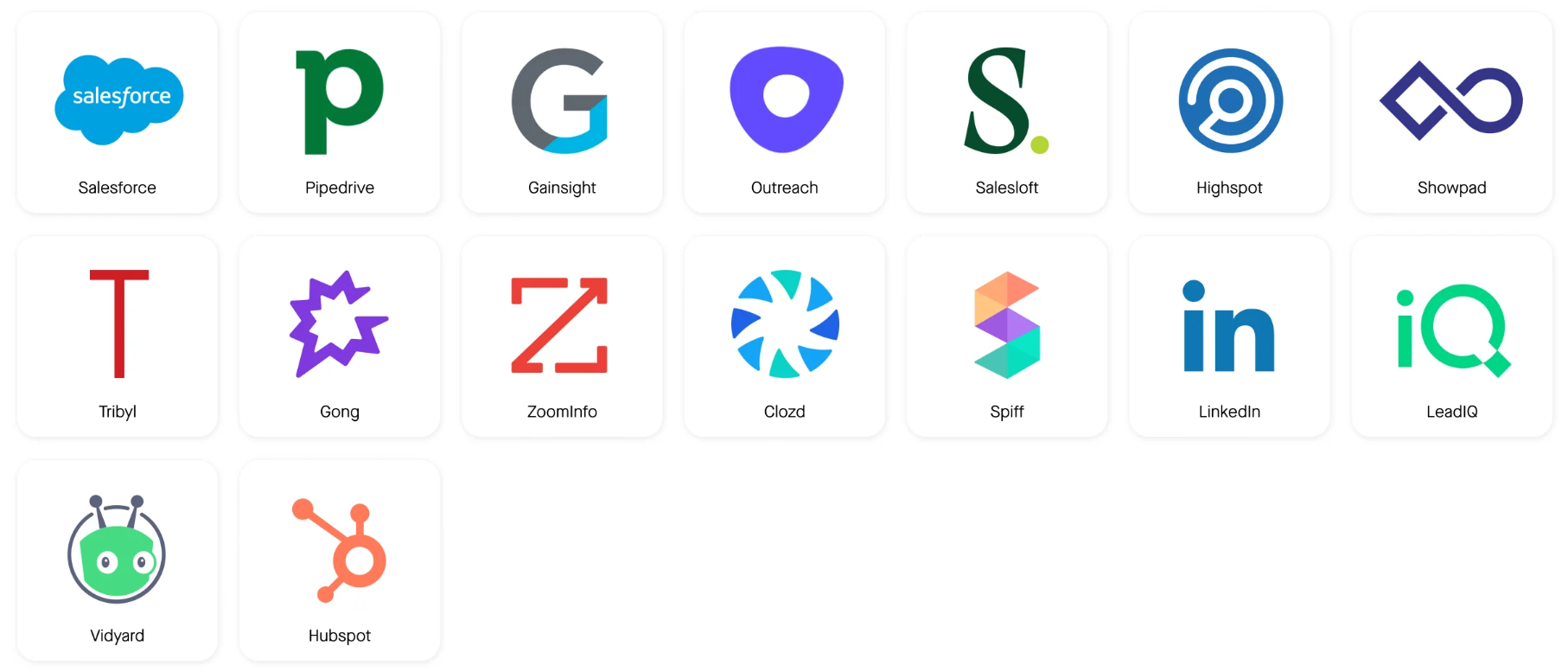
Clari Copilot integrates with major CRM, conferencing, and sales engagement platforms including Salesforce, HubSpot, Zoom, Microsoft Teams, and Google Meet. Clari has launched an MCP server combining Clari and Salesloft data for AI agent consumption. The Copilot REST API supports call retrieval, transcript access, topic analysis, and external call uploads. Data and BI integrations include Snowflake, BigQuery, Databricks, and PostgreSQL.
Source: Clari
ZoomInfo takes interoperability furthest. API access is included in all relevant plans, not gated behind enterprise tiers. The Enterprise API exposes search, enrichment, intelligence, marketing audiences, and engagement data through documented REST endpoints. The ZoomInfo MCP server connects AI models to ZoomInfo's B2B data as a native tool, currently supporting Claude and ChatGPT. Cloud Partners enable direct data ingestion into AWS, Google Cloud, Snowflake, and Databricks. The App Marketplace lists 120+ partner integrations. CEO Schuck described a large financial services firm building an internal app using ZoomInfo's MCP server: "That's a surface area we would never see before."
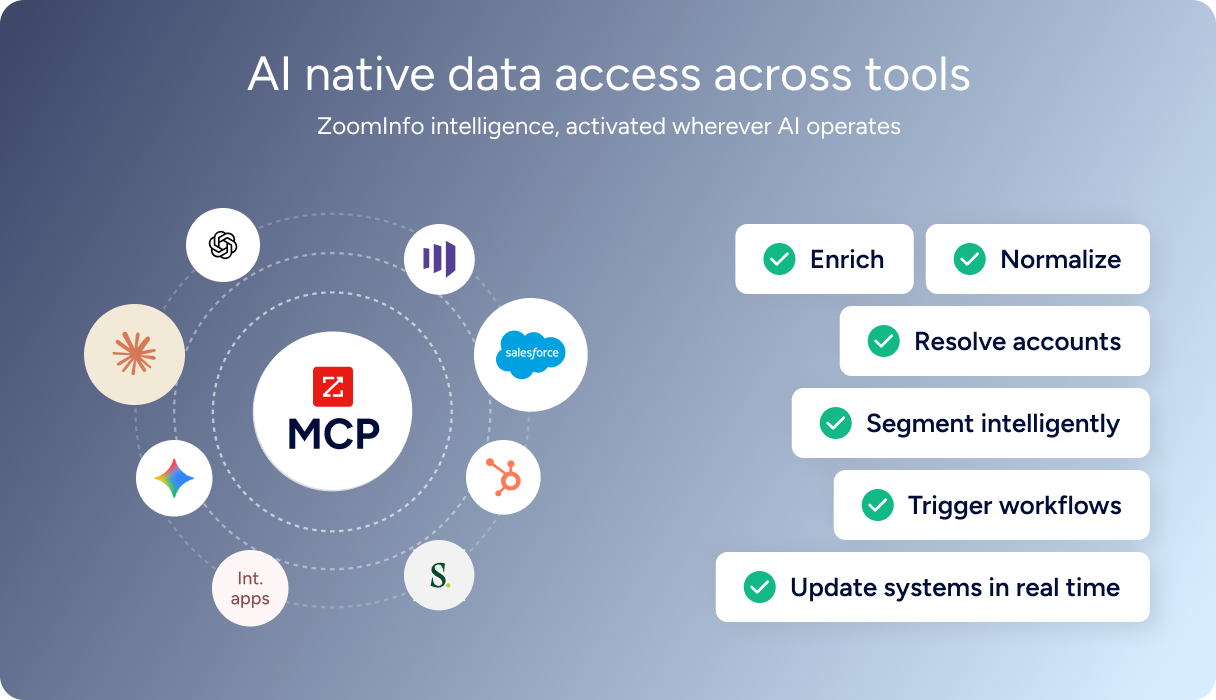
BDO Canada uses ZoomInfo's API to activate data within internal systems: "The plug-and-play aspect of the API means I can integrate it very easily into any process and get information at a moment's notice." (BDO Canada)
Security, compliance, and trust
For enterprise buyers in regulated industries, platform security can be a deciding factor.
Gong holds the broadest certification portfolio in this comparison: SOC 2 Type II, ISO/IEC 42001:2023 (AI Management), ISO/IEC 27001:2022, ISO/IEC 27017, ISO/IEC 27018, ISO/IEC 27701, PCI DSS SAQD, HIPAA support, Cloud Security Alliance STAR, and EU-U.S. Data Privacy Framework. The ISO 42001 AI Management certification is notable; Gong is one of the first revenue AI platforms to hold it. Gong commits that customer data is never used to train generative AI models and delivers over 99.5% uptime. Customers can configure bring-your-own-key encryption and data governance controls by region, role, or use case.
Clari maintains SOC 2 Type II, ISO 27001, ISO 27701, and CSA STAR certifications, with a detailed GDPR compliance policy. The company operates a Trust Center at trust.clari.com and a Vulnerability Disclosure Program. Clari states it does not process special GDPR data categories. HIPAA compliance and FedRAMP status are not referenced in public documentation.
ZoomInfo holds ISO 27001, ISO 27701, SOC 2 Type II, TRUSTe GDPR, and TRUSTe CCPA certifications, all renewed annually. As a registered data broker in California and Vermont, ZoomInfo operates under additional regulatory scrutiny that strengthens its data handling practices. The dedicated Trust Center provides transparency into security practices.
All three platforms meet enterprise security requirements. Gong's certification breadth (particularly HIPAA and the AI Management standard) gives it an edge in healthcare and other regulated verticals.
Pricing and total cost of ownership
None of these platforms publishes pricing, which makes direct comparison difficult but the cost structure differences important.
Gong charges per-user licenses plus a platform fee based on user count. The platform fee means smaller teams absorb a disproportionate share of fixed costs. The core Gong Foundation license provides the platform base, with forecasting, engagement, enablement, and data export each sold as separate add-ons. All standard integrations, Collaborator seats, and Gong Agents are included at no extra cost. There is no free plan or public trial.
For a full breakdown of Gong's cost structure, add-ons, and what's included at each tier, see our Gong Pricing analysis.
Clari Copilot uses a per-seat subscription model with pricing defined in customer-specific Order Forms. Pricing is treated as confidential information. Clari states there are "no extra platform fees for integrations or continuous support," positioning the platform as all-inclusive at the quoted price. A free trial is available but its standard duration is not published. Implementation services via a Statement of Work cost extra. The post-merger product sprawl (Copilot, Groove, Salesloft cadences, Clari forecasting) means buyers may need to negotiate pricing across multiple product lines.
ZoomInfo uses consumption-based pricing where costs scale around data access, API consumption, and AI activity. Three product lines (Sales, Marketing, and Operations) each offer tiered plans (Professional, Advanced, Enterprise) with progressive feature access. ZoomInfo offers two free entry points: ZoomInfo Lite, a permanent free tier with access to the B2B database and 10 monthly export credits, and a 7-day free trial with broader feature access. API access is included in all relevant plans.
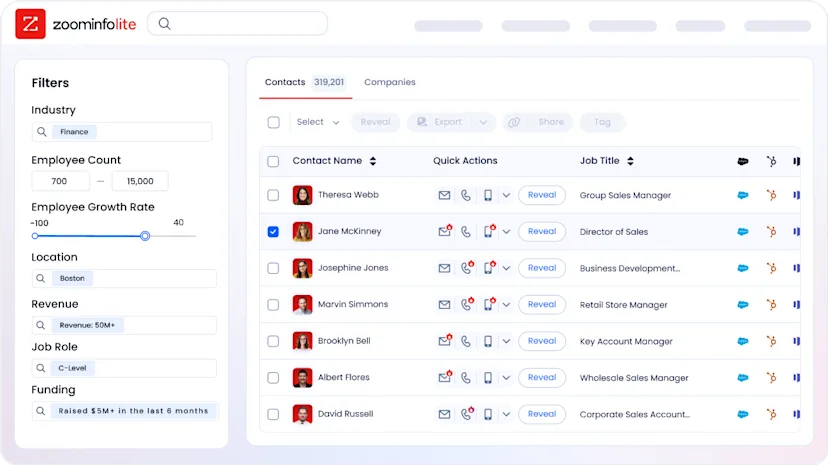
When evaluating total cost, consider what each platform replaces. A team buying Gong still needs separate tools for prospecting data, intent signals, and possibly sales engagement. A team buying Clari Copilot still needs a data provider and is navigating a transitional platform. A team on ZoomInfo gets data, intent, conversation intelligence, and engagement in one platform, though the conversation intelligence (Chorus) is less deep than Gong's standalone offering.
Gong vs. Clari Copilot vs. ZoomInfo: Which should you choose?
The choice depends on where your biggest gap is: conversation depth, live coaching, or complete buyer intelligence.
Choose Gong if:
Conversation intelligence is your primary investment and you want the most thorough AI analysis available
Your team needs 15+ AI agents for coaching, deal prediction, and forecasting
You operate globally and need support for 70+ languages
You're willing to pay premium pricing and commit to adoption across revenue teams
You already have a data provider and sales engagement tool in place
Choose Clari Copilot if:
Real-time coaching during live calls is your top priority
You want conversation intelligence tightly integrated with forecasting and pipeline inspection in one platform
You're evaluating the combined Clari+Salesloft stack as a full revenue orchestration solution
Your team is primarily English-speaking and North American
You're comfortable with a platform that's still unifying post-merger
Choose ZoomInfo if:
You need conversation intelligence as part of a complete GTM platform, not as a standalone tool
Buyer data, intent signals, and prospecting are as important as call analytics
You want your AI to understand deals from first intent signal through every conversation to close
Your team spans sales, marketing, and RevOps, and all need access to the same intelligence
You value platform openness with API and MCP access included across plans
Start with ZoomInfo Lite for free or request a demo to see the full platform.
Conversation intelligence changed how revenue teams learn from their calls. But calls are one layer of a much larger picture. The teams winning today connect buyer data, intent signals, engagement activity, and conversation intelligence into a single system where every interaction informs the next. That's the shift from conversation intelligence to GTM intelligence, and it's the foundation ZoomInfo has spent nearly two decades building.
Gong vs. Clari Copilot vs. ZoomInfo FAQ
What happened to Wingman?
Clari acquired Wingman in June 2022 and rebranded it as Clari Copilot. It now operates as the conversation intelligence module within Clari's Revenue Orchestration Platform. The real-time coaching features that made Wingman distinctive (live battlecards, in-call alerts) remain core to Clari Copilot.
Which platform has the best transcription accuracy?
Gong is widely considered the most accurate, with AI models trained on over three billion customer interactions and support for 70+ languages. Clari Copilot's transcription has been flagged by users for issues with technical jargon, dialect handling, and speaker attribution errors. ZoomInfo's Chorus provides reliable transcription backed by 14 technology patents, with native integration to ZoomInfo's contact data for participant identification.
Can I use these platforms together?
Yes. Gong and Clari Copilot both integrate with ZoomInfo's data through their partner ecosystems. ZoomInfo's data enrichment and intent signals can feed into either conversation intelligence platform. Many organizations use ZoomInfo for prospecting and data alongside a separate conversation intelligence tool, though ZoomInfo's Chorus can also serve as the CI layer for teams that prefer one platform.
Which platform is best for sales coaching?
Gong and Clari Copilot both handle coaching well but differ in approach. Gong offers post-call analysis with AI Call Reviewer scorecards, AI Trainer for practice scenarios, and team-level behavior analytics. Clari Copilot provides real-time coaching during live calls through battlecards and monologue alerts. ZoomInfo's Chorus supports coaching through call recording, scorecards, and clip sharing, with the added benefit of surfacing ZoomInfo's contact and company data alongside each recording.
Which platform offers the best forecasting?
Gong Forecast and Clari Forecast are both dedicated forecasting products. Gong Forecast uses 300+ conversation-derived signals and delivers 20% more precision than CRM-only algorithms. Clari Forecast targets 98% accuracy by week two of the quarter and has been validated by a Forrester TEI study showing 398% ROI. ZoomInfo does not offer a standalone forecasting product but provides the contextual layer (intent signals, buyer data, conversation insights) that makes any forecasting system more accurate.
Do any of these platforms include native B2B contact and company data?
Only ZoomInfo includes native B2B data: 500M contacts, 100M companies, 135M+ verified phone numbers, and 200M+ verified business email addresses. Neither Gong nor Clari Copilot includes a contact or company database. Both rely on partner integrations or separate data subscriptions for buyer data.
Which platform has the most transparent pricing?
None of the three publishes actual prices. However, ZoomInfo offers two free entry points (ZoomInfo Lite, a permanent free tier, and a 7-day free trial) that let prospects evaluate the platform before committing. Clari Copilot offers a free trial of unspecified duration. Gong does not offer a free plan or publicly available trial. All three require contacting sales for pricing quotes.
How do the platforms handle the post-merger landscape at Clari?
Clari completed its merger with Salesloft in December 2025. Buyers currently navigate four overlapping products (Copilot, Groove, Salesloft cadences, and Clari forecasting) with separate pricing and interfaces. Clari's own community FAQ describes platform unification as a multi-year effort. Early integrations connecting Salesloft engagement data to Clari conversation intelligence and forecasting are targeted for 2026, but a fully unified product is not yet available.
