

Choosing between HappyFox and HubSpot for customer service comes down to five questions:
Do you need a dedicated help desk that handles tickets across multiple departments, or a CRM platform where service connects to sales and marketing data?
Is your priority getting agents productive fast, or building customer intelligence that spans the full buyer journey?
Are you scaling a support team where per-seat pricing strains the budget, or willing to pay more per seat for a broader platform?
Does your team need AI that automates ticket-level tasks, or AI that knows the full context of who a customer is and why they're reaching out?
How much does the quality of your customer data (beyond what's in the ticket) matter to the quality of your service?
In short, here's what we recommend:
HappyFox is a dedicated help desk for teams that need structured ticketing across customer service, IT, HR, and operations without a full CRM platform. Rated 9.2/10 on G2 for ease of use, it gets teams running in hours with no-code automation, SLA management, and an unlimited-agent pricing model that removes per-seat scaling concerns. HappyFox's AI includes an Autopilot system at $0.02 per completed task and a Forrester-validated 401% ROI over three years. But its world ends at the ticket. There's no native CRM, no marketing automation, and no view of the customer journey beyond support history.
HubSpot is the CRM platform where customer service sits alongside sales, marketing, content, and commerce, all sharing one contact database. Service Hub includes a help desk workspace, SLA management, a customer portal, and Breeze Customer Agent, which resolves over 50% of customer conversations on its own. HubSpot's strength is context: when a support ticket arrives, agents see the full customer record (marketing touches, deal history, prior tickets) without switching tools. The tradeoff is cost complexity. Per-seat pricing, mandatory onboarding fees at Professional and Enterprise tiers, and a rule where all Core Seats are billed at the highest tier's rate can push costs higher than expected.
Both platforms handle tickets well. But for B2B organizations, service quality depends on something neither platform generates on its own: verified intelligence about who your customers and prospects actually are.
ZoomInfo is a B2B intelligence and GTM platform built on a data foundation of 500M contacts, 100M companies, 135M+ verified phone numbers, and 200M+ verified business emails. Its GTM Context Graph processes 1.5B+ data points daily, unifying this data with your CRM records, conversation transcripts, and behavioral signals to show which accounts are expanding, which contacts have changed roles, and which customers are researching competitors. ZoomInfo integrates directly with HubSpot and feeds enriched intelligence into your CRM, so every service interaction draws on real account context, not just ticket history. Teams access this intelligence through the GTM Workspace for sellers, GTM Studio for marketers and RevOps, or the API and MCP in any front-end. For B2B teams, ZoomInfo turns customer service from a reactive function into a strategic one by connecting prospecting, sales, and retention data.
If enriched customer intelligence sounds like the missing piece, see how ZoomInfo works.
HappyFox vs. HubSpot vs. ZoomInfo at a glance
HappyFox | HubSpot Service Hub | ZoomInfo | |
|---|---|---|---|
Primary function | Dedicated help desk & ITSM | CRM-native customer service | B2B intelligence & GTM platform |
AI capabilities | AI Copilot, Autopilot ($0.02/task), Assist AI | Breeze Customer Agent, Knowledge Base Agent | GTM Context Graph, GTM Workspace AI agent, API/MCP |
CRM included | No | Yes (Smart CRM) | No (enriches your CRM) |
Integrations | 172+ marketplace partners + API/MCP | ||
Compliance | SOC 2 Type II, HIPAA, GDPR, CCPA | SOC 2 Type II, HIPAA, GDPR, CCPA | ISO 27001, ISO 27701, SOC 2 Type II, GDPR, CCPA |
Pricing model | Per-agent or flat unlimited-agent tiers | Per-seat + mandatory onboarding fees | Consumption-based |
Starting price | $21/agent/mo | Free tier; $20/seat/mo (Starter) | Free (ZoomInfo Lite); paid plans custom-quoted |
Best for | Multi-department support teams | Organizations unifying service with sales & marketing | B2B teams needing enriched customer data & pipeline intelligence |
Dedicated help desk vs. all-in-one platform: the fundamental choice
The comparison between HappyFox and HubSpot isn't about features. It's about architecture.
HappyFox was built as a dedicated help desk. Every feature (ticket routing, SLA clocks, Smart Rules automation) exists to make support operations faster and more organized. It serves CS, IT, HR, and facilities teams from a single login with department-specific queues, categories, and workflows.
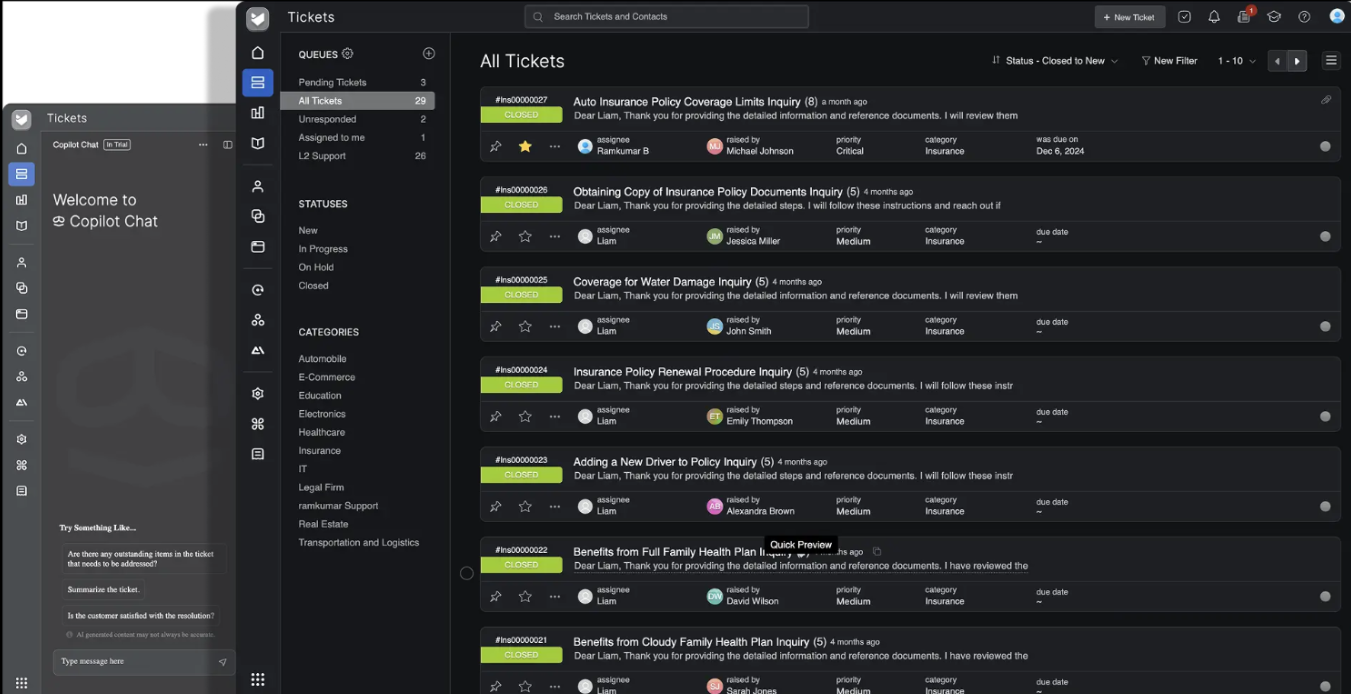
Source: HappyFox
If your primary need is structured ticketing across multiple internal teams, HappyFox delivers that without forcing you to buy capabilities you don't need.
HubSpot's Service Hub lives inside a broader CRM platform shared by Marketing Hub, Sales Hub, Content Hub, and Commerce Hub. When a customer submits a support ticket, the agent sees not just the ticket but the full relationship: which marketing campaigns the customer engaged with, which deals they've closed, which products they own, and what their health score looks like.
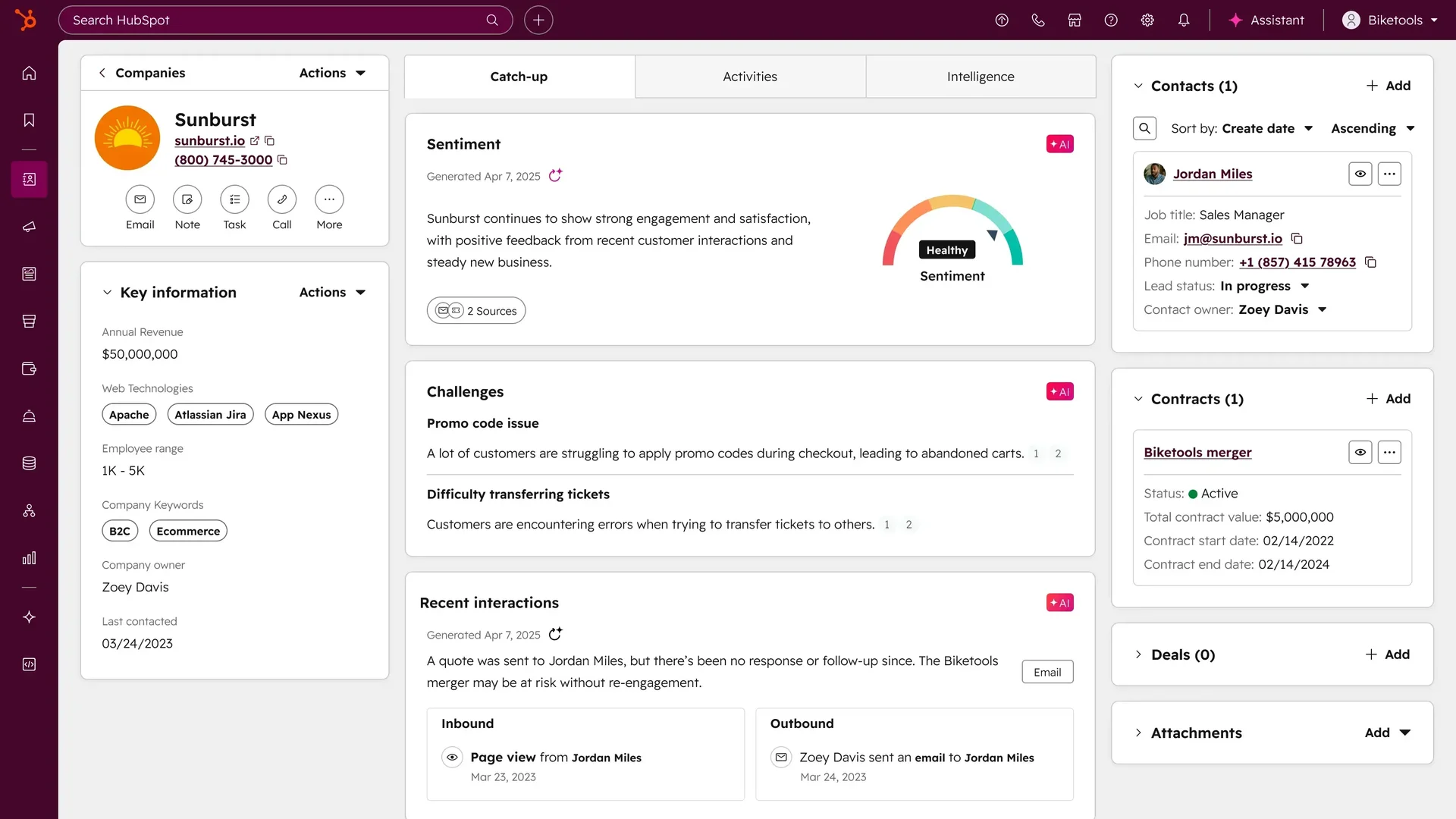
Source: HubSpot
This context is automatic because every Hub draws from the same Smart CRM database.
The architectural difference has practical consequences. HappyFox excels when support is the job. You need tickets handled, SLAs met, and agents productive. You don't need a CRM, marketing automation, or sales pipeline tools on the interface or the invoice.
HubSpot excels when service is one part of a larger customer operation. If the same organization runs customer support, outbound sales, email marketing, and content publishing, HubSpot's shared data model means every team works from the same customer record. No integration layer, no data sync issues, no duplicate contacts.
Neither architecture is wrong. The question is whether your organization treats service as a standalone function or as part of a connected go-to-market motion.
Ticketing and automation go head-to-head
Both platforms offer solid ticket management, but they approach automation differently.
HappyFox's Smart Rules engine lets admins define multi-condition triggers that fire automatically: route tickets by category, escalate on SLA breach, send canned responses, or call external webhooks.
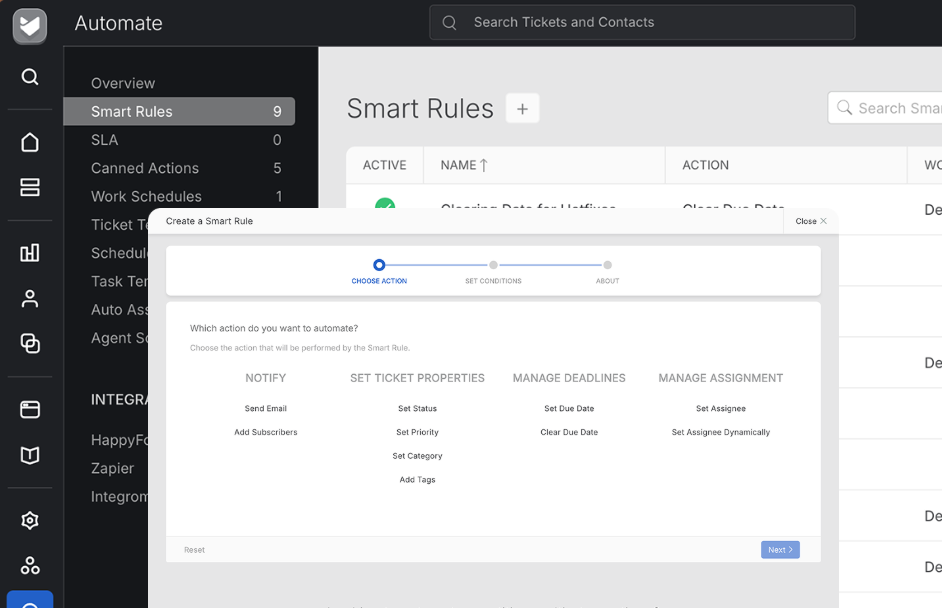
Source: HappyFox
HappyFox reports Smart Rules reduces manual work by 85% and speeds responses by 60%. Its three-tier auto-assignment system is granular. The load-balance variant calculates each agent's pending-ticket ratio against a configurable throttle limit and routes to the least-loaded agent.
SLA management in HappyFox tracks five time metrics (first response, assignment, reply to contact, reply to agent, concluding status), with clocks that pause during excluded statuses and non-business hours. Agent collision detection shows in real time which agents are viewing or typing on the same ticket, preventing duplicate replies.
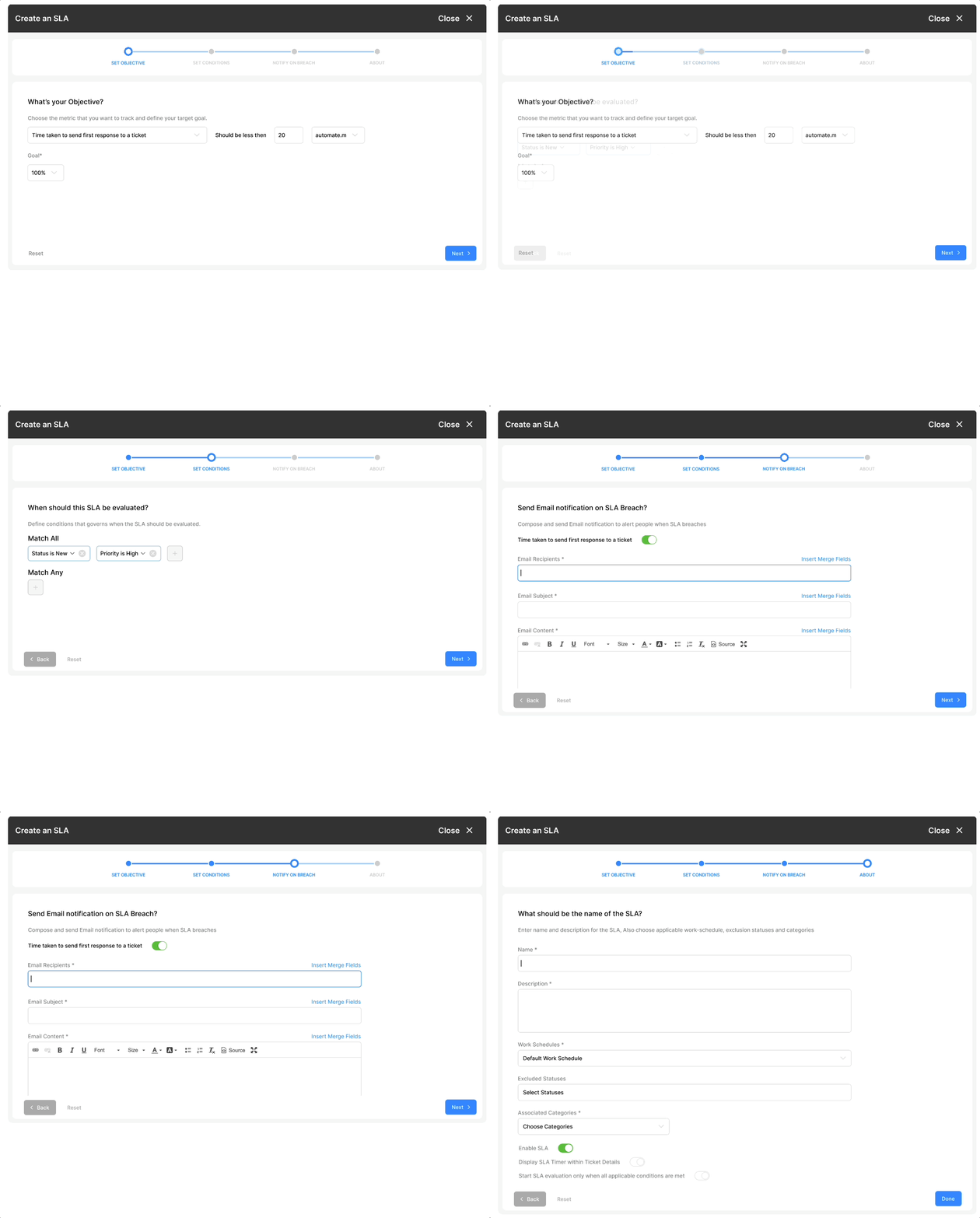
Source: HappyFox
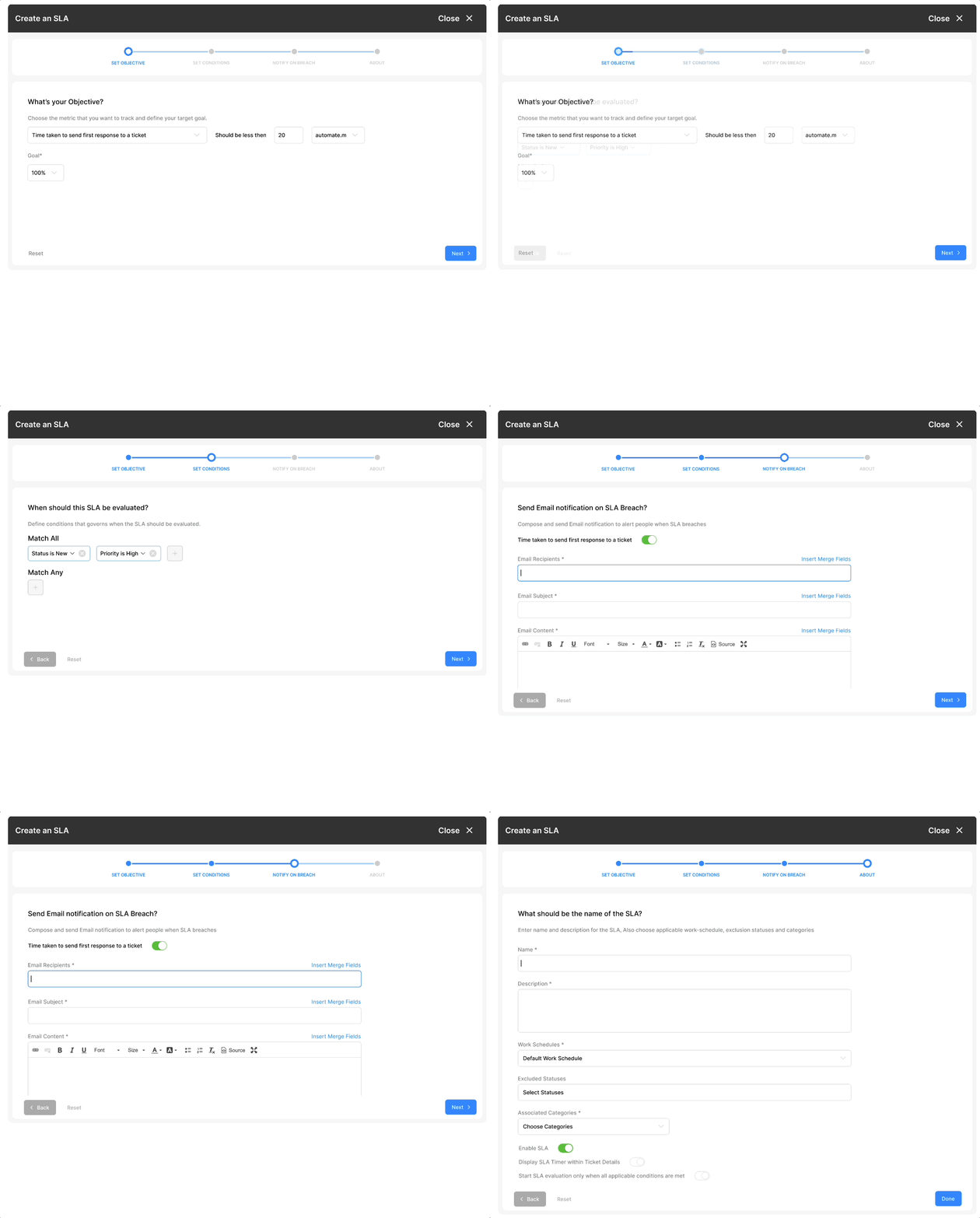
HubSpot's Service Hub takes a different approach. The help desk workspace pulls incoming channels (email, chat, forms, calling, WhatsApp, Facebook Messenger) into a unified queue with automated routing rules. SLA goals track time to first reply and time to close.
Source: HubSpot
Enterprise customers get conditional SLAs that apply different response windows based on ticket properties, and skill-based routing directs tickets to agents with relevant expertise.
Where HubSpot's automation gets interesting is beyond the ticket. Because Service Hub sits on the CRM, workflows can trigger based on customer properties unrelated to the ticket: lifecycle stage, deal value, product owned, or engagement history. A VIP customer's ticket can escalate automatically not because of the ticket's priority field, but because the CRM knows the account is worth $200K in annual revenue.
HappyFox's automation runs deeper within ticketing. HubSpot's automation runs broader across the customer relationship. Which matters more depends on whether your service team operates alone or alongside sales and marketing.
AI capabilities: ticket automation vs. full-journey intelligence
Both platforms have invested in AI, but with different ambitions.
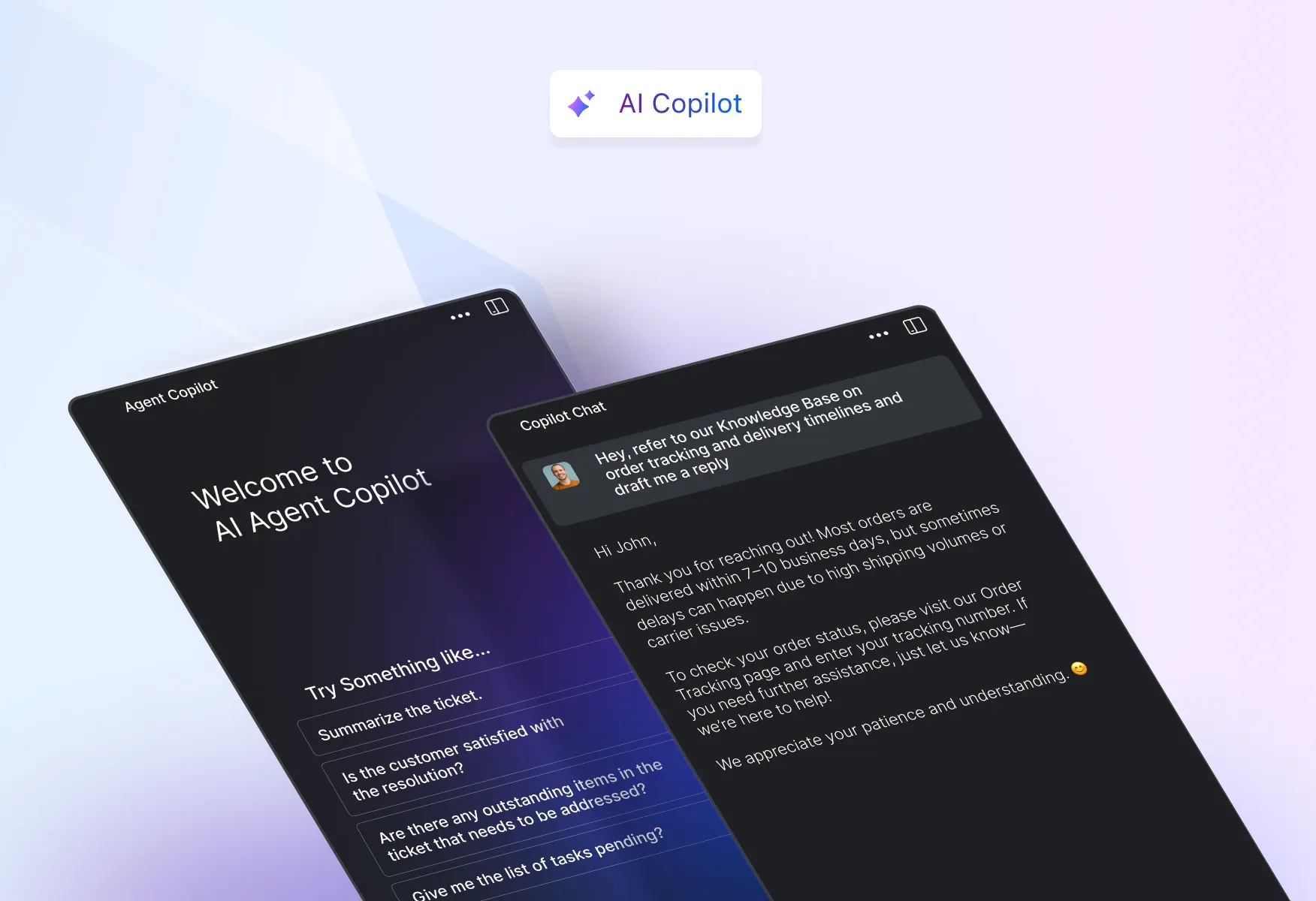
HappyFox offers three AI products. HappyFox AI embeds copilot-style features in the agent workspace: ticket summaries, reply suggestions, urgency detection, and knowledge base gap identification. It reports 60%+ AI-assisted resolution and 10x agent efficiency.
Source: HappyFox
Autopilot goes further with pre-built autonomous agents that read ticket content, interpret sentiment, and take actions (tagging, triaging, flagging churn risk, detecting upsell signals) without human involvement. The pricing stands out: $0.02 per task, with the first 2,500 tasks free.
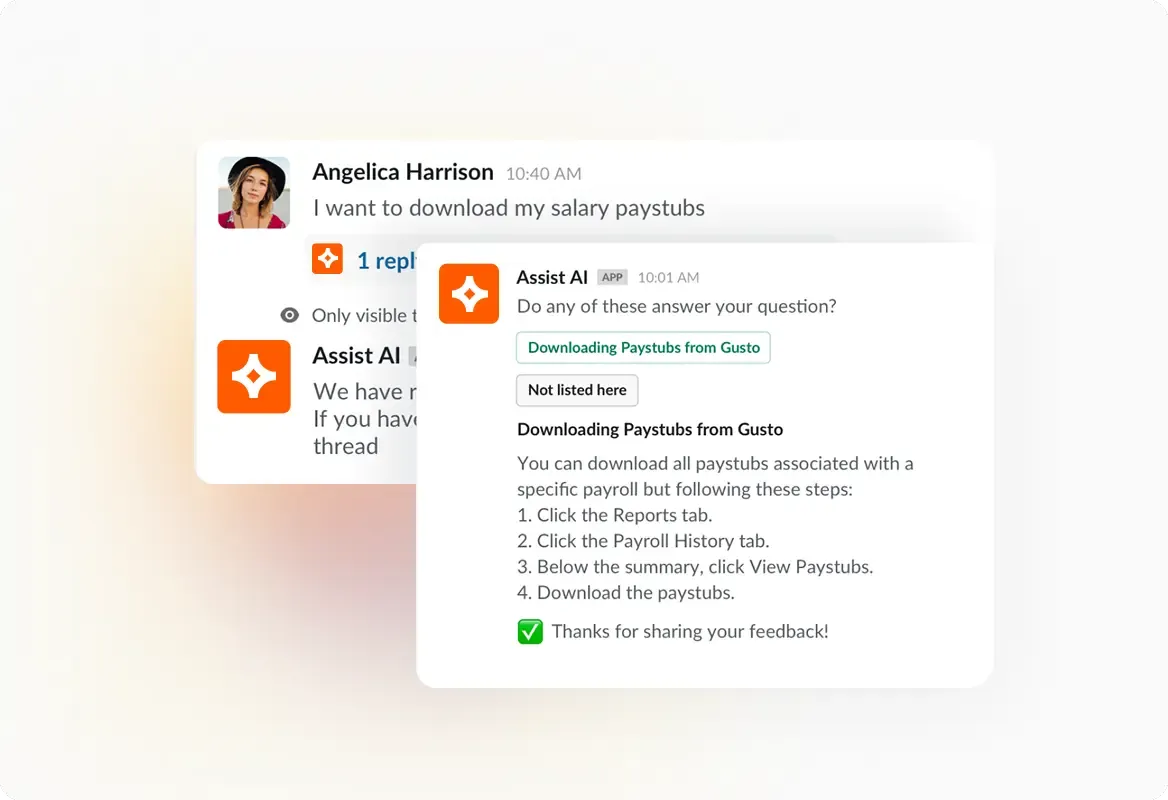
Every action is logged in an AI Agent Activity Log, and a Supervised Mode gates actions behind human review for teams that need oversight. Assist AI handles internal employee requests inside Slack and Microsoft Teams, resolving routine IT and HR questions before they become tickets.
Source: HappyFox
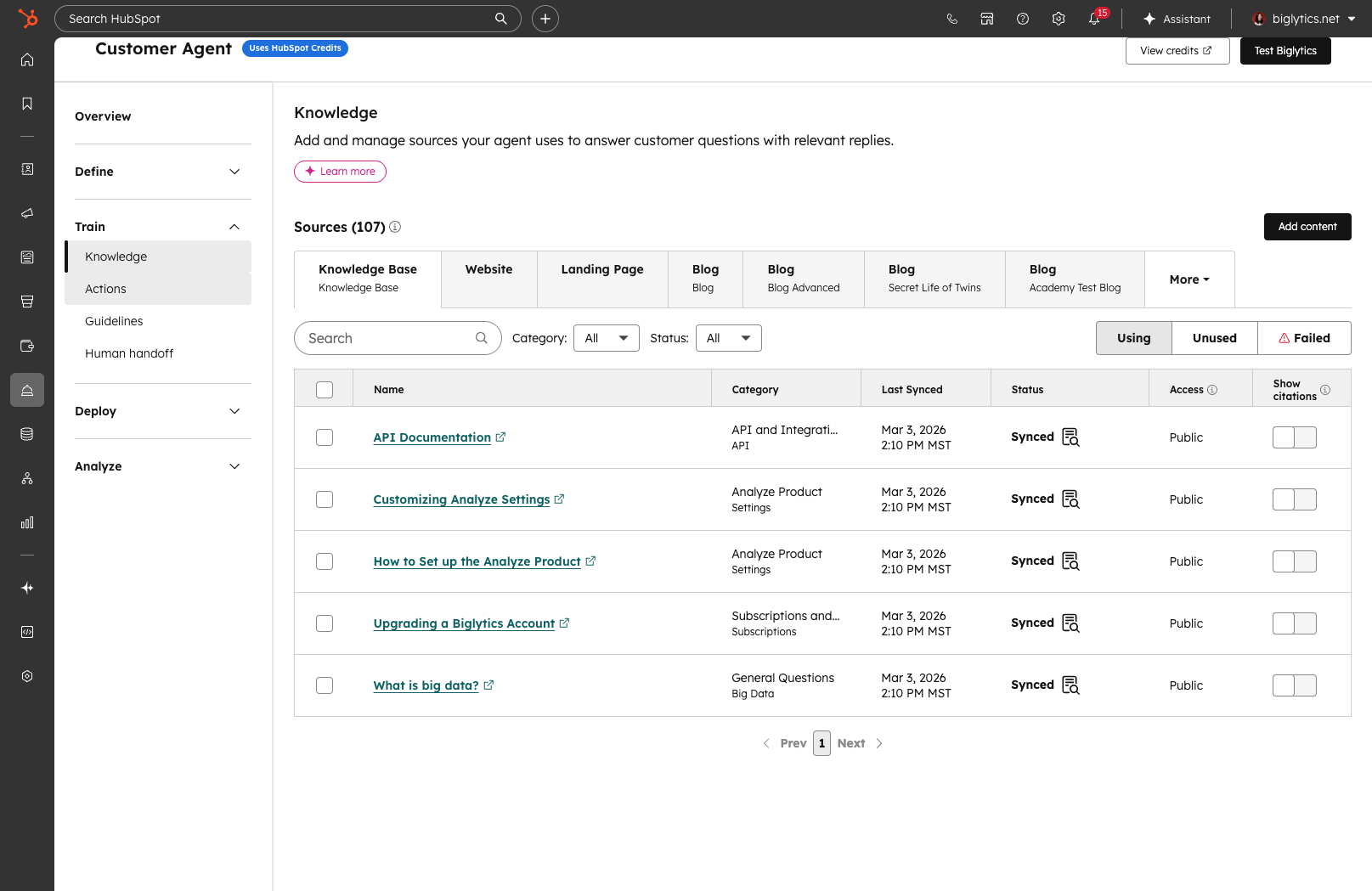
HubSpot's AI layer is Breeze, which runs across the entire platform. The Breeze Customer Agent handles customer conversations across chat, email, WhatsApp, and Facebook Messenger, citing answers from an approved knowledge base.
Source: HubSpot
The Knowledge Base Agent (beta) drafts help articles from resolved ticket conversations. Reply recommendations surface AI-suggested responses in the help desk workspace.
The deeper difference: HubSpot's Breeze agents operate with full CRM context. The Customer Agent doesn't just answer the question. It knows the customer's deal history, product usage patterns, and health score. HappyFox's AI, which operates within the ticketing system alone, cannot replicate that.
HappyFox's AI does offer outcome-based pricing (pay per task, not per seat) and a pre-built agent library that deploys in under a minute. For teams focused on ticket efficiency, HappyFox's AI delivers faster results at lower cost. For teams that want AI to understand the full customer relationship, HubSpot's approach goes deeper.
Pricing: the math works very differently
HappyFox offers two pricing models for its Help Desk. The agent-based model charges per agent per month: Basic at $21/agent/month (up to 5 agents), Team at $39/agent/month (unlimited agents), and Pro at $89/agent/month (unlimited agents), all on two-year billing.
The unlimited-agents model charges a flat monthly fee based on ticket volume: Growth at $1,599/month for 20,000 annual tickets, Scale at $3,199/month for 150,000 tickets, and Scale Plus at $4,799/month for 300,000 tickets.
For a 25-agent support team, HappyFox's Team plan costs $975/month. The same team on HubSpot Service Hub Professional costs $2,250/month (25 seats at $90/seat/month on annual billing) plus a $1,500 mandatory onboarding fee. At Enterprise tier, HubSpot rises to $3,750/month plus $3,500 onboarding.
HubSpot's pricing gets more complex. If your organization also subscribes to Marketing Hub Enterprise and Sales Hub Professional, all Core Seats get billed at the Enterprise rate (the highest tier across your subscriptions). This mixed-tier billing can inflate costs for organizations using multiple Hubs at different levels.
HubSpot does offer a permanent free tier with basic ticketing, shared inbox, and live chat, capped at two users. HappyFox has no free plan and requires a demo conversation before granting trial access.
The pricing philosophies reflect different bets. HappyFox bets that support teams need affordable, predictable pricing that doesn't penalize growth. North Country Healthcare's systems analyst highlighted the "ability to grow and change within our pricing tier was better than most other platforms." HubSpot bets that unified CRM data justifies a premium, and that organizations will adopt more Hubs over time.
For teams that need only help desk functionality, HappyFox costs less. For teams building a full go-to-market stack on one platform, HubSpot's higher price buys broader capabilities.
The intelligence gap that determines service quality
Both HappyFox and HubSpot manage tickets well. But for B2B organizations, tickets don't exist in isolation. Every customer contacting support represents an account with a contract value, a renewal date, a buying committee, and a competitive landscape. The question is whether your service team has access to that context.
HubSpot partially solves this through its CRM. When a ticket arrives, agents see the contact's deal history and lifecycle stage. But HubSpot's CRM only knows what's been entered into it, either manually or through connected tools. If your CRM data is incomplete (and Forbes estimates 91% of CRM data is incomplete), your agents work with partial information.
HappyFox's ticketing system has even less customer context. It knows the ticket, the contact, and the ticket history. It does not know the contact's role in the organization, the company's size, their tech stack, or whether they're evaluating competitors.
This is where ZoomInfo fills a gap neither platform addresses on its own.
ZoomInfo maintains a large B2B data platform: 500M contacts, 100M companies, 135M+ verified phone numbers, 120M direct-dial phone numbers, and 200M+ verified business email addresses. This data is verified through a collection and verification system backed by 300+ human researchers, reaching up to 95% accuracy on first-party data.
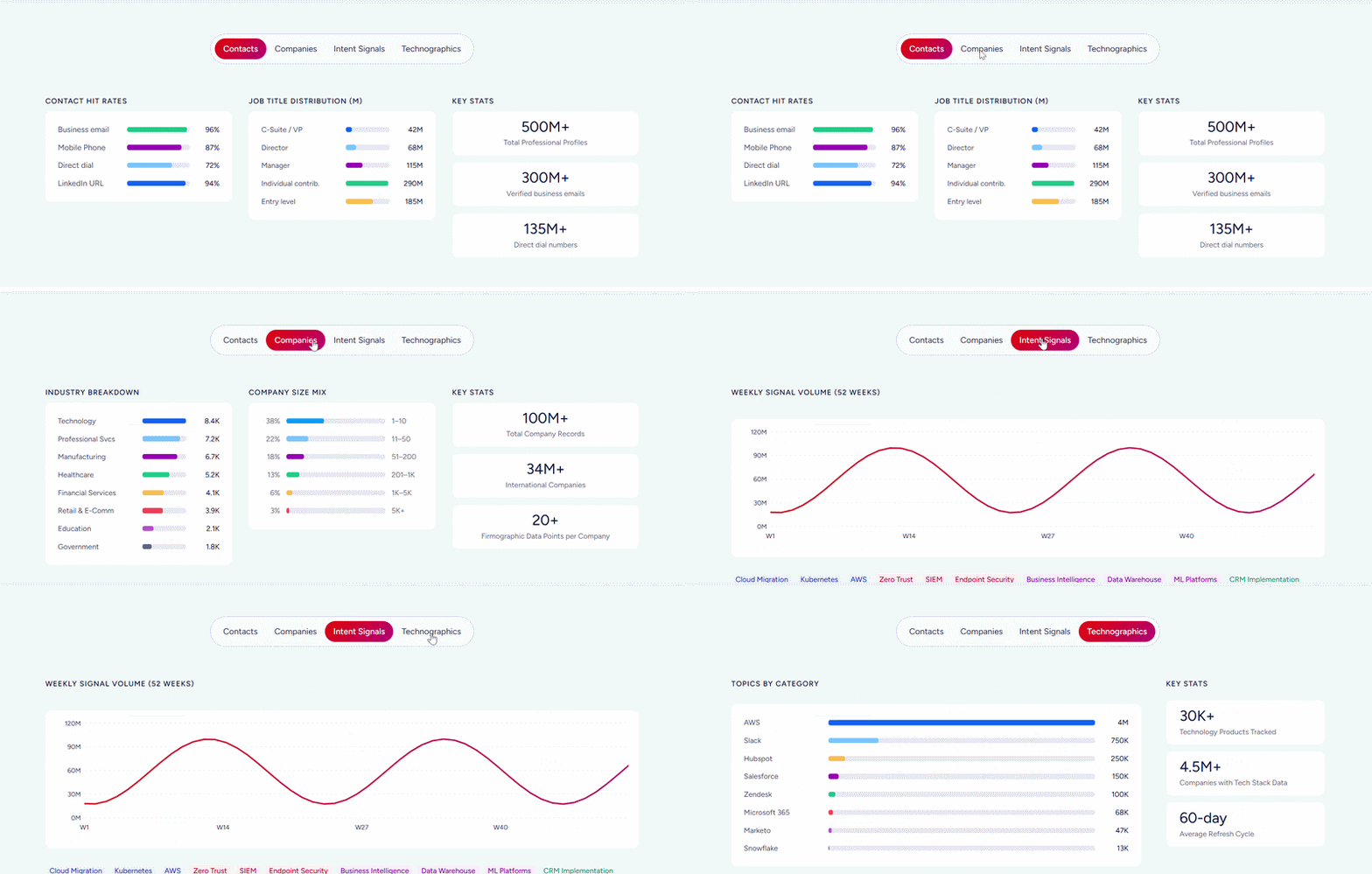
In a Fortune 500 competitive RFP analyzing 25 million contacts across vendors, an independent consultant concluded that "no other competitor came even close."
For HubSpot users, ZoomInfo's native integration enriches CRM records automatically, appending verified emails, direct dials, company attributes, org charts, and technographics to every contact and company record. When a support ticket arrives, the agent sees not just the ticket but the enriched account profile: company size, industry, technology stack, recent funding events, and organizational structure.
For teams using any other CRM or service tool, ZoomInfo's Enterprise API and MCP server deliver the same intelligence into any system. The MCP server connects AI models directly to ZoomInfo's B2B data with no custom coding, so an AI agent handling support tickets can pull real-time account intelligence into its responses.
Beyond enrichment, ZoomInfo's GTM Context Graph unifies CRM records, conversation transcripts, intent signals, and behavioral data into a layer that captures not just what happened in an account, but why. A support ticket from a customer who is researching your competitor means something different from a ticket from a customer who just expanded their contract. ZoomInfo surfaces that distinction.
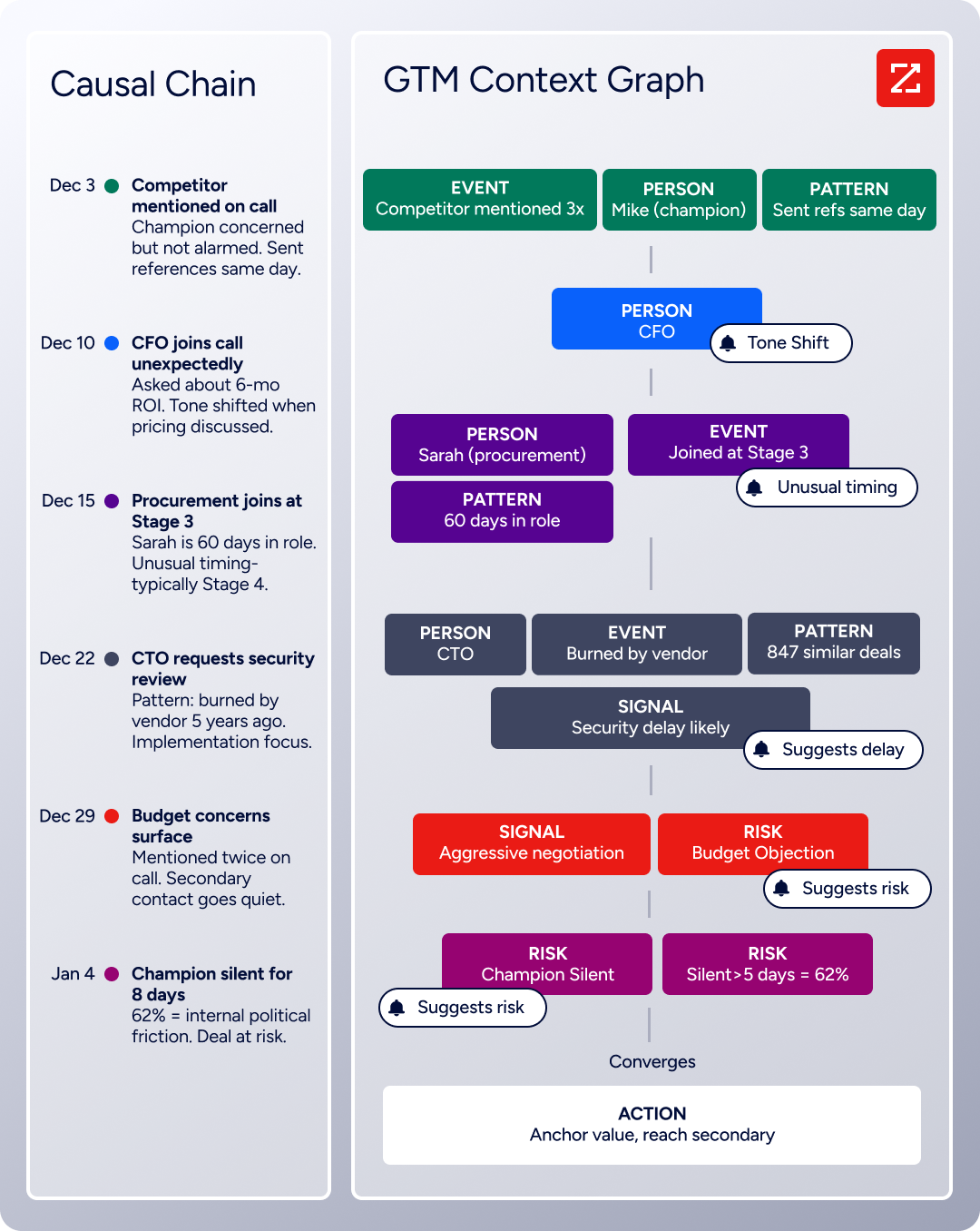
"That combination of our internal CRM data, external signals, and AI that's given all that context has helped us craft very specific account- and persona-based messages. And people have responded to them right away." (Toby Carrington, Chief Business Officer, Seismic)
For a deeper look at how HubSpot and ZoomInfo compare across data quality, GTM capabilities, and pricing, see our HubSpot vs. ZoomInfo comparison.
Integration ecosystems reflect different scales
The three platforms operate at different scales when connecting with the rest of your tech stack.
HappyFox lists 100+ integrations spanning CRM (Salesforce, HubSpot, Zoho, Dynamics 365, Pipedrive), messaging (Slack, Microsoft Teams, WhatsApp, Facebook, Instagram), project management (Jira, Asana, Azure DevOps, ClickUp, Monday.com, Trello), e-commerce (Shopify, BigCommerce, WooCommerce, Magento), and telephony (Aircall, Dialpad, RingCentral). It also connects to Zapier and Make for extending beyond native options.
HappyFox Workflows (sold separately) integrates with Zendesk, Jira, and Salesforce, so it can orchestrate processes even if you're not using HappyFox as your primary help desk.
HubSpot has the largest ecosystem of the three, with over 2,000 apps and 2.5 million active installs in its marketplace. The breadth covers virtually every category a go-to-market team touches: CRM connectors, marketing tools, sales engagement, analytics, AI, accounting, and more. HubSpot also offers a developer platform with REST APIs, GraphQL, webhooks, SDKs in six languages, and a dedicated developer portal.
ZoomInfo operates a marketplace with 172+ partners and focuses its integrations on the go-to-market stack: CRM (Salesforce, HubSpot, Dynamics 365), cloud data platforms (Snowflake, Databricks, AWS, Google Cloud), sales engagement (Salesloft, Outreach), and AI platforms (Claude, ChatGPT). The Enterprise API and MCP server extend ZoomInfo's data to any application, including custom agents and internal tools.
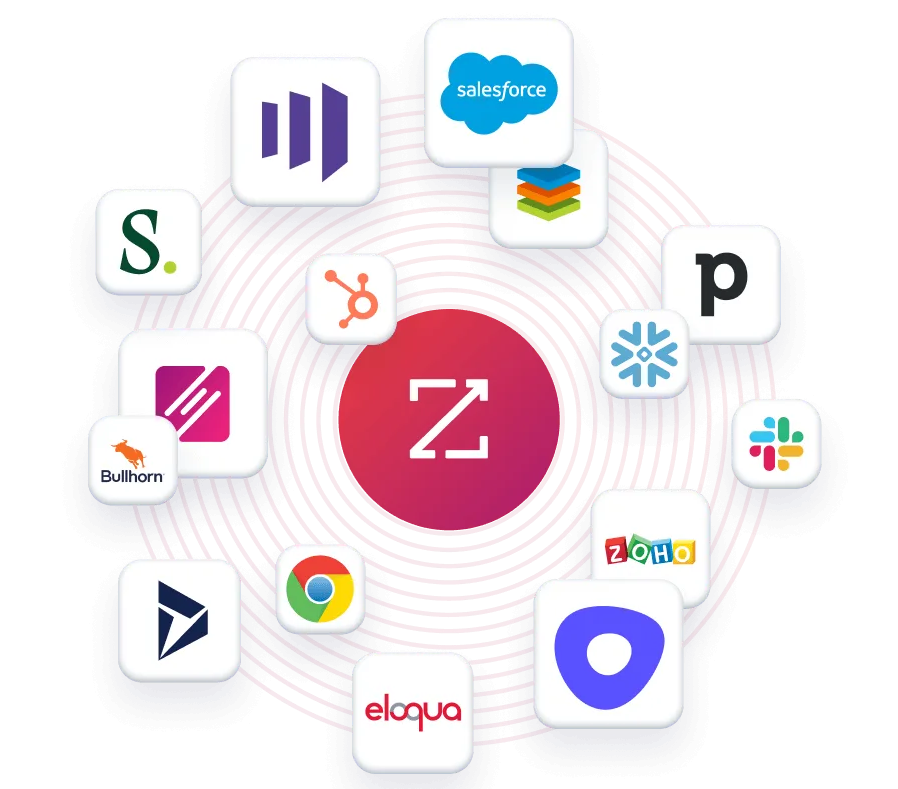
Within ZoomInfo's own platform, sellers access intelligence through the GTM Workspace while marketers and RevOps teams build plays in GTM Studio.
The integration story matters most at the intersection. ZoomInfo enriches CRM records. HubSpot or HappyFox consumes those records to power service. The data flows in one direction: intelligence in, better service out. For HubSpot users, this connection is native. For HappyFox users, ZoomInfo data can flow through a shared CRM (like Salesforce) or through API-based enrichment workflows.
"ZoomInfo is our one source of truth for account data, and even more so for contact data. There's no other provider in the market that provides you with that level of detail." (Thor Sanderson, Senior Manager of Sales Technology Enablement, Smartsheet)
Support quality from the vendors themselves
How a vendor supports its own customers tells you something about their product philosophy.
HappyFox practices what it sells. The company reports 98% CSAT in 2024, with G2 scoring support quality at 9.1/10. The enterprise page describes vendor support as involving "all teams including CEO" in customer service. Support hours scale by plan: Basic gets phone support during business hours, Pro and Enterprise PRO get 24/7 phone and email support, and Enterprise PRO adds a dedicated customer success manager.
HubSpot uses a tiered support model. Free users get only community support. Starter adds email and chat. Professional and Enterprise unlock phone support. Beyond direct support, HubSpot offers HubSpot Academy with over 200,000 certified professionals and free courses, a large community forum, and a knowledge base in 17+ languages.
The Solutions Partner network provides implementation and ongoing support for organizations needing hands-on help.
ZoomInfo provides support through its Help Center, ZoomInfo University (role-specific learning paths and certifications), and direct phone support. Professional services are available through ZoomInfo Labs and Data Services for complex data requirements. The company redesigned its onboarding from 30 to 90 days, producing a 25% improvement in customer satisfaction scores.

HappyFox's hands-on support (with CEO involvement) appeals to organizations that want a responsive vendor without enterprise bureaucracy. HubSpot's ecosystem support (Academy, partners, community) appeals to organizations that prefer self-service learning. ZoomInfo's structured onboarding appeals to teams making a data infrastructure investment.
Compliance and security for regulated industries
All three platforms hold certifications that matter for enterprise and regulated-industry buyers, but the coverage varies.
HappyFox holds SOC 2 Type II, HIPAA, GDPR, and CCPA certifications. The platform supports SSO (SAML, Google, Azure AD, Okta), two-factor authentication, IP-based access restrictions (Pro and above), and two tiers of audit logging: basic (login sessions on all plans) and advanced (full activity tracking on Enterprise PRO). An optional EU data center is available on Team plan and above.
HubSpot holds SOC 2 Type II, SOC 3, HIPAA, GDPR, CCPA, and EU Cloud Code of Conduct Level 2 certifications. Security features include SSO, 2FA, passkeys, IP allowlisting, AES-256 encryption at rest, and TLS 1.2/1.3 in transit. An EU data center is available for data localization. HubSpot publishes AI model cards detailing how each AI system interacts with customer data.
ZoomInfo holds ISO 27001, ISO 27701, SOC 2 Type II, TRUSTe GDPR, and TRUSTe CCPA certifications, all renewed annually. As a registered data broker in California and Vermont, ZoomInfo maintains dedicated compliance infrastructure around B2B data privacy. A Trust Center provides transparency into data handling practices.
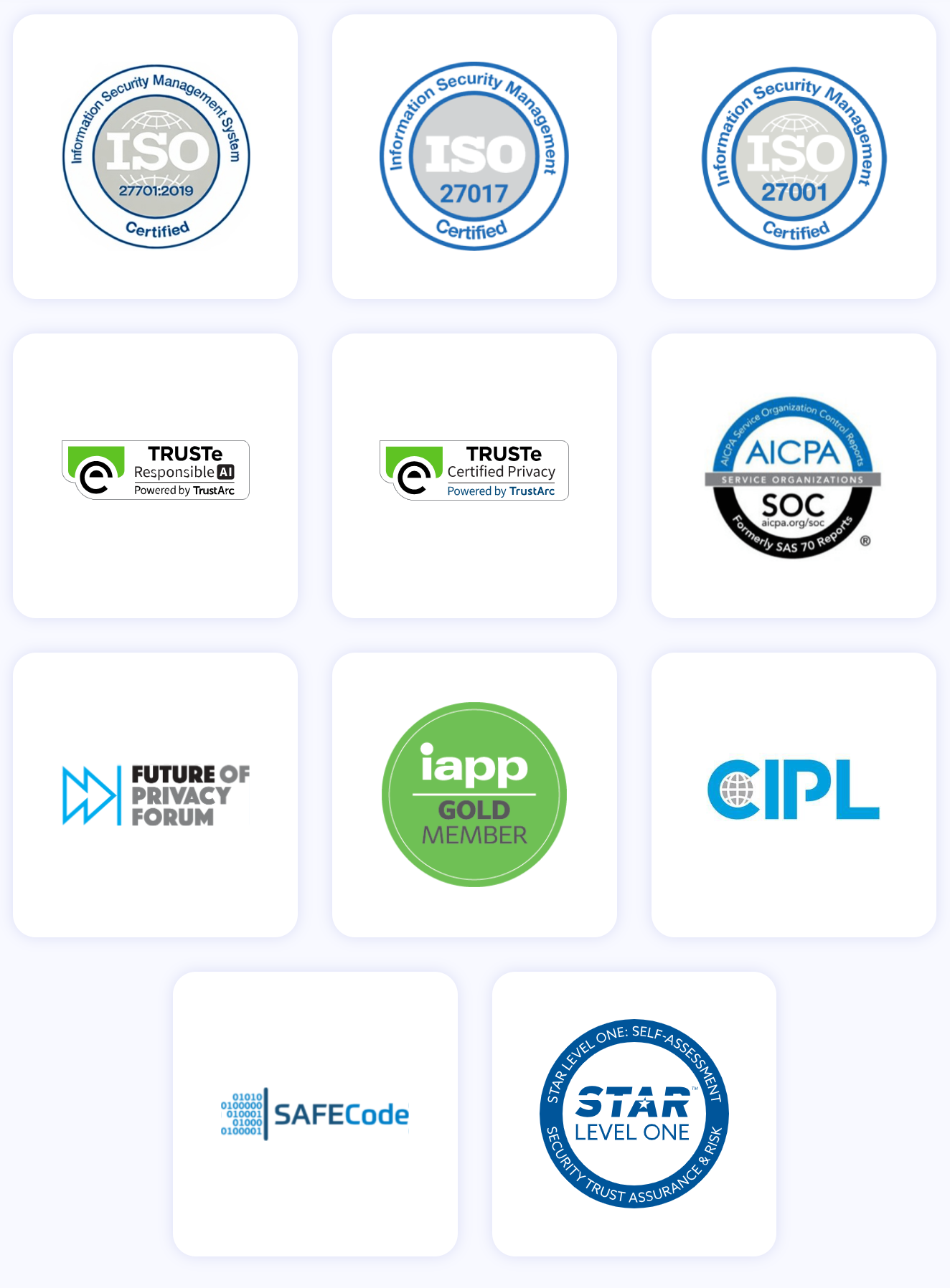
For healthcare organizations requiring HIPAA compliance, all three platforms qualify. For EU-based organizations, all three offer GDPR compliance and EU data residency options. ZoomInfo's ISO 27701 certification (Privacy Information Management System) adds a layer of privacy assurance the other two do not hold.
HappyFox vs. HubSpot vs. ZoomInfo: which should you choose?
The right combination depends on what your organization needs most.
Choose HappyFox if:
Multi-department ticketing (CS, IT, HR, Facilities) is your primary need
You want teams operational in hours, not weeks
Per-seat pricing from competitors is straining your budget
You value help desk depth over CRM breadth
Compliance requirements (HIPAA, SOC 2) are non-negotiable
You don't need native CRM, marketing, or sales tools
Choose HubSpot if:
You need customer service connected to sales, marketing, and CRM data
A unified customer record across all teams matters strategically
You want AI that understands the full customer journey, not just the ticket
You're willing to invest in a broader platform for long-term consolidation
Your organization already uses or plans to adopt other HubSpot Hubs
Add ZoomInfo if:
Your CRM data is incomplete and your team lacks visibility into who customers really are
You want every service interaction informed by verified B2B intelligence (company size, org chart, tech stack, intent signals)
Your go-to-market motion requires prospecting, pipeline generation, and account intelligence alongside support
You need enriched data flowing into HubSpot (native integration) or any other system (via API/MCP)
You want to detect churn risk and expansion opportunities from signals beyond what's in the ticket
Try ZoomInfo free and see how enriched B2B data strengthens your customer intelligence.
"It's not just the data itself. It's more about the right data at the right time to help us reach out with the right message across that full buyer journey." (Chelsea Kenyon, Senior Director of Digital Strategy, Redwood Logistics)
The most effective B2B service operations don't choose between ticket management and customer intelligence. They layer both. HappyFox or HubSpot handles the service workflow. ZoomInfo provides the data foundation that makes every workflow smarter. The ticket tells you what the customer needs right now. The intelligence layer tells you who they are, what they're worth, and what they're likely to need next.
That combination (service execution backed by verified B2B intelligence) is what separates teams that close tickets from teams that grow accounts.
HappyFox vs. HubSpot vs. ZoomInfo FAQ
What is the core difference between HappyFox, HubSpot Service Hub, and ZoomInfo?
HappyFox is a dedicated help desk and ITSM platform built for structured ticketing across customer service, IT, HR, and operations departments. HubSpot Service Hub is a customer service module within HubSpot's CRM platform, connecting support directly to sales, marketing, and customer data.
ZoomInfo is a B2B intelligence platform that enriches CRM records with verified contact data, company attributes, intent signals, and buying context. It complements either service tool rather than replacing them.
Which platform is cheapest for a 25-agent support team?
HappyFox costs less for pure help desk use. A 25-agent team on the Team plan costs approximately $975/month. The same team on HubSpot Service Hub Professional costs $2,250/month plus a $1,500 mandatory onboarding fee. HubSpot's free tier supports only two users with basic ticketing, while HappyFox has no free plan.
ZoomInfo is priced separately as an intelligence layer with consumption-based pricing, plus a permanent free tier (ZoomInfo Lite) with 10 monthly export credits.
Can HappyFox and HubSpot integrate with each other?
Yes. HappyFox lists HubSpot as a native CRM integration in its catalog. Ticket data from HappyFox can sync with HubSpot's CRM, giving organizations the option to use HappyFox as a dedicated help desk while keeping HubSpot as the CRM and marketing platform. ZoomInfo also integrates natively with HubSpot, so enriched account data flows into the same CRM that HappyFox connects to.
Which platform has better AI for customer service?
It depends on scope. HappyFox's AI is deeper within the ticket: Autopilot's pre-built agents handle triage, duplicate detection, churn risk flagging, and custom field population at $0.02 per completed task. HubSpot's Breeze Customer Agent is broader across the customer journey: it resolves inquiries across multiple channels, draws on CRM context, and covers marketing and sales inquiries alongside support.
HappyFox's AI is cheaper and faster to deploy. HubSpot's AI has more customer context to work with.
How does ZoomInfo improve customer service if it's not a help desk?
ZoomInfo enriches the customer records that flow into your CRM and service tools. When a support ticket arrives, your agent sees verified account intelligence (company size, decision-maker hierarchy, technology stack, recent funding, and intent signals) instead of just the ticket text and a name. This context helps agents prioritize, personalize responses, and identify expansion or churn risk.
ZoomInfo's GTM Context Graph processes 1.5B+ data points daily, connecting CRM data with third-party signals to reveal patterns that pure ticketing systems cannot detect.
Which platform offers unlimited-agent pricing?
HappyFox is the only platform among the three with a true unlimited-agent pricing model. Its flat-fee plans (starting at $1,599/month for 20,000 annual tickets) allow any number of agents to use the platform without per-seat charges. HubSpot charges per seat across all paid tiers. ZoomInfo uses a consumption-based model tied to data credits and API usage rather than agent seats.
Which platform is best for regulated industries like healthcare?
All three hold certifications relevant to regulated industries. HappyFox and HubSpot both carry SOC 2 Type II and HIPAA certifications. ZoomInfo holds SOC 2 Type II, ISO 27001, and ISO 27701 certifications. HappyFox and HubSpot both offer EU data centers for GDPR compliance.
For healthcare organizations specifically, HappyFox's customer stories include North Country Healthcare and other healthcare providers, while HubSpot's broader platform supports HIPAA-applicable use cases across marketing, sales, and service.
Do I need all three platforms, or should I choose one?
For most B2B organizations, the practical choice is a service platform (HappyFox or HubSpot) plus ZoomInfo for intelligence. Choose HappyFox if you need a focused, affordable help desk. Choose HubSpot if you want service connected to CRM, sales, and marketing. Then add ZoomInfo to enrich the customer data that powers either platform.
ZoomInfo's native HubSpot integration makes the HubSpot-plus-ZoomInfo combination particularly effective, but ZoomInfo's API and MCP server can feed intelligence into any system.
More HubSpot comparisons:
