

Choosing between Highspot and SalesHood for revenue enablement comes down to five questions:
Do you need a platform built for large-enterprise scale with extensive customization, or one designed for fast deployment and practitioner-led programs?
Is your priority content governance across a global sales force, or coaching and training with measurable revenue impact?
Are you willing to invest months in implementation, or do you need results in weeks?
Do you need AI that acts across deal execution and content management, or AI focused on coaching reps and improving pitch delivery?
How important is it that your enablement platform connects to the B2B intelligence and buyer signals that drive your pipeline?
In short, here's what we recommend:
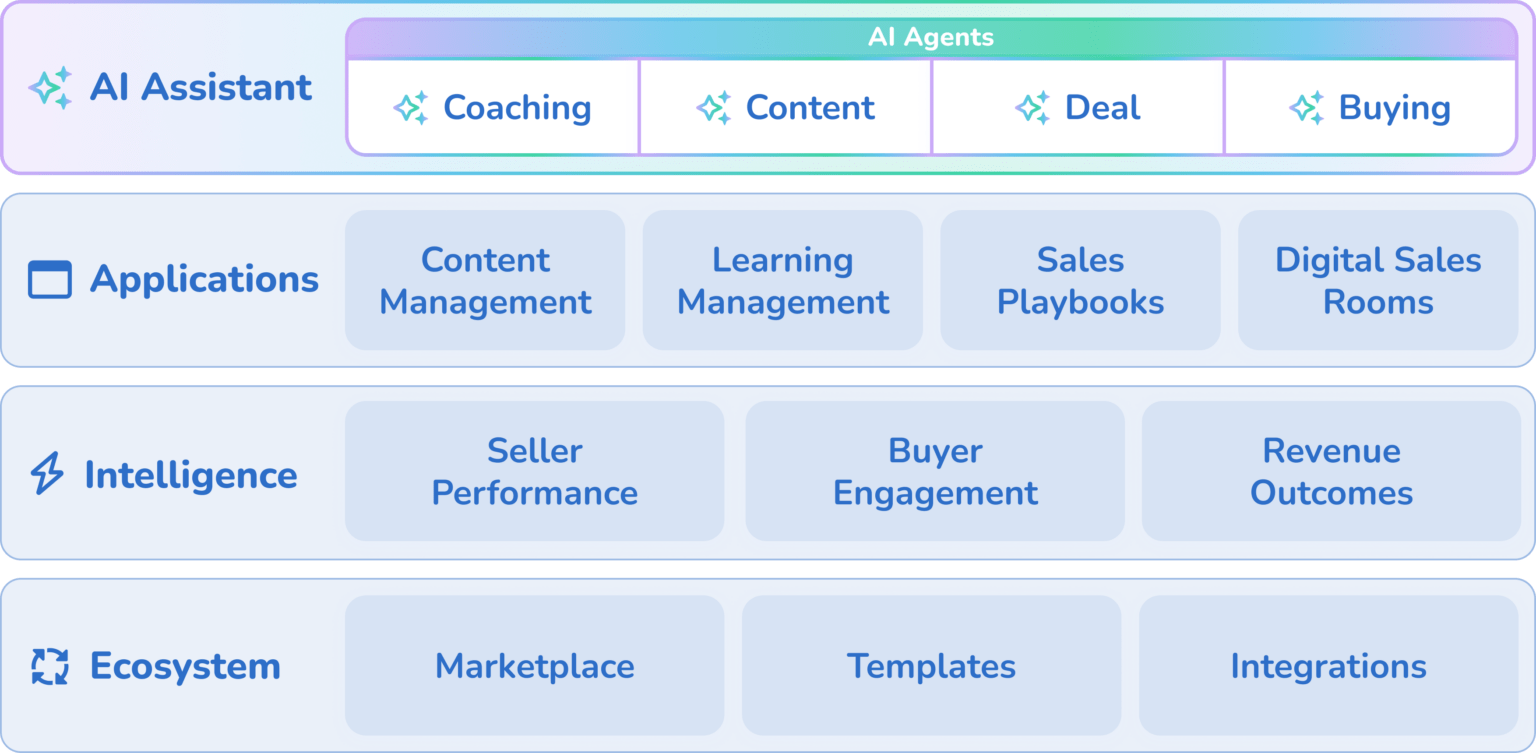
Highspot is the enterprise enablement platform for large GTM organizations that need content management, training, coaching, and buyer engagement in a single system.
Its Nexus AI engine drives deal intelligence, content governance, and adaptive learning, while Digital Sales Rooms and conversation intelligence give sellers and buyers a shared space to collaborate.
The trade-offs: custom pricing, longer implementation timelines, and limited customization options that can slow down mid-market teams.
SalesHood is the practitioner-built enablement platform for growing B2B companies that need coaching, training, and deal execution to produce measurable pipeline results quickly.
Founded by Salesforce's former SVP of Sales Productivity, SalesHood embeds AI coaching directly into the enablement workflow, with transparent pricing starting at $45/user/month and built-in templates that shorten time-to-value.
The trade-off: a mid-market orientation that may lack the content governance and analytics customization large enterprises require.
Both platforms solve a real problem: getting the right content, training, and coaching to sellers at the right moment. But even the best-equipped rep can't close a deal they never should have been working. Enablement platforms make sellers better at engaging buyers. They don't tell sellers which buyers to engage, when those buyers are in-market, or why a specific account is ready to move.
ZoomInfo is an AI-powered GTM platform that provides the intelligence layer both Highspot and SalesHood need upstream.
Built on a B2B dataset of 500M contacts, 100M companies, 135M+ verified phone numbers, and 200M+ verified business emails, ZoomInfo's GTM Context Graph (a layer that combines this data with your CRM records, conversation transcripts, and behavioral signals) reveals not just what's happening in your deals, but why.
Your reps walk into every conversation knowing which accounts are in-market, who the decision-makers are, and what signals indicate the deal is ready to advance.
That intelligence flows through GTM Workspace for sellers, GTM Studio for marketers and RevOps, or APIs and MCP into any tool in your stack, including your enablement platform.
If connecting your enablement investment to buyer intelligence sounds like the missing piece, see how ZoomInfo works.
Highspot vs. SalesHood at a glance
Highspot | SalesHood | ZoomInfo | |
|---|---|---|---|
Primary focus | Enterprise revenue enablement | Practitioner-led revenue enablement | B2B data and GTM intelligence |
AI capabilities | AI across content, coaching, and deal execution | AI coaching agents, role play, and pitch practice | GTM Context Graph with AI-powered account and deal intelligence |
Content management | AI-powered search, governance, and AutoDocs | AI search, content audit, and guided selling | N/A (feeds intelligence into enablement platforms) |
Sales training | Adaptive learning with AI role play | Huddle-based learning with AI role play | N/A |
Digital Sales Rooms | Branded microsites with mutual action plans | Client Sites with embedded MAPs | N/A |
Analytics | Scorecards across content, training, and deals | Impact Insights with Salesforce Correlation Engine | GTM analytics across pipeline, intent, and engagement |
Pricing | Custom quote (not published) | $45–$85/user/month (published) | Custom quote (consumption-based) |
Implementation | Months | Days to weeks | Weeks |
Best for | Large enterprises with complex GTM motions | Growing mid-market B2B companies | Any B2B team needing buyer intelligence and signals |
Highspot goes deep on enterprise enablement, SalesHood goes fast on coaching impact
Both platforms claim the "unified enablement" label, but they built for different organizations.
Highspot was designed for large enterprises with hundreds or thousands of sellers spread across regions, segments, and product lines. Its architecture connects content management, training, coaching, buyer engagement, and analytics in one system.
SalesHood was built by a practitioner who ran enablement at Salesforce during its growth from $300M to $3B in revenue.
That origin shows in the product: structured training through "Huddles" (a module library covering elevator pitches, objection handling, deal reviews, and more), AI coaching in every workflow, and pre-built templates that let teams launch programs immediately.
Source: SalesHood
The practical difference: Highspot gives you more depth and configurability for complex, multi-layered enablement programs. SalesHood gives you faster time-to-value with a system designed around coaching and training that directly changes seller behavior.
Content management: governance at scale vs. content in the flow of work
Content management is where Highspot's enterprise focus shows most clearly.
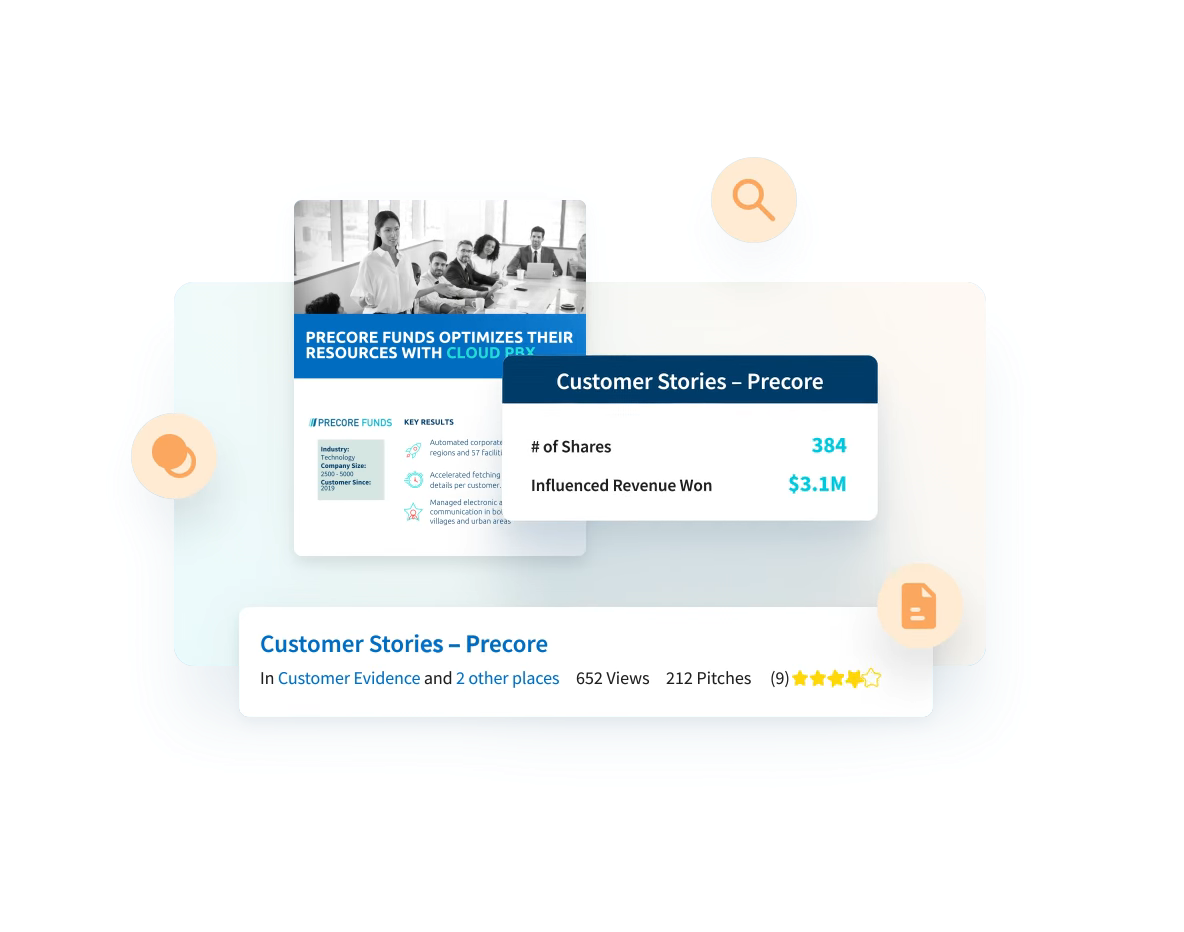
Highspot's Sales Content Management replaces keyword search with AI that understands context, deal stage, persona, and geography. It syncs with SharePoint, Google Drive, Box, and Dropbox, automatically importing and indexing assets.
Source: Highspot
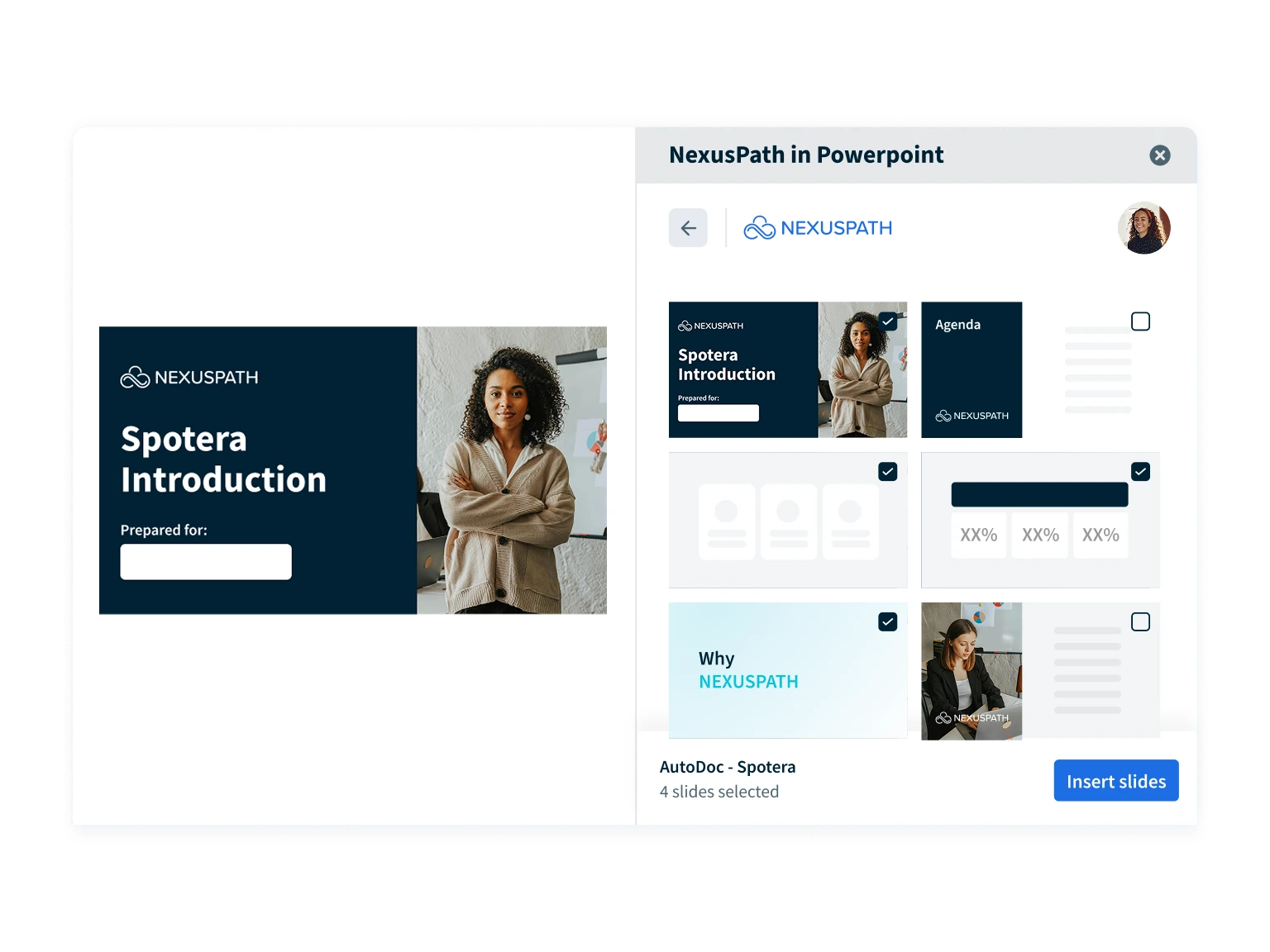
AutoDocs generates proposals and presentations from CRM data without breaking brand guidelines.
Source: Highspot
AI agents handle governance by monitoring usage, enforcing publishing rules, archiving outdated assets, and applying compliance labels.
For enterprises managing thousands of assets across regulated industries, this automated governance matters.
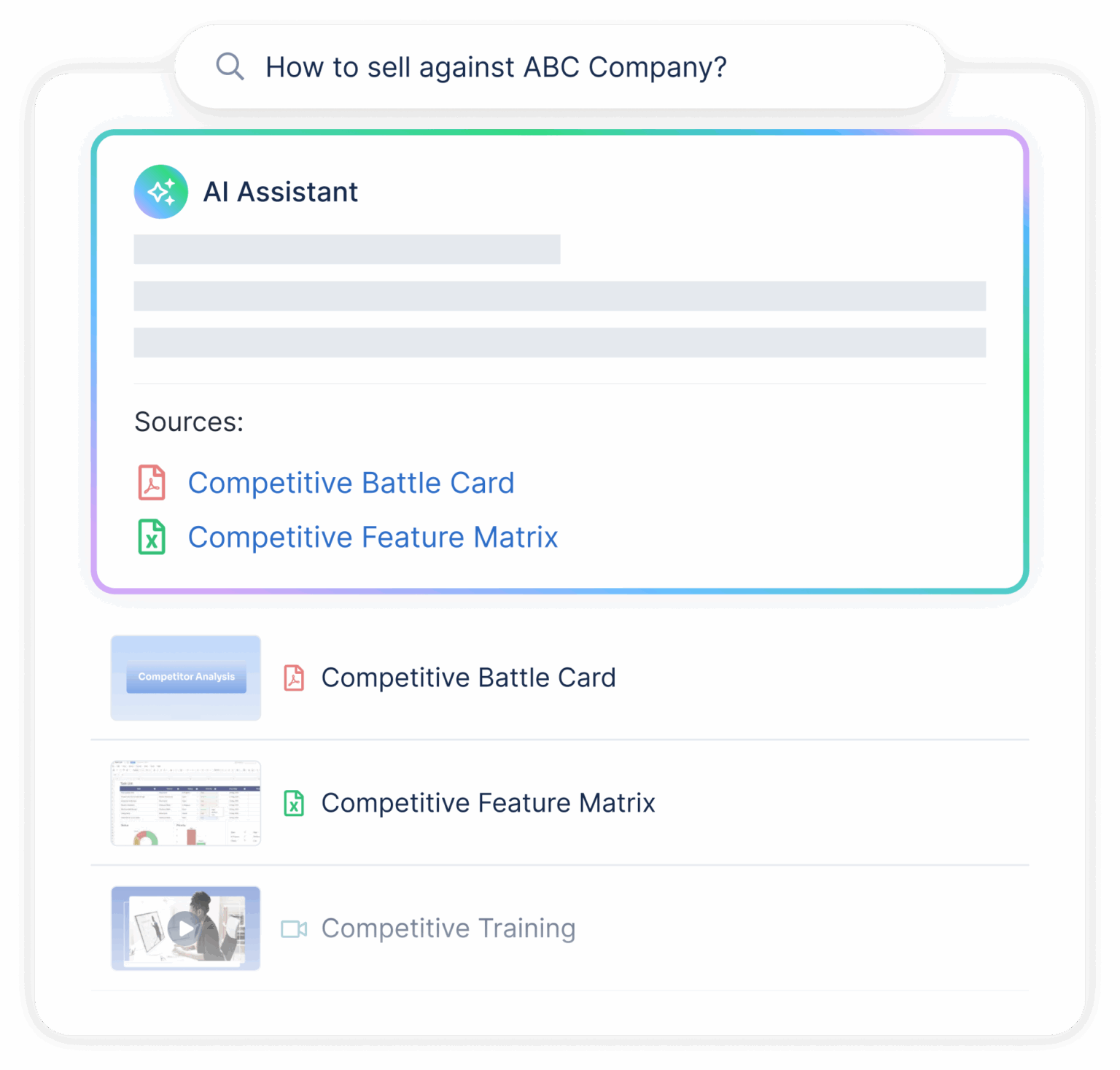
SalesHood's Content Management takes a different approach: get the right content to the seller when they need it, without requiring a dedicated content operations team. Its AI-powered search uses RAG (Retrieval-Augmented Generation) to deliver synthesized answers rather than file lists.
Source: SalesHood
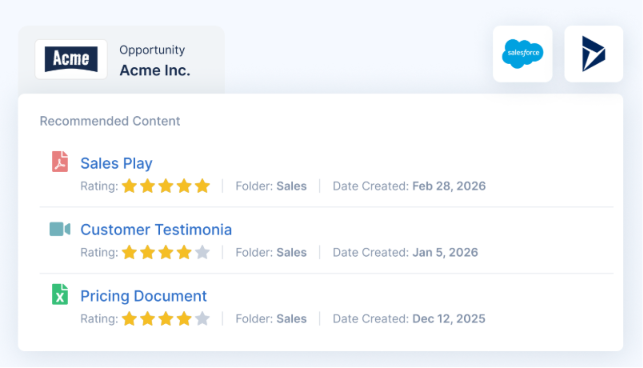
CRM Content Recommendations surface relevant assets inside Salesforce, Microsoft, and Gmail based on deal context.
Source: SalesHood
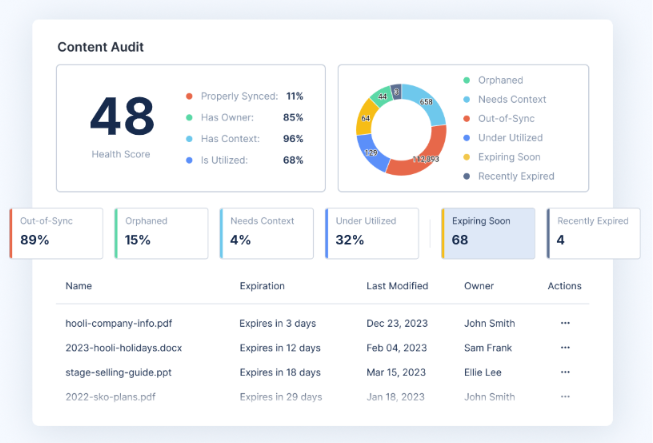
An AI Content Audit tool scans the library for accuracy and discoverability issues. It's less about governing a content operation and more about ensuring sellers have what they need at hand.
Source: SalesHood
For organizations with dedicated content operations teams and compliance requirements, Highspot provides the controls. For teams where the enablement leader is also the content manager, SalesHood keeps things manageable.
Training and coaching: adaptive learning vs. structured huddles
Both platforms recognize that one-time training events don't change behavior. Their approaches reflect their different philosophies.
Highspot's Adaptive Learning system tailors each learning experience to a rep's role, skill level, and gaps. Reps who've mastered a topic can test out; those who need reinforcement get it automatically.
AI Role Play simulates selling scenarios mapped to the organization's skill framework, with instant AI feedback on delivery.

Source: Highspot
The coaching layer adds 360-degree assessments that blend insights from meetings, buyer feedback, and training into a single view of each rep's development.
SalesHood's training is built around the "Huddle": a structured session assembled from 11 module types that mirror real selling activities. Elevator Pitch modules test messaging.
Objection Handling modules build skill under pressure. Deal Reviews and Loss Reviews extract lessons from real opportunities.
Learning Paths sequence these Huddles into role-based curricula, and AI Coaching Agents provide real-time feedback between manager check-ins.
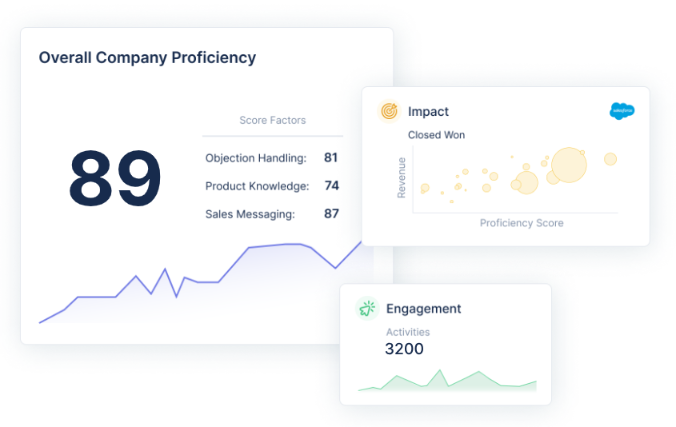
Source: SalesHood
Highspot's approach is more layered: adaptive paths, competency frameworks, and multi-input assessments create a data-rich coaching system. SalesHood's approach is more prescriptive: structured exercises tied to selling motions, with AI reinforcement built into the daily workflow.
Digital Sales Rooms: two takes on buyer collaboration
Both Highspot and SalesHood offer Digital Sales Rooms for buyer-seller collaboration, and both embed Mutual Action Plans directly into those rooms.
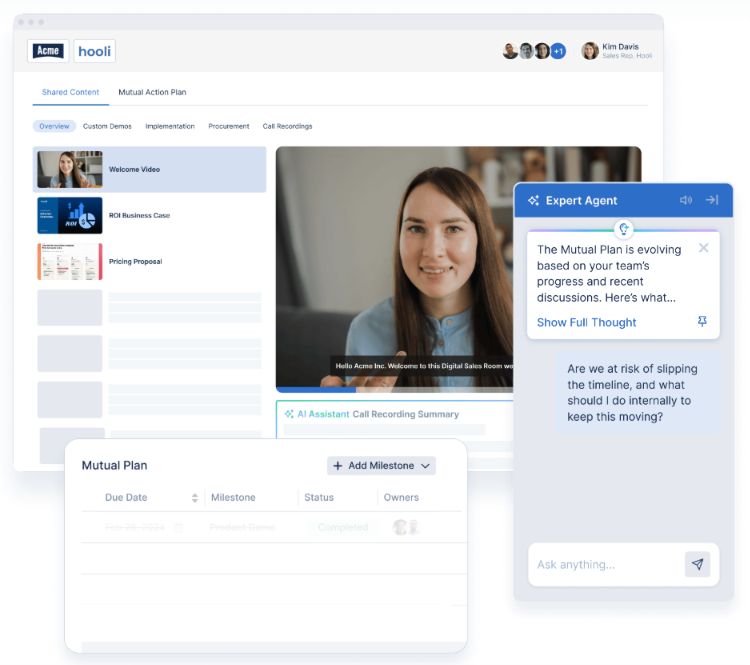
Highspot's Digital Sales Rooms are secure, branded microsites built from marketing-approved templates. Sellers curate content, embed mutual action plans, and track buyer engagement in real time.
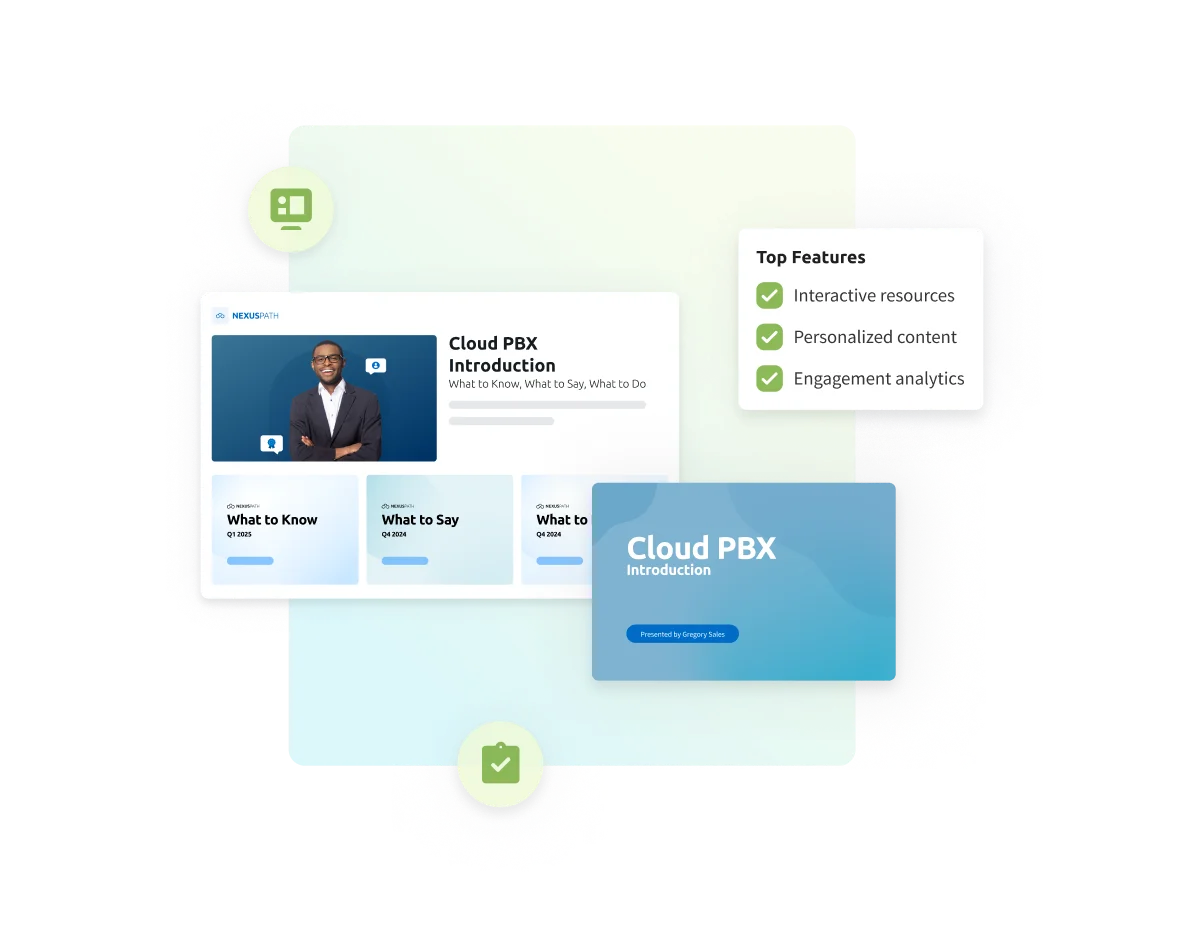
Source: Highspot
The platform connects rooms to Slack, Teams, and calendars for asynchronous collaboration. Personalized rooms drive viewing times up to 7x longer than generic pages.
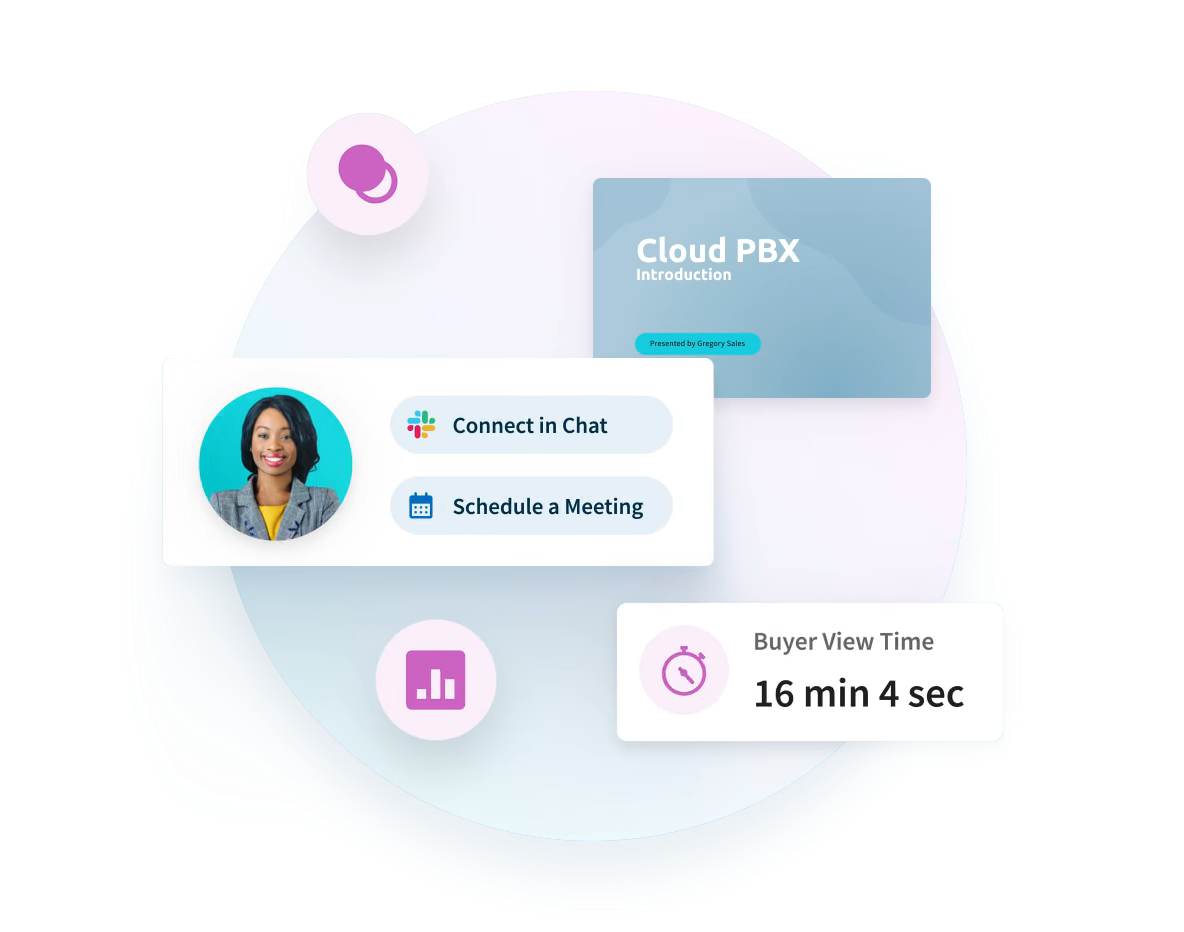
Source: Highspot
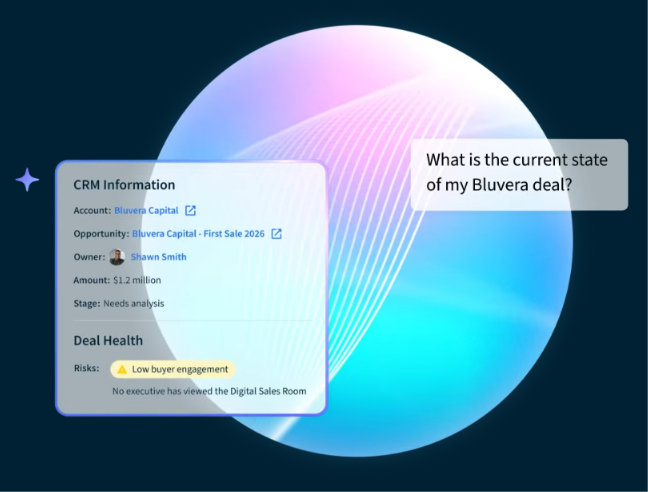
The 2026 Deal Agent analyzes CRM data, buyer engagement, and meeting insights to recommend next steps for every opportunity within the room.
SalesHood's Digital Sales Rooms (called "Client Sites") follow a similar model: personalized, branded microsites where sellers share content, embed call recordings, and track buyer interactions.
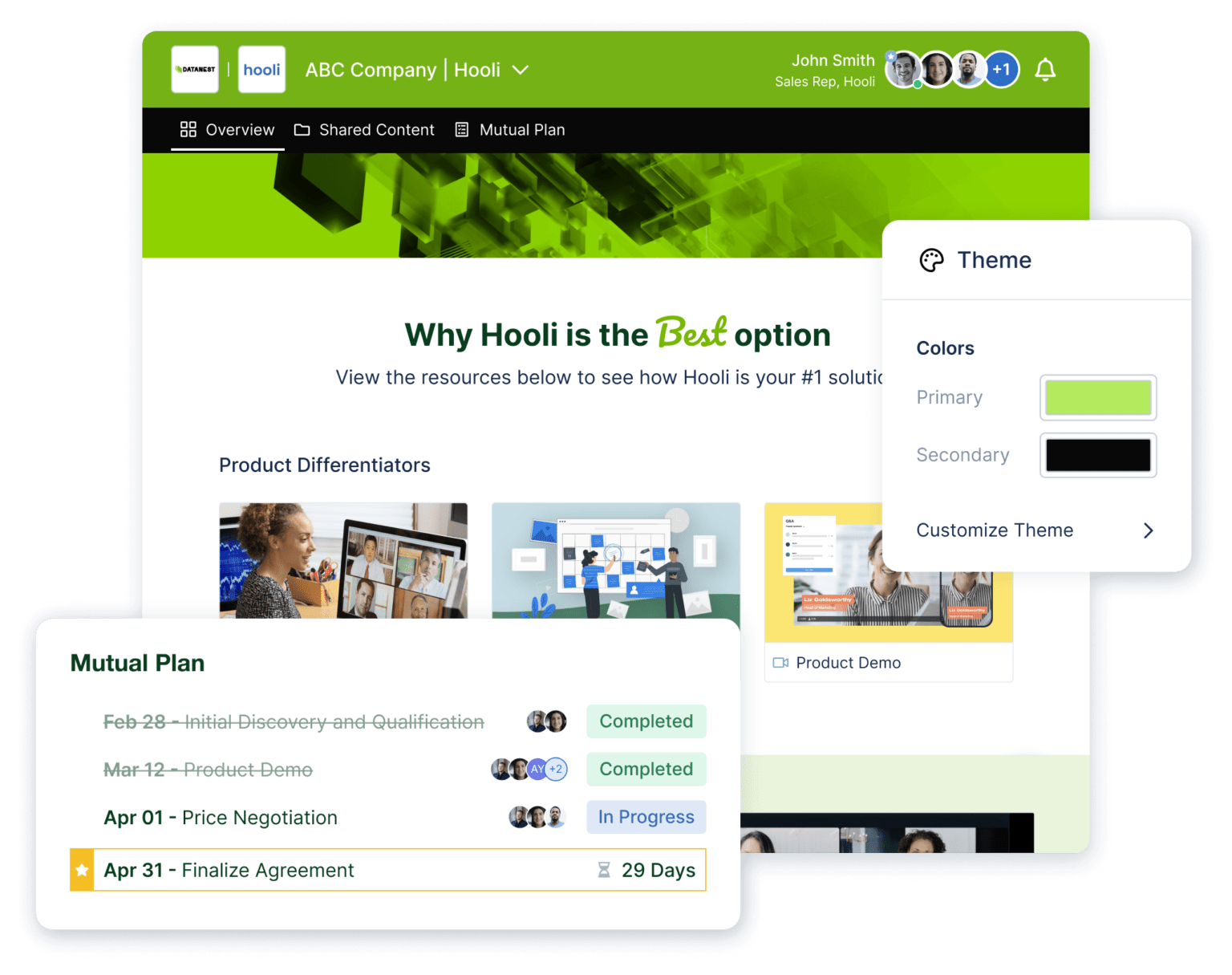
Source: SalesHood
Mutual Action Plans are a native feature, with a library of templates covering new business, expansions, renewals, and onboarding. SalesHood treats buyer willingness to co-create a MAP as a deal qualification signal.
Both implementations are strong. Highspot's advantage is the Deal Agent, which coaches sellers on next steps within the room. SalesHood's advantage is using buyer engagement data as a qualification tool that helps reps disqualify weak deals earlier.
Analytics: unified scorecards vs. revenue attribution
Measuring enablement impact is where both platforms compete to answer the question every enablement leader faces: did this training and content move revenue?
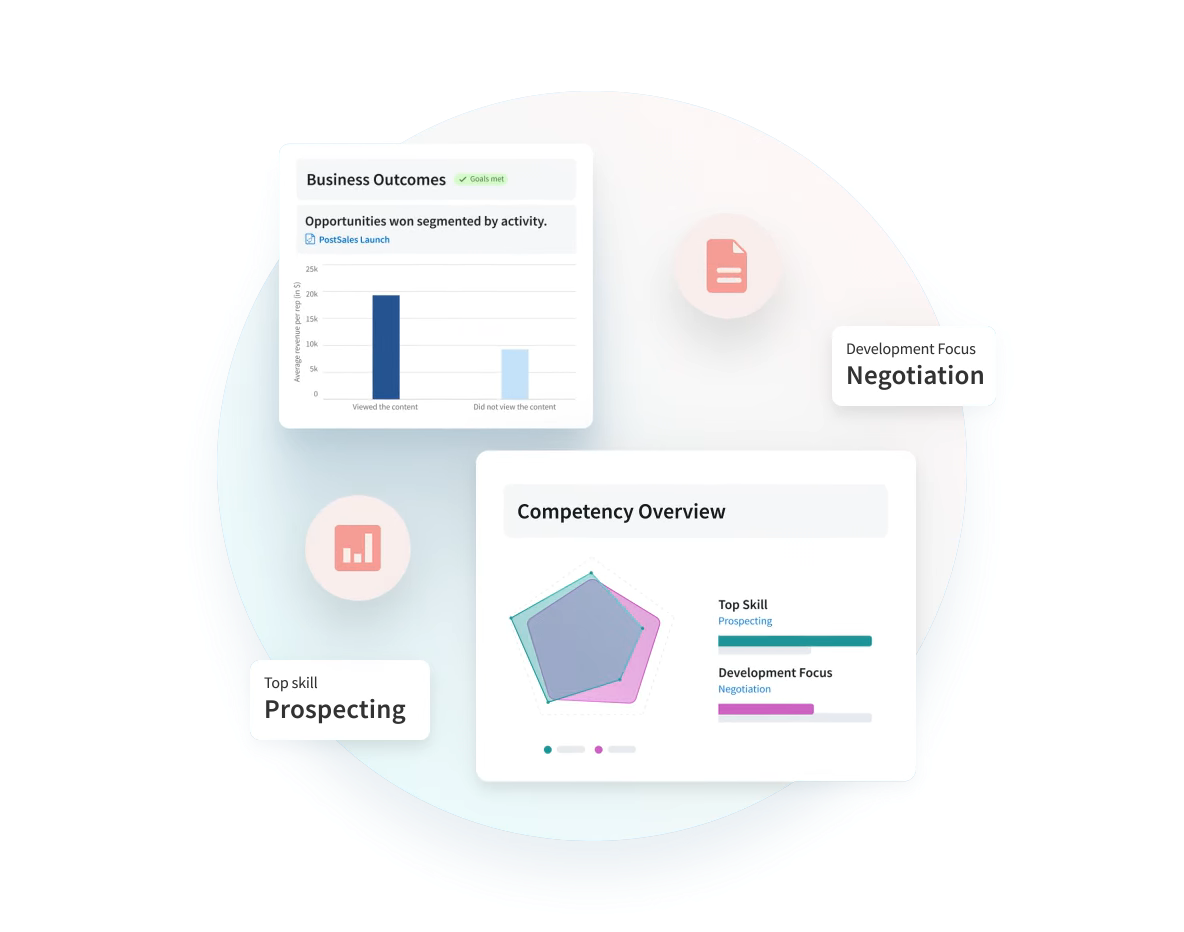
Highspot's Analytics platform uses its Nexus engine to connect data across content, training, coaching, and engagement.
Source: Highspot
Scorecards operate at the team, rep, initiative, play, and content levels, tracking leading indicators (training completion, content usage, play adoption) and lagging indicators (win rate, pipeline, revenue).
Enterprise customers get Insights Layer APIs and Data Lake access for custom integrations.
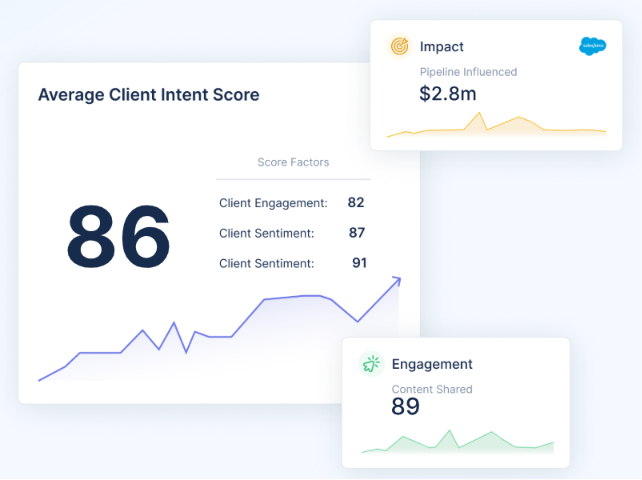
SalesHood's Impact Insights takes a more focused approach: connect enablement activity to pipeline and revenue without requiring BI expertise.
Dynamic leaderboards and heat maps rank performance and surface coaching priorities. Content Insights report which assets drive buyer engagement and pipeline conversions.
Source: SalesHood
The Salesforce Correlation Engine (included on the Unlimited tier, available by request on Pro) maps SalesHood engagement data to Salesforce opportunities for revenue attribution. SalesHood designs its analytics to be usable without BI expertise.
Highspot's analytics are broader and go deeper. SalesHood's analytics are more accessible and tied directly to the question enablement leaders hear most: "Show me the revenue impact."
Where enablement platforms stop and intelligence begins
Both Highspot and SalesHood make sellers better at engaging buyers. Neither platform tells sellers which buyers to engage, or why a specific account is ready to move right now.
This is the gap ZoomInfo fills.
Highspot can surface the right content for a deal stage. SalesHood can coach a rep on discovery call technique.
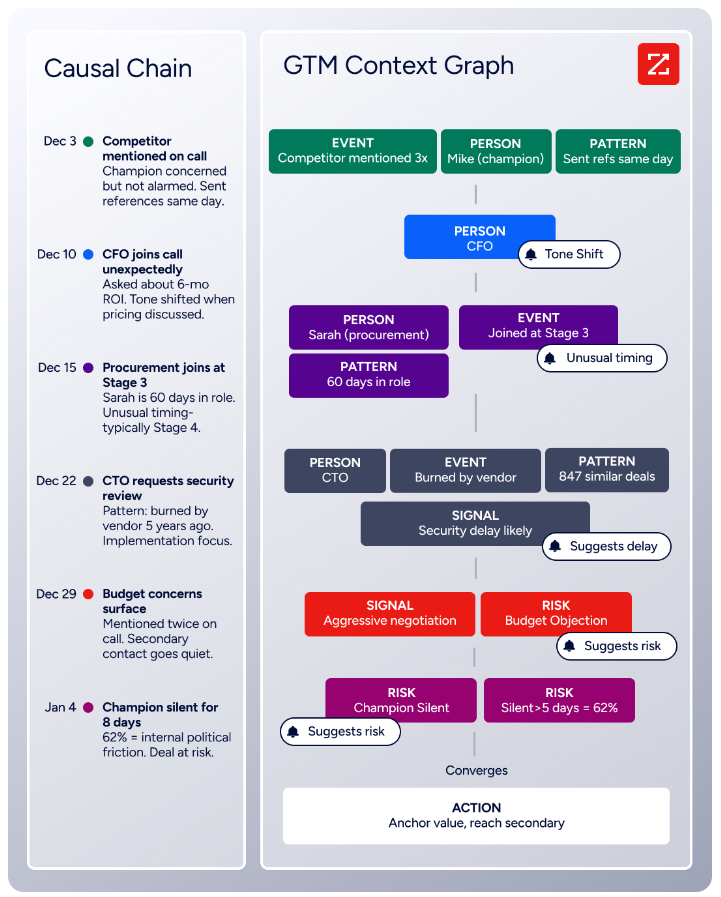
But neither platform knows that the CFO at a target account just joined the buying committee, that the company is researching your competitor's pricing, or that three new VPs were hired in the last quarter (all signals that the account is actively in-market).
ZoomInfo's GTM Context Graph captures these signals by combining the largest B2B dataset with your CRM records, conversation transcripts, and behavioral signals. It processes 1.5B+ data points daily, extracting not just what happened in a deal but why, and which actions capitalize on that momentum.
Source: ZoomInfo
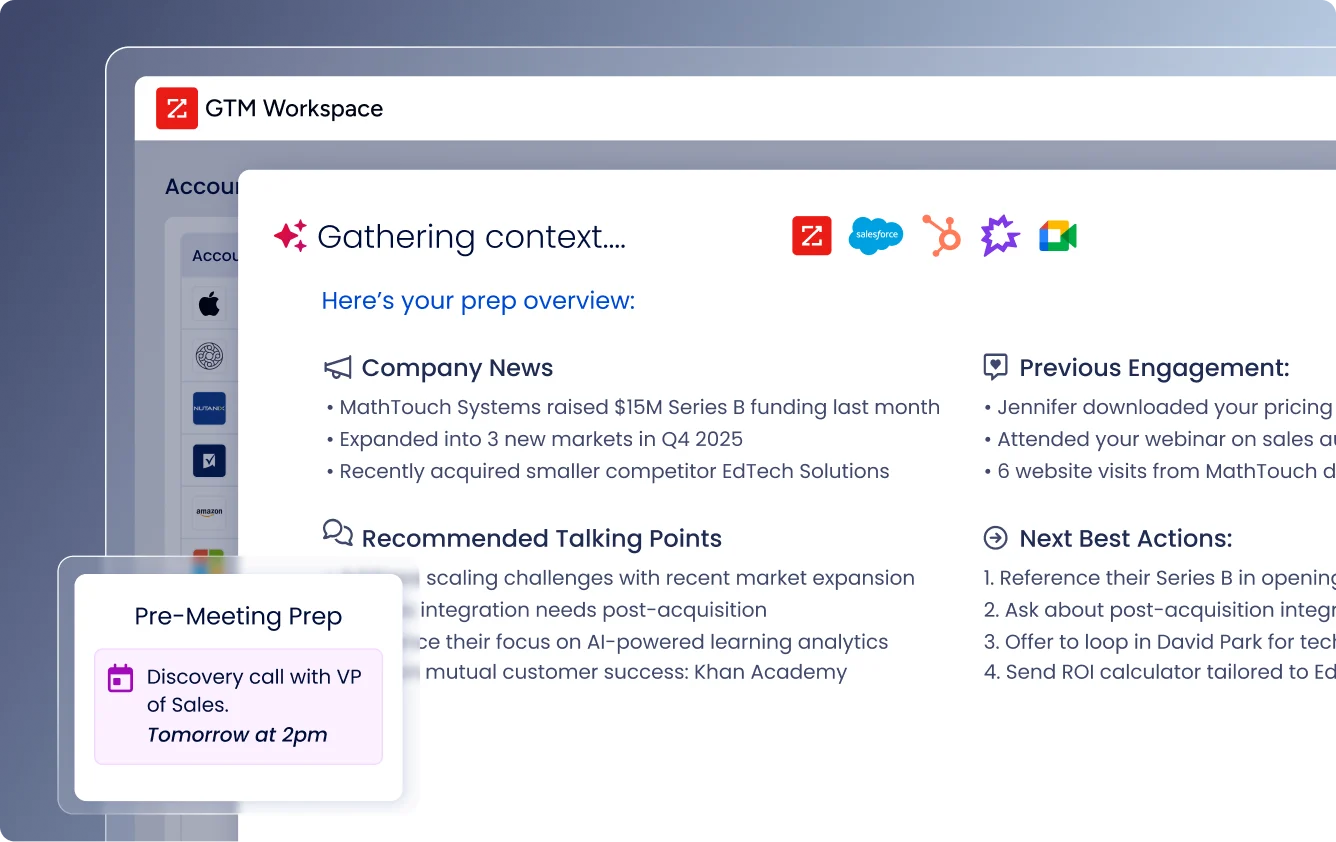
For sellers, this means walking into every conversation with context: who the decision-makers are (from 500M contacts with verified direct dials and emails), what technologies the company uses, what topics they're researching, and how their buying behavior compares to your closed-won patterns.
That intelligence flows through GTM Workspace, where AI agents draft outreach, monitor signals, and surface next steps, or through APIs and MCP into your enablement platform, CRM, or any other tool.
Source: ZoomInfo
Seismic's sales team attributed 39% of active pipeline to opportunities identified or influenced by ZoomInfo signals, boosted productivity by 54%, and saved 11.5 hours per week. (Seismic case study)
The strongest GTM stack pairs enablement with intelligence. Your enablement platform makes every conversation count. ZoomInfo makes sure your reps are having the right conversations.
Pricing and implementation: transparency vs. custom quotes
Pricing philosophy reveals who each platform was built for.
SalesHood publishes its pricing openly. Three tiers: Essential at $45/user/month, Pro at $65/user/month, and Unlimited at $85/user/month. Feature gating is clear: Digital Sales Rooms and Mutual Action Plans require Pro.
AI coaching submissions are capped at 10 per license on Essential and 80 on Pro; only Unlimited removes the cap. MEDDICC is a paid add-on across all tiers. Language support scales from 2 languages on Essential to 18 on Unlimited.
The transparency makes budgeting straightforward, though add-ons and tier upgrades can push costs above the headline number.
Highspot does not publish pricing. The company uses a custom, quote-based model tied to team size, capabilities, and licenses. Three tiers ("Equip and Engage," "Train and Practice," "Coach and Reinforce") expand in functionality, but no dollar amounts are attached.
Enterprise capabilities like advanced content management, document autogeneration, and 24/7 support are add-ons.
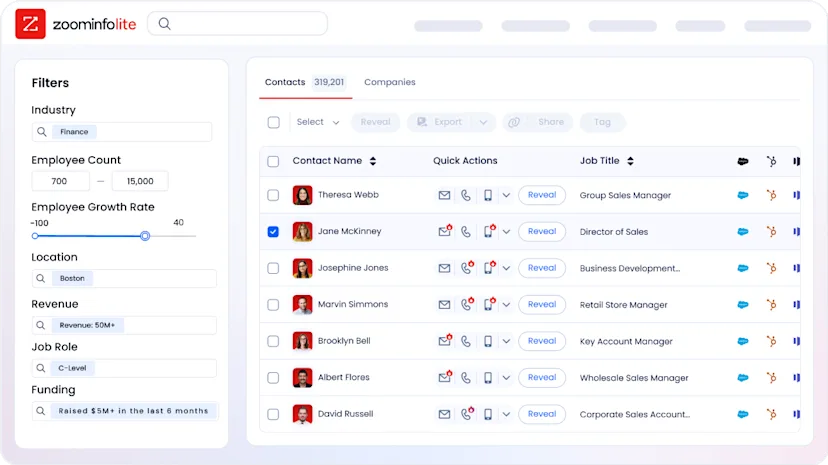
ZoomInfo also uses custom, consumption-based pricing with no published prices. However, it offers a permanent free tier (ZoomInfo Lite) with access to the B2B database and 10 monthly export credits, plus a 7-day free trial of the full platform.
Source: ZoomInfo
On implementation speed, the gap is significant. SalesHood says customers can see results in days to weeks, with pre-built templates and quickstart frameworks across all tiers.
Highspot's enterprise implementations involve a dedicated team (Implementation Manager, Customer Success Manager, Support Team, and Account Manager), with over 1,000 implementations across 150+ countries. ZoomInfo's GTM Workspace "deploys in weeks, not months".
Integrations and security
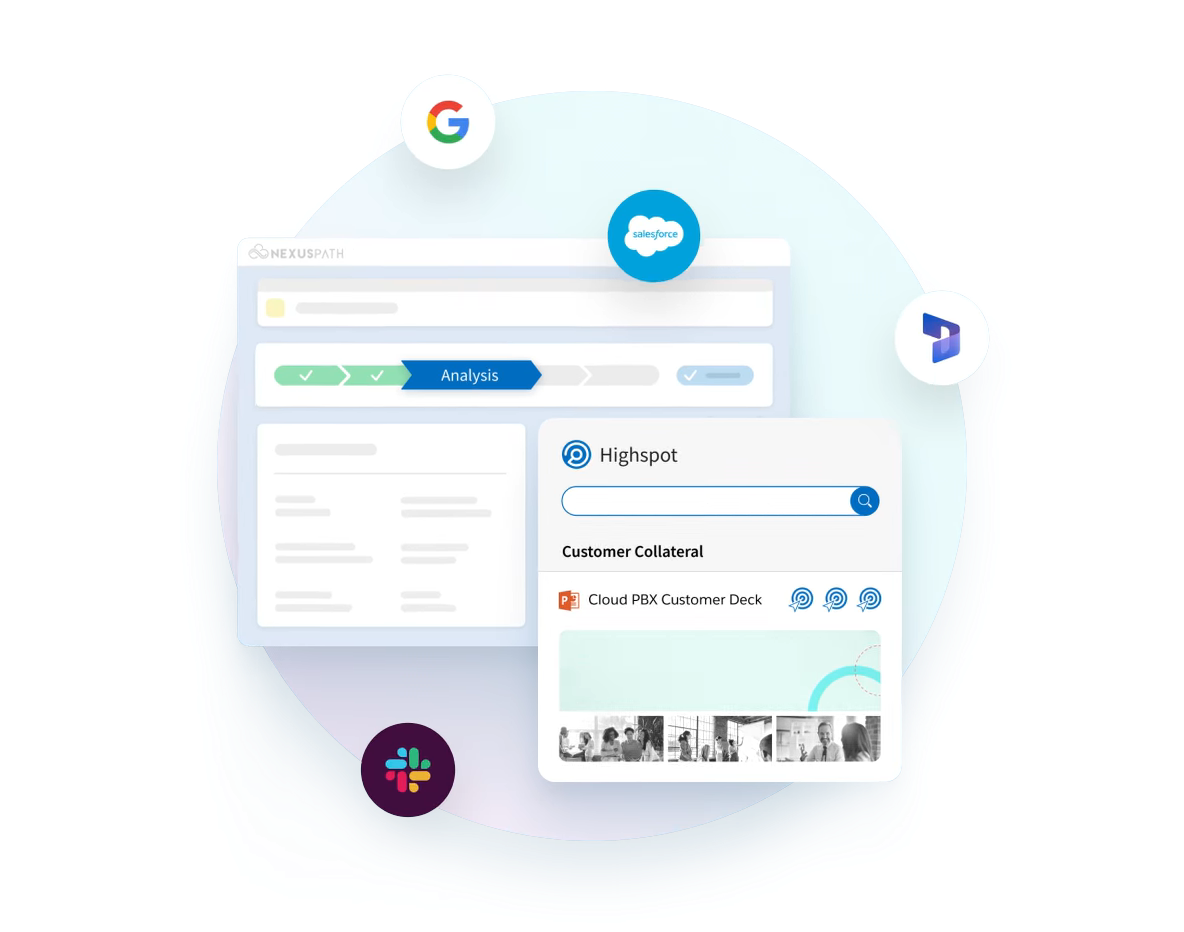
Highspot offers 100+ integrations across CRM, collaboration, content management, sales engagement, and revenue intelligence. Native integrations with Salesforce, Microsoft Dynamics, Slack, and Teams are included at no extra cost.
Source: Highspot
The enterprise tier adds MCP Server, Insights Layer APIs, and Data Lake access. Highspot holds SOC 2 Type 2, ISO 27001:2022, and ISO 27701:2019 certifications, with encrypted AI inference and support for customer-controlled encryption keys.
SalesHood integrates natively with Salesforce, HubSpot, Box, Google Drive, Dropbox, and Microsoft SharePoint. CRM content recommendations push assets into Salesforce, Microsoft, and Gmail. Custom SAML SSO requires Pro or above.
SalesHood holds SOC 2 and ISO 27001 certifications and is EU-US Data Privacy Framework certified. Public API documentation is not available on the official site, which may limit custom integrations.
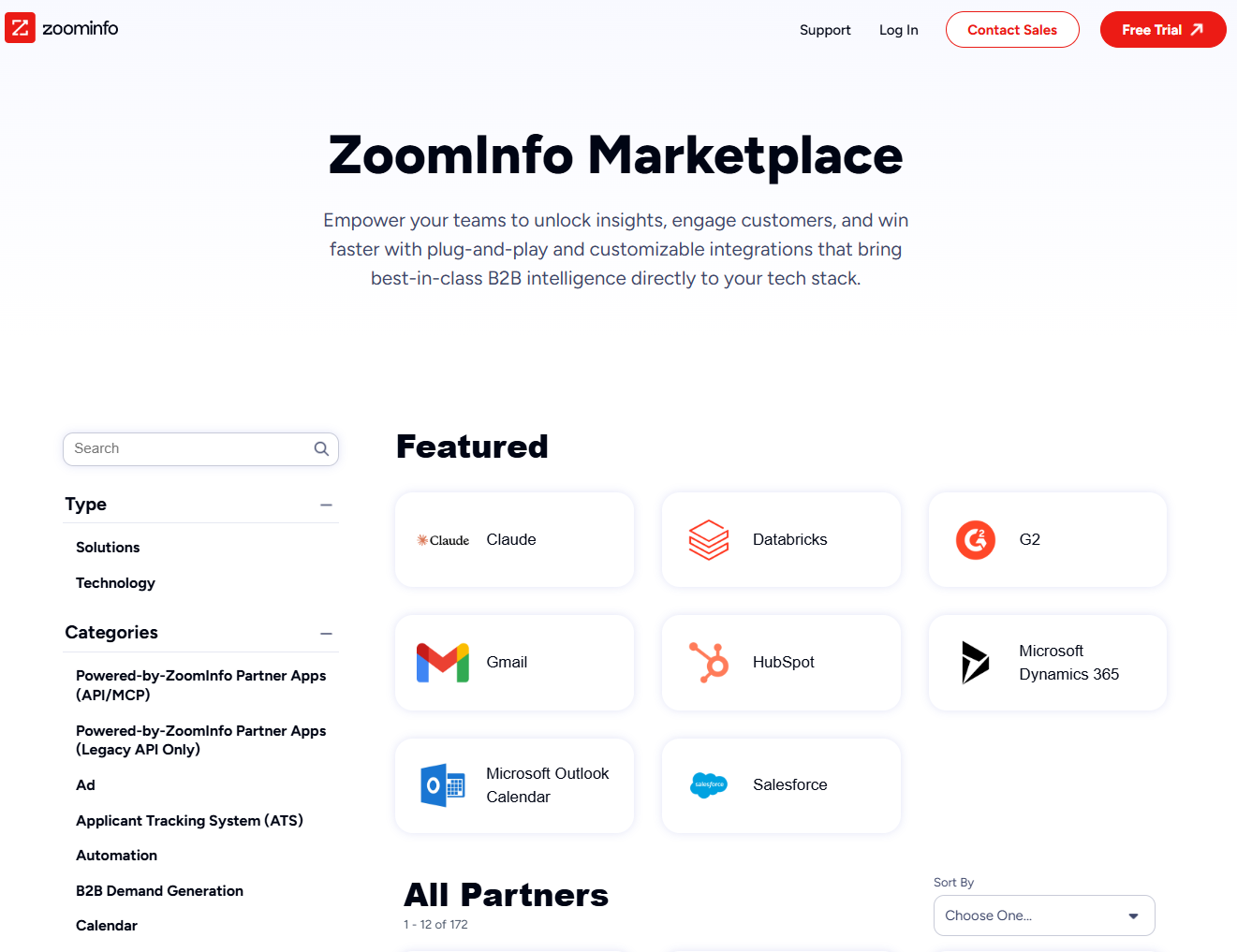
ZoomInfo maintains the broadest integration ecosystem, with 120+ partner integrations plus the Enterprise API and MCP server for programmatic access.
Source: ZoomInfo
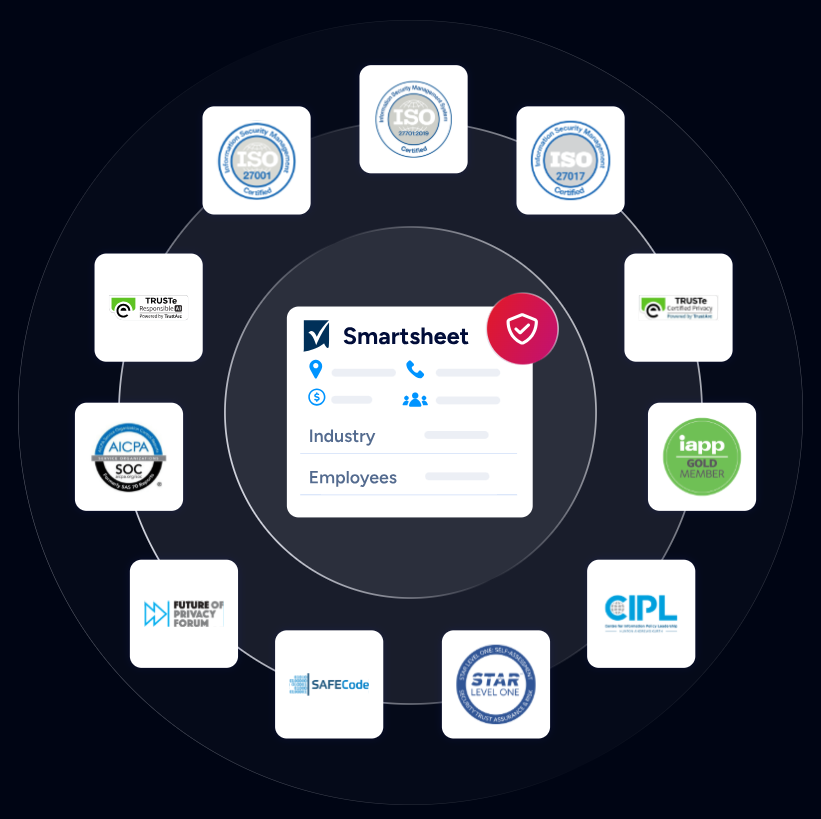
Security certifications include ISO 27001, ISO 27701, SOC 2 Type II, TRUSTe GDPR, and TRUSTe CCPA, all renewed annually.
Source: ZoomInfo
"ZoomInfo is our single source of truth for account data, and even more so for contact data. No other provider gives you that level of detail." — Thor Sanderson, Senior Manager of Sales Technology Enablement, Smartsheet (Smartsheet case study)
Highspot vs. SalesHood vs. ZoomInfo: Which should you choose?
These three platforms serve different roles in the GTM stack. Your choice depends on where your biggest gap is today.
Choose Highspot if:
You're a large enterprise with complex, multi-region enablement needs
Content governance and compliance across thousands of assets is critical
You need adaptive learning, conversation intelligence, and deal coaching in one system
You have the implementation resources and budget for an enterprise deployment
Your organization values broad analytics with API and data lake access
Choose SalesHood if:
You're a growing mid-market B2B company that needs fast time-to-value
Coaching and training that directly improve win rates is your top priority
You want transparent, published pricing with no surprises
Your enablement team is small and needs pre-built templates to launch quickly
You value usability and rep adoption over configurability
Choose ZoomInfo if:
Your reps need better intelligence on which accounts to pursue and when
You want AI that tells sellers who the decision-makers are, what they're researching, and why they're ready to buy
You need a data and signals layer that feeds your enablement platform, CRM, and every other GTM tool
You're building an AI-powered GTM stack and need data access via APIs and MCP
You want to connect buyer intent and engagement signals to your content and coaching investments
Start with ZoomInfo Lite for free or explore the full platform with a free trial.
The strongest GTM organizations don't choose between enablement and intelligence. They pair them. Highspot or SalesHood ensures your sellers know what to say, how to say it, and which content to share. ZoomInfo ensures they're saying it to the right people, at the right time, with full context on why that account is ready to move. Enablement without intelligence is preparation without direction. Intelligence without enablement is insight without execution. Together, they're a GTM engine.
Highspot vs. SalesHood vs. ZoomInfo FAQ
What is the core difference between Highspot, SalesHood, and ZoomInfo?
Highspot is an enterprise revenue enablement platform that unifies content management, training, coaching, and buyer engagement in one system.
SalesHood is a practitioner-built enablement platform focused on AI coaching, structured training, and fast time-to-value for mid-market B2B companies.
ZoomInfo is a B2B data and GTM intelligence platform that provides the buyer signals, contact data, and account context that feed into enablement and sales execution tools.
Which enablement platform is cheaper?
SalesHood publishes transparent pricing at $45 to $85 per user per month across three tiers. Highspot does not publish pricing and requires a custom quote based on team size and capabilities.
SalesHood's pricing is more accessible for mid-market teams, though add-ons like MEDDICC and AI coaching caps on lower tiers can increase total cost. Highspot's custom pricing reflects its enterprise focus and typically involves a larger investment.
Which platform has better AI capabilities?
Both platforms have strong AI, applied differently. Highspot's Nexus AI engine drives content governance, adaptive learning, deal intelligence, and conversation intelligence.
SalesHood's AI focuses on coaching and training, with AI Role Play, AI Pitch Practice, and AI Coaching Agents that provide real-time feedback on tone, clarity, and messaging.
ZoomInfo's AI operates at the data and intelligence layer, using the GTM Context Graph to reveal why deals move or stall and which accounts are ready to engage.
Can ZoomInfo replace Highspot or SalesHood?
No. ZoomInfo solves a different problem. Highspot and SalesHood help sellers engage buyers with the right content, coaching, and training. ZoomInfo helps sellers identify which buyers to engage, when they're in-market, and what signals indicate readiness.
They are complementary: ZoomInfo provides upstream intelligence, and an enablement platform provides downstream execution.
Which platform has better analyst recognition?
Both Highspot and SalesHood were named Leaders in the 2025 Gartner Magic Quadrant for Revenue Enablement Platforms.
Highspot was positioned highest for Ability to Execute, while Gartner noted SalesHood's strongest capability is training and learning. Highspot also received the highest possible scores in 17 of 32 criteria in the Forrester Wave for Revenue Enablement Platforms.
SalesHood was named a Strong Performer in the same Forrester evaluation.
ZoomInfo holds separate leadership positions, including Leader in the Gartner Magic Quadrant for ABM Platforms and Leader in the Forrester Wave for Intent Data Providers.
Which platform is easiest to implement and adopt?
SalesHood deploys fastest, with pre-built templates and quickstart frameworks that let customers see results in days to weeks.
The platform earned G2 awards for Easiest Setup and Highest User Adoption. Highspot's enterprise implementations take longer and typically require a dedicated implementation team, but the company reports 98% adoption three months after onboarding.
ZoomInfo's GTM Workspace deploys in weeks, not months, and ZoomInfo Lite is available immediately at no cost.
How do these platforms work together?
ZoomInfo feeds buyer intelligence, contact data, and intent signals into your CRM and GTM tools. Highspot or SalesHood takes over from there, equipping sellers with the right content, coaching, and training to convert those buyers into customers.
ZoomInfo data flows into both enablement platforms through CRM integrations, and ZoomInfo's APIs and MCP server enable direct data access from any tool in your stack.
Is the Highspot-Seismic merger relevant to this decision?
In February 2026, Highspot announced intent to merge with Seismic, creating a combined entity valued at over $6 billion. The merger is pending, and the combined company will operate under the Seismic name. Buyers evaluating Highspot should consider that the product roadmap, pricing, and support structure may evolve as the merger progresses. SalesHood and ZoomInfo are not involved in any pending mergers.
See how Highspot and SalesHood compare to other platforms:
