
Choosing between HubSpot and Oracle Sales Cloud for your sales operations comes down to five questions:
Do you need a platform your team can adopt in weeks, or are you willing to invest months in implementation for deeper enterprise functionality?
Is your priority an all-in-one marketing, sales, and service system, or a revenue lifecycle platform that connects quoting, billing, subscriptions, and ERP?
How important is it that your CRM data is accurate, enriched, and connected to real buying signals, not just stored?
Are you already running Oracle ERP, HCM, or supply chain applications?
Do you need AI that assists within the CRM, or AI that connects your go-to-market operation using first-party and third-party intelligence?
In short, here's what we recommend:
HubSpot is a customer platform built for scaling companies that want marketing, sales, and service working from shared data without the complexity of legacy enterprise software.
Its Smart CRM connects six product hubs, and the Breeze AI layer automates prospecting, content creation, and customer support across all of them.
However, pricing scales quickly as you add seats and hubs, mandatory onboarding fees at Professional and Enterprise tiers add upfront cost, and organizations with complex quoting or subscription billing needs may find HubSpot's Commerce Hub still maturing.
Oracle Sales is an enterprise revenue platform for organizations that need sales force automation, CPQ, subscription management, incentive compensation, and order management on a single Fusion architecture.
Oracle is strongest when it connects front-office selling to back-office finance, supply chain, and HR data. But the platform carries a steeper learning curve, an interface that reviewers describe as outdated, no public pricing, and limited value for organizations not already invested in the Oracle ecosystem.
Both platforms manage your pipeline and automate parts of your sales process. But neither solves a more basic problem: the data feeding your CRM is incomplete, and the intelligence driving your decisions is shallow. That's where ZoomInfo changes the equation.
ZoomInfo is a B2B data and GTM platform that operates the largest B2B data layer available: 500M contacts, 100M companies, 135M+ verified phone numbers, and 200M+ verified business emails.
ZoomInfo's GTM Context Graph combines this data with your CRM records, conversation transcripts, and behavioral signals, processing 1.5B+ data points daily to reveal not just what happened in a deal, but why. Sellers access this intelligence through GTM Workspace, marketers and RevOps through GTM Studio, and any custom tool through APIs and MCP.
ZoomInfo doesn't replace your CRM. It makes whichever CRM you choose work better by keeping the data accurate, the signals real, and the AI informed.
If feeding your sales platform with verified data and real buying signals sounds like the missing piece, see how ZoomInfo works.
HubSpot vs. Oracle Sales Cloud vs. ZoomInfo at a glance
HubSpot | Oracle Sales Cloud | ZoomInfo | |
|---|---|---|---|
Primary strength | Unified marketing, sales, and service platform | Full revenue lifecycle (SFA + CPQ + billing + ERP) | B2B data intelligence and GTM execution |
AI capabilities | Breeze AI agents (prospecting, support, content) | Fusion Agentic Applications (15+ embedded agents) | GTM Context Graph powering AI across any tool |
CRM included | Yes (Smart CRM with free tier) | Yes (Fusion Cloud SFA) | No (integrates with HubSpot, Salesforce, Dynamics) |
CPQ/Quoting | Commerce Hub (maturing) | CPQ (9-year Gartner Leader) | Not applicable |
Data quality | AI enrichment from conversations and web | Third-party verified data for accounts | 500M contacts, 135M+ verified phones, 95% accuracy |
Implementation time | Weeks to months | Months to quarters | Weeks |
Pricing transparency | Published tiers with per-seat pricing | No public pricing; negotiated contracts | Custom-quoted; free tier available |
Free option | Permanent free CRM (up to 2 users) | No free trial or free plan | ZoomInfo Lite (permanent free) + 7-day trial |
Best for | Scaling companies (20-2,000 employees) | Large enterprises on Oracle ERP | Revenue teams needing accurate data and buying signals |
Two different philosophies, one shared limitation
HubSpot and Oracle Sales Cloud attack the CRM problem from opposite directions.
HubSpot started as a marketing automation tool and expanded into sales, service, content, and commerce.
The philosophy is consolidation through simplicity: one platform, one data model, one interface that marketing, sales, and service teams share without needing an integrator to connect them. Everything works together out of the box, and HubSpot says customers reach value within 90 days, compared to 12+ months for legacy enterprise systems.
Oracle Sales started from the enterprise back office and worked forward.
The 2006 acquisition of Siebel Systems for $5.8 billion gave Oracle the dominant on-premises CRM, and the Fusion Cloud platform rebuilt it for the cloud. Oracle's philosophy is depth across the revenue lifecycle: not just managing pipeline, but connecting quoting, ordering, billing, subscription renewals, and incentive compensation on a single data model shared with ERP and supply chain.
Both approaches have merit. But they share a limitation neither solves: the quality and completeness of the data inside the CRM. HubSpot enriches records using AI that scans conversations and web sources. Oracle verifies addresses and runs deduplication. Neither provides the scale of verified contact data, real-time intent signals, or cross-deal pattern recognition that an intelligence platform delivers.
HubSpot makes adoption easy; Oracle makes complexity manageable
For teams evaluating day-to-day usability, the difference is stark.
HubSpot's interface is consistent across every hub.
Learn how deals work in Sales Hub, and you already understand how tickets work in Service Hub. The drag-and-drop workflow builder, visual pipeline, and inline AI suggestions are accessible to marketers and sales reps without admin training. The free CRM lets teams explore the platform before spending a dollar.
Oracle Sales runs on the Redwood user experience, a redesign that introduced a news-feed-style activity stream, guided orchestrations, and an "Ask Oracle" natural language bar.
It improves on earlier Oracle interfaces, but enabling Redwood still requires contacting Oracle Support to install internal microservices before configuration can begin. Customization happens through Oracle Visual Builder Studio, and implementation takes months, not weeks.
G2 reviewers note that Oracle's interface "feels outdated compared to modern CRM solutions, which can impact usability and adoption among less technical users." PeerSpot reviewers flag "user interface and performance" as a primary area for improvement. HubSpot's TrustRadius score of 8.6/10 across 2,272 reviews reflects higher usability satisfaction.
This doesn't make Oracle a poor product. It makes it a product for organizations with dedicated admin teams and IT resources (organizations that value depth of configuration over speed of adoption).
Where Oracle pulls ahead: CPQ, subscriptions, and the revenue lifecycle
Oracle's strongest argument isn't its CRM. It's everything that happens after the deal.
Oracle CPQ has held Gartner Magic Quadrant Leader status for nine consecutive years. For organizations with complex product configurations, multi-tier pricing, approval workflows, and contract management, Oracle CPQ is a proven solution.
A Quote Generation Agent uses AI to analyze unstructured inputs (emails, engineering drawings), then selects configurations and populates pricing templates.
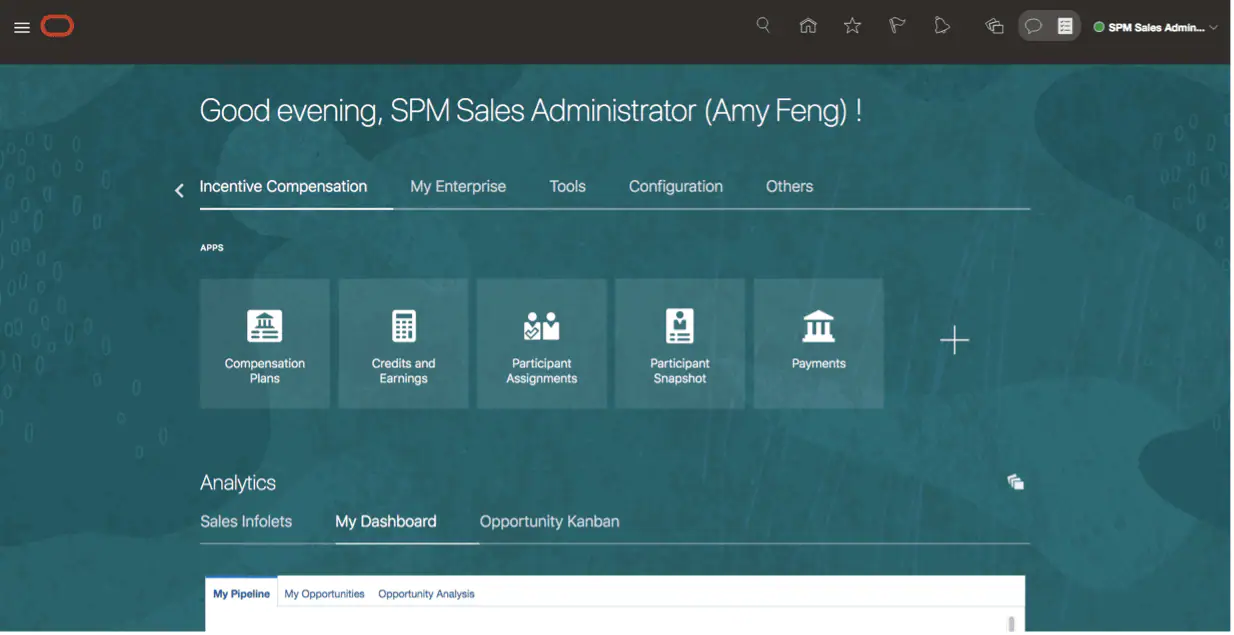
Oracle Subscription Management handles the full lifecycle of recurring revenue, from initial sale through renewals, billing adjustments, and ASC 606/IFRS 15 revenue recognition, connected to Oracle ERP. The Renewal Agent monitors contract health, predicts churn, and generates renewal briefs with usage trends and upsell recommendations.
Source: Oracle Sales Cloud
Oracle Incentive Compensation automates commission calculations, quota management, and payroll integration, eliminating spreadsheet-driven shadow accounting and reducing compensation errors.
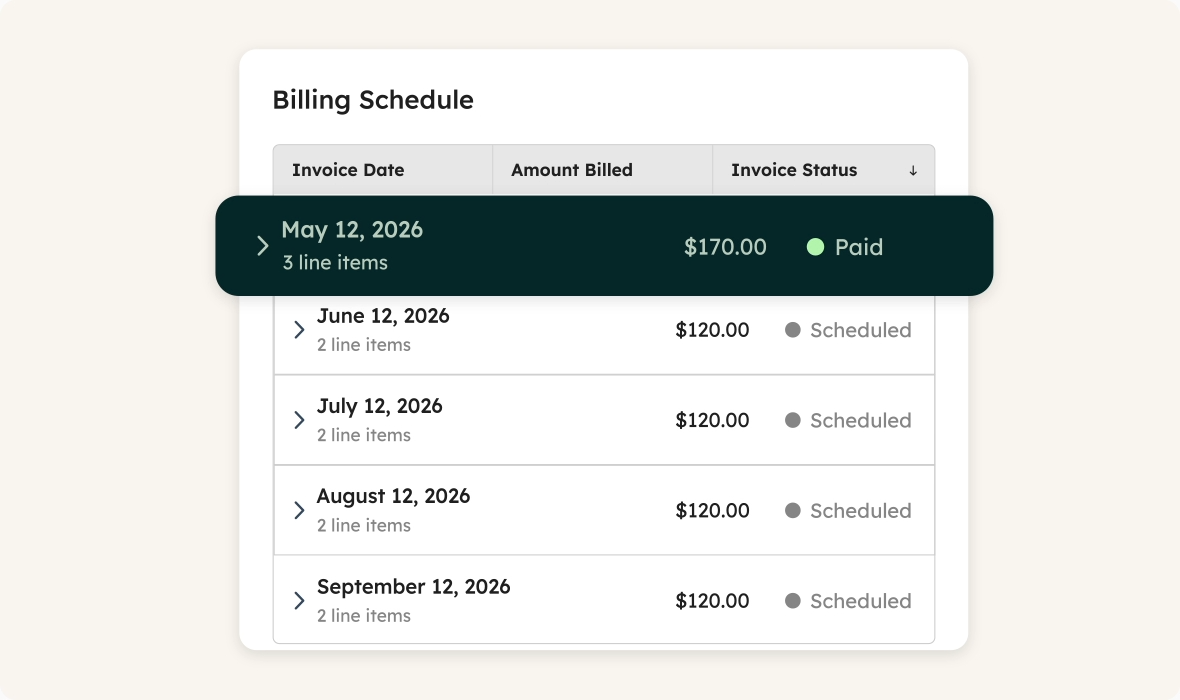
HubSpot's Commerce Hub is growing but still maturing.
Source: HubSpot
It handles CPQ, invoicing, and payment collection, and the early-adopter pricing (Pro at $57/month from $95) signals active investment. But for organizations with complex multi-product catalogs, subscription billing across currencies, or commission plans tied to dozens of variables, Oracle remains well ahead.
Where HubSpot pulls ahead: the unified customer platform
HubSpot's advantage is breadth across the full customer lifecycle, not just sales.
Marketing Hub, Sales Hub, Service Hub, Content Hub, Data Hub, and Commerce Hub all share a single Smart CRM.
A lead captured by a form on a Content Hub landing page is immediately available in Sales Hub workflows. A customer who submits a support ticket in Service Hub has their full deal history visible without switching tools. This isn't integration between separate products. It's one product with multiple surfaces.
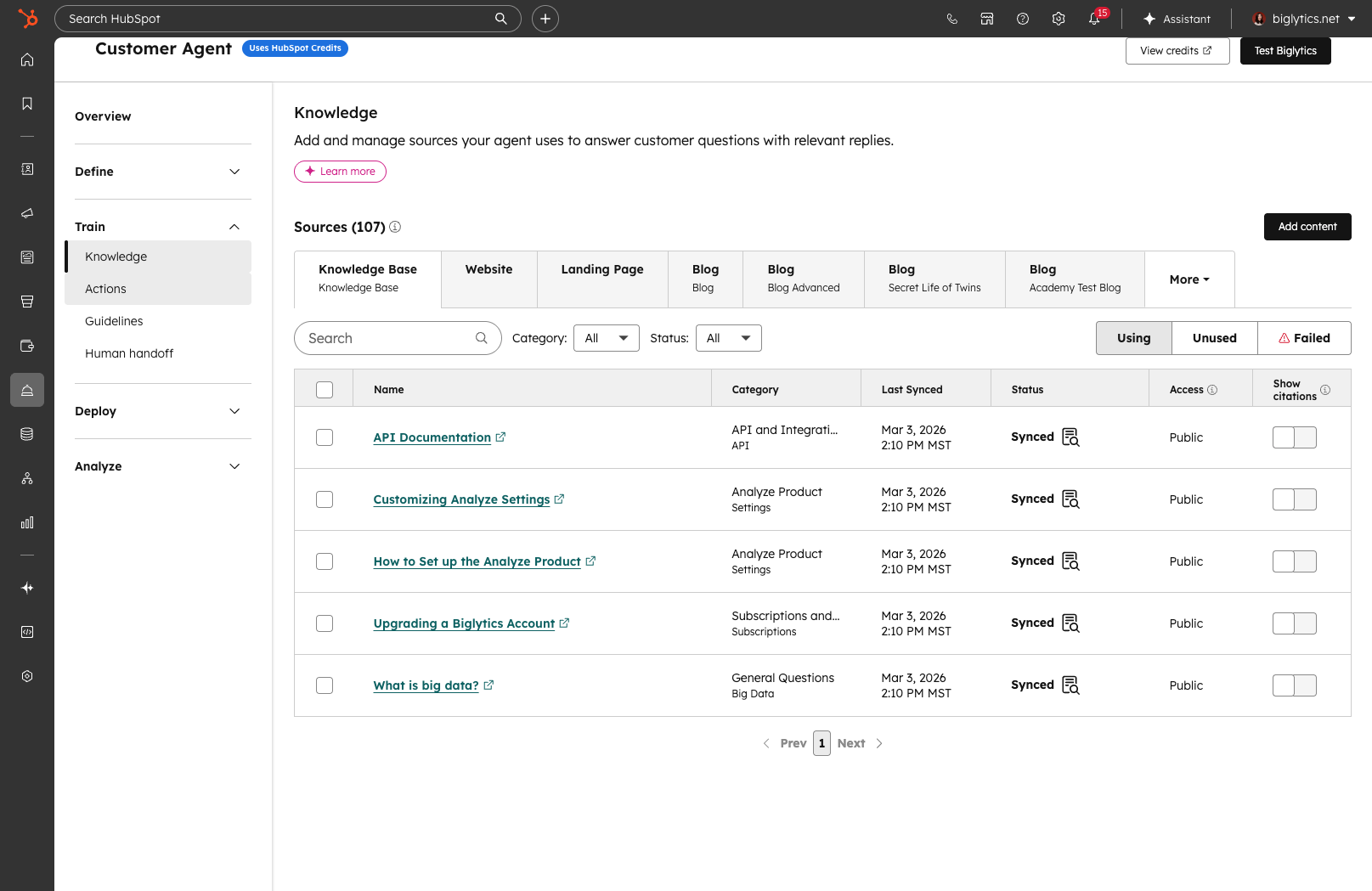
The Breeze Customer Agent resolves over 50% of customer conversations on its own across chat, email, WhatsApp, and Facebook Messenger.
Source: HubSpot
The Prospecting Agent drafts personalized outreach using the complete customer history, and ResellerRatings reports that these emails "outperform some of our US-based BDRs in quality and engagement."
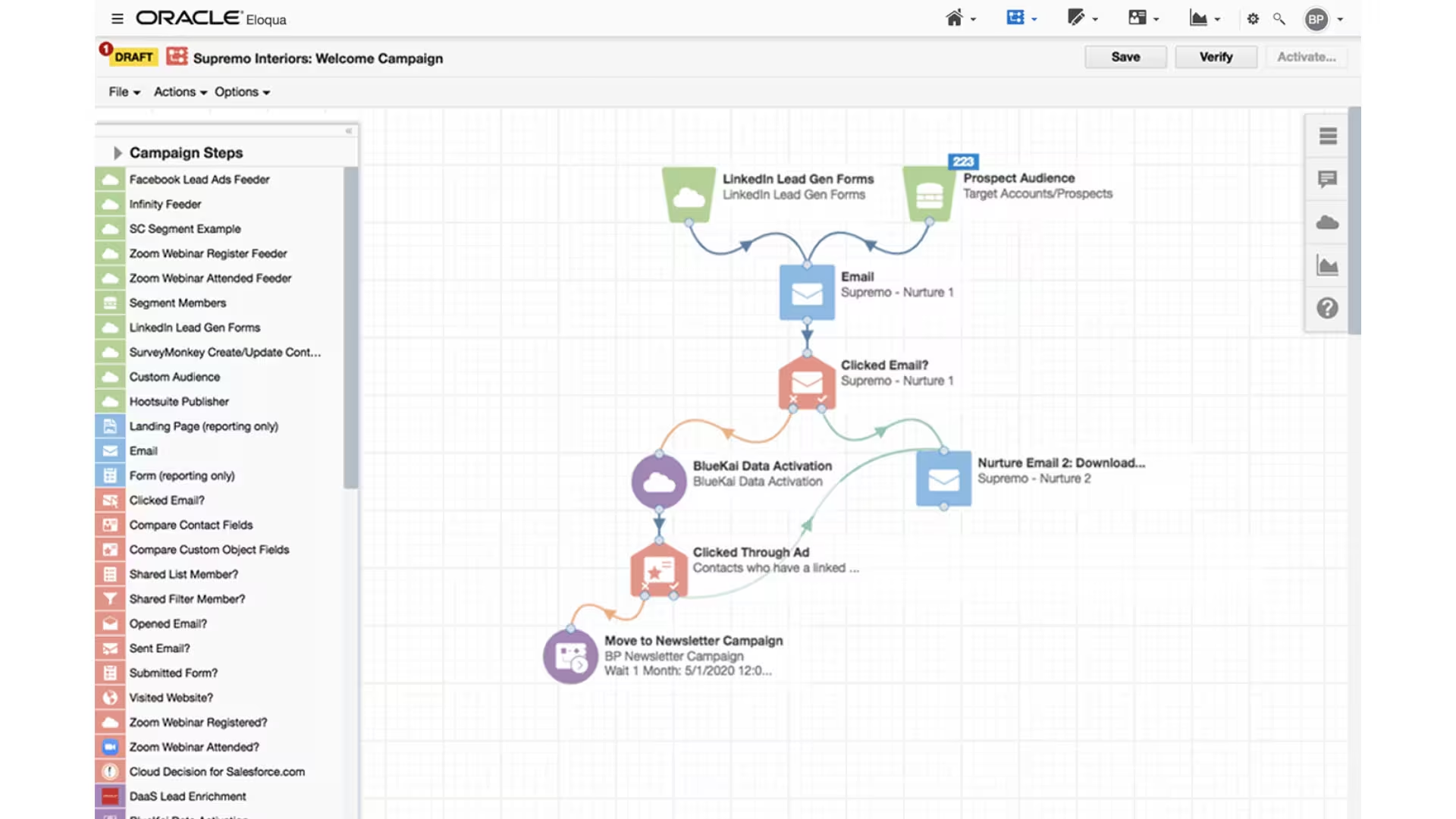
Oracle's CX suite includes marketing (Oracle Eloqua), service, and commerce, but these are separately licensed modules with varying levels of integration.
Source: Oracle Sales Cloud
Organizations running Oracle Sales for pipeline management and a separate marketing platform still face the cross-tool coordination that HubSpot eliminates.
For companies where marketing-to-sales-to-service alignment is the priority, and where quoting and billing complexity doesn't require Oracle's depth, HubSpot delivers more of the customer lifecycle in one place.
ZoomInfo solves the data problem both platforms leave open
Both HubSpot and Oracle Sales are CRM platforms.
They store and organize customer data. But neither generates the quality or depth of B2B intelligence that determines whether your sales team is calling the right people, at the right time, with the right message.
ZoomInfo's GTM Context Graph addresses this gap.
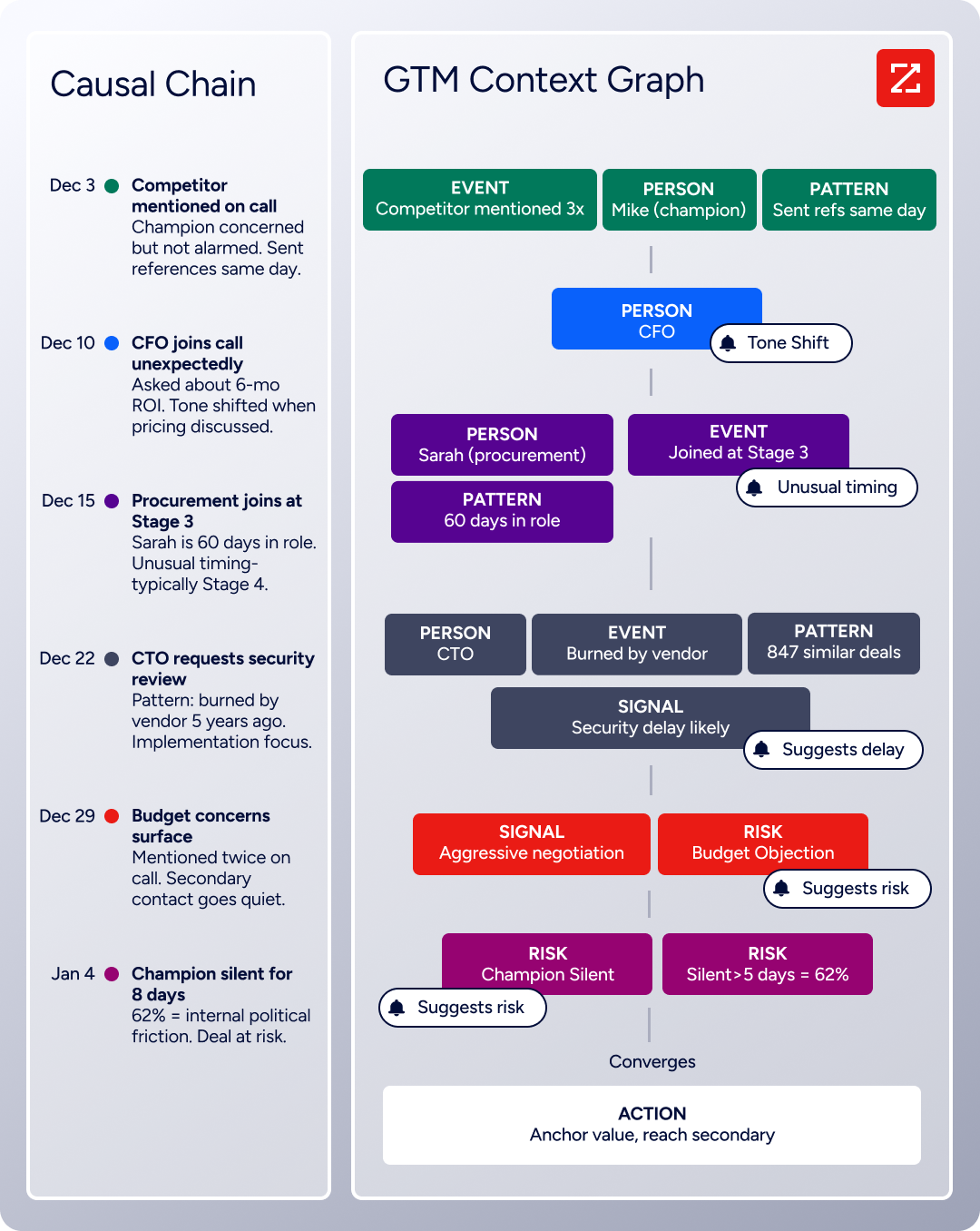
It combines ZoomInfo's third-party data with a customer's own CRM records, conversation intelligence, email threads, and behavioral signals. The result is an intelligence layer that captures not just what happened in a deal, but why, and which patterns across thousands of deals predict what will happen next.
A CRM records that a deal moved to Stage 4. The GTM Context Graph identifies that executive sponsorship entering at this stage, combined with ROI-focused questions on the last call and third-party signals showing the company is hiring three new VPs and researching a competitor, matches the pattern behind closed-won deals in your segment.
That intelligence flows into every downstream action: the follow-up email addresses the specific concern the CFO raised, the play targets accounts whose signal combinations match actual win patterns, and the forecast weights deals by buying evidence rather than stage labels.
ZoomInfo integrates with both HubSpot and Salesforce, enriching records, syncing signals, and powering AI-driven execution without requiring a CRM migration. Whether you choose HubSpot or Oracle (or Salesforce, or Dynamics), ZoomInfo feeds the same verified data and contextual intelligence into whichever platform your team uses.
Seismic attributed 39% of active pipeline to opportunities identified or influenced by ZoomInfo signals, reported 54% productivity gains, and saved 11.5 hours per week per seller. (Seismic case study)
For a direct look at how HubSpot and ZoomInfo compare on data quality and GTM capabilities, see our HubSpot vs. ZoomInfo comparison.
AI capabilities: three different approaches
All three platforms invest in AI, but each applies it differently.
HubSpot's Breeze AI operates as an embedded layer across all hubs.
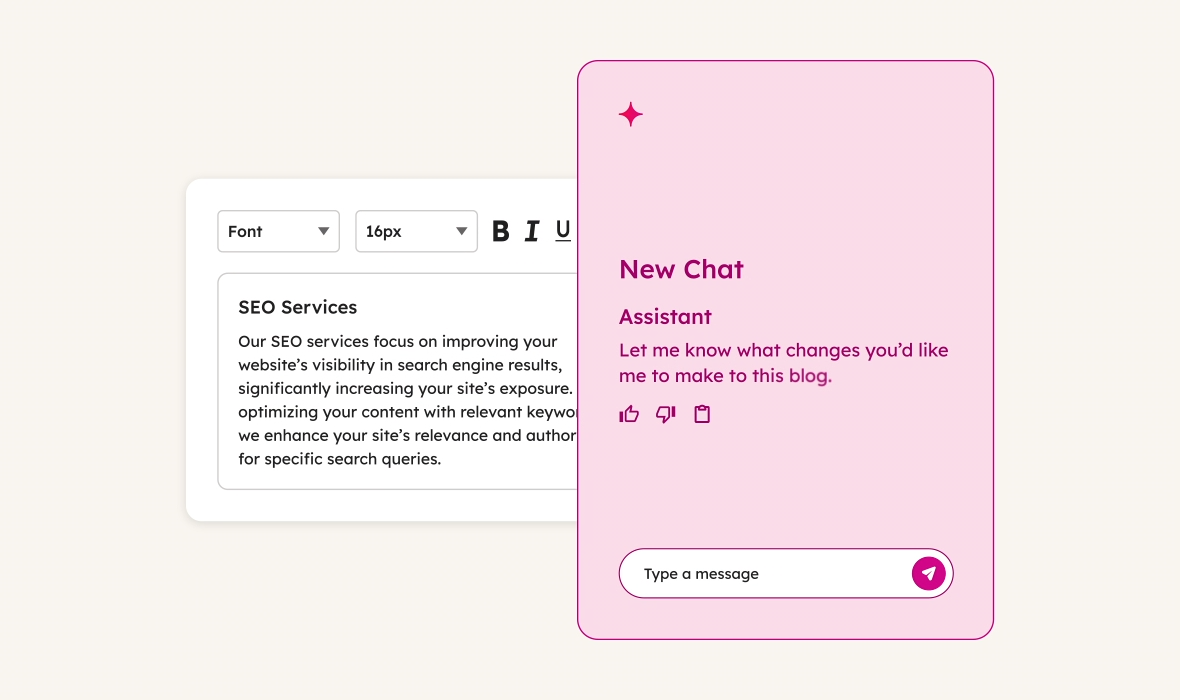
Breeze agents handle prospecting, customer support, content creation, and data analysis using context from the Smart CRM. The Data Agent answers natural-language questions about customers by searching CRM records, call recordings, and emails. Breeze is included in Professional and Enterprise subscriptions on a credit-based consumption model.
Source: HubSpot
The limitation: Breeze's intelligence is bounded by what's inside HubSpot. It doesn't draw on third-party buying signals, intent data, or verified contact intelligence beyond what users enter or what HubSpot's own enrichment captures.
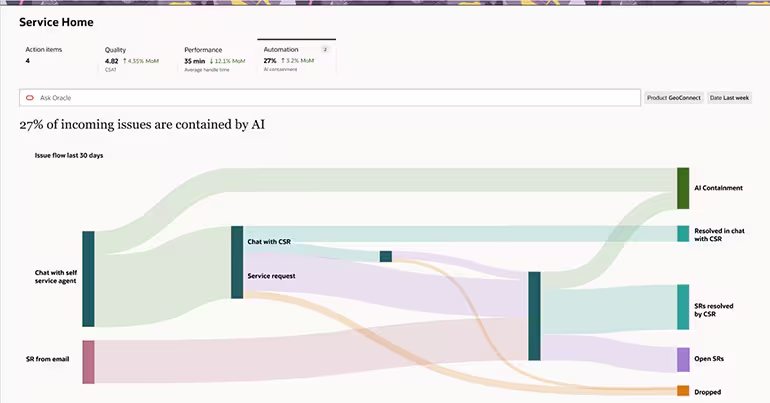
Oracle's Fusion Agentic Applications deploy 15+ role-based AI agents embedded in the Fusion platform, included in the standard subscription without additional per-seat licensing.
Source: Oracle Sales Cloud
The Sales Command Center monitors accounts and surfaces pipeline risks. The Contact Insights Agent maps buying groups. The My Territory Agent detects anomalies across a seller's book of business.
Oracle's AI advantage is operational context: because Fusion shares a data model with ERP, supply chain, and HCM, the AI can reference invoice status, contract compliance, and supply chain availability inside the sales workflow.
The limitation: Oracle's AI operates within Oracle's ecosystem. It doesn't extend to third-party buying signals or verified contact data at the scale ZoomInfo provides.
ZoomInfo's GTM Context Graph takes a different approach.
Instead of AI confined to a single platform's data, ZoomInfo's intelligence layer processes 1.5B+ data points daily from both third-party intelligence and first-party customer data.
AI agents inside GTM Workspace tell sellers who to contact, when to engage, and what to say, drawing on verified contact data, intent signals, conversation patterns, and CRM history at once. The same intelligence is accessible via APIs and MCP in any third-party application, including CRMs, custom agents, and partner platforms.
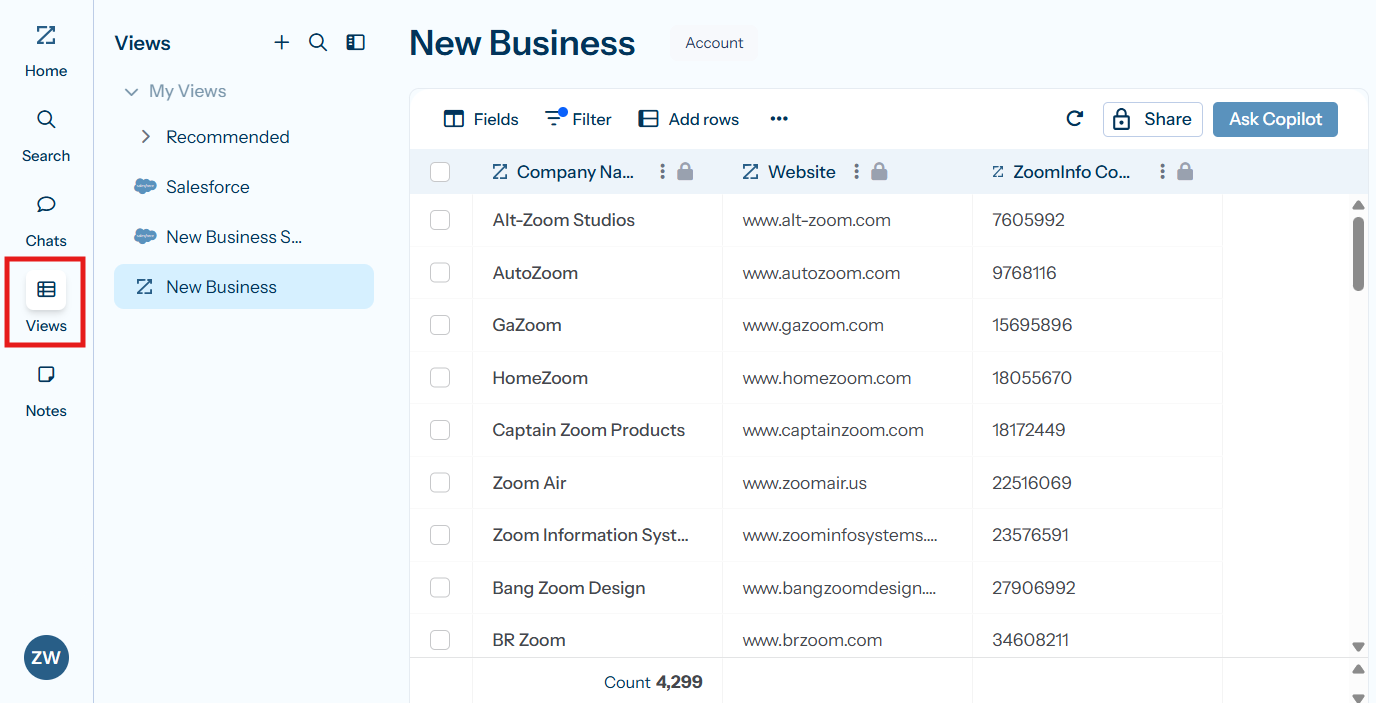
Source: ZoomInfo
Palo Alto Networks unified sales and marketing with shared account intelligence: "Company ID is transformational. It's a really clean approach to hierarchies and gives us a way to clearly communicate territory boundaries to our sellers." (Palo Alto Networks case study)
Pricing transparency and total cost of ownership
Pricing is where the three platforms diverge most.
HubSpot publishes its pricing.
Sales Hub starts at $20/seat/month (Starter), scales to $100/seat/month (Professional), and reaches $150/seat/month (Enterprise, annual only). Marketing Hub Professional runs $890/month with a $3,000 mandatory onboarding fee. Enterprise is $3,600/month with a $7,000 onboarding fee.
The Starter Customer Platform bundles all hubs at $15/seat/month (monthly) or $9/seat/month (annual).
Two pricing details matter: when mixing hub tiers, all Core Seats are billed at the rate of the highest subscription tier, which can inflate costs for organizations using Professional marketing alongside Enterprise sales. And HubSpot bills marketing contact overages immediately upon exceeding the included tier.
Oracle Sales does not publish pricing.
No pricing page exists on oracle.com, and all terms are negotiated directly with Oracle sales representatives. Contracts are typically annual or multi-year, structured through Cloud Services Agreements or Oracle Master Agreements.
Each module (SFA, CPQ, Subscription Management, Incentive Compensation) is a separately licensed SKU. Implementation costs, professional services, and additional environments are all negotiated separately.
ZoomInfo uses custom-quoted, consumption-based pricing with no public prices for paid tiers.
ZoomInfo offers two free entry points: ZoomInfo Lite (permanent free tier with access to the B2B database, 10 monthly export credits, and basic search) and a 7-day free trial with full feature access. Paid plans span Sales and Marketing product lines across Professional, Advanced, and Enterprise tiers, with pricing based on seats, credits, and features.
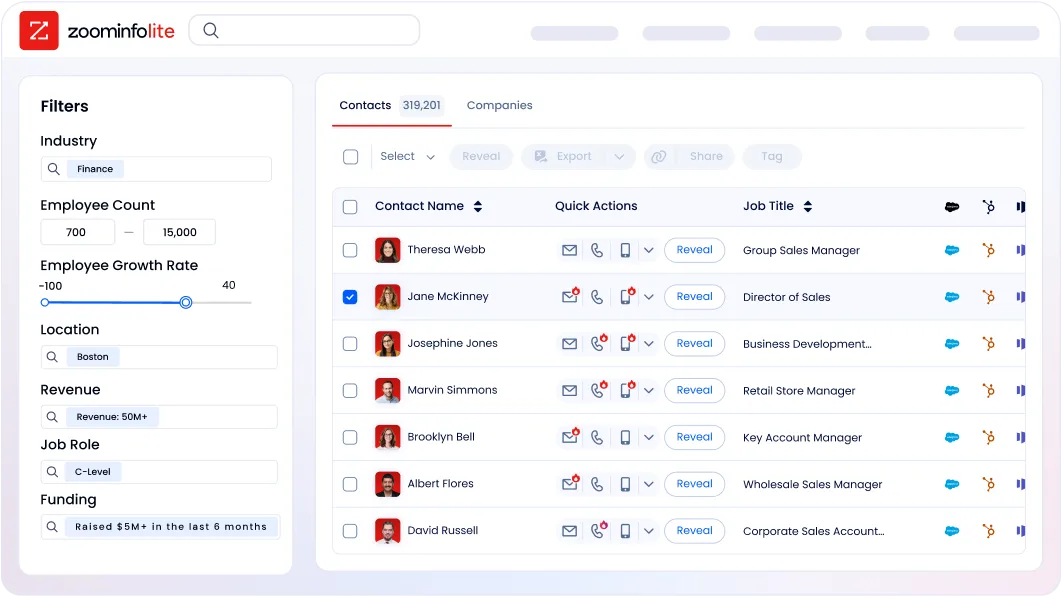
For organizations evaluating total cost, the question isn't just what each platform costs individually. It's what incomplete data costs you in missed deals, wasted outreach, and inaccurate forecasting, and whether adding ZoomInfo to your CRM stack pays for itself in pipeline and conversion improvements.
Integration ecosystems reflect each platform's center of gravity
HubSpot connects to 2,000+ apps with 2.5 million active installs through its App Marketplace, covering CRM, marketing, sales, service, and operations tools.
The internal integration matters more: every hub shares the same Smart CRM, so data flows between marketing, sales, and service without middleware. For organizations whose tech stack centers on marketing and sales alignment, HubSpot's ecosystem is mature.
Oracle Sales integrates with Oracle's Fusion Cloud suite (ERP, HCM, SCM, Order Management).
This is Oracle's differentiator: the shared data model means invoice status, contract compliance, and supply chain data are available inside the sales workflow without third-party connectors.
Third-party integrations run through Oracle Integration (OIC), with prebuilt adapters for Salesforce, SAP, Workday, ServiceNow, and others. G2 reviewers note that Oracle "works well within the Oracle ecosystem but presents integration challenges with external tools."
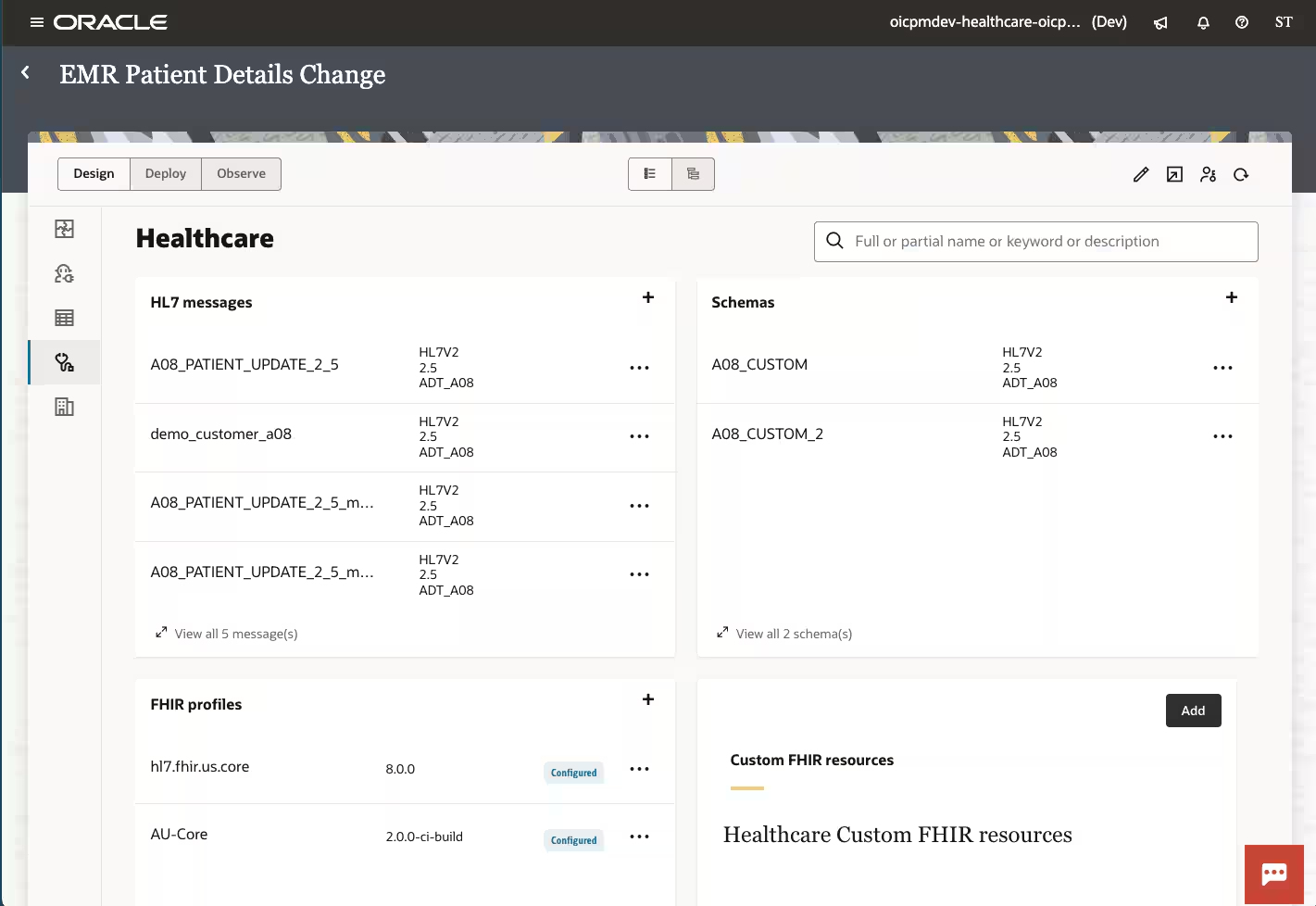
Source: Oracle CRM
ZoomInfo connects to everything.
The App Marketplace lists 120+ integrations across CRM, marketing automation, sales engagement, and data warehouse platforms. Native integrations with Salesforce, HubSpot, and Microsoft Dynamics 365 push verified data and signals directly into the CRM.
API access is included in all relevant plans, and the MCP server lets any AI agent consume ZoomInfo intelligence. Cloud partnerships with AWS, Google Cloud, Snowflake, and Databricks support direct data ingestion for enterprise analytics.
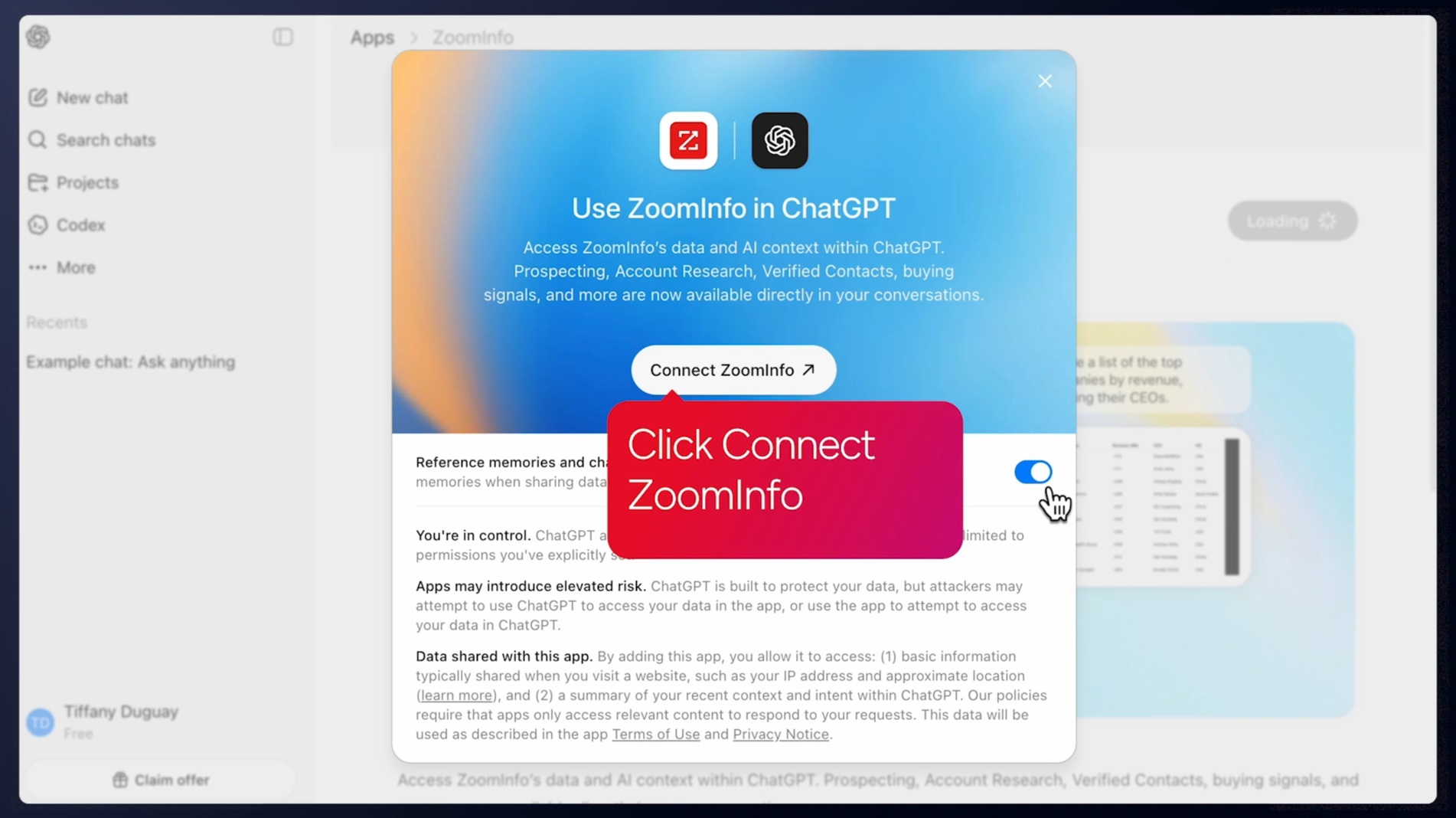
Source: ZoomInfo
BDO Canada activated ZoomInfo data within internal systems: "The plug-and-play aspect of the API means I can integrate it very easily into any process and get information at a moment's notice." (BDO Canada case study)
Security and compliance comparison
All three platforms meet enterprise security requirements, with different strengths.
HubSpot holds SOC 2 Type II, SOC 3, and HIPAA attestations.
HubSpot hosts data on AWS with an EU Data Center option for residency. Encryption uses AES-256 at rest and TLS 1.2/1.3 in transit. SSO, 2FA, and IP allowlisting are available. HubSpot publishes AI model cards detailing how each AI system interacts with customer data.
Oracle holds ISO 27001, SOC 1/2/3, PCI DSS, and FedRAMP High JAB authorization.
Oracle Cloud operates separate cloud realms with no shared physical infrastructure between them, and a separate EU legal entity runs dedicated EU regions. Oracle also offers Dedicated Region, placing cloud infrastructure inside a customer's own data center. For regulated industries (government, financial services, healthcare), Oracle's compliance coverage is the broadest of the three.
ZoomInfo maintains ISO 27001, ISO 27701, SOC 2 Type II, TRUSTe GDPR, and TRUSTe CCPA certifications, all renewed annually.
Source: ZoomInfo
As a B2B data platform, ZoomInfo is a registered data broker in California and Vermont and operates a dedicated Trust Center.
HubSpot vs. Oracle Sales Cloud vs. ZoomInfo: Which should you choose?
The right choice depends on where your organization sits today and what's holding your revenue team back.
Choose HubSpot if:
You need marketing, sales, and service aligned on a single platform
Fast implementation and ease of adoption are priorities
Your team is 20-2,000 employees and scaling
You want a free tier to evaluate before committing
Your quoting and billing needs are straightforward
Choose Oracle Sales Cloud if:
You're already running Oracle ERP, HCM, or supply chain
You need CPQ, subscription management, or incentive compensation
Connecting front-office selling to back-office operations is critical
You have dedicated IT resources for implementation and ongoing administration
Regulatory compliance (FedRAMP, PCI DSS) requires Oracle's infrastructure
Use ZoomInfo with either platform if:
Your CRM data is incomplete, stale, or missing key contacts and signals
You want AI that analyzes deals using verified third-party intelligence, not just internal CRM fields
Your sellers need to know who to call, when to engage, and what to say
Your marketing and RevOps teams need to build audiences, launch plays, and measure pipeline without engineering support
You want the same intelligence available in your CRM, your custom tools, and your AI agents
Start with ZoomInfo Lite for free or request a full trial.
A CRM organizes your sales process. But the quality of every forecast, every outreach sequence, and every AI recommendation depends on the data underneath. HubSpot and Oracle Sales Cloud are both strong CRM platforms for their audiences. ZoomInfo ensures whichever one you choose runs on accurate, comprehensive B2B intelligence, turning your CRM from a system of record into a system that drives revenue.
HubSpot vs. Oracle Sales Cloud vs. ZoomInfo FAQ
What is the core difference between HubSpot, Oracle Sales Cloud, and ZoomInfo?
HubSpot is a customer platform combining marketing, sales, service, and content on a shared CRM, built for scaling companies that value ease of use.
Oracle Sales Cloud is an enterprise revenue platform connecting sales force automation, CPQ, subscription management, and incentive compensation on the Fusion architecture, strongest for organizations already running Oracle ERP.
ZoomInfo is a B2B data intelligence platform that feeds verified contact data, intent signals, and AI-driven insights into any CRM, making either HubSpot or Oracle more effective.
Which platform is easiest to implement?
HubSpot is the fastest to deploy, with a free CRM that requires no implementation and paid tiers that typically reach value within 90 days.
ZoomInfo deploys in weeks for prospecting and data enrichment.
Oracle Sales Cloud requires the longest implementation, often months to quarters, especially when configuring CPQ, subscription management, or ERP integration.
Can ZoomInfo replace HubSpot or Oracle Sales Cloud?
No. ZoomInfo is not a CRM. It does not manage pipelines, track deals, or handle customer service tickets. ZoomInfo is the intelligence layer that makes your CRM more effective by providing verified contact data, buying signals, and AI-driven insights. It integrates with HubSpot, Salesforce, and Microsoft Dynamics 365, and is accessible via API and MCP in any tool.
Which platform has the best AI capabilities?
Each platform applies AI differently. HubSpot's Breeze AI automates prospecting, customer support, and content creation using CRM data.
Oracle's Fusion Agentic Applications embed 15+ role-based agents that use ERP and supply chain data alongside CRM records.
ZoomInfo's GTM Context Graph provides cross-deal intelligence the others lack, processing 1.5B+ data points daily from third-party intelligence and first-party CRM data to reveal why deals move or stall.
How does pricing compare across the three platforms?
HubSpot publishes its pricing, starting at $20/seat/month for Sales Hub Starter and scaling to $150/seat/month for Enterprise.
Oracle does not publish pricing; all contracts are negotiated.
ZoomInfo uses custom-quoted pricing but offers a permanent free tier (ZoomInfo Lite) and a 7-day free trial. Total cost depends on how many modules, seats, and add-ons each organization needs.
Which platform is best for companies already using Oracle ERP?
Oracle Sales Cloud is the clear choice for organizations invested in Oracle's Fusion ecosystem. The shared data model with Oracle ERP, HCM, and supply chain eliminates middleware and gives sales teams invoice status, contract compliance, and supply chain availability directly in the CRM workflow.
Adding ZoomInfo enriches Oracle's CRM data with verified contacts and buying signals that Oracle's own data layer does not provide.
Does ZoomInfo work with both HubSpot and Oracle Sales Cloud?
ZoomInfo integrates with HubSpot and offers API and MCP access that can connect to any CRM, including Oracle Sales Cloud. The HubSpot integration is a pre-built connector available through the ZoomInfo App Marketplace, enabling data enrichment, signal syncing, and workflow automation.
For Oracle environments, ZoomInfo's Enterprise API and data delivery services provide programmatic access to the same intelligence.
Which platform offers the best data quality for sales prospecting?
ZoomInfo operates the largest B2B data platform, with 500M contacts, 135M+ verified phone numbers, and 200M+ verified business emails, backed by 300+ human researchers and up to 95% accuracy on first-party data. In a Fortune 500 competitive RFP analyzing 25 million contacts, an independent consultant concluded that "no other competitor came even close."
HubSpot's Smart CRM enriches records from conversations and web sources but does not operate a dedicated data collection infrastructure.
Oracle verifies addresses and deduplicates records but does not offer a standalone data intelligence product.
