

Comparing HubSpot vs. Podio usually signals a deeper question than which software to buy. It means you're trying to figure out what kind of system your business actually needs.
These are different tools. HubSpot is a CRM with marketing automation, sales pipelines, and customer service built in. Podio is a blank canvas where you build your own apps, workflows, and databases without writing code. Choosing between them depends on what matters more to your team:
Do you want a CRM that works out of the box, or a platform you configure from scratch?
Is marketing automation and sales pipeline management your primary need, or do you need flexible project and workflow tools?
Are you willing to pay premium prices for a polished, opinionated system, or would you rather build exactly what you need at a lower cost?
How much setup time can your team absorb before the platform delivers value?
Is the bigger challenge managing existing customer relationships, or finding the right prospects to fill your pipeline?
In short, here's what we recommend:
HubSpot is the customer platform for teams that want marketing, sales, and service working from a single database. Its Smart CRM connects six product hubs (Marketing, Sales, Service, Content, Data, and Commerce), and Breeze AI automates everything from prospecting emails to support tickets. The tradeoff: pricing escalates as your team grows, with per-seat charges, mandatory onboarding fees at Professional and Enterprise tiers, and a mixed-tier billing rule that inflates costs when departments subscribe to different plans.
Podio is the no-code work management platform for teams that refuse to bend their processes to fit someone else's software. Its drag-and-drop app builder lets you construct custom databases, CRM pipelines, project trackers, and client portals, all inside shared workspaces with free external client access. At $11.20/user/month on the Plus plan, it costs a fraction of HubSpot. But that flexibility comes with a steep setup curve, limited reporting, and an interface that reviewers on G2 and Capterra consistently describe as outdated.
Both platforms can manage your customer relationships. But for B2B teams, there's a more fundamental problem neither one solves on its own: finding the right accounts and contacts to put into your system in the first place. A CRM filled with stale data and no buying signals is just an expensive address book.
ZoomInfo is a B2B intelligence and GTM platform built on a large-scale B2B dataset: 500M contacts, 100M companies, 135M+ verified phone numbers, and 200M+ verified business email addresses. Its GTM Context Graph (an intelligence layer that fuses this data with your CRM records, conversation transcripts, and behavioral signals) reveals not just who your buyers are, but when they're ready to buy and why deals move or stall. ZoomInfo integrates directly with HubSpot and exposes the same intelligence through APIs and MCP for any other platform, including custom Podio workflows. For B2B teams, ZoomInfo is the intelligence layer that turns whichever CRM you choose into a revenue engine.
If you want to see how ZoomInfo's B2B intelligence could improve your pipeline, start with a free trial.
HubSpot vs. Podio vs. ZoomInfo at a glance
HubSpot | Podio | ZoomInfo | |
|---|---|---|---|
Core function | CRM and customer platform | No-code work management and app builder | B2B data intelligence and GTM execution |
CRM capability | Built-in with automation | Build-your-own via custom apps | Enriches and powers any CRM with B2B intelligence |
Marketing automation | Full suite (email, social, ads, landing pages) | Basic (email/SMS via workflow automation) | Account-based marketing with native ad targeting and intent signals |
B2B data | Limited to what users enter or enrich via integrations | None built in | 500M contacts, 100M companies, intent signals, technographics |
AI capabilities | Breeze AI across all hubs | None | GTM Context Graph with AI agents for prospecting, research, and outreach |
Customizability | Structured hubs with configurable properties | Fully custom apps built from scratch | Configurable workflows, plays, and audiences |
Free plan | Free CRM (limited features, 2 users) | Free for up to 5 users (100 items) | ZoomInfo Lite (permanent, 10 exports/month) |
Starting paid price | $15/seat/month (Starter, annual) | $11.20/user/month (Plus, annual) | Custom pricing (consumption-based) |
Integrations | 2,000+ app marketplace | ~6 native + API + Zapier | 172+ marketplace partners, direct CRM integrations, API/MCP |
Best for | Marketing, sales, and service teams wanting one system | Teams needing custom workflows, lightweight CRM, or project tracking | B2B teams that need verified prospect data, buying signals, and AI-powered outreach |
CRM vs. build-your-own platform
HubSpot and Podio solve the same problem (organizing how your team works with customers) through opposite philosophies.
HubSpot gives you a structured system where contacts, companies, deals, and tickets live in predefined objects with predefined relationships.
Add a contact, attach them to a company, create a deal, and the platform knows how to track that relationship through your pipeline, trigger follow-up emails, route support tickets, and attribute marketing campaigns to closed revenue. The architecture is opinionated, and that's the point. Teams can start working on day one because the decisions about how to organize data have already been made.
Podio gives you an empty workspace and a set of building blocks.
Want a CRM? Build one using custom apps with fields you define. Want a project tracker linked to that CRM? Build another app and connect them with bidirectional relationship fields. Teams have built over 30 million custom apps on the platform, covering everything from real estate transaction management to accounting firm operations.

Source: Podio
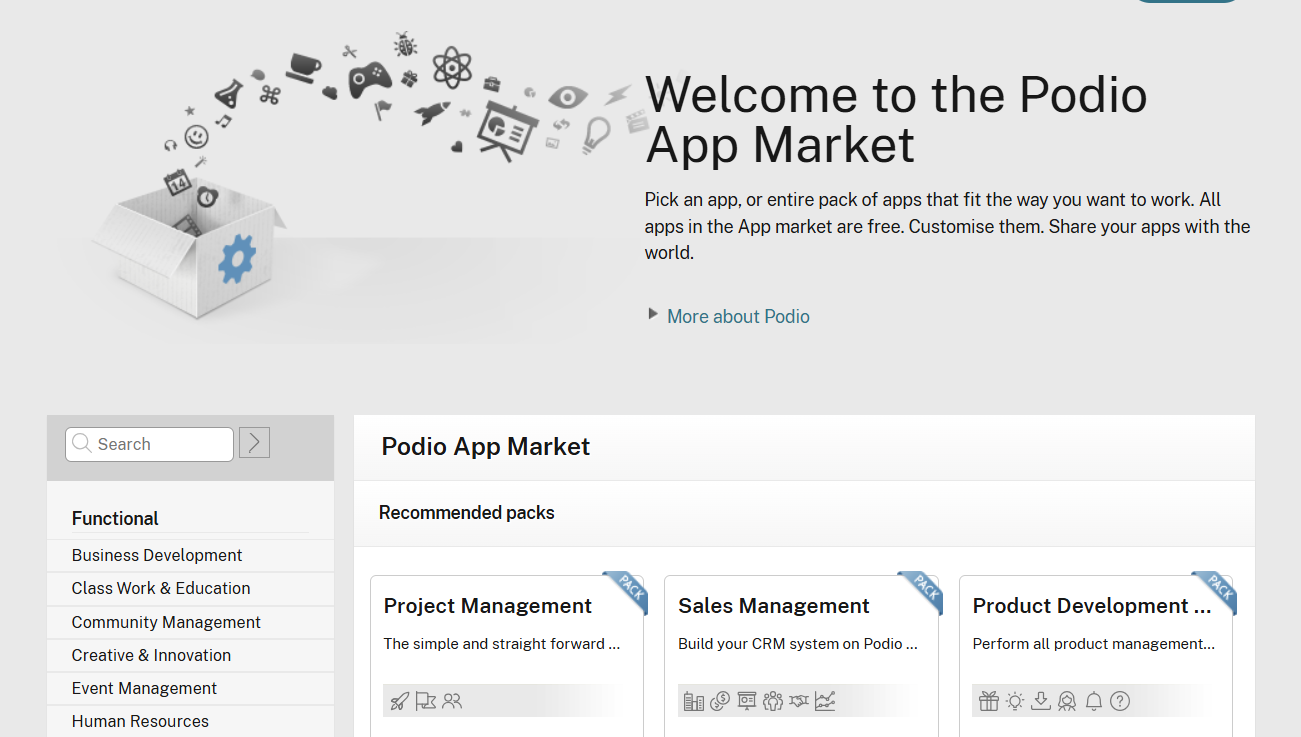
The Podio App Market offers free templates to get started, but most teams spend significant time configuring before they see value.
Source: Podio
The practical consequence: HubSpot is faster to deploy but harder to deviate from. Podio is slower to set up but adapts to any process you can imagine. For teams with standard sales and marketing workflows, HubSpot's structure saves time. For teams whose processes don't fit a conventional CRM mold (agencies managing client projects, real estate teams tracking listings, or operations teams digitizing internal workflows), Podio's flexibility is the whole point.
HubSpot dominates in marketing and sales automation
If marketing and sales automation are what you need, this comparison is lopsided.
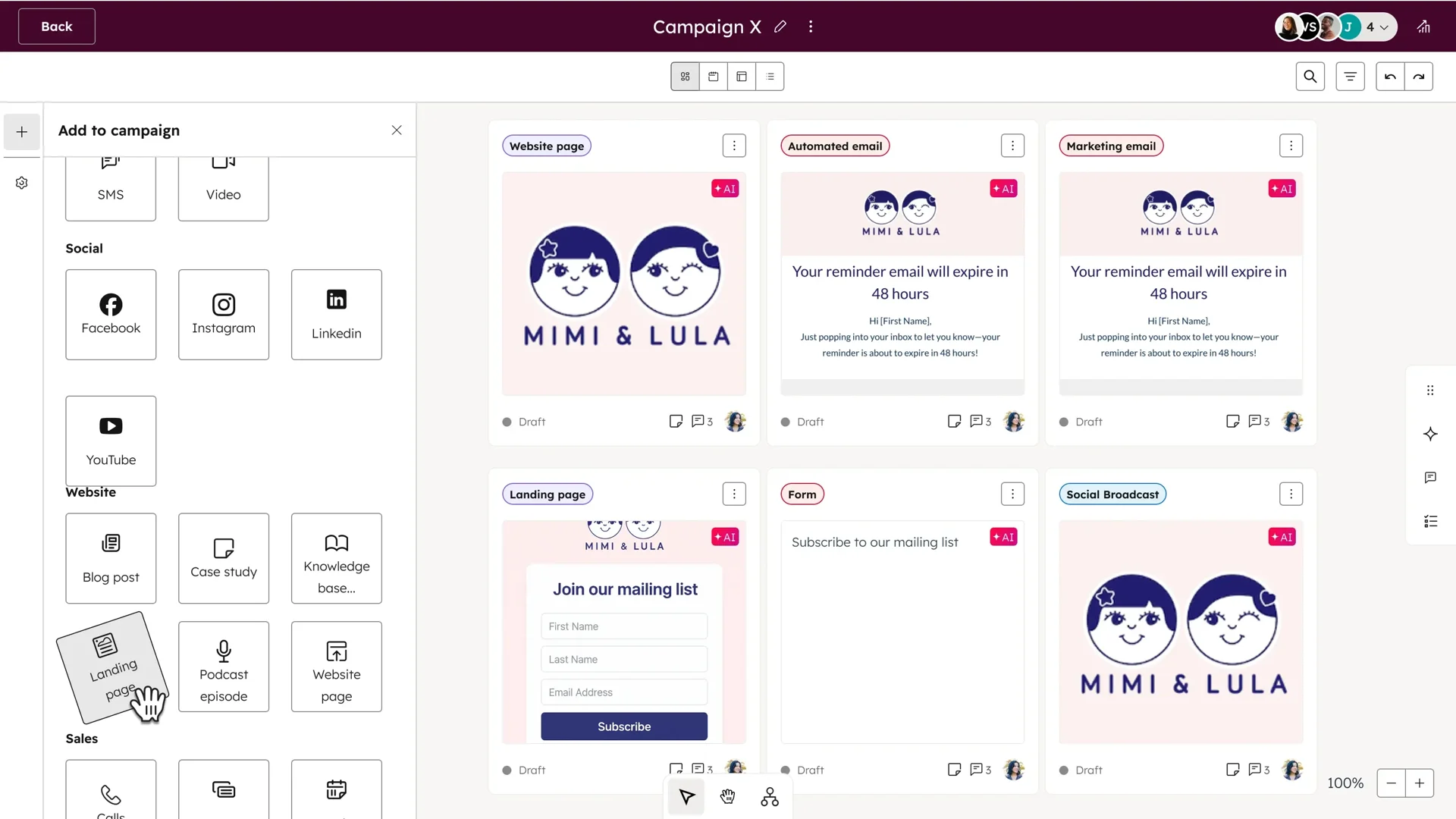
HubSpot's Marketing Hub covers email marketing, landing pages, social media management, ad campaigns, SEO tools, and multi-touch revenue attribution, all connected to the same CRM database your sales team uses.
Source: HubSpot
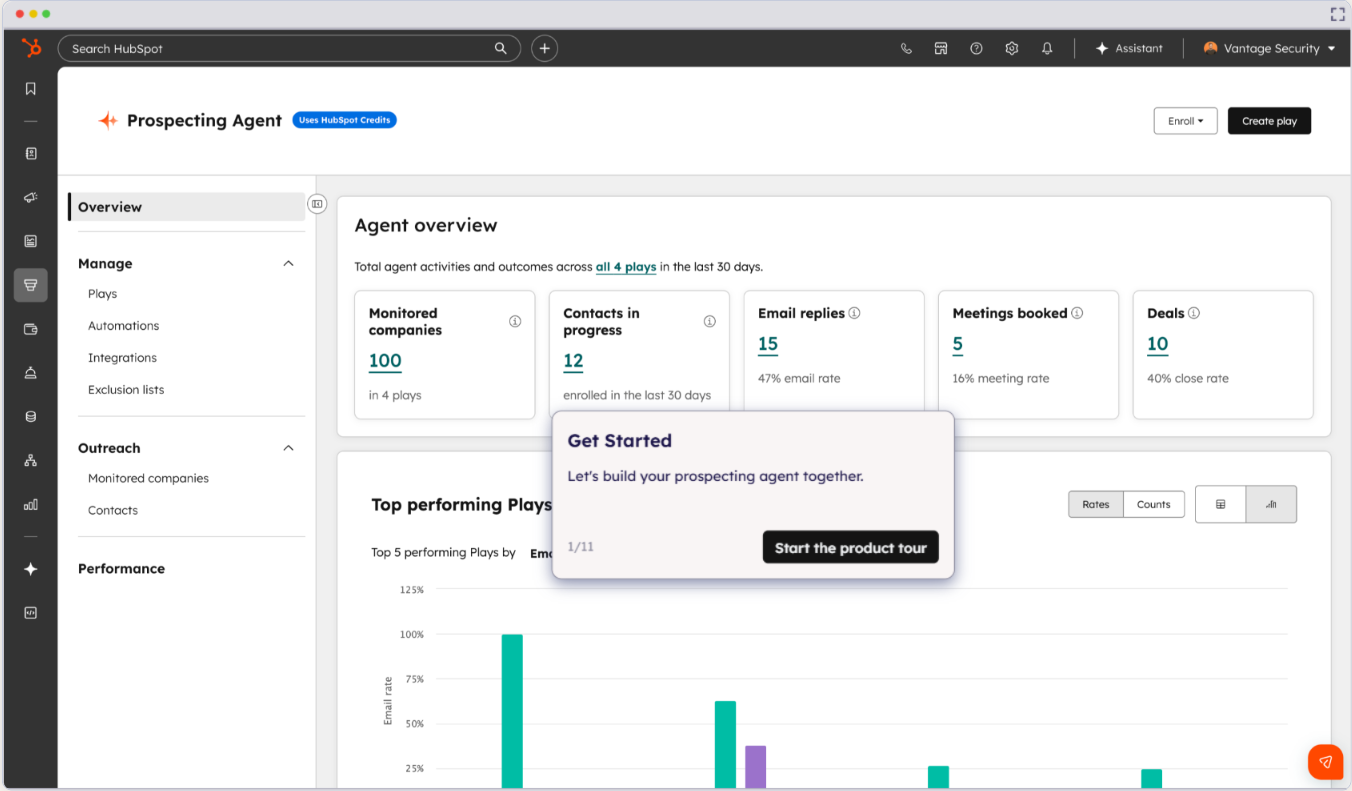
The Breeze Prospecting Agent researches prospects, monitors buying signals, and drafts personalized outreach using customer history. Sequences automate multi-step email and call campaigns. CPQ tools generate branded quotes from deal records.
Source: HubSpot
The Breeze Customer Agent handles support inquiries across chat, email, WhatsApp, and Facebook Messenger.

Source: HubSpot
Podio has workflow automation powered by the GlobiFlow engine, which supports If-This-Then-That rules, task assignments, email and SMS delivery, PDF generation, and e-signatures. Premium plans allow up to 5 million automation runs per month.
This works well for internal process automation (creating follow-up tasks when a deal moves stages, generating contracts, routing assignments via round-robin), but it's a different category from HubSpot's marketing automation. Podio has no native email marketing, no ad management, no SEO tools, no landing page builder, and no AI-powered prospecting.
For teams whose primary job is generating and nurturing leads through a structured sales process, HubSpot is the clear choice. Podio's automation handles workflow execution well, but it was never designed to compete with dedicated marketing platforms.
Podio wins on flexibility and external collaboration
Podio's advantage is that it doesn't assume what your business looks like.
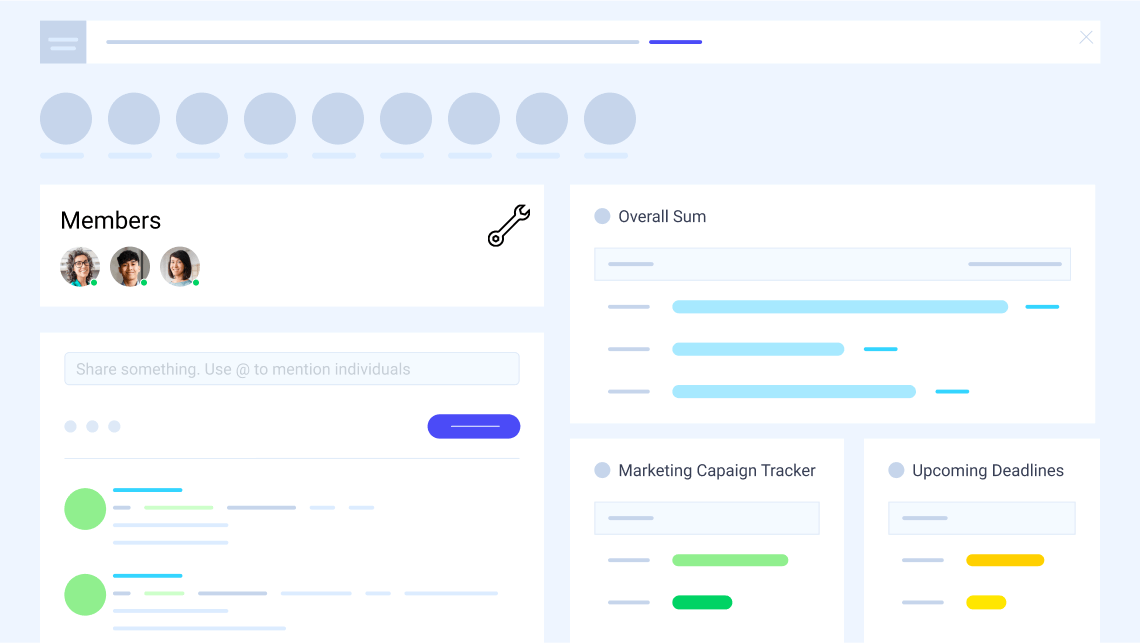
A marketing agency can build a workspace where client accounts link to projects, projects link to deliverables, and deliverables link to tasks, with clients seeing their own status through free Client Access licenses that don't require paid seats.
Source: Podio
A real estate team can track listings, buyers, sellers, viewings, and deals in a relational structure designed around how they actually work. An accounting firm can manage client engagements, document signing (via ShareFile and e-signature integration), and staff assignments from one configurable platform.
HubSpot can accommodate some of this with custom objects and properties at its Enterprise tier, but the platform's architecture always gravitates back toward the contact-company-deal-ticket model. Teams with workflows that don't map to that model spend time working around HubSpot's assumptions rather than with them.
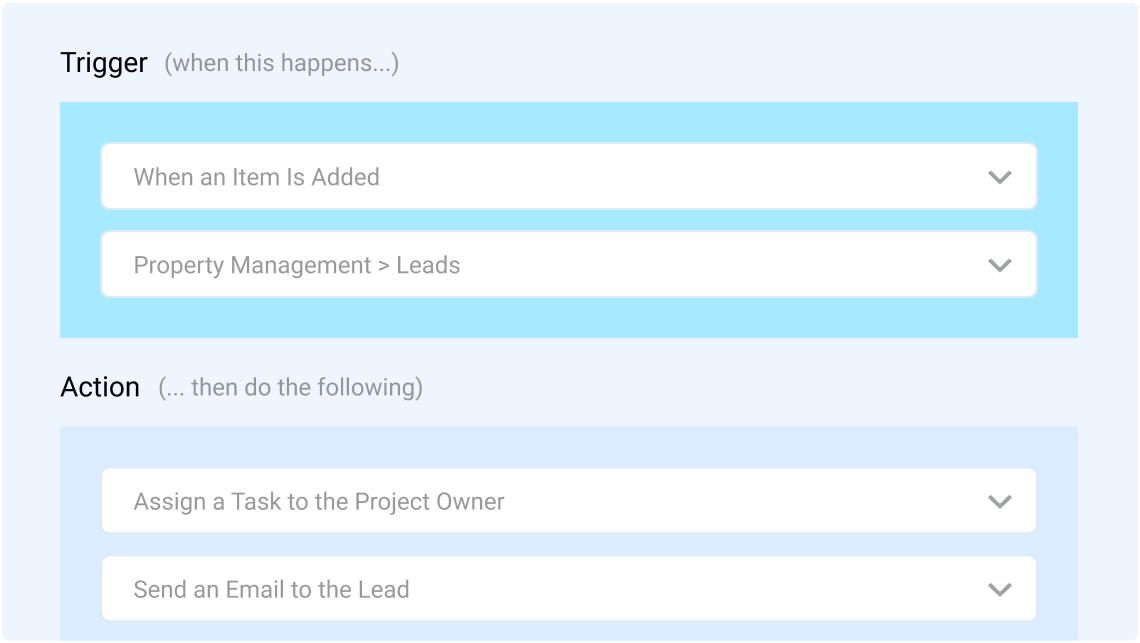
Source: Podio
Podio's free external client access is a real commercial differentiator. Agencies and professional services firms that share workspaces with dozens of clients would pay for full seats on most platforms. On Podio, external collaborators participate at no extra cost on Plus and Premium plans. For businesses where client-facing collaboration is central, this saves thousands annually.
The trade-off is depth. TrustRadius reviewers describe Podio as "good at everything, great at nothing." Teams with advanced reporting needs, complex approval chains, or native Gantt scheduling consistently hit ceilings that dedicated tools don't impose.
The intelligence gap: your CRM is only as good as your data
Here's what most HubSpot vs. Podio comparisons miss: both platforms depend on the quality of data you put into them.
HubSpot's Smart CRM includes AI-powered data enrichment that pulls information from email threads and recorded calls.
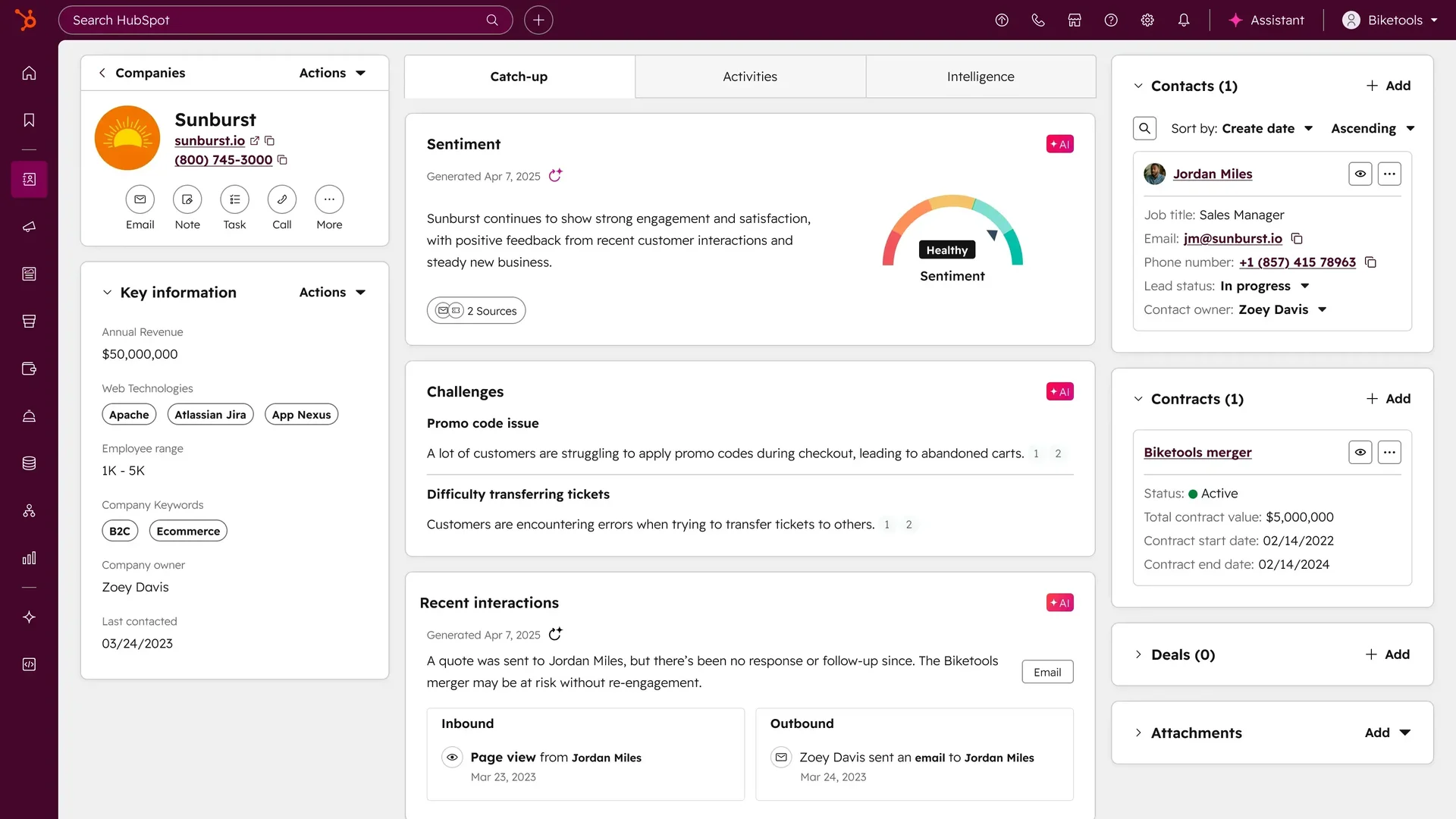
Source: HubSpot
It offers a free tier with unlimited contacts. But the platform doesn't generate B2B prospect data on its own. If your sales team doesn't know which companies are researching solutions like yours, which decision-makers to contact, or what their direct phone numbers are, HubSpot's automation has nothing to act on.
Podio has even less to work with. It stores whatever data your team enters. There's no built-in company database, no contact enrichment, no intent signals, no technographic data. For teams using Podio as a CRM, every record exists because someone manually created it.
This is where ZoomInfo changes the equation.
ZoomInfo's data platform covers 500M contacts across 100M companies, verified through a multi-source pipeline that includes automated ML scanning of 28 million site domains daily, a community of 200,000+ ZoomInfo Lite users who share business contact data back, and an in-house Data Training Lab of 300+ human researchers.
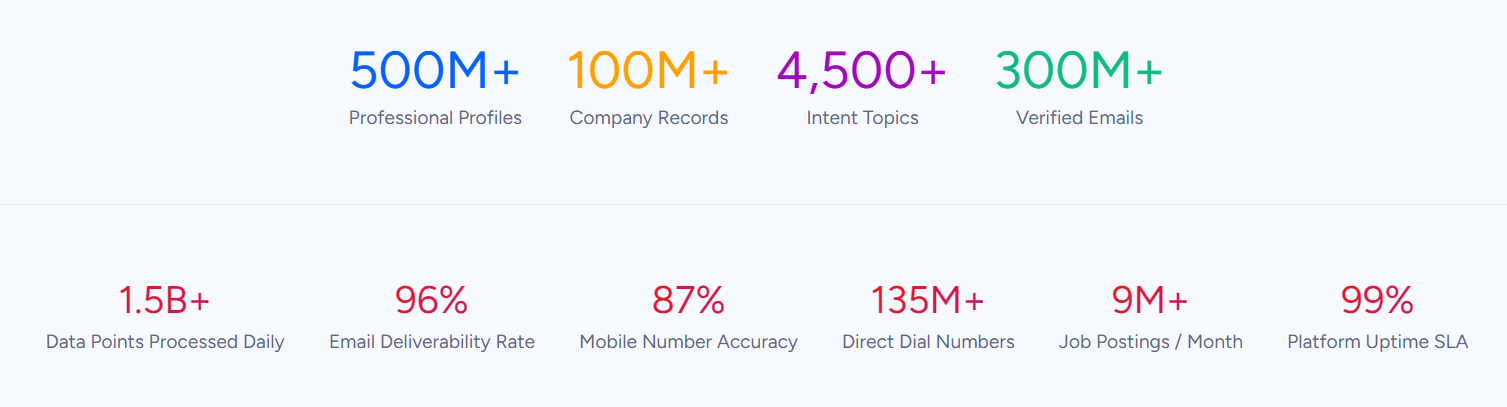
First-party data reaches up to 95% accuracy. In a Fortune 500 competitive RFP analyzing 25 million contacts across vendors, an independent consultant concluded that "no other competitor came even close."
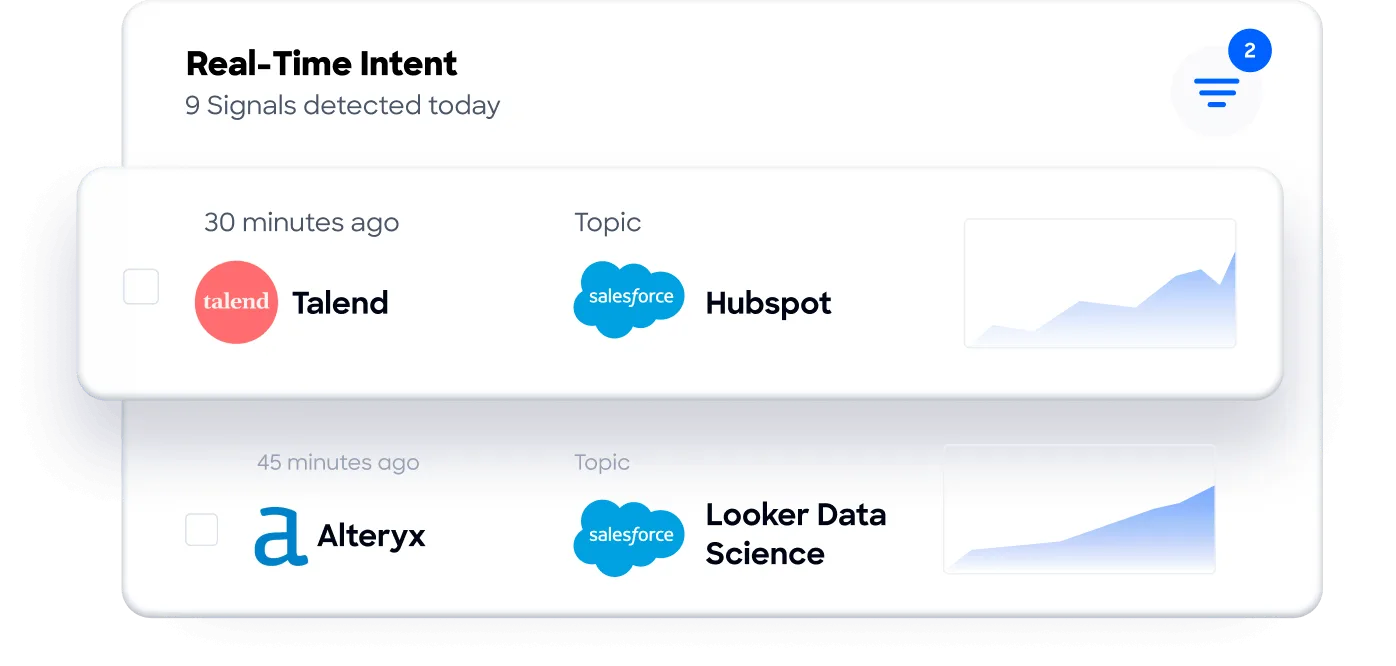
Beyond contact records, ZoomInfo tracks buyer intent signals from 210 million IP-to-Organization pairings, technographic profiles for 30+ million companies, and website visitor identification that resolves anonymous traffic to specific companies and buying teams.
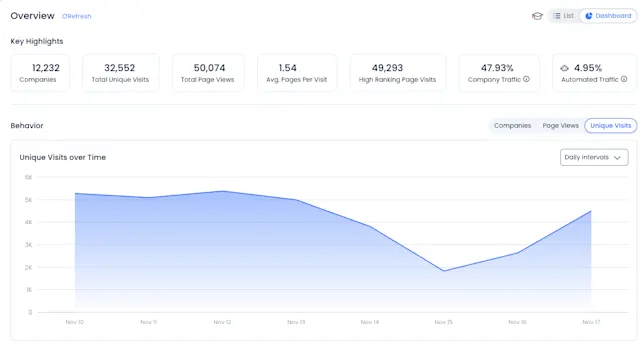
This isn't data you enter manually. It's intelligence that flows into your CRM automatically, telling your team who to contact, when to engage, and what they care about.
SpringDB saw 2-3x increases in campaign conversions across channels, a 300% increase in database usability, and 30-50% uplift in average deal size after using ZoomInfo's enriched data for precise targeting. (SpringDB Case Study)
For a deeper look at how HubSpot and ZoomInfo stack up directly, see our HubSpot vs. ZoomInfo comparison.
ZoomInfo's GTM Context Graph adds intelligence your CRM can't generate
Data alone is a starting point. What separates ZoomInfo from a static database is the GTM Context Graph, an intelligence layer that processes 1.5B+ data points daily and unifies ZoomInfo's third-party intelligence with your CRM records, conversation transcripts, email interactions, and behavioral signals.
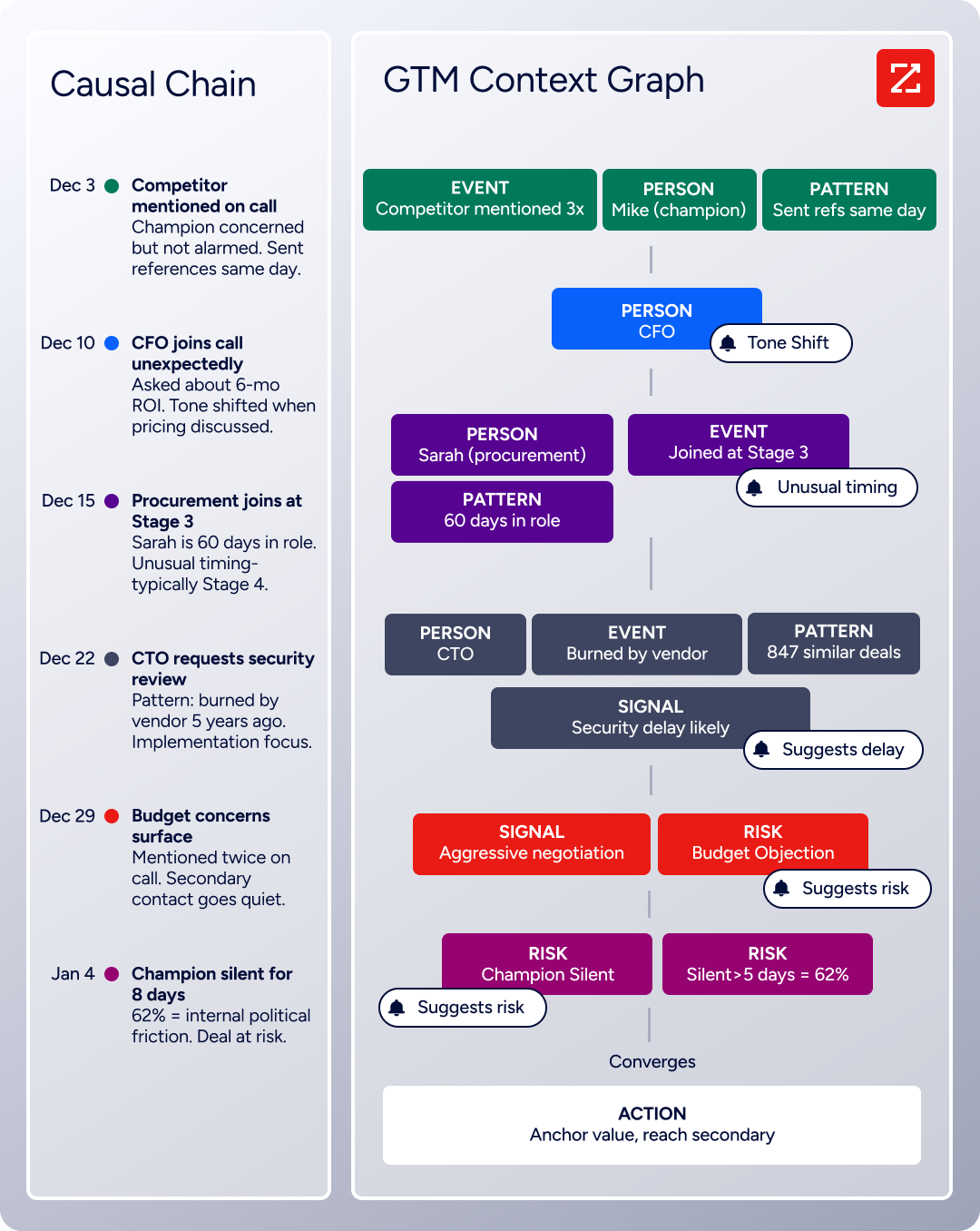
A CRM records that a deal moved from Stage 3 to Stage 4. A conversation tool transcribes what the VP of Finance said on the last call. An intent platform logs a spike in research activity. The GTM Context Graph reasons across all three to understand why the deal moved, and what combination of signals predicts what happens next. As ZoomInfo's Chief Product Officer Dominik Facher writes: "The CRM recorded the state change. It has no record of why it happened."
This intelligence surfaces through three channels. GTM Workspace gives sellers prioritized accounts, AI-drafted outreach, and deal execution in one place.
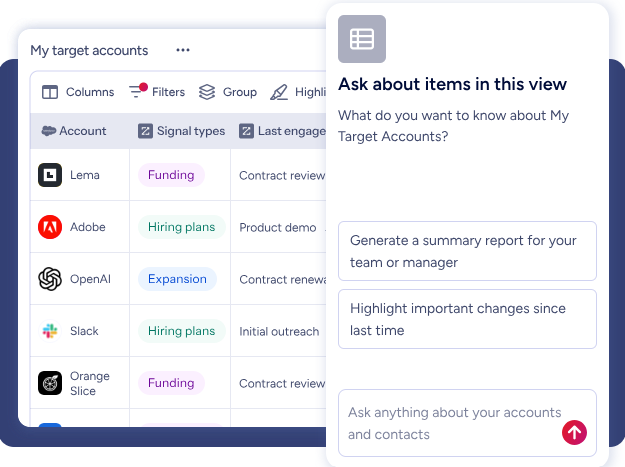
GTM Studio gives marketers and RevOps a canvas to define audiences in natural language, launch multi-channel plays, and measure pipeline impact. And APIs and MCP expose the same intelligence to any third-party tool, AI agent, or custom application.
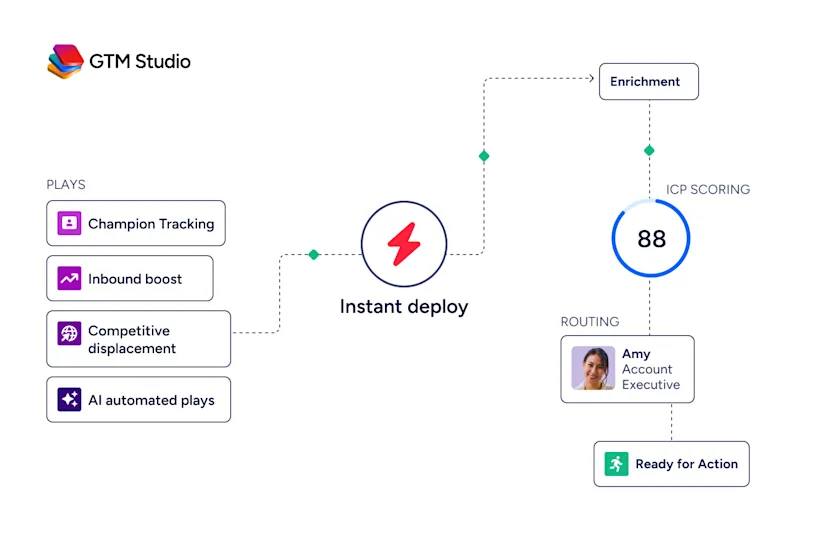
For HubSpot users, ZoomInfo's native integration enriches CRM records, feeds intent-driven prospect lists into sales sequences, and keeps contact data accurate without manual maintenance. For Podio users, ZoomInfo's API can push verified contact data and company intelligence into custom apps, turning a manually maintained database into one powered by verified B2B intelligence.
Seismic's sales team attributed 39% of active pipeline to opportunities identified or influenced by ZoomInfo signals, boosted productivity by 54%, and saved 11.5 hours per week per seller. (Seismic Case Study)
Pricing tells you who each platform is designed for
The cost structures reveal each platform's target buyer.
HubSpot uses a multi-dimensional pricing model combining per-seat charges, contact tiers (for Marketing Hub), and flat-fee tiers for some products. Starter plans begin at $15/seat/month and bundle basic versions of all hubs. Marketing Hub Professional runs $800/month with a $3,000 mandatory onboarding fee. Sales Hub Professional costs $100/seat/month with a $1,500 onboarding fee. Enterprise tiers run $150/seat/month for Sales and Service, and $3,600/month for Marketing. A critical detail: when subscribing to multiple Hubs at different tiers, all Core Seats are billed at the rate of the highest tier. A team mixing Marketing Hub Professional with Sales Hub Enterprise would pay Enterprise seat rates across the board.
HubSpot's permanent free tier is useful (unlimited contacts, basic CRM, limited marketing tools), making it a viable starting point for startups, though the jump to Professional is significant.
Podio keeps it simple. Free for up to 5 users (100-item cap). Plus at $11.20/user/month (annual) unlocks unlimited items, workflow automation, client access, and SOC 2 compliance. Premium at $19.20/user/month (annual) adds visual reports, advanced automation (5 million runs/month), ShareFile integration, and partner extensions. No mandatory onboarding fees. No per-contact charges. For a 20-person team, Podio Premium costs about $384/month. The same team on HubSpot Sales Professional would pay $1,800/month in seat costs alone, plus onboarding.
ZoomInfo uses custom, consumption-based pricing with no published rates. Costs depend on user count, credit volume, features, and contract length. ZoomInfo is premium-priced and designed for B2B organizations where the ROI on accurate data and intent signals justifies the investment. ZoomInfo Lite offers permanent free access with 10 monthly export credits, and a 7-day free trial provides fuller access to evaluate the platform before committing.
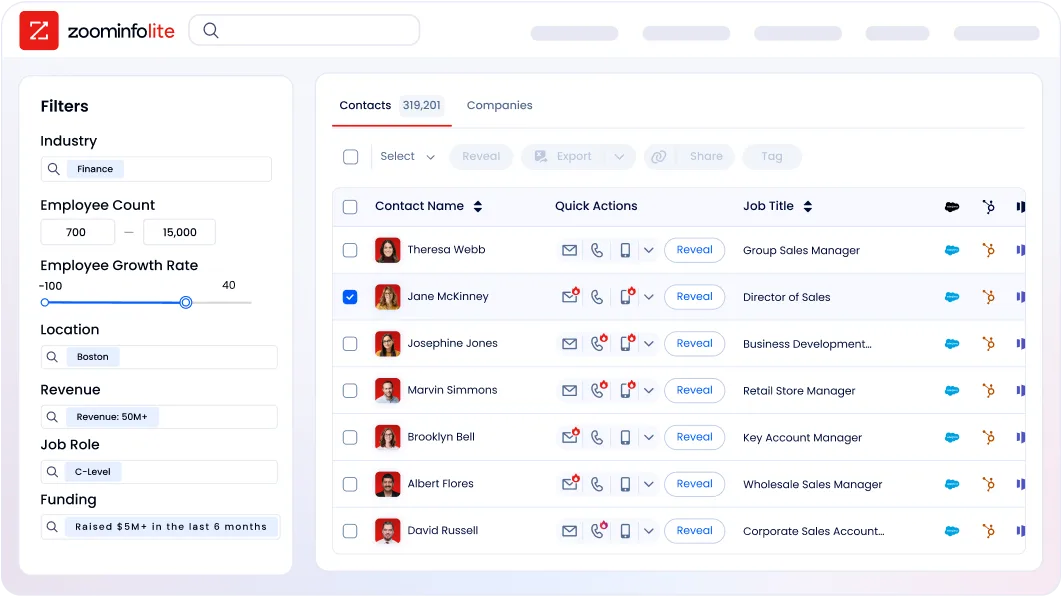
The pricing math depends on what problem you're solving. For workflow management on a budget, Podio is the clear winner. For a full CRM with marketing automation, HubSpot's cost is the price of an opinionated, polished system. For B2B pipeline generation, ZoomInfo's investment pays for itself when verified data and buying signals translate into deals your team wouldn't have found otherwise.
Integration ecosystems operate at different scales
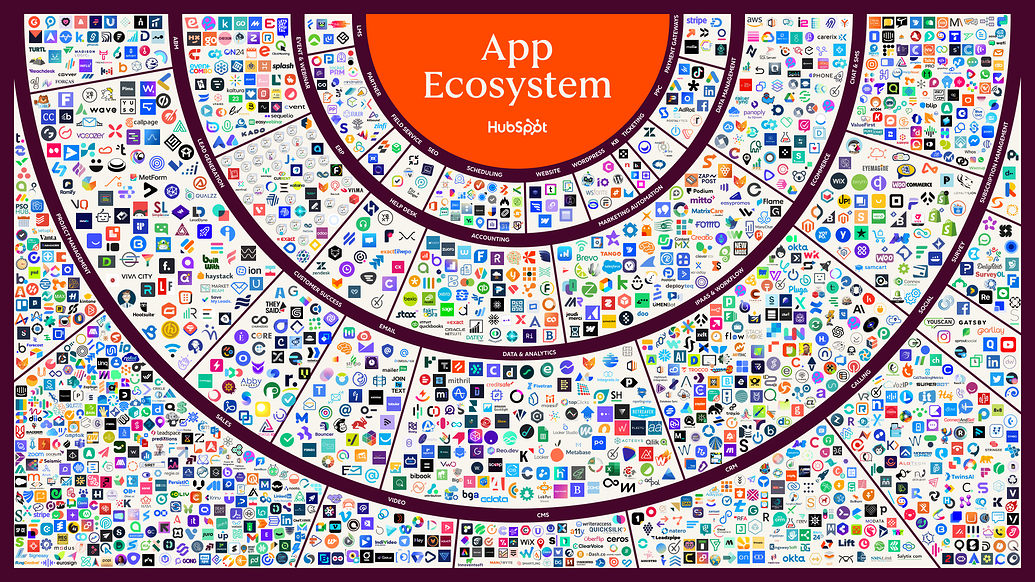
HubSpot has the broadest integration ecosystem of the three, with over 2,000 apps and 2.5 million active installs in its marketplace. Salesforce, Slack, Zoom, Gmail, Google Ads, LinkedIn, Jira, WordPress, and hundreds more connect natively.
Source: HubSpot
For developers, HubSpot offers REST APIs covering the full CRM data model, official SDKs in six languages, and a date-based versioning system with 18-month support windows. The ecosystem is mature, well-documented, and actively maintained.
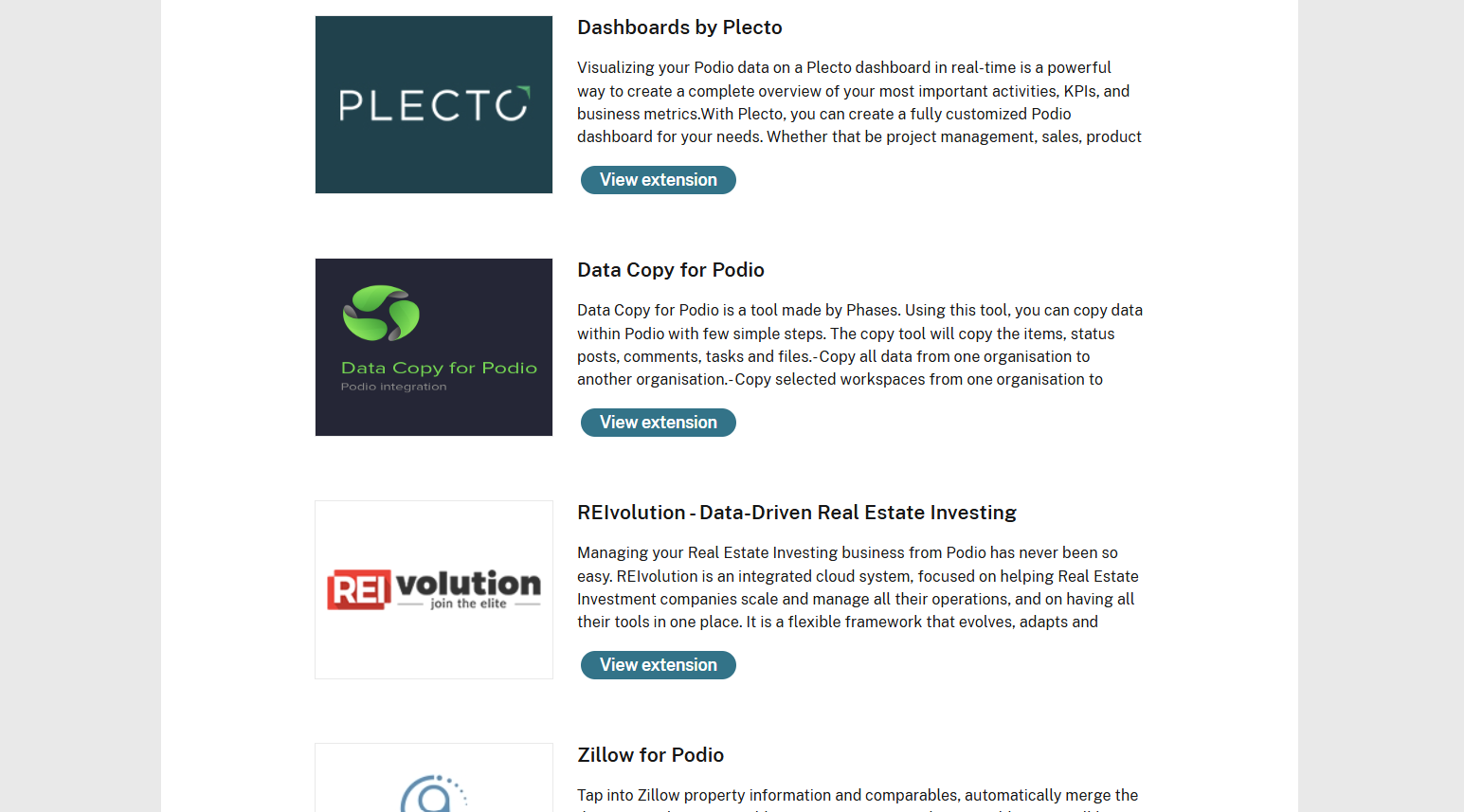
Podio takes a narrower approach. Built-in integrations cover ShareFile, Dropbox, Google Drive, GoToMeeting, Excel, and email.
Source: Podio
The Podio Extensions marketplace adds community-built add-ons, and Premium plans unlock partner extensions from providers like Plecto (sales dashboards) and smrtPhone (cloud telephony). The Podio API uses the same API that powers Podio's own frontend, meaning every UI capability is accessible programmatically. Client libraries exist for eight languages. But the native integration count is small, and teams needing connections beyond the basics typically rely on Zapier, adding cost and complexity.
ZoomInfo operates a marketplace with 172+ integration partners spanning CRM, marketing automation, sales engagement, data warehouses, and AI platforms.
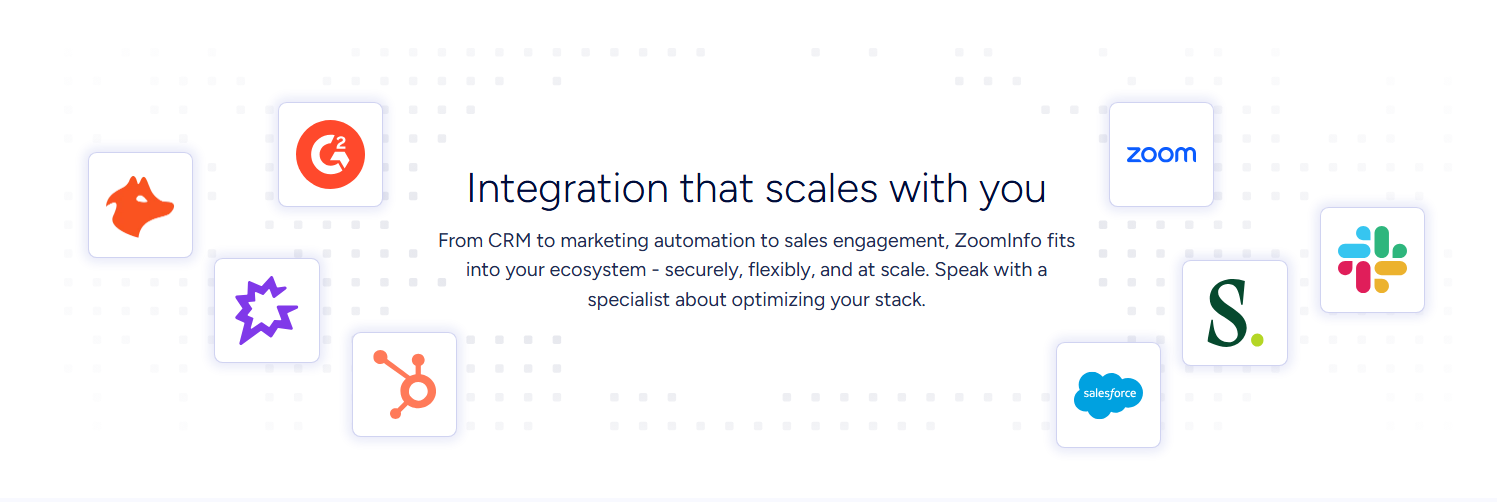
The HubSpot integration is a featured native connector. Cloud Partners deliver ZoomInfo data directly into AWS, Google Cloud, Snowflake, and Databricks. The MCP server connects AI models (including Claude and ChatGPT) directly to ZoomInfo's B2B data. For teams building custom workflows, the Enterprise API provides programmatic access to search, enrich, and intelligence endpoints.
The integration story matters most for how these platforms work together. ZoomInfo plugs directly into HubSpot, enriching contacts and feeding intent signals into sales workflows without manual data entry. For Podio, ZoomInfo's API can push data into custom apps via webhooks or HTTP calls within Podio's workflow automation engine, though the connection requires more configuration than HubSpot's native integration.
BDO Canada reported an 87% reduction in time spent updating their internal data dashboards thanks to ZoomInfo's API, with their analyst noting: "The plug-and-play aspect of the API means I can integrate it very easily into any process and get information at a moment's notice." (BDO Canada Case Study)
Security and compliance credentials
All three platforms take security seriously, though at different scales.
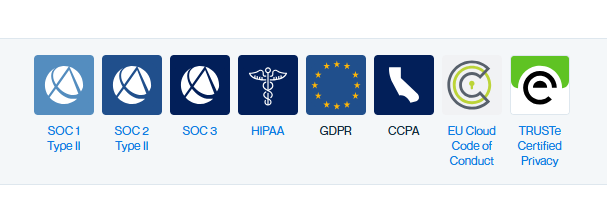
HubSpot holds SOC 2 Type II certification and has obtained an independent HIPAA attestation. Data is encrypted with AES-256 at rest and TLS 1.2/1.3 in transit. Enterprise features include SSO, field-level permissions, sandbox environments, and a centralized audit log. An EU Data Center is available for data residency requirements. HubSpot publishes AI model cards detailing how each AI system interacts with customer data.
Source: HubSpot
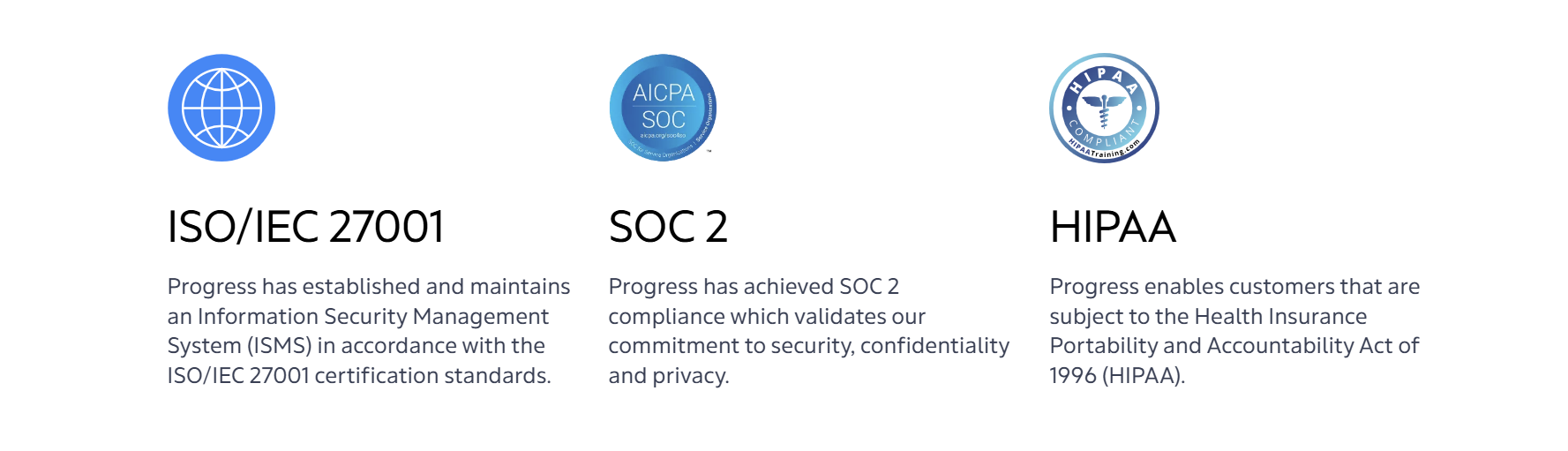
Podio gained SOC 2 Type II compliance in 2025 under Progress Software's security umbrella. Progress holds ISO/IEC 27001 certification and maintains a zero-trust architecture with source-code scanning and external penetration testing. SOC 2 access is restricted to Plus and Premium plans. Podio enforces SSL on all API communication and requires OAuth 2.0 for authentication.
Source: Podio
ZoomInfo maintains a certification stack renewed annually: ISO 27001, ISO 27701, SOC 2 Type II, TRUSTe GDPR, and TRUSTe CCPA. As a B2B data provider, ZoomInfo's compliance posture is central to its business model. The company is a registered data broker in California and Vermont, with a dedicated Trust Center and privacy infrastructure built into the data layer itself.

For enterprise procurement teams evaluating B2B tools, all three meet baseline security requirements. ZoomInfo's compliance depth reflects the higher bar expected of a company that manages hundreds of millions of contact records.
HubSpot vs. Podio vs. ZoomInfo: Which should you choose?
The right choice depends on where your team's biggest bottleneck sits.
Choose HubSpot if:
You need a CRM with marketing, sales, and service automation in one place
Your team follows standard B2B sales and marketing workflows
You want AI tools (Breeze) handling prospecting, content creation, and customer support
Fast time-to-value matters more than customization
You have the budget for a premium platform that scales with your team
Choose Podio if:
Your workflows don't fit a conventional CRM structure
You need to share workspaces with external clients without paying for their seats
Budget is a primary constraint and you want capable tooling under $20/user/month
You have someone on the team willing to invest time designing custom apps and automations
Project management and internal process coordination matter as much as client relationships
Add ZoomInfo if:
Your B2B team needs verified prospect data, direct dials, and business emails to fill the pipeline
You want to know which accounts are researching solutions like yours before they contact a vendor
AI-powered prospecting and account intelligence would save your team hours of manual research
You're already using HubSpot (or any CRM) and want to strengthen it with B2B intelligence
You need an intelligence layer that works across your entire tech stack via API and MCP
Start with ZoomInfo Lite for free or request a demo to see the full platform.
Smartsheet's Senior Manager of Sales Technology Enablement put it directly: "ZoomInfo is our one source of truth for account data, and even more so for contact data. There's no other provider in the market that provides you with that level of detail." (Smartsheet Case Study)
The most effective B2B teams don't treat this as an either/or decision. HubSpot or Podio handles how you manage and engage customers. ZoomInfo provides the intelligence that tells you which customers to pursue and when. Together, they create a system where data, context, and execution work from the same foundation.
HubSpot vs. Podio vs. ZoomInfo FAQ
What is the fundamental difference between HubSpot, Podio, and ZoomInfo?
HubSpot is a CRM and customer platform with integrated marketing, sales, and service automation. Podio is a no-code work management platform where teams build their own apps, workflows, and databases from scratch. ZoomInfo is a B2B data intelligence platform that provides verified contact data, company information, and buying signals to power prospecting and pipeline generation. HubSpot and Podio manage customer relationships; ZoomInfo helps you find the right customers to build relationships with.
Which platform is cheapest for a small team?
Podio is the most affordable paid option at $11.20/user/month (annual) on the Plus plan, with a free tier supporting up to 5 users. HubSpot's free CRM is functional but limited; paid Starter plans begin at $15/seat/month (annual), and Professional tiers cost significantly more with mandatory onboarding fees. ZoomInfo offers a permanent free tier (ZoomInfo Lite) with 10 monthly export credits, but paid plans are custom-quoted and designed for organizations where B2B data investment delivers measurable pipeline ROI.
Can I use ZoomInfo with HubSpot or Podio?
Yes. ZoomInfo has a native integration with HubSpot that enriches CRM records, feeds intent-driven prospect data into sales workflows, and keeps contact information accurate automatically. For Podio, ZoomInfo's REST API and MCP can push verified contact and company data into custom Podio apps, though this requires more configuration than HubSpot's native connector. ZoomInfo is designed to work with any CRM or tool through its API and MCP access.
Which platform has the best marketing automation?
HubSpot, by a wide margin. Its Marketing Hub includes email marketing, social media management, landing pages, ad campaigns, multi-touch attribution, and AI-powered content tools. Podio's automation is limited to internal workflow triggers (task assignments, email/SMS delivery, PDF generation) and has no native marketing automation. ZoomInfo offers account-based marketing with intent-driven audience targeting, a native demand-side platform for display ads, and form optimization, but it focuses on B2B demand generation rather than full-funnel marketing automation.
Is Podio a real CRM alternative to HubSpot?
Podio can function as a CRM when configured with custom apps for contacts, companies, deals, and pipelines. Its drag-and-drop app builder and bidirectional relationship fields support relational data structures similar to a CRM. However, Podio lacks native sales automation, marketing tools, AI-powered prospecting, built-in email tracking, and the reporting depth that HubSpot provides out of the box. Podio works best as a CRM for teams that need heavy customization and are willing to invest setup time, particularly in industries like real estate, agencies, and accounting.
How does ZoomInfo's data compare to what HubSpot provides?
HubSpot's Smart CRM stores and enriches data your team enters or imports, with some AI enrichment from email threads and calls. ZoomInfo operates a dedicated B2B data platform with 500 million contacts, 100 million companies, 135 million verified phone numbers, and 200 million verified business emails, verified through automated scanning of 28 million domains daily and 300+ human researchers. ZoomInfo also provides buyer intent data, technographic profiles, and website visitor identification, categories of intelligence HubSpot's CRM does not generate on its own.
Which platform requires the least setup time?
HubSpot has the fastest time-to-value for CRM and marketing workflows, with a structured system that works immediately after account creation. ZoomInfo's data is accessible as soon as you log in, with search and export available from day one. Podio requires the most setup time because every app, field, and workflow must be designed and built before teams can use the platform productively. Reviewers on Capterra consistently cite Podio's initial configuration as time-consuming and dependent on a dedicated admin.
Do any of these platforms offer a permanent free plan?
All three do. HubSpot's free CRM includes basic contact management, deal tracking, and limited marketing tools for up to 2 users. Podio's free plan supports up to 5 users with a 100-item cap across the organization. ZoomInfo Lite provides permanent free access to the B2B database with 10 monthly export credits, individual and company search, a Chrome extension, and basic website visitor identification. None of these free tiers require a credit card.
See how HubSpot compares against other CRMs and platforms:
