
IBISWorld has produced structured industry research for more than fifty years, since before "market intelligence" became a software category. Founded in 1971, the platform houses 50,000+ industry titles across 37+ countries, each written and verified by in-house analysts. For professionals who need to walk into a client meeting, underwrite a loan, or size a market with numbers they can cite, IBISWorld has built its reputation on one promise: human-written industry data.
For this IBISWorld review, we analyzed the platform in detail.
We believe it's the right choice if:
You need structured, analyst-verified industry reports for high-stakes decisions
You work in commercial banking, consulting, accounting, or investment analysis
You need consistent report formats you can cite in client deliverables
You require industry-level data (market sizing, forecasts, risk ratings, financial benchmarks)
You want coverage across the US, Canada, UK, Australia, and Europe under one subscription
However, IBISWorld might not be the best choice if:
You need to identify and contact specific decision-makers at target companies
You require real-time buyer intent signals showing which companies are actively in-market
You need verified direct-dial phone numbers and business email addresses for outreach
You want company-level intelligence tied to sales and marketing execution
You need a platform that connects intelligence directly to go-to-market action
In this case, you should consider ZoomInfo: a B2B intelligence and go-to-market platform that picks up where industry research leaves off. Where IBISWorld tells you the landscape of an industry, ZoomInfo tells you who to contact within it, when they're ready to buy, and what to say when you reach them, backed by 500M contacts, 100M companies, and 200M+ verified business email addresses.
We've included a detailed look at ZoomInfo later in this IBISWorld review, as it represents the complement for professionals who need to move from industry understanding to company-level action. If you're ready to explore that next step, you can start with ZoomInfo's free trial here.
What is IBISWorld?
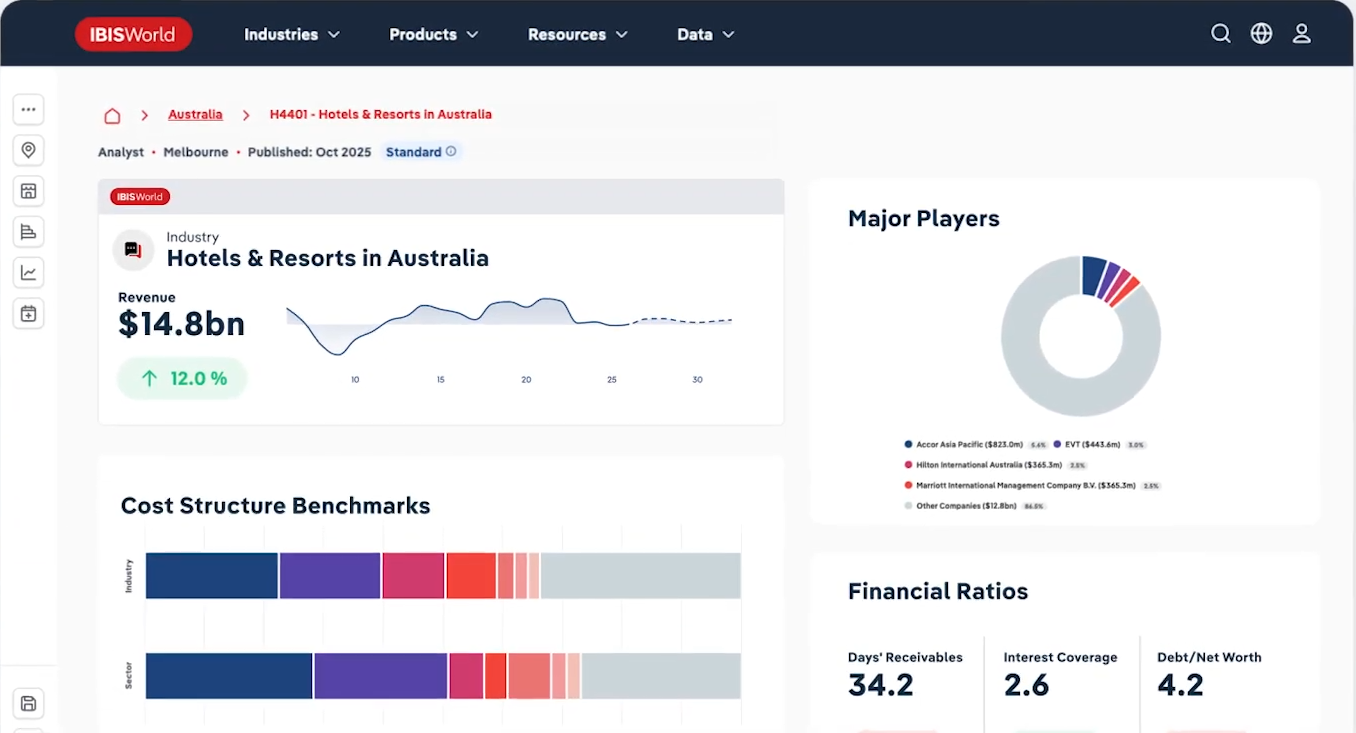
IBISWorld is a market research and industry intelligence platform founded in 1971 by Australian business strategist Phil Ruthven. Originally launched as a consulting firm called IBIS Corporate Services in Melbourne, the company shifted course in 1987 to focus solely on electronic delivery of industry information, years before the internet went mainstream.
Source: IBISWorld
Today, IBISWorld is a private, family-controlled company with over 400 employees across six offices (New York, Los Angeles, Melbourne, London, Frankfurt, and Beijing). The company has never raised external funding, sustaining itself through more than five decades of subscription revenue. It serves 10,000+ clients globally, with 6,000+ businesses subscribing to the core product.
The client roster places IBISWorld in the enterprise tier: Morgan Stanley, Santander, Deloitte, Visa, Microsoft, HSBC, Grant Thornton, Ogilvy, BDO, PwC, and Citi are among its named customers. IBISWorld claims penetration across 45 of the top 50 commercial banks, 550 accounting firms, and 475 consulting firms.
The typical IBISWorld user is a decision-maker at a mid-to-large enterprise or professional services firm, someone who regularly needs to understand unfamiliar industries quickly and needs numbers they can defend to regulators, clients, or senior leadership.
IBISWorld Pros & Cons
Pros | Cons |
|---|---|
- 50,000+ industry titles across 37+ countries | - No SMB-accessible entry point (reports start at $2,850 each) |
- 100% analyst-verified content, not AI-generated | - Forecasts tend toward conservative projections |
- Consistent 10-chapter report structure across all industries | - Reports update 1–4 times annually, not in real time |
- 55-year track record in regulated verticals | - Phil AI limited to one report at a time, 100 questions/month |
- Phil AI provides natural-language access to report data | - Emerging market coverage concentrated in English-speaking regions |
- API, Snowflake, and Copilot integrations for workflow embedding | - Subscription pricing is opaque and entirely quote-based |
- Financial benchmarks filterable by seven asset-size bands | - No company-level contact data or buyer intent signals |
IBISWorld Review: How It Works & Key Features
Industry Intelligence: IBISWorld's flagship product delivers structured, analyst-written research across thousands of industries.
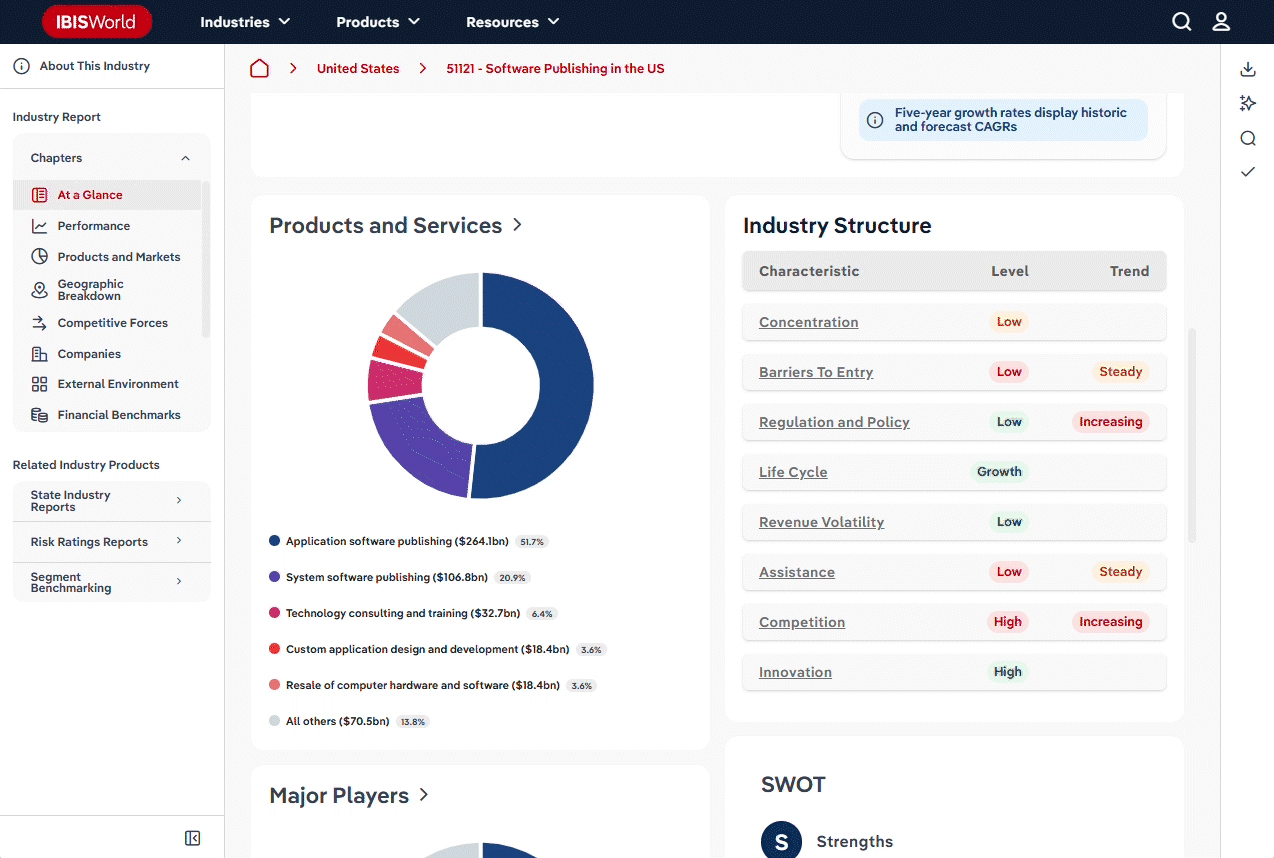
IBISWorld's Industry Intelligence is the product the company was built on. Each report follows a standardized 10-chapter structure: About This Industry, At a Glance, Performance (historical and forecast), Products and Markets, Geographic Breakdown, Competitive Forces (Porter's Five Forces), Companies, External Environment, Financial Benchmarks, and Key Statistics.
Source: IBISWorld
This consistency is one of IBISWorld's clear advantages. A commercial banker who learns the report format once can apply it across every industry they encounter. The At a Glance chapter surfaces key takeaways, product breakdowns, major players, a SWOT analysis, and a three-paragraph executive summary covering the past five years, current conditions, and a five-year outlook.
The data behind each report comes from national statistical agencies such as the US Economic Census, Statistics Canada, the Australian Bureau of Statistics, and the UK ONS. IBISWorld's analysts then extend and interpret that data. Forecasts use two documented methods: regression analysis and driver growth rate models, both subject to quality control checks including MAPE testing.
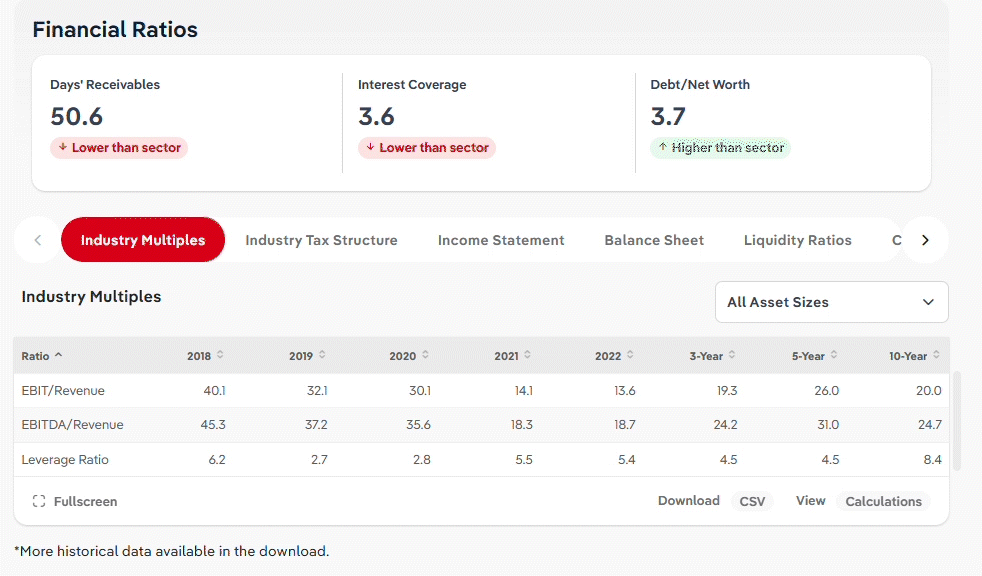
The Financial Benchmarks chapter is particularly useful for auditors and lenders. It provides cost structure breakdowns and financial ratios (liquidity, coverage, leverage, operating, cash flow) filterable by seven asset-size bands from under $500K to over $100M. An interactive Business Concentration map shows establishment density by state or province, and US subscribers can click through to state-level reports.
Source: IBISWorld
Archived reports dating back to 2001 provide a longitudinal record across multiple economic cycles, a resource that's rare in third-party industry research.
Phil AI: A conversational research assistant grounded in IBISWorld's proprietary data.
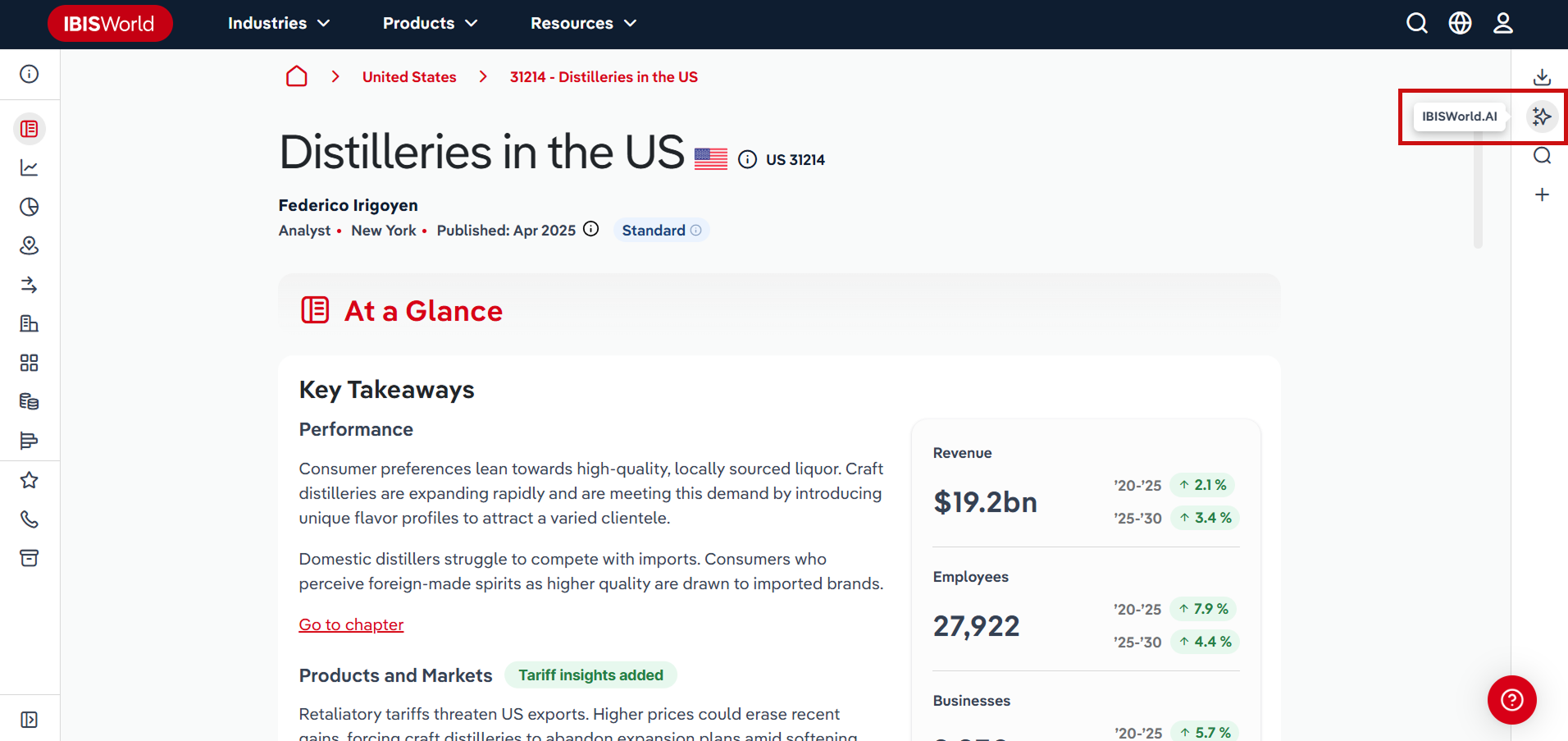
Phil, Your AI Economist is IBISWorld's answer to the question every enterprise platform now faces: how to add AI without sacrificing trust. Phil runs on a RAG architecture powered by OpenAI's GPT-4.1 via Azure, drawing exclusively from IBISWorld's analyst-written database. It never uses crowdsourced or unverified web content.
Source: IBISWorld
In practice, Phil sits inside each industry report as a chat interface. Users ask questions in natural language and receive answers with links to the relevant chapters and sections. It can reformat data into SWOT or Porter's Five Forces frameworks, generate call prep questions and pitches, and calculate deviation from industry norms.
The constraints are real. Phil works only within the single open industry report and related products in the left-hand navigation. It cannot search across multiple industries at once. Users get 100 questions per month with no rollover, and responses are text-only (no charts). Sessions are ephemeral: queries are not saved when you exit a report.
For compliance-sensitive buyers, the privacy posture is strong: IBISWorld does not use customer questions to train Phil, and OpenAI does not store prompts or answers for model training.
Atlas: Cross-industry, cross-country data querying at portfolio scale.
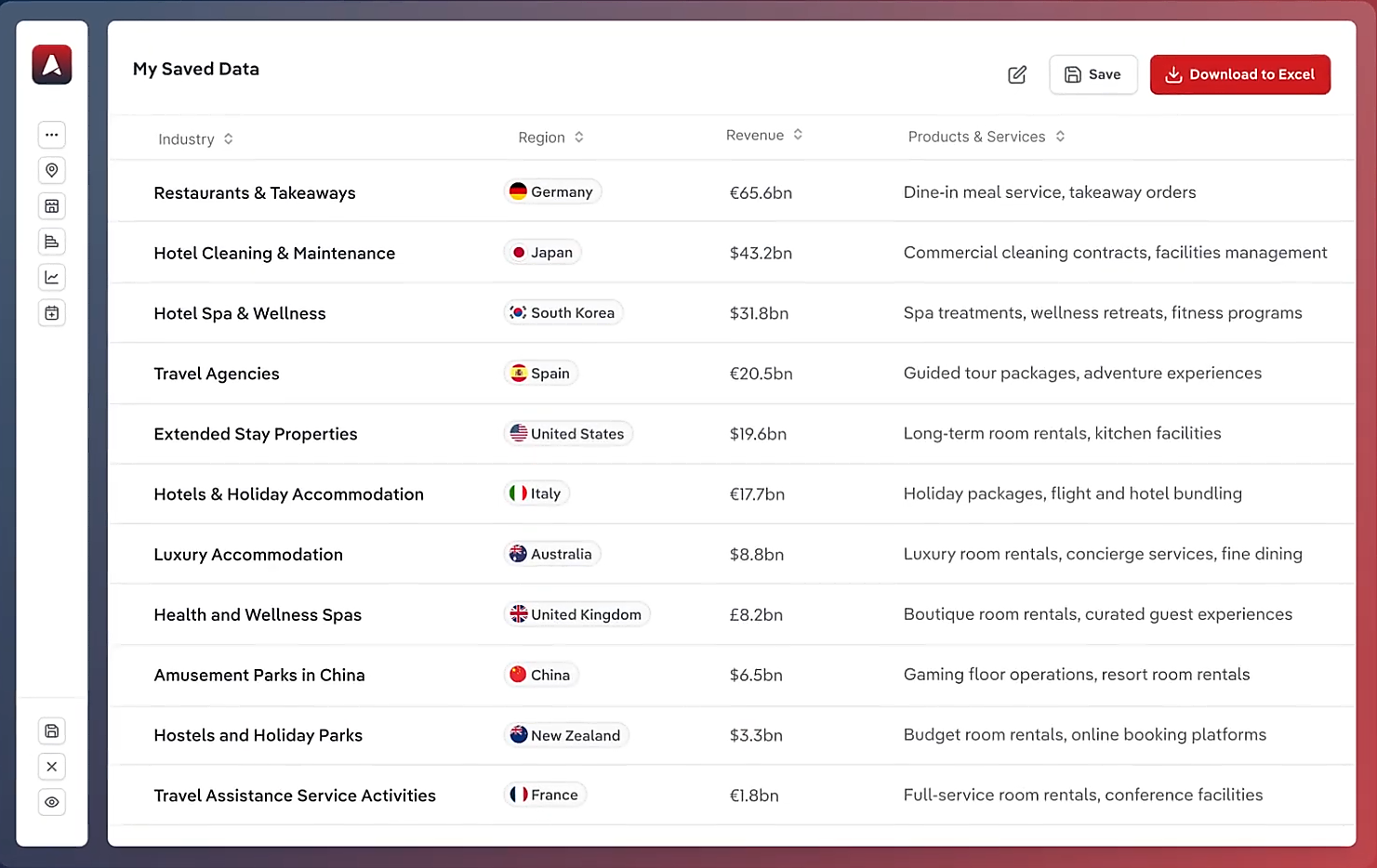
Atlas, launched May 2026, solves a longstanding problem for enterprise users: comparing industries across geographies without opening reports one at a time. Atlas consolidates 57 countries under a single taxonomy, integrating industry data with company intelligence on over 800,000 global company profiles.
Source: IBISWorld
The tool supports queries across hundreds of industries and dozens of countries in a single session, covering industry performance, financial benchmarks, risk scores, competitive forces, and macroeconomic factors. Outputs come in Excel and CSV formats for integration into financial models, and API access enables automated recurring data delivery.
For PE firms screening acquisition targets across geographies, credit officers stress-testing a lending book, or consulting firms sizing markets for cross-border engagements, Atlas replaces what used to be a multi-day research exercise with a single-session workflow. The consistent taxonomy means transfer pricing documentation and portfolio-level benchmarking don't require reconciling different classification systems between sources.
ProcurementIQ: Dedicated procurement intelligence across 2,000+ spend categories.
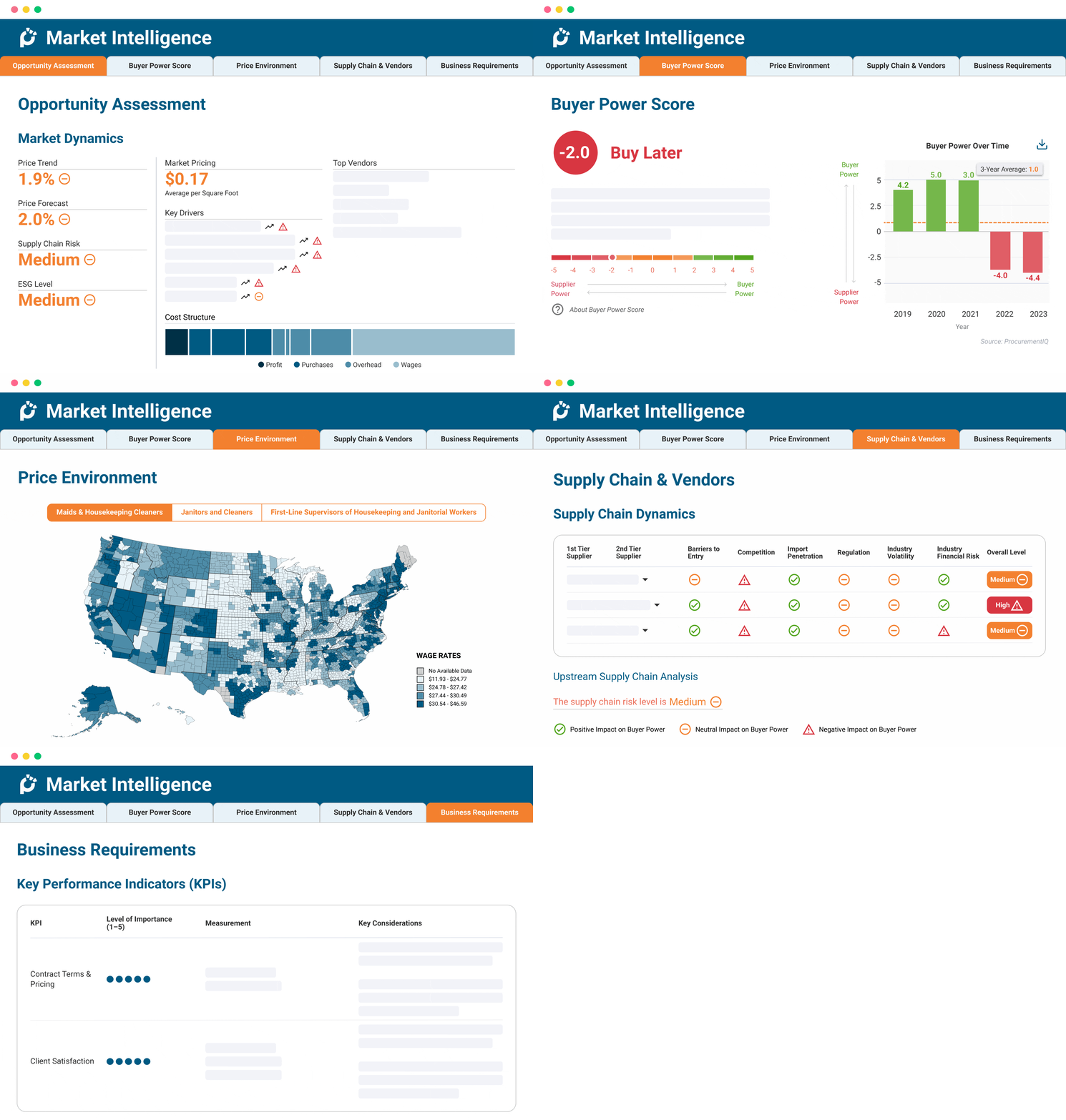
ProcurementIQ serves a buyer most market research competitors overlook: the category manager and strategic sourcing team. With 1,000+ procurement categories (expanding to 2,000+), the platform provides pricing benchmarks, supplier intelligence, negotiation levers, and contract strategy guidance.
Source: ProcurementIQ
Each report covers current and forecast pricing, top supplier identification, market dynamics, and buyer power scoring. SupplierIQ Profiles add supplier financial health assessment using Altman Z-Score Plus calculations, operational capabilities scoring, and side-by-side vendor comparison. Ready-to-use RFP templates pre-populated with market-specific content reduce preparation time.
All research is produced independently of suppliers by in-house analysts, so buyers can bring the data to the negotiation table without concern about vendor-influenced bias.
Business Environment Profiles: Tracking external forces that drive industry performance.
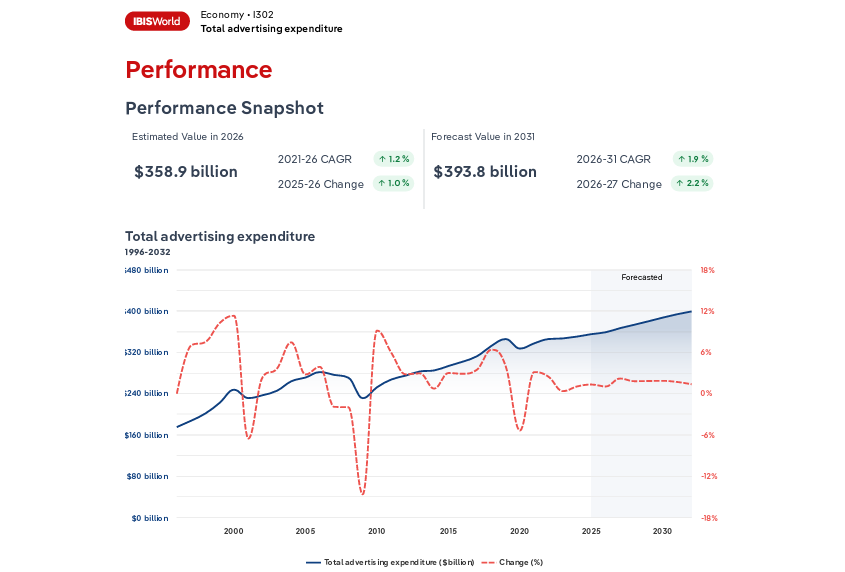
Business Environment Profiles flip the typical research approach. Instead of organizing data around industries, they organize it around external drivers: macroeconomic indicators, demographic trends, commodity prices, financial market conditions, and government policy changes.
The US collection spans 170+ profiles organized into seven categories, from domestic commodities and consumer behavior to demographics and financial markets. Each profile carries 20 years of historical data plus five-year forecasts, and profiles are linked to IBISWorld's industry report database so users can trace which sectors are most exposed to a given driver.
Source: IBISWorld
This structure is especially useful for portfolio-level risk management. A credit officer asking "what happens to our lending book if the 30-year mortgage rate rises another 100 basis points?" can trace the exposure across all affected industries without building the analysis from scratch.
Pricing: Enterprise-oriented with no self-serve option.
IBISWorld uses a dual-access pricing model. Individual reports cost US $2,850 per Industry Research Report (US), with shorter Industry Spotlight Reports at $800. Annual memberships are custom and quote-based, available only through IBISWorld sales.
IBISWorld's help documentation notes that membership pricing depends on research and business needs and that memberships carry discounts on the retail price. Whether products like ProcurementIQ, Company Intelligence, Atlas, or API access are bundled or priced separately is not publicly disclosed.
There is no free tier. Prospects can download a sample report or schedule a free demo, but no trial subscription or free credits are available. IBISWorld does offer a 100% money-back guarantee on reports purchased through its website if the content doesn't meet the described standard.
Where IBISWorld Falls Short
IBISWorld excels at structured industry intelligence for regulated contexts. But several limitations show a platform built for understanding industries, not for acting on that understanding at the company level.
No Company-Level Contact Data or Buyer Intent. IBISWorld's Company Intelligence product covers 800,000+ companies globally with market share, revenue, and analyst context. But it provides no verified email addresses, no direct-dial phone numbers, no org charts with contact information, and no signals showing which companies are actively in-market. For sales teams, marketers, or business development professionals who need to move from "I understand this industry" to "I'm reaching the right person at the right company," there's a gap between IBISWorld's output and their next action.
Conservative Forecasts. G2 users consistently note that IBISWorld's growth forecasts run conservative. For private equity associates building investment theses or consultants constructing financial models, this systematic conservatism requires manual adjustment.
Update Frequency. Reports update one to four times annually. For fast-moving sectors (technology, biotech, AI), this cadence can leave reports stale between updates. There is no real-time data feed for the core industry reports.
Phil AI Scope Constraints. Phil works only within a single open industry report, handles one question at a time, and caps users at 100 questions per month with no rollover. For users doing high-volume analysis across multiple industries, these limits add friction. Cross-industry synthesis still requires manual effort.
Emerging Market Coverage Gaps. Geographic coverage remains concentrated in English-speaking and Western European markets. The 2026 Asia dataset is API-only structured data across 16 markets with no analyst-written narratives. G2 users have flagged gaps in non-English-speaking emerging markets.
No SMB Entry Point. At $2,850 per individual US report and no published membership pricing, IBISWorld is out of reach for growing companies, independent consultants, and SMB advisors without institutional backing. There is no free tier, no trial subscription, and no pay-as-you-go option.
These limitations aren't failures. They reflect a platform built for institutional buyers who need industry-level intelligence they can cite and defend. But they leave a clear gap for professionals who need to translate industry understanding into company-level action: identifying decision-makers, monitoring buying signals, and executing outreach. That requires a different kind of platform.
The Natural Complement to IBISWorld: ZoomInfo
IBISWorld tells you the state of an industry. ZoomInfo tells you who to reach within it, when they're ready to buy, and what to say. The two platforms address different stages of the same workflow: understand the landscape, then act on it.
ZoomInfo is a B2B intelligence and go-to-market platform with 500M contacts, 100M companies, 135M+ verified phone numbers, and 200M+ verified business email addresses. By combining this data with CRM records, conversation transcripts, and behavioral signals, ZoomInfo's GTM Context Graph (processing 1.5B+ data points daily) connects account activity to deal outcomes, showing not just what happened but why. That intelligence is accessible through GTM Workspace for sellers, GTM Studio for marketers and RevOps, or APIs and MCP in any other front-end.
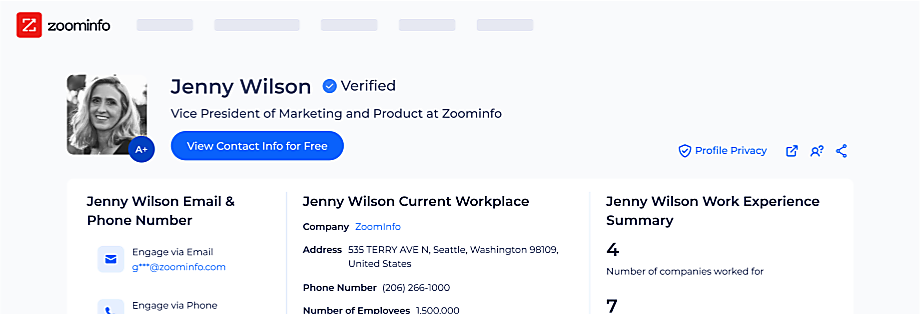
Company and Contact Intelligence: The data layer IBISWorld doesn't provide.
IBISWorld covers 800,000 companies with market share and revenue estimates. ZoomInfo covers 100M companies with firmographics, technographics, org charts, and verified contact data for the people who work there. The difference isn't just scale. It's what you can do with the data.
ZoomInfo's contact database includes 120M direct-dial phone numbers, 200M+ verified business email addresses, and 300+ company attributes for segmentation. A multi-source verification pipeline backed by 300+ human researchers maintains the data, with up to 95% accuracy on first-party data.
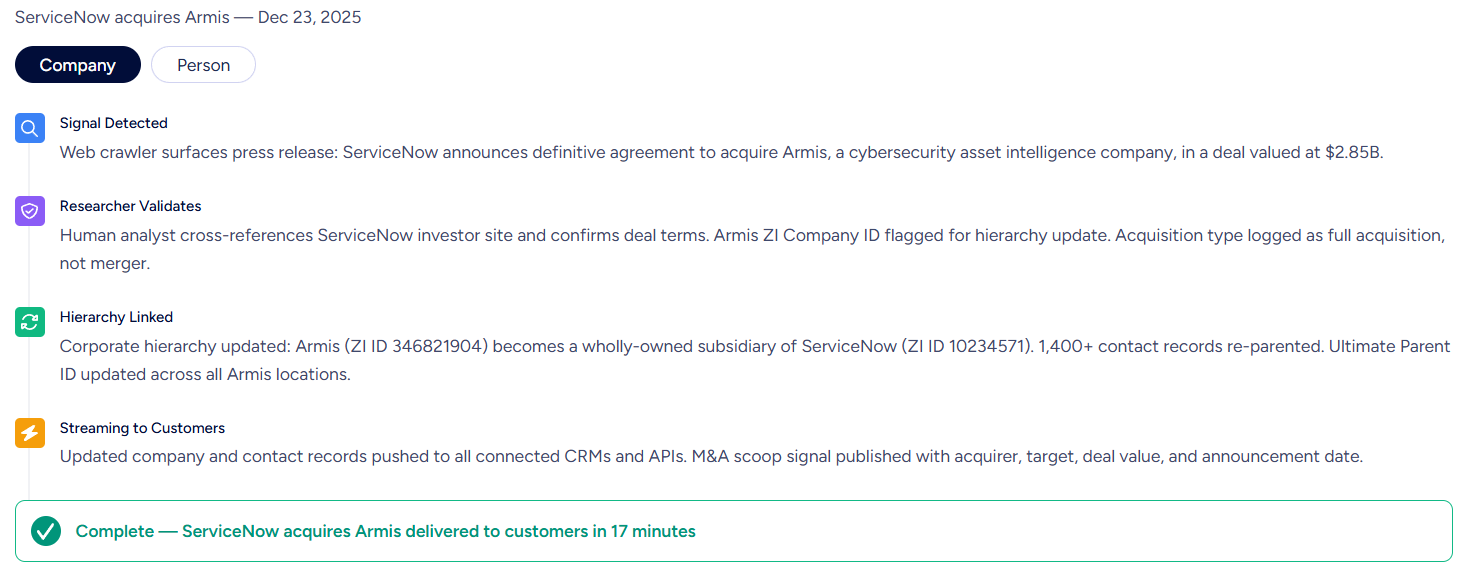
For a banker who just read an IBISWorld report on the commercial HVAC industry and now needs to find the CFO at a mid-market HVAC distributor in Texas, ZoomInfo bridges that gap. For a consultant who understands the competitive dynamics of a sector and needs to identify acquisition targets with specific revenue ranges, tech stacks, and growth trajectories, ZoomInfo provides the company-level detail that industry reports cannot.
The data advantage is not self-reported. In a Fortune 500 competitive RFP analyzing 25 million contacts across vendors, the independent consultant concluded that "no other competitor came even close."
Vensure scaled its prospecting with ZoomInfo's data: "ZoomInfo gives us the information we need to execute. We don't have to go through and spend our time digging. It's already there, so we can be three steps ahead." (Vensure)
Buyer Intent and Signals: Knowing which companies are actively in-market.
IBISWorld tracks macroeconomic and industry-level trends. ZoomInfo tracks company-level buying behavior. ZoomInfo Intent monitors signals from 210 million IP-to-Organization pairings and 6 trillion+ new keyword-to-device pairings sourced monthly to identify companies actively researching topics related to your product or service.
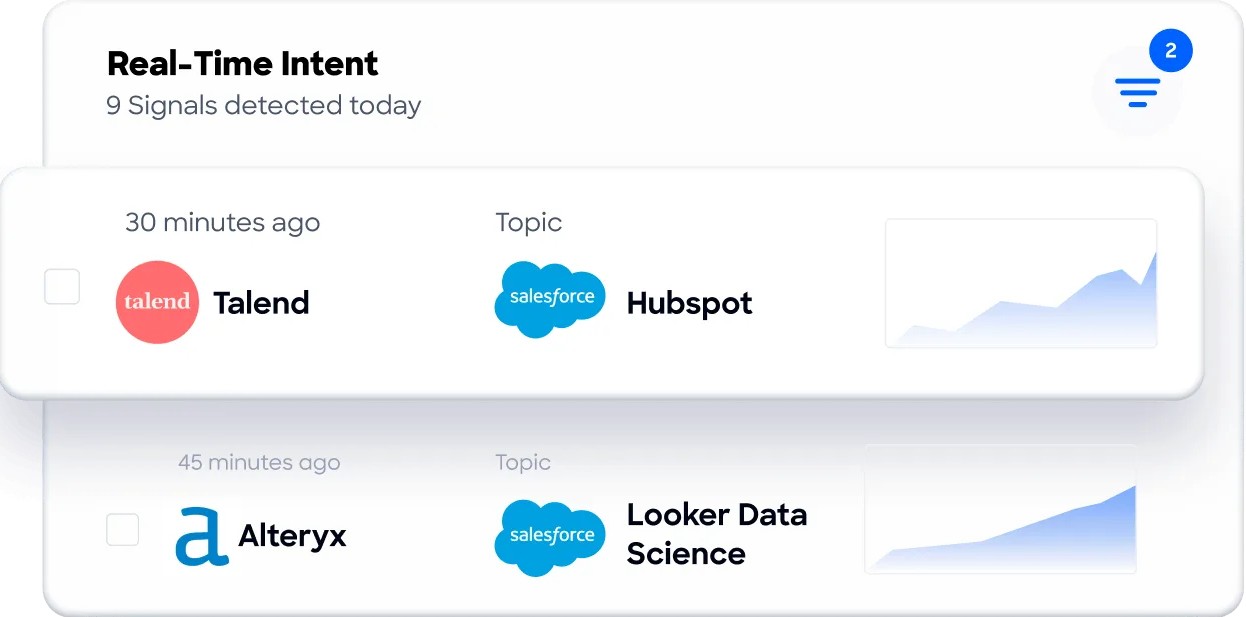
Guided Intent, exclusive to ZoomInfo, identifies topics historically correlated with deal success rather than requiring manual topic selection. Combined with WebSights, which resolves anonymous website traffic to specific companies and buying team members, ZoomInfo provides a signal layer that turns industry knowledge into sales intelligence.
For teams that already understand the industry landscape through IBISWorld, ZoomInfo adds the timing dimension: not just which companies exist in a market, but which ones are showing buying behavior right now.
Seismic attributed 39% of active pipeline to opportunities identified or influenced by ZoomInfo signals, with their sales team becoming 54% more productive. "That combination of our internal CRM data, external signals, and AI that's given all that context has helped us craft very specific account- and persona-based messages." (Seismic)
GTM Workspace and GTM Studio: From intelligence to execution.
IBISWorld delivers intelligence as reports and data feeds. ZoomInfo delivers intelligence you can act on. GTM Workspace gives sellers a single workspace where prioritized accounts, AI-drafted outreach, and deal execution converge. AI agents research accounts, generate follow-ups, monitor signals, and update CRM fields.
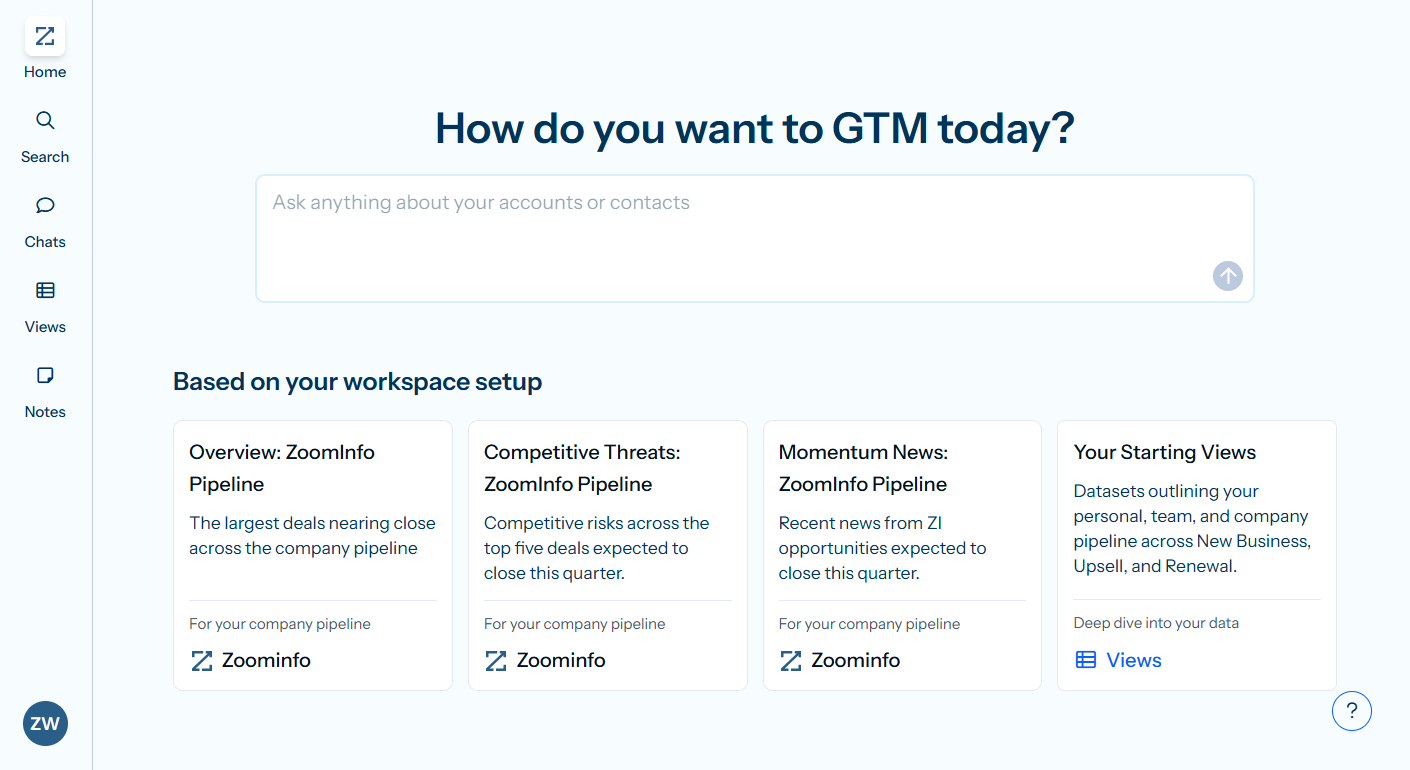
GTM Studio gives marketers, RevOps, and GTM engineers a builder environment where audience definition, campaign orchestration, and pipeline measurement happen in natural language. Expansion plays that used to take 3 weeks now launch in 30 minutes, without engineering support.
For teams that use IBISWorld to understand an industry and then need to build a targeted campaign against the companies in it, GTM Studio and GTM Workspace turn that understanding into pipeline without switching tools.
BDO Canada activated ZoomInfo data within internal systems: "The plug-and-play aspect of the API means I can integrate it very easily into any process and get information at a moment's notice," with an 87% reduction in time spent on data dashboard updates. (BDO Canada)
Universal Access: APIs and MCP for any tool or workflow.
Both IBISWorld and ZoomInfo offer API access for teams that want to embed data into their own systems. IBISWorld's RESTful API delivers industry reports, risk ratings, and business environment data in JSON, with integrations for Snowflake, nCino, Copilot, and Relpro.
ZoomInfo's Enterprise API and MCP server go further, exposing company data, contact data, intent signals, and AI-generated account intelligence to any application, workflow, or AI agent. ZoomInfo MCP is listed in the Claude directory and supports Claude, ChatGPT, and other MCP-compatible tools, so the same B2B intelligence powering ZoomInfo's native products is available inside third-party AI agents.
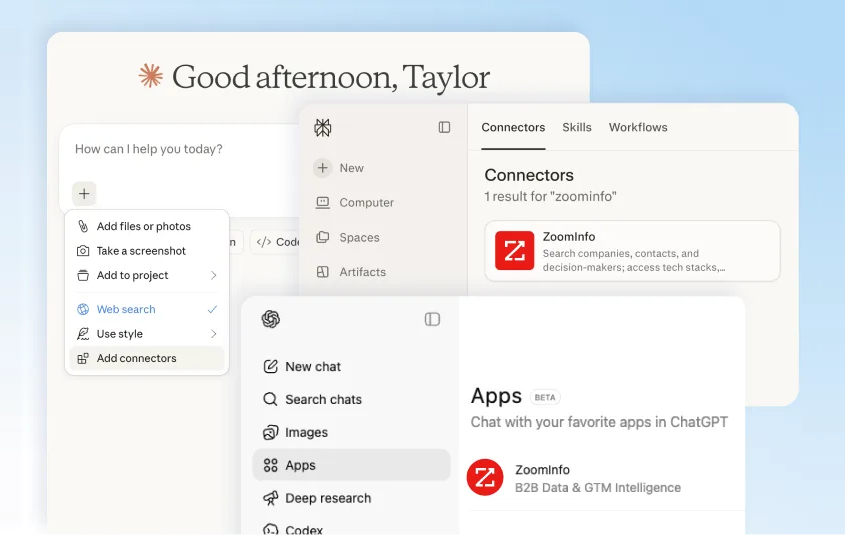
For data engineering teams that already pipe IBISWorld industry data into dashboards and models, ZoomInfo's API adds the company and contact layer that makes those models actionable.
Pricing: Free entry points and consumption-based scaling.
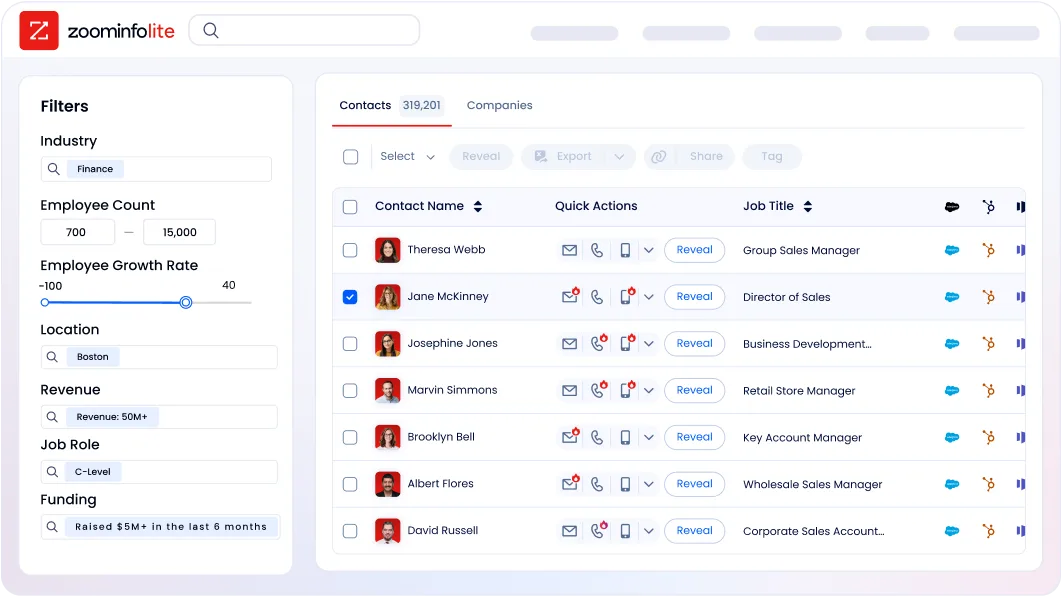
IBISWorld has no free tier and starts at $2,850 per individual report. ZoomInfo offers two free entry points: ZoomInfo Lite (a permanent free tier with access to 100M+ verified profiles and 10 monthly export credits, no credit card required) and a 7-day free trial of the full platform. Paid plans use consumption-based pricing scaled around seats, credits, and feature access, with all pricing custom-quoted through sales.
IBISWorld and ZoomInfo: Comparison Summary
Aspect | IBISWorld | ZoomInfo |
|---|---|---|
Primary focus | Industry-level intelligence and market research | Company and contact-level B2B intelligence for GTM |
Data scope | 50,000+ industry titles across 37+ countries | 500M contacts, 100M companies, 200M+ verified emails |
Company data | 800,000 companies (market share, revenue) | 100M companies (firmographics, technographics, org charts, contacts) |
Contact data | Not available | 120M direct dials, 200M+ verified business emails |
Buyer intent signals | Not available | 210M IP-to-Org pairings, 6T+ keyword signals monthly |
AI assistant | Phil AI (single-report, 100 questions/month) | GTM Workspace AI agents (cross-platform, continuous) |
Report update frequency | 1–4 times annually | Continuous monitoring and real-time signals |
API access | REST API with Snowflake/nCino/Copilot integrations | Enterprise API + MCP for any AI agent or tool |
Analyst recognition | Standard database in academic and banking research | Gartner MQ Leader (ABM), Forrester Wave Leader (Intent), G2 133 No. 1 rankings |
Entry price | $2,850 per individual report (US) | Custom-quoted; 7-day free trial available |
Free tier | None (sample report and demo only) | ZoomInfo Lite (permanent, no credit card) |
Best for | Understanding industries for credit, audit, consulting, strategy | Finding and engaging buyers for sales, marketing, RevOps |
Final Verdict
IBISWorld and ZoomInfo serve different stages of the same professional workflow. One helps you understand the playing field; the other helps you act on it.
Choose IBISWorld if your work centers on industry-level analysis: sizing markets, underwriting credit risk, benchmarking client financials against industry averages, or preparing for client conversations with citable, analyst-verified data. It's the right platform for commercial bankers, auditors, consultants, and procurement teams who need structured intelligence they can defend in regulatory filings, client deliverables, and investment memos. The 55-year track record, consistent report format, and analyst-verified content make it a trusted standard in regulated industries.
Choose ZoomInfo if you need to move from understanding an industry to reaching the right people within it. It's built for sales teams that need verified contact data and buying signals, marketers who need to build and activate targeted audiences, and RevOps teams who need clean, enriched data flowing through their CRM. The GTM Context Graph captures not just what's happening in a deal but why, and delivers that intelligence through GTM Workspace, GTM Studio, or any tool via API and MCP. For professionals who already understand the industry landscape and need to convert that understanding into pipeline, ZoomInfo closes that gap.
Get started with ZoomInfo here.
The two platforms answer different questions. IBISWorld answers "what's happening in this industry?" ZoomInfo answers "who should I talk to, and why now?" For professionals who need both, using them together creates a workflow where industry context informs company-level targeting, and every outreach is backed by both macro understanding and contact-level precision.
IBISWorld FAQ
What does IBISWorld cost?
Individual US Industry Research Reports cost $2,850 each, with shorter Industry Spotlight Reports at $800. Annual membership pricing is custom and quote-based, available only through IBISWorld sales. There is no published pricing page for memberships, but IBISWorld states that memberships carry discounts compared to per-report pricing. ZoomInfo offers a permanent free tier (ZoomInfo Lite) and a 7-day free trial, with paid plans custom-quoted based on usage.
Does IBISWorld have a free trial or free plan?
No. IBISWorld does not offer a free trial or free tier. Prospects can download a sample report or schedule a free demo, but there is no way to access the platform without purchasing a report or membership. IBISWorld does offer a 100% money-back guarantee on individually purchased reports if the content doesn't meet the described standard.
How often are IBISWorld reports updated?
IBISWorld reports update one to four times annually, depending on the industry and geography. Risk Ratings Reports update monthly. For fast-moving industries like technology or biotech, this cadence can leave reports stale between updates. There is no real-time data feed for the core industry reports.
What is Phil AI, and what are its limitations?
Phil is IBISWorld's AI research assistant, built on a RAG architecture using OpenAI's GPT-4.1. It answers natural-language questions grounded exclusively in IBISWorld's proprietary data and never draws from the open web. Limitations: it works only within the single open industry report, handles one question at a time, provides text-only responses (no charts), and caps users at 100 questions per month with no rollover.
Does IBISWorld provide company contact data?
IBISWorld's Company Intelligence product covers 800,000+ companies with market share, revenue, and analyst-written context. It does not provide verified email addresses, direct-dial phone numbers, org charts with contact information, or buyer intent signals. For company-level contact data and outreach, ZoomInfo's database covers 500M contacts with 120M direct dials and 200M+ verified business emails.
What industries and countries does IBISWorld cover?
IBISWorld covers industries across the US, Canada, Mexico, Australia, New Zealand, China, the UK, Germany, France, Italy, Ireland, Spain, and 37 European countries, plus global-level reports. The 2026 Asia expansion adds structured data for 16 markets including Japan, India, and South Korea, though these are API-only datasets without analyst-written narratives. Coverage is strongest in English-speaking and Western European markets.
Who is IBISWorld best suited for?
IBISWorld is built for institutional buyers in regulated verticals: commercial banking (credit risk, loan underwriting), consulting (market sizing, client preparation), accounting (audit benchmarking, financial ratios), investment banking and private equity (due diligence, deal evaluation), procurement (supplier intelligence, contract negotiation), and academia (research citations). It is not designed for sales prospecting, marketing outreach, or go-to-market execution at the company and contact level.
Can IBISWorld and ZoomInfo be used together?
Yes. The two platforms address different stages of the same workflow. IBISWorld provides industry-level context: market size, growth forecasts, risk ratings, competitive dynamics, and financial benchmarks. ZoomInfo provides company and contact-level intelligence: who the decision-makers are, when they're actively in market, and how to reach them. A commercial banker might use IBISWorld to assess industry risk for a credit decision and ZoomInfo to identify and contact the borrower's key executives. A consultant might use IBISWorld to size a market for a client engagement and ZoomInfo to build a targeted prospect list within that market.
