
Choosing between Insightly and Zoho CRM often comes down to five questions:
Are you a mid-market team that needs CRM, marketing automation, and customer service in one place, or do you want sales force automation and deep customization?
Do you need built-in project management that connects won deals to post-sale delivery, or is your focus on pipeline and revenue?
How important is pricing flexibility? Do you need a free plan, month-to-month billing, or are you willing to commit annually?
Does your team have the admin bandwidth to configure a feature-dense platform, or do you need something you can deploy without consultants?
Is your CRM an internal system of record, or do you need it to connect with verified external data on your buyers and their companies?
In short, here's what we recommend:
Insightly is a mid-market platform that combines CRM, marketing automation, customer service, and integrations without the complexity or cost of Salesforce. Its strongest capability is converting won deals into projects within the same system, making it a fit for professional services firms, agencies, and consultancies where post-sale delivery matters as much as closing the deal. However, its interface feels dated, automation has real limitations, and costs rise steeply once you add AppConnect or grow your team.
Zoho CRM is built for teams that want configuration depth at a fraction of enterprise pricing. Canvas Design Studio gives pixel-level UI control, Blueprint enforces sales processes, and Zia AI spans predictive scoring to autonomous automation. Zoho packs more configuration options into its mid-tier plans than most competitors offer at their highest. The trade-off is complexity: getting the most from Zoho requires real admin investment, support quality can be inconsistent, and integrating with tools outside the Zoho ecosystem sometimes demands custom API work.
Both platforms are strong CRMs. But they share a limitation: they manage the data your team enters. They don't provide the external intelligence (verified contacts, direct dials, company hierarchies, buying signals) that determines whether your team is reaching the right people at the right time. That's a different problem.
ZoomInfo is a B2B data and GTM intelligence platform built on 500M contacts, 100M companies, 135M+ verified phone numbers, and 200M+ verified business email addresses. By combining this data with your CRM records, conversation transcripts, and behavioral signals, ZoomInfo's GTM Context Graph (processing 1.5B+ data points daily) reveals not just what happened in a deal, but why it happened and what action to take next. Your team can access this intelligence through GTM Workspace for sellers, GTM Studio for marketers and RevOps, or APIs and MCP in any front-end, including Insightly or Zoho CRM.
If building your pipeline on verified data and AI-driven intelligence is what your GTM team needs, see how ZoomInfo works.
Insightly vs. Zoho CRM vs. ZoomInfo at a glance
Insightly | Zoho CRM | ZoomInfo | |
|---|---|---|---|
Core strength | Unified CRM + marketing + service + project management | Customization and AI-powered sales automation | B2B data and AI-driven GTM intelligence |
Free plan | 14-day trial only | Free for up to 3 users (permanent) | ZoomInfo Lite (permanent, no credit card) |
Starting price | $29/user/month (annual) | ~$14/user/month (annual) | Custom-quoted, consumption-based |
AI capabilities | Copilot (Beta): email generation, record queries, data hygiene | Zia: predictive scoring, agentic AI, call intelligence, generative CRM configuration | GTM Context Graph: deal reasoning, AI-drafted outreach, signal-driven plays |
Project management | Native (converts deals to projects) | Not native (requires Zoho Projects) | Not applicable (GTM intelligence, not project management) |
Automation depth | Basic workflows on Professional+ | Blueprint enforcement, journey orchestration, cadences | Signal-triggered GTM plays via GTM Studio |
Data enrichment | Via AppConnect (paid add-on) | Via Zia and Zoho ecosystem | Native: 500M contacts, 100M companies, intent signals, technographics |
Integration approach | AppConnect (2,000+ connectors, $249/mo + $3K setup) | 1,100+ marketplace integrations + Zoho ecosystem | 120+ native integrations + API/MCP access to any tool |
Best for | Mid-market professional services and agencies | Growth-stage companies needing configurable CRM at low cost | Revenue teams that need verified buyer data, intent signals, and AI-driven outreach |
Post-sale delivery is where Insightly stands apart from Zoho CRM
Most CRMs treat the sales process as if it ends at "Closed Won." Insightly treats it as a transition.
When an opportunity closes in Insightly, users can convert it directly into a project from the Actions menu. The project inherits all linked contacts, organizations, files, and notes. Delivery then follows its own pipeline with milestones, tasks, and activity sets, using the same structure as the sales pipeline. For a consulting firm that just signed a new engagement, or an agency onboarding a client, the handoff from sales to delivery happens inside one system with no context lost.
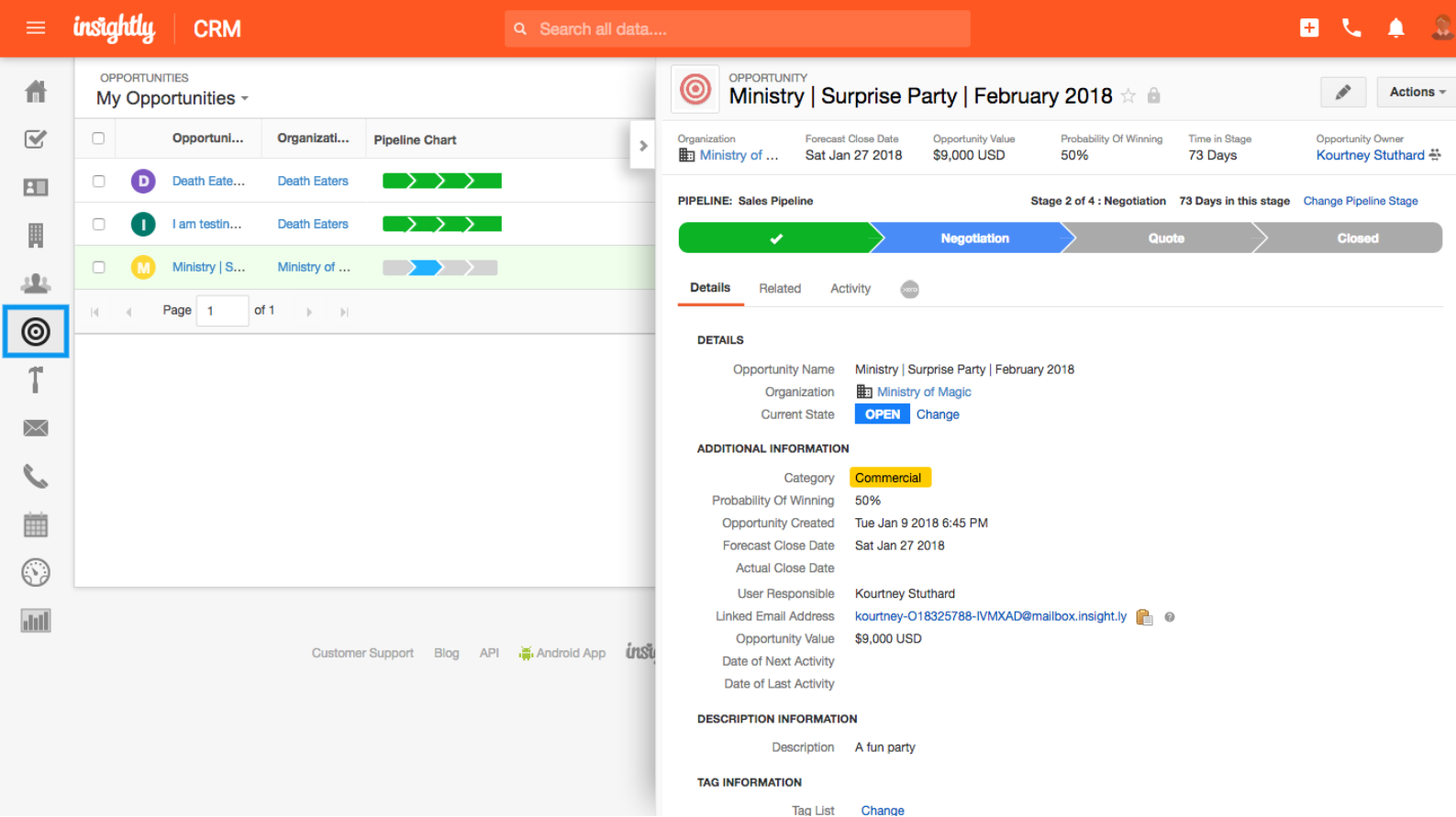
Source: Insightly
Zoho CRM has no native project management. Client delivery requires Zoho Projects, a separate product that integrates with the CRM but runs as its own application with its own interface and data model. The integration works, but it connects two products rather than providing a single workflow.
This distinction matters most for service businesses. If your revenue model depends on delivering work after the deal closes, Insightly was built around that reality. If your business ships a product and the post-sale relationship is mostly account management and support, Zoho CRM's separation may not matter.
Zoho CRM wins on customization depth
Zoho CRM offers a level of configurability that Insightly can't match at any price tier.
Canvas Design Studio gives administrators pixel-level control over CRM record views. This isn't rearranging fields. It's a visual design environment where colors, typography, section groupings, and images are all configurable. Need a record layout that shows different information to sales reps versus account managers? Canvas Rules (up to 100 per module) can serve different designs to different users based on conditions. Insightly allows custom fields and page layouts, but visual customization stays within its standard interface.
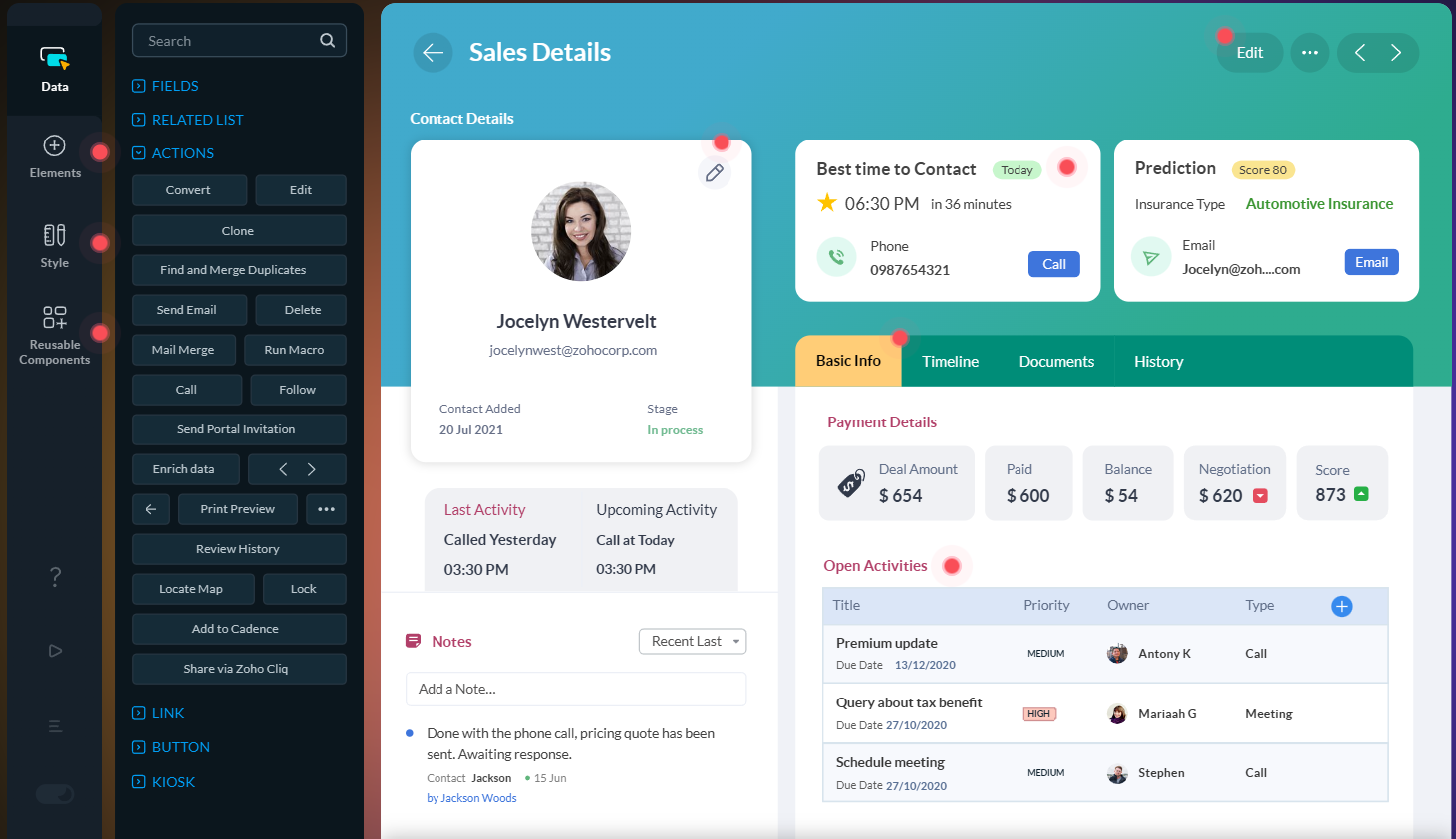
Source: Zoho CRM
The gap widens at the automation layer. Zoho's Blueprint enforces sales processes at the stage level: it prevents reps from moving a deal forward unless they've completed required fields, finished tasks, or obtained approvals. Built-in stagnation alerts flag deals stuck too long at any stage. Insightly has workflow automation from Professional onward (up to 50 rules), but lacks the process enforcement that Blueprint provides.
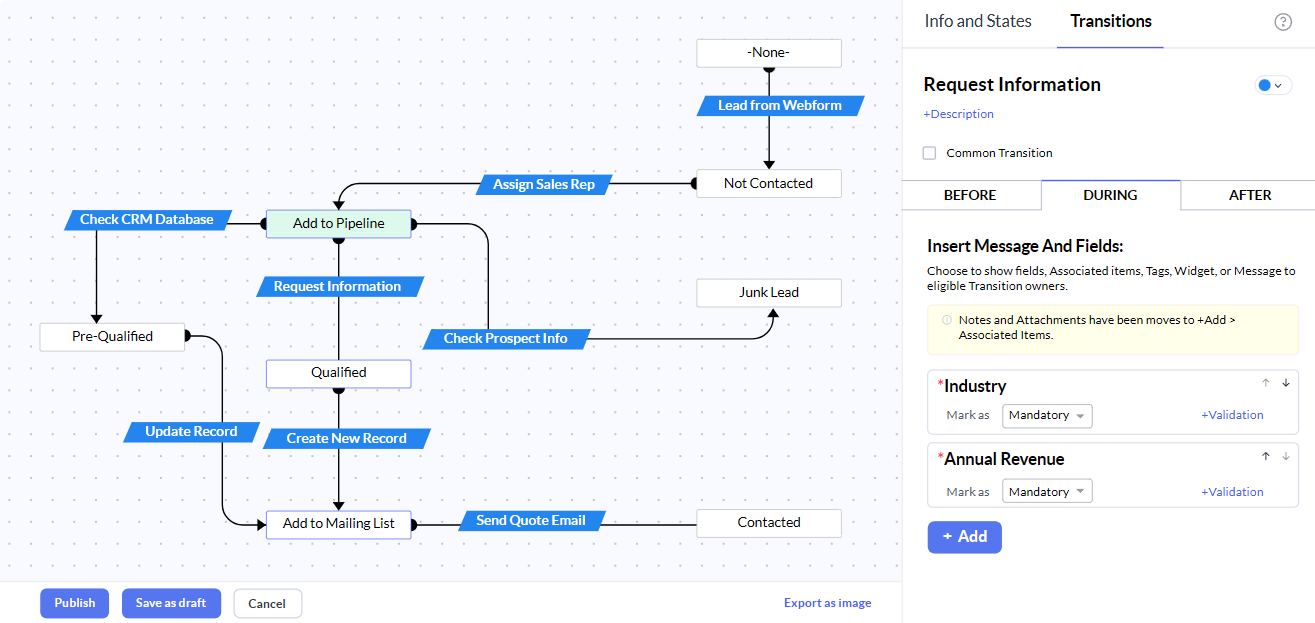
Source: Zoho CRM
Zoho also offers up to 500 custom modules on Ultimate versus Insightly's 200 on Enterprise. Zoho's Kiosk Studio, Wizards, Customer Portals, and CommandCenter add layers of process customization with no direct equivalents in Insightly.
The trade-off is real. G2 reviewers consistently note that configuring Zoho CRM's advanced features takes significant time. The depth that makes Zoho capable also makes it complex. Insightly's more constrained customization means a shorter path from setup to productive use.
AI capabilities take different approaches
Both platforms have invested in AI, but they solve different problems.
Insightly's Copilot (available on Professional and Enterprise plans) is a conversational assistant that lets users query CRM data in plain English. Ask it which contacts have gone inactive, which opportunities are closing this quarter, or to draft a follow-up email, and it responds from your live CRM data. It handles record creation and updates through chat, with a confirmation step before committing changes. Usage is capped at 75 queries per month on Professional and 100 on Enterprise.
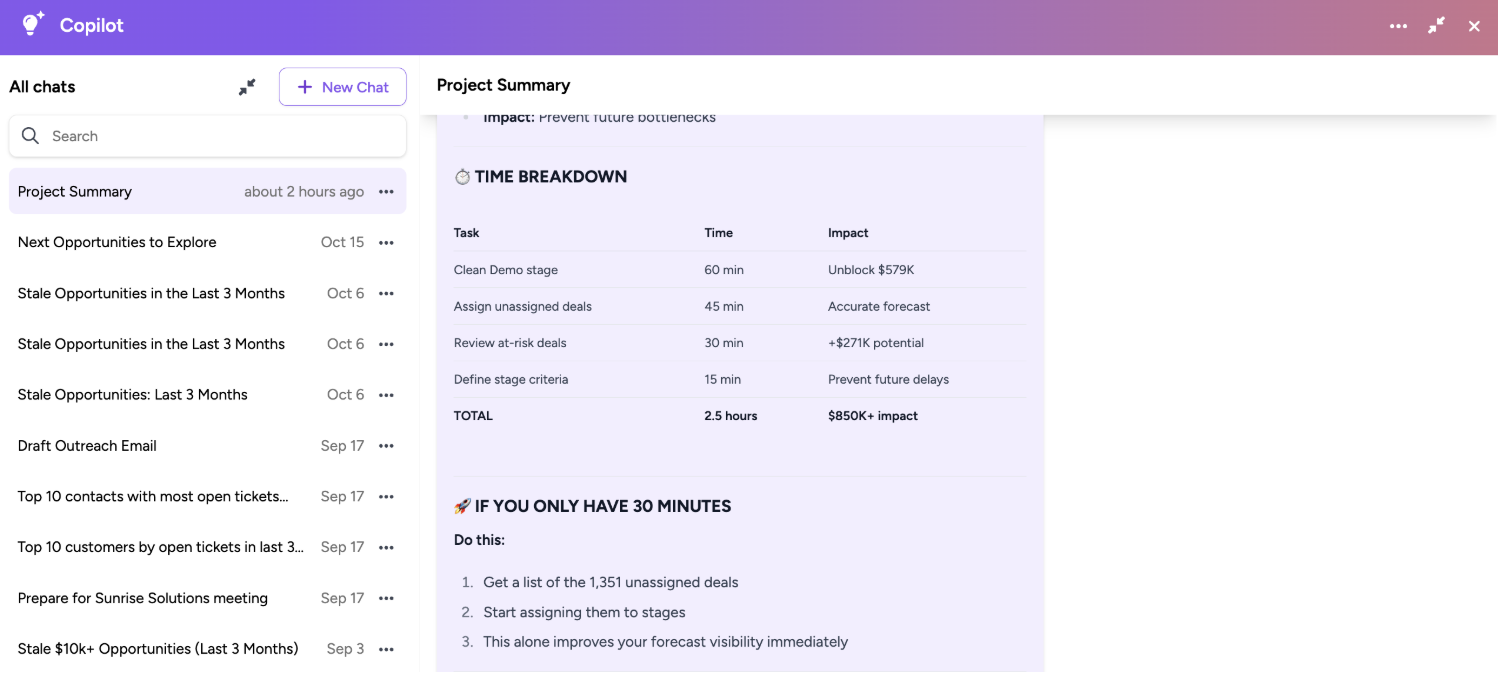
Source: Insightly
Zoho's Zia covers more ground. Predictive lead scoring, churn prediction, best time and channel to contact, email sentiment analysis, call transcription with emotion detection, and anomaly alerts in forecasting are all native. The Zia Agents Store adds seven pre-built autonomous agents (SDR, sales coach, deal analyzer, quote generator, follow-up scheduler, revenue growth specialist, and deal closure reminder) that execute tasks under their own CRM identities. Zia can also generate CRM modules and workflow rules from natural-language descriptions.
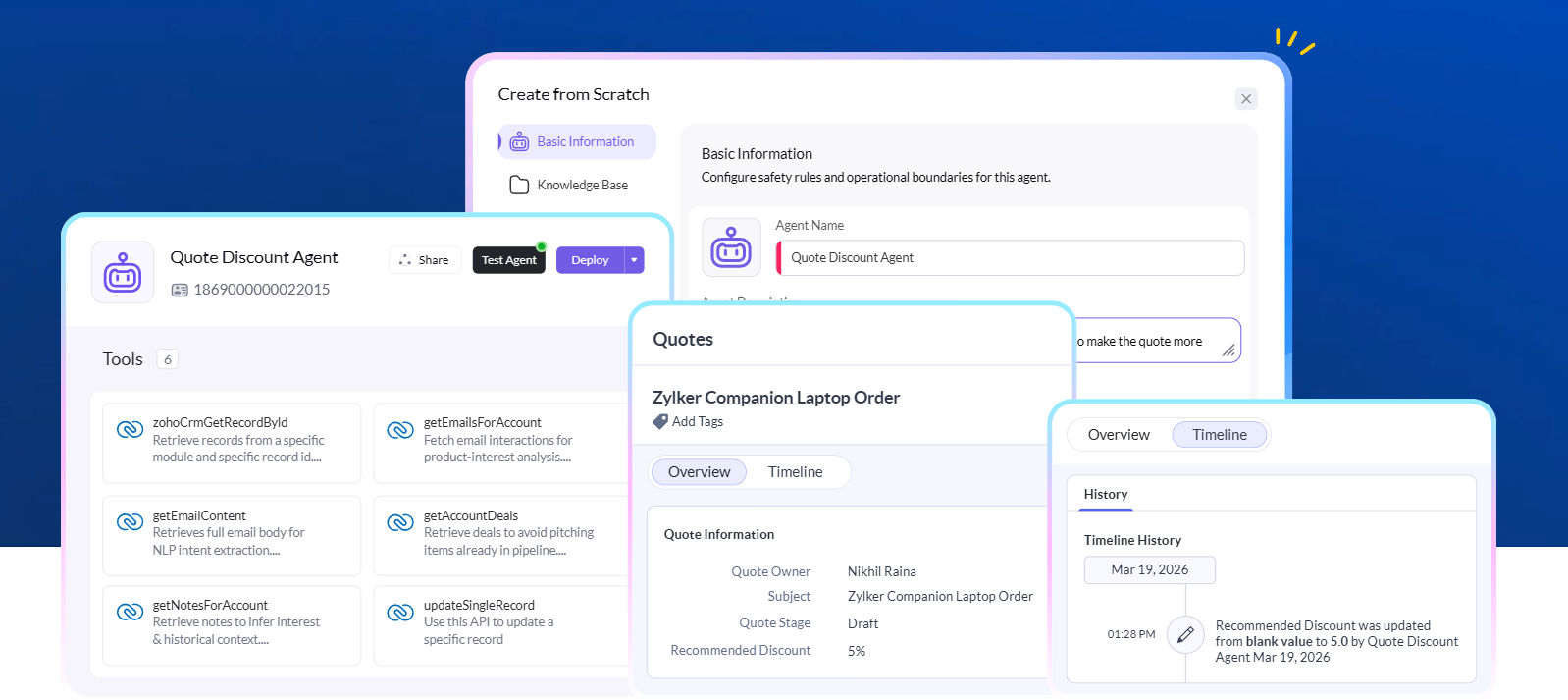
Source: Zoho CRM
The practical difference: Insightly's Copilot is an assistant you talk to. Zoho's Zia runs across the platform and, at the agentic tier, acts on its own. Insightly's approach is simpler to adopt. Zoho's approach covers more ground but requires more configuration.
Neither CRM tells you who to call or when they're ready to buy
This is the gap ZoomInfo fills.
Insightly and Zoho CRM are systems of record. They manage the contacts, deals, and activities your team creates. They automate internal workflows. They report on pipeline metrics. But neither generates the external intelligence that determines whether your sales motion is aimed at the right people.
Your team still has to find verified contact information on their own. They still have to guess which accounts are researching solutions. They still have to manually research company hierarchies, technology stacks, and organizational changes. These are the jobs that consume the most selling time and produce the least reliable results.
ZoomInfo's GTM Context Graph solves this at the data layer. It combines ZoomInfo's B2B data (500M contacts, 135M+ verified phone numbers, 200M+ verified business email addresses) with your CRM records, conversation transcripts, and behavioral signals to reveal why deals move or stall. The AI identifies the signal combinations that match your win patterns and recommends the next action based on buying evidence, not stage labels.
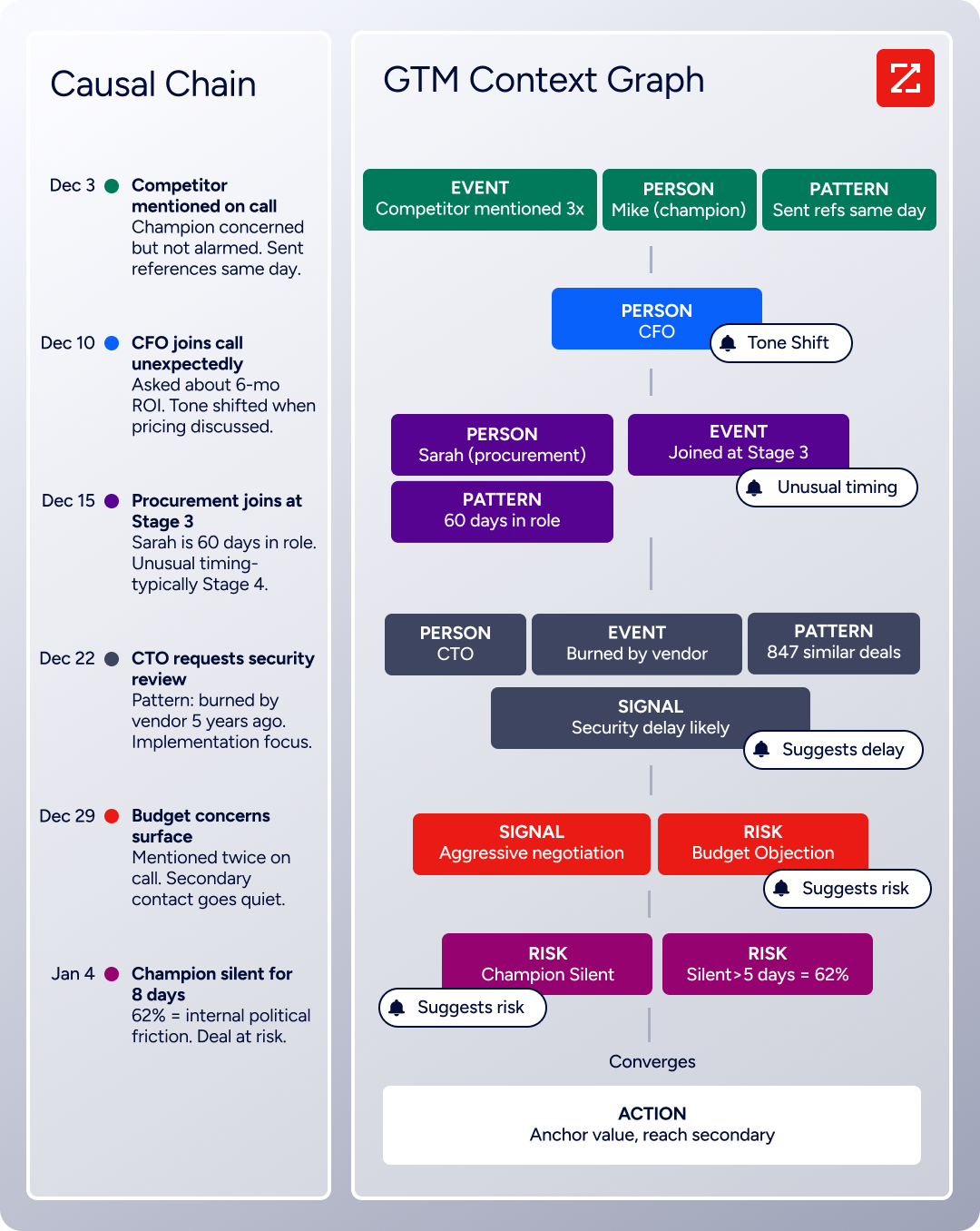
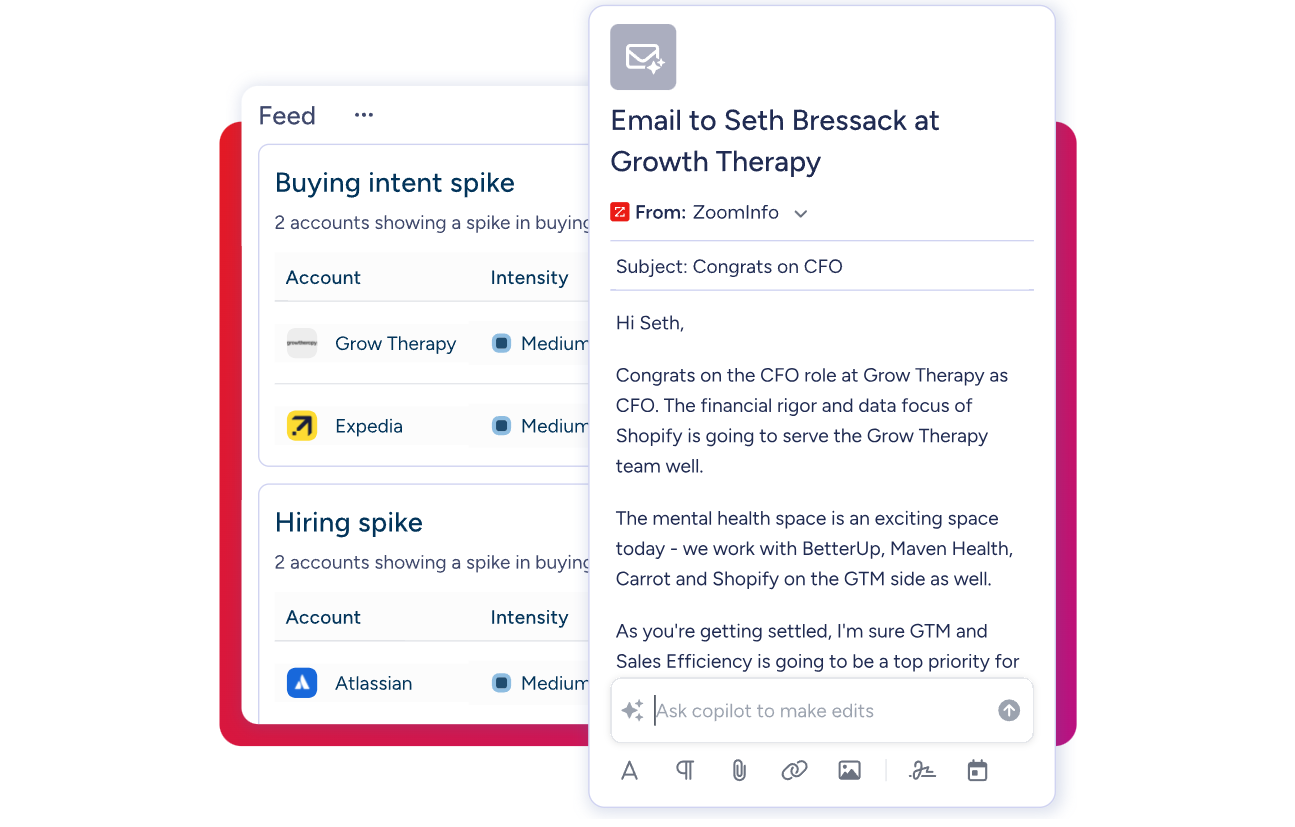
GTM Workspace delivers this intelligence to sellers: prioritized accounts, AI-drafted outreach that addresses the specific concern from the last conversation, and CRM updates without leaving the page. GTM Studio gives marketers and RevOps teams a canvas to describe audiences in natural language, launch multi-channel plays, and measure pipeline impact. Through APIs and MCP, the same intelligence flows into Insightly, Zoho CRM, or any other tool your team uses.
"That combination of our internal CRM data, external signals, and AI that's given all that context has helped us craft very specific account- and persona-based messages. And people have responded to them right away." (Toby Carrington, Chief Business Officer, Seismic)
Pricing comparison reveals different value propositions
The pricing structures reflect each platform's target market and philosophy.
Insightly starts at $29/user/month (Plus), scaling to $49 (Professional) and $99 (Enterprise), billed annually. The Plus plan is limited: no workflow automation, no custom objects, no shared dashboards. Most teams will need Professional for automation and custom page layouts. Marketing Automation starts at $99/month (account-level, not per user) and scales to $999/month at Enterprise. The all-in-one bundle (CRM + Marketing + Service + AppConnect) starts at $349/month. AppConnect adds $249/month plus a $3,000 one-time setup fee. There is no free plan, only a 14-day trial.
Zoho CRM is cheaper at every tier. A permanent free plan supports up to 3 users. Paid plans start at $14/user/month (Standard, billed annually) and scale through Professional, Enterprise, and Ultimate. The Enterprise plan (including Blueprint, Zia AI, territory management, and journey orchestration) costs $40/user/month. Zoho offers month-to-month contracts with no multi-year commitments. The cost gap can be dramatic: one documented case showed Salesforce quoted at $1,000,000 versus Zoho's $30,000 for the same organization.
ZoomInfo uses custom-quoted, consumption-based pricing with no public prices. Pricing scales around enterprise license agreements, data access, API consumption, and AI activity. ZoomInfo Lite is a permanent free tier (no credit card, no time limit) with access to the B2B database and 10 monthly export credits. A separate 7-day free trial provides access to the full platform. ZoomInfo costs more because it provides external intelligence (verified contacts, intent signals, AI-driven GTM execution) that CRMs don't generate.
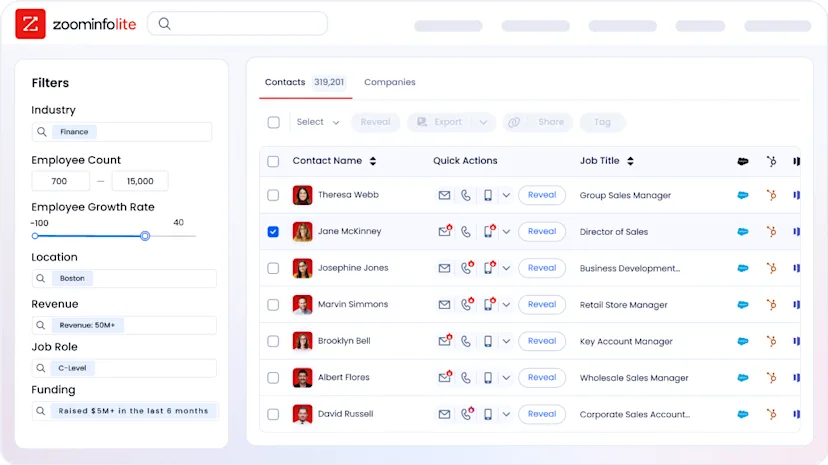
The key insight: Insightly and Zoho CRM compete on price for CRM functionality. ZoomInfo isn't a CRM. It's the intelligence layer that makes your CRM data actionable by adding the external buyer context your team can't generate internally.
Integration ecosystems take different approaches
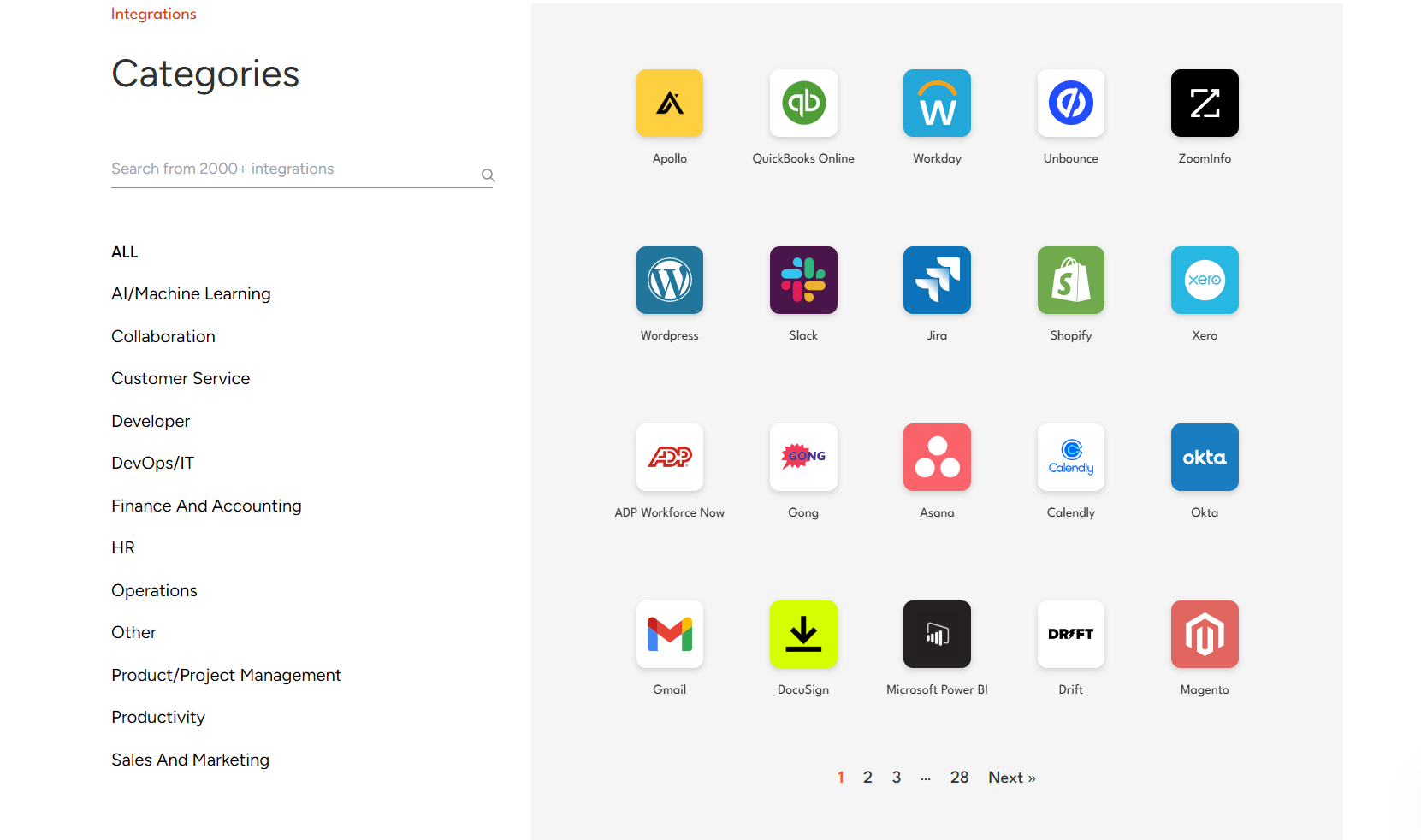
Insightly's integration strategy centers on AppConnect, a no-code automation platform with 2,000+ pre-built connectors. AppConnect supports triggers, multi-step actions, conditional logic, error handling, and connections to cloud apps, on-premises systems, and legacy databases. It runs on serverless AWS infrastructure with SOC2 and GDPR compliance. But the cost is real: $249/month plus a $3,000 setup fee makes it a significant commitment for smaller teams. Insightly also supports a Zapier integration on all plans and native sidebars for Gmail and Outlook.
Source: Insightly
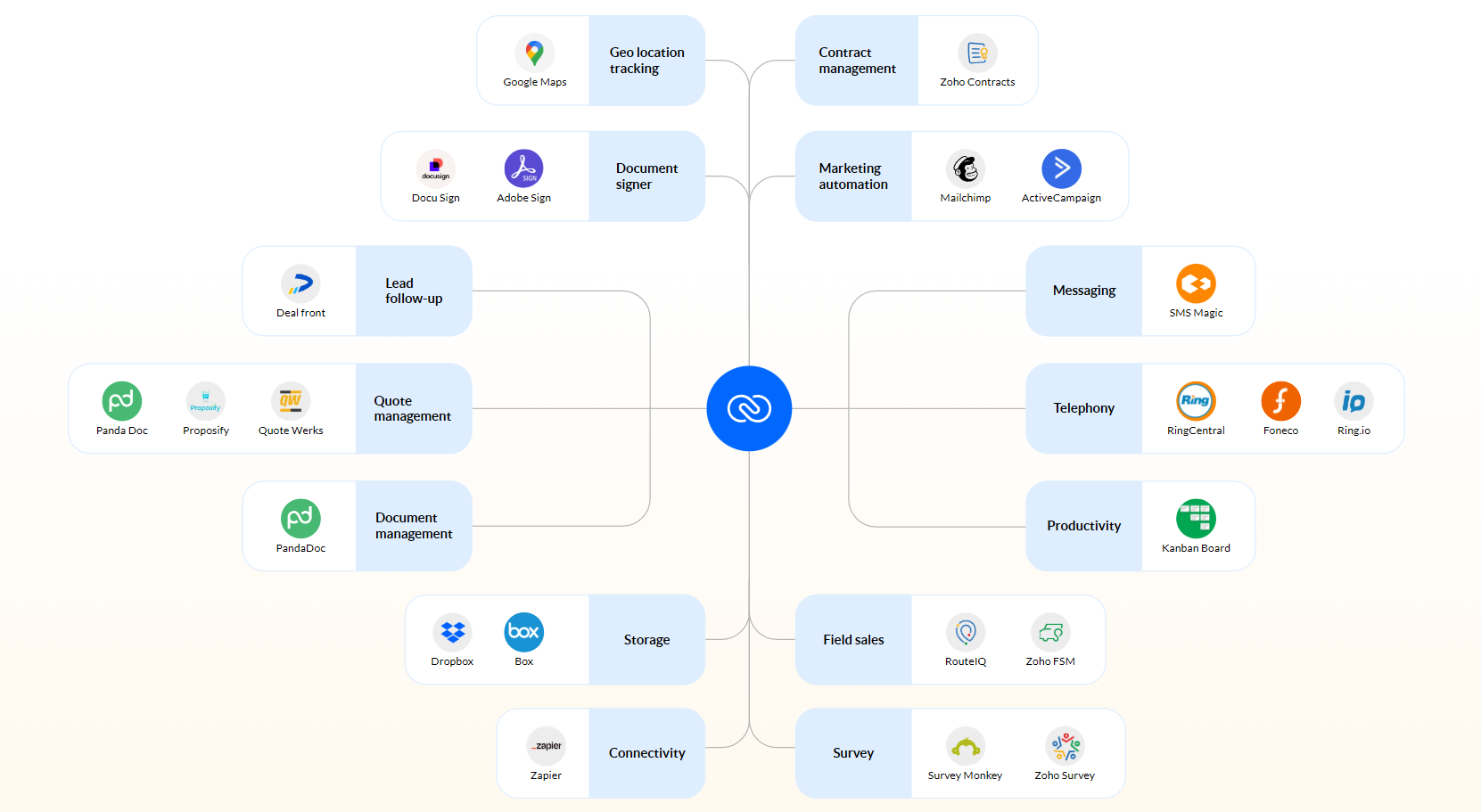
Zoho CRM benefits from the broader Zoho ecosystem: over 1,100 marketplace integrations plus native connections to Zoho Books, Zoho Desk, Zoho Campaigns, Zoho Analytics, and dozens of other Zoho applications. For teams already using multiple Zoho products, the integration is free and runs deep. Outside the Zoho ecosystem, G2 reviewers note that connecting to non-Zoho systems can require custom API work and careful configuration.
Source: Zoho CRM
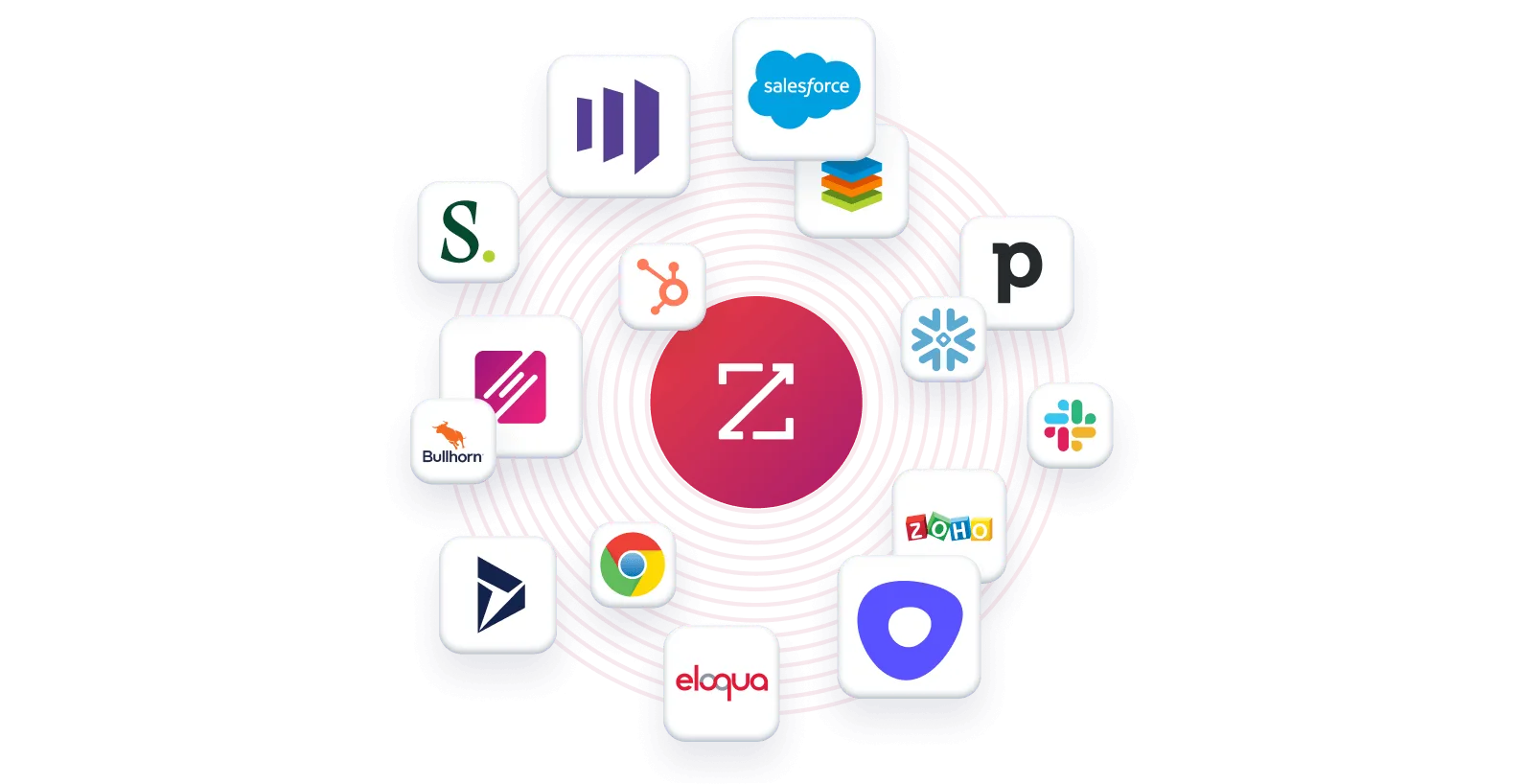
ZoomInfo integrates differently because it serves a different function. The ZoomInfo App Marketplace lists 120+ partner integrations across CRMs, marketing automation, sales engagement, and data warehouse platforms. Native integrations with Salesforce, HubSpot, and Microsoft Dynamics are included. The larger story is API and MCP access (now included in all relevant plans), which lets any tool or AI agent consume ZoomInfo's data programmatically. ZoomInfo doesn't compete with your CRM's integration ecosystem. It's available inside it.
"The plug-and-play aspect of the API means I can integrate it very easily into any process and get information at a moment's notice." (Jerry Wilson, Senior Marketing Intelligence Analyst, BDO Canada)
Reporting and analytics: Zoho leads, Insightly lags
Reporting is one of the clearest capability gaps between these platforms.
Zoho CRM provides 40+ standard reports, a visual drag-and-drop report builder, nine interactive chart types, cohort analysis, and sales forecasting with top-down and bottom-up views. Zia's anomaly detection monitors trends and suggests corrective actions. For teams needing cross-functional BI, the Zoho Analytics integration connects 250+ data sources and earned recognition in the Gartner Magic Quadrant for Analytics and Business Intelligence Platforms (2025).
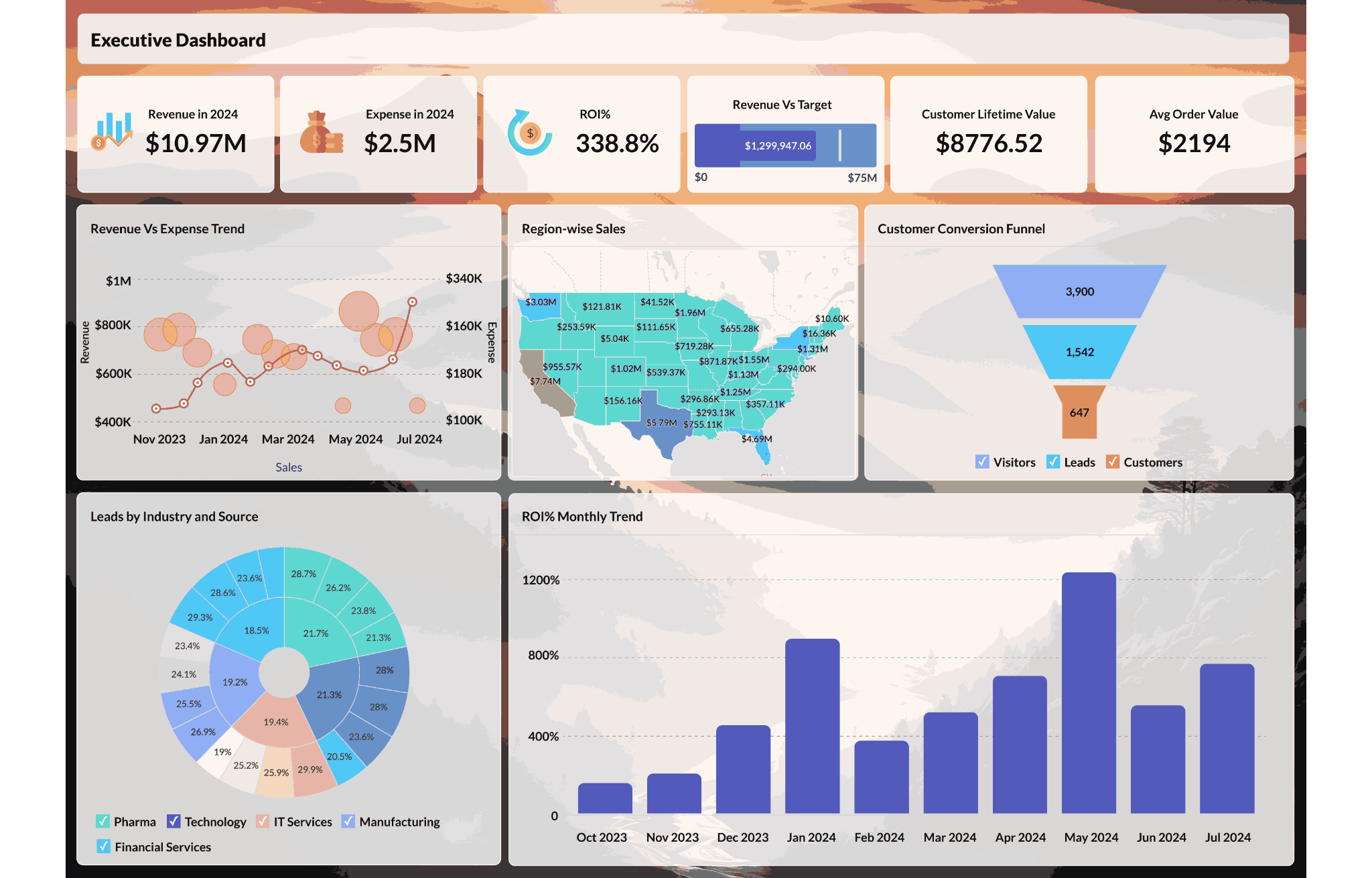
Source: Zoho CRM
Insightly's reporting is consistently cited as a weakness. G2 and Capterra reviewers describe the built-in analytics as below par, with limited drill-down and minimal predictive features. The Command Center (launched March 2026) aggregates tasks, opportunities, leads, and emails into one view, which helps with daily execution but doesn't close the analytical depth gap.
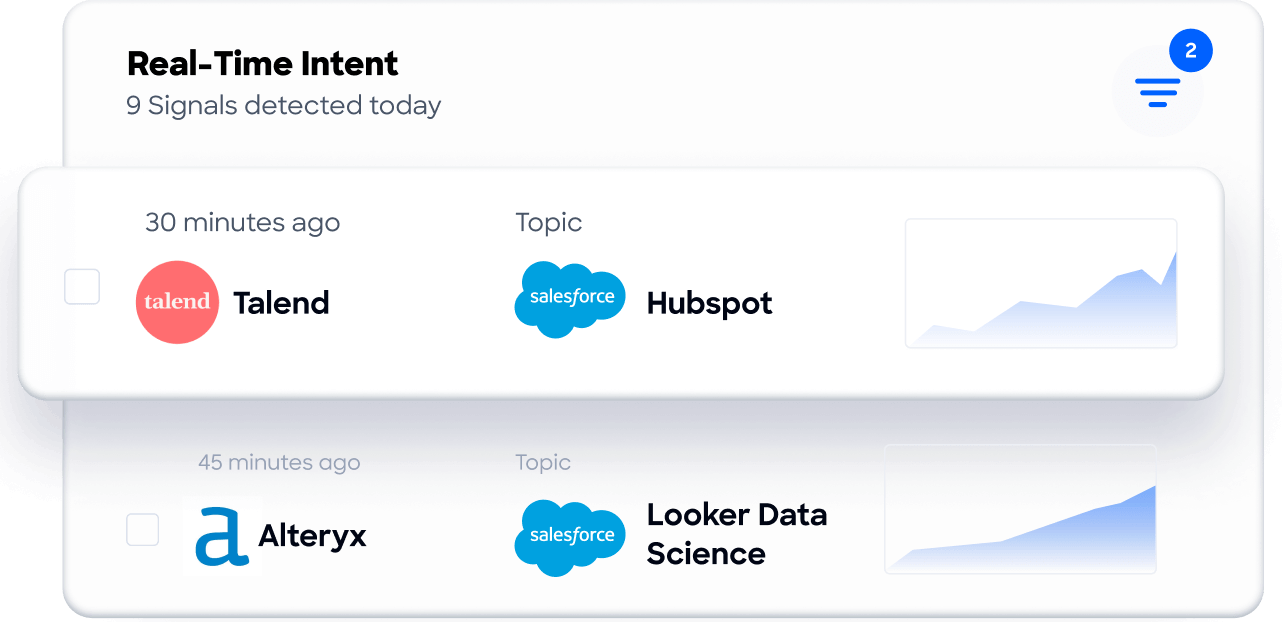
ZoomInfo's analytics serve a different purpose. Rather than reporting on CRM activity, ZoomInfo surfaces market intelligence: buyer intent trends, account fit scores, pipeline attribution from signals, and engagement analytics through GTM Studio. These analytics answer questions your CRM can't: which accounts are researching your category now, which signal combinations predict closed-won deals, and where your pipeline has gaps your team hasn't noticed.
Security and compliance comparison
All three platforms take security seriously, with different emphases.
Insightly holds SOC 2 Type II, HIPAA compliance (platform-level, excluding Copilot), and GDPR/CCPA compliance. SAML/SCIM SSO is restricted to Enterprise. The platform reports 99.95% uptime. Notable limitation: Insightly does not support SOX or GLBA compliance.
Zoho CRM carries the broadest certification portfolio: ISO 27001, ISO 27701, ISO 27017, ISO 27018, ISO 9001, ISO 22301, SOC 2 Type II, SOC 1 Type II, SOC 2 + HIPAA Type 2, and Cyber Essentials Plus. Multiple data center locations (US, EU, India, Japan, China, Australia, Canada, Saudi Arabia, South Africa) provide data residency options. Zoho's privacy stance is reinforced by its bootstrapped, no-VC structure and its commitment to never selling customer data.
ZoomInfo maintains ISO 27001, ISO 27701, SOC 2 Type II, TRUSTe GDPR and CCPA validations, all renewed annually. As a data provider handling B2B contact information, ZoomInfo is a registered data broker in California and Vermont and maintains a Trust Center.
For regulated industries, Zoho's breadth of certifications and data residency options give it an edge on compliance. Insightly's HIPAA compliance (excluding AI features) makes it viable for healthcare. ZoomInfo's privacy certifications matter because it handles third-party contact data at scale.
Insightly vs. Zoho CRM vs. ZoomInfo: Which should you choose?
The right choice depends on what problem you're solving.
Choose Insightly if:
You're a mid-market professional services firm, agency, or consultancy
Post-sale project delivery needs to live inside the same system as your pipeline
You want CRM, marketing automation, and customer service from one vendor without Salesforce-level complexity
Your team values fast implementation over deep customization
You can budget for the Professional or Enterprise tier (Plus is too limited for most teams)
Choose Zoho CRM if:
You need deep customization at low cost
Your team has the admin bandwidth to configure Blueprint, Canvas, and advanced workflows
You want a free entry point or flexible month-to-month billing
You're already using other Zoho products or willing to invest in the ecosystem
Process enforcement (preventing reps from skipping steps) is important to your sales methodology
Add ZoomInfo if:
Your team needs verified contact data, direct dials, and business emails to fill the pipeline
You want to know which accounts are researching solutions before they contact you
You need AI that reasons about why deals move, not just what happened in the CRM
You want intelligence that flows into any tool (Insightly, Zoho CRM, or anything else) through APIs and MCP
You're ready to move from managing records to acting on buying signals
See ZoomInfo in action with a free trial
"ZoomInfo gives us the information we need to execute. We don't have to go through and spend our time digging. It's already there, so we can be three steps ahead." (William Kenimer, VP of Revenue Operations, Vensure)
Insightly and Zoho CRM both excel in different areas: Insightly at unifying the deal-to-delivery lifecycle for service businesses, Zoho CRM at providing configuration depth at a fraction of enterprise pricing. The right CRM depends on your team's priorities, budget, and willingness to configure.
But whichever CRM you choose, the quality of what goes into it determines the quality of what comes out. ZoomInfo provides the verified data, intent signals, and contextual intelligence that turn a CRM from a system your team maintains into a system that drives revenue.
Insightly vs. Zoho CRM vs. ZoomInfo FAQ
What is the core difference between Insightly, Zoho CRM, and ZoomInfo?
Insightly is a platform combining CRM, marketing automation, customer service, and project management for mid-market companies. Zoho CRM is a customizable sales force automation platform with AI-powered analytics, process enforcement, and a broad ecosystem of integrated Zoho applications. ZoomInfo is not a CRM. It is a B2B data and GTM intelligence platform that provides verified contact data, buyer intent signals, and AI-driven deal intelligence to power the prospecting and outreach that CRMs manage downstream.
Which platform is cheapest to get started with?
Zoho CRM is the most affordable, with a permanent free plan for up to 3 users and paid plans starting at roughly $14/user/month. Insightly has no free plan and starts at $29/user/month, with most teams needing the $49/user/month Professional plan. ZoomInfo offers ZoomInfo Lite as a permanent free tier with access to its B2B database and 10 monthly export credits; paid plans are custom-quoted.
Can I use ZoomInfo with Insightly or Zoho CRM?
Yes. ZoomInfo integrates with both platforms. Through its API and MCP access (included in all relevant plans), ZoomInfo's data and intelligence can flow into any CRM. ZoomInfo also has native integrations with major CRMs including Salesforce, HubSpot, and Microsoft Dynamics, and its 120+ marketplace integrations cover a range of CRM and marketing automation platforms.
Which platform has better automation capabilities?
Zoho CRM offers the deepest automation: Blueprint enforces stage-by-stage processes, Cadences automate multichannel follow-up sequences, and CommandCenter handles cross-channel journey orchestration. Insightly provides workflow rules on Professional and above but lacks structured process enforcement. ZoomInfo automates differently, using buyer signals to trigger GTM plays via GTM Studio and AI-drafted outreach via GTM Workspace.
Does Insightly or Zoho CRM include project management?
Insightly includes native project management that converts won deals into projects, preserving all linked contacts, files, and notes. This distinguishes it among CRMs for service businesses. Zoho CRM does not include native project management; it requires the separate Zoho Projects application, which integrates with the CRM but runs as its own product.
Which platform has stronger AI features?
Zoho CRM's Zia AI covers the broadest range: predictive lead scoring, churn prediction, email and call sentiment analysis, generative CRM configuration, and seven pre-built autonomous agents. Insightly's Copilot is a conversational AI assistant with narrower scope, focused on CRM queries, email drafting, and record management. ZoomInfo's AI works at a different level, reasoning across first-party CRM data and third-party buyer signals via the GTM Context Graph to identify why deals move and what actions to take next.
How do the platforms compare on reporting and analytics?
Zoho CRM leads with 40+ standard reports, interactive dashboards, cohort analysis, and Zia-powered anomaly detection, plus integration with Zoho Analytics for cross-functional BI. Insightly's reporting is consistently cited in user reviews as a weakness, with limited analytical depth. ZoomInfo's analytics focus on market intelligence rather than CRM activity, surfacing intent trends, account fit scores, and pipeline attribution from buyer signals.
Which platform is best for a company scaling from 50 to 500 employees?
Zoho CRM's pricing structure (free to Ultimate) and configuration depth make it the strongest CRM choice for companies scaling through that range, provided they have admin resources to maintain the system. Insightly is a strong fit if post-sale project delivery is central to the business model. ZoomInfo becomes more valuable as the sales team grows, because the cost of bad data (wrong contacts, missed signals, stale records) compounds with headcount, while ZoomInfo's verified data and AI-driven prioritization help each rep focus on the accounts most likely to convert.
