

Choosing between Klue and Clozd for competitive and buyer intelligence comes down to five questions:
Do you need real-time competitive intelligence for active deals, or post-decision buyer feedback to understand why deals were won or lost?
Is your primary goal arming sellers with battlecards and deal coaching, or surfacing buyer insights that reshape your product, messaging, and GTM strategy?
Do you want an AI agent that monitors competitors and pushes intel to reps automatically, or a managed research service that conducts neutral third-party interviews with buyers?
Are you a product marketing or CI team trying to cover dozens of competitors with limited headcount, or an enterprise revenue org investing in structured win-loss programs?
Does your team need the B2B data, intent signals, and contact intelligence that fuel competitive and buyer insights in the first place?
In short, here's what we recommend:
Klue is the competitive enablement platform for product marketing and CI teams who need to monitor competitors, build battlecards, and deliver deal-specific coaching to sellers in real time. Its Compete Agent automates competitor tracking across public sources and sales calls, then pushes intel into Salesforce, Slack, and Microsoft Teams. Klue also offers win-loss analysis through AI interviews and live expert conversations, making it the only platform that connects competitive intelligence and win-loss in a single system. Klue's win-loss capability is newer (built through acquisitions in 2023 and 2025), and the platform requires a dedicated CI or PMM owner to get full value.
Clozd is the buyer intelligence platform for enterprise revenue teams that need to understand the real reasons behind deal outcomes and customer decisions. Clozd's core advantage is its third-party interview model: neutral, experienced researchers conduct candid 30-minute conversations with buyers who share things they would never tell the vendor's sales team. The platform has expanded beyond win-loss into implementation feedback, customer experience check-ins, and retention analysis. But Clozd's managed-service model comes with enterprise pricing, batch turnaround times, and no real-time competitive intelligence.
Both platforms deliver valuable buyer and competitive insights. But neither provides the B2B data, verified contact information, and buying signals that make those insights actionable. That's where ZoomInfo fits in.
ZoomInfo is an AI-powered GTM platform that provides the data foundation both Klue and Clozd depend on. With 500M contacts, 100M companies, 135M+ verified phone numbers, and 200M+ verified business email addresses, ZoomInfo gives revenue teams the identity data, company context, and buying signals they need to act on any competitive or buyer insight. Its GTM Context Graph fuses this data with your CRM records, conversation transcripts, and behavioral signals to reveal not just what happened in a deal, but why. Through GTM Workspace for sellers, GTM Studio for marketers and RevOps, and APIs and MCP for any AI agent or custom tool, that intelligence reaches every team and workflow.
If B2B data, intent signals, and AI-powered deal intelligence sound like the missing layer in your GTM stack, see how ZoomInfo works.
Klue vs. Clozd vs. ZoomInfo at a glance
Klue | Clozd | ZoomInfo | |
|---|---|---|---|
Primary focus | Competitive intelligence + win-loss | Buyer intelligence + win-loss interviews | B2B data, intent signals, and AI-powered GTM execution |
Core delivery model | AI agent monitors competitors, pushes intel to sellers | Neutral third-party interviews with buyers | Data platform with AI layer |
Win-loss approach | AI interviews + live expert interviews + imported transcripts | Live human interviews + AI-assisted Flex Interviews | Conversation intelligence (Chorus) captures deal context at scale |
Competitive intelligence | Full CI platform with battlecards, Deal Tips, Auto Insights | Not a CI tool | Intent data, technographics, and competitive signals across 100M companies |
Data foundation | Relies on external data sources and CRM | Relies on external data sources and CRM | 500M contacts, 100M companies, 135M+ verified phone numbers |
AI capabilities | Compete Agent with deal coaching | Ask Clozd AI search + AI Interviewer | GTM Context Graph with AI agents for prospecting, outreach, and deal execution |
Integration depth | Salesforce, Slack, Teams, Gong, Chorus, Microsoft 365 | Salesforce, HubSpot, Dynamics, Gong, Slack | 120+ integrations, APIs, MCP, cloud data platforms |
Pricing | Not published; enterprise sales-led | Not published; enterprise managed-service | Custom-quoted; free tier (ZoomInfo Lite) available |
Best for | CI/PMM teams arming sellers with competitive intel | Enterprise revenue teams needing candid buyer feedback | Revenue teams needing B2B data, signals, and AI-powered execution |
Two different problems, two different approaches
Klue and Clozd look similar from the outside. Both promise to help you win more deals. Both offer win-loss analysis. Both sell to product marketing and revenue leaders at B2B companies. But they solve different problems.
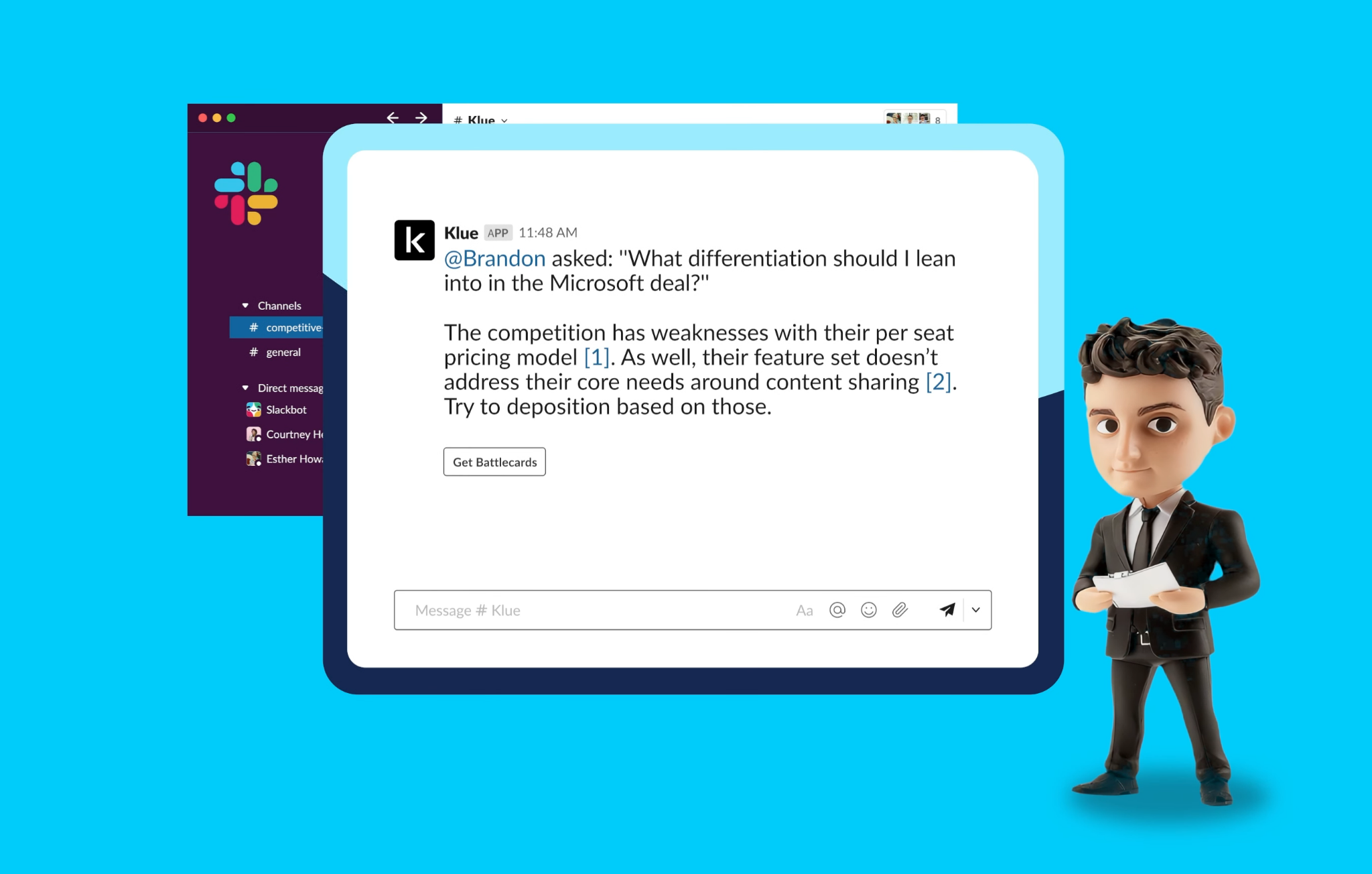
Klue answers the question: What are our competitors doing, and how do we arm our sellers to beat them?
The platform monitors competitor activity across the public web, sales calls, and internal documents, then turns that intelligence into battlecards, talk tracks, and deal-specific coaching delivered inside the tools sellers already use.
Source: Klue
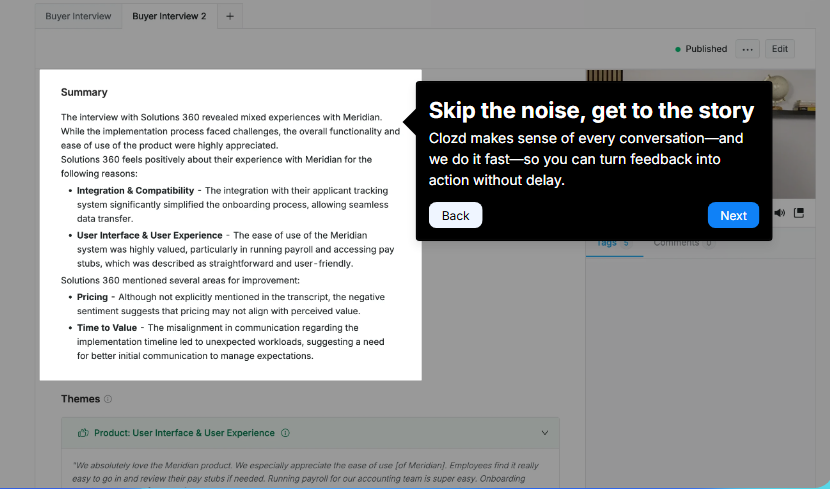
Clozd answers a different question: What are our buyers actually thinking, and why did they choose (or not choose) us?
The platform conducts structured interviews with real buyers through neutral third-party researchers, then surfaces the candid feedback that internal teams cannot capture on their own.
Source: Clozd
The distinction matters because each approach has blind spots the other fills.
Klue can tell you what a competitor announced last week and how to position against it. But it cannot tell you what the VP of Procurement said about your pricing after they chose a competitor, because that conversation never happened inside a sales call or public announcement. Clozd can surface candid buyer feedback. But it cannot push a competitive coaching tip to a seller's inbox ten minutes before their next call.
Klue excels at real-time competitive enablement
Klue was built for the reality that most CI programs are run by one or two people covering dozens of competitors.
Its Compete Agent operates on two tracks: a Research Analyst that continuously collects and analyzes competitive intelligence, and a Competitive Deal Assistant that monitors open opportunities and pushes deal-specific coaching to sellers.
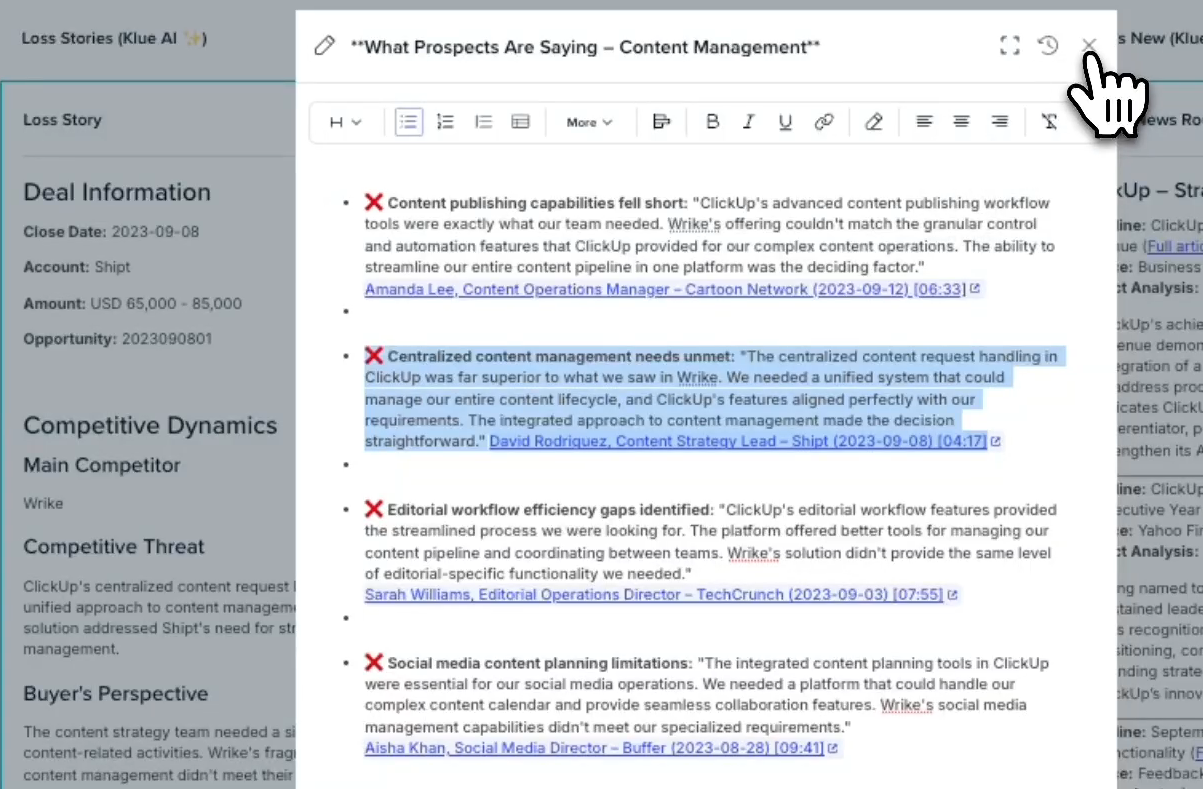
The Research Analyst automates the work that used to consume CI teams entirely. It monitors competitor websites, news, job postings, and public signals, then builds and maintains competitor profiles without manual effort. Auto Insights goes further, generating ten categories of structured competitive content (objection handling, talk tracks, pricing intelligence, win and loss stories, and more) with source links for human verification.
Source: Klue
The Deal Assistant is where Klue's value becomes tangible for sellers.
When a deal turns competitive, it detects which competitor surfaced in the CRM or call transcript, identifies specific pain points from the conversation, and delivers a Deal Tip to the seller's inbox or Slack. No searching required.
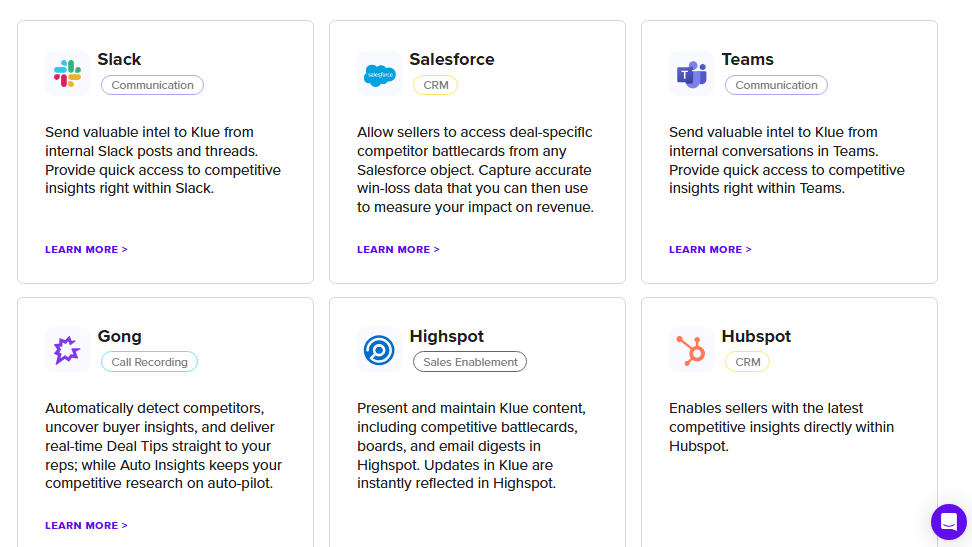
The platform's integrations reinforce this real-time delivery. Klue connects to Salesforce, Slack, Microsoft Teams, Gong, Chorus, Highspot, Seismic, Showpad, and SharePoint (integration directory). The February 2026 Microsoft 365 integration added competitive coaching inside Teams Calls, Ask Klue in Teams Chat, and a connection to Microsoft Copilot via MCP Server.
The goal: competitive intelligence reaches sellers where they already work, without requiring them to log into another tool.
Source: Klue
Clozd excels at deep buyer truth
Clozd's advantage is structural: buyers tell a neutral third-party interviewer things they would never say to the vendor.
This is not a philosophical claim.
Clozd's own research shows that buyer and seller explanations for lost deals align only 15% of the time. And nearly 70% of buyers name a different primary competitor than what's logged in the CRM. The CRM data most teams use to make competitive decisions is, in most cases, wrong.
Live Interviews are Clozd's primary channel. A Clozd interviewer runs a 30-minute conversation with a buyer, exploring the real reasons behind their decision. These are not survey questions. The interviewers are trained qualitative researchers, many with MBAs and industry experience, who use active listening to follow threads that surface motivations, perceptions, and blind spots no transcript analysis can capture.
The Expert Network provides industry-matched interviewers for technical verticals like cybersecurity, healthcare, and financial services.
Flex Interviews extend coverage to deals where live conversations are not practical. Buyers respond to pre-recorded prompts on their own schedule, while Clozd's AI Interviewer (trained on more than 50,000 live interviews) asks adaptive follow-ups grounded in everything the customer has shared. This bridges the gap between the depth of a live interview and the scale of a survey.
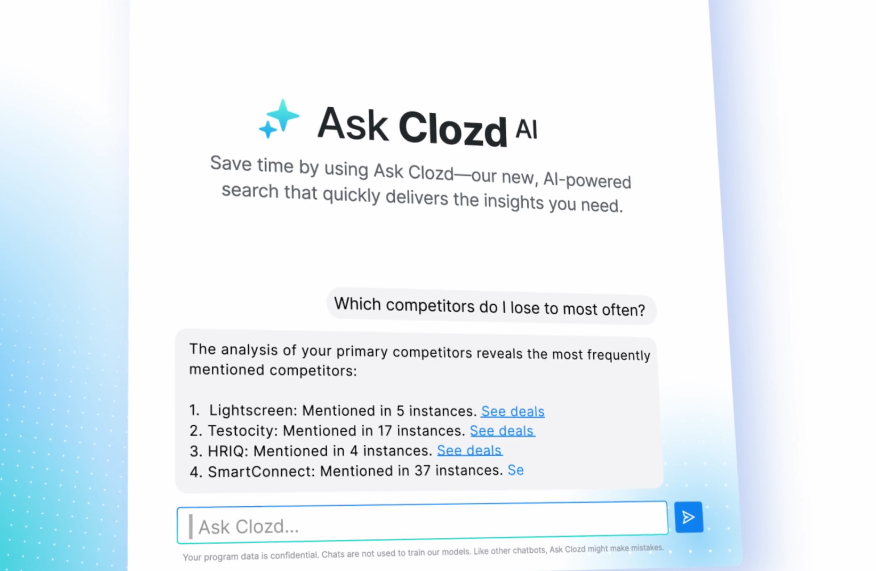
The analysis layer converts raw interviews into structured intelligence. The platform automatically transcribes, summarizes, and tags each interview with themes and Decision Drivers. Ask Clozd lets any team member query the full interview corpus in natural language. Integrations with Slack, CRM platforms, and email push insights to stakeholders without requiring a platform login.
Source: Clozd
Win-loss analysis: different philosophies, different trade-offs
Both Klue and Clozd offer win-loss analysis, but their implementations reflect different priorities.
Klue's win-loss came from acquisitions.
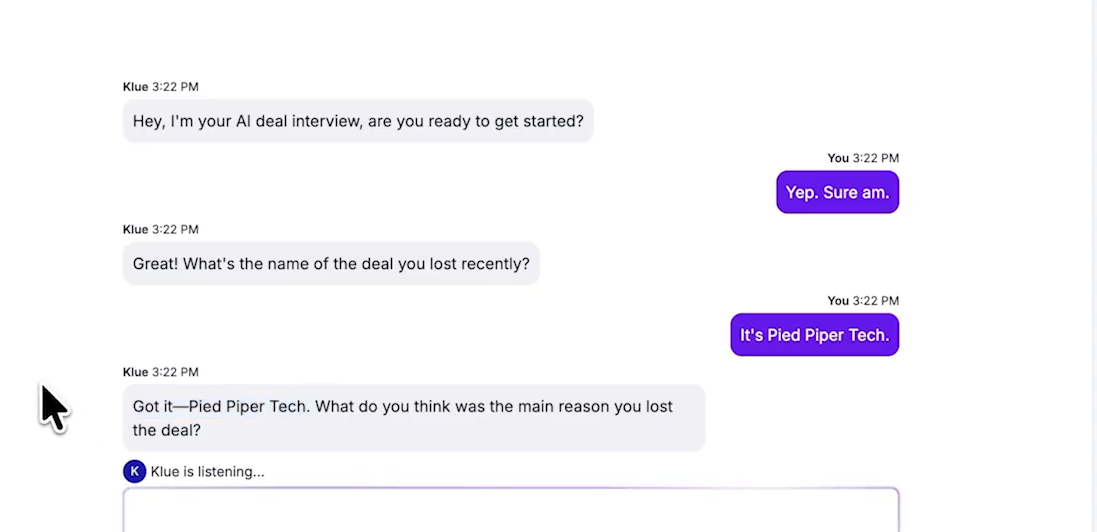
DoubleCheck Research joined in January 2023, bringing an established win-loss research practice. Goldpan.ai followed in March 2025, adding AI-driven interview and analysis tools. The result is a three-method capture system: AI Interviews for seller-side feedback at scale, Live Expert Interviews for high-value buyer conversations, and a Bring Your Own option for importing existing transcripts.
Source: Klue
The advantage of Klue's approach is that win-loss insights flow into the competitive intelligence layer. A loss pattern identified in buyer interviews can surface in a battlecard the same week. Deal Tips can reference actual buyer language. The CI and win-loss programs reinforce each other within a single platform.
The trade-off is maturity. Klue's win-loss offering is younger than Clozd's, and its AI Interviewer, while capable, is designed for seller-side deal debriefs rather than the buyer conversations Clozd specializes in.
Clozd's win-loss is the company's founding product, refined over eight years and more than 50,000 interviews.
The managed-service model is hard to replicate: a dedicated team designs the program, builds interview guides, handles outreach and scheduling, manages incentives, and conducts the interviews. The client consumes intelligence, not software.
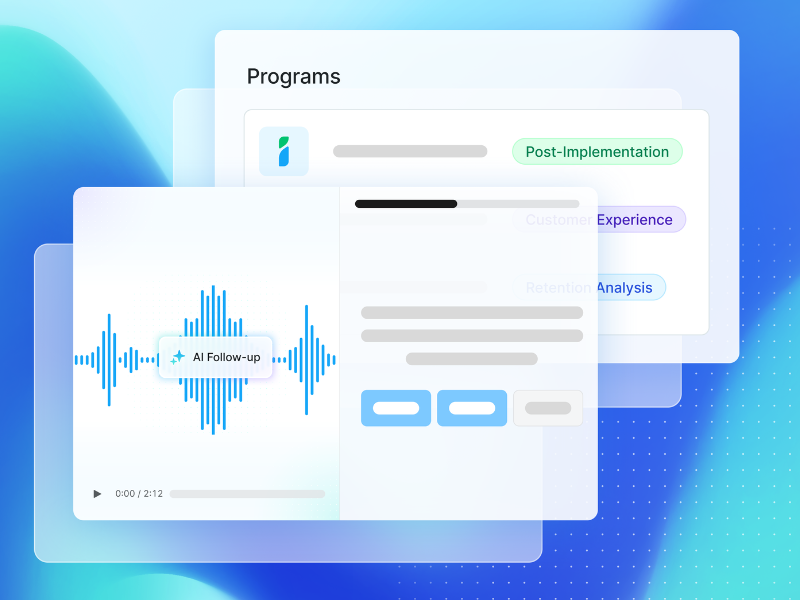
Clozd has also expanded beyond traditional win-loss into four lifecycle use cases: win-loss analysis, post-implementation feedback, customer experience check-ins, and renewal-stage interviews. This lifecycle coverage means Clozd can surface churn risk that health scores miss, catch onboarding friction before it escalates, and identify renewal decision drivers that CRM notes never capture.
Source: Clozd
The trade-off is speed and self-sufficiency. Live interview programs operate on a managed-service cadence. G2 reviewers have noted that interviews could be scheduled, completed, and shared faster. And because Clozd does not provide competitive intelligence, the buyer insights it surfaces require a separate CI tool to translate into seller-facing content.
ZoomInfo provides the data layer both platforms need
Neither Klue nor Clozd provides the B2B data that powers effective go-to-market execution.
Klue can tell you what a competitor is doing. Clozd can tell you what a buyer thought. But neither can tell you who the decision-makers are at an account showing intent signals, what their verified contact information is, or how their buying committee is structured.
ZoomInfo fills this gap.
As an AI-powered GTM platform, it operates at a different level of the stack: the data and signal layer that CI tools, win-loss tools, CRM systems, and AI agents all depend on.
The scale is hard to match.
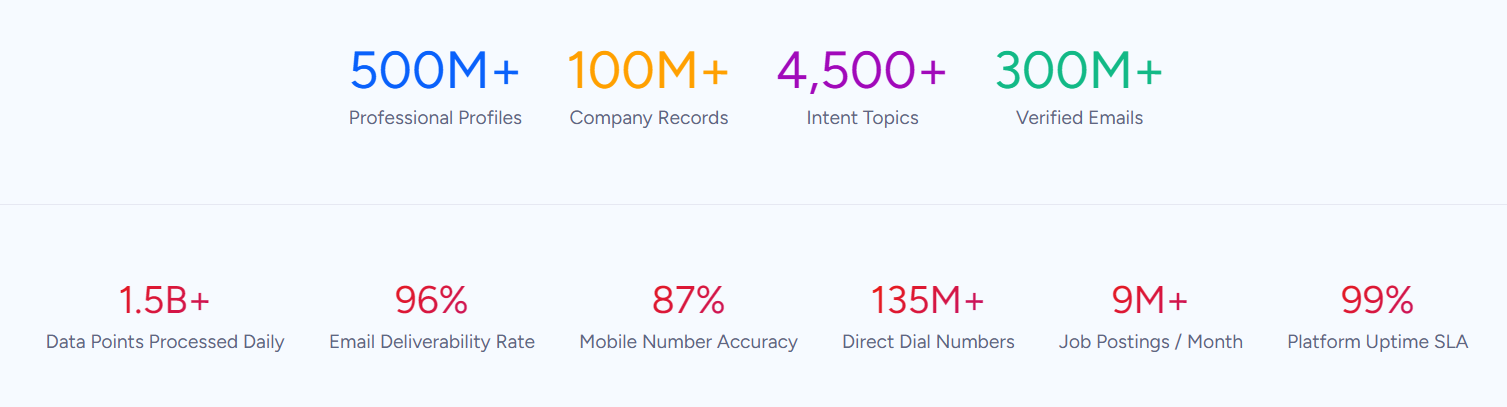
ZoomInfo's data platform spans 500M contacts, 100M companies, 135M+ verified phone numbers, 120M direct-dial phone numbers, and 200M+ verified business email addresses. This data is verified through a multi-source pipeline backed by 300+ human researchers, reaching up to 95% accuracy on first-party data.
In a Fortune 500 competitive RFP analyzing 25 million contacts across vendors, the independent consultant concluded that "no other competitor came even close."
Source: ZoomInfo
But data alone is a starting point.
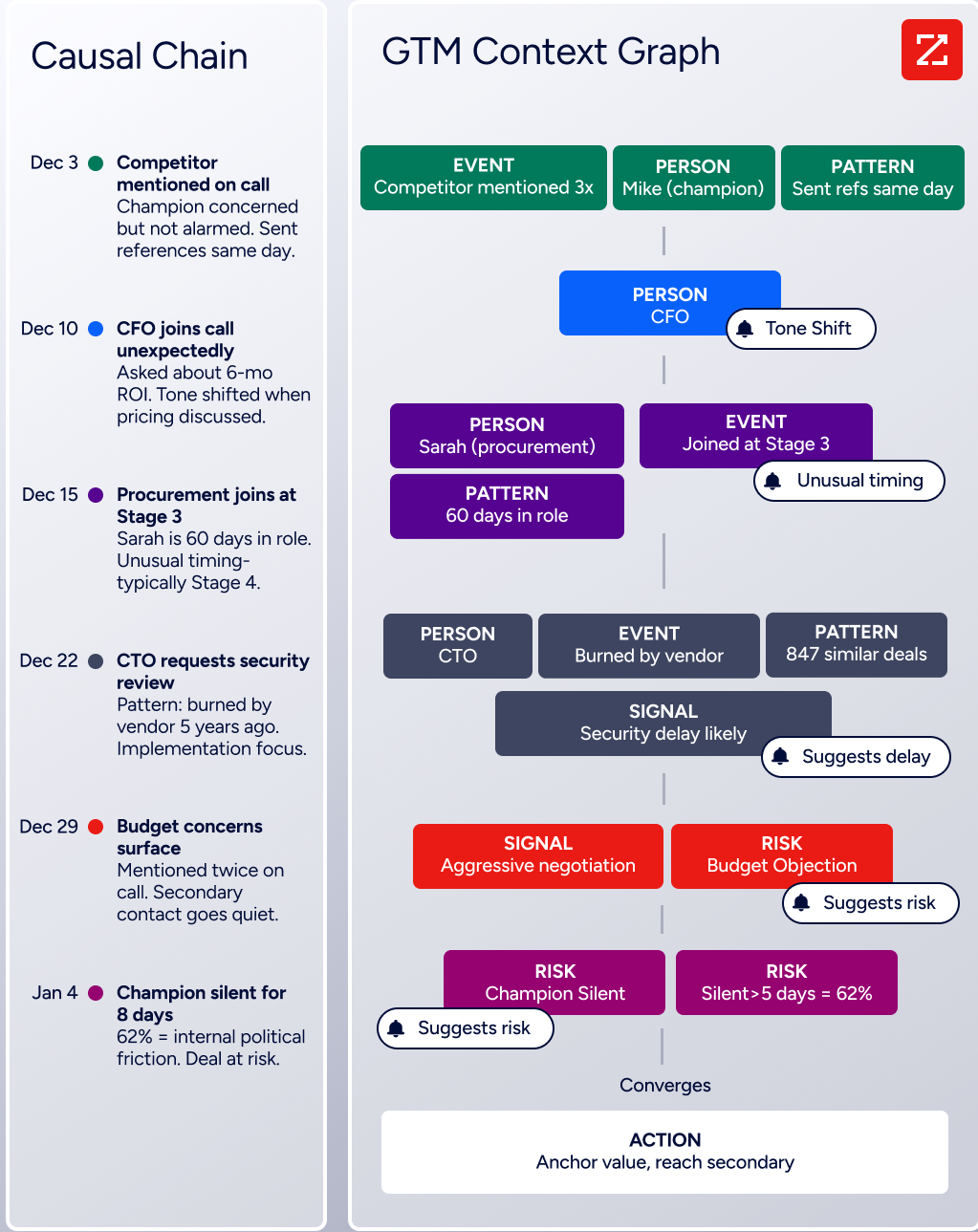
The GTM Context Graph processes 1.5B+ data points daily and fuses ZoomInfo's third-party intelligence with a customer's CRM records, conversation transcripts, and behavioral signals. The result is a layer that captures why deals move or stall, not just that they did. A CRM records a stage change. Conversation intelligence transcribes what was said.
The GTM Context Graph reasons across both to identify that executive sponsorship at this stage, combined with ROI-focused questions, matches the pattern behind closed-won deals in your segment.
Source: ZoomInfo
Teams access this intelligence three ways.
GTM Workspace gives sellers a workspace where AI agents research accounts, draft outreach, monitor signals, and update CRM. GTM Studio gives marketers and RevOps a builder for audience definition, workflow orchestration, and pipeline measurement. And APIs and MCP expose the same intelligence to any custom agent, AI tool, or partner platform.
Seismic's sales team attributed 39% of active pipeline to opportunities identified or influenced by ZoomInfo signals, reported 54% productivity gains, and saved 11.5 hours per week. (Seismic case study)
How the three platforms work together
The clearest way to understand these platforms is to see them as three layers of the same stack.
ZoomInfo is the data and signal layer.
It tells you who to target, when they're in-market, and how to reach them. It provides the verified contacts, intent signals, technographics, and buying committee intelligence that every downstream GTM motion depends on.
Klue is the competitive intelligence layer.
It tells you what competitors are doing, how to position against them, and what to say in a competitive deal. It monitors, synthesizes, and distributes competitive knowledge to the people who need it when they need it.
Clozd is the buyer truth layer.
It tells you what buyers actually think, why they chose or rejected you, and what patterns drive your wins, losses, and churn. It provides the qualitative depth that no amount of CRM data, call recordings, or competitor monitoring can replace.
A revenue team using all three has no blind spots. ZoomInfo identifies the right accounts and contacts. Klue arms sellers with competitive positioning and deal-specific coaching. Clozd surfaces the candid buyer feedback that validates or challenges the assumptions in your messaging, pricing, and product roadmap.
A team using only one has gaps. Klue without ZoomInfo has competitive intelligence but limited contact data to act on it. Clozd without Klue has buyer insights but no way to translate them into real-time seller enablement. Either without ZoomInfo lacks the B2B data that modern GTM demands.
"ZoomInfo's not just a contact data company anymore. They've built a full system of execution. GTM Intelligence actually works the list, writes the outreach, triggers the play, and helps drive predictable growth." (Ian Brodie, CEO & Co-Founder, Levanta)
Integration ecosystems reflect different strategies
Klue's integration philosophy is "Klue everywhere."
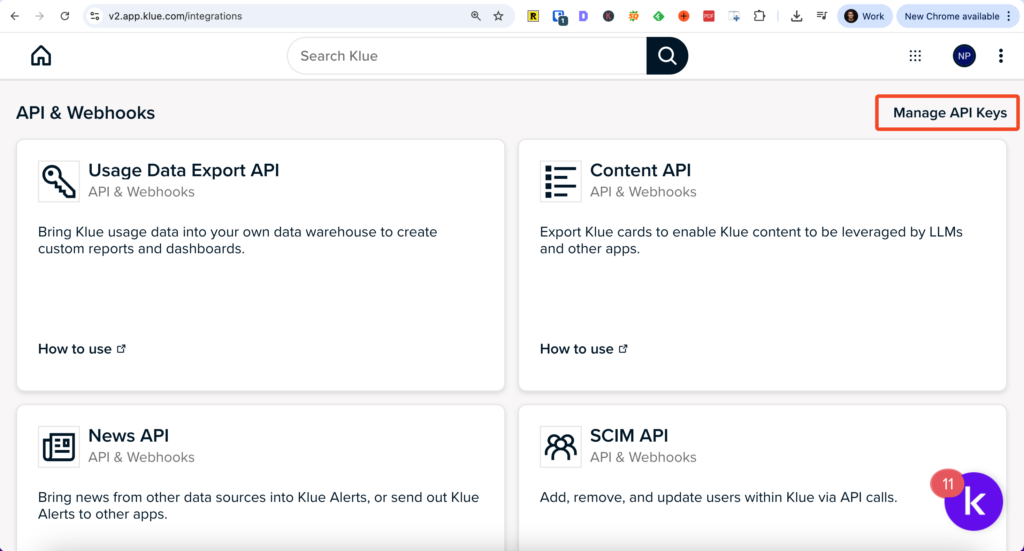
The platform connects to Salesforce, Slack, Microsoft Teams, Gong, Chorus, Gmail, Outlook, Highspot, Seismic, Showpad, SharePoint, OneDrive, and Microsoft Copilot via MCP Server. It also offers a Content API that connects published Klue Cards to AI tools like ChatGPT and Glean. The goal: competitive intel reaches sellers in every tool they already use, without context-switching.
Source: Klue
Clozd's integration approach is narrower but purposeful.
The platform connects to Salesforce, HubSpot, Microsoft Dynamics for CRM data ingestion, Gong for cross-referencing call data with interview insights, Slack for insight delivery, and Crayon for feeding buyer insights into competitive battlecards.
Its Clozd MCP connects interview data to AI tools like Claude, ChatGPT, and Gemini with structured endpoints for Decision Drivers, competitive sentiment, and Gong signal overlap. Clozd does not list iPaaS connectors like Zapier or Make.
Source: Clozd
ZoomInfo operates at an infrastructure scale.
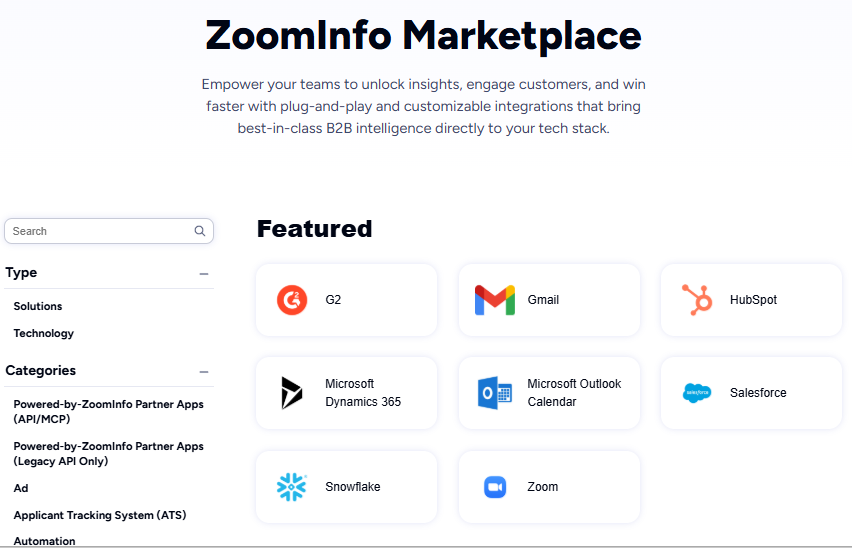
The ZoomInfo App Marketplace lists 172+ integration partners across CRM, marketing automation, sales engagement, data warehouses, and AI tools. The Enterprise API provides programmatic access to search, enrich, and research endpoints. The MCP server connects to Claude, ChatGPT, and any MCP-compatible AI client. Cloud Data Cubes deliver ZoomInfo data into AWS, Snowflake, Google Cloud, and Databricks.
This is not a tool that integrates with your stack. It is infrastructure that powers it.
Source: ZoomInfo
Security and compliance comparison
All three platforms maintain security certifications, though the specifics differ.
Klue holds SOC 2 Type II compliance and complies with GDPR, PIPEDA, and CCPA. Its infrastructure runs on AWS and GCP with AES-256 encryption at rest and TLS 1.2+ in transit. CTO Sarathy Naicker previously served as Chief Technologist at Sophos, bringing a cybersecurity background to the platform's architecture.
Clozd holds ISO 27001, ISO 27701, and SOC 2 Type II certifications, all audited annually. The ISO 27701 certification is particularly relevant for a platform that stores buyer interview recordings and transcripts. Clozd also publishes detailed GDPR compliance documentation including Data Processing Agreements with Standard Contractual Clauses.
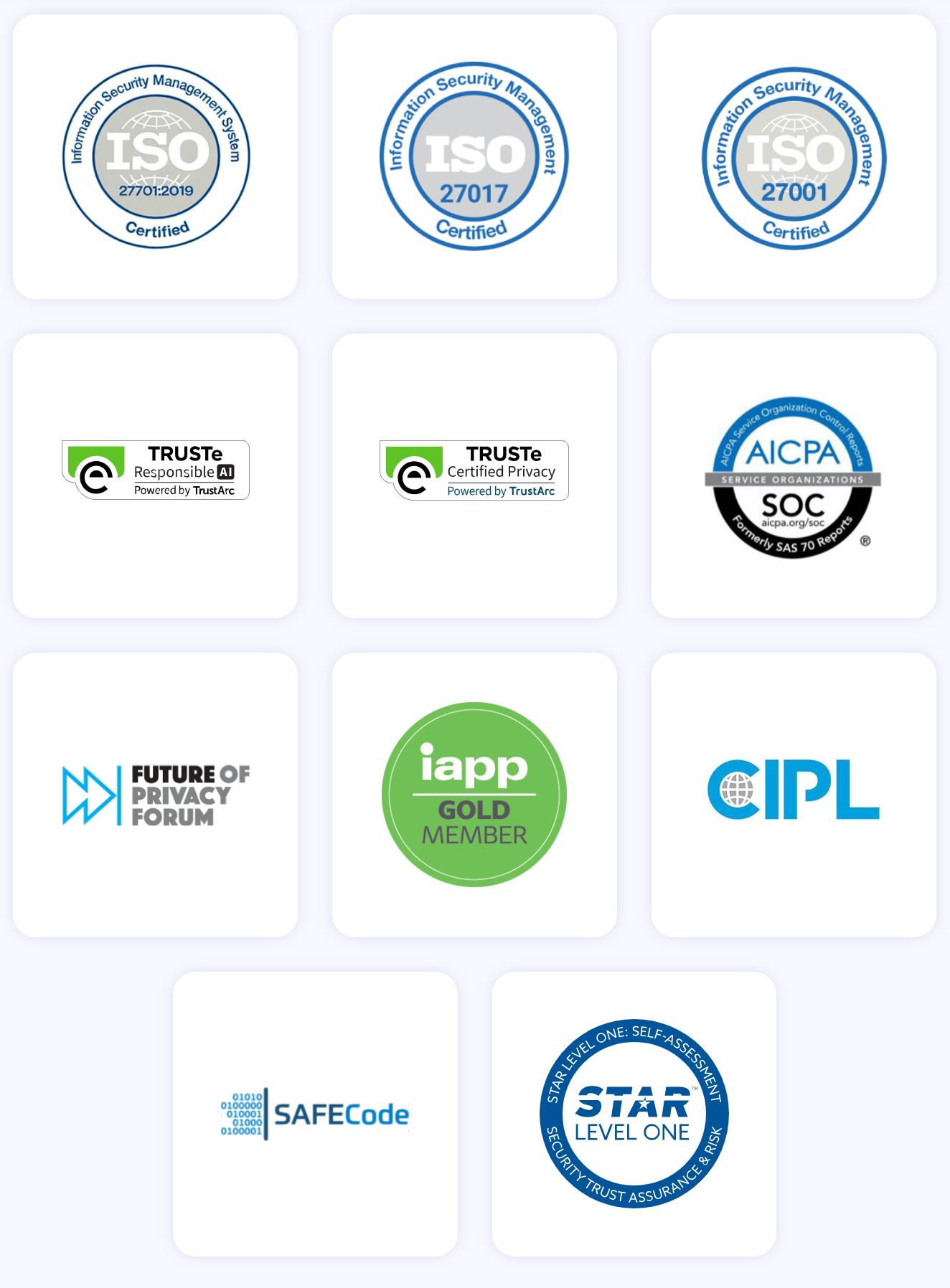
ZoomInfo maintains ISO 27001, ISO 27701, SOC 2 Type II, TRUSTe GDPR, and TRUSTe CCPA certifications, all renewed annually. ZoomInfo is also a registered data broker in California and Vermont, reflecting the regulatory obligations that come with operating a B2B data platform at its scale.
Pricing remains opaque across all three
None of these platforms publish pricing, which makes direct comparison difficult.
Klue operates on a subscription model with fees paid in advance for a defined period.
Pricing is likely anchored to a named-user seat count or comparable metric, with Competitive Intelligence and Win-Loss available as separate modules. Professional Services (implementation, consulting, training) are sold separately. The 90-day auto-renewal notice window is worth noting for procurement teams.
Clozd combines a software platform subscription with a managed services layer and Expert Network interview fees. The managed-service structure (dedicated program managers, interview logistics, incentive management) suggests a higher price floor than self-serve platforms. No free trial or freemium plan is available.
ZoomInfo uses a consumption-based pricing model scaled around enterprise license agreements, data access, API consumption, and AI activity.
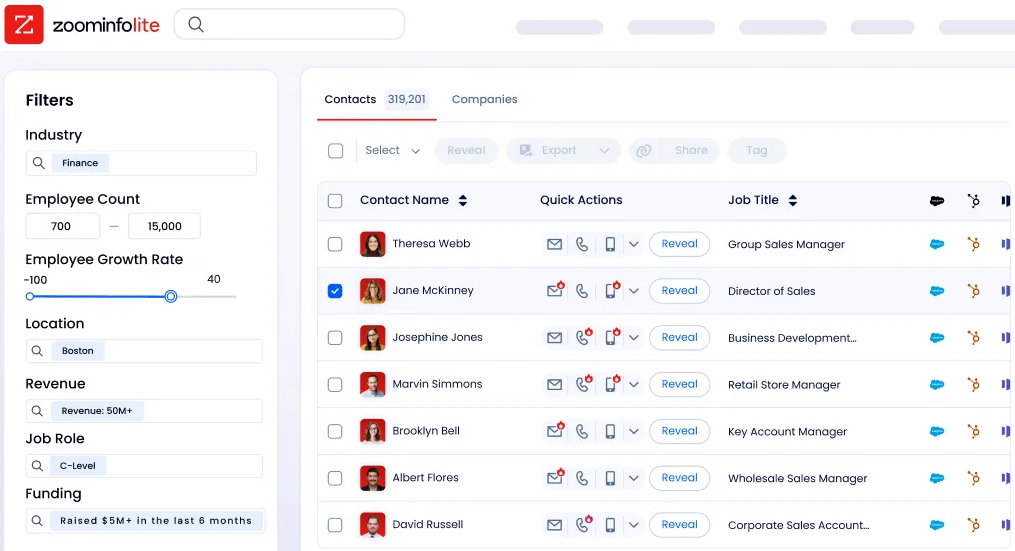
Plans are tiered (Professional, Advanced, Enterprise) across Sales and Marketing product lines. Unlike Klue and Clozd, ZoomInfo offers two free entry points: ZoomInfo Lite (a permanent free tier with 10 monthly export credits) and a 7-day free trial with access to core platform features.
Source: ZoomInfo
Klue vs. Clozd vs. ZoomInfo: Which should you choose?
The right choice depends on which layer of the stack your team needs most, or whether you need the full stack.
Choose Klue if:
You have a dedicated CI or PMM professional who needs to cover dozens of competitors
Arming sellers with real-time, deal-specific competitive coaching is your top priority
You want competitive intelligence and win-loss analysis in a single platform
Your team operates primarily in Salesforce, Slack, or Microsoft 365
You need an AI agent that pushes intel to reps rather than waiting for them to search
Choose Clozd if:
You need candid buyer feedback that only neutral third-party interviews can surface
Understanding the real reasons behind deal outcomes matters more than real-time competitive tracking
Your organization is large enough to justify a managed-service win-loss program
You want to extend buyer feedback beyond win-loss into implementation, CX, and retention
CRM data accuracy on loss reasons is a known problem you need to fix
Choose ZoomInfo if:
You need the B2B data, verified contacts, and buying signals that power every GTM motion
Your sellers need AI-powered prospecting, account intelligence, and outreach execution in one workspace
Your marketers and RevOps team need to build, enrich, and activate GTM plays without engineering support
You want the same intelligence available in your own tools via APIs and MCP, not locked inside a single UI
You need intent data, technographics, and conversation intelligence alongside contact data
Start with ZoomInfo Lite for free, or request a demo of the full platform.
The question is not which platform is "best." It is which layer of intelligence your team is missing. If you have buyer data but no way to act on it, you need ZoomInfo's data and execution layer.
If you have data but no competitive context, you need Klue. If you have a competitive context but no candid buyer truth, you need Clozd. The most effective revenue organizations invest in all three layers, because blind spots in any one compound into lost deals, missed signals, and strategy built on assumptions rather than evidence.
"ZoomInfo has literally changed the way we go to market." (Jeremy Melius, Sr. Director of Marketing Operations, Impartner)
Klue vs. Clozd vs. ZoomInfo FAQ
What is the core difference between Klue, Clozd, and ZoomInfo?
Klue is a competitive enablement platform that monitors competitors and delivers real-time deal coaching to sellers through AI-powered battlecards, Deal Tips, and Auto Insights.
Clozd is a buyer intelligence platform that conducts neutral third-party interviews with buyers to uncover the real reasons behind deal outcomes, customer satisfaction, and churn.
ZoomInfo is an AI-powered GTM platform that provides B2B data (500M contacts, 100M companies, 135M+ verified phone numbers), intent signals, and execution tools that revenue teams need to find, win, and grow customers.
Can Klue and Clozd replace each other?
Not fully. Klue excels at real-time competitive intelligence delivery to sellers, including automated competitor monitoring, battlecards, and deal-specific coaching. Clozd excels at candid buyer feedback through neutral third-party interviews, revealing insights that call transcripts and CRM data miss.
Klue has added win-loss analysis through acquisitions, and Clozd surfaces competitive insights through buyer interviews, but each platform's core strength addresses a different intelligence need.
Which platform is best for win-loss analysis?
It depends on what you prioritize.
Clozd has the longer track record, with over 50,000 interviews conducted, a dedicated managed-service team, and expansion into post-implementation, customer experience, and retention interviews. Klue's win-loss offering is newer but benefits from direct integration with its competitive intelligence layer, meaning buyer feedback flows into battlecards and seller coaching.
Clozd is the stronger choice for organizations that want dedicated, researcher-led buyer interviews as a strategic program. Klue is stronger for teams that want win-loss insights feeding into competitive enablement.
Does ZoomInfo compete with Klue or Clozd?
ZoomInfo operates at a different layer of the stack. It provides B2B contact data, company intelligence, intent signals, and execution tools that fuel go-to-market motions. Klue and Clozd focus on competitive intelligence and buyer feedback, respectively.
ZoomInfo complements both by providing the data (who to contact, when they're in-market, how to reach them) that makes competitive and buyer insights actionable.
Which platform offers a free trial or free plan?
ZoomInfo offers both a permanent free tier (ZoomInfo Lite with 10 monthly export credits) and a 7-day free trial. Klue does not offer a public free trial or free plan; access requires a demo request. Clozd does not offer a free trial or self-serve signup; all paths lead to a demo request.
How do the platforms handle AI?
Klue's Compete Agent automates competitor monitoring, content generation, and deal-specific coaching delivery, with a human-in-the-loop verification model. Clozd's AI Interviewer conducts adaptive asynchronous interviews trained on 50,000+ live conversations, while Ask Clozd provides natural language search across the interview corpus.
ZoomInfo's GTM Context Graph processes 1.5B+ data points daily to reason across CRM data, conversation intelligence, and behavioral signals, powering AI agents in GTM Workspace and GTM Studio that handle account research, outreach, signal monitoring, and workflow orchestration.
Which platform has the broadest integration ecosystem?
ZoomInfo, with 172+ partners in its App Marketplace, Enterprise APIs, MCP server access, and Cloud Data Cubes for AWS, Snowflake, Google Cloud, and Databricks. Klue offers integrations across Salesforce, Slack, Microsoft 365, Gong, Chorus, and sales enablement platforms, plus a Content API for AI tools. Clozd connects to Salesforce, HubSpot, Microsoft Dynamics, Gong, Slack, and Crayon, with an MCP integration for AI tools and a REST API for data export.
What security certifications do the platforms hold?
All three maintain SOC 2 Type II compliance.
ZoomInfo and Clozd both hold ISO 27001 and ISO 27701 certifications. ZoomInfo additionally holds TRUSTe GDPR and CCPA validations and is a registered data broker in California and Vermont. Clozd publishes detailed GDPR compliance documentation with Data Processing Agreements. Klue complies with GDPR, PIPEDA, CCPA, and OWASP ASVS 4.0.
Comparing Klue and Clozd? These related breakdowns go deeper:
