
Choosing between MillionVerifier and ZeroBounce for email verification comes down to five questions:
Do you need a focused list-cleaning tool, or a deliverability platform that covers warmup, inbox testing, and blacklist monitoring?
Is your main concern keeping per-verification costs low, or will you pay more for deeper intelligence on each address?
Do you need SOC 2 Type 2 and HIPAA documentation for procurement, or are GDPR and ISO 27001 enough?
Are you verifying lists in bulk on your own schedule, or do you need real-time API validation at high throughput?
Is email verification a standalone task, or part of a larger go-to-market operation where contact data quality determines pipeline outcomes?
In short, here's what we recommend:
MillionVerifier is built for cost-conscious email marketers who need high-volume list cleaning without overpaying. Its pay-as-you-go credit model starts at $39 for 10,000 verifications and scales to $449 for 1 million, with credits that never expire and no subscription required. The Smart Verify engine cross-references real-world sending data to push accuracy above 99%, and a money-back guarantee backs the claim. But MillionVerifier is strictly a verification tool. It has no deliverability features like warmup or inbox placement testing, and its small team produces documented inconsistencies in support response times.
ZeroBounce serves teams that want email verification inside a broader deliverability strategy. Beyond list cleaning, ZeroBounce ships Email Warmup, DMARC Monitor, Blacklist Monitor (200+ blacklists), Inbox Placement Test, and AI Email Scoring under one account. Its Verify+ technology validates Yahoo and AOL addresses that other tools struggle with. The trade-off is price: ZeroBounce costs roughly double per verification at lower volumes, and high-volume users consistently flag pricing as a pain point.
Both platforms clean email lists well. But for B2B teams whose email data feeds a larger go-to-market motion, verification is only one piece. The accuracy of the contacts you verify matters as much as the verification itself.
ZoomInfo is an AI-powered go-to-market platform built on the largest B2B data foundation in the industry: 500M contacts, 100M companies, 135M+ verified phone numbers, and 200M+ verified business email addresses. Its GTM Context Graph processes 1.5B+ data points daily, fusing this data with your CRM records, conversation transcripts, and behavioral signals to capture not just what happened, but why. That intelligence reaches teams through GTM Workspace for sellers, GTM Studio for marketers and RevOps, or APIs and MCP in any third-party tool. For teams where email verification is part of a larger go-to-market challenge, ZoomInfo addresses the problem upstream: the contacts entering your systems are already verified and current, reducing both verification costs and bounce risk before a third-party tool touches the list.
If your email verification needs are part of a broader go-to-market challenge, explore ZoomInfo's data platform and see the difference upstream data quality makes.
MillionVerifier vs. ZeroBounce at a glance
MillionVerifier | ZeroBounce | ZoomInfo | |
|---|---|---|---|
Primary focus | Email list verification | Email verification + deliverability platform | AI-powered go-to-market platform with verified B2B data |
Verification accuracy | Up to 95% accuracy on first-party data, 200M+ verified emails | ||
Pricing model | Pay-as-you-go credits, no subscription | Pay-as-you-go + ZeroBounce ONE at $99/month | Consumption-based pricing |
Cost per 10K verifications | N/A (verified data included with platform) | ||
Yahoo/AOL accuracy | Standard pipeline | Verify+ add-on for accurate validation | Verified at source |
Catch-all handling | Credits refunded, not charged | AI scoring (0-10) per catch-all address | N/A |
Deliverability tools | None | Warmup, DMARC, Blacklist, Inbox Placement | Intent signals, buyer intelligence, engagement tracking |
Integrations | 60+ native + Zapier | 120+ marketplace + API + MCP | |
API rate limit | Up to 35 req/sec (enrichment-focused) | ||
Compliance | ISO 27001, GDPR | ||
Support | Chat + email; small team | Dedicated account management, ZoomInfo University |
MillionVerifier wins on simplicity, ZeroBounce on platform depth
MillionVerifier does one thing well. Upload a list, get results categorized as Good, Risky, or Bad, download the cleaned file. The EverClean service automates this inside connected ESPs (Mailchimp, HubSpot, ActiveCampaign, and others) on a daily or weekly schedule, turning list hygiene from a periodic chore into a background process.
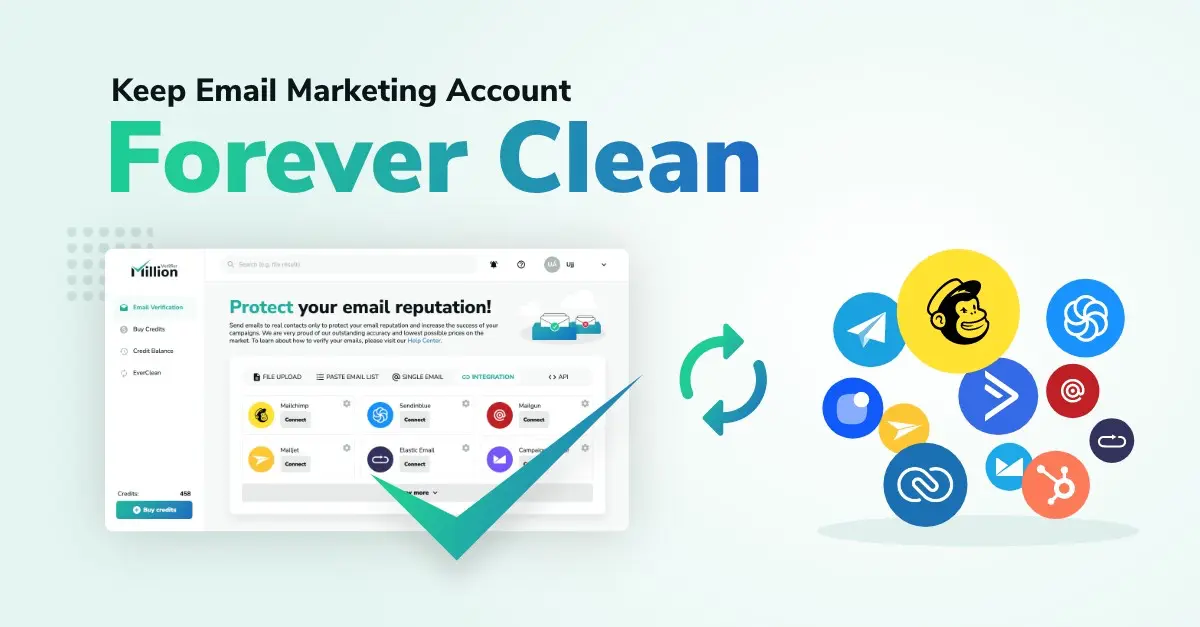
Source: MillionVerifier
The real-time API handles point-of-entry validation for signup forms. That's the full product.
ZeroBounce treats verification as one layer in a deliverability stack.
After cleaning a list, teams can warm up a new sending domain with Email Warmup, test whether campaigns land in the inbox or spam with the Inbox Placement Test (covering 20+ mailbox providers including Gmail, Outlook, Yahoo, and regional European providers), monitor 200+ blacklists with Blacklist Monitor, check authentication records with the Email Server Tester (100+ automated checks), and protect domains from spoofing with DMARC Monitor.
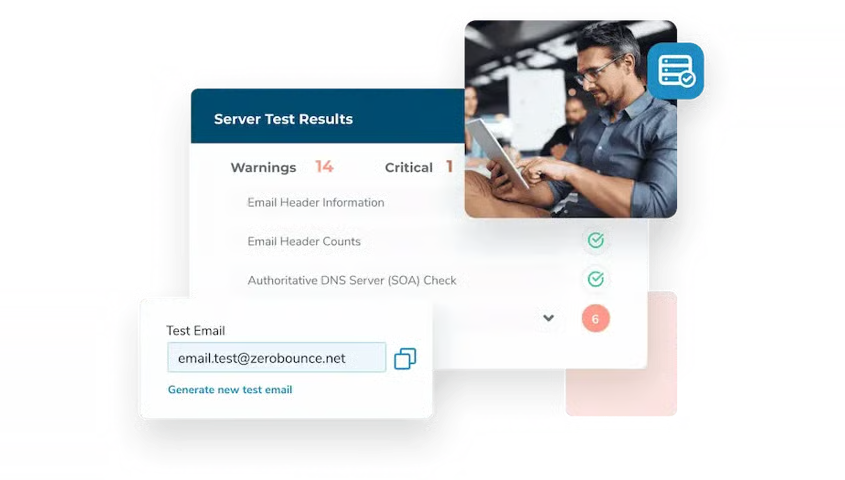
Source: ZeroBounce
The Email Finder adds prospecting, discovering verified email addresses from a person's name and company domain.
For email marketers whose only pain point is bounce rates, MillionVerifier avoids the complexity of tools they don't need.
For teams managing sender reputation across multiple domains, running warmup campaigns, and monitoring deliverability, ZeroBounce consolidates what would otherwise require three or four separate vendors.
Accuracy differences show up in specific scenarios
Both platforms claim high accuracy, and both back it with money-back guarantees. The differences emerge in how they handle the hardest cases.
MillionVerifier claims 99%+ accuracy through a multi-step pipeline: syntax check, DNS lookup, SMTP handshake, greylisting re-verification, and Smart Verify, a proprietary layer that cross-references actual email sending data. The money-back guarantee kicks in if a verified list produces a hard bounce rate above 4% within 7 days.
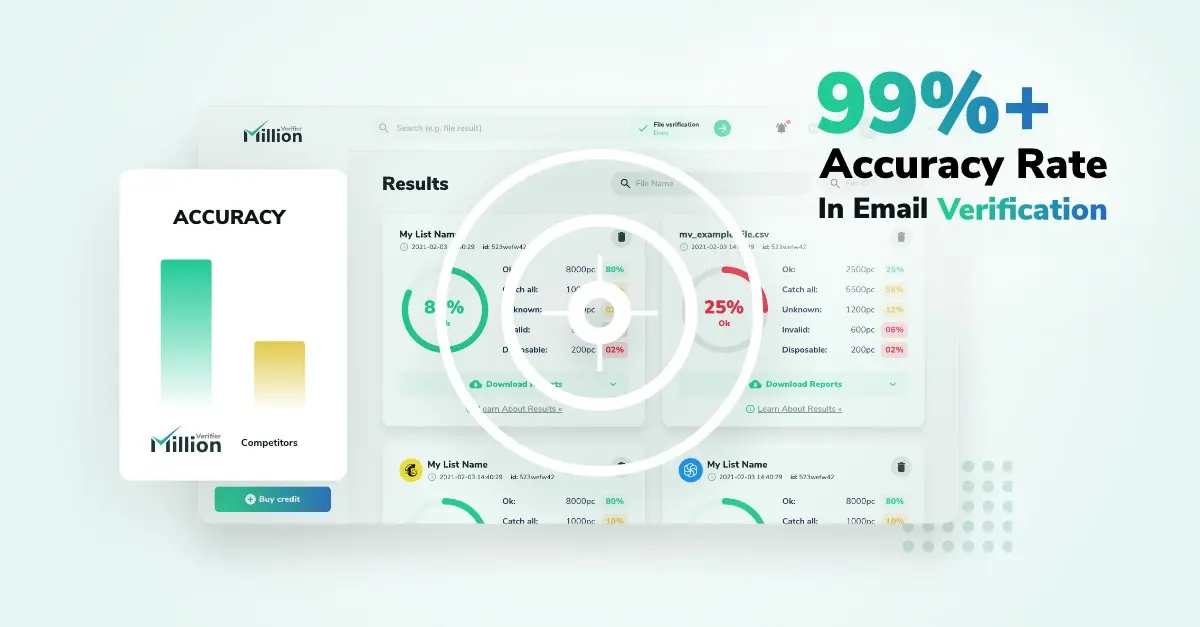
Source: MillionVerifier
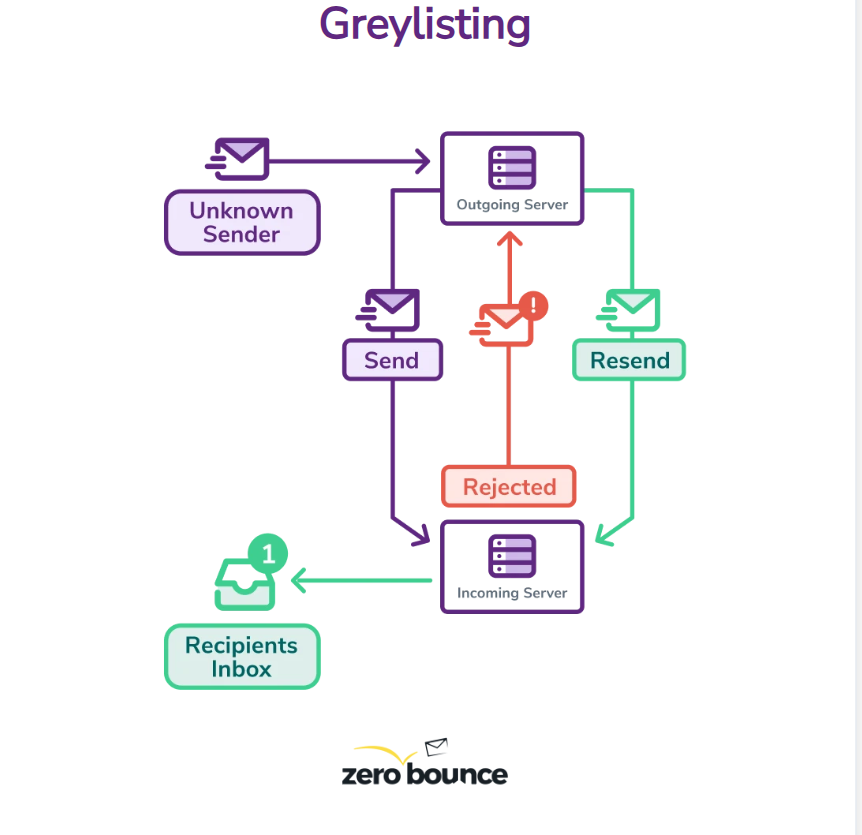
ZeroBounce guarantees 99.6% accuracy and reports an average unknown rate of 1.69% across its user base. The lower unknown rate comes partly from its anti-greylisting system, which queues and retries validation attempts until the greylisting window passes, converting more unknowns into definitive results.
Source: ZeroBounce
The biggest accuracy gap involves Yahoo and AOL addresses. These providers block the standard SMTP probes most verifiers rely on, making it impossible to confirm whether a mailbox exists.
ZeroBounce addressed this with Verify+, an optional add-on that sends an actual email to probe for bounces. Without Verify+, accuracy on Yahoo/AOL can drop to 96%; with it, the full 99.6% guarantee applies.
MillionVerifier uses its Smart Verify database to improve Yahoo results, but G2 reviewers note that accuracy on Yahoo addresses and complex corporate mail servers lags behind ZeroBounce.
Catch-all domains are the other friction point.
MillionVerifier flags catch-alls as "Risky" and refunds the credits, leaving the send-or-suppress decision to the user.
ZeroBounce goes further with AI Email Scoring, which grades each catch-all address from 0 to 10 based on engagement likelihood. This lets marketers recover high-scoring catch-alls rather than discarding the entire segment. ZeroBounce publishes bounce rate benchmarks per score tier: a score of 10 averages roughly 1.3% bounce, while a score of 0 averages around 40%.
Automated list maintenance: EverClean vs. ZeroBounce ONE
Both platforms offer ongoing hygiene, but the approaches differ.
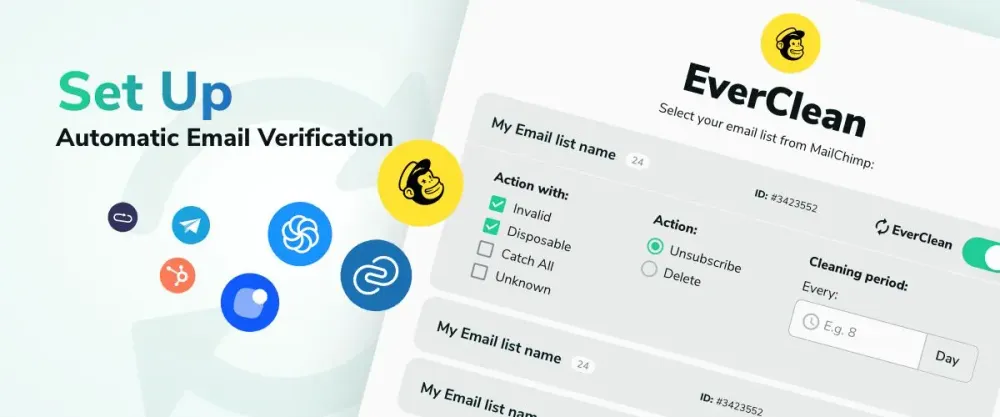
MillionVerifier's EverClean connects to supported ESPs and automatically verifies selected lists on a daily or weekly schedule, unsubscribing or deleting bad emails without manual intervention. Setup is one-time: connect the platform, choose lists, configure the action (unsubscribe or delete) and frequency.
Source: MillionVerifier
EverClean uses a separate monthly subscription priced by total list size, with lists under 1,000 contacts cleaned free. After each run, downloadable logs show exactly which addresses were removed.
ZeroBounce doesn't offer an equivalent always-on cleaning service that runs inside your ESP. Instead, ZeroBounce ONE provides 10,000 recurring monthly validation credits alongside the full deliverability toolkit. Teams re-validate lists on their own schedule using the dashboard or API, and set up Autopay for automatic credit replenishment.
The difference is operational: EverClean runs in the background without user action, while ZeroBounce requires either manual triggers or API-driven automation to re-validate on a schedule.
For teams that want set-and-forget list maintenance inside their ESP, EverClean is the more automated path. For teams that prefer to control when and how validation runs, and want deliverability tools alongside it, ZeroBounce ONE provides a more complete package.
ZoomInfo solves the problem before verification starts
Both MillionVerifier and ZeroBounce assume you already have email addresses that need cleaning. ZoomInfo operates upstream of that workflow.
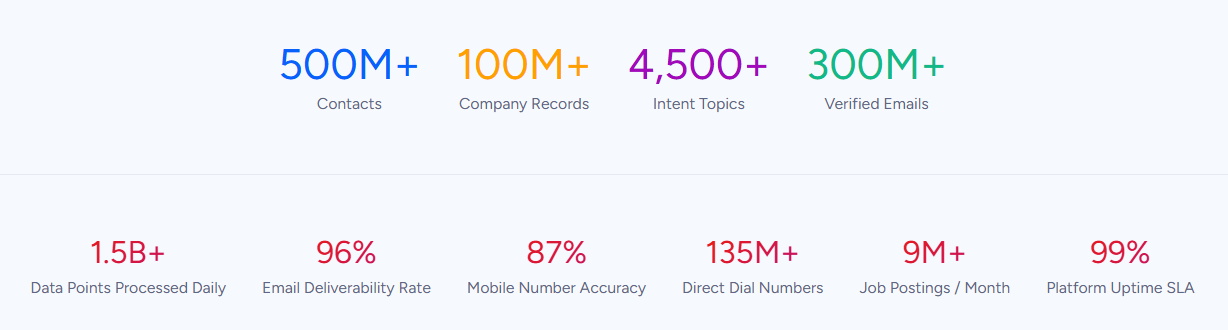
With 500M contacts and 100M companies, 135M+ verified phone numbers, and 200M+ verified business email addresses, ZoomInfo maintains its data through automated ML scanning of 28 million site domains daily, 300+ human researchers, and a community of 200,000+ ZoomInfo Lite users who share data back. The platform achieves up to 95% accuracy on first-party data.
In a Fortune 500 competitive RFP analyzing 25 million contacts across vendors, the independent consultant concluded that "no other competitor came even close."
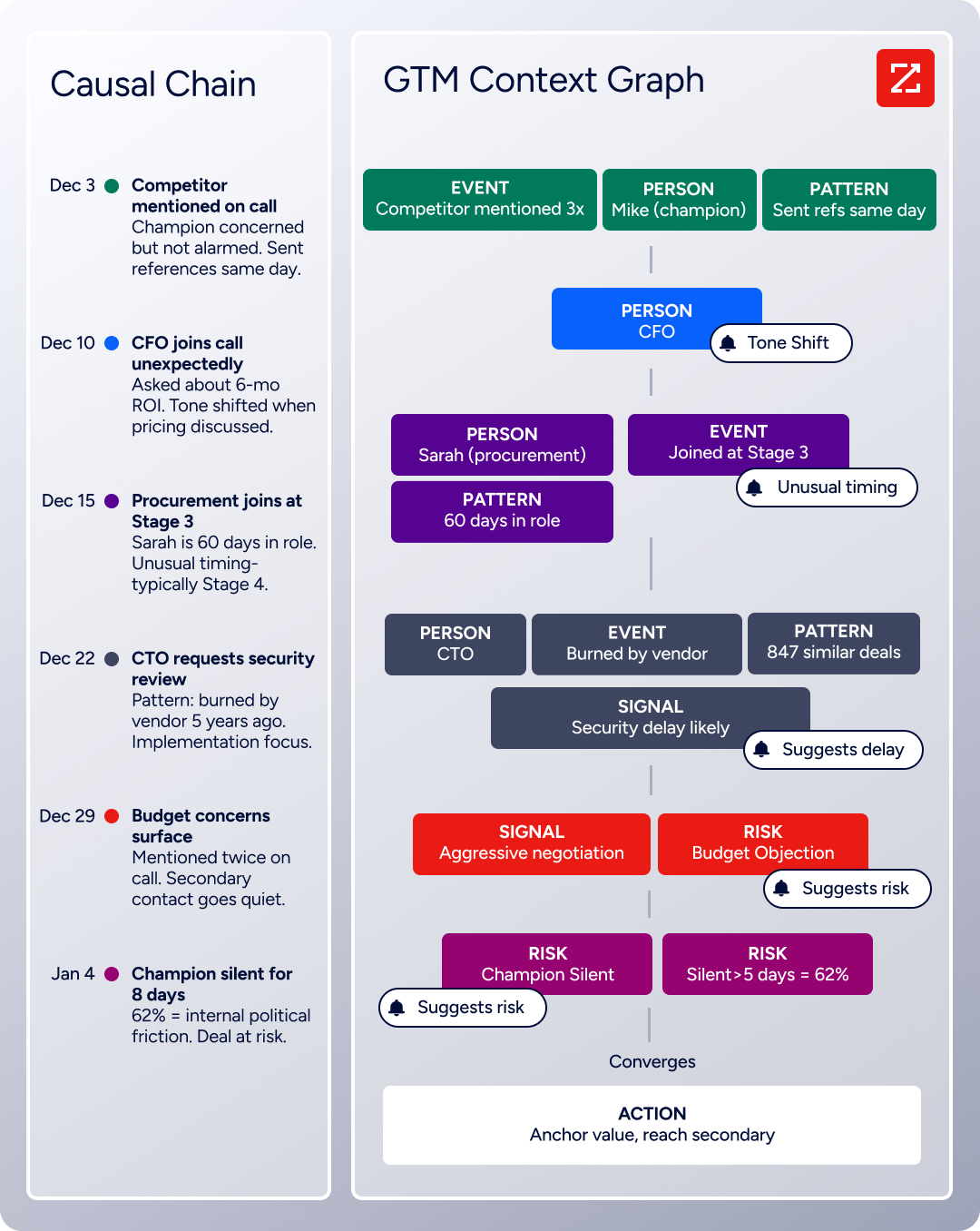
For B2B sales and marketing teams, the value extends well beyond email accuracy. ZoomInfo's GTM Context Graph processes 1.5B+ data points daily, fusing ZoomInfo's B2B data with your CRM records, conversation transcripts, and behavioral signals to capture not just who to contact, but why they're worth contacting now.
Buyer Intent data tracking 210 million IP-to-Organization pairings identifies companies actively researching solutions.
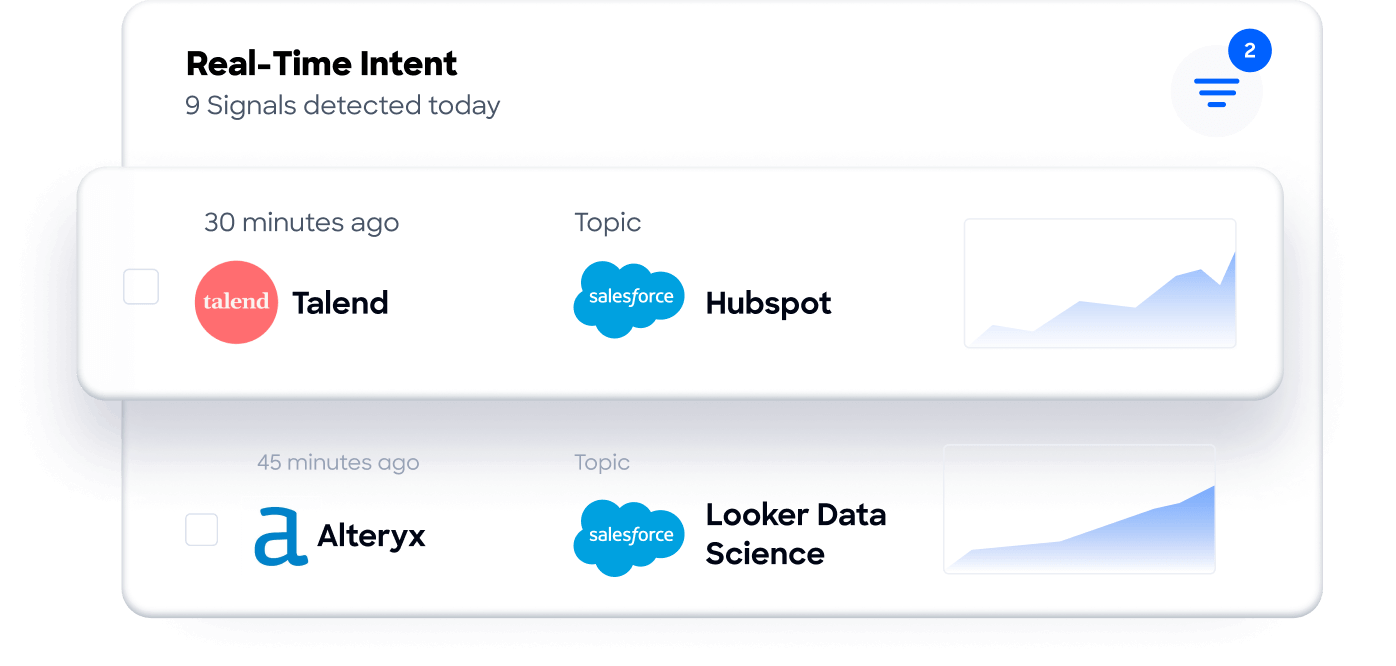
WebSights resolves anonymous website traffic to companies and contacts. Technographics profile the tech stack of 30+ million companies.
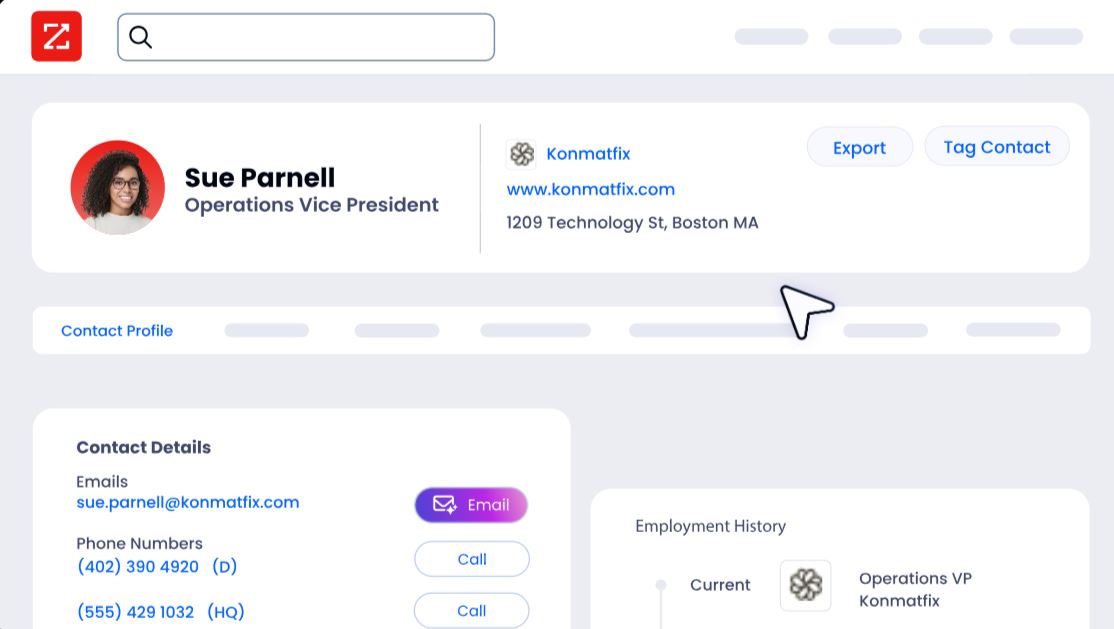
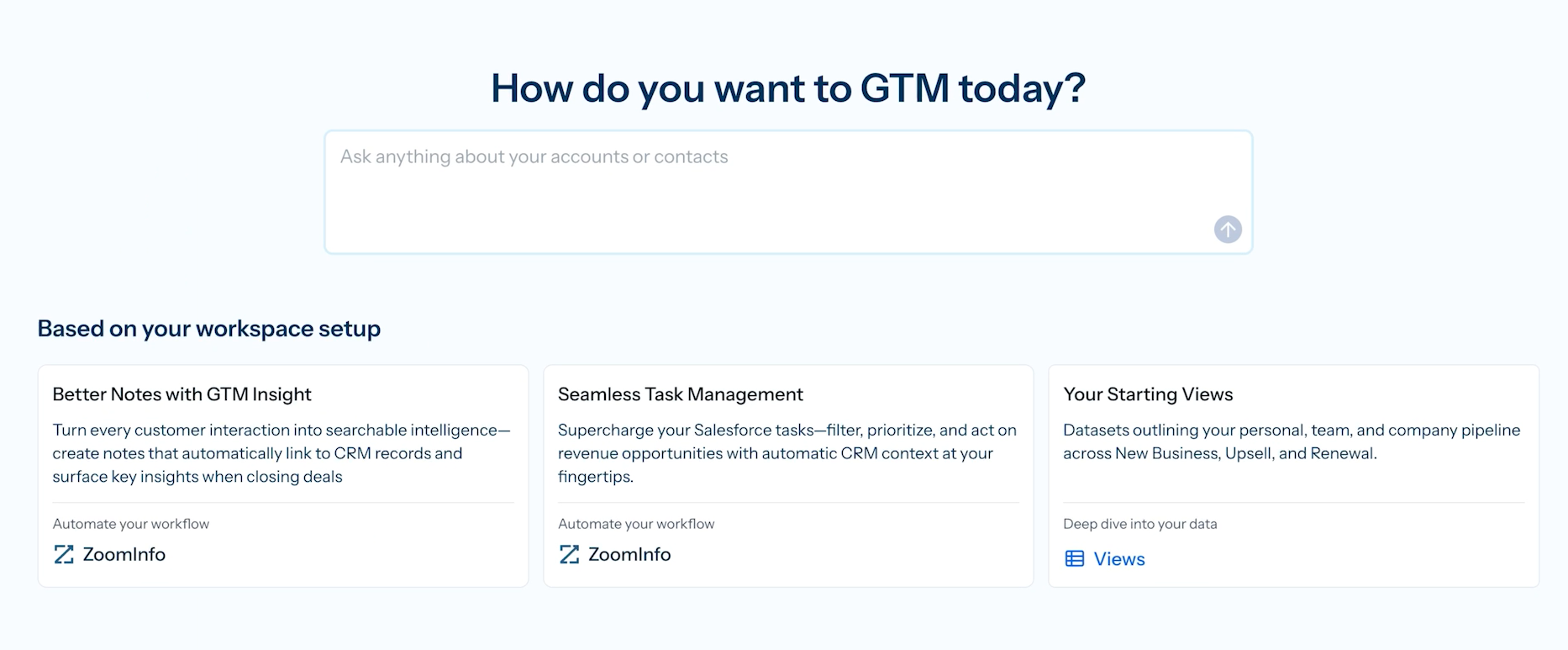
This intelligence reaches teams three ways: GTM Workspace gives sellers a single surface where prioritized accounts, AI-drafted outreach, and deal execution converge.
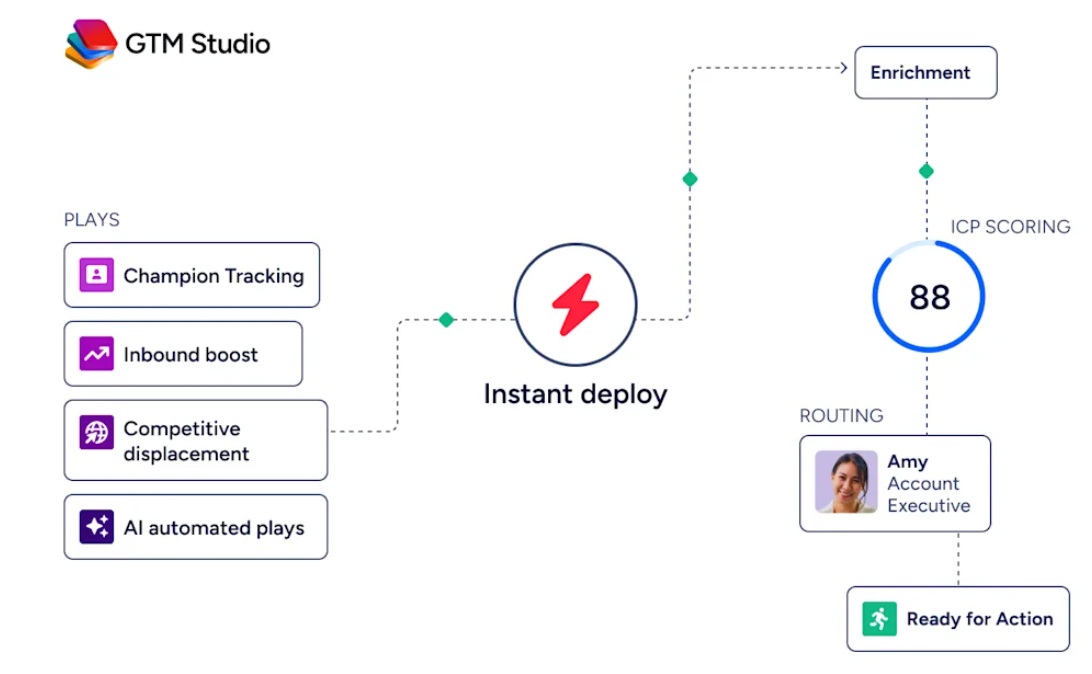
GTM Studio gives marketers and RevOps a canvas for audience definition, campaign orchestration, and pipeline measurement in natural language.
APIs and MCP expose the same intelligence to any custom agent or third-party platform.
Seismic's sales team attributed 39% of active pipeline to opportunities identified or influenced by ZoomInfo signals, with reps reporting 54% productivity gains. (Seismic case study)
ZoomInfo and email verification tools are complementary, not competitive. Teams using ZoomInfo for prospecting and data enrichment will still want verification on legacy lists or imported data. But for net-new outbound, ZoomInfo's verified data means fewer bad addresses entering the system in the first place, reducing both verification costs and bounce risk.
API and developer experience comparison
Both platforms offer REST APIs for real-time verification, but they serve different scales.
MillionVerifier's Single API uses a GET request with an API key, email address, and optional timeout. The response includes the verification result, a didyoumean typo correction, free and role boolean flags, remaining credits, and an executiontime field for server-side processing time.
MillionVerifier claims sub-100ms verification on fast mail servers, with typical results under 0.5 seconds. The rate limit is 160 requests per second per account.
Developer conveniences include deterministic test API keys that return specific result types without consuming credits, code samples in eight languages (PHP, cURL, Go, Python, Ruby, Java, Node.js, C#), and unlimited API key creation with per-key IP restrictions. The Bulk API handles programmatic file uploads for batch processing. MillionVerifier does not publish installable SDK packages.
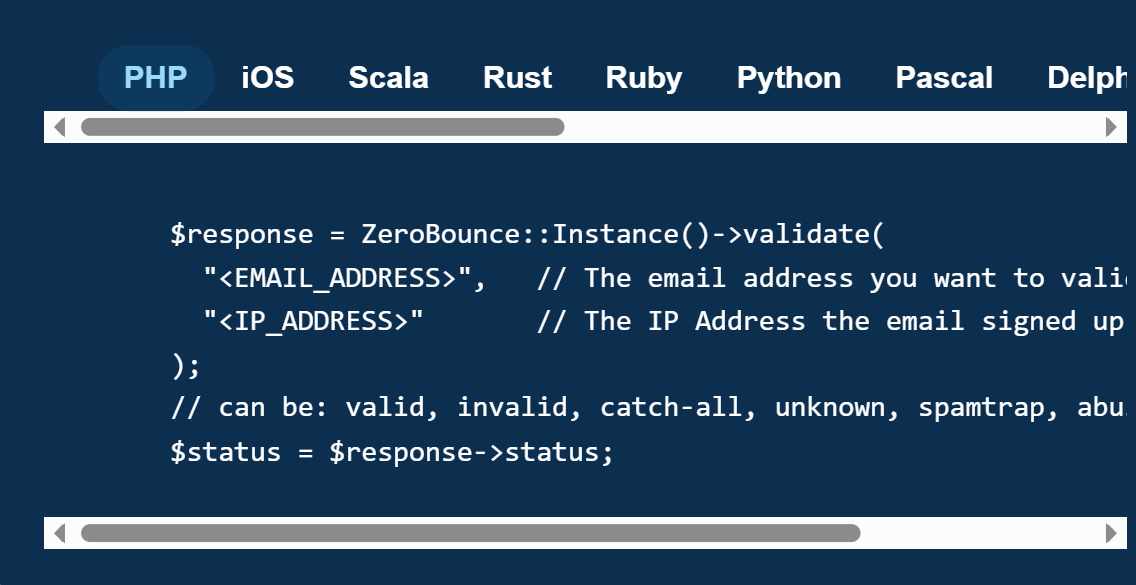
ZeroBounce's Email Validation API returns a richer response: 30+ status and sub-status codes (including spam trap, abuse, toxic domain, and catch-all classifications), gender and name appends, domain age, and geolocation data when an IP address is provided.
Source: ZeroBounce
The rate limit is much higher at 80,000 requests per 10 seconds for standard accounts, upgraded to 100,000 per 10 seconds for ONE subscribers. A batch endpoint handles up to 200 emails per call.
ZeroBounce maintains official SDK wrappers in 13 languages including Rust, Go, iOS (Swift), and Android (Kotlin). Three regional API endpoints (Global, US, EU) provide data-residency control. A sandbox mode offers test addresses that return predictable responses without consuming credits.
For developers building high-throughput validation into production systems, ZeroBounce's higher rate limits, richer response data, and maintained SDKs give it a clear edge.
For smaller integrations where simplicity matters more than throughput, MillionVerifier's lightweight API and test-key system get developers productive faster.
The compliance gap matters for enterprise buyers
MillionVerifier holds ISO 27001 certification and is GDPR compliant, with all servers in the EU (Hungary and Sweden). A Data Processing Agreement is available to all users, including free accounts. SOC 2 Controls appear as a trust badge, though the specific SOC 2 type and scope are not publicly disclosed.

Source: MillionVerifier
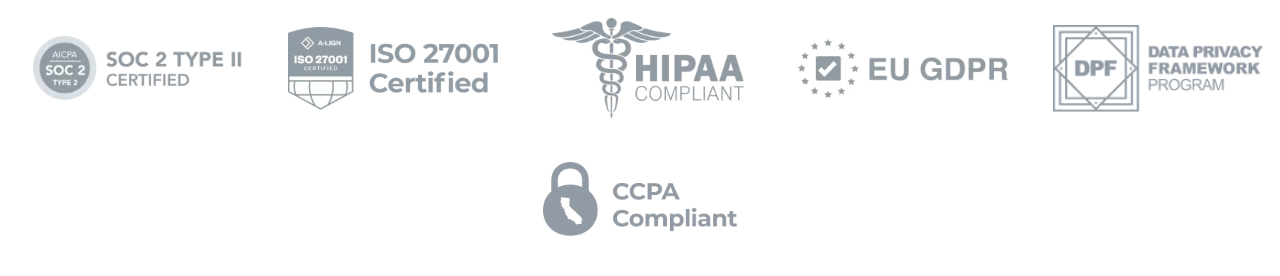
ZeroBounce carries a broader certification stack: SOC 2 Type 2, ISO 27001, HIPAA, GDPR, CCPA, and EU-US Data Privacy Framework.
Source: ZeroBounce
The platform runs on proprietary hardware rather than shared cloud infrastructure. Application security includes a HackerOne bug bounty and CyberSmart Defense penetration testing, with Cloudflare Enterprise providing WAF and DDoS protection. Uploaded files are automatically deleted after 30 days.
For regulated industries (healthcare, financial services, legal), ZeroBounce's HIPAA certification and documented SOC 2 Type 2 clear procurement gates that MillionVerifier cannot. For most SMBs and marketing teams in the EU, MillionVerifier's GDPR compliance and EU-based infrastructure are enough.
Support reflects each company's scale
MillionVerifier operates with an estimated team of about 4 people. The platform offers chat and email support, with the homepage distinguishing between "24/7 chat assistance" (likely asynchronous or bot-assisted) and "live human support during working hours."
Multiple G2 and Capterra reviewers flag inconsistent responsiveness, including at least one reported case of five consecutive days without a human response.
ZeroBounce reports a 20-second average live chat wait time and 17-minute average email reply time, with phone support in both the US and UK. Multiple G2 reviewers name support responsiveness as a top reason for staying on the platform. The enterprise tier adds dedicated account managers and personalized onboarding.
For teams that can self-serve through documentation and rarely contact support, MillionVerifier's knowledge base is adequate. For organizations where a stuck verification job or an API question blocks a time-sensitive campaign, ZeroBounce's support capacity is a real differentiator.
Price is the clearest dividing line
MillionVerifier and ZeroBounce both use credit-based models where you pay per verified email, but the economics diverge at scale.
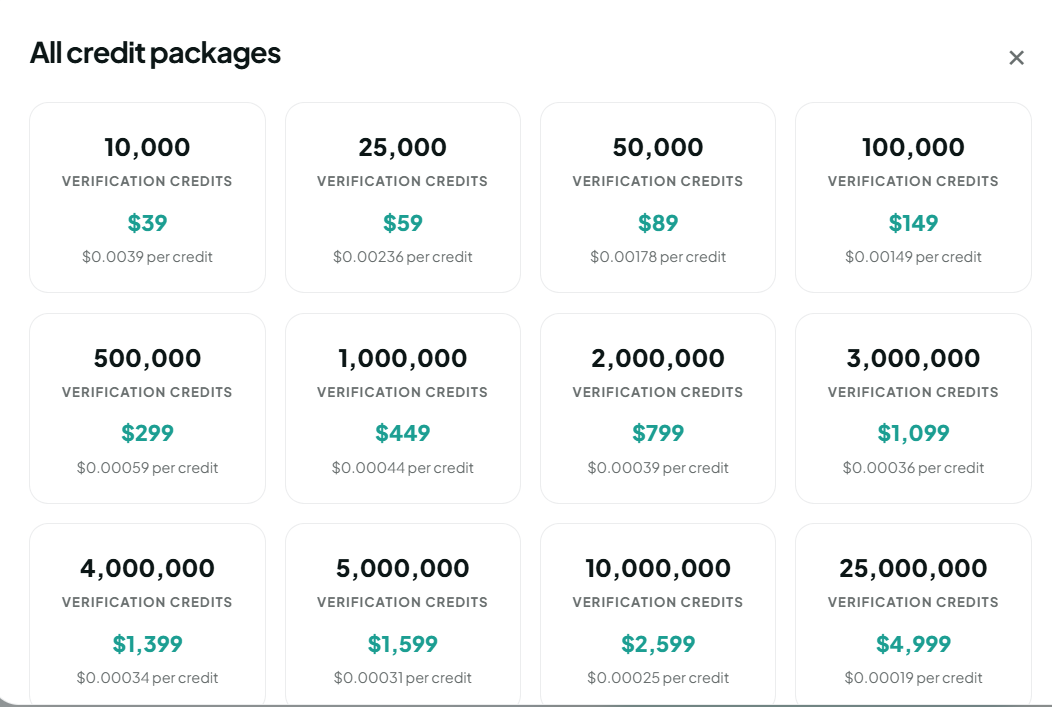
MillionVerifier's pricing is straightforward. You buy credits once, they never expire, and they work across every service: bulk uploads, API calls, and ESP integrations. 10,000 verifications cost $39. 1 million cost $449, dropping the per-email cost to $0.00044. No subscription, no monthly commitment, no feature gating by tier. Every buyer gets the same verification engine.
Source: MillionVerifier
MillionVerifier also doesn't charge for risky results. Catch-all and unknown emails (which can represent 10-15% of a B2B list) get credits automatically refunded. This makes the effective cost lower than the headline price, particularly for B2B senders with heavy corporate domain exposure.
ZeroBounce starts higher. 2,000 credits cost $39, and 10,000 credits cost $80 on pay-as-you-go. But ZeroBounce also offers ZeroBounce ONE at $99/month, which bundles 10,000 validation credits with Email Finder queries, inbox placement tests, email server tests, warmup seeds, blacklist monitors, and DMARC monitoring.
For teams that need these deliverability tools anyway, the bundle saves over 30% versus buying components separately.
ZeroBounce also doesn't charge for unknowns, and credits never expire on both PAYG and ONE plans. But the Email Finder consumes 20 credits per successful query, making prospecting-heavy usage much more expensive.
For teams verifying 100,000 emails or more, the gap widens.
MillionVerifier charges $149 for 100,000 verifications. ZeroBounce's equivalent PAYG cost runs higher (enterprise pricing above 1 million credits requires contacting sales). If verification is your primary need and budget matters, MillionVerifier's pricing is hard to beat.
Integration ecosystems serve different workflows
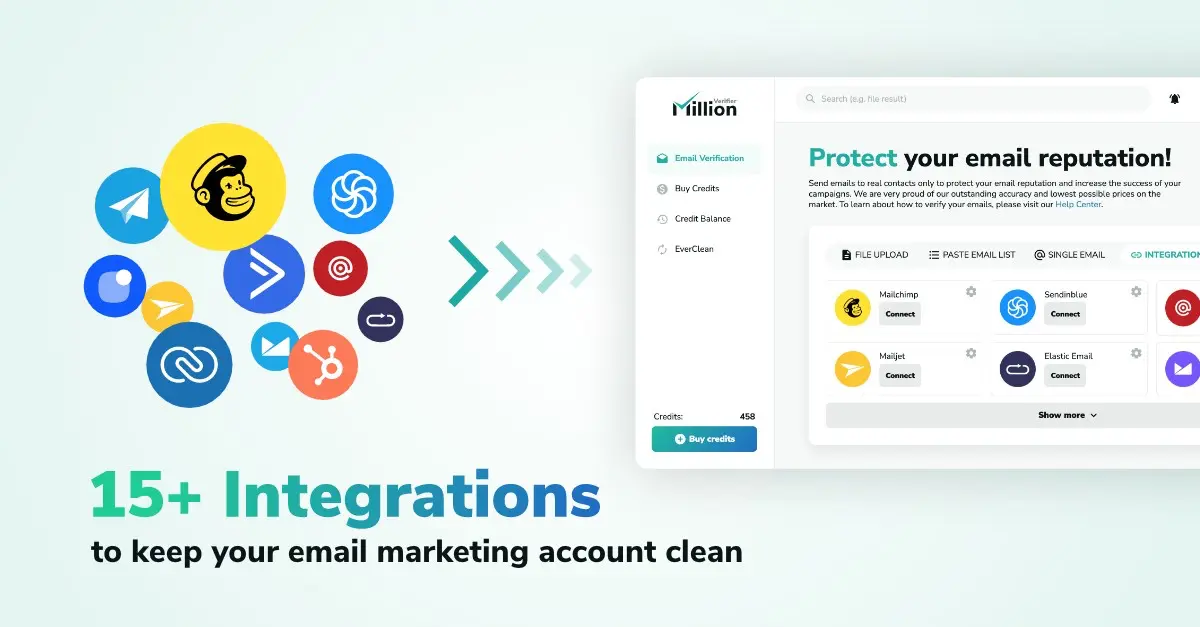
MillionVerifier maintains 40+ native integrations focused on email marketing platforms and CRMs: Mailchimp, HubSpot, ActiveCampaign, Zoho CRM, GetResponse, AWeber, MailerLite, Drip, SendGrid, Campaign Monitor, Pipedrive, Constant Contact, and others. These integrations enable direct list import and bad-email removal without CSV exports.
Source: MillionVerifier
A Custom Integration option lets developers connect any unlisted platform by building four server-side REST endpoints. MillionVerifier does not have a native Zapier or Make connector, so iPaaS connections require using the REST API directly.
ZeroBounce covers 60+ native integrations spanning a broader range: ESPs, CRMs, e-commerce platforms (Shopify, WooCommerce, BigCommerce), data warehouses (Snowflake, Amazon S3), AI platforms (ChatGPT, Google Gemini), form builders (JotForm, Typeform), and project management tools (Monday.com, Jira).
Source: ZeroBounce
ZeroBounce also connects through Zapier, Make, Workato, and n8n, extending its reach to thousands of additional apps. A JavaScript widget embeds real-time validation directly on web forms, and a browser extension enables in-browser validation.
ZoomInfo's App Marketplace lists 120+ integration partners, but these serve a different workflow. Rather than verifying existing lists, ZoomInfo integrations push verified, enriched contact data into CRMs (Salesforce, HubSpot, Dynamics 365), data warehouses (Snowflake, Databricks, AWS), marketing automation (Marketo, Eloqua), and sales engagement platforms (Salesloft, Outreach).
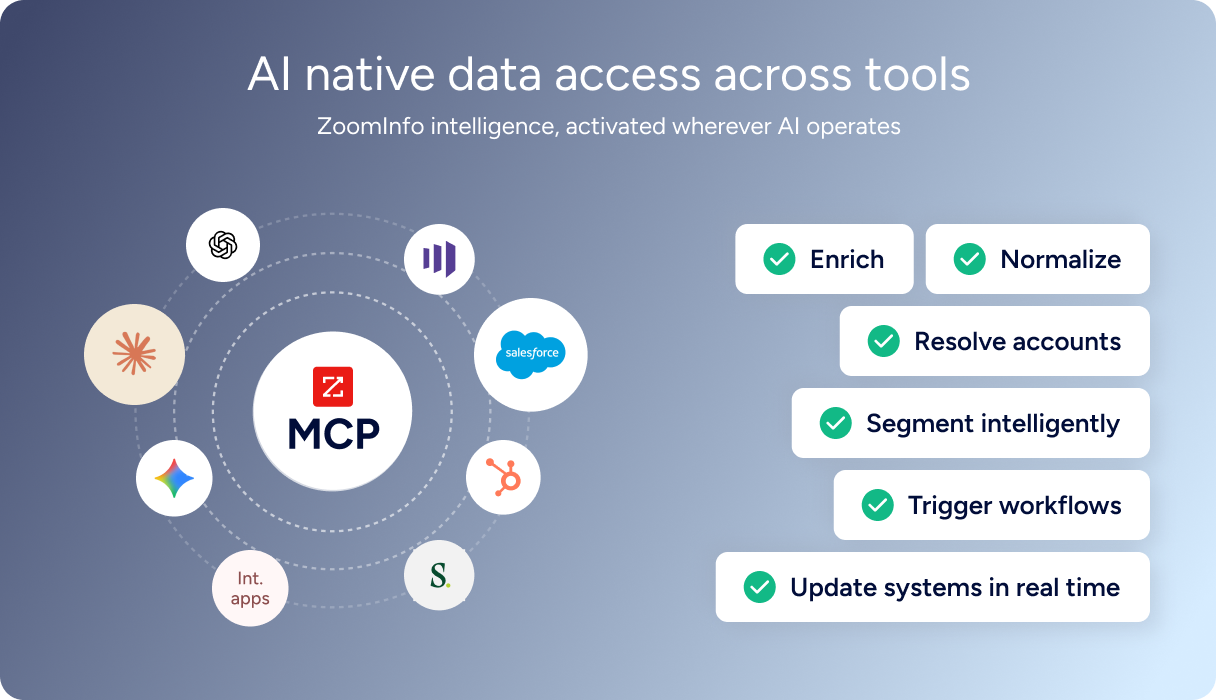
The MCP server connects ZoomInfo's intelligence directly to AI assistants like Claude and ChatGPT.
MillionVerifier vs. ZeroBounce vs. ZoomInfo: Which should you choose?
The right choice depends on what problem you're solving.
Choose MillionVerifier if:
Email list cleaning is your primary need and you want the lowest cost per verification
You verify in high volumes (100K+ emails) on an irregular schedule
You want credits that never expire and no subscription commitment
You need automated ongoing list cleaning inside your ESP via EverClean
Your compliance requirements are met by GDPR and ISO 27001
Choose ZeroBounce if:
You need a deliverability platform beyond verification: warmup, inbox testing, blacklist monitoring, and DMARC
Accurate validation of Yahoo, AOL, and catch-all addresses is critical to your workflow
Your organization requires SOC 2 Type 2 or HIPAA compliance for procurement
You value 24/7 human support with fast response times
You want AI-powered catch-all scoring to recover valid contacts other tools discard
Choose ZoomInfo if:
You need verified B2B contact data as part of a larger go-to-market strategy, not just list cleaning
Your team runs outbound sales, ABM campaigns, or data enrichment workflows where contact data quality determines pipeline outcomes
You want verified emails alongside org charts, intent signals, technographics, and company attributes in one platform
You need intelligence that tells you who to contact, when to engage, and what to say
You want your data accessible through dedicated experiences for sellers and marketers, or through APIs and MCP in any third-party tool
Explore ZoomInfo's data platform and see the difference upstream data quality makes.
Email verification keeps your lists clean. But for B2B teams, the upstream question (whether the contacts in your database are accurate, comprehensive, and actionable) determines more than bounce rates. It determines whether your outreach reaches the right person, at the right company, at the right time. MillionVerifier and ZeroBounce are strong answers for list hygiene.
ZoomInfo is the answer for the data foundation itself.
MillionVerifier vs. ZeroBounce vs. ZoomInfo FAQ
What is the key difference between MillionVerifier, ZeroBounce, and ZoomInfo?
MillionVerifier is a focused email verification tool that cleans existing lists at the lowest per-verification price in the category. ZeroBounce is a deliverability platform that bundles email verification with warmup, inbox placement testing, blacklist monitoring, DMARC monitoring, and AI-powered catch-all scoring.
ZoomInfo is an AI-powered go-to-market platform that provides verified B2B contact data (200M+ verified business emails) alongside intent signals, company attributes, and buyer intelligence, addressing data quality upstream of the verification step.
Which service is cheapest for high-volume email verification?
MillionVerifier is cheaper at volume. 1 million verifications cost $449, compared to ZeroBounce's higher per-credit rates at equivalent volumes (enterprise pricing requires contacting sales). MillionVerifier also refunds credits for catch-all and unknown results, further reducing effective cost. ZeroBounce ONE at $99/month includes 10,000 credits plus deliverability tools, which may offset the per-email premium for teams that need those features.
Can ZeroBounce validate Yahoo and AOL email addresses more accurately?
Yes. ZeroBounce's Verify+ technology validates Yahoo and AOL addresses (including long-disabled mailboxes) by sending an actual email to probe for bounces. Without Verify+, accuracy on these providers can fall to 96%. MillionVerifier uses its Smart Verify database for improved Yahoo results, but G2 reviewers note that accuracy on Yahoo addresses lags behind ZeroBounce.
How do MillionVerifier and ZeroBounce handle catch-all emails differently?
MillionVerifier classifies catch-all addresses as "Risky" and refunds the credits, leaving the send-or-suppress decision to the user. ZeroBounce uses AI Email Scoring to grade each catch-all address from 0 to 10 based on engagement likelihood, with published bounce-rate benchmarks per score tier. This lets marketers send to high-scoring catch-alls rather than discarding them wholesale.
Do I still need email verification if I use ZoomInfo for contact data?
ZoomInfo's data is already verified through its proprietary collection and verification system, so contacts sourced directly from ZoomInfo typically have low bounce rates. But email verification tools remain valuable for cleaning legacy lists, imported data from other sources, or existing CRM records that have decayed over time.
The two work together: ZoomInfo provides verified data upstream, while MillionVerifier or ZeroBounce catches addresses that go stale after acquisition.
Which platform has better compliance certifications for enterprise procurement?
ZeroBounce holds the broadest certification stack: SOC 2 Type 2, ISO 27001, HIPAA, GDPR, CCPA, and EU-US Data Privacy Framework, all running on proprietary hardware rather than shared cloud infrastructure. MillionVerifier holds ISO 27001 and GDPR compliance with EU-based servers, but does not publicly disclose SOC 2 type or HIPAA certification.
ZoomInfo maintains ISO 27001, ISO 27701, SOC 2 Type II, and TRUSTe-validated GDPR and CCPA practices.
Which service offers better automated ongoing list cleaning?
MillionVerifier's EverClean service connects directly to supported ESPs and automatically verifies lists on a daily or weekly schedule, removing bad emails without manual intervention after initial setup. ZeroBounce does not offer an equivalent always-on ESP-integrated cleaning service. Instead, teams re-validate lists on their own schedule using ZeroBounce ONE's monthly credits and the dashboard or API.
How does support compare between MillionVerifier and ZeroBounce?
ZeroBounce provides 24/7 live chat with a reported 20-second average wait time, 17-minute average email reply time, and phone support in the US and UK. MillionVerifier offers chat and email support from a small team, with G2 and Capterra reviewers flagging inconsistent response times. For teams where support speed matters during time-sensitive campaigns, ZeroBounce has a clear advantage.
