
Comparing MindTouch and Salesforce is like comparing a library to a city. One organizes and delivers knowledge to customers and agents. The other runs the entire customer relationship, from first contact through renewal. They solve different problems, but they often sit side by side in the same enterprise stack.
The real questions you should ask:
Is your primary challenge getting accurate answers to customers and agents, or managing the full customer lifecycle?
Do you need a dedicated knowledge management system, or is knowledge one capability inside a broader platform?
Are you already invested in a contact center platform like NICE CXone, or are you building your operations around a CRM?
How important is go-to-market intelligence for finding and winning new customers?
Do you want specialization in one area, or a platform that covers sales, service, marketing, and data?
Here's what we recommend:
MindTouch (now NICE Knowledge Management) is the specialist choice for enterprises that need a governed, AI-powered knowledge base designed for customer service. Its GenSearch technology delivers answers in over 89% of searches, compared to 67% for traditional search, and its Touchpoints system can embed knowledge into any web property. However, it's an add-on to the NICE CXone platform with no published standalone pricing, and post-acquisition reviewers have noted an outdated UI and degraded account management.
Salesforce is the everything platform. As the #1 CRM by IDC market share, it covers sales, service, marketing, commerce, analytics, and autonomous AI agents through Agentforce. Salesforce includes its own Knowledge Management within Service Cloud, plus an ecosystem of 9,000+ partner apps. The tradeoff: pricing complexity, steep learning curves, and implementation timelines that stretch months. The full platform makes sense for organizations willing to invest accordingly.
Both platforms address customer-facing operations, but neither answers a question that sits upstream of both: how do you find, prioritize, and reach the right buyers in the first place? That's where ZoomInfo comes in.
ZoomInfo is a B2B go-to-market platform that integrates with Salesforce and complements any knowledge management system by solving the go-to-market problem. Built on B2B data covering 500M contacts, 100M companies, 135M+ verified phone numbers, and 200M+ verified business emails, ZoomInfo's GTM Context Graph combines this data with your CRM records, conversation transcripts, and behavioral signals to reveal not just what happened in a deal, but why. Your team accesses this intelligence through GTM Workspace for sellers, GTM Studio for marketers and RevOps, or APIs and MCP in any front-end.
If go-to-market intelligence sounds like the missing layer in your stack, see how ZoomInfo works.
MindTouch vs. Salesforce vs. ZoomInfo at a glance
MindTouch (NICE KM) | Salesforce | ZoomInfo | |
|---|---|---|---|
Primary function | Knowledge management for customer service | CRM, service, sales, marketing, commerce | B2B go-to-market intelligence and execution |
AI capabilities | GenSearch (RAG-based answers from governed content) | Agentforce (autonomous AI agents across CRM) | GTM Context Graph (deal reasoning across signals and data) |
Knowledge management | Dedicated, with governance and analytics | Included in Service Cloud, adequate for most needs | Not applicable (different problem domain) |
CRM capabilities | None | Full lifecycle | Enriches and integrates with Salesforce, HubSpot, Dynamics |
B2B data | None | Customer data only (what you put in) | 500M contacts, 100M companies, 135M+ verified phones |
Pricing transparency | Add-on to CXone, quote-required | Published tiers from $25–$550/user/month | Custom-quoted, consumption-based |
Ecosystem | NICE CXone platform + CXexchange | 9,000+ AppExchange apps | 172+ marketplace integrations + API/MCP access |
Learning curve | Moderate (knowledge authors and admins) | Steep (dedicated admins required) | Moderate (90-day onboarding program) |
Best for | Enterprises needing governed, AI-powered knowledge delivery | Organizations managing the full customer lifecycle | Revenue teams that need to find, prioritize, and win buyers |
These platforms solve different problems
MindTouch, Salesforce, and ZoomInfo each own a distinct layer of the customer-facing operation. Understanding where each sits prevents the common mistake of comparing features that don't actually compete.
MindTouch lives in the knowledge layer.
Its job is to get the right answer to the right person, whether that's a customer on a help portal, an agent in a CXone workspace, or an AI bot grounding its responses in approved content. Everything in the product, from the role-based authoring workflow to the GenSearch RAG engine, serves that single purpose.
Salesforce lives in the relationship layer.
It tracks every interaction across sales, service, marketing, and commerce, then coordinates what happens next. Knowledge management exists inside Service Cloud, but it's one feature among hundreds. Salesforce's real power is connecting the dots across the entire customer lifecycle.
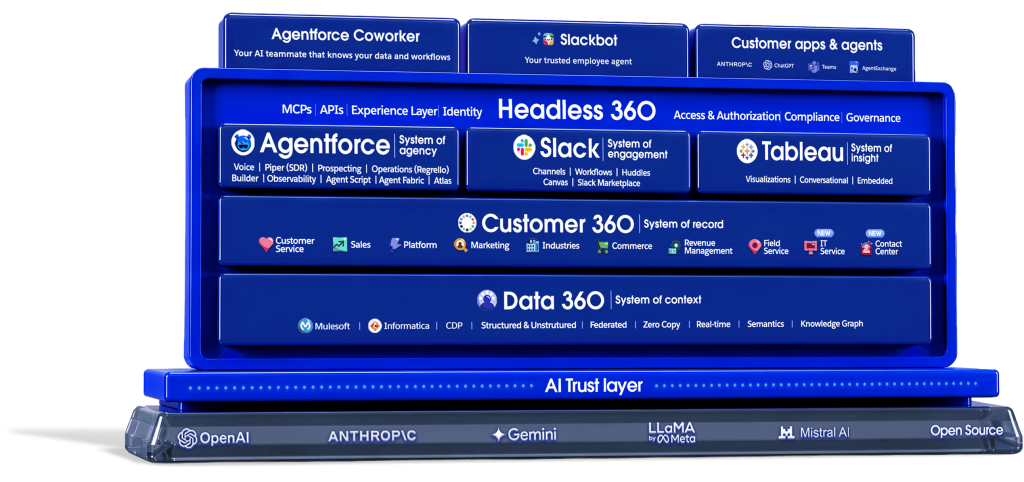
Source: Salesforce
ZoomInfo lives in the intelligence layer.
Before Salesforce can manage a relationship, someone has to identify the prospect, verify their contact information, read their buying signals, and reach them at the right moment. ZoomInfo's 500M contacts and 100M company profiles, verified through a pipeline backed by 300+ human researchers, provide that foundation. The GTM Context Graph then reasons across this data alongside your CRM records and conversation intelligence to surface why deals move or stall.
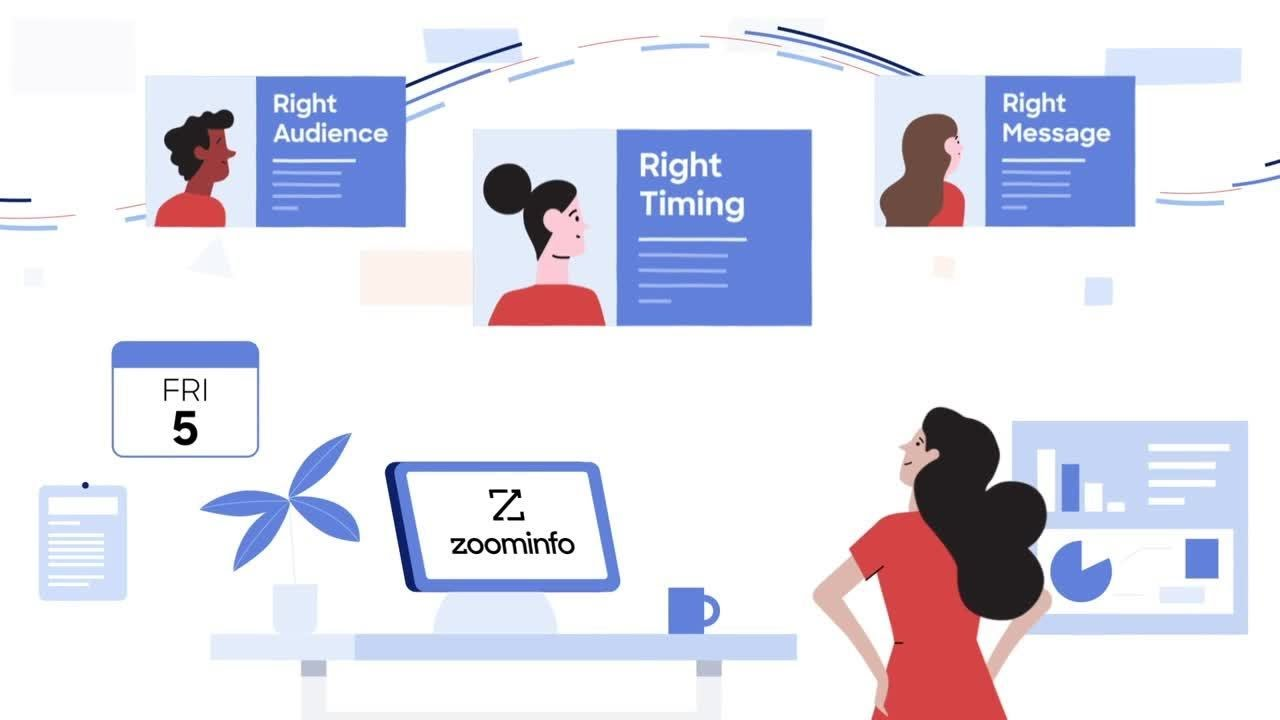
For most enterprises, these aren't competing choices. They're complementary layers: ZoomInfo fills the CRM with verified prospects, Salesforce manages those relationships, and MindTouch (or Salesforce's own Knowledge) ensures customers and agents can find answers once the relationship exists.
MindTouch excels at governed knowledge delivery
If your primary challenge is getting accurate, consistent answers to customers and agents across every channel, MindTouch has capabilities that Salesforce's built-in Knowledge doesn't match.
The governance system is where MindTouch justifies its existence as a standalone product.
Content moves through a controlled publishing workflow with three defined groups: Contributors, Reviewers, and Publishers. The Review Manager allows section-level review targeting, so a technical specification can route to an SME while the rest of the article proceeds normally. Custom Classifications act as workflow stages, and Revision History records every edit with side-by-side comparison and one-click revert.
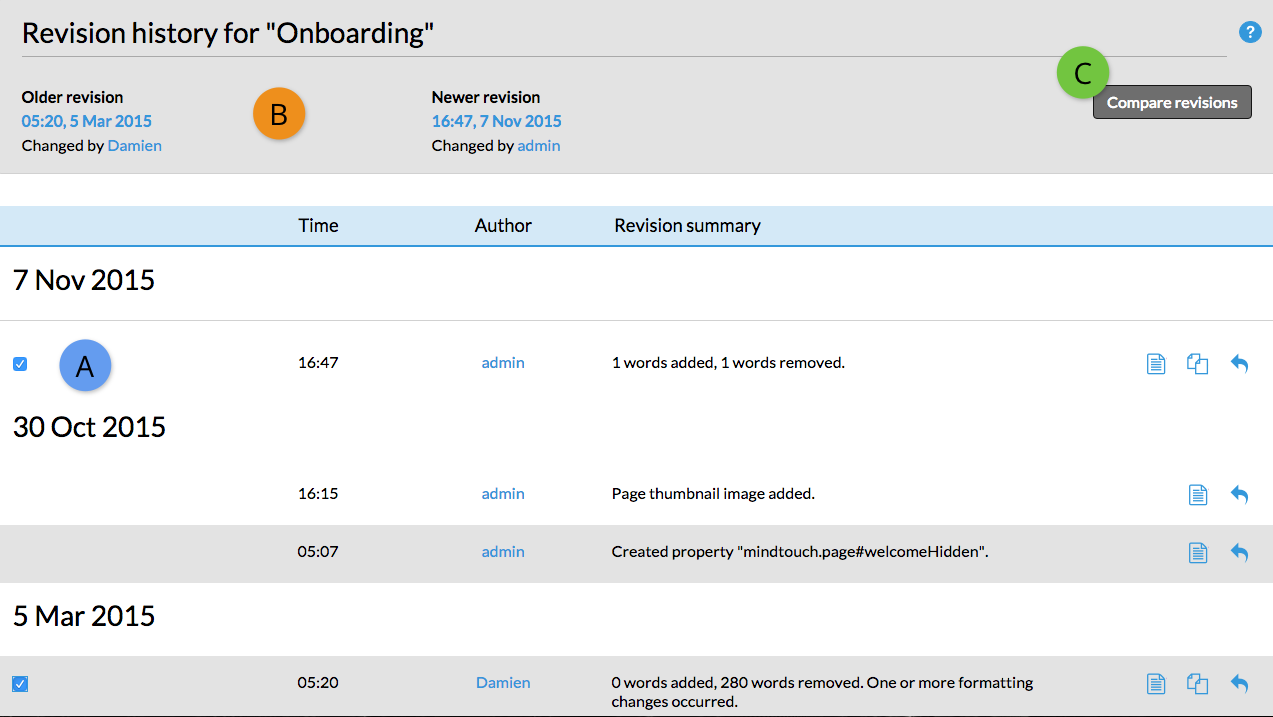
Source: MindTouch
The AI search layer is equally specialized.
GenSearch breaks documents into smaller segments called Kernels, stores them in a vector database, and uses retrieval-augmented generation to synthesize answers grounded in the customer's own knowledge base. If the system lacks confidence, it declines to answer rather than fabricate. That guardrail matters in regulated industries where wrong answers carry real consequences.
The Touchpoints system lets organizations embed knowledge into any web property using JavaScript widgets, covering contextual help, embedded search, and sign-in scenarios. For companies running support across a help portal, mobile app, chatbot, and agent desktop at once, this single-source delivery model eliminates the content drift that plagues organizations maintaining separate repositories per channel.
Where MindTouch falls short is everything outside knowledge management. No CRM. No sales tools. No prospecting data. No marketing automation. It's a specialist tool in a market that increasingly rewards platforms.
Salesforce covers the full customer lifecycle (including knowledge)
Salesforce's knowledge management lives inside Service Cloud as one capability among many.
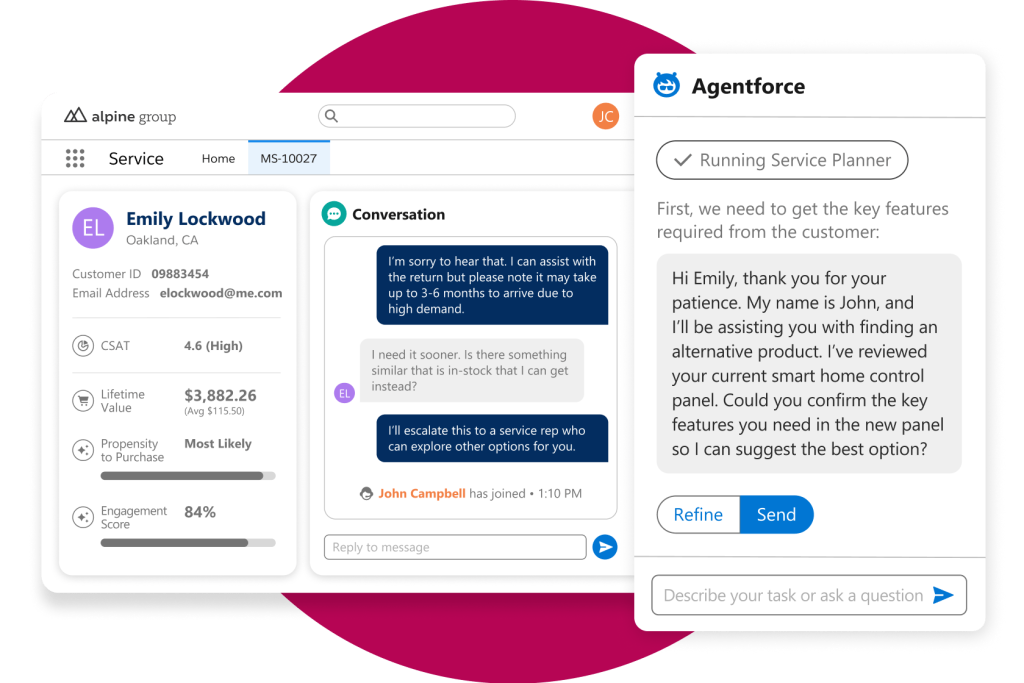
It supports article creation, categorization, search, and integration with cases and agent workflows. For many organizations, this is enough. The knowledge base sits alongside case management, omnichannel routing, and now Agentforce AI agents that can resolve cases without human intervention.
Source: Salesforce
The real case for Salesforce isn't any single feature. It's the unified data model.
When a sales rep closes a deal in Sales Cloud, the service team sees the full account history. When a marketing campaign generates a lead, the sales team picks it up without manual handoff. When a service agent resolves a case, that resolution feeds back into analytics that inform product decisions.
This breadth extends across Sales Cloud (pipeline, forecasting, AI coaching), Marketing Cloud (campaign orchestration, CDPs, personalization), Commerce Cloud (B2C and B2B storefronts), and Data Cloud (which ingested 112 trillion records in FY26).
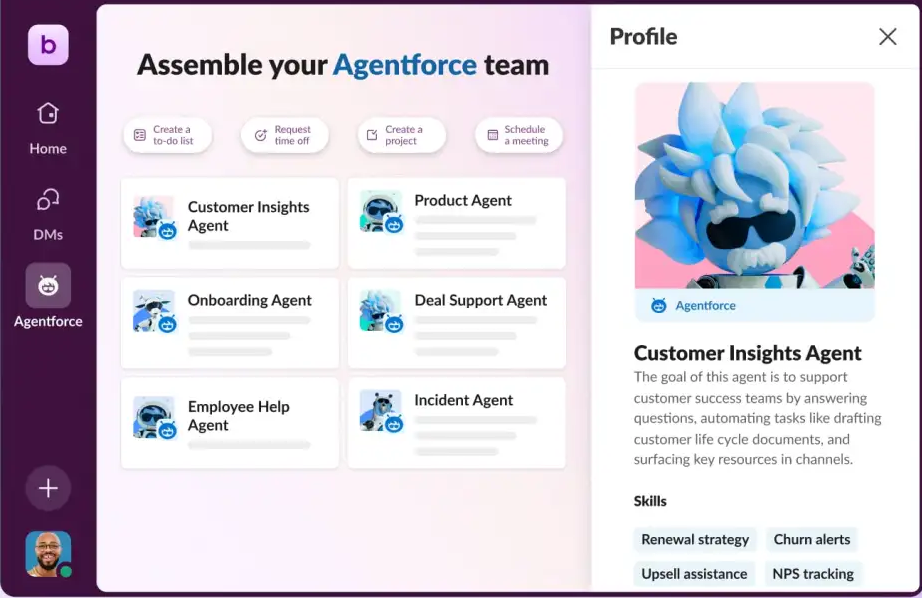
Agentforce is Salesforce's biggest architectural bet: autonomous AI agents that handle sales, service, and marketing tasks around the clock. Salesforce reports its own agents resolve 85% of support requests without human escalation.
Source: Salesforce
But Salesforce's breadth comes with real costs.
Pricing starts at $25/user/month for the Starter Suite and climbs to $550/user/month for Agentforce 1, before add-ons like Digital Engagement ($75/user/month), Contact Center ($150/user/month), and Agentforce consumption credits. The Premier Success Plan adds 30% on top of net license fees. Implementation typically requires partners, with over 70% of deployments partner-led, adding further cost.
Here's the limitation that matters for this comparison: Salesforce can only work with the data you put into it. The CRM records what your team does, but it doesn't tell you who to call next, whether a prospect's contact info is still valid, or what buying signals suggest about accounts you haven't engaged yet.
ZoomInfo fills the intelligence gap neither platform addresses
MindTouch helps customers find answers. Salesforce manages customer relationships. But both assume you already know who your customers and prospects are.
ZoomInfo operates upstream of both, solving the problem of identifying, verifying, and reaching the right buyers.
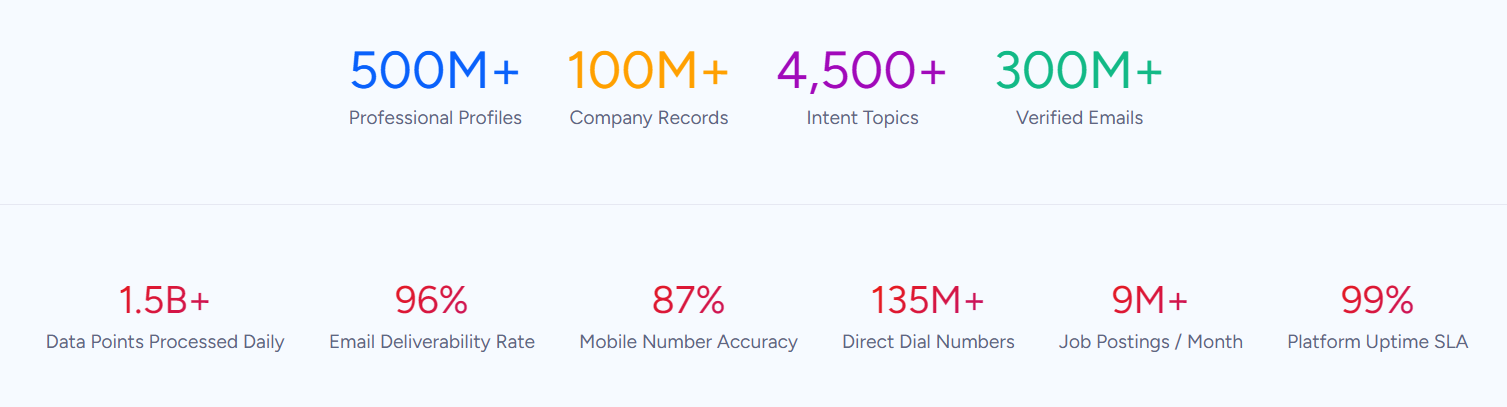
The data scale is the starting point: 500M contacts, 100M companies, 135M+ verified phone numbers, 120M direct-dial phone numbers, and 200M+ verified business email addresses. This isn't a static database. A multi-source pipeline backed by 300+ human researchers achieves up to 95% accuracy on first-party data.
When a Fortune 500 competitive RFP analyzed 25 million contacts across vendors, the independent consultant concluded that "no other competitor came even close."
Source: ZoomInfo
But the data alone doesn't explain why ZoomInfo matters alongside MindTouch and Salesforce.
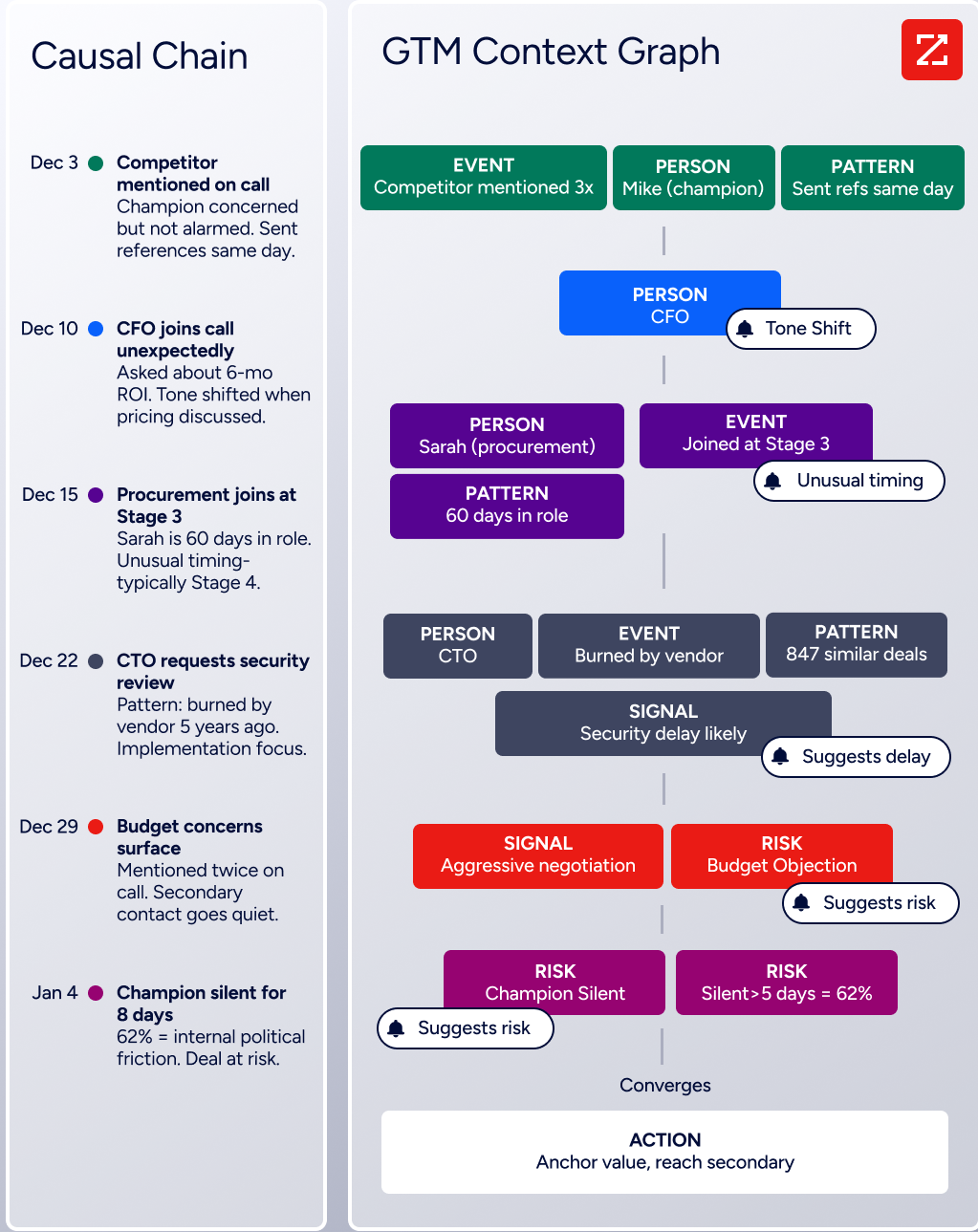
The GTM Context Graph transforms data into intelligence you can act on. It combines ZoomInfo's B2B data with your CRM records, conversation transcripts, email threads, and behavioral signals, processing 1.5B+ data points daily.
The result: AI that understands why a deal moved to Stage 4 (the CFO joined the last call and asked about six-month ROI), not just that the stage field changed in the CRM.
Source: ZoomInfo
This intelligence reaches teams through three channels.
GTM Workspace gives sellers a single view where prioritized accounts, AI-drafted outreach, and deal execution come together. GTM Studio gives marketers and RevOps a builder where audience definition, campaign orchestration, and pipeline measurement happen in natural language. And APIs and MCP expose the same intelligence to any custom agent, internal tool, or partner platform.
Seismic's sales team boosted productivity by 54%, saved 11.5 hours per week, and attributed 39% of pipeline to ZoomInfo signals. (Seismic Case Study)
Knowledge management: specialist vs. generalist approaches
MindTouch and Salesforce both offer knowledge management, but they approach it from opposite directions.
MindTouch treats knowledge as the product.
Every feature, from the DekiScript programming language for dynamic content to the Cornerstone Content Report that tracks which articles feed AI-generated responses, exists to make knowledge better. The analytics suite measures self-service deflection as a primary metric, tracking whether customers resolved their issue or escalated to a ticket. Article ratings directly influence search ranking, creating a self-correcting relevance layer.
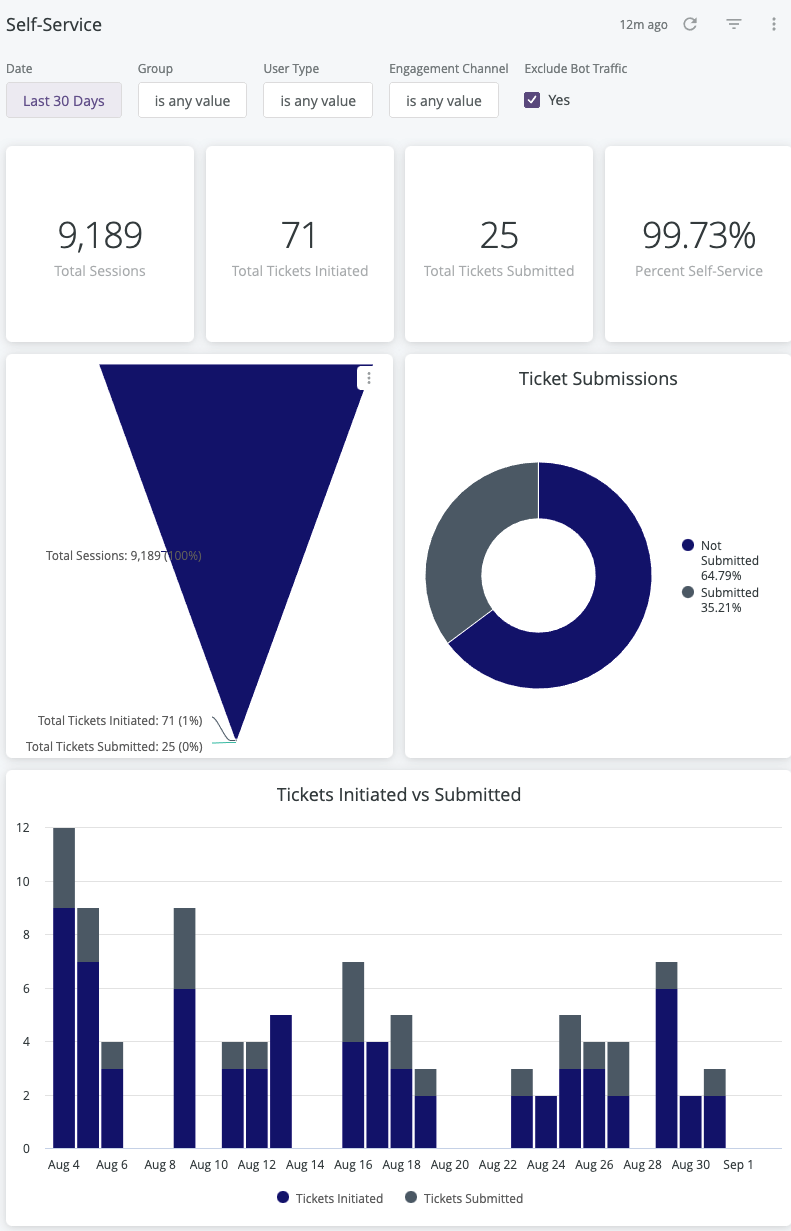
Source: MindTouch
Salesforce Knowledge treats knowledge as one tool inside the service console.
Articles can be linked to cases, surfaced by Agentforce agents, and searched by customers through self-service portals. For many organizations, this is sufficient. The advantage: knowledge lives in the same system as cases, accounts, and the full customer history. The disadvantage: the authoring, governance, and analytics capabilities are shallower than what a dedicated knowledge platform offers.
For regulated industries where knowledge accuracy has compliance implications (banking, insurance, healthcare), MindTouch's governance depth (controlled publishing workflows, section-level review targeting, KCS-aligned methodology) may justify the additional investment.
For organizations where knowledge management is important but not the primary challenge, Salesforce's included capabilities often cover the need without adding another vendor.
AI capabilities take different forms across all three
Each platform has invested in AI, but the investments target different problems.
MindTouch's GenSearch focuses on answer accuracy from governed content. The RAG system generates responses only from the customer's approved knowledge base, refusing to answer when confidence is low. It's narrow, deliberate, and designed to prevent the hallucination risk that makes enterprises nervous about public AI tools.
Salesforce's Agentforce is the broadest AI effort of the three.
Autonomous agents handle sales prospecting, service case resolution, marketing campaign creation, and IT service management. The Atlas Reasoning Engine uses a reason-act-observe-adapt loop, and the Einstein Trust Layer provides zero data retention with LLM partners and PII masking.
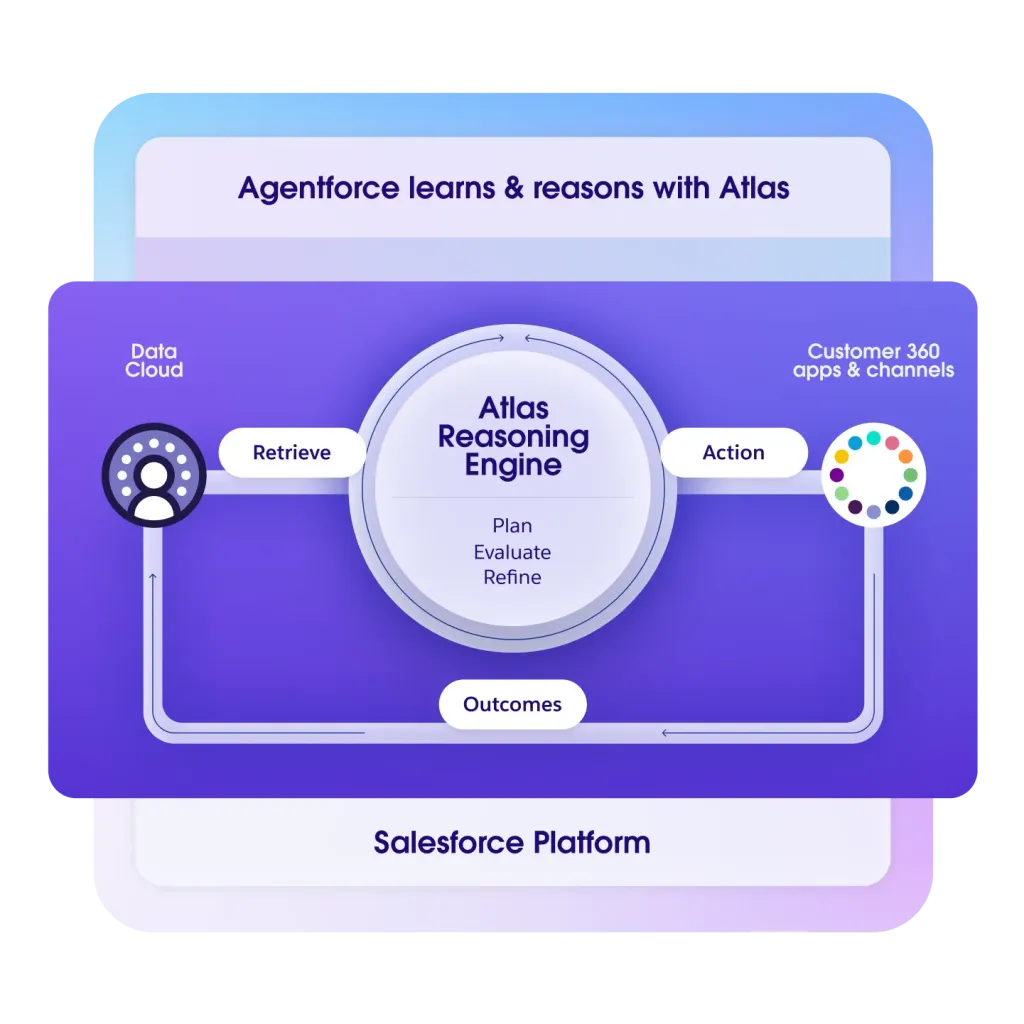
Source: Salesforce
ZoomInfo's GTM Context Graph applies AI to go-to-market reasoning.
Instead of answering customer questions (MindTouch) or automating CRM workflows (Salesforce), it reasons across deal signals to explain why outcomes happened and predict what happens next. The AI drafting your next outreach email understands the concern behind the conversation. The targeting for your next campaign matches accounts to your actual win patterns, not keyword thresholds.
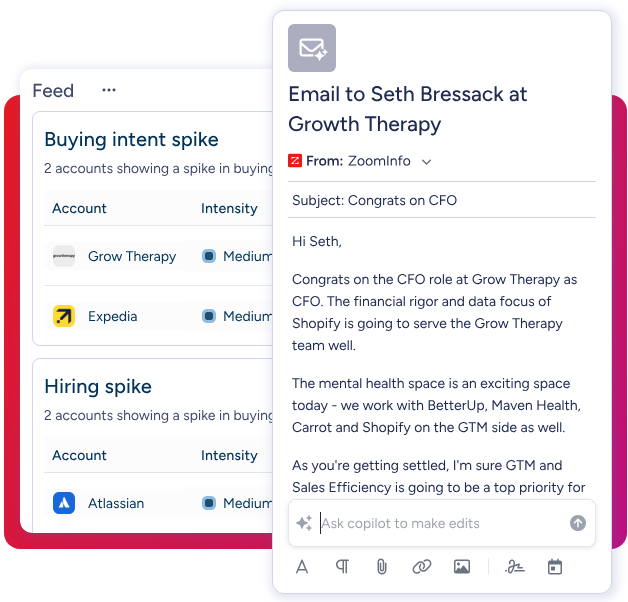
Source: ZoomInfo
These AI capabilities don't compete. They layer. ZoomInfo's intelligence identifies and prioritizes the right accounts. Salesforce's agents manage those relationships and automate workflows. MindTouch's search ensures customers and agents find accurate answers.
"ZoomInfo's not just a contact data company anymore. They've built a full system of execution. GTM Intelligence works the list, writes the outreach, triggers the play, and helps drive predictable growth." (Ian Brodie, CEO & Co-Founder, Levanta)
Integration and ecosystem depth
MindTouch integrates natively within the NICE CXone platform, connecting to Copilot for Agents, AI Agents for Self-Service, and the CXone routing engine.
Outside the NICE ecosystem, it offers connectors for Salesforce Service Cloud, Salesforce Community Cloud, Zendesk, and SAP Service Cloud. The REST API is well-documented and language-agnostic. However, MindTouch lacks iPaaS connectors (no Zapier, Make, or Workato), reflecting its enterprise-only positioning.
Salesforce operates the largest enterprise app ecosystem in the industry.
AppExchange hosts 9,000+ apps with 14+ million installs, and 91% of customers use at least one marketplace app. MuleSoft provides enterprise-grade integration with hundreds of pre-built connectors. The API portfolio spans more than 30 APIs across REST, SOAP, GraphQL, gRPC, and event streaming.
ZoomInfo integrates with the platforms revenue teams already use.
The Marketplace lists 172+ integrations including native connectors for Salesforce, HubSpot, and Microsoft Dynamics 365. Cloud data platforms (Snowflake, AWS, Google Cloud, Databricks) receive ZoomInfo data directly. The MCP server connects AI models like Claude and ChatGPT to ZoomInfo's data through natural language, with no custom coding required.
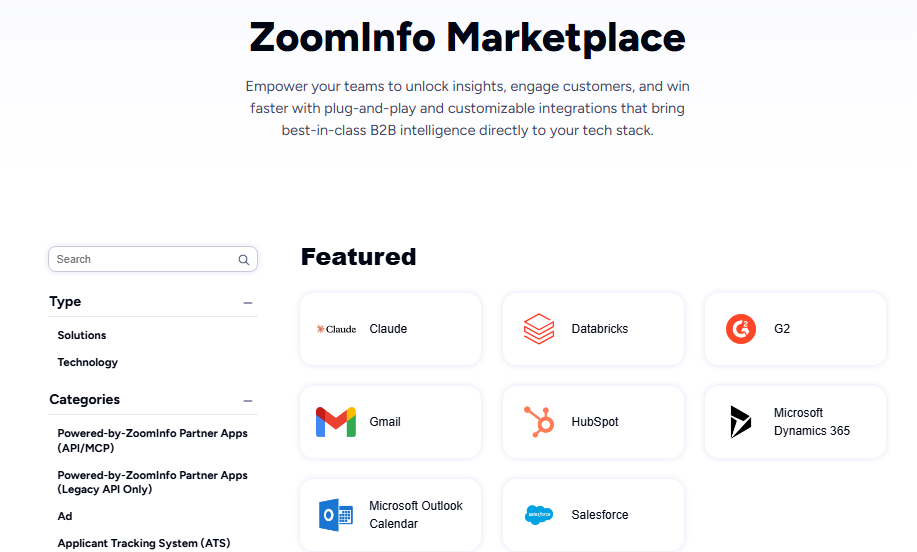
Source: ZoomInfo
The critical integration story here: ZoomInfo and Salesforce work together, not against each other. ZoomInfo enriches Salesforce with verified contact data, buying signals, and company intelligence. Salesforce feeds first-party CRM data back to ZoomInfo's GTM Context Graph, making the intelligence layer smarter. This bidirectional flow is why enterprises run both platforms at once.
BDO Canada reduced time spent on internal data dashboard updates by 87% using ZoomInfo's API. "The plug-and-play aspect of the API means I can integrate it very easily into any process and get information at a moment's notice." (BDO Canada Case Study)
Pricing models reflect different market strategies
MindTouch doesn't publish standalone pricing.
As an add-on to the NICE CXone platform, it sits on top of CXone tiers that range from $110 to $249 per agent per month. Knowledge management is listed as an add-on at every tier, meaning no CXone customer gets it included. The actual add-on price requires a quote. There is no free trial, just an interactive product tour.
Salesforce publishes tiered pricing across its clouds.
Sales Cloud and Service Cloud both start at $25/user/month (Starter) and scale to $550/user/month (Agentforce 1). But published prices tell only part of the story. Agentforce consumption runs $2 per conversation or $500 per 100,000 Flex Credits. Marketing Cloud starts at $1,500/org/month. Data Cloud charges $500 per 100,000 credits. Implementation costs, partner fees, and the Premier Success Plan (30% of net license fees) add layers that the headline pricing doesn't capture.
ZoomInfo uses consumption-based pricing with no published dollar amounts.
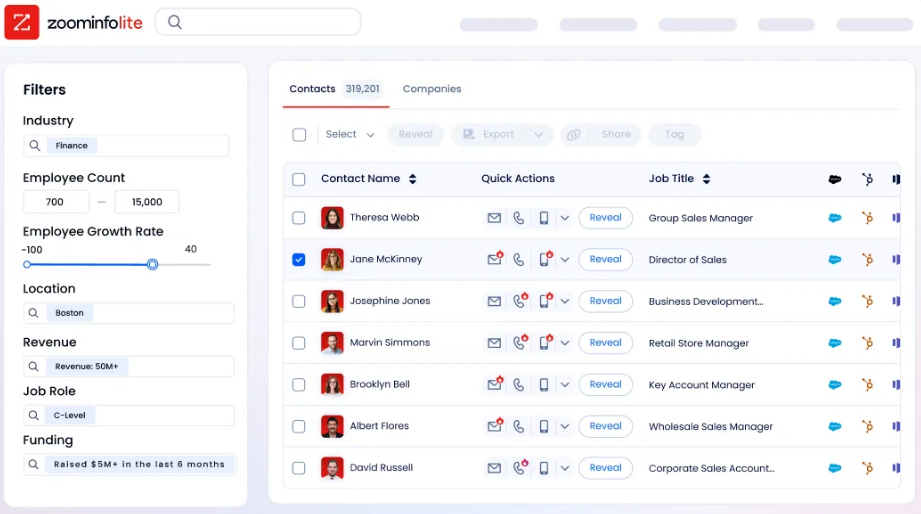
Sales plans span Professional, Advanced, and Enterprise tiers, each adding signal depth and AI capabilities. Credits (1 credit = 1 exported profile) are purchased annually in bulk. The permanent ZoomInfo Lite free tier provides access to the B2B database with 10 monthly export credits, along with a 7-day free trial for paid features.
Source: ZoomInfo
None of these pricing models are directly comparable because the products solve different problems. The relevant question isn't which costs less per seat, but which combination of tools delivers the outcomes your team needs.
Who each platform is built for
MindTouch targets mid-to-large enterprises with substantial customer service operations, particularly organizations with 200+ agents or high self-service traffic.
Industries where compliance and accuracy matter most (banking, insurance, healthcare) are the strongest fit. The product is most valuable for existing NICE CXone customers who can activate knowledge management without a separate integration layer.
Salesforce serves companies of every size and industry, from startups on the free CRM to global enterprises.
The full value compounds in mid-market and enterprise organizations with dedicated administrators, where the platform's depth across sales, service, marketing, and commerce justifies the investment. Salesforce targets 17 industry verticals with industry-specific clouds.
ZoomInfo serves enterprise and upper mid-market B2B organizations where go-to-market execution determines growth.
Named customers include Adobe, Microsoft, AWS, Snowflake, and JPMorgan (case studies). The platform is strongest for sales teams (prospecting, pipeline), marketing teams (ABM, demand gen), and RevOps (data quality, lead routing, workflow automation). ZoomInfo is not for B2C companies or organizations without an outbound motion.
MindTouch vs. Salesforce vs. ZoomInfo: Which should you choose?
These platforms address different layers of the customer-facing operation. The right choice depends on which layer is your bottleneck.
Choose MindTouch if:
Knowledge accuracy and governance are your primary challenges
You operate in a regulated industry where wrong answers carry compliance risk
You need to deliver governed content across help portals, bots, mobile apps, and agent desktops from a single source
You're already on NICE CXone and want integrated knowledge management
Self-service deflection is a core KPI for your support organization
Choose Salesforce if:
You need a single platform across sales, service, marketing, and commerce
Managing the complete customer lifecycle from one system matters more than best-in-class depth in any one area
You're ready to invest in dedicated administration and partner-led implementation
Autonomous AI agents across your CRM are part of your strategic roadmap
You want the largest enterprise app ecosystem for extensibility
Add ZoomInfo if:
Your revenue team needs verified B2B contact data and buying signals to fill the pipeline
You want AI that reasons across deal signals to explain why outcomes happened and predict what happens next
You're running Salesforce and need a data layer that keeps your CRM accurate and enriched
You want go-to-market intelligence accessible through your own tools via API and MCP, not locked inside a single UI
Prospecting productivity and pipeline generation are top priorities
Start your free ZoomInfo trial and see how verified intelligence changes your go-to-market execution.
The most effective enterprise stacks don't treat knowledge, CRM, and intelligence as either-or decisions. They layer them.
MindTouch (or Salesforce Knowledge) ensures customers and agents find accurate answers. Salesforce manages the full customer relationship. ZoomInfo provides the verified data and contextual intelligence that makes the entire stack work harder, because even the best CRM and the most governed knowledge base can't compensate for not knowing who to talk to, when to reach them, or why their deal is moving.
Want more Salesforce comparisons? Here are our picks:
• Desk.com vs. Salesforce • Oracle Service Cloud vs. Salesforce • Front vs. Salesforce • Amazon Connect vs. Salesforce
MindTouch vs. Salesforce vs. ZoomInfo FAQ
What is the core difference between MindTouch, Salesforce, and ZoomInfo?
MindTouch (NICE Knowledge Management) is a dedicated knowledge management platform for customer service, built to deliver governed, AI-powered answers to customers, agents, and bots.
Salesforce is the world's largest CRM platform, covering sales, service, marketing, commerce, and AI agents across the full customer lifecycle.
ZoomInfo is a B2B go-to-market intelligence platform that provides verified contact data, buying signals, and AI-powered deal reasoning to help revenue teams find and win customers.
Can MindTouch and Salesforce work together?
Yes. MindTouch offers native integrations with Salesforce Service Cloud and Salesforce Community Cloud, embedding knowledge articles and search inside the Salesforce agent console. Organizations that need stronger knowledge governance than Salesforce's built-in Knowledge tool provides can layer MindTouch on top of their Salesforce deployment.
How does ZoomInfo integrate with Salesforce?
ZoomInfo is a featured Salesforce integration that enriches CRM data with verified contacts, company intelligence, and buying signals. It feeds prospect data into Salesforce, and Salesforce's first-party CRM data feeds back into ZoomInfo's GTM Context Graph, creating a bidirectional intelligence loop. The integration covers lead routing, contact enrichment, and automated workflow triggers.
Which platform has the best AI capabilities?
Each platform's AI solves a different problem.
MindTouch's GenSearch generates accurate answers from governed content, declining to respond when confidence is low. Salesforce's Agentforce deploys autonomous AI agents across sales, service, and marketing workflows, with reported 85% support case resolution without human escalation. ZoomInfo's GTM Context Graph reasons across deal signals to explain why outcomes happened and predict next actions, processing 1.5 billion data points daily.
Is Salesforce's built-in Knowledge Management sufficient, or do I need MindTouch?
For most organizations, Salesforce Knowledge within Service Cloud covers the basics: article creation, search, and case linking.
MindTouch adds capabilities for enterprises with complex governance needs: section-level review targeting, controlled publishing workflows, DekiScript for dynamic content, self-service deflection metrics, and GenSearch with hallucination guardrails. Regulated industries and organizations with 200+ agents typically benefit most from MindTouch's specialization.
How does pricing compare across the three platforms?
MindTouch requires a NICE CXone subscription (starting at $110/agent/month) plus an undisclosed add-on fee for knowledge management. Salesforce publishes tiers from $25 to $550 per user per month, but real-world costs are higher once add-ons, consumption credits, and implementation are factored in.
ZoomInfo uses custom-quoted consumption-based pricing with a permanent free tier (ZoomInfo Lite) and a 7-day free trial for paid features.
Do I need all three platforms?
Not necessarily. A Salesforce-centric organization may find Salesforce Knowledge adequate and skip MindTouch entirely.
But for B2B organizations, adding ZoomInfo to a Salesforce deployment addresses a gap no CRM fills on its own: verified prospecting data, buying signals, and go-to-market intelligence. The combination of Salesforce (relationship management) and ZoomInfo (intelligence and data) is common among enterprise revenue teams for exactly this reason.
For a direct head-to-head look at how the two platforms compare, see our Salesforce vs. ZoomInfo comparison.
Which platform is easiest to implement?
MindTouch requires integration with NICE CXone and configuration of knowledge workflows, but it focuses on one domain. Salesforce implementation ranges from weeks for simple Sales Cloud setups to 3-12 months for multi-cloud enterprise deployments, typically requiring partners.
ZoomInfo offers a structured 90-day onboarding program and reports that GTM Workspace deploys in weeks, not months. ZoomInfo Lite can be activated immediately with no implementation required.
