
Choosing between Mintel and Tastewise for market intelligence often comes down to five questions:
Do you need intelligence across all CPG categories, or is food and beverage your only focus?
Are you looking for analyst-written reports backed by decades of data, or AI-generated outputs your team can act on today?
Is your priority tracking what competitors have already launched, or detecting demand signals before products exist?
Does your team need help building retailer and operator sell-in stories, or is strategic research and product innovation your primary use case?
Once you know what to build and where the opportunity lies, does your team have the B2B data to reach the buyers who control shelf space and menu placement?
In short, here's what we recommend:
Mintel is the right choice for multi-category CPG companies that need market research spanning food, drink, beauty, household, and more. With over 50 years of proprietary data, roughly 200 analysts, and a product launch database that tracks 45,000+ new products every month across 86 markets, Mintel gives innovation and strategy teams a solid evidence base for high-stakes decisions. Its AI platform, Mintel Leap, answers business questions in seconds by drawing exclusively from Mintel's own verified research, avoiding the hallucination risk that plagues general-purpose LLMs. The consulting arm delivers custom growth strategies for brands with specific goals. The trade-off is price: individual reports start at $4,995, and the full On-Demand subscription is enterprise-priced.
Tastewise is built for food and beverage brands that need speed and cross-functional reach. Its AI agent platform, grounded in over 1 billion real-time consumer signals per month (from menus, recipes, social media, and eRetail across 39 markets), generates campaign briefs, builds account-specific sell-in stories, and scores product concepts against live demand. The limitation: Tastewise covers food and beverage only, and its enterprise pricing is not published.
Both platforms help CPG teams understand what consumers want and where the market is headed. But understanding the opportunity is only half the work. CPG sales teams still need to find the right category manager at Kroger, the VP of procurement at Sysco, or the innovation lead at a restaurant chain, and reach them before competitors do. That's a B2B problem, and neither Mintel nor Tastewise was built to solve it.
ZoomInfo is a go-to-market platform that gives CPG sales teams verified contact data and outreach tools to connect with the buyers who control distribution. With 500M contacts, 100M companies, 135M+ verified phone numbers, and 200M+ verified business emails, ZoomInfo's GTM Context Graph (processing 1.5B+ data points daily) fuses B2B data with intent signals and conversation data to reveal which accounts are actively in-market and why. Whether your market intelligence comes from Mintel or Tastewise, ZoomInfo provides the B2B layer that turns insight into pipeline: GTM Workspace for sellers, GTM Studio for marketers and RevOps, and APIs and MCP for custom workflows.
If turning market intelligence into closed deals sounds like the missing piece, see how ZoomInfo works with a free trial.
Mintel vs. Tastewise vs. ZoomInfo at a glance
Mintel | Tastewise | ZoomInfo | |
|---|---|---|---|
Core focus | Market intelligence across CPG verticals | F&B demand intelligence and agentic AI | B2B go-to-market intelligence |
Founded | 1972 | 2018 | 2007 |
Category coverage | 16 industry verticals (food, drink, beauty, household, more) | Food and beverage only | All B2B industries |
Market coverage | 86 markets (product launches), 36 (consumer surveys) | 39 markets (social), 64 (recipes), 4M+ foodservice locations | Global (34M+ non-NA company profiles) |
AI capability | Leap (closed-loop Q&A), Spark (concept generation) | TasteGPT, 13+ specialized agents, no-code Agent Builder | GTM Context Graph with AI agents |
Data approach | Analyst-curated reports, surveys, product tracking | Real-time observed behavior signals (1B+/month) | Verified B2B contact and company data (500M+ contacts, 100M companies) |
Sales enablement | Data and reports for pitch support | Sales Agent generating account-specific sell-in stories | GTM Workspace for outbound execution and deal acceleration |
Integrations | Enterprise (custom embedding) | 30+ (Salesforce, Slack, Power BI, Snowflake, MCP) | 120+ marketplace partners + Enterprise API + MCP |
Pricing model | Per-report ($4,995) or custom enterprise subscription | Custom enterprise pricing (not published) | Consumption-based, custom-quoted |
Free access | Spotlight (free articles, newsletters, trend reports) | 3 free TasteGPT questions | ZoomInfo Lite (permanent free tier) + 7-day trial |
Best for | Multi-category CPG teams needing research breadth and depth | F&B brands needing real-time, cross-functional intelligence | CPG sales teams needing B2B buyer data and outreach tools |
Mintel covers the full CPG landscape; Tastewise goes deep in food and beverage
The most basic difference is scope.
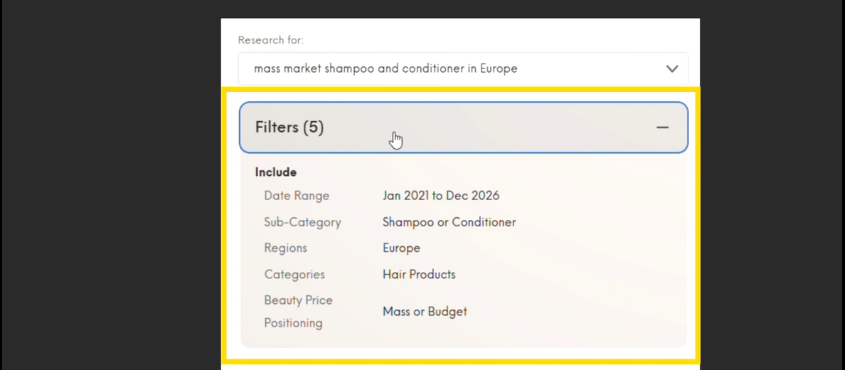
Mintel tracks 16 industry verticals with deep coverage in food and drink, beauty and personal care, financial services, household, retail, and packaging.
Its Global New Products Database (GNPD) monitors 45,000+ product launches every month across 86 economies and 270+ FMCG subcategories, cataloguing 175 product claims, 200 packaging attributes, and over 47,000 ingredients. For a multi-category manufacturer launching products across food, beauty, and household, this breadth means one vendor covers the competitive landscape in every aisle.
The Global Consumer survey adds a structured demand layer: bi-annual data from 36,000 individuals across 36 countries, covering 85% of world GDP. Market Dynamics provides category-level sizing and forecasts for 16 major markets across the Americas, EMEA, and APAC. Both are standardized instruments designed for cross-market comparison, so a global brand can evaluate how consumer attitudes differ between Japan and Brazil using the same survey methodology.
Source: Mintel
Tastewise plays a narrower game with more depth.
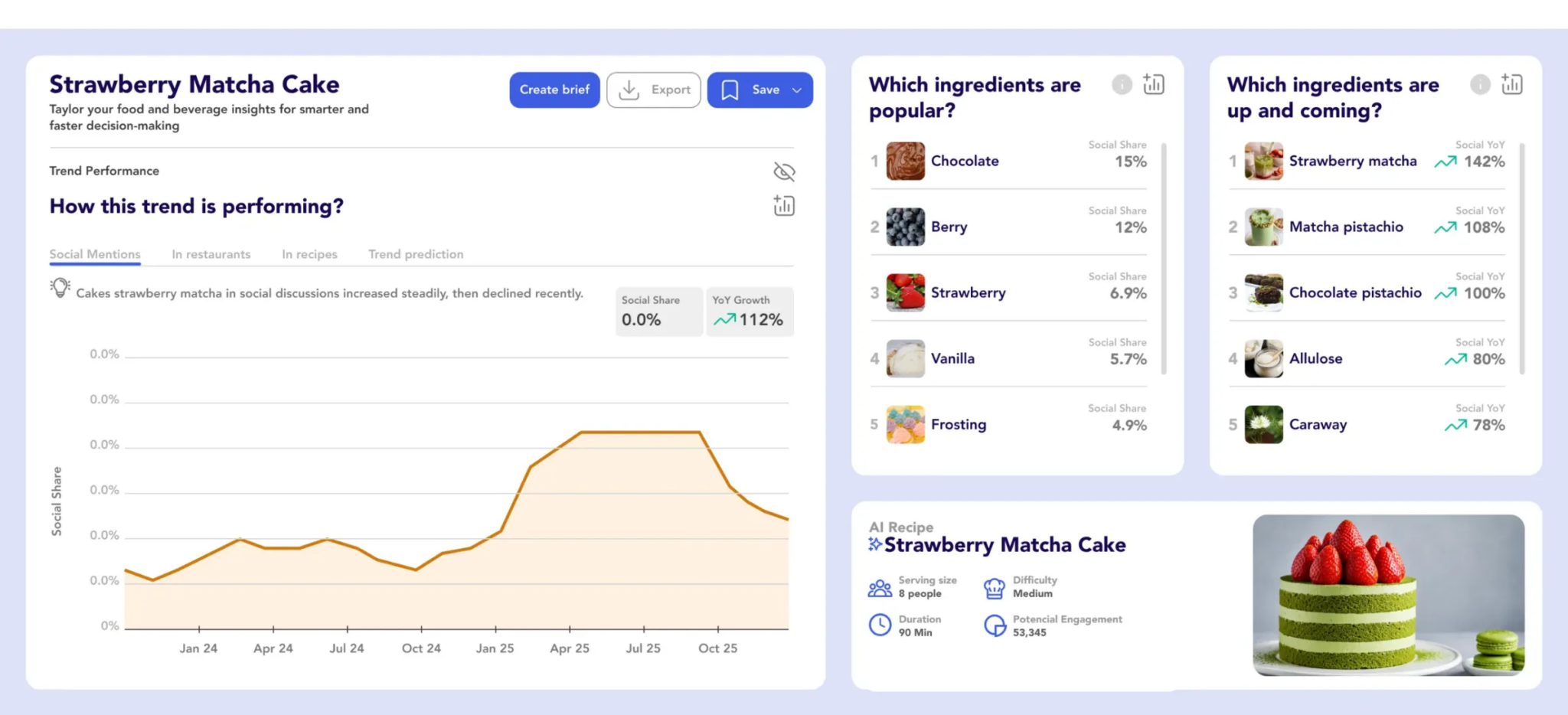
The platform focuses exclusively on food and beverage, but covers signal types that Mintel's survey-and-report model does not: live menu data from 4M+ foodservice locations, eRetail best-seller tracking, recipe trends aggregated from Pinterest and cooking platforms, and social listening across Instagram, TikTok, and Facebook.
These are not survey responses about what people say they do. They are observed behaviors showing what people actually cook, order, and share.
Source: Tastewise
The practical consequence: a beauty company or household goods manufacturer will find Mintel indispensable and Tastewise irrelevant. A food and beverage company will find both useful, but for different questions.
Mintel answers "how big is the US snack bar market, and what are the macro trends shaping it?" Tastewise answers "which snack bar ingredients are trending on TikTok right now, and which restaurant chains are already putting them on menus?"
From insight to buyer: the sell-in gap
CPG intelligence platforms answer "what should we build?" and "where is the market heading?" But for most CPG brands, the harder problem follows: getting the right product onto the right shelf or menu by convincing a buyer at a retailer or foodservice operator.
Tastewise addresses part of this.
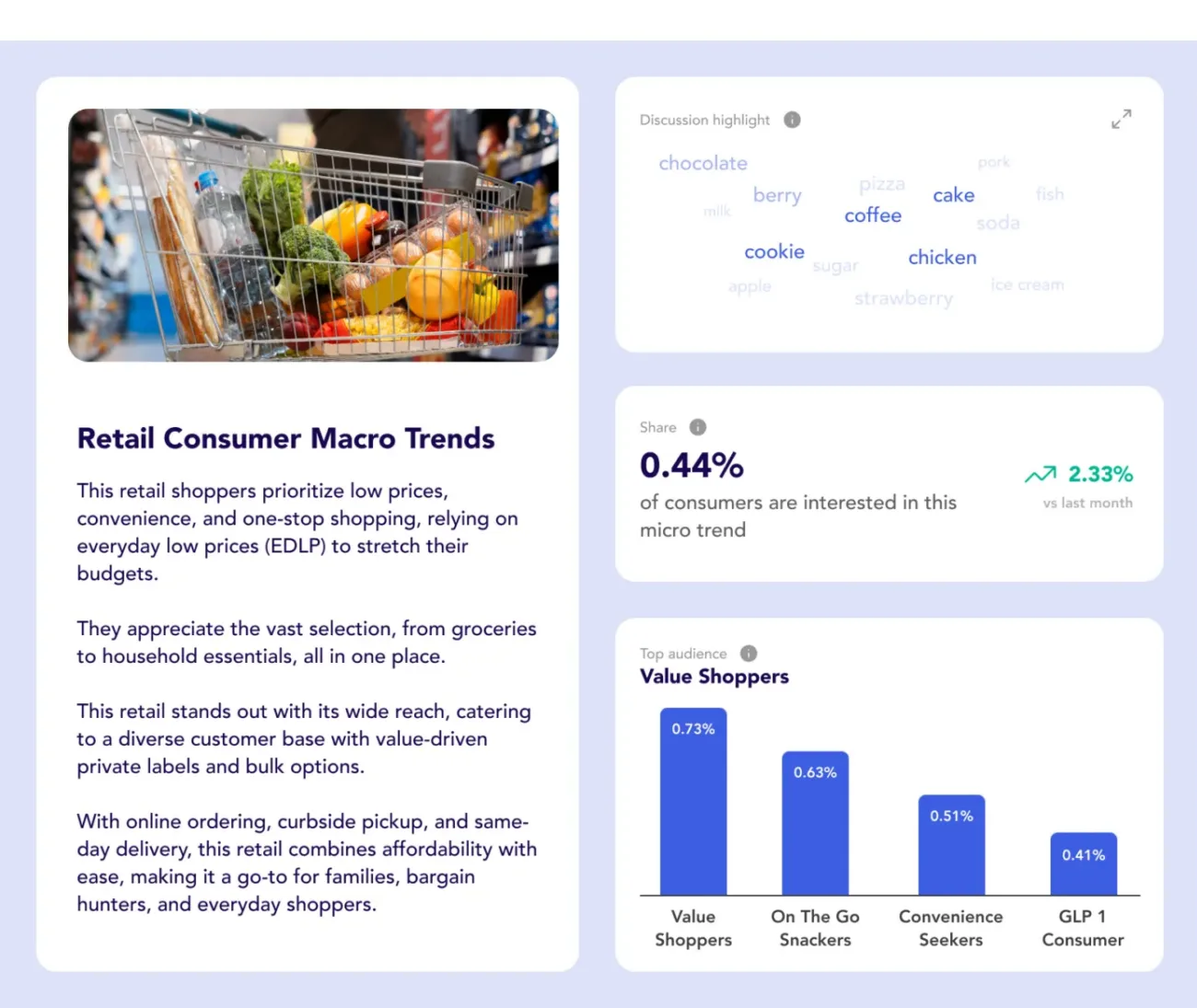
Its Sales Agent generates account-specific sell-in stories using live menu data, competitive positioning, and demand signals, giving CPG reps a data-backed narrative tailored to the operator they are pitching. The Retail Sales Enablement solution helps category managers build stories for line reviews and joint business planning using consumer demand evidence. These capabilities make Tastewise more than an insights platform for F&B brands.
Source: Tastewise
Mintel's contribution to sell-in is indirect. Its reports and data provide credible third-party evidence that CPG brands use to support pitches and justify strategy recommendations. Mintel lends authority to a sell-in argument; it does not construct the argument itself.
But neither platform provides the B2B intelligence that sales execution requires: verified contact data for the specific buyer you need to reach, org chart visibility showing who influences purchasing decisions, and intent signals revealing which accounts are actively evaluating suppliers.
That is where ZoomInfo fits.
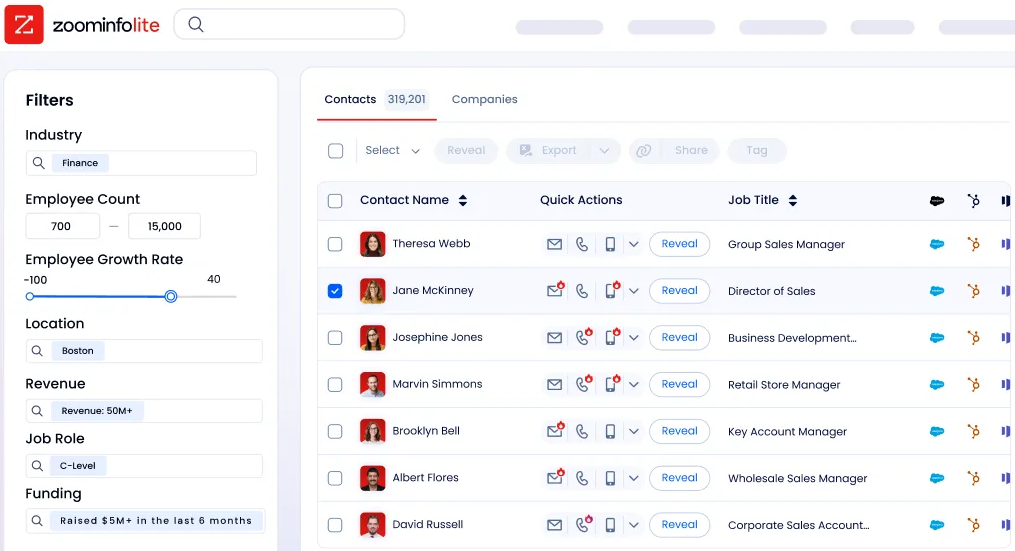
With 500M contacts, 100M companies, 135M+ verified phone numbers, and 200M+ verified business emails, ZoomInfo provides the contact and account intelligence that CPG sales teams need to act on what Mintel or Tastewise reveals. The GTM Context Graph (processing 1.5B+ data points daily) fuses B2B data with intent signals, conversation intelligence, and CRM records to identify which accounts are in-market and why deals are moving or stalling.
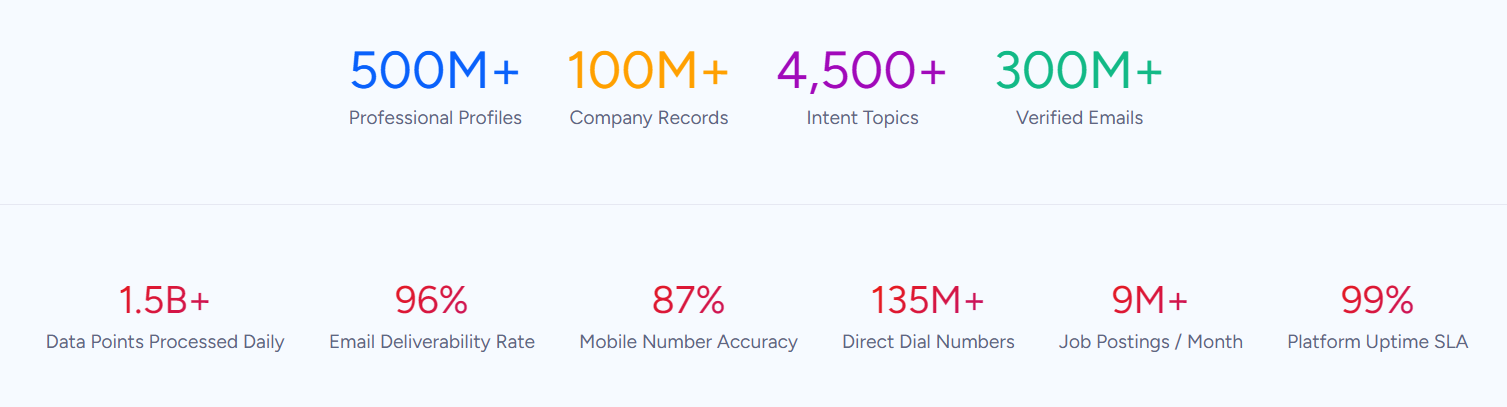
Source: ZoomInfo
In practice: Tastewise's Sales Agent tells your rep what to say to a QSR chain. ZoomInfo's GTM Workspace tells your rep who to call at that chain, surfaces their direct dial, and drafts outreach based on the account's buying signals and engagement history. Mintel's data tells your marketing team which category trends to build strategy around. ZoomInfo's GTM Studio helps your marketing team build targeted plays that reach the right buyers at the right accounts with that message.
"That combination of our internal CRM data, external signals, and AI that's given all that context has helped us craft very specific account- and persona-based messages. And people have responded to them right away." (Seismic)
The three tools form a natural stack: consumer intelligence (Mintel or Tastewise) informs what to sell and where, and B2B intelligence (ZoomInfo) powers the execution of actually selling it.
Analyst expertise vs. AI agents
Mintel and Tastewise represent two different philosophies of how intelligence should reach a team.
Mintel's model is analyst-first, augmented by AI.
The company employs roughly 200 analysts and consultants across 14 offices who write structured reports, interpret survey data, and provide direct advisory access. Clients value this human layer: the ability to call an analyst who can cut through noise on short notice.
The AI tools accelerate access rather than replace the analysts. Mintel Leap lets users ask business questions in natural language and receive sourced answers drawn exclusively from Mintel's proprietary research. Because Leap does not query the open internet, it avoids the hallucination problems that plague general-purpose LLMs for market research.
Mintel Spark generates product concepts by combining GNPD trend data with consumer demand signals, compressing what typically takes two to three months of manual work into a shorter cycle.
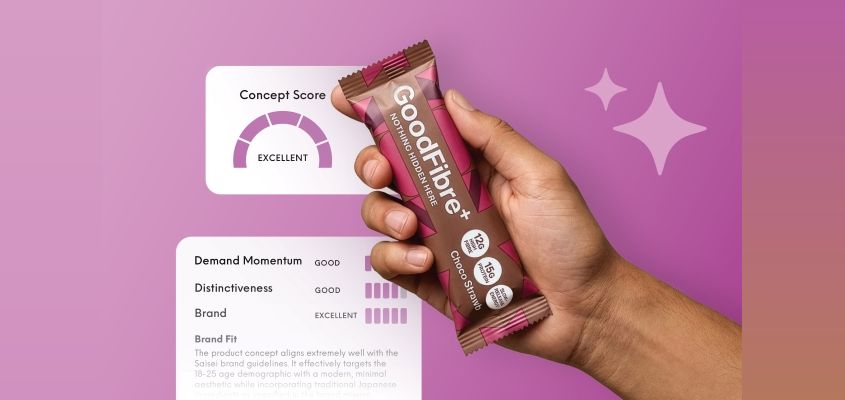
Source: Mintel
Tastewise inverts this.
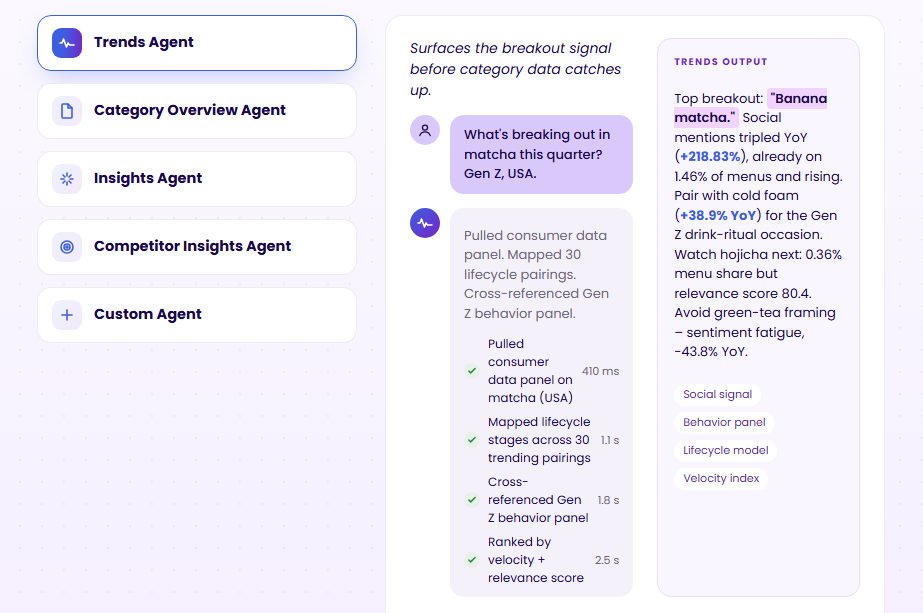
The platform is AI-native and agent-driven: rather than surfacing data for human interpretation, its agents execute tasks directly. The Trends Agent scans menus, social, and retail data to detect breakout signals before category reports catch up. The Marketing Agent drafts campaign hooks and scores upcoming marketing moments for brand fit. The Sales Agent builds operator-specific sell-in stories using live menu data.
TasteGPT, the conversational interface, draws on seven years of food-specific taxonomy development and claims 96% category accuracy. For teams that want to build custom workflows, the Agent Builder lets them create agents without code.
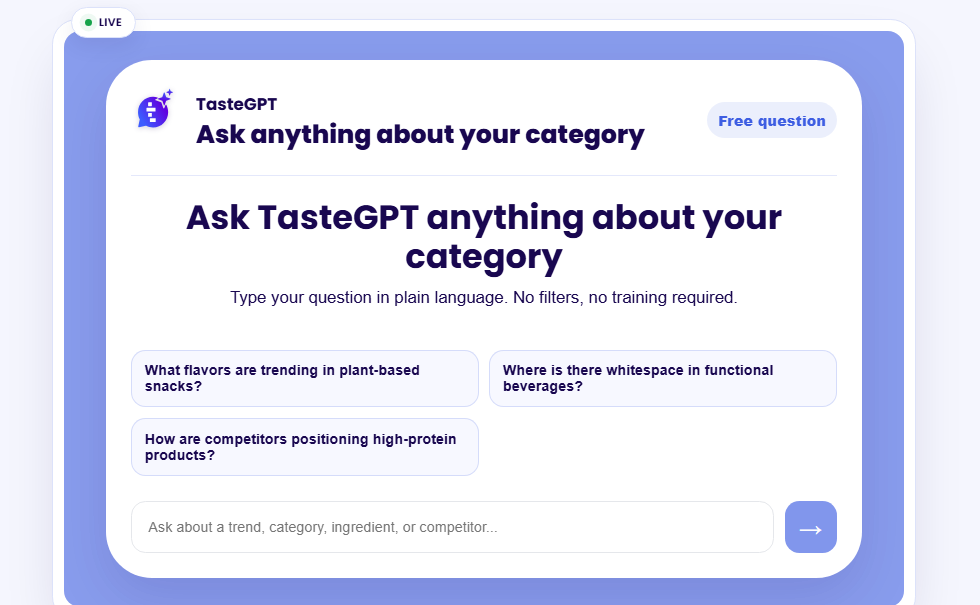
Source: Tastewise
The difference matters most at the point of output. Mintel delivers research that informs decisions: a report, a data table, a trend narrative. Tastewise delivers outputs closer to finished work products: a sell-in story ready for a buyer meeting, a campaign brief ready for creative review, a trend report ready for a category deck.
Teams that want raw intelligence to shape their own thinking will prefer Mintel's interpretive flexibility. Teams that want to move from question to action in minutes will prefer Tastewise's agent model, which removes intermediate steps.
Product innovation: tracking launches vs. predicting demand
Both platforms serve product innovation teams, but they answer different questions at different stages of the process.
Mintel's GNPD is the industry standard for competitive product tracking.
A global field team physically analyzes and categorizes new products (ingredients, packaging, claims, formats) across every retail channel in 86 markets. This human-verified data produces a structured database that no automated collection can match in consistency. Innovation teams use it to benchmark competitors, map ingredient trends, and identify what claims are gaining traction across 290 subcategories.
The newer Mintel Landscapes tool adds a predictive layer: a two-year forecasting view of which flavors, ingredients, formats, and claims are likely to grow. Combined with the recently acquired Black Swan Data (which brings AI-driven social predictive analytics with a reported 89% forecasting accuracy), Mintel's innovation stack now covers the pipeline from trend detection through concept generation via Spark to demand-supply gap analysis through Consulting.
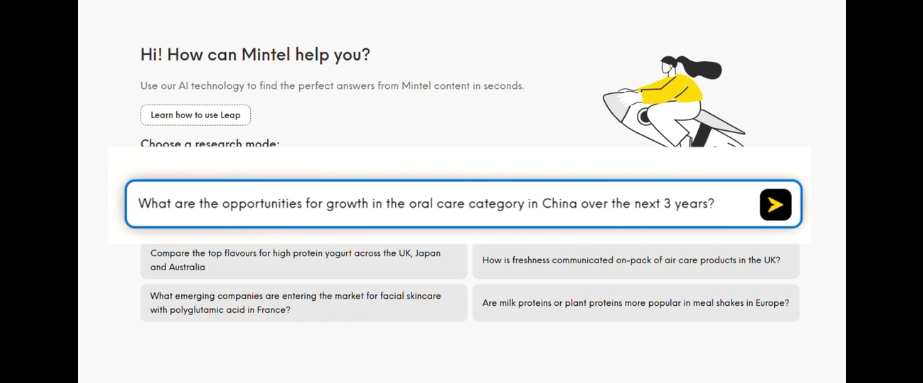
Source: Mintel
Tastewise approaches innovation from the demand side rather than the supply side.
Instead of tracking what products have launched, it detects what consumers are already reaching for: which ingredients are surging in home cooking, which flavor pairings are breaking out on menus, which dietary claims are gaining social momentum. The Formulation Agent provides reformulation paths for specific targets like sugar reduction, GLP-1 positioning, or functional benefit additions.
Source: Tastewise
The two approaches complement more than they compete. Mintel tells you what the competitive landscape looks like today and where product attributes are trending. Tastewise tells you what consumers are signaling they want, often before those signals translate into product launches.
A team using both would spot the demand signal in Tastewise and validate the competitive whitespace in Mintel's GNPD before committing to development.
Trend detection: validated foresight vs. real-time signals
Mintel Trends takes a structured, validation-first approach. Its analysts monitor 300 monthly observations organized into 7 macro trend drivers, drawing from real-world examples across cultures and markets.
What separates this from general trend-watching is the validation step: every trend is cross-referenced against Mintel's proprietary consumer survey data from over 1 million consumers monthly. A trend observation without quantified consumer demand behind it does not get published.
This approach favors accuracy over speed. Mintel's 50-year track record gives analysts the historical depth to distinguish novel shifts from cyclical patterns. Annual Global Predictions reports project trend trajectories through 2030 and beyond. For teams making decisions with multi-year time horizons (reformulations, category entries, brand repositioning), validated foresight is worth more than early signals.
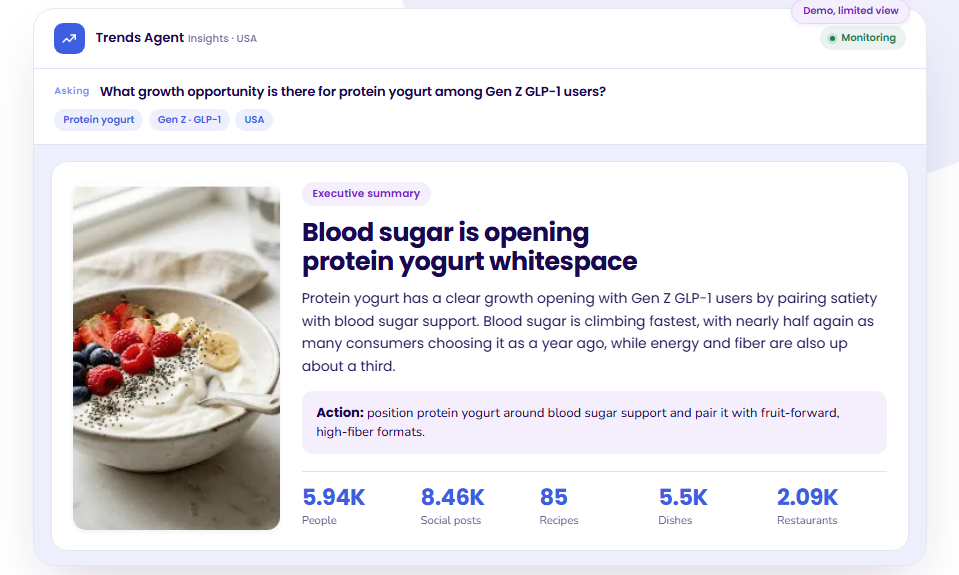
Tastewise's Trends Agent prioritizes speed and specificity.
Every candidate trend must clear three validation layers before it is reported: a consumer panel check confirming it across demographics and occasions, a menus-and-retail cross-reference across 39+ markets to verify the signal is not channel-isolated noise, and a calibration engine that targets bias under 5%. Signals that fail any layer are flagged as noise and not reported.
The speed advantage is quantified. In Tastewise's own demonstrations, the Trends Agent flagged signals seven months before they appeared in category reports. For CPG sales teams preparing for a buyer meeting next month, that lead time is the difference between pitching a trend and confirming one.
Source: Tastewise
Both platforms validate trends rather than reporting unfiltered social buzz, but their time horizons differ. Mintel validates against structured consumer surveys and historical precedent, producing confident long-range signals. Tastewise validates against cross-channel behavioral data in real time, producing actionable near-term signals.
The choice depends on whether your next decision has a one-month or a one-year planning window.
Pricing reflects different market positions
Mintel prices like a premium research institution.
Individual Market Intelligence Reports cost $4,995 in the US and £2,995 in the UK, with bundle discounts up to 20%. The full On-Demand subscription (unlimited reports, Leap AI, Spark, and dedicated analyst access) is enterprise-priced with no published figures. Consulting engagements are custom. The free Spotlight tier provides articles, newsletters, and select trend reports at no cost but does not include access to the live platform. Contracts auto-renew for 12-month periods with 90 days' notice required to cancel.
Tastewise does not publish pricing.
The company confirms that plans scale with modules and market coverage, and that an enterprise tier exists for large CPG organizations with multi-market needs and role-based permissions. The only free entry point is TasteGPT, which allows three questions before requiring a login. For mid-market buyers who need to self-qualify before engaging sales, the lack of published pricing creates friction.
ZoomInfo offers the most accessible entry points.
ZoomInfo Lite is a permanent free tier with access to the B2B database, 10 monthly export credits, and basic website visitor identification, with no credit card or time limit. A 7-day free trial provides fuller access to prospecting, intent signals, and outreach tools. Paid plans are consumption-based and custom-quoted, scaling with seats, credits, and features. API access is included in all relevant plans.
Source: ZoomInfo
"You'll get 10x the value if you think of ZoomInfo as a full platform and not just a tool for one team." (SpringDB)
The pricing philosophies reflect the markets these platforms serve.
Mintel prices for enterprise research budgets where a single strategic decision justifies the investment. Tastewise prices for enterprise F&B budgets where cross-functional deployment spreads the cost across R&D, marketing, and sales. ZoomInfo prices for go-to-market budgets where value is measured directly in pipeline generated and deals closed.
Mintel vs. Tastewise vs. ZoomInfo: Which should you choose?
The right tool depends on what your team needs to accomplish, and you may need more than one.
Choose Mintel if:
You operate across multiple CPG categories beyond food and beverage
Longitudinal market data and analyst interpretation matter for your strategic decisions
You need to track competitor product launches globally at scale
Your planning horizon is measured in years, not weeks
Your organization can invest in enterprise-level market research
Choose Tastewise if:
Food and beverage is your primary or exclusive category
Your team needs real-time demand signals, not quarterly reports
You want AI agents that generate sell-in stories, campaign briefs, and trend reports ready for immediate use
Utility across R&D, marketing, and sales matters more than category breadth
You need menu-level and operator-level intelligence for foodservice sales
Use ZoomInfo with either platform if:
Your sales team needs verified contact data for retail buyers, foodservice operators, and distributors
You want intent signals showing which accounts are actively evaluating suppliers
You need to turn consumer and market insights into pipeline and closed deals
Your go-to-market motion includes outbound sales, account-based marketing, or channel development
You want one platform to handle prospecting, outreach, and CRM enrichment
Start with ZoomInfo Lite for free or request a 7-day trial.
The insight most CPG teams miss: intelligence and execution are different problems. Mintel and Tastewise reveal what the market wants and where the opportunities are. ZoomInfo connects your sales team with the specific buyers who can turn those opportunities into revenue. The strongest go-to-market stacks pair one with the other.
Mintel vs. Tastewise vs. ZoomInfo FAQ
What is the core difference between Mintel and Tastewise?
Mintel is a broad market intelligence agency covering 16 CPG verticals with analyst-curated reports, consumer surveys across 36 markets, and a product launch database tracking 45,000+ new products monthly across 86 economies.
Tastewise is an AI agent platform built exclusively for food and beverage, using over 1 billion real-time consumer signals per month from menus, recipes, social media, and eRetail across 39 markets to generate outputs like sell-in stories and campaign briefs.
Which platform is better for product innovation in food and beverage?
Both serve innovation teams, but from different angles.
Mintel's GNPD tracks what competitors have already launched, with ingredient trends and predictive forecasting across 86 markets and 290 subcategories. Tastewise detects what consumers are actively demanding by scanning menu additions, recipe searches, and social engagement.
Mintel shows the competitive landscape; Tastewise shows the demand landscape. Teams that use both can spot demand signals early and validate competitive whitespace before committing to development.
How does ZoomInfo fit into a CPG intelligence stack?
ZoomInfo is not a consumer or market intelligence platform. It is a B2B go-to-market platform that provides verified contact data, company intelligence, intent signals, and outreach tools.
CPG sales teams use it to find and reach the retail buyers, category managers, and foodservice operators who control shelf space and menu placement. It complements Mintel or Tastewise by turning market insights into pipeline and closed deals.
Does Tastewise cover industries outside food and beverage?
No. Tastewise's data infrastructure, AI agents, and taxonomy are built exclusively for food and beverage. Companies in beauty, household, financial services, or other CPG verticals will not find relevant data in Tastewise and should evaluate Mintel or other category-specific intelligence providers.
Which platform offers the most accessible entry point?
ZoomInfo offers the most accessible entry with ZoomInfo Lite, a permanent free tier that includes B2B database access and 10 monthly export credits, plus a separate 7-day trial with broader feature access.
Mintel's free Spotlight tier provides articles, newsletters, and select trend reports but no access to the live platform or full reports. Tastewise allows three free questions through TasteGPT but has no published pricing or self-serve trial for the full platform.
How do Mintel and Tastewise differ on trend detection?
Mintel Trends validates observations against proprietary consumer survey data from over 1 million consumers monthly, organizing 300 monthly observations into 7 macro trend drivers. This produces confident long-range signals backed by historical precedent. Tastewise's Trends Agent validates signals in real time across three layers (consumer panel, menus and retail, calibration) and surfaces breakout signals months before they appear in category reports.
Mintel favors accuracy and strategic planning horizons; Tastewise favors speed and near-term actionability.
Can Mintel and Tastewise replace each other?
Not directly. Mintel covers 16 CPG verticals and provides broad market research, consumer surveys, and consulting across food, beauty, household, and more. Tastewise covers only food and beverage but offers depth Mintel does not, including live menu tracking across 4 million+ foodservice locations, eRetail best-seller data, and AI agents that generate campaign and sell-in outputs.
An F&B company might use both: Mintel for strategic market sizing and category research, Tastewise for real-time demand signals and sales execution support.
What security certifications do these platforms hold?
Mintel holds Cyber Essentials Plus and FSQS certification, with infrastructure on AWS and Google Cloud Platform. Tastewise holds ISO 27001:2013 and ISO 27017:2015 certifications and operates under GDPR compliance, with infrastructure on AWS and a 24/7 Security Operations Center. ZoomInfo holds ISO 27001, ISO 27701, SOC 2 Type II, and TRUSTe GDPR and CCPA certifications, renewed annually, and is a registered data broker in California and Vermont.
