

Choosing between onOffice and Pipedrive often comes down to these five questions:
Are you running a real estate brokerage, or does your sales process span multiple industries?
Do you need property-specific tools like portal syndication and brochure generation, or a general-purpose pipeline?
Is your team based in Europe with DACH-market compliance requirements, or do you operate globally?
Do you want a CRM that tracks deals you already know about, or a platform that tells you which deals to pursue?
How important is having verified contact data, intent signals, and AI-powered prospecting in your workflow?
In short, here's what we recommend:
onOffice is the go-to for European real estate brokerages that need one operational platform. Built for the property industry since 2001, it covers property management and contact CRM, portal syndication across 150+ listing sites, PDF brochure generation, automated inquiry response, and AI-powered listing creation. With 40,000+ users across seven European countries, onOffice has proved itself for agencies that live and breathe property transactions. But the platform has a steep configuration curve, its interface can feel dated, and its depth is concentrated in the DACH market.
Pipedrive is the visual, pipeline-first CRM built for small and medium-sized sales teams across any industry. Its kanban-style deal board, 500+ marketplace integrations, and straightforward automation make it easy to adopt without an administrator. Pipedrive works well for real estate teams alongside dozens of other verticals, with pricing starting at $14/month per seat. But Pipedrive is a deal tracker at its core. It tells you where your deals stand; it doesn't tell you which accounts to pursue next or who the decision-makers are.
Both platforms help you manage relationships you've already started. But the hardest part of sales isn't tracking existing deals. It's knowing who to call, when to call them, and what to say when they pick up.
ZoomInfo is a B2B intelligence and GTM platform built on 500M contacts, 100M companies, 135M+ verified phone numbers, and 200M+ verified business email addresses. ZoomInfo's GTM Context Graph combines this data with your CRM records, conversation transcripts, and behavioral signals to reveal not just what's happening in your accounts, but why. Sellers access this intelligence through GTM Workspace, marketers and RevOps through GTM Studio, and any custom tool through APIs and MCP. For teams that need to fill the pipeline before they can manage it, ZoomInfo delivers intelligence that CRMs were never designed to provide.
If building a smarter pipeline with verified data and AI-powered prospecting sounds like what you need, see ZoomInfo in action.
onOffice vs. Pipedrive vs. ZoomInfo at a glance
onOffice | Pipedrive | ZoomInfo | |
|---|---|---|---|
Core purpose | Real estate operations platform | General-purpose sales CRM | B2B intelligence and GTM platform |
Target user | European real estate brokerages | SMB sales teams, any industry | B2B revenue teams (sales, marketing, RevOps) |
Contact database | Agents build their own | Agents build their own | 500M contacts, 200M+ verified emails, 135M+ verified phone numbers |
Pipeline management | Acquisition & Success Cockpits; "Deals" feature in development | Visual kanban pipeline with deal rotting | GTM Workspace with AI-prioritized accounts and deal intelligence |
Industry focus | Real estate only | Industry-agnostic (20+ verticals) | B2B across all verticals |
AI capabilities | AI Studio for listing creation and image optimization | AI email writer, AI Sales Assistant, AI reports | GTM Context Graph, AI agents for research, outreach, and deal execution |
Integrations | 150+ real estate portals, Marketplace with PropTech partners | 500+ marketplace apps, open API | 120+ integrations, Enterprise API, MCP for any AI agent |
Pricing transparency | Quote-based | Published tiers starting at $14/seat/month | Custom-quoted, consumption-based |
Free option | Sales-gated trial | 14-day free trial | ZoomInfo Lite (permanent free tier) + 7-day trial |
Geographic strength | DACH and southern Europe | Global (179 countries) | Global (35,000+ companies worldwide) |
Real estate specialist vs. general CRM vs. intelligence platform
These three products solve different problems. Understanding that distinction matters more than comparing feature lists.
onOffice exists because real estate agencies have workflows that generic CRMs handle poorly. A property isn't a "deal" with a dollar value and a close date. It's a record with floor plans, energy certificates, virtual tours, legal documents, and marketing materials that need syndication to over 150 portals at once.
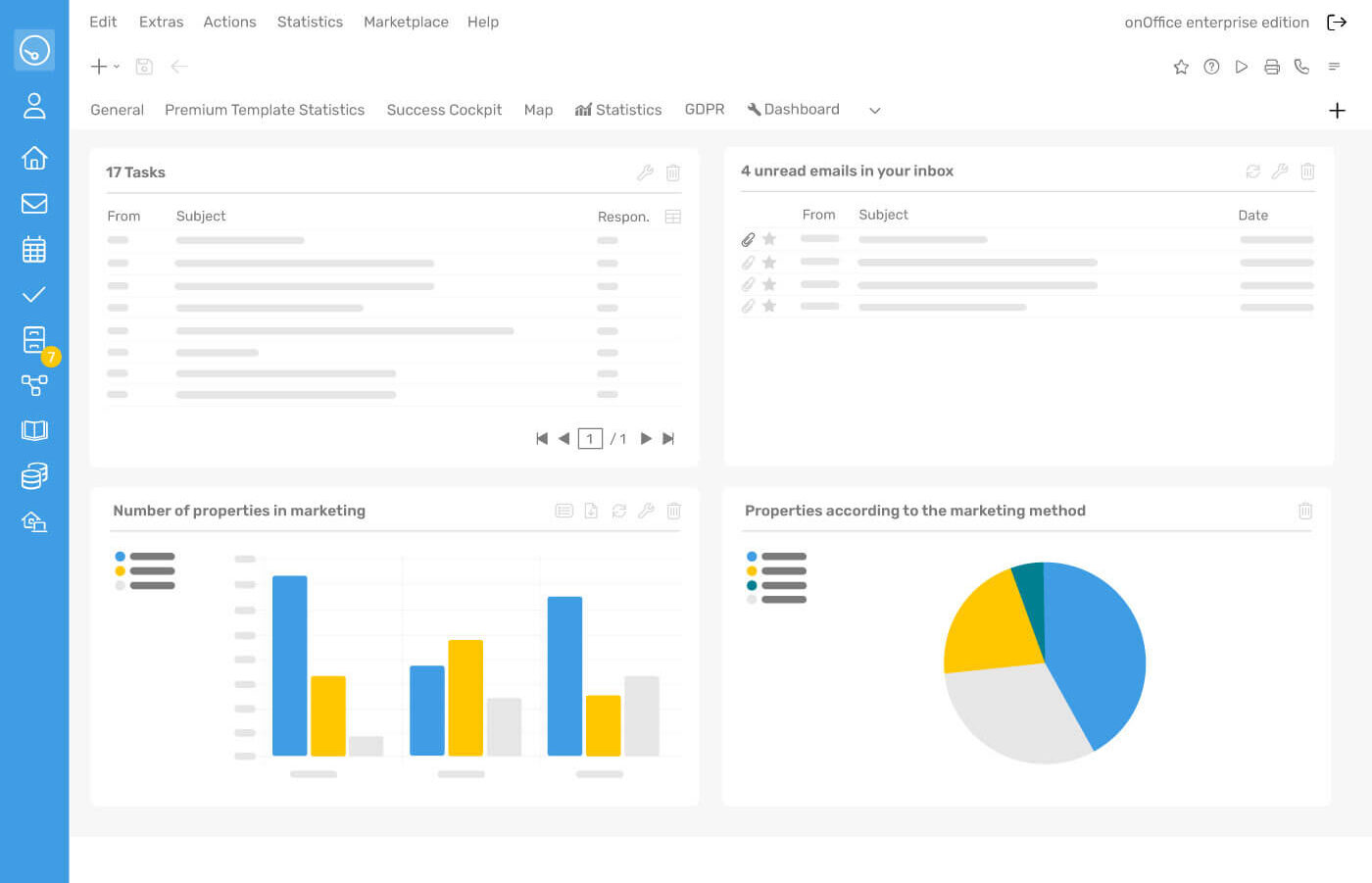
Source: onOffice
A buyer isn't just a contact; they have search profiles that need automatic matching against new listings. onOffice was built around these realities, and 25 years of iteration have produced a platform that handles them with depth no general CRM can match.
Pipedrive was created because salespeople were drowning in CRMs built for managers. The five founders were themselves frustrated by tools designed to track reps rather than help them sell. The result is a pipeline-first interface where every feature answers one question: what do I need to do next? That simplicity is its strength. A new rep can be productive within hours, not weeks.
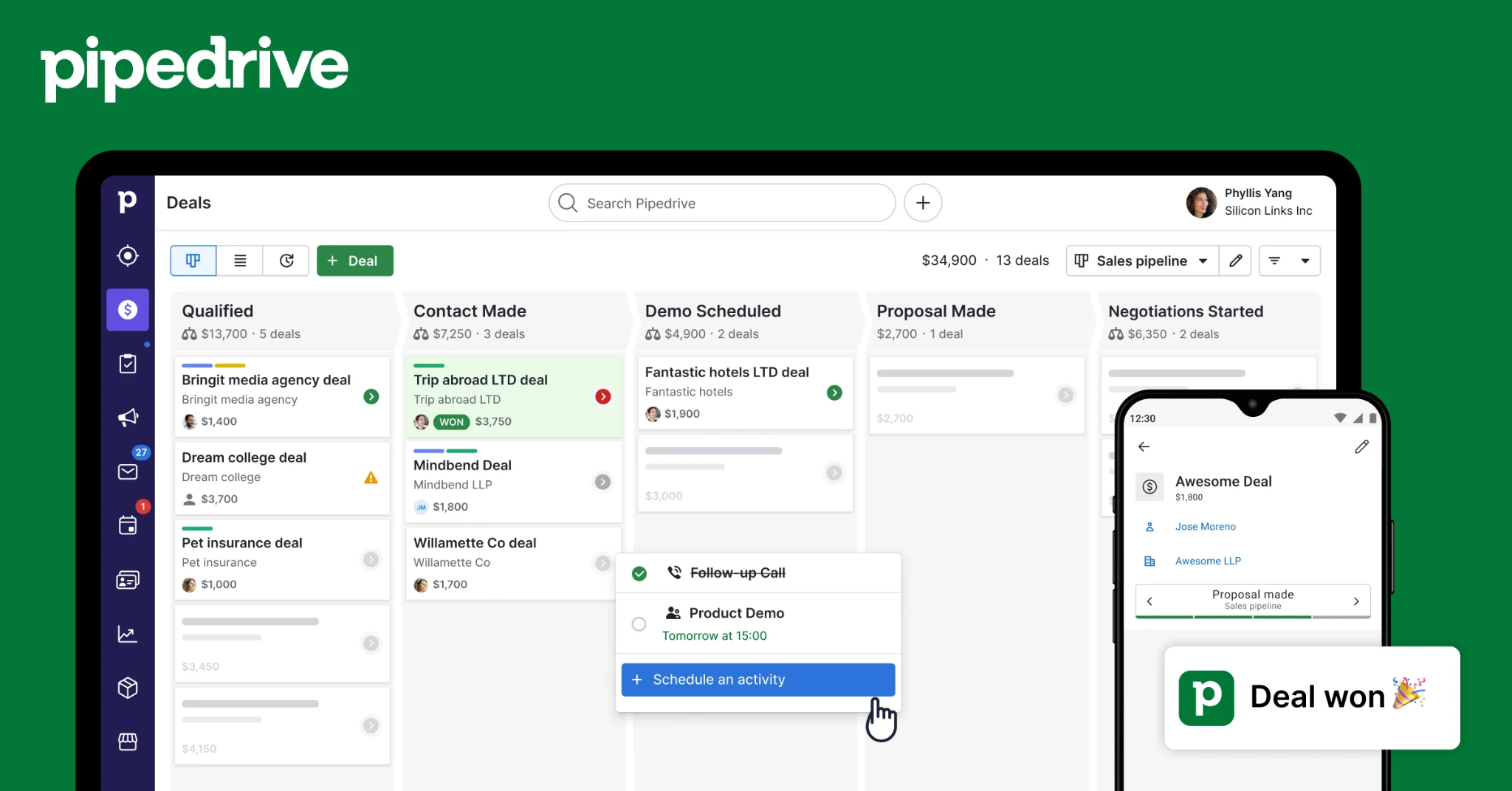
Source: Pipedrive
ZoomInfo starts from a different premise. CRMs record what happens after you've identified an opportunity. ZoomInfo identifies the opportunity. Its B2B data platform answers who your buyers are, when they're in-market, and what messaging will resonate. The GTM Context Graph, which processes 1.5B+ data points daily, combines that data with your CRM records and behavioral signals to surface not just what happened, but why deals move or stall.
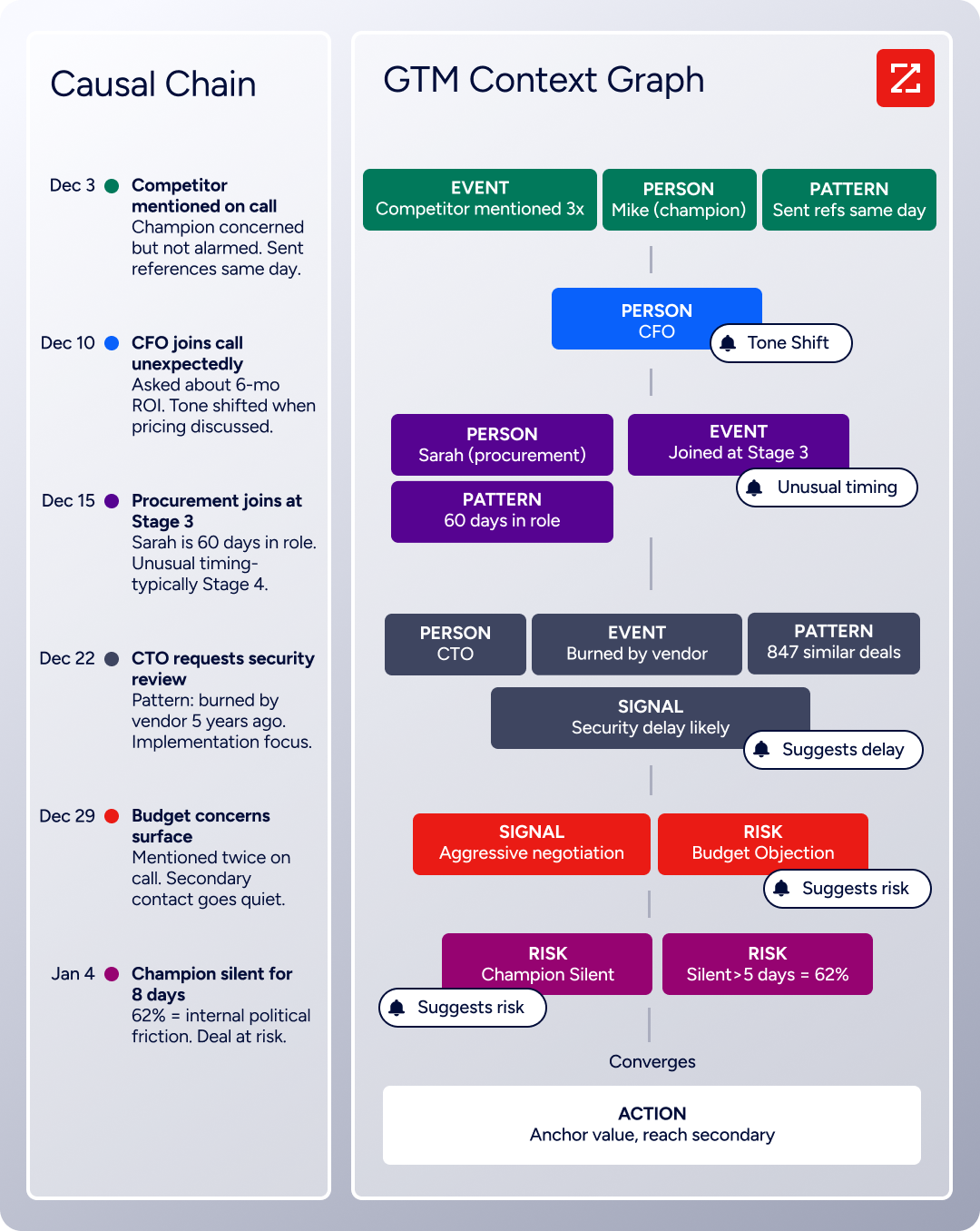
For a real estate brokerage managing property listings in Germany, onOffice is the clear fit. For a small sales team that needs a clean pipeline fast, Pipedrive delivers. For B2B revenue teams whose growth depends on finding and reaching the right buyers at the right time, ZoomInfo provides the intelligence layer that makes every other tool in the stack more effective.
Pipeline visibility takes different forms
How each platform helps you see your business varies widely.
onOffice gives real estate managers two primary views: the Acquisition Cockpit tracks property marketing status, and the Success Cockpit monitors agent performance toward monthly goals. These dashboards center on real estate KPIs like listings acquired, viewings scheduled, and deals closed.
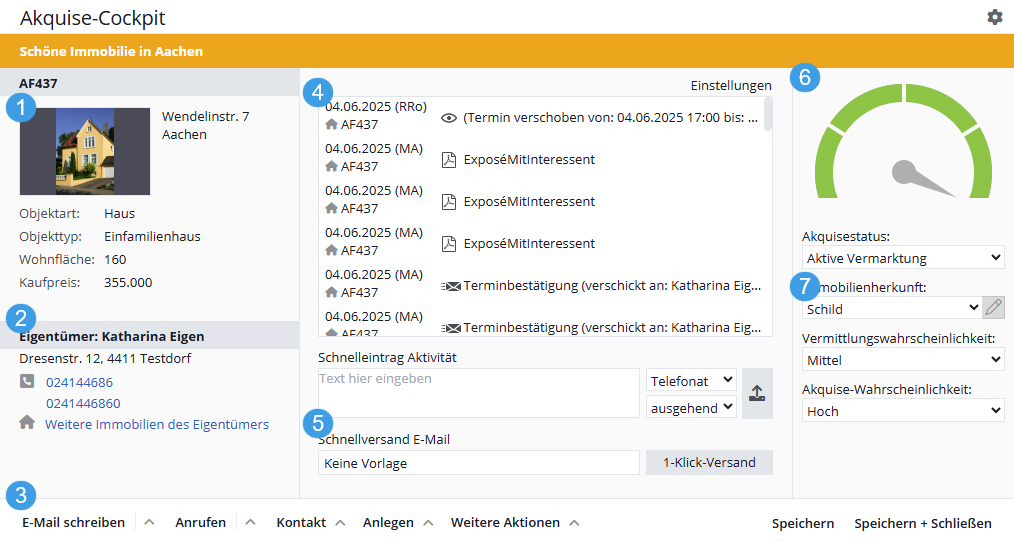
Source: onOffice
The company has announced a "Deals" feature that will add a stage-based pipeline view tracking deals from acquisition through closing, but as of mid-2025 it remains in development.
Pipedrive is the strongest of the three for pipeline visualization. The kanban board shows every deal in its current stage, with colored cues flagging deals that have gone cold. Multiple custom pipelines let teams run separate processes for different deal types.
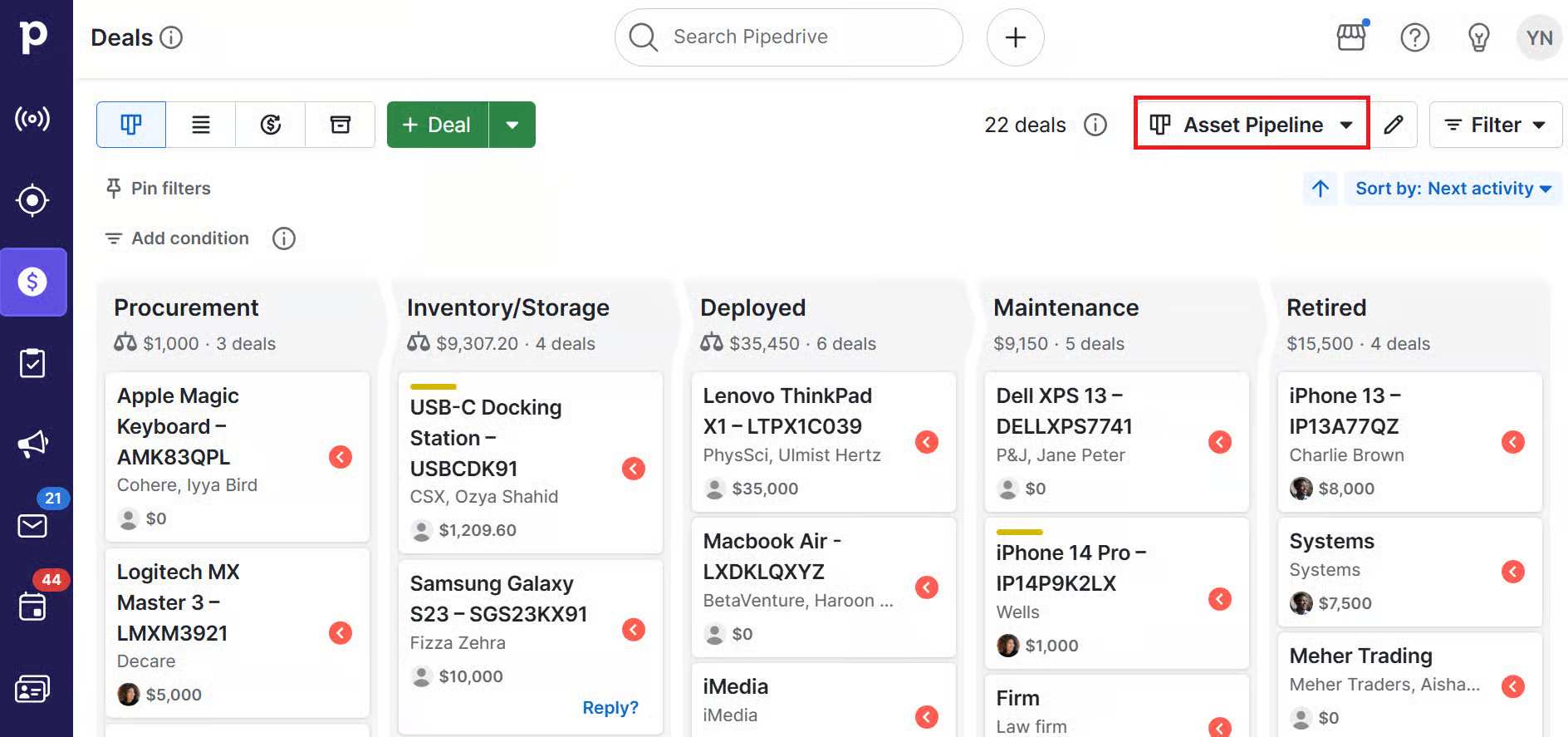
Source: Pipedrive
The forecast view projects revenue by expected close date. For teams that think visually, Pipedrive's pipeline is hard to beat.
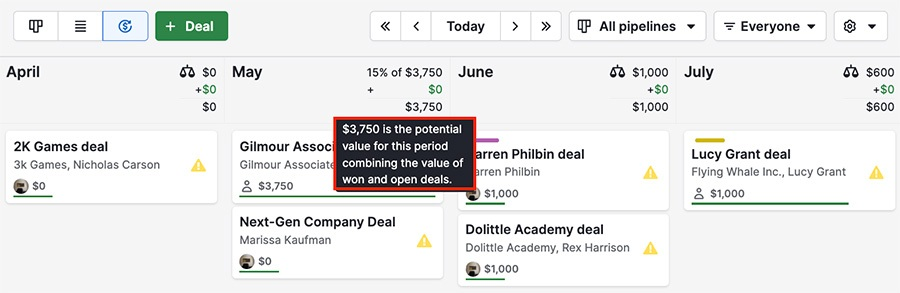
Source: Pipedrive
ZoomInfo's GTM Workspace layers intelligence on top of deal tracking. Instead of just showing where deals stand, it shows why they're moving or stalling.
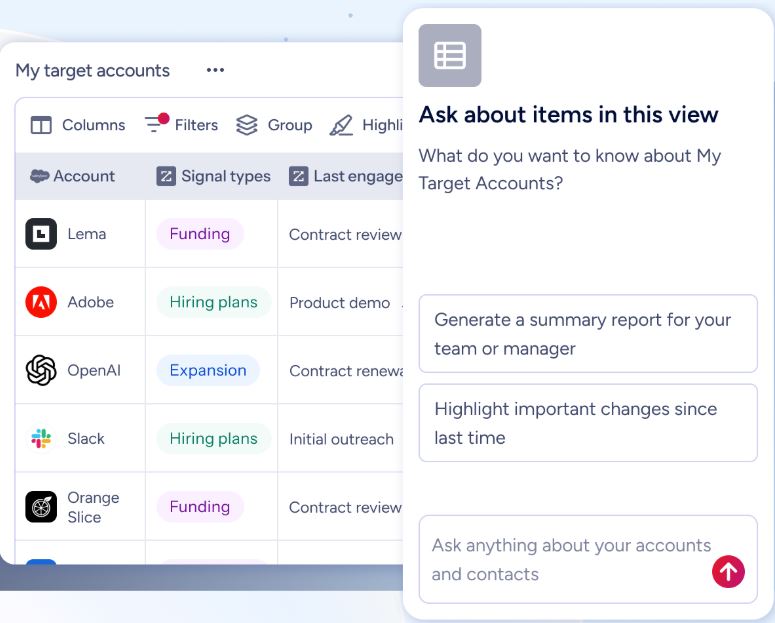
The Action Feed surfaces in-market buyers matched to target criteria, with pre-drafted actions on every signal.
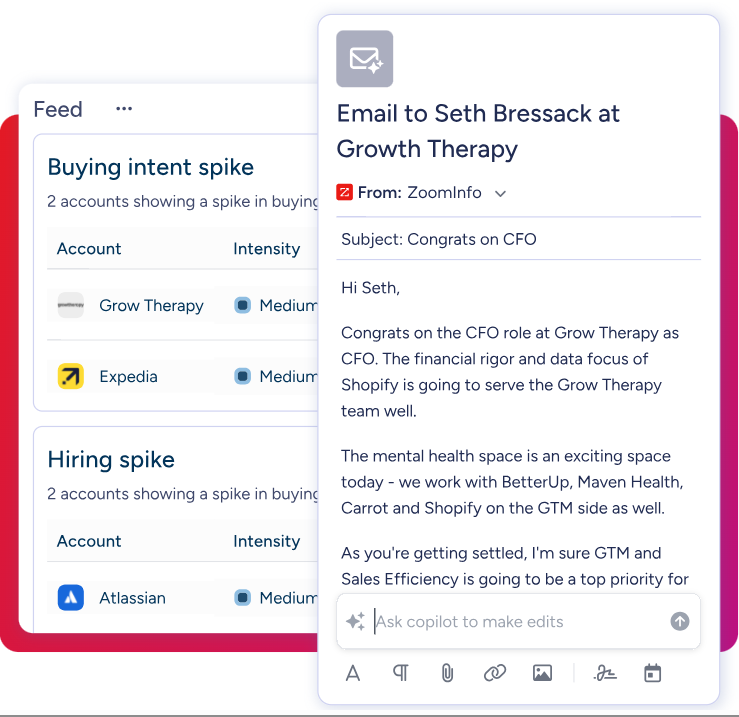
Views combine CRM data with real-time buying signals, letting reps filter for intent spikes, technology changes, or executive hiring. Seismic's sales team attributed 39% of active pipeline to opportunities identified or influenced by ZoomInfo signals and reported 54% productivity gains.
"It's bringing data together faster than anyone could. It's both a time saving and a quality improvement." (Toby Carrington, CBO, Seismic)
The contact data gap matters more than you think
Every CRM is only as useful as the data inside it. Here's where the three platforms diverge most sharply.
onOffice and Pipedrive are both "bring your own data" platforms. They provide the container; you fill it. onOffice makes this easier for real estate agents through its Enquiry Manager, which processes inbound portal inquiries, creates contact records, and dispatches brochures automatically.
Pipedrive offers LeadBooster (a paid add-on with chatbot, web forms, and a prospecting database of 400 million profiles). Both approaches help capture leads that come to you or that you actively search for.
ZoomInfo is the data itself. The platform maintains 500M contacts with 200M+ verified business emails and 135M+ verified phone numbers, backed by 300+ human researchers and a multi-source verification pipeline reaching up to 95% accuracy on first-party data. This isn't a bolt-on prospecting database; it's the foundational layer ZoomInfo has spent nearly two decades building.
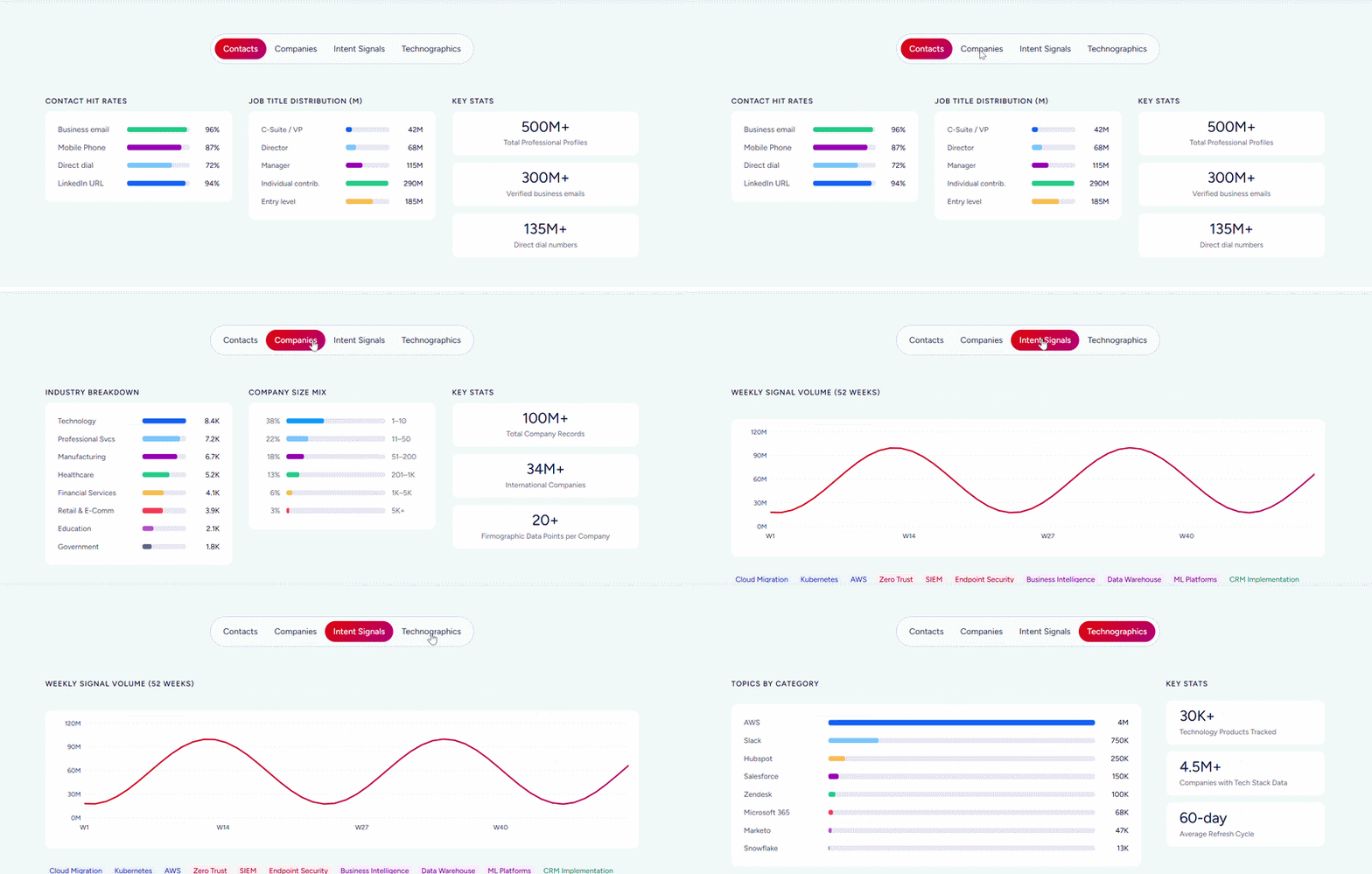
The practical difference becomes clear at the point of action. When a Pipedrive user finds a promising company, they still need to research decision-makers, find valid contact information, and hope their data is current.
When a ZoomInfo user identifies a target account, they already have the org chart, direct dials, verified emails, technographic profile, and intent signals showing whether that company is actively researching solutions.
In a Fortune 500 competitive RFP analyzing 25 million contacts across vendors, the independent consultant concluded that "no other competitor came even close" to ZoomInfo's data quality.
"ZoomInfo gives us the information we need to execute. We don't have to go through and spend our time digging. It's already there, so we can be three steps ahead." (William Kenimer, VP of Revenue Operations, Vensure)
Automation and AI serve different jobs
All three platforms have invested in automation, but what they automate reflects their core mission.
onOffice automates real estate operations. The Process Manager is a visual workflow engine that handles recurring brokerage sequences: preparing notary appointments, sending post-viewing follow-ups, dispatching birthday greetings, and coordinating listing preparation checklists.
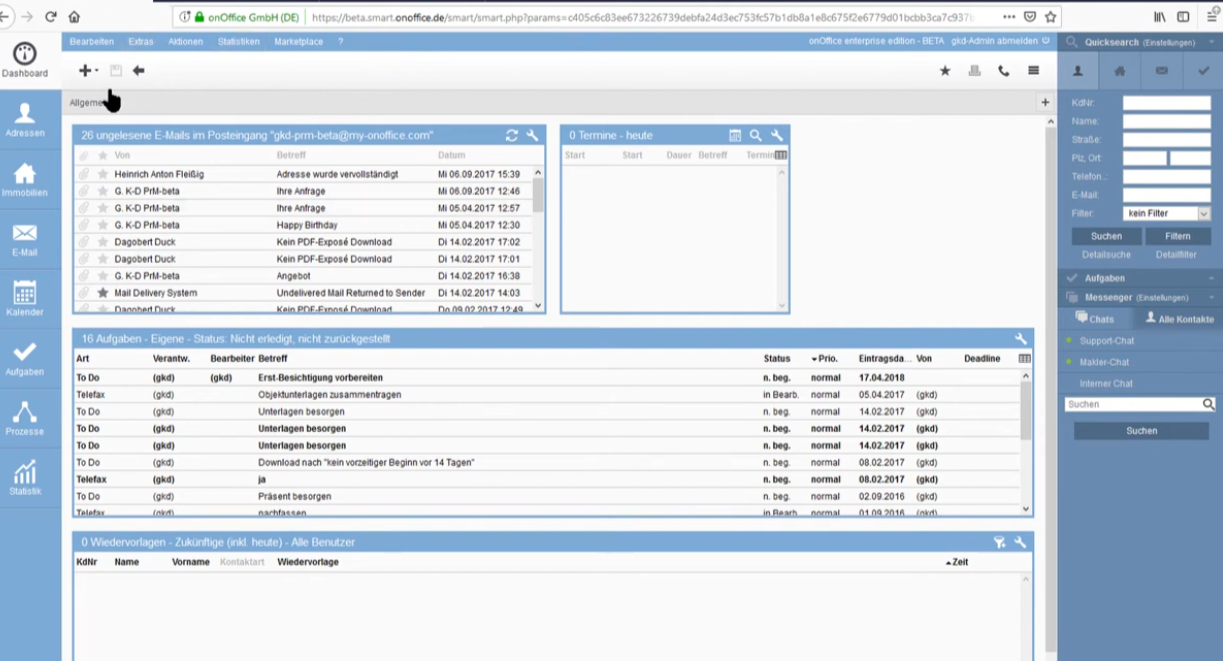
Source: onOffice
The Enquiry Manager responds to buyer inquiries around the clock, creating contacts and dispatching brochures within seconds.
The AI Studio (available on premium tiers) creates property listings from text, photos, or voice memos, plus virtual staging and image optimization. All AI processing runs on onOffice's own servers, with customer data never stored externally or used to train public models.
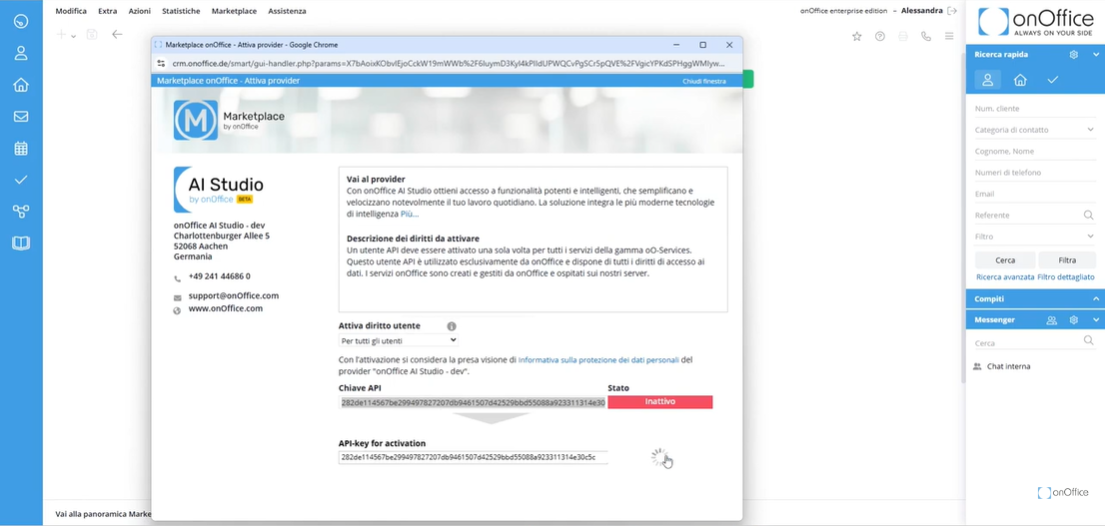
Source: YouTube
Pipedrive automates sales workflows. Automations use trigger-action rules to move deals between stages, send follow-up emails, assign leads by territory, and notify team members via Slack or Teams. If/else branching enables conditional logic without third-party tools.
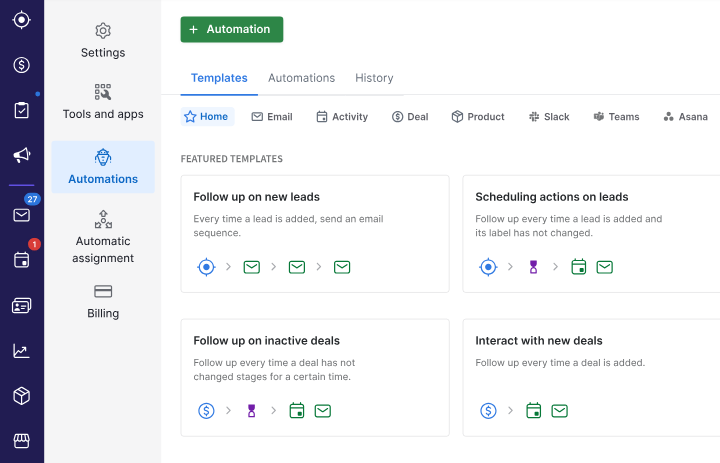
Source: Pipedrive
The AI Sales Assistant surfaces deal priorities and win probability predictions. The AI email writer generates drafts with configurable tone and length.
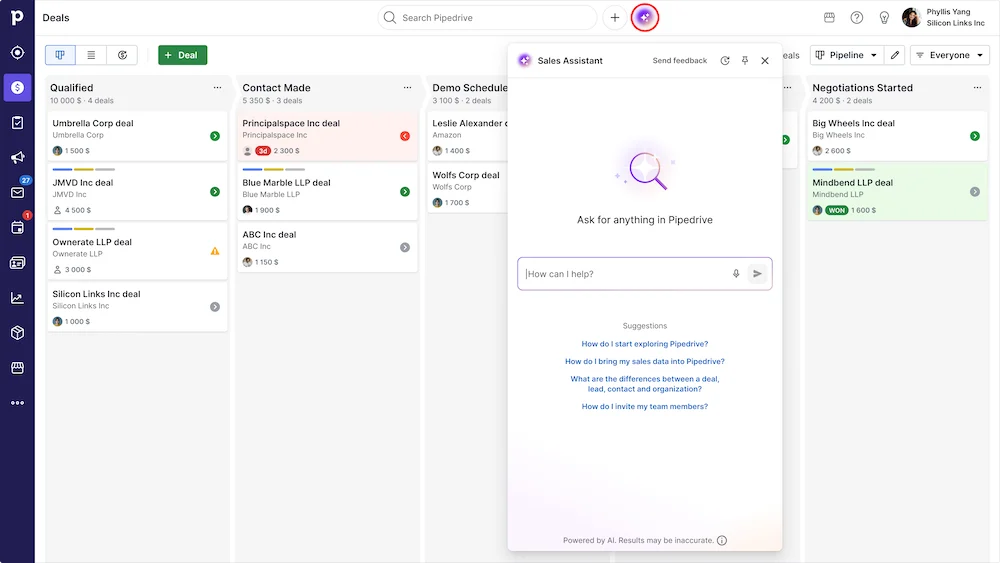
Source: Pipedrive
AI-powered report generation lets managers create pipeline analyses from natural language prompts.

Source: Pipedrive
ZoomInfo automates go-to-market intelligence. GTM Workspace's AI agents handle account research, outreach drafting, signal monitoring, and CRM updates, drawing on the GTM Context Graph.

The difference is contextual reasoning: ZoomInfo's AI doesn't just draft an email; it drafts one that addresses a specific concern a CFO raised on the last call, because the system understands why that concern matters for the deal.
GTM Studio lets marketers and RevOps describe audiences in natural language and launch multi-channel plays that get smarter as prospects respond, with expansion plays that used to take three weeks launching in 30 minutes.
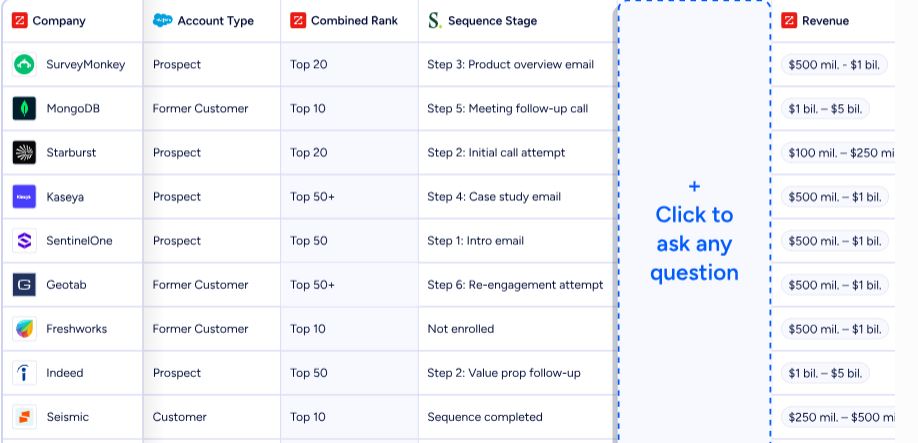
The distinction is scope.
onOffice automates property workflows.
Pipedrive automates deal management tasks.
ZoomInfo automates the intelligence that determines which deals are worth pursuing.
onOffice owns real estate depth that generic tools can't replicate
For real estate agencies, onOffice offers capabilities that neither Pipedrive nor ZoomInfo attempt.
Portal syndication pushes listings to 150+ national and international real estate portals from a single interface.
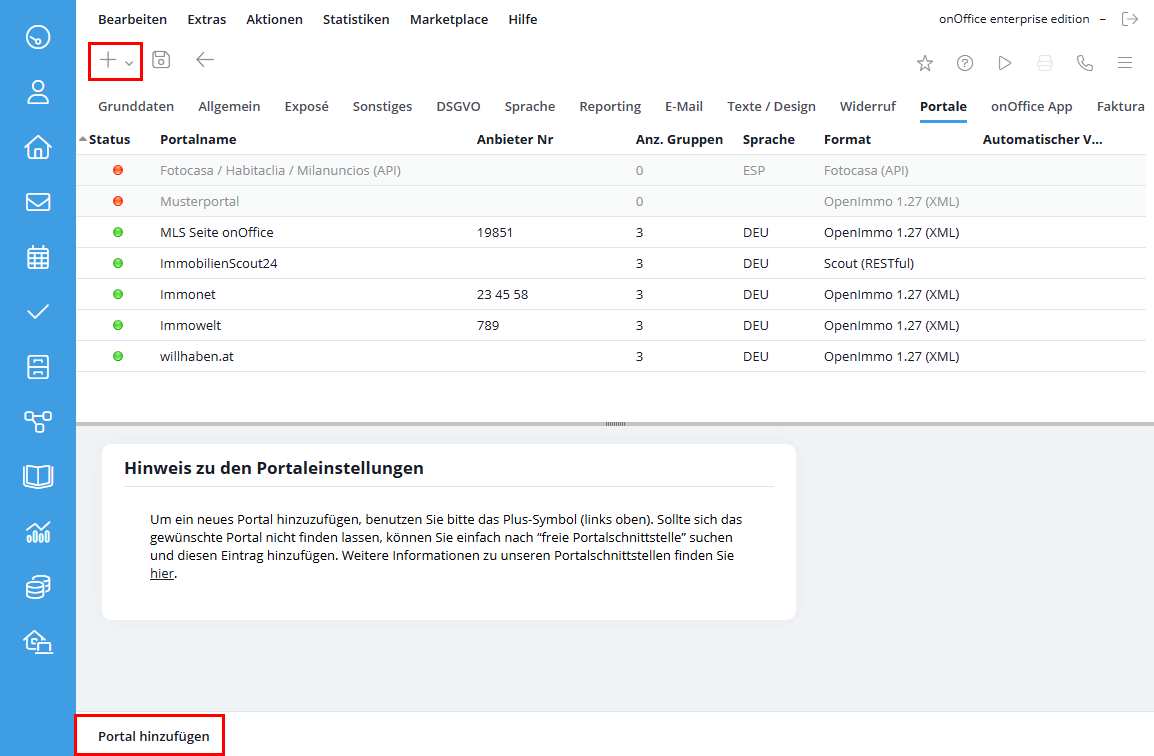
Source: onOffice
The PDFdesigner generates branded property brochures with one click.
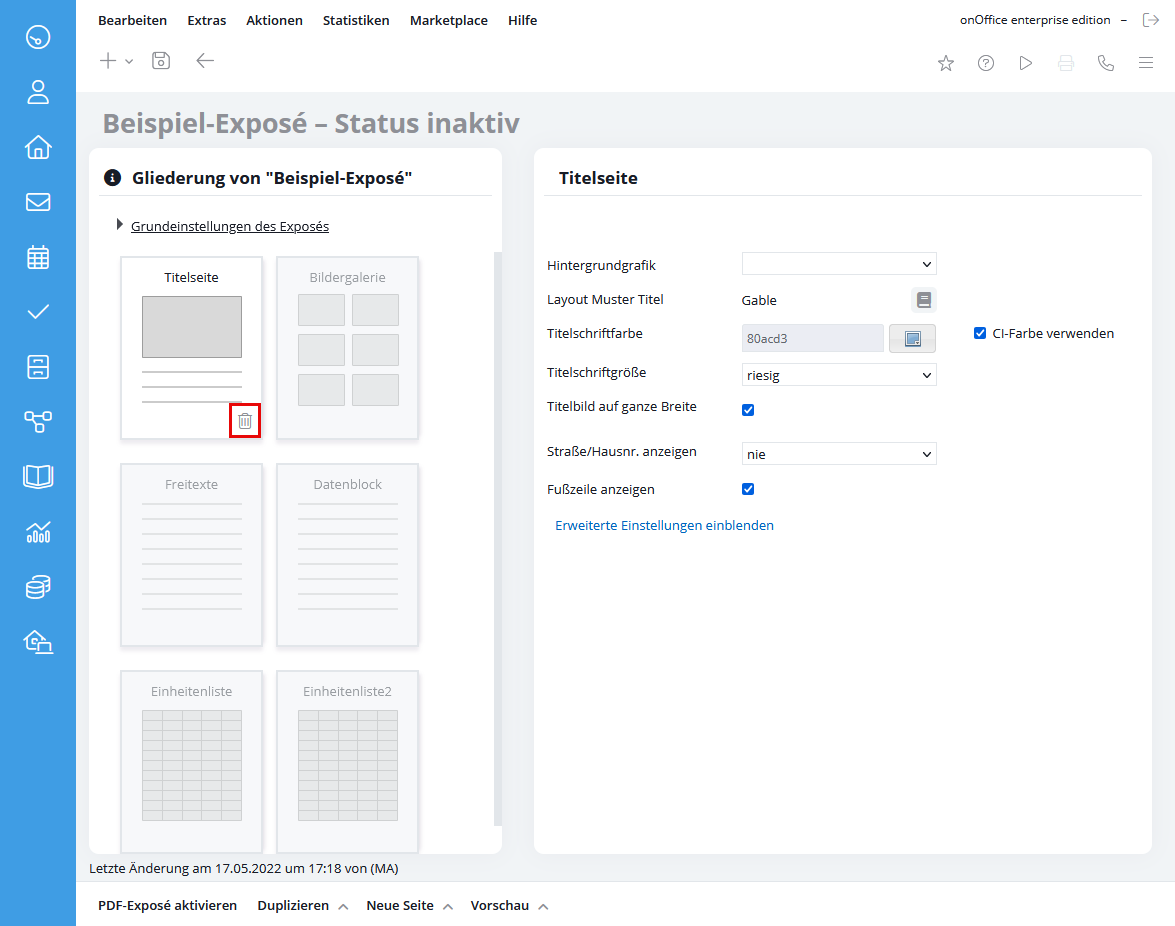
Source: onOffice
The Interactive Brochure turns listings into hosted microsites where prospects can provide feedback or make offers. Automatic Brochure Dispatch matches new listings against saved buyer search profiles and sends property details daily, sometimes closing deals before a listing goes public.
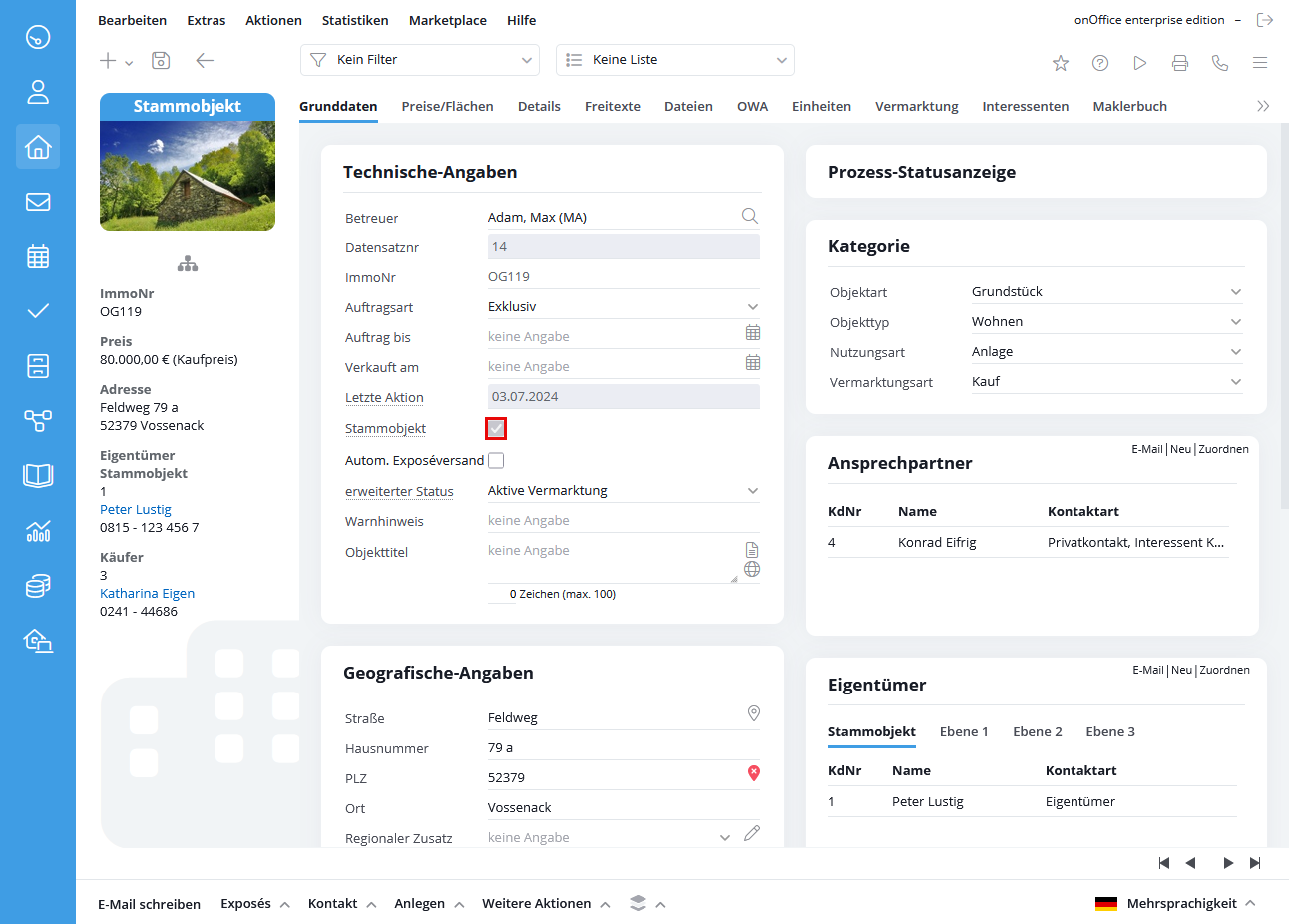
The Multi Property Module lets developers manage apartment blocks with shared attributes and individual unit overrides.
Source: onOffice
Built-in commission protection requires prospects to confirm brokerage agreements before receiving brochures, with automatic documentation in the agent's log.
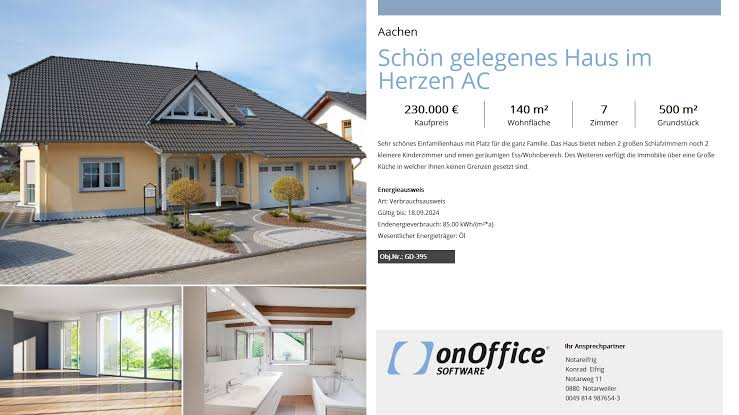
The Showcase TV feature displays property presentations on in-office screens around the clock.
Source: onOffice
None of this applies to a B2B SaaS company or a consulting firm. That's the point: onOffice's value is inseparable from its industry specificity. The same depth that makes it indispensable for a German brokerage makes it irrelevant for any other type of sales team.
Pricing reveals who each platform is built for
onOffice doesn't publish prices. The platform offers three tiers (enterprise essential, enterprise premium, and enterprise expert), all requiring a quote. The essential tier includes property management, contact CRM, email, calendar, portal transfer, and PDF brochures.
Premium adds the AI Studio, Process Manager, Enquiry Manager, mobile app, and analytics cockpits. Expert adds group management, intranet, multilingual support, and a custom SLA. Additional costs include a one-time setup fee, €0.30 per AI-generated image, and optional website packages starting at €119/month.
Pipedrive has the most transparent pricing. Four published tiers (Lite, Growth, Premium, and Ultimate) start at $14/month per seat, with annual billing saving up to 42%. Core pipeline features are available on every plan.
Email sync and automations require Growth or above. LeadBooster, Smart Docs, and Projects are included on Premium and Ultimate but are paid add-ons on lower tiers. The Campaigns email marketing add-on is always a separate cost.
ZoomInfo uses custom-quoted, consumption-based pricing with no published dollar amounts. Pricing scales around seats, credit volume, features, and AI activity. The Sales product line offers Professional, Advanced, and Enterprise tiers, each unlocking deeper intelligence (intent signals, AI summaries, advanced workflows).
ZoomInfo Lite provides a permanent free tier with access to the B2B database, 10 monthly export credits, and basic search and enrichment. A 7-day free trial offers broader access.
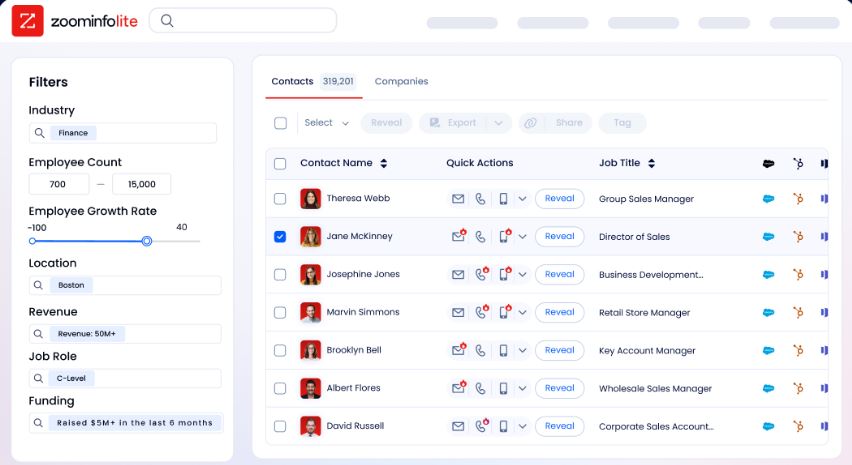
The pricing differences reflect the value equation. Pipedrive charges for pipeline management. onOffice charges for real estate operations. ZoomInfo charges for intelligence: the data, signals, and AI reasoning that fill and accelerate the pipeline.
Integrations reflect different ecosystems
onOffice integrates within the real estate tech stack. The Marketplace provides single-login access to PropTech partners: DocuSign for e-signatures, Zapier for workflow connections, virtual staging and floor plan services, energy certificate generators, and tenant self-disclosure tools. 13 new partners joined in 2025.
The onOffice API supports real-time bidirectional data exchange, and native integrations include WhatsApp, Sipgate, Office 365, Google Meet, Gmail, and DeepL. The integration ecosystem is deep but vertical: strong for real estate, limited for anything else.
Pipedrive has the broadest general-purpose marketplace with 500+ integrations. Key connections span Zapier and Make (automation), Google Meet and Microsoft Teams (communication), Mailchimp (email marketing), PandaDoc and DocuSign (e-signatures), QuickBooks and Xero (accounting), and Slack (messaging).
The open API is available on all plans, with API v2 recently released. App extensions let developers embed custom UI inside Pipedrive. Companies with at least one app installed win 1.5x more deals.
ZoomInfo connects to the enterprise GTM stack. The App Marketplace includes 120+ integrations spanning CRM (Salesforce, HubSpot, Microsoft Dynamics 365), marketing automation (Marketo, Eloqua), sales engagement (Salesloft, Outreach), data warehouses (Snowflake, Databricks), and communications (Zoom, Slack).
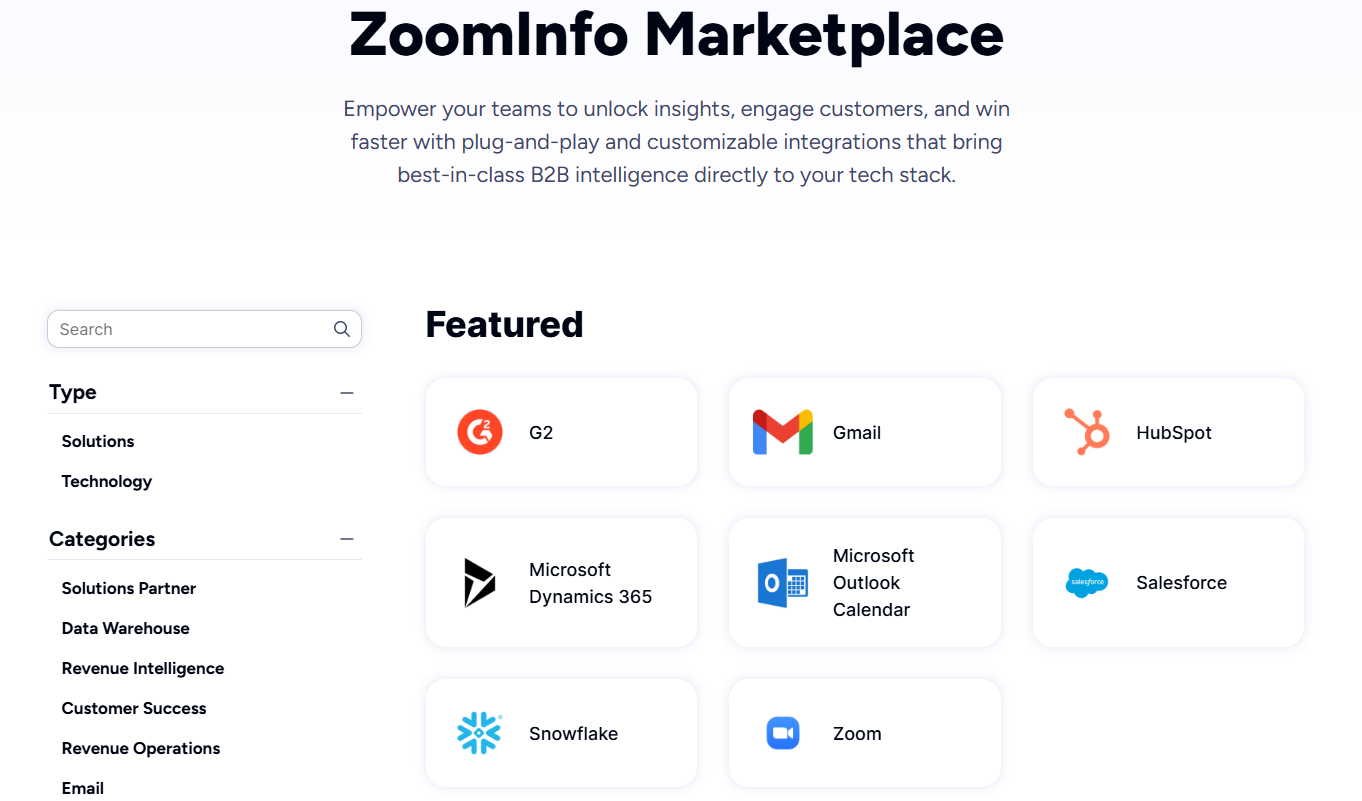
The Enterprise API exposes search, enrichment, AI intelligence, audience management, and engagement data endpoints. The MCP server connects AI models directly to ZoomInfo's data, currently supporting Claude and ChatGPT. API access is included in all relevant plans.
"The plug-and-play aspect of the API means I can integrate it very easily into any process and get information at a moment's notice." (Jerry Wilson, Senior Marketing Intelligence Analyst, BDO Canada)
Security and compliance for different markets
onOffice emphasizes European data sovereignty. All data is hosted within the EU in two data centers in Frankfurt, with a backup server in Saarbrücken. The platform belongs to the "Cloud Services Made in Germany" initiative.
GDPR compliance tooling includes consent tracking, retention period enforcement, and one-click data deletion. AI Studio data is processed on onOffice servers and never used to train public models. Two-factor authentication is available. However, no ISO 27001, SOC 2, or third-party audit certifications are publicly disclosed.
Pipedrive holds a broad set of international certifications: ISO/IEC 27001:2022, ISO/IEC 27701:2019, SOC 2 Type 2, and SOC 3.
The platform is GDPR compliant with a dedicated Data Protection Officer and is certified under the EU-US Data Privacy Framework. Data is hosted on AWS in Europe and the US with separate databases per customer. SecurityScorecard rates Pipedrive grade A. Additional protections include SSO via SAML 2.0, IP allowlisting, and a Security Center dashboard.
ZoomInfo maintains the most extensive compliance infrastructure, reflecting its role handling third-party contact data at scale: ISO 27001, ISO 27701, SOC 2 Type II, TRUSTe GDPR and CCPA certifications, all renewed annually.

The company is a registered data broker in California and Vermont. A dedicated Trust Center provides full transparency. Pipedrive states it does not permit third parties to use client data to train AI models, and ZoomInfo similarly protects customer data through its compliance framework.
onOffice vs. Pipedrive vs. ZoomInfo: Which should you choose?
The right choice depends on what problem you're solving.
Choose onOffice if:
You run a real estate brokerage in Europe (especially the DACH region)
You need property management, portal syndication, and brochure generation in one system
Automated inquiry response and buyer-listing matching are critical to your workflow
EU data hosting and GDPR compliance are non-negotiable requirements
You want a platform built by and for real estate professionals over 25 years
Choose Pipedrive if:
You need a clean, visual pipeline for a small or mid-sized sales team
Your industry isn't real estate, or you want a general-purpose CRM that works across verticals
Budget transparency matters and you want published pricing starting at $14/month
Quick setup and a minimal learning curve are priorities
You're comfortable sourcing your own contact data or using add-ons like LeadBooster
Choose ZoomInfo if:
Your growth depends on finding and reaching the right B2B buyers before competitors do
You need verified contact data, direct dials, and buying intent signals at scale
AI-powered prospecting, outreach, and deal intelligence would transform your team's productivity
You want intelligence that works in your CRM, your marketing tools, and any AI agent through APIs and MCP
You're ready to invest in the intelligence layer that makes every other tool in your stack more effective
Try ZoomInfo free with ZoomInfo Lite or request a full trial.
onOffice, Pipedrive, and ZoomInfo each excel in their domain. onOffice is the operational backbone for European real estate. Pipedrive is the fast, affordable pipeline for SMB sales teams. ZoomInfo is the intelligence platform that tells your team where to focus, who to engage, and how to win. The most productive teams don't choose one category over another. They choose the right tool for each job, and for B2B teams serious about growth, the intelligence layer is where the competitive advantage lives.
onOffice vs. Pipedrive vs. ZoomInfo FAQ
What is the fundamental difference between onOffice, Pipedrive, and ZoomInfo?
onOffice is a real estate operations platform built for European brokerages, covering property management, portal syndication, brochure generation, and agent workflows. Pipedrive is a general-purpose sales CRM built around a visual pipeline for small and mid-sized teams across any industry.
ZoomInfo is a B2B intelligence platform providing verified contact data on 500M professionals, company intelligence on 100M businesses, buying intent signals, and AI-powered go-to-market execution.
Which platform is best for a real estate business?
onOffice is the strongest fit for real estate brokerages, particularly in the DACH region. It offers industry-specific features no general CRM provides: syndication to 150+ property portals, PDF and interactive brochure creation, automated inquiry response, buyer-listing matching, and commission protection documentation.
Pipedrive has a real estate CRM page and can manage property deals as a pipeline, but lacks the operational depth of a platform designed for the industry.
Which platform has the best contact data for prospecting?
ZoomInfo is in a different category here. onOffice and Pipedrive both require users to build their own contact databases through inbound leads, manual entry, or third-party tools. ZoomInfo maintains 500M contacts with 200M+ verified business emails and 135M+ verified phone numbers, backed by 300+ human researchers and up to 95% accuracy on first-party data.
In an independent Fortune 500 RFP analyzing 25 million contacts, the consultant concluded no other vendor came close.
How do the pricing models compare?
Pipedrive is the most transparent, with published plans starting at $14/month per seat. onOffice requires a quote for all three tiers and charges additional fees for setup, AI image processing, and optional website packages. ZoomInfo uses custom consumption-based pricing with no published amounts, though it offers a permanent free tier (ZoomInfo Lite) with 10 monthly export credits and basic database access.
Can these platforms be used together?
Yes. onOffice and Pipedrive are CRMs that track relationships and deals. ZoomInfo is an intelligence platform that can feed verified data into either through its API, MCP, or direct integrations. A real estate brokerage using onOffice could use ZoomInfo to find corporate relocation contacts or property investors. A sales team on Pipedrive could use ZoomInfo to enrich their pipeline with verified contact data and intent signals, which is how many teams already use it.
Which platform has the strongest AI capabilities?
ZoomInfo's AI is the most broad, with a GTM Context Graph that reasons across CRM data, conversation transcripts, and behavioral signals to power account research, outreach drafting, and deal intelligence.
Pipedrive offers AI email writing, AI-generated reports, and an AI Sales Assistant for deal prioritization. onOffice's AI Studio handles real estate-specific tasks like property listing creation from text, photos, or voice memos, image optimization, and virtual staging, all processed on their own EU servers.
Which platform is easiest to get started with?
Pipedrive has the lowest barrier to entry: a 14-day free trial with full access, no credit card, and an interface most users can navigate within hours. ZoomInfo Lite offers permanent free access to the B2B database with limited exports. onOffice requires a sales appointment to access a trial and has a steep configuration curve acknowledged by the vendor through its tiered training programs.
Which platform is best for teams outside of real estate?
Pipedrive serves 20+ industries with dedicated landing pages and verticals. ZoomInfo serves B2B teams across all verticals, with particular strength in SaaS, financial services, professional services, and manufacturing. onOffice is built exclusively for real estate and offers no functionality for other industries.
