
If you're comparing Oracle APEX vs. Salesforce, you're probably trying to solve one of two different problems with platforms built for different jobs.
Oracle APEX is a low-code application development platform that runs inside Oracle Database. Salesforce is a CRM platform that manages customer relationships, sales pipelines, and marketing campaigns. Comparing them is like comparing a construction toolkit to a furnished office building. They overlap in places (both can build business applications, both serve enterprises), but their starting points, audiences, and strengths diverge.
The real questions you should ask:
Do you need to build custom internal applications on existing database infrastructure, or do you need a ready-made system for managing customers, deals, and campaigns?
Is your team database developers who think in SQL, or business users who need point-and-click workflows?
Are you already invested in the Oracle ecosystem, the Salesforce ecosystem, or neither?
Do you need a platform that handles one job well, or one that covers the full go-to-market cycle from prospecting through deal close?
How important is having accurate, verified B2B data integrated into your workflow?
In short, here's what we recommend:
Oracle APEX is the right choice for organizations already running Oracle Database that need to build custom internal applications fast. Its low-code development environment lets SQL-fluent developers create operational tools, dashboards, and workflow apps at what Oracle claims is 20x the speed of traditional development. Because APEX runs inside Oracle Database, there's no separate application server, no data transit latency, and no incremental licensing cost. The trade-off: APEX requires Oracle Database, produces web applications only (no native mobile apps), and provides no CRM, sales, or marketing functionality out of the box.
Salesforce is the leading choice for organizations that need a complete CRM platform with sales automation, customer service, marketing, and commerce on a single system. As the #1 CRM by IDC market share, Salesforce serves over 150,000 companies with everything from pipeline management to AI-powered autonomous agents via Agentforce. The trade-off: Salesforce's breadth comes with complexity, steep per-user pricing that scales quickly, and implementation timelines that often stretch months with partner assistance.
Both platforms do their respective jobs well. But if your core challenge isn't building custom apps or configuring CRM workflows (if instead you need to find the right buyers, understand why deals move or stall, and act on that intelligence across any tool your team already uses) neither Oracle APEX nor Salesforce was designed to solve that problem.
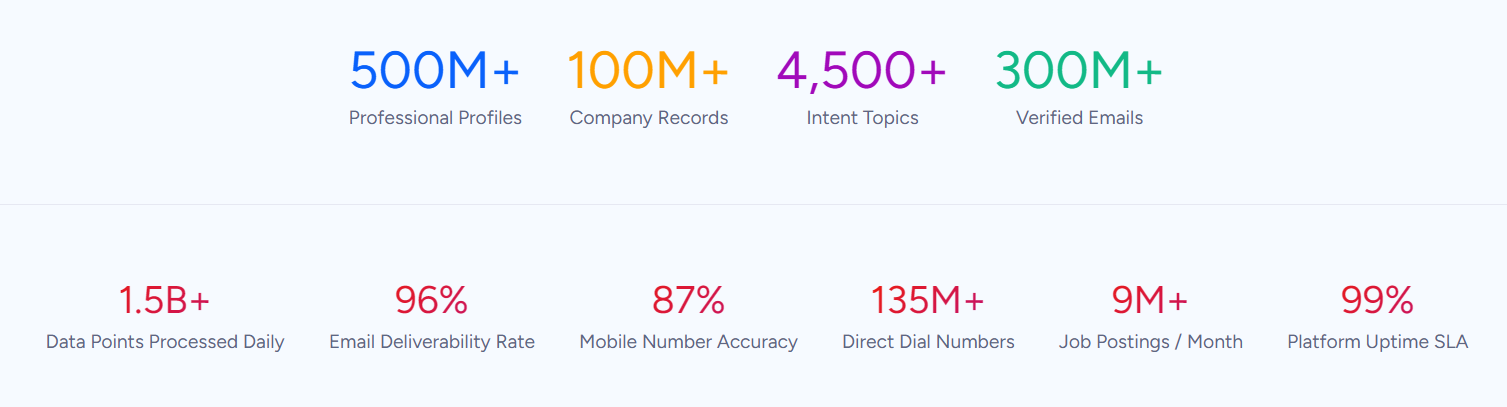
ZoomInfo is a B2B data and go-to-market platform built on 500M contacts, 100M companies, 135M+ verified phone numbers, and 200M+ verified business emails. ZoomInfo's GTM Context Graph fuses this data with your CRM records, conversation transcripts, and behavioral signals into a layer that captures not just what happened in a deal, but why. That intelligence is accessible through the GTM Workspace for sellers, GTM Studio for marketers and RevOps, or APIs and MCP in any third-party tool, including Salesforce itself.
If having the right data, the right context, and the right access across every tool in your stack sounds like what's actually missing, see how ZoomInfo works.
Oracle APEX vs. Salesforce vs. ZoomInfo at a glance
Oracle APEX | Salesforce | ZoomInfo | |
|---|---|---|---|
Primary function | Low-code app development on Oracle Database | CRM, sales, service, marketing, commerce | B2B data, GTM intelligence, and AI-powered sales execution |
Target user | SQL/PL/SQL developers, Oracle DBAs | Sales, service, marketing teams, admins | Sales, marketing, RevOps, GTM engineers |
Pricing model | No per-user fees; pay for Oracle Database compute/storage | Per-user/month ($25–$550+), annual contracts | Custom-quoted, consumption-based |
AI capabilities | AI-assisted code generation, natural language app creation | Agentforce autonomous agents, Einstein AI | GTM Context Graph, AI-drafted outreach, intent-driven prioritization |
CRM functionality | None built-in; must build custom | Full-featured, industry-leading | Integrates with Salesforce, HubSpot, Dynamics |
B2B data | None | Basic account/contact records (user-entered) | 500M contacts, 100M companies, 135M+ verified phones |
Free tier | Always Free (2 databases, 20GB each) | Free Suite (2 users, basic features) | ZoomInfo Lite (permanent, 10 monthly exports) |
Learning curve | Moderate (requires SQL fluency) | Steep (dedicated admin recommended) | Moderate (90-day structured onboarding) |
Best for | Oracle shops building internal apps | Companies needing full CRM and customer management | Teams that need accurate buyer data and go-to-market intelligence |
These platforms solve fundamentally different problems
The comparison between Oracle APEX and Salesforce only makes sense once you understand that they occupy different layers of the enterprise technology stack.
Oracle APEX sits at the application development layer. It's where you build things. Need a project tracking system for your engineering team? A compliance reporting dashboard? A customer portal on top of your Oracle Database? APEX lets a developer who knows SQL assemble that application in days rather than months, with the database handling security, performance, and availability automatically.
Salesforce sits at the business operations layer. It's where you run things. Sales pipeline, customer service cases, marketing campaigns, commerce storefronts. Salesforce doesn't ask you to build your CRM from scratch. It gives you one, pre-built with decades of sales methodology baked in, then lets you customize it.
ZoomInfo sits at the intelligence layer. It's where you know things. Who are your ideal buyers? Which accounts are researching solutions like yours? What happened on the last call that moved a deal forward? ZoomInfo's GTM Context Graph answers these questions by processing 1.5B+ data points daily, fusing third-party B2B data with your own CRM records and conversation history.
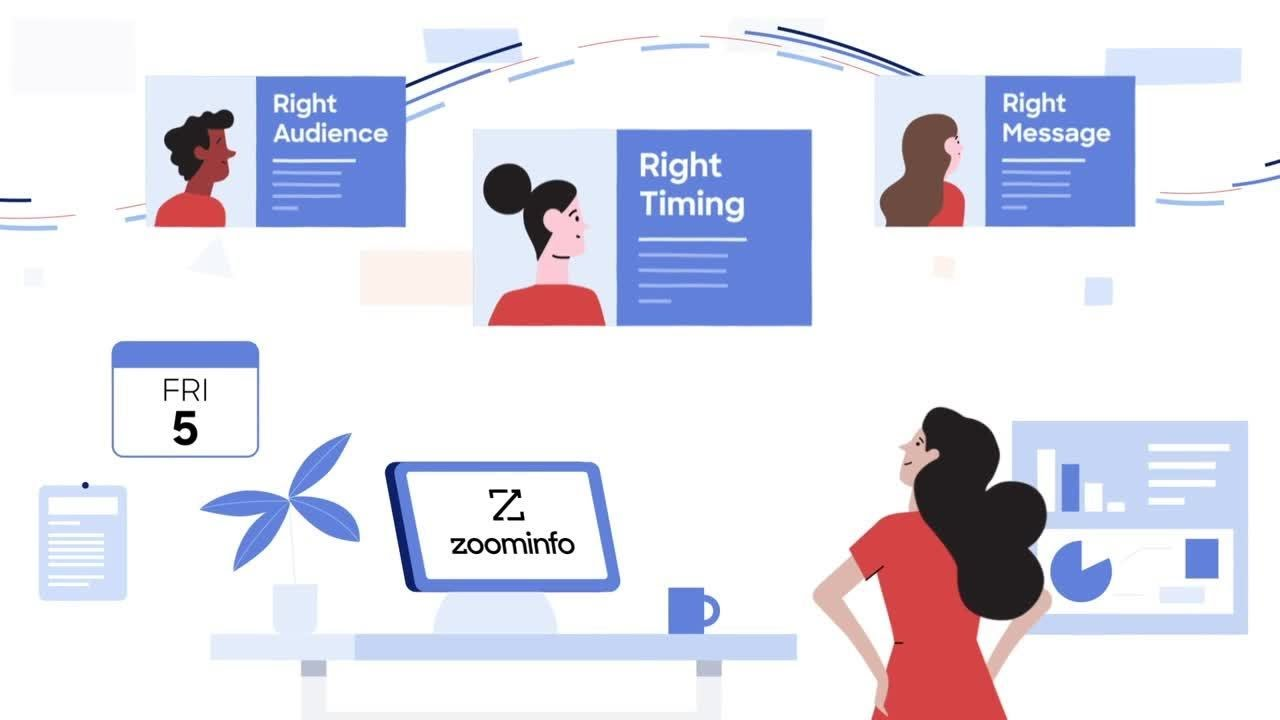
The practical implication: you could use Oracle APEX to build a custom application, Salesforce to manage customer relationships, and ZoomInfo to feed both with the data and intelligence they need.
Oracle APEX delivers speed for Oracle Database teams
If your organization already runs Oracle Database, APEX removes the most expensive part of internal application development: building the infrastructure.
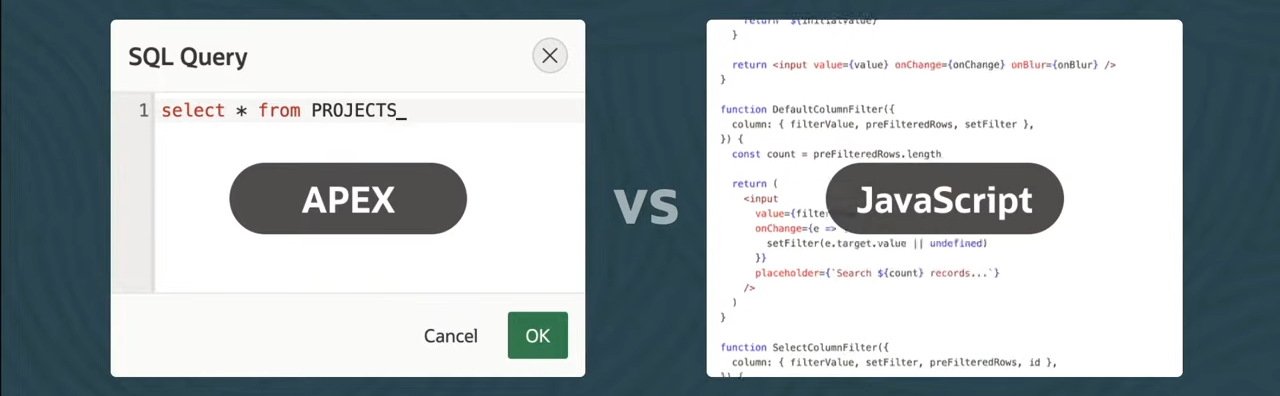
Because APEX runs inside Oracle Database, there's no separate application server to configure, no ORM to manage, and no network boundary between your application logic and your data. Row-level security, encryption, auditing, and compliance certifications come from the database without additional setup. A developer who understands your schema can go from concept to working application fast.
Source: Oracle
The APEX 26.1 release pushes this further with AI-assisted development. The APEX Assistant generates SQL, explains code, and builds application blueprints from natural language descriptions. APEXlang, a declarative specification language, lets developers (or AI agents) define application intent as structured, human-readable files that the APEX runtime compiles into working applications. This makes AI-generated apps auditable, version-controllable, and enterprise-safe.
The pricing model reinforces the value for existing Oracle customers. APEX is included at no additional cost with every Oracle Database distribution. There are no per-user fees, no per-application charges, and no feature gating by tier. Organizations pay only for Oracle Database compute and storage.
But APEX's strengths are inseparable from its constraints. It requires Oracle Database. It produces web applications only, with no native mobile apps, no offline mode, and no device hardware access. Its UI customization hits a ceiling for consumer-facing applications where brand differentiation matters. And the pool of experienced APEX developers is smaller than for mainstream frameworks, making hiring and onboarding slower.
Salesforce dominates the CRM and customer management space
Salesforce doesn't just lead the CRM market. It has held the #1 position by IDC revenue market share for over a decade and holds Gartner Magic Quadrant Leader positions across sales force automation (19 consecutive years), customer data platforms, digital commerce, and multichannel marketing.
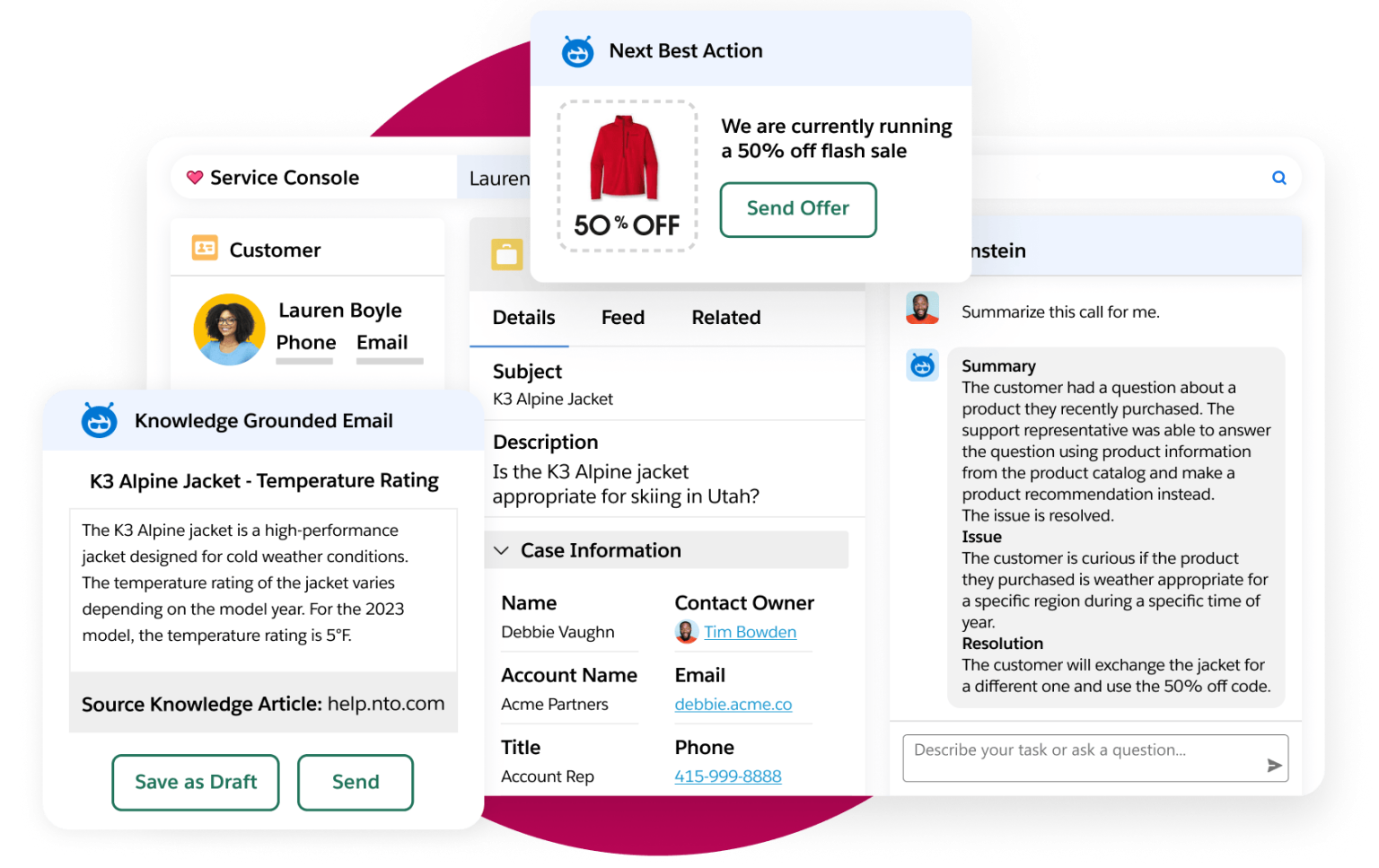
The platform's depth defines it. Sales Cloud tracks every lead, opportunity, and deal. Service Cloud manages cases across every channel. Marketing Cloud orchestrates campaigns and customer journeys. Commerce Cloud powers storefronts. Data Cloud unifies customer profiles across all of them. And Agentforce, Salesforce's autonomous AI platform, now resolves 85% of support requests without human escalation on Salesforce's own help site.
Source: Salesforce
For organizations that need a system of record for customer relationships, this breadth matters. A sales rep sees the full history: every email, every support case, every marketing touchpoint, every purchase. That context lives in one place, shared across teams, updated in real time.
The cost of that breadth is real. Sales Cloud Enterprise runs $175/user/month. Unlimited is $350/user/month. Add Service Cloud, Marketing Cloud, Data Cloud credits, Agentforce consumption, and the Premier Success Plan (30% of net license fees), and annual costs for a mid-sized team reach six figures quickly. Implementation typically requires partners (over 70% of deployments are partner-led), adding further cost.
The learning curve matches the pricing. Salesforce's Trailhead platform offers 1,500+ learning badges for a reason: meaningful configuration requires dedicated, trained administrators. Simple Sales Cloud deployments can go live in weeks, but enterprise multi-cloud implementations stretch to 3–12 months.
ZoomInfo fills the intelligence gap neither platform addresses
Oracle APEX can build an application, but it has no B2B contact database, no buyer intent signals, and no understanding of who your prospects are. Salesforce can manage customer relationships, but the data inside it is only as good as what your team enters. Both platforms assume you already know who to sell to and why they should buy.
ZoomInfo starts where that assumption breaks down. The platform maintains a large, verified B2B data set, backed by 300+ human researchers and reaching up to 95% accuracy on first-party data. In a Fortune 500 competitive RFP analyzing 25 million contacts across vendors, the independent consultant concluded that "no other competitor came even close."
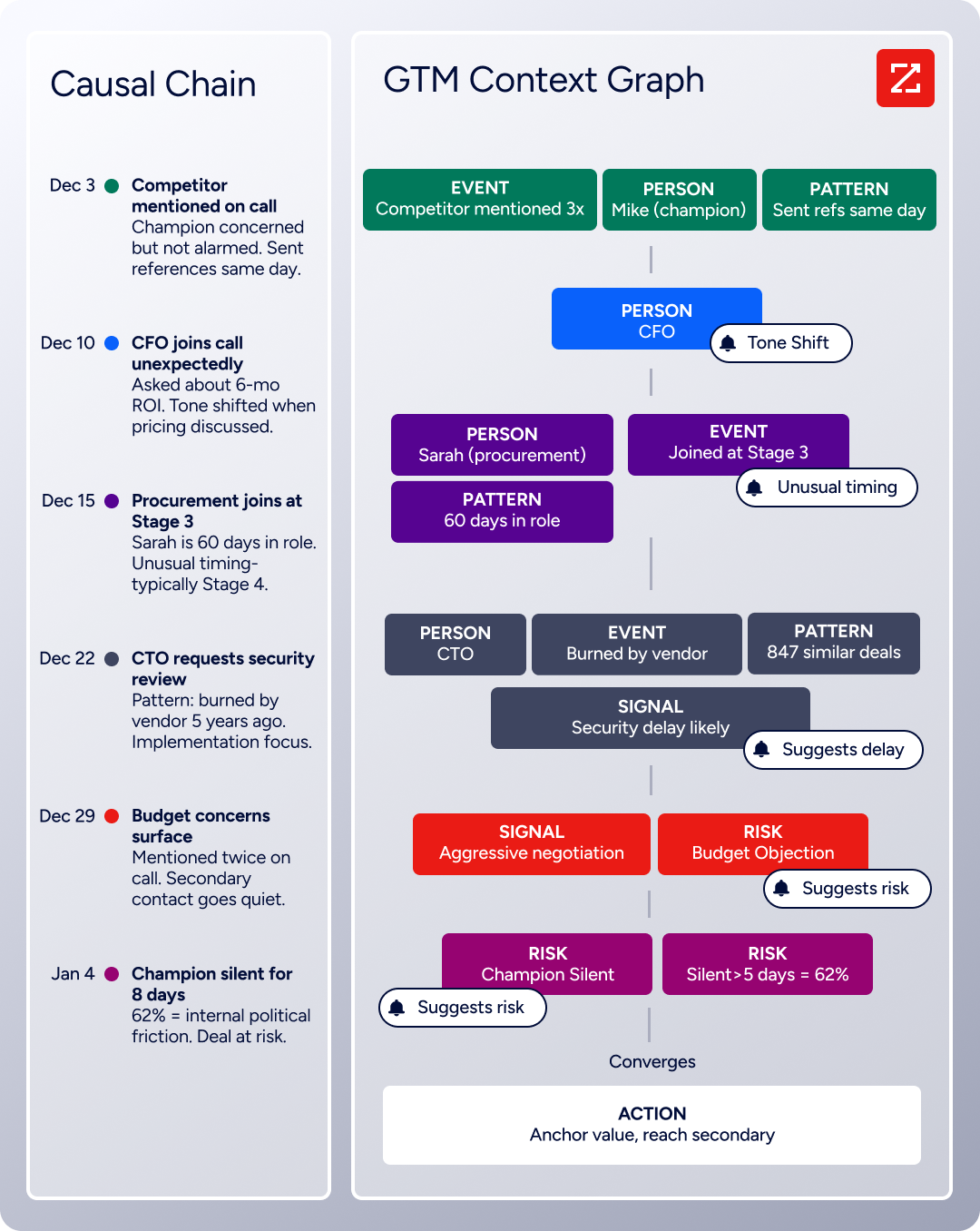
But data alone isn't the full picture. ZoomInfo's GTM Context Graph unifies that data with a customer's CRM records, conversation transcripts, email interactions, and behavioral signals. The result is an intelligence layer that captures why deals move or stall, not just that they did. A CRM records that a deal's stage changed. The GTM Context Graph understands that the CFO joining the last call and asking about six-month ROI is what accelerated it.
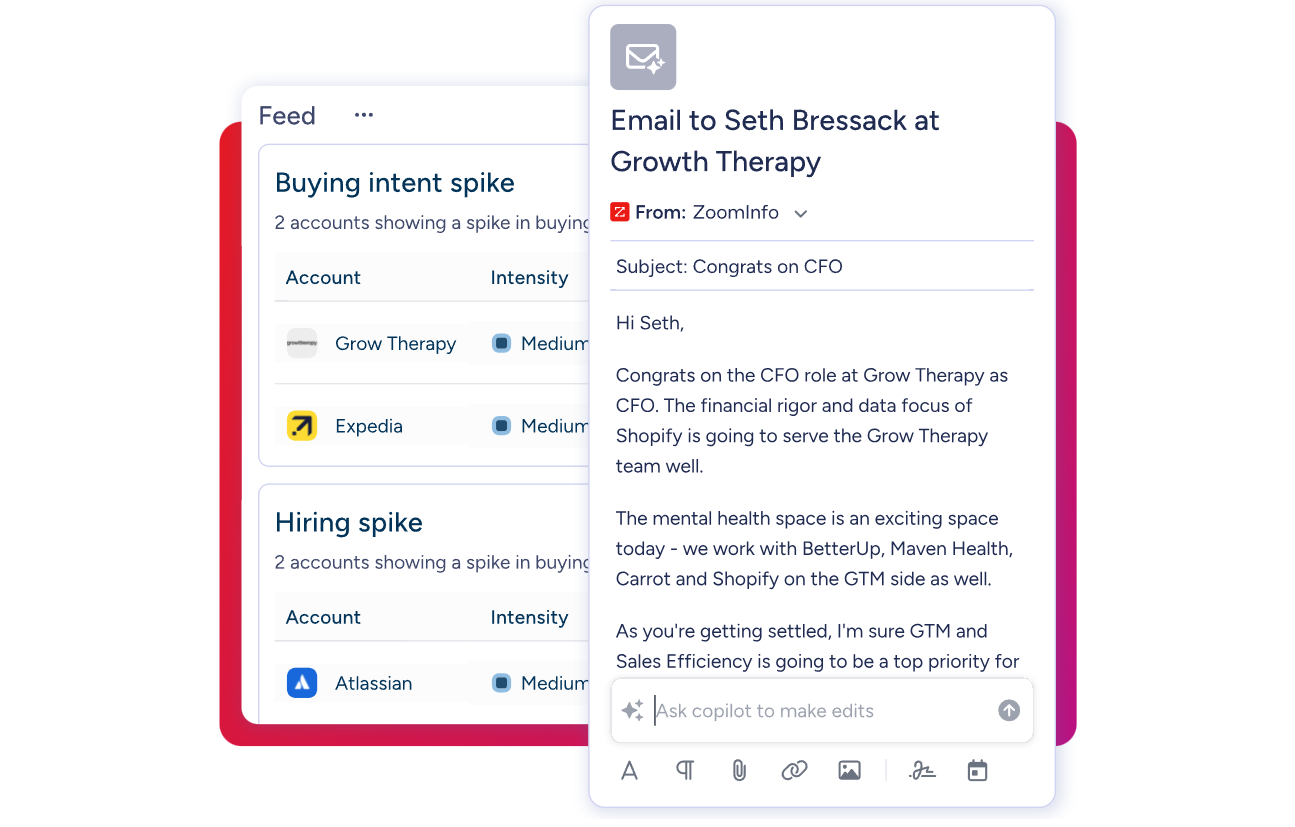
This intelligence reaches teams three ways. GTM Workspace gives sellers prioritized accounts, AI-drafted outreach, and deal execution in one place. GTM Studio gives marketers and RevOps a canvas for audience definition, campaign orchestration, and pipeline measurement in natural language. And for teams building beyond ZoomInfo's own products, APIs and MCP expose the same intelligence to any custom agent or partner platform.
Seismic's sales team attributed 39% of active pipeline to opportunities identified or influenced by ZoomInfo signals, reported 54% productivity gains, and saved 11.5 hours per week per seller.
For a head-to-head look at how ZoomInfo stacks up against Salesforce specifically, see our Salesforce vs. ZoomInfo comparison.
Application development capabilities compared
Oracle APEX and Salesforce both let you build custom applications, but their approaches reflect their different origins.
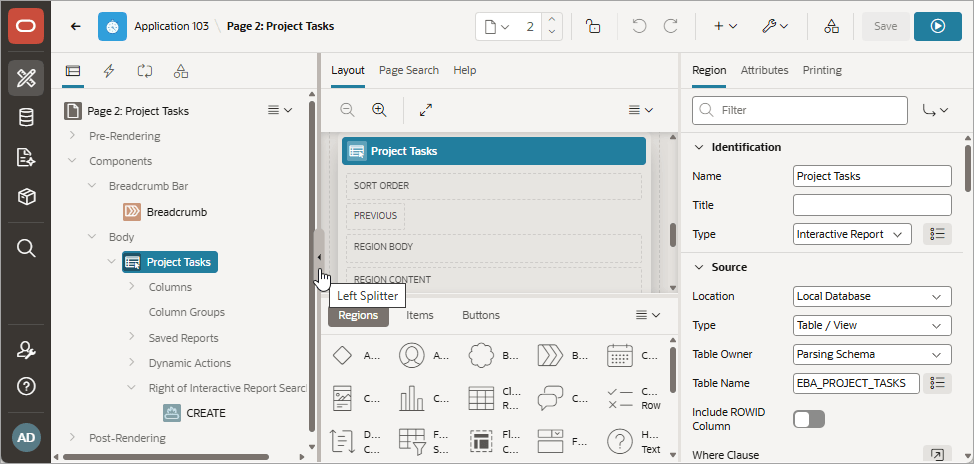
Oracle APEX was built for developers who think in SQL. The Page Designer IDE provides a three-pane workspace where developers assemble pages from components (calendars, charts, maps, forms, interactive reports) and configure behavior through property panels. Customization beyond the component library requires SQL, PL/SQL, or JavaScript. The result: a platform that rewards database expertise with speed but asks non-technical users to wait for developer availability.
Source: Oracle
APEX's component library is extensive: Interactive Grids, Charts, Maps, Forms, Workflows, Tasks, Trees, and Dynamic Actions. Quick SQL lets developers define data models in a markdown-like shorthand that compiles to Oracle DDL. REST Data Sources connect applications to external APIs. The Application Gallery provides starter apps and reusable plug-ins.
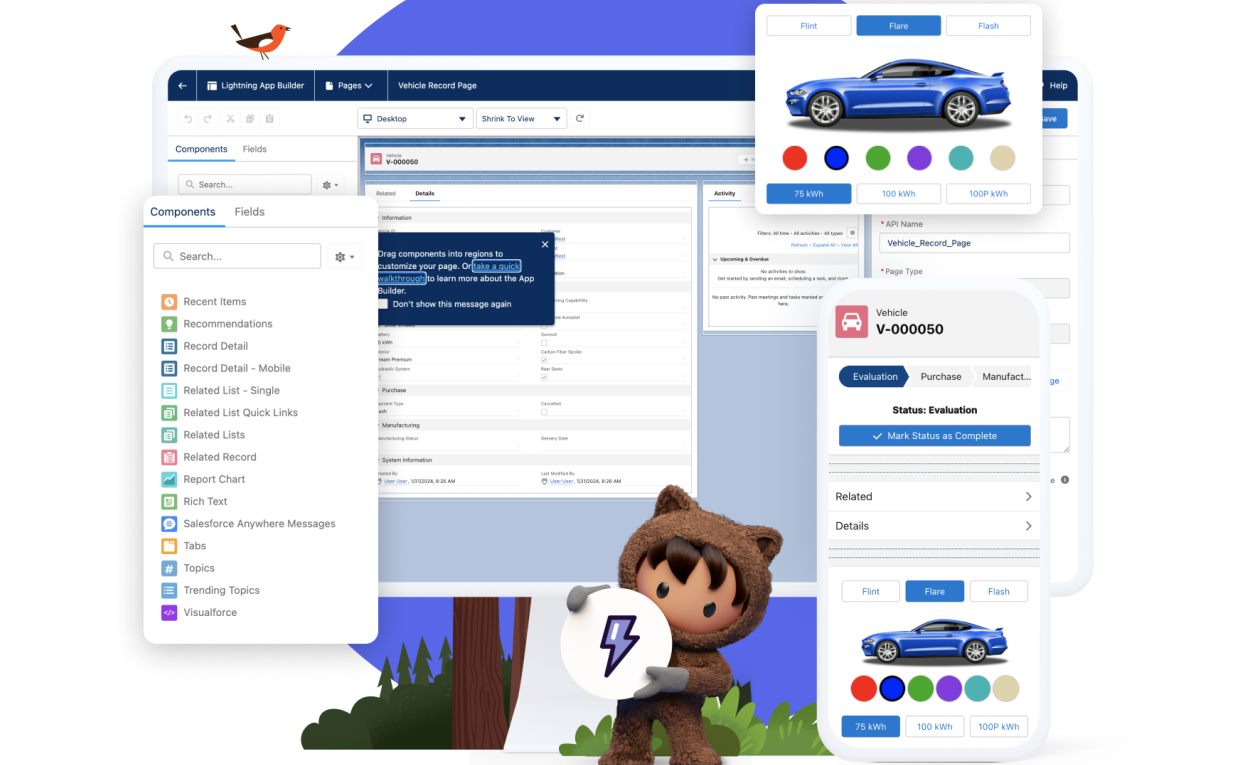
Salesforce Platform takes the opposite approach: it prioritizes accessibility over depth. App Builder uses drag-and-drop, Flow automates business processes without code, and Agent Builder creates AI agents through natural language. For developers who need more control, Code Builder provides a pro-code IDE using Apex (Salesforce's proprietary language) and Lightning Web Components.
Source: Salesforce
Salesforce's advantage: applications built on the platform automatically inherit the CRM data model, security framework, and user management. The disadvantage: you're building within Salesforce's proprietary ecosystem. Apex is not Java, Lightning Web Components are not standard React, and the platform's multi-tenant architecture imposes governor limits on queries, API calls, and processing time.
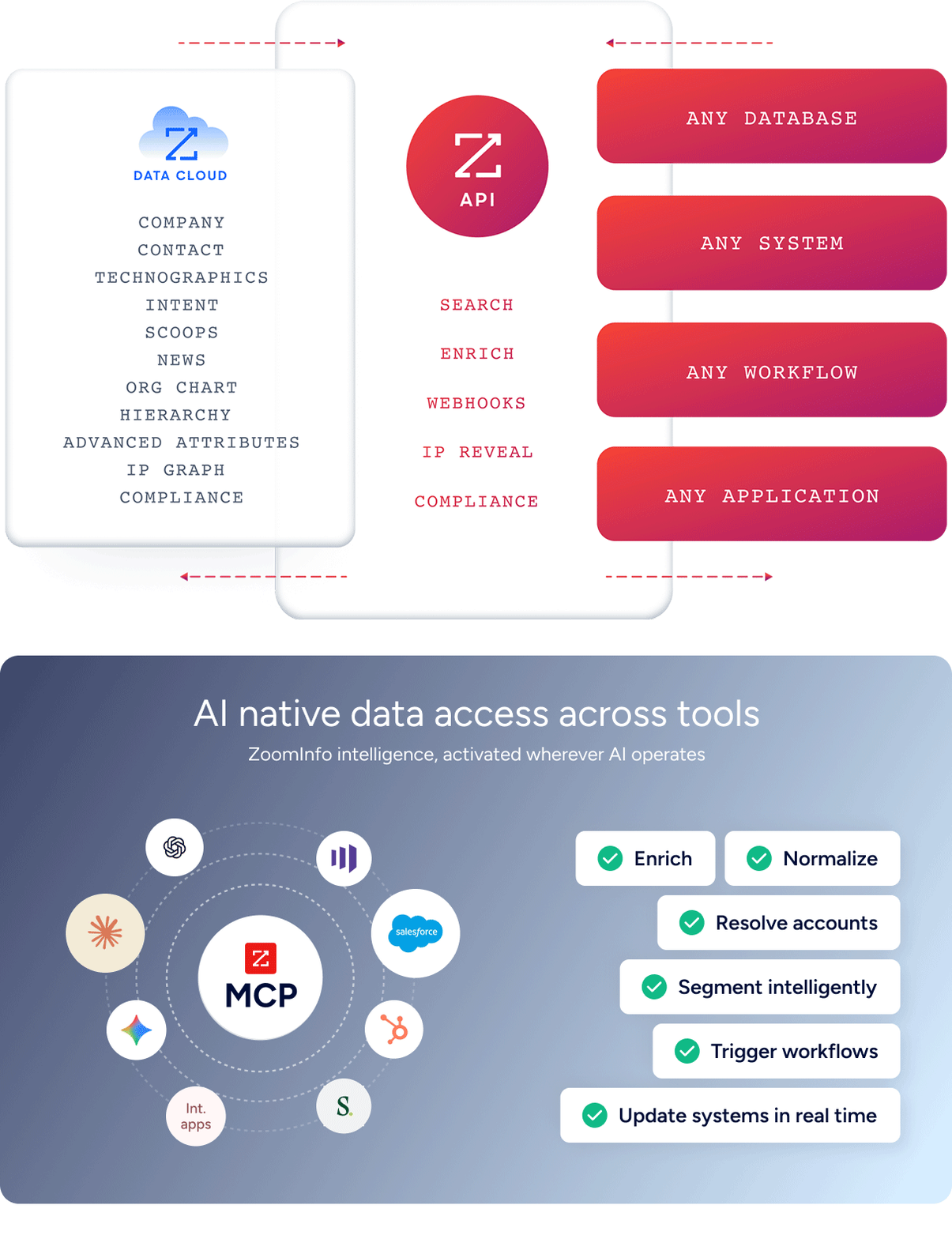
ZoomInfo doesn't compete in application development. Instead, it feeds both platforms with data. The Enterprise API provides programmatic access to contacts, companies, intent signals, and AI-powered account research. The MCP server connects to AI agents in Claude, ChatGPT, and other compatible tools. Whether your team builds on APEX or Salesforce, ZoomInfo's data can flow into it.
AI capabilities take different forms across all three
Each platform has invested in AI, but with different goals.
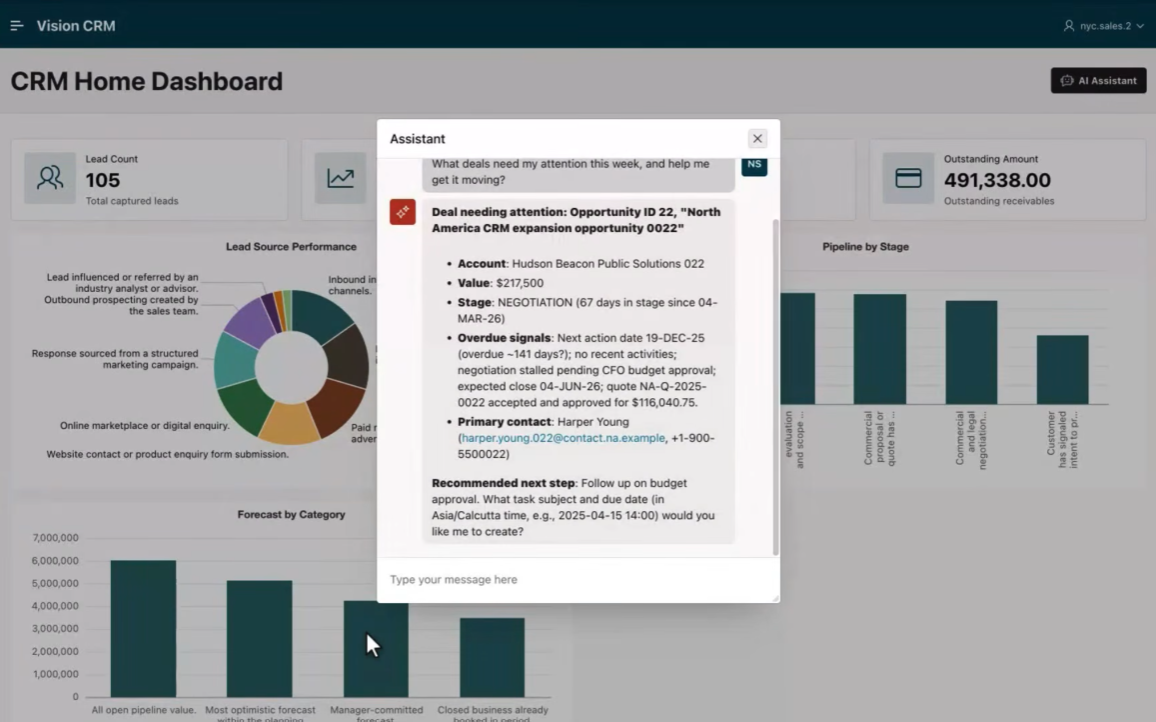
Oracle APEX focuses AI on developer productivity. The APEX Assistant generates SQL queries, explains code, and debugs errors inside every code editor. The Create Application wizard builds application blueprints from natural language descriptions. The new AI Agents with Tool Execution let deployed applications reason over user requests and take action through developer-approved tools. APEX supports multiple AI providers natively (including Anthropic Claude, Google Gemini, Mistral, and Ollama) with no additional platform charge.
Source: Oracle
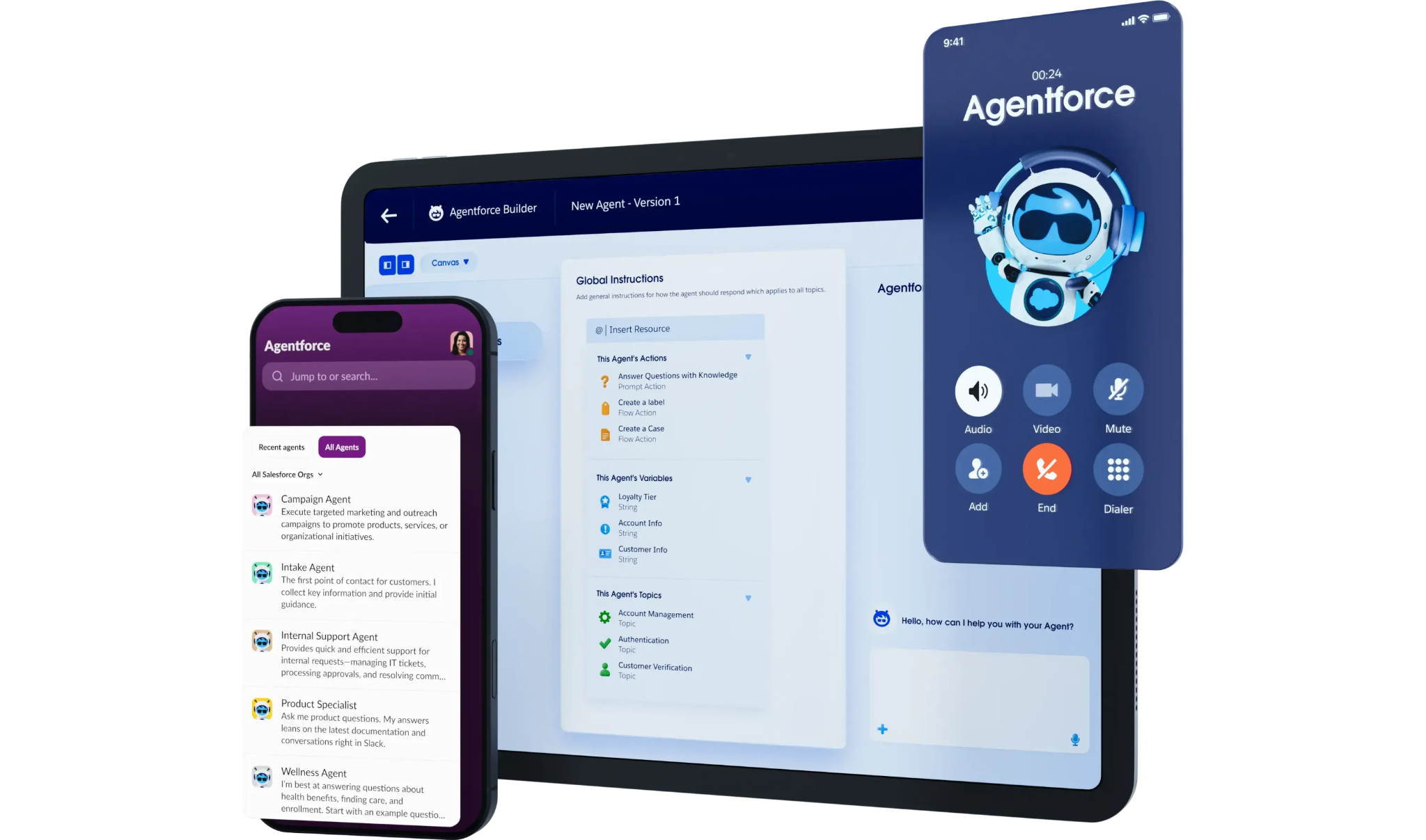
Salesforce focuses AI on business operations. Agentforce deploys autonomous agents that handle sales prospecting, customer service, marketing campaigns, and IT support. The Atlas Reasoning Engine uses a reason-act-observe-adapt loop, and the Einstein Trust Layer provides zero data retention with LLM partners, PII masking, and audit trails. Salesforce reports Agentforce has reached $800M ARR with 29,000 deals closed. Full Agentforce capability requires the $550/user/month Agentforce 1 edition or separate Flex Credits ($500 per 100,000 credits).
Source: Salesforce
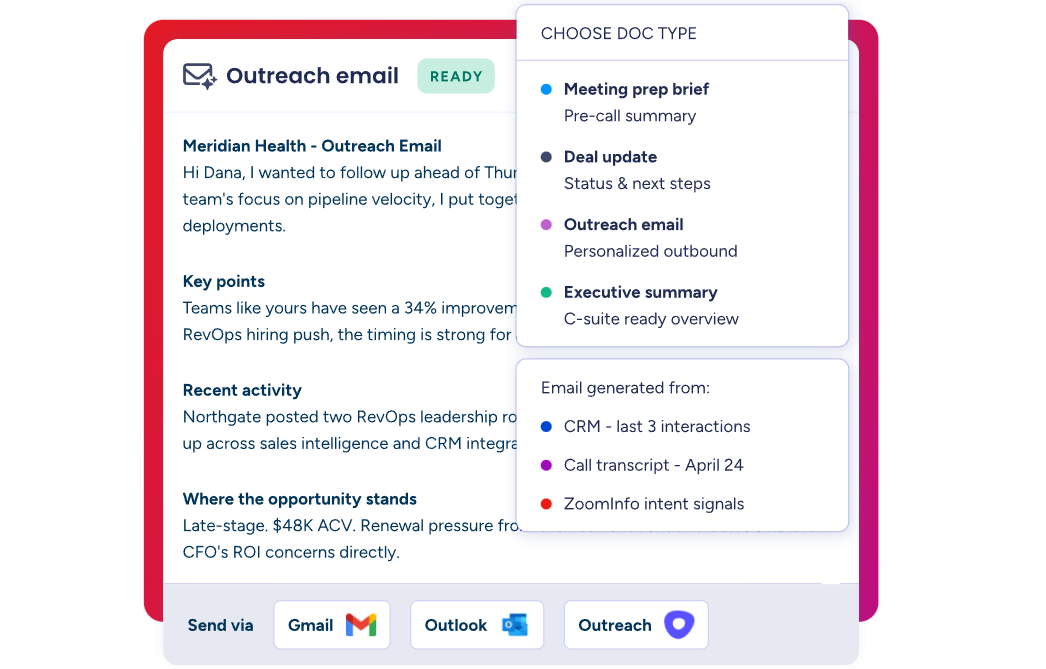
ZoomInfo focuses AI on go-to-market intelligence. The GTM Context Graph processes CRM data, conversation transcripts, intent signals, and behavioral patterns to identify why deals accelerate or stall, then surfaces that reasoning as prioritized actions. GTM Workspace's AI agents, built on Anthropic's Claude, draft outreach that addresses the specific concern identified as the deal-moving moment. GTM Studio's AI creates audiences and launches plays in natural language. The distinction: ZoomInfo's AI reasons about your market and your deals, not just your code or your CRM records.
Pricing structures reflect different philosophies
Oracle APEX has the simplest pricing. It's included at no cost with every Oracle Database edition, including the free Oracle Database Free. Organizations using Oracle Cloud pay for compute (ECPUs per hour) and storage (per GB per month), with no per-user, per-app, or per-feature charges. The APEX Application Development Service starts at about $122/month for minimal configuration. The Always Free tier provides two databases with 1 OCPU and 20GB storage each, permanently, at no charge.
The catch: you're paying for Oracle Database. For organizations not already in the Oracle ecosystem, that's a substantial commitment independent of APEX itself.
Salesforce uses per-user tiered pricing that compounds quickly. Sales Cloud alone ranges from $25/user/month (Starter) to $550/user/month (Agentforce 1). A 50-person sales team on Enterprise ($175/user/month) pays $105,000 annually for Sales Cloud licenses alone, before adding Service Cloud, Marketing Cloud, Data Cloud credits, Agentforce consumption, implementation costs, and the Premier Success Plan. Salesforce acknowledged its pricing model "needed to be easier to understand, more predictable, and more flexible" in a September 2025 update.
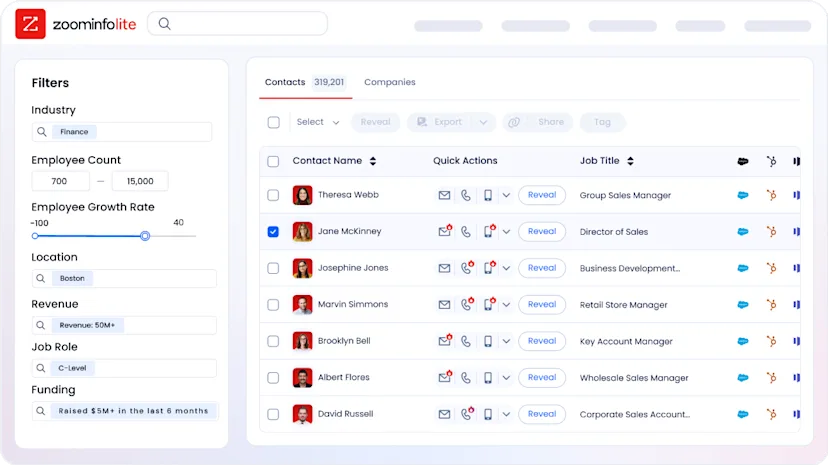
ZoomInfo uses custom-quoted, consumption-based pricing organized into Sales, Marketing, and Enterprise tiers. Pricing scales around seats, credit volume, and features accessed. No prices are publicly listed, but ZoomInfo offers a permanent free tier (ZoomInfo Lite) with access to the B2B database and 10 monthly export credits, plus a 7-day free trial of premium features.
Integration and ecosystem differences
Oracle APEX integrates primarily within the Oracle ecosystem. REST Data Sources connect to external APIs, and ORDS exposes database objects as REST endpoints. But APEX has no native marketplace of pre-built integrations, no out-of-the-box CRM connectors, and limited iPaaS support. Connecting APEX to systems outside Oracle requires developer effort.
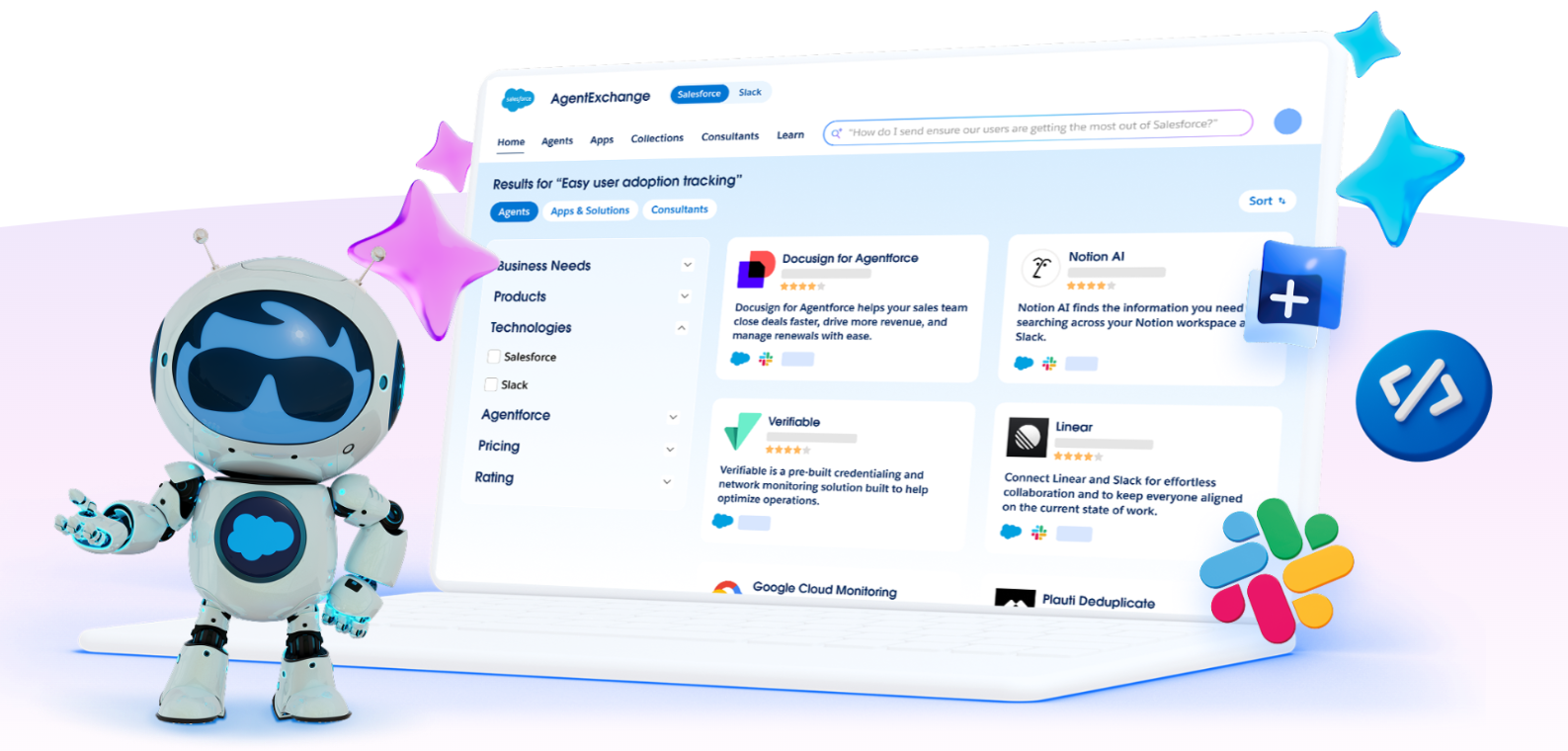
Salesforce has the largest ecosystem. AppExchange hosts 9,000+ apps with 14+ million installs, and 91% of customers use at least one AppExchange app. MuleSoft provides API management and hundreds of pre-built connectors. Native integrations cover Google Workspace, Microsoft Outlook and Teams, and Slack. The REST API supports 30+ distinct APIs spanning CRUD operations, bulk data, events, and metadata.
Source: Salesforce
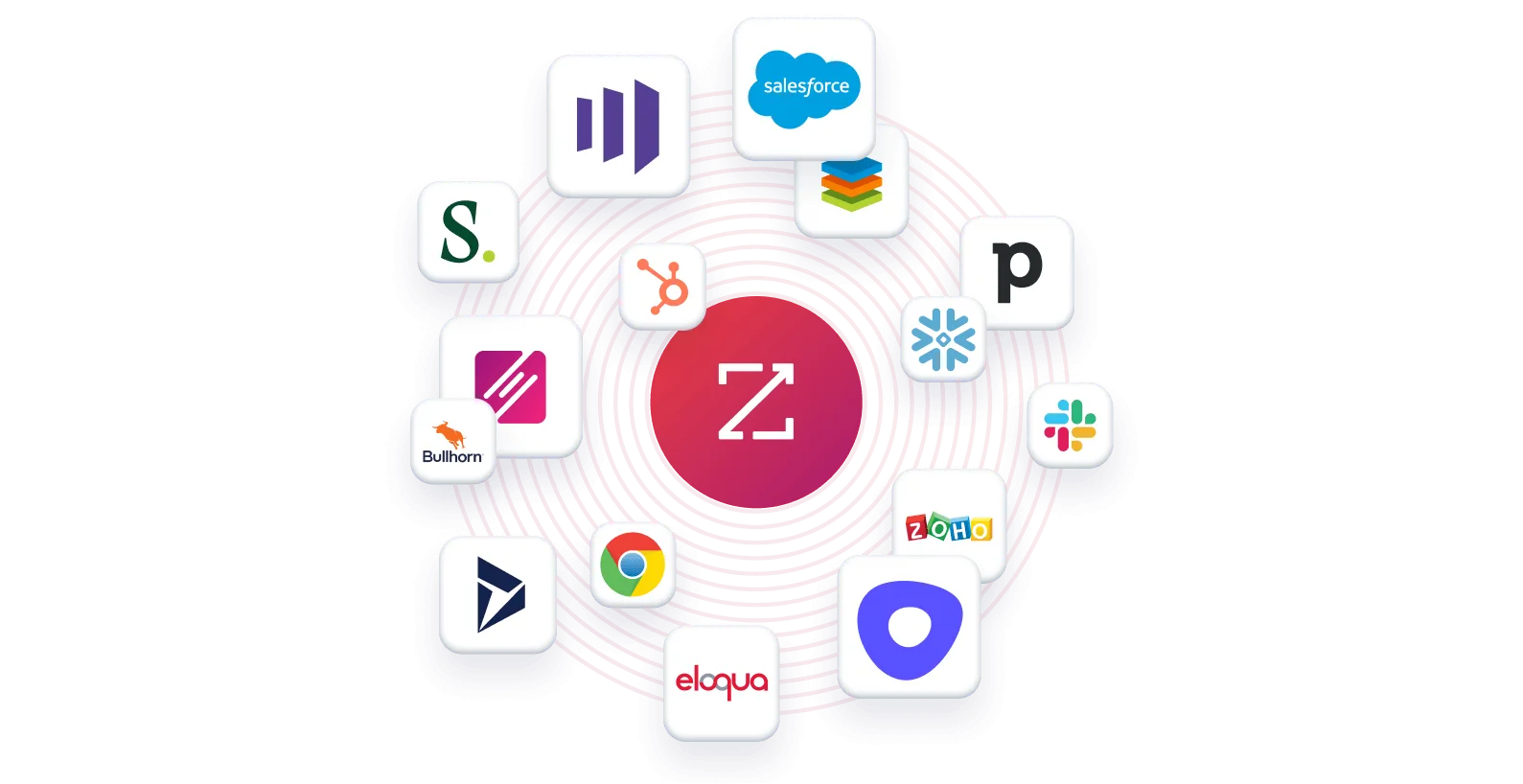
ZoomInfo connects to the tools go-to-market teams already use. The Marketplace lists 172+ integrations spanning CRM (Salesforce, HubSpot, Dynamics 365), data platforms (Snowflake, Databricks, AWS), and AI tools (Claude, ChatGPT). The MCP server makes ZoomInfo's data a native tool for any MCP-compatible AI agent. API access is included in all relevant plans, so the data flows wherever your team works.
BDO Canada's Senior Marketing Intelligence Analyst reported an 87% reduction in time spent on data dashboard updates using ZoomInfo's API: "The plug-and-play aspect of the API means I can integrate it very easily into any process and get information at a moment's notice."
Security and compliance posture
All three platforms take enterprise security seriously, but with different architectures.
Oracle APEX inherits Oracle Database's security model: TDE encryption with AES-256, TLS 1.2 for data in transit, Database Vault for privileged user controls, and row-level security that applies to every APEX application automatically. On Oracle Cloud, this includes FedRAMP High JAB Authorization, SOC 1/2/3, ISO 27001, PCI DSS, and HIPAA compliance. APEX also supports on-premises deployment, giving regulated organizations full control over their data.
Salesforce provides enterprise security through its multi-tenant cloud architecture. ISO 27001/27017/27018, SOC 1/2/3, FedRAMP (Government Cloud), and HITRUST certifications cover the platform. Salesforce Shield (a premium add-on) adds event monitoring, platform encryption with BYOK, and field audit trail. The Einstein Trust Layer provides zero data retention with LLM partners and PII masking for AI features. Hyperforce enables regional data residency.
ZoomInfo maintains certifications renewed annually: ISO 27001, ISO 27701, SOC 2 Type II, TRUSTe GDPR, and TRUSTe CCPA. The company is a registered data broker in California and Vermont. For B2B data compliance specifically, ZoomInfo's privacy infrastructure is built into the data layer itself, not bolted on after the fact.
Oracle APEX vs. Salesforce vs. ZoomInfo: Which should you choose?
These platforms aren't competing for the same budget or the same job. The right choice depends on which problem is most pressing.
Choose Oracle APEX if:
You already run Oracle Database and need to build custom internal applications
Your team includes SQL and PL/SQL developers who can work in a database-native environment
You need operational tools, dashboards, or portals without per-user licensing costs
You're modernizing legacy Oracle Forms applications
On-premises or hybrid deployment is a requirement
Choose Salesforce if:
You need a complete CRM system for managing sales, service, marketing, and commerce
Your organization has the budget and administrative resources for enterprise platform management
You want AI-powered autonomous agents for customer service and sales operations
Access to the largest enterprise app ecosystem matters for your workflows
You're in a regulated industry that benefits from Salesforce's compliance certifications
Choose ZoomInfo if:
You need accurate B2B data to fuel your go-to-market efforts
Your sales team needs to know who to contact, when to engage, and what to say
You want intelligence that works across your existing tools, not locked inside one platform
You need buyer intent signals to prioritize accounts that are actively in-market
Your RevOps or marketing team builds audience-targeted plays and needs enriched, verified data
See how ZoomInfo works with a free trial or start with ZoomInfo Lite at no cost.
The sharpest teams don't treat this as an either-or decision. An organization might run Salesforce as its CRM, use Oracle APEX to build custom operational tools on its database, and power both with ZoomInfo's data and intelligence. Oracle APEX builds the applications. Salesforce manages the relationships. ZoomInfo provides the intelligence that makes both more effective.
Smartsheet's Senior Manager of Sales Technology Enablement described ZoomInfo as their "one source of truth for account data, and even more so for contact data": "Without ZoomInfo, it would be extremely difficult, if not impossible, to achieve our business objectives."
Oracle APEX vs. Salesforce vs. ZoomInfo FAQ
What is the fundamental difference between Oracle APEX, Salesforce, and ZoomInfo?
Oracle APEX is a low-code application development platform that runs inside Oracle Database, designed for building custom business applications. Salesforce is a CRM platform for managing customer relationships, sales pipelines, and marketing campaigns. ZoomInfo is a B2B data and go-to-market intelligence platform that provides verified contact data, buyer intent signals, and AI-powered deal insights across any tool in your stack.
Which platform is cheapest to get started with?
Oracle APEX has the lowest entry point for existing Oracle Database customers, since it's included at no additional cost. Oracle Cloud's Always Free tier provides two databases with 20GB each at no charge. Salesforce offers a Free Suite for up to 2 users, with paid plans starting at $25/user/month. ZoomInfo Lite is permanently free with 10 monthly export credits and access to 100M+ verified profiles.
Can Oracle APEX replace Salesforce as a CRM?
Oracle APEX is not a CRM. It's a low-code platform for building custom applications. You could build CRM-like functionality in APEX, but you'd be creating from scratch what Salesforce provides out of the box: pipeline management, sales automation, customer service, marketing orchestration, and a mature app ecosystem. APEX is better suited for internal operational tools, dashboards, and workflow applications that complement a CRM rather than replace one.
Does ZoomInfo work with Salesforce and Oracle APEX?
ZoomInfo integrates natively with Salesforce through a Marketplace integration, enriching CRM records with verified contact data, company intelligence, and buyer intent signals. For Oracle APEX or any custom application, ZoomInfo's Enterprise API and MCP server provide programmatic access to the same data and intelligence. API access is included in all relevant ZoomInfo plans.
Which platform has the best AI capabilities?
Each platform's AI serves a different purpose. Oracle APEX's AI assists developers in writing code and generating applications. Salesforce's Agentforce deploys autonomous agents for customer-facing operations like sales and service. ZoomInfo's GTM Context Graph reasons across CRM data, conversations, and market signals to identify why deals move and which accounts to prioritize. The right AI depends on whether you're building apps, managing CRM workflows, or driving go-to-market strategy.
What are the main limitations of each platform?
Oracle APEX requires Oracle Database, produces web applications only (no native mobile), and provides no CRM or B2B data capabilities. Salesforce's pricing compounds quickly across its multiple clouds and add-ons, requires dedicated administration, and its data quality depends on what users enter. ZoomInfo does not provide CRM or application development functionality and uses custom-quoted pricing that requires a sales conversation.
Which platform is best for a sales team?
It depends on what your sales team needs. If they need a system to manage their pipeline and track deals, Salesforce is the standard. If they need to know who to call, when to reach out, and what to say based on real-time buying signals and verified contact data, ZoomInfo provides that intelligence. Many sales teams use both: Salesforce as the system of record and ZoomInfo as the intelligence layer feeding it.
Can these platforms be used together?
Yes. A common enterprise setup uses Salesforce as the CRM, ZoomInfo to enrich Salesforce records with verified data and buyer signals, and Oracle APEX for custom operational applications on Oracle Database infrastructure. ZoomInfo's native Salesforce integration and open API and MCP access make it a complementary intelligence layer regardless of which other platforms are in the stack.
