
Choosing between Oracle Service Cloud and Salesforce for customer service comes down to five questions:
Are you already running Oracle ERP, SCM, or HCM and need service integrated into that stack, or are you building your CRM ecosystem from scratch?
Do you need a dedicated service platform, or a CRM suite that also covers sales, marketing, and commerce?
How important is a large third-party app marketplace versus native integration with back-office systems?
Are you willing to invest months in implementation for tighter enterprise integration, or do you need faster returns?
Does your service team have the data it needs to understand who your customers are, what they've bought, and why they're calling?
In short, here's what we recommend:
Oracle Service Cloud is for enterprises already inside the Oracle Fusion ecosystem. It shares the same cloud infrastructure and data model as Oracle ERP, SCM, and HCM, so service agents can pull up contracts, billing records, and supply chain data without switching applications or waiting on middleware.
Oracle bundles AI agents, field service management, and knowledge management into the platform at no extra licensing cost. The trade-off: opaque pricing, a steep learning curve, a smaller app marketplace than Salesforce, and an agent interface that still needs polish.
Salesforce leads the CRM market with the broadest feature set and ecosystem. Service Cloud sits on the same platform as Sales Cloud, Marketing Cloud, and Commerce Cloud, giving service teams visibility into the full customer relationship.
With 9,000+ apps on AppExchange, Agentforce AI agents that resolve 85% of support requests without human escalation, and a 20-million-member Trailblazer Community, no competitor's ecosystem comes close. The cost: complex pricing with multiple add-on layers, implementations that typically require partners, and a scale that can overwhelm smaller teams.
Both platforms are capable service engines. But neither solves a core problem on its own: the quality of the data inside them. Your service platform is only as good as the customer intelligence it runs on. Incomplete records, stale contacts, and missing account context force agents to guess instead of resolve.
ZoomInfo is a B2B data and go-to-market platform that supplies the intelligence both Oracle and Salesforce need. With 500M contacts, 100M companies, 135M+ verified phone numbers, and 200M+ verified business email addresses, ZoomInfo enriches customer records with verified company attributes, org charts, technographics, and buying signals.
Its GTM Context Graph processes 1.5B+ data points daily, combining this data with your CRM records, conversation transcripts, and behavioral signals to show the context behind each account. Teams access that intelligence through GTM Workspace for sellers, GTM Studio for marketers and RevOps, or the Enterprise API and MCP in any front-end.
ZoomInfo integrates natively with Salesforce and connects to Oracle via the same API and MCP, so the same data reaches whichever tool your team uses.
If enriched, verified account data sounds like the missing layer in your service stack, see how ZoomInfo works with your platform.
Oracle Service Cloud vs. Salesforce vs. ZoomInfo at a glance
Oracle Service Cloud | Salesforce | ZoomInfo | |
|---|---|---|---|
Primary function | Enterprise customer service platform | Full CRM suite with service, sales, marketing, and commerce | B2B data intelligence and go-to-market platform |
AI capabilities | Embedded AI agents at no extra cost | Agentforce AI (add-on at $125/user/mo or Flex Credits) | GTM Context Graph with AI-powered account intelligence |
App ecosystem | Smaller Oracle Cloud Marketplace | 9,000+ apps on AppExchange | 120+ integrations plus API and MCP access |
Field service | Native, with offline mobile app | Add-on from $175/user/mo | N/A |
Pricing transparency | Quote-only, no published pricing | Published tiers, but complex add-on layers | Custom-quoted, consumption-based |
Implementation timeline | Months, typically partner-led | Weeks to months depending on scope | Deploys in weeks |
Gartner recognition | CRM CEC Leader for 13 consecutive years | CRM CEC Leader; SFA Leader for 19 years | ABM Platforms Leader; Intent Data Leader |
Data enrichment | Limited to internal Oracle data | Requires third-party enrichment tools | 500M contacts, 100M companies, verified and continuously updated |
Best for | Enterprises on the Oracle Fusion stack | Organizations needing a broad CRM ecosystem | Enriching customer data across any service platform |
Two philosophies of enterprise service
Oracle and Salesforce approach customer service from opposite directions, and that difference matters more than any feature checklist.
Oracle Service Cloud is a component of Oracle Fusion Cloud Applications.
It was not designed to stand alone. The core argument is integration: service agents see live contract terms, billing status, inventory levels, and entitlement data from Oracle ERP and SCM without middleware or data replication.
For a telecom company running Oracle financials or a manufacturer tracking warranty claims through Oracle SCM, this native connection eliminates an entire class of integration projects. Oracle frames this as reducing integration overhead and maintenance cost while protecting margins.
Salesforce takes the opposite approach.
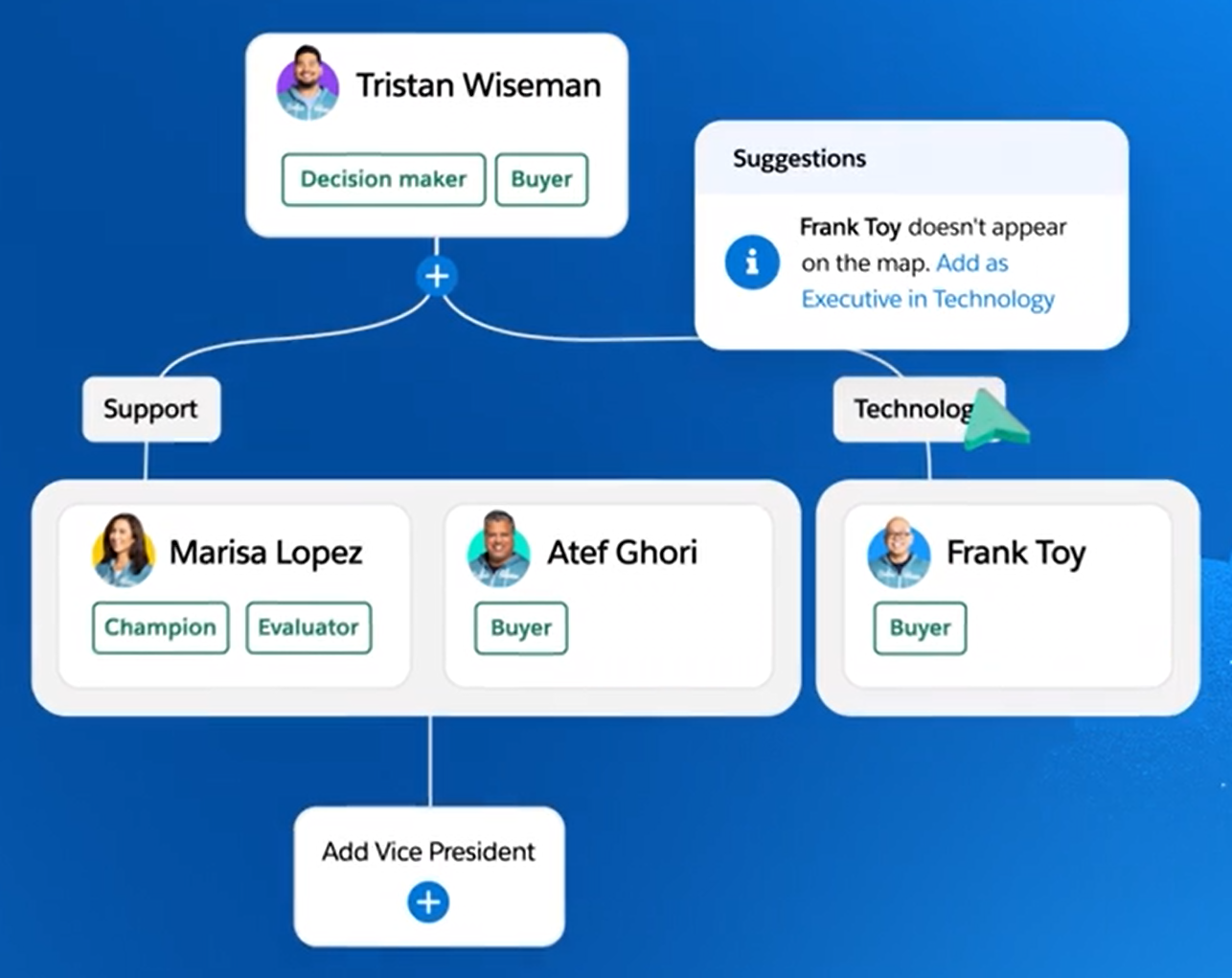
Service Cloud is one pillar of the Customer 360 platform, which also covers sales, marketing, commerce, analytics, and collaboration. The advantage is front-office breadth: a service agent can see the customer's last marketing campaign, their open sales opportunity, their recent commerce order, and their support history in one view.
Source: Salesforce
The real question is which direction your data needs to flow. If your service team needs back-office data (financials, supply chain, contracts), Oracle's native Fusion integration is an advantage no Salesforce connector can fully replicate. If your service team needs front-office context (sales pipeline, marketing engagement, commerce activity), Salesforce's CRM platform is the more natural fit.
AI in customer service: different approaches, different trade-offs
Both platforms invest heavily in AI, but their strategies diverge.
Oracle embeds AI agents across Service Center, Digital Customer Service, and Field Service at no additional licensing cost.
The Escalation Prediction Agent analyzes customer sentiment to flag at-risk service requests before they escalate. The Service Manager Workspace, introduced in April 2026, uses AI to monitor operations and surface problems before dashboards turn red.
Oracle's AI Agent Studio lets customers and partners build custom agents within the Fusion security framework, with over 100 partner-built agents already in the marketplace.
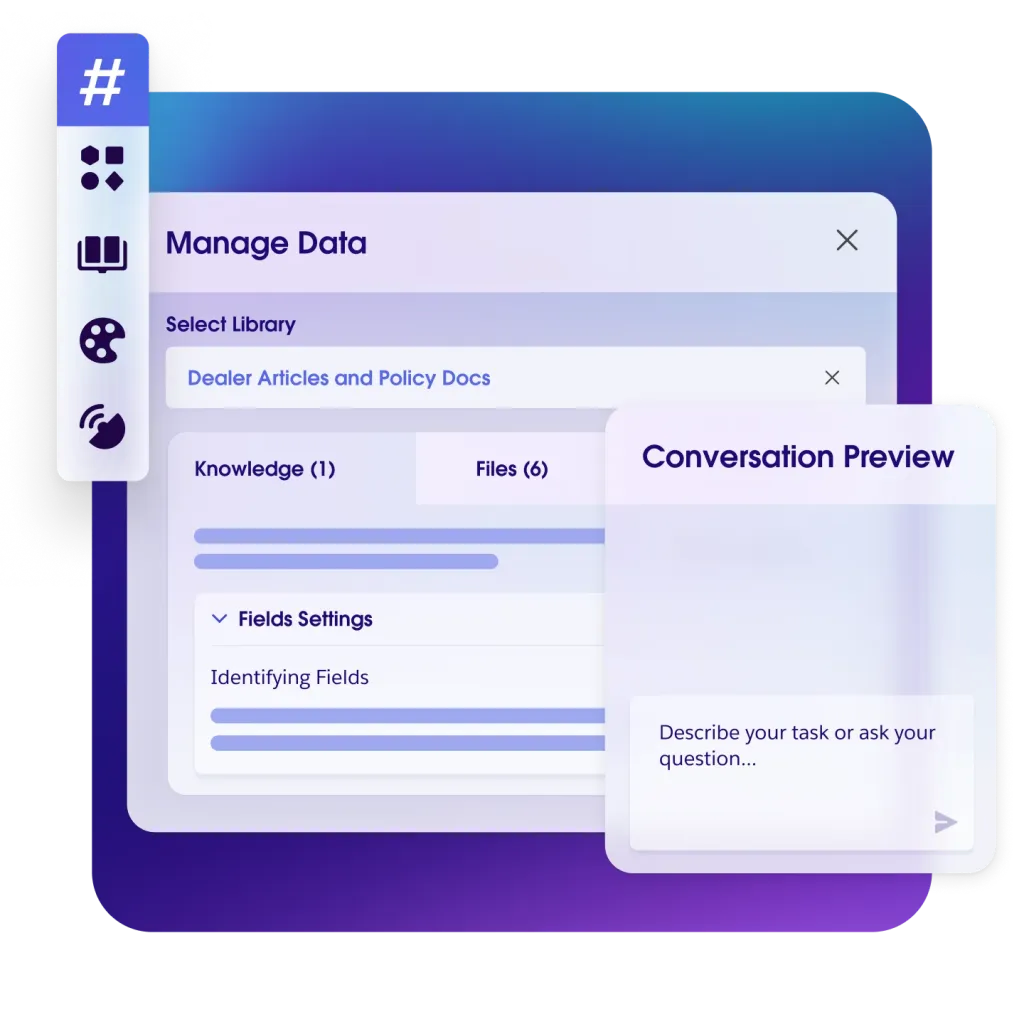
Salesforce's AI investment centers on Agentforce, powered by the Atlas Reasoning Engine.
Source: Salesforce
Agentforce uses a Reasoning and Acting (ReAct) loop: reason, act, observe, adapt. Salesforce reports that Agentforce resolves 85% of support requests without human escalation.The Einstein Trust Layer provides zero data retention with LLM partners, PII masking, and toxicity detection.
The pricing difference matters. Oracle includes AI in the base platform. Salesforce charges for Agentforce separately: $125/user/month as an add-on, $2 per conversation, or via Flex Credits at $500 per 100,000 credits. For organizations planning heavy AI usage, this cost difference compounds.
But AI in service is only as good as the data it can access. Both platforms ground their agents in CRM and case data, but neither automatically enriches that data with external intelligence about the customer's company, its org chart, or its buying behavior. That gap is where ZoomInfo fits.
ZoomInfo: the intelligence layer your service platform is missing
Neither Oracle nor Salesforce was built to answer the question: "Who is this customer, really?"
They store what your team has entered. They track cases, interactions, and transactions. But when a high-value account calls in and the contact record shows a name, an email, and a company name from three years ago, your agent is working blind. The contact may have changed roles. The company may have been acquired. The buying committee may have shifted entirely.
ZoomInfo solves this with verified B2B intelligence.
The platform maintains 500M contacts and 100M companies, updated through a multi-source pipeline backed by 300+ human researchers with up to 95% accuracy on first-party data. Connected to your CRM, ZoomInfo enriches records with current company attributes, org charts, technographics, direct-dial phone numbers, and verified email addresses.
The GTM Context Graph takes this further. It combines ZoomInfo's third-party data with your CRM records, conversation transcripts, and behavioral signals to capture the context behind each account.
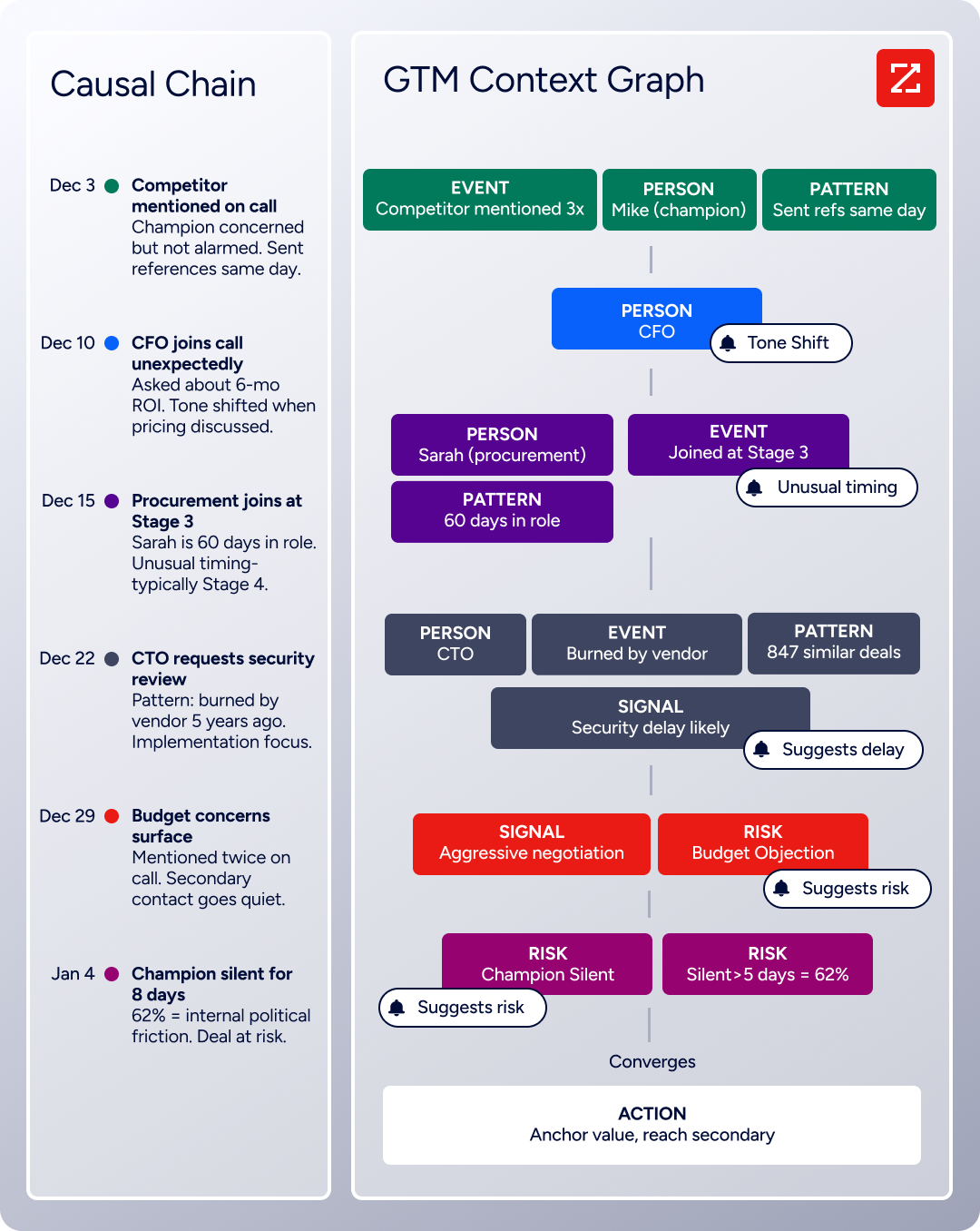
A service agent sees not just the open case, but the account's expansion signals, executive changes, and competitive research activity. A service manager sees not just queue metrics, but which accounts carry the highest lifetime value and where churn risk is building.
For Salesforce users, ZoomInfo provides a native integration that enriches records directly inside the CRM. For Oracle users, the Enterprise API and MCP deliver the same data into any system. The data is identical regardless of how you access it.
For a closer look at how ZoomInfo and Salesforce compare as platforms, read our Salesforce vs. ZoomInfo comparison.
Snowflake uses ZoomInfo data for at least one-third of the most critical features in their Account Propensity Scoring model, feeding over 70 firmographic and technographic data fields. Accounts monitored using ZoomInfo-powered scores showed 90% higher opportunity open rates and 2x higher customer conversion rates. (Snowflake)
Ecosystem and integrations shape your long-term flexibility
Salesforce's ecosystem is the largest in enterprise software. AppExchange hosts 9,000+ apps with 14+ million installs, and 91% of customers use at least one AppExchange app.
The MuleSoft integration platform adds hundreds of pre-built connectors to non-Salesforce systems. For organizations that depend on connecting many specialized tools, this breadth matters.
Oracle's ecosystem is smaller but deeper within the Oracle stack.
Oracle Integration Cloud provides prebuilt adapters for Salesforce, SAP, Workday, ServiceNow, and other enterprise systems. The Oracle Cloud Marketplace lists partner-built extensions, and Oracle Service Center includes native Slack and Microsoft Teams integration for cross-team collaboration. But if you need a niche third-party connector, Salesforce is more likely to have it.
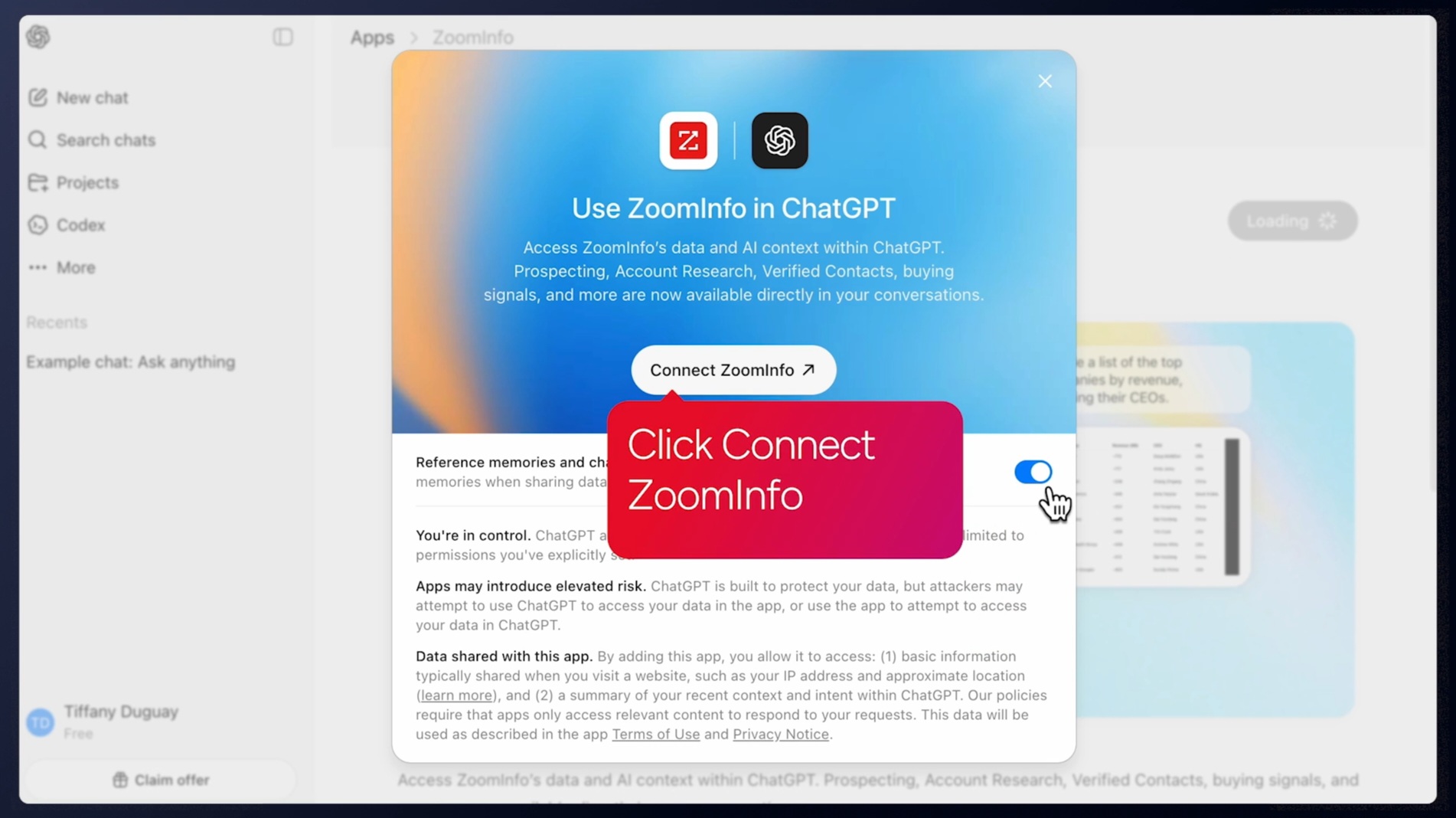
ZoomInfo takes an open approach to integration.
The ZoomInfo App Marketplace lists 120+ integrations, and API access is included in all relevant plans. The MCP server lets AI agents on any platform access ZoomInfo's data natively. This means ZoomInfo works as the data layer regardless of which service platform you choose or switch to later.
Source: ZoomInfo
"The plug-and-play aspect of the API means I can integrate it very easily into any process and get information at a moment's notice." Jerry Wilson, Senior Marketing Intelligence Analyst at BDO Canada, reported an 87% reduction in time spent on data dashboard updates. (BDO Canada)
Field service: Oracle's bundled advantage vs. Salesforce's modular approach
If your organization dispatches technicians, this comparison changes substantially.
Oracle Fusion Field Service is bundled into the Oracle Service platform.
Its scheduling engine is time-based, self-learning, and predictive, reoptimizing routes based on real-time GPS, traffic, and job progress. Oracle claims 98% prediction accuracy for service event timing. Technicians use a single offline-capable mobile app with Apple CarPlay and Android Auto support for navigation, work instructions, parts management, and knowledge access.
Oracle's competitive comparison page notes that Salesforce Field Service relies on three separate mobile apps, creating coordination friction.
Salesforce Field Service is a separate add-on starting at $175/user/month.
It includes AI scheduling, an offline mobile app, pre-work AI briefs, asset lifecycle management, and Visual Remote Assistant for video-guided support.
The advantage over Oracle is tighter integration with the broader Customer 360 platform: a field technician can see the customer's sales history, marketing interactions, and commerce orders alongside the work order.
For asset-intensive industries (utilities, manufacturing, telecommunications), Oracle's native connection between Field Service and Oracle Maintenance Cloud provides bidirectional synchronization of work orders, inventory, and asset data. This depth of asset-maintenance integration is rare in platforms that started as CRM tools.
Pricing: opacity vs. complexity
Neither platform makes pricing simple, but the difficulties differ.
Oracle Service Cloud publishes no pricing.
Every engagement requires contacting Oracle's sales team. TrustRadius reviewers note that prices change annually with limited advance notice and that add-on services carry high costs.
Oracle licenses on a Hosted Named User basis, and each module (Service Center, Field Service, Digital Customer Service, Knowledge Management) is licensed independently. Implementation typically requires a certified system integrator, adding professional services costs on top of the license.
Salesforce publishes tier pricing for Service Cloud: Starter Suite at $25/user/month, Pro Suite at $100, Enterprise at $175, Unlimited at $350, and Agentforce 1 at $550/user/month.
But the published prices are a starting point, not the total. Digital Engagement (chat, SMS, WhatsApp) adds $75/user/month. Contact Center voice adds $150/user/month. Agentforce AI adds $125/user/month or consumption-based pricing. Premier support costs 30% of net license fees on top. A mid-market deployment with omnichannel, AI, and adequate support can quickly exceed initial expectations.
Salesforce itself acknowledged its pricing "needed to be easier to understand, more predictable, and more flexible" in a September 2025 update.
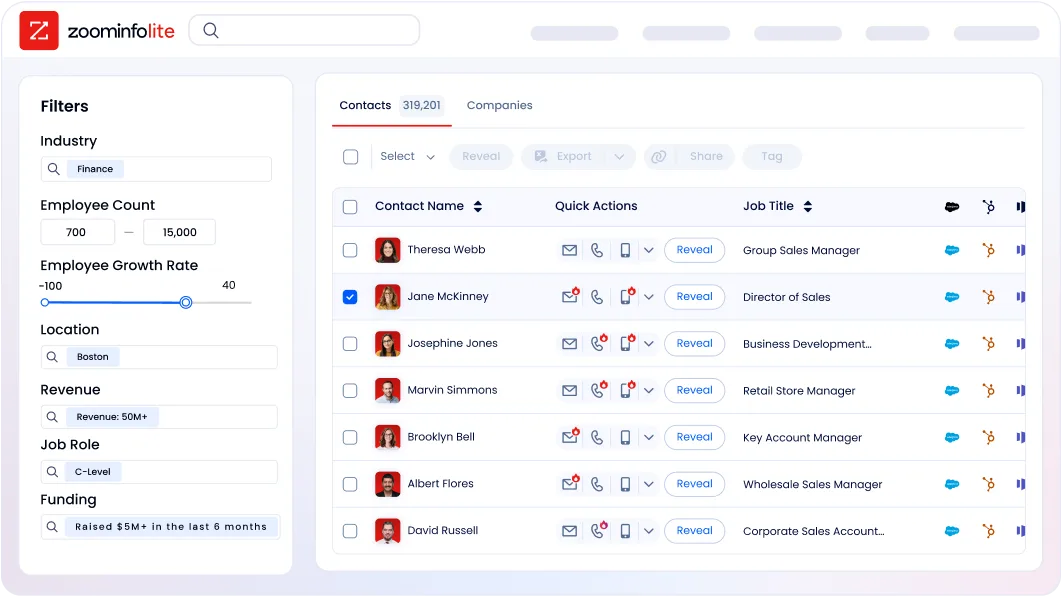
ZoomInfo uses custom-quoted, consumption-based pricing.
No published dollar amounts for paid tiers, but a permanent free tier (ZoomInfo Lite) and a 7-day free trial let you evaluate before committing. Credits are consumed when exporting data; searching and viewing within ZoomInfo does not consume credits.
Implementation and learning curve
How quickly your team gets productive matters as much as what the platform can do.
Oracle requires the most upfront investment.
Administrators configure each offering through Oracle's Functional Setup Manager, covering Service Requests, Communication Channels, Digital Customer Service, Entitlements, Knowledge Management, and more.
Oracle offers a certification path for Fusion Service implementers, which signals the complexity involved. TrustRadius reviewers describe the platform as not recommended for new users, citing complicated reporting and a higher adoption barrier. Most enterprises bring in certified implementation partners, adding cost and timeline.
Salesforce is faster at a basic level but scales in complexity with ambition.
Simple Service Cloud deployments can go live in weeks. Enterprise multi-cloud implementations take 3-12 months. The platform requires dedicated, trained administrators for meaningful configuration. Trailhead offers 1,500+ badges and 6+ million learners for upskilling, and the Trailblazer Community provides peer support. Over 70% of implementations are partner-led.
ZoomInfo deploys in weeks, not months.
The platform redesigned its onboarding across planning, implementation, education, and adoption phases, producing a 25% satisfaction improvement. ZoomInfo University provides role-specific learning paths for sales, marketing, and administrators.

Security and compliance for regulated industries
Both platforms carry extensive compliance certifications, but the details differ.
Oracle holds certifications including ISO 27001, ISO 27017, ISO 27018, ISO 27701, SOC 1/2/3, PCI DSS, FedRAMP, HIPAA/HITRUST, GDPR alignment, C5, IRAP, and ISMAP.
Oracle's Government Cloud is designed for FedRAMP and FISMA workloads, making it viable for US federal agencies and defense contractors.
Salesforce maintains compliance certifications including ISO 27001/27017/27018, SOC 1/2/3, FedRAMP (Government Cloud), and HITRUST.
The Einstein Trust Layer adds AI-specific governance: zero data retention with LLM partners, PII masking, dynamic grounding, and audit trails. Salesforce Shield (premium add-on) provides Event Monitoring, Platform Encryption with BYOK, and Field Audit Trail.
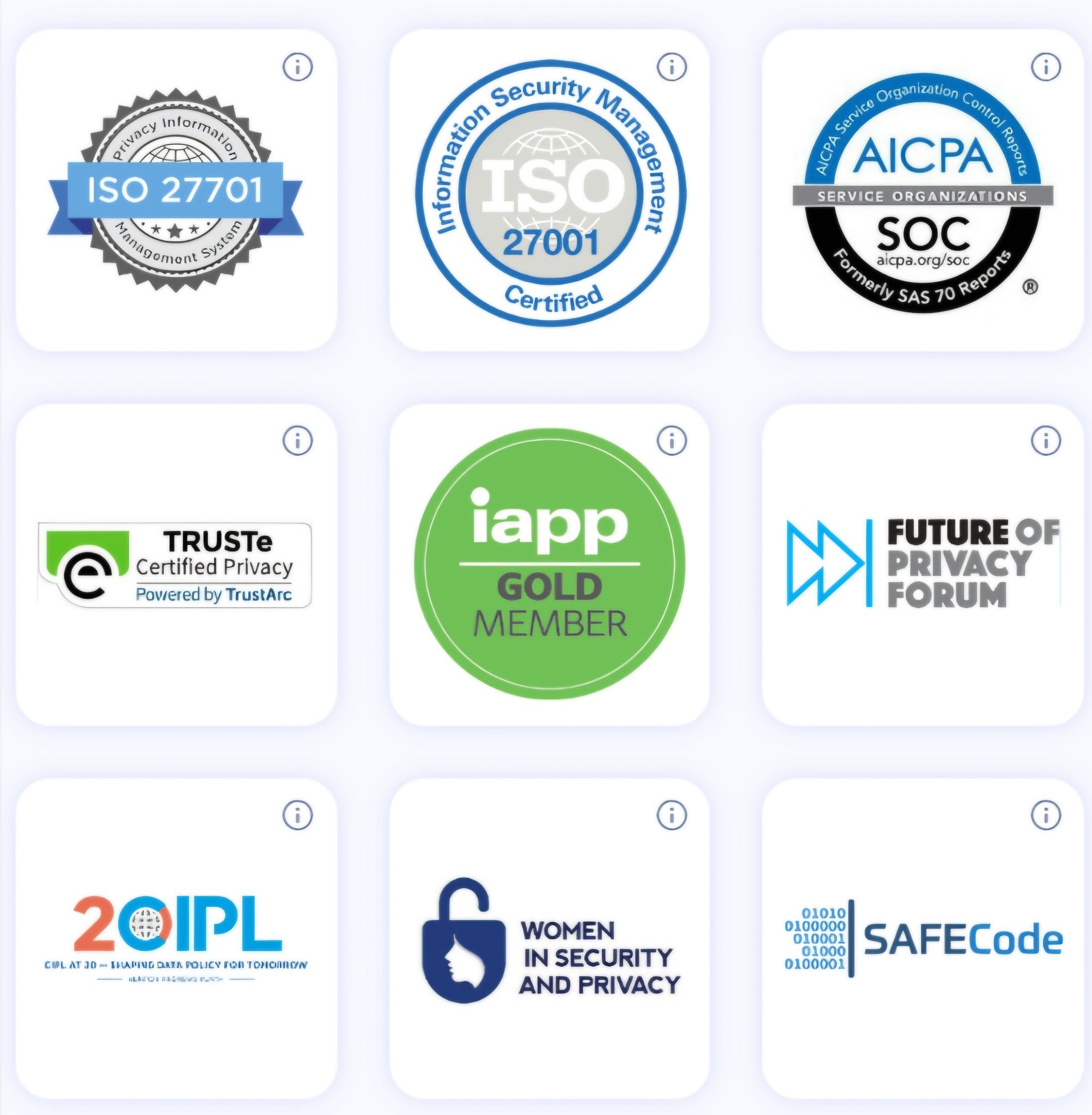
ZoomInfo maintains security certifications including ISO 27001, ISO 27701, SOC 2 Type II, TRUSTe GDPR, and TRUSTe CCPA, all renewed annually.
Source: ZoomInfo
ZoomInfo is a registered data broker in California and Vermont.
For organizations in healthcare, financial services, or government, both Oracle and Salesforce provide the compliance infrastructure needed. Oracle's broader certification list and Government Cloud give it an edge for federal and defense workloads. Salesforce's Shield and Trust Layer add granular AI governance for organizations deploying autonomous agents.
Oracle Service Cloud vs. Salesforce vs. ZoomInfo: Which should you choose?
The right answer depends on where your service stack needs the most help.
Choose Oracle Service Cloud if:
You run Oracle ERP, SCM, or HCM and need service that shares the same data model
Your agents need live access to contracts, billing, and supply chain data without middleware
Field service with AI-driven scheduling and offline mobile support is a core requirement
You want AI agents included in the base platform price
Your organization operates in a regulated industry requiring FedRAMP or FISMA compliance
Choose Salesforce if:
You need a broad CRM platform spanning service, sales, marketing, and commerce
A large third-party app ecosystem and partner network matter to your strategy
Your team values community resources like Trailhead and the Trailblazer Community
You want to start small and expand across clouds as needs grow
You're investing in autonomous AI agents and want Agentforce's track record
Add ZoomInfo to either platform if:
Your CRM data is incomplete, outdated, or missing key account intelligence
You need verified contacts, org charts, and company data to give agents full customer context
Your service, sales, and marketing teams need a shared data layer across tools
You want AI-ready data: enriched records and buying signals that ground your platform's AI in reality
You value a data partner that works across platforms, not one that locks you into a single ecosystem
Seismic attributed 39% of active pipeline to opportunities identified or influenced by ZoomInfo signals, reported 54% productivity gains, and saved 11.5 hours per week per seller. Toby Carrington, Chief Business Officer: "It's bringing data together faster than anyone could. It's both a time saving and a quality improvement." (Seismic)
Start with ZoomInfo's free trial and see how verified B2B data improves your service operations.
Oracle and Salesforce are both proven enterprise service platforms, and choosing between them is a significant architectural decision. But regardless of which you pick, the quality of data inside your CRM determines whether your service team resolves issues quickly or wastes time hunting for basic account information. ZoomInfo provides that data layer, enriching whichever platform you choose with verified B2B data that turns a good service platform into an effective one.
Oracle Service Cloud vs. Salesforce vs. ZoomInfo FAQ
What is the fundamental difference between Oracle Service Cloud and Salesforce for customer service?
Oracle Service Cloud is a component of the Oracle Fusion Cloud Applications suite, sharing a data model with Oracle ERP, SCM, and HCM. Service agents access back-office data (contracts, billing, inventory) natively. Salesforce Service Cloud is part of the broader Customer 360 CRM platform, giving agents front-office context across sales, marketing, commerce, and service. Oracle excels when the data need flows from back-office systems; Salesforce excels when the need flows from customer-facing operations.
Which platform has better AI capabilities for customer service?
Both invest in AI but differ in pricing and approach. Oracle embeds AI agents (escalation prediction, service manager workspace, knowledge recommendations) at no extra licensing cost. Salesforce's Agentforce is priced separately at $125/user/month or via consumption-based credits, but has a track record: it resolves 85% of Salesforce's own support requests without human escalation. For budget-conscious organizations, Oracle's included AI is attractive. For organizations prioritizing autonomous resolution at scale, Agentforce has demonstrated results.
How does ZoomInfo complement Oracle Service Cloud or Salesforce?
ZoomInfo is not a customer service platform. It is a B2B data intelligence platform that enriches the records inside your service platform with verified contacts, company attributes, org charts, technographics, and buying signals. ZoomInfo integrates natively with Salesforce and connects to Oracle via its Enterprise API and MCP. The result: service agents see current, complete account context rather than stale records, and AI agents are grounded in accurate data rather than incomplete CRM fields.
Which platform is better for field service management?
Oracle has the edge. Oracle Fusion Field Service is included in the platform, features a self-learning scheduling engine that claims 98% prediction accuracy, and provides a single offline-capable mobile app. Salesforce Field Service is an add-on starting at $175/user/month with AI scheduling, an offline app, and asset lifecycle management. Oracle's native integration with Oracle Maintenance Cloud gives it an advantage for asset-intensive industries; Salesforce's integration with Customer 360 gives it an advantage for organizations that want field technicians to see the full customer relationship.
How do the pricing models compare?
Oracle publishes no pricing; everything is quote-based. Salesforce publishes tier pricing (Service Cloud starts at $25/user/month) but total costs grow with add-ons for digital engagement ($75/user/month), contact center ($150/user/month), Agentforce ($125/user/month), and Premier support (30% of license fees). ZoomInfo uses consumption-based pricing with a permanent free tier and a 7-day free trial. All three require evaluating total cost of ownership rather than headline prices.
Which platform has the larger ecosystem and more integrations?
Salesforce, with 9,000+ apps on AppExchange and 14+ million installs. Oracle's ecosystem is smaller but provides deeper integration within the Oracle stack via Oracle Integration Cloud. ZoomInfo offers 120+ integrations plus open API and MCP access, working across both platforms and any other tool in your stack.
Which platform is easier to implement?
Salesforce is faster for basic deployments (weeks for simple setups) but can take 3-12 months for complex multi-cloud implementations. Oracle implementations generally take longer due to Fusion stack configuration requirements. Both platforms typically require implementation partners. ZoomInfo deploys in weeks with a structured onboarding program, since it augments existing systems rather than replacing them.
Can I use all three platforms together?
Yes. Oracle or Salesforce serves as your service platform, and ZoomInfo provides the data layer that enriches it. ZoomInfo integrates directly with Salesforce and connects to Oracle via API. The GTM Context Graph processes 1.5 billion data points daily and delivers verified account intelligence into whichever front-end your team uses, ensuring consistent data quality regardless of your service platform choice.
