
The question behind every B2B data API evaluation is not whether the data exists, but whether the API gives you enough control over how you access it, what you pay for, and what you can build on top of it.
People Data Labs (PDL) runs one of the larger developer-facing data APIs in B2B: 1.5 billion unique person profiles, 74 million company profiles, five official SDKs, and endpoints covering enrichment, search, identify, IP resolution, and bulk operations.
The developer docs are public, the Postman collection is available, and the API ships with sandbox endpoints that return synthetic data at zero credit cost. For a data infrastructure company selling to engineers, that openness is the expected baseline.
But dataset size and developer experience are different questions from what you can actually build.
The People Data Labs API is likely the right choice if:
You are building a product that embeds B2B person or company data as a core feature (an AI SDR tool, a recruiting platform, a CRM enrichment layer) and need wholesale access to the underlying dataset, not a sales rep's UI.
You need to search across the full person dataset using Elasticsearch DSL or SQL syntax with 140+ filterable attributes, not just enrich known contacts.
You want per-match pricing that charges only when a record is returned, with buyer-defined match strictness and required fields.
You need bulk data licensing via Snowflake, AWS S3, GCP, or Azure alongside real-time API access.
You are building for HR tech, investment research, or fraud prevention, where employment history, education, and skills data matters more than sales signals.
However, it might not be the right fit if:
You need buyer intent signals, technographics across 30,000+ technologies, or real-time buying behavior data alongside your contact and company records.
You need direct-dial phone numbers at scale. PDL's phone coverage is not its primary strength compared to dedicated sales intelligence APIs.
You need OAuth 2.0 with scoped delegated access for a multi-tenant integration; PDL uses API key authentication only.
You require webhooks on a self-serve plan; PDL's webhooks are restricted to Enterprise API and Data License customers.
You need org charts, corporate hierarchy traversal, or AI-powered account research at the API layer.
You want a free tier with full field access; PDL's free plan obfuscates contact data fields, returning True/False flags instead of actual values.
In this case, consider the API from ZoomInfo, a GTM platform: a REST suite covering search, enrichment, AI intelligence (account summaries, lookalike expansion, buying-committee recommendations), and audience management across 500M contacts and 100M companies, with OAuth 2.0 authentication, tiered rate limits up to 35 req/sec, and an MCP server for AI-agent workflows.
This article reviews both: the People Data Labs API in full technical depth first, then ZoomInfo's API where your build needs the intelligence layer, intent signals, and broader data dimensions that a person-data infrastructure API does not cover.
People Data Labs API at a Glance
Attribute | Detail |
|---|---|
API type | REST over HTTPS, JSON responses |
Authentication | API key via X-Api-Key header or URL query parameter |
Base URL | https://api.peopledatalabs.com/v5/ |
Current version | |
Rate limits | Per-key, fixed-window; varies by plan (Free: 100 req/min Person Enrichment; Pro: 1,000 req/min) |
Pricing / access | Credit-based, per-match; Free tier (100 credits/month, obfuscated contact fields), Pro (from $100/month), Enterprise (custom) |
SDKs | Official SDKs for Python, JavaScript, Ruby, Go, and Rust |
Webhooks | Enterprise and Data License only; monthly delivery, person-record change events |
Documentation | docs.peopledatalabs.com, with Postman collection, OpenAPI spec, and sandbox endpoints |
People Data Labs API: What Works Well & What to Plan Around
What works well | What to plan around |
|---|---|
Public docs with Postman collection, OpenAPI spec, and sandbox endpoints at zero credit cost | Free tier obfuscates contact fields (emails, phones returned as True/False flags) |
Official SDKs in five languages (Python, JavaScript, Ruby, Go, Rust) plus a React Autocomplete component | API key auth only: no OAuth, no token rotation, no scoped delegated access |
Per-match pricing charges only on successful responses; failed lookups consume nothing | Webhooks restricted to Enterprise and Data License customers; no self-serve webhook access |
Elasticsearch DSL and SQL dual query syntax on Search endpoints | No intent data, no technographics, no buying signals |
Sandbox APIs return synthetic data for integration testing without spending credits | Bulk enrichment capped at 100 records per request |
Cleaner and Autocomplete APIs are free for all customers | Pro plan pricing not publicly documented; exact per-credit costs disclosed at signup |
People Data Labs API: Authentication & Getting Started
Source: People Data Labs
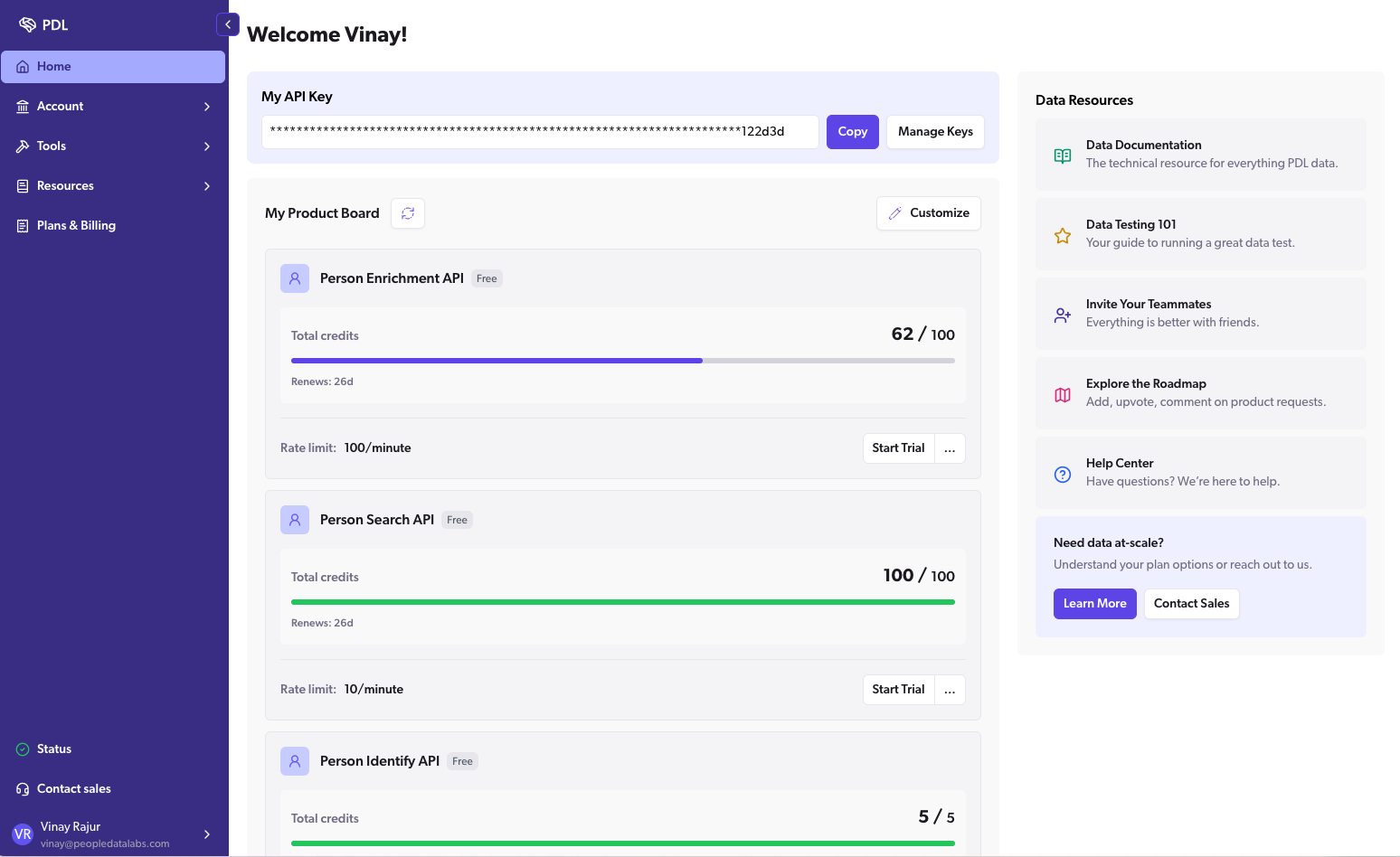
API access starts with a free account at dashboard.peopledatalabs.com. No credit card is required. The free tier provides 100 credits per month across core APIs, though contact data fields (work email, personal emails, phone numbers, granular locations) are returned as True/False flags rather than actual values.
Full field access requires a Pro plan with a minimum $100/month commitment.
Authentication is straightforward. PDL uses API key authentication exclusively; there is no OAuth flow. You can pass the key in two ways:
HTTP header (recommended): X-Api-Key: YOUR_API_KEY
URL query parameter: ?api_key=YOUR_API_KEY
All official SDKs handle authentication automatically when you provide the key during client initialization. Invalid credentials return a 401; credit exhaustion returns 402.
A basic authenticated request:
curl -X GET "https://api.peopledatalabs.com/v5/person/enrich?email=test@example.com" \
-H "X-Api-Key: YOUR_API_KEY"
Before spending credits, PDL offers two paths for risk-free testing:
Sandbox APIs: Dedicated test endpoints that return synthetic data with the same response structure as production, at zero credit cost. Available for Person Enrichment, Search, Identify, Company Enrichment, and Company Search.
Preview APIs: Check whether a query would return results before consuming credits.
This combination (free sandbox, preview endpoints, and a permanent free tier) gives a developer a practical evaluation path before committing budget. The main constraint: the free tier's obfuscated contact fields limit how much you can validate data quality on actual records without upgrading.
People Data Labs API: Core Endpoints & Capabilities
Source: People Data Labs
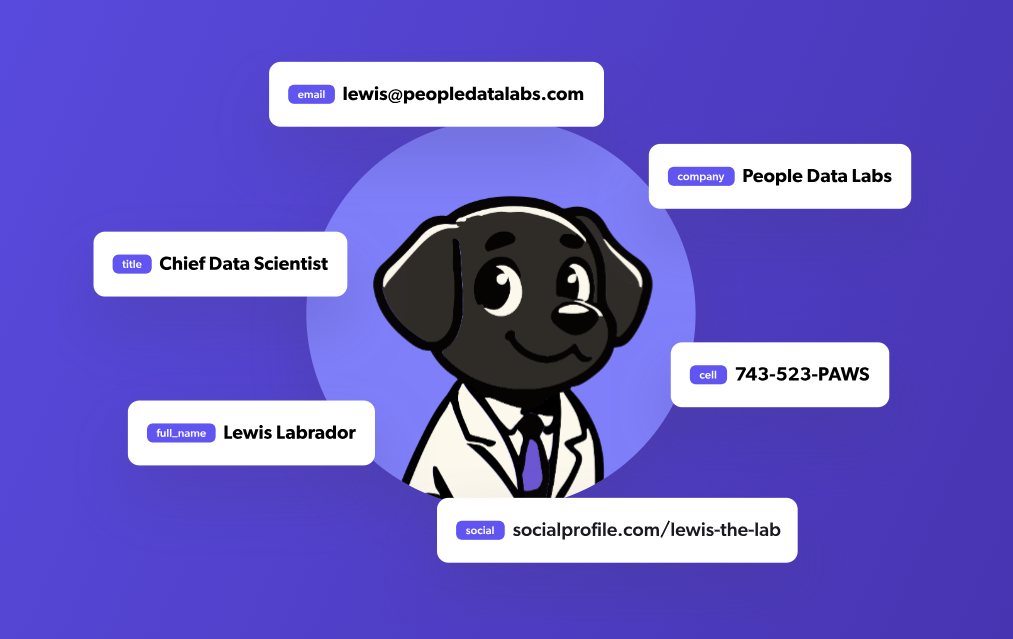
The API is organized around four entity types (Person, Company, IP, and Job Posting), each with dedicated endpoints, plus a set of supporting utility APIs. All endpoints live under https://api.peopledatalabs.com/v5/ and return JSON.
Person APIs
The person API is PDL's core product, built on 1.5 billion unique profiles.
Person Enrichment (GET/POST /v5/person/enrich): The primary endpoint. It accepts identifying attributes (email, name, LinkedIn URL, phone, company, location) and returns the single best-matching profile.
The required parameter lets you define which fields must be non-null for a match to count, so you only pay for records with the data you need. One credit per successful match.
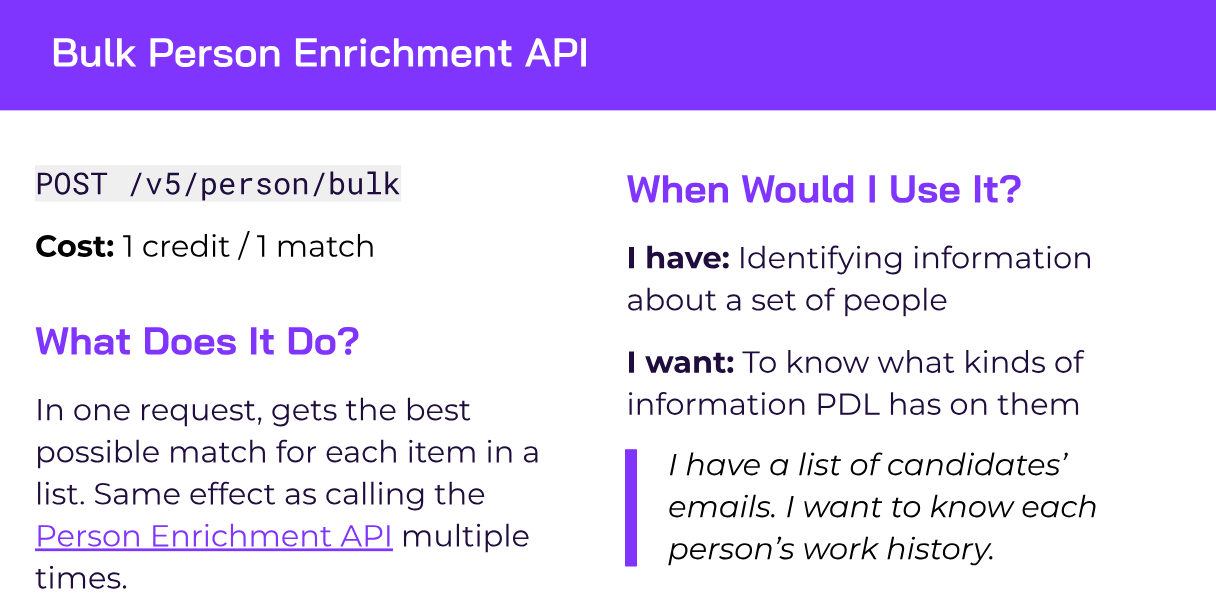
Bulk Person Enrichment (POST /v5/person/bulk): Processes up to 100 records per request for high-volume workflows. Returns a JSON array of enriched records. Each successful match consumes one credit.
Source: People Data Labs
Person Search (GET/POST /v5/person/search): Queries the full person dataset using Elasticsearch DSL or SQL syntax. This endpoint distinguishes PDL from enrichment-only APIs: you can construct arbitrary population queries across 140+ attributes (title, skills, company size, location, industry, education, experience) to build contact lists from scratch.
One credit per profile returned; pagination via size and scroll_token.
Person Identify (GET /v5/person/identify): Returns up to 20 ranked candidate profiles when you have partial or ambiguous inputs. Useful for entity resolution workflows where a single match is not guaranteed.
Person Changelog (/v5/person/changelog): Tracks changes to person records over time. Available for bulk license customers.
What you would build with the person API: a recruiting platform that searches for candidates by skill, location, and seniority, enriches matched profiles with verified contact data, and feeds them into an ATS. Or a CRM enrichment pipeline that takes a list of email addresses, bulk-enriches them with employment history and social profiles, and writes the results back to Salesforce.
Company APIs
Source: People Data Labs
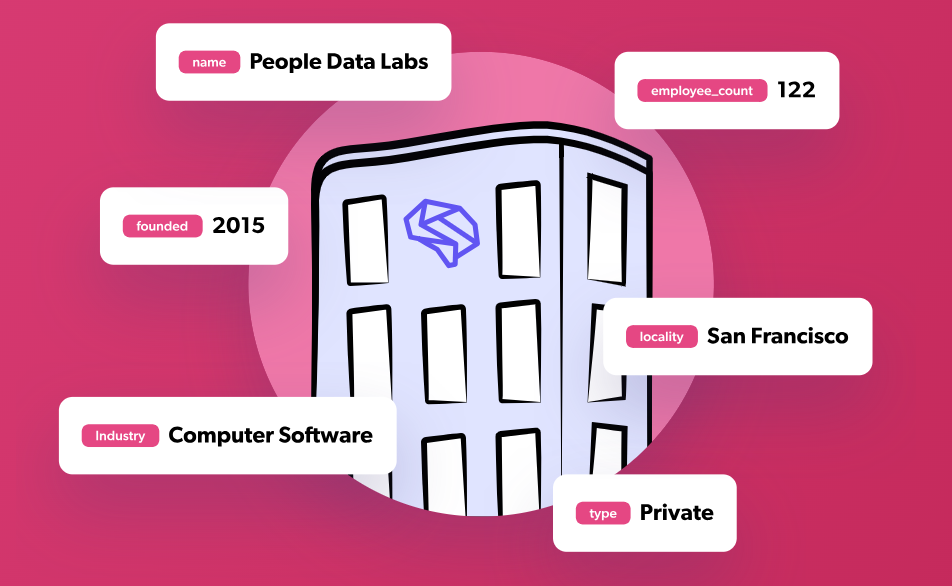
The company dataset covers 74.7 million profiles, derived from PDL's person data rather than company self-reporting.
Company Enrichment (GET /v5/company/enrich): Looks up a company by website, LinkedIn URL, name, or ticker. Returns firmographics, headcount analytics, funding data, parent-subsidiary hierarchy, and workforce flow metrics. One credit per match.
Bulk Company Enrichment (POST /v5/company/enrich/bulk): Up to 100 companies per request.
Company Search (GET/POST /v5/company/search): Queries the full company dataset with Elasticsearch DSL or SQL. Filter by employee count, growth rate, industry, location, funding stage, and dozens of workforce analytics fields.
The company schema includes fields most data APIs do not expose: employee_count_by_month time series (also by level and role), employee_growth_rate and employee_churn_rate at 3/6/12/24-month windows, top_previous_employers, and recent_exec_hires.
These workforce-derived analytics are PDL's differentiator in company data.
What you would build with the company API: an investment research tool that tracks headcount growth and executive departures as alternative signals for company health, or an ABM platform that scores target accounts by employee churn rate and hiring velocity.
IP Enrichment
Source: People Data Labs
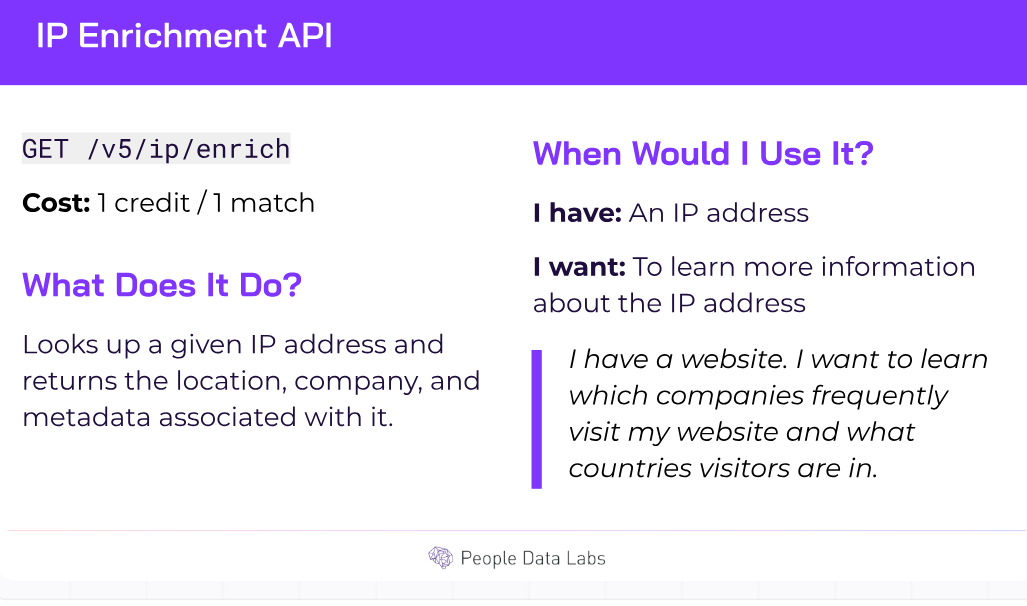
IP Enrichment (GET /v5/ip/enrich): Matches IPv4/IPv6 addresses to company and person signals, returning company details (name, size, industry, revenue), person details (title, seniority), and IP metadata (mobile, hosting, VPN, Tor). One credit per successful match.
Job Posting Search
Source: People Data Labs
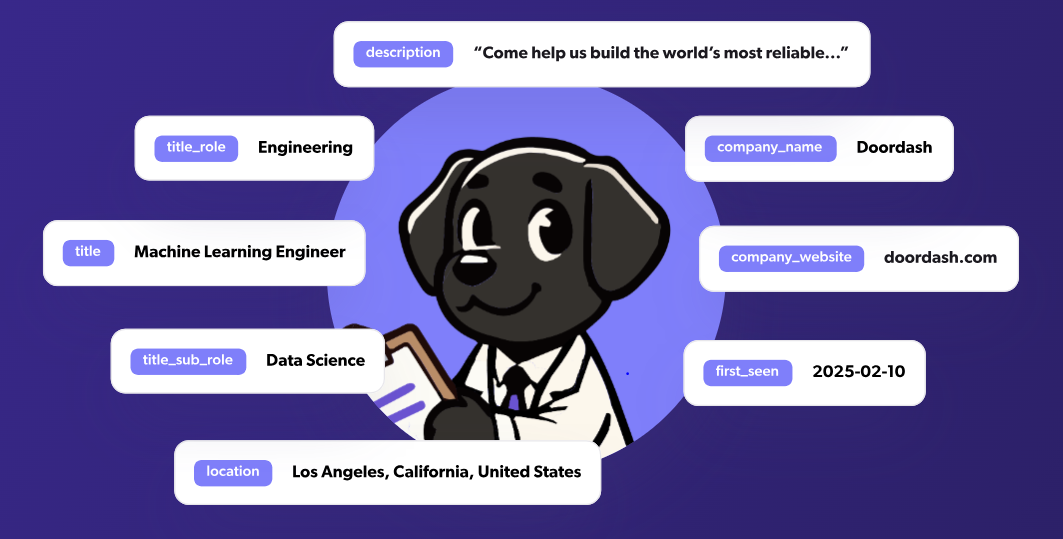
Job Posting Search (GET/POST /v5/jobposting/search): Searches PDL's job posting dataset by company, title, location, and date. Currently in beta with coverage limited to 60,000+ companies.
Supporting APIs (Free)
Two utility APIs are free for all customers, governed only by rate limits:
Autocomplete API: Suggests canonical field values (job titles, companies, skills, schools) for building search UIs. A React component is available for frontend integration.
Cleaner APIs: Normalize input data (company names, job titles, locations, schools) into PDL's canonical schema. These are the same tools PDL uses internally during its data build process.
Additional utility endpoints include the Job Title Enrichment API (classifies raw title strings into structured metadata: level, role, subrole), the Skill Enrichment API (standardizes skill strings), and the Subject Request API (handles GDPR/CCPA data subject requests programmatically).
People Data Labs API: Webhooks & Events
PDL offers webhooks exclusively for Enterprise API and Data License customers. They are not available on Free or Pro plans.
You can configure webhooks to fire on any combination of person-record change types:
Event filter | What triggers it |
|---|---|
job_change | Updates to job_company_id or job_title |
work_email | Work email modifications |
personal_emails | Personal or recommended email changes |
mobile_phone_number | Mobile phone updates |
phone_number | Mobile or landline phone updates |
education | Education record changes |
location | Any of 10 location-related fields |
social_profile | LinkedIn, Facebook, Twitter, or GitHub profile data |
Multiple filters use logical OR: PDL delivers a person ID if any watched field changes.
Three constraints to plan around:
Monthly delivery cadence. Payloads sync with PDL's regular data release cycle, not real-time. If your pipeline needs immediate change notifications, this is not a real-time event system.
IDs only, not full records. Payloads are JSON arrays of up to 1,000 person IDs. You need a follow-up enrichment call to retrieve the updated data.
No automatic retry. PDL does not retry on delivery failure. If your receiving server does not return a 200, you must contact the PDL account team to redeliver the batch.
For teams on Free or Pro plans, change detection requires polling via the Person Enrichment or Person Changelog APIs.
People Data Labs API: SDKs, Docs & Rate Limits
SDKs & Libraries
PDL maintains five official, open-source SDKs on GitHub under the peopledatalabs organization:
Python (pip install peopledatalabs): requires Python 3.7+. Covers all major APIs.
JavaScript: for Node.js and browser environments.
A React component for Autocomplete ships separately for frontend integration.
Five languages is solid coverage for a data infrastructure API, and the inclusion of Rust is notable for teams building performance-sensitive data pipelines.
All SDKs handle authentication automatically during client initialization and accept pull requests on GitHub, which indicates maintained open-source code rather than reference-only libraries.
Documentation & Developer Experience
The developer documentation at docs.peopledatalabs.com covers every endpoint with its own quickstart guide, reference page, input parameters documentation, output response schema, examples, and FAQ. The docs are organized by entity type (Person, Company, IP, Job Posting) with each API getting a full sub-section.
Key developer resources:
Postman collection: Quick testing without writing code.
OpenAPI specification: Machine-readable endpoint definitions for code generation and AI tooling.
Sandbox APIs: Synthetic data endpoints at zero credit cost, available to all plan types.
Preview APIs: Validate queries before spending credits.
Published Elasticsearch mappings: Full schema mappings for both Person and Company datasets.
Canonical field values: Normalized values for dozens of fields (NAICS, SIC, job titles, education, funding rounds).
Changelog: Monthly release notes going back to 2020, with semantic versioning.
Recipes: Pre-built workflow examples.
Public roadmap: Feature requests and planned development.
The dual query syntax (Elasticsearch DSL + SQL) on Search endpoints lets developers use whichever they prefer. The sandbox environment is a genuine strength: testing the full request/response cycle without credits removes friction from integration.
Support runs through the Help Center ticketing system and a contact form. Enterprise customers get a dedicated support team (Customer Success Manager, Solutions Engineer, Data Consultant, Integration Architect). PDL does not reference a public developer forum or community channel.
Rate Limits & Constraints
PDL uses fixed-window rate limiting on a per-API-key basis, with separate limits tracked per endpoint. Every API response includes rate limit headers:
x-ratelimit-remaining / x-ratelimit-limit: remaining and total calls within the current window
x-call-credits-spent: credits consumed by this specific call
x-totallimit-remaining: total credits remaining across the account
x-lifetime-used: cumulative credits consumed since account creation
Default limits by plan:
Plan | Person Enrichment | Company Enrichment | Person Search |
|---|---|---|---|
Free | Not specified | ||
Pro | Not specified | ||
Enterprise | Higher (negotiated) | Higher (negotiated) |
Hitting a rate limit returns 429. Exhausting all credits returns 402 (blocked, not auto-billed, unless you have pre-configured an overage pool).
A 1 MB response size limit applies to all responses. To stay under it: enable gzip compression via Accept-Encoding: gzip, use the data_include parameter to filter fields, or reduce records per request. PDL recommends approximately 50 records rather than the maximum 80-100 for Search endpoints.
Bulk enrichment endpoints cap at 100 records per request for both Person and Company.
People Data Labs API Pricing & Access Costs
PDL uses a credit-based, per-match pricing model. You consume credits only when the API returns a successful response (HTTP 200 with a profile). Failed lookups cost nothing.
Credit consumption by endpoint:
Endpoint | Credits per call |
|---|---|
Person/Company Enrichment | 1 credit per successful match |
Person/Company Search | 1 credit per profile returned (1-100 per request) |
Bulk Enrichment | Up to 100 credits per request (1 per matched record) |
IP Enrichment | 1 credit per successful match |
Autocomplete & Cleaner | Free (rate-limited only) |
Plan tiers:
Free: 100 credits/month. No credit card required. Contact data fields are obfuscated (True/False flags). Sandbox APIs available at zero cost.
Pro: Self-serve, starting at $100/month minimum commitment for full field access. Includes 1,000 free Person Search credits/month (12,000/year on annual billing). Three volume tiers within Pro; per-credit cost decreases at higher volumes. Above 100,000 credits/month, sales contact is required.
Enterprise: Custom pricing via sales. Includes webhooks, Salesforce integration, dedicated support team, and higher rate limits.
Person data and company data are priced separately, each with its own credit pools and volume tiers. PDL does not publish exact per-credit dollar amounts; they disclose them during signup or the sales process.
Contract details:
Unused credits carry over up to 100% of next period's allocation. Excess is forfeited.
All sales are final, no refunds unless agreed in writing.
Failed payments trigger an auto-downgrade to the Free plan.
Additional cost paths: Data License Feeds (bulk delivery via S3, Snowflake, GCP, Azure) carry separate enterprise-only pricing, distinct from the credit system. PDL data is also purchasable through the Snowflake Marketplace using committed Snowflake spend.
For a developer sizing costs: the $100/month Pro minimum gives full field access and 1,000 req/min enrichment rates. The free tier is useful for testing the API shape and match rates, but not for validating actual contact data quality.
Where the People Data Labs API Falls Short
These are scope decisions and practical constraints a developer should plan around, not criticisms of the platform.
No intent data, no buying signals. PDL provides person and company data. It does not track whether a company is actively researching your product category, visiting competitor websites, or showing buying behavior. If your pipeline needs to prioritize accounts by in-market signals, you need a separate source.
No technographics at the API layer. PDL does not expose what technologies a company uses. Technographic data (which companies run Salesforce, Snowflake, or AWS) is a common filter for sales and marketing workflows, and its absence limits use cases like competitive displacement or tech-stack-based targeting.
API key authentication only. There is no OAuth 2.0, no token rotation, no scoped access. For multi-tenant integrations where each customer authenticates independently, or for organizations with strict credential-rotation policies, static API key auth is limiting.
Webhooks are enterprise-gated. Free and Pro plan customers have no webhook access. Change detection for these tiers requires polling, and the webhooks that do exist for Enterprise customers deliver monthly, not in real time, with no automatic retry on failure.
Free tier obfuscates the most valuable fields. The 100 free credits return True/False flags for emails, phones, and granular locations. This makes it hard to validate data quality on real records without committing to a paid plan.
No AI intelligence endpoints. PDL does not offer AI-powered account summaries, lookalike expansion, or buying-committee recommendations. The API returns structured data; the reasoning happens in whatever you build on top of it.
Phone coverage is secondary. PDL's primary strength is person profiles and employment history. Direct-dial phone number coverage is not a primary differentiator, which matters for teams building outbound calling workflows.
ZoomInfo API: The Intelligence and Signal Layer
PDL gives you structured person and company data at infrastructure scale.
ZoomInfo, a GTM platform, gives you that data plus the intelligence layer on top: intent signals, technographics, AI-powered account research, org chart traversal, and buying-committee recommendations, all fed by the GTM Context Graph that processes 1.5B+ data points daily by combining ZoomInfo's B2B data with your first-party data.
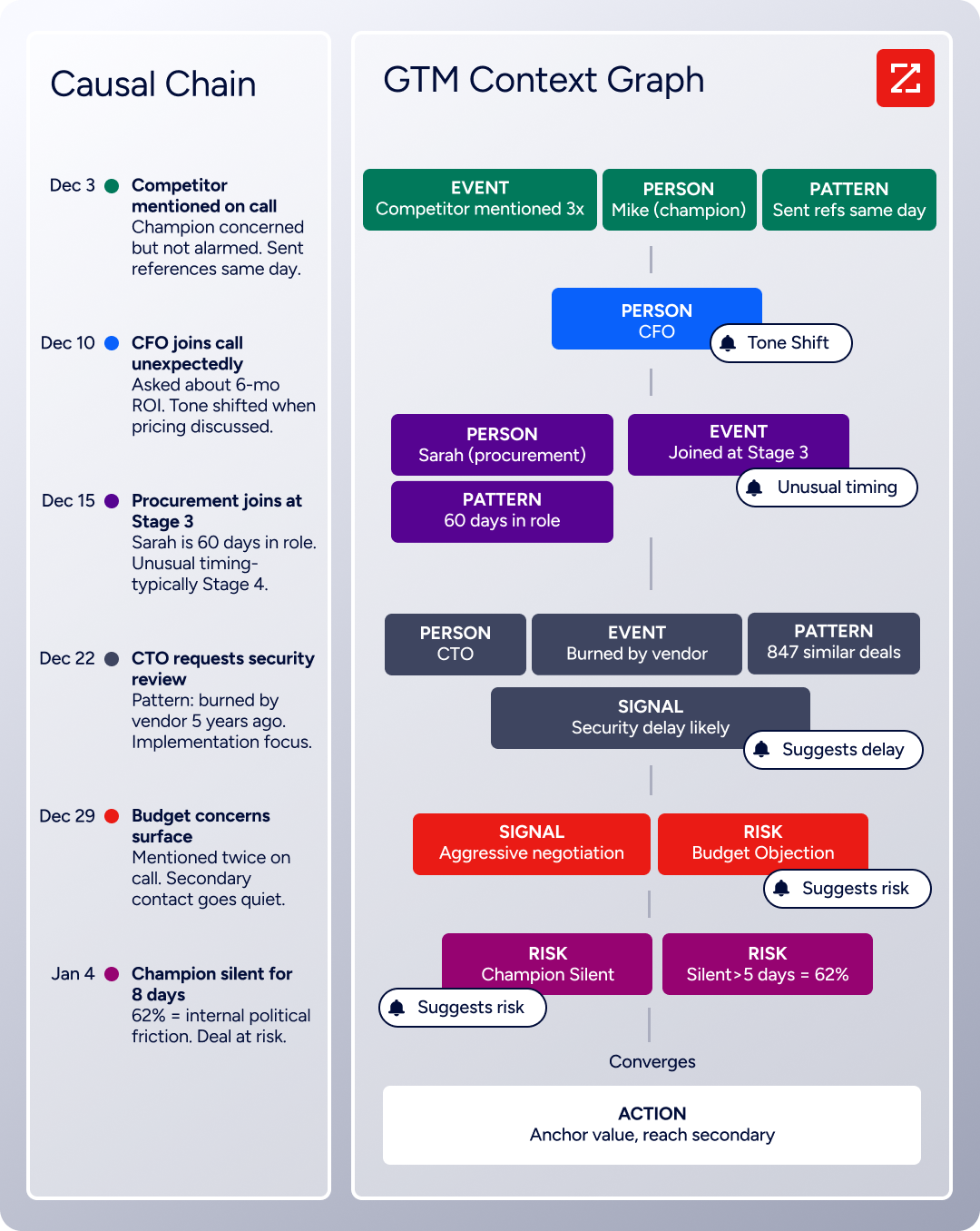
The two APIs overlap on contact and company enrichment, but ZoomInfo extends into dimensions PDL does not cover.
What the API Covers
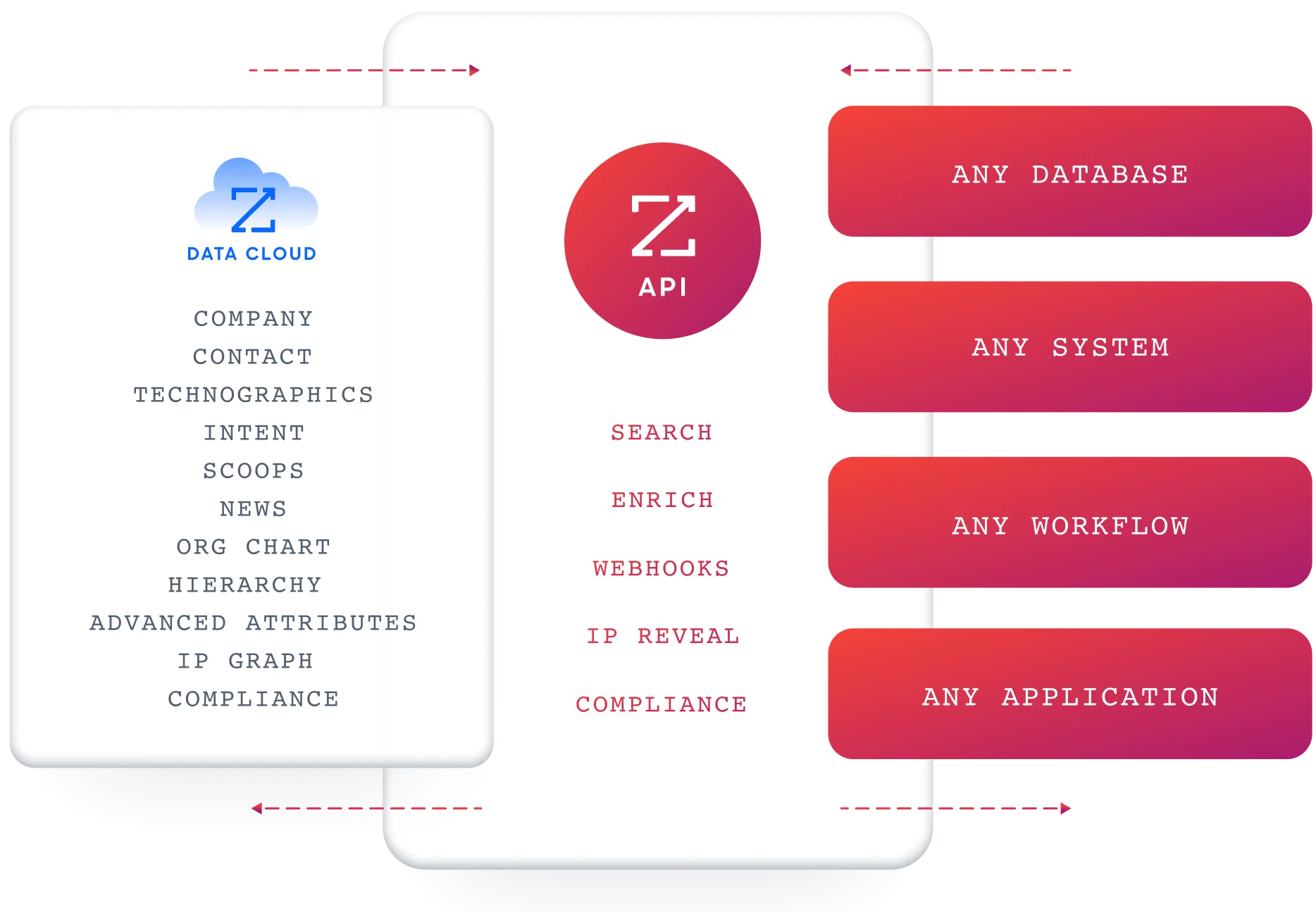
ZoomInfo's Enterprise API is a REST suite served from https://api.zoominfo.com/gtm, organized into four areas documented in the interactive API reference:
Data API (Search & Enrich): Search endpoints cover Contacts, Companies, Intent, News, and Scoops, returning matched records without consuming credits. Enrich endpoints unlock full payloads: business emails, direct dials, employment history, corporate hierarchy, org charts, technographics, and hashtag signals, up to 25 records per call. The underlying dataset spans 500M contacts, 100M companies, 135M+ verified phone numbers, and 200M+ verified business email addresses.
AI Intelligence API (GTM Workspace): Account Summary returns AI-synthesized account briefs with a free-form Q&A endpoint. Find Similar Companies performs lookalike expansion from a seed account. Contact Recommendations returns AI-ranked buying-committee suggestions by motion (prospecting, deal acceleration, renewals).
Marketing API: CRUD endpoints for programmatic audience management.
Platform API (Engagements, Beta): Bidirectional engagement data via the Engagements API.
Where PDL gives you raw person and company records, ZoomInfo adds the intent signals that tell you which accounts are in-market, the technographics that tell you what they run, and the intelligence layer that ranks who in the org is worth contacting.
Authentication & Access
ZoomInfo uses OAuth 2.0 with PKCE via Okta, issuing 24-hour access tokens with rotating refresh tokens. Three flows are supported: Authorization Code with PKCE (web applications), Client Credentials (server-to-server), and Refresh Token.
Teams register applications through the ZoomInfo Developer Portal, where they generate credentials, define scopes, and test endpoints.
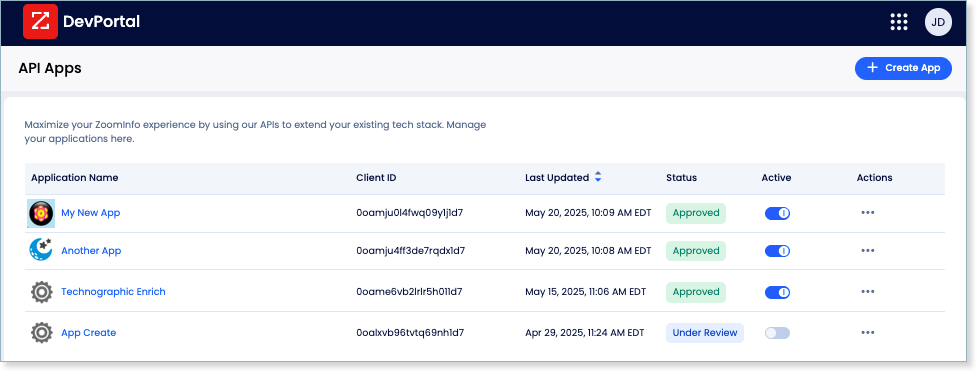
This is a different authentication model from PDL's static API key. OAuth 2.0 supports delegated access, credential rotation, and scoped permissions, making it the right choice for multi-tenant integrations and enterprise security requirements.
Rate Limits, Credits & Developer Experience
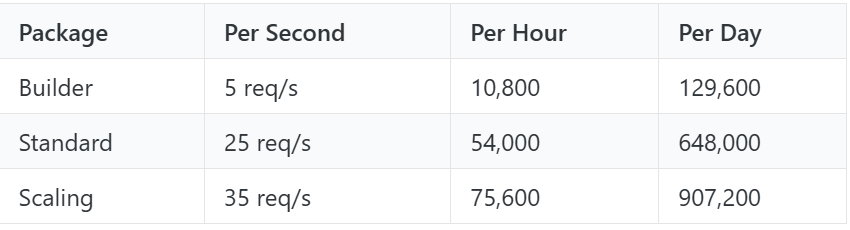
Rate limits are published by tier: Builder (5 req/sec), Standard (25 req/sec), and Scaling (35 req/sec), with per-hour and per-day sliding-window limits enforced simultaneously. Every response includes quota headers with remaining capacity, and 429 responses include a Retry-After header with exact backoff timing.
Credits follow a rolling 12-month window: a record enriched for the first time consumes one credit; re-enriching the same record within the year is free. Search and lookup operations do not consume credits, mirroring PDL's per-match model but adding the time-window deduplication.
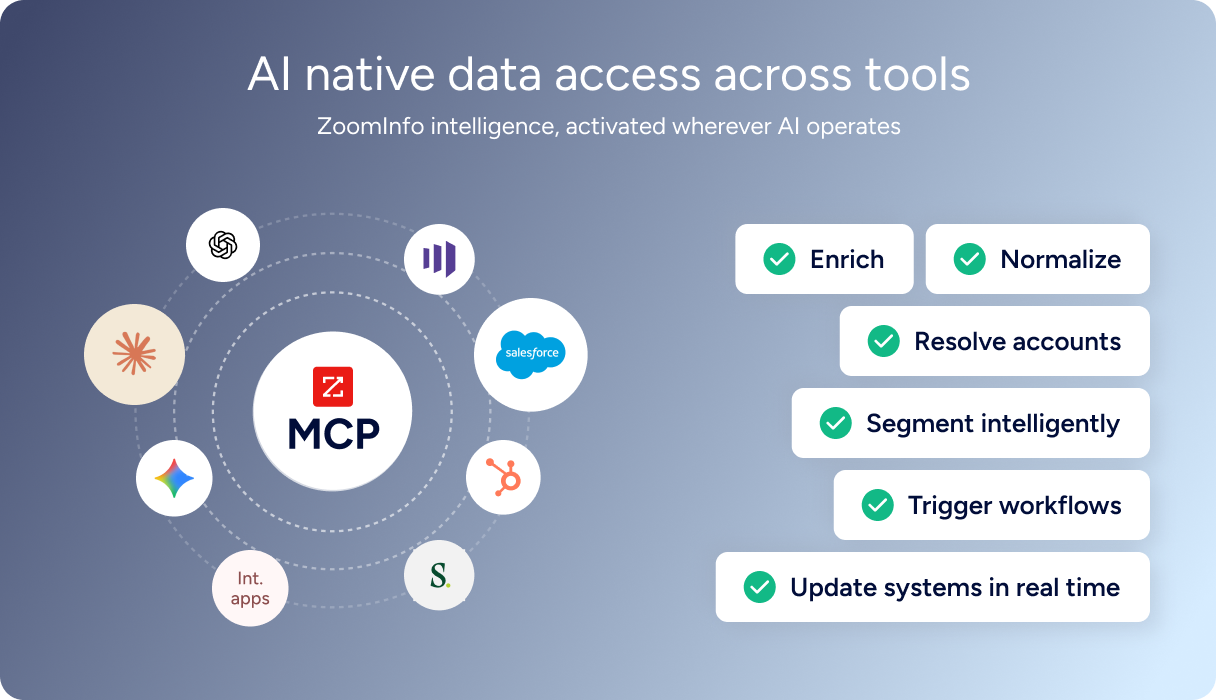
For developers building AI agents, ZoomInfo's MCP server at https://mcp.zoominfo.com/mcp exposes search, enrich, and account research as native tools for MCP-compatible assistants, currently supporting Claude and ChatGPT.
Documentation lives at docs.zoominfo.com with an interactive API reference, OAuth recipes in five languages, and an llms.txt index.
ZoomInfo does not publish official SDKs; you integrate over HTTP and own the auth-and-retry layer yourself.
ZoomInfo uses consumption-based pricing; API access requires an Enterprise API package, and ZoomInfo has extended API access to all relevant plans.
BDO Canada reported an 87% reduction in time spent updating internal data dashboards using the ZoomInfo API, with one analyst describing the integration as plug-and-play across any process. (ZoomInfo)
People Data Labs API vs. ZoomInfo API
Dimension | People Data Labs API | ZoomInfo API |
|---|---|---|
API type | REST, JSON responses | REST, JSON:API format |
Authentication | API key (header or query parameter) | OAuth 2.0 with PKCE (24-hour tokens, rotating refresh) |
Contact database | 1.5B unique person profiles | 500M contacts, 200M+ verified business emails, 135M+ verified phone numbers |
Company database | 74M+ company profiles with workforce-derived analytics | 100M companies with company attributes, org charts, technographics |
Person data depth | Full employment history, education, skills, social profiles, O*NET codes, inferred salary | Employment history, social profiles, direct dials, accuracy scores |
Intent / buying signals | Not available | Buyer intent (210M IP-to-Org pairings, 6T+ keyword-device pairings/month), scoops, news |
Technographics | Not available | 30,000+ technologies across 200+ categories |
AI intelligence endpoints | Not available | Account Summary, Find Similar, Contact Recommendations, Account Research |
SDKs | Python, JavaScript, Ruby, Go, Rust | None (code recipes in five languages) |
Webhooks | Enterprise only; monthly delivery, person-record changes | Agent Teams-based; configurable event types and retry |
Rate limits | Per-key fixed-window; up to 1,000 req/min on Pro | 5-35 req/sec by tier, with per-hour and per-day sliding windows |
Pricing model | Credit-based per-match; Pro from $100/month; public free tier | Consumption-based pricing (search free, enrich consumes credits) |
Search query syntax | Elasticsearch DSL + SQL | Proprietary filter parameters |
Sandbox / testing | Sandbox endpoints with synthetic data, zero credits | Interactive API reference with try-it explorer |
MCP server | Not available | Available at mcp.zoominfo.com (Claude, ChatGPT) |
Bulk enrichment | Up to 100 records per request | Up to 25 records per call |
Compliance API | Subject Request API for GDPR/CCPA | Data privacy and opt-out management endpoints |
Final Verdict
People Data Labs built an API for a specific buyer: the developer or data engineer embedding B2B person and company data into a product. The Elasticsearch-powered Search API, five official SDKs, sandbox endpoints, per-match pricing, and dual query syntax (DSL + SQL) reflect a platform designed for builders who need infrastructure-grade data access, not a sales UI with an API bolted on.
The company data schema (workforce-derived headcount time series, growth rates, talent flow metrics) adds analytical depth that few competing APIs expose.
Choose the People Data Labs API if you are building a product where B2B person or company data is a core feature: an AI recruiting platform, a CRM enrichment pipeline, an investment research tool, or an audience generation engine.
The per-match pricing, bulk data licensing options, and developer-first tooling (sandbox, preview, free Cleaner/Autocomplete APIs) make it a strong fit for teams that need wholesale data access and are willing to build the intelligence layer themselves.
Choose the ZoomInfo API if your build needs the data and the intelligence layer: intent signals to prioritize accounts, technographics to filter by tech stack, AI endpoints to generate account research and buying-committee recommendations, and an MCP server for AI-agent workflows.
The OAuth 2.0 authentication, webhook system, and broader data dimensions (intent, scoops, org charts, 135M+ verified phone numbers) cover the ground that a person-data infrastructure API leaves open.
Start with the ZoomInfo Enterprise API or explore the developer docs to see the endpoint surface.
A developer whose use case is purely data enrichment or population search, with no need for sales signals or account intelligence, should not pay for capabilities they will not use. PDL's pricing model rewards precisely scoped usage.
FAQ
Is the People Data Labs API free?
Not beyond a trial. The permanent free tier provides 100 credits per month with no credit card required, but contact data fields (emails, phones, addresses) are obfuscated, returned as True/False flags rather than actual values. Sandbox APIs are free for all plan types and return synthetic data for integration testing.
Full field access requires a Pro plan with a minimum $100/month commitment. Autocomplete and Cleaner APIs are free for all customers, governed only by rate limits.
Does People Data Labs have a GraphQL API?
No. PDL exposes a REST API (currently at v5) that returns JSON responses. There is no GraphQL endpoint. The Search APIs support Elasticsearch DSL and SQL query syntax, which provides query flexibility comparable to GraphQL for filtering and field selection, but the transport layer is strictly REST.
What is the People Data Labs API rate limit?
PDL uses fixed-window rate limiting on a per-API-key basis, with separate limits tracked per endpoint. On the Free plan, Person Enrichment is limited to 100 requests per minute and Company Enrichment to 10 requests per minute. The Pro plan increases both to 1,000 requests per minute. Enterprise customers can negotiate higher limits.
A 1 MB response size limit applies to all responses. Bulk enrichment endpoints cap at 100 records per request.
Are there official People Data Labs SDKs?
Yes. PDL publishes official open-source SDKs for five languages: Python, JavaScript, Ruby, Go, and Rust. All are hosted on GitHub under the peopledatalabs organization. A React component for the Autocomplete API is also available. The SDKs handle authentication, request construction, and response parsing automatically, and PDL accepts pull requests and bug reports.
Does the People Data Labs API support webhooks?
Only for Enterprise API and Data License customers. Webhooks fire on person-record change events (job changes, email updates, phone updates, education changes, location changes, social profile updates). Payloads deliver up to 1,000 person IDs per batch (not full records) on a monthly cadence synchronized with PDL's data release cycle.
There is no automatic retry on delivery failure. Free and Pro plan customers do not have webhook access.
What does ZoomInfo's API add to a People Data Labs build?
ZoomInfo's API adds three layers PDL does not cover: intent signals (which accounts are actively researching your category), technographics (what technology stack a company runs), and AI intelligence (account summaries, lookalike expansion, buying-committee recommendations).
Where PDL gives you raw person and company data at infrastructure scale, ZoomInfo adds the intelligence layer that identifies which accounts are worth pursuing and who within them to contact.
ZoomInfo also offers OAuth 2.0 authentication for multi-tenant integrations, an MCP server for AI-agent workflows, and 135M+ verified phone numbers for outbound calling. The two APIs use different authentication models (API key vs. OAuth 2.0) and different pricing structures (per-match credits vs. consumption-based pricing), so plan the integration layer accordingly.
