
Comparing PeopleSoft and Salesforce is like comparing your company's back office to its front office. Both are critical, but they do different jobs. PeopleSoft manages what happens inside your organization: payroll, HR, financials, supply chain. Salesforce manages what happens between your organization and its customers: leads, deals, service, marketing.
But if you're searching "PeopleSoft vs. Salesforce," you're probably asking a deeper question:
Are you running legacy on-premises systems and evaluating whether to move to the cloud?
Do you need a platform for internal operations, customer-facing functions, or both?
Is your organization ready to manage cloud subscriptions, or does on-premises control still matter?
How important is it that your sales and marketing teams can find and reach the right buyers?
Do you want a system that records what happened, or one that tells you what to do next?
Here's what we recommend:
PeopleSoft is Oracle's on-premises enterprise suite for large organizations that need control over HR, payroll, financials, and supply chain operations.
With support extended through at least 2037 and Selective Adoption letting customers take updates on their own schedule, PeopleSoft remains a solid foundation for organizations with complex regulatory requirements, heavy customizations, and no appetite for forced SaaS upgrades.
It requires dedicated IT staff, carries steep implementation costs, and doesn't offer the cloud-native speed that modern go-to-market teams expect.
Salesforce is the world's #1 CRM by market share, built to manage every customer-facing function from lead generation through service and commerce. Its cloud-native platform, Agentforce AI agents, and ecosystem of 9,000+ partner apps give organizations the tools to manage the full revenue cycle.
But Salesforce's pricing complexity, steep learning curve for full-suite deployments, and dependence on partner-led implementations mean you invest significantly before seeing returns.
Both platforms do their jobs well. PeopleSoft excels at recording and managing internal operations. Salesforce excels at managing customer relationships. But neither was built to answer the question that drives revenue growth: who should your team be talking to right now, and why?
ZoomInfo is an AI-powered go-to-market platform that provides the intelligence layer both PeopleSoft and Salesforce lack.
Built on a B2B dataset of 500M contacts and 100M companies (plus 135M+ verified phone numbers and 200M+ verified business emails), ZoomInfo's GTM Context Graph combines this data with your CRM records, conversation transcripts, and behavioral signals to reveal not just what happened in your pipeline, but why.
Your team accesses this intelligence through GTM Workspace for sellers, GTM Studio for marketers and RevOps, or APIs and MCP in any front-end, including Salesforce itself.
If connecting your sales and marketing teams with verified buyer data and AI-driven deal intelligence sounds like the missing piece, see how ZoomInfo works.
PeopleSoft vs. Salesforce vs. ZoomInfo at a glance
PeopleSoft | Salesforce | ZoomInfo | |
|---|---|---|---|
Primary function | On-premises ERP and HCM | Cloud CRM and customer engagement | B2B go-to-market intelligence |
Core strength | Internal operations (HR, payroll, finance) | Customer-facing operations (sales, service, marketing) | Buyer data, intent signals, and AI-driven GTM execution |
Deployment | On-premises or Oracle Cloud Infrastructure | Cloud-native (multi-tenant SaaS) | Cloud SaaS with API/MCP access |
AI capabilities | OCI AI services (bolt-on) | Agentforce (native autonomous agents) | GTM Context Graph with AI agents for sales and marketing |
Integration approach | Integration Broker, REST APIs | 9,000+ AppExchange apps, MuleSoft | 120+ marketplace integrations, native Salesforce connector |
Learning curve | Steep (IT staff required) | Moderate to steep (admin required) | Moderate (90-day structured onboarding) |
Pricing model | Perpetual license + annual support (~22%) | Per-user subscription ($25–$550/user/mo) | Consumption-based (custom-quoted) |
Best for | Large enterprises managing complex HR/finance | Organizations managing customer relationships at scale | Revenue teams that need to find, reach, and win buyers |
These platforms solve different problems
The first thing to understand about PeopleSoft and Salesforce is that they rarely compete head-to-head. They occupy different layers of the enterprise technology stack.
PeopleSoft is an inward-facing system. It tracks your employees, processes their paychecks, manages their benefits, closes your books, handles procurement, and keeps your financial reporting compliant. If you're a university managing student records and financial aid, a hospital running payroll for thousands of clinicians, or a government agency tracking pension obligations, PeopleSoft was built for your world.
Salesforce is an outward-facing system. It tracks your leads, manages your deals, automates your marketing campaigns, handles customer service, and powers your commerce operations. Its $41.5 billion in FY26 revenue and 150,000+ customers reflect its dominance across every customer-facing function.
The overlap exists only at the margins. PeopleSoft has a CRM module, but it's not a market leader. Salesforce has expanded into ITSM and employee service, but it doesn't run payroll or close books. Most large organizations need both types of systems, and many run PeopleSoft and Salesforce side by side.
The real question isn't which one to choose. It's whether you have the intelligence layer that makes either system more effective at driving revenue. That's where ZoomInfo fits.
On-premises control vs. cloud-native agility
PeopleSoft and Salesforce represent different technology philosophies.
PeopleSoft was born in 1987 as a client-server application and, despite decades of modernization, remains an on-premises system at its core. Oracle has invested in making it deployable on Oracle Cloud Infrastructure, and customers have documented real savings from the move.
But even on OCI, PeopleSoft requires application-layer management and patching. You still need DBAs, PeopleTools developers, and infrastructure teams.
Salesforce was born in 1999 with the explicit mission of ending installed enterprise software. Everything runs in the cloud, updates deploy automatically three times a year, and you never touch a server. The trade-off is control: you can't customize the underlying infrastructure, your data lives on Salesforce's multi-tenant platform, and you're subject to their release schedule whether you're ready or not.
For organizations in regulated industries (government, healthcare, defense) where data must stay within controlled infrastructure, PeopleSoft's on-premises model isn't a limitation. It's a requirement. For organizations that want to move fast and avoid infrastructure overhead, Salesforce's cloud-native approach eliminates an entire category of operational burden.
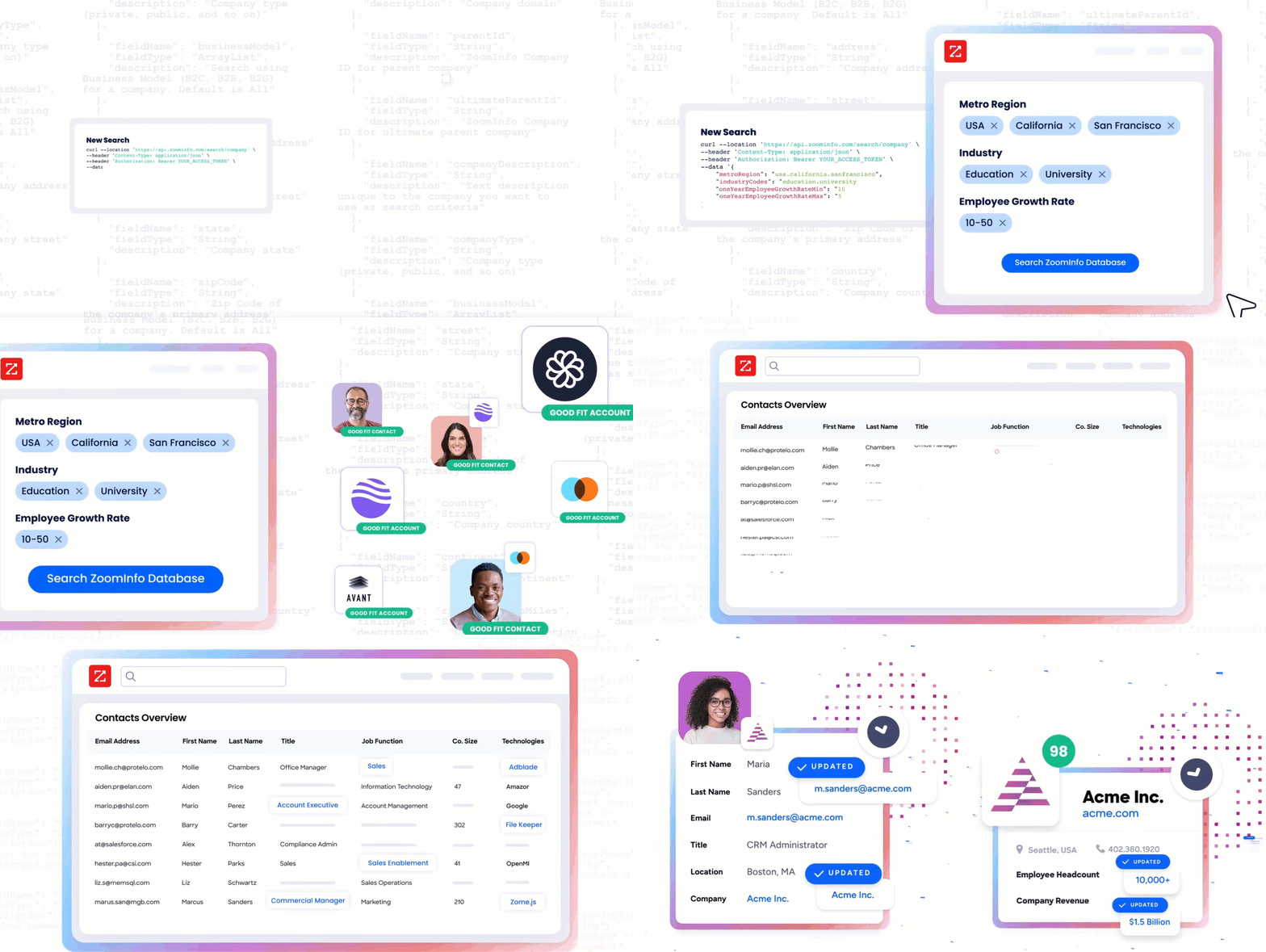
ZoomInfo sidesteps this debate entirely. As a cloud SaaS platform with API and MCP access, it delivers intelligence into whatever infrastructure you already run. Whether your CRM is Salesforce, HubSpot, or Microsoft Dynamics, whether your back office runs PeopleSoft, SAP, or Oracle Fusion, ZoomInfo's data and GTM Context Graph work alongside your existing stack rather than requiring you to replace it.
Source: ZoomInfo
PeopleSoft excels at complex internal operations
PeopleSoft's strength is handling business processes that are regulated, customized, and operationally critical.
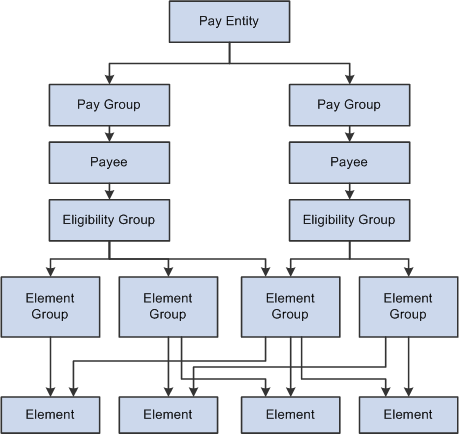
HR and payroll is where PeopleSoft built its reputation. The platform's Global Payroll engine runs payroll for 17+ countries from a single rules engine with country-specific extensions, covering statutory requirements from tax withholding to pension contributions. For a multinational running payroll across Argentina, India, Japan, and the UK, this kind of built-in compliance is hard to replace.
Source: PeopleSoft
Financial management runs deep. The General Ledger supports multi-GAAP and IFRS within the same ledger, Commitment Control enforces budget checks in real time at every transaction point, and sector-specific modules handle everything from U.S. federal government FACTS I/II reporting to higher education Title IV financial aid.
Campus Solutions is PeopleSoft's strongest vertical play. The student information system covers admissions, registration, financial aid, billing, and alumni management in a single platform.
What PeopleSoft won't do is help your sales team find prospects, track deal progress, or understand which accounts are researching your product category. It was never designed to.
Salesforce dominates customer-facing operations
Salesforce covers the full lifecycle of customer engagement, from first touch to renewal.
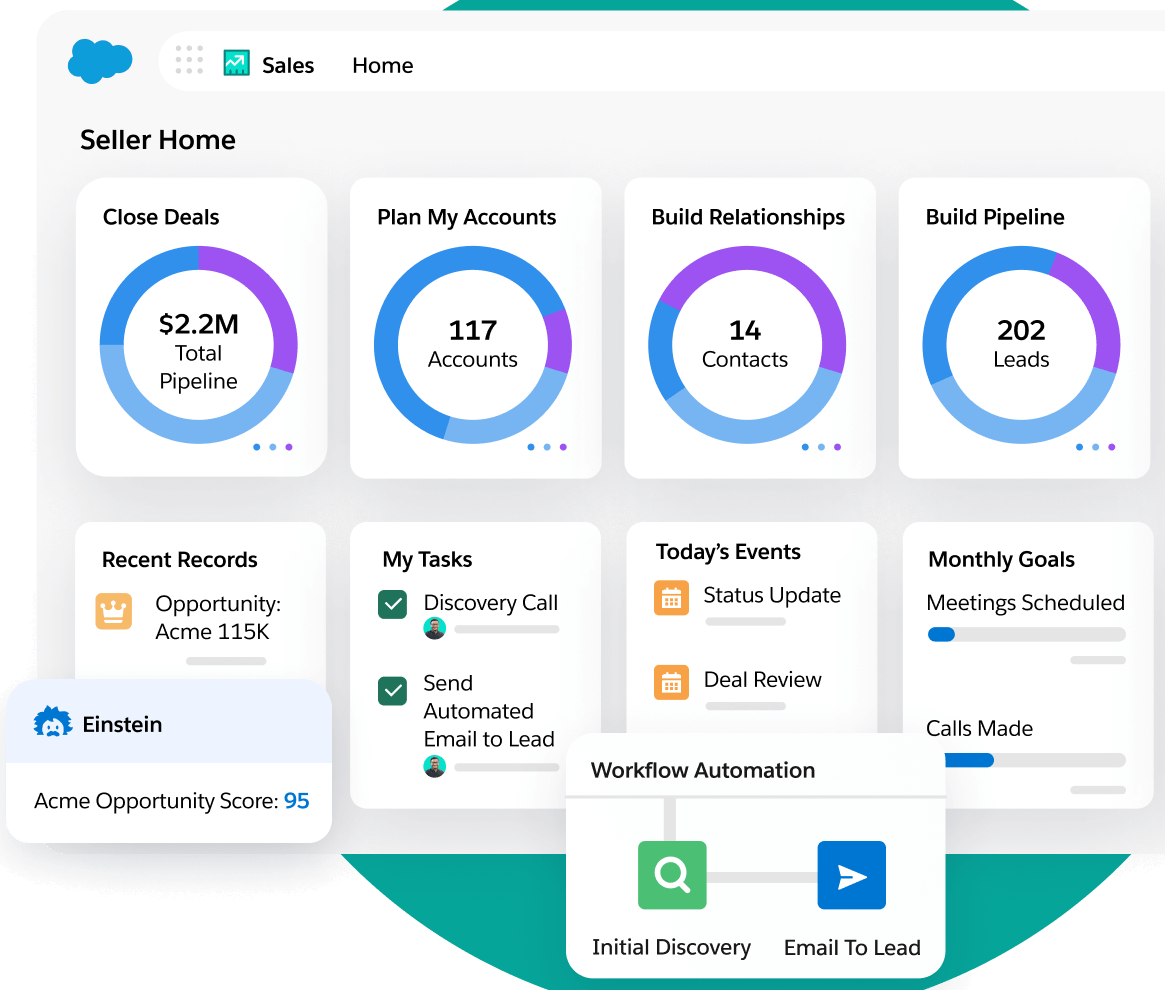
Sales Cloud centralizes pipeline management, deal tracking, forecasting, and sales execution. Einstein Lead Scoring prioritizes your pipeline automatically, Einstein Activity Capture syncs emails and calendar events from Gmail and Outlook, and Agentforce Sales Agents can draft outreach, research accounts, and coach reps on deals.
Source: Salesforce
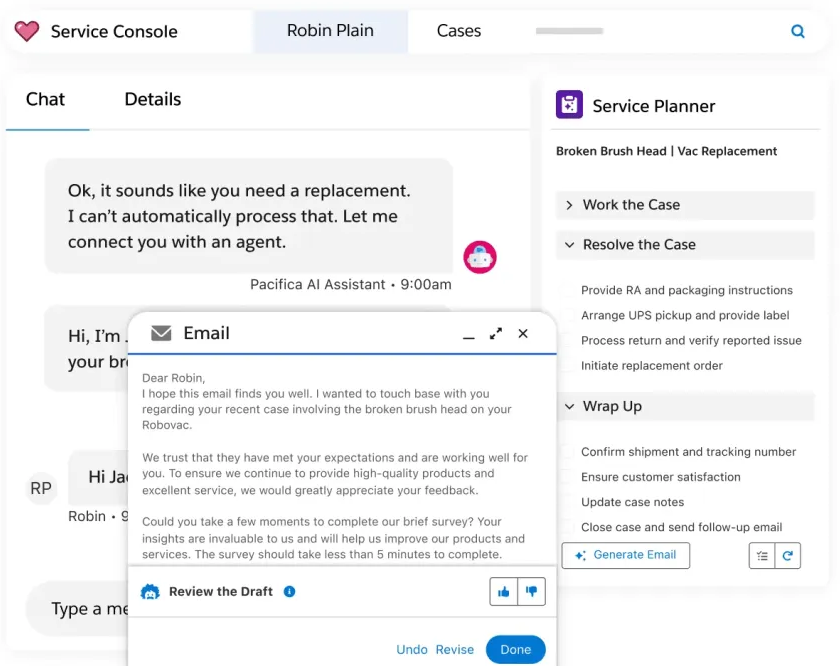
Service Cloud handles customer support across every channel: phone, email, WhatsApp, SMS, and in-app chat. The platform resolved 85% of Salesforce's own support requests without human escalation using Agentforce agents.
Source: Salesforce
Marketing Cloud orchestrates multi-channel campaigns, B2B lead nurturing, personalization, and analytics. Commerce Cloud powers B2C and B2B storefronts with 99.99% historical uptime. And the Data Cloud unifies customer data from across the business into profiles that feed every other cloud.
The breadth is real. But Salesforce is a system of record. It captures what your team does (calls logged, emails sent, deals advanced) and what your customers do (cases opened, orders placed, pages viewed).
What it doesn't generate on its own is external market intelligence: who your ideal buyers are beyond your current pipeline, which companies are researching solutions in your category, and what's happening inside target accounts that creates buying urgency.
ZoomInfo provides the intelligence both platforms lack
Neither PeopleSoft nor Salesforce was built to answer the most basic go-to-market question: who should we be selling to right now?
PeopleSoft manages your existing workforce and financial operations. Salesforce manages your existing customer relationships and pipeline. But the universe of potential buyers, the signals that indicate purchase intent, the verified contact data that gets you in the door (that intelligence lives outside both systems).
ZoomInfo fills this gap with three capabilities:
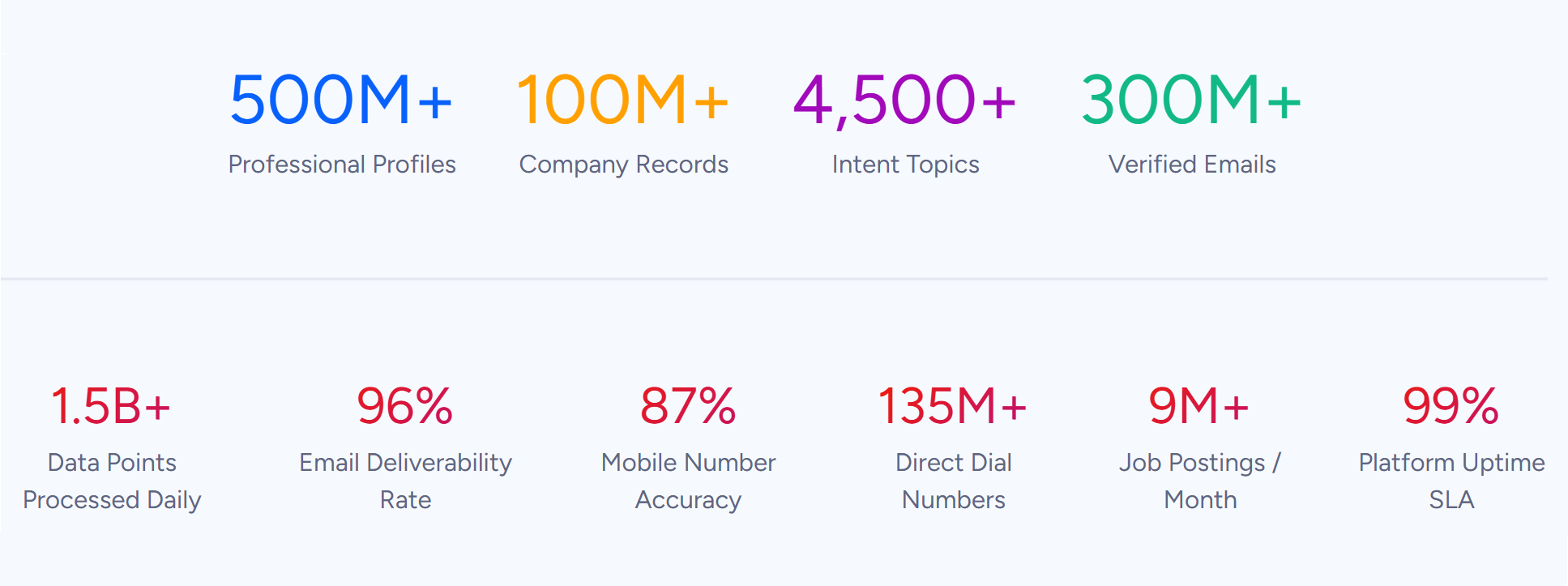
The largest B2B data platform. 500M contacts, 100M companies, 135M+ verified phone numbers, 120M direct-dial phone numbers, and 200M+ verified business email addresses, maintained by 300+ human researchers and automated verification achieving up to 95% accuracy on first-party data.
Source: ZoomInfo
In a Fortune 500 competitive RFP analyzing 25 million contacts across vendors, the independent consultant concluded that "no other competitor came even close."
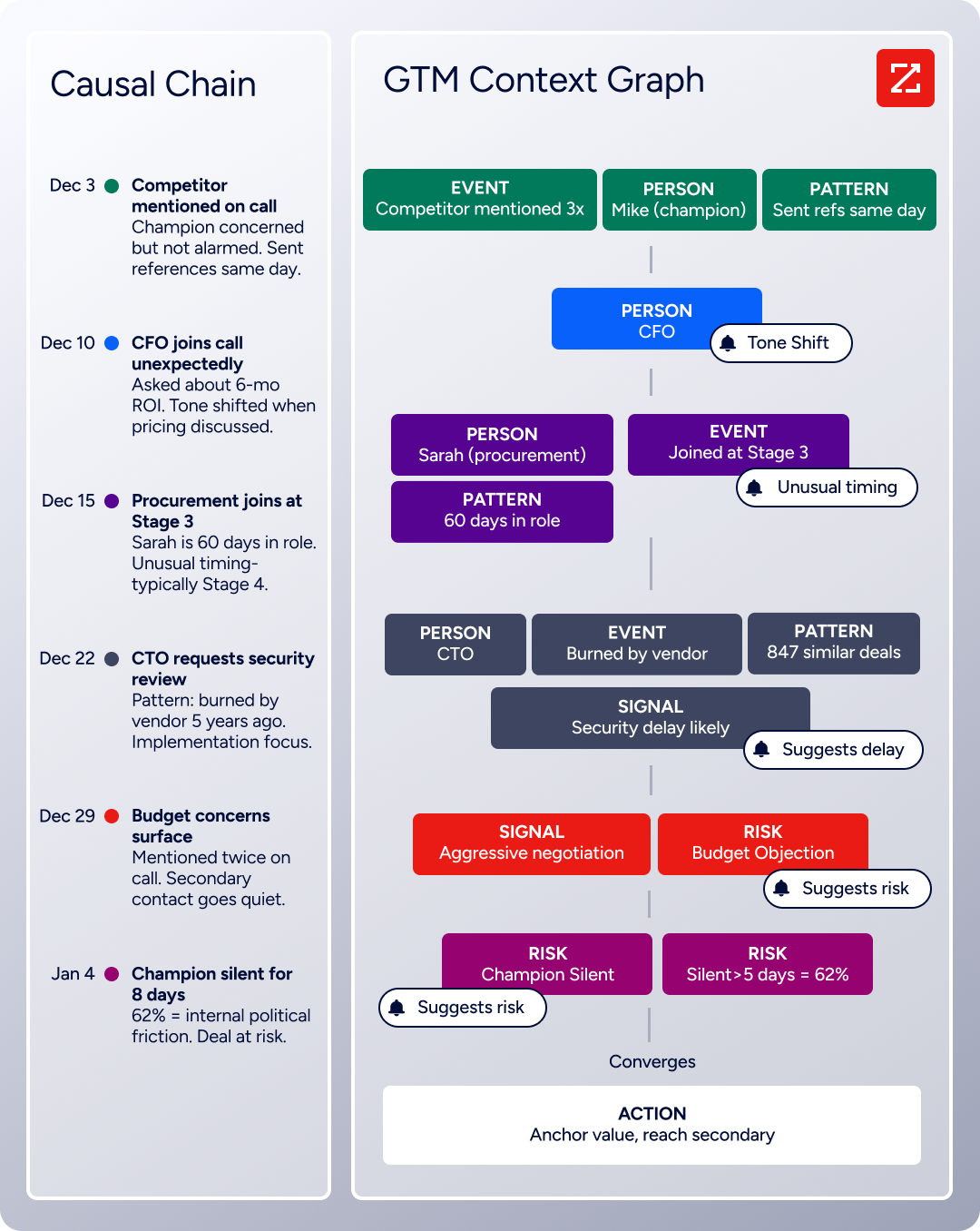
The GTM Context Graph. ZoomInfo's intelligence layer processes 1.5B + data points daily, combining third-party B2B data with your CRM records, conversation transcripts, and behavioral signals. The result: an understanding of not just what happened in a deal, but why it happened.
Source: ZoomInfo
Your CRM records that a deal moved to stage 4. The GTM Context Graph captures that the CFO joined the last call, asked about six-month ROI, and that this pattern matches closed-won deals in your segment.
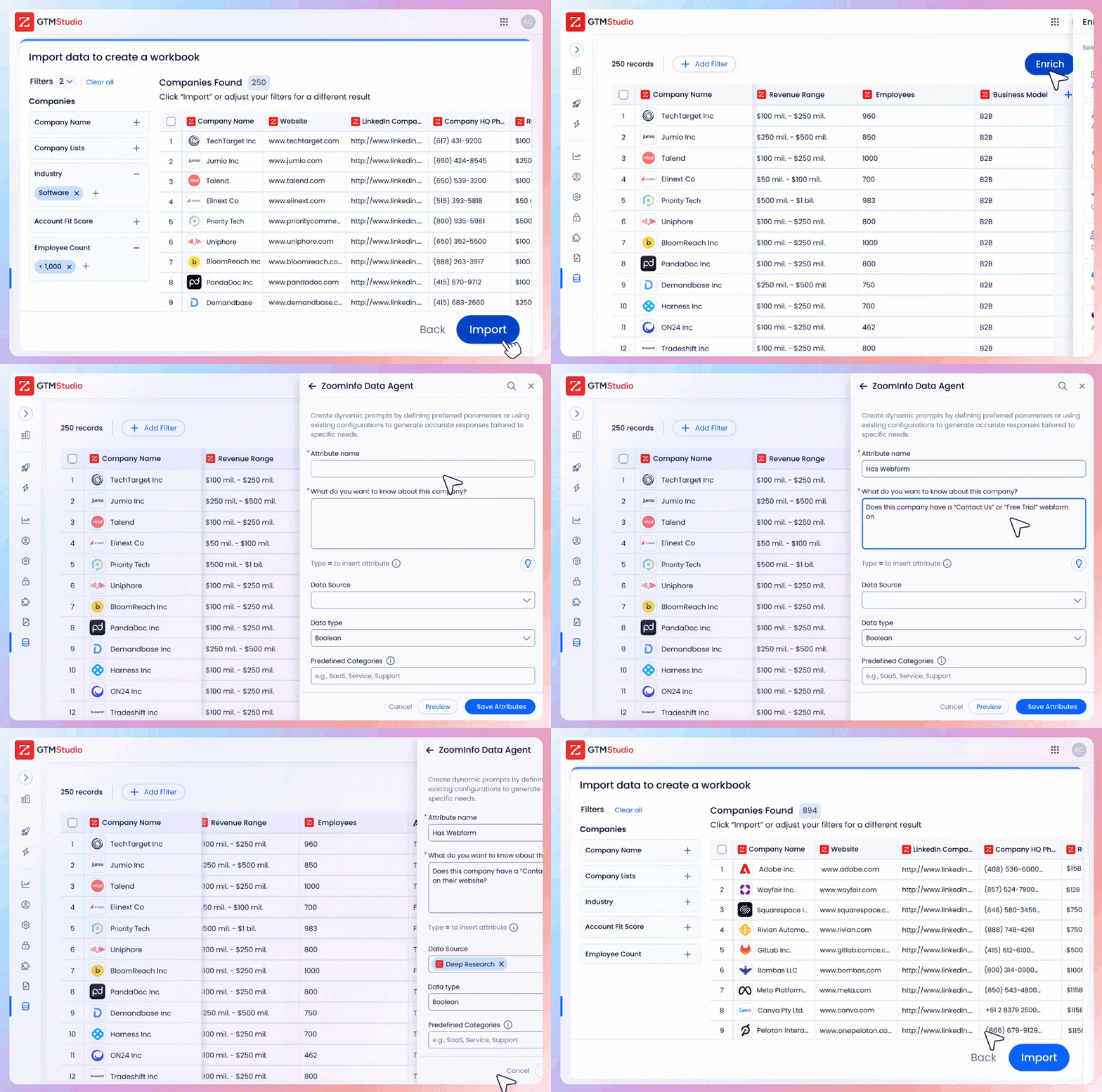
Universal access. The same intelligence is available through GTM Workspace for sellers, GTM Studio for marketers and RevOps, and APIs and MCP for any third-party application. ZoomInfo has a native integration with Salesforce, so the intelligence flows directly into the CRM your team already uses.
Source: ZoomInfo
"ZoomInfo is our one source of truth for account data, and even more so for contact data. There's no other provider in the market that provides you with that level of detail." (Smartsheet)
AI capabilities comparison
All three platforms have invested in AI, but the implementations solve different problems.
PeopleSoft routes AI through Oracle Cloud Infrastructure rather than building a native AI layer.
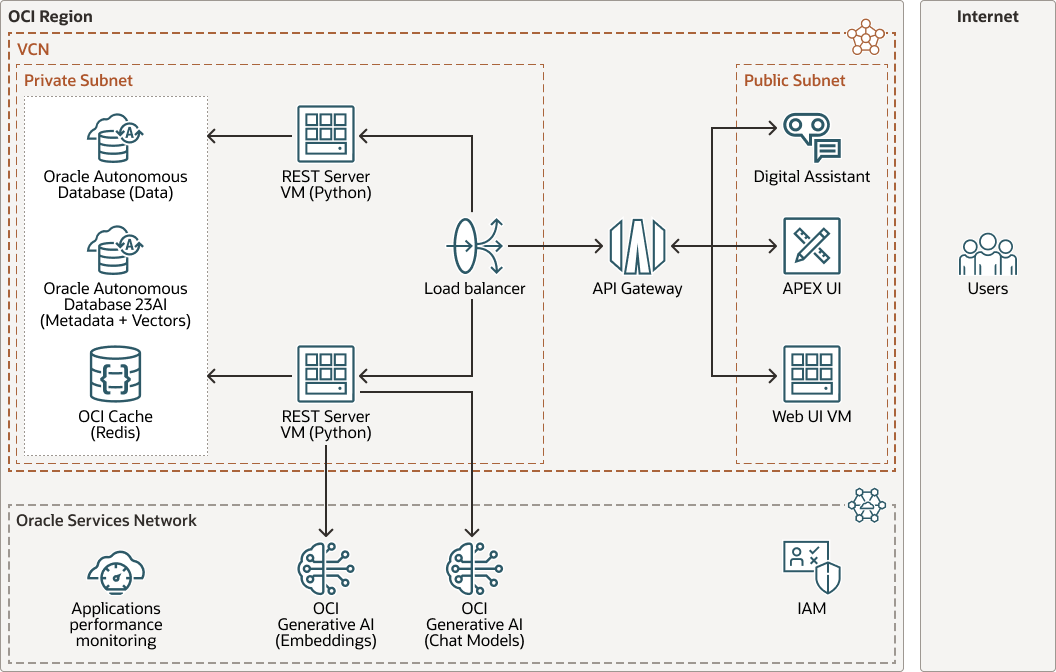
Source: PeopleSoft
The upcoming PeopleTools 8.63 will include Application Designer Code Assist, embedding an LLM directly into developer tooling. These are useful productivity improvements, but they focus on internal operations, not revenue generation.
Salesforce has gone all-in on Agentforce, its autonomous AI agent platform powered by the Atlas Reasoning Engine.
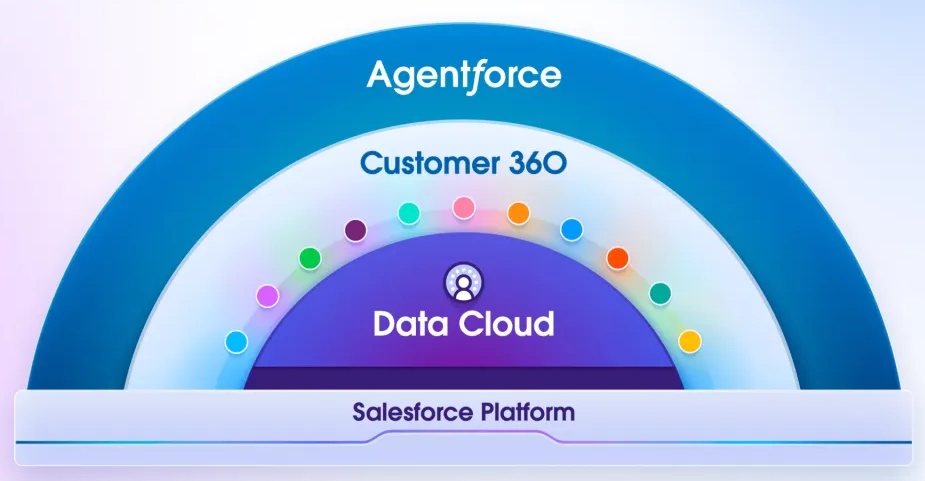
Source: Salesforce
Pre-built agents handle sales coaching, case deflection, campaign creation, and more. The Einstein Trust Layer provides guardrails with zero data retention and PII masking.
ZoomInfo applies AI specifically to go-to-market execution. The GTM Context Graph doesn't just detect anomalies or automate workflows. It reasons across thousands of deals to identify why outcomes happen and which signals predict success.
GTM Workspace deploys specialized AI agents (built on Anthropic's Claude) that answer three questions for every rep: who to contact, when to engage, and what to say. Guided Intent, exclusive to ZoomInfo, identifies intent topics historically correlated with deal success rather than requiring manual topic selection.
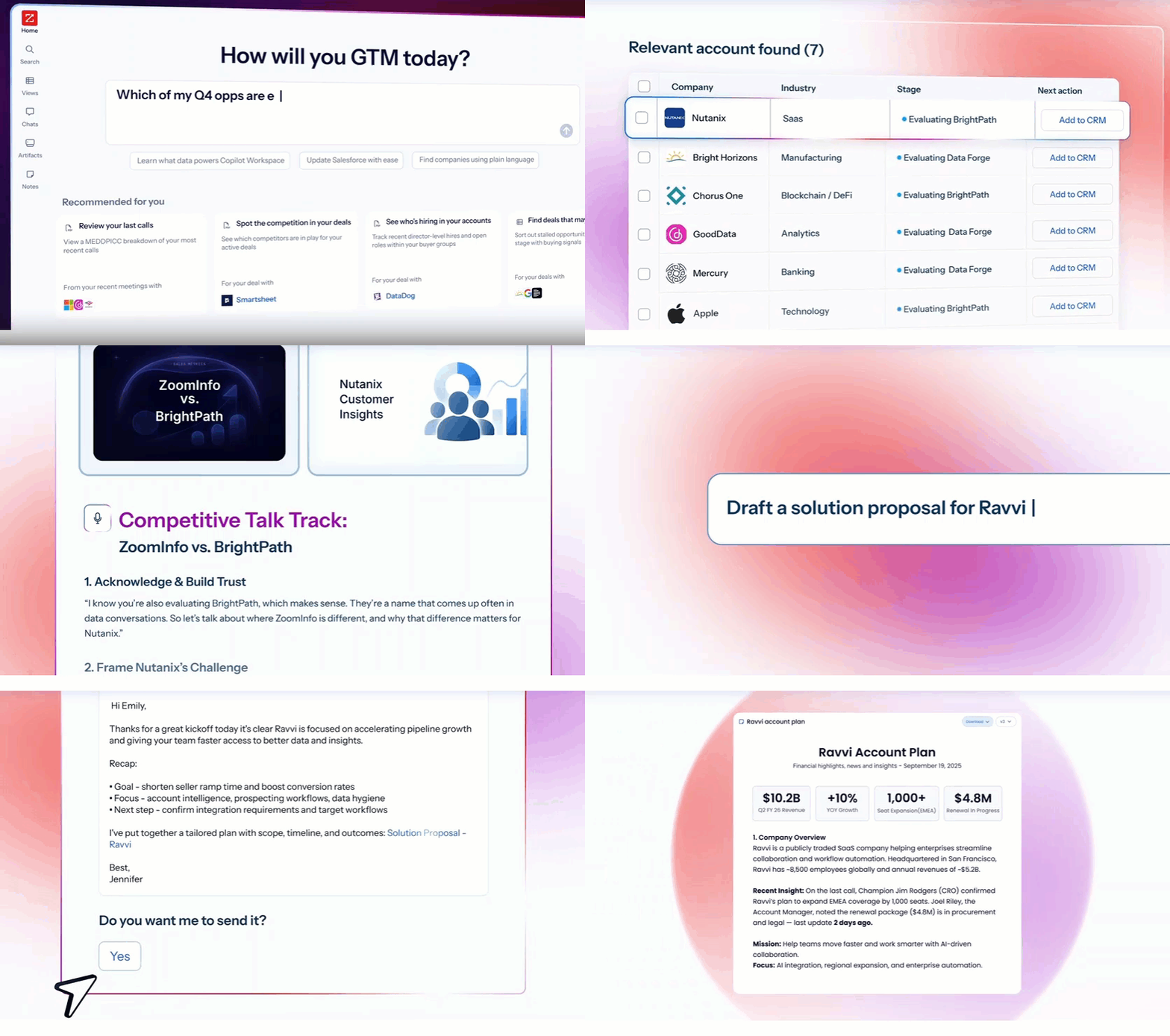
Source: ZoomInfo
The difference matters in practice. Salesforce's AI works with data inside your CRM. ZoomInfo's AI works with data from across the entire B2B market, including 210 million IP-to-Organization pairings and 6 trillion+ new keyword-to-device pairings sourced monthly for intent signals alone.
When Salesforce tells you which deals in your pipeline need attention, ZoomInfo tells you which companies outside your pipeline are ready to buy.
"That combination of our internal CRM data, external signals, and AI that's given all that context has helped us craft very specific account- and persona-based messages. And people have responded to them right away." (Seismic)
For a deeper look at how Salesforce and ZoomInfo compare across data, AI, and go-to-market capabilities, see our Salesforce vs. ZoomInfo comparison.
Pricing reflects different business models
The pricing structures tell you as much about these platforms as their feature lists.
PeopleSoft uses a perpetual license model: you pay a one-time fee for the software, then approximately 22% of the net list license fee per year in annual support. Pricing is negotiated directly with Oracle. On top of the license and support, you'll need Oracle Database licenses, infrastructure costs (on-premises or OCI subscriptions), implementation consulting, and potentially Oracle Managed Cloud Services.
Implementation and consulting costs are large: multi-year timelines are common, and PeopleSoft-specialized consultants command premium rates.
Salesforce uses per-user subscription pricing. Sales Cloud and Service Cloud start at $25/user/month for the Starter Suite and scale to $550/user/month for Agentforce 1 (which includes Tableau Next, Slack Enterprise+, and 1M Flex Credits). Marketing Cloud starts at $1,500/org/month. Commerce Cloud is quote-based.
Add Premier Success at 30% of net license fees for real support, Agentforce consumption at $2/conversation or $500 per 100K Flex Credits, and Data Cloud at $500 per 100K credits, and the real cost climbs well beyond the per-seat list prices. Over 70% of implementations are partner-led, adding another cost layer.
ZoomInfo uses consumption-based pricing with no publicly listed prices. Costs depend on seats, monthly credit volume, features, and contract length.
A permanent free tier (ZoomInfo Lite) provides access to ZoomInfo's B2B database with 10 monthly export credits, and a 7-day free trial opens access to core platform features. For paid plans, API access is included in all tiers, so the same intelligence is available in any tool without added integration costs.
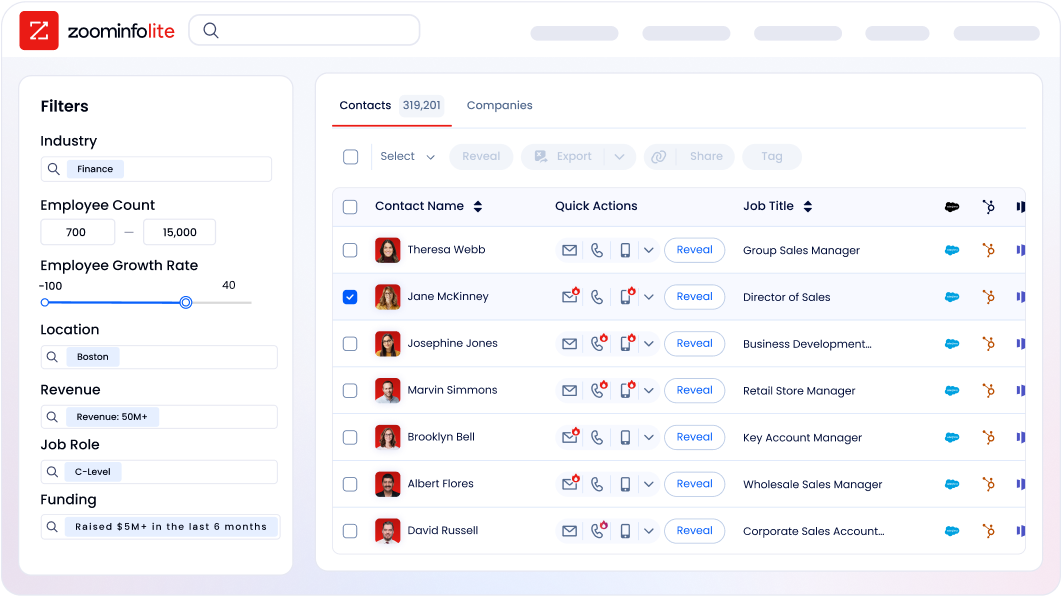
Source: ZoomInfo
Integration ecosystems show different strengths
PeopleSoft integrates through Integration Broker, its native message-based middleware, and increasingly through REST APIs. Integration with Oracle Cloud services (Analytics Cloud, Autonomous Database, Identity Cloud) is well-documented.
But connecting PeopleSoft to non-Oracle systems often requires custom development. TrustRadius and G2 reviewers note that many existing integrations still rely on direct database connections rather than governed API layers.
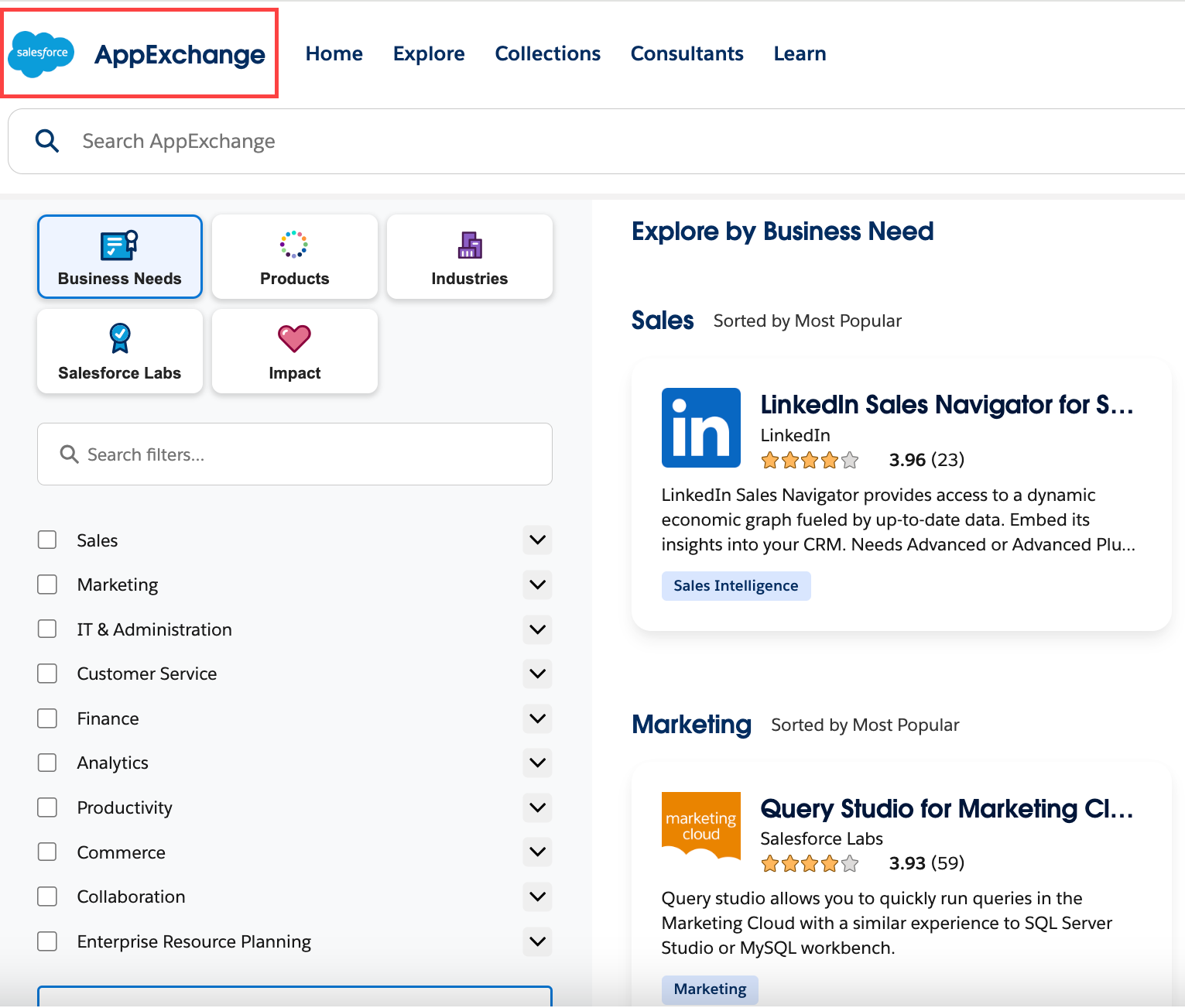
Salesforce has the largest integration ecosystem in enterprise software. AppExchange hosts 9,000+ partner apps with 14+ million installs, and 91% of customers use at least one AppExchange app. MuleSoft provides enterprise integration with hundreds of pre-built connectors.
Source: Salesforce
The REST API, Bulk API, GraphQL API, and Pub/Sub API cover virtually every integration pattern. If a tool exists in the enterprise software market, it probably connects to Salesforce.
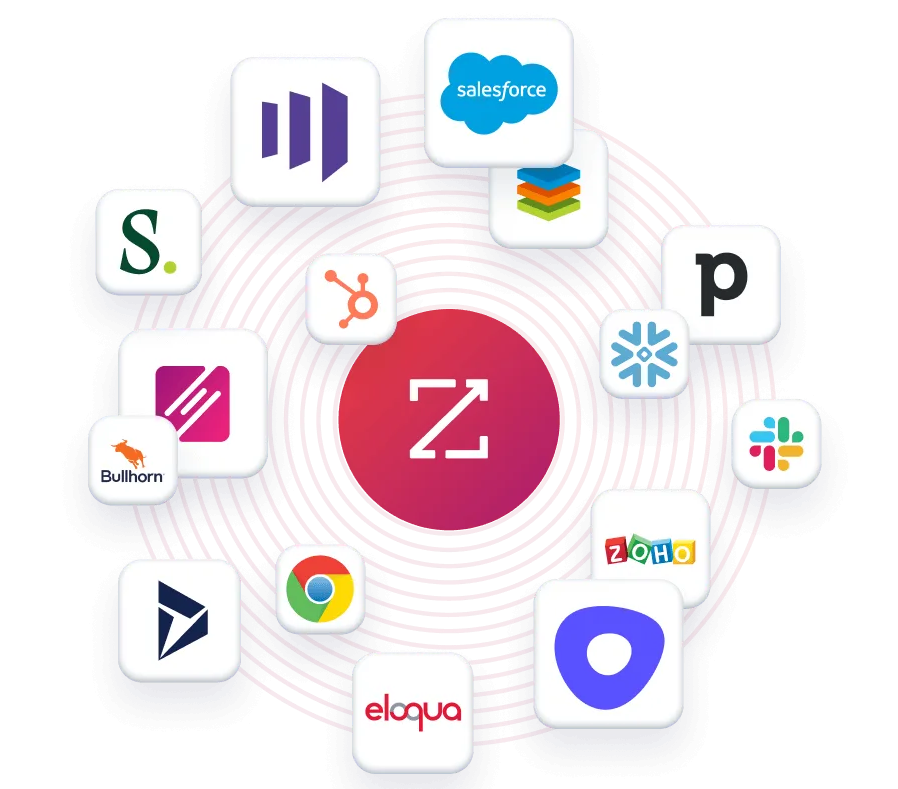
ZoomInfo takes a different approach with its Marketplace of 120+ partner integrations spanning CRM, marketing automation, sales engagement, data warehouses, and AI platforms. The native Salesforce integration pushes enriched contact and company data directly into Salesforce records.
Source: ZoomInfo
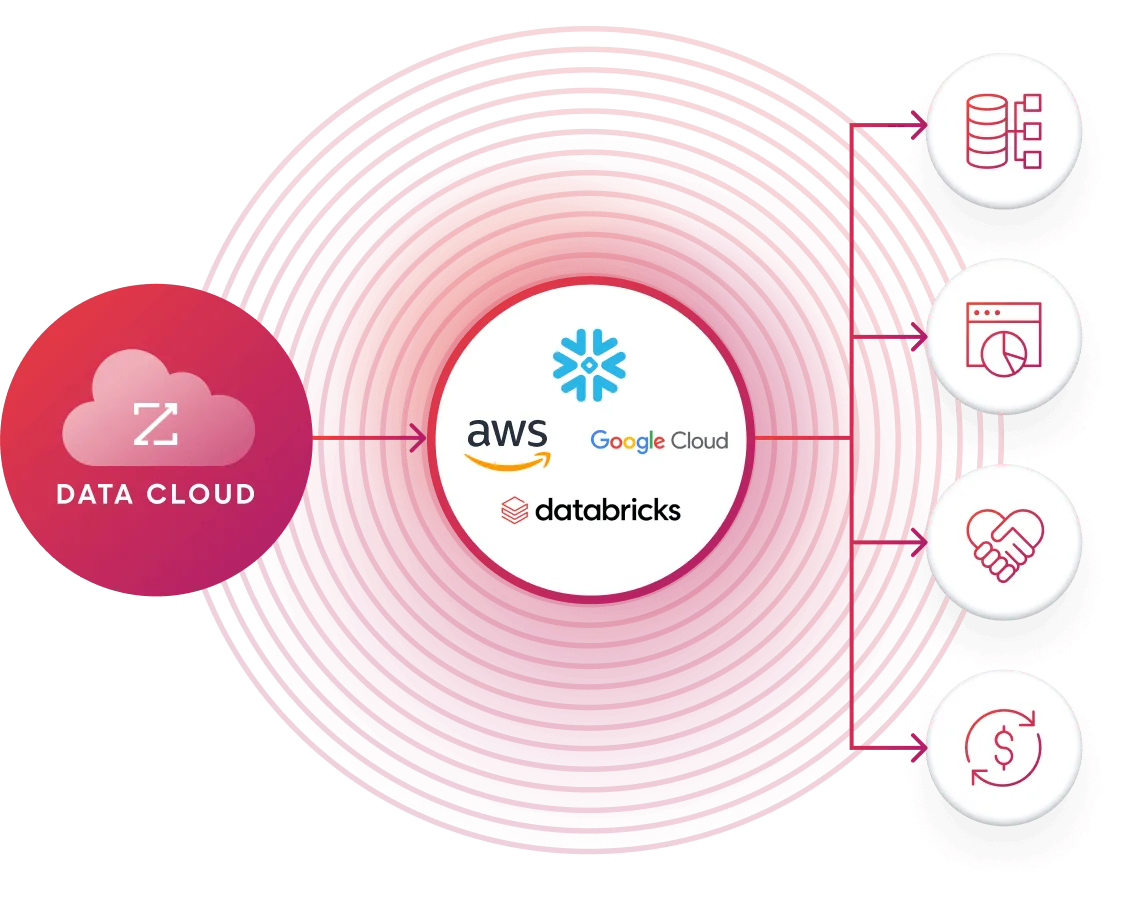
Cloud Partners deliver ZoomInfo data into AWS, Google Cloud, Snowflake, and Databricks. The MCP server connects directly to AI assistants like Claude and ChatGPT, positioning ZoomInfo as infrastructure for the agentic AI era.
Source: ZoomInfo
The integration story matters because ZoomInfo doesn't replace either PeopleSoft or Salesforce. It makes them more effective by feeding verified buyer intelligence into whatever system your team works in.
"The plug-and-play aspect of the API means I can integrate it very easily into any process and get information at a moment's notice." (BDO Canada)
Who each platform is built for
Each platform targets different buyers and use cases, with minimal overlap.
PeopleSoft is built for large enterprises, public-sector organizations, healthcare systems, and higher-education institutions that need control over complex internal operations. It fits best for multi-country payroll, complex financial reporting, higher education student information management, and organizations that require on-premises deployment for regulatory or data sovereignty reasons.
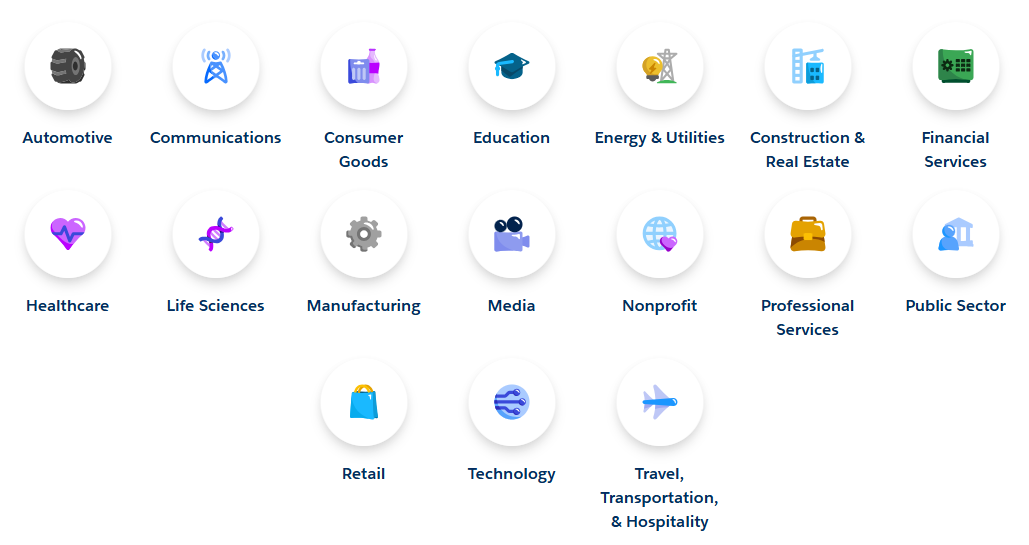
Salesforce is built for organizations of any size that need to manage customer relationships, sales pipelines, marketing campaigns, and service operations. Its value compounds for mid-market and enterprise companies where 17 industry-specific clouds, Data Cloud, Agentforce, and the AppExchange ecosystem grow with organizational complexity.
Source: Salesforce
A free CRM tier and Starter Suite at $25/user/month serve smaller businesses, but the full platform requires dedicated administration to realize its potential.
ZoomInfo is built for revenue teams that need to find, reach, and win buyers. Enterprise and upper mid-market B2B companies get the most value: sales teams use it for prospecting and pipeline generation, marketing teams for ABM and demand generation, and RevOps for data enrichment and workflow automation.
Named customers include Adobe, Microsoft, Snowflake, PayPal, Databricks, and Thomson Reuters. ZoomInfo is not for B2C companies or organizations without outbound sales motions.
PeopleSoft vs. Salesforce vs. ZoomInfo: Which should you choose?
These platforms serve different purposes. Most large organizations will use at least two of them, and many will use all three.
Choose PeopleSoft if:
You need an on-premises or OCI-hosted system for HR, payroll, or financials
Your organization has complex regulatory requirements that demand on-premises data control
You're already running PeopleSoft and need continued stability through at least 2037
You need multi-country payroll processing from a single rules engine
You're in higher education, public sector, or healthcare with sector-specific compliance needs
Choose Salesforce if:
You need a cloud-native CRM to manage sales, service, marketing, and commerce
Your organization wants to consolidate customer-facing operations on a single platform
You're prepared to invest in administration, implementation, and the broader ecosystem
AI-powered autonomous agents for sales and service align with your strategy
You need integration with thousands of third-party applications
Choose ZoomInfo if:
Your revenue teams need verified buyer data, intent signals, and AI-powered outreach
You want to know which companies are researching your category before they fill out a form
You need to enrich your CRM data with accurate contacts, org charts, and technographics
Your sales and marketing teams want a single intelligence layer that works across every tool
You want AI that reasons across your deals to tell reps who to contact, when to engage, and what to say
See ZoomInfo's GTM intelligence in action with a free trial.
The strongest enterprise technology stack isn't built around a single platform. PeopleSoft handles the complexity of internal operations. Salesforce manages customer relationships.
ZoomInfo provides the market intelligence that turns both systems from records of what happened into engines for what should happen next. When your CRM knows who your customers are but not who your next customers should be, ZoomInfo fills that gap.
Final Verdict
PeopleSoft and Salesforce aren't competitors. They're two sides of the same enterprise: one runs the back office, the other runs the front office. The choice between them depends on which problem you're solving, and many organizations rightly use both.
The more important question is whether your go-to-market teams have the data and intelligence they need to find and win the right buyers. Neither PeopleSoft nor Salesforce was designed to solve that problem.
ZoomInfo's B2B data, GTM Context Graph, and universal access model deliver that intelligence directly into whatever tools your team already uses, turning CRM records into action plans and pipeline entries into closed deals.
PeopleSoft vs. Salesforce vs. ZoomInfo FAQ
What is the fundamental difference between PeopleSoft and Salesforce?
PeopleSoft is an on-premises enterprise suite for internal operations: HR, payroll, financials, and supply chain. Salesforce is a cloud-native CRM for customer-facing operations: sales, service, marketing, and commerce.
They serve different functions, and most large organizations can run both. PeopleSoft manages what happens inside your company. Salesforce manages what happens between your company and its customers.
Can PeopleSoft and Salesforce integrate with each other?
They can, but integration typically requires custom development through PeopleSoft's Integration Broker or REST APIs. There is no native connector between the two platforms. Organizations often synchronize employee data from PeopleSoft into Salesforce for user provisioning, or push Salesforce revenue data back into PeopleSoft's financial modules for reporting and forecasting.
Is Oracle moving PeopleSoft customers to Salesforce or Oracle Fusion?
Oracle is not migrating customers to Salesforce. Oracle markets its own Oracle Fusion Cloud HCM and ERP as the long-term successor to PeopleSoft for customers who want cloud-native applications. However, Oracle has extended PeopleSoft support through at least 2037 under a rolling 10-year model and continues to deliver quarterly updates. PeopleSoft customers are not being forced to migrate.
How does ZoomInfo work with Salesforce?
ZoomInfo has a native integration with Salesforce that pushes enriched contact and company data, intent signals, and buyer intelligence directly into Salesforce records.
Sales reps can access ZoomInfo data from within Salesforce, and RevOps teams can automate enrichment and lead routing. ZoomInfo's GTM Workspace also syncs bidirectionally with Salesforce, so CRM updates and AI-generated insights stay aligned.
Which platform is best for a university or public-sector organization?
PeopleSoft is the strongest fit for higher education and public sector. Campus Solutions is an established student information system across hundreds of institutions, with built-in support for Title IV financial aid, FERPA, Direct Lending, and SEVIS visa processing.
PeopleSoft's financial management includes Commitment Control for government budgetary compliance and FACTS I/II statutory reporting. Salesforce serves higher education and government through industry-specific clouds, but lacks the depth of PeopleSoft's sector-specific modules.
What does ZoomInfo provide that Salesforce doesn't?
Salesforce records and manages customer relationships that already exist in your pipeline. ZoomInfo provides intelligence about the broader market: 500M contacts, 100M companies, intent signals showing which companies are researching your category, verified direct-dial phone numbers, and AI that reasons across deals to surface the next best action.
Salesforce tells you what happened with your current pipeline. ZoomInfo tells you who your next customers should be and why they're likely to buy now.
How do the pricing models compare?
PeopleSoft uses perpetual licenses plus annual support at roughly 22% of the license fee, with additional costs for infrastructure, database licenses, and implementation consulting. Salesforce charges per-user subscriptions ranging from $25 to $550 per user per month, with add-ons for AI agents, data cloud credits, and premium support.
ZoomInfo uses consumption-based pricing that is custom-quoted, with a permanent free tier and a 7-day trial available for evaluation.
Which platform has the best AI capabilities for revenue teams?
ZoomInfo is the strongest for go-to-market AI. Its GTM Context Graph combines CRM data, conversation intelligence, and third-party B2B data to reason about why deals move or stall, then surfaces the next best action through AI agents in GTM Workspace.
Salesforce's Agentforce is strong at automating internal CRM workflows and customer-facing interactions. PeopleSoft's AI capabilities focus on internal operations like invoice processing and developer tooling rather than revenue generation.
